


Nanobody Drug Conjugate Market Overview
The global Nanobody Drug Conjugate market reached an estimated US$ 0.31 billion in 2025 and is expected to reach US$ 2.18 billion by 2035, growing at a CAGR of 21.5% during 2026-2035. The estimate includes nanobody discovery and engineering, linker-payload access, conjugation services, analytical development, preclinical programs, platform licensing and probability-adjusted future therapeutic revenue. The market remains substantially smaller than the conventional ADC category because clinical validation is limited, yet its growth potential is supported by the demand for improved tissue penetration, modular multispecific targeting and more controllable exposure.
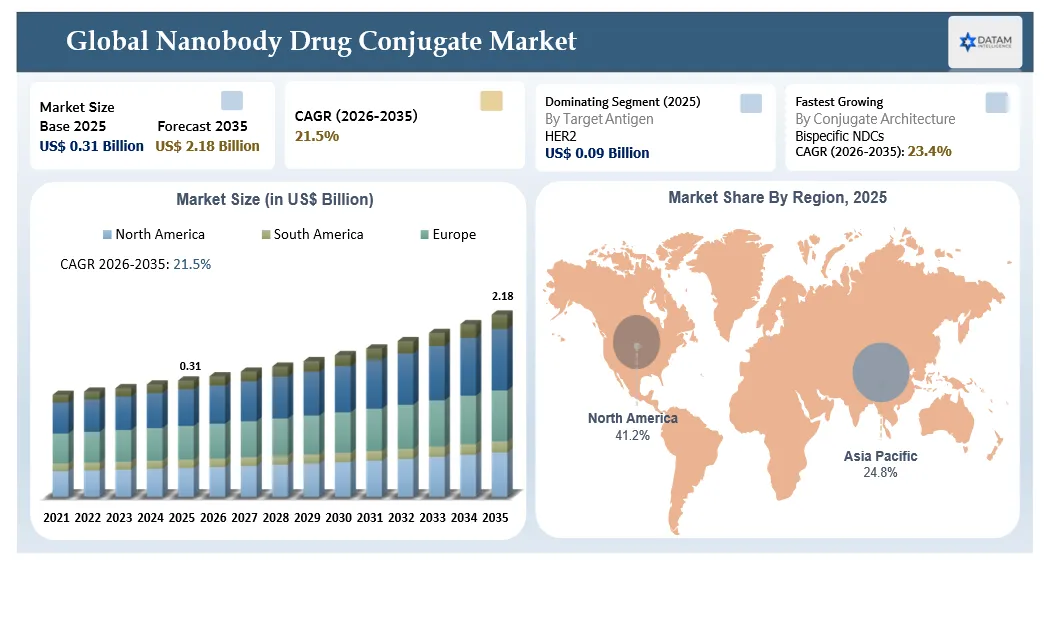
Oncology represents the commercial center of the market. HER2, TROP2, EGFR, Nectin-4, c-Met and immune targets are receiving attention because they are clinically validated or biologically attractive antigens for targeted payload delivery. Recent preclinical studies have demonstrated HER2-directed nanobody conjugates with strong penetration in subcutaneous and intracranial tumor models, a TROP2/c-Met bispecific construct in pancreatic cancer models and a Nectin-4/TROP2 construct engineered for better pharmacokinetics. These programs demonstrate how the category is moving from simple nanobody-payload attachment toward integrated architectures that combine multispecificity, half-life engineering and site-specific conjugation.
North America leads through biotechnology financing, ADC expertise and contract development infrastructure. Europe contributes deep nanobody engineering, biologics manufacturing and platform companies, while Asia-Pacific is expected to grow fastest through expanding antibody engineering, academic translation and oncology manufacturing. Market growth through 2035 will depend on whether leading candidates move into IND-enabling development and first-in-human studies, and whether companies can establish a reproducible CMC package that addresses potency, aggregation, linker stability, renal exposure and product heterogeneity.
| Metric | Details |
| 2025 Market Size | US$ 0.31 Billion |
| 2035 Projected Market Size | US$ 2.18 Billion |
| CAGR (2026-2035) | 21.5% |
| Largest Region | North America |
| Fastest-Growing Region | Asia-Pacific |
| Largest Target Segment | HER2 |
| Fastest-Growing Architecture | Bispecific NDCs |
| Largest Therapeutic Area | Solid Tumors |
Nanobody Drug Conjugate Market Pipeline Analysis
| Program | Developer | Target Indication | Modality | Stage | Strategic Relevance |
| VHH3-Fc-Dxd / VHH3-ABD-Dxd | Fudan University teams | HER2-positive solid and intracranial tumors | HER2 nanobody fusion with Dxd payload | Preclinical | Demonstrated penetration and antitumor activity in subcutaneous and intracranial models. |
| B6ADC | Xiamen University teams | Pancreatic and other TROP2/c-Met-positive tumors | Bispecific TROP2/c-Met nanobody conjugate | Preclinical | Designed to address antigen heterogeneity and penetration limits with dual targeting. |
| Nectin-4/TROP2 dtNDC-eribulin | Academic translational consortium | Nectin-4 and TROP2-expressing solid tumors | Fc-free bispecific fatty-acid-extended NDC | Preclinical | Combines dual targeting, eribulin payload and pharmacokinetic extension. |
| 2Rs15d-MMAE NDC | DTU and University of Copenhagen teams | HER2-positive breast cancer | Site-selective HER2 nanobody-MMAE conjugate | Preclinical | Homogeneous construct with selective in-vitro potency in HER2-positive models. |
| EGFR platinum/MRI NDC | University of Science and Technology of China teams | EGFR-positive tumors | Nanobody-platinum prodrug with MRI contrast element | Preclinical | Theranostic design combining targeted therapy and imaging. |
| PD-L1/TLR7 NDC | Academic oncology consortium | PD-L1-positive and immune-cold tumors | PD-L1 nanobody with TLR7 agonist | Preclinical | Combines checkpoint targeting with localized innate immune stimulation. |
| Multivalent influenza NDC | Cerberus Therapeutics and collaborators | Influenza prevention and treatment | Multivalent nanobody conjugate | Preclinical | Extends the NDC concept beyond oncology into antiviral delivery. |
| IntelliBody CA-NDC platform | Nanolynx Biologics | Hard-to-treat solid tumors | Conditionally active, pH-controlled NDCs | Discovery | Aims to improve tumor selectivity and reduce systemic toxicity. |
| Bi-paratopic anti-SARS-CoV-2 NDC | University of Delhi teams | SARS-CoV-2 variants | Computationally designed nanobody conjugate | In-silico / discovery | Illustrates non-oncology design potential but requires experimental validation. |
The pipeline remains overwhelmingly preclinical. The table therefore separates peer-reviewed translational constructs, company discovery platforms and computational concepts rather than presenting them as equivalent clinical assets. There are no broadly commercialized nanobody drug conjugates as of 2026, and progression into human studies will require formal toxicology, scalable GMP production and regulatory-quality CMC data.
Nanobody Drug Conjugate Market Key Takeaways
- Nanobody drug conjugates are emerging as a distinct targeted-delivery category rather than a direct replacement for all conventional ADCs.
- Solid tumors lead because penetration, antigen heterogeneity and access to difficult epitopes create the clearest technical rationale.
- HER2 is the largest target segment, while bispecific TROP2/c-Met and Nectin-4/TROP2 architectures are among the fastest-developing research themes.
- Rapid renal clearance is both an advantage for systemic exposure control and a central development risk for sustained payload delivery.
- Half-life extension through Fc fusion, albumin binding, fatty-acid modification or multimerization is becoming a core design variable.
- Site-specific conjugation and controlled drug-to-binder ratio are essential for product consistency and regulatory comparability.
- Asia-Pacific is expected to grow fastest as academic translation, antibody engineering and oncology manufacturing expand.
- Near-term market value will be driven by platform licensing, sponsored research, conjugation services and preclinical partnerships before therapeutic sales become material.
Nanobody Drug Conjugate Industry Trends and Strategic Insights
- The field is shifting from monovalent nanobody-payload constructs toward multispecific and conditionally active architectures.
- Topoisomerase and microtubule payloads are receiving attention because they are validated in the wider ADC sector and can support cross-platform comparison.
- Developers are engineering exposure at the scaffold level rather than relying only on linker chemistry to control pharmacokinetics.
- Academic publications are increasingly integrating efficacy, biodistribution, renal accumulation and mechanistic analysis in the same study.
- CDMO opportunity is expanding across binder production, site-specific conjugation, payload handling, analytical characterization and fill-finish.
- AI-assisted nanobody design is beginning to shorten epitope selection and binder optimization, but experimental validation remains decisive.
Nanobody Drug Conjugate Market Scope
| Metrics | Details |
| By Target Antigen | HER2, TROP2, EGFR, Nectin-4, c-Met, PD-L1 and Other Targets |
| By Payload Class | Topoisomerase Inhibitors, Microtubule Inhibitors, DNA-Damaging Payloads, Immune Agonists, Radionuclides and Other Payloads |
| By Architecture | Monovalent, Multivalent, Bispecific, Fc-Fused, Albumin-Binding/Fatty-Acid-Extended and Nanobody-Decorated Vehicles |
| By Therapeutic Area | Solid Tumors, Hematologic Malignancies, Infectious Diseases, Autoimmune/Inflammatory Diseases and Theranostics |
| By Route | Intravenous, Subcutaneous, Intratumoral and Local Delivery |
| By Stage | Discovery, Preclinical, IND-Enabling, Clinical and Commercial |
| By End User | Pharma/Biotech, Academic Institutes, CROs, CDMOs and Clinical Research Centers |
| Report Insights Covered | Market Size, Pipeline, Technology, Manufacturing, Competitive Landscape and Country Opportunity |
Why does this report matter in 2026?
The year 2026 is an inflection point because multiple peer-reviewed studies have moved the NDC concept beyond basic proof of binding into integrated evidence on tumor penetration, dual targeting, payload delivery and pharmacokinetic engineering. A recent HER2 program reported strong activity in subcutaneous and intracranial models, while TROP2/c-Met and Nectin-4/TROP2 constructs illustrated how bispecificity may address heterogeneous antigen expression. At the same time, reviews published in 2026 describe the category as promising but still underrepresented in clinical pipelines. This combination of stronger translational evidence and limited clinical competition creates a narrow strategic window for platform investment.
The report matters because the market cannot be assessed using conventional ADC assumptions alone. Small single-domain binders have different distribution, clearance and conjugation behavior. Faster penetration may improve intratumoral delivery, while shorter half-life can reduce exposure before sufficient payload accumulates. Kidney uptake can become dose-limiting. Investors and developers therefore need a model that separately evaluates target biology, internalization, payload potency, linker stability, architecture and exposure engineering.
Decisions made in 2026 on platform partnerships, translational packages and CDMO selection will shape which programs reach IND-enabling development. Companies that delay CMC planning until after efficacy studies may find that their research construct cannot be reproduced at scale. The report supports portfolio selection, licensing, manufacturing strategy and market-entry planning across this emerging modality.
Nanobody Drug Conjugate Market White Space & Investment Opportunities
- Bispecific NDCs that address antigen heterogeneity in pancreatic, lung, ovarian and other difficult solid tumors.
- Conditionally active nanobodies that bind preferentially in acidic or protease-rich tumor microenvironments.
- Half-life extension methods that preserve penetration while reducing kidney accumulation.
- Site-specific conjugation systems that provide narrow drug-to-binder ratio and scalable analytical control.
- Theranostic NDCs that combine imaging, patient selection and targeted payload delivery.
- Non-oncology programs in infectious disease and immune modulation where rapid tissue access is valuable.
Nanobody Drug Conjugate Future Market Transformation
The market is expected to transform from academic prototype development into a modular targeted-delivery ecosystem. Early products will likely retain familiar oncology payloads while differentiating through smaller targeting domains, deeper penetration and multispecificity. As data mature, platform companies may build families of candidates around a shared conjugation chemistry, half-life extension method or tumor-activation mechanism. This can improve capital efficiency because manufacturing knowledge and analytical methods can be reused across programs.
Care delivery will initially resemble other infused oncology biologics, but dosing schedules may differ because nanobody constructs can clear faster than full-length ADCs. Some products may require more frequent dosing, while extended constructs may achieve longer exposure. Imaging-enabled NDCs could provide patient selection and biodistribution data before treatment. This creates opportunities for theranostic strategies that link target confirmation, dose selection and response monitoring.
By 2035, the strongest franchises may combine AI-designed binders, conditionally active targeting, site-specific payload loading and companion diagnostics. Market leadership will depend on a full development system rather than a single molecule. Companies that control binder discovery, conjugation, analytics and translational imaging will be better positioned to iterate quickly and manage regulatory questions.
Nanobody Drug Conjugate Market Buyer Decision-Making Criteria
Pharmaceutical buyers prioritize target validation, internalization, payload potency, selectivity, exposure and manufacturability. A nanobody that binds strongly but clears before payload delivery may have limited value. Buyers therefore examine tumor-to-kidney ratio, systemic half-life, linker stability, drug-to-binder ratio, aggregation, potency against antigen-low cells and performance in heterogeneous models.
CDMO and platform partners are evaluated on their ability to produce high-quality nanobody material, handle potent payloads, execute site-specific conjugation and provide orthogonal analytics. Sponsors also assess technology freedom to operate, scalability and whether the process can transition from research batches to GMP without major redesign.
Investors focus on the same scientific variables but apply milestone and portfolio logic. Reusable platform capability, multiple target programs and clear partnering potential reduce dependence on one asset. Programs with translational imaging, biomarker plans and a credible path to first-in-human dosing receive higher strategic value than constructs supported only by in-vitro cytotoxicity.
Nanobody Drug Conjugate Market Economic & Investment Analysis
The economic model for NDCs is currently dominated by research expenditure, platform licensing, milestone payments and outsourced development. Therapeutic revenue remains probability-adjusted because clinical validation is limited. A realistic forecast therefore separates platform-service revenue from future product sales and applies attrition at discovery, preclinical, IND-enabling and clinical stages. This approach prevents early scientific publications from being valued as near-commercial assets.
Capital requirements increase sharply when programs move from academic constructs to development candidates. Sponsors must invest in stable cell lines or microbial expression, purification, payload sourcing, controlled conjugation, high-resolution analytics, toxicology and GMP manufacturing. Potent payload handling and containment can increase outsourcing costs. Programs using novel half-life extension or conditionally active mechanisms may also require additional comparability and biodistribution studies.
Investment attractiveness is strongest where a platform can address multiple targets using a common architecture. HER2, TROP2, EGFR and Nectin-4 provide starting points because there is established target biology and benchmark ADC data. The economic case improves when an NDC can demonstrate penetration or safety advantages in tumors where conventional antibodies underperform. Investors should model partnership value, manufacturing burden, renal-risk mitigation and time to clinical proof separately.
Regional economics also differ. North America offers the largest financing and licensing market, Europe provides strong nanobody and conjugation expertise, and Asia-Pacific offers rapid translational research and increasingly competitive manufacturing. Cross-border partnerships can combine these advantages, but intellectual property, data rights and technology transfer must be managed early.
The timing is also important for companies that already operate in conventional ADCs. Nanobody conjugates can complement rather than replace IgG-based platforms, especially in dense tumors, brain metastases and antigen combinations that require smaller or multispecific binders. This report helps identify where the technical difference is commercially meaningful and where conventional approaches remain more appropriate.
Nanobody Drug Conjugate Investment Trends in the Market
- Capital is moving toward multispecific constructs that address antigen heterogeneity and improve tumor retention.
- Investors are funding half-life extension and tumor-activation strategies because unmodified nanobodies may clear too rapidly for payload delivery.
- Linker-payload partnerships are expanding as NDC developers reuse validated topoisomerase and microtubule payload classes.
- CDMO investment is increasing in site-specific conjugation, high-potency handling and advanced analytics that can serve both ADC and NDC programs.
- Academic spinouts are becoming more important as recent translational publications generate patentable platform opportunities.
- AI-enabled binder design is attracting strategic interest, particularly when paired with wet-lab validation and developability screening.
Strategic Indicators for Nanobody Drug Conjugate Market
High Regulation Impact
NDCs will be regulated as complex biologic conjugates. Sponsors must characterize the targeting domain, linker, payload, conjugation distribution, impurities, stability and mechanism of release. Novel architectures can require extensive biodistribution and toxicology evidence because small-size changes exposure and organ distribution.
High Investment Activity
Investment is increasing around ADCs, nanobodies, multispecific antibodies and targeted delivery. NDCs benefit from overlap with these themes but still compete for capital against clinically validated modalities. Funding favors platforms with reusable chemistry, strong translational evidence and multiple programs.
Supply Chain Disruption
The supply chain depends on specialized nanobody production, high-potency payloads, linkers, conjugation reagents and analytical capacity. A shortage or quality issue in one component can delay an entire program because substitutions require comparability work.
Pricing Volatility
Research-stage pricing varies by binder complexity, payload access, conjugation method, containment requirement and analytical package. Future therapy pricing will depend on indication, dosing frequency, clinical benefit and whether NDCs deliver a measurable safety or penetration advantage.
Procurement Pressure
Biotechnology sponsors increasingly prefer integrated providers that can manage expression, purification, conjugation, analytics and GMP scale-up. Fragmented sourcing can reduce flexibility and increase technology-transfer risk.
New Technology Adoption
Adoption is accelerating for AI-assisted nanobody design, click chemistry, enzymatic conjugation, albumin-binding domains, conditionally active binders and high-resolution mass spectrometry.
Regional Expansion Opportunity
Asia-Pacific offers the strongest growth in translational research and manufacturing, while North America remains the largest financing and licensing market. Europe retains an important position in nanobody engineering and biologics services.
Government Policy Support
Public oncology grants, biologics innovation programs and translational research funding can support NDC discovery. Policy impact is indirect because the modality does not yet have dedicated reimbursement pathways.
Pricing Intelligence
Commercial value should be benchmarked against ADCs, bispecific antibodies and radioligand therapies. Premium pricing will require evidence of superior outcomes, lower toxicity or access to previously difficult tumor compartments.
AI Impact Analysis of Nanobody Drug Conjugate Market
AI can accelerate epitope selection, CDR design, affinity optimization and developability screening. Structure-prediction and generative models can propose nanobody sequences against selected epitopes, while machine-learning models can rank candidates for stability, solubility, aggregation and cross-reactivity. The largest benefit is faster narrowing of the design space before wet-lab screening.
AI can also support conjugate optimization by integrating binder sequence, antigen properties, linker chemistry, payload class and drug-to-binder ratio. Models can help predict activity, internalization and toxicity, but current datasets remain limited and biased toward conventional ADCs. Experimental validation, biodistribution and toxicology cannot be replaced. Companies that combine computational design with standardized laboratory data will build the strongest learning advantage.
Disruption Analysis of Nanobody Drug Conjugate Market
NDCs could disrupt selected areas of the conventional ADC market by improving penetration, enabling multispecific targeting and reducing prolonged systemic exposure. The disruption is most credible in dense solid tumors, intracranial disease and heterogeneous targets. It is less certain where long circulation and Fc-mediated functions are central to efficacy.
The modality also disrupts the manufacturing value chain. Smaller binders can be produced in microbial systems, but conjugation and high-potency handling remain complex. New entrants may therefore compete through integrated platforms that combine low-cost binder production with sophisticated payload chemistry. Theranostic constructs could further blur the boundary between diagnostics and therapeutics.
Nanobody Drug Conjugate Market BCG Matrix: Company Evaluation
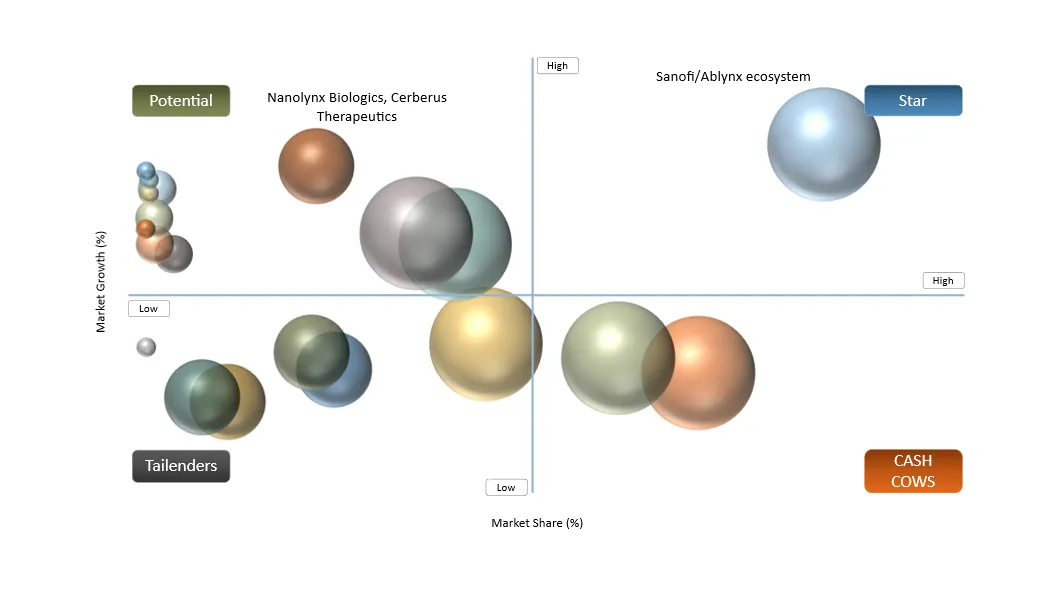
| Category | Representative Participants | Rationale |
| Stars | Sanofi/Ablynx ecosystem, advanced nanobody platform owners, leading conjugation CDMOs | Strong platform recognition and the ability to participate across multiple NDC programs. |
| Potential | Nanolynx Biologics, Cerberus Therapeutics, translational academic spinouts | High-growth concepts with limited commercial share and early-stage validation. |
| Cash Cows | Established ADC linker-payload and CDMO providers | Current revenue comes from validated ADC services that can be extended into NDCs. |
| Tailenders | Single-asset discovery projects without scalable CMC or proprietary technology | Limited differentiation, financing and development readiness. |
The matrix reflects strategic positioning in an emerging market rather than current therapeutic sales. Platform owners and service providers can hold stronger positions than asset companies because the field remains preclinical. A company can move from Potential to Star by generating reproducible in-vivo data, selecting a development candidate, securing GMP manufacturing and entering clinical development.
Nanobody Drug Conjugate Market Dynamics
Driver Impact Analysis
| Driver | Growth Impact | Demand Concentration | Impacted Use Case | Strategic Impact |
| Need for deeper tumor penetration | High | Dense solid tumors | HER2, TROP2, EGFR and c-Met delivery | Strengthens the rationale versus full-length antibodies. |
| Expansion of validated ADC payloads | High | Oncology platforms | Topoisomerase and microtubule payloads | Reduces payload-development risk and supports benchmarking. |
| Site-specific conjugation | Medium-High | CMC and manufacturing | Homogeneous NDCs | Improves reproducibility and regulatory comparability. |
| AI-enabled binder engineering | Medium | Discovery programs | Epitope-specific nanobody design | Shortens design cycles and expands target options. |
Driver: Need for Deeper Solid-Tumor Penetration
The Nanobody Drug Conjugate market is moving from a laboratory-defined concept toward a commercially relevant targeted-delivery platform. Dense tumor stroma, uneven vascular access and heterogeneous antigen expression can limit conventional antibodies. Nanobodies diffuse more rapidly and can reach recessed epitopes, creating a clear scientific rationale for selected tumors. Commercial value is created when the nanobody scaffold, linker, payload and pharmacokinetic extension strategy are designed as one product rather than as independent components. The strongest commercial opportunity exists where this biological advantage produces measurable efficacy or safety rather than only better imaging. Developers must balance deep tumor penetration against rapid renal clearance, because the same small size that improves diffusion can shorten exposure and increase kidney accumulation. Site-specific conjugation, controlled drug-to-binder ratio and scalable analytics are therefore central to reproducibility, safety and regulatory comparability. Near-term adoption will be led by oncology programs in which conventional antibodies show penetration limits, antigen heterogeneity or systemic toxicity, while infectious disease and immune-modulating applications provide additional platform options. The market remains early, so partnership quality, translational evidence and manufacturing readiness will influence value more strongly than headline preclinical potency alone.
Restraint Impact Analysis
| Restraint | Drag on Growth | Primary Impact Area | Impacted Use Case | Strategic Impact |
| Rapid clearance and renal uptake | High | Pharmacokinetics and safety | Unmodified monovalent NDCs | Can reduce exposure and increase kidney risk. |
| Limited clinical validation | High | Investment and partnering | All therapeutic programs | Raises discount rates and proof requirements. |
| Complex CMC translation | Medium-High | Scale-up and regulation | Site-specific conjugates | Can force redesign between research and GMP stages. |
| Small evidence base | Medium | Modeling and benchmarking | Market forecasting | Increases uncertainty in commercial assumptions. |
Restraint: Rapid Clearance and Kidney Exposure
The Nanobody Drug Conjugate market is moving from a laboratory-defined concept toward a commercially relevant targeted-delivery platform. Unmodified nanobodies are small enough for rapid renal filtration, which can shorten the time available for tumor uptake and concentrate payload-related exposure in the kidney. Commercial value is created when the nanobody scaffold, linker, payload and pharmacokinetic extension strategy are designed as one product rather than as independent components. Half-life extension can solve part of the problem but may reduce the penetration advantage or create new safety and manufacturing issues. Developers must balance deep tumor penetration against rapid renal clearance, because the same small size that improves diffusion can shorten exposure and increase kidney accumulation. Site-specific conjugation, controlled drug-to-binder ratio and scalable analytics are therefore central to reproducibility, safety and regulatory comparability. Near-term adoption will be led by oncology programs in which conventional antibodies show penetration limits, antigen heterogeneity or systemic toxicity, while infectious disease and immune-modulating applications provide additional platform options. The market remains early, so partnership quality, translational evidence and manufacturing readiness will influence value more strongly than headline preclinical potency alone.
Nanobody Drug Conjugate Market Segmentation Analysis
The global Nanobody Drug Conjugate market is segmented by target antigen, payload class, conjugation architecture, therapeutic area, route of administration, development stage, end user, and region.
By Target Antigen
HER2 Will Retain the Largest Research and Commercial Value
HER2 is expected to remain the largest target segment because its biology, diagnostic pathway and treatment benchmarks are well established. Recent nanobody conjugate studies have evaluated Dxd and MMAE payloads and reported penetration advantages in breast-cancer and intracranial models. TROP2 and Nectin-4 are gaining attention through bispecific combinations, while c-Met can support targeting of difficult pancreatic and lung tumors. Immune targets such as PD-L1 broaden the payload concept beyond direct cytotoxicity.
By Payload Class
Topoisomerase Inhibitors Will Gain the Fastest Strategic Adoption
Topoisomerase inhibitor payloads are expected to grow fastest because the wider ADC market has validated their potency and bystander potential. Microtubule inhibitors remain important and are compatible with site-specific NDC designs. Immune agonists such as TLR7 payloads create a different value proposition by changing the tumor microenvironment. Radionuclides and imaging agents support theranostic use and may reach translation through established nuclear-medicine pathways.
By Conjugation Architecture
Bispecific and Half-Life-Extended NDCs Will Lead Innovation
Bispecific constructs are expected to record the fastest growth because they can address antigen heterogeneity and improve tumor retention. Fc fusion, albumin binding and fatty-acid modification can extend exposure, but they must preserve the penetration advantage. Monovalent NDCs remain the simplest development route and may be useful when rapid clearance is desirable. Nanobody-decorated nanoparticles provide higher payload capacity but introduce additional formulation and regulatory complexity.
By Therapeutic Area
Solid Tumors Will Continue to Dominate
Solid tumors will remain the largest therapeutic area because poor penetration and heterogeneous antigen expression create the strongest technical rationale for smaller binders. Breast, pancreatic, lung, ovarian, bladder and brain-metastatic cancers are important opportunity areas. Infectious-disease constructs demonstrate platform breadth but will require different dosing, safety and commercial models. Theranostic applications may progress faster where imaging can validate target engagement before therapeutic development.
By Route of Administration
Intravenous Administration Will Remain the Primary Route
Intravenous delivery leads because most cytotoxic conjugates require controlled systemic dosing and oncology infusion infrastructure. Subcutaneous delivery may become feasible for lower-dose or extended constructs, while intratumoral administration can localize immune agonists. Inhaled and local delivery remain niche but may be relevant in respiratory infection or accessible tumors. Route choice is closely linked to payload potency, exposure and formulation stability.
By Development Stage
Preclinical Programs Will Account for the Largest Share
Preclinical development represents the largest stage because most NDC programs are still validating efficacy, biodistribution and safety. Discovery spending will remain strong as AI and synthetic libraries expand candidate generation. IND-enabling work is the most important value inflection because it requires scalable CMC, toxicology and a defined clinical strategy. Clinical and commercial shares remain small until first-in-human programs establish modality-level validation.
By End User
Pharmaceutical and Biotechnology Companies Will Control Commercial Translation
Pharmaceutical and biotechnology companies will account for the largest share as they fund target selection, development candidates and licensing. Academic institutes remain essential sources of invention and translational evidence. CROs and CDMOs gain value when programs move toward toxicology and GMP production. Hospitals and research centers become more relevant after clinical entry, especially for imaging-enabled or intratumoral constructs.
Nanobody Drug Conjugate Market Geographical Penetration
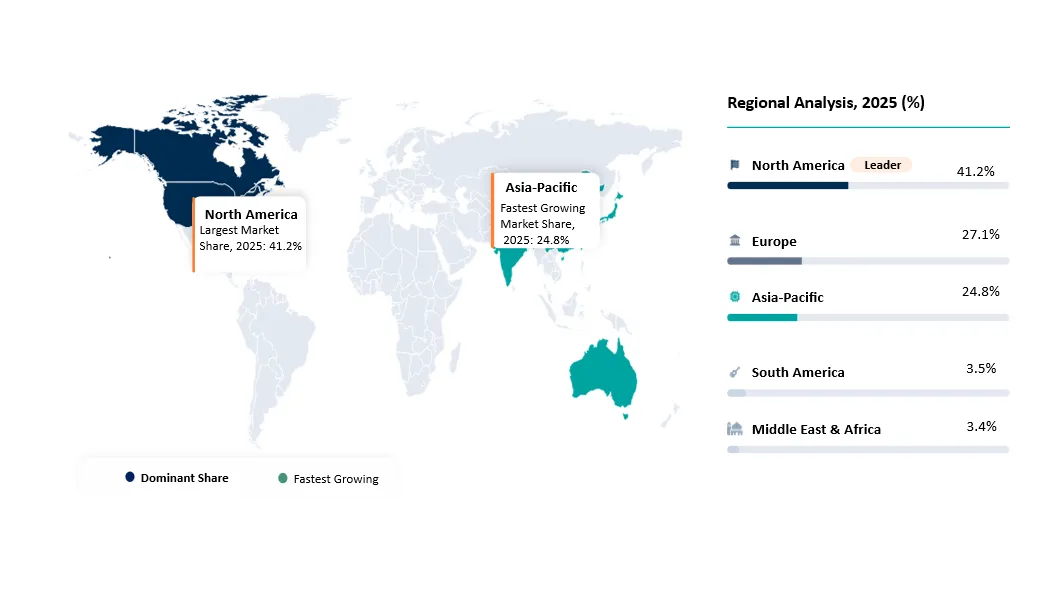
| Region | 2025 Share | Strategic Position |
| North America | 41.2% | Largest financing, licensing and ADC service ecosystem. |
| Europe | 27.1% | Strong nanobody engineering, biologics expertise and platform companies. |
| Asia-Pacific | 24.8% | Fastest growth through translational research and manufacturing. |
| South America | 3.5% | Early research and clinical infrastructure concentrated in Brazil and Argentina. |
| Middle East & Africa | 3.4% | Selective opportunity through Israel, Gulf research hubs and South Africa. |
North America Nanobody Drug Conjugate Market Trends
North America combines strong antibody engineering, oncology development and pharmaceutical partnering. Domestic companies have started to adopt NDCs as extensions of ADC and small-biologic portfolios. Major trends in the North American nanobody drug and specialized conjugate market include increasing clinical applications in oncology, rising cross-sector corporate partnerships, and advanced site-specific bio-conjugation engineering. Adoption of cell-free synthesis and precision site-specific conjugation methods to improve stability is the major trend gaining traction in this market
Asia-Pacific Nanobody Drug Conjugate Market Outlook
Major trends in the Asia-Pacific nanobody and related drug conjugate market include rapid growth in specialized manufacturing infrastructure, heavy investments in precision oncology, and rising regional clinical development. The region is expanding at a robust compound annual growth rate, driven by advancements in biotechnology hubs like China, Japan, and South Korea. China, South Korea, and Singapore are rapidly building large-scale, fragment-dedicated biomanufacturing plants to support single-domain antibody production. China is a fast-growing source of academic publications, bispecific constructs and biologics manufacturing. Translation into regulated global programs will depend on CMC quality, intellectual property and multinational trial strategy.
U.S. Nanobody Drug Conjugate Market Landscape
The U.S. is the largest national market through venture financing, oncology drug development, high-potency manufacturing and licensing activity. The U.S. antibody-drug conjugates (ADCs) market is expanding rapidly, driven by rising cancer cases, technological innovations in drug design, and an increase in FDA approvals. Key developments center on next-generation engineering, label expansions for HER2-low tumors, and robust merger and acquisition activity. Opportunity is strongest for platform companies that can connect nanobody discovery with ADC-grade CMC and translational imaging.
Germany Nanobody Drug Conjugate Market Outlook
Germany contributes antibody engineering, oncology research and contract manufacturing. Germany’s market for antibody and nanobody based drug conjugates is driven by a strong biopharma infrastructure, precision oncology priorities, and local platform innovations. Major trends include next-generation engineering with specialized conjugation platforms, high-value biotech partnerships, and complex health technology assessments affecting local commercialization. Its opportunity is linked to European biotechnology clusters, linker-payload expertise and cross-border partnerships.
Nanobody Drug Conjugate Market Competitive Landscape
- Competition is divided between nanobody-platform owners, emerging NDC biotechnology companies, academic translational teams and established ADC service providers.
- No participant has established a dominant commercial NDC franchise, so scientific validation and platform licensing drive positioning.
- Companies with conditionally active or multispecific designs seek to differentiate on tumor selectivity and antigen heterogeneity.
- Established linker-payload and CDMO companies can enter the market without owning a nanobody platform by providing enabling capabilities.
- Academic groups remain important because several of the most visible 2025-2026 NDC advances were reported through peer-reviewed translational studies.
- Long-term share will depend on clinical proof, CMC scalability, intellectual property, partnering and the ability to build multiple candidates from a common platform.
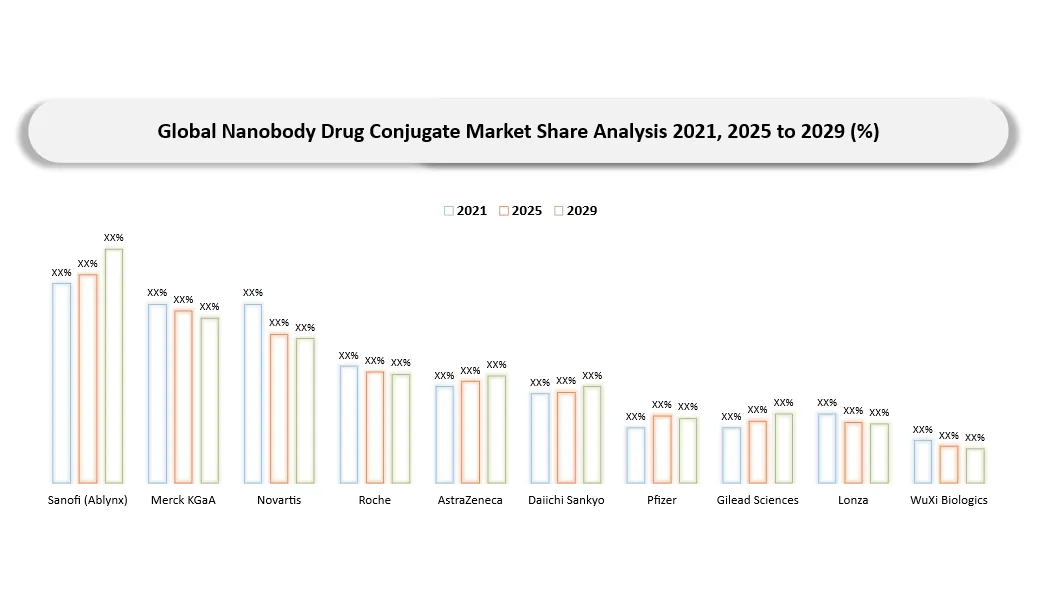
Key Companies of Nanobody Drug Conjugate Market
- Sanofi / Ablynx
- Nanolynx Biologics
- Confo Therapeutics
- ExeVir Bio
- Taisho Pharmaceutical
- Merck KGaA
- Novartis
- Roche
- AstraZeneca
- Daiichi Sankyo
- Pfizer
- Gilead Sciences
- Lonza
- WuXi Biologics
- Piramal Pharma Solutions
- Sterling Pharma Solutions
- Cerberus Therapeutics
- Xiamen University translational teams
- Fudan University translational teams
- Technical University of Denmark research teams
Nanobody Drug Conjugate Market Major Pain Points
- Rapid renal clearance and potential kidney accumulation.
- Limited clinical validation for the NDC modality.
- Difficulty balancing penetration with sufficient systemic exposure.
- Complex integration of nanobody, linker, payload and half-life extension.
- Need for controlled site-specific conjugation and narrow product heterogeneity.
- Limited standardized datasets for AI and translational modeling.
- High-potency handling and specialized analytical requirements.
- Uncertain reimbursement premium versus established ADCs and other targeted modalities.
Nanobody Drug Conjugate Market Recent Developments
- March-April 2026: A peer-reviewed bispecific TROP2/c-Met nanobody-drug conjugate reported potent activity in pancreatic cancer models and highlighted the potential of dual targeting for heterogeneous tumors.
- March 2026: A new open-access review described advances in nanobody drug conjugates for cancer therapy and emphasized design, linker, payload and pharmacokinetic challenges.
- February 2026: A HER2-directed NDC study reported improved penetration in solid-tumor and blood-brain-barrier models with Dxd and MMAE payloads.
- December 2025: A Nectin-4/TROP2 bispecific fatty-acid-modified NDC study reported improved biodistribution and antitumor effects with eribulin payload.
- November 2025: A multivalent nanobody-drug conjugate for influenza prevention and treatment demonstrated the expansion of the concept beyond oncology.
- 2025-2026: New biotechnology ventures began positioning conditionally active NDC platforms for hard-to-treat solid tumors.
Analyst View/Opinion on Nanobody Drug Conjugate Market
The Nanobody Drug Conjugate market has credible scientific momentum but remains an emerging platform category. The strongest investment cases are not based on small binder size alone. They combine a clinically relevant target, measurable penetration advantage, controlled exposure, validated payload chemistry and a scalable manufacturing process. Programs that demonstrate these elements can become attractive partners for established oncology companies.
- HER2 will remain the most visible near-term target, while bispecific TROP2, c-Met and Nectin-4 combinations provide faster growth potential.
- Half-life and renal-risk engineering will determine whether promising preclinical efficacy can translate into practical dosing.
- Platform value will exceed single-asset value when conjugation chemistry and manufacturing can be reused across multiple programs.
- Clinical entry by one or more credible programs would materially re-rate the category and accelerate licensing.
- CDMOs with both biologics and high-potency conjugation capabilities are positioned to capture early revenue before product commercialization.
- Long-term leadership will depend on clinical proof, manufacturing reproducibility and a clear advantage over conventional ADCs.
Nanobody Drug Conjugate Market Target Audience
| Industry | Who Should Buy This Report? | Reason to Buy This Report |
| Pharmaceuticals & Biotechnology | Oncology leaders, discovery teams, portfolio strategy and business development | Assess targets, platforms, pipeline maturity and licensing opportunities. |
| Nanobody Platform Companies | Antibody engineers, platform owners and spinouts | Benchmark architectures, partners and commercialization pathways. |
| CDMOs and CROs | Conjugation, biologics, toxicology and analytical providers | Evaluate service demand and capability gaps. |
| Linker-Payload Suppliers | Chemistry and high-potency technology companies | Identify NDC-specific payload and conjugation opportunities. |
| Academic Research | Translational investigators and technology-transfer offices | Assess commercial pathways and partnership potential. |
| Investors & Consulting | Venture capital, private equity and strategy consultants | Evaluate modality risk, value inflection points and white spaces. |
| Regulators and Payers | Health authorities and evidence teams | Understand future CMC, safety and value considerations. |
Why Choose DATAM?
- Data-driven insights combining market sizing, pipeline probability, technology assessment, manufacturing economics and country-level opportunity.
- Post-purchase analyst consultations for platform licensing, target prioritization, CDMO selection and custom market modeling.
- Annual report updates covering publications, patents, first-in-human programs, partnerships and competitive changes.
- Specialized focus on emerging biologics and translational infrastructure rather than generalized oncology summaries.
- Actionable analysis that connects scientific differentiation with CMC feasibility and commercial strategy.
What DATAM Uniquely Provides
- Ten-year forecasts across target, payload, architecture, therapeutic area, route, stage, end user and region.
- Pipeline assessment that clearly separates preclinical constructs, discovery platforms and future clinical assets.
- Technology analysis covering half-life extension, site-specific conjugation, multispecific design and theranostics.
- Buyer-focused evaluation of translational evidence, manufacturing readiness and partnership criteria.
- Country-level views linking financing, academic output, ADC infrastructure and manufacturing capacity.
- Strategic recommendations for licensing, platform building, service expansion and market entry.


























































