


Nano Additives Market Size and Overview
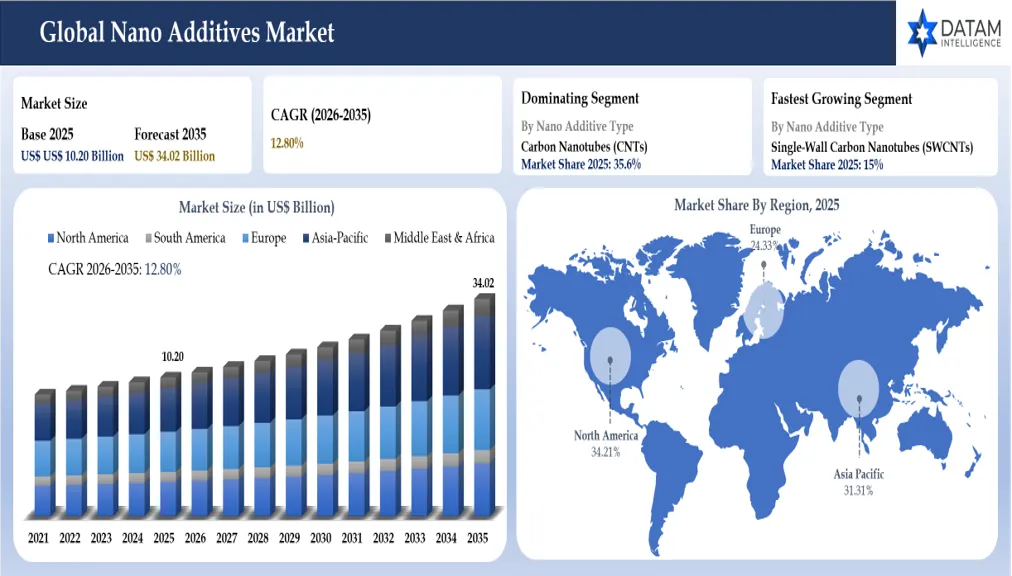
The global nano additives market reached US$ 10.20 billion in 2025 and is expected to reach US$ 34.02 billion by 2035, growing with a CAGR of 12.80% during the forecast period 2026-2035.
The market is being transformed by the increased application of carbon nanotubes, graphene, nano-silica, nano-clay, nano-TiO₂, nano-ZnO and nano-boron nitride in formulations. These nano-additives can deliver the requisite combination of properties such as conductivity, reinforcement, thermal management and barrier performance and durability that traditional additives fail to provide. There is also a growing demand for battery materials, conductive polymers, thermal interface materials, advanced coatings and lightweight composites and the sufficient improvement of properties is possible with loading amounts of the mineral less than 5%. The growing demand for application specific and surface functionalized grades also leads to the need in pre-dispersed additives, concentrates and masterbatch formulations that ensure compatibility and lower agglomeration in downstream applications.
The commercialization process is becoming more dominant in industries related to electric vehicle batteries, semiconductors and electronic materials, automotive composites, industrial coatings and energy-storage systems because there are specific performance requirements that need to be achieved, which can only be fulfilled by utilizing expensive nano-additive formulations. For instance, carbon nanotubes and graphene products are capable of lowering electrical resistivity to application-specific levels of less than 10⁶ Ω·cm whereas thermally conductive nano-additive systems are already in development to ensure thermal conductivity above 2 W/m·K. Consequently, suppliers are inclined to invest in scalable synthesis, purification, surface functionalization and dispersion technologies because of the increasing interest of buyers in performance per unit of weight, repeatability, qualification time and overall formulation cost instead of the price of the materials.
Nano Additives Market Key Takeaways
- Carbon Nanotubes (CNTs) made up nearly 35.6% of the market share in 2025, backed by the demand from lithium-ion batteries, conductive polymers, automotive parts, electronics and thermal management applications.
- The Single-Walled Carbon Nanotubes (SWCNTs) segment had the fastest-paced growth with 17.66% of the compound annual growth rate. This demand was driven by the increased usage of CNTs in battery electrodes, conductive composites, electronics and advanced polymer systems.
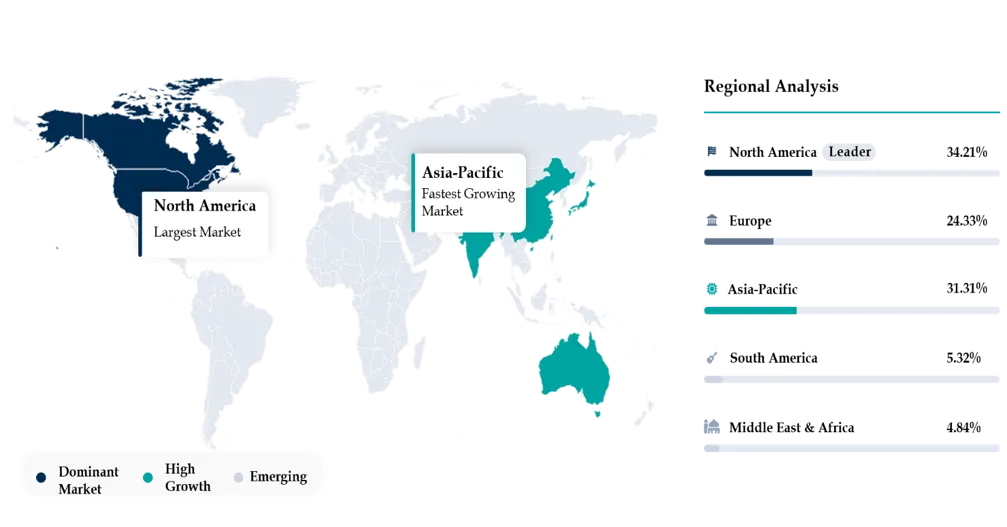
- North America led the global nano additives market by having an 34.21% market share in 2025 with the core activities taking place in the fields of advanced battery technology, semiconductors, aerospace, automotive and specialty chemicals.
- A rise in the adoption of nano-additives which are surface functionalized, ready-to-use formulations and in the form of master-batches is influencing dispersion, compatibility, processing efficacy and performance consistency in polymers, paints, sealants and composites.
- Higher demand from electric vehicle batteries, electronics and semiconductors, automotive composites, advanced coatings, thermal interface materials and energy storage is pushing the use of nano-additives for electrical and thermal conductivity, mechanical reinforcement, barrier enhancement, resistance to wearing, UV Protection and EMI shielding.
Nano Additives Industry Trends and Strategic Insights
- Shift Toward Application-Specific Nano-Additive Engineering: Manufacturers have shifted their focus from universal nanoparticles to the use of surface-functionalized and application-specific nanoparticles that are customized to work for specific polymers, coatings, lubricants, battery electrodes and electronics.
- Rapid Adoption of Hybrid Nano-Additive Systems: It is becoming essential to mix CNTs, graphene, nano-silica, nano-clays, metal oxides and boron nitride to obtain a number of functions, such as conductivity, reinforcement, thermal regulation, barrier properties and resistance to wear, from one formulation.
- Integration of Nano Additives into Advanced Battery Materials: Nano additives are used in technologies of electrodes and conductive formulations due to the need for improved electron transfer, stability of electrodes, cycling and thermal behavior.
- Industrial Focus on Dispersion and Processing Technologies: The emphasis in competition is gradually changing towards the technologies that can ensure uniform distribution of nanoparticles in the material, eliminate agglomeration, enhance compatibility with the principle materials and provide stable performance at acceptable material loads.
- Growing Emphasis on Safe-by-Design and Sustainable Nano Additives: Toxicity testing, surface modification, containment, life cycle analysis and low impact manufacturing techniques are being included in the process of product development by the manufacturers to enhance regulatory approval and deployment.
Nano Additives Market Scope
| Metrics | Details | |
| 2025 Market Size | US$ 10.20 Billion | |
| 2035 Projected Market Size | US$ 34.02 Billion | |
| CAGR (2026-2035) | 12.80% | |
| Largest Market | North America | |
| Fastest Growing Market | Asia-Pacific | |
| By Nano Additive Type | Carbon Nanotubes, Graphene-Based Additives, Nano-Silica, Nano-Clay, Nano-Titanium Dioxide, Nano-Zinc Oxide, Nano-Alumina, Nano-Boron Nitride, Metal Nanoparticles and Other Nano Additives | |
| By Form | Dry Powder, Liquid Dispersion, Colloidal Dispersion, Paste, Masterbatc and Concentrate | |
| By Surface Modification | Unmodified, Silane-Functionalized, Polymer-Functionalized, Surfactant-Modified, Hydrophobic-Treated, Hydrophilic-Treated and Other Surface Treatments | |
| By Functional Property | Mechanical Reinforcement, Electrical Conductivity, Thermal Conductivity, Wear Resistance, Friction Reduction, UV Protection, Barrier Enhancement, Corrosion Protection, Flame Retardancy, Antimicrobial Protection and Other Functional Properties | |
| By Application | Polymer Nanocomposites, Functional Coatings, Lubricants & Greases, Adhesives & Sealants, Thermal Interface Materials, Battery Materials, Packaging Materials, Construction Materials, Electronic Materials, Catalysts & Catalyst Supports, Textile Finishes and Other Applications | |
| By End-Use Industry | Automotive & Transportation, Aerospace & Defense, Electronics & Semiconductors, Energy & Energy Storage, Construction & Infrastructure, Industrial Manufacturing, Chemicals & Materials, Oil & Gas, Packaging, Textiles, Healthcare & Life Sciences, Marine, Consumer Goods and Other Industries | |
| By Manufacturing Technology | Sol-Gel Synthesis, Chemical Vapor Deposition, Precipitation, Hydrothermal Synthesis, Mechanical Milling, Laser Ablation, Flame Synthesis, Exfoliation, Pyrolysis, In-Situ Formation and Other Manufacturing Technologies | |
| By Region | North America | U.S., Canada, Mexico |
| Europe | Germany, UK, Russia, France, Spain, Italy, Poland | |
| Asia-Pacific | China, India, Japan, Australia, South Korea, Indonesia, Malaysia, Singapore, Vietnam, Thailand, Philippines, Taiwan | |
| South America | Brazil, Argentina | |
| Middle East and Africa | UAE, Saudi Arabia, South Africa, Israel, Turkiye, Nigeria | |
| Report Insights Covered | Competitive Landscape Analysis, Company Profile Analysis, Market Size, Share, Growth | |
Why does this report matter in 2026?
The nano additives market has entered a vital stage of commercialization in 2026, owing to the movement of carbon nanotubes (CNTs), graphene, nano-silica, nano-boron nitride and engineered metal oxides from laboratory demonstration towards applications in battery electrodes, semiconductor packaging, thermal interface material, conductive polymer, lightweight composites and advanced coatings. Growing consumer demands for formulation with required characteristics and stable performance have led the need to differentiate commercializable technologies from developmental ones. The report gives insight into material demand, application growth, supplier position, manufacturing technology and region growth factors driving this transition.
Moreover, 2026 will be an important year for the nano additives market since production scale, supply security, formulation economics and regulatory preparedness are going to become key drivers of nano-additive sourcing. Manufacturers must determine whether they have access to reliable CNT and graphene suppliers, whether the economics of pre-dispersed and masterbatch forms is in favor of their use, the effects of surface functionalization on performance and price and an increasingly necessary requirement for characterization and safety testing. It will help companies understand where the investments are being made, what application areas generate additional demand and what supply chain trends and technological challenges persist.
Nano Additives Market White Space & Investment Opportunities
- High-Performance Polymer Nanocomposites: There are possibilities of investment when it comes to the production of CNT-, graphene-, nano-silica-, or nano-clay-based additives that provide an increase in strength-to-weight ratio, thermal stability, conductivity and barrier performance in the automotive, aerospace, electronics and lightweight structural industries.
- Application-Specific Nano-Additive Formulations: Suppliers will be able to find opportunities in the area where customized surface-functionalized nanoparticles for certain resin, coatings, lubricant and elastomer systems will be developed instead of competing with established players by producing large amounts of commodities.
- Nano-Additives for Battery and Energy Storage Materials: The creation of advanced nano-additives for enhancing electrode conductivity, ion transfer, cycling efficiency and thermal management in next-generation batteries like lithium ion batteries, silicon-based anodes, solid state batteries and others is an investment opportunity.
- Electrically and Thermally Conductive Additives: Graphite, CNTs, boron nitride and hybrid nanomaterials provide investment opportunities for applications in semiconductor packaging, thermal interface materials, electromagnetic shielding, high power electronics and others where the current micro-level additives cannot achieve desired efficiency.
- Sustainable and Low-Impact Nano-Additives: Investment opportunities exist in the development of environmentally friendly bio-sourced nanomaterials, aqueous dispersions, less toxic compositions and recyclable nano-polymer systems.
Nano Additives Future Market Transformation
The nano additives market is forecasted to transition from being a nanoparticle supply-driven industry into an application-engineered materials market where competing suppliers will be driven not only by material quantity but also by performance, dispersion quality, surface functionality and results validation. CNTs, Graphene, nano silica, nano boron nitride and functionalized metal oxides may increasingly become part of dispensed concentrations, masterbatches, hybrid formulations and applications-based solutions for batteries, semiconductor packaging, thermal interface materials, conductive polymers, light-weight composites and coatings. Simultaneously, continuous manufacturing, automatic dispersion management, artificial intelligence-based formulations, safety-by-design chemistry and regional manufacturing may help reduce product development time, enhance consistency and shift customer purchases away from volume-based pricing towards performance-based metrics like conductivity per loading level, thermal efficiency per cost and lifecycle durability.
Nano Additives Market Buyer Decision-Making Criteria
Nano additives market buyers consider suppliers not just for the cost of nanoparticles, but also for their functional performance, dispersion properties, material uniformity and the overall formulation economics. This decision is especially challenging when it comes to choosing between CNTs, graphene, nano-silica, nano-boron nitride and metal-oxide additives, since even small differences in the particle parameters, surface chemistry, purity and dosage may have a significant effect on the performance of such materials as polymers, coatings, batteries, lubricants and electronics. In case of high value-added applications, buyers take into account the supplier’s qualifications, technical assistance, regulatory paperwork, scalability and availability of supply before giving clearance to use the nano-additives commercially.
Major Buyer Decision-Making Criteria
- Particle Size & Distribution
- Purity & Material Quality
- Dispersion Stability
- Surface Functionalization
- Performance at Low Loading
- Batch-to-Batch Consistency
- Total Formulation Cost
- Supply Reliability & Scalability
- Technical Qualification & Application Support
- Safety & Regulatory Documentation
Nano Additives Market Economic & Investment Analysis
The nano additives market has become economically viable due to the fact that manufacturers strive to attain improved performance with lesser additive loadings in batteries, conductive polymers, thermal interface materials, advanced coatings, light-weight composites and electronics. The economic aspects differ considerably from one material to another depending on the costs of synthesis, purification, functionalization and dispersion of the additive. As a result, economic viability of the additive depends on the cost of performance improvement rather than the cost per kilogram of the additive. The suppliers who manage to enhance dispersion, decrease loading, ensure material homogeneity and supply pre-dispersed additives have a chance to make their products more economically viable.
The trend of investments is shifting towards commercial-scale production capacities for CNT and graphene, functionalization facilities, dispersants, conductive batteries additives and formulation technologies for specific applications. Investment opportunities arise where nano-additives meet technical challenges that cannot be solved by regular additives, specifically battery conductivity and cycle stability, semiconductor cooling systems, EMI shielding solutions, light-weight automobile composites and durable coating technologies. Investors and strategic materials companies are therefore weighing such factors as production capacity, intellectual property, customer qualification pipelines, scale-up economics and raw-material security and the ability to evolve from laboratory grade to commercially qualified nanomaterials.
Nano Additives Investment Trends in the Market
- Investment in Surface-Functionalized Nano Additives: Investments are increasingly being made in technology which can improve the compatibility and performance of nano-particles in various polymer, coatings, lubricants and composite applications.
- Expansion of Nano-Additive Production Capacity: Investment is being made in large scale synthesis, dispersing and functionalization technology required to go from laboratory scale to commercial scale production of nano additives for automotive, electronic, construction and industrial applications.
- Strategic Funding for Battery-Focused Nano Additives: More funding is being made in nano conductive materials, silicon additives, graphene additives and nano electrode material formulations to enhance conductivity, energy density, cycle life and thermal efficiency.
- Growth of Hybrid and Multi-Functional Nano Additives: Manufacturers are spending R&D money on the development of a combination of various materials like graphene, CNTs, nano silica, boron nitride and metal oxides for imparting multi-functionalities in a single nano additive product.
- Investment in Safer and Sustainable Nano-Additive Technologies: The investments are now shifting from high toxicity nanoparticles to low toxicity, eco-friendly nanoparticles, water dispersible forms, containment technologies and life cycle approaches for manufacture of nano-additives.
Strategic Indicators for Nano Additives Market
High Regulation Impact
Regulatory obligations will have an important effect on the nano additives market due to the fact that engineered nanoparticles, such as CNTs, graphene, nano-TiO₂, nano-ZnO and nano-silica, may need thorough characterization, exposure testing, safety data and compliance with the regulations according to their use and location. The qualifications associated with particle size and morphology and surface treatment as well as the impacts on worker exposure, environment release, labeling and end-of-life disposal can affect the cost of qualification and thus delay commercialization efforts. The above requirements refer especially to the usage of nano-additives in coatings, plastics, packaging, electronics, batteries and consumer usage materials, making suppliers develop formulations that are safer-by-design and characterized better.
High Investment Activity
The investment efforts in the nano additives market are shifting towards scalable synthesis of carbon nanotubes and graphene, functionalization technologies, dispersants and battery conductive additives. Investment efforts are being channeled to create manufacturing capabilities that can offer repeatable particle properties and produce high purity materials on a commercial scale, especially with respect to lithium-ion batteries, conductive polymers, thermal interface materials, electronics and lightweight composite applications. Strategic investments are being made in pre-dispersed nano-additives and masterbatch technologies which make downstream processing easy, while R&D efforts are focusing on developing hybrid nano-additive systems that offer properties such as conductivity, thermal management, reinforcement and barrier functionalities.
Supply Chain Disruption
Supply chain risks are posed to the market of nano additives due to the production processes reliance on specialty precursors, carbon sources with ultra-high purity, metals, surface functionalization substances and specific equipment for synthesis and dispersion of the particles which are not equally present everywhere. Interruptions in the availability of CNTs, graphene, nano-silica, nano-TiO₂, nano-ZnO, or boron nitride can quickly spread to the manufacturing companies of electrodes of batteries, conductive polymers, coatings, electronics and thermal interface materials especially when there are limited suppliers who can replace each other after the qualification cycle for their product characteristics. Long qualification cycles for particle specifications, surface treatments and dispersion performance further limit the ability of suppliers to substitute, which drives manufacturers to seek source diversification, regional production capability, strategic inventory and multi-sourcing formulation approaches.
Pricing Volatility
Volatility in nano additives pricing is attributed to variation in prices of high purity precursors, high energy cost of their synthesis, functionalization cost, scale of production and restricted capacity for production of specialized materials like CNTs, Graphene, nano boron nitride and metal oxides. There is a wide variation in price across various grades of Nano materials, where multi walled CNTs can have a price ranging from tens of dollars per kilogram to hundreds of dollars per kilogram and high purity single walled CNTs and highly functionalized graphene can be several hundred US$/kg or even more based on the purity level, morphology, functionalization, dispersion forms and volume of the purchase. Such cost disparities lead to procurement challenges regarding battery electrodes, conductive polymers, coatings, electronic and thermal management applications, especially when producers move from lab scale production to commercial scale production.
Procurement Pressure
The nano additives market faces growing procurement pressures as downstream manufacturing requires more stringent specification on particle size, purity, surface chemistry, dispersion performance and functionality but at the same time lower cost of delivery. Manufacturers from the battery industry, electronics sector, automotive industry, coating industry and the polymer industry often qualify nano-additives based on their performance in their respective applications, putting pressure on suppliers not only to keep prices low but also to offer high consistency, technical know-how, traceability and reliability of supply. Scarcity of qualified suppliers in case of specialty CNTs, graphene, boron nitride and functionalized nanoparticles can increase buyer dependency and long qualification process can prevent changing suppliers. Such trends are promoting large buyers to enter into long-term supply arrangements, dual sourcing for key materials and insisting on quality requirements backed by suppliers.
New Technology Adoption
Adoption of novel technology in the nano additives market is trending towards surface functionalized nanoparticles, hybrid nano-additives, superior dispersion techniques and application specific masterbatches which offer superior performance characteristics with lower concentration. Companies are developing CNT-graphene hybrid, surface functionalized nano-silica, nano boron nitride, conductive nanomaterials and in situ formation of nanomaterials for high-end applications such as battery electrodes, thermal interface materials, conductive polymers, coatings and lightweight composites. Improvements in flow synthesis, automated dispersion measurement, surface functionalization by plasma or chemical methods and AI-based formulation screening are some other factors enhancing the performance of particles and cutting down time-to-market of nanomaterials to nano-additives.
Regional Expansion Opportunity
The opportunities for regional growth in the nano additives market are high in Asia-Pacific, North America and certain manufacturing hubs in Europe. Opportunities for CNTs, graphene, nano silica and other conductive additives exist in China and Japan due to the demand focused on batteries, semiconductors, automotive materials, specialty coatings and advanced polymers. Opportunities exist for local manufacturing of nano-additives in India based on expanding demands for specialty chemicals, EV, electronics and advanced material manufacturing. In North America, suppliers have the opportunity to focus on batteries, aerospace composites, semiconductors and thermal management applications, whereas Europe offers chances for sustainable nano-additives and high-performance coatings. Regional manufacturing and dispersion units can also reduce transport and qualification risks associated with formulation applications.
Government Policy Support
Government policies supporting research on nanomaterials, manufacture of advanced materials, batteries material, semiconductor supply chain and specialty chemical localization are driving the nano additives market. Government funding of CNTs, graphene, nano-coating, conducting materials and nano-battery materials can be used to establish pilot production, characterization infrastructure, scaling up and collaboration between industry and research institutes. Policies from the United States, China, Japan, India and the European Union have been favoring development of domestic advanced material production and robust supply chains, while growing nanomaterial safety regulations are compelling manufacturers to standardize their characterization, traceability, exposures and safe-by-design nano-additive formulas.
Pricing Intelligence
In the nano additives market, pricing intelligence has become more oriented towards costs adjusted to their performance, as opposed to just price per kilogram. This is due to the fact that particle size, purity, surface functionalization, dispersion form and loading level have a significant effect on the economics of their use. For example, a nano additive costing USD 100 per kilogram and achieving the required performance characteristics using 1% of the additive in a formulation would yield different formulation costs than the use of a nano additive costing USD 40 per kilogram and requiring 5% of the additive in the formulation. As such, more customers compare prices in terms of costs per unit of conductivity, thermal conductivity, strength improvement and other indicators along with the delivery time of suppliers, their dispersion quality and batch consistency. In case of CNTs and graphene additives, formulators will also compare purity above 95%, loading performance and master batch concentration, while purchasers of nano-silica and metal oxides will look at particle size distribution from 10-50 nm in relation to function. This provides the formulator with a more precise platform for supplier negotiations, grade selection and overall formulation cost optimization.
| HS Code | Reporter | Trade Flow | 2025 Trade Value | Interpretation |
| 3824.99 | China | Exports | US$14.0 billion | Indicates China’s substantial international supply of specialty chemical preparations used as a broad proxy for nano-additive trade. |
| 3824.99 | Germany | Exports | US$6.2 billion | Reflects Germany’s significant export activity in specialty chemical preparations relevant to advanced material and additive supply chains. |
| 3824.99 | China | Imports | US$7.3 billion | Indicates substantial Chinese import demand for specialty chemical preparations that can support advanced material and additive applications. |
| 3824.99 | United States | Imports | US$6.4 billion | Highlights significant U.S. import demand for specialty chemical preparations relevant to functional additive and advanced-material supply chains. |
Note: HS Code 3824.99 - Other chemical products and preparations, not elsewhere specified or included is used as a trade-flow proxy for the nano additives market because nano-additives do not have a dedicated HS code. Trade values under this code include a broad range of specialty chemical preparations and therefore should not be interpreted as direct nano additives market trade values.
AI Impact Analysis of Nano Additives Market
AI is enabling rapid nano additive formulation and materials discovery through the analysis of the correlations that exist between the features of nanoparticles, such as size, surface chemistry, aspect ratio, loading level and dispersion performance and the performance of the resulting material. Using machine learning techniques, AI may assist in screening carbon nanotubes, graphene, nano-silica, nano-clay and metal-oxides formulations against their properties, including conductivity, tensile strength, thermal conductivity, barrier performance and wear resistance without resorting to extensive physical testing. Formula optimization through AI can help find the right combination of nano-additives and matrix materials, which will reduce trial and error while developing and help manufacturers create application specific nano additives for use in polymers, coatings, batteries and other electronic materials.
AI is also affecting production quality control and optimization of the nano-additives synthesis process when agglomeration and consistency between batches may influence commercial viability of the product. With the help of computer vision, sensor analysis and predictive algorithms, it will be possible to detect anomalies in such parameters of the material as particle dispersion, viscosity, size distribution and process conditions at the time of synthesis and formulation. In case of batteries and electronics, AI technologies will also be able to correlate characteristics of the material with its conductive properties, heat resistance and cycle durability, thus qualifying new formulations faster. This creates a shift in the competitiveness from simply supply of nanoparticles to data-enabled formulations, repeatable process and validated nano-additives.
Disruption Analysis of Nano Additives Market
Technological disruption in the nano additives market is occurring through a shift from traditional single function additives toward multifunctional and application engineered nanomaterials. CNT–graphene hybrids, nano-silica systems, boron nitride and surface-functionalized metal oxides enable combinations of conductivity, thermal management, reinforcement, barrier performance and wear resistance that traditional additives are unable to deliver at comparable loading levels. This is seen as disruptive across the battery electrode, thermal interface, lightweight automotive composite, conductive polymer and advanced coating markets where manufacturers are reengineering their formulations around nano-additives as opposed to simply substituting them into a traditional recipe.
Another disruption is being observed in the commercialization and supply models, where dispersion quality, surface modification, purification and compatibility with formulation dictate value instead of volume of nanoparticles alone. The suppliers who can offer pre-dispersed, functionalized and masterbatch-type nano-additives have an opportunity to simplify processing for compounders and coating companies downstream. On the other hand, scalability of CNTs and graphene manufacturing, better nanoparticle functionalization, automation of dispersion process and data-driven formulation design have brought down the entry barrier into the market. This creates competitive pressure for suppliers to transition from commodity-based sales of nanomaterials to performance-validated formulations that exhibit consistency of quality and have technical assistance.
Nano Additives Market BCG Matrix: Company Evaluation
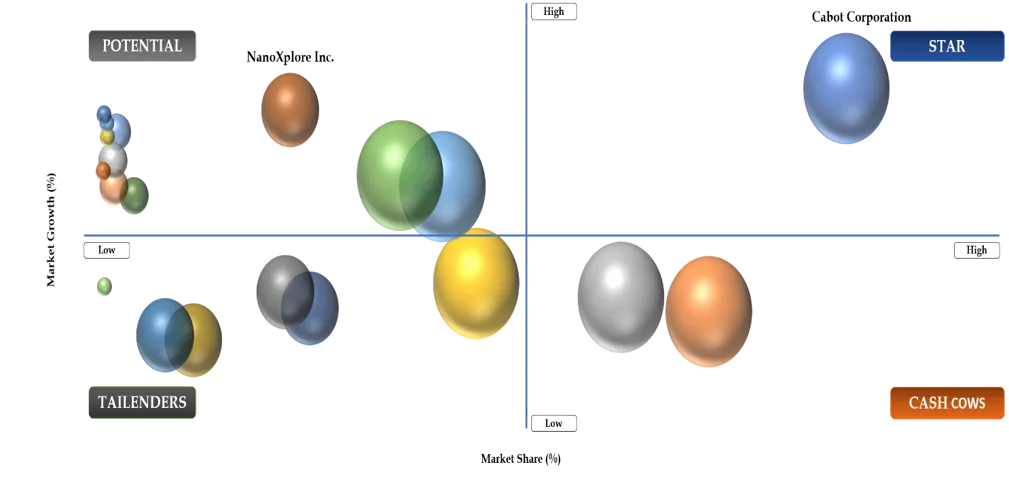
STAR
Cabot Corporation is a major player in the nano additives market by virtue of its existing portfolio of conductive carbons, carbon nanotubes, carbon nanostructures and fumed metal oxides, with increasing presence in lithium-ion batteries, conductive polymers, coatings and thermal management. The company's strength in large-scale production, customer qualification and end-use applications of electric vehicles and energy storage ensures robust market growth opportunities and also sustains its competitive standing in functional nano-additives.
POTENTIAL
NanoXplore Inc. has considerable potential in the nano additives market due to their capabilities in large-scale production of graphene-based solutions such as GrapheneBlack, graphene master batches, graphene concentrations and graphene reinforced composites. The company's potential is mainly dependent on the growth of graphene in conductive plastics, battery components, energy storage systems, electronics and heat transfer applications due to growing demands for application-specific grades of graphene and effective dispersion. The ability of the company to produce graphene on a larger scale and formulate it into useable products will provide an avenue for extracting more value from the increased adoption of graphene nano-additives.
Nano Additives Market Dynamics
Driver Impact Analysis
| Driver | Market Growth Impact (%) | Demand Concentration | Impacted Use Case | Strategic Impact |
Rising Demand for High-Performance Polymer Nanocomposites | 28% | Automotive, aerospace, electronics and advanced composites | Lightweight structural components, conductive polymers and reinforced plastics | Encourages suppliers to develop high-dispersion CNT, graphene, nano-silica and nano-clay formulations |
Growing Adoption of Nano-Enabled Functional Coatings | 24% | Automotive, industrial equipment, construction and electronics | Anti-corrosion, scratch-resistant, UV-protective and barrier coatings | Expands demand for surface-functionalized nano-TiO₂, nano-ZnO, nano-silica and hybrid additives |
Increasing Use of Nano Additives in Energy Storage | 21% | Batteries, energy storage systems and electronic devices | Conductive electrodes, silicon-anode systems and thermal-management materials | Accelerates R&D and capacity investments in conductive and thermally functional nanomaterials |
Rising Demand for Electrically and Thermally Conductive Materials | 17% | Semiconductor, electronics, EV and high-power electrical equipment | EMI shielding, thermal interface materials and conductive composites | Creates opportunities for CNTs, graphene, boron nitride and hybrid nano-additive systems |
Driver: Rising Demand for High-Performance Conductive and Thermally Functional Materials
Increased demand for carbon nanotubes, graphene, boron nitride, nano-silica and metal-oxide nano-additives in battery electrodes, thermal interface materials, conductive polymers, lightweight auto composites and electronic components is raising the demand for nano additives. These materials allow for higher electricity and heat conductivity, mechanical strengthening, creation of barrier properties and allowing various functions that require a small amount of energy. Thus, the development of batteries, advanced electronics, electric vehicles and high-performance composites opens up new opportunities for suppliers of nano-additives offering applications and performance.
Restraint Impact Analysis
| Restraint | Drag on Market Growth (%) | Primary Impact Area | Impacted Use Case | Strategic Impact |
High Cost of Nano-Additive Production and Purification | 26% | Production economics and formulation costs | High-performance polymer composites and specialty coatings | Drives investment toward scalable synthesis, process optimization and lower-cost production routes |
Nanoparticle Agglomeration and Dispersion Challenges | 24% | Material processing and formulation consistency | Polymer compounds, coatings, lubricants and adhesives | Increases demand for surface functionalization, dispersion technologies and application-specific formulations |
Regulatory and Toxicity Concerns | 21% | Product approval and commercialization | Consumer-facing coatings, textiles, packaging and healthcare-related applications | Encourages safe-by-design development, toxicity testing, exposure controls and regulatory compliance |
Limited Standardization and Performance Validation | 18% | Quality control and customer qualification | Electronics, battery materials and industrial composites | Creates pressure for standardized testing, reproducible specifications and application-level performance validation |
Restraint: Dispersion Complexity and High Cost of Consistent Nano-Additive Formulations
There are several factors that restrict the widespread use of nanomaterials as additives. The use of carbon nanotubes, graphene, nano-silica, or metal-oxide nanoparticles may involve functionalization or special mixing techniques for dispersion because of their agglomeration, low compatibility with the matrix, or nonuniform dispersion. It becomes especially important when the material is used on a large scale, since even minor deviations in the dispersion process may have a considerable impact on such characteristics as electrical conductivity, viscosity, mechanical characteristics, coating quality, or battery performance.
Nano Additives Market Segment Analysis
The global nano additives market is segmented based on the nano additive type, form, surface modification, functional property, application, end-use industry, manufacturing technology and region.
By Nano Additive Type
Carbon Nanotubes (CNTs) Lead the Market Through High-Performance Conductive and Reinforcing Applications
The nano additives market was led by Carbon Nanotubes (CNTs) in 2025 with about 35.6% of the total market share. The exceptional ratio of their aspect ratios along with good conductivity order and reinforcement properties increase their demand in manufacturing lithium-ion batteries, conductive polymers, EMI shieldings, components of automobiles, electronics and materials for thermal management processes, especially where improved performance is needed at low levels of use.
By Nano Additive Type
Single-Wall Carbon Nanotubes (SWCNTs) Accelerate Adoption in Advanced Batteries, Electronics and Conductive Composites
SWCNTs are expected to experience the highest growth rate with a projected CAGR of 17.66%. This growth will be due to their capacity to provide superior electrical conductive and mechanical reinforcement at minimal levels, thus enabling these nanomaterials to be used in next-generation battery electrodes, conductive polymers, thin electronics, lightweight composite materials and advanced polymer technologies.
Nano Additives Market Geographical Penetration
U.S. Nano Additives Market Landscape
The characteristics of the US nano additives market include high demand for carbon nanotubes, graphene, nano silica, metal oxide nanoparticles and other functional nanomaterials in high performance plastics, coatings, electronics, batteries, aerospace applications, automotive and industrial formulations. There is a growing trend for the US nano additives market to move away from commodity nanoparticles to more application-specific, surface functionalized and dispersion ready additives where low loading levels provide benefits such as electrical conductivity, thermal management, reinforcement, anti-corrosion properties or barriers. U.S. manufacturers and innovators are also looking to produce nanomaterials domestically, including their dispersion technology and battery-quality conductive additives, but rigorous standards of characterization, protection from worker exposure and environmental safety guide commercialization and formulations.
Japan Nano Additives Market Outlook
The Japan’s nano additives market is driven by the developed auto, electronics, semiconductor, battery, coating and high-performance polymers industry, leading to a requirement for CNTs, graphene, nano silica, alumina and other functional nanomaterials. Japanese producers pay much attention to purity, precise control of the particle properties and application-specific surface modification especially for conductive materials, thermal management, light-weight composite materials, electronic parts and battery electrodes. The market also has an advantage with the expertise that Japan possesses when it comes to precision chemical processing and nanocarbon manufacturing, but the customer is very particular about proper dispersion, cleanliness, reliability and reproducibility, making technical qualification and compatibility critical competitive elements for the nano-additive supplier.
China Nano Additives Market Trends
China’s nano additives market is driven by lithium-ion battery, EV, electronics, plastics, coatings, construction material and industrial manufacturing sectors’ demand for conducting materials. The market is further anticipated to grow due to the increased domestic production of nanomaterials and conductive additive manufacturing capacity for battery electrode, electrically conductive polymer composite and other end-use industries. Moreover, suppliers are focusing on providing higher-purity, surface-engineered and dispersion-optimized nano-additives with enhanced processability and increased manufacturing scale to meet the industry’s rising demand. Furthermore, significant price competition and higher manufacturing volumes are also projected to drive nano-additive adoption in consumer electronics and other end-use industries.
Nano Additives Market Competitive Landscape
- Competition is becoming application-oriented with firms using different kinds of nano-additive formulations in the market. We see companies utilizing surface-functioned CNTs, graphene, nano-silica, nano-boron nitride and metal-oxide additives for the various kinds of polymer, coatings, battery and electronic-material systems.
- Dispersion technology is one of the biggest competitive advantages, as companies that offer pre-dispersed nano-additives, liquid, dispersions, concentrates and masterbatches are minimizing the agglomeration challenges and simplifying the preparations which the subsequent manufacturers need to carry out.
- There is huge competition among battery and energy-storage systems that is intensified by the use of the conductive CNTs, graphene and carbon nanoadditives as they can enhance the performance of the electrode, charging cycle and the overall efficiency of the batteries like lithium-ion batteries and those that came recently on the market.
- Scalability of production and consistency of material are key competitive parameters, as industry leaders invest in higher volume production, greater control over the nature of particles, purification and surface treatments and batch-to-batch performance in order to meet qualification criteria.
- Differention strategies are moving beyond mere supply of nanoparticles into technical solutions such as formulations, testing and optimization for the automotive, electronics, coating, composite and heat management markets.
Public Company Q1-Q2 2026 Performance Comparison
The table below compares five publicly listed companies with direct or strategically relevant exposure to the nano additives market. Financial metrics are company-wide or segment-level because standalone nano additive revenue is generally not separately disclosed. Therefore, the performance drivers below distinguish overall company performance from direct exposure to CNTs, graphene, conductive additives, specialty silica and other nano-enabled materials.
| Company | Q1–Q2 2026 Performance | Nano Additives Exposure | Key Performance Driver |
| Cabot Corporation | US$1.75 billion revenue | Conductive carbons, battery materials, specialty carbon and performance materials relevant to conductive nano-additive applications | Battery Materials momentum supported by growing BESS and EV-related demand; Performance Chemicals also contributed to earnings. |
| Evonik Industries AG | US$8.33 billion revenue | Specialty silica, additives, high-performance polymers, catalysts and advanced material solutions | Higher volumes and selling prices supported Q2 performance, with particularly strong development in Advanced Technologies and demand for precipitated silicas. |
| Arkema S.A. | US$5.25 billion revenue | Specialty materials, performance additives, high-performance polymers and coating technologies relevant to nano-enabled formulations | Batteries, electronics and coatings remained important growth areas; H1 EBITDA reached €673.5 million. |
| NanoXplore Inc. | US$35.94 million revenue | Direct graphene manufacturing, graphene-enhanced plastics and composites and graphene-based battery materials | Expansion of its dry-process graphene platform and new customer programs; H1 customer revenue was C$49.92 million. |
| Kaneka Corporation | US$2.46 billion revenue | Advanced materials, functional polymers and specialty materials relevant to nano-enabled formulations | Material Solutions and other advanced-material businesses contributed to overall performance, although company-wide results include businesses outside nano-additives. |
Note: Company-level revenue should not be interpreted as nano additives market revenue unless separately disclosed. The figures represent company-wide reported revenue and therefore include businesses outside nano-additives. Fiscal periods also differ across companies.
Key Companies of Nano Additives Market
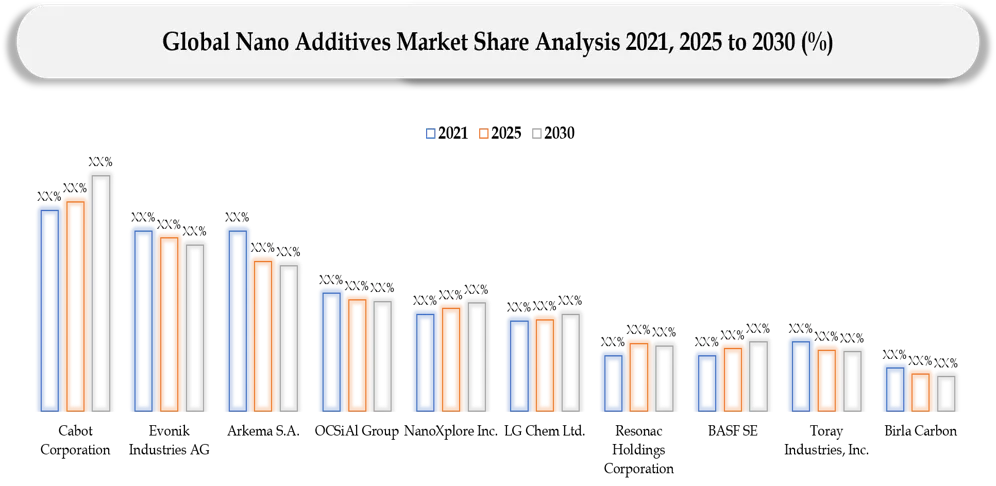
- Cabot Corporation (U.S.)
- Evonik Industries AG (Germany)
- Arkema S.A. (France)
- OCSiAl Group (Luxembourg)
- NanoXplore Inc. (Canada)
- Birla Carbon (India)
- Kaneka Corporation (Japan)
- Toray Industries, Inc. (Japan)
- LG Chem Ltd. (South Korea)
- Resonac Holdings Corporation (Japan)
- Mitsubishi Chemical Group Corporation (Japan)
- BASF SE (Germany)
- 3M Company (U.S.)
- Nanophase Technologies Corporation (U.S.)
- American Elements (U.S.)
- Meijo Nano Carbon Co., Ltd. (Japan)
- Haydale Graphene Industries plc (U.K.)
- Graphenea S.A. (Spain)
- Nippon Shokubai Co., Ltd. (Japan)
- Thomas Swan & Co. Ltd. (U.K.)
Company Profiles of Nano Additives Market
Cabot Corporation
Cabot Corporation is one of the leading providers of conductive carbons, carbon nanotubes, carbon nanostructures, fumed metal oxides and other functional materials utilized in batteries, coatings, polymers and other advanced material applications. Its nano additive product range includes carbon nanotubes (CNTs) and carbon nanostructures for lithium ion batteries, both in powder form and as dispersions.
Competitive considerations include increasing conductive additive usage in electric vehicle (EV) and energy storage batteries, reducing loading amounts for carbon nanostructures, improving dispersion technology and promoting fumed metal oxides and aerogel technology for batteries and thermal management applications.
Evonik Industries AG
Evonik Industries is a specialty chemicals company with substantial business interests in the production of specialty materials based on nanotechnology, especially precipitated and fumed silica, specialty additives, catalysts and polymer technology. The company has materials that can be used in cases where there are requirements for controlled particle properties, reinforcing, rheology, surface treatments and performance.
The competitive considerations are increasing high performance silica applications, optimizing the efficiency of formulations, application-specific material solutions and enabling customers in coatings, polymers, adhesives, electronics, energy storage and other advanced material applications.
Arkema S.A.
Arkema is a specialty materials company that has a connection with high-performance polymers, specialty additives, coatings and carbon materials which are needed for nano-additive formulations. The company’s products will be useful for cases where lightweighting, electrical characteristics, thermal management, chemical resistance and durability are necessary.
The main competitive strategies of the company will include higher adoption of high-performance materials in batteries, electronics, cars, coatings and composite materials, creation of application-specific formulas and use of specialty material technologies.
OCSiAl Group
The OCSiAl company is concerned with the manufacturing of single wall carbon nanotubes (SWCNTs) on an industrial level, as well as their technologies of incorporation into industrial products. These nanotubes are applied to serve as conductive and reinforcing fillers in such areas as batteries, polymers, rubber, coatings, fabrics and others.
Competitive priorities encompass the growth in use of SWCNT in battery electrodes, conductive polymers, automotive applications and advanced composites; industrial-scale production; and nanotube formulations for customers.
NanoXplore Inc.
NANOXPLORE is a graphene materials company that manufactures GrapheneBlack and custom graphene materials, masterbatches, concentrates and graphene-reinforced materials. The company’s strategy focuses more on customizing graphene properties based on its specific end-use needs.
The competitive priorities are increasing the use of graphene commercially in conductive composites, energy storage, electronics, polymers and heat management; creating more downstream master batches and concentrates; and commercializing higher-purity forms of graphene.
Birla Carbon
Nano-additives in Birla Carbon’s product offering have increased through Nanocyl, offering industrial multi-walled carbon nanotubes (MWCNTs), CNT masterbatches, compounds and liquid dispersions. Their NC7000 MWCNTs platform, as well as other formulations, are designed to deliver properties like electrical conductivity, electrostatic dissipation, mechanical strength, UV resistance and thermally enhanced products in plastics, elastomers, coatings, automotive, electronics and energy storage.
Competitive challenges consist of increasing MWCNT usage in automotive and electronic parts, energy storage, conductive polymers and coatings; increase the number of customer-tailored CNT masterbatches and dispersions.
Nano Aditives Market Major Pain Points
- Nanoparticle Agglomeration and Inconsistent Dispersion: CNTs, graphene, nano-silica and metal-oxide nanoparticles can cause agglomeration when added to matrix materials such as polymers, paints, lubricant materials, etc. and thereby become prone to differences in performance across batches.
- High Cost of Precision Nano-Additive Production: Specific size, purity, chemistry and functionalization requirements for additives requires the advanced equipment that raises the cost of production as compared to other types of additives being produced at the scale of microns.
- Difficulty in Scaling from Laboratory to Industrial Production: Nano-additive products that have been proven effective at the laboratory level may face hurdles in keeping a uniform particle size and consistent quality of loading at industrial production levels.
- Limited Standardization and Application-Specific Validation: The various characteristics of particles, surface treatments, dispersal methods and test protocols distinguish different nano-additive products from each other and make the comparison of their performances variable from supplier to supplier.
- Regulatory, Occupational Safety and Environmental Management Challenges: The usage of engineered nanoparticles requires the use of exposure control measures, identification, evaluation of safety, labeling and methods of waste processing, which adds to the time taken for commercialization and expenses incurred from compliance.
Nano Additives Market Recent Developments
- Birla Carbon - September 2026: Birla Carbon has announced a 15% rise in the prices of its Specialty Materials products starting from October 1, 2026, due to continuous rise in feedstock costs and ongoing global disruption in supply chain. The announcement shows that there is mounting pressure in terms of costs for the specialty carbon and carbon-nanotube materials supplies.
- Cabot Corporation - September 2026: Cabot declared a US$50 million grant from U.S. Department of Energy, along with around US$75 million in corporate investments, for the increased manufacturing of advanced conductive additives in their Louisiana and Texas plants. The plant will feature commercial production of carbon nanostructures for future battery technology.
- Evonik Industries AG – September 2026: Evonik has presented its innovative additive technologies at the CAMX 2026 event where it is highlighted that the technologies are to be used for composites and high-tech materials and will enhance dispersion, wetting and processing efficiency as well as stability and performance of materials in plastics, composites and electronic devices in the EV industry.
- OCSiAl Group - June 2026: OCSiAl has announced a contract for the provision of single-wall carbon nanotubes (SWCNTs) to PowerCo for use in its battery factory in Salzgitter, thus paving the way for the utilization of SWCNTs as conductive additives in large-scale manufacturing of batteries for EVs.
- NanoXplore Inc. - June 2026: NanoXplore, in partnership with Techmer PM, introduced GrapheneBlack xGnP masterbatch for high-performance plastic films, which is an example of a novel graphene additive for conductive and reinforced polymers.
Analyst View / Opinion on Nano Additives Market
- Application-specific formulations will outperform commodity nano-additives: It is anticipated that the market will start favoring providers of functionalized, pre-dispersed nano-additives such as CNTs, graphene, nano-silica and metal-oxide products that are made specifically for certain polymer applications, coating applications, battery applications and electronic-material applications.
- Battery and thermal-management applications will remain key value-creation areas: Nano-additives providing better electrode conductivity, cycle stability, heat dissipation and thermal interface performance are bound to start gaining adoption in the market, since these applications need improvements that generic additives cannot provide.
- Dispersion technology will become a major competitive differentiator: Manufacturers who can successfully work with agglomeration, maintain uniform distribution of nanoparticles and obtain required properties with minimal product volumes will win over competitors focused exclusively on volume and material pricing.
- Commercial scalability will separate viable technologies from laboratory-stage innovations: Ability to create constantly uniform particles while maintaining high purity, functionalization process and manufacturability will become increasingly important since automotive and electronic, battery and other industrial industries are entering the area of mass production.
- Sustainability and regulatory readiness will increasingly influence supplier selection: Nano additive producers that combine performance with better toxicity profiling, improved handling, traceability, environmentally friendly production processes and water-soluble or recyclable compositions will have the chance of meeting the qualification criteria for coatings, plastics, packaging, electronics and many other areas of business requiring regulations.
Target Audience
| INDUSTRY | WHO SHOULD BUY THIS REPORT? | REASON TO BUY THIS REPORT |
| Nano-Additive & Nanomaterial Manufacturing | Nano-additive producers and nanomaterial manufacturers | Assess product demand, material-level opportunities, capacity expansion and competitive positioning |
| Specialty Chemicals | Specialty chemical manufacturers and formulation companies | Identify opportunities for functionalized and application-specific nano-additive formulations |
| Plastics & Polymer Composites | Polymer producers, compounders and composite manufacturers | Evaluate adoption of CNTs, graphene, nano-silica, nano-clay and other reinforcing additives |
| Paints & Coatings | Coating manufacturers and additive suppliers | Identify demand for nano-additives delivering corrosion, UV, scratch, barrier and durability performance |
| Automotive & Transportation | Automotive material and component manufacturers | Assess nano-additive applications in lightweight composites, conductive components, coatings and thermal management |
| Electronics & Semiconductors | Electronic-material and semiconductor-material manufacturers | Analyze opportunities for conductive, thermally conductive and EMI-shielding nano-additives |
| Batteries & Energy Storage | Battery manufacturers and electrode-material suppliers | Evaluate nano-additive opportunities for conductivity, cycle stability, electrode performance and thermal management |
| Lubricants & Industrial Fluids | Lubricant producers and additive formulators | Assess demand for nano-additives that improve friction, wear resistance, load carrying and thermal performance |
| Construction Materials | Cement, concrete, sealant and advanced-material manufacturers | Identify applications where nano-additives improve strength, durability, barrier properties and functional performance |
| Investors & Technology Developers | Private equity firms, venture capital investors and technology developers | Evaluate emerging nano-additive technologies, commercialization opportunities, investment areas and competitive dynamics |
Why Choose DATAM?
- Data-Driven insights: Dive into detailed analyses with granular insights such as pricing, market shares and value chain evaluations, enriched by interviews with industry leaders and disruptors.
- Post-Purchase Support and Expert Analyst Consultations: As a valued client, gain direct access to our expert analysts for personalized advice and strategic guidance, tailored to your specific needs and challenges.
- White Papers and Case Studies: Benefit quarterly from our in-depth studies related to your purchased titles, tailored to refine your operational and marketing strategies for maximum impact.
- Annual Updates on Purchased Reports: As an existing customer, enjoy the privilege of annual updates to your reports, ensuring you stay abreast of the latest market insights and technological advancements. Terms and conditions apply.
- Specialized Focus on Emerging Markets: DataM differentiates itself by delivering in-depth, specialized insights specifically for emerging markets, rather than offering generalized geographic overviews. The approach equips our clients with a nuanced understanding and actionable intelligence that are essential for navigating and succeeding in high-growth regions.
- Value of DataM Reports: Our reports offer specialized insights tailored to the latest trends and specific business inquiries. The personalized approach provides a deeper, strategic perspective, ensuring you receive the precise information necessary to make informed decisions. The insights complement and go beyond what is typically available in generic databases.
What DATAM Uniquely Provides
- Nano Additive Material-Level Market Mapping: A detailed analysis of materials like CNT, graphene, nano-silica, nano-clay, nano-boron nitride and engineered metal oxides has been done to result in a clear correlation between material properties and resulting applications and corresponding demand.
- Application-Specific Demand Intelligence: Maps usage of nano-additive technology in applications such as battery electrodes, thermal interface materials, conductive polymers, advanced coatings, lightweight composites, electronics and lubricants to understand the need where certain performances create additional demand.
- Technology-to-Commercialization Assessment: Evaluation of synthesis, functionalization, dispersion, pre-dispersing, masterbatch, or other relevant technologies to define key commercial technologies versus developmental approaches.
- Supplier and Formulation Competitiveness Analysis: Suppliers are assessed based on various parameters like purity of material, various particle properties, functionalization capacity and capability of dispersion, production economies, qualification for use and reliability of supply instead of firm presence.
- Performance-Adjusted Market Opportunity Analysis: Opportunities are judged based on loading, conductivity, thermal performance, strength, durability, price of formulation and method of qualification, thus, clarifying more the possibilities of replacing or exceeding traditional additives with nanomaterials.


























































