


Mycoprotein Ingredients Market Size and Overview
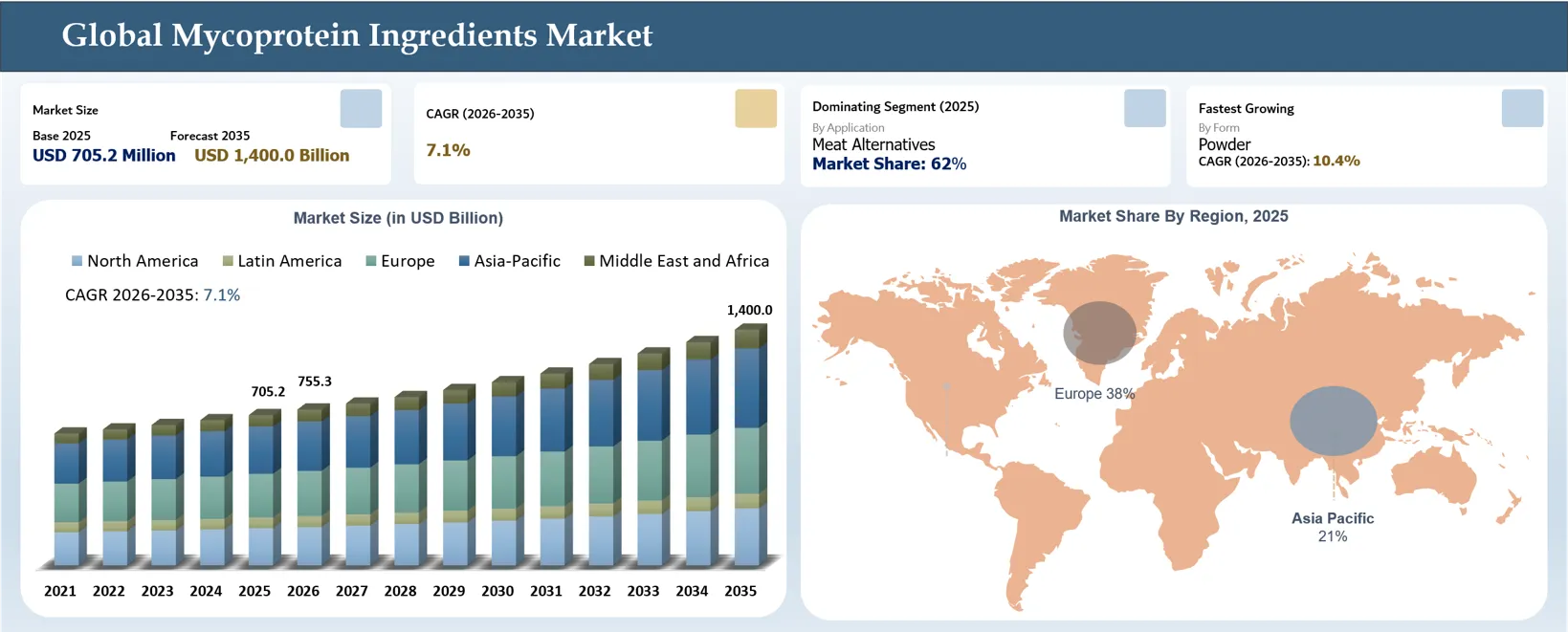
The global mycoprotein ingredients market was valued at approximately USD 705.2 million in 2025 and is projected to reach around USD 1,400.0 million by 2035, expanding at a CAGR of approximately 7.1% during 2025-2035. The mycoprotein ingredients market is experiencing a structural transformation driven by the growing demand for meat alternatives, increasing demand for high-protein and nutritious food products, expansion of plant-based and fermentation-derived protein applications, growing focus on sustainable protein sources, and advancements in fermentation technologies and mycoprotein processing. Consumer interest in alternative proteins is supporting demand for meat-free products across burgers, mince, nuggets, sausages, pieces and other formats. Global retail sales of plant-based meat and seafood reached approximately $6.1 billion in 2024, up 4% from 2023, while six in ten U.S. households purchased plant-based foods during the year. Nearly 80% of those households purchased plant-based foods more than once, indicating that the category has moved beyond one-time trial for a substantial portion of consumers. According to ProVeg’s 2025 consumer research, meat reduction is creating opportunities for alternative-protein products across Europe, with 51% of European consumers and 48% of UK consumers reducing their meat intake. In addition, two-thirds of European diners are choosing vegetables over meat more frequently, supporting the development and adoption of alternative-protein ingredients such as mycoprotein.
Increasing Commercialization and Scale-Up of Mycoprotein Production
Mycoprotein ingredients market is undergoing commercialization as more producers are adopting large-scale production of mycoprotein. This shift from pilot-scale production to commercial-scale production of ingredients is further supporting the adoption of mycoprotein across emerging applications. For instance, in March 2026, Enifer completed a four-ton production run of PEKILO Pet, a fungal protein ingredient developed for pet food applications. The batch represents a move from pilot-scale production toward commercial product development, providing pet food manufacturers with sufficient quantities for formulation and manufacturing trials. PEKILO Pet is a dried mycoprotein that can be used in processes like extrusion and retorting, enabling making it possible to be applied in dry as well as wet pet food formulations. Four-ton commercial-size batch shows the shift from laboratory fungal proteins to B2B ingredients.
Mycoprotein Ingredients Market Strategic Takeaways
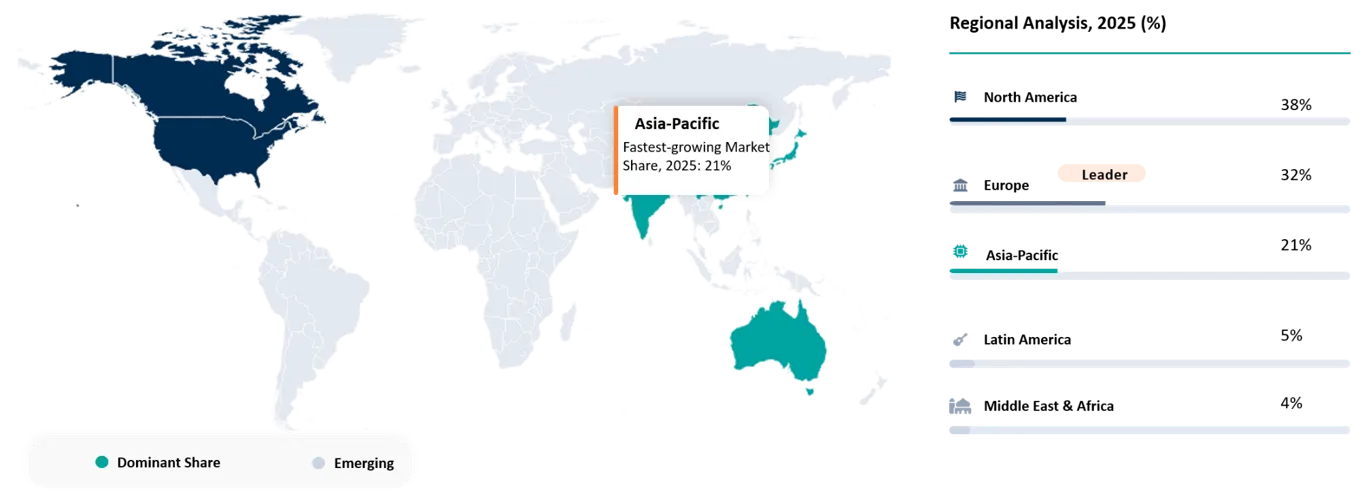
- Europe held the leading regional market share, accounting for approximately 38% of the global mycoprotein ingredients market in 2025, supported by the presence of established mycoprotein producers, early consumer adoption of fungal-based proteins, strong alternative-protein infrastructure, and a well-developed food-processing industry. North America accounted for around 32% of the market share in 2025, supported by increasing investment in fermentation-based protein technologies, growing demand for sustainable protein ingredients, and expansion of mycoprotein applications across meat alternatives, functional foods, and nutritional products.
- Advancements in fermentation technology and sustainable production methods are becoming key strategic focus areas in the global mycoprotein ingredients market. Companies are increasingly investing in submerged fermentation, fungal strain optimization, alternative substrate utilization, and scalable biomass production systems to improve yield, reduce production costs, and enhance ingredient consistency.
- Commercialization initiatives and capacity expansion by mycoprotein ingredient manufacturers are accelerating market development, as companies are moving from pilot-scale innovation toward larger-scale B2B ingredient supply. For example, ENOUGH is expanding the availability of its ABUNDA mycoprotein ingredient for applications including meat alternatives and other food formulations, while The Protein Brewery is commercializing its Fermotein® fungal protein platform for use in food and nutrition applications. Similarly, Enifer Bio is advancing its PEKILO® mycoprotein technology for sustainable protein production, and BMC Ingredients is developing its Rhiza mycoprotein ingredient for applications such as meat alternatives, blended foods, and dairy alternatives.
Mycoprotein Ingredients Market Industry Trends and Strategic Insight
- Mycoprotein manufacturers are increasingly investing in advanced fermentation technologies to improve biomass yield, production efficiency, nutritional performance, and scalability. Companies are adopting innovations in submerged fermentation, fungal strain optimization, substrate utilization, and downstream processing to develop consistent mycoprotein ingredients for applications including meat alternatives, dairy alternatives, functional foods, snacks, and protein-enriched products.
- Demand for application-specific mycoprotein ingredients is becoming a major market trend as food manufacturers seek proteins with targeted functional properties. Different applications require specific characteristics such as fibrous texture, moisture retention, protein concentration, sensory performance, and formulation compatibility. As a result, companies are developing customized mycoprotein formats, including wet biomass, powders, granules, and structured ingredients, to meet requirements across meat alternatives, bakery products, beverages, and nutritional foods.
- Commercialization of fermentation-based proteins is accelerating the development of next-generation mycoprotein ingredients. Increasing investment in fungal biomass production, alternative protein innovation, and sustainable food technologies is encouraging companies to expand beyond traditional meat-alternative applications into areas such as dairy alternatives, functional nutrition, pet food, and specialty food ingredients. New regulatory approvals, production facility expansions, and partnerships between ingredient producers and food manufacturers are further supporting the adoption of mycoprotein ingredients globally.
Mycoprotein Ingredients Market Scope
| Metrics | Details | |
| 2025 Market Size | USD 705.2 Million | |
| 2035 Projected Market Size | USD 1,400.0 Million | |
| CAGR (2026-2035) | 7.1% | |
| Largest Market | North America | |
| Fastest Growing Market | Asia-Pacific | |
| By Source | Fusarium, Aspergillus, Neurospora, Other Fungal Sources | |
| By Form | Powder, Minced, Other Forms | |
| By Technology | Submerged Fermentation, Solid-State Fermentation, Integrated Fermentation Technologies | |
| By Functionality | Protein Enrichment, Texturization & Structure, Binding, Water Retention, Emulsification, Others | |
| By Protein Content | High-Protein, Standard Protein, Low Protein | |
| By Application | Meat Alternatives, Dairy Alternatives, Bakery & Confectionery, Snacks & Convenience Foods, Others | |
| By Region | North America | U.S., Canada, Mexico |
| Europe | Germany, UK, France, Spain, Italy, Poland, Russia, Rest of Europe | |
| Asia-Pacific | China, India, Japan, Australia, South Korea, Indonesia, Malaysia, Rest of Asia-Pacific | |
| Latin America | Brazil, Argentina, Rest of Latin America | |
| Middle East and Africa | UAE, Saudi Arabia, South Africa, Israel, Türkiye, Rest of Middle East and Africa | |
| Report Insights Covered | Competitive Landscape Analysis, Company Profile Analysis, Market Size, Share, Growth | |
Mycoprotein Ingredients Market Disruption Analysis
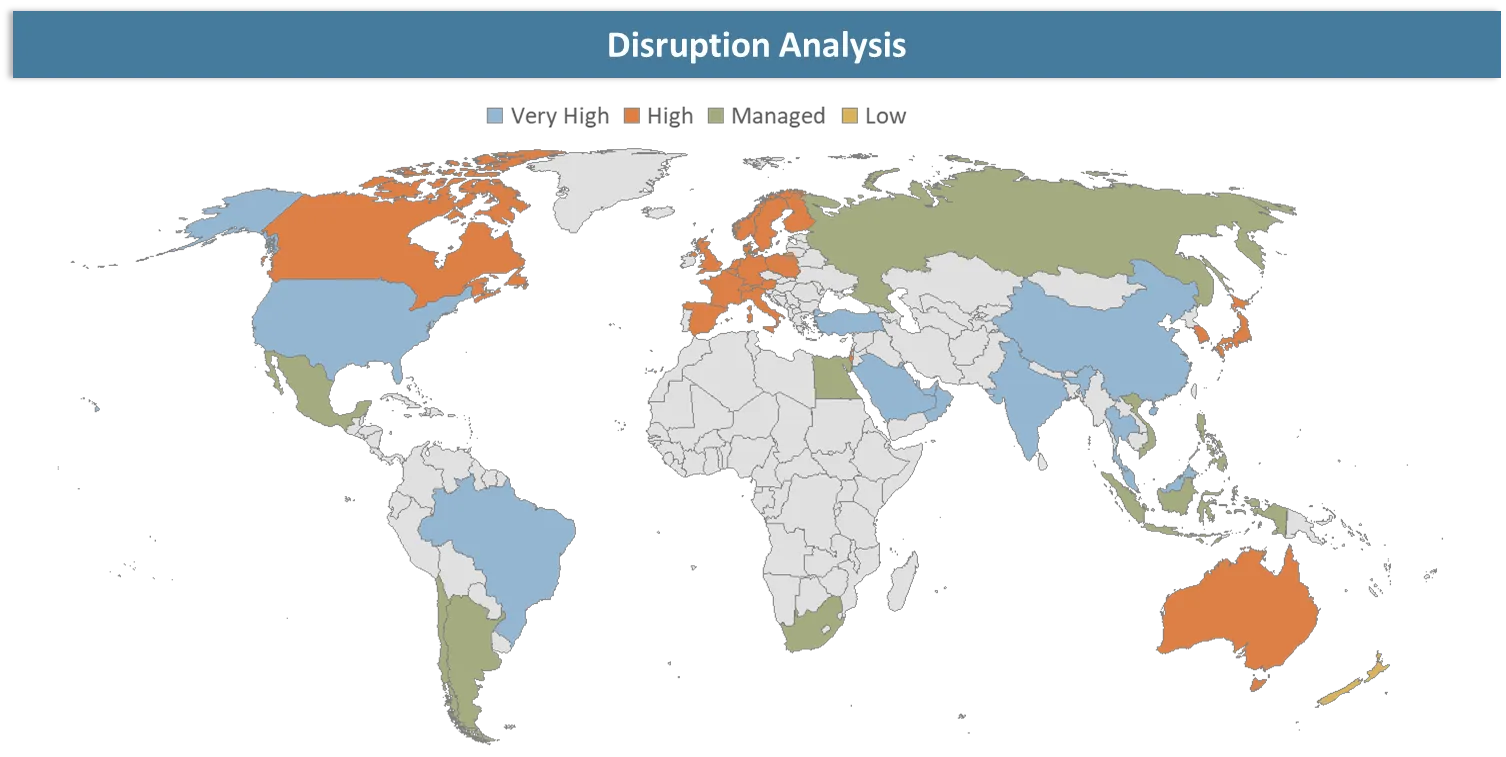
Shift Toward Scalable Fermentation-Based Mycoprotein Production Technologies
The global mycoprotein ingredients market is being transformed by the increasing adoption of advanced fermentation technologies aimed at improving production efficiency, ingredient functionality, and commercial scalability. Traditional protein production methods are facing growing pressure due to sustainability concerns, resource limitations, and increasing demand for alternative protein sources. As a result, mycoprotein manufacturers are investing in technologies such as submerged fermentation, fungal strain optimization, substrate utilization, and improved downstream processing to enhance biomass yield, nutritional quality, and consistency. This shift is increasing the importance of cost-efficient production, optimized fermentation processes, application-specific ingredient formats, and large-scale manufacturing capabilities. Companies developing innovative mycoprotein platforms are expanding beyond conventional meat alternatives into applications such as dairy alternatives, functional foods, snacks, bakery products, and protein-enriched formulations, creating new opportunities for fermentation-based protein ingredients across global food markets.
Mycoprotein Ingredients Market BCG Matrix: Company Evaluation

Quorn Foods (Marlow Ingredients), ENOUGH, The Protein Brewery B.V., Enifer Bio Oy, and BMC Ingredients are classified as Star competitors due to their commercial-scale mycoprotein production, established fermentation technologies, strong ingredient portfolios, and broad applications across meat alternatives, dairy alternatives, and functional foods. Naplasol BV, Jiangxi Fushine Biotechnology (FuNext Mycoprotein), Kynda Biotech GmbH, and Innfoods S.r.l. are categorized as High-Growth Players, supported by expanding fermentation capabilities, innovative mycoprotein formats, and increasing focus on scalable fungal protein applications. Mycovation Pte. Ltd., KIDEMIS AG, and Eternal Bioworks Corp. (ETERNAL) represent Established/Specialized Competitors, driven by fungal protein technology development, specialized applications, and innovation in mycelium-based ingredients. MAASH is considered an Emerging/Niche Player, focusing on next-generation mycoprotein solutions, fermentation innovation, and development of sustainable protein ingredients for future food applications.
Mycoprotein Ingredients Market Dynamics
Driver Impact Analysis
| Driver | Market Growth Impact (%) | Demand Concentration | Impacted Use Case | Strategic Impact |
Growing Demand for Meat Alternatives | 30% | Strong demand concentration in Europe and North America, with increasing adoption across Asia-Pacific as food manufacturers expand alternative-protein offerings. | Burgers, mince, nuggets, sausages, meatballs, pieces, strips, and other meat-alternative products. | Expands the addressable market for mycoprotein ingredients by increasing demand for high-protein ingredients with meat-like texture and structure across alternative-meat formulations. |
Advancements in Fermentation and Mycoprotein Production Technologies | 15% | High technology-development activity in Europe and North America, with increasing commercial-scale development in Asia-Pacific and other regions. | Commercial-scale mycoprotein production, customized ingredients, structured mycoprotein, and new food applications. | Improves production scalability, process efficiency, consistency, and ingredient functionality, supporting the transition of mycoprotein from pilot-scale development to commercial B2B production. |
Demand for Sustainable Protein Sources | 20% | Strongest demand concentration in Europe and North America, supported by sustainability targets, resource-efficiency requirements, and interest in lower-impact protein production. | Meat alternatives, high-protein foods, prepared foods, and other sustainable food formulations. | Supports investment in fermentation-based protein production and strengthens the positioning of mycoprotein as a resource-efficient alternative protein ingredient. |
Consumer Interest in Alternative Proteins | 25% | Strong demand across Europe and North America, supported by flexitarian diets, meat reduction, and increasing consumer acceptance of alternative-protein products. | Meat alternatives, protein-rich foods, ready meals, snacks, and other alternative-protein products. | Encourages food manufacturers to diversify protein sources beyond conventional meat and plant proteins, creating opportunities for fermentation-derived mycoprotein ingredients. |
Growing Demand for High-Protein and Nutritionally Functional Foods | 10% | Strong demand across North America, Europe, and Asia-Pacific, driven by sports nutrition, protein-focused diets, and demand for nutritionally dense foods. | Protein-enriched foods, meat alternatives, ready meals, snacks, and other high-protein formulations. | Increases demand for mycoprotein as a protein-rich ingredient while supporting its incorporation into products positioned around protein and nutritional value. |
Increasing Adoption of Alternative Proteins Across Food Applications
Increasing consumer acceptance of alternative proteins is supporting demand for alternative-protein ingredients. In the U.S., foodservice broadline distributor sales of plant-based protein foods reached $291 million in 2025, demonstrating continued demand for alternative-protein products across foodservice channels. In addition, consumer emphasis on taste and product quality is encouraging manufacturers to develop alternative proteins with improved sensory characteristics, creating opportunities for functional ingredients such as mycoprotein. Furthermore, increased consumer acceptance of alternatives proteins has encouraged food manufacturers to diversify their product line that can provide similar attributes as meats. In response to this demand, companies such as Cargill and Enough have commercialized mycoprotein for applications including burgers, ground products, nuggets, sausages, meatballs, and whole-muscle alternatives, highlighting the expanding role of mycoprotein as a functional ingredient in alternative-protein products.
Restraint Impact Analysis
| Restraint | Drag on Market Growth (%) | Primary Impact Area | Impacted Use Case | Strategic Impact |
High Production Costs and Capital Requirements | 30% | Fermentation infrastructure, bioreactors, energy consumption, downstream processing, quality control, and scale-up investment. | Commercial-scale mycoprotein production, meat alternatives, high-protein foods, and emerging food applications. | Increases production costs and capital requirements, particularly for new and smaller producers, which can limit large-scale commercialization and price competitiveness. |
Consumer Acceptance and Sensory Challenges | 25% | Taste, texture, aroma, appearance, and consumer familiarity with fungal-derived proteins. | Meat alternatives, ready meals, snacks, and other consumer-facing food products. | Requires manufacturers to optimize formulation and processing to achieve acceptable taste and texture, increasing product-development requirements and potentially limiting adoption among consumers unfamiliar with mycoprotein. |
Complexity of Fermentation and Process Control | 20% | Microorganism selection, fermentation conditions, pH, temperature, oxygen supply, nutrient composition, biomass yield, and process consistency. | Submerged fermentation, solid-state fermentation, and commercial-scale mycoprotein production. | Increases technical complexity and process-development requirements and can affect yield, consistency, and production economics during scale-up. |
Regulatory and Food-Safety Requirements | 15% | Strain identification, safety assessment, allergen considerations, product approval, labeling, and compliance with country-specific food regulations. | Food-grade mycoprotein, meat alternatives, functional foods, and products entering new geographic markets. | Increases testing, documentation, and regulatory costs and can lengthen commercialization timelines, particularly for novel mycoprotein ingredients and new markets. |
Competition from Alternative Protein Ingredients | 10% | Established availability, pricing, functionality, and manufacturing scale of soy, pea, wheat, and other protein ingredients. | Meat alternatives, protein-enriched foods, snacks, and prepared foods. | Creates pricing and formulation pressure and requires mycoprotein suppliers to demonstrate differentiated nutritional, functional, sensory, and sustainability characteristics. |
Technical Challenges in Scaling Mycoprotein Fermentation to Commercial Production
Mycoprotein production requires precise control of fermentation conditions, including temperature, pH, oxygen transfer, nutrient availability, agitation, fermentation time, and contamination levels, to achieve consistent fungal growth and biomass quality. While the production is scaled up from the laboratory level or the pilot plant to the commercial facilities, the uniform maintenance of such conditions may become more difficult and could impact the fermentation yield, biomass quality, texture, nutritional content, and performance. It would lead to increased costs related to process optimization and quality control. For instance, Quorn produces mycoprotein through a controlled fermentation process and has operated large-scale fermentation systems for decades. Its production process requires control of factors such as temperature, oxygen, nutrients, pH and fermentation conditions to consistently produce the desired fungal biomass. Thus, the technological difficulties related to the scale-up of fermentation may hinder the move from pilot production to effective, reliable commercial-scale production of mycoprotein.
Mycoprotein Ingredients Market Segment Analysis
The global mycoprotein ingredients market is segmented based on source, form, technology, application, protein content, functionality and region.
Increasing Use of Mycoprotein Across Meat-Alternative Formats
Meat alternatives represent the dominant application segment in the Mycoprotein Ingredients Market because mycoprotein's naturally fibrous structure allows it to be incorporated into products designed to replicate the structure of conventional meat. Its use extends across mince, pieces, fillets, nuggets, sausages, burgers, meatballs, and other formed products, giving manufacturers flexibility across a wide range of meat-alternative formulations. The expansion of mycoprotein-based product portfolios is increasing its application across diverse meat-alternative formats. For instance, in November 2025, Quorn expanded its vegan product range with Vegan Nuggets, Pieces and Fillets, demonstrating the continued diversification of mycoprotein-based meat alternatives across chicken-style and formed-meat formats. Quorn identifies mycoprotein as the core ingredient across its product portfolio, demonstrating the established use of fungal protein in meat-alternative applications.
Mycoprotein Ingredients Market Geographical Penetration
Alternative-Protein Commercialization and Fermentation Innovation Strengthen Mycoprotein
North America represents a significant opportunity for the mycoprotein ingredients market, supported by established demand for alternative proteins, a developed food and beverage industry, and increasing investment in fermentation-based protein technologies. The region’s strong presence of food manufacturers, ingredient companies, and alternative-protein developers is supporting the development of fungal and other fermentation-derived proteins for meat alternatives, protein-enriched foods, dairy alternatives, and functional food applications. In addition, expanding retail distribution and greater consumer access to alternative-protein products are supporting category development.
Expansion of Plant-Based Protein Distribution Through Major Retailers Supports Alternative-Protein Growth in the U.S.
The U.S. mycoprotein ingredients market is expanding, supported by established demand for alternative-protein products, increasing investment in fermentation-based protein technologies, and growing interest among food manufacturers in diversified protein ingredients. The country's large food and beverage industry also provides opportunities for mycoprotein across meat alternatives, dairy alternatives, protein-enriched foods, and other applications. Furthermore, the expansion of alternative-protein products through major retail networks is increasing their accessibility to U.S. consumers and supporting continued product development in the sector. For instance, in October 2025, Beyond Meat announced plans to expand its U.S. retail distribution through Walmart, with products including its Beyond Burger 6-pack and Beyond Chicken Pieces set to reach 2,000 Walmart stores nationwide. Following the announcement, Beyond Meat shares rose by more than 80%, highlighting the market impact of expanded retail availability for plant-based meat products. The development reflects continued efforts by alternative-protein companies to broaden retail distribution and increase consumer access to plant-based protein products.
Regulatory Progress Supporting Mycoprotein Market Development in Canada
Canada mycoprotein ingredients market is expanding, supported by a well-developed alternative-protein industry, established food-processing capabilities, and demand for protein-rich and meat-alternative products. Canada's strong production base for plant-based proteins and growing investment in alternative-protein innovation provide a favorable environment for the development and commercialization of newer protein sources such as mycoprotein. Regulatory clearance and commercialization initiatives are creating new opportunities for mycoprotein ingredients in Canada. For insatance, in July 2026, BMC Ingredients (formerly The Better Meat Co.) received a letter of no objection from Health Canada for its Rhiza mycoprotein, allowing the ingredient to be sold in Canada for applications including meat alternatives, blended meat and seafood, and dairy alternatives. Produced through submerged fermentation of Neurospora crassa, Rhiza contains approximately 45% protein and 30% fibre. The company offers RhizaTex mycelium granules for texture-focused applications and RhizaPro powder for products requiring solubility, emulsification, and gelation, including dairy alternatives, bars, pasta, and baked goods.
Europe Dominates the Mycoprotein Ingredients Market Due to Established Alternative-Protein Ecosystem and Fermentation Capabilities
Europe represents one of the most developed markets for mycoprotein ingredients, supported by a mature alternative-protein ecosystem, strong food-processing capabilities, and increasing investment in fermentation-based protein technologies. Countries such as the UK, Germany, Netherlands, and Finland are witnessing growing activity from mycoprotein producers, food manufacturers, and ingredient developers focused on expanding applications across meat alternatives, hybrid foods, high-protein snacks, and functional nutrition products. The European Union is working to reduce dependence on imported protein sources and strengthen domestic protein production, with policy initiatives supporting greater use of plant-based and alternative proteins. The EU’s livestock sector uses approximately 74 million tonnes of protein as feed annually, while high-protein plant-based feed accounts for around 30% of total EU feed protein use, equivalent to approximately 21.4 million tonnes of protein, demonstrating the significant role of protein ingredients within the European food and feed system.
Germany Emerges as a Key Market for Fermentation-Derived Mycoprotein Ingredients
Germany has emerged as an crucial market for mycoprotein ingredients due to strong food-processing facilities, increasing interest in alternate proteins, and increased demand for clean label and minimally processed protein ingredients. The already existing meat processing industry in Germany is prompting manufacturers to experiment with the application of mycoprotein in meat alternatives and functional food applications. For insatnce, in April 2025, Hydrosol and Planteneers showcased mycoprotein-driven hybrid meat products and plant-based alternatives at IFFA 2025 in Frankfurt. The companies presented solutions including reduced-meat kebabs, nuggets, and high-protein snacks using mycoprotein to enhance texture and nutritional value. The development demonstrated the growing use of mycoprotein as a fermentation-derived ingredient for clean-label and next-generation protein applications in Europe.
Rising Protein Demand and Source Diversification Strengthen Mycoprotein Opportunities Across Asia-Pacific
Asia-Pacific is emerging as a promising market for mycoprotein ingredients, supported by growing consumer interest in alternative proteins, expanding food innovation, and established fermentation capabilities across countries such as China, Japan, South Korea, and India. The region’s large consumer base and increasing focus on protein diversification and sustainable food production are encouraging food manufacturers and startups to explore fungal-based protein ingredients. Furthermore in countries like India growing demand for protein-rich foods, alongside supply and price pressures affecting conventional protein ingredients, is encouraging manufacturers to diversify protein sources. In May 2026, whey protein prices in India were reported to have increased nearly fourfold amid a global supply shortage, prompting food manufacturers to consider alternatives such as soy, pea and other plant-based proteins. This environment could create additional opportunities for emerging protein ingredients such as mycoprotein. In addition, regulatory progress and partnerships between mycoprotein developers and established food companies are also helping move the technology toward commercial applications.
China’s Regulatory Recognition and Expanding Alternative-Protein Demand Support Mycoprotein Market Development
The market for microencapsulation in China for probiotics is driven by expanding consumer interest in plant-based foods, regulatory developments, and increasing product innovation. The country's large consumer base and growing focus on protein diversification are creating opportunities for manufacturers to introduce new protein sources, including mycoprotein, while development of a national regulatory pathway for mycoprotein is strengthening the commercial potential of fungal protein in China. For instance, in December 2025, China’s National Health Commission (NHC) approved Fusarium venenatum as a novel food ingredient, marking the country’s first regulatory approval for mycoprotein. The approval, granted to Fushine Bio for its FuNext mycoprotein, establishes specifications for composition, production, and labeling, supporting commercialization of fungal protein in China. The development is expected to reduce regulatory barriers and create opportunities for mycoprotein applications in meat alternatives, baked goods, meal replacements, and other protein-enriched foods across China and the wider Asia-Pacific market.
Alongside regulatory progress, increasing consumer acceptance of alternative proteins is supporting the expansion potential of the mycoprotein ingredients market in China. For instance, in 2024, ProVeg Asia surveyed 1,000 consumers in Beijing, Shanghai and Guangzhou to assess attitudes toward plant-based diets and awareness of their health and environmental benefits. The study highlights growing opportunities for plant-based and alternative-protein products in China. In addition, China's Gen Z population of approximately 264 million accounted for 40% of purchases of new plant-based products in 2023, supporting future demand for alternative protein ingredients.
Established Food-Processing Capabilities and Industry Partnerships Support Mycoprotein Expansion in Japan
Japan's Mycoprotein Ingredients Market is expanding, supported by increasing interest in alternative protein sources, food innovation, and the development of fermentation-based ingredients. The country's established food-processing industry and focus on efficient resource utilization are creating opportunities for mycoprotein applications across food formulations. Industry collaboration and product-development initiatives are supporting the commercialization of mycoprotein ingredients in Japan. For instance, in October 2025, NoMy Japan began a joint evaluation with Kagome to explore the development of food products using mycoprotein ingredients. The companies will assess the technical feasibility, sensory characteristics, and commercialization potential of prototype products, with a pilot project planned for 2026. The collaboration is significant for the mycoprotein ingredients market as it expands partnerships between mycoprotein developers and established Japanese food manufacturers, while also demonstrating the potential use of food-production byproducts as substrates for fungal fermentation.
Mycoprotein Ingredients Market Competitive Landscape
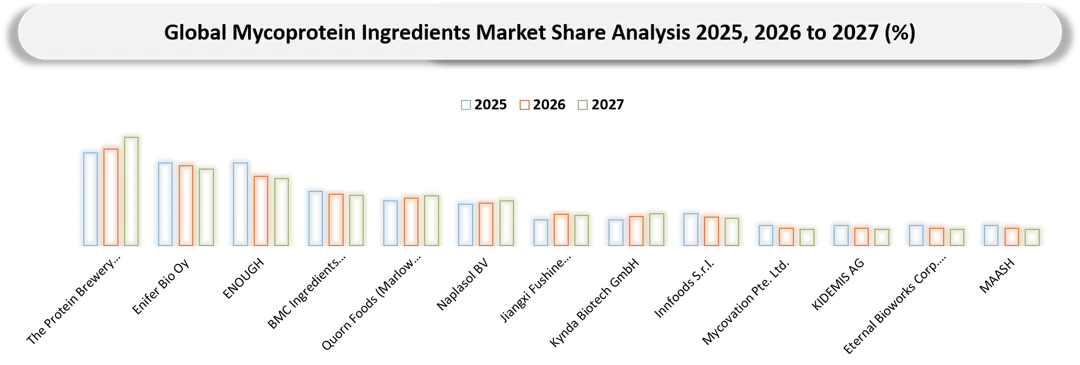
- The global mycoprotein ingredients market is characterized by the presence of fermentation-based protein producers, biotechnology companies, and ingredient manufacturers supplying fungal protein solutions for meat alternatives, dairy alternatives, functional foods, snacks, bakery products, and other protein-enriched applications. Quorn Foods (Marlow Ingredients), ENOUGH, The Protein Brewery, Enifer Bio, BMC Ingredients, Naplasol, Jiangxi Fushine Biotechnology, and Kynda Biotech are among the notable players due to their commercial fermentation capabilities, proprietary mycoprotein technologies, and ability to provide scalable fungal protein ingredients. Quorn Foods (Marlow Ingredients) maintains a strong position through its established Fusarium venenatum-based mycoprotein production, while ENOUGH supports the B2B ingredient market through its ABUNDA® fermented mycoprotein for meat and dairy alternative applications. The Protein Brewery, Enifer Bio, and BMC Ingredients contribute through their Fermotein®, PEKILO®, and Rhiza® mycoprotein platforms, respectively, targeting diverse food applications. Meanwhile, Naplasol, Jiangxi Fushine Biotechnology, Kynda Biotech, Innfoods, KIDEMIS, and ETERNAL participate through emerging mycoprotein technologies focused on improving fermentation scalability and expanding fungal protein applications. These companies are supporting the commercialization of mycoprotein ingredients as sustainable protein solutions across global food markets.
- The Protein Brewery B.V. (Netherlands), Enifer Bio Oy (Finland), ENOUGH (United Kingdom), BMC Ingredients (United States), Quorn Foods (Marlow Ingredients) (United Kingdom), Naplasol BV (Belgium), Jiangxi Fushine Biotechnology Co., Ltd. (China), Kynda Biotech GmbH (Germany), Innfoods S.r.l. (Italy), Mycovation Pte. Ltd. (Singapore), KIDEMIS AG (Switzerland), Eternal Bioworks Corp. (ETERNAL) (Finland), and MAASH (Belgium) are among the notable players operating in the global mycoprotein ingredients market.
Key Developments
- March 2026: Quorn launched its first single-serve Protein Bites range, expanding its mycoprotein-based products into the growing food-to-go and chilled snacking segments. The range includes products providing 15-16 g of protein per 70 g serving, with smaller formats containing around 100 calories, and is being introduced through major UK retailers including Tesco, Morrisons, and Sainsbury’s. The launch demonstrates the expansion of mycoprotein beyond traditional meat alternatives into convenient, high-protein snack applications.
- March 2026: Enifer completed a four-ton production run of PEKILO Pet, a fungal protein ingredient developed for pet food applications. The batch represents a move from pilot-scale production toward commercial product development, providing pet food manufacturers with sufficient quantities for formulation and manufacturing trials. PEKILO Pet is a dried mycoprotein that can be used in processes like extrusion and retorting, enabling making it possible to be applied in dry as well as wet pet food formulations.
- October 2025: NoMy Japan began a joint evaluation with Kagome to explore the development of food products using mycoprotein ingredients. The companies will assess the technical feasibility, sensory characteristics, and commercialization potential of prototype products, with a pilot project planned for 2026.
- April 2025: Revo Foods launched its Prime Cut range, using mycoprotein produced through fungal fermentation as the main ingredient. The products focus on high protein, fiber, Omega-3, and micronutrient content rather than directly replicating meat, targeting health- and performance-focused consumers. The launch expands mycoprotein applications beyond conventional meat alternatives and demonstrates growing product innovation around fermentation-derived protein ingredients.
Key Procurement Priorities and Buyer Evaluation Criteria
- Buyers prioritize mycoprotein ingredients solutions with proven probiotic viability, stability, and controlled release performance to ensure effectiveness across demanding applications such as dietary supplements, functional foods, beverages, nutraceuticals, and pharmaceutical formulations.
- Buyers prioritize mycoprotein ingredients with consistent nutritional profile, desirable texture, high protein content, and reliable functional performance to support applications such as meat alternatives, dairy alternatives, functional foods, snacks, bakery products, and protein-enriched formulations.
- Evaluation is based on criteria such as protein content, amino acid profile, fibre content, texture-forming ability, taste and sensory performance, moisture characteristics, fermentation efficiency, biomass yield, production scalability, ingredient functionality, food safety standards, certifications, manufacturing capabilities, and experience developing application-specific mycoprotein solutions.
- Buyers consider factors including batch-to-batch consistency, fermentation process reliability, production capacity, supply chain stability, shelf-life performance, ingredient compatibility, regulatory compliance, sustainability attributes, and the ability to customize mycoprotein formats based on specific product requirements such as burgers, nuggets, sausages, dairy alternatives, baked goods, and nutritional products.
- Preference is given to suppliers with expertise in large-scale fungal fermentation, biomass cultivation, mycelium processing, ingredient formulation, texture optimization, and sustainable production technologies, supported by appropriate food-grade certifications and quality management systems.
- Food manufacturers, alternative-protein companies, and functional food producers particularly prioritize suppliers with proven commercial-scale fermentation capabilities, consistent mycoprotein quality, application development support, regulatory expertise, reliable production infrastructure, and the ability to provide scalable ingredient solutions for long-term commercial use.
Why Choose DataM?
- Technological Innovations: Explores advancements in mycoprotein production technologies, including biomass fermentation, fungal cultivation platforms, substrate optimization, downstream processing, and scalable production systems that improve fermentation efficiency, protein yield, texture development, nutritional performance, and commercial scalability for food applications.
- Product Performance & Market Positioning: Evaluates how mycoprotein ingredient manufacturers differentiate their offerings based on protein content, amino acid profile, fibre content, sensory characteristics, texture functionality, ingredient versatility, clean-label positioning, and suitability across applications such as meat alternatives, dairy alternatives, snacks, bakery products, and functional foods.
- Real-World Evidence: Highlights commercial adoption of mycoprotein ingredients across alternative-protein products, meat substitutes, nutritional foods, and other food applications, demonstrating benefits such as improved product texture, enhanced protein content, reduced dependence on animal-based proteins, and expanded formulation possibilities for food manufacturers.
- Market Updates & Industry Changes: Tracks key developments including new regulatory approvals, fermentation facility expansions, strategic partnerships, product launches, and investments in fungal protein technologies across major markets such as North America, Europe, and Asia-Pacific, supporting the commercialization of mycoprotein ingredients.
- Competitive Strategies: Analyzes how leading companies expand through fermentation technology development, production capacity expansion, partnerships with food manufacturers, new ingredient formats, application-specific solutions, and geographic market expansion to address increasing demand for sustainable protein ingredients.
- Pricing & Market Access: Explains pricing variations based on factors such as fermentation technology, production scale, raw material/substrate costs, processing requirements, ingredient format (wet biomass, powder, structured formats), customization requirements, and supply agreements with food manufacturers, alternative-protein companies, and ingredient distributors.
- Market Entry & Expansion: Identifies growth opportunities driven by increasing consumer acceptance of alternative proteins, demand for sustainable food ingredients, regulatory support for novel proteins, expansion of meat and dairy alternatives, and advancements in fermentation technologies, while outlining strategies such as regional production facilities, technology partnerships, application development, and B2B ingredient commercialization.
Target Audience
- Probiotic Ingredient Manufacturers and Encapsulation Technology Providers
- Mycoprotein Ingredient Manufacturers and Fermentation Technology Providers
- Alternative Protein, Meat Alternative, and Plant-Based Food Manufacturers
- Food and Beverage Companies Developing Mycoprotein-Based Products
- Dairy Alternative, Functional Food, and Nutritional Product Manufacturers
- Fermentation-Based Protein Companies and Biotechnology Firms
- Food Ingredient Distributors, Protein Ingredient Suppliers, and Specialty Raw Material Companies
- Contract Food Manufacturers (Co-Manufacturers), Product Developers, and Private-Label Food Brands
- Research Institutions, Universities, and Biotechnology Companies Focused on Fungal Protein, Mycelium, and Fermentation Technologies
- Animal Nutrition, Pet Food, and Feed Manufacturers Exploring Fungal Protein Applications
- Investors, Venture Capital Firms, and Strategic Partners Evaluating Alternative Protein Technologies


























































