


Molten Salt Reactor Market Size and Overview
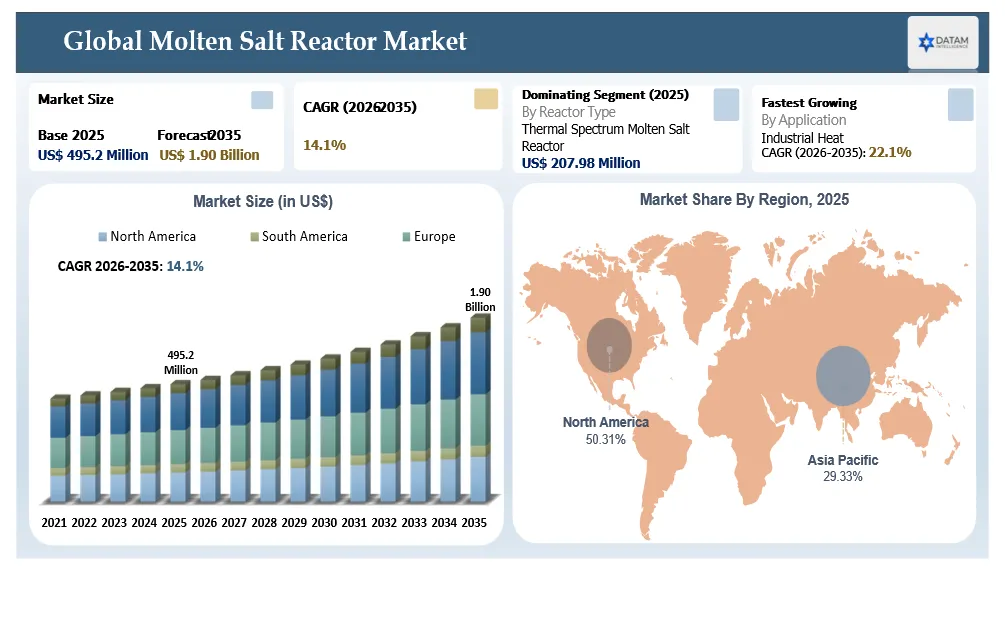
The global molten salt reactor market reached US$ 495.2 million in 2025 and is expected to reach US$ 1.90 billion by 2035, growing with a CAGR of 14.1% during the forecast period 2026-2035.
The market for molten salt reactors is witnessing positive developments through advancements in Generation IV reactors, fuel cycles and high-temperature industrial energy applications. MSRs are being designed to operate at high temperatures of 700°C, which allows use cases that go beyond electricity production, such as industrial process heat, hydrogen generation, chemical manufacturing, and water desalination. The emergence of technologies related to the creation of HALEU fuel supplies, thorium-based fuels, advanced molten salt chemistry and improved materials resistant to corrosion increases the technology pipeline and liquid-fuel designs may provide advantages in the efficient use and management of fuels. These technological advancements increase the relevance of MSRs for both electricity generation and industrial purposes.
The commercialization of MSRs is making steady progress towards reactors capable of operating in the 10 to 300 MWe range for electricity generation and industrial heat applications. Several countries, including the US, Canada, China, France and Russia, are engaged in MSR-related research and demonstrations, fuel cycle development, materials testing and licensing programs. There have been evaluations of MSRs as a source of high-temperature heat for various industries including steel, cement, ammonia and fertilizer, petrochemicals and hydrogen production, thereby reducing the reliance on fossil fuels in these industries. With electricity demand expected to grow at a rate greater than 3% per year up to 2026, the combination of clean electricity and industrial heat presents a growing commercial opportunity for MSRs.
Molten Salt Reactor Market Key Takeaways
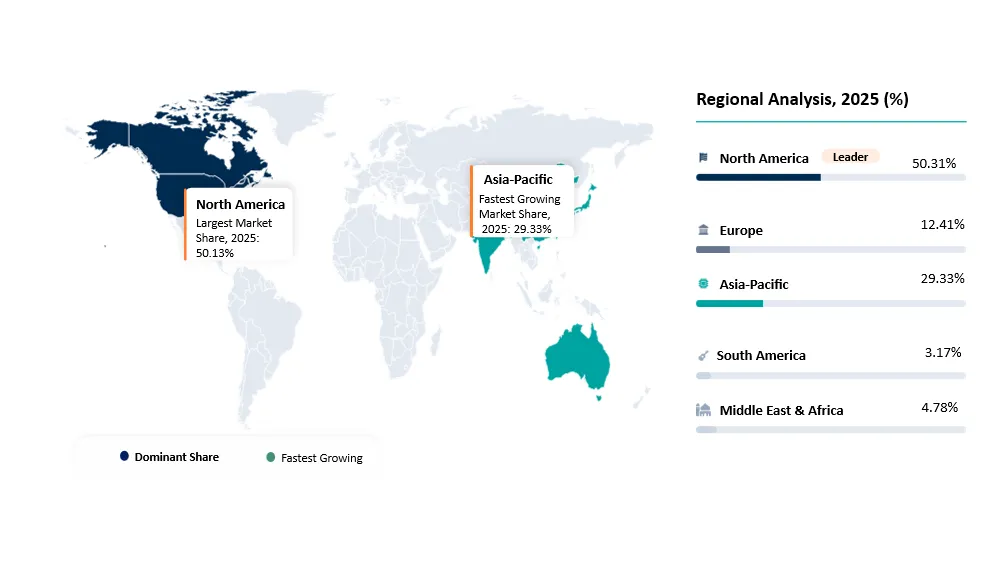
- The molten salt reactor Market of North America captured a huge 50.31% market share in 2025, which is credited to the high-quality nuclear R&D infrastructure and financial support from government agencies.
- The Thermal Spectrum molten salt reactor was the dominant reactor type in 2025 with a projected market share of 42.0%, attributed to its high-temperature operating capability and suitability for electricity generation and industrial heat applications.
- The segment of Industrial Process Heat is anticipated to be the highest growing application over the forecast period 2026-2035 with a CAGR of 22.1%, owing to rising demand for MSR technology in hydrogen, chemicals, steel, cement and other energy-intensive industries.
- HALEU and thorium fuel cycles are emerging as key technology options as developers pay more attention to fuel availability, enhanced fuel efficiency, online fuel management and fuel cycle sustainability.
- Competition will be based on commercialization and demonstrations since the MSR program is shifting from the research stage to pre-commercialization stage. Competition will focus on licensing, molten salt chemistry, materials that can withstand corrosion, fuel cycle development and reactor fabrication.
Molten Salt Reactor Industry Trends and Strategic Insights
- A trend towards business-driven research and development over research-driven R&D is being observed in the sector with greater attention to demonstration reactors, first-of-their-kind projects and technical validation.
- Molten salt reactors are also gradually emerging as energy generators that have the capacity to provide carbon-free energy, high temperature process heat, hydrogen production, desalination and synthetic fuel manufacture.
- Technical and commercial viability of molten salt reactors is improving as a result of increasing research in advanced fuel cycle, corrosion-resistant materials, molten salt chemistry and nuclear supply chain logistics.
- Improved partnerships between government agencies, reactor vendors, utility companies and research institutions are being made as a result of a move towards licensing systems, regulatory consistency, demonstration initiatives and commercialization strategies related to Generation IV reactors.
- Modular design of reactors, digital engineering, use of AI for design optimization and advanced monitoring solutions have positively affected the economic feasibility of the development and improved competitiveness of molten salt reactors in the global clean energy market.
Molten Salt Reactor Market Scope
| Metrics | Details | |
| 2025 Market Size | US$ 495.3 Million | |
| 2035 Projected Market Size | US$ 1.90 Billion | |
| CAGR (2026-2035) | 14.1% | |
| Largest Market | North America | |
| Fastest Growing Market | Asia-Pacific | |
| By Reactor Type | Integral Molten Salt Reactor (IMSR), Thermal Spectrum Molten Salt Reactor, Fast Spectrum Molten Salt Reactor, Molten Salt Breeder Reactor (MSBR), Molten Chloride Fast Reactor (MCFR), Stable Salt Reactor (SSR) and Others | |
| By Fuel Type | Low-Enriched Uranium (LEU), High-Assay Low-Enriched Uranium (HALEU), Thorium–Uranium-233 Fuel Cycle, Plutonium-Based Fuel, Transuranic Fuel and Mixed Fuel | |
| By Salt Chemistry | Fluoride Salt, Chloride Salt and Other Molten Salts | |
| By Power Output | Below 10 Mwe, 10–100 Mwe, 101–300 Mwe, 301–700 Mwe and Above 700 MWe | |
| By Deployment | Microreactor, Small Modular Reactor (SMR) and Grid-Scale Reactor | |
| By Application | Electricity Generation, Industrial Heat, Desalination, District Heating, Marine Propulsion, Space Applications and Research & Testing | |
| By End-User | Electric Utilities, Government & Defense, Industrial Manufacturing, Chemical & Petrochemical Companies, Hydrogen Producers, Fertilizer Manufacturers, Steel Manufacturers, Cement Manufacturers, Water & Desalination Utilities, Research & Academic Institutions, Space Agencies and Marine & Shipping Operators | |
| By Component | Reactor Vessel, Fuel Salt System, Heat Exchanger, Steam Generator, Pumps, Instrumentation & Control Systems, Fuel Processing System, Off-Gas System, Containment & Shielding and Balance of Plant | |
| By Fuel Cycle | Open (Once-Through) Fuel Cycle and Closed Fuel Cycle | |
| By Region | North America | U.S., Canada, Mexico |
| Europe | Germany, UK, Russia, France, Spain, Italy, Poland | |
| Asia-Pacific | China, India, Japan, Australia, South Korea, Indonesia, Malaysia, Singapore, Vietnam, Thailand, Philippines, Taiwan | |
| South America | Brazil, Argentina | |
| Middle East and Africa | UAE, Saudi Arabia, South Africa, Israel, Turkiye, Nigeria | |
| Report Insights Covered | Competitive Landscape Analysis, Company Profile Analysis, Market Size, Share, Growth | |
Why does this report matter in 2026?
The Molten Salt Reactor (MSR) industry moves into a crucial period in 2026, with various firms in the industry making strides toward receiving licenses, building their reactors for prototype testing and deploying first commercial projects. Approval procedures are being streamlined for the construction of the fourth generation nuclear reactors, whereas funding is being directed to solving major business obstacles that pertain to High-Assay Low-Enriched Uranium (HALEU), thorium, advanced materials resistant to corrosion and molten salt.
This report provides a comprehensive evaluation on the commercialization preparedness of the molten salt reactors technologies through technology benchmarking, regulatory developments, reactor pipeline, competitive intelligence and application potentials in carbon-free power generation, process heat for industrial processes, hydrogen production and desalination technologies. This report helps in making well-informed decisions by the reactor designers, power utility companies, investors, engineering firms and other stakeholders at an important juncture in the development of the global Molten Salt Reactors market.
Molten Salt Reactor Market White Space & Investment Opportunities
- Potential for first of kind commercializing of molten salt reactors is largely unexploited; thus offering great investment opportunities for development, certification, demonstrations and commercial deployment of MSRs.
- Long-term potential for investments is evident from growth in ecosystem of advanced nuclear fuels, including HALEU fuel, thorium fuel cycles and fuel salts.
- Specialized manufacturing facilities of high temperature materials, molten salts technologies, enhanced heat exchangers and module reactor parts could be considered an important white space in the future supply chain for MSRs.
- The integration of molten salt reactors into hydrogen generation, industrial processes heating, desalination, synthetic fuels production and other applications except from electricity production is a promising area to develop additional revenue sources.
- Investments in preparation for regulation, digital engineering, artificial intelligence-based reactor designing and partnering initiatives will play an essential role in the fast development of the MSR market.
Molten Salt Reactor Future Market Transformation
It is anticipated that the Molten Salt Reactor (MSR) Market shall evolve to become an advanced nuclear industry which is commercially oriented during the forecast period rather than being a validation industry for technology. The reason for such an event is that the competition within the market would start to move away from innovation in terms of reactor design to more commercial issues regarding production, localization of the supply chain, cost-benefit analysis and operational efficiency. There shall be advancement in terms of molten salt chemistry, corrosion-resistant materials, HALEU and thorium cycle fuels and modular construction methods.
Moreover, the future market will not only focus on producing electricity at a utility scale since molten salt reactors are being applied in industries in an attempt to provide constant high-heat generation. Hydrogen, petrochemicals, steelmaking, desalination and artificial fuels production represent some of the new applications which are going to be the sources of demand that will significantly alter the business income structure. The commercial growth process is also going to create values for fuel providers, material producers, engineering companies, digital technology providers and nuclear services companies among other market participants.
Molten Salt Reactor Market Buyer Decision-Making Criteria
The assessment of Molten Salt Reactor technology by organizations is based on the aspects affecting its technical feasibility, acceptance from regulatory authorities, economic efficiency and readiness for deployment. Given the current stage of market development, utilities, industries utilizing energy, governments and investors give much more attention to the technology readiness, licensing, fuel supply, life-cycle economy and capabilities of manufacturers, compared to just capital expenditure. Potential users will also consider the capabilities of MSRs to provide reliable baseload electricity and process heat without carbon footprint and guarantee safety, fuel supply and compatibility of the infrastructure.
Major Buyer Decision-Making Criteria
- Technology Readiness Level (TRL) and Commercialization Maturity
- Regulatory Licensing Progress and Safety Case Validation
- Levelized Cost of Energy (LCOE) and Project Economics
- Fuel Availability, Fuel Cycle Flexibility and HALEU Readiness
- Reactor Performance, Thermal Efficiency and Capacity Factor
- Supplier Track Record, Engineering Expertise and Project Delivery Capability
- Scalability, Modular Deployment and Industrial Integration Potential
- Supply Chain Readiness for Critical Components, Molten Salts and Advanced Materials
- Long-Term Fuel Supply, Service and Lifecycle Support
Molten Salt Reactor Market Economic & Investment Analysis
Factors that affect the Molten Salt Reactors (MSRs) market economy today include expensive capital investments, prolonged technology qualification time periods and high licensing, new material development, fuel qualification and first-of-a-kind reactor deployment expenses. Nevertheless, improvements in modular reactors' fabrication, standardized reactors, digital engineering and better fuel use will benefit project economics and decrease life cycle costs. Additional advantages of the market economy will be associated with growing interest in firm and low-carbon electricity, high-temperature process heat and new industrial applications.
Increasing investments are taking place as many governmental agencies, energy companies, reactor constructors, as well as other institutions and investors are pumping money into Gen IV reactor programs, demonstration projects, fuel cycle development and nuclear infrastructure development. The same time investment is being channeled into producing HALEU fuel, development of molten salt technologies, resistant materials, specialized production facilities and digital reactors to create the growing ecosystem of MSRs. With increasing regulatory certainty and proving the viability of technology through demonstration projects the investment will be rising in this field.
Molten Salt Reactor Investment Trends in the Market
- More investment is moving from laboratory-based R&D into FOAK reactors, license programs and initial commercialization to hasten commercialization of the technology.
- Investments are being made in advanced nuclear fuel ecosystems that include the production of HALEU fuels, thorium fuel cycles, molten salt fuel systems and fuel testing facilities.
- Corrosion-resistant alloy manufacturing capabilities, molten salt processing equipment, heat exchanger development and manufacturing systems are some of the areas where investment is increasing in order to improve the MSR supply chain.
- Research and investment are geared towards digital nuclear reactor design, AI simulations, digital twins and validation techniques to shorten design time and improve licensing preparation.
- Investors have started looking into the integration of molten salt reactors with energy systems producing hydrogen, process heat, desalination and synfuels apart from nuclear reactor construction to generate revenue streams.
Strategic Indicators For Molten Salt Reactor Market
High Regulation Impact
The Molten Salt Reactor market functions in one of the strictest regulatory environments in the energy industry. This makes regulatory clearance an essential factor that will determine success in the market or investment in MSR projects. Since the Generation IV reactor designs require licensing procedures that extend beyond that used for light water reactors, there would be the need to meet high standards of safety, fuel qualifications, environment and security. Different regulatory structures, licensing time lines and clearance regulations affect the implementation, financing and adoption of the technology and hence will shape the strategic direction of the market.
High Investment Activity
The investment level of the MSR market is currently at a high level, which signifies that there is a growing conviction about the commercial prospects of the Generation IV technologies. Capital investment by governments, utility companies, strategic investors and developers of new reactors signifies a move from research to commercialization and industrialization of the technologies. With increased investments, technology validation, building of supply chains, manufacturing preparation and licensing are being supported. In this manner, continued investment is a strategic indicator for commercial readiness and future prospects of the global MSR market.
Supply Chain Disruption
There are several problems in the MSR market that need to be addressed, including supply chain constraints because of the availability of essential materials, fuel for the reactor and advanced production facilities. Currently, there is an under-supply of HALEU, high purity molten salts, nickel-based heat resistant alloys, graphite and other components used in the reactor, as well as long-term qualification programs for nuclear fuel. All of these issues add costs and schedule risks for the development of commercial MSR projects.
With the advancement of reactors to commercially viable stages, creating stronger links in the supply chain for the MSR has become a key strategy. Increasing amounts of funding have gone into efforts to increase production of HALEU within the domestic territory, developing skills for molten salt processing, identifying new sources for advanced materials and raising the capacities for manufacturing in nuclear-grade facilities. The ability to build resilient supply chains with diverse sources for important fuels, materials and reactors components will be a determining factor.
Pricing Volatility
The pricing in the Molten Salt Reactor industry faces significant volatility on account of changes in prices for advanced nuclear fuels, unique materials and nuclear grade raw materials. The price for high-assay low-enriched uranium (HALEU) will exceed the price of regular LEU by 5-10 times owing to restricted capacity worldwide, whereas prices for nickel metal showed fluctuations of over 40% during previous commodity cycles impacting prices for corrosion resistant alloys employed in molten salt systems. In addition, the price of lithium compounds in fluoride salts demonstrates volatile dynamics with the price for lithium carbonate rising by 300% within the period from 2021 to 2023 prior to stabilizing. Such volatility will lead to an increase in procurement prices and budgeting uncertainties and influence economics of pioneering molten salt reactors. However, upon the industry expansion, the establishment of supply agreements, supplier diversity and domestic manufacturing will diminish such risks.
Procurement Pressure
The market for Molten Salt Reactors has high procurement intensity as a result of limited procurement sources for nuclear-grade materials, advanced fuels and manufacturing technology required for construction of Generation IV reactors. Developers have to source the key resources such as High-Assay Low-Enriched Uranium (HALEU), highly pure molten salts, corrosion resistant Ni based alloys, nuclear grade graphite (where appropriate), highly advanced heat exchangers, reactor components and more from few qualified vendors complying with strict nuclear requirements. Complex qualification processes, strict certification procedures and significant manufacturing times additionally complicate the process. Diversified procurement strategy, including long-term sourcing and localization of production processes would play the key role in ensuring timely implementation of projects within the market.
New Technology Adoption
Market for the molten salt reactors is experiencing fast penetration of the advanced reactor technologies that will increase the safety, efficiency of the fuel usage and make these reactors commercially viable. Designers are trying to implement the designs of reactors utilizing liquid fuels, advanced molten salt coolants, fuel reprocessing in-line with the operation, advanced materials that are resistant to corrosion due to high temperatures and passive safety systems to compensate the drawbacks associated with conventional nuclear reactors. In addition, advancements in technologies of advanced fuel cycle including HALEU and thorium fuels increase flexibility and efficiency of MSRs. The adoption and qualification of these technologies will be an important factor for commercial competitiveness of MSRs in advanced nuclear energy market.
Regional Expansion Opportunity
Molten Salt Reactor market is replete with ample growth prospects on the regional front, considering that the implementation of nuclear technology has become contingent upon the availability of favorable regulatory environment, ability of a country in maintaining fuel cycle facilities, industrial decarbonization programs and policies for energy security. The region of North America is anticipated to witness strong commercial adoption as a result of the presence of reactor development programs and licensing, whereas Asia-Pacific is poised to dominate the deployment process owing to the continuous investments made in advanced nuclear technology and high power generation requirement. Europe has gained competitiveness via generation IV nuclear programs, regulatory modernization and clean energy policies.
Government Policy Support
Government policy support is one of the key strategic factors determining the future of the Molten Salt Reactor market, as the development of new-generation nuclear reactors cannot take place without a comprehensive national nuclear strategy and consistent government policies. There is an increasing number of government programs acknowledging advanced nuclear power as a means of providing clean firm energy, thus accelerating the implementation of molten salt reactors under technology road maps, advanced reactors' deployment plans, nuclear fuels security programs and national decarbonization goals. Government support also contributes to industrial engagement and the enhancement of domestic nuclear capabilities and favorable conditions for long-term planning. In the light of growing efforts towards diversification of national low-carbon sources of energy production, government policy support will continue determining the development of the global Molten Salt Reactor market.
Pricing Intelligence
Pricing intelligence is becoming one of the key competitive advantages in the MSR industry as companies focus more on optimizing their investment decisions through total life-cycle economics versus simple equipment costs. As far as first-of-a-kind MSR facilities are concerned, the costs of engineering and licensing comprise 30% of the total pre-construction costs. This makes benchmarking costs and evaluating vendors all the more imperative for project planning. More and more companies are now comparing the cost of the fuel cycle, specialty material cost, fabrications costs, operations and maintenance costs and decommissioning costs to find out which reactors are the best from an economic perspective. It can be anticipated that as commercialization progresses, firms with effective pricing intelligence skills would do well in negotiating better terms, making their projects bankable, managing life-cycle costs and competing in the global MSR industry.
| HS Code | Reporter | Trade Flow | 2025 Trade Value | Interpretation |
| 840110 (Nuclear Reactors) | China | Imports | US$ 486.2 Million | Reflects significant investments in advanced nuclear reactor projects, including next-generation reactor technologies. |
| 840140 (Parts of Nuclear Reactors) | France | Exports | US$ 412.8 Million | Indicates France's strong position as a supplier of nuclear reactor components and engineering equipment. |
| 840120 (Machinery & Apparatus for Isotopic Separation) | United States | Exports | US$ 298.6 Million | Demonstrates the country's leadership in nuclear fuel-cycle and uranium enrichment technologies. |
| 840130 (Non-Irradiated Fuel Elements) | Canada | Exports | US$ 226.9 Million | Highlights Canada's role in supplying nuclear fuel assemblies and fuel components for advanced reactor programs. |
AI Impact Analysis of Molten Salt like reactor Market
Artificial intelligence is making a big contribution in advancing and commercializing molten salt reactor technology through better design and simulations and validation of technology. AI-driven simulation software and digital twin platform help to design better reactors, analyze thermal behavior of the reactor, test behavior of materials and decrease iterations needed for the same. These innovations are contributing significantly towards the faster commercialization of next-generation nuclear power reactor technology.
The application of AI during reactor operations involves increasing the efficiency of plants using predictive maintenance, monitoring of processes and systems, intelligent process control and anomaly detection. Using the technology, AI enables improved reliability of assets and optimized maintenance, improves safety in operations and regulatory compliance by ensuring performance monitoring at all times. With the industry moving away from demo projects to commercial applications of AI, there will be increased efficiency and reduced costs in molten salt reactor operations.
Disruption Analysis of Molten Salt Reactor Market
Generation IV reactor technologies are impacting the Molten Salt Reactor (MSR) market by introducing liquid-fuel or molten-salt-cooled designs instead of conventional solid-fuel and water-cooled reactor models. This move improves passive safety, raises the temperature and reduces the pressure. It gives MSRs an advantage in the next generation of nuclear electricity generation. Also, corrosion-resistant alloys, molten salt chemistry, online fuel processing and High-Assay Low-Enriched Uranium (HALEU) manufacturing are tackling historical technical challenges and enabling a transition from academic research to practical demonstrations in reactors.
The second disruptive force arises from the widening applicability of the molten salt reactor technology that goes beyond grid power production. More studies and applications of MSRs are carried out for the purpose of hydrogen generation, heat for industry, desalination, fuels production and off-grid energy systems because of their ability to produce continuous high temperature heat. On the other hand, reactor simulations through AI, digital twins, modular fabrication and risk-informed licensing processes have made reactor development faster and hence, they contribute to commercialization of the reactors. These technological innovations have changed investment perspectives and given an upper hand to advanced reactor developers while transforming the nuclear energy sector globally.
Molten Salt Reactor Market BCG Matrix: Company Evaluation
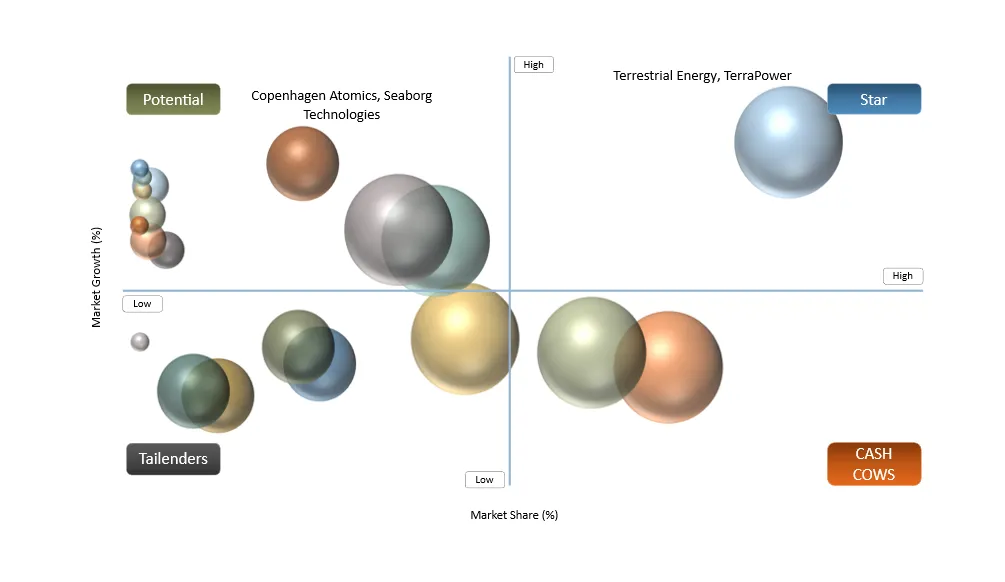
STAR
The firms located in the Star quadrant have the best blend of technological advantage, commercialization experience, collaborations and long-term business prospects in the Molten Salt Reactors sector. The firms include Terrestrial Energy, TerraPower, Moltex Energy, CNNC, Rosatom and ThorCon International, which have managed to occupy strong positions by investing in Generation IV reactors, demonstration, licensing and advanced reactors. With their superior technology portfolio and effective commercialization plans, they will take up a considerable chunk of business in the growing molten salt reactors sector.
POTENTIAL
Firms in the Potential zone have innovative ability and a favorable technology portfolio, but they continue to evolve from technology validation, licensing, or even early commercialization. Copenhagen Atomics, Seaborg Technologies, NuclearN, Clean Core Thorium Energy, Framatome, Orano, Atkins Réalis, BWX Technologies (BWXT), Westinghouse Electric Company and EDF are growing their presence in the market with the help of innovative reactors, fuel cycle technologies, technical skills and partnerships. As the process of regulatory approval, demonstrations and commercialization moves ahead, these firms will gain their competitive edge in the Molten Salt Reactor market.
Molten Salt Reactor Market Dynamics
Driver Impact Analysis
| Driver | Market Growth Impact (%) | Demand Concentration | Impacted Use Case | Strategic Impact |
Rising Global Focus on Decarbonization and Net-Zero Targets | 32% | High in North America, Europe and Asia-Pacific | Utility-scale electricity generation | Accelerates commercial deployment of advanced nuclear technologies |
Growing Government Funding and Advanced Reactor Demonstration Programs | 28% | High in the United States, China, Canada and the UK | Prototype and commercial MSR development | Reduces commercialization risk and speeds technology readiness |
Increasing Demand for High-Temperature Industrial Heat and Hydrogen Production | 22% | Medium to High in industrial economies | Hydrogen production, process heat and desalination | Expands MSR applications beyond electricity generation |
Advancements in Generation IV Reactor Technologies and SMR Deployment | 18% | Global | Small modular reactors and remote power applications | Improves scalability, safety and market adoption |
Driver: Rising Global Demand for Carbon-Free Baseload Power and Advanced Nuclear Energy
Demand for sustainable and reliable energy sources which are carbon-free in nature is going to become the main growth catalyst for the Molten Salt Reactor market globally. This is due to the fact that countries are trying to adopt their goals of net-zero emissions without compromising on the reliability of electricity generation through nuclear and renewable means. With the benefits including self-sufficiency, energy density, efficient heat use and pressure resistance, molten salt reactors are one of the key technologies that can come to rescue during such situations. Government funding, policy support for fourth-generation reactor technology and the need to move away from carbon emissions from electricity generation and industrial processes will fuel innovation and adoption of such reactors further in the future.
Restraint Impact Analysis
| Restraint | Drag on Market Growth (%) | Primary Impact Area | Impacted Use Case | Strategic Impact |
High Capital Investment and Long Development Timelines | 34% | Project Financing | Commercial reactor deployment | Delays commercialization and limits private investment |
Complex Regulatory Approval and Licensing Requirements | 29% | Regulatory Compliance | Reactor design certification and construction | Extends project approval timelines and increases compliance costs |
Limited Availability of Advanced Nuclear Fuel and Specialized Supply Chain | 21% | Fuel Supply Chain | HALEU- and thorium-based MSR deployment | Constrains reactor deployment and fuel security |
Public Perception and Nuclear Waste Management Concerns | 16% | Public Acceptance | Utility-scale nuclear projects | Slows project approvals and reduces investor confidence |
Restraint: Lengthy Regulatory Approval Processes and Commercialization Challenges
The chief limitation for the Molten Salt Reactor industry includes a long regulatory approval procedure and a low level of market readiness for Generation IV reactors' technologies. Due to molten salt reactors being the representatives of novel types of Generation IV nuclear facilities, the developers are obliged to go through licensing procedures, safety studies and technology testing prior to its practical implementation into business. The lack of established regulations and low experience in running large MSRs add to the prolongation of the procedure mentioned above and cause the additional risk for the investors.
Molten Salt Reactor Market Segmentation Analysis
The global Molten Salt Reactor market is segmented based on the Reactor Type, Fuel Type, Salt Chemistry, Power Output, Deployment, Application, End-User, Component, Fuel Cycle and region.
By Reactor Type
Thermal Spectrum MSRs Remain the Primary Commercialization Pathway
The Thermal Spectrum Molten Salt Reactor had a market share of 42.0% in 2025, thus being the dominant type of reactors in the global molten salt reactors market. This dominance can be explained by the fairly well developed thermal spectrum design and their capability to work in high temperature environment and low primary system pressure that ensures good heat transfer capabilities and applicability for both power production and various industrial applications. Further advancements in the area of thermal spectrum design, fuel salt chemistry, materials and passive safety features improve the position of thermal spectrum reactors in the MSRs market.
By Application
Industrial Heat Drives the Next Phase of MSR Market Expansion
The Industrial Heat application segment is expected to exhibit the highest growth rate of 22.1% CAGR during 2026-2035. The reasons behind the rapid growth of this market include the increased demand for utilizing MSRs as an ongoing source of high temperature heat for the hard-to-abate industries such as hydrogen production, ammonia and fertilizers production, petrochemical refining, cement production and steel production. In contrast to traditional fossil fuel-based process heat, MSRs may provide thermal energy with low carbon footprint as well as help in the combined generation of heat and power.
Molten Salt Reactor Market Geographical Penetration
U.S. Molten Salt Reactor Market Landscape
The U.S. has built the most advanced ecosystem for MSR commercialization through significant government investment, a mature nuclear innovation network and a pipeline of Generation IV reactors. Key players such as TerraPower, ThorCon International, Kairos Power, Clean Core Thorium Energy and General Atomics, in partnership with national labs like ORNL and INL, have been working on reactor demonstration, fuel qualification, HTM research and advanced reactor licensing. The ongoing U.S. government support for HALEU production, advanced reactor demonstration efforts and modernization of NRC licensing will hasten the commercialization process. Together with rising demands for reliable low-carbon energy, process heat, hydrogen generation and grid resilience, these developments put the U.S. ahead of other countries in the race towards Molten Salt Reactor commercialization and innovation.
China Molten Salt Reactor Market Trends
China has become one of the strategically important markets for molten salt reactors technologies due to consistent government spending, energy security strategy and generation IV nuclear development plans. This country is rapidly developing thorium and liquid fuel molten salt reactors technologies through the implementation of demonstration projects, advanced fuel cycles study, molten salts chemistry and high temperature materials research. Consistent financing of the reactor design process, nuclear industry manufacturing and fuel qualification makes China more influential in the field of molten salt reactor technology. Due to the increased need for clean baseload power, industrial decarbonization and the reduction in fossil fuel dependence, China will continue its leading role in molten salt reactors technology development and commercial application.
Canada Molten Salt Reactor Market Analysis
Canada stands out as one of the major centers of molten salt reactor (MSR) technologies due to its established nuclear industry, progressive regulatory system and the presence of innovative players like Terrestrial Energy, Moltex Energy and AtkinsRéalis. Canada is working on the development of IMRS and SSR technologies via vendor design reviews, demonstration projects planning, advanced fuel cycles design and industry partnerships. Technology neutral licensing system and early vendor review of the Canadian Nuclear Safety Commission (CNSC) help create trust among investors and reduce regulatory risks for advanced reactor vendors. Together with Canada’s rich experience in nuclear technologies, fuel cycle technologies and cleantech, this puts Canada in a position of being one of the leading countries in molten salt reactors commercialization and deployment.
Japan Molten Salt Reactor Market Outlook
The competitive position of Japan in the field of molten salt reactors is guaranteed through a commitment to modern developments in nuclear science, molten salts chemistry, materials resistant to high-temperature corrosion and advanced technologies in the field of fuel cycles. This country is researching various aspects of reactors such as materials used in reactors, fuel efficiency and thermal hydraulics along with safety systems with the cooperation of several organizations such as the Japan Atomic Energy Agency (JAEA). This country has a great experience in the area of engineering including manufacturing and material science and engineering that will help develop relevant MSR technologies. Thus the country is expected to continue its endeavors in the direction of Generation IV nuclear research as part of its key goals of energy security and carbon neutrality in the future.
Molten Salt Reactor Market Competitive Landscape
- The competition revolves around taking the FOAK molten salt reactor projects from the demonstration stage to commercialization, where the developers of reactors compete in getting their licenses approved and technologies validated.
- Firms distinguish themselves by unique technologies including MS fuel chemistry, fluorine and chloride salts, reactor designs operating at thermal and fast spectrum, in-line fuel processing technology and MS reactors with thorium fuel cycles.
- Competitive strategy requires obtaining access to HALEU, advanced fuel cycle technology, corrosion resistant materials and special nuclear manufacturing facilities needed for commercialization of MSRs.
- Cooperation among reactor designers, national labs, utilities, fuel providers and regulators is speeding up reactor certification, supply chain building and commercial deployment, lowering both technical and licensing risks.
- With commercial deployment on the horizon, future success will be decided by how well reactors perform, by how efficient fuel usage is, by the process of licensing, by supply chain management and by the provision of reliable high-temperature energy technologies.
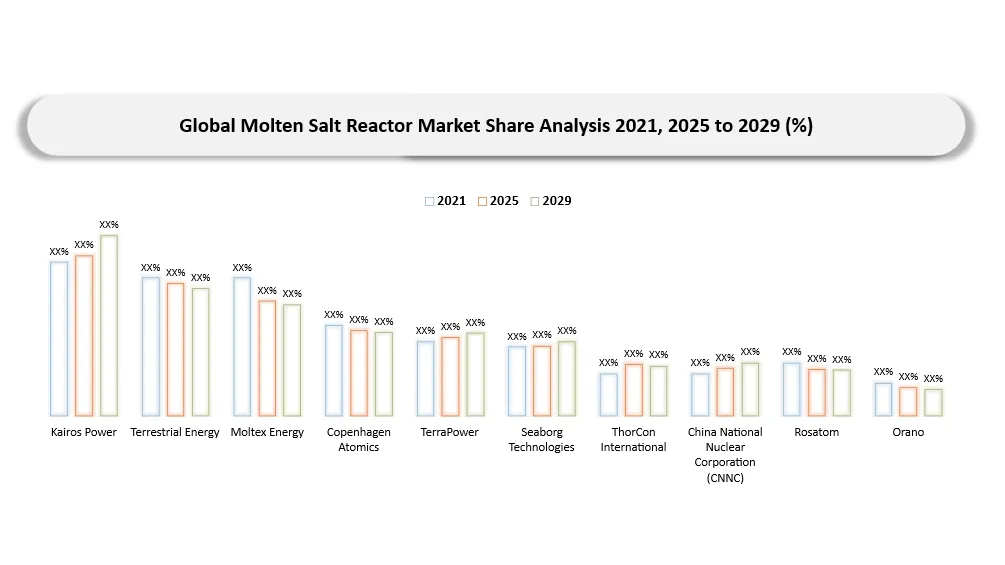
Key Companies
- TerraPower (United States)
- Terrestrial Energy (Canada)
- Moltex Energy (Canada)
- Kairos Power (United States)
- Copenhagen Atomics (Denmark)
- Seaborg Technologies (Denmark)
- ThorCon International (United States)
- China National Nuclear Corporation (CNNC) (China)
- Rosatom (Russia)
- Framatome (France)
- Westinghouse Electric Company (United States)
- AtkinsRéalis (Canada)
- Orano (France)
- BWX Technologies (BWXT) (United States)
- Southern Company (United States)
- Rolls-Royce SMR (United Kingdom)
- NuclearN (China)
- Clean Core Thorium Energy (United States)
- General Atomics (United States)
- EDF (France)
Molten Salt Reactor Market Major Pain Points
- Despite advances in regulatory mechanisms, license application procedures and lack of standardized approval processes for Generation IV nuclear technologies, molten salt reactor technology commercialization has not proceeded due to numerous hurdles.
- In addition to high levels of capital required for conducting various experiments, building prototypes, testing the technology and constructing first-of-its-kind facilities, there is considerable risk involved.
- Inadequate availability of sophisticated nuclear fuels, advanced materials and a complete supply chain of reactor hardware makes it difficult to deploy these reactors on a massive scale and pose project execution risks.
- Complications of engineering involved in molten salt chemistry, corrosive resistant material technology, fuel re-processing, waste management and system reliability lead to an increase in cost and risk.
- Commercial experience, public fears about nuclear energy production and the absence of reference facilities hamper investor confidence and adoption of the technology.
Molten Salt Reactor Market Recent Developments
- May 2025: TerraPower commenced construction of the foundation for the nuclear island of the Natrium reactor in Kemmerer, Wyoming, a significant step towards the commercialization of advanced reactor technology.
- November 2025: Terrestrial Energy reached important regulatory safety milestones with the Canadian Nuclear Safety Commission (CNSC) regarding its Integral Molten Salt Reactor (IMSR) and paved the path towards commercialization.
- February 2026: Moltex Energy gained financing approvals to construct more facilities for testing molten salt fuel recycle technologies for use in the pyroprocessing process.
- January 2026: Seaborg Technologies gained initial approval for the safety of CMSR floating plant designs, moving forward in the commercialization of the marine nuclear power plants.
- May 2026: Rosatom conducted the high-temperature corrosion tests of nickel-chromium alloys in fluoride salt coolant conditions, contributing to the commercial material qualification process for molten salt reactors.
Analyst View / Opinion on Molten Salt Reactor Market
- The Molten Salt Reactor industry is moving away from the R&D stage to become commercially ready with the help of growing funding in Generation IV technology and long-term decarbonization policies.
- Licensing success in pilot commercial projects and development of dependable nuclear fuel supply lines for advanced nuclear fuels will be the main drivers of future market growth.
- Growth of the need for non-emitting baseload power and high temperatures is expected to make the molten salt reactor system relevant for difficult-to-abate industries.
- Collaboration between reactor makers, governments, utilities and research institutions would contribute toward validating technology and reducing risks involved in commercialization.
- North America would emerge as the region dominating commercialization of the reactors while Asia Pacific would see more reactor deployment due to government-sponsored nuclear programs and thus will be the driving forces behind the global Molten Salt Reactor Market.
Molten Salt Reactor Market Target Audience
| INDUSTRY | WHO SHOULD BUY THIS REPORT? | REASON TO BUY THIS REPORT |
| Nuclear Energy | Reactor developers and nuclear technology companies | Evaluate commercialization opportunities, technology trends and competitive landscape |
| Electric Utilities | Utility companies and independent power producers (IPPs) | Assess future deployment opportunities for carbon-free baseload power generation |
| Engineering & Construction | EPC contractors and nuclear engineering firms | Identify upcoming reactor projects and infrastructure investment opportunities |
| Government & Public Sector | Energy ministries, nuclear regulatory authorities and policymakers | Support energy planning, regulatory development and advanced nuclear adoption strategies |
| Industrial Manufacturing | Steel, chemical, refining, mining and cement companies | Evaluate high-temperature process heat and industrial decarbonization opportunities |
| Hydrogen & Clean Fuels | Hydrogen producers and synthetic fuel developers | Assess the potential of MSRs for low-carbon hydrogen production and industrial applications |
| Investment & Financial Services | Private equity firms, venture capital firms, infrastructure investors and banks | Identify investment opportunities in advanced nuclear technologies and emerging market participants |
| Nuclear Fuel & Materials | Nuclear fuel suppliers and advanced materials manufacturers | Understand future demand for HALEU, thorium fuels, molten salts and reactor materials |
| Research & Academia | Research institutions, universities and national laboratories | Track technology advancements, research priorities and commercialization progress |
| Defense & Marine | Defense organizations, naval agencies and marine nuclear technology developers | Evaluate compact reactor technologies for remote energy systems and future marine propulsion applications |
Why Choose DATAM?
- Data-Driven insights: Dive into detailed analyses with granular insights such as pricing, market shares and value chain evaluations, enriched by interviews with industry leaders and disruptors.
- Post-Purchase Support and Expert Analyst Consultations: As a valued client, gain direct access to our expert analysts for personalized advice and strategic guidance, tailored to your specific needs and challenges.
- White Papers and Case Studies: Benefit quarterly from our in-depth studies related to your purchased titles, tailored to refine your operational and marketing strategies for maximum impact.
- Annual Updates on Purchased Reports: As an existing customer, enjoy the privilege of annual updates to your reports, ensuring you stay abreast of the latest market insights and technological advancements. Terms and conditions apply.
- Specialized Focus on Emerging Markets: DataM differentiates itself by delivering in-depth, specialized insights specifically for emerging markets, rather than offering generalized geographic overviews. The approach equips our clients with a nuanced understanding and actionable intelligence that are essential for navigating and succeeding in high-growth regions.
- Value of DataM Reports: Our reports offer specialized insights tailored to the latest trends and specific business inquiries. The personalized approach provides a deeper, strategic perspective, ensuring you receive the precise information necessary to make informed decisions. The insights complement and go beyond what is typically available in generic databases.
What DATAM Uniquely Provides
- Comprehensive benchmarking of innovative molten salt reactor technology, covering such factors as technical maturity, commercial maturity and comparison of performance between advanced reactors.
- Tracking of worldwide demonstration programs, progress in obtaining licenses for new reactors, national funding programs and commercialization programs.
- Insight into the state-of-the-art of advanced nuclear policy, regulation, fuel cycle issues and investments affecting development of molten salt reactors per country.
- Competitive intelligence concerning the foremost reactors producers, partnerships, technological developments, pilot projects and financing events affecting the landscape of the market.
- Analysis of strategic opportunities for developing power plants free from CO2 emissions as well as industrial processes based on high-temperature power sources.


























































