


Microplastics Testing Market Size and Overview
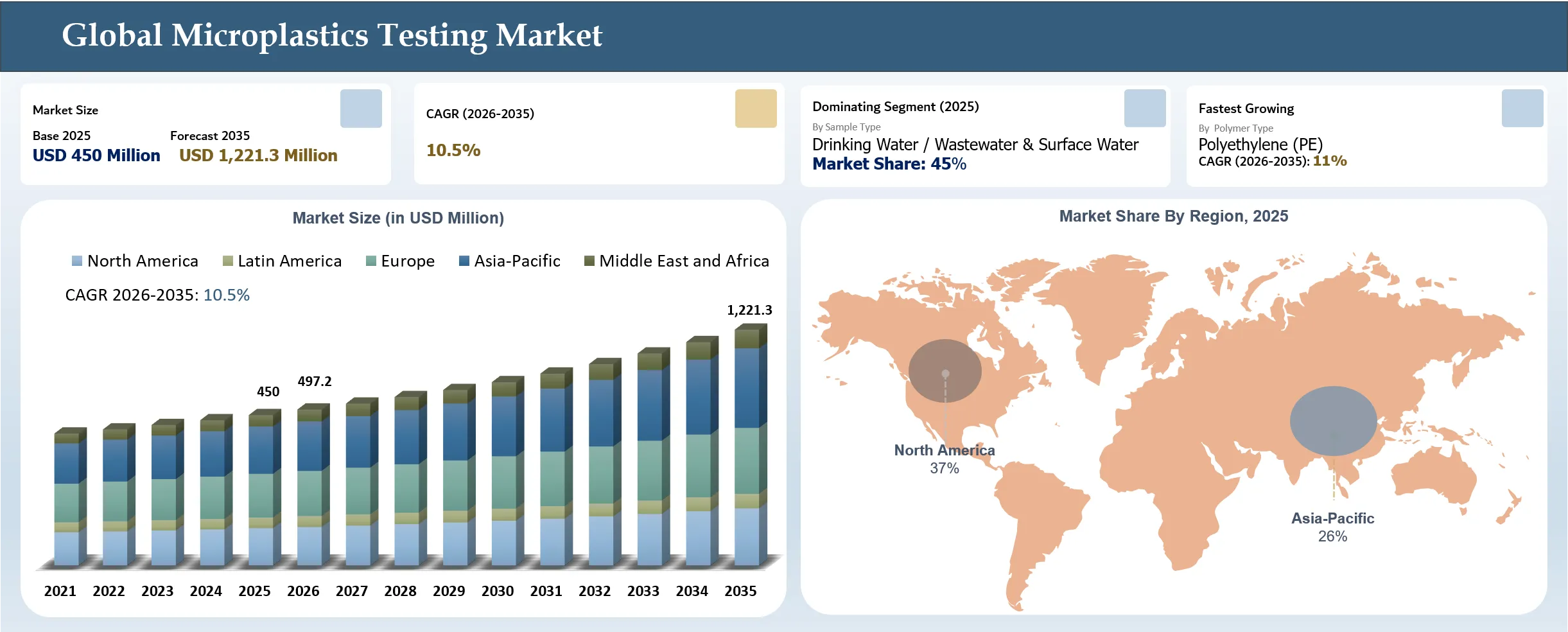
The global Microplastics Testing market reached USD 450 million in 2025 and is expected to reach USD 1,221.3 million by 2035, growing with a CAGR of 10.5 % during the forecast period 2026-2035. The market is expanding as regulatory requirements, standard analytical procedures, and commercial testing capabilities in relation to environment-related and industrial applications increase. According to Eurofins, it employs more than 65,000 employees, operates more than 950 laboratories, carries out more than 450 million tests per year, and its services include microplastics testing for identification and quantification. SGS offers testing of microplastics for the ability to detect and quantify particles sized 1 µm and smaller, which is applicable for such matrices as drinking water and surface water, soil, sludge, sediment, packaging, marine debris, industrial effluents, wastewater, cosmetics, and textile wastewater; its testing is provided by centers of excellence in Bulgaria and Singapore. Regulatory pressures grow too, as the European Commission believes that EU restrictions on intentionally added microplastics may help avoid approximately half a million tonnes of microplastics release within 20 years, at the cost of up to USD 21.62 billion (EUR 19 billion). ISO works on the standardization of microplastics analysis, with ISO/CD 16094-4 currently being at Committee Draft stage in May 2026 concerning sample preparation and extraction in relation to terrestrial waters, wastewater, seawater, and groundwater.
Growing investments in research and analysis of microplastics are paving the way for advancements in testing technologies. In February 2026, according to FiltSep, PolyGone Systems raised USD 4 million in seed funding in order to develop technologies related to the monitoring and filtration of microplastics. In fact, this money is going to be used by PolyGone Systems to help develop and implement solutions for the detection, monitoring, and filtration of microplastics in water, including microplastics analysis technology. As such, the Microplastics Testing Market would be affected by this investment.
White-Space Opportunities for Advanced Microplastics Testing, Measurement, and Analysis Technologies
In April 2026, U.S. Advanced Research Projects Agency for Health (ARPA-H) committed USD 144 million to the STOMP (Systematic Targeting of MicroPlastics) program to develop technologies for measuring, understanding, and removing microplastics and nanoplastics from the human body. The highest-investment area is microplastics measurement, with STOMP seeking standardized and gold-standard approaches to accurately measure particles in human tissues and biological samples, while the program also targets biological-mechanism research to determine how microplastics accumulate in organs and cause potential health effects. Additional white-space areas include biosampling, particle identification and characterization, exposure assessment, toxicity analysis, clinical measurement, and microplastics removal, creating opportunities for analytical testing, microscopy, spectroscopy, reference-material, organoid, and biomedical technology providers. ARPA-H expects to make multiple awards under the USD 144 million program, with performers expected to begin work in late 2026, while the agency is also seeking standardized micro- and nanoplastic reference materials to improve consistency across testing laboratories.
The investment is therefore expected to benefit companies across several layers of the Microplastics Testing and Analysis value chain. Analytical instrument and microscopy companies such as Agilent Technologies, Thermo Fisher Scientific, Bruker, PerkinElmer, and ZEISS could benefit from demand for advanced spectroscopy, microscopy, imaging, and particle-characterization technologies used to detect and quantify microplastics and nanoplastics in complex biological samples, while laboratory testing and analytical service providers such as Eurofins Scientific, SGS, Bureau Veritas, and ALS Limited could benefit from increasing requirements for sample preparation, microplastics analysis, method validation, and testing services. Specialized technology developers and research organizations could also gain opportunities to develop standardized measurement platforms, reference materials, biosampling methods, and clinical testing workflows, while companies involved in microplastics removal technologies could benefit from the program’s later-stage focus on developing methods to remove potentially harmful particles from the human body. These opportunities are expected to strengthen demand for advanced testing technologies and create new commercial opportunities in human-biospecimen analysis, particle identification, quantification, biological assessment, and clinical microplastics testing.
Microplastics Testing Market Strategic Takeaways
- North America held the largest regional market share at 37% in 2025. Asia-Pacific accounted for 26% of the global market in 2025 and is projected as the fastest-growing region.
- The drinking water, wastewater, and surface water segment dominated with a 45% market share in 2025. Water treatment plants currently demonstrate removal efficiency rates between 45% and 67% for microplastics.
- Proposed European Commission restrictions aim to prevent 500,000 tonnes of microplastic releases over 20 years. The implementation cost for these regulations is estimated to reach up to USD 21.62 billion (EUR 19 billion).
- ARPA-H committed USD 144 million in funding to the STOMP program targeting microplastics in human tissue. PolyGone Systems secured USD 4 million in seed funding to advance detection and filtration technology.
Microplastics Testing Market Industry Trends and Strategic Insight
- The microplastics testing industry is moving from fragmented laboratory protocols toward more reproducible, standardized workflows covering sampling, extraction, digestion, identification, and quantification.
- Machine learning is being incorporated into image and spectral interpretation to classify particles and distinguish plastic from non-plastic material.
- Increasing regulatory attention is shifting customer requirements from simply detecting plastic particles toward generating traceable, reproducible, polymer-specific, and quantitatively defensible results. This favors laboratories with validated workflows, controlled sample preparation, documented QA/QC, and multiple analytical platforms rather than providers offering basic particle counting alone.
- Manual particle-by-particle identification creates throughput limitations for laboratories processing large environmental samples. Recent research is therefore advancing automated imaging, spectral classification, machine-learning-assisted particle recognition, and intelligent detection platforms to reduce analyst intervention and accelerate particle characterization.
- QCL-based infrared imaging is being investigated as a practical approach for processing large numbers of particles, with research in 2025 focusing on sample-based subsampling strategies to reduce analytical workload while retaining representative concentration and polymer information.
Microplastics Testing Market Scope
| Metrics | Details | |
| 2025 Market Size | USD 450 Million | |
| 2035 Projected Market Size | USD 1,221.3 Million | |
| CAGR (2026-2035) | 10.5% | |
| Largest Market | North America | |
| Fastest Growing Market | Asia-Pacific | |
| By Testing Method | FTIR Spectroscopy, Raman Spectroscopy, Pyrolysis-GC/MS, Microscopy, Thermal Analysis, Scanning Electron Microscopy (SEM), Other Analytical Methods | |
| By Sample Type | Drinking Water, Wastewater, Surface Water, Seawater, Soil and Sediment, Food and Beverages, Air, Soil, Sediment & Sludge, Consumer Products, Cosmetics & Personal Care, Packaging & Food Contact Materials, Agricultural Samples, Others | |
| By Particle Size | 1–20 µm, 20–100 µm, 100–500 µm, 500 µm–1 mm, 1–5 mm | |
| By Polymer Type | Polyethylene (PE), Polypropylene (PP), Polyethylene Terephthalate (PET), Polyvinyl Chloride (PVC), Polystyrene (PS), Polyamide (PA), Polyurethane (PU), Polytetrafluoroethylene (PTFE), Polycarbonate (PC), Polymethyl Methacrylate (PMMA), Others | |
| By End User | Water & Wastewater Utilities, Food & Beverage, Pharmaceuticals & Healthcare, Cosmetics & Personal Care, Packaging, Textile & Apparel, Chemicals & Petrochemicals, Consumer Goods, Agriculture, Environmental Testing & Consulting, Government & Regulatory Agencies, Research & Academic Institutes, Marine & Fisheries, Recycling & Waste Management, Automotive, Construction, Others | |
| By Region | North America | U.S., Canada, Mexico |
| Europe | Germany, UK, France, Spain, Italy, Poland | |
| Asia-Pacific | China, India, Japan, Australia, South Korea, Indonesia, Malaysia | |
| Latin America | Brazil, Argentina | |
| Middle East and Africa | UAE, Saudi Arabia, South Africa, Israel, Türkiye | |
| Report Insights Covered | Competitive Landscape Analysis, Company Profile Analysis, Market Size, Share, Growth | |
Microplastics Testing Market Disruption Analysis
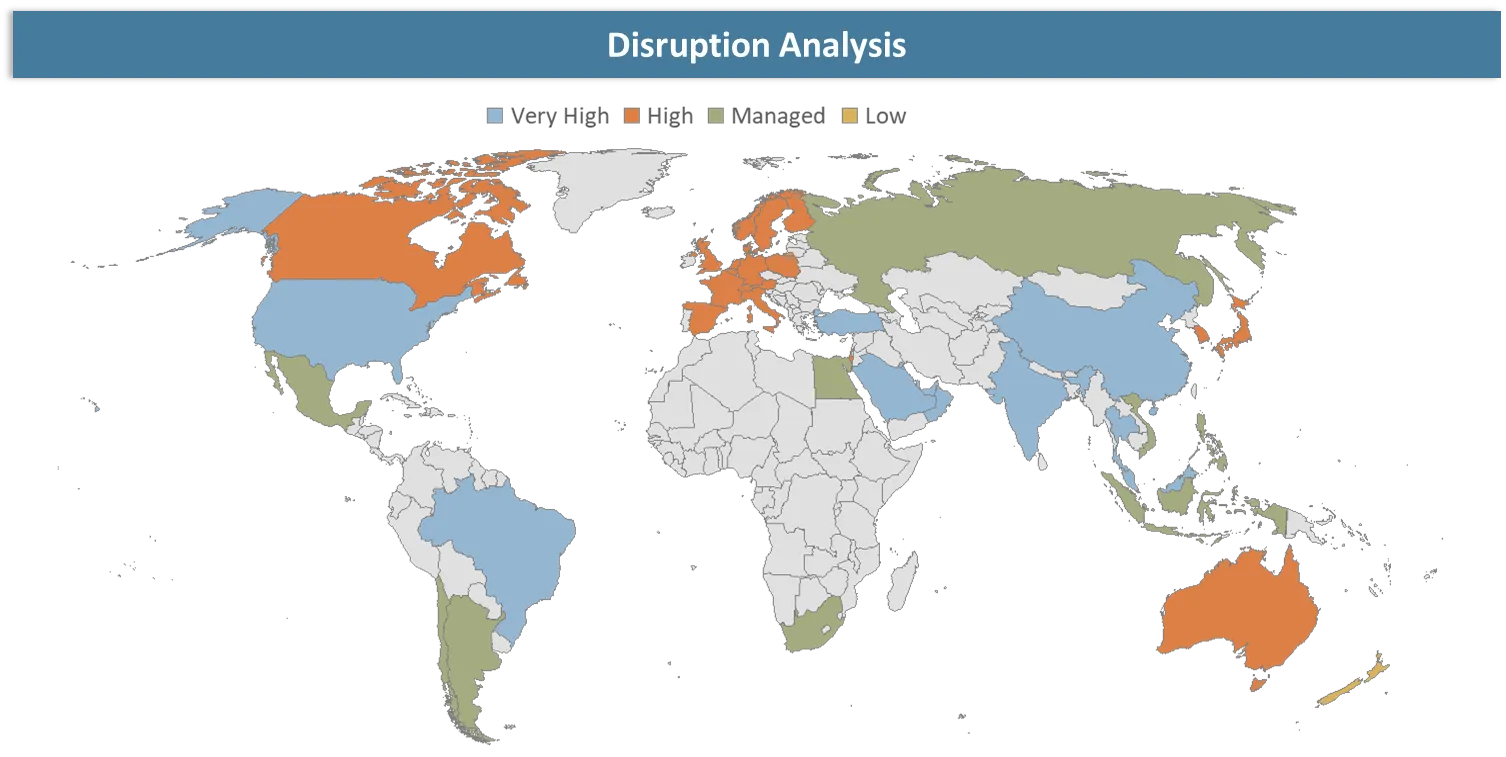
Standardization of Microplastics Testing Methods Reshaping Laboratory Testing Landscape
Disruption in the Microplastics Testing Market is increasingly being caused by the standardization of sample preparation and analysis methodologies, as laboratories are increasingly comparing the results of their microplastic testing in different ways. In 2026, the development of ISO/CD 16094-4 entered the Committee Draft phase, where the methodology for preparing the samples of microplastics was developed for the analysis of terrestrial water, wastewater, seawater, and groundwater.
At the same time, ISO/CD 16094-1 reached the Committee Draft level in 2026, providing general guidance for microplastics analysis and method selectivity for drinking water, groundwater, precipitation, surface water, and water treatment samples. ISO/FDIS 16094-3 was also advancing toward its official approval in terms of thermo-analysis, as the aim was to provide uniform approaches for the assessment of microplastic content. All these innovations are influencing the market by changing the focus from the testing methodologies of specific laboratories to sample preparation, contamination control, recovery efficiency, method comparison, and uniform analytical reporting, which means that the role of laboratories and testing organizations becomes more important.
Microplastics Testing Market BCG Matrix: Company Evaluation
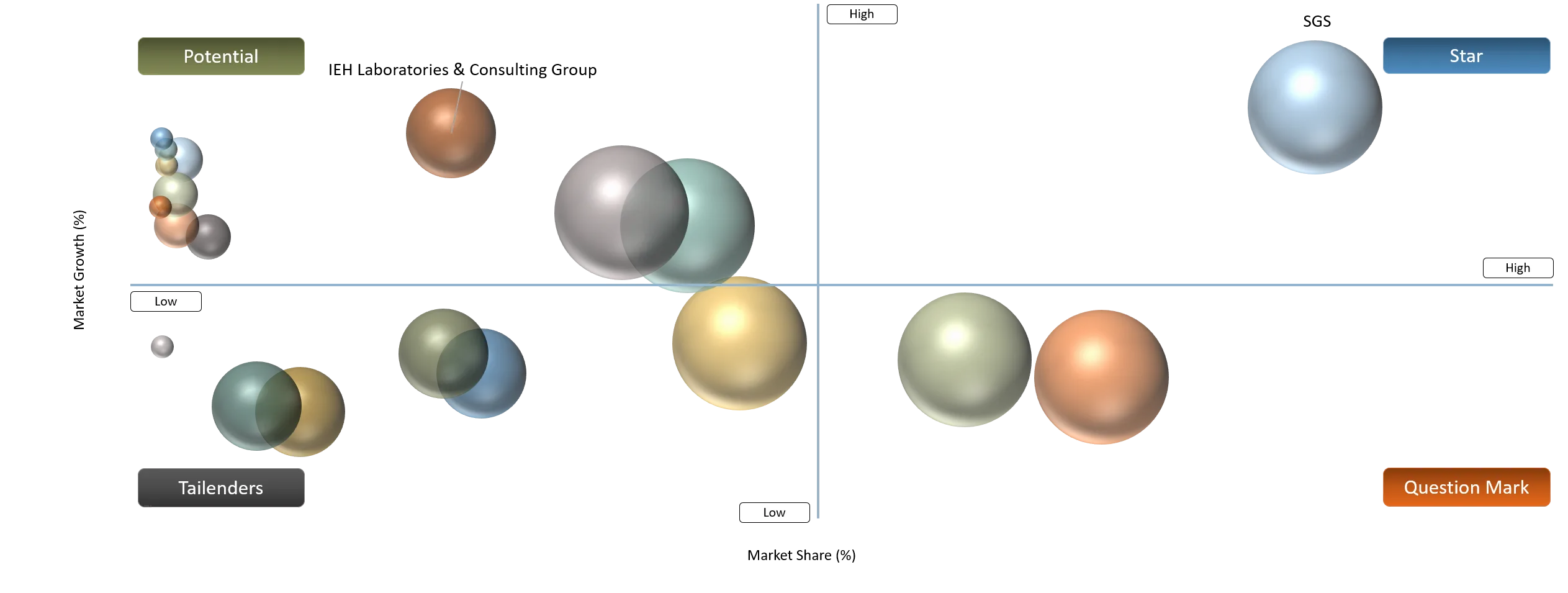
Stars include SGS, Eurofins, TÜV SÜD, and Intertek because they have broad global laboratory networks, established environmental-testing capabilities, and dedicated microplastics analytical services covering multiple sample matrices and analytical techniques. SGS offers microplastics testing with detection capabilities down to 1 µm, while Eurofins provides multiple analytical approaches including FTIR, Raman, LDIR, and Py-GC/MS. Intertek also provides microplastics analysis across food, water, and consumer-product applications. Question Mark companies such as Mérieux NutriSciences, ALS Global, and Tentamus Group are placed because they possess established analytical-testing infrastructure and are expanding specialized microplastics capabilities, but their competitive positioning in the dedicated microplastics-testing segment remains less dominant than the largest global TIC providers.
The Potential category includes IEH Laboratories & Consulting Group, EMSL Analytical, and Measurlabs, which benefit from increasing demand for specialized microplastics analysis and offer targeted analytical capabilities across food, water, environmental, and consumer-product samples. IEH has developed LDIR-based automated microplastics analysis, while EMSL provides specialized environmental laboratory services and Measurlabs offers microplastics testing across multiple sample categories. Tailenders include FILAB, Alfa Chemistry, and Ocean Diagnostics, because their microplastics-testing activities are comparatively specialized or concentrated in selected applications and geographic markets.
Microplastics Testing Market Dynamics
Driver Impact Analysis
| Driver | Market Growth Impact (%) | Demand Concentration | Impacted Use Case | Strategic Impact |
Increasing regulatory requirements for microplastic monitoring are driving laboratories and manufacturers to adopt specialized detection and quantification services. | 25% | High – Europe & North America; expanding Asia-Pacific | Regulatory compliance testing, drinking-water monitoring, wastewater surveillance, product compliance | Creates recurring demand for accredited laboratories, validated analytical methods, and regulatory-ready reporting. |
Growing contamination concerns across drinking water, food, soil, air, and aquatic environments are expanding the need for routine microplastics analysis. | 22% | High – Water & environmental testing | Drinking-water testing, wastewater testing, marine monitoring, food and environmental contamination assessment | Expands testing from research projects toward routine monitoring programs across multiple sample matrices. |
Increasing demand for polymer-specific identification is supporting adoption of FTIR, Raman spectroscopy, and other chemical-characterization techniques. | 18% | High – Advanced analytical laboratories | Polymer identification, particle characterization, size classification, chemical composition analysis | Shifts competition toward laboratories with spectroscopic platforms, automated identification, and multi-polymer libraries. |
Development of certified reference materials is increasing demand for method validation, quality control, and interlaboratory comparability in microplastics testing. | 15% | Medium–High – Accredited laboratories & research institutions | Method validation, proficiency testing, quality assurance, laboratory calibration | Strengthens demand for reference materials and validated workflows while reducing variability between laboratory results. |
Growing need to quantify microplastic concentration and particle distribution is expanding analytical testing beyond simple visual particle identification. | 20% | High – Water, food & environmental laboratories | Particle counting, concentration measurement, size distribution, mass-based and number-based analysis | Accelerates adoption of automated microscopy, vibrational spectroscopy, and quantitative analytical platforms. |
Increasing regulatory requirements for microplastic monitoring are driving laboratories and manufacturers to adopt specialized detection and quantification services
The tighter regulations on microplastics compliance are one of the major factors responsible for increased demand for microplastics testing services. In April 2025, the European Commission released an Explanatory Guide on the REACH restriction of synthetic polymer microparticles, giving detailed guidelines on how organizations can identify whether or not polymers/products are covered under the restriction with evidence for parameters such as degradability, solubility, composition of polymers, particle characteristics, and concentration. According to the guide, some tests for degradability and solubility are to be carried out by accredited laboratories, which generates demand for analytical laboratories.
Growing regulatory scrutiny of microplastics in drinking water is increasing the need for reliable monitoring and analytical testing capabilities. In April 2026, according to DLA Piper, the U.S. Environmental Protection Agency (EPA) released its draft Sixth Contaminant Candidate List (CCL 6), prioritizing microplastics and pharmaceuticals in drinking water for the first time. The draft list includes 75 individual chemicals, 4 chemical groups—including microplastics, pharmaceuticals, PFAS, and disinfection byproducts—and 9 microbial contaminants. The inclusion of microplastics highlights growing regulatory and research attention toward their occurrence and potential health risks in public drinking-water systems, creating demand for improved microplastics detection, measurement, analytical methods, occurrence monitoring, and laboratory testing capabilities.
Restraint Impact Analysis
| Restraint | Drag on Market Growth (%) | Primary Impact Area | Impacted Use Case | Strategic Impact |
Lack of fully harmonized testing methodologies creates inconsistencies in sampling, preparation, identification, and quantification across laboratories. | 12% | Method standardization and interlaboratory comparability | Environmental monitoring, drinking-water testing, wastewater testing, regulatory compliance | Slows adoption by increasing method-validation requirements and making results from different laboratories difficult to compare; adoption of standardized ISO methods can gradually reduce this constraint. |
High risk of sample contamination from airborne and laboratory-derived plastic particles can compromise analytical accuracy and increase quality-control requirements. | 10% | Sample integrity and contamination control | Drinking-water, air, food, biological and environmental microplastics testing | Requires laboratories to strengthen blanks, controlled environments, non-plastic equipment and contamination protocols, increasing testing complexity and operating costs; contamination concerns can also undermine confidence in reported results. |
Limited availability of suitable reference materials and proficiency-testing frameworks can constrain method validation and interlaboratory comparability. | 8% | Calibration, validation and laboratory quality assurance | Method validation, proficiency testing, laboratory accreditation and regulatory testing | Restricts laboratories' ability to demonstrate consistent measurement performance across instruments and methods, slowing accreditation and large-scale deployment of standardized testing services. |
Low microplastic concentrations in certain environmental samples increase the importance of contamination control and analytical sensitivity, making reliable quantification more difficult. | 11% | Detection limits and quantitative accuracy | Drinking-water surveillance, groundwater monitoring and low-contamination environmental samples | Drives demand for higher-sensitivity instrumentation and more intensive sample preparation, increasing testing costs and limiting routine high-throughput analysis; NIST's 2025 research also identified particle-size and transport limitations in spICP-MS measurements. |
Lack of fully harmonized testing methodologies creates inconsistencies in sampling, preparation, identification, and quantification across laboratories
One of the key restrictions that limiting the expansion of the Microplastics Testing Market is the absence of standardized techniques, which include sampling, sample preparation, identification, and quantification. While the ISO 5667-27:2025 standard issued in March 2025 set the guidelines for sampling of suspended microplastics in domestic water, freshwater, seawater, treated wastewater, and untreated wastewater, it does not provide information on further chemical analysis, sample pretreatment, and digestion methods.
Variations in analytical thresholds and risk-assessment approaches can produce significant differences in microplastics measurement outcomes. In January 2026, according to JoVE Visualize, a study published in Environmental Pollution analyzed microplastics in water and sediment samples from six sampling sites in a karst region of Guangxi, Southwest China, comparing spectral matching thresholds of 0.600 and 0.800, abundance versus mass concentration, and five ecological risk-assessment methods. At the recommended 0.800 matching threshold, microplastic abundance in water ranged from 0.600 to 3.20 items/L, with an average of 1.57 ± 1.02 items/L. The study found that lowering the matching threshold to 0.600 increased reported microplastic types and abundances by several to dozens of times, while risk-assessment methods produced substantially different results: traditional indices classified more than 83.0% of sites as high-risk, compared with only 25.0% under risk quotient (RQ) and ecological risk quotient (ERQ) methods.
Microplastics Testing Market Segment Analysis
The global Microplastics Testing market is segmented based on testing method, sample type, particle size, polymer type, end user, and region.
Drinking Water / Wastewater & Surface Water Testing Driving High-Volume Demand
The drinking water, wastewater, and surface water segment remains the dominant in the microplastics testing market, due to the increasing need to monitor microplastic contamination across drinking-water supplies, municipal wastewater, rivers, lakes, and other surface-water bodies. This segment held a market share of 45% in 2025, driven by water quality monitoring, environmental protection activities, and health concerns about the consumption of microplastics via aquatic systems. This growing demand for the identification and quantification of particles and polymers in water samples is driving the growth of the microplastics testing market.
Environmental testing laboratories, water utilities, and research organizations are increasingly adopting advanced analytical methods such as FTIR spectroscopy, Raman spectroscopy, microscopy, and Pyrolysis-GC/MS to improve microplastic detection and characterization. In March 2025, a drinking-water study reported microplastic concentrations of 16.13 ± 3.83 particles/L in raw water, 10.74 ± 3.76 particles/L in treated water, and 12.43 ± 3.92 particles/L in tap water, demonstrating the continued requirement for testing across different stages of the drinking-water cycle. Another 2025 study found that drinking-water treatment plants removed approximately 45%–67% of microplastics, highlighting the importance of testing both source and treated water to evaluate treatment performance. These developments, combined with increasing monitoring requirements across drinking water, wastewater, and surface water, are supporting the segment's dominance.
Microplastics Testing Market Geographical Penetration
Increasing Water-Quality Monitoring and Regulatory Focus Strengthening North American Microplastics Testing Demand
North America dominates the microplastics testing market, due to increasing surveillance of drinking water, wastewater, surface water, food, and environmental samples in North America and North American countries. The region accounted for 37% of the global microplastics testing market in 2025, because of the existing analytical testing facilities, environmental monitoring systems, and increasing attention towards standardization of microplastic testing. The increasing use of sophisticated analytical techniques like FTIR spectroscopy, Raman spectroscopy, microscopy, and Pyrolysis-GC/MS analysis has increased the capability of laboratories to detect polymers and particles, while the rising concerns about microplastic contamination in drinking water and the aquatic environment have been driving the testing market further.
Expansion through strategic acquisitions is strengthening analytical testing capacity and broadening microplastics testing capabilities across North America. In February 2025, SGS, a Switzerland-based Testing, Inspection and Certification (TIC) company, expanded its North American environmental and materials testing capabilities through the acquisition of RTI Laboratories, a U.S.-based environmental and materials testing company headquartered in Detroit, Michigan. The acquisition added 30 employees to SGS and strengthened its environmental testing presence in the U.S. Midwest, while RTI’s capabilities expanded SGS’s services in environmental testing, PFAS analysis, metallurgical testing, alloy chemistry, failure analysis, and paint and coating evaluations. Following the acquisition, SGS had 2,700+ laboratories and business facilities across 119 countries, supported by approximately 99,250 employees, reinforcing its ability to provide advanced environmental analytical services, including microplastics analysis, across North America.
U.S. Microplastics Testing Market Trends
The U.S. holds a dominant position in the North America microplastics testing market, due to the presence of an existing structure of environmental testing systems, growing microplastic monitoring efforts, and increasing regulations regarding emerging pollutants in drinking water. The country has many analytical laboratories, water treatment plants, research organizations, and environmental agencies that use new technologies for microplastics identification. In April 2026, the United States Environmental Protection Agency (EPA) included microplastics for the first time as one of the priority pollutant groups in its draft of the Sixth Contaminant Candidate List (CCL 6). It was a significant event since CCL is used in further research, monitoring, funding, and possible regulations under the Safe Drinking Water Act.
Government-funded research is expanding microplastics monitoring and analytical testing capabilities across U.S. aquatic environments. In August 2025, NASA awarded nearly USD 5 million to Alaska Pacific University (APU), a U.S.-based higher-education and research institution headquartered in Anchorage, Alaska, to establish a Microplastics Research and Education Center. The funding is provided over five years and supports research and education focused on understanding microplastics, including their detection and distribution in Alaska waterways. The initiative brings together APU with research partners to strengthen microplastics monitoring and analytical capabilities in Alaska, creating opportunities for microplastics sampling, detection, identification, characterization, and environmental testing.
Canada Microplastics Testing Market Outlook
Canada is one of the major countries in the North American microplastics testing market due to its abundance of freshwater resources, existing systems of environmental monitoring, and the growing attention to the problem of plastic pollution in drinking water and the aquatic environment. The share of the country's freshwater resources represents about 20% of the world's resources, while the amount of renewable freshwater comprises 7% of the world's total volume. Hence, there is a great demand for contamination monitoring in the freshwater environment. The development of methods for microplastics and nanoplastics measurement was carried out by Environment and Climate Change Canada in 2025.
National initiatives to standardize microplastics monitoring are strengthening analytical testing infrastructure and measurement capabilities in Canada. In July 2025, Ocean Diagnostics (ODI), a Canada-based microplastics technology and analytical testing company, partnered with the National Research Council Canada (NRC), Canada’s federal research and development organization, to develop a national microplastics monitoring framework. The project will collect seasonal water samples from five key rivers through the end of 2026, using ODI’s automated Ascension depth sampler, with samples analyzed at ODI’s ISO-5 Clean Microplastics Analysis Laboratory in Vancouver using advanced analytical capabilities. The project will also validate the NRC’s CaMPSim-3D Canadian MicroPlastics Simulation model against real-world data, with the validated results expected to be released in 2027.
Expanding Water-Quality Monitoring and Microplastic Research Driving Growth in Asia-Pacific
The Asia-Pacific market is an important region in the Microplastics Testing Market, supported by increasing plastic pollution, expanding water-quality monitoring programs, and growing research activity across drinking water, wastewater, rivers, and coastal environments. The region accounted for 26% of the global Microplastics Testing Market in 2025, reflecting the increasing requirement for advanced analytical techniques to identify, quantify, and characterize microplastics in environmental and water samples. Countries such as China, Japan, South Korea, India, and Australia are strengthening monitoring and research activities as concerns over microplastic contamination in aquatic ecosystems and potential human exposure continue to increase. The growing adoption of FTIR, Raman spectroscopy, microscopy, and other polymer-identification technologies is further supporting the commercialization of microplastics testing services across the region.
Growing demand for marine pollution monitoring is expanding the need for specialized microplastics sampling and analytical testing services across Asia-Pacific. In January 2026, SGS, a Switzerland-based Testing, Inspection and Certification (TIC) company, conducted microplastics and environmental DNA (E-DNA) testing for 44west, a Swiss rowing team participating in the 4,800-km World’s Toughest Row – Atlantic. SGS collected microplastic samples from coastal waters in La Gomera, Spain, targeting plastic particles ranging from 500 microns to 5 millimeters, while the samples were analyzed at SGS laboratories in Singapore, demonstrating the company’s Asia-Pacific microplastics testing capabilities. The testing was designed to provide data on microplastic pollution levels, hotspots, and the types and sources of plastic debris affecting the marine environment. The project strengthens SGS’s environmental testing portfolio, which includes microplastic and macroplastic analysis across marine and freshwater environments, supporting demand for advanced sampling, identification, characterization, and analytical testing services.
Japan Microplastics Testing Market Trends
Japan is in a strong position in the Asia-Pacific Microplastics Testing Market owing to its advanced analytical infrastructure, established environmental monitoring capabilities, and increasing research focus on microplastic contamination in drinking water and aquatic environments. The availability of sophisticated laboratories and analytical technologies such as FTIR, Raman spectroscopy, microscopy, and mass-spectrometry-based techniques supports accurate identification and quantification of microplastics across different water samples. In 2025, Japan's Ministry of the Environment continued research and monitoring activities related to microplastics in aquatic environments, while Japanese researchers reported microplastic contamination across freshwater and coastal ecosystems, reinforcing the need for systematic sampling and testing.
Advances in automated analytical technologies are improving the speed, accuracy, and depth of microplastics measurement in Japan. In August 2025, Shimadzu Corporation, a Japan-based analytical and measuring instruments manufacturer, launched a Particle Analysis System for Microplastics in Japan and overseas to improve the rapid and accurate analysis of microplastics. The system can automatically calculate particle number, area, volume, mass, and individual particle characteristics using infrared microscopy or infrared/Raman microscopy, and Shimadzu describes the mass- and volume-analysis capability as the world’s first of its kind. The underlying methodology was developed using measurements of 4,390 plastic particles collected from 35 sites across 17 rivers in Japan, establishing a relationship between particle mass and projected area.
Microplastics Testing Market Competitive Landscape
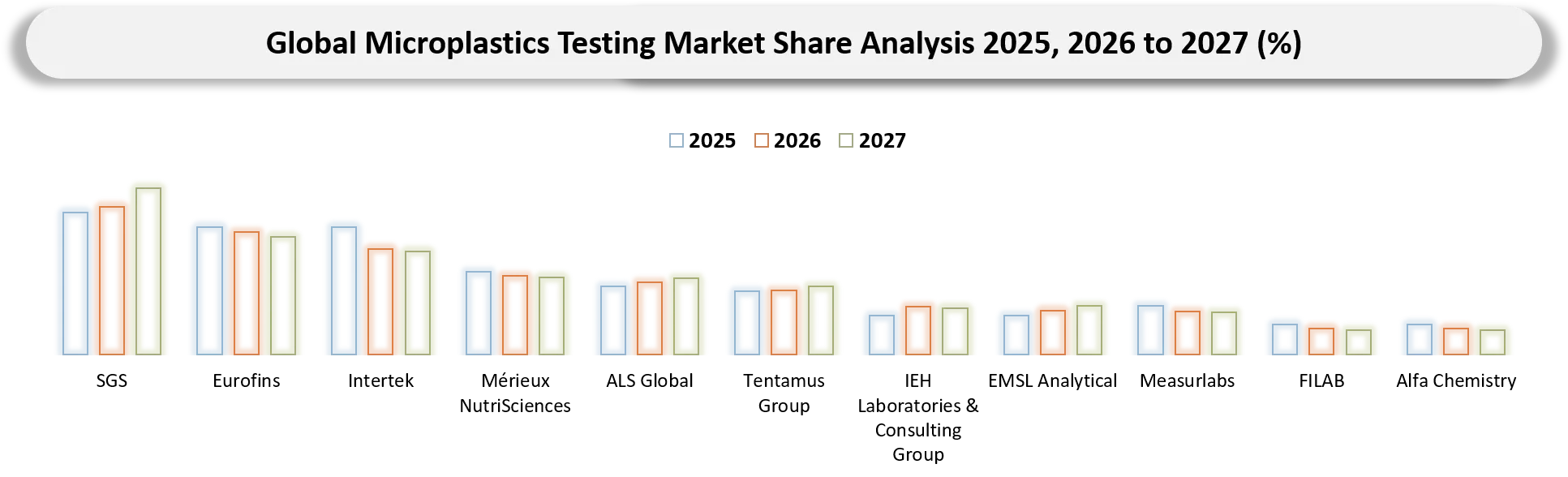
- The market is characterized by three key participant groups: global testing, inspection and certification (TIC) providers, specialized environmental and analytical laboratories, and niche microplastics-testing specialists. Global providers such as SGS, Eurofins, Intertek, Mérieux NutriSciences, ALS Global, Tentamus Group, and TÜV SÜD compete through broad laboratory networks, regulatory testing capabilities, and multi-matrix environmental analysis, while IEH Laboratories & Consulting Group, EMSL Analytical, Measurlabs, FILAB, Alfa Chemistry, and Ocean Diagnostics strengthen the market through specialized analytical services and microplastics-focused testing. The competitive environment is therefore driven by analytical accuracy, testing-method breadth, laboratory coverage, regulatory compliance, and the ability to analyze diverse matrices such as drinking water, wastewater, soil, sediment, food, and consumer products.
- Key players include SGS, Eurofins, Intertek, Mérieux NutriSciences, ALS Global, Tentamus Group, IEH Laboratories & Consulting Group, EMSL Analytical, Measurlabs, FILAB, Alfa Chemistry, Ocean Diagnostics, and TÜV SÜD.
Key Developments
- January 2026: Lumati, a U.S.-based longevity and environmental-health company headquartered in California, launched Lumati Detect, an at-home saliva-based microplastics exposure testing service.
- May 2026: PerkinElmer, a U.S.-based analytical and testing solutions company, partnered with eXXpedition, a UK-based nonprofit ocean-research organization founded by ocean advocate Emily Penn, to advance ocean science and research into plastic pollution.
- February 2026: RECOUP, a UK-based independent plastics resource-efficiency and recycling organization, expanded its in-house laboratory capabilities by launching an enhanced microplastic analysis service.
- May 2025: Shimadzu Corporation, a Japan-based analytical and measuring instruments manufacturer, launched a Particle Analysis System for Microplastics in Japan and overseas to enable rapid and accurate microplastics analysis.
- September 2025: TÜV SÜD Landesgesellschaft Österreich GmbH, an Austria-based testing, inspection, and certification (TIC) company headquartered in Vienna, introduced a certification programme for materials, semi-finished products, and finished products under the flustix PLASTICFREE – Product Content Microplastic-free scheme developed by flustix GmbH, a Germany-based certification organization.
Key Procurement Priorities and Buyer Evaluation Criteria
- Organizations procuring Microplastics Testing Market services increasingly select testing providers based on their ability to deliver accurate, sensitive, and reproducible detection of microplastics across complex sample matrices, including drinking water, wastewater, surface water, soil, sediment, food, and consumer products. Buyers prioritize laboratories with advanced analytical capabilities such as FTIR spectroscopy, Raman spectroscopy, microscopy, and Pyrolysis-GC/MS, along with validated sampling and sample-preparation procedures.
- The procurement decision-making process is increasingly influenced by the growing need for standardized microplastics measurement, regulatory compliance, environmental monitoring, and contamination-risk assessment. Buyers are therefore evaluating laboratories based on their ability to follow recognized standards and methodologies, including ISO 24187:2023 principles for microplastics analysis and newer water-sampling guidance such as ISO 5667-27:2025, which addresses sampling of microplastics in water.
- Buyers consider factors such as detection limit, particle-size range, polymer identification accuracy, recovery rate, contamination control, reproducibility, turnaround time, and reporting quality when selecting microplastics testing providers. The ability to quantify particle concentration and provide polymer-specific identification is particularly important for organizations monitoring drinking-water quality, wastewater-treatment performance, environmental contamination, and product safety.
Why Choose DataM?
- Technological Innovations: Explores advancements in microplastics testing technologies including FTIR spectroscopy, Raman spectroscopy, Pyrolysis-GC/MS, microscopy, thermal analysis, and SEM, enabling more accurate polymer identification, particle-size characterization, concentration measurement, and detection across complex water, environmental, food, and consumer-product samples.
- Testing Performance & Market Positioning: Evaluates how different testing providers differentiate their services based on detection limits, analytical accuracy, particle-size range, polymer identification capability, reproducibility, turnaround time, and multi-matrix testing capacity, highlighting how leading laboratories strengthen their positions through advanced instrumentation, standardized methodologies, and global laboratory networks.
- Real-World Evidence: Highlights the adoption of microplastics testing across drinking water, wastewater, surface water, seawater, soil and sediment, food and beverages, cosmetics, pharmaceuticals, and consumer products, demonstrating the role of testing in contamination monitoring, water-treatment performance evaluation, product safety, environmental assessment, and regulatory compliance.
- Market Updates & Industry Changes: Tracks key developments such as new testing standards, analytical-method advancements, laboratory expansions, environmental monitoring programs, regulatory initiatives, and investments in microplastics research across North America, Europe, and Asia-Pacific, supporting the transition toward more standardized and reliable microplastics measurement.
- Competitive Strategies: Analyzes how leading companies expand through advanced analytical capabilities, laboratory-network expansion, strategic partnerships, accreditation, specialized testing services, and development of standardized microplastics methodologies to address increasing demand from water utilities, environmental agencies, food manufacturers, consumer-product companies, and research institutions.


























































