


Microencapsulated Food Ingredients Market Size and Overview
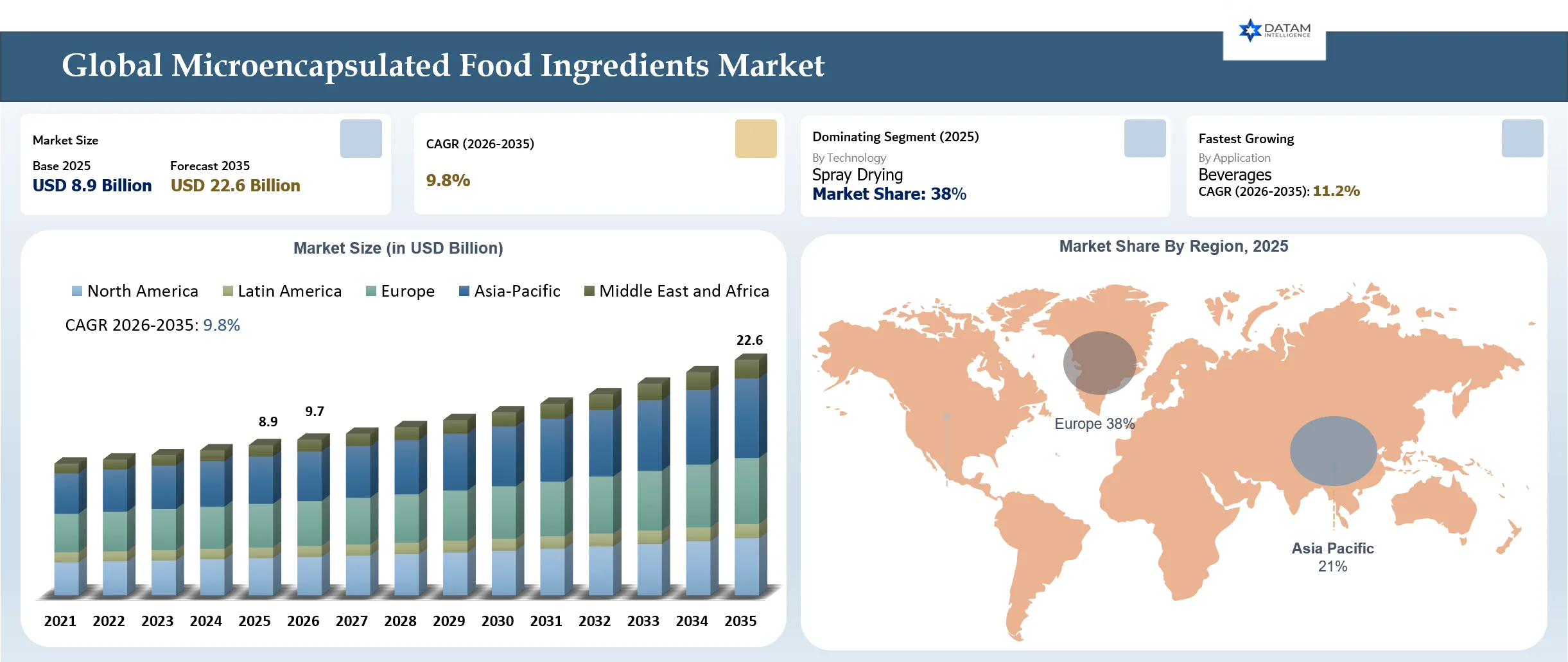
The global Microencapsulated Food Ingredients market was valued at approximately USD 8.9 billion in 2025 and is projected to reach around USD 22.6 billion by 2035, expanding at a CAGR of approximately 9.8% during the forecast period (2026–2035). The global microencapsulated food ingredients market is experiencing a structural transformation driven by the rising demand for functional foods and beverages, increasing adoption of dietary supplements and nutraceutical products, expansion of clean-label and natural ingredient applications, increasing need for improved stability and shelf life of sensitive bioactive compounds, and advancements in encapsulation technologies.
The growing adoption of dietary supplements and nutraceutical products is creating significant demand for microencapsulated food ingredients, as manufacturers increasingly incorporate sensitive active compounds such as probiotics, omega-3 fatty acids, vitamins, minerals, and botanical extracts into advanced nutrition products. According to the Council for Responsible Nutrition (CRN) 2024 Consumer Survey, 75% of U.S. adults use dietary supplements, highlighting the mainstream acceptance of supplement-based health and wellness products. The survey also reported increasing interest in specialty supplements, including prebiotics, magnesium, and botanical ingredients, reflecting a shift toward targeted nutrition and personalized health solutions.
In addition, the American Botanical Council’s 2024 Herb Market Report recorded U.S. retail sales of herbal dietary supplements reaching a record USD 13.231 billion in 2024, with sales increasing by USD 680 million compared with 2023, representing 5.4% year-on-year growth. This expansion of supplement categories is driving the need for microencapsulation technologies that enhance ingredient stability, protect sensitive bioactives from degradation, improve shelf life, and enable their incorporation into functional foods, beverages, and nutraceutical formulations.
Increasing Investment in Microencapsulation Manufacturing Facilities and Ingredient Delivery Technologies
Food ingredient producers are stepping up their investments in specialized microencapsulation production facilities and technologies to cater to the growing demand for stable and high-performance functional ingredients in the food industry. These investments will allow companies to grow and develop innovative microencapsulated solutions for bakery, beverages, dairy, confectionery, and nutrition products. In December 2025, Balchem announced the development of a new high-capacity manufacturing facility in Orange County, New York, to expand production of its microencapsulated food ingredient solutions. Expected to become operational in 2027, the facility will strengthen manufacturing capabilities for Balchem’s microencapsulation technologies, including BakeShure, ConfecShure, and MeatShure, which are used in bakery, confectionery, and meat applications. The expansion aims to meet rising deman d for microencapsulated ingredients that improve ingredient stability, controlled release, shelf life, texture, and processing efficiency. The new facility will incorporate advanced equipment and sustainable production systems, supporting Balchem’s continued innovation in specialty food ingredients and strengthening its presence in the U.S. food ingredients market.
Microencapsulated Food Ingredients Market Key Takeaways
- North America held the highest regional market share, accounting for approximately 31.8% of the global microencapsulated food ingredients market in 2025, supported by a mature food and beverage industry, strong demand for functional and fortified products, widespread adoption of dietary supplements and nutraceuticals, and established capabilities in food ingredient research, formulation, and microencapsulation technologies. Europe accounted for around 28.0% of the market share in 2025, supported by strong demand for functional foods and beverages, increasing consumer preference for health-oriented and fortified products, established food ingredient manufacturers, and continued development of advanced encapsulation technologies.
- Beverages are projected to be the fastest-growing application segment of the global microencapsulated food ingredients market, expanding at an estimated CAGR of approximately 11.2% during 2026–2035, driven by increasing incorporation of encapsulated probiotics, vitamins, omega-3 fatty acids, antioxidants, and flavor compounds into functional, fortified, dairy, and plant-based beverages.
- Partnerships between probiotic manufacturers, encapsulation technology developers, ingredient suppliers, and research institutions are becoming strategically important, enabling companies to develop strain-specific encapsulation systems, improve formulation performance, accelerate commercialization, and expand into new applications.
Microencapsulated Food Ingredients Market Industry Trends and Strategic Insight
- Probiotic manufacturers are increasingly investing in advanced encapsulation technologies to improve the viability, stability, and delivery of probiotic microorganisms throughout processing, storage, and gastrointestinal transit. Companies are adopting techniques such as spray drying, freeze drying, ionic gelation, extrusion, emulsification, and coacervation, along with protective materials such as starches, proteins, alginate, and polysaccharides, to develop more stable probiotic formulations for dietary supplements, functional foods, beverages, and other applications.
- Demand for strain-specific and application-specific probiotic formulations is becoming a major growth trend as different probiotic strains have varying sensitivities to heat, moisture, oxygen, acidity, and processing conditions. Manufacturers are therefore increasingly developing customized encapsulation systems that provide appropriate protection and release characteristics for individual strains, particularly for next-generation probiotics, multi-strain formulations, and products requiring targeted intestinal delivery.
- Commercialization of next-generation probiotics is encouraging the development of more sophisticated encapsulation and delivery systems. The increasing use of sensitive and oxygen-intolerant probiotic strains, including Akkermansia muciniphila and other next-generation microorganisms, is creating greater demand for protective technologies that can maintain viability during manufacturing, storage, and distribution.
Microencapsulated Food Ingredients Market Scope
| Metrics | Details | |
| 2025 Market Size | USD 8.9 Billion | |
| 2035 Projected Market Size | USD 22.6 Billion | |
| CAGR (2026-2035) | 9.8% | |
| Largest Market | North America | |
| Fastest Growing Market | Asia-Pacific | |
| By Technique | Probiotics & Prebiotics, Enzymes, Vitamins & Minerals, Omega Fatty Acids, Essential Oils, Amino Acids, Antioxidants & Bioactive Compounds, and Others | |
| By Coating Material | Spray Drying, Freeze Drying, Extrusion, Emulsification, Ionic Gelation, Coacervation | |
| By Core Material | Carbohydrate-Based Materials, Protein-Based Materials, Lipid-Based Materials, Hydrocolloid-Based Materials | |
| By Form | Powder, Granules, Liquid, and Others | |
| By Application | Beverages, Dairy & Dairy Alternatives, Bakery Products, Breakfast Cereals & Cereal Products, Nutrition Bars, Confectionery, Savory & Processed Foods, Infant & Early-Life Nutrition, and Other Food Applications | |
| By Region | North America | U.S., Canada, Mexico |
| Europe | Germany, UK, France, Spain, Italy, Poland, Russia, Rest of Europe | |
| Asia-Pacific | China, India, Japan, Australia, South Korea, Indonesia, Malaysia, Rest of Asia-Pacific | |
| Latin America | Brazil, Argentina, Rest of Latin America | |
| Middle East and Africa | UAE, Saudi Arabia, South Africa, Israel, Türkiye, Rest of Middle East and Africa | |
| Report Insights Covered | Competitive Landscape Analysis, Company Profile Analysis, Market Size, Share, Growth | |
Microencapsulated Food Ingredients Market Disruption Analysis
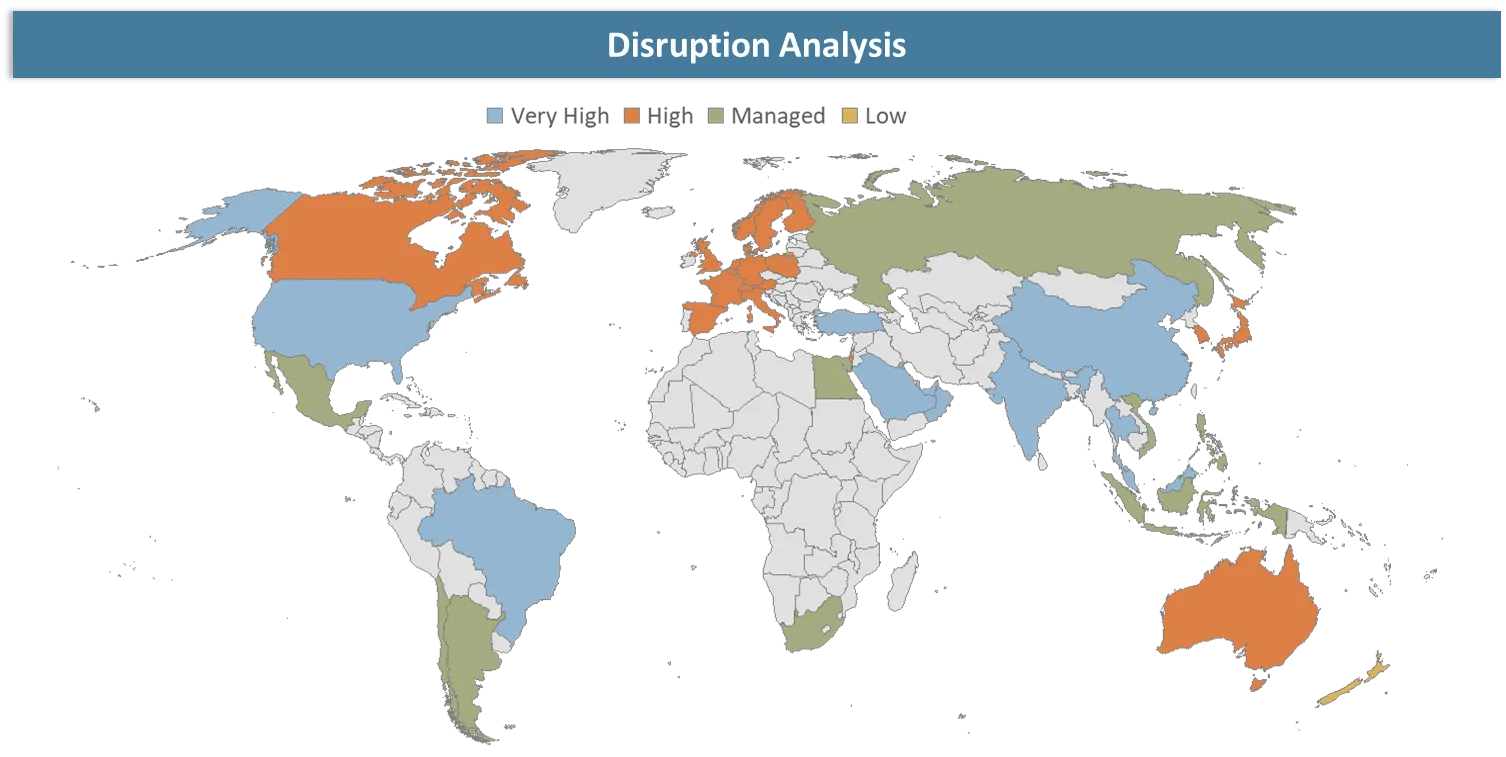
Shift Toward Multifunctional and Application-Specific Microencapsulation Technologies
This disruption in the global microencapsulated food ingredients industry can be attributed to the changing approach from ingredient delivery methods towards more advanced methods with multifunctional and application-specific properties that provide improved stability, controlled release, flavor, texture, and processing. There is an increase in demand for encapsulated food ingredients that can withstand harsh conditions like heat, moisture, oxidization, mixing, and storage while still providing functionality in the end product. This has resulted in innovations geared towards providing application-specific and innovative solutions for bakeries, candies, meat, dairy, beverages, dietary and nutraceutical industries, among others. Another disruption within the global microencapsulated food ingredients industry has been increased investment in advanced and larger-scale production capacities. Companies such as Balchem have announced a new high-capacity microencapsulation manufacturing facility in New York, expected to open in 2027, which will more than double capacity for its food and nutraceutical microencapsulation technologies. This trend is increasing the importance of scalable production, customized formulations, clean-label coating systems, and the ability to deliver consistent encapsulation performance at commercial volumes.
Microencapsulated Food Ingredients Market BCG Matrix: Company Evaluation

Balchem Corp., DSM-Firmenich AG, Kerry Group plc, Givaudan SA, International Flavors & Fragrances Inc. (IFF), and BASF SE can be classified as Star competitors due to their strong global presence, broad food and nutrition ingredient portfolios, advanced formulation capabilities, and investments in microencapsulation and ingredient delivery technologies. Their ability to serve multiple applications, including functional foods, beverages, dietary supplements, and nutraceuticals, positions them well to benefit from growing demand for stable and high-performance food ingredients.
Cargill, Inc., Ingredion Inc., and Glanbia plc can be categorized as established high-growth players, supported by their extensive food ingredient portfolios, global manufacturing capabilities, and increasing focus on specialty nutrition and functional ingredient solutions. Their broad customer base and ability to integrate encapsulated ingredients into large-scale food and beverage applications provide significant growth potential. Meanwhile, companies with more focused technology portfolios and niche application capabilities can be considered emerging/niche players, where growth is driven by customized encapsulation solutions, proprietary processing technologies, innovation in functional ingredients, and increasing demand for improved stability, bioavailability, taste masking, and controlled ingredient release.
Microencapsulated Food Ingredients Market Dynamics
Driver Impact Analysis
| Driver | Market Growth Impact (%) | Demand Concentration | Impacted Use Case | Strategic Impact |
Increasing Demand for Functional Foods, Beverages, and Nutraceutical Products | 30% | Strong demand concentration across North America, Europe, and Asia-Pacific, supported by rising consumption of fortified foods, dietary supplements, probiotic products, and health-focused nutrition products. | Functional beverages, dairy products, dietary supplements, sports nutrition, fortified foods, and nutritional products. | Expands the application scope of microencapsulation by enabling incorporation of sensitive ingredients such as vitamins, probiotics, omega-3 fatty acids, antioxidants, and plant extracts into consumer products. |
Need to Improve Stability and Shelf Life of Sensitive Food Ingredients | 25% | High demand across global food markets, where manufacturers face challenges related to oxidation, moisture, heat, light exposure, and degradation of sensitive active ingredients during processing and storage. | Omega-3 ingredients, flavors, vitamins, probiotics, essential oils, antioxidants, and bioactive compounds. | Drives adoption of microencapsulation technologies that protect sensitive ingredients, enhance shelf stability, reduce degradation, and maintain functionality throughout product life cycles. |
Advancements in Microencapsulation Technologies and Coating Materials | 20% | Strong technology development activity in North America and Europe, with increasing innovation in Asia-Pacific driven by food ingredient manufacturers and research institutions. | Spray drying, freeze drying, coacervation, liposome encapsulation, extrusion, and fluidized bed coating applications. | Supports development of customized encapsulation solutions with improved encapsulation efficiency, controlled release, targeted delivery, and compatibility with diverse food formulations. |
Growing Adoption of Clean Label and Natural Encapsulation Solutions | 15% | Increasing demand in North America and Europe, with growing adoption in Asia-Pacific as manufacturers shift toward natural and plant-based ingredient systems. | Plant-based foods, functional beverages, nutraceuticals, dairy alternatives, and fortified food products. | Encourages innovation in natural wall materials such as proteins, polysaccharides, starches, and plant-based polymers to replace synthetic encapsulation materials. |
Expansion of Plant-Based, Functional, and Alternative Food Products | 10% | Rising demand in North America and Europe, with expanding opportunities in Asia-Pacific due to growth in plant-based nutrition and functional food categories. | Plant-based beverages, dairy alternatives, vegan supplements, fortified snacks, and functional nutrition products. | Creates demand for microencapsulation systems that improve ingredient compatibility, taste masking, nutrient stability, and product performance in new food formats. |
Increasing Commercialization of Microencapsulated Ingredients in Functional Food Products
Microencapsulation technology is being used more frequently by food manufacturers in the production of mainstream functional foods in order to enhance the effectiveness of certain ingredients such as probiotics. The use of microencapsulated probiotics is becoming popular not only for supplements but also for other food products, such as snacks, drinks, and dairy products. In January 2025, Cibo Vita launched Probiotic FruiChias, a fruit and chia seed-based functional snack containing microencapsulated probiotics. The product uses Cibo Vita’s patented microencapsulated delivery system to enhance probiotic stability and support delivery of live strains to the gut. Each serving contains 2 billion microencapsulated probiotics plus dietary fibers. Available in flavors of strawberries, blueberries, and raspberries, FruiChias have been branded as a convenient digestive wellness snack for children and adults alike.
Restraint Impact Analysis
| Restraint | Drag on Market Growth (%) | Primary Impact Area | Impacted Use Case | Strategic Impact |
High Cost of Microencapsulation Processes and Equipment | 30% | Specialized equipment, encapsulating materials, energy consumption, process optimization, and quality control. | Spray-dried probiotic powders, freeze-dried probiotics, advanced emulsion systems, and specialized encapsulated supplements. | Increases production costs and capital requirements, particularly for small and medium-sized manufacturers, and can limit adoption of advanced encapsulation technologies. |
Probiotic Viability Loss During Encapsulation and Processing | 25% | Heat exposure, dehydration, oxygen, shear stress, drying conditions, and processing parameters that can reduce viable cell counts. | Spray drying, freeze drying, extrusion, emulsification, and other processes involving sensitive probiotic strains. | Creates challenges in maintaining required viable counts and encourages manufacturers to invest in optimized processing conditions and protective encapsulation materials. |
Complexity of Formulation and Strain-Specific Requirements | 20% | Differences in probiotic strains, sensitivity to temperature and oxygen, capsule composition, particle size, and release characteristics. | Multi-strain probiotics, strain-specific formulations, targeted gastrointestinal delivery, and functional foods and beverages. | Increases formulation-development time and R&D costs and makes it difficult to develop a single encapsulation technology suitable for all probiotic strains. |
Regulatory and Quality-Control Requirements | 15% | Probiotic strain identification, viability claims, safety assessment, labeling, stability testing, and product-quality requirements. | Dietary supplements, functional foods, beverages, and pharmaceutical or therapeutic probiotic formulations. | Increases testing and documentation requirements and can lengthen product-development timelines, particularly when products are commercialized across multiple countries. |
Limited Stability of Encapsulated Probiotics Under Long-Term Storage | 10% | Moisture, oxygen permeability, temperature fluctuations, water activity, capsule integrity, and gradual loss of viable cells. | Shelf-stable supplements, powdered probiotics, functional beverages, and ready-to-eat probiotic foods. | Limits shelf-life performance and room-temperature applications and increases the need for specialized packaging, storage conditions, and formulation optimization. |
Growing Safety Concerns and Regulatory Scrutiny Around Dietary Supplements
There is growing concern about the safety of ingredients in relation to their quality and health risks linked with their use in food and nutritional supplements. Increasing cases of health problems related to dietary supplements, especially liver damage caused by some herbal and dietary supplements, have led to increased regulation of the industry, making it difficult for companies that produce supplements containing bioactive ingredients. According to Weill Cornell Medicine (June 2025), despite its rarity, there is an increasing trend of liver damage caused by supplements owing to the rising numbers of individuals consuming such supplements as well as the rise in their usage of various supplements at one time. As per the report, herbal and nutritional supplements are not controlled in the same way that drug products are, thus creating concerns about ingredient verification, safety testing, and product quality.
Microencapsulated Food Ingredients Market Segment Analysis
The global microencapsulated food ingredients market is segmented based on technique, coating material, core material, form, application and region.
Spray Drying Dominates the Technology Segment with Growing Adoption of Advanced Microencapsulation Solutions
Spray drying is the dominant technology segment in the global microencapsulated food ingredients market, owing to its cost-effectiveness, scalability, continuous processing capability, and suitability for encapsulating a wide range of sensitive food ingredients such as flavors, oils, vitamins, probiotics, antioxidants, and plant extracts. Food ingredient companies are investing in next-generation spray drying-based microencapsulation platforms to develop natural, scalable, and application-specific solutions for functional food and nutrition products.
In May 2025, Xampla developed a plant protein-based microencapsulation technology to protect sensitive oil-based ingredients, including vitamins and probiotics, during food processing, storage, and digestion. The company’s spray-dried plant protein microcapsules demonstrated improved stability under high-temperature processing conditions and controlled release of active ingredients in the intestinal phase. Xampla’s microencapsulation platform uses natural plant proteins as protective carriers and is scalable through industrial spray-drying processes. The technology is being developed for applications in functional foods, dietary supplements, and shelf-stable probiotic products, with further advancement through collaboration with the Quadram Institute Bioscience.
Microencapsulated Food Ingredients Market Geographical Penetration
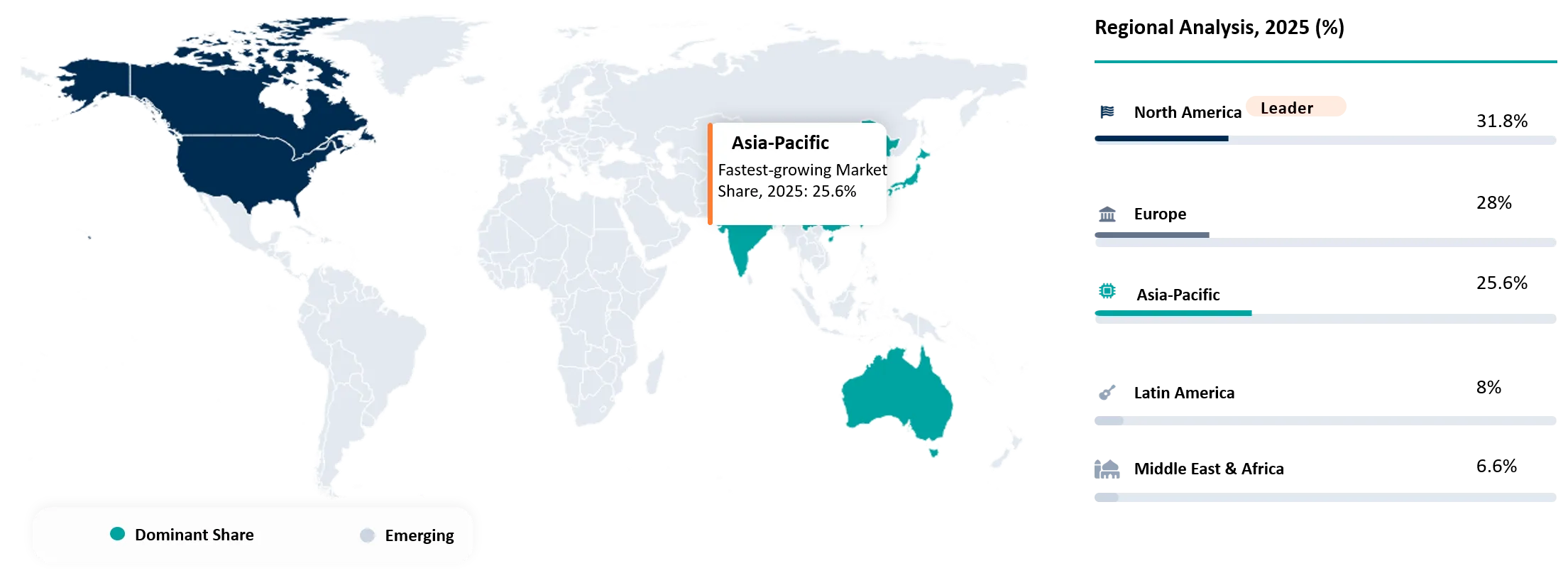
North America’s Strong Nutritional Supplement Base and Growing Demand for Advanced Probiotic Formulations
The North American encapsulation of food ingredients market is driven by an active innovation environment, modern food processing technologies, and rising investments in delivery technologies for ingredients. Various firms in the region are concentrating on R&D efforts, production capacity enhancement, technology commercialization, and strategic collaborations to enhance the stability, bioavailability, controlled release, and sensory properties of food ingredients. Moreover, the region has a strong base of consumers who consume dietary supplements, providing significant opportunities for advanced delivery systems of ingredients. According to the NIH Office of Dietary Supplements, the United States has more than 100,000 dietary supplement products on the market, while more than half of adults and approximately one-third of children and adolescents consume dietary supplements. Furthermore, government funding, institutional research, and collaborations between ingredient companies, food manufacturers, and technology providers are further supporting the development and commercialization of next-generation microencapsulation solutions across North America.
Growing Strategic Partnerships and Distribution Expansion Strengthen Market Access in the U.S.
The US microencapsulated food ingredients market is driven by growing demand for functional foods, dietary supplements, nutraceuticals, and fortified products, along with increasing consumption of probiotics, vitamins, omega-3 fatty acids, and other bioactive ingredients. Companies are increasingly investing in manufacturing expansion, product innovation, and advanced microencapsulation technologies to address the growing demand for stable and high-performance functional ingredients. Companies are increasingly expanding distribution networks and partnerships to improve the availability of advanced microencapsulated ingredients across food, beverage, and nutraceutical applications. For instance, in April 29, 2025, Lubrizol entered a distribution partnership with Palmer Holland, Inc. to expand the availability of its microencapsulated nutraceutical ingredients across the Northeastern U.S. The agreement will support growing demand for microencapsulation technology that improves ingredient delivery, bioavailability, taste, and sensory performance. The portfolio includes lipofer iron, magshape magnesium, zincnova zinc, curcushine curcumin, and newcaff caffeine microcapsules for nutraceutical, dietary supplement, food, and beverage applications. Such collaborations are supporting wider market access for specialized ingredient delivery technologies and strengthening their adoption across the nutrition industry.
Government Funding Accelerates Microencapsulation Technology Development in Canada
Increasing focus on functional nutrition and advanced food ingredient technologies is contributing to the growth of the microencapsulated food ingredients market in Canada. Companies and research organizations in the country are increasingly investing in microencapsulation technologies to improve the performance and stability of functional ingredients in innovative food and nutraceutical formats. While government funding is supporting the development and commercialization of advanced encapsulation solutions. For instance, in September 2025, Gummy Nutrition Lab received USD $195,225 in funding from the National Research Council Canada to develop microencapsulation technology for protecting heat-sensitive bioactive ingredients during gummy manufacturing. The technology aims to improve ingredient stability, efficacy, and shelf life while expanding the functional potential of nutraceutical gummies. The project is supported under the Industrial Research Assistance Program (IRAP) and is expected to advance the technology toward commercialization.
Rising Functional Food Product Development Strengthens Demand for Advanced Delivery Technologies
Asia Pacific is emerging as a key regional market for microencapsulated food ingredients, supported by the expanding consumption of functional foods, dietary supplements, fortified beverages, probiotics, vitamins, and other health-oriented food products. The expansion of functional nutrition in Asia Pacific is creating a favorable environment for microencapsulated ingredients. In nation such as South Korea more than 37,000 health functional food products registered by mid-2024, while its regulatory system recognized 28 approved nutrients, 69 functional ingredients, and 444 individually approved functional ingredients. This broad product and ingredient ecosystem supports demand for advanced delivery technologies for probiotics, vitamins, omega-3 fatty acids, and other bioactive ingredients.
Growing Probiotic Demand and Innovation in Microencapsulation Technology Supporting China Market Growth
The microencapsulated food ingredients market in China is driven by the growing demand for functional and fortified food products, including probiotic foods and beverages, functional dairy products, dietary supplements, and nutrient-enriched products. Chinese food producers are now allocating more resources to technologies for the addition of sensitive nutrients to processed foods and beverages. For instance, in July 2024, Yili partnered with Xampla to develop plant-based microencapsulation technology for fortifying heat-treated dairy beverages. The technology shields the fragile nutrients like vitamins, probiotics, and omega-3 fats from heat, UV rays, and changes in pH level. The joint venture comprises the use of Xampla's Morro Nutri microencapsulation technology for nutrient enrichment.
Furthermore, China’s growing focus on probiotic-based functional foods and dietary supplements is driving research into advanced microencapsulation systems that improve probiotic stability and delivery efficiency. The development of controlled and targeted release technologies is further expanding the application potential of microencapsulated probiotics in the country’s food and nutrition industry. For instance, in February 2026, the Tianjin Institute of Industrial Biotechnology under the Chinese Academy of Sciences developed a next-generation probiotic microcapsule delivery system using two differentiated microcapsule structures for Lactobacillus reuteri. The sustained-release and rapid-release systems were designed to improve probiotic stability during storage and gastrointestinal transport while enabling controlled release, demonstrating China's advancement toward targeted and programmable Microencapsulated Food Ingredients technologies.
Japan’s Developed Probiotic and Functional Food Market Drives Demand for Microencapsulation Technologies
The well-established functional food ecosystem in Japan is creating significant opportunities for microencapsulated food ingredients, particularly in probiotic, vitamin, and dietary supplement applications. Expansion of specialized probiotic preparations results in the rising demand for technologies that will be able to guarantee probiotic viability and stability. Companies such as ProBio Health Japan and Nagase BeautyCare are applying these technologies in probiotic products, with ProBio Health Japan offering KE-99 lactic acid bacteria using its Durabac microencapsulation technology and Nagase BeautyCare incorporating A221 lactic acid bacteria in an acid-resistant microcapsule in BM Royal.
Companies in Japan are increasingly commercializing microencapsulated functional ingredients and introducing advanced delivery solutions to address growing demand for gut health and specialized nutritional products. These developments are expanding the use of microencapsulation in functional foods and dietary supplements. For instance, in May 2025, Ryusendo Co., Ltd. introduced ButiShield, a calcium butyrate functional ingredient microencapsulated using Kemin Industries' proprietary MicroPEARLS technology. The technology helps mask butyrate's strong odor and taste while enabling targeted delivery to the large intestine. Ryusendo acquired exclusive distribution rights for ButiShield in Japan, supporting its use in gut health and functional food applications.
Microencapsulated Food Ingredients Market Competitive Landscape
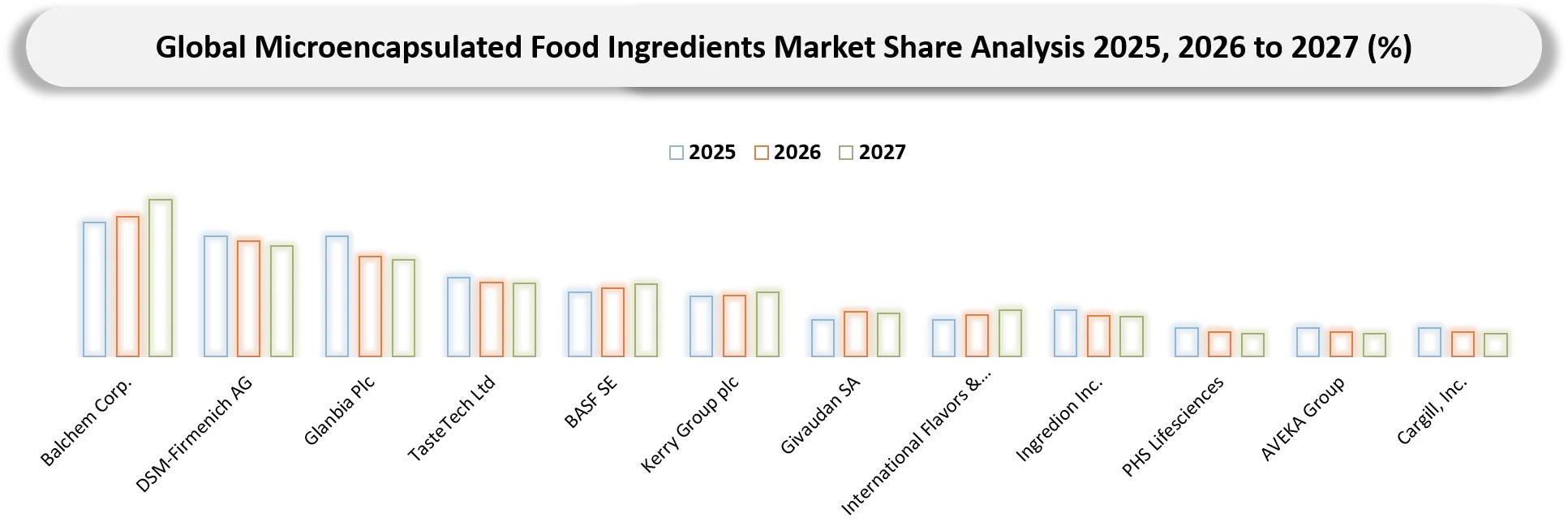
- The global microencapsulated food ingredients market is characterized by the presence of established food ingredient manufacturers, nutrition companies, flavor and fragrance specialists, and dedicated microencapsulation technology providers. Balchem Corp., DSM-Firmenich AG, Kerry Group plc, Givaudan SA, International Flavors & Fragrances Inc. (IFF), BASF SE, Cargill, Inc., Glanbia plc, and Ingredion Inc. are among the prominent players, supported by their broad ingredient portfolios, formulation expertise, and global presence. Specialized companies such as TasteTech Ltd., AVEKA Group, and PHS Lifesciences contribute through proprietary microencapsulation, spray-drying, controlled-release, and particle engineering technologies. Leading companies are increasingly investing in product innovation, technology development, and strategic partnerships to improve ingredient stability, shelf life, bioavailability, controlled release, and sensory performance. The competitive landscape is further shaped by the growing application of microencapsulated ingredients across functional foods, fortified beverages, dietary supplements, and nutraceutical products.
- Balchem Corp. (United States), DSM-Firmenich AG (Switzerland), Glanbia Plc (Ireland), TasteTech Ltd. (United Kingdom), BASF SE (Germany), Kerry Group plc (Ireland), Givaudan SA (Switzerland), International Flavors & Fragrances Inc. (IFF) (United States), Ingredion Inc. (United States), PHS Lifesciences (United States), AVEKA Group (United States), and Cargill, Inc. (United States) are among the key players operating in the global microencapsulated food ingredients market.
Key Developments
- February 2026: Lallemand expanded its Saint-Simon production site with a new formulation area and additional encapsulation capacity, strengthening its ability to formulate and manufacture protected live microorganisms. Its Probiocap technology is specifically designed for Microencapsulated Food Ingredients and protection during demanding manufacturing conditions.
- April 2025: Lubrizol entered a distribution partnership with Palmer Holland, Inc. to expand the availability of its microencapsulated nutraceutical ingredients across the Northeastern U.S. The agreement will support growing demand for microencapsulation technology that improves ingredient delivery, bioavailability, taste, and sensory performance.
- February 2026: NUCAPS completed the clinical-validation phase of its PROCAPS project for microencapsulated probiotics, reporting human data supporting improved intestinal delivery. The company also reported industrial scale-up and production of stable batches, making this a significant move from R&D toward commercialization.
- April 2025: CanBiocin received support from Canada’s National Research Council for a project focused on advancing probiotic mechanisms of action and delivery. The project includes development of protective microencapsulation technology to improve probiotic delivery, effectiveness, and commercialization potential. This development demonstrates the continued use of microencapsulation to address probiotic stability and delivery challenges.
Key Procurement Priorities and Buyer Evaluation Criteria
- Buyers prioritize microencapsulation solutions with proven viability, stability, and controlled release performance to ensure effectiveness across demanding applications such as dietary supplements, functional foods, beverages, nutraceuticals, and pharmaceutical formulations.
- Evaluation is based on criteria such as encapsulation efficiency, probiotic survival rate, protection against heat, moisture, oxygen, gastric acidity, and processing conditions, release characteristics, encapsulation materials, manufacturing capabilities, quality certifications, production capacity, and experience developing application-specific probiotic formulations.
- Buyers consider factors including shelf-life stability, viability during storage, gastrointestinal survival, scalability, batch-to-batch consistency, supply chain reliability, delivery capabilities, regulatory compliance, and the ability to provide customized encapsulation solutions based on specific strain, formulation, and processing requirements.
- Supplier selection is also influenced by innovation capabilities, proprietary encapsulation technologies, customization flexibility, cost efficiency, sustainable wall materials, and the ability to develop solutions compatible with evolving clean-label and functional food requirements.
- Food and beverage, dietary supplement, nutraceutical, and functional ingredient buyers particularly prioritize suppliers with proven microencapsulation capabilities, ingredient protection performance, scalable processing technologies, testing and stability expertise, regulatory knowledge, and the ability to support large-scale commercial production with consistent product quality and functionality.
Why Choose DataM?
- Technological Innovations: Explores advancements in microencapsulation technologies, including spray drying, coacervation, fluidized bed coating, liposomal encapsulation, and other advanced delivery systems designed to improve ingredient stability, controlled release, bioavailability, shelf life, and sensory performance in food applications.
- Product Performance & Market Positioning: Evaluates how different players deliver microencapsulated food ingredients based on encapsulation efficiency, ingredient protection, release characteristics, heat and oxidation stability, bioavailability, scalability, and application compatibility, highlighting how companies differentiate through proprietary technologies and specialized formulations.
- Real-World Evidence: Highlights the adoption of microencapsulated ingredients across functional foods, fortified beverages, dairy products, dietary supplements, and nutraceuticals, demonstrating benefits such as improved probiotic viability, nutrient stability, taste masking, controlled release, and enhanced shelf life.
- Market Updates & Industry Changes: Tracks key developments such as new product launches, technology innovations, research collaborations, government funding, manufacturing expansions, and strategic distribution partnerships across North America, Europe, Asia-Pacific, and other regions.
- Competitive Strategies: Analyzes how leading companies expand through proprietary technology development, product innovation, strategic partnerships, distribution agreements, manufacturing investments, and acquisitions to strengthen their presence in the food ingredients and functional nutrition markets.
- Pricing & Market Access: Explains pricing variations based on encapsulation technology, ingredient type, production scale, formulation complexity, wall materials, and performance requirements, along with market access through direct ingredient suppliers, distributors, food manufacturers, and nutraceutical companies.
- Market Entry & Expansion: Identifies growth opportunities driven by increasing demand for functional foods, fortified products, clean-label ingredients, probiotics, and advanced nutrient delivery systems, while outlining strategies such as technology commercialization, regional expansion, strategic collaborations, and customized formulation development to strengthen market presence.
Target Audience
- Probiotic Ingredient Manufacturers and Encapsulation Technology Providers
- Nutraceutical, Dietary Supplement, and Functional Food Manufacturers
- Food and Beverage Companies Developing Probiotic Products
- Pharmaceutical and Healthcare Product Manufacturers
- Animal Health, Feed, and Veterinary Probiotic Companies
- Contract Development and Manufacturing Organizations (CDMOs/CMOs) and Private-Label Probiotic Manufacturers
- Food Ingredient Distributors, Nutraceutical Ingredient Suppliers, and Specialty Raw Material Companies
- Research Institutions, Biotechnology Companies, and Probiotic Strain Developers


























































