


Microalgae Astaxanthin Market Size and Overview
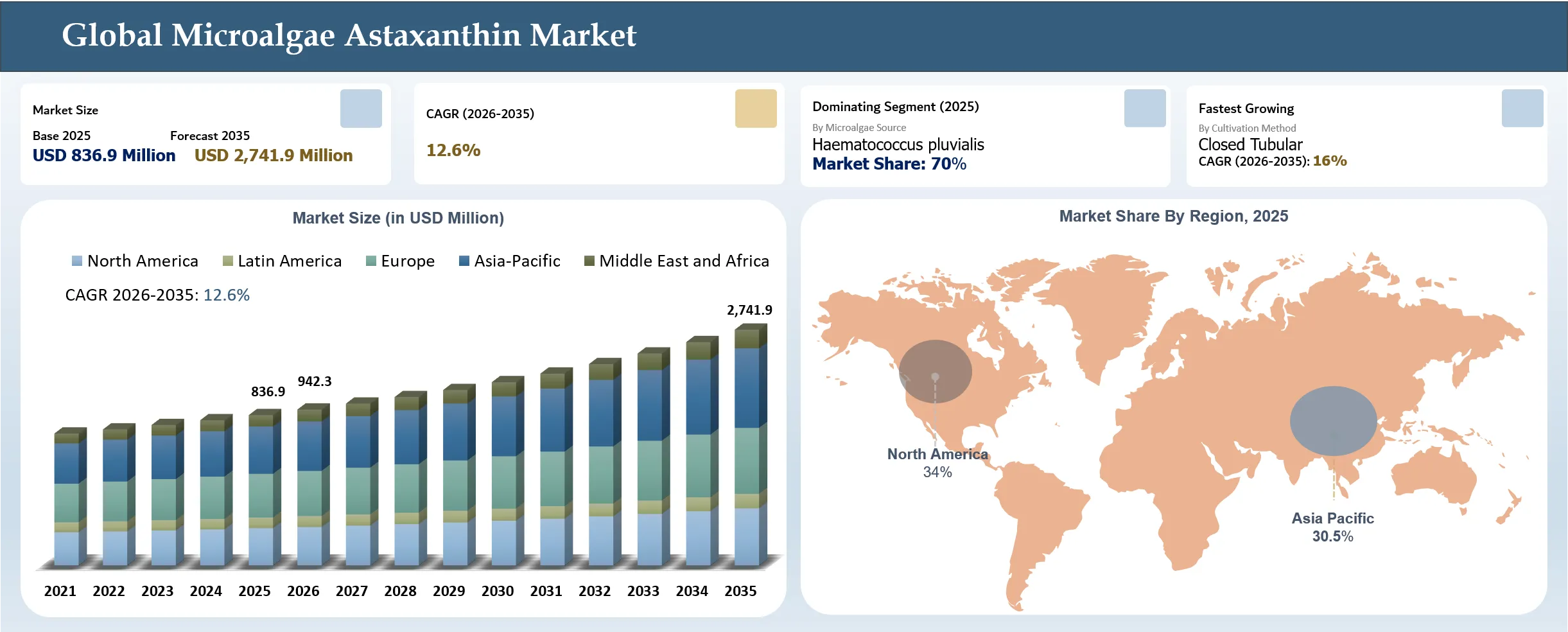
The global microalgae astaxanthin market reached USD 836.9 million in 2025 and is expected to reach USD 2,741.9 million by 2035, growing with a CAGR of 12.6% during the forecast period 2026-2035. The market is expanding with the increasing commercialization of natural astaxanthin extracted from microalgae, mainly Haematococcus pluvialis; the market is growing in dietary supplements, functional foods and beverages, cosmetics, and animal nutrition segments. Recent product innovations reveal diversified applications of astaxanthin formulations, with AstaReal offering 5% and 10% standardized astaxanthin oil, 4% astaxanthin powder, 2.5% cold-water-soluble powder, and 1% water-soluble astaxanthin emulsion, supporting broader adoption across capsules, tablets, functional foods, powder drinks, and ready-to-drink beverages.
The expansion of production capacities is another key market trend that is developing. In July 2026, Pinnacle Food Group Limited began construction of a full-scale commercial facility to produce astaxanthin from microalgae on behalf of Bei Harvest Ltd. in British Columbia, Canada. The project will earn around USD 10 million, with Phase I costing around USD 4 million for planning and development, while Phase II will require USD 6 million.
The plant will feature modern photobioreactors for the cultivation of microalgae in a closed, precisely controlled system, illustrating the industry's trend toward developing large-scale commercial facilities for microalgae production. Nevertheless, the high costs of controlled cultivation, harvesting, biomass processing, and astaxanthin extraction remain a major challenge for market players.
White-Space Opportunities for Sustainable and Integrated Microalgae Biorefineries in the Microalgae Astaxanthin Market
In September 2025, the European Union launched the ALLIANCE project (European Microalgae Alliance) with a total project cost of EUR 8.90 million (USD 10.34 million), including an EU contribution of EUR 7.36 million (USD 8.55 million), creating a potential opportunity for the Microalgae Astaxanthin Market through investments in sustainable and scalable microalgae production technologies. The highest investment and strategic focus are directed toward sustainable multiproduct microalgae biorefineries, with the entire project classified under 100% Climate Action investment, emphasizing cost-effective, circular, and low-environmental-impact algae production.
The investment focuses on nutrient and water recirculation, efficient and automated production controls, reduced nutrient consumption, renewable-energy-based operations, solvent-free biorefinery processes, and integrated upstream and downstream processing. Other key investment areas include scalable solvent-free extraction and purification technologies, wet-biomass processing that bypasses energy-intensive dewatering, food ingredients, cellular agriculture, aquafeed, and agricultural applications.
The ALLIANCE project also aims to expand four existing algae production pipelines into 15 product and fraction lines with near-zero waste, highlighting a significant white-space opportunity for microalgae astaxanthin producers to adopt integrated biorefinery models and generate additional value from biomass beyond a single astaxanthin product stream.
The investment is expected to create opportunities across the European microalgae production and processing value chain, with participating companies positioned to benefit in specific technology and application areas. Allmicroalgae Natural Products SA is expected to benefit through commercial-scale microalgae cultivation, biomass production, and the development of high-value microalgae-derived ingredients, while Fermentalg SA could benefit from opportunities in algae biotechnology, advanced cultivation processes, bioprocessing, and scalable downstream processing.
Syspro Automation SL is positioned to benefit from the increasing adoption of automated production controls, process monitoring, and industrial optimization systems for large-scale microalgae facilities, whereas Sparos LDA could benefit from the development and commercialization of microalgae-derived ingredients for aquafeed and aquaculture nutrition applications.
Oceano Verde is expected to benefit from opportunities in sustainable microalgae cultivation and biomass production, while Aller Aqua Group could benefit through the incorporation of microalgae-derived ingredients into aquaculture feed formulations. In addition, companies specializing in microalgae cultivation, extraction, and high-value ingredient production could benefit from the project's focus on solvent-free extraction, wet-biomass processing, circular production systems, and multiproduct biorefineries.
Microalgae Astaxanthin Market Key Takeaways
- The industry is shifting from conventional outdoor cultivation toward controlled photobioreactor systems to achieve greater consistency in biomass quality, astaxanthin accumulation, and contamination control.
- Production innovation is increasingly focused on optimizing the complete cultivation cycle, including strain selection, growth conditions, stress induction, light management, and harvesting, rather than improving a single production parameter.
- Dark fermentation is emerging as a strategic alternative to light-dependent cultivation, creating opportunities for producers to develop more scalable and industrially controlled microalgae astaxanthin manufacturing platforms.
- Quality assurance and production consistency are becoming major competitive differentiators, particularly through enclosed cultivation, contamination management, standardized batch processing, and controlled downstream processing.
- The market is increasingly positioning microalgae-derived astaxanthin as a premium natural ingredient, requiring manufacturers to differentiate through purity, stability, traceability, scientific validation, and application performance.
Microalgae Astaxanthin Market Industry Trends and Strategic Insight
- The industry is shifting from conventional outdoor cultivation toward controlled photobioreactor systems to achieve greater consistency in biomass quality, astaxanthin accumulation, and contamination control.
- Production innovation is increasingly focused on optimizing the complete cultivation cycle, including strain selection, growth conditions, stress induction, light management, and harvesting, rather than improving a single production parameter.
- Dark fermentation is emerging as a strategic alternative to light-dependent cultivation, creating opportunities for producers to develop more scalable and industrially controlled microalgae astaxanthin manufacturing platforms.
- Quality assurance and production consistency are becoming major competitive differentiators, particularly through enclosed cultivation, contamination management, standardized batch processing, and controlled downstream processing.
- The market is increasingly positioning microalgae-derived astaxanthin as a premium natural ingredient, requiring manufacturers to differentiate through purity, stability, traceability, scientific validation, and application performance.
Microalgae Astaxanthin Market Scope
| Metrics | Details | |
| 2025 Market Size | USD 836.9 Million | |
| 2035 Projected Market Size | USD 2,741.9 Million | |
| CAGR (2026-2035) | 12.6% | |
| Largest Market | North America | |
| Fastest Growing Market | Asia-Pacific | |
| By Microalgae Source | Haematococcus pluvialis, Chromochloris zofingiensis, Others | |
| By Cultivation Method | Indoor, Outdoor, Closed Tubular | |
| By Product Form | Astaxanthin Oil, Whole Algae Biomass, Powder, Oleoresin, Others | |
| By Application | Dietary Supplements, Functional Foods and Beverages, Cosmetics and Personal Care, Animal Nutrition and Pet Supplements, Aquaculture Feed, Pharmaceuticals, Others | |
| By Region | North America | U.S., Canada, Mexico |
| Europe | Germany, UK, France, Spain, Italy, Poland, Netherlands, Switzerland | |
| Asia-Pacific | China, India, Japan, Australia, South Korea, Indonesia, Malaysia | |
| Latin America | Brazil, Argentina | |
| Middle East and Africa | UAE, Saudi Arabia, South Africa, Israel, Türkiye | |
| Report Insights Covered | Competitive Landscape Analysis, Company Profile Analysis, Market Size, Share, Growth | |
Microalgae Astaxanthin Market Disruption Analysis
Shift Toward Advanced Photobioreactor Cultivation Reshaping the Microalgae Astaxanthin Production Landscape
The disruption in the microalgae astaxanthin market is mostly associated with the transition from conventional cultivation methods toward advanced photobioreactor-based production systems. Enclosed systems have been gaining popularity in recent times and have started to pose a threat to the traditional open cultivation processes as well as less controlled methods of production due to their ability to offer better control of light exposure, nutrient delivery, gaseous exchange, and contamination. Disruption within the microalgae production processes has therefore been created in order for producers to have better control of the growth and production of astaxanthin.
Furthermore, the recent developments indicate that the industry is becoming more focused on automation and reactor engineering, which can help to solve some of the problems related to conventional cultivation. In April 2026, according to MDPI, a new automated 5-L stirred-tank photobioreactor was created and validated for two-stage cultivation of Haematococcus pluvialis. With this system, the researchers managed to maintain the dry biomass concentration at 1.315 g/L without any sediments and reached an astaxanthin biosynthesis yield at the level of 4.12% of dry weight. It shows that automation and precision cultivation can be used to increase the stability of production.
Microalgae Astaxanthin Market BCG Matrix: Company Evaluation
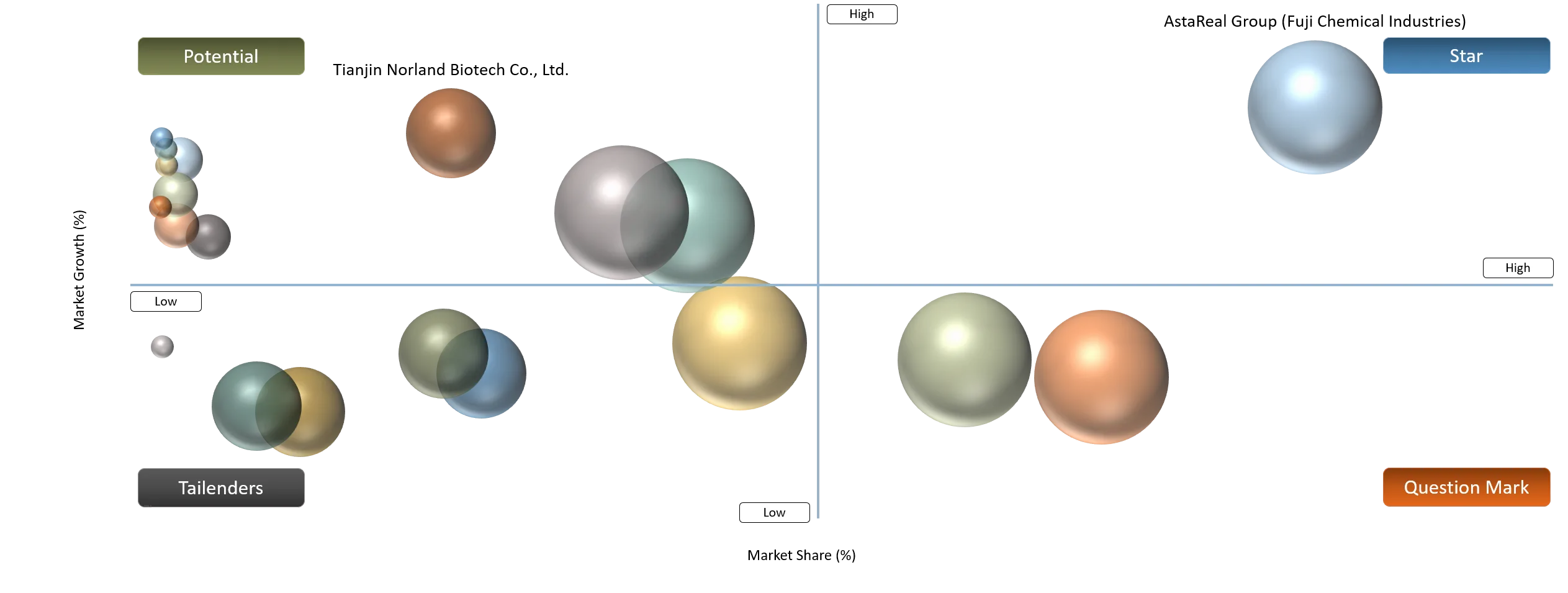
Stars include Cyanotech Corporation, AstaReal Group (Fuji Chemical Industries), Algatech Ltd., and BGG (Beijing Gingko Group) because they have established commercial positions in natural astaxanthin production and possess specialized capabilities in Haematococcus pluvialis cultivation, harvesting, extraction, and ingredient formulation. Companies such as Algalíf Iceland, Kuehnle AgroSystems (KAS), and Atacama Bio Natural Products S.A. are placed in the Question Mark category because they demonstrate strong technological and growth potential but operate within a market where commercial scale and global distribution are still concentrated among a limited number of established producers.
The Potential category includes Tianjin Norland Biotech Co., Ltd. and BlueBioTech Group, which can benefit from increasing demand for natural microalgae-derived ingredients and advances in industrial algae biotechnology but have comparatively lower global visibility and commercial penetration in the specialized astaxanthin market. Algamo s.r.o. belongs to the Tailender category because its involvement in the global commercial microalgae astaxanthin supply chain appears comparatively niche when measured against the vertically integrated production capabilities and established global market presence of leading producers.
Microalgae Astaxanthin Market Dynamics
Driver Impact Analysis
| Driver | Market Growth Impact (%) | Demand Concentration | Impacted Use Case | Strategic Impact |
Expanding use of natural astaxanthin in cosmetics and personal care products is supporting market growth. | 28% | Demand is highly concentrated in premium skincare, anti-aging, antioxidant, and beauty-from-within product applications. | Anti-aging skincare, antioxidant creams, beauty-from-within supplements, and premium personal care formulations | Encourages producers to develop cosmetic-grade, high-purity, and formulation-specific microalgae astaxanthin ingredients. |
Increasing consumer focus on preventive healthcare, healthy aging, immunity, and skin health is boosting demand for microalgae astaxanthin supplements. | 35% | Demand is strongly concentrated in dietary supplements and preventive wellness products targeting healthy aging and overall health. | Dietary supplements, healthy-aging products, immune-support formulations, sports nutrition, and beauty supplements | Strengthens the strategic importance of clinically supported products, standardized formulations, and direct-to-consumer nutraceutical expansion. |
Rising adoption of natural pigments and antioxidants in aquaculture feed is increasing demand for microalgae-derived astaxanthin. | 22% | Demand is concentrated among salmon, trout, shrimp, and other high-value aquaculture species requiring natural pigmentation and antioxidant support. | Salmon, trout, shrimp, and other aquaculture feed applications | Creates opportunities for scalable biomass production and cost-efficient natural astaxanthin supply, although producers face pricing competition from synthetic alternatives. |
The shift toward sustainable alternatives to petrochemical-based synthetic astaxanthin is accelerating interest in naturally produced microalgae astaxanthin. | 15% | Demand is increasingly concentrated in clean-label, sustainably positioned nutraceutical, cosmetic, and premium food applications. | Clean-label supplements, sustainable cosmetics, functional foods, and premium animal nutrition | Drives investment in sustainable cultivation, renewable-energy-powered production, traceability, and environmentally differentiated microalgae production systems. |
Expanding use of natural astaxanthin in cosmetics and personal care products is supporting market growth
The expanding incorporation of microalgae-derived natural astaxanthin into cosmetics and personal care formulations is emerging as a significant driver for the microalgae astaxanthin market. Cosmetics companies are now making use of astaxanthin as a natural active component in their cosmetic products, offering protection against oxidative stress, hydrating properties, elasticity, and healthy aging. It’s leading to increased demand, besides the already existing demand in dietary supplements, and motivating microalgae astaxanthin manufacturers to manufacture ingredients and formulations specifically for cosmetics.
The increasing trend towards the incorporation of sustainable, high-performing, and bioactive ingredients. In November 2025, Frontiers highlighted the expanding relevance of microalgae-derived astaxanthin across the food, healthcare, and personal care industries. The review reported that certain microalgae species can double their biomass within 24 hours, while Haematococcus lacustris and Chromochloris zofingiensis demonstrated astaxanthin yields of 30.94 mg/L and 36.68 mg/L, respectively. Furthermore, under stress conditions, the transition from the green phase to the red phase can result in astaxanthin accounting for 80%–99% of total carotenoid accumulation.
Restraint Impact Analysis
| Restraint | Drag on Market Growth (%) | Primary Impact Area | Impacted Use Case | Strategic Impact |
The thick and rigid cell walls of Haematococcus pluvialis make astaxanthin extraction energy-intensive and increase overall production costs. | 32% | Downstream processing and extraction efficiency | High-purity astaxanthin oil, oleoresin, dietary supplements, and cosmetics | Drives investment in low-energy cell-disruption, enzymatic treatment, and advanced extraction technologies to reduce processing costs. |
Low biomass productivity and relatively low astaxanthin yields hinder the efficient large-scale commercialization of microalgae-based astaxanthin. | 28% | Cultivation productivity and production economics | Large-volume nutraceutical ingredients, functional foods, and aquaculture applications | Increases the need for high-yield strains, optimized cultivation conditions, and scalable bioreactor technologies to improve production economics. |
Sensitivity of microalgae cultivation to light, temperature, nutrients, and other environmental conditions creates challenges. | 22% | Cultivation stability and yield consistency | Outdoor cultivation, biomass production, and commercial-scale astaxanthin manufacturing | Accelerates the shift toward enclosed photobioreactors, automated monitoring, and precision-controlled cultivation systems. |
Scaling up microalgae cultivation systems is constrained by contamination risks, process complexity, and difficulties in maintaining consistent product quality and yield. | 18% | Scale-up and commercial manufacturing | Commercial nutraceutical, cosmetic, food-grade, and pharmaceutical-grade production | Encourages producers to adopt closed cultivation systems, stronger contamination-control protocols, and vertically integrated production models. |
The thick and rigid cell walls of Haematococcus pluvialis make astaxanthin extraction energy-intensive and increase overall production costs
One of the major restraints affecting the microalgae astaxanthin market is the thick and highly resistant cell wall developed by Haematococcus pluvialis during the astaxanthin accumulation stage. A stressful environment encourages the process of astaxanthin synthesis; however, it also stimulates the synthesis of the second cell wall, thus complicating access to the intracellular pigment. Consequently, an additional stage of cell destruction is needed for manufacturers, involving technologies such as high-pressure homogenization and bead milling.
Furthermore, in January 2026, according to MDPI, a study found that the secondary cell wall of Haematococcus pluvialis could be approximately 2 µm thick and resistant to acids and alkalis, thus forming a considerable obstacle to efficient extraction of astaxanthin. The study also presented the magnitude of the issue and the improvement of the technology in terms of the possibility of obtaining high recovery rates (up to 97%) of astaxanthin by utilizing modified thin-walled cells instead of only 3% obtained by the traditional technique. The significant difference illustrates how conventional thick-walled biomass can inhibit extraction efficiency and increase processing needs, placing further financial strain on commercial microalgae astaxanthin manufacturers.
Microalgae Astaxanthin Market Segment Analysis
The global microalgae astaxanthin market is segmented based on microalgae source, cultivation method, product form, application, and region.
Established Commercial Cultivation of Haematococcus pluvialis Driving Dominance in the Microalgae Astaxanthin Market
The Haematococcus pluvialis segment dominates the Microalgae Astaxanthin Market, with a market share of 70.0% in 2025 due to its excellent capability to store natural astaxanthin and also due to its successful commercialization in various applications such as dietary supplements, cosmetics, functional foods, and animal nutrition. The strain has become the preferred choice as the source of natural astaxanthin by manufacturers due to the development of the process of cultivating, stressing, harvesting, and extracting the strain based on its biological properties. The capacity to biosynthesize astaxanthin in its red growth stage, along with substantial scientific backing and existing business processes, helps it remain the front-runner amongst microalgae for this reason.
The commercial strength of the Haematococcus pluvialis segment is further supported by recent regulatory and product-composition developments. In December 2025, the European Food Safety Authority (EFSA) evaluated an H. pluvialis-derived astaxanthin oleoresin produced through supercritical CO₂ extraction and reported that the product contains approximately 10% astaxanthin by weight. Batch analysis showed total astaxanthin concentrations ranging from 10.77% to 10.87%, while the evaluated specification range for total astaxanthin was 2.9%–11.1%. These findings demonstrate the ability of commercially cultivated H. pluvialis to produce high-concentration astaxanthin ingredients, reinforcing its dominance as the primary microalgae source for premium dietary supplements and expanding food applications.
Microalgae Astaxanthin Market Geographical Penetration
Established Commercial Production Infrastructure and Expansion of Microalgae Astaxanthin Capacity Supporting North American Market Leadership
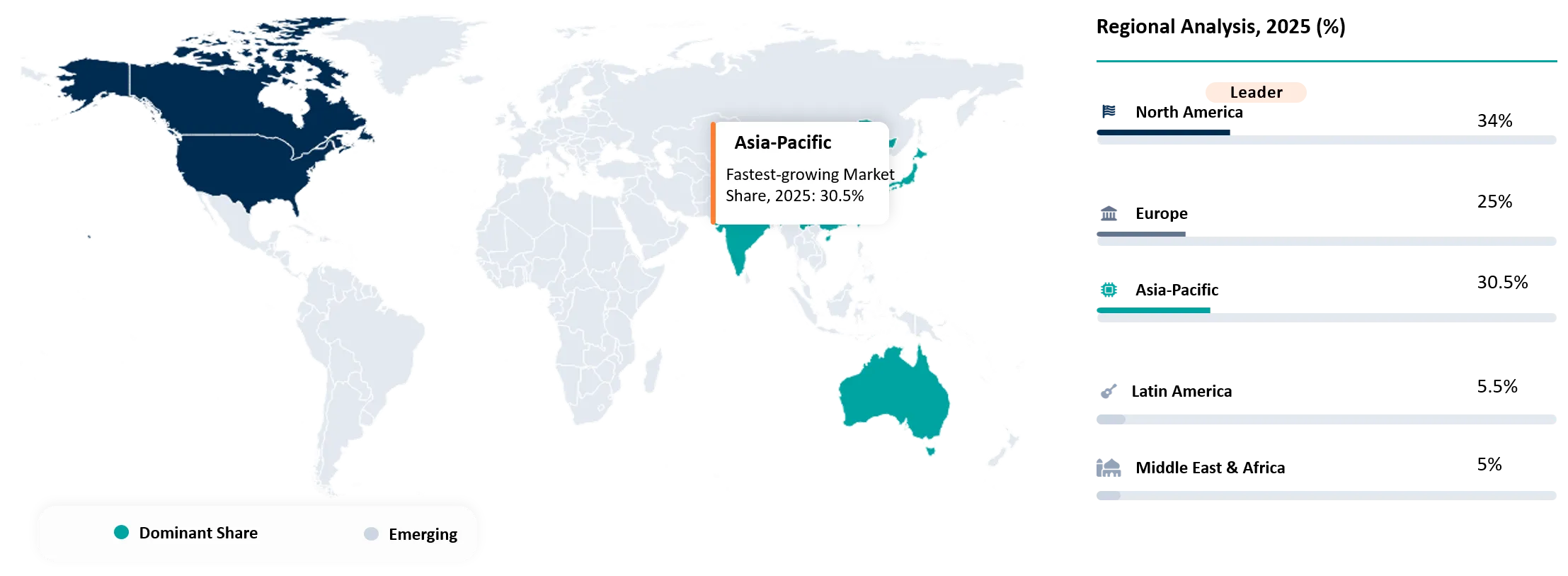
The North America region is dominating the microalgae astaxanthin market, with 34% of the market share in 2025, due to the availability of established commercial players, advanced biotechnological setup, and the presence of high demand for microalgae astaxanthin from applications such as nutraceuticals, dietary supplements, cosmetics, and animal nutrition. The region has the advantage of having vertical integration capabilities in the production of microalgae astaxanthin, with the presence of such operations mainly in the U.S. Established commercial players in the region, such as AstaReal and Cyanotech, bolster the region’s capabilities, with growing consumer preference towards natural ingredients further aiding the commercial success of the product.
The partnership highlights the growing industry focus on developing sustainable and scalable alternatives to conventional microalgae astaxanthin production. In August 2025, Corbion, an Amsterdam, Netherlands-based sustainable ingredients company, entered into a strategic partnership with Kuehnle AgroSystems (KAS), a Hawaii, U.S.-based algal biotechnology company, to develop and commercialize natural astaxanthin derived from non-GMO heterotrophic Haematococcus through controlled fermentation. The partnership combines KAS's proprietary dark-fermentation technology and microalgal strains with Corbion's industrial production, regulatory, and go-to-market capabilities to scale production for nutraceutical and aquaculture applications.
U.S. Microalgae Astaxanthin Market Trends
The U.S. holds a dominant position in the North America microalgae astaxanthin market, due to its infrastructure for commercial manufacturing, biotechnological advancements, and strong demand from sectors including dietary supplements, functional foods, cosmetics, and animal feed. The existence of established manufacturers along with controlled indoor cultivation practices enables the manufacture of high-grade natural astaxanthin and helps position the nation within the North American supply chain for astaxanthin. Closed photobioreactor cultivation practices also allow U.S. manufacturers to mitigate contamination issues and seasonal fluctuations while providing standardized astaxanthin products to global customers.
The leadership appointment reflects KAS's increasing focus on strengthening its technological capabilities and accelerating the commercial-scale production of sustainable natural astaxanthin. In September 2025, Kuehnle AgroSystems (KAS), a U.S.-based biotechnology and microalgae production company, appointed Konrad Mueller-Auffermann as its new Chief Technology Officer to strengthen its manufacturing, fermentation, and technology capabilities for scaling natural algal astaxanthin production. KAS specializes in producing affordable natural astaxanthin from microalgae using its patented dark-fermentation process in closed vertical tank systems, targeting nutraceutical and aquaculture applications. The appointment supports KAS's strategic partnership with Netherlands-based sustainable ingredients company Corbion and French manufacturing partner BIOREA to commercialize natural astaxanthin at a larger scale.
Canada Microalgae Astaxanthin Market Outlook
Canada is an emerging country in the North America microalgae astaxanthin market, due to the rising investments in microalgae farming at a commercial level, biotechnology facilities, and controlled environment production facilities. Biomanufacturing facilities that are increasingly being established in Canada are creating opportunities for the development of value-added biological components, such as astaxanthin, for use in dietary supplements, functional foods, and cosmetic products. The increasing use of advanced photobioreactor technology is enhancing Canada's ability to produce scalable microalgae through cultivation.
The product launch reflects the growing consumer demand for clean-label, vegan, and naturally derived astaxanthin supplements in Canada. In May 2026, Astadaily, a Canada-based wellness and nutraceutical brand backed by Iconthin Biotech Corp., a Canadian microalgae biotechnology company, launched its Pure Vegan Astaxanthin supplement ahead of a planned retail expansion in Q3 2026. The product contains natural astaxanthin sourced from Haematococcus pluvialis microalgae and is produced using controlled indoor cultivation and supercritical CO₂ extraction. As a key product statistic, each capsule delivers 6 mg of natural astaxanthin, allowing consumers to adjust their daily intake from 6 mg to 12 mg, while the product is manufactured in Canada in a GMP-certified facility and marketed as a 100% vegan, plant-based formulation.
Rapid Commercialization and Expansion of Advanced Microalgae Astaxanthin Production Capacity in Asia-Pacific
The Asia-Pacific region is the fastest-growing region in the microalgae astaxanthin market, accounting for a 30.5% market share in 2025. The region's growth is supported by expanding commercial-scale microalgae cultivation, increasing investment in biotechnology infrastructure, and the presence of major astaxanthin producers across China and Japan. Growing demand for natural astaxanthin in nutraceuticals, functional foods, cosmetics, and aquaculture is encouraging companies to expand controlled cultivation and integrated production capabilities. The combination of large-scale photobioreactor infrastructure, microalgae research capabilities, and increasing commercialization of domestically produced astaxanthin is strengthening Asia-Pacific's position as the fastest-growing regional market.
The technology transfer highlights the growing focus on expanding domestic microalgae cultivation and advanced astaxanthin production capabilities in India. In October 2025, Novelix Pharmaceuticals Limited, an India-based innovation-driven biopharmaceutical and nutraceutical research company, signed a technology transfer agreement with GMBU e.V., a Halle (Saale), Germany-based biotechnology research organization, to support the large-scale production of natural astaxanthin. Under the agreement, GMBU transferred proprietary technology, expertise, and technical support for the cultivation and scale-up of Haematococcus pluvialis at Novelix's research facilities in Genome Valley, Hyderabad.
Japan Microalgae Astaxanthin Market Trends
Japan is one of the major countries in the Asia-Pacific microalgae astaxanthin market owing to its established microalgae biotechnology ecosystem, strong presence of specialized astaxanthin producers, and advanced capabilities in controlled cultivation and high-value ingredient development. The country benefits from the presence of companies such as AstaReal and Algal Bio, which support commercialization through proprietary microalgae strains, cultivation technologies, and research capabilities. Japan's well-developed nutraceutical and functional ingredient industries further support demand for natural microalgae-derived astaxanthin and strengthen the country's role in regional production and innovation.
The collaboration highlights Japan's growing focus on strengthening domestic production capabilities for high-value microalgae-derived astaxanthin. In July 2025, Algal Bio Co., Ltd., a Japan-based microalgae biotechnology and research-and-development company, partnered with Japan Bio Science Laboratory (JBSL), a Japan-based functional food ingredient manufacturer, to commercialize high-concentration natural astaxanthin derived from Haematococcus pluvialis. The collaboration utilized Algal Bio's proprietary microalgae strains and cultivation technologies, while JBSL established an indoor closed-panel cultivation facility in Kyushu to enable domestic production from cultivation through extraction. As a key technology statistic, Algal Bio maintains a microalgae library comprising more than 1,260 strains across over 100 species, supporting strain selection and cultivation optimization, while the commercialization marked the first commercial project originating from Algal Bio's Microalgae Bio-foundry Platform.
Microalgae Astaxanthin Market Competitive Landscape
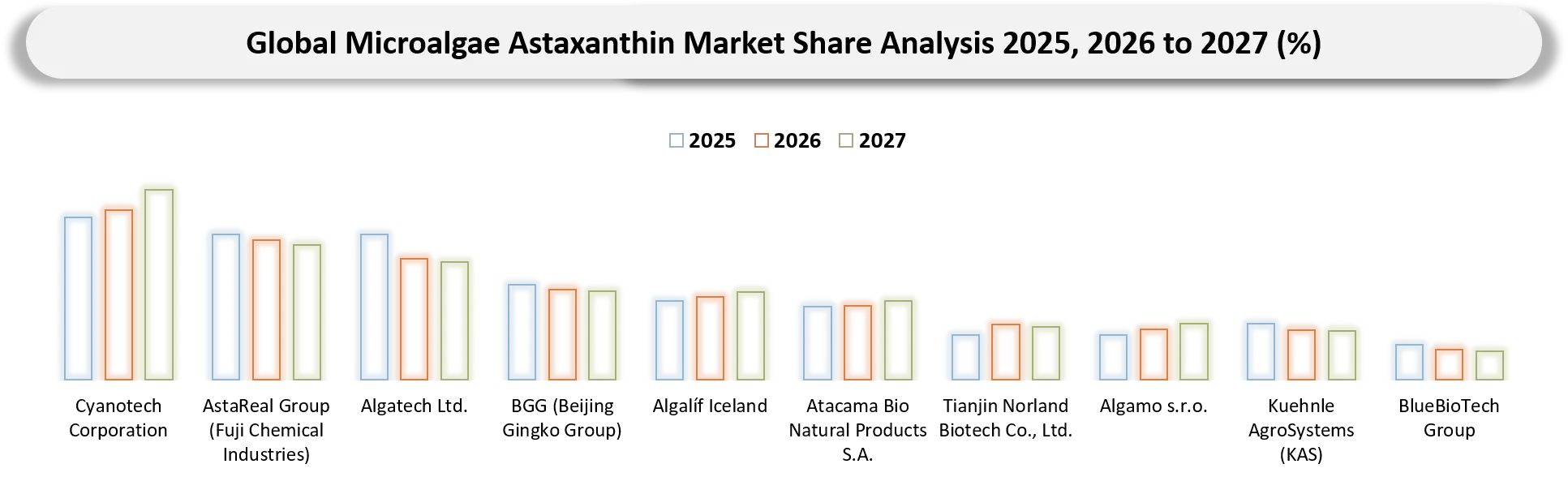
- The Microalgae Astaxanthin Market is characterized by three key participant groups: established commercial microalgae producers, vertically integrated astaxanthin ingredient manufacturers, and emerging biotechnology companies developing next-generation production platforms. Cyanotech Corporation, AstaReal Group (Fuji Chemical Industries), Algatech Ltd., and BGG (Beijing Gingko Group) represent the established commercial production group, supported by specialized Haematococcus pluvialis cultivation, extraction, and ingredient commercialization capabilities. Algalíf Iceland, Atacama Bio Natural Products S.A., and Tianjin Norland Biotech Co., Ltd. strengthen the competitive landscape through regional production and specialized natural astaxanthin offerings. Meanwhile, Kuehnle AgroSystems (KAS), Algamo s.r.o., and BlueBioTech Group represent technology-focused participants exploring advanced cultivation, biotechnology, and alternative production approaches. This creates a technology- and production-driven competitive environment where cultivation efficiency, extraction capability, product purity, scalability, and access to nutraceutical and cosmetic markets determine competitiveness.
- Key players include Cyanotech Corporation (United States), AstaReal Group (Fuji Chemical Industries) (Japan), Algatech Ltd. (Israel), BGG (Beijing Gingko Group) (China), Algalíf Iceland (Iceland), Atacama Bio Natural Products S.A. (Chile), Tianjin Norland Biotech Co., Ltd. (China), Algamo s.r.o. (Czech Republic), Kuehnle AgroSystems (KAS) (Germany), and BlueBioTech Group (Germany).
Key Developments
- September 2025: AstaReal AB, a Sweden-based natural astaxanthin producer and research company, announced a UK distribution partnership with i-ingredients Ltd., a UK-based specialty ingredients supplier serving the nutraceutical and cosmeceutical industries, effective from April 1, 2025.
- April 2026: Algalíf, an Iceland-based biotechnology and sustainable natural astaxanthin ingredients company, launched Astalíf 20, a standardized 20% natural astaxanthin oleoresin developed for advanced nutraceutical formulations.
- July 2025: INNOBIO Corporation Limited, a China-based nutraceutical ingredients manufacturer and nutrition solutions company, launched its Premium Astaxanthin Powder, derived from Haematococcus pluvialis microalgae, for health and wellness applications.
- July 2026: Kuehnle AgroSystems (KAS), a U.S.-based algal biotechnology company, secured a multi-million-dollar Series B financing led by Ichthus Venture Capital (IVC), alongside existing investors S2G Investments and Hatch Blue, and new investor Dest EOOD, to accelerate the commercial production of sustainable natural astaxanthin.
Key Procurement Priorities and Buyer Evaluation Criteria
- Organizations procuring microalgae-derived astaxanthin increasingly prioritize suppliers capable of delivering high-purity, standardized, and consistently concentrated natural astaxanthin with reliable batch-to-batch quality and scalable production capacity.
- Procurement decisions are increasingly influenced by demand for natural, clean-label, and sustainably produced ingredients, particularly across dietary supplements, functional foods, cosmetics, and animal nutrition applications.
- Buyers evaluate suppliers based on critical factors such as astaxanthin concentration, product purity, stability, bioavailability, extraction technology, contamination control, and consistency of microalgae cultivation and harvesting processes.
Why Choose DataM?
- Technological Innovations: Explores advancements in microalgae cultivation, including closed photobioreactors, strain optimization, controlled stress induction, dark fermentation, and advanced cell-disruption technologies, enabling higher astaxanthin productivity, improved purity, and more efficient commercial-scale production.
- Product Performance & Market Positioning: Evaluates how different producers differentiate their natural astaxanthin offerings based on astaxanthin concentration, purity, stability, bioavailability, clinical validation, production technology, and sustainability credentials across nutraceutical, cosmetic, food, and animal nutrition applications.
- Real-World Evidence: Highlights the commercial adoption of microalgae-derived astaxanthin in dietary supplements, beauty-from-within products, anti-aging cosmetics, functional foods, pet supplements, and aquaculture feed, demonstrating its role as a natural antioxidant and high-value biological ingredient.
- Market Updates & Industry Changes: Tracks key developments including commercial cultivation facility expansions, new high-concentration astaxanthin products, biotechnology partnerships, fermentation-based production platforms, and investments in microalgae production infrastructure across North America, Europe, and Asia-Pacific.
- Competitive Strategies: Analyzes how leading producers expand through cultivation capacity development, proprietary microalgae strains, advanced extraction technologies, clinical research, strategic partnerships, and vertically integrated production to strengthen their position in the natural astaxanthin industry.
- Pricing & Market Access: Explains pricing variations based on astaxanthin concentration, cultivation technology, extraction method, product purity, certifications, and formulation type, along with market access through ingredient suppliers, nutraceutical manufacturers, cosmetic formulators, and animal nutrition companies.
- Market Entry & Expansion: Identifies growth opportunities across dietary supplements, cosmetics and personal care, functional foods, and animal nutrition, while outlining strategies including high-yield strain development, production cost optimization, closed-system cultivation, regional manufacturing expansion, and partnerships with downstream ingredient and product manufacturers.
Target Audience 2026
- Microalgae Astaxanthin Producers and Manufacturers
- Nutraceutical and Dietary Supplement Manufacturers
- Cosmetics and Personal Care Companies
- Functional Food and Beverage Manufacturers
- Aquaculture and Animal Nutrition Companies
- Microalgae Cultivation and Biotechnology Companies
- Ingredient Suppliers and Distributors


























































