


Metabolic Health Beverages Market Size and Overview
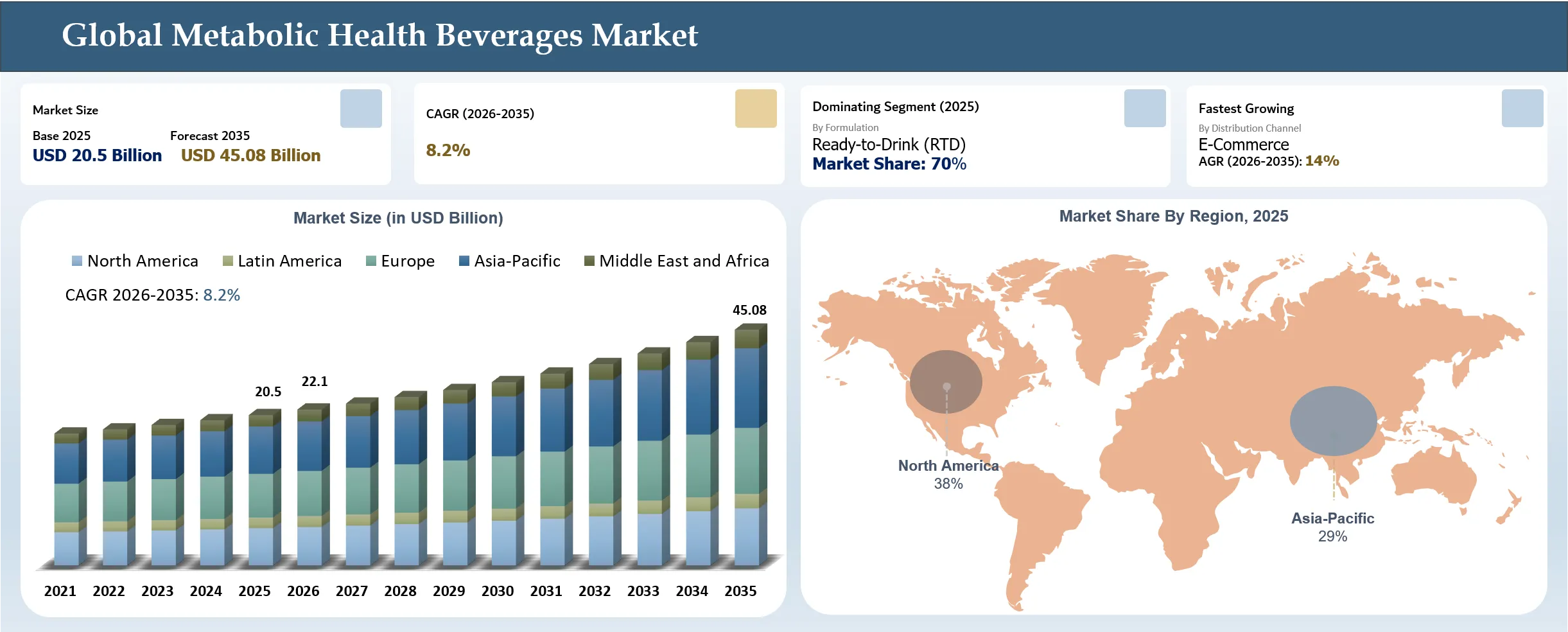
The global metabolic health beverages market reached USD 20.5 billion in 2025 and is expected to reach USD 45.08 billion by 2035, growing with a CAGR of 8.2% during the forecast period 2026-2035. The market is witnessing increasing product development as beverage manufacturers formulate drinks that combine high protein, dietary fibers, electrolytes, antioxidants, vitamins, and many more functional nutrients to meet the demands of weight management, muscle maintenance, gut health, and overall metabolic needs of consumers. The rising demand for nutrient-dense, high-protein beverages is a key driver of market growth. In January 2026, according to Food Ingredients First, close to 60% of consumers worldwide increased their protein consumption in 2026, highlighting the expanding consumer base for protein-focused metabolic nutrition products.
Product launches are increasingly demonstrating the convergence of proteins, fibers, gut health, and GLP-1-based nutrition in the beverage industry. In January 2026, Beyond introduced its functional beverages in the form of Beyond Immerse, which consisted of two types of formulations: one with 10 g of protein and 60 calories and another with 20 g of protein and 100 calories. Apart from that, 7 g of fiber and antioxidants were also present in these beverages. This product was specially made for muscle health, gut health, and nutrition-based drinks.
Companies such as Nestlé, Danone, PepsiCo, The Coca-Cola Company, Abbott, and Beyond are extending their product lineups to encompass protein nutrition, low sugar formulations, functional hydration, digestive wellness, and nutritional beverages. Nevertheless, hurdles such as difficulties in proving the health benefits associated with metabolic claims, maintaining taste and stability in high-protein and high-fiber formulations, regulation, and higher cost are possible barriers to consumer acceptance.
With the increasing use of GLP-1 drugs, food companies are being forced to innovate new drinks that are nutrient-packed and designed to meet the nutritional requirements of weight-management consumers. In August 2026, according to Fast Casual, Smoothie King launched the Slim-N-Trim GLP-1 Pumpkin Smoothie, targeting consumers using GLP-1 drugs such as Ozempic and Wegovy. This smoothie has 23+ grams of protein, 9 grams of fiber, and 0 grams of added sugar in its composition. It is part of the six-item menu released in the autumn of 2026 by Smoothie King; in the past, the GLP-1 Support Menu featured smoothies having 45+ grams of protein and 0 grams of added sugar. The Smoothie King currently has close to 1,200 stores across the nation, showing the increasing trend toward GLP-1-based and nutrient-rich options.
White-Space Opportunities for Metabolic Health Beverage Manufacturers in the Expanding Obesity and GLP-1 Care Ecosystem
In June 2026, the UK government announced up to £85 million (USD 115 million) in funding through the Obesity Pathway Innovation Programme (OPIP) to support 12 obesity-care innovation projects across the UK, creating broader opportunities for the metabolic health ecosystem. The investment consists of up to £50 million (USD 67.58 million) from the UK government and up to £35 million (USD 47.31 million) from Eli Lilly and Company, with the programme primarily focused on expanding access to obesity and weight-management services through digital healthcare, AI-assisted patient triage, community-based care, pharmacies, nutrition and dietary support, behavioral interventions, physical activity, and clinically appropriate obesity medicines.
The highest investment emphasis is directed toward digital and AI-enabled obesity-care pathways and integrated community-based weight-management services, with projects in Norfolk, Suffolk and north-east Essex expected to provide simplified obesity and weight-management access to up to 85,270 patients over three years. Other major investment areas include AI-powered healthy lifestyle support for up to 3,300 families in Kent and Medway, six neighborhood-based weight-management hubs in Leicester, Leicestershire and Rutland, and digitally enabled programmes supporting up to 10,000 people in Midlothian. The programme also reserves a minimum of £10 million (USD 13.52 million) for devolved administration health services, while individual OPIP projects were required to have total costs ranging from £2 million (USD 2.70 million) to £3.5 million (USD 4.73 million) and will operate until March 2029.
The investment is expected to generate wide-ranging opportunities for companies and organizations operating across the obesity, metabolic health, nutrition and digital healthcare value chains, although the funding is directed to NHS-led projects rather than directly allocated to metabolic health beverage manufacturers. Eli Lilly and Company is a direct funding partner, contributing up to £35 million (USD 47.31 million), while NHS Integrated Care Boards, Innovate UK, community pharmacies, healthcare providers, dietitians and technology partners are positioned to benefit through the development and delivery of new obesity-care pathways.
Companies operating in GLP-1 nutrition and high-protein beverages, including Smoothie King, Premier Protein, and OWYN, could indirectly benefit from the growing emphasis on protein intake and nutrient density among weight-management and GLP-1 users. Similarly, functional beverage and nutrition companies such as Danone, Nestlé Health Science, and Abbott Nutrition could benefit through increasing demand for protein-enriched, low-sugar, fibre-containing, and nutritionally fortified beverages.
In the personalized nutrition and metabolic health area, companies such as ZOE and DayTwo may gain opportunities as obesity management increasingly incorporates personalized dietary recommendations and metabolic monitoring. Overall, the expansion of obesity care, GLP-1-supported nutrition, dietary interventions and personalized health programmes could indirectly strengthen demand for high-protein, high-fiber, low-sugar and nutrient-dense metabolic health beverages, creating longer-term opportunities across beverage manufacturers, clinical nutrition companies and personalized nutrition platforms.
Metabolic Health Beverages Market Key Takeaways
- North America established market dominance by generating 38% of the global metabolic health beverages market share in 2025. PepsiCo bolstered its regional presence by acquiring functional prebiotic soda maker Poppi for a net purchase price of USD 1.65 billion.
- Ready-to-Drink (RTD) formulations led the market in 2025, accounting for a dominant 70% overall market share. Danone supported this segment by launching OIKOS Fusion, providing 23 grams of complete protein and 5 grams of prebiotic fiber.
- Close to 60% of consumers worldwide increased their overall protein consumption in 2026, highlighting an expanding base for protein-focused nutrition. Beyond introduced its functional beverage, Beyond Immerse, featuring formulations with up to 20 g of protein and 7 g of fiber.
- The UK government announced up to £85 million (USD 115 million) through the Obesity Pathway Innovation Programme to support 12 care projects. This initiative includes up to £50 million (USD 67.58 million) in public funds alongside £35 million (USD 47.31 million) from Eli Lilly.
Metabolic Health Beverages Market Industry Trends and Strategic Insight
- GLP-1 companion positioning is reshaping beverage innovation, with manufacturers developing nutrient-dense drinks designed to address reduced appetite, protein intake, hydration, digestive tolerance, and muscle preservation among weight-management consumers.
- Protein-and-fiber combinations are becoming the core formulation strategy, as companies move beyond standalone protein drinks toward products that simultaneously support satiety, digestive health, and long-term metabolic nutrition.
- Prebiotic beverages are moving into mainstream beverage categories, as demonstrated by established beverage companies incorporating prebiotic fiber into traditional carbonated formats rather than limiting gut-health functionality to specialist wellness brands.
- Carbonated beverages are undergoing functional repositioning, creating opportunities for companies to transform conventional soda consumption occasions into platforms for fiber, gut health, and reduced-sugar metabolic wellness products.
- Taste and sensory performance remain decisive commercial factors, as high-protein, high-fiber, and multi-functional formulations must overcome challenges related to texture, solubility, digestive tolerance, and flavor to achieve repeat purchases.
Metabolic Health Beverages Market Scope
| Metrics | Details | |
| 2025 Market Size | USD 20.5 Billion | |
| 2035 Projected Market Size | USD 45.08 Billion | |
| CAGR (2026-2035) | 8.2% | |
| Largest Market | North America | |
| Fastest Growing Market | Asia-Pacific | |
| By Ingredients | Protein, Dietary Fiber, Prebiotics, Probiotics, Postbiotics, Botanicals, Polyphenols, Vitamins & Minerals, Healthy Fats/MCTs, Other Functional Ingredients | |
| By Beverage Type | Water-Based Beverages, Tea-Based Beverages, Coffee-Based Beverages, Dairy-Based Beverages, Plant-Based Beverages, Fruit & Vegetable-Based Beverages, Functional Nutrition Beverages, Fermented & Cultured Beverages, Carbonated Functional Beverages, Others | |
| By Metabolic Health Benefit | Blood Glucose Management, Insulin & Metabolic Regulation, Weight Management, Energy Metabolism, Lipid & Cardiometabolic Health, Gut-Metabolic Health, Hydration & Electrolyte Balance, Multi-Benefit Metabolic Health | |
| By Age Group | Children and Adolescents (Below 18 Years), Young Adults (18-34 Years), Adults (35-54 Years), Older Adults (55 Years and Above) | |
| By Formulation | Ready-to-Drink, Powder-to-Liquid, Liquid Concentrates, Shots | |
| By Distribution Channel | Supermarkets & Hypermarkets, Convenience Stores, Pharmacies & Drugstores, Specialty Health & Nutrition Stores, E-Commerce, Other Channels | |
| By Region | North America | U.S., Canada, Mexico |
| Europe | Germany, UK, France, Spain, Italy, Poland, Netherlands, Switzerland and Rest of Europe | |
| Asia-Pacific | China, India, Japan, Australia, South Korea, Indonesia, Malaysia and Rest of Asia-Pacific | |
| Latin America | Brazil, Argentina and Rest of Latin America | |
| Middle East and Africa | UAE, Saudi Arabia, South Africa, Israel, Türkiye and Rest of Middle East and Africa | |
| Report Insights Covered | Competitive Landscape Analysis, Company Profile Analysis, Market Size, Share, Growth | |
Metabolic Health Beverages Market Disruption Analysis
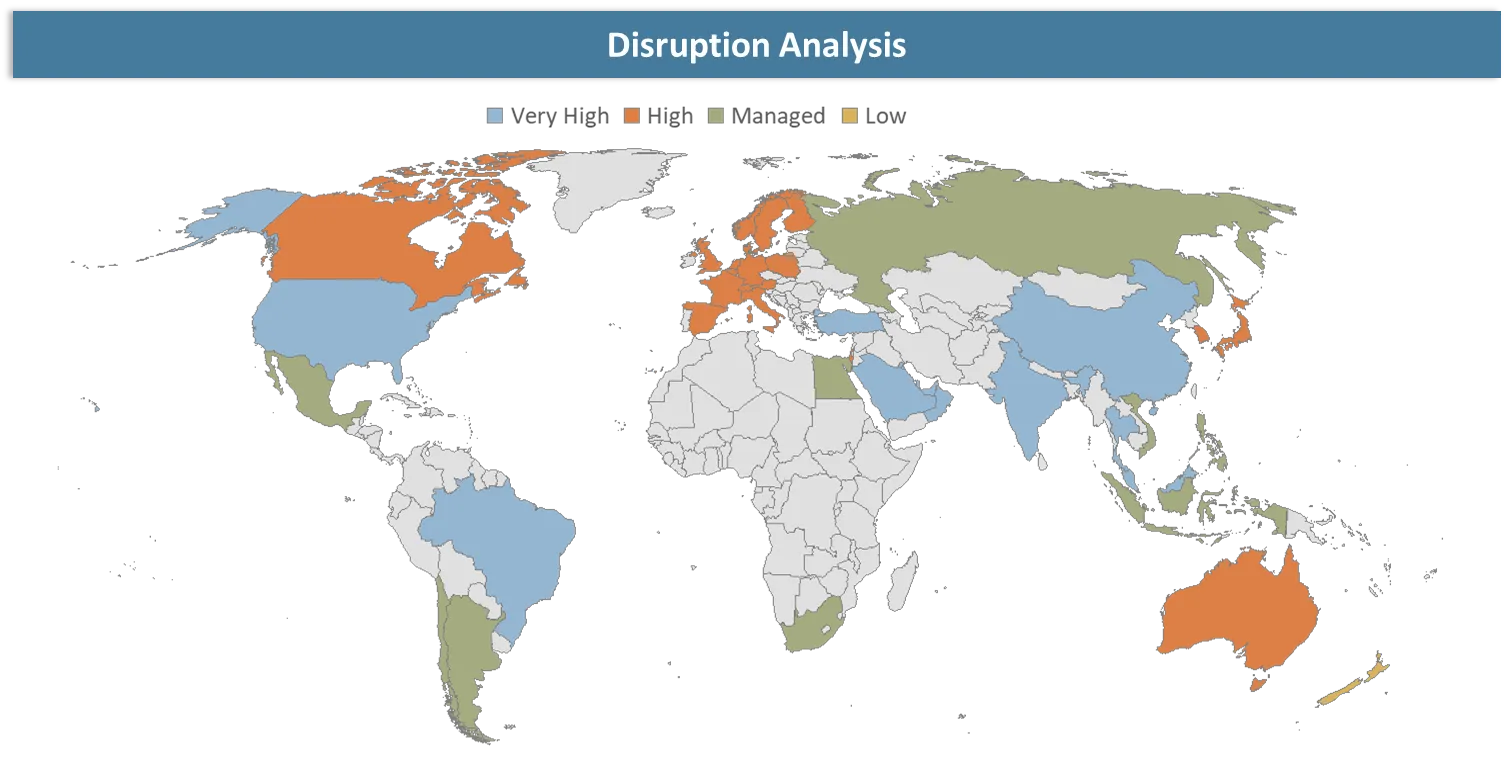
Convergence of Pharmaceuticals and Food Reshaping the Metabolic Health Beverages Landscape
The disruption in the metabolic health beverages market is mostly associated with the growing convergence of pharmaceutical weight-management therapies and functional nutrition. The adoption of GLP-1-based weight loss medication by consumers has transformed their approach to dietary consumption, as a result of decreased appetite and food intake, leading to an increase in the demand for smaller, highly nutritious drinks that have proteins, fibers, and other nutrients. Consequently, conventional protein-based beverages and functional beverages are slowly being replaced by specific metabolic nutrition beverages that are formulated according to muscle preservation, satiety, digestion, hydration, and nutritional adequacy. In April 2025, Nestle made strides in this direction by launching its own GLP-1-related beverage innovations, which included Boost Advanced having 35 grams of protein and Full Factor having 15 grams of protein and 10 grams of fiber.
In addition, the changes brought about by GLP-1-mediated weight loss in terms of nutritional profile and consumption patterns have led to disruption in traditional beverage categories that were originally formulated based on a singular benefit like energy, hydration, or protein supplement. In July 2026, according to FTI Consulting, a study of 1,007 adult Americans, approximately 18% of American adults were taking GLP-1 drugs in 2026, compared to 14% in 2025, whereas approximately 80% of GLP-1 patients used performance and health nutrition beverages, as opposed to 67% of the total population. The cited source further stated that protein shakes, bars, and snacks witnessed mid-teens increase in consumption among GLP-1 patients, thus emphasizing the move toward proteins in nutrition. It is forcing the beverage manufacturers to remodel their product offerings from single function to multiple functions focusing on muscle retention, satiety, digestion, and hydration.
Metabolic Health Beverages Market BCG Matrix: Company Evaluation

Stars include PepsiCo, Danone, Celsius Holdings, Inc., and Abbott because these companies have established brands, extensive distribution networks, and strong capabilities in functional beverages, protein nutrition, low-sugar products, hydration, and specialized nutrition. Companies are well positioned to capitalize on the convergence of GLP-1 nutrition, weight management, protein supplementation, and metabolic wellness. Question Marks include Otsuka Pharmaceutical, Suntory Holdings Limited, Fonterra, and Yakult Honsha Co., Ltd. These companies have established capabilities in functional nutrition, hydration, dairy-based beverages, probiotics, and gut health but have comparatively less direct positioning within the emerging metabolic health beverages category.
The Potential category includes OLIPOP, Kate Farms, Medifast, and Robard Corporation, which have highly relevant products addressing prebiotic gut health, specialized nutrition, meal replacement, protein intake, and weight management. Companies benefit from increasing consumer demand for targeted nutritional beverages but generally operate with narrower portfolios and distribution capabilities compared with multinational beverage and nutrition companies. Tailenders: Based on the selected list of companies, no company has been classified as a Tailender, as all companies maintain a meaningful product or ingredient-level connection to functional nutrition, gut health, protein beverages, metabolic wellness, or weight management.
Metabolic Health Beverages Market Dynamics
Driver Impact Analysis
| Driver | Market Growth Impact (%) | Demand Concentration | Impacted Use Case | Strategic Impact |
Growing demand for blood sugar management and satiety-supporting beverages is driving innovation in high-protein, high-fiber, and low-sugar drink formulations. | 32% | Adults aged 35-54; weight-management consumers; blood glucose-conscious consumers | Blood glucose management, satiety support, meal replacement, and metabolic nutrition | Companies are prioritizing protein-fiber combinations and reduced-sugar formulations to address satiety and metabolic stability within convenient beverage formats. |
The rising influence of GLP-1 weight-management trends is accelerating demand for nutrient-dense beverages. | 36% | GLP-1 users, weight-management consumers, and healthcare-supported nutrition users | Protein supplementation, muscle preservation, hydration, digestive support, and nutrient adequacy | Manufacturers are developing specialized GLP-1 companion beverages and repositioning conventional protein and nutrition drinks toward metabolic support. |
Increasing consumer focus on preventive health and convenient daily nutrition is boosting demand for beverages. | 26% | Health-conscious adults, active consumers, and urban working populations | Daily wellness, preventive nutrition, energy metabolism, and convenient nutrient intake | Companies are expanding ready-to-drink and portable formats that integrate everyday nutrition with targeted metabolic-health benefits. |
Growing preference for clean-label and reduced-sugar beverages is encouraging manufacturers to develop healthier alternatives aligned with metabolic wellness goals. | 22% | Clean-label consumers, younger adults, and sugar-conscious households | Reduced-sugar refreshment, functional hydration, and preventive metabolic wellness | Reformulation strategies increasingly focus on natural sweeteners, transparent ingredient labeling, and reduced sugar without compromising taste or functionality. |
The rising influence of GLP-1 weight-management trends is accelerating demand for nutrient-dense beverages
The rising adoption of GLP-1 weight-management therapies is a key driver accelerating demand for nutrient-dense beverages in the metabolic health beverages market. GLP-1 drugs are transforming the consumption habits of consumers by decreasing their appetite, leading to the need to consume high-quality nutrients in smaller intake quantities. It has increased the significance of beverages that contain proteins, dietary fibers, vitamins, minerals, and hydration-supporting components, compelling the manufacturers to move away from traditional beverages.
In parallel, the nutritional and consumption changes associated with GLP-1-supported weight loss are compelling beverage manufacturers to redesign products around higher nutrient density and smaller consumption occasions. In April 2026, according to Vademecum, citing PwC data in its analysis, GLP-1 users consume 40% fewer calories on average, while dessert consumption declines by 84% and alcohol consumption falls by 33%, highlighting the substantial shift toward lower-calorie and nutritionally optimized consumption patterns. The source also reported that companies are responding by emphasizing smaller portions and products with higher protein and fiber content, while the updated U.S. Dietary Guidelines for 2025-2030 increased recommended protein intake to 1.2-1.6 grams per kilogram of body weight per day. These changes are accelerating demand for compact, protein-rich, fiber-enriched, and nutritionally fortified beverages designed to support metabolic health and nutrient adequacy.
Restraint Impact Analysis
| Restraint | Drag on Market Growth (%) | Primary Impact Area | Impacted Use Case | Strategic Impact |
The lack of robust scientific evidence for certain functional ingredients is creating consumer skepticism and restricting the adoption of some metabolic health beverages. | 25% | Consumer trust and product credibility | Blood glucose management, gut-metabolic health, and botanical-based beverages | Companies need to invest in clinical validation, transparent dosage disclosure, and scientifically substantiated health claims to improve consumer confidence and regulatory acceptance. |
Formulating low-sugar beverages while maintaining taste, texture, stability, and shelf life remains a major technical challenge for manufacturers. | 23% | Product formulation and manufacturing | Low-sugar protein drinks, fiber-enriched beverages, and functional hydration | Manufacturers must invest in formulation technologies, flavor masking, stabilizers, and ingredient compatibility testing to maintain sensory quality and shelf stability. |
Premium pricing caused by the use of protein, fiber, probiotics, and other functional ingredients can limit mass-market consumer adoption. | 20% | Product affordability and consumer accessibility | Premium protein beverages, probiotic drinks, and specialized metabolic nutrition | Companies need to optimize ingredient sourcing, introduce multiple pack sizes, and develop tiered pricing strategies to expand adoption beyond premium health-conscious consumers. |
Increasing scrutiny of misleading labeling and wellness claims is raising compliance costs and reputational risks for beverage brands. | 21% | Regulatory compliance and brand reputation | Blood glucose, weight management, metabolism, energy, and digestive health claims | Companies must strengthen regulatory review, scientific substantiation, traceability, and claims governance before product commercialization. |
The lack of robust scientific evidence for certain functional ingredients is creating consumer skepticism and restricting the adoption of some metabolic health beverages
One of the key restraints limiting the wider adoption of the metabolic health beverages market is inadequate scientific backing of some functional ingredients along with their metabolic benefits. While some ingredients like proteins, dietary fibers, and essential vitamins have proven their nutritional values, some new ingredients such as specific botanicals, postbiotics, herbs, and proprietary mixes of bioactive compounds might have insufficient human evidence to support the specified claims in terms of their metabolism-related functions, glucose level regulation, weight loss, and gut-metabolic health. The lack of evidence can be a source of uncertainty and can prevent repeated purchase, especially if the premium-priced drinks offer no apparent benefits to their consumers. In June 2026, according to the OnePulse Functional Foods Survey, 14% of UK consumers and 22% of US consumers regarded functional foods and beverages as useful innovations; however, 38% of UK consumers and 37% of US consumers perceived functional claims as marketing tricks.
In addition, increased regulatory scrutiny is making scientific substantiation an essential aspect of product development and commercialization. In August 2026, according to BeverageDaily, health and wellness-related actions were behind the beverage choice of 97% of consumers in the U.S. in a survey conducted by EY, thus putting additional pressure on beverage producers to prove that their products provide real functional benefits beyond just using their ingredients to attract consumers. In this regard, the source also pointed out that the UK Competition and Markets Authority can fine a business up to 10% of its global turnover for breaking consumer law, such as through misleading claims, while functional beverage brands face stricter rules when it comes to evidence and regulatory compliance.
Metabolic Health Beverages Market Segment Analysis
The global metabolic health beverages market is segmented based on ingredients, beverage type, metabolic health benefit, age group, formulation, distribution channel, and region.
Ready-to-Drink (RTD) Formulations Driving Dominance Through Convenience and Targeted Metabolic Nutrition
The ready-to-drink (RTD) segment dominated the metabolic health beverages market, with a 70% market share in 2025. The rising consumer inclination towards convenient, portable, and instantly available nutritional solutions drove this market dominance. RTD beverages negate the necessity of preparation linked with powders or concentrates and allow consumers to add protein, fiber, hydration, and functional nutrients to their routine. The rising trend towards nutrient-rich, portable nutrition has increased the prominence of RTD beverages in various categories.
Leading nutrition and beverage companies are increasingly adopting RTD formats to address emerging metabolic health requirements, particularly protein intake, muscle preservation, digestive health, and weight management. In August 2025, Danone launched OIKOS Fusion, a compact RTD cultured dairy drink containing 23 grams of complete protein and 5 grams of prebiotic fiber, while Nestlé Health Science launched its first Vital Proteins Collagen & Protein Shake, delivering 30 grams of protein and 10 grams of collagen peptides in a ready-to-drink format. The development demonstrates how manufacturers are shifting from conventional powdered nutrition products toward convenient, multifunctional RTD beverages. The continued expansion of multifunctional, high-protein, fiber-enriched RTD products is therefore expected to reinforce the segment's position as the leading revenue generator within the metabolic health beverages market.
Metabolic Health Beverages Market Geographical Penetration
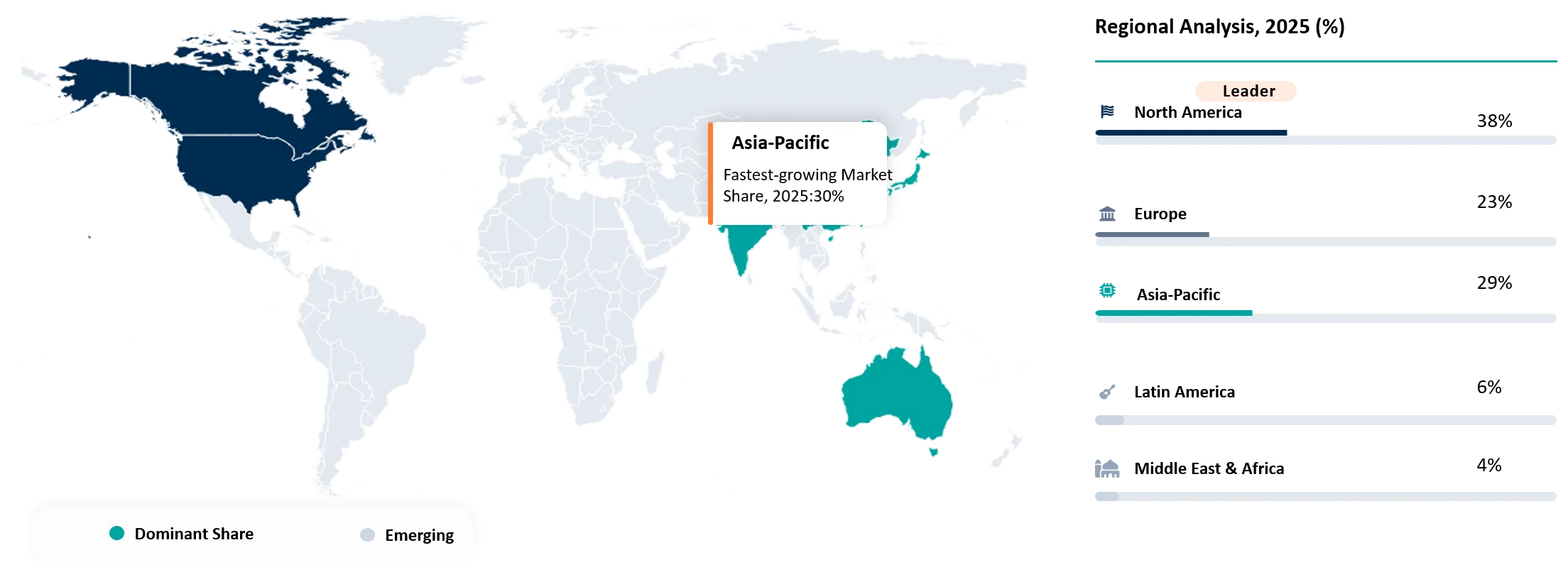
Strong GLP-1 Nutrition Innovation and Functional Beverage Commercialization Driving North American Market Leadership
The North America region dominated the metabolic health beverages market, accounting for 38% of the market share in 2025. The region's leadership is supported by its well-established functional beverage ecosystem, strong presence of global nutrition and beverage companies, and rapid commercialization of products addressing protein intake, weight management, gut health, hydration, and reduced sugar consumption. The growing convergence of functional nutrition and GLP-1-related dietary requirements is further reshaping product development, enabling manufacturers to introduce targeted metabolic health beverages through established retail, pharmacy, and e-commerce networks.
The growing consumer preference for low-sugar, gut-health, and functional beverages is driving major food and beverage companies to expand their portfolios through strategic acquisitions. In March 2025, PepsiCo, a U.S.-based multinational food and beverage company, completed the acquisition of Poppi, a U.S.-based functional beverage and prebiotic soda company, for USD 1.95 billion. The transaction included USD 300 million in anticipated cash tax benefits, resulting in a net purchase price of USD 1.65 billion, along with a potential performance-based earnout. Poppi offers low-calorie prebiotic sodas made with prebiotics, fruit juice, and apple cider vinegar, containing no more than 5 grams of sugar per serving, and is available in 14 flavors. The acquisition strengthens PepsiCo's presence in the functional beverage market and highlights growing investment in prebiotic, gut-health, and better-for-you beverages within the North American metabolic health beverage ecosystem.
U.S. Metabolic Health Beverages Market Trends
The U.S. holds a dominant position in the North America Metabolic Health Beverages Market owing to its well-established functional beverage industry, strong consumer adoption of protein- and nutrition-focused products, and rapid commercialization of beverages addressing weight management, digestive health, hydration, and metabolic wellness. The presence of major beverage and nutrition companies, including PepsiCo, Danone, Nestlé Health Science, Abbott, and Celsius Holdings, enables faster product development and broad distribution across supermarkets, pharmacies, specialty stores, and e-commerce channels.
The increasing consumer preference for healthier, zero-sugar, and functional beverages is driving significant consolidation within the U.S. health and wellness beverage industry. In February 2025, Celsius Holdings, Inc., a U.S.-based functional beverage company, completed the acquisition of Alani Nutrition LLC (Alani Nu), a U.S.-based health and wellness lifestyle and functional beverage company, for USD 1.8 billion. The transaction included approximately USD 150 million in tax assets, resulting in a net purchase price of USD 1.65 billion, comprising USD 1.275 billion in cash, USD 500 million in Celsius shares, and a potential USD 25 million performance-based earn-out. Alani Nu generated approximately USD 595 million in revenue in 2024 and USD 137 million in adjusted EBITDA, including anticipated synergies.
Canada Metabolic Health Beverages Market Outlook
Canada is an emerging country in the North America metabolic health beverages market because of growing consumer interest in functional nutrition, protein-enriched beverages, plant-based nutrition, and convenient ready-to-drink formats. The country benefits from an established food and beverage manufacturing ecosystem and the presence of major multinational brands and domestic wellness companies that are expanding their portfolios toward protein, gut health, hydration, and metabolic wellness.
The growing focus on active aging, muscle health, and GLP-1-related nutritional support is driving the expansion of functional beverages formulated with high-quality proteins and essential amino acids. In February 2026, Promino Nutritional Sciences Inc., a Canada-based, research-driven nutraceutical company, announced that its functional beverage brand Rejuvenate Muscle Health would expand into an additional 2,105 stores in the United States through a major U.S. retail partner, with the rollout scheduled for mid-May 2026. The expansion increased the brand's total North American distribution to nearly 10,000 points of distribution. Rejuvenate Muscle Health is an adult functional beverage formulated with a clinically informed essential amino acid blend to support muscle protein synthesis, recovery, and active longevity, while targeting growing demand associated with active aging, preventive health, and GLP-1-supportive nutrition.
Expanding Functional Nutrition Adoption and Metabolic Wellness Innovation Driving Growth in the Asia-Pacific Region
The Asia-Pacific is the fastest-growing region in the metabolic health beverages market, with a market share of 29% in 2025, supported by the region's large consumer base, expanding functional food and beverage industry, and growing focus on preventive healthcare and nutritional wellness. Countries including China, Japan, Australia, South Korea, and India are experiencing increasing demand for beverages that support protein intake, digestive health, hydration, blood glucose management, and weight management. The region's established dairy, probiotic, plant-based beverage, and functional nutrition industries are enabling manufacturers to commercialize products incorporating proteins, dietary fibers, probiotics, vitamins, and other ingredients associated with metabolic health.
The growing demand for high-protein, gut-health, and functional beverages is driving multinational food and beverage companies to expand their portfolios through strategic acquisitions. In June 2026, Danone, a France-based multinational food and beverage company, announced an agreement to acquire MADE Group, an Australia-based health-focused food and beverage company, to expand its presence in the Asia-Pacific healthy nutrition market. MADE Group's portfolio includes high-protein ready-to-drink beverages, gut-health products and coconut-based beverages, with brands such as Cocobella, Rokeby and The Collective. The company reported more than €300 million (approximately USD 344 million) in sales for the fiscal year ending June 2026 and had consistently delivered double-digit growth.
Japan Metabolic Health Beverages Market Trends
Japan is one of the major countries in the Asia-Pacific metabolic health beverages market owing to its long-established functional food and beverage industry, strong consumer acceptance of scientifically positioned health products, and extensive commercialization of probiotic, protein, nutritional, and fortified beverages. The country has a highly developed ecosystem for functional foods, supported by major companies such as Yakult Honsha, Suntory Holdings, Otsuka Pharmaceutical, and other nutrition-focused manufacturers.
The growing demand for convenient, palatable, and functionally enhanced protein beverages is driving product innovation in Japan's health and wellness market. In August 2026, FUJIMI, a Japan-based functional nutrition and supplement brand operated under the POLA ORBIS Group, and KINS, a Japan-based microbiome science and wellness company, introduced innovative powder-based functional beverages designed to overcome consumer perceptions associated with conventional protein shakes. FUJIMI developed lighter and fruity protein beverage formulations, including Clear Lemonade, while KINS launched its VINEGAR PROTEIN range with a vinegar-like taste profile. The development coincides with continued expansion of Japan's Foods with Function Claims (FFC) sector, which recorded 4% market growth in FY2025, despite the number of new FFC notifications declining 26% to 1,176, compared with 1,584 notifications in FY2024.
Metabolic Health Beverages Market Competitive Landscape
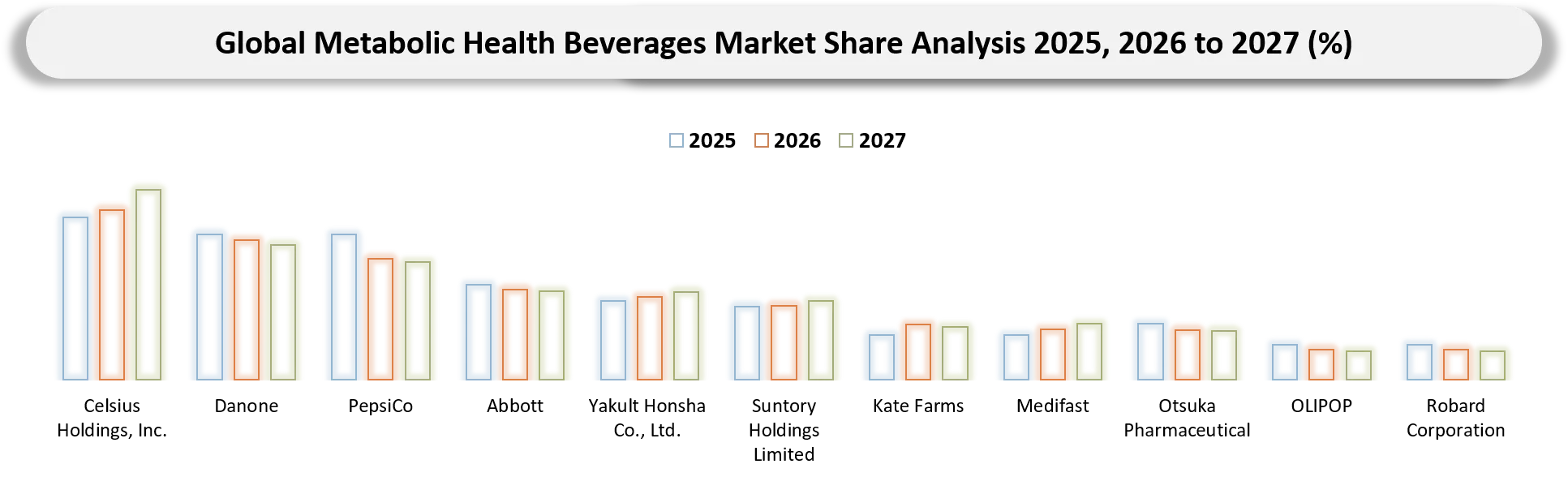
- The market is characterized by three key participant groups: multinational beverage and nutrition companies, specialized clinical and weight-management nutrition providers, and emerging functional beverage brands. Danone, PepsiCo, Abbott, Celsius Holdings, Yakult Honsha, Suntory Holdings, Otsuka Pharmaceutical, and Fonterra leverage established manufacturing capabilities, broad distribution networks, and expertise in protein, probiotics, hydration, and nutritional beverages. Meanwhile, Kate Farms, Medifast, and Robard Corporation focus on specialized medical nutrition, meal replacement, and weight-management solutions, while OLIPOP represents the emerging functional beverage segment focused on prebiotic and gut-health positioning. This creates a competitive landscape where scientific formulation, functional ingredient expertise, brand credibility, and large-scale distribution increasingly define competitiveness.
- Key players include Celsius Holdings, Inc. (United States), Danone (France), PepsiCo (United States), Abbott (United States), Yakult Honsha Co., Ltd. (Japan), Suntory Holdings Limited (Japan), Kate Farms (United States), Medifast (United States), Otsuka Pharmaceutical (Japan), OLIPOP (United States), Robard Corporation (United States), and Fonterra (New Zealand).
Key Developments
- September 2025: Solveat, an Israel-based food-tech startup, entered an investment-based joint development and commercial agreement with The Central Bottling Company (CBC Group), an Israel-based multinational beverage company, to develop functional beverages incorporating Solveat's patented botanical formulations.
- August 2026: Edible Garden AG Incorporated, a U.S.-based controlled-environment agriculture and sustainable food company, entered into a strategic product development partnership with Square Roots Urban Growers, Inc., a U.S.-based agricultural innovation and precision farming company, to develop premium clean-label functional ready-to-drink beverages.
- June 2026: Bansk Group, a U.S.-based consumer-focused private investment firm, entered into a definitive agreement to acquire a majority interest in So Good So You, a U.S.-based functional wellness beverage company.
- December 2025: Lotte Home Shopping, a South Korea-based retail and home-shopping company, launched “Spike Zero,” the first product under its proprietary L: Bottle functional wellness beverage brand, targeting post-meal blood sugar management.
- February 2025: Pulmuone Green Juice, a South Korea-based functional beverage and health-food company operating under Pulmuone Co., Ltd., a South Korean food and beverage group, announced plans to expand its portfolio of low-sugar functional drinks following strong demand for its Dangslim X2 blood sugar-management beverage.
Key Procurement Priorities and Buyer Evaluation Criteria
- Organizations investing in the Metabolic Health Beverages Market are increasingly selecting ingredient and manufacturing partners based on their ability to deliver scientifically supported functional ingredients, consistent product quality, scalable production, and formulations aligned with protein, fiber, gut health, hydration, and metabolic wellness requirements.
- The procurement decision-making process is increasingly influenced by the growing demand for GLP-1-compatible nutrition, weight-management solutions, reduced-sugar products, preventive health, and multifunctional beverages that combine multiple metabolic benefits within convenient formats.
- Buyers consider factors such as scientific substantiation, ingredient quality and traceability, protein and fiber content, sugar levels, bioavailability, taste, product stability, shelf life, and regulatory compliance when selecting metabolic health beverage suppliers and formulation partners.
Why Choose DataM?
- Technological and Formulation Innovations: Explores advancements in metabolic health beverage formulations, including high-protein, fiber-enriched, prebiotic, probiotic, electrolyte, and reduced-sugar beverages designed to support weight management, blood glucose balance, gut-metabolic health, hydration, and overall metabolic wellness.
- Product Performance & Market Positioning: Evaluates how different companies differentiate their beverages based on nutritional composition, protein and fiber content, sugar reduction, scientific substantiation, taste, convenience, and targeted health benefits, highlighting positioning across preventive nutrition and weight-management applications.
- Real-World Evidence: Highlights the growing adoption of metabolic health beverages among health-conscious consumers, weight-management users, active individuals, and GLP-1 users, demonstrating the increasing importance of nutrient density, muscle preservation, satiety, digestive health, and hydration support.
- Market Updates & Industry Changes: Tracks key developments, including new product launches, GLP-1-focused nutrition initiatives, functional beverage acquisitions, scientific research, regulatory developments, and the expansion of protein-, fiber-, and gut-health beverage portfolios across North America, Asia-Pacific, and Europe.
- Competitive Strategies: Analyzes how leading companies expand through product innovation, functional ingredient development, strategic acquisitions, partnerships, clinical research, and portfolio diversification to address growing demand for metabolic wellness and targeted nutrition.
- Pricing & Market Access: Explains pricing variations based on ingredient quality, protein and fiber concentration, clinical positioning, formulation complexity, and brand positioning, along with market access through supermarkets, pharmacies, specialty nutrition stores, convenience channels, and e-commerce platforms.
- Market Entry & Expansion: Identifies growth opportunities driven by GLP-1-related nutrition, preventive healthcare, rising protein consumption, reduced-sugar preferences, and gut-metabolic health, while outlining strategies such as science-backed product development, RTD innovation, targeted consumer positioning, and expansion through omnichannel distribution.
Target Audience 2026
- Beverage Manufacturers and Brand Owners
- Food and Beverage Companies
- Nutraceutical and Functional Ingredient Suppliers
- Clinical and Specialized Nutrition Companies
- Pharmaceutical and Healthcare Companies
- Retailers and Distribution Companies
- Investors and Venture Capital Firms


























































