


Messenger RNA (mRNA) Vaccine Market Size and Overview
The global Messenger RNA (mRNA) Vaccine market reached US$6.3 billion in 2025 and is expected to reach US$19.57 billion by 2035, growing with a CAGR of 12% during the forecast period 2026-2035.
The global messenger RNA (mRNA) vaccine market is transitioning from a COVID-19-driven commercial model toward a broader multi-indication vaccine platform spanning RSV, seasonal and pandemic influenza, combination respiratory vaccines, emerging infectious diseases and therapeutic oncology. Commercially validated products including COMIRNATY, SPIKEVAX, MRESVIA, MNEXSPIKE, KOSTAIVE, DAICHIRONA and MFLUSIVA demonstrate expanding regulatory acceptance and increasing diversification of mRNA technology across vaccine categories.
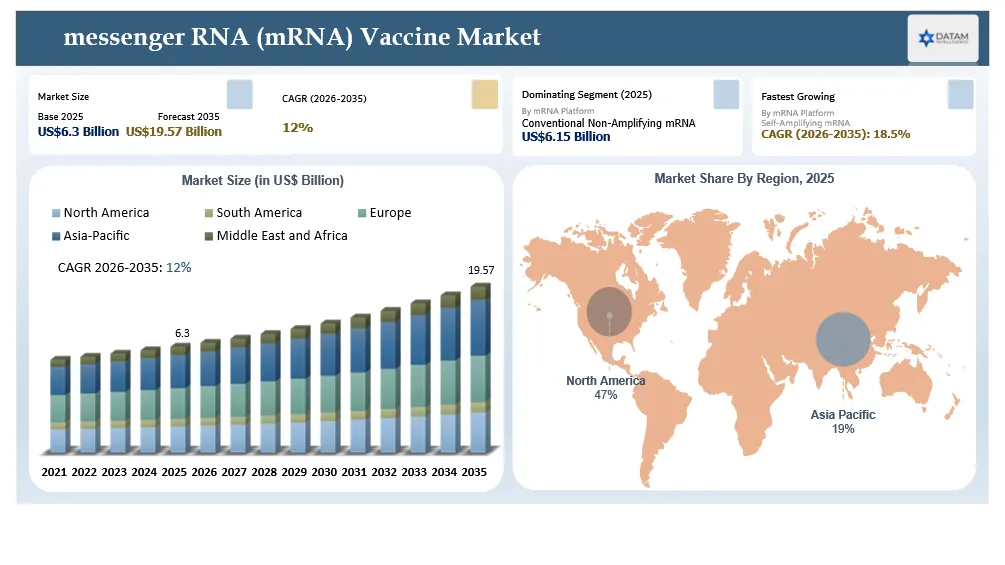
Competitive leadership remains concentrated among Moderna and Pfizer/BioNTech, while GSK, Arcturus Therapeutics, Daiichi Sankyo and other developers are intensifying competition through differentiated platforms and pipeline expansion. Innovation is increasingly focused on self-amplifying RNA, advanced lipid nanoparticle delivery, multivalent constructs, lower-dose formulations, combination vaccines and improved thermostability. Pipeline development is broadening into norovirus, CMV, EBV, Lyme disease, mpox, pandemic influenza and personalized cancer vaccines. Future competitive advantage will increasingly depend on efficacy, durability, safety, antigen breadth, manufacturing scalability, dose efficiency and successful expansion across multiple indications.
Messenger RNA (mRNA) Vaccine Market Key Takeaways
- COVID-19 vaccines remain the commercial backbone, led by COMIRNATY and SPIKEVAX, while newer products across RSV and influenza are reducing market dependence on pandemic-driven demand.
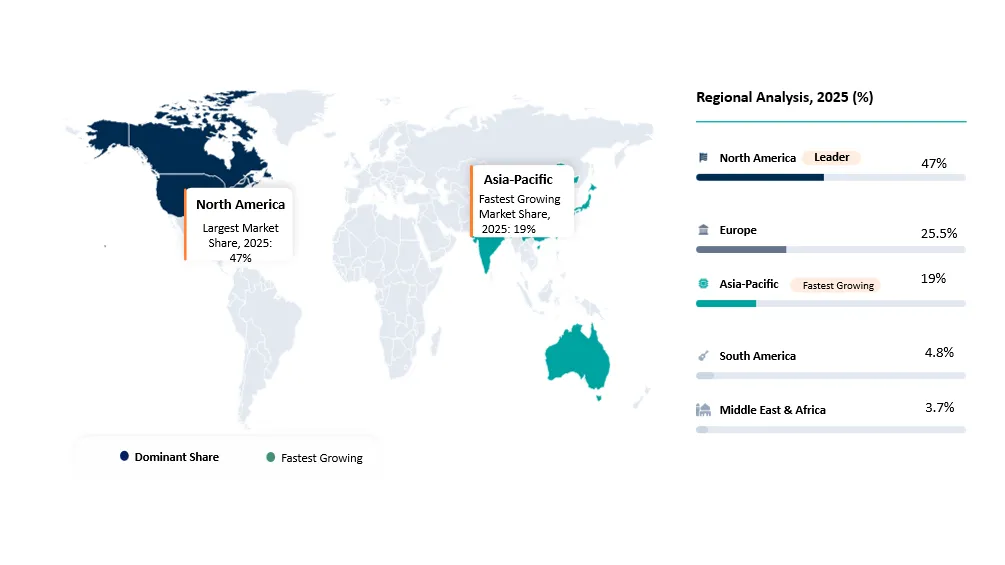
- North America remains the largest regional market, supported by strong vaccine uptake, established reimbursement, advanced clinical infrastructure and the presence of leading mRNA developers.
- Asia-Pacific represents the fastest-growing region, driven by expanding domestic mRNA manufacturing, improving regulatory capabilities, pandemic-preparedness investment and increasing vaccine access.
- Seasonal influenza and combination respiratory vaccines are emerging as major commercial opportunities, supported by expansion into routine adult vaccination and multi-pathogen protection strategies.
- Self-amplifying RNA, advanced lipid nanoparticle systems and thermostable formulations are reshaping platform competition, with dose efficiency and manufacturing scalability becoming key differentiators.
- Therapeutic cancer vaccines are gaining strategic importance, particularly personalized neoantigen and off-the-shelf approaches combined with checkpoint inhibitors.
- Future market leadership will depend on durability, safety, antigen breadth, lower dose requirements, thermostability, manufacturing economics and successful expansion across multiple indications.
Messenger RNA (mRNA) Vaccine Industry Trends and Strategic Insights
- Shift Toward Multi-Indication Portfolios: Leading developers are expanding beyond COVID-19 into RSV, seasonal influenza, pandemic influenza, combination respiratory vaccines and other infectious diseases.
- Self-Amplifying RNA Gaining Momentum: saRNA platforms are emerging as a key next-generation technology due to their potential for lower dose requirements, improved antigen expression and stronger manufacturing efficiency.
- Combination Vaccines Becoming a Strategic Priority: Influenza plus COVID-19 and broader respiratory combinations are gaining importance as companies seek to simplify seasonal vaccination and strengthen franchise economics.
- Thermostability and Lower Reactogenicity Are Key Differentiators: Developers are increasingly focusing on improved storage profiles, reduced cold-chain dependence and better tolerability to support wider adoption.
- Therapeutic Cancer Vaccines Expanding the Addressable Opportunity: Personalized neoantigen and off-the-shelf mRNA cancer vaccines are becoming major long-term growth areas, particularly in combination with checkpoint inhibitors.
- Manufacturing Scalability Is Becoming a Competitive Advantage: Greater emphasis is being placed on cost of goods, rapid strain updates, regional manufacturing and supply-chain resilience.
- AI and Advanced Analytics Are Accelerating Development: AI is increasingly supporting antigen discovery, sequence optimization, trial design and manufacturing process control.
- Future Leadership Will Depend on Platform Flexibility: Companies capable of deploying one mRNA platform across multiple diseases, while maintaining clinical differentiation and cost efficiency, are likely to achieve stronger long-term positioning.
Messenger RNA (mRNA) Vaccine Market Scope
| Metrics | Details | |
| 2025 Market Size | US$6.3 Billion | |
| 2035 Projected Market Size | US$19.57 Billion | |
| CAGR (2026-2035) | 12% | |
| Largest Market | North America | |
| Fastest Growing Market | Asia-Pacific | |
| By Vaccine Type | Prophylactic mRNA Vaccines, Therapeutic mRNA Vaccines | |
| By mRNA Platform | Conventional Non-Amplifying mRNA, Self-Amplifying mRNA, Others | |
| By Indication | COVID-19, Seasonal Influenza, Pandemic and Pre-Pandemic Influenza, Respiratory Syncytial Virus, Cytomegalovirus, Epstein-Barr Virus, Mpox, Therapeutic Oncology, Others | |
| By Vaccine Configuration | Single-Pathogen mRNA Vaccines, Multi-Pathogen Combination mRNA Vaccines | |
| By Age Group | Below 12 Years, 12-17 Years, 18-49 Years, 50-64 Years, 65 Years and Above | |
| By Delivery System | Lipid Nanoparticle-Based Delivery, Polymeric Nanoparticle-Based Delivery, Others | |
| By Route of Administration | Intramuscular, Intradermal, Others | |
| By Valency | Monovalent, Bivalent, Trivalent, Quadrivalent and Higher | |
| By Treatment Setting | Hospitals and Hospital Outpatient Departments, Independent Clinics and Physician Offices, Retail Pharmacies and Community Vaccination Sites, Government and Public Vaccination Centers, Others | |
| By Procurement Channel | Government and Public Procurement, Private and Commercial Procurement, Multilateral and Donor-Funded Procurement | |
| By Region | North America | U.S., Canada, Mexico |
| Europe | Germany, UK, France, Spain, Italy, Poland | |
| Asia-Pacific | China, India, Japan, Australia, South Korea, Indonesia, Malaysia, Singapore, Vietnam, Thailand, Philippines, Taiwan | |
| South America | Brazil, Argentina | |
| Middle East and Africa | Israel, Saudi Arabia, UAE, Turkiye, South Africa, Nigeria | |
| Report Insights Covered | Competitive Landscape Analysis, Company Profile Analysis, Market Size, Share, Growth | |
Why does this report matter in 2026?
The mRNA vaccine market is entering a critical diversification phase in 2026, as competition moves beyond COVID-19 toward RSV, seasonal influenza, combination respiratory vaccines, pandemic preparedness and therapeutic oncology. New approvals such as MFLUSIVA and continued advancement of combination and self-amplifying RNA platforms are increasing pressure on established commercial leaders to differentiate through efficacy, durability, safety, dose efficiency and manufacturing economics. At the same time, significant white-space opportunities remain across CMV, EBV, norovirus, HIV, tuberculosis, malaria and cancer vaccines, where commercial validation is still limited. In 2026, understanding pipeline progression, regulatory milestones, platform innovation, company strategies and emerging indications is essential for identifying competitive threats, partnership opportunities and future market leaders. This report provides a structured view of these developments to support portfolio prioritization, investment decisions and long-term strategic planning.
Messenger RNA (mRNA) Vaccine Market White Space & Investment Opportunities
- Combination Respiratory Vaccines represent one of the strongest near-term white-space opportunities, particularly formulations combining influenza, COVID-19 and potentially RSV. Single-shot seasonal protection can improve convenience, vaccination uptake and portfolio economics while allowing manufacturers to leverage common mRNA production infrastructure.
- CMV, EBV and Norovirus Vaccines offer substantial pre-commercial opportunities where effective licensed mRNA vaccines remain limited or absent. Successful late-stage validation could unlock differentiated positions in large populations with significant disease burden and limited preventive options.
- Self-Amplifying RNA Platforms present an important technology investment opportunity because lower RNA dose requirements may improve manufacturing efficiency, scalability and cost per dose. Commercial validation of saRNA also creates opportunities for next-generation pandemic and seasonal vaccine development.
- Therapeutic Cancer Vaccines represent a high-value long-term opportunity, particularly personalized neoantigen and off-the-shelf mRNA approaches used alongside checkpoint inhibitors. Successful Phase III outcomes could materially expand mRNA beyond infectious-disease prevention.
- Thermostable and Lower-Reactogenicity Formulations offer a strategic white space by addressing cold-chain complexity, repeat-dose acceptance and distribution costs, particularly across emerging markets.
- Pandemic Preparedness Platforms remain strategically attractive for governments and manufacturers seeking rapid antigen redesign, scalable production and stockpiling capability against emerging influenza strains and novel pathogens.
Messenger RNA (mRNA) Vaccine Market Future Market Transformation
The messenger RNA (mRNA) vaccine market is expected to undergo significant transformation as commercialization expands beyond COVID-19 toward RSV, seasonal and pandemic influenza, combination respiratory vaccines, emerging infectious diseases and therapeutic oncology. Future competition will increasingly focus on improving durability of protection, reducing reactogenicity, broadening antigen coverage and lowering dose requirements while strengthening manufacturing scalability and cost efficiency. Development is expected to move beyond conventional non-amplifying mRNA toward self-amplifying RNA, advanced lipid nanoparticle systems, multivalent constructs, thermostable formulations and combination-vaccine platforms. Greater emphasis on rapid strain adaptation, pandemic preparedness and flexible manufacturing will further reshape product-development strategies. As pipelines mature, vaccines offering broader protection, longer-lasting immunity, improved tolerability, simplified administration and lower production costs are likely to gain stronger competitive positioning. Therapeutic cancer vaccines may further expand the market’s scope, shifting mRNA from a primarily prophylactic platform toward a broader vaccine and immunotherapy ecosystem.
Messenger RNA (mRNA) Vaccine Market Buyer Decision-Making Criteria
- Clinical Efficacy Across Target Populations and Circulating Strains
- Durability of Protection and Reduced Need for Frequent Boosting
- Safety and Reactogenicity Profile
- Breadth of Antigen and Variant Coverage
- Effectiveness Across Older Adults, High-Risk and Immunocompromised Populations
- Dose Efficiency and Potential for Lower mRNA Content
- Thermostability, Shelf Life and Cold-Chain Requirements
- Dosing Convenience and Vaccination Schedule
- Manufacturing Scalability and Supply Reliability
- Cost per Dose, Reimbursement and Procurement Economics
- Regulatory Approval Status and Real-World Evidence
- Combination Vaccine Potential Across Respiratory Indications
Messenger RNA (mRNA) Vaccine Market Economic & Investment Analysis
The messenger RNA (mRNA) vaccine market offers attractive investment potential as commercialization expands beyond COVID-19 into RSV, seasonal influenza, combination respiratory vaccines, pandemic preparedness and emerging infectious-disease applications. Established products benefit from regulatory validation, proven manufacturing infrastructure and growing clinical familiarity, while the market is gradually shifting toward more diversified revenue streams. Investment attractiveness is increasingly linked to the ability of developers to demonstrate meaningful differentiation in efficacy, durability, safety, reactogenicity, antigen breadth, dose efficiency, thermostability and manufacturing economics.
From an investment perspective, opportunities are expanding across self-amplifying RNA, advanced lipid nanoparticle delivery, multivalent vaccines, combination respiratory vaccines and therapeutic cancer vaccines. Assets targeting CMV, EBV, norovirus, pandemic influenza and oncology may offer significant strategic value if they achieve strong clinical validation. Future investment decisions will increasingly depend on regulatory progress, pipeline maturity, cost of goods, manufacturing scalability, procurement dynamics, geographic access and lifecycle expansion potential. Companies capable of building multi-indication platforms while reducing development and production costs are likely to command stronger long-term strategic and commercial valuations.
Messenger RNA (mRNA) Vaccine Market Trends
- Growing Shift Toward Multi-Indication mRNA Vaccine Portfolios as companies expand beyond COVID-19 into RSV, seasonal influenza, pandemic influenza, combination respiratory vaccines and other infectious diseases.
- Rising Adoption of Self-Amplifying RNA Platforms as developers pursue lower-dose formulations, improved antigen expression, greater manufacturing efficiency and next-generation differentiation from conventional mRNA vaccines.
- Increasing Focus on Combination and Multivalent Vaccines including influenza plus COVID-19 and broader respiratory combinations designed to simplify vaccination schedules and strengthen seasonal vaccine franchises.
- Greater Emphasis on Thermostability, Dose Efficiency and Manufacturing Economics as developers work to reduce cold-chain dependence, improve scalability, lower production costs and strengthen access across global markets.
- Expanding Development of Therapeutic mRNA Cancer Vaccines with growing investment in personalized neoantigen and off-the-shelf approaches, particularly in combination with checkpoint inhibitors for melanoma, lung cancer and other solid tumors.
Strategic Indicators for Messenger RNA (mRNA) Vaccine Market
High Regulation Impact
The messenger RNA (mRNA) vaccine market is highly influenced by regulatory requirements because developers must demonstrate robust safety, immunogenicity, efficacy, manufacturing consistency and post-marketing surveillance across diverse target populations. Regulatory authorities increasingly evaluate not only protection against infection or severe disease, but also durability of immune response, age-specific performance, reactogenicity, effectiveness against circulating strains and benefit-risk balance. As mRNA vaccines expand beyond COVID-19 into RSV, seasonal influenza, combination respiratory vaccines and therapeutic oncology, developers face increasingly indication-specific evidence requirements.
Regulatory scrutiny also extends to lipid nanoparticle composition, manufacturing controls, cold-chain stability, lot consistency and platform modifications, particularly for next-generation products such as self-amplifying RNA and multivalent formulations. Established products have raised the benchmark for new entrants, requiring clear differentiation in clinical performance, convenience or manufacturing economics. Future regulatory success will depend on strong comparative evidence, scalable quality systems, reliable pharmacovigilance and the ability to demonstrate consistent performance across changing strains and broader patient populations.
High Investment Activity
Investment activity in the messenger RNA (mRNA) vaccine market is increasing as pharmaceutical and biotechnology companies expand beyond established COVID-19 franchises toward seasonal influenza, RSV, combination respiratory vaccines, pandemic preparedness, emerging infectious diseases and therapeutic oncology. Capital is increasingly directed toward self-amplifying RNA, advanced lipid nanoparticle delivery, multivalent antigen design, thermostable formulations and lower-dose platforms that could improve clinical performance and manufacturing economics.
Strategic partnerships, licensing agreements and co-development programs are also becoming more important as companies seek access to differentiated RNA technologies, delivery systems and specialized manufacturing capabilities. Investment priorities are shifting toward platforms capable of supporting multiple indications from a common development and production infrastructure, thereby improving scalability and reducing portfolio concentration risk. Companies demonstrating strong clinical differentiation, regulatory progress, durable immune responses, favorable safety profiles and cost-efficient manufacturing are likely to attract the strongest strategic and financial interest. Therapeutic cancer vaccines and next-generation infectious-disease programs represent particularly important long-term investment opportunities.
Supply Chain Disruption
The messenger RNA (mRNA) vaccine market faces moderate-to-high supply chain vulnerability because commercial production depends on specialized inputs, tightly controlled manufacturing processes and temperature-sensitive distribution. Key dependencies include nucleotides, enzymes, plasmid DNA templates, lipid nanoparticle components, single-use bioprocess materials, sterile fill-finish capacity and qualified cold-chain logistics. Disruptions in any of these areas can affect batch release, product availability and geographic supply continuity. Supply risk is particularly relevant during seasonal demand spikes, pandemic-response periods and rapid strain updates, when manufacturers must scale production quickly while maintaining regulatory compliance and lot consistency. As next-generation products such as self-amplifying RNA and multivalent vaccines advance, supply chains may become more diversified but also technically complex. Companies with vertically integrated manufacturing, multiple qualified suppliers, regional production capacity, strong quality systems and flexible fill-finish networks will be better positioned to manage shortages, reduce lead times and maintain reliable market access.
Pricing Volatility
The messenger RNA (mRNA) vaccine market is characterized by meaningful pricing pressure and variability across geographies, procurement channels and indications. Pricing is influenced by clinical efficacy, durability of protection, dose requirements, manufacturing complexity, cold-chain needs, procurement volumes and the degree of competition within each vaccine category. As COVID-19 demand normalizes and additional mRNA products enter RSV, influenza and combination respiratory markets, governments, payers and private buyers are likely to place greater emphasis on cost-effectiveness and comparative clinical value. Premium pricing will increasingly require evidence of longer protection, lower reactogenicity, broader antigen coverage, simplified dosing and reduced logistics burden. Public procurement tenders, negotiated contracts, reimbursement policies and seasonal vaccination campaigns will also affect realized prices. Competitive advantage will increasingly depend on demonstrating clinical differentiation alongside lower cost per protected patient, while maintaining sufficient margins to support continued investment in platform development, manufacturing and lifecycle innovation.
Procurement Pressure
The messenger RNA (mRNA) vaccine market faces high procurement pressure, particularly where governments, public-health agencies and large institutional buyers account for a significant share of vaccine purchasing. Procurement decisions are increasingly influenced by clinical effectiveness, durability of protection, safety, dose efficiency, storage requirements, supply reliability and total cost per protected individual. As competition expands beyond COVID-19 into RSV, influenza and combination respiratory vaccines, buyers are likely to demand stronger evidence of comparative value rather than paying premiums based on platform novelty alone. Large-volume tenders and negotiated public contracts can place downward pressure on realized prices, while seasonal demand variability may intensify competition for procurement slots. Manufacturers must also demonstrate reliable manufacturing capacity, rapid strain-update capability and geographic supply resilience. Competitive advantage will therefore depend on balancing price competitiveness, clinical differentiation, dependable supply and favorable procurement economics, particularly in markets where centralized purchasing and national immunization programs strongly influence commercial access.
Approved Drugs
| Brand and Generic Name | Sponsor | Disease / Indication | Approval Date | MOA |
| COMIRNATY (BNT162b2) | BioNTech Manufacturing GmbH / Pfizer | COVID-19 | August 23, 2021- U.S. FDA | Nucleoside-modified mRNA delivered through LNPs encodes the SARS-CoV-2 spike antigen, inducing neutralizing antibody and cellular immune responses. |
| SPIKEVAX (mRNA-1273) | ModernaTX, Inc. | COVID-19 | January 31, 2022 - U.S. FDA | Nucleoside-modified mRNA in LNPs encodes the prefusion-stabilized SARS-CoV-2 spike protein, stimulating humoral and cellular immunity. |
| DAICHIRONA (DS-5670 / Ufrenmeran) | Daiichi Sankyo Co., Ltd. | COVID-19 | August 2023 - Japan MHLW | LNP-formulated mRNA directs host cells to produce SARS-CoV-2 spike antigen, generating an adaptive immune response against COVID-19. |
| KOSTAIVE (ARCT-154 / Zapomeran) | Meiji Seika Pharma / CSL / Arcturus Therapeutics | COVID-19 | November 28, 2023 -Japan MHLW | Self-amplifying mRNA encodes SARS-CoV-2 antigen with replication machinery that amplifies RNA intracellularly, enabling antigen production at comparatively low doses. |
| MRESVIA (mRNA-1345) | ModernaTX, Inc. | Respiratory Syncytial Virus (RSV) | May 31, 2024 - U.S. FDA | LNP-encapsulated nucleoside-modified mRNA encodes prefusion-stabilized RSV F glycoprotein, inducing neutralizing immunity against RSV-associated disease. |
| MNEXSPIKE (mRNA-1283) | ModernaTX, Inc. | COVID-19 | May 30, 2025 - U.S. FDA | Nucleoside-modified mRNA encodes selected N-terminal and receptor-binding domains of the SARS-CoV-2 spike protein. |
| MFLUSIVA (mRNA-1010) | ModernaTX, Inc. | Seasonal Influenza A and B | August 5, 2026 - U.S. FDA | Trivalent LNP-formulated mRNA vaccine encoding influenza hemagglutinin antigens from represented influenza A and B strains. |
Regional Expansion Opportunity
The messenger RNA (mRNA) vaccine market offers meaningful regional expansion opportunities as regulatory acceptance broadens, domestic manufacturing capacity increases and vaccination programs extend beyond COVID-19 into RSV, influenza and other infectious diseases. North America remains the most commercially mature region, supported by strong vaccine uptake, established reimbursement channels, advanced clinical infrastructure and the presence of leading mRNA developers. Europe offers additional growth potential through centralized regulatory pathways, seasonal vaccination programs and continued investment in combination respiratory vaccines. Asia-Pacific, particularly Japan, China and India, represents a strong long-term expansion opportunity driven by domestic mRNA development, growing manufacturing capability, improving cold-chain infrastructure and government interest in pandemic preparedness. Future regional growth will depend on regulatory approvals, vaccination coverage, procurement mechanisms, local manufacturing, reimbursement, storage requirements and public acceptance. Companies offering differentiated, thermostable, scalable and cost-efficient vaccines are likely to gain stronger positions as mRNA platforms expand into broader infectious-disease and therapeutic applications.
Government Policy Support
The messenger RNA (mRNA) vaccine market benefits from sustained government support for vaccine innovation, pandemic preparedness, domestic manufacturing and rapid-response platform technologies. Public funding, advance procurement agreements, research grants and regulatory acceleration mechanisms can reduce development risk and support faster progression of mRNA vaccine candidates from clinical development to commercialization. Governments are also investing in local manufacturing capacity, strategic stockpiles, surveillance systems and vaccine infrastructure to strengthen preparedness for emerging infectious diseases and future pandemics.
Regulatory agencies increasingly provide structured pathways for updated respiratory vaccines, strain modifications and platform-based manufacturing changes, supporting faster adaptation to evolving pathogens. National immunization programs and public procurement frameworks further influence adoption, particularly for COVID-19, influenza and RSV vaccines. Policies encouraging domestic production, supply-chain resilience, technology transfer and regional manufacturing hubs are expected to remain important market enablers. Government support will therefore continue to shape investment priorities, commercialization timelines, geographic expansion and long-term competitiveness across the mRNA vaccine ecosystem.
Pipeline Analysis
| Sponsor / Company | Candidate | Indication | Clinical Stage | mRNA Platform | Current Pipeline Status | ||
| Moderna | mRNA-1018 | Pandemic Influenza | Phase III | Nucleoside-Modified mRNA | One of Moderna’s most advanced non-commercial infectious-disease vaccine programs. | ||
| Moderna | mRNA-1403 | Norovirus | Phase III | mRNA | Phase III interim analysis did not meet statistical criteria for early success. | ||
| Moderna | mRNA-1405 | Norovirus | Phase II | mRNA | Alternative norovirus candidate supporting Moderna’s enteric-virus franchise. | ||
| Moderna | mRNA-1647 | CMV in Transplant Recipients | Phase II | Multivalent mRNA | Current development is focused on transplant-recipient prevention rather than the earlier broader CMV program. | ||
| Moderna | mRNA-1189 | EBV / Infectious Mononucleosis Prevention | Phase II | mRNA | Targets prevention of primary EBV-associated infectious mononucleosis. | ||
| Moderna | mRNA-1195 | EBV Long-Term Sequelae | Phase II | mRNA | Designed to address longer-term complications associated with EBV infection. | ||
| Moderna | mRNA-1975 | Lyme Disease | Phase II | mRNA | Part of Moderna’s two-candidate Lyme vaccine strategy. | ||
| Moderna | mRNA-1982 | Lyme Disease | Phase II | mRNA | Parallel Lyme disease vaccine candidate supporting antigen/platform optimization. | ||
| Moderna | mRNA-1769 | Mpox | Phase II | mRNA | Important public-health vaccine program expanding mRNA into orthopoxvirus prevention. | ||
| Moderna | mRNA-1345 | Pediatric RSV | Phase II | Nucleoside-Modified mRNA | Pediatric development extends the commercial MRESVIA platform into younger populations. | ||
| GSK | GSK4382276 / mRNA Seasonal Flu | Seasonal Influenza | Phase II; Phase III planned September 2026 | Second-Generation mRNA | Positive Phase II results showed stronger immune responses versus licensed comparators. | ||
| GSK | mRNA COVID-19 Candidate | COVID-19 | Phase II | Second-Generation mRNA | Originated from the CureVac collaboration; GSK now holds global development and commercialization rights. | ||
| GSK | mRNA Flu H5N1 | Pre-Pandemic Influenza A/H5N1 | Phase I/II | mRNA | Pandemic-preparedness program targeting avian influenza. | ||
Therapeutic mRNA Cancer Vaccine Pipeline
| Sponsor / Company | Candidate | Indication | Clinical Stage | mRNA Platform | Current Pipeline Status |
| Moderna / Merck | mRNA-4157 | Adjuvant Melanoma | Phase III | Individualized Neoantigen mRNA | One of the most advanced personalized mRNA cancer vaccine programs globally. |
| Adjuvant NSCLC | Multiple Phase III NSCLC programs broaden its potential beyond melanoma. | ||||
| BioNTech | BNT113 | HPV16+, PD-L1+ Head and Neck Cancer | Phase III | FixVac Off-the-Shelf mRNA | Late-stage oncology asset encoding HPV16 E6/E7 antigens. |
| BNT116 | Advanced NSCLC | Phase I | FixVac mRNA | Recruiting trial evaluating BNT116 alone and in multiple combination regimens. | |
| BioNTech / Genentech | Autogene Cevumeran / BNT122 | Adjuvant Pancreatic Cancer | Phase II | Individualized Neoantigen-Specific Immunotherapy | Remains an important individualized mRNA cancer-vaccine program in pancreatic cancer. |
AI Impact Analysis of Messenger RNA (mRNA) Vaccine Market
The growing use of artificial intelligence and advanced analytics is expected to accelerate the mRNA vaccine market across antigen discovery, sequence optimization, formulation design, clinical development and manufacturing. AI-enabled models can analyze viral genomes, protein structures and immune-response datasets to identify promising antigen targets, predict epitope profiles and optimize mRNA sequences for stability, translation efficiency and immunogenicity. These capabilities can shorten early-stage development timelines and support rapid adaptation to emerging variants and pandemic threats.
AI is also becoming increasingly relevant in clinical-trial design, patient stratification, safety monitoring and manufacturing optimization. Predictive models can support trial-site selection, recruitment, endpoint assessment and identification of populations most likely to benefit from specific vaccine strategies. Within manufacturing, AI-driven process analytics can improve batch consistency, quality control, yield optimization and supply forecasting. Over time, deeper integration of AI could enable faster vaccine design, lower development costs, improved platform scalability and more responsive mRNA vaccine development across infectious diseases and therapeutic oncology.
Disruption Analysis of Messenger RNA (mRNA) Vaccine Market
The mRNA vaccine market is undergoing significant disruption as competition moves beyond first-generation COVID-19 vaccines toward seasonal influenza, RSV, combination respiratory vaccines, pandemic preparedness and therapeutic cancer vaccines. Competitive differentiation is increasingly shifting toward durability of protection, broader antigen coverage, lower dose requirements, improved thermostability, reduced reactogenicity and more efficient manufacturing rather than rapid development capability alone.
The technology landscape is also being reshaped by self-amplifying RNA, advanced lipid nanoparticle systems, multivalent constructs and personalized neoantigen vaccines. Self-amplifying platforms could challenge conventional mRNA by enabling meaningful immune responses at lower RNA doses, while combination vaccines may disrupt established seasonal vaccination pathways by protecting against multiple respiratory pathogens through a single administration. Therapeutic cancer vaccines could further expand mRNA beyond preventive vaccination. Competitive advantage will increasingly favor companies capable of combining differentiated clinical outcomes, scalable manufacturing, rapid antigen adaptation and platform flexibility across multiple high-value indications.
Messenger RNA (mRNA) Vaccine Market BCG Matrix: Company Evaluation
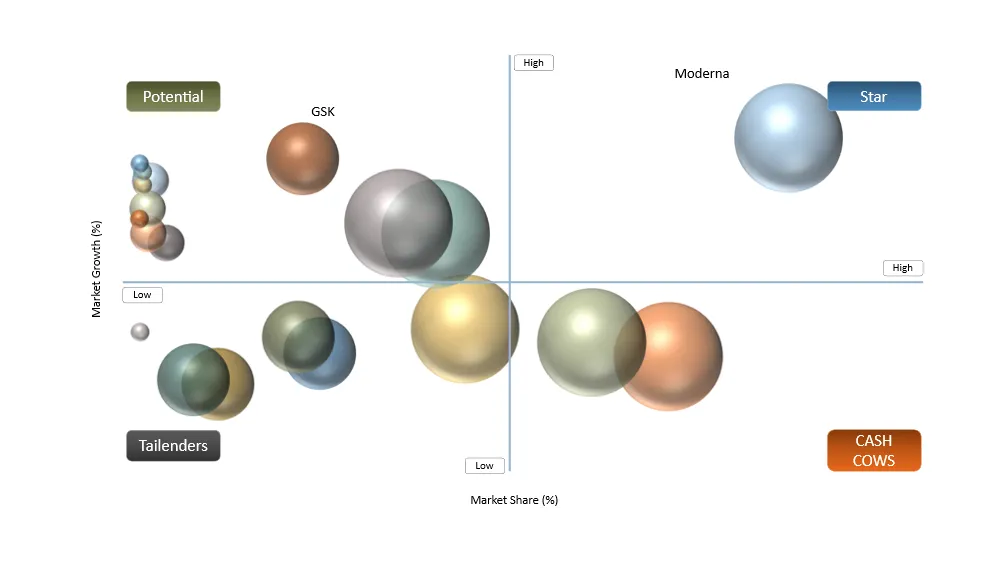
STAR
Moderna, BioNTech and Pfizer are positioned as Star companies in the mRNA vaccine market due to their strong commercial presence, regulatory track record and established mRNA vaccine franchises. Moderna has built the broadest commercial portfolio through SPIKEVAX, MRESVIA, MNEXSPIKE and MFLUSIVA, while BioNTech and Pfizer maintain a leading global position through COMIRNATY and continued development of influenza and combination respiratory vaccines. Their leadership is further supported by extensive clinical pipelines, scalable manufacturing capabilities, global regulatory experience and continued investment in next-generation mRNA platforms. These companies are well positioned to benefit from the market’s transition beyond COVID-19 toward seasonal influenza, RSV, combination respiratory vaccines and therapeutic cancer vaccines.
POTENTIAL
GSK, Arcturus Therapeutics, Daiichi Sankyo, CSL, Sanofi, Merck & Co. and CSPC Pharmaceutical Group represent Potential companies due to their expanding mRNA vaccine programs, differentiated technologies and opportunities across emerging indications. Arcturus is particularly differentiated through its self-amplifying mRNA platform and KOSTAIVE, while Daiichi Sankyo has established regional strength through DAICHIRONA. GSK is advancing next-generation influenza programs, and Sanofi continues to invest in mRNA vaccine platform development. Merck strengthens its position through collaboration with Moderna in personalized cancer vaccines, while CSPC contributes through domestically developed mRNA vaccines in China. Their future positioning will depend on clinical validation, regulatory progression, commercial scale-up, platform differentiation and successful expansion into non-COVID indications.
Messenger RNA (mRNA) Vaccine Market Dynamics
Driver Impact Analysis
| Driver | Market Growth Impact (%) | Demand Concentration | Impacted Use Case | Strategic Impact |
Expansion beyond COVID-19 into RSV, influenza and combination respiratory vaccines. | 8.5% | High in North America and Europe, with increasing adoption across Asia-Pacific | Seasonal influenza, RSV prevention and influenza + COVID-19 combination vaccination | Diversifies revenue beyond COVID-19 and supports development of broader seasonal respiratory vaccine franchises |
Growing investment in pandemic preparedness and rapid-response vaccine platform | 7.8% | Concentrated across the U.S., Europe, Japan and other countries investing in domestic vaccine capacity | Pandemic influenza, emerging pathogens, rapid antigen redesign and government vaccine stockpiling | Strengthens manufacturing readiness, shortens response timelines and creates long-term opportunities for flexible mRNA platforms |
Increasing clinical validation of mRNA and self-amplifying RNA technologies. | 9.2% | Global, with strong development activity in North America, Europe and Asia-Pacific | Lower-dose vaccines, self-amplifying RNA, next-generation infectious-disease vaccines and new mRNA indications | Improves confidence in next-generation RNA platforms and accelerates investment, regulatory acceptance and pipeline diversification |
Driver: Expansion beyond COVID-19 into RSV, influenza and combination respiratory vaccines
The mRNA vaccine market is increasingly diversifying beyond COVID-19, with commercial expansion into RSV, seasonal influenza and combination respiratory vaccines creating new revenue opportunities. This shift reduces dependence on pandemic-driven demand and supports a more sustainable seasonal vaccination model. Products such as MRESVIA and MFLUSIVA demonstrate the ability of mRNA platforms to address multiple respiratory indications, while combination vaccines can potentially simplify vaccination schedules by protecting against more than one pathogen through a single administration. Demand is expected to remain strongest in North America and Europe, supported by established vaccination infrastructure and high adoption of adult immunization programs, while Asia-Pacific is gaining importance through local manufacturing and regulatory development. Strategically, this diversification enables companies to build broader respiratory franchises, leverage common manufacturing infrastructure and strengthen lifecycle management across multiple vaccine categories.
Restraint Impact Analysis
| Restraint | Drag on Market Growth (%) | Primary Impact Area | Impacted Use Case | Strategic Impact |
Safety and reactogenicity concerns affecting vaccine acceptance. | 5.8% | Patient Acceptance and Vaccination Uptake | Repeated or seasonal vaccination across COVID-19, influenza and RSV | Can reduce booster uptake, increase safety scrutiny and strengthen demand for lower-reactogenicity formulations |
Complex LNP formulation, manufacturing and quality-control requirements. | 4.9% | Manufacturing Scalability and Production Economics | Large-scale commercial production of conventional and next-generation mRNA vaccines | Raises production complexity, capital requirements and cost of goods while creating barriers for smaller developers |
Cold-chain and storage requirements increasing distribution costs. | 5.2% | Supply Chain and Market Access | Distribution of mRNA vaccines across remote, emerging and resource-constrained markets | Increases logistics costs, limits geographic penetration and creates competitive advantage for more thermostable formulations |
Restraint: Safety and Reactogenicity Concerns Affecting Vaccine Acceptance
Safety and reactogenicity remain important restraints for the mRNA vaccine market, particularly as the industry shifts toward repeated seasonal vaccination for COVID-19, influenza and RSV. Common short-term reactions such as injection-site pain, fatigue, headache, fever and muscle discomfort can influence willingness to receive repeat doses, especially among lower-risk populations. At the same time, rare but closely monitored adverse events can increase regulatory scrutiny and shape public perception of mRNA vaccines. These concerns may affect vaccination uptake, booster compliance and physician recommendations, creating pressure on manufacturers to improve tolerability without compromising immunogenicity. Strategically, companies that can develop lower-dose formulations, optimized lipid nanoparticle systems and improved safety profiles may gain a meaningful competitive advantage. Reducing reactogenicity is therefore becoming increasingly important for expanding routine use, improving patient acceptance and supporting the long-term transition of mRNA vaccines from pandemic products toward broader seasonal vaccination platforms.
Messenger RNA (mRNA) Vaccine Market Segment Analysis
The global Messenger RNA (mRNA) Vaccine market is segmented based on the Vaccine Type, mRNA Platform, Indication, Age Group, Delivery System, Vaccine Configuration, Route of Administration, Valency, Treatment Setting, procurement channel, and region.
By mRNA Platform
Conventional Non-Amplifying mRNA Remains the Dominant Platform
Conventional non-amplifying mRNA accounted for the largest share of the mRNA vaccine market in 2025, with an estimated value of approximately US$6.15 billion. Its dominance is supported by the strong commercial contribution of established products such as COMIRNATY, SPIKEVAX, MNEXSPIKE and MRESVIA, all of which rely on conventional mRNA architectures delivered primarily through lipid nanoparticles. The segment benefits from extensive regulatory validation, large-scale manufacturing infrastructure, established supply chains and significant real-world clinical experience across COVID-19 and RSV. Its strong 2025 position also reflects the fact that most currently commercialized mRNA vaccine revenues are concentrated in conventional platforms. However, long-term growth is expected to moderate as COVID-19 revenues normalize and competition increases from newer RNA architectures. Even so, conventional non-amplifying mRNA will remain an important commercial benchmark because of its proven efficacy, mature manufacturing processes and established global regulatory acceptance.
By mRNA Platform
Self-Amplifying mRNA Emerges as the Fastest-Growing Platform
Self-amplifying mRNA is expected to be the fastest-growing mRNA vaccine platform during 2026-2035, with an estimated CAGR of approximately 18.5%. The technology is differentiated by its ability to replicate RNA intracellularly, potentially enabling strong antigen expression at substantially lower doses than conventional mRNA vaccines. This could improve manufacturing efficiency, reduce RNA requirements and support broader scalability during seasonal vaccination campaigns or pandemic response. Regulatory validation has strengthened with the approval of KOSTAIVE, demonstrating that self-amplifying RNA can progress beyond clinical development into commercial use. Pipeline activity is also expanding across pandemic influenza and other infectious-disease indications, attracting growing interest from developers seeking next-generation dose efficiency and platform differentiation. Future adoption will depend on demonstrating consistent clinical efficacy, acceptable reactogenicity, manufacturing reproducibility and regulatory scalability. If these challenges are successfully addressed, self-amplifying mRNA could become a meaningful challenger to established conventional mRNA platforms.
Messenger RNA (mRNA) Vaccine Market Geographical Penetration
U.S. Messenger RNA (mRNA) Vaccine Market Landscape
The U.S. remains the largest and most commercially advanced mRNA vaccine market, supported by strong regulatory infrastructure, high vaccine commercialization, established reimbursement channels and the presence of Moderna and Pfizer. Market diversification accelerated in 2025-2026 as the FDA expanded the platform beyond conventional COVID-19 vaccination. MNEXSPIKE received FDA approval in May 2025, providing Moderna with a next-generation, lower-dose COVID-19 product, while MRESVIA's indication expanded to adults aged 18-59 at increased RSV risk. In August 2026, FDA approval of MFLUSIVA for adults aged 50 years and older established seasonal influenza as another commercially validated mRNA vaccine category. The U.S. market is therefore transitioning toward a multi-product respiratory vaccine ecosystem, where future competition will increasingly center on clinical differentiation, combination vaccines, durability, dose efficiency and seasonal vaccination uptake rather than COVID-19 volume alone.
Germany messenger RNA (mRNA) Vaccine Market Outlook
Germany represents a strategically important European mRNA vaccine hub, driven primarily by BioNTech's research, manufacturing and platform capabilities. The Mainz-based company continues to leverage nucleoside-modified mRNA across infectious-disease vaccine programs including COVID-19, seasonal influenza, HIV, tuberculosis and other high-unmet-need indications. BioNTech invested approximately €2.1 billion in R&D during 2025, reflecting substantial commitment to its broader development portfolio, including mRNA-based programs. Manufacturing capability is also expanding: BioNTech's Mainz network is increasing production capacity for individualized mRNA cancer vaccines, with commercial-scale capacity targeted from 2026 alongside existing clinical manufacturing. In July 2026, the European Commission authorized the Pfizer-BioNTech XFG-adapted COVID-19 vaccine for the 2026-2027 season, reinforcing Germany's continuing role in variant-adapted mRNA development and European supply. Long-term opportunity increasingly extends beyond COVID-19 toward broader infectious-disease and therapeutic vaccine applications.
Japan Messenger RNA (mRNA) Vaccine Market Outlook
Japan has emerged as one of Asia's most strategically important mRNA vaccine markets, supported by domestic manufacturing, government-backed vaccine development and early adoption of next-generation RNA technologies. Daiichi Sankyo's DAICHIRONA became Japan's first domestically developed mRNA COVID-19 vaccine in August 2023, strengthening national manufacturing capabilities and establishing an indigenous LNP-mRNA platform. DAICHIRONA can be stored at 2-8°C, offering distribution advantages over ultra-cold-chain-dependent formulations. Japan also became the first country to approve KOSTAIVE in November 2023, establishing regulatory validation for self-amplifying mRNA technology. Its platform subsequently progressed through variant updates, and Meiji Seika Pharma obtained approval in August 2025 for a two-dose-vial XEC-adapted KOSTAIVE formulation intended for the 2025-2026 vaccination season. Japan's competitive landscape is consequently evolving beyond imported conventional mRNA vaccines toward domestic platforms, self-amplifying RNA, improved formulation convenience and pandemic-preparedness capacity.
Messenger RNA (mRNA) Vaccine Market Competitive Landscape
- Competition is led by Moderna and Pfizer/BioNTech, supported by commercially validated mRNA vaccine franchises, global regulatory experience and expanding portfolios across COVID-19, RSV, influenza and combination respiratory vaccines.
- Competitive differentiation is increasingly driven by efficacy, durability of protection, safety, reactogenicity, antigen breadth, dose efficiency, thermostability and manufacturing economics, rather than platform novelty alone.
- Pipeline competition is expanding beyond conventional non-amplifying mRNA, with developers advancing self-amplifying RNA, next-generation formulations, multivalent constructs and improved lipid nanoparticle delivery systems.
- Seasonal and pandemic influenza, RSV, norovirus, CMV, EBV and therapeutic oncology are becoming important areas of competition as companies diversify beyond COVID-19-driven revenues.
- Innovation is increasingly focused on combination respiratory vaccines, lower-dose platforms, broader immune coverage and improved manufacturing scalability, creating opportunities for differentiated multi-indication franchises.
- Future market leadership will depend on delivering clinically differentiated, scalable and commercially sustainable mRNA vaccines across multiple indications while maintaining strong regulatory execution and cost-efficient manufacturing.
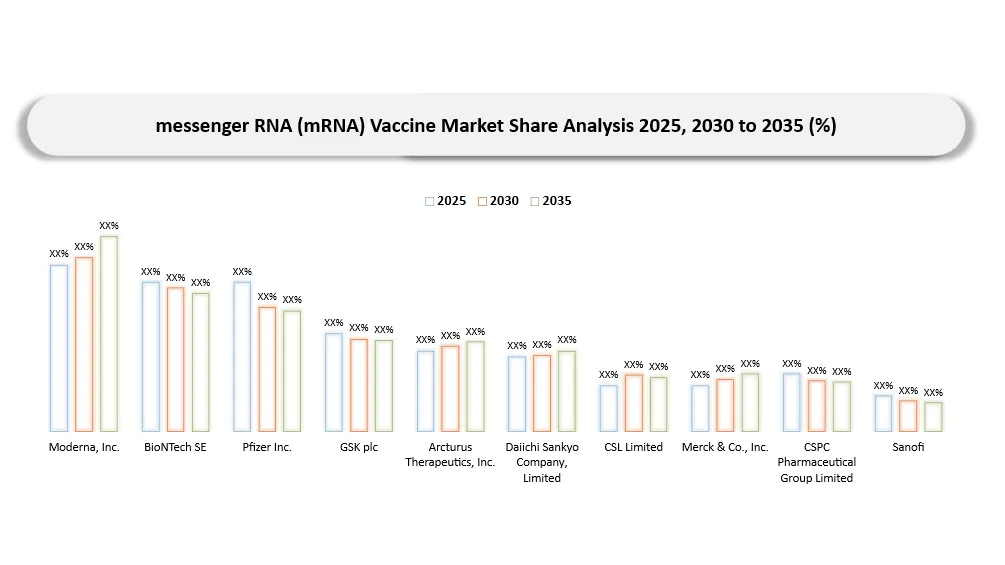
Key Companies of Messenger RNA (mRNA) Vaccine Market
- Moderna, Inc. (United States)
- BioNTech SE (Germany)
- Pfizer Inc. (United States)
- Arcturus Therapeutics, Inc. (United States)
- GSK plc (United Kingdom)
- Daiichi Sankyo Company, Limited (Japan)
- Meiji Seika Pharma Co., Ltd. (Japan)
- CSL Limited (Australia)
- Sanofi (France)
- Merck & Co., Inc. (United States)
- F. Hoffmann-La Roche Ltd (Switzerland)
- CSPC Pharmaceutical Group Limited (China)
- Walvax Biotechnology Co., Ltd. (China)
- Abogen Biosciences Co., Ltd. (China)
- Gennova Biopharmaceuticals Ltd. (India)
- Everest Medicines Limited (China)
- Replicate Bioscience, Inc. (United States)
- HDT Bio Corp. (United States)
- Providence Therapeutics Holdings Inc. (Canada)
- Stemirna Therapeutics Co., Ltd. (China)
Messenger RNA (mRNA) Vaccine Market Major Pain Points
- Waning Immunity and Limited Durability: Protection can decline over time, particularly against rapidly evolving respiratory viruses, increasing reliance on seasonal reformulation and repeat booster administration.
- Reactogenicity and Safety Concerns: Local and systemic reactions such as injection-site pain, fatigue, fever and headache can influence vaccine acceptance, while rare serious adverse events require continued safety surveillance.
- Cold-Chain and Storage Requirements: Temperature-sensitive formulations can increase logistics complexity, distribution costs and wastage, particularly across emerging and resource-constrained healthcare markets.
- High Manufacturing and Delivery-System Complexity: Large-scale mRNA synthesis, purification, lipid nanoparticle formulation and fill-finish operations require specialized infrastructure, quality control and technical expertise.
- Rapid Viral Evolution and Antigenic Variability: Emerging variants and strain changes can reduce antigen matching and shorten product relevance, requiring faster redesign, clinical evaluation and regulatory updating.
- Limited Commercial Diversification Beyond Respiratory Vaccines: Commercial revenues remain concentrated in COVID-19, RSV and influenza, while CMV, EBV, norovirus, HIV, tuberculosis and therapeutic cancer vaccines still require broader clinical and regulatory validation.
Messenger RNA (mRNA) Vaccine Market Recent Developments
- September 2026: GSK announced plans to advance its next-generation mRNA seasonal influenza vaccine candidate into Phase III, following positive Phase II results showing higher immune responses versus licensed standard- and high-dose influenza vaccines in younger and older adults, respectively.
- August 2026: The U.S. FDA approved Moderna’s MFLUSIVA (mRNA-1010) for prevention of influenza A and B disease in individuals aged 50 years and older, marking an important commercial expansion of mRNA technology into seasonal influenza.
- April 2026: The European Union granted marketing authorization to Moderna’s mCOMBRIAX, a combined mRNA vaccine for prevention of seasonal influenza and COVID-19 in individuals aged 50 years and older.
- May 2025: The U.S. FDA approved Moderna’s MNEXSPIKE (mRNA-1283), a next-generation COVID-19 mRNA vaccine, strengthening Moderna’s lifecycle strategy within the COVID-19 vaccine franchise.
- April 2025: Arcturus Therapeutics received U.S. FDA Fast Track designation for ARCT-2304, a self-amplifying mRNA vaccine candidate targeting pandemic influenza A/H5N1, highlighting increasing investment in next-generation pandemic-preparedness platforms.
- February 2025: KOSTAIVE (zapomeran) received EU marketing authorization for prevention of COVID-19 in adults, extending regulatory validation of the self-amplifying mRNA vaccine platform beyond Japan.
Analyst View / Opinion on Messenger RNA (mRNA) Vaccine Market
- The mRNA vaccine market is transitioning from COVID-19 dependence toward a broader multi-indication platform, with RSV, seasonal influenza and combination respiratory vaccines emerging as the next major commercial growth areas.
- Significant opportunities remain across CMV, EBV, norovirus, pandemic influenza, HIV, tuberculosis, malaria and therapeutic oncology, where mRNA platforms could address major unmet prevention and treatment needs.
- Future competition is likely to center on durability of protection, safety, reactogenicity, antigen breadth, dose efficiency, thermostability and manufacturing economics, rather than platform novelty alone.
- Companies capable of developing scalable multi-disease platforms, lower-dose self-amplifying RNA technologies and differentiated combination vaccines are likely to strengthen long-term competitive positioning and reduce dependence on single-product respiratory franchises.
Messenger RNA (mRNA) Vaccine Market Target Audience
| INDUSTRY | WHO SHOULD BUY THIS REPORT? | REASON TO BUY THIS REPORT |
| Pharmaceutical Companies | mRNA Vaccine Manufacturers and Commercial Vaccine Companies | To benchmark approved products, pipeline assets, commercial performance, competitive positioning and indication-expansion opportunities. |
| Biotechnology Companies | Clinical-Stage mRNA Vaccine and RNA Platform Developers | To identify pipeline white spaces, emerging indications, platform differentiation and next-generation mRNA opportunities. |
| Vaccine Manufacturers | Prophylactic and Therapeutic Vaccine Developers | To assess mRNA competitiveness against conventional vaccine platforms and identify portfolio, lifecycle and combination-vaccine opportunities. |
| Contract Development and Manufacturing Organizations | mRNA, LNP, Fill-Finish and Vaccine Manufacturing Providers | To evaluate manufacturing demand, capacity requirements, outsourcing opportunities and commercialization potential across expanding mRNA pipelines. |
| Government and Public Health Organizations | Health Ministries, Immunization Programs and Pandemic Preparedness Agencies | To assess vaccine availability, procurement priorities, emerging platforms, pandemic preparedness and future vaccination strategies. |
Why Choose DATAM?
- Product-Level Competitive Intelligence: Gain detailed intelligence on approved mRNA vaccines, commercial products, emerging candidates, mechanisms of action, platform technologies and competitive positioning.
- Indication and Unmet-Need Analysis: Assess opportunities across COVID-19, RSV, seasonal and pandemic influenza, CMV, EBV, norovirus, combination respiratory vaccines and therapeutic oncology.
- Pipeline and Regulatory Tracking: Monitor Phase I-III mRNA vaccine assets, regulatory submissions, approvals, label expansions, clinical readouts and upcoming commercialization milestones.
- Technology and Platform Benchmarking: Compare conventional mRNA, self-amplifying RNA, lipid nanoparticle delivery, multivalent constructs, thermostable formulations and next-generation vaccine technologies.
- Strategic and Commercial Decision Support: Evaluate market opportunities, company positioning, commercial performance, pipeline white spaces, partnership potential and future growth areas to support portfolio and investment decisions.
What DATAM Uniquely Provides
- Deep mRNA Vaccine Market Segmentation: Detailed analysis across vaccine type, mRNA platform, disease indication, vaccine configuration, age group, treatment setting, procurement channel, delivery system and geography.
- Product and Pipeline Competitive Benchmarking: Comparative assessment of approved and investigational mRNA vaccines based on platform technology, clinical stage, efficacy, durability, safety, dose efficiency, antigen breadth and competitive positioning.
- Indication Opportunity and White-Space Mapping: Identification of high-value opportunities across seasonal and pandemic influenza, RSV, CMV, EBV, norovirus, combination respiratory vaccines and therapeutic oncology.
- Regulatory, Pricing and Market Access Intelligence: Analysis of regulatory approvals, clinical milestones, pricing dynamics, procurement models, reimbursement considerations and access factors influencing mRNA vaccine adoption.
- Emerging Platform and Technology Tracking: Assessment of self-amplifying RNA, advanced lipid nanoparticle delivery, multivalent constructs, thermostable formulations, lower-dose platforms and next-generation mRNA technologies.


























































