


Melatonin Market Size
The Global Melatonin Market is estimated to reach US$ 1.83 billion in 2025 and is projected to grow to US$ 3.75 billion by 2033, exhibiting a CAGR of 9.8% during the forecast period (2026–2033)
The melatonin market has been gradually expanding, driven by increased knowledge of sleep health, the prevalence of sleep disorders and lifestyle-related stress among urban populations. Melatonin is generally used as a dietary supplement in gummies and softgels, with extended-release formulations approved by the regulations of various countries. Market growth is also being fueled by a growing interest in holistic wellbeing, with manufacturers introducing functional food ingredients like herbal extracts, vitamins and stress-relief components to improve product distinctiveness and value.
Melatonin Market Industry Trends and Strategic Insights
- North America leads the global melatonin market, capturing the largest revenue share of 37.64% in 2024.
- By dosage form segment, capsules lead the global melatonin market, capturing the largest revenue share of 35.4% in 2024.
Global Melatonin Market Size and Future Outlook
- 2025 Market Size: US$ 1.83 billion
- 2033 Projected Market Size: US$ 3.75 billion
- CAGR (2026–2033): 9.8%
- Dominating Market: North America
- Fastest Growing Market: Asia-Pacific
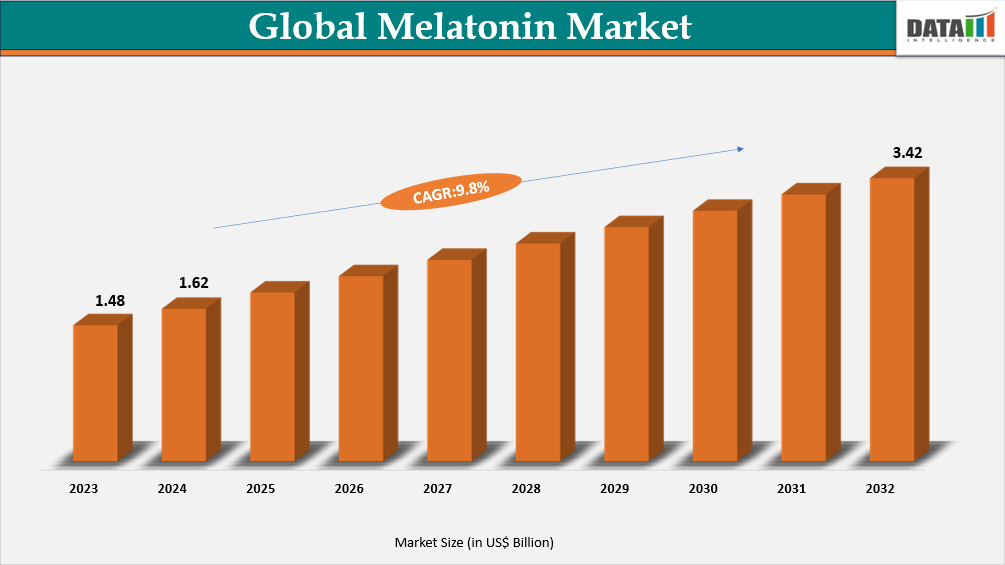
Source: DataM Intelligence
Melatonin Market : Key Takeaways
- North America remains the center of market leadership. The region accounted for 37.64% of global revenue in 2024, supported by high consumer awareness, strong dietary supplement adoption, extensive retail distribution networks, and favorable regulatory compliance.
- Capsules continue to dominate product demand. With a 35.4% market share in 2024, capsule formulations remain the preferred dosage form due to accurate dosing, convenience, longer shelf life, and broad consumer acceptance across pharmaceutical and nutraceutical applications.
- Consumer preference is shifting toward convenient and functional formulations. Gummies, extended-release products, and melatonin blends enriched with herbal extracts, vitamins, and stress-relief ingredients are expanding the market beyond traditional sleep aids into holistic wellness solutions.
- Lifestyle-driven sleep disorders are becoming the primary growth catalyst. Urbanization, shift work, excessive screen exposure, jet lag, and stress-induced circadian rhythm disruptions are increasing global demand for natural sleep support products.
- E-commerce is reshaping melatonin distribution strategies. Online retail platforms are improving product accessibility, enabling direct-to-consumer sales, subscription models, personalized recommendations, and wider penetration across emerging markets.
- Product innovation is becoming a key competitive differentiator. Manufacturers are investing in clean-label formulations, natural ingredient sourcing, novel delivery systems, and clinically supported formulations to strengthen brand positioning and meet evolving consumer expectations.
Melatonin Market Scope
| Metrics | Details |
| By Dosage Form | Capsules, Liquid, Gummies, Powder |
| By Source | Natural Melatonin, Synthetic Melatonin |
| By Distribution Channel | Supermarkets & Hypermarkets, Convenience Stores, Online Stores, Pharmacies and Drug Stores, Others |
| By End-User | Kids, Adults |
| By Application | Insomnia Treatment, Jet Lag Management, Stress Relief, Shift Work Disorder, Others |
| By Region | North America, South America, Europe, Asia-Pacific, Middle East and Africa |
| Report Insights Covered | Competitive Landscape Analysis, Company Profile Analysis, Market Size, Share, Growth |
For More Detailed Information, Request for Sample
Melatonin Market Dynamics
Rising Prevalence of Sleep Disorders and Growing Consumer Awareness Toward Sleep Health
The rising prevalence of sleep disorders, as well as the growing recognition of sleep as a critical component of health, are driving the global melatonin market. Insomnia and insufficient sleep are increasingly seen as serious public health concerns, impacting around one in every three persons worldwide. The American Academy of Sleep Medicine (AASM) states that 30 to 35 percent of adults have transient symptoms of insomnia. 15 to 20 percent experience short-term insomnia that lasts less than three months. 10 percent suffer from chronic insomnia, which occurs at least three times each week for at least three months.
Urbanization, more screen time, shift work and higher stress levels have all altered circadian cycles, resulting in a prolonged requirement for sleep aids such as melatonin. Melatonin is becoming increasingly popular in many developed economies as a safer, natural alternative to sedative-hypnotic pharmaceuticals, resulting in its rapid adoption as both an over-the-counter supplement and a prescribed medicinal agent. Melatonin is increasingly being used to treat jet lag, shift-work exhaustion and sleep disorders linked with age, in addition to classic insomnia.
Melatonin Market Segmentation Analysis
The global melatonin market is segmented based on dosage form, source, distribution channel, end-user, application and region.
Capsules Holds the Dominant Share Due to its Convenience and Dosage Accuracy
The capsule segment holds a significant share in the global melatonin market due to its convenience, dosage accuracy and consumer familiarity. Capsules, particularly softgel and firm gelatin forms, enable for exact melatonin dose, which is important given the variety in individual sleep habits and sensitivity to supplements. Melatonin's effectiveness, according to the National Institutes of Health (NIH), is extremely dose-dependent and capsules are an efficient delivery route that assures consistent absorption, especially for immediate-release formulations meant to shorten sleep onset delay. This has become capsules the favored option for both over-the-counter customers and clinicians who prescribe melatonin for sleep disorders.
Capsules also benefit from widespread regulatory acceptance in different areas. Melatonin is frequently classed as a dietary supplement in US, thus capsules can be manufactured under cGMP standards and sold over the counter without a prescription. In Europe, capsule formulations adhere to EFSA-approved rules for sleep-related claims and their uniform dosage forms make it easier to comply with labeling and health claim laws. This combination of regulatory freedom and standardized administration has reinforced the capsule segment's dominance over other forms, particularly in markets with tight dose and labeling requirements.
Gummies have the Fastest Growth Rate Due to the Consumer-Friendly Format and Taste
The gummies segment of the global melatonin market has seen rapid growth due to its consumer-friendly format, taste and convenience, particularly among younger populations and individuals who prefer chewable over traditional capsules. Gummies are an enticing option for those who struggle to take medicines, such as youngsters, the elderly and dysphagia patients. Gummies are more popular among consumers because to the growing emphasis on individualized wellness, functional foods and lifestyle supplementation.
Melatonin is frequently combined with other sleep-promoting substances like magnesium, L-theanine and herbal extracts like chamomile and valerian. According to a 2022 study published in the Nutrients journal, combination compounds increase not only sleep onset but also total sleep quality, meeting consumer need for multifunctional, natural and convenient solutions. This multifunctional positioning has boosted their popularity in North America, Europe and, increasingly, Asia-Pacific markets.
Melatonin Market Geographical Penetration
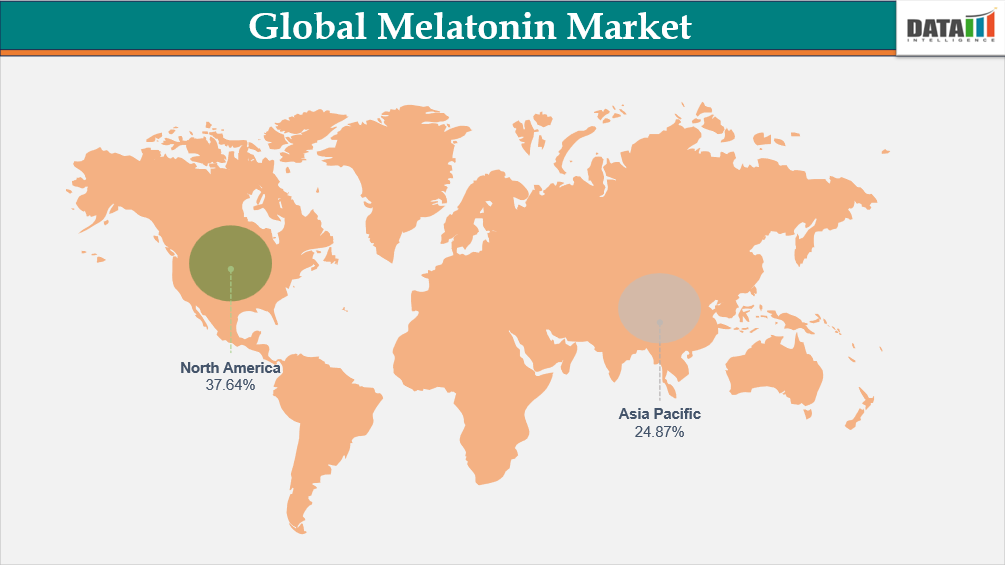
Source: DataM Intelligence
DOMINATING MARKET:
North America Leads the Global Market Due to the Increasing Integration of Sleep Optimization
North America melatonin market leads the global market because to expanding health-conscious consumer behavior and the growing integration of sleep optimization into daily wellness routines. According to a 2024 CDC assessment of dietary supplements for sleep, approximately one-fifth of individuals in US use a sleep aid on a regular basis, whether it be a prescription medicine or an OTC supplement. Consumers are increasingly self-medicating for irregular sleep patterns, driven by work-from-home schedules, prolonged exposure to blue-light devices and lifestyle-induced circadian disruptions, creating strong demand for handy melatonin solutions.
US Melatonin Market Insights
US remains the largest market in North America, owing to rising consumer self-awareness about sleep health and extensive usage of digital sleep tracking devices. According to 2022 data from the CDC's Behavioral Risk Factor Surveillance System (BRFSS), 36.8% of individuals reported insufficient sleep, fueling demand for natural sleep aids. Beyond typical insomnia, consumers are taking melatonin for shift-work adjustment, jet lag and sleep-wake cycle management, especially in urban areas with high stress and irregular schedules.
Canada Melatonin Market Industry Growth
Melatonin is classed as a Natural Health Product (NHP) in Canada and is subject to Health Canada regulations on ingredient supply, dosage and labeling. The NHP framework guarantees excellent product quality and safety, fostering a market environment in which clinically backed, standardized and correctly labeled items are chosen. Melatonin is one of the top five sleep-related items purchased by Canadians, with a larger prevalence among those aged 45 and up who value sleep wellness and preventive health measures.
FASTEST GROWING MARKET:
Asia-Pacific is the Fastest-Growing Region Driven by the Rising Sleep-Related Health Concerns
Asia-Pacific melatonin market is expanding rapidly, driven by rising sleep-related health concerns, increased urbanization and shifting lifestyle patterns. A 2022 study published in the Journal of Clinical Sleep Medicine indicated that youth in Japan are at high risk of Delayed Sleep-Wake Phase Disorder (DSWPD), which is consistent with rising patterns in other Asian nations such as China, South Korea and India. Sleep difficulties are associated with long work hours, digital screen exposure and high stress levels. The growing recognition of sleep as a component of overall wellness creates a favorable environment for melatonin supplementation, particularly among working adults and the elderly.
India Melatonin Market Outlook
India is the fastest growing country in Asia-Pacific melatonin market, primarily driven by rising awareness of sleep disorders among urban populations and increasing adoption of nutraceutical and wellness supplements. According to a 2022 study in the Indian Journal of Sleep Medicine, nearly 30% of Indian adults report poor sleep quality, particularly among IT professionals, shift workers and students. Growing digital device usage, extended work hours and lifestyle stressors are contributing to circadian rhythm disruptions, prompting demand for natural sleep aids like melatonin.
China Melatonin Market Trends
China is the dominant country in Asia-Pacific melatonin market, but it faces unique regulatory and cultural considerations. Melatonin is currently regulated as a prescription drug in China, restricting OTC availability and requiring physician guidance for use. This limits mass-market adoption but positions prescription and clinical formulations as high-value segments. Sleep disorders are rising, particularly among urban white-collar workers and students, with studies from the Chinese Sleep Research Society, more than 60% of Chinese people get less than eight hours of sleep per night, indicating significant latent demand for melatonin.
Sustainability and ESG Analysis
The sustainability landscape in the global melatonin market is emerging as a significant factor influencing consumer perception, brand positioning and operational practices. Melatonin is a naturally occurring substance, but its commercial manufacture is generally based on chemical synthesis or semi-synthetic methods that require energy-intensive processes and the use of solvents and reagents. Companies are investing in green chemistry, solvent recovery systems and process optimization to reduce emissions, waste and energy usage.
To satisfy ESG standards, some businesses are looking into integrating renewable energy and water recycling into their manufacturing plants. As consumers, regulators and investors become more aware of sustainable practices, companies that incorporate environmental stewardship, ethical sourcing and sustainable packaging into their business strategy are likely to enhance brand loyalty, compliance and long-term market resilience in the global melatonin industry.
Melatonin Market Consumer Analysis
The global melatonin market is primarily driven by consumers seeking natural and safe alternatives to prescription sleep aids. According to the National Institutes of Health (NIH) and the Centers for Disease Control and Prevention (CDC), a significant portion of the adult population in North America, Europe and urban Asia experiences sleep disorders such as insomnia, delayed sleep phase disorder and jet lag. Consumers increasingly prefer melatonin for its non-habit-forming properties and perceived safety, making it a popular choice among health-conscious adults aged 25–55, shift workers, students and aging populations who experience disrupted circadian rhythms.
The persistent prevalence of insufficient sleep among adults worldwide is significantly influencing the expansion of the global melatonin market. According to the CDC, approximately 33.2% of US adults reported insufficient sleep in 2020, with variations across demographics such as age, sex and race/ethnicity. This trend has remained relatively stable, with variations across different demographics. Notably, adults aged 45–64 reported the highest percentage of insufficient sleep at 39%, while men exhibited a higher prevalence (37%) compared to women. Consequently, there is a heightened demand for natural sleep aids, including melatonin supplements, as consumers seek non-habit-forming solutions to manage sleep-related issues.
Melatonin Market Competitive Landscape
- The global melatonin market is competitive, characterized by the presence of numerous multinational corporations and regional players. Key companies such as BIOVEA, CJ OLIVE YOUNG Corporation, Nature Made (Pharmavite LLC) and Puritan's Pride (Nestlé Health Science) dominate, leveraging their extensive global production footprints, diverse product portfolios and strong R&D capabilities, particularly for high-value sectors like automotive and aerospace.
- International brands have created a strong presence in the import and e-commerce channels. Natrol, a US-based company, for example, is widely available on sites such as Ubuy.kr and Coupang, where it sells melatonin capsules and gummies.
- The market is dynamic, with regulatory adherence, brand credibility, product innovation and distribution strategies determining competitive advantage and development potential.
Melatonin Market Recent Developments
- May 2026 – Natrol launches next-generation sleep wellness portfolio
Natrol introduced Ultra Sleep and Ultra Energy, expanding its sleep support portfolio with advanced formulations designed to improve sleep quality and daytime energy. The launch reflects growing innovation in melatonin-based and complementary sleep wellness products targeting holistic 24-hour health. - June 2026 – Life Extension expands retail presence for sleep and wellness supplements
Life Extension announced the expansion of its nutritional supplement portfolio into more than 4,000 Walmart stores across the U.S., increasing consumer access to premium sleep health products, including melatonin-based formulations, and strengthening distribution across the nutraceutical market. - February 2026 – Bonafide Health broadens women's sleep health portfolio
Bonafide Health launched Noctera, a hormone-free sleep support supplement designed for menopausal women experiencing sleep disturbances. The launch expands specialized sleep wellness offerings and reflects increasing product diversification within the broader sleep support market. - June 2026 – ResMed strengthens clinical sleep health capabilities
ResMed completed the acquisition of Noctrix Health, adding FDA-classified TOMAC therapy technology for Restless Legs Syndrome to its sleep health portfolio. The acquisition reinforces innovation across the sleep disorder ecosystem, supporting long-term demand for complementary sleep management solutions. - May 2026 – Ultra introduces low-dose rapid-onset melatonin sleep pouches
Ultra launched innovative Sleep Pouches formulated with a 1 mg melatonin dose and clinically supported ingredients, providing a fast-acting alternative delivery format. The product highlights ongoing innovation in melatonin dosage forms focused on convenience and personalized sleep support. - September 2025 – Quality assurance gains importance across melatonin supplements
Manufacturers increased emphasis on product quality and regulatory compliance, with leading brands advancing certified formulations and enhanced quality validation. The trend reflects growing consumer demand for standardized, high-quality melatonin supplements and improved transparency across the sleep wellness industry.
Melatonin Market Investment & Funding Landscape
The global melatonin market is witnessing a surge in investments and strategic initiatives, driven by increasing consumer demand for natural sleep aids. In 2024, Pharmamel, a biotechnological company having expertise of over 30 years of biomedical research applying melatonin in various disease models, embarked on a pre-IPO capital increase campaign, signaling its intent to go public and attract significant investment in the sector. This move reflects the growing interest in companies specializing in sleep-related products and the potential for high returns in this market segment.
In 2025, Neurim Pharmaceuticals achieved a landmark development with Health Canada granting marketing authorization for Slenyto, an extended-release melatonin minitablet for children and adolescents with ASD or Smith-Magenis Syndrome. As the first pharmacotherapy clinically tested and approved specifically for insomnia in this population, Slenyto addresses a critical unmet medical need, highlighting the market’s shift toward specialized therapeutic applications. Alongside these developments, industry associations like CHPA are advocating for regulatory clarity to ensure product safety and efficacy, further fostering market confidence.
| Company | Investment/Funding | Year | Details | |
| Neurim Pharmaceuticals | Health Canada approval for Slenyto | 2025 | Health Canada granted marketing authorization for Slenyto, an extended-release melatonin minitablet for insomnia in children/adolescents with ASD or Smith-Magenis Syndrome. It is the first and only pharmacotherapy specifically developed, clinically tested and approved for insomnia in this population. | |
| Pharmamel | Pre-IPO capital increase campaign | 2024 | Initiated a capital increase campaign at a pre-money valuation of EUR 37 million, with an expected listing valuation of EUR 45 million on BME Scale, on the CNMV-regulated platform Capital Cell, marking its path toward going public. | |
Melatonin Market Partnership Identification Analysis
Strategic partnerships play a pivotal role in scaling operations, expanding product portfolios and accessing new consumer segments within the global melatonin market. We have conducted a comprehensive partnership mapping across the global melatonin value chain, identifying key opportunities for collaboration among manufacturers, contract manufacturing organizations (CMOs), distributors, ingredient suppliers and retail partners. This analysis was developed through secondary research of regulatory filings, company disclosures and verified trade sources, supported by primary validations with industry stakeholders across North America, Europe and Asia-Pacific. The objective was to pinpoint potential partners that can enhance production scalability, regulatory compliance and market access in both established and emerging regions.
| Potential Partners | Strategic Focus | Rationale for Partnership |
| Finished Product Manufacturers | Branded formulation expansion | Collaboration for co-branding, premium product development and regional licensing |
| CMOs / Private Label Manufacturers | Large-scale, GMP-certified production | Ensures flexibility, quality consistency and scalability in global supply |
| Raw Material & Ingredient Suppliers | Secure API and bioactive inputs | Strengthens supply chain reliability and supports innovation in natural/vegan melatonin |
| Regional Distributors & Importers | Multi-channel retail and online reach | Enhances brand visibility, consumer access and cross-border market entry |
| Retail & E-Commerce Partners | Omni-channel distribution | Expands availability and drives consumer adoption in key regions |
What Sets This Global Melatonin Market Intelligence Report Apart
- Latest Data & Forecasts – Comprehensive, up-to-date insights and projections through 2032. Coverage includes global value by dosage form, source, distribution channel, end-user and application segments (sleep disorders, jet lag, shift-work). Scenario forecasts with region-level splits (North America, Europe, Asia-Pacific, South America, Middle East and Africa) and sensitivity to factors such as regulatory reclassification and raw-material costs.
- Regulatory Intelligence – Actionable analysis of regulatory frameworks that materially affect melatonin commercialization, revenue by country, allowable label claims, permitted doses, import/export controls and advertising restrictions.
- Competitive Benchmarking – Standardized profiling and benchmarking of leading pharma and nutraceutical players, contract manufacturers and e-commerce specialists active in the market.
- Geographic & Emerging Market Coverage – Region-by-region market sizing, growth drivers, reimbursement dynamics, cultural/consumer behavior and market access considerations. Focus on high-growth or regulatory-uncertain markets.
- Actionable Strategies – Identify opportunities for launching innovative products, while leveraging strategic partnerships and supply chain integration for maximum ROI.
- Pricing & Cost Analysis – In-depth assessment of price trends, raw material costs and sustainability-driven cost efficiencies across regional markets.
- Expert Analysis – Insights from industry experts such as clinical sleep specialists, regulatory affairs professionals and key manufacturing companies.
Key Procurement Priorities and Buyer Evaluation Criteria
- The procurement decision-making process is increasingly influenced by the growing prevalence of sleep disorders, rising consumer preference for natural sleep aids, expanding preventive healthcare awareness, and increasing demand for non-habit-forming supplements, driving buyers toward high-quality melatonin products that deliver proven efficacy, safety, and consistent dosage.
- Buyers evaluate factors such as melatonin purity, dosage accuracy, ingredient quality, bioavailability, formulation type (tablets, gummies, capsules, liquids, sprays), manufacturing standards, clinical evidence, shelf life, and compliance with regional food supplement and pharmaceutical regulations when selecting melatonin suppliers and brands.
- The buyer considers supplier reliability, manufacturing capabilities, private-label services, packaging quality, clean-label formulations, certifications (GMP, NSF, ISO), distribution network strength, product innovation, and compatibility with retailer or healthcare channel requirements while choosing long-term manufacturing and supply partners.
- Procurement decisions are also shaped by sustainability and consumer transparency, with buyers evaluating suppliers based on responsibly sourced ingredients, recyclable packaging, reduced environmental footprint, vegan and allergen-free formulations, label transparency, and adherence to global quality and sustainability standards as consumers increasingly prioritize environmentally responsible wellness products.
Why Choose DataM?
Technological Innovations
Explores advancements in melatonin formulations, including extended-release and fast-dissolve technologies, gummy supplements, oral sprays, liposomal delivery systems, plant-based formulations, clean-label ingredients, and combination sleep support products with magnesium, L-theanine, chamomile, valerian root, and other functional ingredients, enabling improved absorption, consumer convenience, and enhanced sleep quality.
Product Performance & Market Positioning
Evaluates how different manufacturers position melatonin products based on dosage consistency, absorption rate, formulation innovation, taste, ingredient transparency, safety profile, clean-label claims, packaging convenience, and value proposition, highlighting how leading companies differentiate through premium formulations, scientific validation, and brand trust.
Real-World Evidence
Highlights the growing adoption of melatonin supplements across adults, older populations, shift workers, frequent travelers, pediatric sleep management (where permitted), and wellness-conscious consumers, demonstrating benefits such as improved sleep onset, better sleep quality, jet lag management, and support for healthy circadian rhythm regulation.
Market Updates & Industry Changes
Tracks key developments such as new product launches, clinical research, regulatory updates, formulation innovations, manufacturing expansions, strategic partnerships, e-commerce growth, and investments across North America, Europe, Asia-Pacific, Latin America, and the Middle East & Africa, supporting the continued expansion of the global melatonin market.
Competitive Strategies
Analyzes how leading companies strengthen their market position through product innovation, acquisitions, strategic partnerships, geographic expansion, omnichannel distribution, private-label manufacturing, digital marketing, premium branding, and investments in research and development to address the increasing global demand for sleep health solutions.
Pricing & Market Access
Explains pricing variations based on formulation type, dosage strength, ingredient combinations, packaging size, brand positioning, organic and clean-label claims, distribution channels, and regulatory classification, along with market access through pharmacies, supermarkets, health stores, online retail platforms, healthcare providers, and direct-to-consumer channels.
Market Entry & Expansion
Identifies growth opportunities driven by rising sleep disorder prevalence, increasing consumer awareness of preventive healthcare, expanding nutraceutical adoption, growing e-commerce penetration, and demand for natural wellness products, while outlining strategies such as innovative formulations, regional manufacturing expansion, regulatory compliance, strategic partnerships, and customized product offerings for emerging markets.
Target Audience
- Nutraceutical & Dietary Supplement Manufacturers
- Melatonin Ingredient Suppliers & API Manufacturers
- Pharmaceutical Companies
- Contract Manufacturing Organizations (CMOs)
- Retail Pharmacy Chains
- Supermarkets & Hypermarkets
- E-commerce & Online Wellness Retailers
- Healthcare Providers & Sleep Clinics
- Functional Food & Beverage Companies
- Health & Wellness Brands
- Investors & Private Equity Firms
- Regulatory Authorities & Quality Assurance Organizations
- Research Institutions & Clinical Organizations
- Distributors & Wholesale Healthcare Suppliers
- Sleep Health Product Developers



























































