


Lu-177 Dotatate Therapy Market Size and Overview
The global Lu-177 dotatate therapy market reached US$820.57 million in 2025 and is expected to reach US$2159.74 million by 2035, growing with a CAGR of 10.1% during the forecast period 2026-2035.
The global Lu-177 dotatate therapy market is evolving from a relatively concentrated radiopharmaceutical segment into a broader theranostic treatment category supported by increasing diagnosis of somatostatin receptor-positive neuroendocrine tumors, wider adoption of peptide receptor radionuclide therapy and growing nuclear medicine capacity. Commercial activity is currently centered on approved Lu-177 dotatate products, with LUTATHERA maintaining the strongest market position, while newer entrants such as BRAVNETSA and BEXLUTRY are increasing competitive intensity around pricing, supply reliability and treatment-center access. Demand is also being supported by improved SSTR imaging, greater physician awareness and expanding referral pathways into specialized radiopharmaceutical treatment centers.
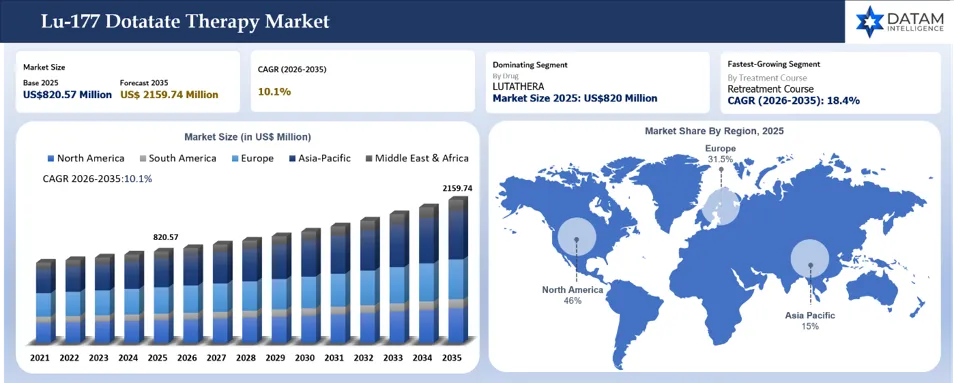
Over the forecast period, market growth is expected to be driven by earlier-line use, retreatment strategies, individualized dosimetry, broader access to Lu-177 isotope supply and expansion of treatment infrastructure across Asia-Pacific and other underpenetrated regions. Competitive differentiation will increasingly depend on clinical durability, renal and hematologic safety, manufacturing scalability, isotope security, scheduling reliability and reimbursement support. Investment is also moving toward regional radiopharmaceutical production, nuclear pharmacy networks, AI-enabled dosimetry and integrated diagnostic-to-therapy workflows, creating new opportunities across both the therapeutic and supporting infrastructure value chain.
Lu-177 Dotatate Therapy Market Key Takeaways
Sustained Market Expansion Through 2035: The global Lu-177 dotatate therapy market was valued at US$820.57 million in 2025 and is projected to reach US$2,159.74 million by 2035, registering a CAGR of 10.1% during 2026-2035, supported by growing adoption of peptide receptor radionuclide therapy, broader treatment-center availability and increasing use in SSTR-positive neuroendocrine tumors.
LUTATHERA Maintains Market Leadership: LUTATHERA remains the dominant drug segment, supported by its established regulatory approvals, strong physician familiarity, reimbursement coverage and extensive clinical use in SSTR-positive gastroenteropancreatic neuroendocrine tumors.
Retreatment Emerges as a Major Growth Engine: The retreatment course segment is expected to record comparatively faster growth through 2035, driven by increasing clinical interest in repeat PRRT, longer patient survival, recurrent disease management and growing use of individualized dosimetry.
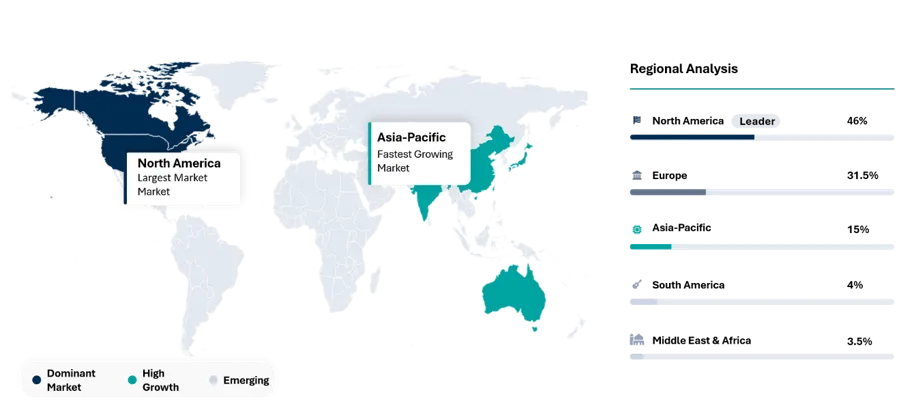
North America Maintains Regional Dominance: North America remains the leading regional market, supported by established theranostic networks, specialized nuclear medicine infrastructure, favorable reimbursement and strong adoption of Lu-177 dotatate therapy across major oncology centers.
Competition and Personalized PRRT Reshape Market Strategy: Future market leadership will increasingly depend on earlier-line expansion, retreatment evidence, personalized dosimetry, durable disease control, renal and hematologic safety, reliable Lu-177 isotope supply and treatment-center accessibility.
Lu-177 Dotatate Therapy Market Industry Trends and Strategic Insights
- The Lu-177 radioligand therapy market is transitioning from predominantly later-line treatment toward earlier disease settings, combination regimens and broader integration into precision oncology pathways. The March 2025 expansion of PLUVICTO into pre-taxane metastatic castration-resistant prostate cancer and its July 2026 approval in PSMA-positive metastatic hormone-sensitive prostate cancer materially broadened the addressable treatment population
- LUTATHERA and PLUVICTO have established Lu-177 radioligand therapy as a commercial oncology modality, demonstrating the viability of receptor-targeted radiation delivery across neuroendocrine tumors and prostate cancer. LUTATHERA is approved for SSTR-positive gastroenteropancreatic neuroendocrine tumors, including patients aged 12 years and older, while PLUVICTO continues to expand across earlier stages of metastatic prostate cancer.
- Earlier-line expansion represents one of the most important market shifts. PLUVICTO's 2026 approval in metastatic hormone-sensitive prostate cancer moves Lu-177 therapy substantially earlier in the prostate cancer treatment pathway, while development programs in neuroendocrine tumors are similarly evaluating earlier intervention. Commercial differentiation will increasingly depend on progression-free survival, treatment durability, dosimetry, patient selection and sequencing relative to established systemic therapies.
- The competitive landscape is broadening beyond originator products as new Lu-177 radioligands, alternative molecular targets, improved chelators, patient-specific dosimetry and next-generation manufacturing platforms enter development. The September 2026 FDA approval of BRAVNETSA, a lutetium Lu 177 dotatate product referencing LUTATHERA, also signals increasing product competition within established Lu-177 indications.
- Sustainable competitive advantage will increasingly require more than clinical efficacy. Companies capable of securing reliable Lu-177 isotope supply, scalable radiopharmaceutical manufacturing, geographically distributed treatment capacity, predictable patient scheduling, efficient diagnostic-to-therapy workflows and strong reimbursement access will be better positioned to capture market growth. As treatment volumes increase, manufacturing capacity and treatment-center infrastructure are becoming strategic differentiators alongside clinical performance.
Lu-177 Dotatate Therapy Market Scope
| Metrics | Details | |
| 2025 Market Size | US$820.57 million | |
| 2035 Projected Market Size | US$2159.74 million | |
| CAGR (2026-2035) | 10.1% | |
| Largest Market | North America | |
| Fastest Growing Market | Asia-Pacific | |
| By Drug | LUTATHERA, BRAVNETSA, BEXLUTRY, Other Lutetium Lu 177 Dotatate Products | |
| By Application | Gastroenteropancreatic Neuroendocrine Tumors, Other Investigational SSTR-Positive Neuroendocrine Tumors | |
| By Treatment Line | First-Line Treatment, Second-Line Treatment, Third-Line Treatment, Fourth-Line and Later Treatment | |
| By Treatment Course | Initial Treatment Course, Retreatment Course | |
| By Patient Age | Pediatric Patients (Below 12 Years), Adolescent Patients (12-17 Years), Adult Patients (18-64 Years), Older Adult Patients (65 Years and Above) | |
| By Treatment Setting | Hospitals, Cancer Treatment Centers, Nuclear Medicine and Radiopharmaceutical Therapy Centers, Other Treatment Settings | |
| By Distribution Channel | Direct Institutional Supply, Specialty Radiopharmaceutical Distribution, Nuclear Pharmacy Distribution, Other Distribution Channels | |
| By Region | North America | U.S., Canada, Mexico |
| Europe | Germany, UK, France, Spain, Italy, Poland | |
| Asia-Pacific | China, India, Japan, Australia, South Korea, Indonesia, Malaysia, Singapore, Vietnam, Thailand, Philippines, Taiwan | |
| South America | Brazil, Argentina | |
| Middle East and Africa | Israel, Saudi Arabia, UAE, Turkiye, South Africa, Nigeria | |
| Report Insights Covered | Competitive Landscape Analysis, Company Profile Analysis, Market Size, Share, Growth | |
Why does this report matter in 2026?
The global Lu-177 radioligand therapy market reached a major strategic inflection point in 2026 as targeted radionuclide therapy expanded beyond established late-line settings into earlier stages of cancer treatment. On July 31, 2026, the U.S. FDA approved PLUVICTO (lutetium Lu 177 vipivotide tetraxetan) in combination with an androgen receptor pathway inhibitor for PSMA-positive metastatic hormone-sensitive prostate cancer. The approval followed PLUVICTO’s March 2025 expansion into pre-taxane metastatic castration-resistant prostate cancer and materially increased the eligible prostate cancer population for Lu-177 therapy.
Competitive intensity also increased sharply within Lu-177 dotatate therapy. In September 2026, Curium received FDA approval for BEXLUTRY, a lutetium Lu 177 dotatate radioligand equivalent for adults with SSTR-positive gastroenteropancreatic neuroendocrine tumors. Lantheus subsequently received final FDA approval for BRAVNETSA, a bioequivalent and therapeutically equivalent lutetium Lu 177 dotatate product to LUTATHERA. These approvals introduce direct competition into a segment historically dominated by LUTATHERA and signal a transition toward greater pricing, supply reliability and site-of-care competition.
The report helps pharmaceutical companies, isotope suppliers, radiopharmaceutical manufacturers, investors and market-access teams evaluate eligible patient populations, treatment-line expansion, product competition, isotope availability, manufacturing capacity, treatment-center readiness, patient scheduling, dosimetry, pricing and reimbursement. It also assesses how earlier-line adoption, diagnostic-to-therapy integration, reliable Lu-177 supply, treatment-center capacity, therapy differentiation and emerging radioligand equivalents will influence market positioning, commercial scalability and sustainable value creation through the forecast period.
Lu-177 Dotatate Therapy Market White Space & Investment Opportunities
- Earlier-Line Treatment Expansion: Expand Lu-177 dotatate into earlier treatment settings for SSTR-positive neuroendocrine tumors to increase the eligible patient pool and improve treatment sequencing before extensive disease progression.
- Retreatment and Extended-Cycle Strategies: Develop evidence-based retreatment protocols, individualized cycle schedules and response-guided dosing approaches to extend therapeutic value beyond the conventional initial treatment course.
- Next-Generation SSTR-Targeted Radioligands: Invest in improved peptide constructs, chelators and targeting platforms that enhance tumor uptake, residence time and therapeutic index while reducing radiation exposure to kidneys, bone marrow and other healthy tissues.
- Personalized Dosimetry and Treatment Planning: Build patient-specific dosimetry platforms using imaging, pharmacokinetic modeling and treatment-response data to optimize administered activity and improve clinical outcomes.
- Expansion Into Additional Neuroendocrine Tumor Subtypes: Evaluate Lu-177 dotatate and related SSTR-targeted therapies across bronchopulmonary, pheochromocytoma, paraganglioma and other SSTR-expressing neuroendocrine malignancies.
- Combination Therapy Development: Explore rational combinations with somatostatin analogues, targeted therapies, immunotherapies, chemotherapy and radiosensitizing agents to improve depth and durability of response.
- Treatment-Center Network Expansion: Invest in nuclear medicine infrastructure, radiopharmacy capacity and specialized treatment centers to improve patient access outside major academic hospitals.
- Lu-177 Isotope Supply Security: Develop diversified isotope production, non-carrier-added Lu-177 capacity and regional manufacturing networks to reduce supply-chain dependency and treatment scheduling disruptions.
- Decentralized Radiopharmaceutical Manufacturing: Establish regional production and distribution hubs closer to treatment centers to address radioactive decay, logistics constraints and time-sensitive delivery requirements.
- Emerging-Market Access: Expand treatment availability across Asia-Pacific, Latin America and the Middle East through local manufacturing partnerships, reimbursement pathways and nuclear medicine infrastructure development.
Lu-177 Dotatate Therapy Market Future Transformation
Over the next decade, the global Lu-177 dotatate therapy market will shift from predominantly later-line treatment of progressive, SSTR-positive gastroenteropancreatic neuroendocrine tumors toward earlier-line use, retreatment strategies and more individualized radionuclide therapy. Clinical positioning will increasingly consider tumor grade, disease burden, SSTR expression, prior somatostatin analogue exposure, treatment response, organ function and cumulative radiation exposure. Broader adoption will strengthen demand for patient-specific dosimetry, optimized treatment cycles, improved treatment-center capacity and more efficient coordination between diagnostic imaging and therapeutic radiopharmaceutical administration.
Market transformation will accelerate as competing Lu-177 dotatate products and next-generation SSTR-targeted radioligands differentiate on progression-free survival, response durability, tumor absorbed dose, renal and hematologic safety, manufacturing reliability and treatment convenience. Competition will also expand around combination strategies, retreatment protocols and potential applications across additional SSTR-expressing neuroendocrine malignancies. Commercial success will increasingly depend on securing reliable Lu-177 isotope supply, expanding nuclear medicine infrastructure, reducing treatment scheduling bottlenecks and generating reimbursement and real-world evidence. Companies combining durable clinical outcomes with personalized dosimetry, scalable manufacturing, dependable isotope supply and broad treatment-center access will be better positioned to capture the next phase of market growth.
Lu-177 Dotatate Therapy Market Buyer Decision-Making Criteria
Major Buyer Decision-Making Criteria:
- Clinical Response Rate and Durability
- Progression-Free Survival Benefit
- Overall Survival Evidence
- Tumor Grade and Disease Burden Suitability
- Somatostatin Receptor Positivity and Target Expression
- Eligibility After Prior Somatostatin Analogue Therapy
- Treatment Effectiveness in Progressive or Metastatic Disease
- Renal Safety and Cumulative Kidney Radiation Exposure
- Hematologic Toxicity and Bone Marrow Reserve Requirements
- Patient-Specific Dosimetry Capability
- Standard Four-Cycle Treatment Completion Feasibility
- Retreatment Eligibility and Evidence
- Treatment-Center Nuclear Medicine Capacity
- Radiopharmaceutical Handling and Radiation-Safety Infrastructure
- Lu-177 Isotope Supply Reliability
- Product Availability and Treatment Scheduling Predictability
- Diagnostic Imaging-to-Therapy Workflow Integration
- Inpatient versus Outpatient Administration Feasibility
- Pricing, Reimbursement and Total Cost of Care
- Availability of Alternative SSTR-Targeted Radioligand Therapies
Lu-177 Dotatate Therapy Market Economic & Investment Analysis
The Lu-177 dotatate therapy market is becoming an increasingly attractive precision-oncology and radiopharmaceutical investment segment, supported by premium therapy economics, expanding adoption of targeted radionuclide treatment and rising investment in nuclear medicine infrastructure. Commercial value is being reinforced by established use of LUTATHERA in SSTR-positive gastroenteropancreatic neuroendocrine tumors, while emerging Lu-177 dotatate equivalents and next-generation SSTR-targeted radioligands are increasing competitive pressure around clinical efficacy, treatment durability, dosimetry, safety, manufacturing reliability and treatment-center access.
Investment opportunities are expanding across the broader value chain, including Lu-177 isotope production, radiopharmaceutical manufacturing, specialized CDMO capacity, nuclear pharmacy distribution, imaging-to-therapy integration and treatment-center expansion. Economic differentiation will increasingly depend on reliable isotope supply, scalable manufacturing, predictable patient scheduling, reimbursement coverage and the ability to reduce treatment bottlenecks. Companies combining strong clinical evidence with efficient production economics, geographic supply resilience and broad nuclear medicine access are likely to secure stronger positioning as radioligand therapy moves into earlier treatment settings and additional SSTR-expressing indications.
Lu-177 Dotatate Therapy Market Investment Trends
- Capital allocation is increasing toward earlier-line Lu-177 dotatate use, retreatment strategies, geographic expansion and treatment-center infrastructure, particularly where nuclear medicine capacity remains a constraint.
- Investment is accelerating in next-generation SSTR-targeted radioligands designed to improve tumor uptake, dosimetry, response durability and therapeutic index while reducing renal and hematologic toxicity.
- Strategic interest is expanding across the Lu-177 value chain, including isotope production, non-carrier-added Lu-177 supply, radiopharmaceutical manufacturing, specialized CDMO capacity, nuclear pharmacy distribution and regional fill-and-finish infrastructure.
- Investors are increasingly prioritizing platforms capable of addressing broader neuroendocrine tumor populations, earlier treatment settings, retreatment-eligible patients and additional SSTR-expressing malignancies, while supporting scalable commercial deployment.
- Capital is also shifting toward personalized dosimetry, treatment-planning software, theranostic imaging integration and digital workflow platforms that can improve patient selection, dose optimization and treatment-center efficiency.
- Geographic investment is expanding in Asia-Pacific, the Middle East and Latin America, where growing nuclear medicine infrastructure and improving reimbursement pathways could unlock underpenetrated patient populations.
- Strategic partnerships and acquisitions are increasingly focused on securing isotope supply, shortening radiopharmaceutical logistics chains and building vertically integrated radioligand therapy platforms capable of supporting commercial-scale growth.
Strategic Indicators for Global Lu-177 Dotatate Therapy Market
High Regulation Impact
The Lu-177 dotatate therapy market faces high regulatory scrutiny because radioligand therapies combine a radioactive isotope with a tumor-targeting molecule and require coordinated oversight covering drug approval, radiation safety, manufacturing quality, isotope handling, transportation, patient dosimetry and treatment-site readiness. Regulators closely evaluate renal and hematologic toxicity, cumulative radiation exposure, product purity, administered activity, treatment-cycle consistency and long-term safety. Expansion into earlier treatment settings and retreatment strategies is likely to increase expectations around patient selection, individualized dosimetry, long-term organ monitoring and evidence of durable clinical benefit. Regulatory complexity is also heightened by the need for specialized radiopharmaceutical manufacturing and tightly controlled time-sensitive distribution networks.
High Investment Activity
Investment activity is high as pharmaceutical and nuclear-medicine companies expand radioligand therapy pipelines, isotope capacity and manufacturing infrastructure. In September 2026, Telix announced a strategic agreement to merge with ITM Isotope Technologies Munich SE at an upfront enterprise consideration of US$1.65 billion, with additional contingent consideration of up to US$700 million linked to regulatory and commercial milestones for ITM-11, a Phase III Lu-177 edotreotide program for GEP-NETs. Curium also announced more than €32 million of investment in France in June 2026 to establish a European production line for Lu-177 PSMA-I&T, while Novartis continued expanding its U.S. radioligand therapy manufacturing network through new Florida and Texas facilities as part of its broader US$23 billion U.S. manufacturing and research program. Future investment is expected to concentrate on isotope security, vertically integrated manufacturing, regional production hubs, earlier-line clinical expansion, personalized dosimetry and scalable treatment-center access.
High New Drug-Class Adoption
The Lu-177 dotatate therapy market is experiencing strong adoption as targeted radioligand therapy becomes an established treatment option for patients with SSTR-positive gastroenteropancreatic neuroendocrine tumors. Uptake is supported by the established commercial presence of LUTATHERA and growing physician familiarity with peptide receptor radionuclide therapy, particularly among patients with progressive, unresectable or metastatic disease following somatostatin analogue therapy. Adoption is expected to broaden as Lu-177-based therapies move into earlier treatment settings, retreatment strategies and additional SSTR-expressing tumor types. Treatment centers will increasingly differentiate products based on progression-free survival, response durability, renal and hematologic safety, dosimetry, isotope availability, treatment-cycle predictability and ease of integration into nuclear medicine workflows. New entrants will need meaningful clinical, operational or supply-chain advantages rather than isotope or target novelty alone.
Regional Expansion Opportunity
Regional expansion potential is substantial because access to Lu-177 dotatate therapy remains uneven across countries due to differences in nuclear medicine infrastructure, isotope availability, reimbursement, regulatory pathways and the number of authorized treatment centers. North America and major European markets currently provide the strongest commercial foundation because of established theranostic networks, experienced nuclear medicine teams and broader reimbursement for advanced radiopharmaceutical therapies. Future growth opportunities are expected across China, Japan, South Korea, India and other Asia-Pacific markets as nuclear medicine infrastructure expands, local isotope production increases and radioligand therapy awareness improves. Commercial success in emerging markets will depend on regulatory localization, reimbursement development, treatment-center expansion, reliable Lu-177 supply, physician training and efficient radiopharmaceutical logistics.
Government Policy Support
Government influence in the Lu-177 dotatate therapy market is delivered through oncology regulatory pathways, orphan-drug incentives, radiopharmaceutical manufacturing standards, radiation-safety rules, isotope transport requirements, public reimbursement systems and national cancer-treatment policies. Regulators increasingly support targeted radionuclide therapies addressing unmet need in SSTR-positive neuroendocrine tumors while requiring robust evidence around renal toxicity, hematologic toxicity, cumulative radiation exposure, dosimetry, product quality and long-term safety. Public healthcare systems also shape adoption through nuclear medicine referral pathways, treatment-center authorization, reimbursement criteria and theranostic guidelines. Policy support remains uneven across regions because access to specialized nuclear medicine infrastructure, isotope supply and trained personnel varies considerably. Companies should strengthen health-economic evidence, real-world registries and outcomes data demonstrating durable disease control, efficient resource utilization and scalable treatment delivery.
Value-Based Pricing Intelligence
Value-based pricing in the Lu-177 dotatate therapy market will increasingly depend on progression-free survival, overall survival, response durability, symptom control, quality-of-life improvement and total treatment burden rather than radiographic response alone. Pricing potential will vary by treatment line, tumor burden, prior therapy exposure, treatment-cycle requirements, retreatment potential and the extent to which therapy can delay disease progression or reduce subsequent treatment needs. Payers will also assess isotope and manufacturing costs, treatment-center utilization, dosimetry requirements, renal-protection protocols, monitoring expenses and comparative value versus somatostatin analogues, targeted therapies and chemotherapy. Manufacturers combining durable clinical benefit, predictable safety, reliable isotope supply, efficient treatment delivery and credible real-world evidence will be better positioned to support premium pricing and favorable reimbursement.
AI Impact Analysis of Lu-177 Dotatate Therapy Market
Artificial intelligence is increasingly supporting Lu-177 dotatate therapy by improving patient selection, treatment planning, image interpretation, dosimetry and response prediction in neuroendocrine tumors. Machine-learning models can integrate somatostatin receptor imaging, tumor burden, lesion distribution, organ function, prior treatment history and clinical characteristics to identify patients most likely to benefit from peptide receptor radionuclide therapy. AI-enabled imaging analytics can also improve lesion segmentation, quantitative SSTR assessment and absorbed-dose estimation, supporting more individualized treatment planning.
AI is also expected to strengthen treatment optimization and safety monitoring. Predictive models using imaging, laboratory values, renal function, hematologic parameters and real-world data may help identify patients at greater risk of renal toxicity, bone marrow suppression, incomplete treatment courses or early progression. In radiopharmaceutical development, AI can support ligand design, target selection, radiochemistry optimization and clinical-trial stratification. Wider adoption will depend on clinically validated datasets, interoperability with nuclear medicine systems, transparent algorithms and regulatory acceptance of AI-supported dosimetry and treatment-decision tools.
Disruption Analysis of Lu-177 Dotatate Therapy Market
The Lu-177 dotatate therapy market is being disrupted by the broader shift from conventional systemic treatment toward theranostic, receptor-targeted radionuclide therapy that combines molecular imaging with targeted radiation delivery. LUTATHERA established Lu-177 dotatate as a major treatment option for SSTR-positive gastroenteropancreatic neuroendocrine tumors, while new Lu-177 dotatate equivalents, retreatment strategies and next-generation SSTR-targeted radioligands are increasing competitive intensity. Market differentiation is increasingly centered on progression-free survival, response durability, personalized dosimetry, renal and hematologic safety, isotope availability, treatment scheduling and treatment-center capacity.
The next disruption wave will come from earlier-line use, individualized dosing, retreatment protocols, broader SSTR-expressing indications and more integrated theranostic workflows. Next-generation radioligands are being designed to improve tumor uptake, retention and therapeutic index, while expanded non-carrier-added Lu-177 production and regional manufacturing capacity could reduce supply constraints and improve treatment access. AI-enabled dosimetry, automated imaging analysis and real-world outcome monitoring may further improve patient selection and treatment efficiency. Market leadership will increasingly depend on clinical differentiation, reliable isotope supply, scalable manufacturing, treatment-center network strength, reimbursement access and the ability to integrate diagnosis, dosimetry and therapy into a coordinated patient pathway.
Lu-177 Dotatate Therapy Market BCG Matrix: Company Evaluation
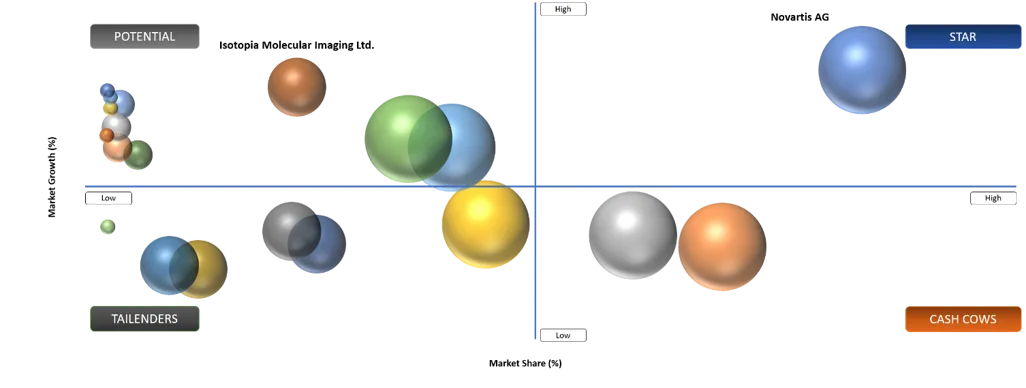
STAR
Novartis AG, Lantheus Holdings, Inc. and Curium are positioned in the Star category based on their direct commercial presence in Lu-177 dotatate therapy. Novartis leads through LUTATHERA, the established lutetium Lu 177 dotatate therapy for SSTR-positive gastroenteropancreatic neuroendocrine tumors. Lantheus strengthened competition in September 2026 with FDA approval of BRAVNETSA, which the FDA determined to be bioequivalent and therapeutically equivalent to LUTATHERA. Curium also entered the U.S. market in September 2026 with FDA-approved BEXLUTRY, a lutetium Lu 177 dotatate radioligand equivalent for adults with SSTR-positive GEP-NETs. Lantheus Holdings, Inc.
Future leadership will depend on treatment-center penetration, reimbursement, reliable Lu-177 supply, manufacturing scale, predictable patient scheduling and the ability to support broader adoption of peptide receptor radionuclide therapy.
POTENTIAL
Isotopia Molecular Imaging Ltd., Board of Radiation & Isotope Technology and Ganti Radio Isotope Laboratories Private Limited are positioned in the Potential category because of their role in Lu-177 isotope production, radiopharmaceutical preparation and regional supply infrastructure rather than direct global competition through an approved branded Lu-177 dotatate therapy. Isotopia has a particularly direct position, supplying GMP-grade Lu-177 and offering 177Lu-DOTATATE through its radiopharmacy operations. Isotopia Global
Their future strategic importance will depend on expansion of isotope-production capacity, regional manufacturing, treatment-center partnerships, regulatory approvals and the ability to provide reliable Lu-177 dotatate supply as theranostic infrastructure expands across emerging markets.
Lu-177 Dotatate Therapy Market Dynamics
Driver Impact Analysis
| Driver | Market Growth Impact (%) | Demand Concentration | Impacted Use Case | Strategic Impact |
Rising incidence and diagnosis of neuroendocrine tumors | 24% | High | SSTR-positive gastroenteropancreatic neuroendocrine tumors | Expands the eligible patient pool and supports sustained treatment demand |
Increasing adoption of peptide receptor radionuclide therapy | 21% | High | Progressive, unresectable and metastatic neuroendocrine tumors | Strengthens physician acceptance and integration of Lu-177 dotatate into treatment pathways |
Expansion into earlier treatment lines | 18% | Medium to High | Earlier-stage advanced GEP-NET treatment | Broadens addressable population and increases lifetime treatment opportunity |
Growing nuclear medicine and theranostic infrastructure | 15% | Medium | Hospital and specialized radiopharmaceutical treatment centers | Improves patient access, treatment capacity and geographic penetration |
Driver: Rising incidence and diagnosis of neuroendocrine tumors
Rising incidence and improved diagnosis of neuroendocrine tumors are expanding the addressable patient population for Lu-177 dotatate therapy. Greater use of advanced imaging, somatostatin receptor PET scans, endoscopy and pathology testing is enabling earlier and more accurate identification of gastroenteropancreatic neuroendocrine tumors. Improved disease awareness among oncologists, gastroenterologists and nuclear medicine specialists is also supporting referral of eligible patients for peptide receptor radionuclide therapy. As more patients are identified with SSTR-positive, unresectable or metastatic disease, demand for Lu-177 dotatate is expected to increase, particularly in markets with established theranostic infrastructure and reimbursement for radiopharmaceutical treatment.
Restraint Impact Analysis
| Restraint | Drag on Market Growth (%) | Primary Impact Area | Impacted Use Case | Strategic Impact |
Limited nuclear medicine infrastructure and treatment-center capacity | 26% | High | Lu-177 dotatate administration in emerging and underserved markets | Restricts patient access, creates treatment bottlenecks and slows geographic expansion |
Lu-177 isotope supply and radiopharmaceutical logistics constraints | 22% | High | Commercial treatment scheduling and dose delivery | Increases supply-chain risk, treatment delays and dependence on specialized manufacturing networks |
High treatment cost and reimbursement variability | 18% | Medium to High | Commercial adoption across public and private healthcare systems | Limits uptake in cost-sensitive markets and increases payer scrutiny |
| Renal and hematologic toxicity concerns | 14% | Medium | Patients with impaired renal function or limited bone marrow reserve | Narrows patient eligibility and increases monitoring requirements |
Restraint: Lu-177 Isotope Supply and Radiopharmaceutical Logistics Constraints
Lu-177 isotope supply and radiopharmaceutical logistics constraints can significantly limit the scalability of Lu-177 dotatate therapy. The short operational timelines associated with radioactive products require tightly coordinated isotope production, radiolabeling, quality control, transportation and treatment scheduling. Dependence on a limited number of qualified isotope producers and manufacturing sites increases vulnerability to reactor outages, production disruptions, transportation delays and regulatory interruptions. Because patient-specific doses must reach treatment centers within defined time windows, supply failures can result in postponed treatment cycles and inefficient center utilization. Expanding regional production, non-carrier-added Lu-177 capacity and resilient distribution networks will be critical to reducing this restraint.
Lu-177 Dotatate Therapy Market Segment Analysis
The global Lu-177 dotatate therapy market is segmented based on the drug, application, treatment line, treatment course, patient age, treatment setting, distribution channel and region.
LUTATHERA Maintains Leadership in the Lu-177 Dotatate Therapy Market While Retreatment Strategies Emerge as a High-Growth Opportunity Through 2035
LUTATHERA is expected to remain the dominant drug segment in the global Lu-177 dotatate therapy market, with an illustrative 2025 market size of approximately US$0.82 billion, supported by its established regulatory presence, broad physician familiarity, existing reimbursement coverage and integration into treatment pathways for SSTR-positive gastroenteropancreatic neuroendocrine tumors. At the same time, the retreatment course segment is projected to expand at an illustrative CAGR of 18.4% during 2026-2035, driven by increasing interest in repeat peptide receptor radionuclide therapy for patients experiencing disease progression after an initial treatment course. Growing evidence around retreatment feasibility, longer patient survival, individualized dosimetry and improved treatment-center experience is expected to strengthen adoption. Over the forecast period, competitive positioning will increasingly depend on durable outcomes, isotope supply reliability, treatment-center access, reimbursement and the ability to support repeat treatment pathways efficiently.
Lu-177 Dotatate Therapy Market Geographical Penetration
U.S. Lu-177 Dotatate Therapy Market Landscape
The United States represents the largest country-level market for Lu-177 dotatate therapy, supported by early regulatory approval, strong nuclear medicine infrastructure, broad oncology referral networks and relatively favorable reimbursement for advanced radiopharmaceutical treatment. LUTATHERA was first approved for adults with SSTR-positive gastroenteropancreatic neuroendocrine tumors in 2018, and in April 2024 the FDA expanded approval to pediatric patients aged 12 years and older. The U.S. market is also benefiting from growing theranostic adoption, wider use of SSTR imaging and expansion of specialized radiopharmaceutical treatment centers. Future growth will depend on earlier-line use, retreatment strategies, treatment-center capacity and reliable Lu-177 supply.
Japan Lu-177 Dotatate Therapy Market Outlook
Japan is an important Asia-Pacific market for Lu-177 dotatate therapy due to its advanced nuclear medicine capabilities, high-quality oncology infrastructure and established regulatory framework for radiopharmaceuticals. LUTATHERA, marketed locally as Lutathera Injection, is approved in Japan and is manufactured and marketed by Novartis Pharma K.K.; the PMDA lists lutetium oxodotreotide (177Lu) as the active ingredient. Market expansion is supported by increasing adoption of precision oncology, improved identification of SSTR-positive neuroendocrine tumors and growing familiarity with peptide receptor radionuclide therapy. Future opportunity will depend on treatment-center availability, reimbursement, specialist referral, isotope logistics and broader integration of theranostic pathways into neuroendocrine tumor management.
Lu-177 Dotatate Therapy Market Competitive Landscape
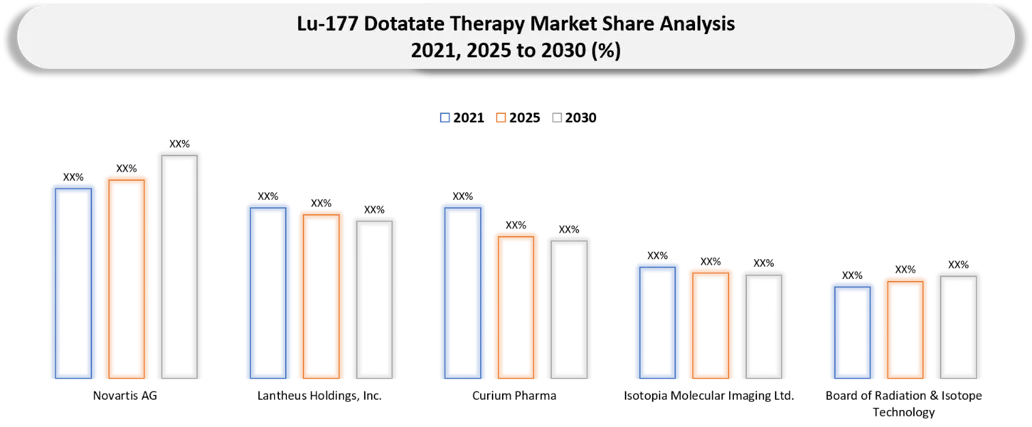
- The global Lu-177 dotatate therapy market remains relatively concentrated, with Novartis AG holding the strongest commercial position through LUTATHERA, supported by established regulatory approvals, broad physician familiarity, reimbursement coverage and an extensive treatment-center network. Lantheus Holdings, Inc. and Curium Pharma are increasing competitive intensity with newer Lu-177 dotatate products, creating greater pressure around pricing, supply reliability, market access and treatment-center penetration.
- Competition also extends beyond branded therapy developers into the supporting radiopharmaceutical ecosystem. Isotopia Molecular Imaging Ltd., Board of Radiation & Isotope Technology and Ganti Radio Isotope Laboratories Private Limited strengthen the market through Lu-177 isotope production, radiopharmaceutical supply and regional manufacturing capabilities. Over the forecast period, competitive advantage will increasingly depend on clinical differentiation, dependable isotope supply, manufacturing scalability, treatment scheduling, geographic reach, reimbursement support and the ability to serve expanding theranostic treatment networks.
Key Companies of Lu-177 Dotatate Therapy Market
- Novartis AG (Switzerland)
- Lantheus Holdings, Inc. (United States)
- Curium Pharma (France)
- Isotopia Molecular Imaging Ltd. (Israel)
- Board of Radiation & Isotope Technology (India)
- Ganti Radio Isotope Laboratories Private Limited (India)Teva Pharmaceutical Industries Ltd. (Israel)
- Viatris Inc. (United States)
- Sandoz Group AG (Switzerland)
- Dr. Reddy’s Laboratories Ltd. (India)
Lu-177 Dotatate Therapy Market Major Pain Points
- Limited Treatment-Center Capacity: Lu-177 dotatate therapy requires specialized nuclear medicine infrastructure, radiation-safety protocols, trained personnel and authorized treatment facilities. Limited center availability can create patient travel burdens, scheduling bottlenecks and uneven geographic access.
- Lu-177 Isotope Supply Constraints: Dependence on a limited number of qualified isotope producers and radiopharmaceutical manufacturing sites can increase vulnerability to reactor outages, production disruptions and transportation delays. Supply interruptions can directly postpone scheduled treatment cycles
- Complex Radiopharmaceutical Logistics: Lu-177 dotatate has time-sensitive manufacturing, quality-control, transport and administration requirements. Coordination failures across isotope production, radiolabeling, dose preparation and treatment scheduling can lead to operational inefficiencies and dose wastage.
- Renal and Hematologic Toxicity: Kidney radiation exposure, cytopenias and bone marrow suppression require careful patient selection, amino-acid renal protection, laboratory monitoring and dose modification. Long-term safety considerations can limit use in patients with impaired organ function.
- High Treatment and Infrastructure Cost: Drug acquisition, isotope production, specialized facilities, dosimetry, radiation protection, staff training and follow-up monitoring contribute to substantial total treatment costs. Reimbursement variability can further restrict adoption in cost-sensitive healthcare systems.
- Patient Selection and Dosimetry Complexity: SSTR expression, tumor burden, renal function, marrow reserve and prior treatment history can influence therapeutic suitability and outcomes. Standardized approaches to patient-specific dosimetry remain uneven across treatment centers.
- Limited Retreatment Evidence: Although retreatment is an important emerging opportunity, evidence around optimal patient selection, cumulative absorbed dose, cycle number and long-term toxicity remains less mature than for initial therapy.
- Competition From Alternative Treatment Options: Somatostatin analogues, targeted therapies, chemotherapy, liver-directed procedures and emerging radioligand approaches can influence treatment sequencing and delay Lu-177 dotatate use.
- Uneven Reimbursement and Regulatory Access: Coverage criteria, radiopharmaceutical reimbursement and treatment-center authorization vary significantly across countries, creating inconsistent patient access and commercialization timelines.
- Heterogeneous Patient Response: Differences in SSTR expression, tumor grade, lesion distribution, disease burden and prior therapy exposure can produce variable clinical outcomes, increasing the need for improved biomarkers, imaging-based selection and individualized treatment planning.
Lu-177 Dotatate Therapy Market Recent Developments
- September 2026: Lantheus received final U.S. FDA approval for BRAVNETSA (lutetium Lu 177 dotatate) for adults with SSTR-positive gastroenteropancreatic neuroendocrine tumors. FDA determined BRAVNETSA to be bioequivalent and therapeutically equivalent to LUTATHERA, increasing direct competition in the U.S. Lu-177 dotatate market.
- September 2026: Curium received U.S. FDA approval for BEXLUTRY (lutetium Lu 177 dotatate) for adults with SSTR-positive GEP-NETs, marking the first radioligand equivalent for this indication and further broadening commercial treatment options.
- September 2026: Telix Pharmaceuticals and ITM Isotope Technologies Munich announced a strategic merger agreement valued at US$1.65 billion upfront, with up to US$700 million in additional contingent consideration linked to ITM-11 regulatory and commercial milestones. ITM-11 is a Phase III-stage 177Lu-edotreotide therapy for GEP-NETs.
- September 2026: ITM and Lumara Bio reported new real-world retreatment and dosimetry findings for 177Lu-dotatate (ITM-11) in GEP-NETs at ASTRO 2026. The analyses supported favorable tumor-to-kidney absorbed dose characteristics and highlighted the potential role of retreatment in progressive neuroendocrine tumors.
Analyst View / Opinion on Lu-177 Dotatate Therapy Market
- The Lu-177 dotatate therapy market is shifting from predominantly later-line treatment of progressive SSTR-positive neuroendocrine tumors toward earlier-line use, retreatment strategies and broader integration of peptide receptor radionuclide therapy into theranostic treatment pathways.
- LUTATHERA has established Lu-177 dotatate as a commercial treatment class, while the 2026 entry of additional lutetium Lu 177 dotatate products is increasing competitive pressure around pricing, supply reliability, treatment-center access and product availability.
- Treatment selection will increasingly depend on tumor grade, SSTR expression, disease burden, prior somatostatin analogue exposure, renal function, bone marrow reserve, treatment-line positioning and access to specialized nuclear medicine infrastructure.
- Next-generation Lu-177 radioligand therapies are expected to differentiate through improved tumor uptake, personalized dosimetry, better therapeutic index, retreatment potential, simplified treatment workflows and activity across broader SSTR-expressing tumor populations.
Lu-177 Dotatate Therapy Market Target Audience
| INDUSTRY | WHO SHOULD BUY THIS REPORT? | REASON TO BUY THIS REPORT |
| Radiopharmaceutical Companies | Business Development Heads, Commercial Strategy Teams, Portfolio Managers, Market Intelligence Teams | Assess Lu-177 dotatate demand, competitive positioning, treatment-line expansion, pricing, reimbursement and pipeline opportunities |
| Nuclear Medicine Companies | Nuclear Medicine Directors, Theranostics Program Heads, Strategic Planning Teams | Evaluate treatment-center demand, patient throughput, isotope requirements and expansion opportunities in theranostic services |
| Pharmaceutical and Biotechnology Companies | Oncology Strategy Teams, R&D Heads, Licensing and Alliance Managers | Identify partnership, licensing, indication-expansion and next-generation radioligand development opportunities |
| Lu-177 Isotope Producers | Commercial Directors, Production Planning Teams, Business Development Managers | Estimate isotope demand, production capacity requirements, geographic supply gaps and long-term contract opportunities |
| Radiopharmaceutical CDMOs | Commercial Heads, Manufacturing Strategy Teams, Client Partnership Managers | Evaluate demand for radiolabeling, fill-finish, quality control, packaging and commercial-scale Lu-177 manufacturing |
| Nuclear Pharmacies | Operations Managers, Network Development Teams, Commercial Managers | Understand regional dose demand, distribution requirements, treatment-center coverage and logistics opportunities |
| Hospitals and Academic Medical Centers | Nuclear Medicine Heads, Oncology Directors, Hospital Administrators | Benchmark treatment demand, infrastructure requirements, patient volumes and investment needs for Lu-177 therapy programs |
| Cancer Treatment Centers | Medical Oncologists, Neuroendocrine Tumor Specialists, Theran | Assess eligible patient populations, treatment sequencing, referral opportunities and competitive therapy adoption |
Why Choose DATAM?
- Data-Driven Insights: Access granular intelligence covering market size, Lu-177 dotatate product adoption, treatment volumes, eligible patient populations, treatment-center capacity, isotope supply, competitive positioning and regional access dynamics.
- Primary Research Validation: Benefit from insights supported by interviews with nuclear medicine physicians, medical oncologists, neuroendocrine tumor specialists, radiopharmacists, radiopharmaceutical manufacturers, treatment-center administrators and market-access professionals.
- Expert Analyst Consultations: Engage directly with healthcare and radiopharmaceutical analysts for customized guidance on treatment sequencing, competitor assessment, isotope supply, market entry, treatment-center expansion and commercialization strategy.
- Customized Market Intelligence: Receive tailored analysis covering country-level opportunities, pricing and reimbursement, Lu-177 supply dynamics, manufacturing partnerships, treatment-center infrastructure, pipeline benchmarking and emerging white-space opportunities.
What DATAM Uniquely Provides
- In-depth segmentation of the Lu-177 dotatate therapy market by drug, application, treatment line, treatment course, patient age, treatment setting, payer type, distribution channel and region.
- Competitive analysis of leading Lu-177 dotatate and broader Lu-177 radioligand therapy companies covering clinical efficacy, progression-free survival, response durability, renal and hematologic safety, dosimetry, isotope availability, manufacturing reliability, treatment-center access and commercialization strategy.
- Comprehensive assessment of treatment sequencing across somatostatin analogues, Lu-177 dotatate therapy, targeted therapies, chemotherapy, liver-directed therapies and other advanced neuroendocrine tumor treatment options.
- Detailed evaluation of clinical pipelines, earlier-line expansion, retreatment strategies, combination approaches, next-generation SSTR-targeted radioligands, personalized dosimetry, regulatory developments and broader SSTR-positive tumor applications.
- Strategic intelligence covering eligible patient populations, Lu-177 isotope supply, treatment-center capacity, market access, pricing and reimbursement, regional infrastructure gaps, partnership opportunities, investment activity and emerging white-space opportunities.


























































