


Low-Sugar Indulgent Food Market Size and Overview
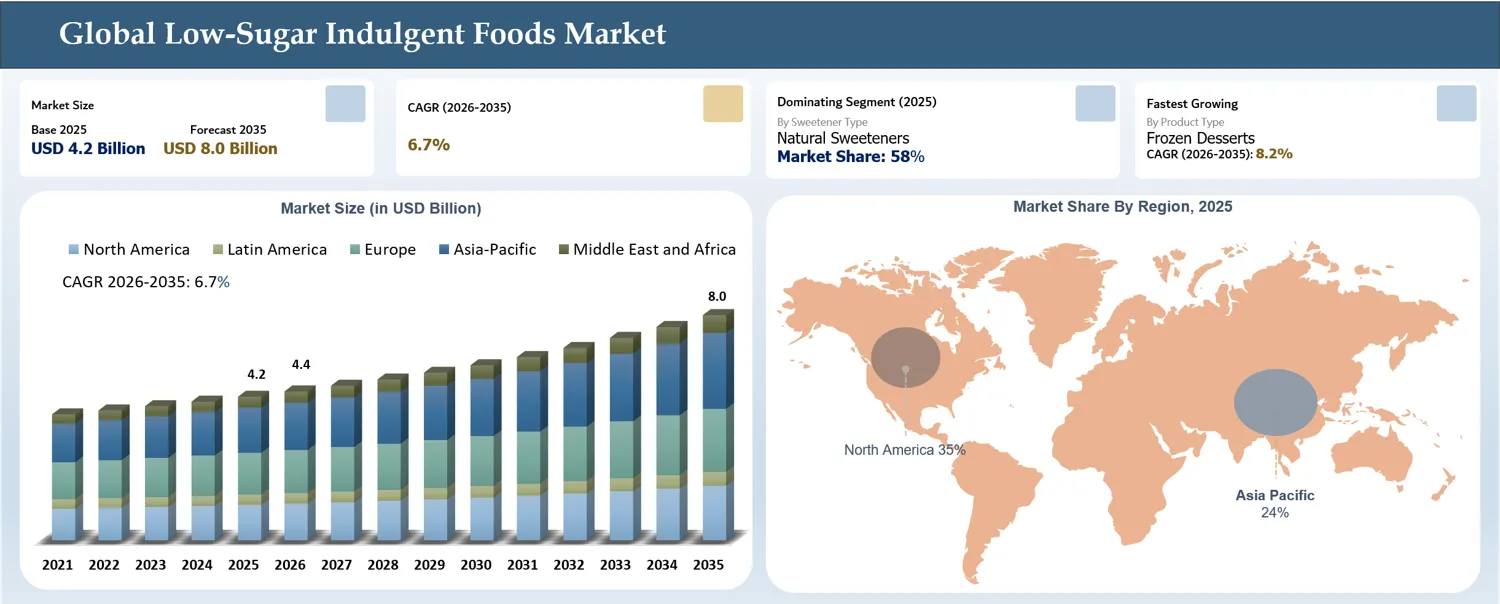
The global low-sugar indulgent food market was valued at US$4.2 billion in 2025 and is projected to reach US$8.0 billion by 2035, growing at a CAGR of 6.7% during 2026-2035. The low-sugar indulgent food market is driven by rising health awareness, increasing consumer focus on sugar and calorie reduction, growing weight-management concerns, and changing dietary preferences.
The World Health Organization (WHO) recommends limiting free sugar intake to less than 10% of total daily energy intake, equivalent to less than 50 g per day for a 2,000-calorie diet, and suggests reducing intake below 5%, or 25 g per day, for additional health benefits. These recommendations help promote the emphasis that consumers and industries place on reducing the amount of sugar present in regular foods, as well as the development of reduced-sugar variants of these foods.
Moreover, the indulgent foods with reduced amounts of sugar are gaining popularity in terms of product development due to the attempts by companies to reduce sugar levels without compromising flavor and texture. For instance, in June 2026, Barebells introduced Soft Candy, expanding its confectionery portfolio into the low-sugar indulgent food segment.
The product is available in Sour Cola, Watermelon and Peach Rings variants and provides 1 g of sugar and 100 calories per 55 g serving, representing 95% less sugar than conventional soft candy. The formulation uses polydextrose, isomalto-oligosaccharides (IMOs), erythritol, acesulfame potassium and sucralose to provide sweetness, texture and chewiness.
Sugar-Free Chocolate Gains Greater Share of Production Investment
To cater to rising preferences for healthier indulgence, manufacturers are developing more sugar-free and low-sugar chocolates without compromising the flavour of traditional chocolates. For instance, in July 2026, Amul reported that it had doubled its chocolate manufacturing capacity to 24,000 tonnes annually and planned a further 25% expansion at its Mogar plant. The company’s sugar-free dark chocolate accounted for nearly 10% of total chocolate sales, reflecting the growing commercial contribution of reduced-sugar products alongside broader capacity expansion.
Apart from Amul, Barry Callebaut invested in a specialty chocolate factory in Ontario with an initial annual capacity of more than 50,000 tonnes, specifically designed to produce sugar-free chocolate alongside other specialty products. This increasing investment indicates that companies are increasingly treating low-sugar products as a commercial growth opportunity, rather than simply a product-line extension.
Low-Sugar Indulgent Food Market Key Takeaways
- North America held the highest regional market share, accounting for approximately 35% of the global low-sugar indulgent foods market in 2025, supported by strong consumer awareness of sugar consumption, widespread availability of sugar-free and reduced-sugar products, and the presence of established confectionery, snack, and frozen dessert manufacturers. Europe accounted for around 31% of the market share in 2025, driven by growing demand for healthier indulgence, increasing product reformulation, and strong availability of reduced-sugar chocolate, confectionery, bakery, and dessert products.
- Chocolate & Chocolate Confectionery dominated the global low-sugar indulgent foods market in 2025, accounting for approximately 31% of the market share, driven by the large global consumption base for chocolate and increasing availability of sugar-free, no-added-sugar, and reduced-sugar alternatives.
- Natural Sweeteners dominated the global low-sugar indulgent foods market in 2025, accounting for approximately 58% of the market share, driven by increasing manufacturer preference for naturally derived sugar alternatives such as stevia, monk fruit, allulose, and other plant-based sweetening ingredients. Their ability to support sugar reduction while meeting consumer demand for clean-label and recognizable ingredients has expanded their use across chocolate, confectionery, bakery products, cookies, desserts, and sweet snacks.
Low-Sugar Indulgent Food Market Industry Trends and Strategic Insight
- Sweetener innovation is becoming a key area of product development as manufacturers work to reduce sugar while maintaining the taste, texture, and functionality expected from indulgent foods. Companies such as The Hershey Company, Mars, Incorporate, SmartSweets, and ChocZero are using sweeteners such as stevia, erythritol, maltitol, allulose, and monk fruit across chocolates, confectionery, ice cream, and snack products, enabling broader development of sugar-free, reduced-sugar, and no-added-sugar formulations.
- Demand for indulgent products with reduced sugar content is becoming a major market trend as consumers increasingly balance enjoyment with nutritional considerations. Manufacturers are responding with products featuring lower or no added sugar, natural and high-intensity sweeteners, higher protein and fiber content, and reduced calorie content, targeting everyday snacking, dessert, confectionery, and better-for-you indulgence occasions.
- Sugar-free chocolate, low-sugar confectionery, and reduced-sugar ice cream are gaining strategic importance as established food manufacturers and specialized brands expand these product lines. Companies such as The Hershey Company, Mars, Incorporated, Simply Good Foods, SmartSweets, and N!CK'S are introducing sugar-free chocolates, low-sugar candies, reduced-sugar snacks, and no-added-sugar ice creams, allowing them to retain familiar indulgent formats while addressing demand for lower-sugar alternatives and expanding healthier indulgence within mainstream food portfolios.
Low-Sugar Indulgent Food Market Scope
| Metrics | Details | |
| 2025 Market Size | USD 4.2 Billion | |
| 2035 Projected Market Size | USD 8.0 Billion | |
| CAGR (2026-2035) | 6.7% | |
| Largest Market | North America | |
| Fastest Growing Market | Asia-Pacific | |
| By Product Type | Chocolate & Chocolate Confectionery, Sugar Confectionery, Bakery & Baked Indulgent Foods, Frozen Desserts, Sweet Snacks, and Others | |
| By Sweetener Type | Natural Sweeteners and Artificial Sweeteners | |
| By Distribution Channel | Supermarkets & Hypermarkets, Convenience Stores, Specialty Stores, Online Retail / E-commerce, Foodservice, and Others | |
| By Region | North America | U.S., Canada, Mexico |
| Europe | Germany, United Kingdom, France, Italy, Spain, Netherlands, Switzerland, Sweden, Norway, Denmark, Belgium, Poland, Austria, Ireland, Portugal, Greece, Finland and Rest of Europe | |
| Asia-Pacific | China, India, Japan, Australia, South Korea, Indonesia, Malaysia, New Zealand, Singapore, Thailand, Indonesia, Vietnam, Philippines, Taiwan and Rest of Asia Pacific | |
| Latin America | Brazil, Argentina, Rest of Latin America | |
| Middle East and Africa | UAE, Saudi Arabia, South Africa, Qatar, Kuwait, Oman, Bahrain, Egypt, Nigeria, Morocco and Rest of Middle East & Africa | |
| Report Insights Covered | Competitive Landscape Analysis, Company Profile Analysis, Market Size, Share, Growth | |
Low-Sugar Indulgent Food Market Disruption Analysis
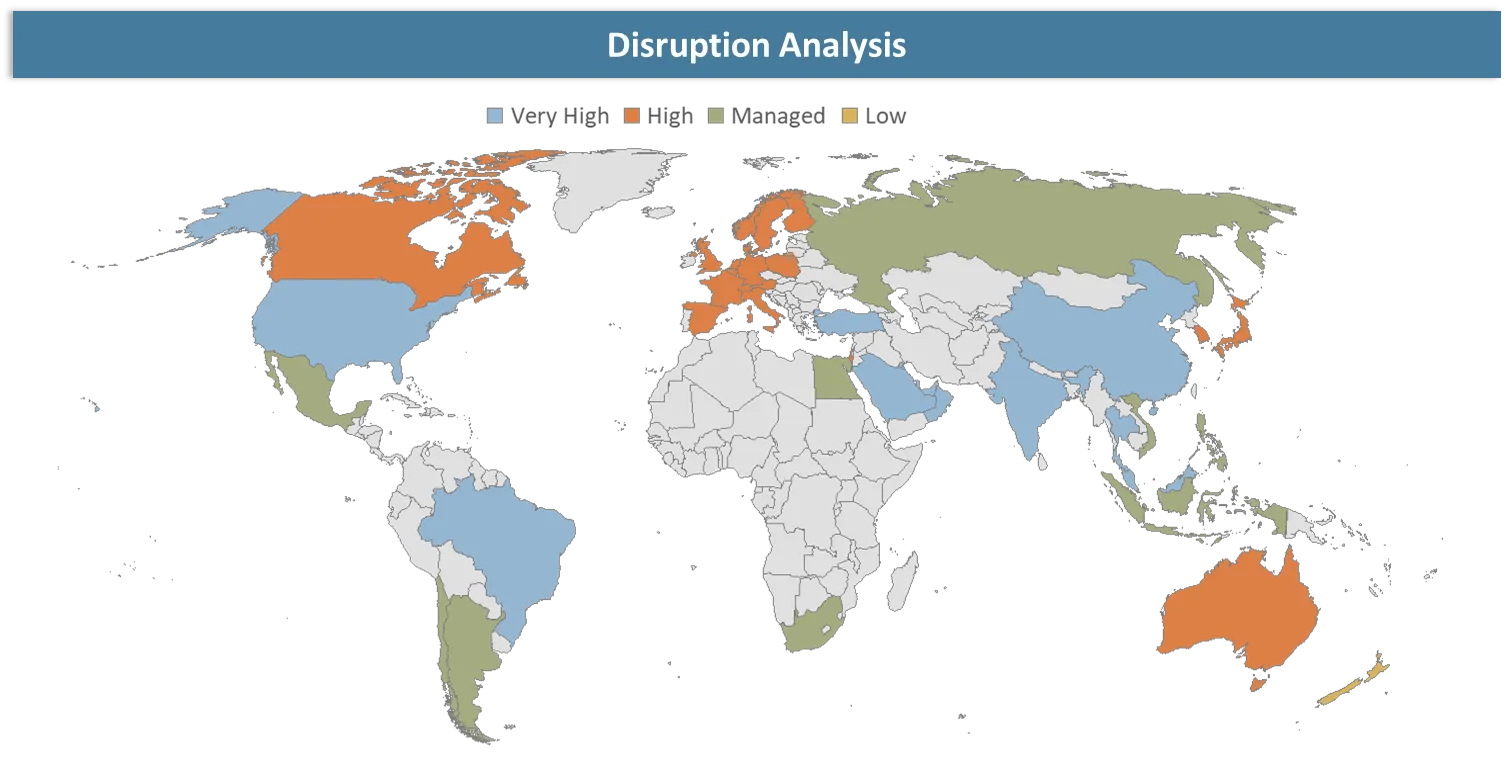
Sugar Reduction, Formulation Innovation, and Changing Indulgence Formats Reshaping the Market
The global low-sugar indulgent food products market is changing due to growing consumer preference for indulgence and reduced sugar consumption, resulting in increasing pressure on food companies to re-formulate classic chocolates, candies, baked goods, frozen desserts, and other indulgent products. Food companies are cutting down on sugar using stevia, monk fruit, allulose, sugar alcohol, and various combinations of sweeteners while trying to maintain the flavors, textures, mouthfeels, and appearances linked with traditional indulgent foods.
At the same time, there is a transition from diet-oriented products to indulgent foods offering reduced sugar content along with higher protein, fiber, reduced calorie, and simpler ingredient content. However, reformulation creates challenges related to taste perception, aftertaste, texture, sweetness balance, ingredient costs, and maintaining product stability and shelf life.
Increasing competition among multinational confectionery and food manufacturers and specialized low-sugar brands is also changing the competitive landscape, with companies such as The Hershey Company, Mars, Incorporated, Simply Good Foods, SmartSweets, N!CK'S, and ChocZero differentiating through sugar-reduction levels, sweetener systems, product variety, indulgent taste, and new product formats. As these developments continue, low-sugar positioning is moving beyond a niche product attribute and becoming a broader formulation and portfolio strategy across multiple indulgent food categories.
Low-Sugar Indulgent Food Market BCG Matrix: Company Evaluation

The Hershey Company, Simply Good Foods USA, Inc., and Mars, Incorporated can be classified as Star competitors due to their strong brand recognition, established consumer bases, broad distribution networks, and substantial presence across low-sugar chocolate, confectionery, snacks, and other indulgent food categories. SmartSweets Inc., Nick's Ice Cream AB, ChocZero, and The Skinny Food Co. Ltd. can be categorized as high-growth players, supported by their focused low-sugar and sugar-free product portfolios, differentiated positioning, product innovation, and ability to address growing demand for healthier indulgence.
Mondelēz International, Inc., General Mills, Inc., Danone SA, Ferrero International S.A., and Lindt & Sprüngli AG represent established competitors, benefiting from significant global scale, strong retail presence, manufacturing capabilities, and established positions in chocolate, biscuits, dairy, and frozen desserts, although low-sugar products represent a smaller portion of their overall businesses.
The Magnum Ice Cream Company N.V., Conagra Brands, Inc., ITC Limited, and PepsiCo, Inc. can be positioned as emerging/niche or opportunity players, with strong broader food and snack portfolios, extensive distribution networks, and significant consumer reach that provide opportunities to expand their presence in low-sugar indulgent foods through new product launches, reformulation, and healthier indulgence offerings.
Low-Sugar Indulgent Food Market Dynamics
Driver Impact Analysis
| Driver | Market Growth Impact (%) | Demand Concentration | Impacted Use Case | Strategic Impact |
Growing Consumer Demand for Healthier Indulgence | 30% | Strong demand in North America and Europe, with increasing adoption across Asia-Pacific as consumers seek lower-sugar alternatives without giving up taste and indulgence. | Chocolate, confectionery, bakery products, ice cream, frozen desserts, and sweet snacks consumed as everyday treats and desserts. | Encourages manufacturers to reformulate indulgent products with lower sugar while maintaining taste, texture, and sensory appeal, expanding the addressable consumer base. |
Increasing Health Awareness and Sugar-Reduction Preferences | 25% | High concentration in North America and Europe, with growing awareness across Asia-Pacific and urban markets in Latin America and the Middle East. | No-added-sugar, reduced-sugar, and sugar-free products used for everyday snacking, desserts, and portion-controlled indulgence. | Drives development of products with lower sugar, reduced calories, alternative sweeteners, and cleaner ingredient profiles, strengthening better-for-you positioning. |
Expansion of Manufacturing Capacity for Sugar-Reduced Confectionery | 20% | Strongest activity in North America and Europe, with increasing manufacturing investments and product development capabilities across Asia-Pacific. | Sugar-free and reduced-sugar chocolates, candies, gummies, baked treats, and other confectionery products. | Enables manufacturers to increase production volumes, improve product availability, introduce additional flavors and formats, and expand low-sugar product distribution across retail and e-commerce channels. |
Innovation in Alternative Sweeteners and Sugar-Reduction Technologies | 15% | Significant activity in North America and Europe, with increasing adoption of alternative sweeteners and reformulation technologies in Asia-Pacific. | Chocolate, confectionery, bakery, ice cream, frozen desserts, and sweet snacks requiring sugar reduction while maintaining sweetness and texture. | Supports the use of stevia, monk fruit, allulose, erythritol, maltitol, and blended sweetener systems, enabling manufacturers to develop products with improved taste and texture. |
Expansion of Retail and E-Commerce Availability | 10% | Strong retail penetration in North America and Europe, with rapidly expanding e-commerce and modern retail access across Asia-Pacific and Latin America. | Packaged low-sugar chocolates, confectionery, bakery products, frozen desserts, and sweet snacks purchased through supermarkets, specialty stores, convenience stores, and online platforms. | Expands consumer access to low-sugar indulgent foods and enables brands to reach health-conscious consumers through broader retail distribution, DTC channels, and online marketplaces. |
Investment in Sugar-Reduced Confectionery Manufacturing Capacity
The expansion of manufacturing capacity for sugar-reduced confectionery is supporting market growth by enabling manufacturers to increase production volumes and meet demand across international markets. Investments in dedicated production facilities are also enabling companies to scale specialized lower-sugar product ranges and strengthen supply capabilities. In 2026, Humble Group was preparing to commence production at its new confectionery factory in Skövde, Sweden, which is expected to significantly increase its manufacturing capacity for sugar-reduced confectionery.
The facility is also expected to support future volume growth through its partnership with Barebells on sugar-reduced confectionery products for the U.S. market. The investment strengthens Humble Group's ability to produce larger volumes of reduced-sugar confectionery and support expansion into international markets. It also increases manufacturing capacity for brands developing lower-sugar alternatives within the indulgent confectionery segment.
Restraint Impact Analysis
| Restraint | Market Growth Impact (%) | Demand Concentration | Impacted Use Case | Strategic Impact |
Higher Product Costs Compared with Conventional Indulgent Foods | 30% | Strong impact in price-sensitive markets, particularly across Asia-Pacific, Latin America, and Middle East & Africa. | Low-sugar chocolates, confectionery, bakery products, ice cream, frozen desserts, and sweet snacks. | Higher costs of alternative sweeteners, specialty ingredients, reformulation, and processing can increase retail prices and limit adoption among price-sensitive consumers. |
Taste and Texture Challenges from Sugar Reduction | 25% | Strong impact across North America and Europe, where consumers have extensive choices of conventional and reduced-sugar indulgent products. | Chocolate, confectionery, bakery products, ice cream, frozen desserts, and sweet snacks. | Reducing sugar can affect sweetness, mouthfeel, texture, browning, moisture, and overall sensory quality, requiring additional formulation and processing efforts to maintain consumer acceptance. |
Formulation Complexity and Sweetener Performance Limitations | 20% | Greater impact across global manufacturing markets, particularly for products requiring specific texture, shelf stability, and processing characteristics. | Sugar-free and reduced-sugar chocolates, baked goods, confectionery, and frozen desserts. | Alternative sweeteners may differ in sweetness intensity, bulk, solubility, crystallization, and aftertaste, increasing formulation complexity and potentially extending product-development timelines. |
Competition from Conventional Indulgent Foods | 15% | High competition across North America and Europe, with increasing competition in Asia-Pacific and other developing markets. | Conventional chocolate, confectionery, bakery products, ice cream, frozen desserts, and sweet snacks. | Conventional products often benefit from established consumer preferences, familiar taste profiles, broader availability, and competitive pricing, requiring low-sugar brands to differentiate through taste, nutritional attributes, and product quality. |
Regulatory and Labeling Requirements for Sugar-Reduction Claims | 10% | Impact varies by region, with significant compliance requirements across North America, Europe, and Asia-Pacific. | Sugar-free, no-added-sugar, reduced-sugar, and low-sugar food products. | Differences in permitted sugar-reduction claims, nutrition labeling, sweetener regulations, and ingredient requirements can increase product-development, testing, compliance, and market-entry requirements. |
Formulation Challenges in Maintaining Traditional Sensory Attributes
One major restraint in the low-sugar indulgent foods market is that reducing sugar can change the taste and texture consumers expect from traditional indulgent products. Sugar does more than provide sweetness-it also contributes to bulk, moisture, softness, browning, mouthfeel, and structure. Replacing or reducing it can therefore make products less similar to conventional versions. In low-sugar or sugar-free chocolate, manufacturers often use sweeteners such as maltitol, erythritol, stevia, or blends to reduce sugar. However, these ingredients can produce differences in sweetness, cooling sensations, texture, or aftertaste compared with regular sugar. As a result, manufacturers may need additional formulation work and ingredient combinations to maintain the familiar taste and mouthfeel of conventional chocolate. If the sensory quality of a low-sugar product is noticeably different from the conventional product, consumers may be less likely to repurchase it, which can limit market adoption.
Low-Sugar Indulgent Food Market Segment Analysis
The global low-sugar indulgent food market is segmented based on product type, sweetener type, distribution channel, and region.
Growing Preference for Natural High-Intensity Sweeteners in the Development of Sugar-Reduced Indulgent Foods
Natural Sweeteners dominate as manufacturers increasingly use stevia, monk fruit, and other naturally derived sweetening ingredients to reduce sugar while maintaining sweetness in indulgent foods. Their consumer-friendly positioning and suitability for clean-label formulations support their use across chocolates, confectionery, cookies, bakery products, and desserts.
For instance, in April 2025, Hormbles Chormbles launched a range of chocolate candy bars in four flavours-Salted Fudge, Classic Milk, Cookies & Creme, and Peanut Butter. Each bar contains 10 g of protein, 0 g of sugar, and 100 calories, and is formulated with whey and milk proteins along with steviol glycosides (stevia), monk fruit extract, and allulose as sugar alternatives. The launch demonstrates the use of natural high-intensity sweeteners, particularly stevia and monk fruit, in chocolate confectionery to reduce sugar content while retaining an indulgent product format.
Low-sugar indulgent food Market Geographical Penetration
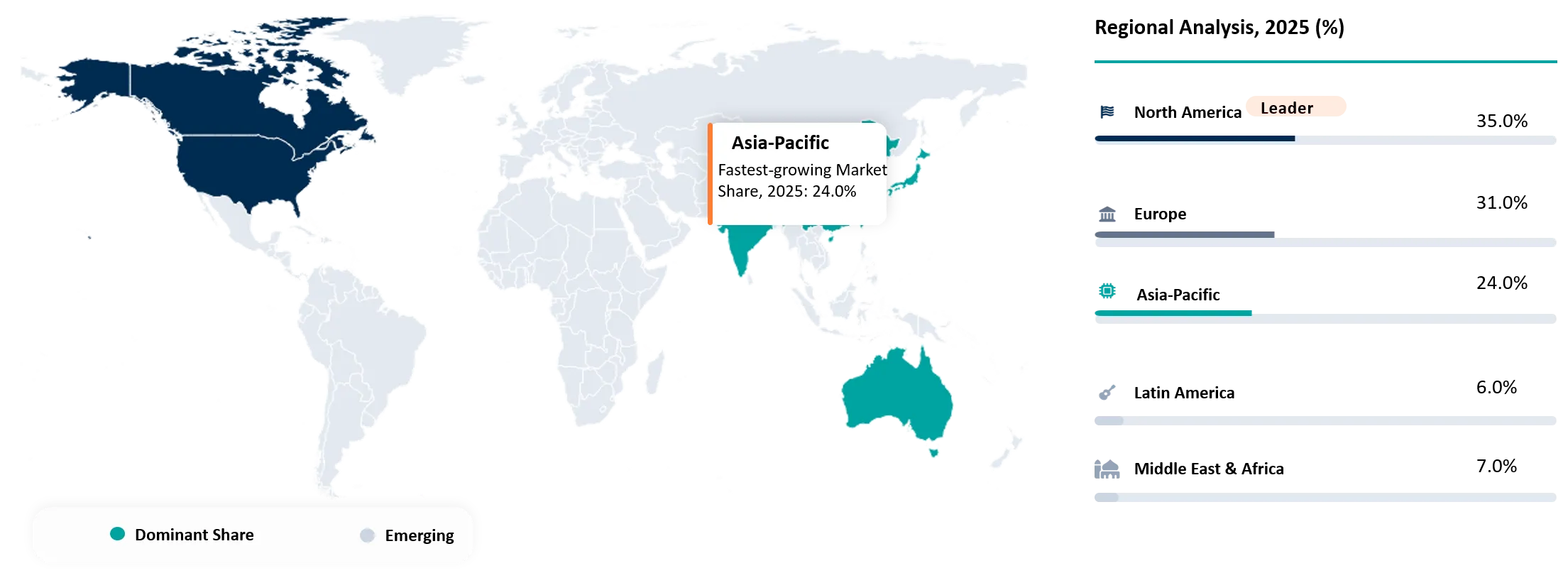
Product Innovation and Regulatory Developments Strengthening the North American Low-Sugar Indulgent Foods Market
The North American market for indulgence food products with low sugar content continues to evolve due to the increasing demand from consumers for food products that are healthier and have less sugar content. The U.S. market continues to hold substantial potential for indulgence food products that are low in sugar content, such as low sugar candy, protein-enhanced dessert products, and low sugar ice cream.
The Canadian market continues to evolve due to stringent sugar claims regulations that are motivating manufacturers to produce healthier packaged foods that are able to demonstrate their reduced sugar content. Some of the key players in the market include SmartSweets, Hershey, Mars, Mondelez International, Unilever, Nestlé, PepsiCo, and General Mills, as well as new brands concentrated on reduced sugar products.
Increasing Preference for Reduced-Sugar and Sugar-Free Products Reshaping the U.S. Indulgent Foods Market
The low-sugar indulgent food market in the US has been influenced by increasing focus on sugar reduction, increased awareness regarding nutritional information, and the need for healthier products among foods that have traditionally had higher sugar content. In the 2025 IFIC Food & Health Survey, 75% of Americans indicated efforts to reduce their intake or consume sugar-free products, of which 63% were concerned with added sugars. Furthermore, 27% stated that they have consumed products with reduced sugar, while 25% selected sugar-free options. These trends are supporting demand for lower-sugar alternatives across confectionery, bakery, desserts, ice cream and other indulgent food categories.
U.S. manufacturers are expanding lower-sugar offerings across indulgent food categories, including frozen desserts, to address demand for products with improved nutritional profiles. For instance, in June 2026, David launched its Frozen Dessert line in the United States, expanding into the indulgent frozen dessert category with four ice cream-style pint flavors. Each pint provides 30 g of protein, 210–260 calories and 2 g of sugar or less, combining a traditional ice cream experience with a reduced-sugar nutritional profile.
Growing Consumer Focus on Healthier Diets and Regulatory Support Strengthening Canada's Low-Sugar Food Market
Canada's low-sugar indulgent food market is supported by growing consumer focus on healthier diets and nutritional composition, alongside evolving regulatory standards that encourage sugar reduction in packaged foods. In 2025, Health Canada specified that products making a “reduced in sugars” claim must contain at least 25% less sugar and at least 5 g less sugar than a similar reference food. In addition, products containing 5 g or less of sugar per reference amount and serving can qualify for a “low in sugars” claim. These requirements are encouraging manufacturers to reformulate confectionery, bakery products, desserts and other indulgent foods with measurable sugar reductions while retaining their core product characteristics.
Furthermore, Canadian food manufacturers are expanding lower-sugar options across confectionery and other indulgent food categories. New product formulations are allowing consumers to reduce sugar intake while continuing to consume familiar sweet snacks and candy products. For instance, in July 2026, SmartSweets launched Candy Salad, a sweet-and-sour candy mix containing 3 g of sugar per bag and 87% less sugar than traditional gummy candy. The product combines five candy varieties, Berry Sweet Fish, Lime Twist Bears, Sour Grapes, Sour Peaches and Sourmelon Bites. Candy Salad provides a lower-sugar alternative within the indulgent confectionery category while retaining multiple candy flavors in a single product. The launch expands SmartSweets' low-sugar product range in the Canadian market.
Changing Dietary Preferences and Nutritional Innovation Supporting Low-Sugar Indulgent Food Market Growth in Asia Pacific
The Asia Pacific low-sugar indulgence food industry is being driven by the increasing awareness about the consumption of sugar, shifting dietary choices, and the need for more nutritious alternatives to traditionally sweet foods. Growing concerns about the diabetes and other diet-related illnesses are leading consumers to focus more on sugar and nutrition content in packaged foods. Companies operating in nations like China, Japan, India, Australia and South Korea are launching low-sugar confectionery, baked foods, desserts, ice cream and functional snacks. Innovation in product development in this industry involves developing low-sugar food items which still offer nutrition and good taste along with texture.
Expansion of Sugar-Free Products and Ingredient Technologies Supporting Low-Sugar Food Development in India
India's low-sugar indulgent food market is being supported by growing awareness of sugar consumption and increasing demand for food products that balance health considerations with taste and indulgence. The Indian Council of Medical Research (ICMR) recommends limiting sucrose to less than 10% of total calorie intake, preferably below 5%, particularly in the context of diabetes management. This health focus is also influencing packaged-food regulation: in August 2026, the Food Safety and Standards Authority of India (FSSAI) proposed front-of-pack warning labels for foods high in added sugar, salt and saturated fat, increasing consumer visibility of the nutritional composition of packaged foods.
Furthermore, manufacturers are introducing products that allow consumers to reduce sugar without moving away from familiar indulgent formats. For instance, in April 2026, ITC's Sunfeast Farmlite launched Sugar Free Cookies in Choco Nut and Hazelnut & Oats variants, with the company specifically highlighting the objective of maintaining taste and texture while removing added sugar. While food ingredient companies are also developing new formulation solutions to help manufacturers reduce sugar in indulgent food products while maintaining taste and texture. For instance, in March 2026, Cargill presented food ingredient solutions for bakery, snacks and chocolate manufacturers at AAHAR 2026 in New Delhi, including sugar-reduced cream biscuits made with polyols. The company also presented other reformulation solutions for reducing fat and improving nutritional profiles while maintaining taste and texture. The development supports the growing use of sugar-reduction technologies in indulgent food categories such as biscuits, snacks and confectionery.
Nutrition Label Awareness and Growing Health Concerns Supporting Demand for Reduced-Sugar Indulgent Products
The consumption of indulgent foods with low sugar in Japan is encouraged by consumer concern about health, nutrition, and well-balanced diet, as well as their continued interest in desserts, cakes, ice cream, and confectionery. According to the Consumer Affairs Agency survey on attitudes towards the labeling of food in fiscal year 2025, 45.0% of consumers who use nutritional information when buying food verify the carbohydrate content, while 21.7% verify the sugar content. Besides, according to the estimates of the Ministry of Health, Labour and Welfare (MHLW) in Japan, the number of people suspected of having diabetes is estimated to be around 11 million in 2024. As a result, attention is paid to the sugar and nutritional content of food, including indulgent food. This growing tendency for healthy food is stimulating food companies to make a reformulation of traditional indulgent products with lower sugar content.
Low-sugar indulgent food Market Competitive Landscape
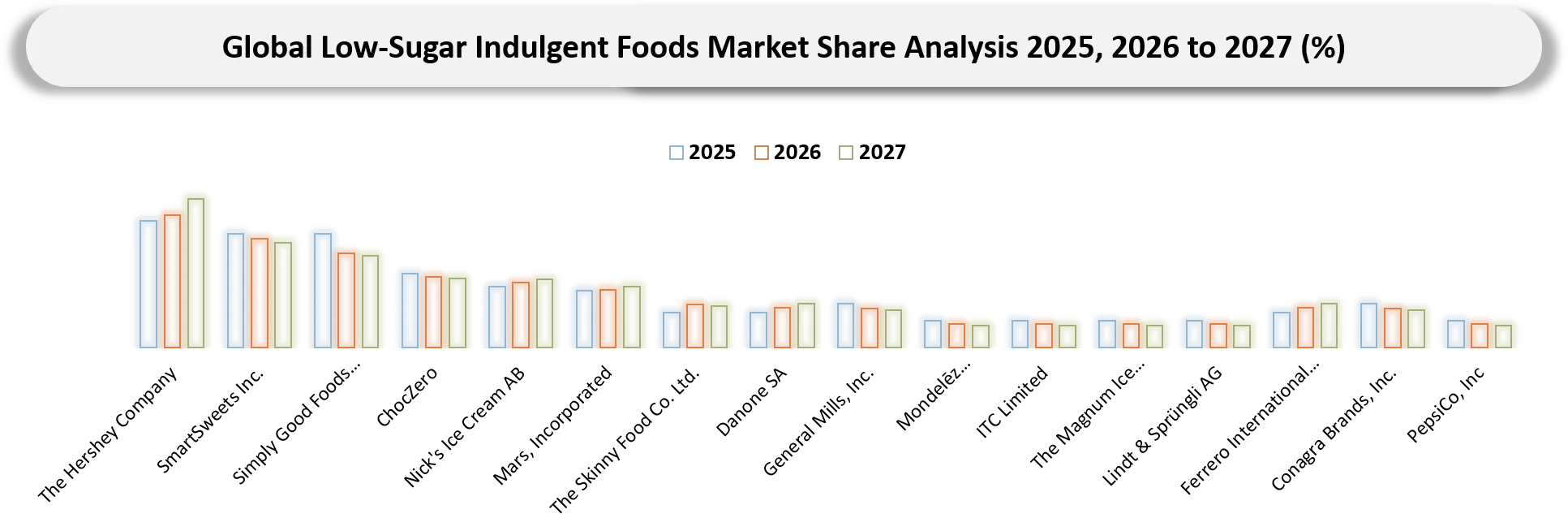
- The global low-sugar indulgent foods market is characterized by the presence of large multinational confectionery and food manufacturers, specialized low-sugar brands, ice cream companies, and better-for-you snack manufacturers offering reduced-sugar, sugar-free, no-added-sugar, and low-sugar products across chocolate, confectionery, cookies, snacks, ice cream, frozen desserts, and bakery categories.
- The Hershey Company, SmartSweets Inc., Simply Good Foods USA, Inc., ChocZero, Nick's Ice Cream AB, Mars, Incorporated, The Skinny Food Co. Ltd., Danone SA, General Mills, Inc., Mondelēz International, Inc., ITC Limited, The Magnum Ice Cream Company N.V., Lindt & Sprüngli AG, Ferrero International S.A., Conagra Brands, Inc., and PepsiCo, Inc. are among the notable players.
- The Hershey Company strengthens competition through its LILY'S low-sugar confectionery portfolio, while Simply Good Foods competes through Atkins and Quest across low-sugar snacks and indulgent products. SmartSweets, ChocZero, N!CK'S, and The Skinny Food Co. focus strongly on low-sugar and sugar-free indulgence, while Mars, Mondelēz, Ferrero, Lindt & Sprüngli, General Mills, Danone, and PepsiCo leverage established brands, extensive distribution networks, and broad product portfolios to expand healthier indulgence offerings.
- Overall, competition is increasingly focused on sugar reduction, taste and texture, clean-label ingredients, natural sweeteners, protein and fiber content, calorie reduction, product variety, and convenient indulgent formats.
- The Hershey Company (United States), SmartSweets Inc. (Canada/United States), Simply Good Foods USA, Inc. (United States), ChocZero (United States), Nick's Ice Cream AB (Sweden), Mars, Incorporated (United States), The Skinny Food Co. Ltd. (United Kingdom), Danone SA (France), General Mills, Inc. (United States), Mondelēz International, Inc. (United States), ITC Limited (India), The Magnum Ice Cream Company N.V. (Netherlands), Lindt & Sprüngli AG (Switzerland), Ferrero International S.A. (Luxembourg/Italy), Conagra Brands, Inc. (United States), and PepsiCo, Inc. (United States).
Key Developments
- June 2026: Barebells introduced Soft Candy, expanding its confectionery portfolio into the low-sugar indulgent food segment. The product is available in Sour Cola, Watermelon and Peach Rings variants and provides 1 g of sugar and 100 calories per 55 g serving, representing 95% less sugar than conventional soft candy. The formulation uses polydextrose, isomalto-oligosaccharides (IMOs), erythritol, acesulfame potassium and sucralose to provide sweetness, texture and chewiness.
- July 2026: SmartSweets launched Candy Salad, a sweet-and-sour candy mix containing 3 g of sugar per bag and 87% less sugar than traditional gummy candy. The product combines five candy varieties, Berry Sweet Fish, Lime Twist Bears, Sour Grapes, Sour Peaches and Sourmelon Bites. Candy Salad provides a lower-sugar alternative within the indulgent confectionery category while retaining multiple candy flavors in a single product.
- April 2026: Ice Cream Works launched its Zero Sugar Added ice cream range in India, expanding its portfolio to address growing consumer interest in mindful eating and healthier indulgence. The new range combines natural sweetness with the brand’s focus on rich flavour and creamy texture, positioning the products as indulgent ice cream options without added sugar. The launch demonstrates the expansion of reduced-sugar and no-added-sugar offerings within the ice cream category as manufacturers respond to demand for healthier alternatives without compromising indulgence.
- June 2026: David launched its Frozen Dessert line in the United States, expanding into the indulgent frozen dessert category with four ice cream-style pint flavors. Each pint provides 30 g of protein, 210–260 calories and 2 g of sugar or less, combining a traditional ice cream experience with a reduced-sugar nutritional profile.
Key Procurement Priorities and Buyer Evaluation Criteria
- Buyers prioritize low-sugar indulgent food products with consistent sugar-reduction performance, appealing taste, texture, and indulgent sensory characteristics across chocolate, confectionery, bakery, ice cream, and sweet snack formats.
- Evaluation is based on criteria such as sugar content, sugar reduction level, sweetener type and quality, taste, sweetness profile, texture, calorie content, ingredient composition, nutritional profile, shelf life, and compliance with applicable food labeling and safety regulations.
- Buyers consider factors including product consistency, mouthfeel, melting or baking performance, packaging integrity, shelf stability, manufacturing capacity, supply reliability, production lead times, and the supplier's ability to provide different flavors, formats, portion sizes, and sugar-reduction levels.
- Preference is given to suppliers with expertise in stevia, monk fruit, allulose, erythritol, maltitol, and other sweetener systems, along with capabilities in clean-label formulations, natural ingredients, high-protein or high-fiber formulations, and appropriate food-safety and quality certifications.
- Retailers, distributors, foodservice operators, specialty health-food channels, and e-commerce platforms particularly prioritize suppliers with proven consumer acceptance, reliable production capabilities, attractive packaging, competitive pricing, strong shelf presence, and the ability to support large-scale and long-term supply programs.
Why Choose DataM?
- Technological Innovations: Explores advancements in low-sugar indulgent food formulation and processing, including sugar-reduction technologies, alternative sweetener systems, sweetness optimization, texture enhancement, sugar replacement, flavor-masking, and shelf-life improvement techniques that help maintain taste, texture, appearance, and product stability.
- Product Performance & Market Positioning: Evaluates how low-sugar indulgent foods compete based on sugar content, sugar-reduction level, sweetener type, taste, texture, calorie content, nutritional profile, ingredient composition, indulgence factor, product format, and clean-label positioning, highlighting differentiation across chocolate, confectionery, bakery, ice cream, frozen desserts, and sweet snack categories.
- Real-World Evidence: Highlights the adoption of low-sugar indulgent foods across supermarkets, specialty and health-food retailers, e-commerce, convenience stores, foodservice, and direct-to-consumer channels, demonstrating the integration of reduced-sugar products into everyday snacking and dessert consumption occasions.
- Market Updates & Industry Changes: Tracks key developments such as new product launches, expansion of sugar-free and no-added-sugar portfolios, reformulation of established products, adoption of natural and alternative sweeteners, entry of major food manufacturers, premium product launches, and expansion across North America, Europe, Asia-Pacific, Latin America, and Middle East & Africa.
- Competitive Strategies: Analyzes how leading companies expand through product reformulation, new flavors and formats, alternative sweetener adoption, strategic partnerships, acquisitions, brand extensions, retail expansion, premiumization, and development of differentiated low-sugar products to capture demand for healthier indulgence.
- Pricing & Market Access: Explains pricing variations based on sugar-reduction level, sweetener type, ingredient quality, product category, product format, packaging, brand positioning, premium ingredients, and distribution channel, along with access through supermarkets, hypermarkets, convenience stores, specialty retailers, pharmacies, foodservice, and e-commerce platforms.
- Market Entry & Expansion: Identifies growth opportunities driven by consumer demand for healthier indulgence, sugar reduction, weight-management preferences, clean-label products, natural sweeteners, high-protein and high-fiber formulations, and premium low-sugar offerings, while outlining strategies such as localized product development, reformulation of existing products, retail partnerships, specialty-channel expansion, e-commerce development, and introduction of region-specific flavors and formats.
Target Audience
- Ice Cream and Frozen Dessert Manufacturers
- Bakery and Baked Goods Manufacturers
- Food and Beverage Companies Developing Low-Sugar Products
- Retailers, Supermarket Chains, and Convenience Stores
- Specialty, Health-Food, and Natural Food Retailers
- E-commerce Platforms and Online Food Retailers
- Foodservice Operators, Cafés, and Dessert Chains
- Food and Beverage Distributors and Importers
- Sweetener, Functional Ingredient, and Food Ingredient Suppliers
- Contract Manufacturers and Private-Label Food Producers


























































