


Liquid Biopsy Market Overview
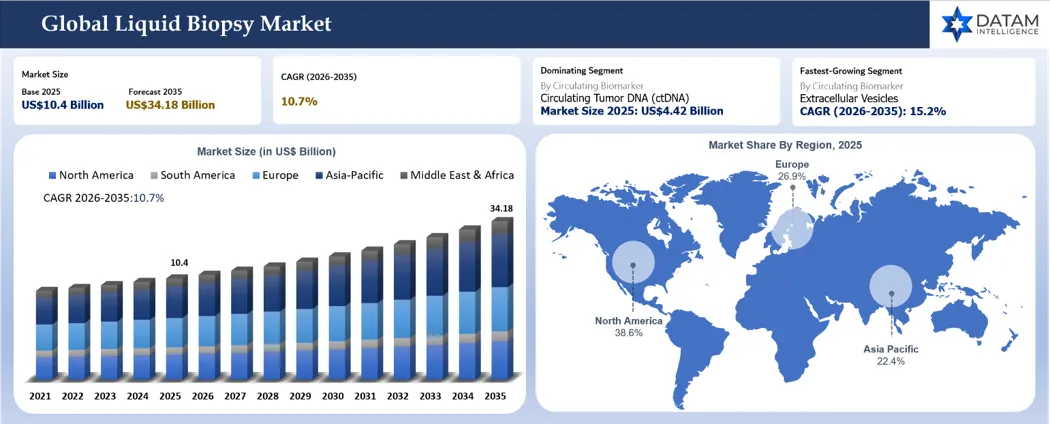
The global liquid biopsy market reached US$10.04 billion in 2025 and is expected to reach US$34.18 billion by 2035, growing with a CAGR of 10.7% during the forecast period 2026-2035.
Market growth is moving beyond conventional tissue-based diagnostics toward minimally invasive, repeatable and longitudinal molecular testing across screening, therapy selection, treatment monitoring and recurrence detection. Tissue biopsy remains clinically important because of established pathology workflows and direct tumor characterization. However, sampling limitations, tumor heterogeneity, invasive procedures and difficulty obtaining repeat specimens are accelerating adoption of circulating tumor DNA, cell-free DNA, circulating tumor cells and other blood-based biomarkers. Liquid biopsy is increasingly being integrated into precision-oncology pathways where rapid genomic profiling and serial monitoring can provide actionable information throughout the patient journey.
The expanding use of Guardant360, FoundationOne Liquid CDx, Signatera, Galleri, Oncodetect and other liquid biopsy platforms is broadening applications across lung, breast, colorectal, prostate and other cancers. Adoption is increasingly supported by improvements in analytical sensitivity, faster turnaround times, broader gene coverage and growing regulatory acceptance of blood-based companion diagnostics and molecular residual disease testing. Competitive differentiation increasingly depends on limit of detection, clinical sensitivity and specificity, biomarker breadth, tumor-informed versus tumor-naïve architecture, turnaround time, reimbursement, regulatory approval, workflow integration and the ability to support serial testing at scale.
The next competitive inflection point will involve platforms capable of detecting disease earlier, identifying molecular recurrence before radiographic progression and integrating multiple biomarker classes within a single assay. Multi-cancer early detection, methylation analysis, fragmentomics, multi-omics, AI-supported signal interpretation and ultra-sensitive MRD platforms could reshape future diagnostic pathways. Commercial leadership will increasingly depend on prospective clinical validation, demonstrated clinical utility, guideline inclusion, payer acceptance, scalable laboratory infrastructure, physician adoption and integration with therapeutic decision-making across screening, treatment selection, response assessment and long-term surveillance.
Liquid Biopsy Market Key Takeaways
- The Global Liquid Biopsy Market was valued at approximately US$10.04 billion in 2025 and is projected to reach approximately US$34.18 billion by 2035, registering a CAGR of 10.7% during 2026-2035.
- CircuSouthg Tumor DNA (ctDNA) is estimated to be the dominant circuSouthg biomarker segment, generating approximately US$4.42 billion in 2025, supported by its widespread use in genomic profiling, therapy selection and disease monitoring.
- Extracellular Vesicles are expected to be the fastest-growing circuSouthg biomarker segment, with an estimated CAGR of 15.2% during 2026-2035, driven by increasing application in multi-omics and early cancer detection.
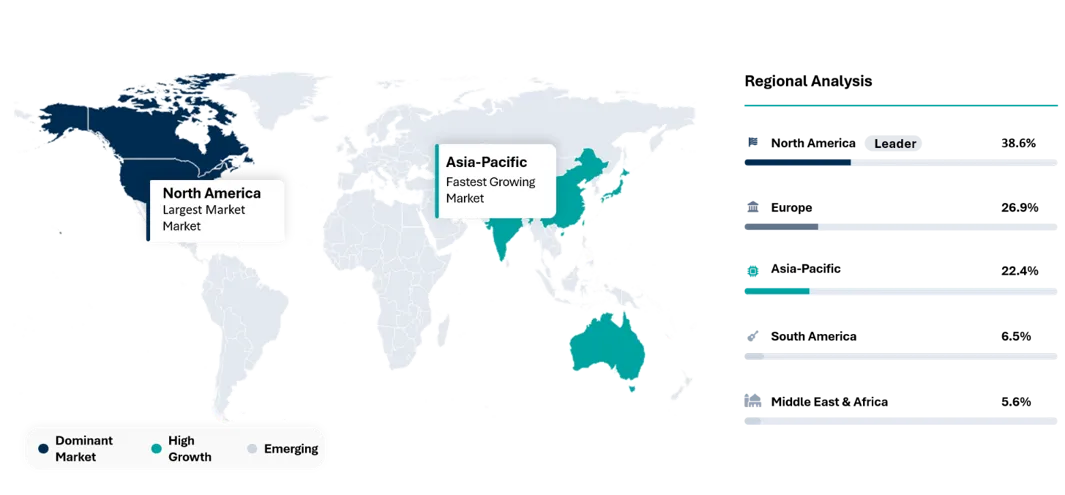
- North America remains the largest regional market, supported by strong adoption of precision oncology, established molecular diagnostic infrastructure, regulatory approvals and broad availability of advanced liquid biopsy platforms.
- Market growth is increasingly shifting toward molecular residual disease, recurrence monitoring, multi-cancer early detection and longitudinal treatment monitoring, creating strong opportunities for Guardant Health, Natera, Foundation Medicine, GRAIL and other precision-diagnostics companies.
Liquid Biopsy Market Scope
| Metrics | Details | |
| 2025 Market Size | US$10.04 Billion | |
| 2035 Projected Market Size | US$34.18 Billion | |
| CAGR (2026-2035) | 10.7% | |
| Largest Market | North America | |
| Fastest Growing Market | Asia-Pacific | |
| By Product Type | Kits & Reagents, Instruments, Services | |
| By Circulating Biomarker | Circulating Tumor Cells, Circulating Tumor DNA (ctDNA), Cell-Free DNA (cfDNA), Extracellular Vesicles | |
| By Application | Cancer Applications, Non-Cancer Applications | |
| By Technology | Multi-Gene Parallel Analysis (NGS), Single Gene Analysis (PCR Microarrays) | |
| By End User | Hospitals and Physician Laboratories, Research Centers, Others | |
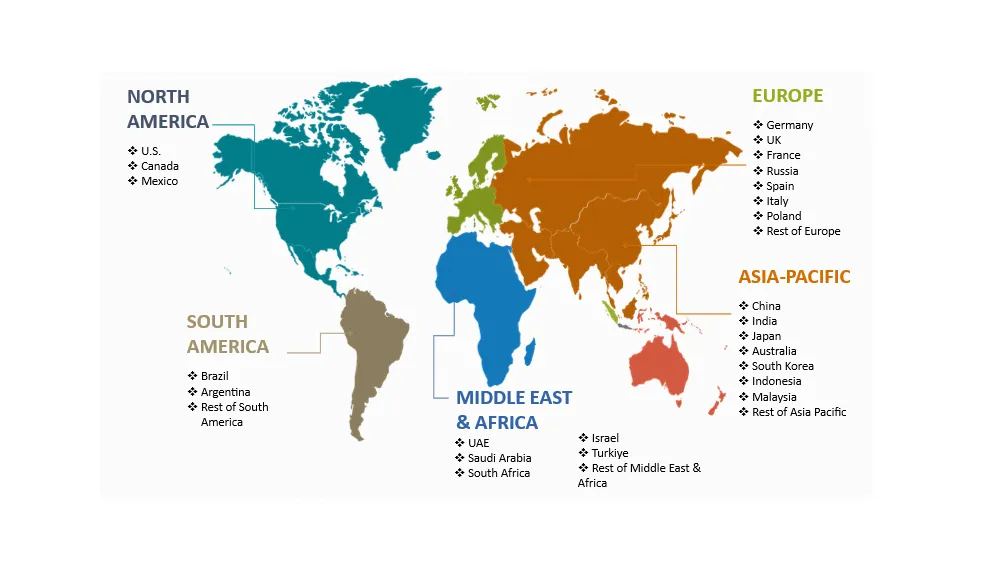
| By Region | North America | U.S., Canada, Mexico |
| Europe | Germany, UK, France, Spain, Italy, Poland | |
| Asia-Pacific | China, India, Japan, Australia, South Korea, Indonesia, Malaysia, Singapore, Vietnam, Thailand, Philippines, Taiwan | |
| South America | Brazil, Argentina | |
| Middle East and Africa | Israel, Saudi Arabia, UAE, Turkiye, South Africa, Nigeria | |
| Report Insights Covered | Competitive Landscape Analysis, Company Profile Analysis, Market Size, Share, Growth | |
Liquid Biopsy Market White Space & Investment Opportunities
- Earlier Cancer Detection and Multi-Cancer Screening: Invest in highly sensitive liquid biopsy platforms capable of detecting low-abundance ctDNA, methylation signatures, fragmentomics and other circulating biomarkers before clinical symptoms emerge. Multi-cancer early detection represents a major opportunity as screening moves toward minimally invasive, population-scale blood testing.
- Molecular Residual Disease and Recurrence Monitoring: Expand tumor-informed and tumor-naïve MRD assays for post-surgical surveillance, treatment-response assessment and earlier identification of recurrence. Repeatable blood-based monitoring creates recurring testing opportunities across the patient journey and may reduce dependence on imaging-intensive follow-up.
- Multi-Analyte and Multi-Omics Liquid Biopsy Platforms: Develop integrated assays combining ctDNA, cfDNA methylation, circulating tumor cells, extracellular vesicles, proteins and RNA. Multi-modal approaches can improve sensitivity, tissue-of-origin prediction and diagnostic confidence, particularly in early-stage and low-shedding cancers.
- Liquid Biopsy for Therapy Selection and Resistance Detection: Invest in comprehensive genomic profiling platforms capable of identifying actionable mutations, emerging resistance mechanisms and clonal evolution in real time. Serial testing can support treatment switching, companion diagnostics and precision therapy selection without repeated invasive tissue biopsies.
- Decentralized and Lower-Cost Testing Models: Develop automated, simplified and lower-cost liquid biopsy workflows suitable for regional laboratories and community oncology settings. Reducing sequencing requirements, turnaround time and infrastructure dependence can materially broaden adoption beyond major academic and reference laboratories.
- AI-Enabled Interpretation and Clinical Decision Support: Integrate AI-driven variant interpretation, longitudinal disease tracking and risk prediction into liquid biopsy platforms. Investment opportunities exist in converting increasingly complex molecular datasets into actionable clinical recommendations that integrate directly with oncology workflows and electronic health records.
Liquid Biopsy Market Buyer Decision-Making Criteria
Major Buyer Decision-Making Criteria:
- Analytical Sensitivity and Specificity
- Limit of Detection for Low-Frequency Variants
- ctDNA and cfDNA Detection Capability
- Breadth of Gene and Biomarker Coverage
- Clinical Validation Across Cancer Types and Stages
- Accuracy in Early-Stage and Low-Tumor-Burden Disease
- Molecular Residual Disease Detection Performance
- Ability to Detect Actionable and Resistance Mutations
- Companion Diagnostic Availability and Regulatory Approval
- Sample Volume and Blood Collection Requirements
- Turnaround Time and Reporting Speed
- Compatibility with NGS, PCR and Other Testing Platforms
- Bioinformatics Quality and Variant Interpretation Capability
- Reproducibility and Inter-Laboratory Consistency
- Availability of Longitudinal and Serial Monitoring
- Integration with Hospital and Laboratory Workflows
- Clinical Utility for Therapy Selection and Response Monitoring
- Reimbursement Coverage and Patient Out-of-Pocket Cost
- Overall Test Cost and Laboratory Processing Economics
- FDA, CE-IVDR and Other Regulatory Approval Status
- Inclusion in Oncology Guidelines and Clinical Pathways
- Evidence from Prospective and Real-World Clinical Studies
- Data Security, Reporting Infrastructure and EHR Integration
- Vendor Technical Support, Laboratory Scalability and Geographic Availability
Liquid Biopsy Market BCG Matrix: Company Evaluation
STAR
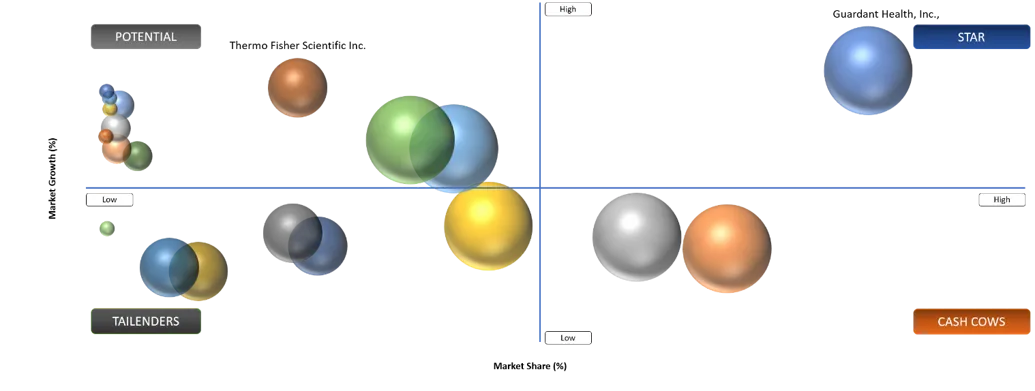
Guardant Health, Inc., Natera, Inc., F. Hoffmann-La Roche Ltd and Illumina, Inc. are positioned in the Star category based on their strong commercial liquid-biopsy portfolios, established presence in ctDNA and cell-free DNA testing, expanding clinical adoption and continued investment in precision oncology. Guardant Health maintains a particularly strong position through Guardant360 and Shield; in Q2 2026, the company generated US$335.0 million in revenue, up 44% year-on-year, while oncology test volumes increased 63%. The FDA also approved Guardant360 Liquid CDx in 2026, strengthening its position in comprehensive blood-based genomic profiling. Natera continues to scale Signatera in molecular residual disease, processing approximately 296,700 oncology tests in Q2 2026, up 57.2% year-on-year. Roche, through Foundation Medicine, expanded its liquid-biopsy footprint with the May 2026 launch of FoundationOne MRD and secured an additional FDA companion diagnostic approval for FoundationOne Liquid CDx in prostate cancer in June 2026. Illumina remains strategically important through its NGS ecosystem and TruSight Oncology 500 ctDNA v2, which supports comprehensive genomic profiling of more than 500 cancer-associated biomarkers from plasma ctDNA.
POTENTIAL
Exact Sciences Corporation, GRAIL, Inc., Thermo Fisher Scientific Inc. and QIAGEN N.V. are positioned in the Potential category based on expanding opportunities in multi-cancer early detection, molecular residual disease, high-sensitivity ctDNA analysis and decentralized liquid-biopsy workflows. Exact Sciences is strengthening its position through Oncodetect, a tumor-informed ctDNA-based MRD test capable of tracking up to 200 variants, alongside Cancerguard, its blood-based multi-cancer early-detection platform targeting more than 50 cancer types and subtypes. GRAIL represents a significant longer-term opportunity through Galleri; Q2 2026 Galleri volumes exceeded 61,000 tests, increasing 35% year-on-year, while PATHFINDER 2 generated clinical evidence from more than 35,000 participants. Thermo Fisher Scientific and QIAGEN retain strong growth potential through sequencing, PCR, sample-preparation and molecular-testing platforms that can support broader adoption of liquid-biopsy assays across clinical laboratories and translational research. Their future competitive positioning will increasingly depend on regulatory approvals, assay sensitivity, reimbursement, laboratory scalability and expansion from advanced-cancer profiling toward MRD and early cancer detection.
Liquid Biopsy Market Dynamics
Driver Impact Analysis
| Driver | Market Growth Impact (%) | Demand Concentration | Impacted Use Case | Strategic Impact |
Rising Cancer Incidence andExpanding Precision-Oncology Testing | 15.8% | High across oncology centers, hospitals and molecular diagnostic laboratories | Comprehensive genomic profiling, therapy selection and companion diagnostics | Expands the addressable testing population and increases demand for minimally invasive ctDNA and cfDNA-based molecular profiling. |
Growing Adoption of Liquid Biopsy for MRD and Recurrence Monitoring | 14.2% | High among patients undergoing surgery, systemic therapy and post-treatment surveillance | Molecular residual disease detection, treatment-response monitoring and recurrence assessment | Creates recurring testing demand across the cancer-care pathway and shifts liquid biopsy from one-time profiling toward longitudinal disease monitoring. |
Expansion of Regulatory Approvals and Blood-Based Companion Diagnostics | 12.7% | Concentrated in biomarker-driven breast, lung, colorectal, prostate and other solid tumors | Patient stratification, actionable mutation detection and targeted-therapy selection | Strengthens physician confidence and clinical integration as regulators approve broader plasma-based genomic panels and companion diagnostic indications. FDA approved the 741-gene Guardant360 Liquid CDx in May 2026. |
Driver: Rising Cancer Incidence and Expanding Precision-Oncology Testing
Rising cancer incidence is expanding the addressable population for liquid biopsy across screening, diagnosis, therapy selection and disease monitoring. Increasing prevalence of lung, breast, colorectal, prostate and hematological cancers is driving demand for minimally invasive molecular testing that can identify actionable genomic alterations without repeated tissue biopsies. Liquid biopsy enables faster ctDNA and cfDNA profiling, supports treatment selection and facilitates longitudinal monitoring of therapeutic response and recurrence. Adoption is further strengthened by the growing use of targeted therapies and companion diagnostics, where timely biomarker identification is critical. This trend is positioning liquid biopsy as an increasingly important component of precision-oncology workflows worldwide.
Restraint Impact Analysis
Restraint
| Drag on Market Growth (%) | Primary Impact Area | Impacted Use Case | Strategic Impact |
High Testing Cost and Uneven Reimbursement Coverage | 13.9% | High in cost-sensitive healthcare systems and self-pay settings | Comprehensive genomic profiling, MRD testing and multi-cancer screening | Limits routine adoption, particularly where reimbursement is fragmented or testing remains outside standard care pathways. |
Technical Limitations in Detecting Low-Abundance ctDNA | 12.6% | Early-stage cancers and low-tumor-burden patients | Early cancer detection, MRD assessment and recurrence monitoring | Increases false-negative risk and creates greater dependence on ultra-sensitive assays, repeat testing and confirmatory diagnostics. |
Lack of Standardization and Variable Clinical Validation | 10.8% | Molecular laboratories, hospitals and emerging testing markets | Cross-platform interpretation, biomarker detection and longitudinal monitoring | Slows physician confidence, complicates assay comparison and creates barriers to broader clinical guideline integration. |
Restraint: High Testing Cost and Uneven Reimbursement Coverages
High testing costs and inconsistent reimbursement remain key restraints to broader liquid biopsy adoption, particularly for comprehensive genomic profiling, molecular residual disease testing and multi-cancer early detection. Advanced NGS-based assays require specialized sequencing platforms, bioinformatics infrastructure, laboratory expertise and rigorous quality control, increasing per-test costs compared with conventional diagnostics. Reimbursement policies also vary significantly across countries, tumor types and clinical indications, limiting routine access outside well-funded oncology centers. Where coverage is absent, patients or providers may bear substantial out-of-pocket costs. These economic barriers can delay testing uptake, restrict repeat monitoring and slow integration of liquid biopsy into standard oncology pathways.
Liquid Biopsy Market Geographical Penetration
U.S. Liquid Biopsy Market Landscape
The U.S. liquid biopsy market is advancing rapidly as blood-based testing expands from advanced-cancer genomic profiling into molecular residual disease, companion diagnostics and cancer screening. In May 2026, the FDA approved Guardant Health’s next-generation Guardant360 Liquid CDx, covering 741 genes and substantially expanding its genomic footprint. The FDA also approved Natera’s Signatera CDx in May 2026 as the first personalized blood-based MRD companion diagnostic to guide atezolizumab treatment in muscle-invasive bladder cancer. Growing regulatory validation, reimbursement pathways and oncologist adoption are positioning liquid biopsy as an increasingly integrated component of U.S. precision-oncology workflows.
Japan Liquid Biopsy Market Outlook
Japan’s liquid biopsy market is progressing through increasing integration of ctDNA-based comprehensive genomic profiling into precision-oncology pathways, particularly where adequate tumor tissue is unavailable. A 2025 Japanese prospective study involving 109 advanced solid-tumor patients reported a 99.1% liquid-biopsy testing success rate, a median turnaround time of seven days and actionable genomic alterations in 28.4% of patients. Japan’s regulatory framework already recognizes FoundationOne Liquid CDx across multiple companion-diagnostic applications, including MET and EGFR alterations. Increasing clinical evidence, national genomic-medicine infrastructure and greater use of repeatable plasma testing are expected to accelerate adoption across therapy selection, monitoring and resistance assessment.
Liquid Biopsy Market Competitive Landscape
- The global liquid biopsy market is characterized by intensifying competition across circulating tumor DNA, molecular residual disease, companion diagnostics and multi-cancer early detection. Guardant Health, Natera, Foundation Medicine, GRAIL, Illumina, Thermo Fisher Scientific, QIAGEN, Exact Sciences and Bio-Rad are competing through assay sensitivity, regulatory approvals, clinical evidence, reimbursement access and laboratory scalability. Guardant Health strengthened its position with the May 2026 FDA approval of an expanded Guardant360 Liquid CDx panel, while Foundation Medicine launched FoundationOne MRD in May 2026, extending its presence beyond therapy selection into recurrence monitoring. GRAIL is advancing Galleri toward broader commercialization and regulatory review, supported by large clinical programs including NHS-Galleri and PATHFINDER 2. Competitive differentiation is increasingly shifting from standalone advanced-cancer profiling toward integrated testing across screening, treatment selection, response monitoring and recurrence detection. Strategic partnerships with pharmaceutical companies, hospital networks and clinical laboratories will remain critical to expanding adoption and securing long-term competitive advantage.
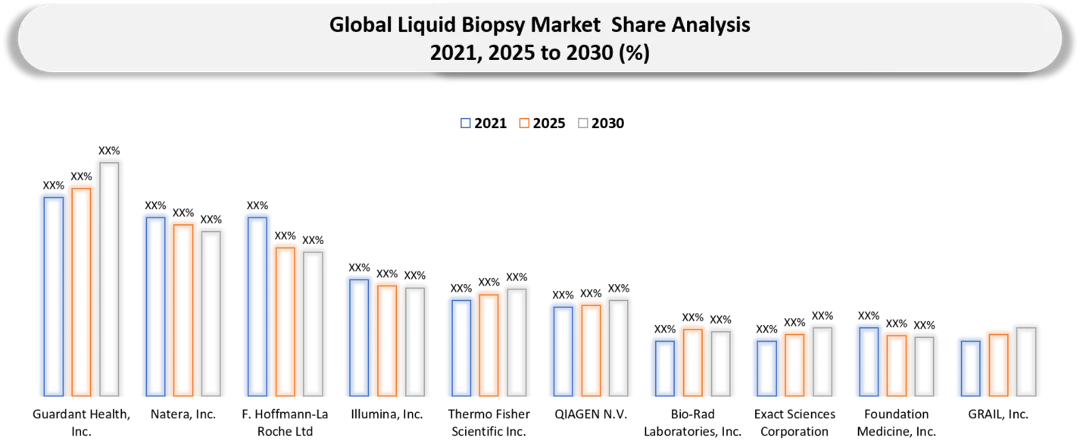
Key Companies of Liquid Biopsy Market
- Guardant Health, Inc. (United States)
- Natera, Inc. (United States)
- F. Hoffmann-La Roche Ltd (Switzerland)
- Illumina, Inc. (United States)
- Thermo Fisher Scientific Inc. (United States)
- QIAGEN N.V. (Netherlands)
- Bio-Rad Laboratories, Inc. (United States)
- Exact Sciences Corporation (United States)
- Foundation Medicine, Inc. (United States)
- GRAIL, Inc. (United States)
Recent Developments
- September 2026: Natera announced new clinical validation data for Signatera in lymphoma, demonstrating the utility of serial circulating tumor DNA (ctDNA) monitoring for treatment-response assessment and recurrence detection. The study reported a 100% positive predictive value for treatment-response assessment and showed that molecular recurrence could be detected months earlier than conventional imaging.
- August 2026: GRAIL announced that the U.S. FDA’s Molecular and Clinical Genetics Panel is scheduled to review the Premarket Approval application for Galleri on September 23, 2026. The submission is supported by PATHFINDER 2 data from 25,490 participants and data from more than 70,000 participants in the NHS-Galleri trial, representing an important regulatory milestone for multi-cancer early detection blood testing.
- July 2026: Natera received EU IVDR Class C certification for Signatera, making it the first personalized MRD test for solid tumors to obtain IVDR certification. The certification covers applications across gastrointestinal, genitourinary, lung, breast, gynecological and other malignancies and supports broader commercialization and clinical-trial deployment across Europe.
What DATAM Uniquely Provides
- In-depth segmentation of the Liquid Biopsy Market by product type, circulating biomarker, application, technology, end-user and region, with additional analysis of ctDNA, cfDNA, circulating tumor cells, extracellular vesicles, NGS-based testing, PCR-based testing and emerging multi-analyte platforms.
- Competitive analysis of leading liquid biopsy companies covering commercial assay portfolios, analytical sensitivity and specificity, limit of detection, biomarker coverage, sample requirements, turnaround time, clinical validation, regulatory approvals, reimbursement status, laboratory capabilities, strategic partnerships, pipeline development and commercialization strategies.
- Comprehensive assessment of clinical adoption and testing opportunities across cancer screening, early detection, therapy selection, companion diagnostics, treatment-response monitoring and molecular residual disease detection, including analysis by tumor type, disease stage, mutation profile, treatment line, recurrence risk, testing frequency, patient eligibility, physician adoption and regional diagnostic-access dynamics.





























































