Japan Data Center Switchgear Market Size and Overview
The Japan Data Center Switchgear Market is estimated at US$ 0.34 billion in 2025 and is forecast to reach US$ 0.72 billion by 2031, representing an estimated 13.3% CAGR. Demand for low-voltage and medium-voltage switchgear is increasing as hyperscale, AI and colocation operators develop high-capacity data halls across Greater Tokyo, Kansai and regional Japan. Switchgear is required at utility receiving points and throughout campus power distribution, with redundancy and fault isolation central to facility reliability.
Data center switchgear provides switching, circuit protection and power-routing functions between utility supply, substations, distribution equipment and critical IT loads. Buyers evaluate electrical ratings, fault withstand capability, available footprints, maintenance access, arc-flash protection and monitoring features. Japan’s seismic standards and utility acceptance requirements make detailed engineering and supplier qualification important before equipment procurement.
| 2025 MARKET SIZE | 2031 FORECAST | CAGR (2026–2031) |
| US$ 0.34 Billion | US$ 0.72 Billion | 13.3% |
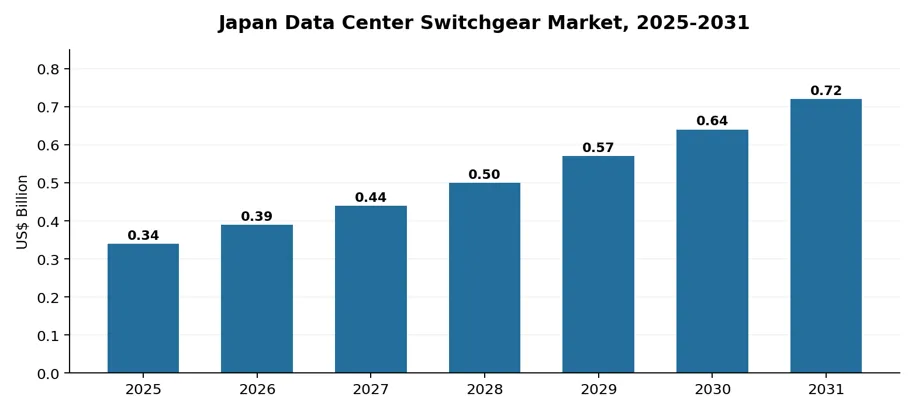
Figure 1. Japan Data Center Switchgear Market Value, 2025-2031 (US$ Billion)
Japan Data Center Switchgear Key Takeaways
• Japan data center switchgear revenue is estimated to grow from US$ 0.34 billion in 2025 to US$ 0.72 billion by 2031.
• Hyperscale and AI facility construction supports demand for medium-voltage switchgear, receiving substations and main low-voltage boards.
• Data center operators are specifying selective protection, electrical redundancy and compartmentalized systems to reduce outage exposure.
• Japan’s grid connection constraints encourage early specification of high-voltage receiving equipment and modular distribution blocks.
• Digital protection relays, remote diagnostics and arc-flash mitigation are increasingly relevant to critical-load operations.
• Suppliers with Japan-qualified products, field-service teams and predictable delivery schedules are well positioned for repeat campus orders.
Japan Data Center Switchgear Industry Trends and Strategic Insights
• Large AI facilities need stronger switchgear fault protection as power densities and campus electrical capacity increase.
• Operators are standardizing switchboard arrangements to support phased data hall commissioning and future capacity additions.
• Compact, vacuum-interruption and lower-emission insulation designs are receiving attention as buyers weigh operating safety and environmental requirements.
• Projects outside the major Tokyo and Osaka clusters create opportunities for regional installation, testing and aftersales networks.
Japan Data Center Switchgear Market Scope
| METRICS | DETAILS |
| 2025 Market Size | US$ 0.34 Billion |
| 2031 Projected Market Size | US$ 0.72 Billion |
| CAGR (2026–2031) | 13.3% |
| By Switchgear Type | Low-voltage, medium-voltage, high-voltage, GIS and AIS |
| By Data Center Type | Hyperscale, AI, colocation, enterprise and edge |
| By Voltage Rating | Low voltage, medium voltage, high voltage, extra-high voltage |
| By Insulation and Cooling | Air-insulated, gas-insulated, vacuum and solid-insulated |
| By Power Architecture | Utility receiving stations, campus distribution, data halls and backup power |
| By Phase and Installation | Indoor, outdoor, metal-clad, fixed, withdrawable and modular |
| By Installation Stage | New-build, expansions, protection retrofit, commissioning and service |
| Competitive Landscape | Top 10 manufacturers and power equipment suppliers serving Japan |
| Market Data Coverage | 2025-2031 Japan data center switchgear forecast and product applications |
Japan Data Center Switchgear Market White Space & Investment Opportunities
Medium-voltage campus packages: supply metal-clad boards, vacuum circuit breakers and protection relays for new receiving stations and substations.
Low-voltage power distribution: offer standardized main switchboards with monitoring, selective coordination and high availability.
Retrofit and lifecycle services: build local capacity in switchgear testing, relay upgrades, preventive maintenance and arc-flash risk reduction.
Commercial success depends on engagement with data center developers, Japanese utilities, engineering firms and electrical contractors before equipment designs are frozen. Suppliers able to deliver approved designs, credible production slots and local service support can compete for multi-campus programs.
Driver Impact Analysis
Japan’s growing pipeline of AI and hyperscale data centers increases demand for incoming medium-voltage boards, high-capacity low-voltage switchboards and coordinated protection. Large data center projects use multiple electrical rooms and distribution zones to avoid single points of failure. Equipment needs to be specified early because utility approvals, factory acceptance testing and commissioning can determine when the facility receives power. The scale of regional projects also creates opportunities for standardized switchgear systems that can be repeated across data hall phases.
| DRIVER | AFFECTED PRODUCT / SIGNAL | 2026–2031 CAGR | STRATEGIC IMPACT |
| Hyperscale and AI construction | High | Medium-voltage receiving stations and main LV switchboards | Engage early with developers and package repeatable electrical blocks |
| High availability requirements | High | Redundant feeder boards and selective protection | Offer protection coordination and digital fault monitoring |
| Regional campus expansion | Medium-High | Utility interface boards and phased distribution | Build contractor partnerships and local commissioning support |
| Retrofit and safety upgrades | Medium-High | Protection relays, breaker replacements and diagnostics | Target existing facilities with lifecycle service packages |
Switchgear requirements are becoming more demanding as operators increase rack power density and seek uninterrupted service. Digital protection, real-time thermal sensing and remote switching are gaining relevance for preventive maintenance and faster fault diagnosis. Modular boards and prefabricated rooms can shorten onsite electrical construction, although close coordination between equipment manufacturers, engineering firms and installers remains necessary.
Restraint Impact Analysis
Utility connection delays and long lead times for customized medium-voltage switchgear can hold up large campus projects. Engineering changes to fault ratings, protection settings or utility interfaces can require switchgear redesign and factory retesting. Copper prices and critical electrical components also affect equipment costs. Buyers must address Japanese seismic requirements, space limitations and vendor qualification processes, which can narrow the number of acceptable suppliers and raise procurement risk.
| RESTRAINT | PRIMARY EXPOSURE | RISK LEVEL | STRATEGIC IMPACT |
| Grid energization delays | Utility receiving stations and switchgear installation | High | Coordinate releases with power connection milestones |
| Long custom-board lead times | Medium-voltage and metal-clad switchgear | High | Standardize specifications and reserve factory capacity |
| Copper and component exposure | Busbars, circuit breakers and digital relays | Medium-High | Plan procurement and contract cost pass-through |
| Seismic and protection approvals | Custom enclosures, testing and utility interfaces | Medium-High | Complete short-circuit studies and local qualification early |
Electrical room constraints, commissioning tests and coordination between multiple subcontractors can extend schedules even when the equipment reaches the site. Late protection studies or utility comments may force panel modifications. Owners can reduce exposure by completing short-circuit and relay-coordination studies early, confirming approved product designs and maintaining realistic factory test and commissioning windows.
Japan Data Center Switchgear Market Competitive Landscape
Japan’s data center switchgear market brings together domestic switchgear and power-distribution manufacturers with international suppliers of low-, medium- and high-voltage equipment. Customers compare product reliability, fault clearing, electrical safety, digital monitoring, local utility acceptance, delivery commitments and aftersales response. Relationships with major electrical contractors remain important for packaged installations and ongoing service.
| COMPANY | DATA CENTER SWITCHGEAR POSITIONING |
| Mitsubishi Electric | MV and LV switchgear systems, protection and electrical distribution for mission-critical campuses. |
| Fuji Electric | Switchboards and power supplies, with Japan production investment tied to data center demand. |
| Toshiba Infrastructure Systems & Solutions | Switchgear, switchboards and power-distribution systems for critical facility applications. |
| Hitachi Energy | High-voltage switchgear and utility interconnection technologies for major power projects. |
| Schneider Electric | Low-voltage and medium-voltage distribution, digital monitoring and integrated power systems. |
| ABB | Switchgear, protection and automation systems for facility and substation applications. |
| Siemens | High- and medium-voltage switchgear plus power distribution technologies. |
| Eaton | Low- and medium-voltage distribution and power management systems for data centers. |
| Nissin Electric | Power distribution switchgear and high-voltage electrical equipment for Japanese infrastructure. |
| Meidensha | Switchgear, substation and protection solutions with domestic engineering capabilities. |
Domestic suppliers have strong relationships with Japanese utilities and facility contractors. Global firms compete through integrated protection, power monitoring, modular distribution products and specialized high-voltage equipment. Local assembly, acceptance testing and maintenance capabilities can determine competitiveness in mission-critical deployments.
Japan Data Center Switchgear Market Recent Developments
• January 22, 2026: KDDI opened its Osaka Sakai AI data center, adding a major high-density computing facility that requires reliable power distribution and switching systems.
• January 29, 2026: Fuji Electric announced investment at its Tsukuba factory to expand switchboard and power-supply production as data center demand increases.
• February 16, 2026: STACK Infrastructure broke ground on the second building at its TKY01 campus in Inzai, adding another phase of electrical distribution requirements.
• April 28, 2026: Fuji Electric announced a switchboard capacity expansion at its Malaysia factory to strengthen its data center equipment business and wider supply network.
• August 17, 2026: Goodman signed a long-term lease for the first 50 MW phase of its Tsukuba data center development, supporting future demand for substation and switchgear packages.
• September 3, 2026: Ada Infrastructure began work on another building at its Tokyo TKW1 campus, creating demand for additional medium- and low-voltage electrical equipment.