


Japan Battery Coating Market Size and Overview
The Japan battery coating market reached USD 46.7 million in 2025 and is expected to reach USD 88.4 million by 2035, growing with a CAGR of 6.6% during the forecast period 2026-2035. The market is growing along with Japan's strategic push to strengthen its domestic battery manufacturing industry, with the Ministry of Economy, Trade and Industry (METI) setting a goal of creating a domestic battery manufacturing capacity of 150 GWh annually from 2030 through the mid-2030s. METI plans to increase the battery-related global sales of Japanese firms threefold from 2025 to 2035 and to realize full commercialization of all-solid-state batteries by 2030 as well as production capacity in line with demand by the mid-2030s.
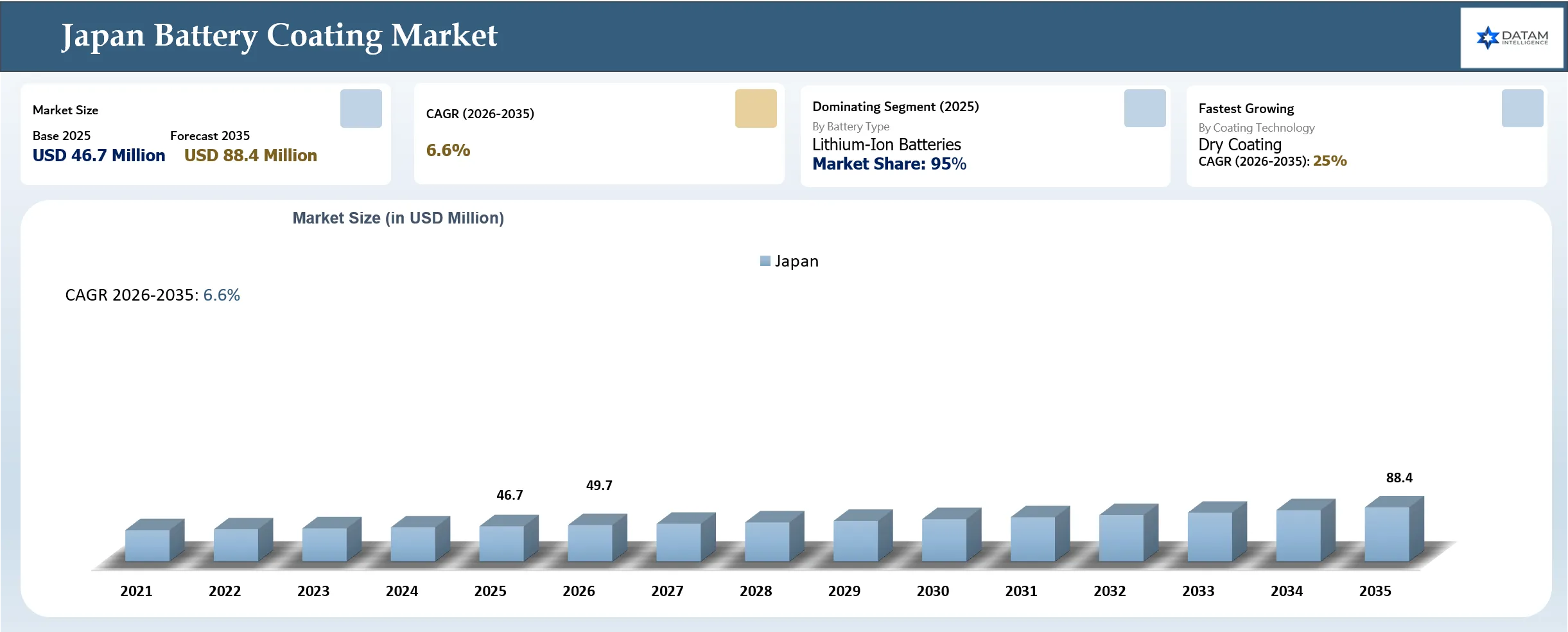
These goals are projected to boost the need for electrode and separator coating technologies that enhance thermal stability, electrochemical properties, durability, and battery safety. With the growth in manufacturing domestic batteries along with the emphasis by Japan on next-generation batteries and supply chain improvements, there exist new possibilities for coatings and coating techniques.
Advancements in AI-based coating techniques have enabled Japanese battery makers to enhance coating accuracy and consistency. In August 2026, as per Indian Chemical, Hitachi High-Tech Corporation and Powrex Corporation are implementing physical AI and process informatics for optimization of the coating conditions of cathode active materials used in all-solid-state batteries. Both companies have integrated data obtained from coating equipment with XRF and SEM analyses to assess coating thickness, uniformity, adhesion, and interface conditions and thus identify optimal and reproducible coating conditions. Commercialization of this technology will be carried out via the HMAX Industry platform of Hitachi High-Tech Corporation.
White-Space Opportunities for Advanced Battery Coating Technologies in Japan
In June 2026, Japan’s government is creating significant opportunities across the all-solid-state battery (ASSB) supply chain, with the Ministry of Economy, Trade and Industry (METI) approving five major ASSB-related projects totaling USD 660 million (¥105.7 billion) by Q1 2026 under its Battery Stable Supply Assurance Plan. The largest identified investment focus is the development and optimization of production technologies for sulfide solid electrolytes and lithium sulfide (Li₂S), which receives approximately 18% of METI’s approved ASSB-related funding. Other investment areas include ASSB pilot production lines, battery manufacturing-process development, improvement of battery yield and quality, and expansion of critical-material production capacity.
Japan is targeting ASSB commercialization around 2030, creating additional opportunities for advanced electrode manufacturing, material processing, surface treatment, precision coating, and process-control technologies as production moves from laboratory development toward engineering validation and commercialization. For battery coating, these investments are expected to create wider opportunities for advanced electrode and material coating technologies as ASSB manufacturers scale pilot and commercial production.
The investment is expected to benefit Japanese battery-material and coating companies including Asahi Kasei Corporation, Toray Industries, Inc., Zeon Corporation, UBE Corporation, Resonac Holdings Corporation, JSR Corporation, Teijin Limited, W-Scope Corporation, Fujifilm Corporation, TOMOEGAWA Co., Ltd., and DIC Corporation, as the expansion of all-solid-state battery (ASSB) manufacturing increases demand for advanced separator coatings, electrode binders, functional polymers, specialty chemicals, surface-treatment materials, and coating technologies. Asahi Kasei Corporation can benefit through its coated separator technologies, while Toray Industries, Inc. and W-Scope Corporation can benefit from increasing demand for advanced battery separators and functional coating layers.
Zeon Corporation is positioned through its battery binders and functional materials used in electrode and separator applications, while UBE Corporation can benefit from its battery-material and separator-related technologies. Resonac Holdings Corporation, JSR Corporation, Teijin Limited, Fujifilm Corporation, TOMOEGAWA Co., Ltd., and DIC Corporation can gain opportunities through specialty polymers, functional materials, surface-treatment technologies, adhesive and coating formulations, and other advanced materials used in battery manufacturing. As Japan moves toward commercial ASSB production, these companies can benefit from the increasing requirement for precision coating, functional-layer formation, electrode processing, separator coating, and advanced material technologies, creating wider opportunities across the Japan battery coating market.
Japan Battery Coating Market Key Takeaways
- Japan’s Ministry of Economy, Trade and Industry (METI) established a target of 150 GWh/year in domestic battery manufacturing capacity by 2030 to mid-2030s. Over 100+ GWh/year of domestic capacity has already been announced.
- The lithium-ion battery segment held a dominant 95% share of the Japan battery coating market in 2025. Extensive adoption across automotive and consumer electronics underpins this high concentration.
- Asahi Kasei expects an operating income of USD 1.39 billion (¥221.0 billion) in FY2025. The company has designated its Hipore wet-process separator coating lines as a high-valueMaterial growth business.
- METI approved five major all-solid-state battery (ASSB) projects totaling USD 660 million (¥105.7 billion) by Q1 2026. These investments directly drive demand for advanced functional electrode and separator coatings.
Japan Battery Coating Market Industry Trends and Strategic Insight
- Shift toward performance-driven electrode and separator coatings is strengthening as Japanese battery manufacturers prioritize thermal stability, electrochemical durability, adhesion, and power-density performance rather than treating coating as a conventional protective layer.
- Advanced separator coatings are becoming strategically important as ceramic and functional surface layers are increasingly used to improve heat resistance, dimensional stability, and battery safety in high-performance lithium-ion cells.
- Dry-electrode processing is gaining strategic attention as Japanese manufacturers seek to reduce dependence on solvent-intensive wet processing, lower manufacturing complexity, and improve production efficiency for next-generation cells.
- The strongest strategic opportunity lies in advanced functional coatings rather than commodity protective coatings, particularly solutions designed for high-energy-density lithium-ion and solid-state batteries.
- Japanese coating suppliers can differentiate through precision, reliability, and process integration, areas that align with Japan's emphasis on high-value manufacturing and advanced production technologies.
Japan Battery Coating Market Scope
| Metrics | Details |
| 2025 Market Size | USD 46.7 Million |
| 2035 Projected Market Size | USD 88.4 Million |
| CAGR (2026-2035) | 6.6% |
| By Battery Component | Electrode Coating, Anode Coating, Cathode Coating, Separator Coating, Current Collector Coating, Battery Pack & Case Coating, Others |
| By Coating Material | PVDF, Ceramic, Alumina, Oxide, Carbon, Graphene, Polymer, Nanocomposite, Others |
| By Coating Technology | Wet Coating, Dry Coating, Atomic Layer Deposition (ALD), Chemical Vapor Deposition (CVD), Physical Vapor Deposition (PVD), Sol-Gel Coating, Spray Coating, Slot-Die Coating, Others |
| By Battery Type | Lithium-Ion, Solid-State Batteries, Sodium-Ion Batteries, Nickel-Metal Hydride (Ni-MH) Batteries, Lead-Acid Batteries, Other Battery Types |
| By Function | Thermal Management, Corrosion Protection, Electrical Insulation, Electrochemical Stability, Mechanical Protection, Fire Resistance, Others |
| By Application | Electric Vehicles, Consumer Electronics, Energy Storage Systems, Industrial Equipment, Aerospace and Défense, Medical Devices, Others |
| Report Insights Covered | Competitive Landscape Analysis, Company Profile Analysis, Market Size, Share, Growth |
Japan Battery Coating Market Disruption Analysis
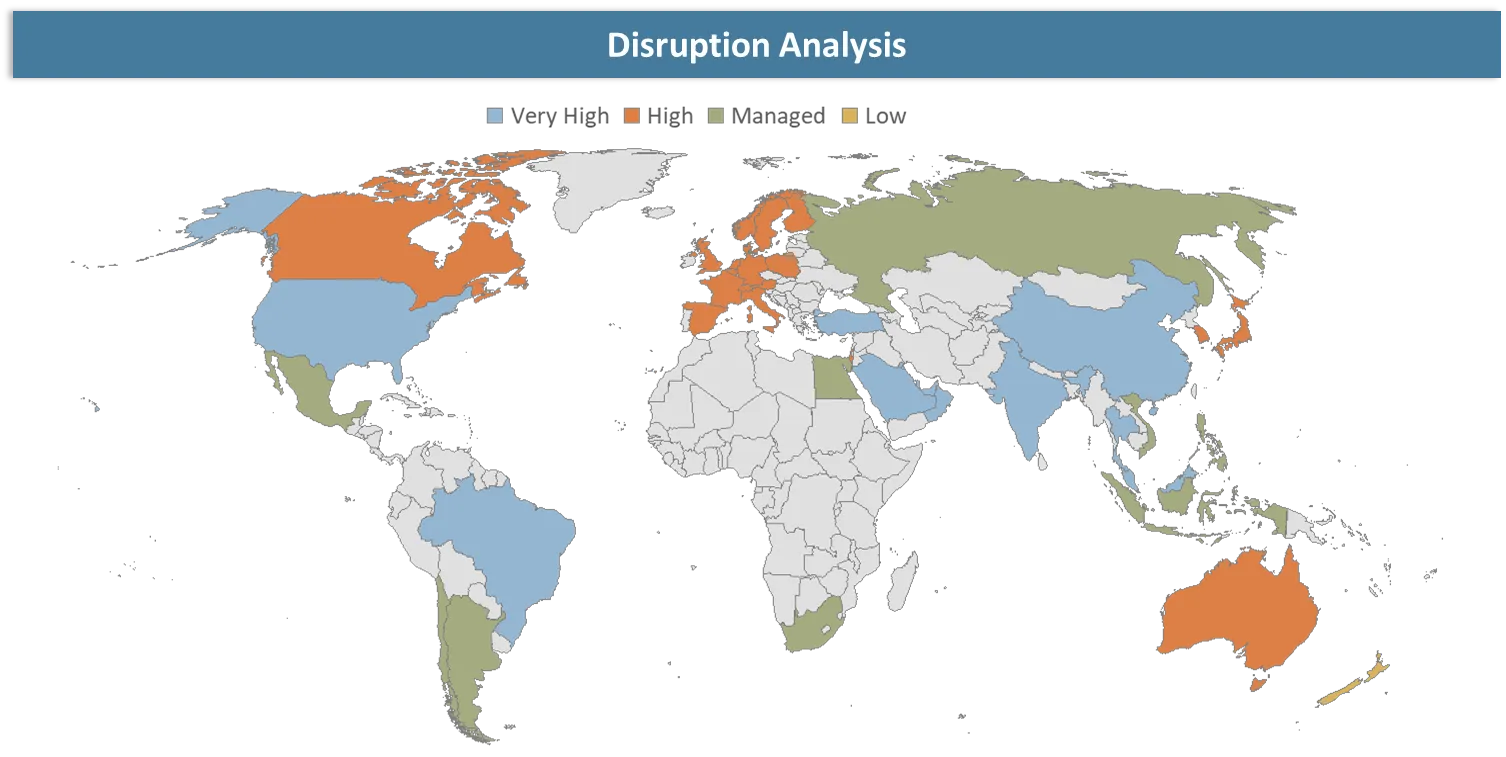
Shift Toward Solid-State Battery Architectures Reshaping Conventional Battery Coating Requirements
The disruption in the Japan battery coating market is increasingly associated with the transition toward all-solid-state battery architectures, where the focus of the coatings has moved from protecting the separator to controlling the interaction between the electrode and the electrolyte. In January 2026, Asahi Kasei mentioned that the Japanese and U.S. companies had included wet-process LIB separator coating lines and considered Hipore wet-process LIB separator a high-value material business. The company expects an FY2025 operating income of USD 1.39 billion (¥221.0 billion) and has decided on USD 3.14 billion (¥500 billion) plus capital expenditure for growth-related activities.
This transition is also reshaping the competitive needs of suppliers of coating processes, where the manufacturing requires solutions that allow for the provision of highly accurate, even, and application-specific coatings for complex battery structures. The investment program of Asahi Kasei amounts to roughly USD 6.28 billion (¥1 trillion), including roughly USD 4.21 billion (¥670 billion) of expansion-related investments, of which roughly 60% is planned for investment in the company’s First Priority business areas, where the creation of wet-process LIB separator coating plants in Japan is mentioned as a growth area. It shows that coating capabilities become strategic assets in balancing current demand for lithium-ion batteries and developing future technologies.
Japan Battery Coating Market BCG Matrix: Company Evaluation
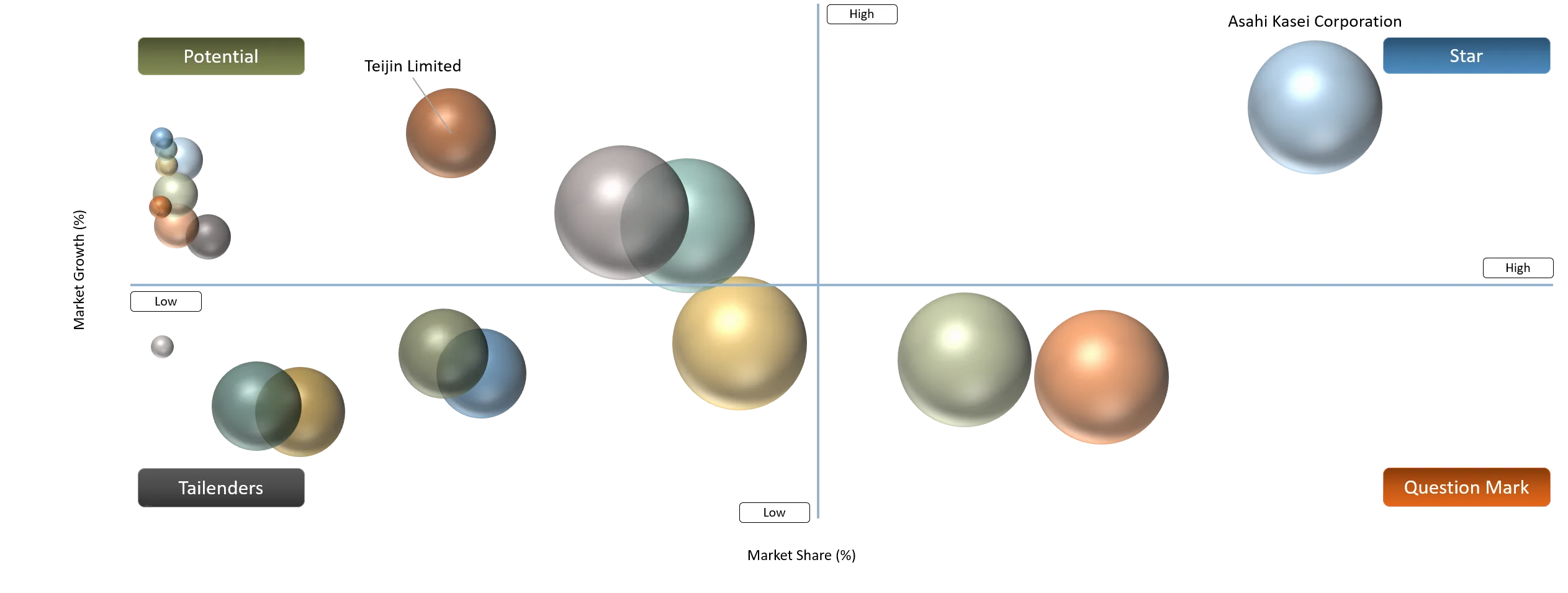
Stars include Asahi Kasei Corporation and Toray Industries, Inc. because they have strong positions in battery separator and functional-material technologies and are expanding their capabilities for lithium-ion and next-generation battery applications. Question Marks include Zeon Corporation, UBE Corporation, Resonac Holdings Corporation, and JSR Corporation, as these companies possess established expertise in battery materials, polymers, functional chemicals, and electrode-related technologies but have comparatively narrower exposure to the dedicated battery-coating market.
Potential includes Teijin Limited, W-Scope Corporation, Fujifilm Corporation, and TOMOEGAWA Co., Ltd., which have relevant capabilities in separators, specialty materials, films, functional coatings, and precision material technologies but have a comparatively smaller direct position in Japan’s battery-coating ecosystem. Tailenders include DIC Corporation, whose extensive specialty-chemicals and functional-material portfolio provides technological relevance to battery applications, but whose direct positioning in Japan’s battery-coating market remains more limited compared with companies with dedicated battery-separator or battery-material platforms.
Japan Battery Coating Market Dynamics
Driver Impact Analysis
| Driver | Market Growth Impact (%) | Demand Concentration | Impacted Use Case | Strategic Impact |
Expansion of domestic battery manufacturing capacity is driving demand for electrode and separator coatings. | 30% | High – Japan’s domestic cell, electrode, and separator manufacturing ecosystem | EV batteries, stationary energy storage, battery components | Expanding domestic cell production directly increases requirements for coated separators, electrode coatings, and coating-process capacity, strengthening opportunities for localized coating suppliers. |
Growing EV battery production in Japan is increasing demand for advanced coatings. | 25% | High – Automotive battery manufacturing | EV battery cells, modules, and packs | EV-oriented batteries require coatings that improve thermal stability, durability, safety, and separator performance; Asahi Kasei specifically identifies coated Hipore separators as a growth area for automotive applications. |
Development of next-generation and all-solid-state batteries is accelerating demand for high-performance coating materials. | 20% | Medium–High – Advanced battery R&D and next-generation cell production | Solid-state batteries, high-energy-density lithium-ion batteries | Creates demand for specialized interface, ceramic, oxide, polymer, and composite coatings capable of addressing electrode–electrolyte compatibility and stability requirements. |
Government support for domestic battery supply-chain localization is encouraging investment in battery manufacturing and related coating technologies. | 15% | High – Domestic battery-material and manufacturing supply chain | Battery materials, cells, separators, electrode manufacturing equipment | Public support reduces investment barriers and encourages localization of critical battery materials and manufacturing technologies, improving the commercial environment for domestic coating suppliers. |
Increasing emphasis on battery safety and thermal stability is driving adoption of ceramic, polymer, and other functional coatings for battery separators and electrodes. | 10% | High – Safety-critical battery components | EV batteries, ESS, consumer electronics | Functional coatings can improve thermal resistance, dimensional stability, insulation, and battery reliability, increasing the value of coated separators and advanced electrode-surface treatments. |
Expansion of domestic battery manufacturing capacity is driving demand for electrode and separator coatings
The expansion of Japanese domestic battery manufacturing capacity is generating an important structural catalyst for the growth of coatings for electrodes and separators, because as more cells are produced, more coatings will be required in order to achieve the desired thermal stability, electrochemical behavior, adhesion, and safety. In June 2026, as per Nikkei BP, the updated Battery and Power Sources Industry Strategy of Japan aims at establishing 150 GWh/year domestic battery manufacturing capability for batteries, components, and manufacturing equipment in the period from 2030 to the mid-2030s, whereas the earlier goal of reaching 150 GWh/year of domestic battery manufacturing capacity in 2030 has been achieved already due to government-driven investments, which means that the 100+ GWh/year of domestic battery manufacturing capacity has been announced.
In parallel, the revised strategy is strengthening Japan's position across both domestic and overseas battery manufacturing, creating additional requirements for advanced coating materials and production technologies. According to Nikkei BP, Japanese companies seek to produce 600 GWh of batteries annually in 2030, which would be about 20 percent of the total global production if the market achieves 3,000 GWh per year, while the plans for foreign production capacity growth have already exceeded 100 GWh per year. The source states that the global storage battery market will double during 2025-2035 and grow by 2.4 times until 2040, and the demands for the batteries in the automotive industry, stationary storage, and AI data centers contribute to growing requirements for the higher performance of the batteries, which stimulates manufacturers to utilize more sophisticated coatings for the electrodes and separators.
Restraint Impact Analysis
| Restraint | Drag on Market Growth (%) | Primary Impact Area | Impacted Use Case | Strategic Impact |
Volatility in prices of key coating raw materials such as PVDF and battery-grade alumina increases production costs. | 5% | Raw-material procurement & production cost | PVDF-based electrode coatings; alumina/ceramic separator coatings | Margin pressure and pricing uncertainty; manufacturers may pass higher input costs to battery producers or prioritize higher-value coating grades. |
Long qualification and validation cycles of 12–24 months for new battery coating formulations delay commercialization and supplier switching among Japanese cell manufacturers. | 4% | Product qualification & supplier approval | EV batteries, ESS batteries, high-performance lithium-ion cells | Slows adoption of new coating technologies and favors incumbent suppliers with established qualification records, increasing barriers for new entrants. |
High precision and quality requirements for battery coating processes increase manufacturing complexity, equipment investment, and quality-control costs. | 5% | Manufacturing process & quality control | Thin and uniform electrode coatings; ceramic-coated separators; high-energy-density batteries | Raises capex and operating costs and increases yield risk, encouraging manufacturers to invest in advanced process monitoring, automated coating control, and precision metrology. |
Competition from lower-cost Chinese and South Korean coating suppliers puts pressure on Japanese manufacturers. | 6% | Competitive pricing & supplier positioning | EV batteries, consumer electronics batteries, ESS and industrial batteries | Pricing pressure and potential market-share erosion; Japanese suppliers are pushed toward differentiated high-purity, high-performance and safety-oriented coatings rather than competing solely on price. |
Volatility in prices of key coating raw materials such as PVDF and battery-grade alumina increases production costs
One of the major restraints affecting the growth of the Japan battery coating market is the volatility in prices of essential coating raw materials, particularly polyvinylidene fluoride (PVDF) and battery-grade alumina. In May 2026, according to the article by Sohu, the average prices for mainstream Kureha Japan PVDF prices for industrial grade are USD 8,630-10,267 (RMB 58,000-69,000) per ton, whereas prices for lithium-battery-grade materials are estimated at USD 17,112-27,677 (RMB 115,000-186,000) per ton, showing how expensive it is to produce battery coatings of high quality. Moreover, it is stated that some PVDF grades manufactured by Kureha Company cost about USD 26.5 (RMB 178/kg) (W#850), USD 23 (RMB 155/kg) (W#9300), and USD 24.5 (RMB 165/kg) (KF1300), whereas spot prices from Shanghai Fluorine New Materials could be 5%-15% cheaper.
Additionally, variations in prices of PVDF raw materials may further add to the pressure on the cost of production. According to Sohu, R142b constituted more than 90 percent of the cost of Wu Yu PVDF, which was estimated to cost about USD 26,784 (RMB 180,000) per ton in August 2025, while high demand for lithium-ion batteries and photovoltaic applications had contributed to its shortage. The report also shows that domestically manufactured PVDF had been priced at about USD 8,184-10,267 (RMB 55,000-69,000) per ton, compared to USD 17,112-27,677 (RMB 115,000-186,000) per ton for imported PVDF due to its relatively low impurity content and consistent batch quality for lithium-ion battery applications. Therefore, fluctuations in PVDF raw material price and grade-based prices will result in increased costs of procurement of coating materials, reduced margins, and increased difficulty in maintaining stable pricing for Japanese battery-coating manufacturers.
Japan Battery Coating Market Segment Analysis
The Japan battery coating market is segmented based on battery component, coating material, coating technology, battery type, function, and application.
Dominance of Lithium-Ion Batteries Driving High-Volume Demand for Battery Coatings
The lithium-ion batteries segment dominates the Japan battery coating market with a 95% market share in 2025, due to the extensive use of lithium-ion batteries in electric vehicles, consumer electronics, portable devices, and energy storage systems. In February 2026, according to International Energy Agency (IEA), the lithium-ion battery deployments in 2025 increased by a factor of six from 2020 with 70% contribution from electric vehicles while battery energy storage systems had a contribution of more than 15%. Furthermore, the report by IEA indicated that battery prices fell by 8% in 2025, which helped fuel battery adoption further. The developments are contributing to the demand for battery coating with thermal stability, electrical insulation properties, adhesion, and chemical protection.
The growing electric vehicle market is increasingly contributing to the rising demand for lithium-ion batteries and thus the need for new generation coating materials. The IEA estimates global EV battery deployment at about 1.2 TWh in 2025 and at nearly 3 TWh by 2030 in both the Current Policies Scenario and the Stated Policies Scenario. It further estimates that electric trucks made up 8% of total EV battery deployment in 2025, indicating growing diversity of lithium-ion battery applications other than passenger cars. Further, the IEA has estimated that China, the European Union, and the United States were the major contributors to EV battery deployment, whereas emerging markets and developing countries had around a 6% share in global EV battery deployment in 2025. This high level of deployment and diversity of applications makes lithium-ion batteries the major battery-type segment of the battery coating market in Japan.
Japan Battery Coating Market Competitive Landscape
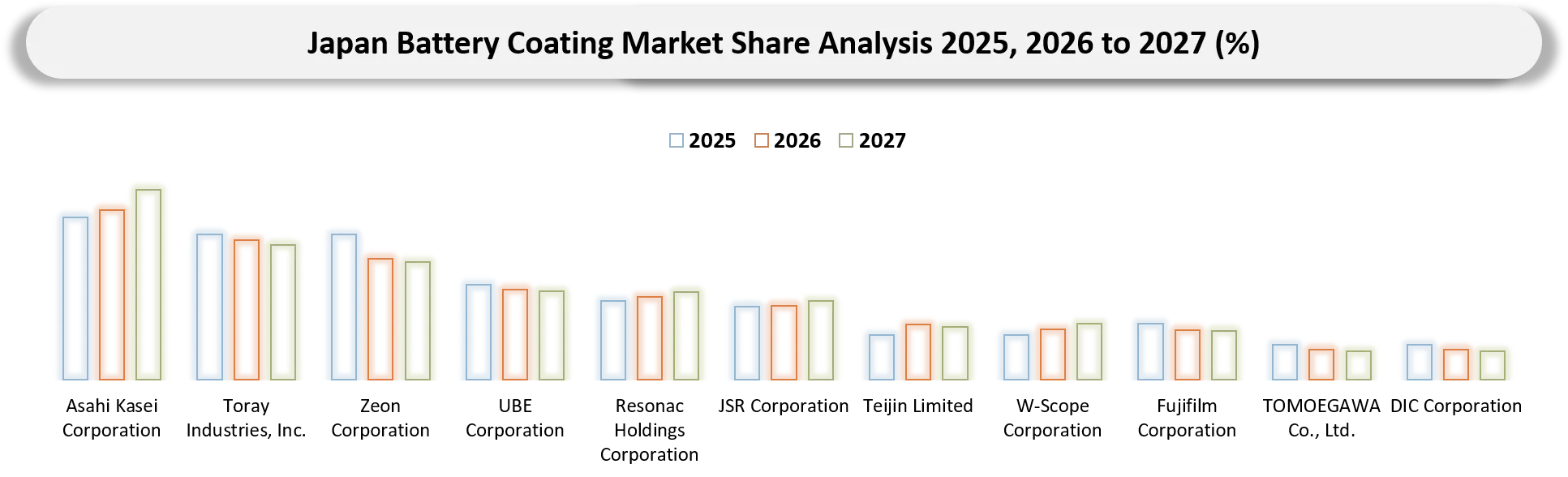
- The Japan battery coating market is characterized by a diversified group of specialty chemical manufacturers, battery-material suppliers, separator producers, and functional-coating technology companies. Asahi Kasei Corporation, Toray Industries, Inc., Zeon Corporation, UBE Corporation, Resonac Holdings Corporation, and JSR Corporation compete through advanced polymer, ceramic, and functional-material technologies used in lithium-ion battery components, while Teijin Limited and W-Scope Corporation focus on separator and coated-separator technologies. Fujifilm Corporation, TOMOEGAWA Co., Ltd., and DIC Corporation further contribute through functional materials, coating formulations, and specialty chemical technologies. This creates a technology-driven competitive landscape where coating performance, material compatibility, manufacturing capabilities, product quality, and relationships with battery manufacturers influence competitiveness.
- Key players include Asahi Kasei Corporation (Japan), Toray Industries, Inc. (Japan), Zeon Corporation (Japan), UBE Corporation (Japan), Resonac Holdings Corporation (Japan), JSR Corporation (Japan), Teijin Limited (Japan), W-Scope Corporation (Japan), Fujifilm Corporation (Japan), TOMOEGAWA Co., Ltd. (Japan), and DIC Corporation (Japan).
Key Developments
- July 2025: Asahi Kasei Corporation, a Japan-based diversified chemical and advanced materials company, entered into a strategic partnership with Toyota Tsusho Corporation, a Japan-based trading and mobility company, to supply Hipore wet-process lithium-ion battery separators in North America.
- October 2025: Evonik Industries AG, a Germany-based specialty chemicals company, inaugurated its Alu5 production facility in Yokkaichi, Japan, representing a mid-double-digit million-euro investment supported by the Japanese government.
- May 2025: Sojitz Corporation, a Japan-based trading and investment company, agreed to acquire a 66.5% stake in NIPPON A&L INC., a Japan-based specialty chemicals and materials company, from Sumitomo Chemical Co., Ltd. and Mitsui Chemicals, Inc. NIPPON A&L manufactures, sells, and conducts R&D for SBR latexes and ABS resins, with its SBR latex used as an anode binder for lithium-ion batteries.
- June 2026: UBE MAXELL Co., Ltd., a Japan-based lithium-ion battery separator manufacturer and joint venture of UBE Corporation and Maxell, Ltd., announced plans to construct a new separator base-film production facility at its Sakai Works in Japan to meet growing automotive lithium-ion battery demand.
- September 2025: DIC Corporation, a Japan-based specialty chemicals and materials company, developed GELRAMIC, an endothermic pad material designed to prevent the propagation of battery fires during thermal-runaway events.
Key Procurement Priorities and Buyer Evaluation Criteria
- Organizations procuring battery coating materials and technologies in the Japan Battery Coating Market increasingly select suppliers based on their ability to provide high-performance coating solutions for lithium-ion batteries that deliver thermal stability, electrical insulation, strong adhesion, chemical resistance, and consistent coating quality across large-scale production.
- The procurement decision-making process is increasingly influenced by the growing demand for high-energy-density batteries, electric vehicles, consumer electronics, and battery energy-storage systems, requiring coating suppliers to provide materials compatible with advanced electrode and separator technologies while supporting thinner, lighter, safer, and higher-performance battery designs.
- Buyers consider factors such as coating uniformity, thermal stability, adhesion strength, electrical insulation, chemical compatibility, defect control, durability, and production consistency when evaluating battery coating suppliers. The ability to maintain consistent coating thickness and performance during high-volume manufacturing is particularly important for Japanese battery and component manufacturers.
Why Choose DataM?
- Technological Innovations: Explores advancements in battery coating technologies, including ceramic coatings, polymer-based coatings, separator coatings, and functional surface treatments, enabling improved thermal stability, electrical insulation, mechanical strength, chemical resistance, and overall lithium-ion battery safety and performance.
- Product Performance & Market Positioning: Evaluates how different players deliver battery coating solutions based on coating uniformity, adhesion, thermal resistance, insulation properties, chemical stability, durability, and production efficiency, highlighting how leading companies differentiate through material innovation, process optimization, and scalable manufacturing capabilities.
- Real-World Evidence: Highlights the adoption of battery coating technologies across electric vehicles, consumer electronics, portable devices, and battery energy-storage systems, demonstrating their role in improving battery safety, cycle life, energy density, thermal management, and reliability.
- Market Updates & Industry Changes: Tracks key developments such as battery manufacturing capacity expansions, separator production investments, new coating technologies, next-generation battery development, and strategic initiatives across Japan, supporting analysis of the evolving domestic battery-materials ecosystem.
- Competitive Strategies: Analyzes how leading companies strengthen their market positions through coating technology development, production expansion, strategic partnerships, material innovation, and integration with battery and separator manufacturing to address the growing demand for high-performance lithium-ion batteries.
- Pricing & Market Access: Examines pricing variations according to coating material type, formulation, coating thickness, performance requirements, production scale, and application, while assessing access through battery manufacturers, separator producers, material suppliers, and specialized coating technology providers.
- Market Entry & Expansion: Identifies growth opportunities arising from electric vehicles, energy-storage systems, consumer electronics, and next-generation batteries, while outlining strategies such as domestic production expansion, advanced material development, technology differentiation, customer partnerships, and integration across Japan's battery supply chain.
Target Audience 2026
- Battery Manufacturers and Cell Producers
- Battery Separator and Material Manufacturers
- Automotive OEMs and EV Manufacturers
- Battery Coating Technology & Equipment Suppliers
- Specialty Chemical and Functional Material Companies
- Energy Storage System Manufacturers
- Research Institutions and Technology Developers


























































