


Global Interstitial Lung Disease (ILD) Market Overview
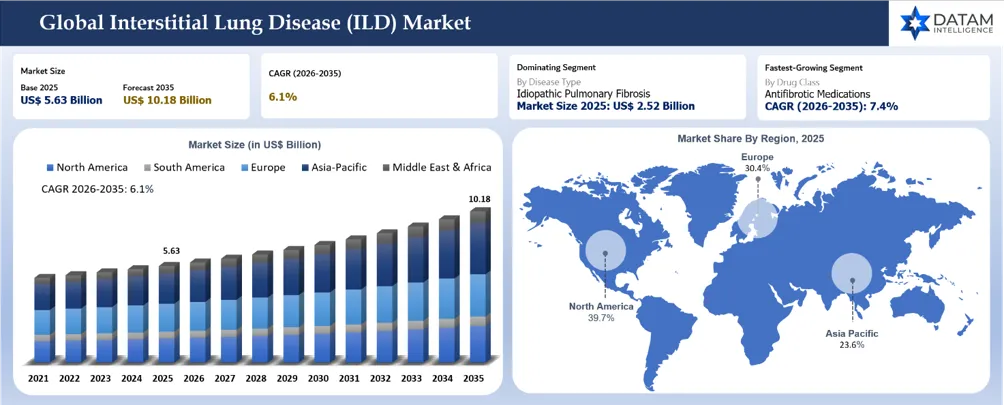
The global interstitial lung disease (ILD) market reached US$5.63 billion in 2025 and is expected to reach US$10.18 billion by 2035, growing with a CAGR of 6.1% during the forecast period 2026-2035.
Growth is being shaped by increasing detection of fibrotic lung diseases, wider availability of high-resolution computed tomography and growing recognition of progressive pulmonary fibrosis across multiple ILD subtypes. However, delayed diagnosis, overlapping clinical features and limited access to multidisciplinary ILD centers continue to restrict timely treatment. Idiopathic pulmonary fibrosis remains the principal revenue contributor, supported by established antifibrotic use and high treatment costs. Nevertheless, gastrointestinal adverse effects, hepatic monitoring requirements and treatment discontinuation create demand for better-tolerated therapies.
Antifibrotic medications represent the market’s primary growth engine. Treatment is expanding beyond idiopathic pulmonary fibrosis into progressive pulmonary fibrosis and systemic sclerosis-associated ILD. Recent regulatory approvals for nerandomilast strengthen the oral-treatment landscape, while emerging inhaled and mechanism-specific candidates aim to improve lung targeting, tolerability and treatment persistence. Competitive advantage will increasingly depend on indication breadth, preservation of forced vital capacity, compatibility with immunosuppressive therapy and reimbursement coverage.
The next value-creation cycle will center on novel antifibrotics, inhaled therapies, pulmonary vascular treatments, biologic immunomodulators and biomarker-directed patient selection. Companies integrating drug development with artificial intelligence-enabled imaging, earlier progression detection, real-world evidence and multidisciplinary care networks will be better positioned to reshape treatment pathways and capture premium market value.
Global Interstitial Lung Disease (ILD) Market Key Takeaways
- Sustained Market Expansion Through 2035: The global interstitial lung disease market was valued at US$5.63 billion in 2025 and is projected to reach US$10.18 billion by 2035, registering a CAGR of 6.1% during 2026-2035.
- Idiopathic Pulmonary Fibrosis Maintains Market Leadership: Idiopathic pulmonary fibrosis accounted for an estimated 44.8% of the global market in 2025, equivalent to approximately US$2.52 billion, supported by established diagnosis pathways and long-term utilization of approved antifibrotic therapies.
- Antifibrotic Medications Become the Primary Growth Engine: Antifibrotic medications are expected to record the fastest growth at a 7.4% CAGR through 2035, driven by indication expansion beyond IPF into progressive pulmonary fibrosis and the introduction of novel oral and inhaled therapies.
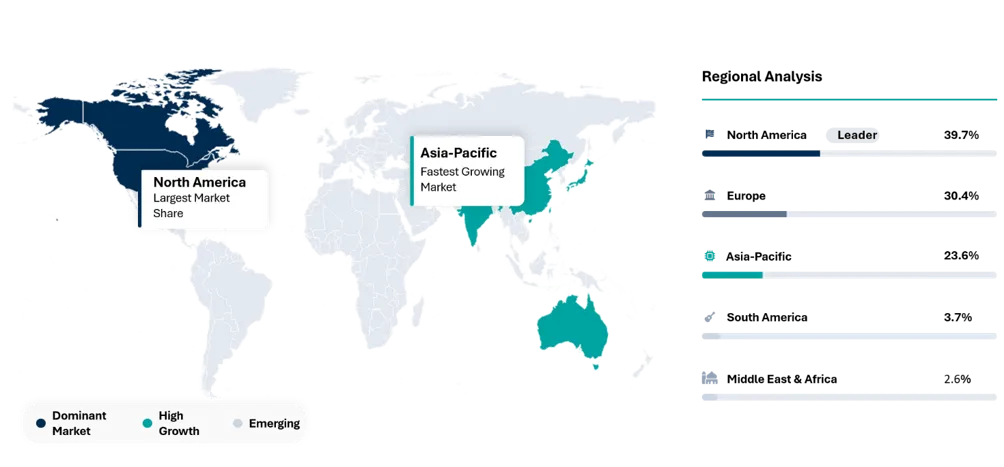
- North America Maintains Regional Dominance: North America accounted for approximately 39.7% of the global market in 2025, equivalent to around US$2.24 billion, supported by advanced ILD centers, favorable reimbursement, high treatment expenditure and rapid adoption of innovative therapies.
- Phenotype-Based Treatment Reshapes Competitive Strategy: Future market leadership will depend on identifying progressive fibrotic phenotypes, improving diagnostic speed and demonstrating sustained preservation of lung function. Companies delivering better tolerability, broader ILD indications, convenient administration and compatibility with background immunosuppressive treatment will be best positioned to capture market share.
Global Interstitial Lung Disease (ILD) Market Scope
| Metrics | Details | |
| 2025 Market Size | US$5.63 Billion | |
| 2035 Projected Market Size | US$10.18 Billion | |
| CAGR (2026-2035) | 6.1% | |
| Largest Market | North America | |
| Fastest Growing Market | Asia-Pacific | |
| By Disease Type | Interstitial Pneumonia, Idiopathic Pulmonary Fibrosis, Nonspecific Interstitial Pneumonitis, Hypersensitivity Pneumonitis, Cryptogenic Organizing Pneumonia, Acute Interstitial Pneumonitis, Others | |
| By Drug Type | Oral Corticosteroids, Immunosuppressive Drugs, Antifibrotic Medications, Others | |
| By Distribution Channel | Hospital Pharmacies, Retail Pharmacies, Online Pharmacies, Others | |
| By Region | North America | U.S., Canada, Mexico |
| Europe | Germany, UK, France, Spain, Italy, Poland | |
| Asia-Pacific | China, India, Japan, Australia, South Korea, Indonesia, Malaysia, Singapore, Vietnam, Thailand, Philippines, Taiwan | |
| South America | Brazil, Argentina | |
| Middle East and Africa | Israel, Saudi Arabia, UAE, Turkiye, South Africa, Nigeria | |
| Report Insights Covered | Competitive Landscape Analysis, Company Profile Analysis, Market Size, Share, Growth | |
Global Interstitial Lung Disease (ILD) Market White Space & Investment Opportunities
- Earlier Detection and Progression Risk Stratification: Invest in artificial intelligence-enabled high-resolution computed tomography, blood-based biomarkers, pulmonary-function monitoring and digital respiratory assessment tools. Earlier identification of fibrotic changes and patients likely to develop progressive pulmonary fibrosis can support timely treatment before substantial and irreversible lung-function loss occurs.
- Therapies for Progressive Non-IPF Fibrotic Lung Disease: Develop treatments targeting progressive pulmonary fibrosis arising from hypersensitivity pneumonitis, connective tissue disease-associated ILD, nonspecific interstitial pneumonia and unclassifiable ILD. This population remains less comprehensively served than idiopathic pulmonary fibrosis and represents a significant indication-expansion opportunity.
- Better-Tolerated Antifibrotic Therapies: Advance oral antifibrotics with improved gastrointestinal and hepatic safety profiles. Reducing diarrhea, nausea, photosensitivity, liver-enzyme abnormalities and treatment fatigue could decrease dose reductions, improve long-term persistence and differentiate new therapies from established nintedanib and pirfenidone treatment.
- Lung-Targeted and Inhaled Drug-Delivery Platforms: Invest in inhaled antifibrotics, pulmonary vasodilators and sustained-release formulations that deliver higher therapeutic concentrations directly to the lungs while limiting systemic exposure. Inhaled pirfenidone, nintedanib and prostacyclin-based candidates could reshape treatment across IPF, PPF and PH-ILD.
- Combination-Treatment and Sequencing Evidence: Generate comparative evidence defining how antifibrotics, corticosteroids, immunosuppressive agents and pulmonary vascular therapies should be combined or sequenced according to ILD subtype, disease progression, autoimmune involvement, lung-function decline and previous treatment. Clearer evidence could improve physician confidence and reimbursement decisions.
- Geographic Access and Outcome-Based Reimbursement: Expand access to specialist ILD centers, high-resolution imaging, pulmonary-function testing and approved therapies across underserved markets. Real-world evidence linking earlier diagnosis, sustained treatment, preserved forced vital capacity, fewer hospitalizations and improved quality of life will be essential for supporting broader reimbursement and market penetration.
Global Interstitial Lung Disease (ILD) Market Buyer Decision-Making Criteria
Major Buyer Decision-Making Criteria:
- Ability to Slow Forced Vital Capacity Decline
- Reduction in Disease Progression and Acute Exacerbations
- Effectiveness Across IPF and Non-IPF Progressive Fibrotic ILDs
- Suitability for Connective Tissue Disease-Associated ILD
- Effectiveness in Pulmonary Hypertension Associated With ILD
- Improvement in Respiratory Symptoms and Exercise Capacity
- Preservation of Functional Status and Quality of Life
- Overall Survival and Long-Term Clinical Benefit
- Safety, Tolerability and Treatment-Discontinuation Risk
- Compatibility With Background Immunosuppressive Therapy
- Route of Administration, Dosing Frequency and Treatment Convenience
- Pulmonary-Function, Liver-Function and Safety-Monitoring Requirements
- Pricing, Reimbursement and Overall Treatment Cost
- Guideline Positioning, Regulatory Approval and Physician Experience
- Geographic Availability, Supply Reliability and Patient-Support Services
Global Interstitial Lung Disease (ILD) Market BCG Matrix: Company Evaluation

STAR
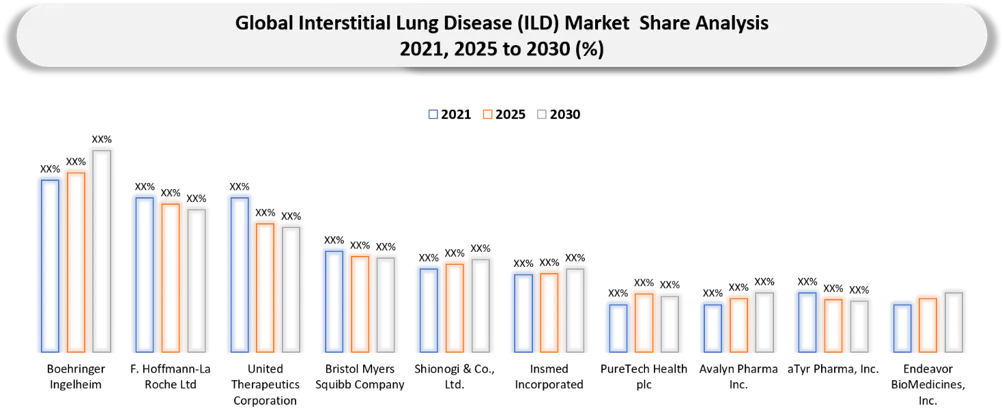
Boehringer Ingelheim, F. Hoffmann-La Roche Ltd, United Therapeutics Corporation and Shionogi & Co., Ltd. are positioned in the Star category based on their approved ILD therapies, established respiratory commercialization capabilities and influence on treatment selection. Boehringer Ingelheim maintains a leading position through OFEV for idiopathic pulmonary fibrosis, systemic sclerosis-associated ILD and progressive fibrosing ILDs, complemented by JASCAYD. Roche competes through Esbriet for idiopathic pulmonary fibrosis and Actemra for systemic sclerosis-associated ILD.
United Therapeutics strengthens its position through Tyvaso and Tyvaso DPI for pulmonary hypertension associated with ILD, while Shionogi participates through Pirespa in selected Asian markets. Future leadership will depend on indication expansion, geographic coverage, tolerability, reimbursement, specialist-prescriber access and real-world evidence demonstrating sustained preservation of lung function. Companies integrating early diagnosis, pulmonary-function monitoring and multidisciplinary ILD-care networks will retain stronger commercial positioning.
POTENTIAL
Bristol Myers Squibb Company, Insmed Incorporated, PureTech Health plc, Avalyn Pharma Inc., aTyr Pharma, Inc., Endeavor BioMedicines, Inc., Insilico Medicine, Bridge Biotherapeutics, Inc. and Vicore Pharma Holding AB are positioned in the Potential category because of their involvement in emerging antifibrotic, anti-inflammatory, pulmonary vascular and inhaled-treatment platforms.
Bristol Myers Squibb is advancing admilparant for idiopathic and progressive pulmonary fibrosis, while Insmed is developing treprostinil palmitil inhalation powder. PureTech is progressing deupirfenidone, Avalyn Pharma is evaluating inhaled pirfenidone and nintedanib, and aTyr Pharma is developing efzofitimod for pulmonary sarcoidosis and systemic sclerosis-associated ILD. Endeavor BioMedicines, Insilico Medicine, Bridge Biotherapeutics and Vicore Pharma are advancing differentiated fibrosis-targeting candidates. Progression toward the Star category will depend on Phase III success, regulatory approvals, meaningful preservation of lung function, improved tolerability, combination compatibility, manufacturing scalability, reimbursement and successful global commercialization partnerships.
Global Interstitial Lung Disease (ILD) Market Dynamics
Driver Impact Analysis
| Driver | Market Growth Impact (%) | Demand Concentration | Impacted Use Case | Strategic Impact |
Expansion of Antifibrotic Treatment Beyond Idiopathic Pulmonary Fibrosis Into Progressive Pulmonary Fibrosis | 18.3% | High across North America, Europe and Japan; expanding across China and other Asia-Pacific markets | Treatment of non-IPF fibrotic ILDs demonstrating progressive decline despite conventional disease management | Broadening eligible populations beyond IPF increases prescription volumes and encourages earlier identification of progressive phenotypes |
Increasing Detection Through High-Resolution Computed Tomography and Multidisciplinary ILD Evaluation | 15.7% | Concentrated in developed healthcare systems and expanding tertiary-care networks in emerging markets | Earlier diagnosis and differentiation of IPF, hypersensitivity pneumonitis, connective tissue disease-associated ILD and pulmonary sarcoidosis | Improved diagnostic accuracy reduces delayed treatment initiation and expands the addressable diagnosed patient population |
Growing Recognition and Treatment of Connective Tissue Disease-Associated ILD | 13.9% | Strong demand across rheumatology and pulmonology centers in North America, Europe and Asia-Pacific | Management of systemic sclerosis-associated ILD, rheumatoid arthritis-associated ILD and other autoimmune fibrotic lung diseases | Greater pulmonologist-rheumatologist coordination supports screening, referral, antifibrotic use and combination treatment strategies |
Emergence of Novel Oral, Inhaled and Biomarker-Directed ILD Therapies | 12.6% | Highest across clinical-trial hubs in the United States, Europe, China and Japan | Treatment of IPF, progressive pulmonary fibrosis, PH-ILD and pulmonary sarcoidosis inadequately controlled by existing therapies | Differentiated mechanisms and lung-targeted delivery could improve tolerability, treatment persistence and competitive positioning while reducing dependence on existing antifibrotics |
Driver: Expansion of Antifibrotic Treatment Beyond Idiopathic Pulmonary Fibrosis Into Progressive Pulmonary Fibrosis
The expansion of antifibrotic treatment beyond idiopathic pulmonary fibrosis is materially enlarging the addressable interstitial lung disease population. Progressive pulmonary fibrosis can develop across several non-IPF conditions, including connective tissue disease-associated ILD, fibrotic hypersensitivity pneumonitis, idiopathic nonspecific interstitial pneumonia and unclassifiable fibrotic ILD. Recognition that these diseases can share a progressive fibrotic phenotype has shifted clinical decision-making from diagnosis-specific management toward progression-based treatment. Consequently, declining forced vital capacity, worsening respiratory symptoms and increasing radiological fibrosis are becoming important triggers for initiating antifibrotic therapy alongside appropriate immunomodulatory treatment.
This transition creates commercial opportunities for companies capable of demonstrating efficacy across heterogeneous ILD populations. Broader approvals for nintedanib and nerandomilast have validated progressive pulmonary fibrosis as a distinct therapeutic segment and encouraged investment in next-generation oral, inhaled and combination therapies. Market growth will also depend on standardized progression criteria, earlier referral to specialist ILD centers, improved pulmonary-function monitoring and greater coordination between pulmonologists and rheumatologists. However, variable reimbursement, treatment-related adverse effects and uncertainty regarding optimal sequencing with immunosuppressive agents may restrict adoption. Companies generating subtype-specific evidence and real-world outcomes will be better positioned to secure formulary access and expand treatment penetration.
Restraint Impact Analysis
| Restraint | Drag on Market Growth (%) | Primary Impact Area | Impacted Use Case | Strategic Impact |
Delayed Diagnosis and Difficulty Differentiating Heterogeneous ILD Subtypes | 16.9% | Diagnosed population, treatment eligibility and timing of intervention | Patients with early IPF, fibrotic hypersensitivity pneumonitis, connective tissue disease-associated ILD and unclassifiable ILD | Diagnostic delays allow irreversible fibrosis to progress, reduce the treatment window and limit the number of patients eligible for timely disease-modifying therapy |
Gastrointestinal, Hepatic and Treatment-Tolerability Burden of Existing Antifibrotics | 14.8% | Treatment initiation, dose maintenance and long-term persistence | Patients receiving nintedanib, pirfenidone and other long-duration oral antifibrotic therapies | Diarrhea, nausea, photosensitivity, liver-enzyme abnormalities and treatment fatigue drive dose reductions and discontinuation, weakening real-world effectiveness and revenue persistence |
High Therapy Costs and Uneven Reimbursement Across ILD Indications | 13.6% | Patient affordability, formulary access and geographic treatment penetration | Patients with IPF, PPF, SSc-ILD and PH-ILD requiring prolonged branded therapy and specialist monitoring | Restrictive prior authorization and inconsistent coverage for non-IPF indications delay treatment, concentrate demand in developed markets and constrain adoption across emerging economies |
Clinical-Trial Complexity Caused by Disease Heterogeneity and Slow Progression Measurement | 11.7% | Drug development timelines, trial recruitment and regulatory approval | Development of therapies for PPF, pulmonary sarcoidosis and connective tissue disease-associated ILD | Variable progression rates, competing background treatments and reliance on forced vital capacity increase trial duration, cost and failure risk, discouraging investment in smaller ILD subtypes |
Restraint: Delayed Diagnosis and Difficulty Differentiating Heterogeneous ILD Subtypes
Delayed diagnosis represents a major structural restraint for the global interstitial lung disease market because early symptoms, including persistent cough, fatigue and exertional breathlessness, frequently resemble asthma, chronic obstructive pulmonary disease, infection or cardiovascular disease. ILD comprises more than 200 disorders with overlapping clinical, radiological and pathological features, making accurate subtype classification difficult outside specialist centers. Distinguishing idiopathic pulmonary fibrosis from hypersensitivity pneumonitis, connective tissue disease-associated ILD, sarcoidosis and unclassifiable ILD requires detailed exposure histories, high-resolution computed tomography, pulmonary-function testing, autoimmune evaluation and, in selected cases, bronchoscopy or lung biopsy.
These diagnostic complexities delay referral and treatment initiation while irreversible fibrosis continues to develop. Late identification reduces the opportunity for antifibrotic or immunomodulatory therapies to preserve lung function and limits the commercially addressable treated population. Diagnostic uncertainty also contributes to inappropriate corticosteroid use, delayed antifibrotic prescribing and inconsistent reimbursement decisions. Market expansion therefore depends on strengthening multidisciplinary collaboration among pulmonologists, radiologists, rheumatologists and pathologists, particularly outside major academic hospitals. Companies can address this barrier by supporting physician education, artificial intelligence-enabled imaging analysis, standardized diagnostic pathways and biomarker development. Earlier subtype differentiation would increase treatment eligibility, improve patient stratification and support broader adoption of targeted ILD therapies.
Market Segmentation Analysis
Anti-Fibrotic Medication segment is expected to hold the largest market share in interstitial lung disease (ILD) market
The anti-fibrotic medication segment is expected to dominate in 2021. The segment benefits because it is shown in clinical trials to slow down the rate of fibrosis or scarring in the lungs. These drugs are approved for patients with mild, moderate and severe IPF. For instance, the US Food and Drug Administration has approved two drugs to treat persons with idiopathic pulmonary fibrosis (IPF). People with scleroderma-related ILD or other kinds of progressive pulmonary fibrosis can also use nintedanib (Ofev) and Esbriet (pirfenidone). Therefore, it has increased the clinical trials and product approvals. Thus, the market segment is expected to hold the largest market share in the forecast period from the above statements.
Global Interstitial Lung Disease (ILD) Market Geographical Penetration
U.S. Interstitial Lung Disease (ILD) Market Landscape
The U.S. interstitial lung disease market is supported by a large diagnosed population, advanced specialist infrastructure and expanding access to phenotype-based treatment. In 2026, the Pulmonary Fibrosis Foundation reported that more than 250,000 Americans were living with pulmonary fibrosis, while approximately 50,000 new cases were diagnosed annually. Demand is concentrated across multidisciplinary ILD centers where pulmonologists, rheumatologists, radiologists and pathologists differentiate IPF, connective tissue disease-associated ILD, hypersensitivity pneumonitis and other progressive fibrotic conditions. Wider use of high-resolution computed tomography and pulmonary-function monitoring is improving recognition of patients requiring disease-modifying treatment.
Commercial competition is shifting beyond established nintedanib and pirfenidone therapies. The FDA approved JASCAYD for IPF in October 2025 and expanded its indication to progressive pulmonary fibrosis in December 2025, strengthening treatment options across broader fibrotic populations. Meanwhile, United Therapeutics, Bristol Myers Squibb, Insmed and emerging biotechnology companies are advancing inhaled, oral and biologic candidates. Market growth will depend on earlier diagnosis, Medicare and commercial-insurance coverage, improved tolerability, combination-treatment evidence and successful engagement with specialist prescribing networks.
Japan Interstitial Lung Disease (ILD) Market Outlook
Japan represents a strategically important interstitial lung disease market because of its rapidly ageing population, established respiratory-specialist network and comparatively high clinical recognition of idiopathic pulmonary fibrosis. Demand is concentrated in university hospitals and designated respiratory centers using high-resolution computed tomography, pulmonary-function testing and multidisciplinary evaluation. The treatment landscape has historically relied on pirfenidone and nintedanib, supported by Japan’s universal health-insurance system. However, delayed referral, treatment-related gastrointestinal adverse effects and conservative prescribing among elderly patients continue to limit therapy initiation and persistence. Growing recognition of progressive pulmonary fibrosis across non-IPF conditions is expanding the eligible treatment population beyond traditional diagnosis-based categories.
The competitive outlook changed materially in May 2026 when Japan’s Ministry of Health, Labour and Welfare approved Boehringer Ingelheim’s JASCAYD for adults with both IPF and progressive pulmonary fibrosis. The approval created an additional oral treatment option across two major fibrotic indications and increased competitive pressure on established antifibrotics. Future growth will be influenced by ageing-related disease burden, earlier detection, improved tolerability and evidence supporting treatment across connective tissue disease-associated ILD and fibrotic hypersensitivity pneumonitis. Commercial success will depend on reimbursement positioning, specialist education, post-marketing evidence and engagement with multidisciplinary ILD centers.
Global Interstitial Lung Disease (ILD) Market Competitive Landscape
- The global interstitial lung disease market remains concentrated around a limited number of approved disease-modifying therapies, with Boehringer Ingelheim, F. Hoffmann-La Roche, United Therapeutics and Shionogi maintaining established commercial positions. Boehringer Ingelheim benefits from OFEV’s coverage across idiopathic pulmonary fibrosis, systemic sclerosis-associated ILD and chronic fibrosing ILDs with a progressive phenotype, while Roche competes through Esbriet and Actemra. United Therapeutics has strengthened its position in pulmonary hypertension associated with ILD through Tyvaso and Tyvaso DPI. Competition increasingly depends on indication breadth, evidence of reduced lung-function decline, tolerability, administration convenience, reimbursement access, physician familiarity and the ability to identify progressive patients earlier.
- Pipeline competition is becoming increasingly mechanism- and delivery-focused. Bristol Myers Squibb, Insmed, PureTech Health, Avalyn Pharma, aTyr Pharma, Endeavor BioMedicines, Insilico Medicine and other biotechnology companies are advancing oral, inhaled and biologic candidates targeting fibrosis, inflammation, pulmonary vascular dysfunction and persistent cough. Emerging programs seek to improve efficacy, reduce gastrointestinal adverse effects and address ILD subtypes inadequately served by current antifibrotics. Competitive advantage will increasingly depend on differentiated clinical endpoints, successful combination with background antifibrotics, biomarker-guided patient selection, global trial execution and partnerships that provide manufacturing scale, regulatory capability and specialist commercial reach.
Key Companies of Interstitial Lung Disease (ILD) Market
- Boehringer Ingelheim (Germany)
- F. Hoffmann-La Roche Ltd (Switzerland)
- United Therapeutics Corporation (United States)
- Bristol Myers Squibb Company (United States)
- Shionogi & Co., Ltd. (Japan)
- Insmed Incorporated (United States)
- PureTech Health plc (United States)
- Avalyn Pharma Inc. (United States)
- aTyr Pharma, Inc. (United States)
- Endeavor BioMedicines, Inc. (United States)
- Tvardi Therapeutics, Inc. (United States)
- Insilico Medicine (United States)
- Daewoong Pharmaceutical Co., Ltd. (South Korea)
- Bridge Biotherapeutics, Inc. (South Korea)
- Redx Pharma plc (United Kingdom)
- Vicore Pharma Holding AB (Sweden)
- Gossamer Bio, Inc. (United States)
- Roivant Sciences Ltd. (United Kingdom)
- Trevi Therapeutics, Inc. (United States)
- AdAlta Limited (Australia)
Global Interstitial Lung Disease (ILD) Market Recent Developments
- September 2026: Roivant Sciences Ltd. reported positive Phase II PHocus results for inhaled mosliciguat in pulmonary hypertension associated with interstitial lung disease. The candidate produced a 56.3% placebo-adjusted reduction in pulmonary vascular resistance and a 35.2-meter improvement in six-minute walk distance at Week 16. Roivant also initiated the Phase III PHrontier study.
- September 2026: Endeavor BioMedicines, Inc. presented additional Phase IIa imaging results for taladegib in idiopathic pulmonary fibrosis. Taladegib increased mean lung volume by 204 mL, compared with a 60 mL decline in the placebo group, and reduced total interstitial lung disease extent by 2.9%.
- September 2026: The U.S. FDA accepted United Therapeutics Corporation’s supplemental New Drug Application for nebulized Tyvaso to treat idiopathic pulmonary fibrosis. If approved, Tyvaso could become the first inhaled antifibrotic therapy available for this indication.
- September 2026: aTyr Pharma, Inc. reported continued regulatory progress for efzofitimod in pulmonary sarcoidosis with restrictive lung disease. The company was awaiting FDA feedback on its proposed protocol for a new Phase III study using forced vital capacity as the primary endpoint.
- August 2026: Insmed Incorporated confirmed continued enrollment in the Phase III PALM-ILD study evaluating once-daily treprostinil palmitil inhalation powder for pulmonary hypertension associated with interstitial lung disease. The company also planned to initiate a Phase III study in progressive pulmonary fibrosis during the second half of 2026.
- July 2026: The European Commission approved Boehringer Ingelheim’s JASCAYD, or nerandomilast, for adults with idiopathic pulmonary fibrosis and progressive pulmonary fibrosis. The approval expands treatment choice in Europe through a novel oral therapy targeting phosphodiesterase 4B.
- July 2026: Insilico Medicine initiated a Phase III clinical trial of rentosertib for idiopathic pulmonary fibrosis. The 52-week study is expected to enroll 320 patients and evaluate the efficacy and safety of the once-daily oral TNIK inhibitor.
What DATAM Uniquely Provides
- In-depth segmentation of the interstitial lung disease market by disease type, drug type, mechanism of action, route of administration, treatment approach, patient age, disease-progression status, care setting, distribution channel and region.
- Competitive analysis of leading ILD companies covering forced vital capacity preservation, progression reduction, acute exacerbations, overall survival, respiratory outcomes, safety, tolerability, dosing convenience, treatment persistence, indication breadth, pipeline maturity and commercialization strategy.
- Comprehensive assessment of diagnosed and treatment-eligible populations, including patients with idiopathic pulmonary fibrosis, progressive pulmonary fibrosis, hypersensitivity pneumonitis, nonspecific interstitial pneumonia, connective tissue disease-associated ILD, pulmonary sarcoidosis and pulmonary hypertension associated with ILD.
- Actionable intelligence on pharmaceutical pricing, reimbursement, regulatory pathways, diagnostic requirements, high-resolution computed tomography, pulmonary-function monitoring, treatment sequencing, patient-support programs, market-access barriers, licensing activity, strategic partnerships and investment opportunities.
- Analyst forecasts highlighting high-growth drug classes, commercially attractive ILD populations, regional expansion opportunities and emerging competitive threats across antifibrotics, corticosteroids, immunosuppressive agents, biologic immunomodulators, pulmonary vasodilators, inhaled therapies, combination treatments and biomarker-directed therapeutic platforms.



























































