


Infant Gut Health Market Overview
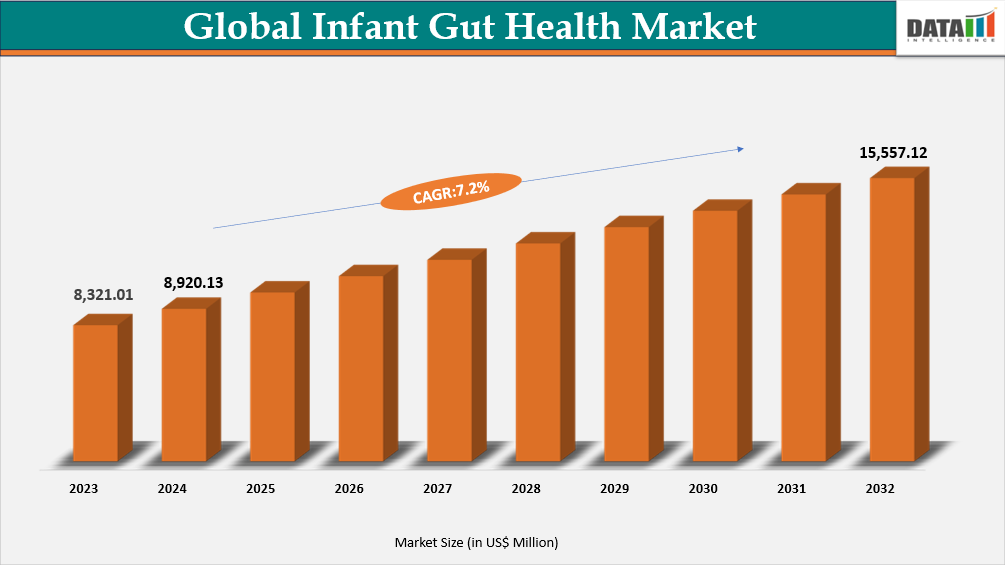
The global infant gut health market reached US$9,562.38 million in 2025, rising to and is expected to reach US$16,677.23 million by 2033, growing at a CAGR of 7.2% from 2026 to 2033.
The global infant gut health market is witnessing significant growth due to increasing awareness among parents about the importance of early-life nutrition and digestive wellness. Rising incidences of gastrointestinal disorders, allergies, and immune-related issues in infants are driving demand for gut health supplements, probiotics, and fortified foods. Additionally, the surge in e-commerce and innovative product launches by major players is making these products more accessible worldwide. Growing research highlighting the long-term benefits of a healthy gut microbiome in infants further supports market expansion. Overall, a combination of health awareness, technological advancements, and lifestyle changes is fueling the robust growth of this market.
Infant Gut Health Market Industry Trends and Strategic Insights
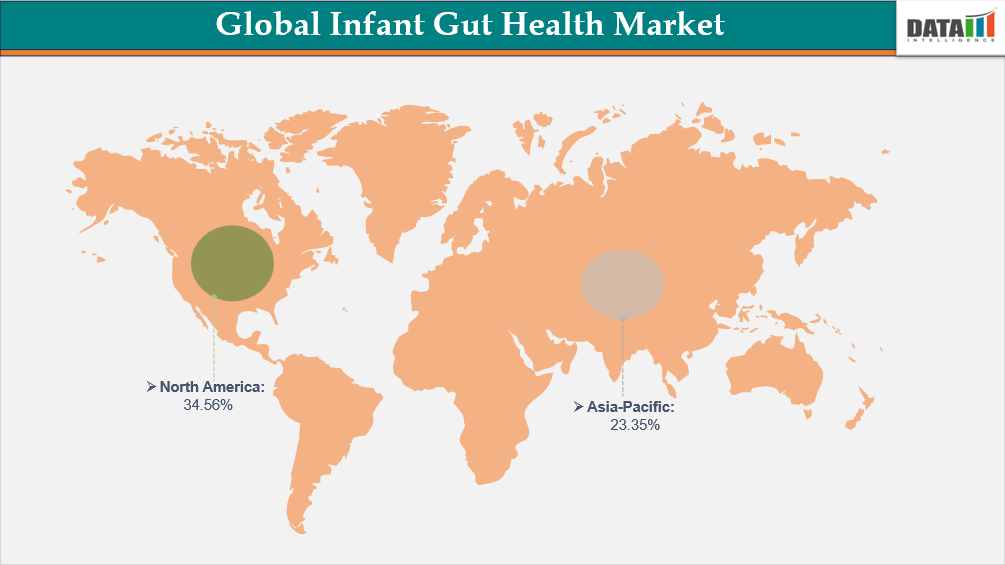
- North America leads the global infant gut health market, capturing the largest revenue share of 34.56% in 2024.
- By product type segment, probiotics lead the global infant gut health market, capturing the largest revenue share of 45.34% in 2024.
Global Infant Gut Health Market Size and Future Outlook
- 2025 Market Size: US$9,562.38 million
- 2033 Projected Market Size: US$16,677.23 million
- CAGR (2026–2033): 7.2%
- Dominating Market: North America
- Fastest Growing Market: Asia-Pacific
Market Scope
| Metrics | Details |
| By Product Type | Probiotics, Prebiotics, Postbiotics, Others |
| By Form | Liquid, Powder, Others |
| By Application | Diarrhea Management, Constipation Management, Immune Support, Others |
| By Distribution Channel | Supermarkets & Hypermarkets, Pharmacies / Drug Stores, Online Retail, Specialty Stores, Others |
| By Region | North America, South America, Europe, Asia-Pacific, Middle East and Africa |
| Report Insights Covered | Competitive Landscape Analysis, Company Profile Analysis, Market Size, Share, Growth |
Market Dynamics
Growing Incidence of Digestive Disorders
The growing incidence of digestive disorders among infants, such as gastroesophageal reflux (GER), regurgitation, constipation, and colic, is significantly driving the global infant gut health market. GER and regurgitation are common in infants, with regurgitation occurring one or more times daily, particularly in those younger than six months. About 70 to 85 percent of infants experience daily regurgitation by the age of two months. Functional constipation affects 17–40% of infants in their first year, with around 60% resolving after age one. Infantile colic impacts approximately 10–40% of infants globally, often peaking around six weeks of age.
As these conditions raise concerns among parents and caregivers, there is a growing demand for probiotics, prebiotics, and postbiotics formulated specifically for infants. Pediatricians and healthcare professionals increasingly recommend gut-friendly supplements and fortified foods to manage these digestive issues. Rising awareness of the long-term benefits of a healthy gut microbiome on immunity, nutrient absorption, and overall development is further fueling market growth, prompting manufacturers to innovate and expand their infant gut health product portfolios.
Segmentation Analysis
The global infant gut health market is segmented based on product type, form, application, distribution channel and region.
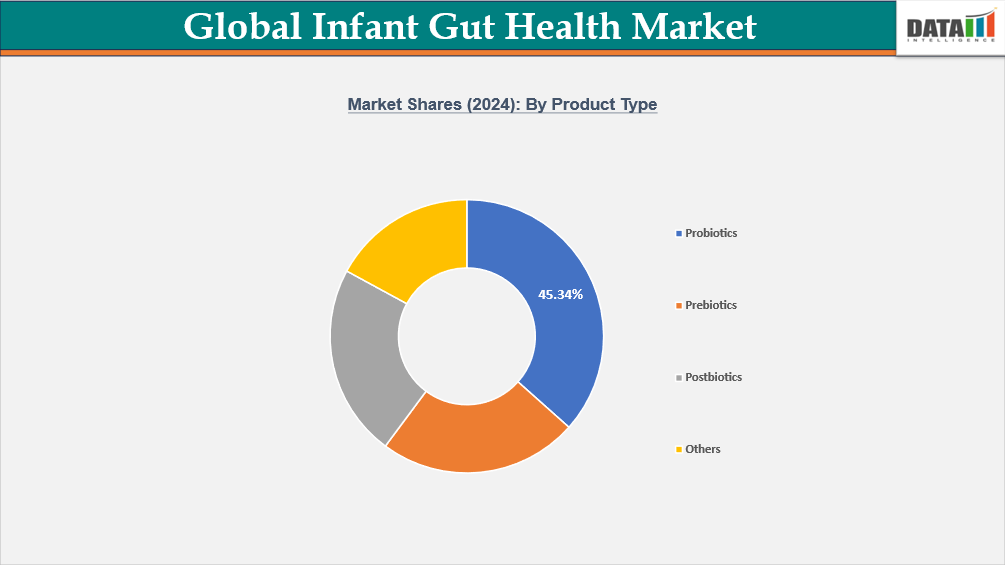
Probiotics Hold the Dominant Share with 45.34%, Boosting Digestion and Immunity in Infants
Probiotics hold a significant share in the global infant gut health market due to their proven benefits in supporting digestive health and immunity in infants. These live microorganisms help maintain a balanced gut microbiome, reducing the risk of common gastrointestinal issues such as diarrhea, colic, and constipation. Parents and healthcare providers increasingly prefer probiotic-based supplements and fortified formulas as safe and natural solutions to promote healthy digestion.
A recent example of this trend is Perrigo Company plc’s announcement in September 2024 about the partnership between its trusted infant formula brands, Good Start and Dr. Brown's. As part of this collaboration, Perrigo launched the Gentle Pro infant formula, which provides complete nutrition, promotes easy digestion, and supports softer stools. Gentle Pro includes the gut-friendly probiotic B. lactis, similar to those found in breast milk, highlighting the strong market focus on probiotics.
Prebiotics have the Fastest Growth Rate Supporting Beneficial Microbiota Growth
The prebiotics segment maintains a significant share in the global infant gut health market due to its scientifically proven role in promoting the growth of beneficial gut microbiota, including Bifidobacteria and Lactobacilli. These functional ingredients contribute to improved digestive health by enhancing stool consistency, reducing the incidence of constipation, and supporting optimal nutrient absorption. Consequently, prebiotics are widely incorporated into infant formulas, fortified foods, and dietary supplements, driving their adoption among caregivers and healthcare providers.
Furthermore, the segment benefits from extensive clinical research and increasing awareness of the long-term health advantages of early gut microbiome support, including immune system enhancement and reduced gastrointestinal disorders. Innovative product offerings, such as synbiotics combining prebiotics with probiotics, are further strengthening market penetration. The rising emphasis on preventive healthcare, maternal education, and early-life nutrition ensures that prebiotics will continue to hold a dominant position within the expanding global infant gut health market.
Geographical Penetration
DOMINATING MARKET:
North America Leads the Global Market with 34.56% Due to the Awareness of Probiotics and Prebiotics Among Parents
North America holds a significant share in the infant gut health market due to its advanced healthcare infrastructure, high awareness among parents regarding infant nutrition, and strong adoption of probiotic and prebiotic supplements. The region benefits from a well-established market for functional foods and dietary supplements, supported by stringent regulatory frameworks and extensive research on infant gut microbiota. Rising disposable incomes and urbanization have further driven demand for scientifically formulated gut health products for infants.
In March 2024, Begin Health launched Beginbaby Prebiotic + Probiotics with HMO, a pioneering 3-in-1 blend aimed at supporting infant gut health from Day 1, incorporating Human Milk Oligosaccharides to strengthen the microbiome. Such innovative product launches highlight North America’s role as a key market leader, reflecting the region’s focus on preventive nutrition and fostering long-term infant health.
US Infant Gut Health Market Insights
The US holds a major share in the North American infant gut health market due to high awareness, advanced healthcare access, and strong adoption of specialized nutrition products. With 76% of US infants experiencing gut dysbiosis, lacking key Bifidobacterium and facing higher risks of eczema, allergies, and asthma by age 2, the demand for targeted gut health solutions is rising. The My Baby Biome study, using metagenomics and AI, underscores the urgent need to restore infant microbiomes and guides product innovation. These factors, combined with strong regulatory support and parental focus on preventive nutrition, solidify the US’s leadership in the market.
Canada Infant Gut Health Market Industry Growth
Canada holds a significant share in the North American infant gut health market due to high parental awareness of infant nutrition and widespread adoption of probiotic and prebiotic products. Advanced healthcare infrastructure and strong research initiatives support the development and availability of innovative gut health solutions. Rising concerns over infant obesity and gut microbiome imbalances have further driven demand for targeted nutritional interventions. Government support and public health programs promoting early childhood wellness enhance market growth. Combined, these factors position Canada as a key contributor to the region’s infant gut health market.
FASTEST GROWING MARKET:
Asia-Pacific is the Fastest-Growing Region, Driven by the Large Infant Population
Asia-Pacific holds a significant share in the infant gut health market due to its large infant population and rising awareness of digestive health. Rapid urbanization and increasing disposable incomes have driven demand for specialized infant nutrition products. Countries like China, India, and Japan are witnessing strong growth in probiotic and prebiotic fortified formulas. Government initiatives and healthcare programs promoting infant nutrition further boost market expansion. Additionally, local manufacturers and global companies are expanding distribution networks to cater to this growing demand.
India Infant Gut Health Market Outlook
India holds a significant share in the Asia-Pacific infant gut health market due to rising awareness about early-life gut wellness and increasing adoption of innovative, accessible solutions. In February 2023, Delhi-based startup Guttify launched India’s first affordable saliva-based Gut Scan Kit, providing personalized gut health reports, dietary guidance, and healing protocols within 24 hours, which reduced reliance on traditional lab visits and stool tests. This non-invasive, ISO-certified, and NABL-tested solution targets harmful gram-negative bacteria, addressing common gut issues like bloating and constipation, making gut health monitoring more feasible for infants and parents. Coupled with government initiatives promoting child nutrition and a growing e-commerce ecosystem for health products, India’s market is expanding rapidly.
China Infant Gut Health Market Trends
China holds a significant share in the Asia-Pacific infant gut health market, driven by its large population, rising health awareness, and strong demand for functional infant nutrition products. In May, 2025, Yili Group expanded its presence by launching three new infant formula products Aronurish, Tofer Eptide, and Tofer Minno under its Pro-Kido brand in Hong Kong, ensuring availability in over 200 Mannings stores and online channels. This launch highlighted China’s emphasis on innovation in infant gut health, coinciding with Yili’s 2025 Breast Milk Research Key Findings Report that showcased 13 major achievements in human milk oligosaccharides (HMOs) and infant gut microbiota. The combination of strategic product expansion, scientific research, and widespread distribution strengthens China’s leadership in maternal and infant nutrition. Consequently, these factors collectively consolidate China’s dominant position in the Asia-Pacific infant gut health market.
Sustainability and ESG Analysis
The infant gut health market is experiencing growth due to rising awareness of the importance of probiotics, prebiotics, and functional foods in early-life nutrition. Sustainability challenges include the sourcing of natural ingredients, like dairy and plant-based fibers, which can have environmental impacts such as high-water usage, land requirements, and carbon emissions. Manufacturers are increasingly focusing on eco-friendly packaging and reducing their carbon footprint to meet consumer expectations and regulatory standards.
On the positive side, innovations in sustainable farming, renewable ingredient sourcing, and circular packaging systems are being adopted to make products more environmentally responsible. Companies investing in research on plant-based or lab-grown alternatives can reduce reliance on traditional dairy production. Additionally, transparent supply chains and certifications for organic or sustainable ingredients enhance trust and long-term market viability. Overall, the market shows potential for growth while gradually aligning with environmental and social sustainability goals.
Competitive Landscape
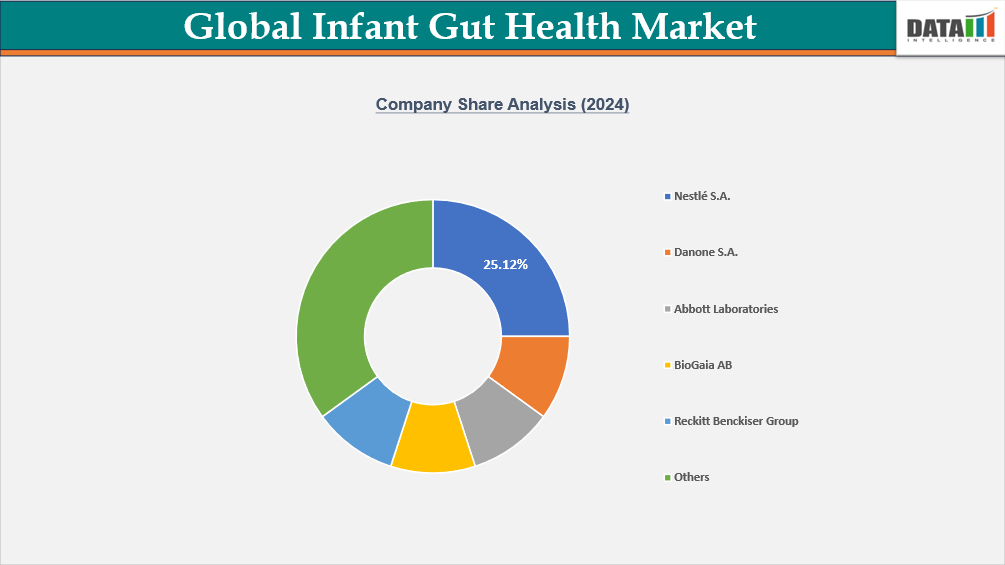
- The infant gut health market is dominated by major global players such as Nestlé S.A., Danone S.A., and Abbott Laboratories, who leverage extensive R&D capabilities and strong distribution networks to maintain leadership and innovate new formulations.
- Smaller specialized companies like BioGaia AB, PROBI AB, and i-Health Inc. focus on niche probiotic strains and functional ingredients, catering to specific infant gut health needs and establishing brand loyalty among targeted consumer segments.
- Companies such as Reckitt Benckiser Group and Amyway emphasize product diversification and strategic partnerships, expanding their presence across both developed and emerging markets to capture a broader consumer base.
- Players like Chr. Hansen A/S integrate advanced biotechnology and microbial research into their offerings, ensuring high-quality, science-backed products that differentiate them in a competitive and fast-growing market.
Key Developments
- May 2026: Nestlé Health Science expanded infant microbiome nutrition research programs supporting development of advanced probiotic and prebiotic formulations for early-life gut-health improvement globally.
- April 2026: Danone S.A. accelerated innovation in synbiotic-enriched infant formula products designed to support digestive health, immune development and microbiota balance in infants.
- March 2026: Abbott Laboratories strengthened pediatric nutrition portfolios through clinically validated gut-health ingredients supporting infant digestive comfort and immunity enhancement initiatives.
- February 2026: Chr. Hansen Holding A/S expanded probiotic-strain development capabilities supporting next-generation infant dietary supplements and microbiome-health product innovation worldwide.
- January 2026: Yakult Honsha Co., Ltd. increased investments in infant probiotic research targeting microbiota diversity, digestive wellness and long-term immune-system support applications.
- December 2025: Kerry Group plc launched advanced infant gut-health ingredient solutions focused on human milk oligosaccharides (HMOs), prebiotics and functional nutrition applications.
- November 2025: BioGaia AB expanded pediatric probiotic-product distribution networks supporting infant colic management, digestive health and immune-support supplementation globally.
- October 2025: DSM-Firmenich advanced microbiome-focused nutritional ingredient innovations supporting precision infant nutrition and early-life gut-health optimization programs.
- September 2025: Meiji Holdings Co., Ltd. strengthened infant-formula R&D initiatives integrating probiotics and bioactive ingredients supporting digestive and immune-health benefits.
- July 2025: Arla Foods Ingredients enhanced whey-protein and functional nutrition offerings supporting infant gut-health formulations, microbiome development and pediatric nutrition advancements internationally.
Partnership Identification Analysis
In the global infant gut health market, strategic partnerships are increasingly vital for innovation and market expansion. Collaborations between biotech startups, established nutraceutical companies, and research institutions enable access to cutting-edge microbiome research and formulation expertise. Co-development agreements and licensing deals help companies accelerate product launches and regulatory approvals. Partnerships with pediatric healthcare providers and digital health platforms enhance consumer reach and personalized care delivery. Overall, these alliances strengthen market presence, drive scientific advancements, and improve infant health outcomes globally.
| Potential Partners | Strategic Focus | Rationale for Partnership |
| Biotech Startups | Product innovation & microbiome research | Access to novel probiotic strains, synbiotics, and advanced gut microbiome insights. |
| Nutraceutical Companies | Manufacturing & formulation expertise | Scale production of infant gut health products with regulatory-compliant formulations. |
| Paediatric Healthcare Providers | Clinical validation & adoption | Facilitate clinical studies, increase trust, and drive adoption among parents and clinics. |
| Digital Health Platforms | Personalized nutrition & engagement | Provide AI-driven dietary recommendations and monitor infant gut health progress. |
| Regulatory & Certification Bodies | Compliance & safety | Ensure products meet safety standards, certifications, and labelling requirements. |
What Sets This Global Infant Gut Health Market Intelligence Report Apart
- Latest Data & Forecasts – Comprehensive, up-to-date insights and projections through 2032. Coverage includes global value by dosage form, source, distribution channel, end-user and application segments (sleep disorders, jet lag, shift-work). Scenario forecasts with region-level splits (North America, Europe, Asia-Pacific, South America, Middle East and Africa) and sensitivity to factors such as regulatory reclassification and raw-material costs.
- Regulatory Intelligence – Actionable analysis of regulatory frameworks that materially affect Infant Gut Health commercialization, revenue by country, allowable label claims, permitted doses, import/export controls and advertising restrictions.
- Competitive Benchmarking – Standardized profiling and benchmarking of leading pharma and nutraceutical players, contract manufacturers and e-commerce specialists active in the market.
- Geographic & Emerging Market Coverage – Region-by-region market sizing, growth drivers, reimbursement dynamics, cultural/consumer behavior and market access considerations. Focus on high-growth or regulatory-uncertain markets.
- Actionable Strategies – Identify opportunities for launching innovative products, while leveraging strategic partnerships and supply chain integration for maximum ROI.
- Pricing & Cost Analysis – In-depth assessment of price trends, raw material costs and sustainability-driven cost efficiencies across regional markets.
- Expert Analysis – Insights from industry experts such as clinical sleep specialists, regulatory affairs professionals and key manufacturing companies.




























































