


Indonesia Postbiotic Food Supplement Market Size
The Indonesia Postbiotic Food Supplement market recorded a value of US$ 24.85 thousand in 2025 and is expected to reach a value of US$ 100.88 thousand in 2035, growing at a CAGR of 14.1% during the forecast period (2026-2035).
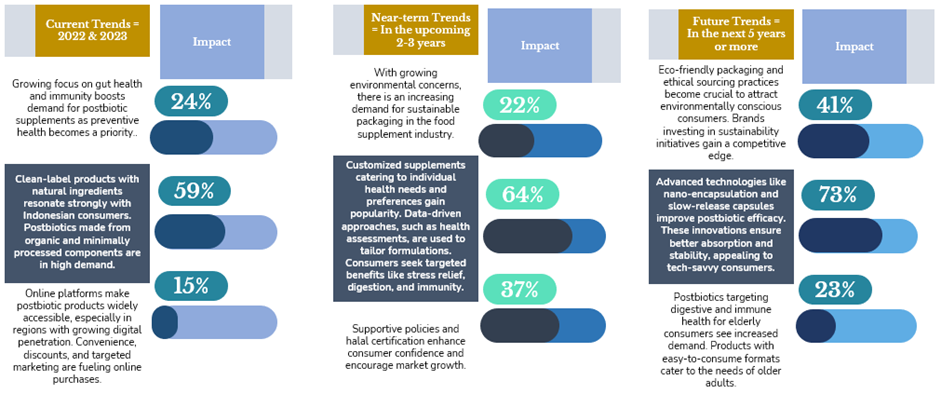
The Indonesian postbiotic supplement market is experiencing significant growth driven by rising health awareness and a growing preference for gut health solutions. Key trends include increasing consumer interest in natural and science-backed supplements, with postbiotics gaining traction due to their enhanced stability and safety compared to probiotics.
Urbanization and lifestyle changes, including a rise in processed food consumption, have led to higher demand for digestive health products. According to UNFPA, Indonesia's urbanization has resulted in over 50% of the population now living in urban areas. Urban lifestyles, characterized by processed food consumption and sedentary habits, have heightened awareness of gut health and the need for digestive support. This shift has increased demand for convenient, preventive health solutions like postbiotic supplements, particularly through e-commerce and modern retail channels.
Global companies like DSM, with a presence in Indonesia, are driving the postbiotic supplement market by offering innovative, science-backed solutions that cater to local health needs. The postbiotic supplement market in Indonesia presents a significant growth opportunity, as there are currently no dominant local players in the space. This gap allows both global and local companies to capitalize on the rising demand for gut health and immune-boosting products. As demand for functional foods and supplements increases, there is ample space for market entry and product innovation.
Rising disposable incomes and a shift toward preventive healthcare also drive adoption. Innovative delivery formats such as gummies, sachets, and drinks enhance market appeal. E-commerce platforms play a crucial role in widening market access, while halal certification remains pivotal in gaining consumer trust in Indonesia’s predominantly Muslim population.
Key Takeaways
- The Indonesian postbiotic food supplement industry is expected to increase more than four times between 2025 and 2035, creating opportunities for global supplement companies and emerging domestic manufacturers.
- Preventive healthcare spending and increasing awareness of the gut microbiome are accelerating consumer demand for immune-supporting and digestive wellness products.
- Product innovation is moving toward convenient delivery formats such as capsules, powders, gummies, sachets, and functional beverages to improve consumer adoption.
- Online retail channels are becoming a major growth avenue, enabling premium international brands to reach Indonesian consumers beyond traditional pharmacy networks.
- Regulatory compliance, halal certification, transparent labeling, and scientifically validated health claims are becoming important factors influencing purchasing decisions.
- Companies investing in advanced fermentation technologies, bioactive compounds, and plant-based formulations are strengthening their competitive position.
Market Scope
| Metrics | Details |
| Market Size in 2025 | US$ 24.85 thousand |
| Market Size by 2035 | US$ 100.88 thousand |
| CAGR | 14.1% (2026-2035) |
| Historic Years | 2023-2024 |
| Base Year | 2025 |
| Forecast Period | 2026-2035 |
| Segments Covered | Product, Application, Distribution Channel, Type |
| Leading Region | Indonesia Market |
| Fastest Growing Region | Indonesia Market |
For more details on this report – Request for Sample
Market Drivers
Growing Demand for Preventive Healthcare
The growing demand for preventive healthcare is a key driver of the postbiotic supplement market in Indonesia as consumers increasingly prioritize maintaining health over treating illnesses. With rising awareness of the importance of gut health in overall well-being, Indonesians are turning to functional supplements like postbiotics for their scientifically-backed benefits, such as enhanced immunity, anti-inflammatory effects, and improved digestion.
This shift is fueled by the rise in lifestyle-related conditions, including obesity, diabetes, and digestive disorders, which have highlighted the need for proactive health management. Additionally, Indonesia's healthcare costs encourage consumers to invest in affordable, preventive solutions like supplements to reduce long-term medical expenses. Postbiotics appeal to health-conscious individuals for their stability, ease of use, and effectiveness compared to probiotics. The growing middle class, with higher disposable income, is willing to spend on premium health products, further fueling demand.
According to the International Trade Administration, Indonesia's healthcare spending was IDR 490.3 trillion ($33.4 billion) in 2019 and is projected to reach IDR 1,224 trillion ($78.0 billion) by 2027, growing annually by 11.7% in local currency and 10.0% in USD. Per-capita healthcare expenditure will more than double, rising from $114 in 2017 to $269 in 2027. As per-capita expenses rise, there is a stronger emphasis on cost-effective preventive healthcare to manage long-term medical costs. This trend encourages the adoption of affordable, proactive solutions like postbiotic supplements, which support immunity and gut health, reducing the risk of chronic illnesses. Consequently, the booming healthcare investment drives demand for functional products, positioning postbiotics as a preferred preventive option.
Urbanization and Lifestyle Changes
Urbanization and lifestyle changes are significantly driving the growth of Indonesia's postbiotic supplement market. As urban areas expand, more people are adopting fast-paced, high-stress lifestyles, leading to an increased prevalence of digestive issues, immune system concerns, and overall health imbalances.
With busy schedules, people are turning to convenient, health-focused supplements like postbiotics to support gut health and immune function. Postbiotics, which are the beneficial byproducts of probiotics, have gained popularity due to their ability to offer similar health benefits without requiring the live bacteria that probiotics contain, making them more stable and easier to incorporate into daily routines.
As awareness of the importance of gut health increases, consumers are increasingly seeking natural, science-backed supplements to improve their well-being. The rise in health-conscious behavior, coupled with the growing availability of postbiotic products in pharmacies and online platforms, is further fueling the market.
In 2023, Indonesia's urban population accounted for 58.57% of the total population, up from 57.94% in 2022. This reflects a steady increase in urbanization. The data is sourced from the World Bank's development indicators. The increase in Indonesia's urban population highlights a shift towards more urbanized, fast-paced lifestyles, leading to higher demand for convenient health solutions like postbiotics.
With more people facing stress, digestive issues, and health concerns, postbiotics are seen as a practical supplement for improving gut health. This urbanization trend is fueling the growth of the postbiotic supplement market in Indonesia.
Market Restraints
Stringent Regulatory Environment
The stringent regulatory environment in Indonesia is both a challenge and a driver for the postbiotic supplement market. Regulatory frameworks that require manufacturers to meet rigorous safety and efficacy standards may initially slow the market's entry by creating barriers to product approval and increasing production costs.
The Indonesian Food and Drug Supervisory Agency (BPOM) introduced Regulation No. 10 of 2024, requiring clear and accurate labeling for natural medicines, quasi-medicines, and health supplements, effective June 3, 2024. Labels must include product composition, claims, expiration dates, halal status, and alcohol content. Existing products must comply within 24 months, with BPOM enforcing the regulation and imposing sanctions for non-compliance.
However, these regulations also act as a catalyst for growth by ensuring that only high-quality and scientifically supported postbiotic supplements reach consumers. This builds consumer trust in the long term, as products that comply with strict standards are seen as safer and more reliable. In addition, adherence to local and international regulatory standards can differentiate brands in a competitive marketplace, as Indonesian consumers are becoming more health-conscious and are seeking supplements backed by credible certifications. Companies that can navigate these regulatory challenges efficiently are likely to gain a competitive edge, while also contributing to the broader market's expansion by assuring quality and safety.
Ultimately, while the regulatory environment imposes initial hurdles, it ensures a stable foundation for sustainable market growth by encouraging the development of safe, effective products.
Market Segment Analysis
The Indonesia postbiotic food supplement market is segmented based on product, application, distribution channel, and type.
Rising Focus on Gut Health
The digestive health segment holds the largest share of the Indian postbiotic food supplements market. As consumers become more aware of the importance of gut health, the postbiotic food supplements market in India is seeing a significant shift towards digestive health products. Postbiotics, which are beneficial compounds produced by probiotics during fermentation, are gaining recognition for their role in supporting a healthy gut microbiome. This growing awareness is a major factor in the dominance of the digestive health segment within the market.
The prevalence of digestive issues such as irritable bowel syndrome (IBS), constipation, and acid reflux is increasing in India. As more consumers seek solutions to manage these conditions, the market for digestive health postbiotics is expanding. Postbiotic supplements are perceived as a natural way to enhance gut health and alleviate digestive problems, further boosting their popularity in the market.
According to a recent survey by Country Delight and the Indian Dietetic Association in Mumbai, 70% of urban Indians report experiencing gut health issues. Among them, nearly 60% suffer from digestive problems every week, while 12% face these issues daily. The survey also reveals a notable link between digestive health and mental well-being. Around 60% of urban dwellers who experience weekly gut issues also report higher instances of mental health challenges, such as anxiety, poor memory, mood swings, and fatigue, compared to those who experience digestive problems less frequently.
Sustainability Analysis
In the Indonesia postbiotic food supplement market, growing consumer preference for natural and sustainable products is driving the demand for eco-friendly formulations. Manufacturers are adopting sustainable practices such as sourcing organic ingredients, which minimizes environmental impact while meeting consumer expectations. Producers in the market are increasingly adopting energy-efficient and waste-reducing technologies in the production of postbiotic supplements. These practices align with global sustainability goals, allowing manufacturers to reduce their carbon footprint and appeal to environmentally conscious consumers.
The market benefits from the rich biodiversity of Indonesia, enabling the sourcing of raw materials locally. This reduces transportation-related emissions and supports local agricultural communities, fostering a sustainable supply chain. Sustainability in the market extends to packaging, where companies are moving towards biodegradable or recyclable materials. By reducing plastic usage, the market is addressing one of the critical environmental challenges while appealing to eco-conscious buyers.
The Indonesian government’s push for sustainable agricultural and manufacturing practices is positively influencing the market. Incentives for green initiatives and strict environmental regulations encourage companies to adopt sustainable practices. Companies in the Indonesia postbiotic food supplement market are exploring circular economy models, such as reusing by-products from fermentation processes. This not only minimizes waste but also creates additional value from raw material utilization.
Unmet Needs
The Indonesian postbiotic supplement market is witnessing growth, but several unmet needs remain. First, there is a lack of consumer awareness about postbiotics, with many still associating gut health supplements only with probiotics and prebiotics. Education is needed to inform consumers about the specific benefits of postbiotics, such as immune system support, gut health regulation, and anti-inflammatory properties.
Additionally, there is a gap in the availability of high-quality, locally produced postbiotic supplements that cater to the unique dietary needs and preferences of Indonesian consumers. Many existing products are imported, making them expensive and less accessible.
Furthermore, there is a demand for postbiotic products that cater to specific demographics, such as pregnant women, children, and the elderly, with formulations that address their unique health concerns. The market also lacks a diverse range of product formats, such as ready-to-drink options, capsules, and chewable, which cater to different consumer preferences. There is potential for postbiotic supplements that offer enhanced bioavailability or synergistic combinations with other health-promoting ingredients like collagen or adaptogens.
Additionally, concerns about product safety, efficacy, and transparency in sourcing are growing, so consumers are looking for brands that prioritize clean, sustainable, and ethically sourced ingredients. While the demand for health and wellness products is high, affordability remains a key challenge, meaning that cost-effective, yet high-quality postbiotic supplements would fill a significant market gap.
By Product
- Powder Postbiotics
- Capsule/Tablet Postbiotics
- Others
By Application
- Digestive Health
- Immune Support
- Skin Health
- Weight Management
- Others
By Distribution Channel
- Supermarkets/Hypermarkets
- Pharmacies and Drug Stores
- Convenience Stores
- Online Retailers
- Others
By Type
- Short-Chain Fatty Acids
- Tributyrin
- Others
Key Developments
June 2026: Indonesia increased investments in functional food and dietary supplement innovation, supporting the development of postbiotic-based products aimed at improving digestive health, immunity, and overall wellness.
May 2026: Japan expanded research activities in postbiotic science and advanced microbial technologies, accelerating the development of clinically supported postbiotic ingredients for nutritional and healthcare applications.
April 2026: Leading food supplement companies increased investments in postbiotic formulation technologies, focusing on improved product stability, targeted health benefits, and the expansion of functional nutrition portfolios.
March 2026: Indonesian nutraceutical manufacturers expanded production capabilities and product development initiatives to address rising consumer demand for gut health, immunity support, and preventive healthcare supplements.
February 2026: Ingredient manufacturers strengthened research and development efforts in microbiome-based nutrition, exploring new postbiotic compounds and their applications in functional foods, beverages, and dietary supplements.
January 2026: Government agencies, health organizations, and industry participants promoted awareness of digestive wellness and preventive healthcare, supporting long-term growth of the postbiotic food supplement market in Indonesia.
Why Purchase the Report?
- To visualize the Indonesia postbiotic food supplement market segmentation based on product, application, distribution channel, and type as well as understand key commercial assets and players.
- Identify commercial opportunities by analyzing trends and co-development.
- Excel data sheet with numerous data points of Indonesia's postbiotic food supplement market level with all segments.
- PDF report consists of a comprehensive analysis after exhaustive qualitative interviews and an in-depth study.
- Product mapping available as excel consisting of key products of all the major players.
The Indonesia postbiotic food supplement report would provide approximately 12 tables, 24 figures, and 180 pages.
Target Audience
- Postbiotic supplement manufacturers
- Nutraceutical ingredient suppliers
- Healthcare and wellness brands
- Investors and investment institutions
- Research and development organizations
- Retailers and e-commerce platforms
- Regulatory and compliance professionals
- Emerging health supplement companies



























































