


IL-27 Antagonist Therapy Market Size and Overview
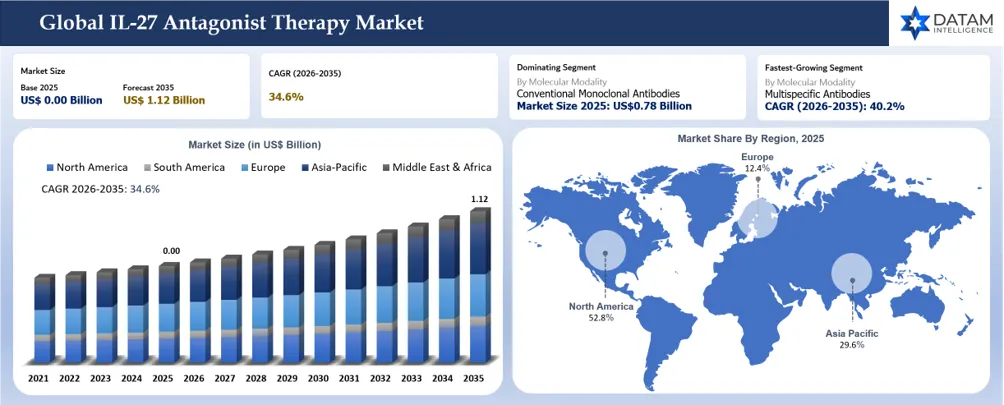
The global IL-27 antagonist therapy market remained pre-commercial, with no revenue-generating approved therapy in 2025 and is projected to reach US$1.12 billion by 2035, reflecting a modeled post-commercialization CAGR of 34.6% during 2026-2035. Market formation will depend on clinical validation, regulatory approvals and the successful commercialization of therapies targeting the IL-27 ligand complex or its receptor-mediated signaling pathway.
Development activity is currently concentrated in immuno-oncology, where IL-27 contributes to immune suppression within the tumor microenvironment. Casdozokitug represents the most clinically advanced direct IL-27 antagonist and provides the principal benchmark for efficacy, safety and biomarker-guided patient selection. Hepatocellular carcinoma leads clinical development, while non-small cell lung cancer, renal cell carcinoma and other checkpoint-resistant solid tumors represent potential expansion opportunities.
Combination therapy is expected to define the initial commercial pathway. IL-27 antagonists are being evaluated alongside PD-1 or PD-L1 and VEGF-pathway inhibitors to restore antitumor immune activity and improve outcomes beyond existing checkpoint-based regimens. Competitive differentiation will depend on incremental survival benefits, durable responses, manageable combination toxicity and reliable biomarkers identifying tumors dependent on IL-27-mediated immune suppression.
Future market transformation will require pipeline diversification beyond the current concentration around one advanced asset. Conventional monoclonal antibodies are expected to establish the first commercial foundation, followed by receptor-directed agents, multispecific antibodies and other targeted formats. Long-term leadership will depend on scalable manufacturing, companion-diagnostic strategies, regulatory execution and evidence supporting expansion across multiple tumor types, treatment lines and geographic markets.
IL-27 Antagonist Therapy Market Key Takeaways
- Commercial Market Formation Through 2035: The global IL-27 antagonist therapy market remains pre-commercial, with no revenue-generating approved therapy in 2025. The market is projected to reach US$1.12 billion by 2035, registering a modeled post-commercialization CAGR of 34.6% during 2026-2035.
- Conventional Monoclonal Antibodies Maintain Market Leadership: Conventional monoclonal antibodies are projected to generate approximately US$0.78 billion by 2035, representing 69.6% of the global market, supported by their clinical maturity, target specificity and established biologics-manufacturing pathway.
- Multispecific Antibodies Become the Primary Growth Engine: Multispecific antibodies are projected to register a modeled 40.2% CAGR during 2026-2035, reflecting their potential to combine IL-27 blockade with immune-checkpoint or tumor-specific targeting within a single therapeutic construct.
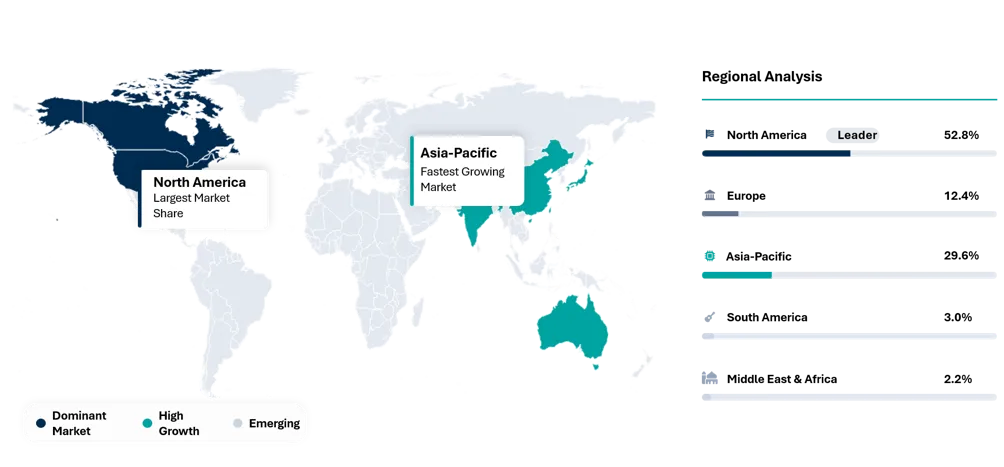
- North America Maintains Regional Dominance: North America is expected to capture approximately 52.8% of the early commercial opportunity, supported by concentrated immuno-oncology research, advanced clinical-trial infrastructure, biomarker-testing availability and stronger access to innovative biologics.
- Combination Therapy Reshapes Competitive Strategy: Future market leadership will depend on demonstrating incremental survival benefits when IL-27 antagonists are combined with PD-1/PD-L1 and VEGF-pathway inhibitors. Biomarker-guided patient selection, manageable combination toxicity and successful expansion beyond hepatocellular carcinoma will determine commercial differentiation.
IL-27 Antagonist Therapy Market Scope
| Metrics | Details | |
| 2025 Market Size | US$0.00 Billion | |
| 2035 Projected Market Size | US$1.12 Billion | |
| CAGR (2026-2035) | 34.6% | |
| Largest Market | North America | |
| Fastest Growing Market | Asia-Pacific | |
| By Molecular Target | IL-27 Ligand Complex, IL-27 Receptor Complex, Other Direct IL-27 Signaling Targets | |
| By Molecular Modality | Conventional Monoclonal Antibodies, Multispecific Antibodies, Antibody Fragments, Receptor Traps and Fusion Proteins, Peptide and Small-Molecule Antagonists, Nucleic Acid Therapeutics and Others | |
| By Development Stage | Preclinical, Phase I, Phase II, Phase III and Marketed | |
| By Line of Therapy | First-Line Treatment, Second-Line Treatment and Third-Line and Later Treatment | |
| By Treatment Regimen | Monotherapy, Dual-Combination Therapy and Triple-Combination or Higher Therapy | |
| By Route of Administration | Intravenous, Subcutaneous and Oral | |
| By Indication | Oncology, Autoimmune and Inflammatory Diseases, Fibrotic Diseases and Other Indications | |
| By End User | Hospitals, Independent Specialty Oncology Clinics, Standalone Ambulatory Centers, Clinical Research Organizations and Academic Research Institutes | |
| By Region | North America | U.S., Canada, Mexico |
| Europe | Germany, UK, France, Spain, Italy, Poland | |
| Asia-Pacific | China, India, Japan, Australia, South Korea, Indonesia, Malaysia, Singapore, Vietnam, Thailand, Philippines, Taiwan | |
| South America | Brazil, Argentina | |
| Middle East and Africa | Israel, Saudi Arabia, UAE, Turkiye, South Africa, Nigeria | |
| Report Insights Covered | Competitive Landscape Analysis, Company Profile Analysis, Market Size, Share, Growth | |
Why does this report matter in 2026?
This report matters in 2026 because the IL-27 antagonist therapy market is approaching a critical clinical-validation point. Coherus Oncology has completed enrollment in its randomized Phase II casdozokitug study for first-line unresectable hepatocellular carcinoma, with emerging biomarker evidence supporting IL-27, PD-1 and VEGF pathway blockade. Outcomes could determine whether IL-27 develops into a commercially relevant immuno-oncology target or remains a concentrated experimental opportunity. Decision-makers therefore require a clear assessment of clinical milestones, competitive exposure, addressable indications and development risk globally.
The report matters because market participation extends beyond one clinical asset to companies holding preclinical programs, receptor-blocking technologies and legacy intellectual property. In 2026, investors, biotechnology developers and licensing teams must distinguish therapeutic value from dormant patents and research-stage interventions. The analysis provides a framework for regional opportunity sizing, indication prioritization, partnership screening and scenario-based forecasting. It highlights white-space opportunities in companion diagnostics, resistant tumors and inflammatory diseases while preventing overestimation of revenue before regulatory approval and market formation.
IL-27 Antagonist Therapy Market White Space & Investment Opportunities
- Biomarker-Guided Patient Identification and Response Prediction: Invest in multiomic profiling, tumor transcriptomics, circulating cytokine signatures and spatial immune analysis to identify IL-27-driven immune suppression and select patients most likely to benefit from IL-27 antagonist combinations.
- Expansion Beyond Hepatocellular Carcinoma: Develop IL-27 antagonists for checkpoint-resistant non-small cell lung cancer, renal-cell carcinoma and other immune-excluded solid tumors. Additional opportunities exist in inflammatory bowel disease, metabolic steatohepatitis and liver-cancer prevention.
- Next-Generation IL-27 and IL-27 Receptor Antagonists: Advance differentiated antibodies, receptor-blocking agents, soluble receptor constructs and multispecific biologics targeting IL-27, p28, EBI3 or IL-27Rα. Investment should prioritize improved potency, tissue penetration, dosing convenience and manufacturability.
- Durable Responses and Treatment De-Escalation: Invest in therapies capable of maintaining antitumor immunity after dose reduction or treatment discontinuation. Durable responses could reduce prolonged combination exposure, toxicity, administration burden and total treatment costs.
- Treatment-Sequencing and Combination Evidence: Generate comparative evidence defining how IL-27 antagonists should be sequenced or combined with PD-1, PD-L1, VEGF, chemotherapy and other immuno-oncology agents according to tumor biology, treatment history, resistance mechanism and biomarker status.
- Geographic Trial Expansion and Outcome-Based Reimbursement: Expand clinical development into Japan, Europe, South Korea and additional high-burden liver-cancer markets. Generate real-world evidence connecting biomarker response, progression-free survival, overall survival and treatment durability with reimbursement and healthcare-resource benefits.
IL-27 Antagonist Therapy Market Future Transformation
The IL-27 antagonist therapy market is expected to transform from a single-asset, trial-led opportunity into a biomarker-defined immuno-oncology segment if casdozokitug confirms durable clinical benefit. Development will increasingly focus on patients with IL-27-driven immune suppression, checkpoint resistance and immune-excluded tumors rather than broad solid-tumor populations. Multiomic profiling, circulating cytokine signatures and spatial immune analysis will guide enrollment and indication selection, while combination strategies involving PD-1, PD-L1 and VEGF blockade will remain the principal route toward clinical adoption across major markets.
Longer-term transformation will depend on diversifying the pipeline through next-generation antibodies, IL-27 receptor blockers, soluble receptor constructs and multispecific biologics. Licensing activity may bring dormant intellectual property back into development, while programs could open opportunities in inflammatory bowel disease, metabolic steatohepatitis and liver-cancer prevention. Commercial leadership will favor developers that demonstrate survival improvement, manageable combination toxicity and scalable manufacturing. Regional expansion, companion diagnostics and outcome-based reimbursement will determine whether IL-27 antagonism becomes a therapeutic category or remains an oncology mechanism.
IL-27 Antagonist Therapy Market Buyer Decision-Making Criteria
Major Buyer Decision-Making Criteria:
- Magnitude and Durability of Tumor Response
- Overall Survival and Progression-Free Survival Improvement
- Incremental Benefit Over Existing Checkpoint and VEGF Therapies
- Effectiveness in Checkpoint-Resistant and Immune-Excluded Tumors
- Predictive Biomarker Availability and Patient-Selection Accuracy
- Efficacy Across Viral and Nonviral Hepatocellular Carcinoma
- Safety, Tolerability and Long-Term Clinical Evidence
- Compatibility With PD-1, PD-L1, VEGF and Chemotherapy Regimens
- Route of Administration, Dosing Frequency and Treatment Burden
- Monitoring Requirements and Combination-Related Toxicity Risk
- Pricing, Reimbursement and Healthcare Budget Impact
- Guideline Positioning, Physician Experience and Patient-Support Services
IL-27 Antagonist Therapy Market Investment Trends
- Capital allocation is concentrating on advancing casdozokitug through randomized Phase II development, biomarker validation, manufacturing readiness and potential regulatory pathways for first-line unresectable hepatocellular carcinoma.
- Investors are increasingly evaluating IL-27 as an immunosuppressive cytokine checkpoint capable of restoring natural killer-cell and T-cell activity in checkpoint-resistant and immune-excluded solid tumors.
- Investment is accelerating in multiomic profiling, circulating cytokine signatures, spatial immune analysis and companion diagnostics designed to identify IL-27-driven tumors and improve clinical-trial response rates.
- Pharmaceutical and biotechnology companies are assessing next-generation anti-IL-27 antibodies, IL-27 receptor blockers, p28- and EBI3-targeted agents, soluble receptor constructs and multispecific biologics with improved potency and manufacturability.
- Funding is prioritizing combination-development strategies involving IL-27 antagonists with PD-1, PD-L1, VEGF and other immune-modulating therapies to establish differentiated efficacy beyond existing oncology standards.
- Companies are allocating resources toward licensing, intellectual-property consolidation and academic collaborations that could expand IL-27 antagonism into non-small cell lung cancer, renal-cell carcinoma, inflammatory bowel disease, metabolic steatohepatitis and liver-cancer prevention.
Strategic Indicators for Global IL-27 Antagonist Therapy Market
High Regulation Impact
The IL-27 antagonist therapy market faces substantial regulatory scrutiny because candidates represent a novel immunomodulatory approach and are primarily being developed within multi-agent oncology regimens. Regulators will evaluate objective response, response durability, progression-free survival, overall survival, immune-related adverse events, immunogenicity and toxicity attributable to each combination component. Casdozokitug combinations involving PD-1, PD-L1 and VEGF inhibition must demonstrate incremental clinical benefit beyond established standards of care. Developers will require adequately powered controlled trials, validated biomarker strategies, long-term follow-up and robust pharmacovigilance. Regulatory complexity increases development costs and favors companies possessing oncology trial experience, biologics-manufacturing capabilities and established regulatory infrastructure.
High Investment Activity
Investment activity is concentrated around casdozokitug, biomarker development and the broader potential of IL-27 as an immunosuppressive cytokine checkpoint. Capital is being directed toward randomized clinical trials, multiomic profiling, companion diagnostics and combination strategies designed to overcome resistance to checkpoint inhibitors. Additional investment opportunities exist in anti-IL-27 receptor antibodies, soluble receptor constructs, multispecific biologics and intellectual-property licensing. However, investment remains high risk because the clinical pipeline depends heavily on one advanced candidate. Funding decisions will therefore be influenced by hepatocellular carcinoma readouts, response durability, safety differentiation, indication-expansion potential and evidence that IL-27 inhibition provides measurable benefit beyond partner therapies.
High Future Drug-Class Adoption Potential
IL-27 antagonists have strong future adoption potential if clinical trials confirm that blocking the pathway improves outcomes in checkpoint-resistant or immune-excluded tumors. Initial adoption would likely concentrate in hepatocellular carcinoma, where casdozokitug is being evaluated with toripalimab and bevacizumab. Subsequent expansion could include non-small cell lung cancer, renal-cell carcinoma and other solid tumors characterized by IL-27-driven immune suppression. Oncologists will differentiate IL-27 antagonists based on survival improvement, response durability, biomarker predictability, combination compatibility and immune-related toxicity. New candidates must demonstrate meaningful clinical advantages rather than mechanism novelty alone, particularly as PD-1, VEGF, antibody-drug conjugate and bispecific-antibody treatment standards continue to evolve.
Regional Expansion Opportunity
Regional expansion potential is significant but closely linked to clinical-trial participation and regulatory readiness. North America leads through Coherus Oncology’s presence, extensive United States trial activity and advanced immuno-oncology infrastructure. Asia-Pacific represents the strongest growth opportunity because casdozokitug studies include centers in Taiwan, Australia, Singapore and Hong Kong, while the region carries a substantial hepatocellular carcinoma burden. Japan, South Korea and China offer future opportunities through established oncology systems, biomarker capabilities and high liver-cancer treatment demand. Europe provides additional licensing and commercialization potential but will require country-specific health-technology assessment, pricing and evidence strategies. Successful expansion requires local clinical data, regulatory engagement, diagnostic availability and reliable biologics distribution.
Government Policy Support
Government influence will operate through oncology-development incentives, accelerated regulatory mechanisms, clinical-trial infrastructure, public research funding and reimbursement policies. IL-27 antagonist developers could pursue expedited pathways where preliminary evidence demonstrates substantial improvement over available therapies, although eligibility must be established individually with each regulator. Public cancer centers and national research networks can support recruitment, biomarker validation and long-term outcome generation. Government payers will influence eventual adoption through treatment guidelines, hospital formularies, health-technology assessments and negotiated pricing. Companies should engage regulators early, harmonize biomarker and clinical endpoints across jurisdictions and generate evidence demonstrating that IL-27 blockade improves survival or reduces progression without creating disproportionate combination toxicity or healthcare expenditure.
Value-Based Pricing Intelligence
Value-based pricing for IL-27 antagonists will depend on measurable survival and treatment-durability outcomes rather than tumor response alone. Payers will assess progression-free survival, overall survival, complete response, hospitalization avoidance, quality of life and the incremental contribution of IL-27 blockade within expensive combination regimens. Pricing potential will vary by indication, treatment line, biomarker-defined population and availability of alternative immunotherapies. Combination costs involving checkpoint and VEGF inhibitors could intensify budget scrutiny and encourage outcomes-based agreements. Manufacturers demonstrating durable benefit, accurate patient selection, manageable toxicity and reduced downstream treatment utilization will be better positioned to secure reimbursement. Weak attribution of benefit to the IL-27 component would substantially restrict premium pricing and formulary access.
IL-27 Antagonist Therapy Market Drug Development Pipeline Analysis
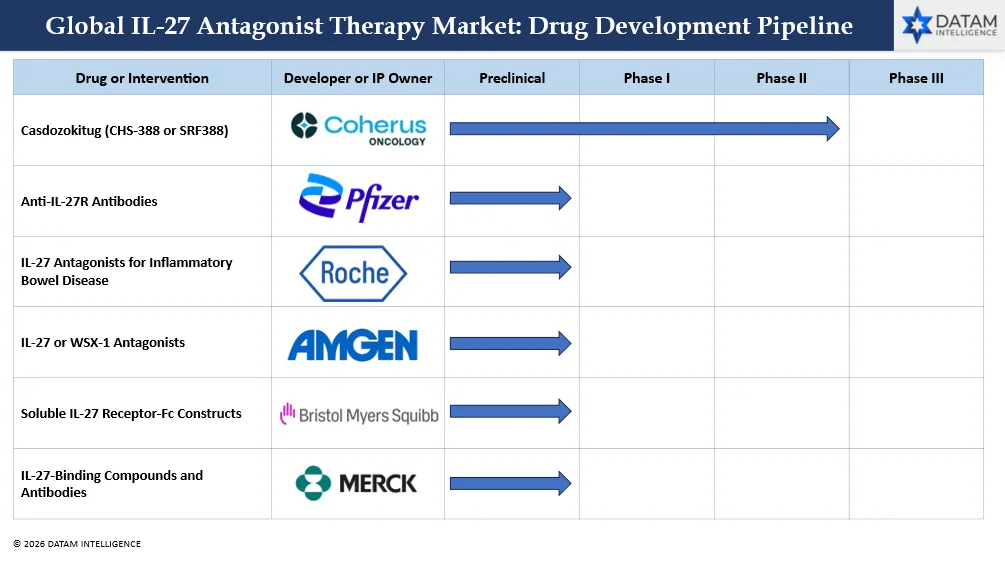
The global IL-27 antagonist therapy pipeline remains highly concentrated, with casdozokitug representing the only identified clinical-stage direct antagonist. Coherus Oncology is evaluating the antibody in Phase II hepatocellular carcinoma development following earlier activity in non-small cell lung and renal-cell cancers. Pfizer, Roche, Amgen, Bristol Myers Squibb and Merck provide pipeline optionality through anti-IL-27 receptor antibodies, ligand-blocking agents, soluble receptor constructs and legacy intellectual-property portfolios, but these programs remain at discovery or preclinical stages. Fox Chase Cancer Center adds translational potential in steatohepatitis and associated liver cancer. Near-term market formation therefore depends on casdozokitug demonstrating durable survival benefit, acceptable combination safety and biomarker-defined efficacy, while longer-term growth requires additional candidates, indication diversification, licensing activity and broader clinical validation across major markets.
AI Impact Analysis of IL-27 Antagonist Therapy Market
Artificial intelligence is expected to influence the IL-27 antagonist therapy market by improving target validation, biomarker discovery and patient stratification across immuno-oncology trials. Machine-learning models can integrate tumor transcriptomics, cytokine signatures, pathology images and clinical outcomes to identify patients with IL-27-driven immune suppression. For casdozokitug, AI-assisted multiomic analysis could clarify which hepatocellular carcinoma subgroups benefit from combined IL-27, PD-1 and VEGF pathway blockade, enabling more efficient enrollment, stronger response prediction and evidence-based indication prioritization during early clinical development programs globally.
AI could reduce development risk through adaptive trial design, automated safety-signal detection and simulations comparing combination regimens before expensive clinical expansion. Generative antibody-design platforms may optimize affinity, specificity, manufacturability and dosing characteristics for next-generation IL-27 or IL-27 receptor inhibitors. Commercial teams can use AI to forecast eligible populations, trial-site productivity and reimbursement scenarios. Nevertheless, value creation will depend on access to large, representative datasets, transparent algorithms and regulatory acceptance. Limited clinical data and single-asset concentration may restrict reliability and generalizability.
Disruption Analysis of IL-27 Antagonist Therapy Market
The IL-27 antagonist therapy market is being disrupted by a shift from broad immune-checkpoint blockade toward biomarker-guided modulation of suppressive cytokine pathways. Casdozokitug is testing whether IL-27 inhibition can restore natural killer-cell and T-cell activity when combined with PD-1 or PD-L1 and VEGF blockade. Positive hepatocellular carcinoma signals could reposition IL-27 from an exploratory target into a combination-enabling mechanism, changing clinical sequencing and encouraging pharmaceutical companies with legacy intellectual property to reactivate dormant discovery portfolios across oncology and inflammation globally.
Disruption is emerging through multiomic profiling, response biomarkers and translational evidence connecting IL-27 signaling with immune exhaustion, metabolic liver disease and cancer development. These capabilities could reduce trial failure by identifying patients likely to benefit, while creating opportunities for companion diagnostics and indication-specific licensing. However, the market remains vulnerable to single-asset concentration, complex combination trials and difficulty separating IL-27-specific efficacy from partner therapies. Future value will accrue to developers that integrate target biology, diagnostic selection and partnerships into commercialization strategies.
IL-27 Antagonist Therapy Market BCG Matrix: Company Evaluation
STAR
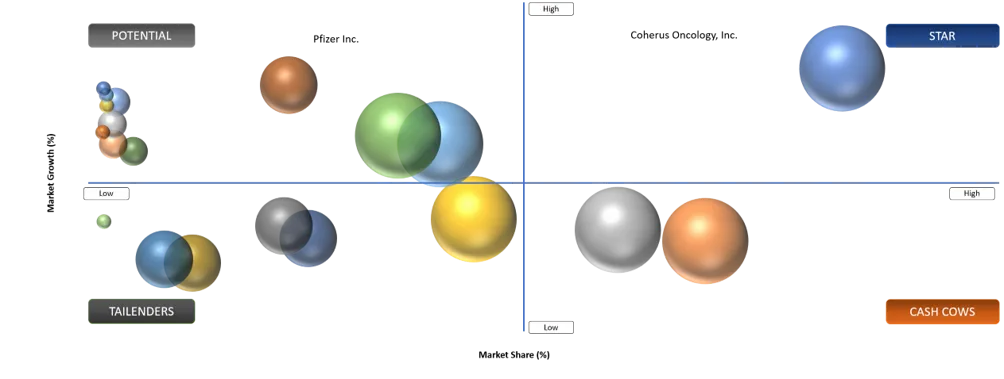
Coherus Oncology, Inc. is positioned in the Star category because it owns casdozokitug, the most clinically advanced direct IL-27 antagonist identified in the global development landscape. Casdozokitug is a fully human monoclonal antibody designed to neutralize IL-27 and restore antitumor immune activity. Its clinical development across hepatocellular carcinoma, non-small cell lung cancer, clear-cell renal-cell carcinoma and other advanced solid tumors gives Coherus a substantial first-mover advantage.
The company’s competitive position is strengthened by combination strategies involving PD-1 or PD-L1 checkpoint inhibitors and anti-angiogenic therapies. However, progression toward commercial leadership will depend on confirmatory efficacy, durable survival improvement, manageable safety, biomarker-based patient selection and regulatory approval. Successful Phase II development in hepatocellular carcinoma could establish the clinical and commercial benchmark for subsequent IL-27-targeted therapies.
POTENTIAL
Pfizer Inc., F. Hoffmann-La Roche Ltd., Amgen Inc., Bristol Myers Squibb Company, Merck & Co., Inc. and Fox Chase Cancer Center are positioned in the Potential category because their involvement remains concentrated in discovery research, preclinical interventions, translational studies or legacy intellectual-property portfolios rather than advanced clinical programs.
Pfizer contributes anti-IL-27 receptor antibody intellectual property, while Roche maintains Genentech-originated IL-27 antagonist assets associated with inflammatory bowel disease. Amgen holds Five Prime-originated antagonist technology for inflammatory disorders, and Bristol Myers Squibb retains ZymoGenetics-originated soluble IL-27 receptor approaches. Merck contributes Schering-originated IL-27-binding compounds and antibody intellectual property. Fox Chase Cancer Center adds translational potential through IL-27-neutralizing antibody research in non-alcoholic steatohepatitis and associated liver cancer. Movement toward the Star category will depend on candidate nomination, human clinical entry, licensing activity, indication prioritization, biomarker validation and evidence of differentiated therapeutic benefit.
IL-27 Antagonist Therapy Market Dynamics
Driver Impact Analysis
| Driver | Market Growth Impact (%) | Demand Concentration | Impacted Use Case | Strategic Impact |
Clinical Validation of Casdozokitug- Based Combination Therapy | 16.8% | High in the United States and major oncology research markets | First-line treatment of unresectable hepatocellular carcinoma using IL-27, PD-1 and VEGF pathway blockade | Establishes clinical proof of concept, reduces target-development risk and supports investment in additional IL-27 antagonist programs |
Growing Need to Overcome Resistance to Immune Checkpoint Inhibitors | 14.6% | High across liver, lung and renal-cell cancer treatment settings | Treatment of patients with immune-suppressed or checkpoint-resistant solid tumors | Positions IL-27 blockade as a complementary mechanism capable of restoring natural killer-cell and T-cell antitumor activity |
Expansion of Biomarker-Guided IL-27 Patient Selection | 12.7% | Concentrated in biomarker-enabled academic hospitals and comprehensive cancer centers | Identification of IL-27-high tumors and patients most likely to respond to combination immunotherapy | Improves trial-enrollment efficiency, strengthens response predictability and supports development of companion-diagnostic strategies |
Broadening Application of IL-27 Neutralization Beyond Oncology | 9.8% | Emerging demand across North American translational research institutions | Preclinical treatment of non-alcoholic steatohepatitis, liver inflammation, inflammatory bowel disease and related liver-cancer risk | Diversifies the addressable indication base and creates licensing opportunities across oncology, metabolic and inflammatory disease portfolios |
Driver: Growing Need to Overcome Resistance to Immune Checkpoint Inhibitors
The growing need to overcome resistance to immune checkpoint inhibitors is expected to accelerate demand for IL-27 antagonist therapies. Although PD-1 and PD-L1 inhibitors have transformed solid-tumor treatment, many patients experience primary resistance, incomplete responses or disease progression after an initial benefit. IL-27 contributes to an immunosuppressive tumor microenvironment by promoting dysfunctional T-cell programs and limiting effective natural killer-cell and T-cell activity. Blocking IL-27 could therefore restore antitumor immunity and improve responses in tumors insufficiently controlled by existing checkpoint blockade.
Casdozokitug provides the clinical validation of this strategy through combination development with PD-1 or PD-L1 and VEGF inhibitors in hepatocellular carcinoma. Its activity indicates that IL-27 blockade may complement established immunotherapies rather than compete as a standalone treatment. Commercial opportunity will concentrate on biomarker-defined patients with immune-excluded, exhausted or treatment-resistant tumors. Developers must demonstrate response durability, acceptable combination toxicity and survival improvement against standards of care. Successful evidence could expand IL-27 antagonism across liver, lung, renal and resistant solid tumors.
Restraint Impact Analysis
| Restraint | Drag on Market Growth (%) | Primary Impact Area | Impacted Use Case | Strategic Impact |
Clinical Pipeline Dependence on a Single Advanced IL-27 Antagonist | 15.9% | Pipeline depth, investor confidence and competitive validation | Casdozokitug-led development in hepatocellular carcinoma and other solid tumors | Creates substantial concentration risk, as clinical setbacks or development delays could materially restrict overall market formation |
Uncertain Incremental Benefit Over PD-1 and VEGF Combination Standards | 13.8% | Trial differentiation, reimbursement and regulatory positioning | Addition of IL-27 blockade to established checkpoint and anti-angiogenic regimens | Requires developers to demonstrate that IL-27 inhibition delivers measurable survival improvement beyond increasingly effective combination standards |
Context-Dependent and Dual Immunological Role of IL-27 | 11.6% | Target validation, indication selection and safety assessment | Treatment of oncology, inflammatory and metabolic diseases | Complicates patient selection because IL-27 can produce pro-inflammatory or immunosuppressive effects depending on disease biology and immune context |
Complexity of Multi-Agent Clinical Development and Response Attribution | 9.7% | Clinical costs, safety interpretation and development timelines | Triple-combination regimens involving IL-27, checkpoint and VEGF pathway inhibition | Increases trial costs and makes it difficult to isolate the efficacy, toxicity and commercial contribution of the IL-27 antagonist |
Restraint: Clinical Pipeline Dependence on a Single Advanced IL-27 Antagonist
Clinical pipeline dependence on a single advanced IL-27 antagonist represents a major structural restraint for the market. Casdozokitug remains the only clearly established clinical-stage asset directly targeting IL-27, while other pharmaceutical participants are primarily represented through discovery programs, preclinical research or legacy intellectual-property portfolios. Such concentration limits independent validation of the therapeutic mechanism, reduces competitive investment and leaves market development highly exposed to one company’s clinical timelines, capital availability, trial execution and regulatory outcomes and subsequent portfolio investment decisions worldwide.
Unfavorable efficacy or safety outcomes in hepatocellular carcinoma could weaken confidence across the IL-27 antagonist opportunity, including oncology, inflammatory disease and metabolic liver disease. Limited pipeline diversity restricts benchmarking across antibody formats, receptor targets, dosing approaches and combination partners. Market expansion requires additional candidates to enter trials, supported by differentiated biomarkers and indication-specific development strategies. Licensing of intellectual property, academic-industry collaborations and strategic investment by immuno-oncology companies would distribute development risk and create the competitive evidence needed for sustainable commercialization.
IL-27 Antagonist Therapy Market Segment Analysis
The global IL-27 antagonist therapy market is segmented based on the molecular target, molecular modality, development stage, line of therapy, treatment regimen, route of administration, indication, end user and region.
Conventional Monoclonal Antibodies Anchor Market Formation While Multispecific Platforms Drive the Next Growth Wave
Conventional monoclonal antibodies represent the dominant molecular-modality segment in the global IL-27 antagonist therapy market, reflecting their clinical maturity, target specificity and established development pathway. The segment is projected to reach US$0.78 billion by 2035, accounting for 69.6% of the market. Casdozokitug anchors this category as the most advanced direct IL-27-neutralizing antibody, with development concentrated in hepatocellular carcinoma and other solid tumors. Antibody-based blockade remains commercially attractive because it supports predictable pharmacokinetics, infrequent dosing and combination use with checkpoint and anti-angiogenic therapies. However, segment leadership remains concentrated around one advanced program.
Multispecific antibodies are positioned as the fastest-growing molecular modality, with a modeled CAGR of 40.2% during 2026-2035, although development remains earlier than conventional antibodies. Their strategic value lies in combining IL-27 blockade with immune-checkpoint, angiogenic or tumor-associated targets within one molecule, potentially improving tumor localization and reducing treatment complexity. Receptor-directed agents, antibody fragments, fusion proteins and nucleic-acid approaches provide additional future optionality. Competitive differentiation across modalities will depend on biomarker-defined patient selection, incremental survival benefit, manageable combination toxicity, scalable production and expansion beyond hepatocellular carcinoma into checkpoint-resistant solid tumors.
IL-27 Antagonist Therapy Market Geographical Penetration
U.S. IL-27 Antagonist Therapy Market Landscape
The United States represents the leading development market for IL-27 antagonist therapy, supported by Coherus Oncology’s domestic presence, advanced immuno-oncology infrastructure and extensive clinical-trial network. Casdozokitug is the country’s principal clinical-stage IL-27 antagonist and is being evaluated with toripalimab and bevacizumab in first-line unresectable hepatocellular carcinoma. In 2026, the randomized Phase II study had completed enrollment and included 25 United States trial locations. This concentration gives American cancer centers substantial influence over clinical validation, biomarker development and treatment sequencing within combination immunotherapy and directly shapes future regulatory evidence requirements nationwide.
Commercial opportunity remains prospective because no IL-27 antagonist has received United States regulatory approval. However, 2025 Phase II combination data showing a 38% overall response rate strengthened the target’s investment case and supported future partnership negotiations. Near-term growth will depend on confirming survival benefit beyond established PD-1 and VEGF regimens, defining IL-27-responsive tumor profiles and managing multi-agent safety. The United States is also positioned to lead licensing and companion-diagnostic development, although market formation remains exposed to a single advanced asset and concentrated sponsor funding across the emerging national therapeutic landscape.
Japan IL-27 Antagonist Therapy Market Outlook
Japan represents a strategically attractive but pre-commercial market for IL-27 antagonist therapy, supported by advanced oncology infrastructure, strong biomarker capabilities and substantial liver-cancer burden. The National Cancer Center projected 36,600 new liver-cancer cases and 23,200 associated deaths in 2025, reinforcing the need for therapies capable of improving outcomes in unresectable disease. Casdozokitug’s development in hepatocellular carcinoma therefore aligns with an important national treatment gap, particularly for patients experiencing incomplete responses or resistance to checkpoint and anti-angiogenic combinations. The opportunity is especially relevant within Japan’s aging and clinically complex oncology population.
Japan’s near-term development opportunity will depend on building country-specific clinical evidence, engaging the Pharmaceuticals and Medical Devices Agency early and integrating domestic cancer centers into future casdozokitug studies to establish locally relevant efficacy, safety and biomarker data for patients. Entry will likely require Japanese patient data, locally validated response biomarkers and partnerships with established oncology companies or academic centers. If global trials confirm durable survival benefit and manageable combination toxicity, Japan could become an important commercialization market, but pricing, reimbursement and differentiation from entrenched immunotherapy standards will determine national uptake.
IL-27 Antagonist Therapy Market Competitive Landscape
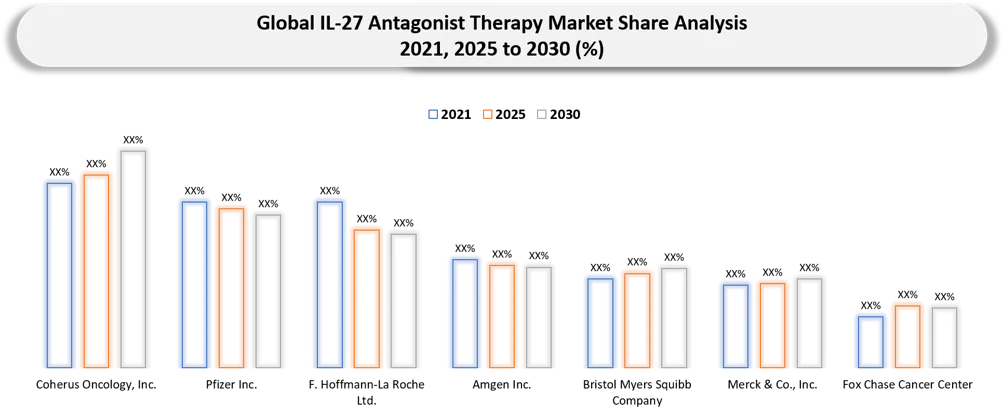
- The global IL-27 antagonist therapy market remains an emerging, highly concentrated immuno-oncology landscape, led by Coherus Oncology’s casdozokitug, the most clinically advanced direct IL-27-blocking antibody. Its development in hepatocellular carcinoma, alongside checkpoint and anti-angiogenic agents, provides the principal clinical benchmark for efficacy, safety, biomarker selection and combination positioning. Pfizer, Roche, Amgen, Bristol Myers Squibb and Merck contribute primarily through antibody, receptor-blocking or legacy intellectual-property portfolios, giving the competitive environment greater scientific breadth than its limited number of active clinical programs initially suggests across the broader global therapeutic opportunity set today.
- Competitive differentiation will depend on clinical proof of concept, biomarker-guided patient selection, combination compatibility and measurable benefit beyond established checkpoint inhibitors. Pfizer, Roche, Amgen, Bristol Myers Squibb and Merck possess capabilities, regulatory experience and partnership networks needed to advance IL-27 assets when evidence strengthens. Fox Chase Cancer Center adds translational depth through research linking IL-27 neutralization with metabolic liver disease and associated cancer development. Over the forecast period, licensing activity, indication expansion and companion-diagnostic strategies could reshape positioning, although commercialization assumptions should remain conservative until more candidates enter clinical trials.
Key Companies of IL-27 Antagonist Therapy Market
- Coherus Oncology, Inc. (United States)
- Pfizer Inc. (United States)
- F. Hoffmann-La Roche Ltd. (Switzerland)
- Amgen Inc. (United States)
- Bristol Myers Squibb Company (United States)
- Merck & Co., Inc. (United States)
- Fox Chase Cancer Center (United States)
IL-27 Antagonist Therapy Market Major Pain Points
- Limited Clinical Validation and Single-Asset Dependence: Casdozokitug remains the only clearly established clinical-stage IL-27 antagonist. Dependence on one advanced candidate exposes the entire market to concentrated clinical, regulatory, financing and development risk.
- Context-Dependent IL-27 Biology: IL-27 can produce immunostimulatory or immunosuppressive effects depending on the disease, tumor microenvironment and immune-cell population. Its dual biological role complicates target validation, indication selection and safety assessment.
- Difficulty Identifying Responsive Patients: IL-27 expression alone may not reliably predict therapeutic response. Limited availability of validated cytokine signatures, spatial immune profiles and companion diagnostics creates uncertainty regarding patient selection.
- Restricted Pipeline and Modality Diversity: Most identified competitors are associated with discovery programs, preclinical research or legacy intellectual property rather than active clinical candidates. Limited diversity restricts benchmarking across IL-27 antibodies, receptor blockers, soluble receptors and multispecific approaches.
- Complex Combination Safety and Efficacy Attribution: IL-27 antagonists are primarily being evaluated with checkpoint and VEGF inhibitors. Multi-agent regimens make it difficult to determine which therapy drives clinical benefit, toxicity or treatment discontinuation.
- Limited Comparative and Long-Term Evidence: Available evidence remains concentrated in early and mid-stage studies. Gaps persist regarding overall survival, progression-free survival, response durability, treatment sequencing and efficacy across different tumor types.
- High Clinical-Development Costs and Extended Timelines: Biomarker-intensive oncology trials require multiomic testing, specialized cancer centers, biologics manufacturing and long-term follow-up. Small eligible populations and changing standards of care can further increase costs and delay development.
IL-27 Antagonist Therapy Market Recent Developments
- August 2026: Coherus Oncology completed enrollment in its randomized Phase II trial of casdozokitug combined with toripalimab and bevacizumab for first-line unresectable hepatocellular carcinoma.
- March 2026: The United States granted patent US12577299B2, covering Surface Oncology-originated anti-IL-27 antibodies and therapeutic applications now associated with Coherus Oncology’s acquired portfolio.
- January 2026: Coherus presented multiomic profiling results identifying pharmacodynamic and potential response biomarkers for casdozokitug combined with PD-L1 and VEGF blockade in unresectable hepatocellular carcinoma.
- March 2025: The United States granted Fox Chase Cancer Center’s Institute for Cancer Research patent US12240897B2, covering IL-27 antibody-based treatment of non-alcoholic steatohepatitis and associated liver-tumor development.
- January 2025: Coherus reported final Phase II results for casdozokitug with atezolizumab and bevacizumab in first-line hepatocellular carcinoma, demonstrating a 38% overall response rate and 17.2% complete response rate, without new safety signals.
Analyst View / Opinion on IL-27 Antagonist Therapy Market
- The market is transitioning from scientific validation toward early commercial formation, with value creation dependent on converting IL-27 blockade into clinically meaningful benefits for checkpoint-resistant cancers.
- Casdozokitug currently provides the principal clinical benchmark for direct IL-27 antagonism, creating first-mover potential for Coherus Oncology while exposing the market to substantial single-asset concentration risk.
- Initial adoption is likely to be combination-led, particularly through IL-27 blockade alongside PD-1 or PD-L1 and VEGF-pathway inhibitors in hepatocellular carcinoma and other immunologically resistant solid tumors.
- Treatment selection will increasingly depend on tumor type, prior checkpoint-inhibitor exposure, IL-27-associated immune signatures, natural killer-cell activity, disease stage, performance status and combination-treatment eligibility.
- Multispecific antibodies, receptor-directed agents and therapies targeting IL-27p28, EBI3, IL-27Rα or gp130 could diversify the pipeline, provided developers demonstrate IL-27-specific activity without disrupting broader cytokine signaling.
- Sustainable market leadership will require randomized survival evidence, validated predictive biomarkers, manageable combination toxicity and scalable biologics manufacturing. Commercial success will further depend on regulatory execution, oncology-center education, companion-diagnostic availability and payer evidence demonstrating incremental value over established immunotherapy combinations.
Global IL-27 Antagonist Therapy Market Target Audience
| INDUSTRY | WHO SHOULD BUY THIS REPORT? | REASON TO BUY THIS REPORT |
| Pharmaceutical and Biotechnology Companies | Immuno-oncology companies, antibody developers, cytokine-focused biotechnology firms and pipeline-development teams | Assess market potential, target validation, competitive positioning, indication opportunities and commercialization pathways for IL-27 and IL-27 receptor antagonists |
| Biomarker and Diagnostic Companies | Companion-diagnostic developers, genomic-testing companies, spatial-biology providers and multiomic analytics firms | Identify opportunities in IL-27 expression profiling, cytokine signatures, response prediction and biomarker-guided patient selection |
| Healthcare Providers | Medical oncologists, hepatologists, pulmonologists, hospital cancer centers and multidisciplinary tumor boards | Understand emerging clinical evidence, eligible patient profiles, combination strategies, safety requirements and potential treatment sequencing |
| Payers and Market-Access Organizations | Health insurers, pharmacy-benefit managers, health-technology assessment bodies and reimbursement consultants | Evaluate eligible populations, incremental clinical value, combination-therapy costs, budget impact and prospective reimbursement models |
| Contract Research and Manufacturing Organizations | Clinical research organizations, biologics manufacturers, laboratory-service providers and clinical-supply companies | Assess demand for biomarker-intensive trials, antibody manufacturing, global study execution, bioanalytical testing and clinical supply services |
| Patient Advocacy and Support Organizations | Liver-cancer, lung-cancer, kidney-cancer and immunotherapy patient-support groups | Understand unmet treatment needs, clinical-trial access, therapy burden, safety considerations and patient-relevant outcome requirements |
| Government and Regulatory Bodies | Regulatory agencies, public-health authorities, cancer-control organizations and reimbursement agencies | Support regulatory assessment, clinical-trial policy, pharmacovigilance planning, biomarker requirements and evidence-based coverage decisions |
| Investors and Financial Institutions | Private-equity firms, venture-capital investors, institutional investors and investment banks | Evaluate pipeline value, clinical and regulatory risks, licensing opportunities, partnership potential and acquisition targets |
| Research Organizations | Academic institutions, translational research centers, cancer institutes and cytokine-biology laboratories | Analyze IL-27 biology, clinical-trial activity, patent recruitment, biomarker development and remaining research gaps |
Why Choose DATAM?
- Data-Driven Market Intelligence: Access granular IL-27 antagonist therapy intelligence covering modeled market opportunity, clinical-stage assets, preclinical interventions, indication potential, competitive positioning, intellectual-property portfolios, regional trial activity and prospective commercialization pathways.
- Post-Purchase Support and Expert Analyst Consultations: Engage directly with healthcare analysts for customized guidance on patient segmentation, biomarker strategy, indication prioritization, combination positioning, competitor assessment, licensing opportunities, market entry and commercialization planning.
- White Papers and Case Studies: Receive periodic insights on IL-27 pathway biology, casdozokitug development, checkpoint-resistance mechanisms, biomarker innovation, multiomic profiling, emerging IL-27 receptor approaches and evolving immuno-oncology combination strategies.
- Annual Updates on Purchased Reports: Stay informed through annual updates covering clinical readouts, trial-status changes, regulatory developments, patent grants, licensing agreements, indication expansion, pipeline entries and competitive shifts. Terms and conditions apply.
- Specialized Focus on Emerging Markets: Gain country-specific intelligence on hepatocellular carcinoma burden, oncology infrastructure, clinical-trial readiness, biomarker availability, regulatory pathways, reimbursement conditions and commercialization opportunities across high-growth markets.
- Value of DataM Reports: Obtain tailored intelligence addressing specific business questions related to checkpoint-resistant tumors, biomarker-defined populations, survival outcomes, combination differentiation, clinical-development risk, pipeline concentration, regional expansion, market access and investment priorities beyond generic databases.
What DATAM Uniquely Provides
- In-depth segmentation of the IL-27 antagonist therapy market by molecular target, molecular modality, development stage, line of therapy, treatment regimen, route of administration, indication, end user and region.
- Competitive assessment of IL-27-focused developers covering target selectivity, mechanism of action, clinical efficacy, response durability, safety, biomarker strategy, combination positioning, pipeline maturity, intellectual property and commercialization readiness.
- Comprehensive analysis of treatment-eligible populations across hepatocellular carcinoma, non-small cell lung cancer, clear cell renal cell carcinoma and other solid tumors, including checkpoint-inhibitor-resistant patients, prior-treatment status, disease stage and combination-treatment eligibility.
- Actionable intelligence on clinical-trial design, regulatory pathways, companion-diagnostic development, biologics manufacturing, pricing, reimbursement, licensing activity, research partnerships, market-access barriers and investment opportunities.
- Analyst forecasts identifying commercially attractive indications, high-growth molecular modalities, regional expansion opportunities and emerging competitive threats across conventional monoclonal antibodies, multispecific antibodies, receptor-directed agents, antibody fragments, fusion proteins and other IL-27-specific therapeutic approaches.


























































