


Hybrid Non-Isocyanate Polyurethane Market Size and Overview
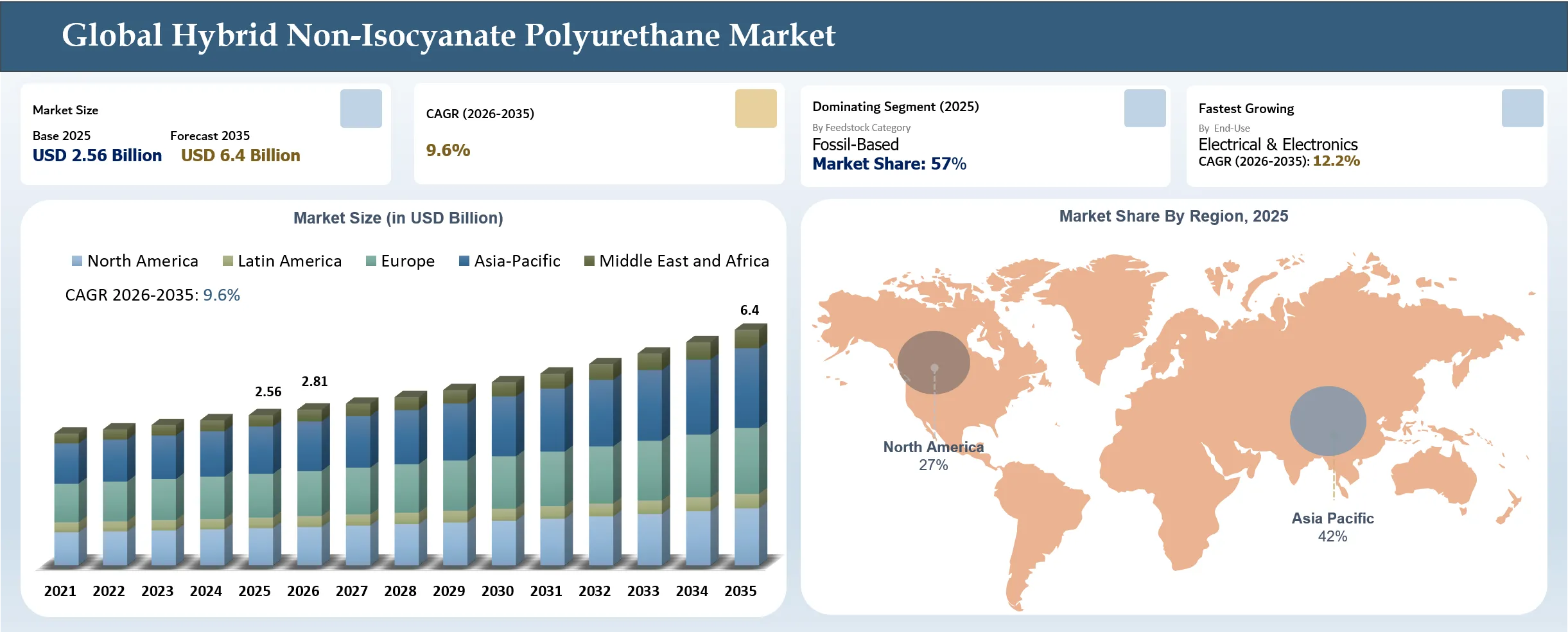
The global hybrid non-isocyanate polyurethane market reached USD 2.56 billion in 2025 and is expected to reach USD 6.4 billion by 2035, growing with a CAGR of 9.6% during the forecast period 2026-2035. The market is growing due to hybridization techniques increasingly being adopted as a means of overcoming the slow curing rate and poor performance of traditional non-isocyanate polyurethanes. Demand is especially growing in the areas of coatings, adhesives, and 3D-printing, where hybrid NIPU products have been developed that incorporate both isocyanate-free and functional ingredients such as methacrylates and epoxy networks. In June 2025, ACS Applied Polymer Materials reported a UV-curable hybrid NIPU that can be cured completely within minutes using UV light, resolving the problem of slow curing in cyclic carbonate-amine chemistry. The product managed to achieve a tensile strength of 12.3 MPa, a Young’s modulus of 273.9 MPa, and elongation at break of 45.7%, while its 3D-printed materials had up to 99.7% gel content.
Furthermore, in March 2026, as reported in BioTrade (ebiotrade.com), quoting Progress in Organic Coatings, a breakthrough saw the development of waterborne epoxy hybrid NIPUs based on bio-derived isosorbide and dimethyl carbonate. The HMDA NIPU formulation had 73.16% hydrogen-bond content, 1.576 N/mm peel strength, 1.057 MPa lap-shear strength, 7.123 MPa tensile strength, and 909% elongation at break, highlighting the impact of bio-derived feedstocks and hybrid network formulations in enhancing adhesive, cohesive, and mechanical properties.
Recent developments show that the market trend is shifting from traditional NIPU formulations to fast-curing, bio-based, waterborne, UV-curing, and epoxy hybrid systems. Nonetheless, the commercialization of Hybrid NIPUs faces various constraints in terms of feedstock costs, formulation complexities, slow kinetic reactions in traditional formulations, and inadequate large-scale production facilities.
The development and application of new non-isocyanate-based technologies by major coating companies show the growing commercialization and progress towards sustainability in urethane products. In April 2026, according to the allnex Press Release, it is evident that allnex launched its advanced ACURE AQ waterborne Non-Isocyanate (NISO) 2K urethane technology, which offers fast curing and prolonged pot life through non-isocyanate Michael Addition technology. Allnex is a company with a 75-year legacy, annual revenue of more than €2.2 billion (USD 2.56 billion), 4,000 employees globally, and has its research & manufacturing base spread over 35 countries and employees from over 50 countries. Moreover, its CRYLCOAT OCEAN series contains up to 50% rPET content with the lowest curing temperatures of 160°C.
White-Space Opportunities for Bio-Based and High-Performance Hybrid Non-Isocyanate Polyurethane Development
In April 2026, the Circular Bio-based Europe Joint Undertaking (CBE JU) launched its 2026 Open Call for Project Proposals, allocating a total of €170.7 million (USD 198.25 million) across 13 funding areas to accelerate circular and sustainable bio-based industries in Europe. The highest investment of €20 million (USD 23.23 million) each is directed toward boosting biorefinery competitiveness through biotechnology, Safe and Sustainable by Design (SSbD) bio-based alternatives for fertilising and crop protection products, SSbD bio-based solutions for home and personal care, and diversification of nutritional food ingredient sources. For the Hybrid Non-Isocyanate Polyurethane market, the most relevant investment area is €14 million (USD 16.26 million) for high-performance, circular-by-design, bio-based thermosets, providing a significant white-space opportunity for the development of sustainable Hybrid NIPU materials.
The funding is expected to support two projects, with an estimated €7 million (USD 8.13 million) EU contribution per project, targeting Technology Readiness Levels (TRL) 6-7. Other relevant investments include €14 million (USD 16.26 million) each for bio-based additives to improve recyclability and biodegradability, bio-based chemicals and materials from woody residues, biotech routes for valorization of residual biomass, and films and coatings for circular packaging. Additionally, €6.5 million (USD 7.55 million) each is allocated to SSbD bio-based polymers from alternative sources, separation and purification technologies in biorefineries, and sustainable bio-based textile fibres, while €1.2 million (USD 1.39 million) supports industries transitioning toward sustainable and circular bio-based products and processes.
The investment is expected to create substantial opportunities for companies operating across the bio-based polymers, sustainable thermosets, coatings, adhesives, renewable feedstocks, cyclic carbonates, and specialty chemicals value chains. Companies such as Covestro, BASF, Huntsman, and Wanhua Chemical could potentially benefit through the development of sustainable polymer platforms, specialty chemicals, polyurethane alternatives, and advanced polymer intermediates. Coating and resin manufacturers including allnex, Arkema, Evonik, and DSM-Firmenich could potentially benefit through the development of bio-based resins, functional additives, UV-curable systems, and high-performance coatings relevant to Hybrid NIPU applications.
Renewable feedstock and biomass companies such as Stora Enso, UPM, Borregaard, and LanzaTech could benefit from investments targeting woody residues, lignin, biomass, and renewable carbon sources by supplying bio-based building blocks for cyclic carbonates and advanced polymer formulations. In addition, companies specializing in adhesives and high-performance materials, including Henkel, H.B. Fuller, and 3M, could potentially utilize emerging Hybrid NIPU technologies in sustainable adhesives, protective coatings, and industrial material applications.
Hybrid Non-Isocyanate Polyurethane Market Key Takeaways
- Asia-Pacific led the global market in 2025 by capturing a 42% share, driven by extensive chemical manufacturing and sustainable technology investments. A key innovator in the region developed a world-first CO₂-based non-isocyanate polyurethane process with 22 pending patents that reduces carbon emissions by 58%.
- The fossil-based feedstock segment commanded a dominant 57% market share of the global hybrid non-isocyanate polyurethane industry in 2025. Researchers successfully created seven lignin and CO₂ derivatives with molecular weights of 182.4-248.7 kDa, thermal decomposition temperatures of 248-259°C, and glass-transition temperatures of 45-73°C.
- SCUT developed a water-based cyclic carbonate emulsion offering over one year of storage stability and a maximum viscosity of 3,000 mPa·s. The coating achieved B-3H hardness, an impact resistance of at least 50 cm·kg, Grade 0 adhesion, 1 mm flexibility, and over 80% gloss.
- The Circular Bio-based Europe Joint Undertaking launched its 2026 call with €170.7 million ($198.25 million) in funding spread across 13 areas. The largest allocation directs €20 million ($23.23 million) each to four key sectors to boost biorefinery competitiveness and bio-based alternatives.
Hybrid Non-Isocyanate Polyurethane Market Industry Trends and Strategic Insight
- Shift toward performance-driven hybrid chemistry. The industry is increasingly combining NIPU chemistry with epoxy, acrylate, and siloxane networks to overcome conventional NIPU limitations in curing speed, mechanical strength, chemical resistance, and moisture stability.
- Rapid-curing technologies are becoming a strategic development priority. UV-curable and other accelerated curing systems are emerging as key technology pathways for making Hybrid NIPUs compatible with high-throughput industrial coating and additive-manufacturing processes.
- Bio-based feedstock integration is reshaping product development. Manufacturers and researchers are increasingly utilizing vegetable oils, lignin, tannin, sugar-derived intermediates, and other renewable resources to develop Hybrid NIPUs with reduced dependence on conventional petrochemical feedstocks.
- Intellectual property around hybrid curing and functional monomer design is becoming strategically important. Competitive differentiation is increasingly centered on proprietary cyclic carbonate structures, bio-based intermediates, hybrid crosslinking mechanisms, and curing technologies that can improve both processing efficiency and end-product performance.
- The industry is moving toward multifunctional Hybrid NIPUs. Future product development is increasingly focused on combining properties such as self-healing capability, flame resistance, hydrophobicity, thermal stability, and advanced adhesion within a single material platform.
Hybrid Non-Isocyanate Polyurethane Market Scope
| Metrics | Details | |
| 2025 Market Size | USD 2.56 Billion | |
| 2035 Projected Market Size | USD 6.4 Billion | |
| CAGR (2026-2035) | 9.6% | |
| Largest Market | Asia-Pacific | |
| Fastest Growing Market | Asia-Pacific | |
| By Hybrid Type | Epoxy–Non-Isocyanate Polyurethane (Epoxy-NIPU), Siloxane–Non-Isocyanate Polyurethane (Siloxane-NIPU), Acrylic–Non-Isocyanate Polyurethane (Acrylic-NIPU), Polyester–Non-Isocyanate Polyurethane (Polyester-NIPU), Other | |
| By Feedstock Category | Fossil-Based, Bio-Based (Biomass), Hybrid, Others | |
| By Product Type | Coatings, Adhesives, Composites, Elastomers, Films, Foams, Plastics, Thermoplastic Polyurethane (TPU), Others | |
| By Application | Coatings, Adhesives & Sealants, Foams, Elastomers, Composites, Other | |
| By End-Use | Construction, Automotive & Transportation, Industrial, Furniture & Woodworking, Electrical & Electronics, Packaging, Marine, Consumer Goods, Other | |
| By Region | North America | U.S., Canada, Mexico |
| Europe | Germany, UK, France, Spain, Italy, Poland, Netherlands, Switzerland and Rest of Europe | |
| Asia-Pacific | China, India, Japan, Australia, South Korea, Indonesia, Malaysia and Rest of Asia Pacific | |
| Latin America | Brazil, Argentina and Rest of Latin America | |
| Middle East and Africa | UAE, Saudi Arabia, South Africa, Israel, Türkiye and Rest of Middle East and Africa | |
| Report Insights Covered | Competitive Landscape Analysis, Company Profile Analysis, Market Size, Share, Growth | |
Hybrid Non-Isocyanate Polyurethane Market Disruption Analysis
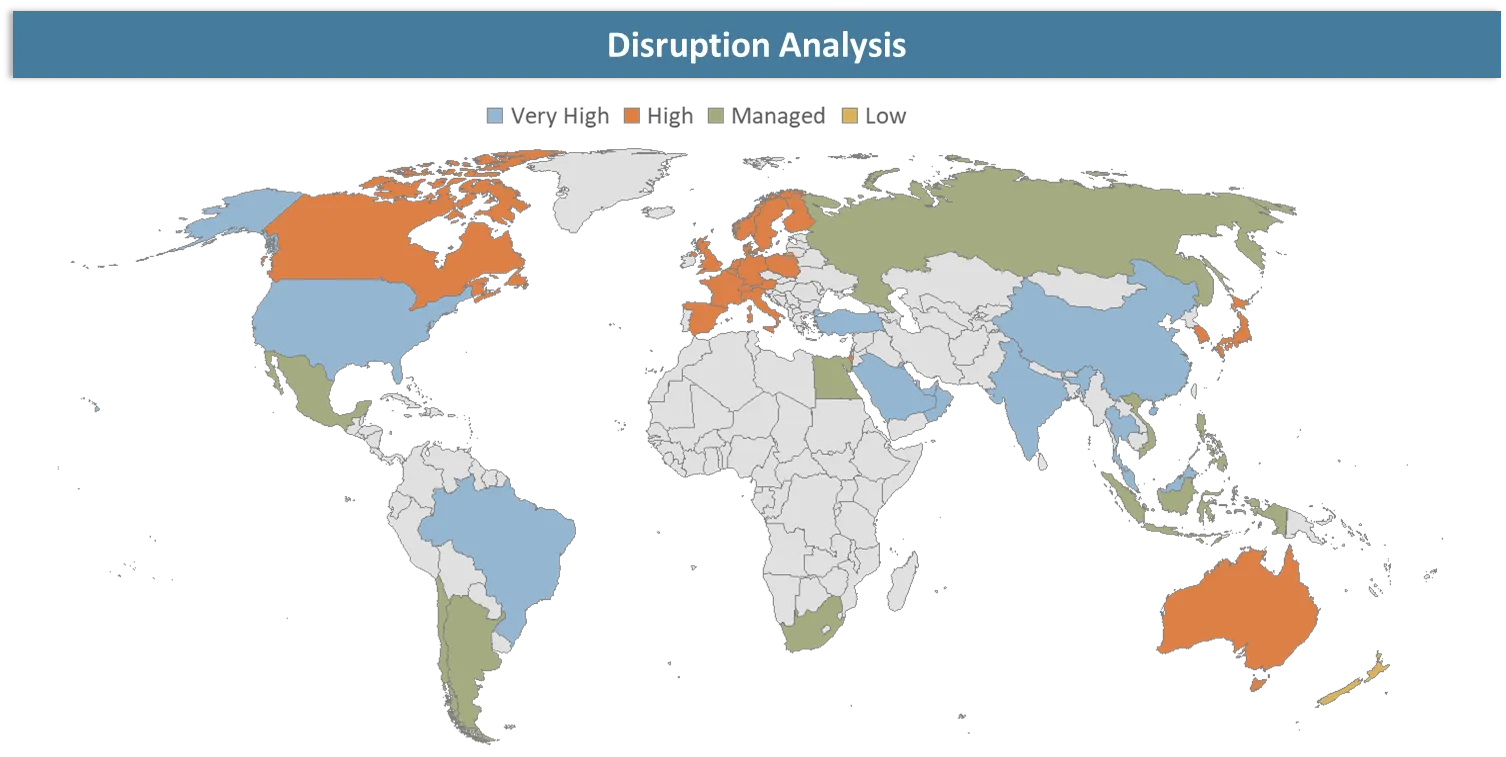
Shift Away from Conventional Isocyanate-Based Polyurethane Chemistry Reshaping the Polyurethane Materials Landscape
The disruption in the hybrid non-isocyanate polyurethane market is primarily associated with the transition away from conventional production methods of polyurethane, which make use of toxic isocyanates. Issues related to safety at work and new developments in chemistry for polyurethane have prompted companies to consider other types of polyurethane materials like non-isocyanate and hybrid, thus changing the traditional raw material sourcing and manufacturing processes. It has led to an increased need for new chemical building blocks and hybrid polymers that offer similar functionality but without the toxic isocyanates.
The transition to non-isocyanate chemistry also affects traditional polyurethane processes since chemical producers will have to adapt their reaction parameters and production processes as well as modify their feedstocks. In February 2026, according to Fraunhofer, the process based on dicarbamate chemistry occurs at 180-190°C and lasts for six to eight hours instead of the few minutes required to produce isocyanate-based polyurethanes. Dicarbamates are produced in a reaction between methanol, carbon dioxide, and diamines under 50 bar of pressure. Moreover, production of dicarbamate has already reached several kilograms of NIPU at a pilot scale, with further scales of production targeting several hundred kilograms. Examples suggest the possibility of reorganization of polyurethane production into feedstocks based on CO2 and new platforms for reactions
Hybrid Non-Isocyanate Polyurethane Market BCG Matrix: Company Evaluation
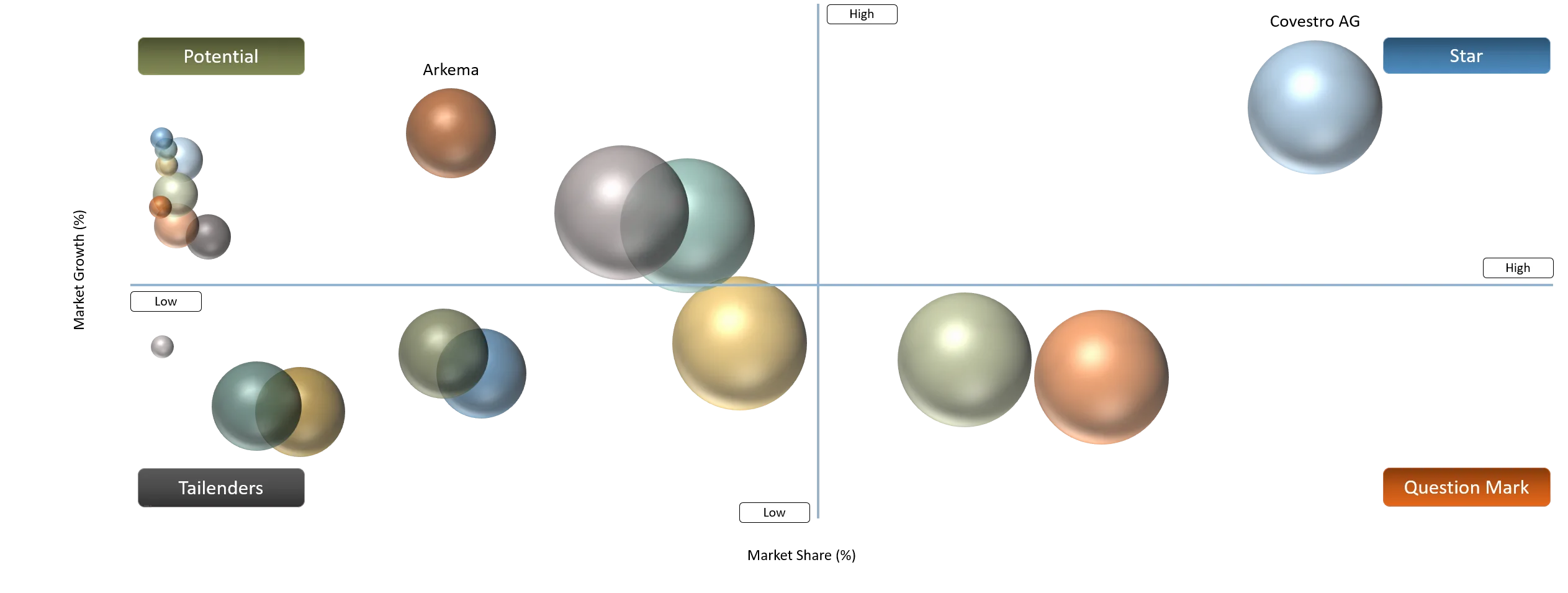
Stars include Covestro AG and Wanhua Chemical Group because of their strong global polyurethane manufacturing capabilities, extensive R&D infrastructure, and strategic positioning in sustainable and next-generation polymer technologies. Companies established scale in polyurethane chemistry and a growing focus on sustainable materials provide them with the resources to accelerate the commercialization of Hybrid Non-Isocyanate Polyurethane technologies as industrial adoption expands. Evonik Industries AG, Mitsui Chemicals, Inc., and allnex are placed in the Question Mark category because of their strong capabilities in specialty chemicals, additives, resins, and coatings, which are highly relevant to Hybrid NIPU formulations.
The category of Potential includes Arkema and Momentive Performance Materials, which can benefit from the increasing development of acrylic-NIPU and siloxane-NIPU hybrid systems. Stahl Holdings B.V. and Specific Polymers belong to the Tailenders category because their activities are more specialized and focused on niche coatings, sustainable materials, and advanced polymer technologies compared with large multinational polyurethane and specialty chemical producers.
Hybrid Non-Isocyanate Polyurethane Market Dynamics
Driver Impact Analysis
| Driver | Market Growth Impact (%) | Demand Concentration | Impacted Use Case | Strategic Impact |
Stringent regulations and worker-safety concerns surrounding isocyanates are accelerating the adoption of safer hybrid non-isocyanate polyurethane formulations. | 85% | Europe and North America; industrial manufacturing and regulated workplaces | Industrial coatings, adhesives & sealants, foams, construction materials | Accelerates substitution of conventional isocyanate-based PU systems and encourages manufacturers to invest in safer NIPU and hybrid formulations. |
Growing demand for sustainable and low-carbon materials is driving the use of bio-based and renewable feedstocks in hybrid NIPU production. | 80% | Europe and Asia-Pacific; construction, automotive, packaging and consumer products | Bio-based coatings, adhesives, foams and specialty polymer materials | Pushes producers toward renewable cyclic carbonates and bio-based intermediates while creating differentiation through lower-carbon material portfolios. |
Advancements in hybridization technologies, including epoxy, siloxane, and dynamic polymer networks, are improving NIPU performance. | 90% | North America, Europe and advanced manufacturing markets in Asia-Pacific | High-performance coatings, structural adhesives, 3D printing, electronics and protective materials | Improves the commercial viability of NIPUs by addressing curing speed, mechanical strength, durability and environmental resistance limitations. |
Increasing demand for low-VOC, environmentally friendly coatings, adhesives, foams, and sealants is supporting market growth. | 82% | Construction, automotive, industrial maintenance and infrastructure sectors globally | Protective coatings, architectural coatings, industrial adhesives, insulation foams and sealants | Expands the addressable market for Hybrid NIPUs and supports the transition toward waterborne, solvent-free and low-emission formulations. |
Stringent regulations and worker-safety concerns surrounding isocyanates are accelerating the adoption of safer hybrid non-isocyanate polyurethane formulations
Stringent occupational safety requirements and growing concerns surrounding exposure to diisocyanates are expected to have a significant influence on the hybrid non-isocyanate polyurethane market. Safety regulations and the need for safe practices have led polyurethane makers to look into less risky options than traditional isocyanate-based chemistry systems. This will result in more interest in hybrid NIPU formulations that use isocyanate-free polyurethane chemistry along with other polymers.
In parallel, technological advances are strengthening the commercial potential of Hybrid NIPU systems by addressing the processing limitations of conventional non-isocyanate polyurethane materials. In April 2026, according to the Royal Society of Chemistry (RSC), poly(hydroxyurethane) (PHU) chemistry accounts for more than 90% of NIPU foam development, while conventional PHU foaming can require more than 14 hours of curing at temperatures above 80°C. The study further reported that hybrid NIPU chemistry can enable rapid foam expansion in approximately one minute, while hybrid formulations can facilitate fast foaming within minutes under room-temperature conditions. The research also identified that more than 90 wt% bio-based content can be achieved in self-blown NIPU foams, supporting the development of safer and renewable polyurethane alternatives. These technological improvements are increasing the attractiveness of Hybrid NIPU formulations for manufacturers seeking to combine reduced isocyanate exposure with faster processing and sustainable material development.
Restraint Impact Analysis
| Restraint | Drag on Market Growth (%) | Primary Impact Area | Impacted Use Case | Strategic Impact |
Slow curing and low reaction kinetics of cyclic carbonate-amine chemistry continue to restrict the processing speed and industrial adoption of hybrid non-isocyanate polyurethanes. | 88% | Manufacturing efficiency and processing cycle time | Industrial coatings, adhesives, foams, sealants and high-throughput manufacturing | Drives investment in catalysts, reactive cyclic carbonates, UV curing, and epoxy/acrylate hybridization to reduce curing time and improve production throughput. |
High viscosity and complex formulation requirements create processing challenges and limit the efficient large-scale manufacturing of hybrid NIPU materials. | 82% | Processability, mixing and scale-up | Spray coatings, composite manufacturing, adhesives and large-volume foam production | Encourages development of waterborne systems, reactive diluents, optimized molecular architectures, and modified processing equipment to improve flow and manufacturing consistency. |
Limited commercial availability and high costs of specialized cyclic carbonates and other advanced feedstocks constrain cost-effective production and market scalability. | 90% | Raw-material supply and production economics | Commodity coatings, construction materials, mass-market foams and adhesives | Creates pressure to establish larger cyclic-carbonate supply chains, develop lower-cost CO₂-derived feedstocks, and prioritize high-value applications before broad commodity-market penetration. |
Performance gaps in moisture resistance, long-term durability, and certain mechanical properties compared with conventional polyurethane restrict adoption in demanding applications. | 78% | Product performance and application qualification | Automotive components, protective coatings, structural adhesives and outdoor applications | Requires hybrid reinforcement using epoxy, siloxane, nanomaterials, and dynamic polymer networks to meet long-term industrial performance specifications. |
Slow curing and low reaction kinetics of cyclic carbonate-amine chemistry continue to restrict the processing speed and industrial adoption of hybrid non-isocyanate polyurethanes
One of the major restraints limiting the broader adoption of hybrid non-isocyanate polyurethane market polymers is the very slow reaction of cyclic carbonates with amines. In contrast to normal polyurethane polymerization, where there is an interaction between isocyanate groups and amines, in cyclic carbonate-amine systems, the reaction rate is relatively low, which means that the reaction takes too long and the material becomes less compatible with industrial-scale manufacturing. The problems can be encountered by manufacturers in processes like coatings, adhesives, sealants, and foams because quick curing and predictability are key to ensuring high efficiency and competitively low manufacturing costs.
In addition, current studies have shown that enhancing cyclic carbonate-amines' reactivity is likely to require further molecular engineering, thus making the whole process more complicated. In December 2025, according to the ACS publications, lignin-based cyclic carbonate amine chemistry showed aminolysis at ambient temperature, while the reversible aza-Michael reaction needed to be heated up to 100°C in order to completely recover the initial α, β-unsaturated ketone functionality. NIPUs obtained through this process had a thermal decomposition temperature of up to 318°C, a glass transition temperature of 60.2°C, and tensile strength of 44.5 MPa. Therefore, high-performance materials can be obtained, but special cyclic carbonate structures are needed for that.
Hybrid Non-Isocyanate Polyurethane Market Segment Analysis
The global hybrid non-isocyanate polyurethane market is segmented based on hybrid type, feedstock category, product type, application, end-use, and region.
Established Availability of Petrochemical Feedstocks Supporting Fossil-Based Hybrid NIPU Production
The fossil-based segment dominated the hybrid non-isocyanate polyurethane market, as it captured 57% of the market share in 2025 because of the well-established availability of fossil-based chemical intermediates and their use in the polymer manufacturing supply chain process. Traditional cyclic carbonate intermediates, diamine intermediates, epoxides, and other fossil-based intermediates are commercially more advanced in NIPU manufacturing compared to most alternative renewable intermediates. The well-established supply chain helps manufacturers formulate Hybrid NIPU materials with consistent and stable quality properties, thereby making it a market leader in various industries.
In parallel, there is an increasing challenge posed by the ongoing progress towards alternative non-fossil feedstocks in the form of biomass and CO₂ derivatives. In July 2025, according to the ACS publications, the researchers managed to create seven types of lignin and CO₂ derivatives with PHUs, which possess molecular weight values of 182.4-248.7 kDa, thermal decomposition temperature of 248-259°C, and glass-transition temperature range of 45°C-73°C, as well as a modulus of up to 691 kPa. The properties of renewable feedstocks become more competitive for advanced NIPUs. On the other hand, the authors point out the dependence of most PHUs on petrochemical feedstocks and/or toxic phosgene precursors, thus proving the superiority of the fossil fuel feedstock infrastructure in the industry currently.
Hybrid Non-Isocyanate Polyurethane Market Geographical Penetration
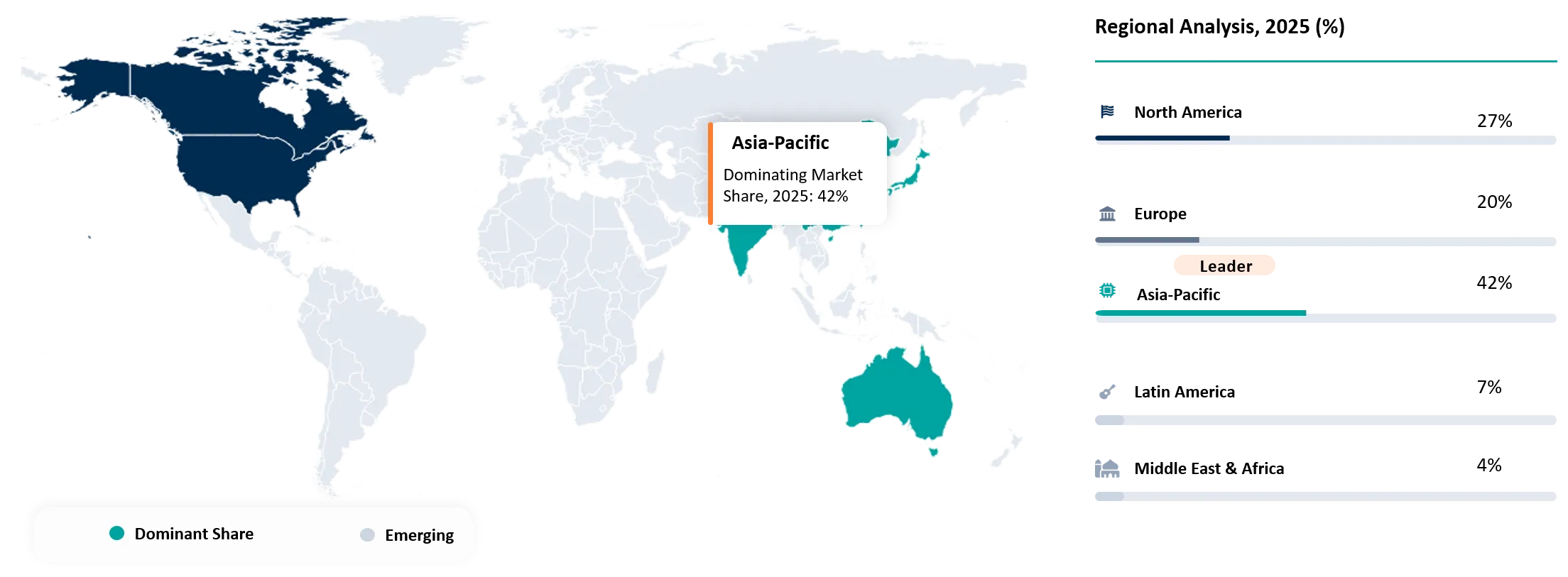
Expanding Sustainable Materials Development and Chemical Manufacturing Supporting Asia-Pacific Market Leadership
The Asia-Pacific region dominated the hybrid non-isocyanate polyurethane market, accounting for 42% of the global market share in 2025, supported by its extensive chemical manufacturing infrastructure, large polyurethane-consuming industries, and growing investment in sustainable polymer technologies. Countries including China, Japan, South Korea, and India provide a strong industrial base for Hybrid NIPU development across coatings, adhesives, construction materials, automotive components, and electronics applications. The region's established specialty chemical supply chains and expanding focus on low-emission and bio-based materials are strengthening the commercialization potential of Hybrid Non-Isocyanate Polyurethane technologies and supporting Asia-Pacific's leading market position.
Growing demand for sustainable and low-carbon polyurethane alternatives is encouraging manufacturers to develop innovative technologies that eliminate conventional isocyanate-based production processes. In November 2025, according to the Far Eastern New Century (FENC), FENC Wins Golden Award for Outstanding Resource Circulation Enterprise with Innovative Green PU Technology. The Taiwan-based Far Eastern New Century Corporation (FENC), an integrated polyester materials and sustainable materials manufacturer, received the Golden Award for its TOPGREEN AirTek PU technology. The company developed the world's first CO₂-based non-isocyanate polyurethane manufacturing process, which has 22 international patent applications pending and reduces carbon emissions by 58% compared with conventional thermoplastic polyurethane.
China Hybrid Non-Isocyanate Polyurethane Market Trends
China holds a dominant position within the Asia-Pacific hybrid non-isocyanate polyurethane market, supported by its extensive chemical manufacturing infrastructure, strong polyurethane supply chain, and expanding investment in sustainable and high-performance polymer technologies. The country's large coatings, construction, automotive, electronics, and industrial manufacturing sectors provide substantial downstream opportunities for Hybrid NIPU materials. China's established production capabilities for chemical intermediates and growing research focus on carbon dioxide utilization and biomass-derived polymers are accelerating the development and commercialization of alternative polyurethane chemistries.
According to the Google Patents publication, Water-Based Bisphenol an Epoxy Resin Based Cyclic Carbonate Emulsion, Preparation Method Thereof and Water-Based Non-Isocyanate Polyurethane Coating, the South China University of Technology (SCUT), headquartered in Guangzhou, China, a public research university and academic research institution, developed an epoxy-integrated water-based non-isocyanate polyurethane coating technology. Published as patent CN121378675A on January 23, 2026, the technology produces a water-based cyclic carbonate emulsion with more than one year of storage stability and a viscosity of 3,000 mPa·s or less. The resulting NIPU coating demonstrated B-3H hardness, impact resistance of at least 50 cm·kg, Grade 0 adhesion, 1 mm flexibility, and gloss exceeding 80%, highlighting its potential for high-performance and environmentally friendly coating applications.
Japan Hybrid Non-Isocyanate Polyurethane Market Outlook
Japan is an important country in the Asia-Pacific hybrid non-isocyanate polyurethane market because of its highly developed specialty chemicals industry, advanced polymer manufacturing capabilities, and strong presence in automotive, electronics, coatings, and industrial materials. Japanese chemical manufacturers have extensive expertise in high-performance resins, functional materials, silicones, and advanced coating technologies, providing a strong industrial foundation for the development of Hybrid NIPU formulations. Growing emphasis on environmentally responsible materials and the replacement of hazardous chemical substances is also supporting research into alternative polyurethane technologies across the country.
Growing emphasis on sustainable and CO₂-based polymer technologies is driving innovation in non-isocyanate polyurethane alternatives and their commercial-scale production. In July 2026, according to the ARCH Toranomon Hills article, “Dainichiseika Color & Chemicals Mfg. Co., Ltd.: Adding Color Beyond the Walls of Business Divisions,” Japan-based Dainichiseika Color & Chemicals Mfg. Co., Ltd., is a specialty chemical and functional materials manufacturer founded in 1931. The company is advancing its environmentally friendly HPU (Hydroxy Polyurethane) technology, produced using CO₂-derived cyclic carbonate, and has established a mass-production process through a NEDO-supported project. In February 2026, Dainichiseika completed its cyclic carbonate building and intermediate plant and commenced test operations, supporting the transition from laboratory-scale development toward commercial-scale production.
Growing Investment in Sustainable Materials and Advanced Polymer Innovation Supporting North American Market Expansion
The North American region accounted for 27% of the global hybrid non-isocyanate polyurethane market in 2025, supported by its advanced specialty chemicals industry, strong research infrastructure, and growing demand for safer and sustainable polymer materials. The United States and Canada have significant downstream demand from construction, automotive, industrial coatings, adhesives, aerospace, and advanced manufacturing industries. Increasing regulatory attention toward chemical safety and the development of low-emission material systems are encouraging manufacturers and research organizations to accelerate the development of alternative polyurethane technologies, supporting North America's strong position in the Hybrid NIPU market.
Growing interest in sustainable alternatives to conventional polyurethane is accelerating research into bio-based non-isocyanate polyurethane materials with enhanced performance characteristics. In August 2025, according to the American Chemical Society (ACS) Symposium Series chapter, “Properties and Performance of NIPU,” researchers Mayankkumar L. Chaudhary and Ram K. Gupta, affiliated with Pittsburg State University, headquartered in Kansas, United States, a public university and academic research institution, examined the synthesis, properties, and performance of non-isocyanate polyurethanes (NIPUs). The research highlights bio-based cyclic carbonates and diamine curing agents for developing sustainable NIPU materials. The chapter focuses on tailoring the mechanical, thermal, and biodegradability properties of NIPUs and identifies potential applications across coatings, adhesives, foams, and biomedical devices, supporting continued research into sustainable alternatives to conventional isocyanate-based polyurethanes.
U.S. Hybrid Non-Isocyanate Polyurethane Market Trends
The U.S. holds a dominant position in the North American Hybrid Non-Isocyanate Polyurethane Market due to its advanced specialty chemicals industry, extensive polymer research ecosystem, and strong demand from construction, automotive, coatings, adhesives, aerospace, and healthcare applications. The presence of major chemical manufacturers, material innovators, universities, and government-supported research institutions is accelerating the development of safer alternatives to conventional isocyanate-based polyurethane systems. Growing attention toward chemical safety, renewable feedstocks, and low-emission materials is further strengthening the country's role in the commercialization and technological development of Hybrid NIPU formulations.
The growing demand for sustainable, low-VOC, and isocyanate-free coating solutions is driving innovation in advanced hybrid polymer systems with improved processing performance. In May 2025, according to the Justia Patents publication, Hybrid Non-Isocyanate Polyurethane-Epoxy Waterborne Primer and Coatings System Formed Therefrom, the U.S.-based patent application was filed by inventors Liang Liang of Twinsburg, Ohio, and Gordon A. Boru of Cleveland, Ohio, with the publicly available patent record not identifying a company assignee. The technology is a hybrid non-isocyanate polyurethane-epoxy waterborne coating system designed as a 3-component (3K) primer, combining a waterborne epoxy resin dispersion, polyurethane dispersion, and an amine-based non-isocyanate crosslinking component. The system demonstrated a potential pot life of approximately 1-5 hours at room temperature and maintained viscosity below 120 Krebs units after 30 days at 40°C under the patent's stability criteria.
Hybrid Non-Isocyanate Polyurethane Market Competitive Landscape
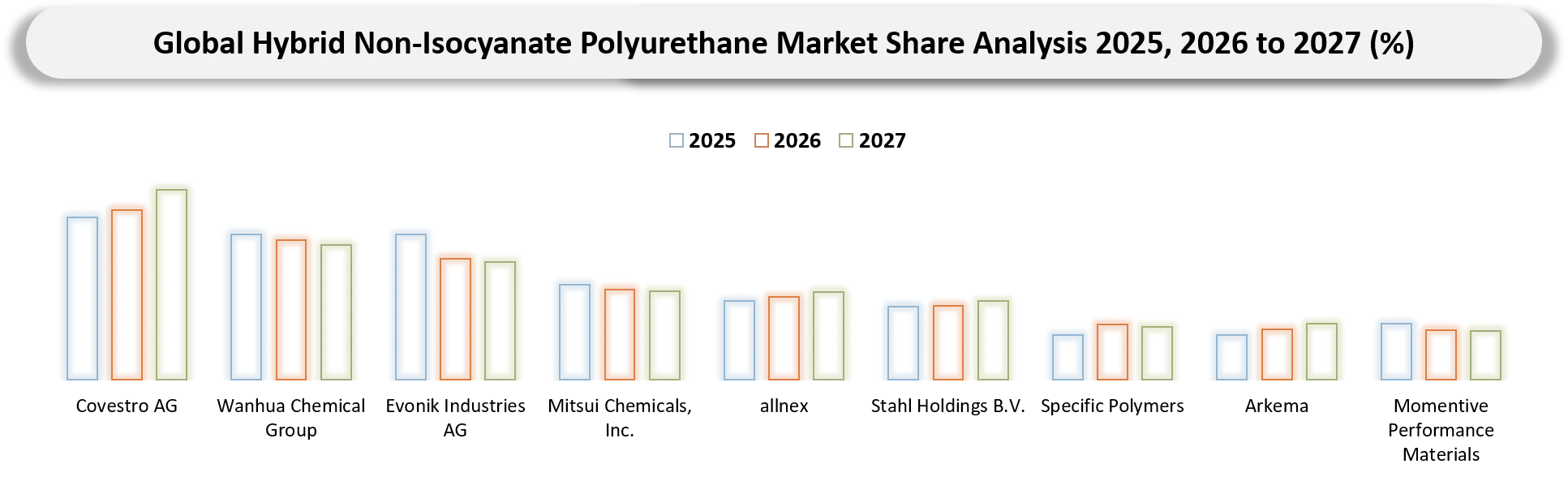
- The hybrid non-isocyanate polyurethane (HNIPU) market is characterized by three key participant groups: large integrated polyurethane and specialty chemical producers, advanced coatings and functional-material specialists, and niche NIPU technology developers. Covestro AG and Wanhua Chemical Group represent the large-scale polyurethane and chemical manufacturing group, leveraging extensive raw-material integration, global production infrastructure, and polymer formulation capabilities. Evonik Industries AG, Mitsui Chemicals, Inc., allnex, Arkema, and Momentive Performance Materials are positioned as specialty material and formulation players with expertise in additives, resins, coatings, silicones, acrylics, and advanced polymer systems. Stahl Holdings B.V. and Specific Polymers represent more specialized participants focused on high-performance coatings, sustainable materials, and advanced polymer chemistry. The market remains technology-driven, where cyclic-carbonate chemistry, curing speed, hybridization with epoxy/acrylic/siloxane systems, and application-specific performance determine competitiveness.
- Key players include Covestro AG (Germany), Wanhua Chemical Group (China), Evonik Industries AG (Germany), Mitsui Chemicals, Inc. (Japan), allnex (Germany), Stahl Holdings B.V. (Netherlands), Specific Polymers (France), Arkema (France), and Momentive Performance Materials (United States).
Key Developments
- July 2026: According to the TECNALIA publication, “More Sustainable, Isocyanate-Free Two-Component Paints”, TECNALIA, headquartered in Donostia-San Sebastián, Spain, a technology research and innovation center, collaborated with EUROCLOR, a Spain-based paint and varnish manufacturer, and EURORESIN, a Spain-based resin producer, under the ISOFREE initiative to develop new isocyanate-free polyurethane and two-component coating solutions.
Key Procurement Priorities and Buyer Evaluation Criteria
- Organizations investing in the Hybrid Non-Isocyanate Polyurethane Market are increasingly selecting material suppliers based on their ability to provide isocyanate-free formulations that deliver comparable mechanical performance, durability, adhesion, and chemical resistance to conventional polyurethane systems.
- Procurement decisions are increasingly influenced by the shift toward safer chemical formulations, low-VOC materials, renewable feedstocks, and reduced dependence on conventional diisocyanates, particularly across coatings, adhesives, sealants, foams, and advanced industrial applications.
- Buyers evaluate factors such as curing speed, reaction kinetics, viscosity, mechanical strength, thermal stability, moisture resistance, chemical resistance, and long-term durability when selecting Hybrid NIPU materials and technology suppliers.
Why Choose DataM?
- Technological Innovations: Explores advancements in Hybrid Non-Isocyanate Polyurethane technologies, including epoxy-NIPU, acrylic-NIPU, siloxane-NIPU, bio-based cyclic carbonates, and advanced curing systems designed to improve reaction speed, mechanical performance, and industrial processability.
- Product Performance & Market Positioning: Evaluates how different material developers differentiate their Hybrid NIPU formulations based on curing time, adhesion, mechanical strength, thermal stability, chemical resistance, durability, VOC reduction, and sustainability performance across coatings, adhesives, foams, and composites.
- Real-World Evidence: Highlights the adoption and development of Hybrid NIPU materials across industrial coatings, construction, automotive, adhesives and sealants, electronics, composites, and specialty polymer applications, demonstrating their potential to reduce dependence on conventional isocyanate-based polyurethane chemistry.
- Market Updates & Industry Changes: Tracks key developments in NIPU and hybrid polyurethane technologies, including new bio-based formulations, CO₂-derived feedstocks, cyclic carbonate innovations, pilot-scale production developments, regulatory changes, and advancements in faster-curing hybrid polymer systems across major regions.
- Competitive Strategies: Analyzes how leading companies such as Covestro, Wanhua Chemical Group, Evonik, Mitsui Chemicals, allnex, Arkema, and specialty polymer developers strengthen their positions through sustainable material innovation, advanced formulations, R&D investments, partnerships, and expansion into high-performance polymer applications.
- Pricing & Market Access: Examines cost variations based on feedstock selection, cyclic carbonate availability, formulation complexity, curing technology, production scale, and application performance requirements, along with supply access through specialty chemical manufacturers, resin suppliers, and polymer distribution networks.
- Market Entry & Expansion: Identifies growth opportunities arising from increasing demand for safer polyurethane alternatives, low-VOC coatings, renewable feedstocks, and high-performance hybrid materials, while outlining strategies such as technology differentiation, feedstock integration, application-focused product development, and strategic partnerships for global market expansion.
Target Audience 2026
- Chemical and Polymer Manufacturers
- Coatings Manufacturers and Formulators
- Adhesives and Sealants Manufacturers
- Automotive and EV Manufacturers
- Construction and Building Material Companies
- Specialty Chemical and Raw Material Suppliers
- Electronics and Electrical Manufacturers


























































