


HPAPI Market Size and Overview
Demand visibility is improving because a growing number of sponsors are planning manufacturing strategy earlier in clinical development. Early planning allows route selection, containment design, analytical methods and scale-up assumptions to be aligned before pivotal studies. It also helps sponsors reserve capacity for launch and identify secondary suppliers before the program becomes time critical. This shift increases the strategic value of CDMOs that can support toxicology assessment, process development and commercial readiness within one governance model. It also favors suppliers with transparent capacity planning and the ability to add modular suites as customer demand expands.
The global HPAPI market reached an estimated US$ 30.8 billion in 2025 and is projected to reach US$ 63.7 billion by 2035, growing at a CAGR of 7.5% during 2026-2035. Demand is supported by targeted oncology, antibody-drug conjugates, hormonal therapies, immunology products and other low-dose medicines that require specialized containment from process development through commercial manufacture. Market value includes captive production and outsourced drug substance services, with outsourcing gaining share as smaller biotechnology companies and large pharmaceutical firms seek qualified capacity without building dedicated high-containment infrastructure.
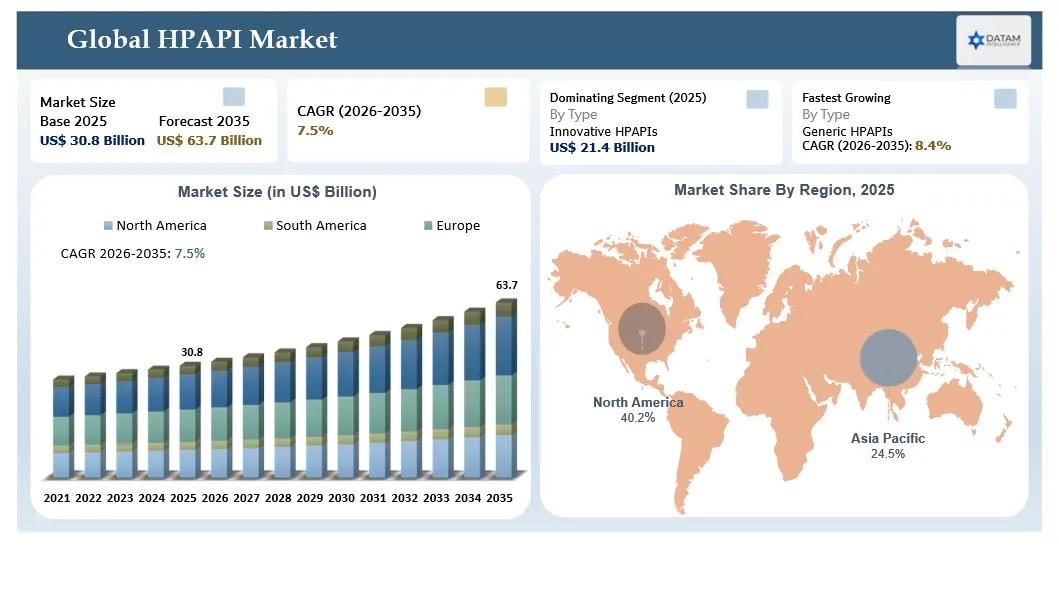
The commercial environment is shaped by a mismatch between a broad clinical pipeline and a relatively narrow base of facilities capable of handling very low occupational exposure limits at scale. Qualification requires more than closed reactors. Sponsors evaluate toxicology systems, industrial hygiene, engineering controls, analytical capability, cleaning validation, waste treatment, quality history, regulatory inspection records and the ability to transfer a process from gram scale to multi-kilogram or commercial batches. This creates high barriers to entry and supports premium pricing for proven suppliers.
Oncology remains the largest therapeutic area, while ADC payloads and linker-payload intermediates represent a high-growth niche. More than 30% of drug development pipelines can involve highly potent compounds according to leading CDMO disclosures, and the share is elevated in targeted cancer programs. Commercial demand is also becoming more integrated, with sponsors preferring partners that can combine HPAPI synthesis, particle engineering, formulation, conjugation, fill-finish and lifecycle management.
HPAPI Drug Pipeline Analysis
| Program / Product | Sponsor | Modality / HPAPI Need | Stage or Status | Manufacturing Implication |
| Datopotamab deruxtecan | AstraZeneca / Daiichi Sankyo | ADC with highly potent topoisomerase-I payload | Commercial and lifecycle expansion | Requires payload-linker synthesis, conjugation and high-containment analytical support |
| Patritumab deruxtecan | Daiichi Sankyo / Merck | HER3-directed ADC | Late-stage development | Creates demand for scalable payload-linker and commercial readiness capacity |
| Raludotatug deruxtecan | Daiichi Sankyo | CDH6-directed ADC | Late-stage development | Supports specialized cytotoxic payload and conjugation supply |
| Sacituzumab tirumotecan | Merck / Kelun-Biotech | TROP2-directed ADC | Late-stage development | Requires multi-step potent payload-linker chemistry and contained purification |
| Zanidatamab zovodotin | Jazz Pharmaceuticals / Zymeworks | HER2-targeted bispecific ADC | Late-stage development | Adds demand for integrated antibody, linker-payload and drug product manufacturing |
| Camizestrant | AstraZeneca | Oral next-generation endocrine therapy | Late-stage / regulatory progression | Supports contained small-molecule manufacturing and low-dose oral formulation |
| Vepdegestrant | Arvinas / Pfizer | PROTAC estrogen receptor degrader | Late-stage development | Complex potent small-molecule synthesis with demanding impurity control |
| Iberdomide and mezigdomide | Bristol Myers Squibb | Cereblon E3 ligase modulators | Late-stage and lifecycle programs | Requires controlled potent API manufacture and global commercial supply planning |
HPAPI Market Key Takeaways
- Contract manufacturing is expected to outpace captive production as biotechnology companies and large pharmaceutical sponsors seek access to specialized containment, scarce technical expertise and flexible capacity.
- Innovative HPAPIs account for the largest value share because complex oncology and targeted therapy programs command premium development and manufacturing economics.
- Oncology represents the dominant therapeutic area, supported by cytotoxic small molecules, precision medicines, ADC payloads, linker-payload intermediates and combination regimens.
- ADC-related manufacturing is one of the strongest investment themes, encouraging integrated facilities that connect payload chemistry, conjugation, analytical testing and sterile drug product operations.
- North America and Europe remain leading revenue markets, while Asia-Pacific is expanding through cost-competitive chemistry, technology investment and growing regulatory capability.
- Supplier selection increasingly depends on containment performance, successful regulatory inspections, technology-transfer discipline, data integrity and continuity of supply rather than reactor capacity alone.
HPAPI Industry Trends and Strategic Insights
- Integrated service models are replacing fragmented vendor networks. Sponsors increasingly seek one partner for route development, HPAPI synthesis, particle engineering, formulation and commercial supply.
- Multipurpose facilities are being designed around modular suites, closed transfer, single-use components where appropriate and flexible cleaning strategies to support varied potency bands.
- Toxicology assessment is moving earlier in development so containment decisions, analytical methods and process design can be established before scale-up.
- Continuous processing, advanced process analytical technology and model-based route selection are being used to reduce operator exposure, solvent use and batch variability.
- Commercial contracts increasingly include reserved capacity, dual-source planning, lifecycle cost commitments and options for rapid scale-out when clinical demand accelerates.
- Localization is becoming more important as sponsors balance cost, geopolitical risk, import dependence and the need for regional regulatory support.
HPAPI Market Scope
| Metrics | Details |
| 2025 Market Size | US$ 30.8 Billion |
| 2035 Projected Market Size | US$ 63.7 Billion |
| CAGR 2026-2035 | 7.5% |
| Largest Market | North America |
| Fastest Growing Market | Asia-Pacific |
| By Type | Innovative HPAPIs and Generic HPAPIs |
| By Manufacturing Model | Captive Manufacturing and Contract Manufacturing |
| By Synthesis Technology | Chemical Synthesis, Biologic and Semi-Synthetic Processes, ADC Payload and Linker Manufacturing |
| By Dosage Form | Oral Solid Dosage, Injectable and Other Dosage Forms |
| By Therapeutic Area | Oncology, Hormonal Disorders, Autoimmune and Inflammatory Diseases, Cardiovascular and Metabolic Diseases and Others |
| By Scale | Preclinical and Early Clinical, Late Clinical and Launch, Commercial Manufacturing |
| By End User | Pharmaceutical Companies, Biotechnology Companies, CDMOs and Research Organizations |
Why does this report matter in 2026?
The HPAPI market matters in 2026 because targeted drug development is expanding faster than specialized manufacturing capacity can be qualified. ADCs, precision oncology drugs, protein degraders, hormonal therapies and other low-dose medicines create demand for facilities that can safely process potent compounds while meeting global cGMP expectations. Sponsors must make capacity decisions several years before approval because facility fit, process transfer, analytical validation and regulatory readiness require long lead times.
The report supports decisions on outsourcing, supplier qualification, geographic expansion, technology investment and capacity reservation. It identifies which segments generate premium economics, where bottlenecks are emerging, how integrated service models are changing competition and which suppliers are best positioned for clinical-to-commercial continuity. The analysis is relevant to pharmaceutical companies, biotechnology firms, CDMOs, investors, equipment providers and regional development agencies.
HPAPI Market White Space & Investment Opportunities
- Commercial-scale ADC payload-linker capacity with advanced purification, high containment and integrated conjugation access represents a major white space.
- Flexible clinical manufacturing suites for compounds with occupational exposure limits below 1 microgram per cubic meter can capture early-stage programs and retain them through launch.
- Integrated HPAPI drug substance, particle engineering and low-dose oral solid dosage capabilities reduce technology-transfer risk and support premium bundled contracts.
- Regional capacity in the U.S., Europe and selected Asia-Pacific hubs can address supply-security concerns and provide sponsors with dual-source or market-specific manufacturing options.
- Digital containment monitoring, predictive maintenance, electronic batch records and automated sampling can improve compliance, throughput and operator protection.
HPAPI Future Market Transformation
Commercial models will also evolve. Sponsors may reserve modular capacity years before approval and then activate additional suites as demand grows. This scale-out model can be more flexible than building one large dedicated plant. It also allows CDMOs to share infrastructure such as utilities, analytical laboratories and waste treatment across several customer programs. Success depends on standardized suite design, repeatable qualification and strong scheduling systems.
Future facilities will be designed around data-rich operations. Containment performance, equipment status, process conditions and cleaning evidence will be captured in integrated systems that support faster release and better investigation. Digital twins may be used to test airflow, equipment layout and campaign scenarios before physical changes are made. This will improve capital efficiency and reduce the risk that a new suite cannot accommodate the intended process. Providers that combine engineering data with process knowledge will be able to qualify changes more quickly and demonstrate control to customers and inspectors.
The market will move from isolated high-containment manufacturing toward integrated, digitally controlled ecosystems. Sponsors will expect providers to connect toxicology classification, route scouting, process design, analytical development, containment engineering, particle control and final dosage-form requirements at the start of a program. This will reduce late-stage redesign and make supplier performance more measurable.
Capacity will become more modular and scalable. Instead of large fixed assets designed for one potency band, new suites will use closed equipment, contained charging and discharge, adaptable filtration and flexible cleaning strategies. The strongest providers will combine broad chemistry capability with disciplined occupational hygiene and the ability to add parallel lines quickly when a program moves from clinical to commercial supply.
HPAPI Market Buyer Decision-Making Criteria
Intellectual property protection is particularly important for innovative HPAPIs. Sponsors review data access, physical security, IT controls, subcontractor management and employee confidentiality. The need becomes greater when a supplier handles proprietary payloads or platform chemistry. Strong governance allows sponsors to outsource sensitive programs without losing confidence in process knowledge or competitive advantage.
Buyers increasingly conduct scenario-based diligence. They test whether a supplier can respond to a successful pivotal trial, a raw-material shortage, an equipment failure or a regulatory observation. Business-continuity plans are reviewed alongside technical capability. A credible supplier can explain alternative equipment, secondary sites, spare-parts strategy, inventory policy and communication procedures. These factors can determine the award when competing vendors have similar chemistry and price.
Buyers prioritize containment capability, quality record, technical fit and continuity of supply. Qualification examines occupational exposure limit capability, toxicology processes, industrial hygiene monitoring, closed transfer, reactor and isolation equipment, cleaning validation, cross-contamination controls, waste treatment and emergency procedures. A supplier must also demonstrate that containment performance is repeatable during routine operations, maintenance and changeover.
Commercial decisions also consider route-development strength, analytical expertise, batch-size flexibility, project governance, regulatory inspection history, technology-transfer speed and the ability to integrate downstream formulation or conjugation. Price remains important, although sponsors generally accept a premium when a provider reduces development risk, protects launch timing and offers long-term capacity certainty.
HPAPI Market Economic & Investment Analysis
Investment returns vary materially by facility design and contract structure. A dedicated facility can offer strong contamination control and predictable scheduling, although it carries greater concentration risk if the anchor product underperforms. Multipurpose facilities diversify revenue, yet they require more sophisticated cleaning validation, campaign sequencing and changeover discipline. Investors therefore examine the quality of the contracted backlog, the probability of clinical conversion and the extent to which equipment can be redeployed across programs.
Commercial value also depends on the breadth of the service chain. A provider that supplies only drug substance may face a competitive disadvantage when a sponsor wants contained milling, formulation, conjugation or fill-finish. Adding downstream capability can raise capital requirements, but it increases wallet share and customer retention. The most attractive expansion projects are therefore those that connect an existing customer base with a clear adjacent bottleneck, rather than building capacity without committed demand.
Financing models are becoming more flexible. Large CDMOs can fund expansions from internal cash flow, while smaller specialists may use private equity, joint ventures, customer-backed capital or regional incentives. Customer-funded or dedicated suites reduce utilization risk, but they can limit flexibility and create contract dependence. Balanced portfolios combine dedicated assets for strategic commercial programs with multipurpose capacity for clinical and launch work.
Valuation premiums are generally associated with qualified capacity, experienced teams, strong inspection histories and exposure to high-growth modalities. Equipment alone is insufficient because the workforce, operating procedures and regulatory track record take years to establish. Acquirers therefore value intangible capabilities such as toxicology systems, proprietary process knowledge, client relationships and the ability to retain programs from early development through commercialization.
HPAPI manufacturing offers attractive economics because the service is technically demanding, capital intensive and supported by recurring clinical and commercial contracts. Revenue per kilogram can be high, although profitability depends on utilization, project mix, changeover efficiency and the ability to retain programs across development stages. Clinical projects provide diversification but can terminate abruptly, while commercial products create longer visibility and require stronger supply commitments.
Investment is concentrating in multipurpose facilities, ADC payload-linker suites, high-containment laboratories and integrated drug product capabilities. A modern facility requires isolators, contained charging systems, dedicated air handling, pressure cascades, advanced filtration, decontamination systems and specialized analytical laboratories. Capital returns improve when facilities support multiple potency bands and when providers secure anchor contracts before construction.
Mergers, alliances and capacity partnerships are also shaping investment. Larger CDMOs use acquisitions to add specialized chemistry, geographic reach or downstream capabilities, while smaller specialists partner with commercial-scale manufacturers to provide continuity from preclinical supply to launch. Investors value a qualified workforce and regulatory history because these assets are difficult to replicate quickly.
HPAPI Investment Trends in the Market
- Expansion of ADC payload-linker manufacturing is accelerating as sponsors seek integrated support for increasingly complex conjugates.
- CDMOs are adding modular high-containment suites that can support gram-to-multi-kilogram production without extensive facility redesign.
- Investment in digital monitoring, automation and closed processing is increasing to reduce exposure risk and improve reproducibility.
- Commercial supply agreements are being linked to capacity reservations and dedicated or semi-dedicated assets, improving revenue visibility.
- Regional diversification and dual-source strategies are directing capital toward North American, European and selected Asian manufacturing hubs.
Strategic Indicators For HPAPI Market
High Regulation Impact
Occupational health and product quality requirements intersect throughout an HPAPI operation. A process may be compliant from a product perspective yet still expose workers during charging, sampling, maintenance or filter change. Conversely, excessive segregation can make operations inefficient without improving patient protection. Leading sites use cross-functional risk assessments that combine toxicology, process hazard analysis, industrial hygiene, quality risk management and equipment design.
Regulatory submissions must describe manufacturing controls, impurity strategy and cleaning where relevant, while inspectors assess whether written procedures are reflected in routine behavior. Data integrity is particularly important because environmental monitoring, containment verification and cleaning results may be used to justify continued multipurpose operation. Digital records, calibrated instruments and clear deviation investigation strengthen confidence in the control strategy.
HPAPI operations face intensive scrutiny because containment failures can affect workers, products and the environment. Suppliers must align cGMP controls with occupational health requirements, validated cleaning, industrial hygiene monitoring, cross-contamination prevention and waste-management obligations. Regulatory expectations vary by jurisdiction, but sponsors increasingly apply the highest global standard across their network.
High Investment Activity
Capital deployment is focused on ADC payloads, contained development laboratories, commercial-scale reactors and integrated dosage-form capacity. Lonza reported that its Visp HPAPI plant progressed through ramp-up and entered commercial operations in 2025, while further payload-linker expansion was announced in 2026. These developments illustrate sustained demand for specialized assets.
Supply Chain Disruption
Raw-material disruption can be amplified in HPAPI programs because alternative suppliers may require new impurity assessments and regulatory notification. Advanced intermediates are often custom made, and the final manufacturing site may have limited inventory because of shelf-life, hazard or working-capital constraints. Sponsors increasingly qualify secondary sources for critical starting materials before pivotal studies and maintain strategic safety stock for commercial products.
Logistics also require specialized packaging, hazard classification and documentation. Cross-border movement of potent intermediates can be delayed by customs interpretation, temperature requirements or carrier restrictions. Regionalizing final HPAPI manufacture can reduce some exposure, but it may increase complexity if earlier chemistry remains concentrated elsewhere. Network design must therefore consider the full route, not only the final production step.
The supply chain depends on specialized raw materials, advanced intermediates, controlled logistics and a limited number of qualified manufacturing sites. Disruption at one facility can delay clinical trials or commercial supply because technology transfer and requalification are lengthy. Dual sourcing is therefore increasingly designed before pivotal development.
Pricing Volatility
Campaign size has a major effect on pricing. Very small batches require the same suite preparation, analytical work and cleaning as larger campaigns, so unit costs can be extremely high. As volume rises, conversion cost per kilogram falls, but dedicated equipment, long cycle times or difficult purification can offset scale benefits. Sponsors should compare total program cost, including development, failed batches, transfer and inventory, rather than relying on a single unit price.
Prices are influenced by potency band, batch size, synthesis complexity, analytical burden, cleaning requirements, dedicated equipment and waste treatment. Small clinical batches can carry very high unit costs, while long-term commercial contracts lower unit pricing through improved utilization and campaign planning.
Procurement Pressure
Supplier negotiations increasingly cover raw-material ownership, safety stock, batch release timelines, forecast accuracy and the handling of unused reserved capacity. These provisions are important because potent programs often have uncertain demand and limited alternatives. Clear governance reduces conflict when a clinical milestone changes the schedule. Procurement teams also work more closely with technical operations because commercial terms cannot be separated from facility fit and process risk.
Procurement teams must secure scarce capacity while maintaining quality and technical fit. Capacity reservation, take-or-pay provisions, project prioritization and long lead times are common. Buyers increasingly use strategic supplier agreements rather than transactional purchase orders.
New Technology Adoption
Continuous manufacturing can reduce contained inventory and operator interaction by keeping hazardous material inside a closed system. It may also improve heat and mass transfer for difficult reactions. Adoption is strongest when the process is stable and volumes justify development, while batch processing remains more flexible for early programs and varied product portfolios. Hybrid facilities are emerging in which continuous steps are integrated with batch purification or crystallization.
Robotics and remote handling can reduce exposure during sampling, weighing and equipment cleaning. Real-time process analytics can limit manual sampling and provide earlier warning of drift. These technologies require validation and careful human-factors design, but they can improve both safety and throughput. The business case is strongest for repetitive commercial campaigns or compounds with very low exposure limits.
Closed processing, robotic handling, continuous manufacturing, process analytical technology and AI-enabled route design are improving safety and efficiency. Adoption is highest where a technology can reduce manual intervention, contain powder transfer or shorten changeover time.
Regional Expansion Opportunity
New regional entrants need a credible pathway to qualification. Building a high-containment suite may attract interest, but sponsors will usually begin with lower-risk clinical programs before awarding a strategic commercial product. Partnerships with experienced operators, technology licensors or global CDMOs can accelerate learning. Regional governments can support the ecosystem through workforce training, environmental infrastructure and predictable permitting rather than focusing only on construction subsidies.
Asia-Pacific offers cost and chemistry depth, while North America and Europe attract investment tied to supply security, regulatory proximity and ADC ecosystems. Switzerland, Germany, the U.S., India, China and Singapore remain important capability clusters.
Government Policy Support
Resilience policies may favor local or allied-country manufacturing for critical medicines. HPAPIs are likely to receive attention because the qualified supplier base is small and transfer is difficult. However, localization requirements that ignore economic scale can create underused assets. Effective policy should support shared multipurpose facilities, workforce capability and long-term procurement commitments so that capacity remains viable after initial incentives expire.
Policies supporting domestic pharmaceutical manufacturing, oncology innovation and resilient medicine supply can indirectly stimulate HPAPI investment. Grants, tax incentives and accelerated regulatory pathways improve project economics when linked to high-value manufacturing.
Pricing Intelligence
Clinical HPAPI projects are usually priced through development fees, analytical packages, batch charges and pass-through materials. Commercial programs use negotiated conversion pricing, volume tiers, capacity fees and change-control provisions. Integrated offerings can command a premium by reducing interfaces and transfer risk.
AI Impact Analysis of HPAPI Market
AI can also improve portfolio and capacity planning. By combining clinical probability, forecast ranges, equipment fit and campaign duration, decision tools can identify likely bottlenecks and recommend capacity reservations. The output is probabilistic rather than certain, but it can help management compare expansion options and reduce reliance on simple average utilization. Data quality and governance remain essential because poor assumptions can create false confidence.
AI is influencing route scouting, reaction-condition prediction, impurity assessment and process optimization. Models can prioritize synthetic pathways with lower hazard, fewer steps or improved containment compatibility, allowing development teams to reduce laboratory experimentation and identify scale-up risks earlier. AI also supports predictive maintenance and environmental monitoring in high-containment facilities.
Digital systems can combine pressure data, airborne monitoring, equipment status, batch records and cleaning results to detect deviations before they become quality or safety events. Adoption will remain governed by validation, data integrity and explainability requirements. The greatest value will come from decision support that strengthens expert judgment rather than replacing toxicology, engineering or quality oversight.
Disruption Analysis of HPAPI Market
Protein degraders, radiopharmaceutical linkers and other emerging targeted modalities may broaden the definition of high-potency manufacturing. Some programs will require unusual metals, unstable intermediates or very small batch sizes. This favors providers with adaptable laboratories and strong hazard assessment. The market may therefore fragment by technical niche even as commercial platforms become more integrated.
The strongest disruption comes from ADC growth and the convergence of small-molecule chemistry with biologics manufacturing. Payloads and linkers require extremely high containment, specialized purification and close coordination with conjugation and sterile drug product operations. This favors integrated CDMOs and creates pressure on standalone suppliers to build alliances.
A second disruption is the shift from capacity ownership to network orchestration. Pharmaceutical companies are retaining strategic internal assets but outsourcing more complex or variable-volume programs. Suppliers that provide transparent scheduling, digital data exchange, dual-site options and rapid scale-out can win share even when their nominal reactor capacity is smaller than that of traditional API manufacturers.
HPAPI Market BCG Matrix: Company Evaluation
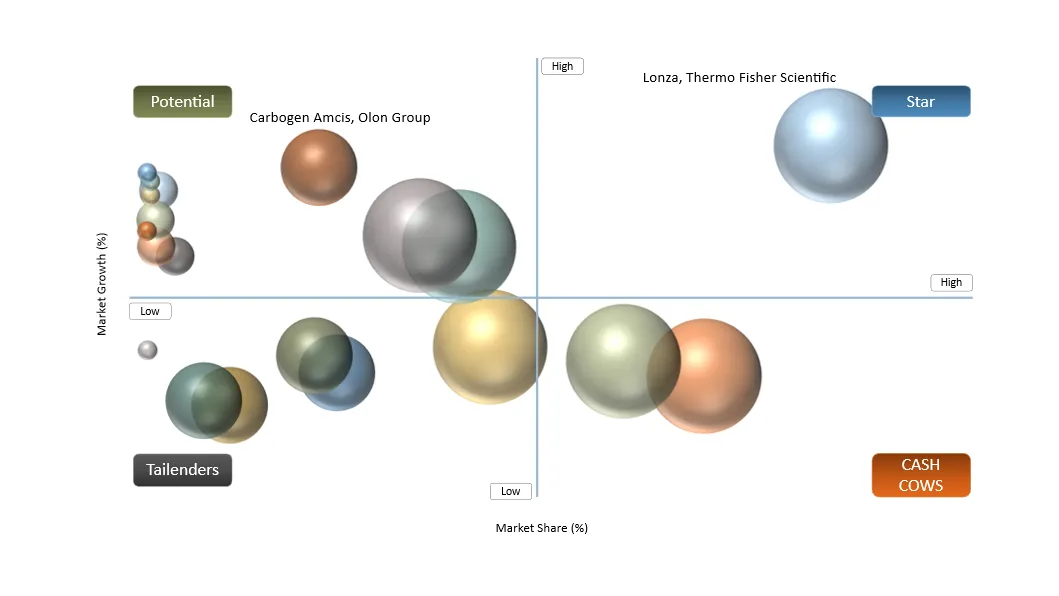
| Category | Representative Companies | Strategic Rationale |
| STAR | Lonza, Thermo Fisher Scientific, CordenPharma, WuXi STA | Broad high-containment capability, global development-to-commercial reach, strong customer pipelines and continued investment |
| POTENTIAL | Carbogen Amcis, Olon Group, Axplora, Sterling Pharma Solutions | Specialized chemistry and expanding capacity with opportunities to gain share in ADCs and complex small molecules |
| CASH COW | Cambrex, Siegfried, Hovione, Piramal Pharma Solutions | Established commercial relationships, diversified API portfolios and dependable regulated-market manufacturing |
| TAILENDERS | Regional general API producers with limited containment depth | Compete mainly on cost and require investment in toxicology, engineering and regulatory systems to access premium programs |
STAR
Star companies combine recognized HPAPI expertise, multiple scales, strong regulatory records and integrated services. They are positioned to capture the fastest growth in ADC payloads, complex oncology molecules and global commercial supply. Their investment advantage is reinforced by anchor clients and the ability to spread specialized overhead across broad portfolios.
POTENTIAL
Potential companies have strong technical niches and are expanding into higher-value programs. Their market position depends on successful capacity ramp-up, commercial conversions and partnerships that add downstream formulation or geographic reach. Focused investment can move these suppliers into the leading group.
HPAPI Market Dynamics
Driver Impact Analysis
| Driver | Market Growth Impact | Demand Concentration | Impacted Use Case | Strategic Impact |
Expansion of oncology and targeted therapies | High | Global | Potent small molecules and ADC payloads | Raises demand for specialized clinical and commercial capacity |
Increasing outsourcing | High | North America and Europe | Biotech and pharma programs | Supports CDMO revenue and long-term supply agreements |
Growth of ADC pipelines | High | U.S., Europe, Asia | Payload-linker and conjugation | Accelerates integrated investment |
Precision dosing and low-dose products | Medium-High | Global | Oral solids and injectables | Expands particle engineering and formulation needs |
Driver: Expansion of Oncology and Targeted Therapy Pipelines
Targeted oncology development is the most important demand driver. Many new therapies use highly potent small molecules or cytotoxic payloads that require containment at very low occupational exposure levels. The growth of precision medicine also increases molecule complexity, impurity-control requirements and the need for flexible clinical supply. As candidates progress, sponsors prefer suppliers that can preserve process knowledge through validation and commercial launch.
The commercial effect extends beyond API synthesis. Potent compounds often require contained milling, micronization, encapsulation, sterile handling or conjugation. This creates opportunities for integrated contracts and raises switching costs. Suppliers with end-to-end capability can capture a greater share of program value and reduce coordination risk for the sponsor.
Restraint Impact Analysis
| Restraint | Drag on Growth | Primary Impact Area | Impacted Use Case | Strategic Impact |
| High capital and compliance costs | High | Facility investment | New entrants and expansions | Limits qualified capacity and raises prices |
| Technology-transfer complexity | Medium-High | Program execution | Late-stage outsourcing | Can delay validation and launch |
| Pipeline attrition | Medium | Capacity utilization | Early clinical programs | Creates volatility in project mix |
| Skilled workforce shortage | Medium | Operations and quality | All potency bands | Constrains ramp-up and expansion |
Restraint: High Capital and Compliance Costs
High-containment facilities require substantial capital and specialized operating systems. Isolators, closed transfer, dedicated air handling, pressure control, decontamination equipment and waste treatment must be combined with trained staff and robust quality systems. Construction alone does not create capability. Qualification, process fit and an established safety culture take time, which limits entry and can create regional shortages.
The fixed-cost base makes utilization critical. Early-stage attrition may leave capacity underused, while commercial programs can require dedicated campaigns or equipment. Providers must balance portfolio diversity with contamination control and scheduling complexity. These economics can deter smaller manufacturers and increase dependence on a limited group of global CDMOs.
HPAPI Market Segment Analysis
Segment growth is also affected by the sponsor mix. Large pharmaceutical companies can support high commercial volumes and dedicated capacity, while biotechnology firms create a wider pool of innovative early programs. CDMOs need operating models that serve both without allowing small projects to disrupt large campaigns. Separate development laboratories, pilot suites and commercial plants can improve fit while preserving a common quality and knowledge-management system.
Across all segmentation dimensions, the most attractive opportunities combine high technical barriers with a credible path to commercial continuity. Early-stage work alone can be volatile, while mature generic production may face price pressure. Programs that begin with complex development and progress into long-term supply provide the best lifetime economics. Suppliers should therefore measure conversion rates from proposal to clinical work, from clinical work to validation and from validation to commercial campaigns.
By Type
Innovative HPAPIs Will Retain the Largest Value Share
Innovative HPAPIs account for the largest value share because they are associated with patented therapies, complex chemistry, low-volume high-value production and extensive development support. These programs often require route design, toxicology assessment, analytical method development, containment planning and lifecycle scale-up. Sponsors prioritize technical performance and launch reliability, allowing qualified suppliers to earn premium pricing. Generic HPAPIs remain important in oncology, hormones and mature specialty therapies, although price competition is stronger and campaigns are more standardized.
Market attractiveness is highest where technical complexity, limited qualified capacity and long customer relationships combine to support defensible margins. Buyers value continuity across development stages, which makes early engagement and strong project governance important competitive tools.
By Manufacturing Model
Contract Manufacturing Will Record the Fastest Growth
Contract manufacturing is expanding as sponsors avoid the capital burden and operational complexity of dedicated high-containment assets. Biotechnology firms often lack internal infrastructure, while large pharmaceutical companies use outsourcing to manage portfolio variability, access specialized technologies and create secondary supply. Captive manufacturing remains significant for strategic commercial products, proprietary platforms and highly sensitive processes. The balance is shifting toward hybrid networks in which sponsors retain core capability and use CDMOs for development, overflow, regional supply or integrated ADC programs.
Market attractiveness is highest where technical complexity, limited qualified capacity and long customer relationships combine to support defensible margins. Buyers value continuity across development stages, which makes early engagement and strong project governance important competitive tools.
By Synthesis Technology
Chemical Synthesis Will Remain Dominant as ADC Payload Manufacturing Accelerates
Chemical synthesis remains dominant because most HPAPIs are complex small molecules produced through multi-step reactions, controlled crystallization and specialized purification. The segment benefits from established reactor infrastructure and broad applicability. ADC payload and linker manufacturing is the fastest-growing subsegment because payloads are exceptionally potent and require sophisticated chemistry, purification and analytical controls. Biologic and semi-synthetic processes serve selected peptides, toxins and hybrid molecules, with demand linked to modality innovation.
Market attractiveness is highest where technical complexity, limited qualified capacity and long customer relationships combine to support defensible margins. Buyers value continuity across development stages, which makes early engagement and strong project governance important competitive tools.
By Dosage Form
Oral Solid Dosage Will Lead, While Injectable Programs Gain Strategic Importance
Oral solid dosage forms hold the largest share because many targeted therapies and hormonal drugs are administered as low-dose tablets or capsules. HPAPI handling must continue through milling, blending, granulation and compression, which favors integrated providers. Injectable products are strategically important in oncology and ADCs, where potent drug substance must connect with conjugation, sterile formulation and fill-finish. Other forms include inhaled, transdermal and implantable products that require specialized containment and delivery technology.
Market attractiveness is highest where technical complexity, limited qualified capacity and long customer relationships combine to support defensible margins. Buyers value continuity across development stages, which makes early engagement and strong project governance important competitive tools.
By Therapeutic Area
Oncology Will Continue to Dominate HPAPI Demand
Oncology is the largest therapeutic area because cytotoxic agents, kinase inhibitors, hormone modulators, DNA-damage response drugs and ADC payloads frequently meet high-potency criteria. Commercial demand is reinforced by combination therapy, line extensions and biomarker-selected treatment. Hormonal disorders remain a stable segment due to very low-dose products. Autoimmune, inflammatory, cardiovascular and metabolic programs create additional opportunities as targeted mechanisms spread beyond cancer.
Market attractiveness is highest where technical complexity, limited qualified capacity and long customer relationships combine to support defensible margins. Buyers value continuity across development stages, which makes early engagement and strong project governance important competitive tools.
By Scale of Operation
Commercial Manufacturing Will Generate the Largest Revenue, While Clinical Supply Drives Supplier Selection
Commercial manufacturing produces the largest revenue because validated products require recurring campaigns, regulatory maintenance and global supply. Clinical projects are smaller but strategically important, as early supplier selection often determines who receives late-stage and commercial work. The strongest CDMOs offer seamless scale transition, avoiding process redesign when demand moves from grams to kilograms. Launch capacity is especially valuable because uncertainty in approval timing and uptake requires flexible scheduling.
Market attractiveness is highest where technical complexity, limited qualified capacity and long customer relationships combine to support defensible margins. Buyers value continuity across development stages, which makes early engagement and strong project governance important competitive tools.
By End User
Pharmaceutical Companies Will Remain the Largest Buyers
Pharmaceutical companies represent the largest end-user group due to broad commercial portfolios, lifecycle programs and demand for dual sourcing. Biotechnology companies are the fastest-growing customer base because they rely heavily on outsourced development and manufacturing. CDMOs also buy intermediates or subcontract specialized steps when a project requires capabilities outside their network. Research organizations use small-scale contained laboratories for discovery and toxicology programs.
Market attractiveness is highest where technical complexity, limited qualified capacity and long customer relationships combine to support defensible margins. Buyers value continuity across development stages, which makes early engagement and strong project governance important competitive tools.
HPAPI Market Geographical Penetration
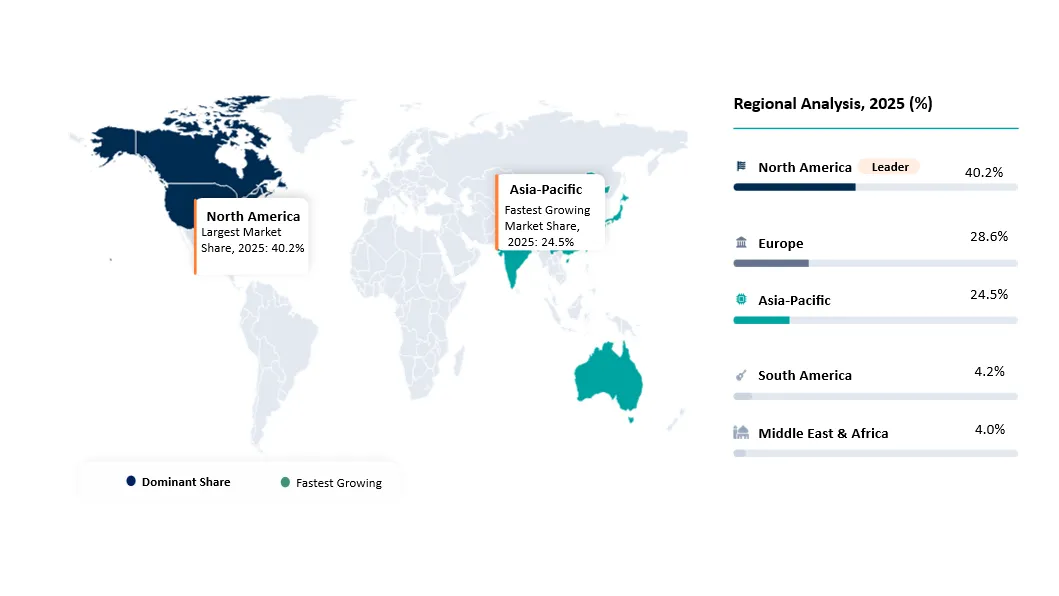
Global penetration reflects the location of pharmaceutical research, regulatory-market demand and specialized chemistry capability. North America generates a large share of outsourcing demand, Europe maintains a dense network of experienced high-containment suppliers and Asia-Pacific continues to expand through cost advantages and improving technical depth. Sponsors increasingly separate regional demand from manufacturing location, using global networks to balance economics and resilience.
Country attractiveness depends on more than wage cost. Reliable utilities, environmental permitting, skilled labor, export logistics, intellectual property protection and inspection experience all affect program risk. High-potency facilities also require local contractors and maintenance teams that understand containment. Regions with established pharmaceutical ecosystems can therefore sustain higher operating costs while remaining competitive.
U.S. HPAPI Market Landscape
The U.S. is a leading demand and investment market because it hosts major oncology developers, biotechnology clusters and a large base of commercial pharmaceutical products. Domestic manufacturing initiatives and supply-security concerns support new high-containment capacity. Sponsors value proximity for technology transfer, regulatory interaction and launch management. The market also benefits from strong demand for ADC payload-linker manufacturing and integrated sterile services.
Germany and Switzerland HPAPI Market Outlook
Germany and Switzerland form a major European cluster with experienced CDMOs, advanced chemical engineering and strong regulatory credibility. Switzerland is particularly important for integrated small-molecule and bioconjugation capacity. Germany combines specialist chemistry, pharmaceutical manufacturing and equipment expertise. Investment is directed toward flexible multipurpose assets, high containment and partnerships linking early development with commercial scale.
India and China HPAPI Market Trends
India and China are expanding through deep chemistry talent, competitive operating costs and increasing investment in regulated-market facilities. China has strong integrated development and manufacturing platforms, while India is building higher containment and complex chemistry capability. Sponsors remain focused on data integrity, environmental compliance, geopolitical exposure and dual-source planning. Providers that demonstrate consistent global inspection performance can gain substantial share.
Japan and South Korea HPAPI Market Outlook
Japan and South Korea have sophisticated pharmaceutical sectors and growing interest in ADCs, precision oncology and domestic supply resilience. Local quality expectations are high, encouraging partnerships with experienced global CDMOs. Opportunity is strongest in clinical development, payload-linker chemistry and regional commercial supply.
South America, Middle East and Africa Outlook
These regions represent smaller current shares but offer selective growth through pharmaceutical localization, oncology access and investment in advanced manufacturing. Brazil is the principal South American market. The UAE, Saudi Arabia, Israel and Turkiye may attract technology partnerships, although high-containment expertise and qualified supply chains remain limited. Near-term demand will rely heavily on imports and international CDMOs.
HPAPI Market Competitive Landscape
Competitive positioning differs by project stage. Early-development sponsors need speed, scientific problem solving and small-scale flexibility. Late-stage sponsors require validation discipline, supply-chain readiness and regulatory support. Commercial customers emphasize capacity certainty, cost control and business continuity. A supplier that performs well in one stage may not be suitable in another, which is why leading companies build distinct operating models across laboratories, pilot plants and commercial facilities.
Customer concentration is an important strategic issue. A single successful commercial HPAPI can occupy a meaningful share of a facility and generate attractive revenue, but loss of the program can create a major utilization gap. Providers mitigate this risk through multi-product suites, long-term contracts and diversified clinical portfolios. Investors should assess the quality and duration of revenue rather than relying only on current capacity utilization.
Differentiation increasingly includes transparency. Sponsors expect timely project dashboards, deviation communication, capacity visibility and clear escalation paths. Digital collaboration tools can improve trust, especially when teams work across regions. Strong governance cannot compensate for poor technical capability, but it can determine whether a difficult project remains on schedule and whether the sponsor awards follow-on work.
Partnerships allow specialists to compete with integrated platforms. An early-phase chemistry company may partner with a commercial-scale manufacturer, while a payload specialist may connect with a conjugation and sterile-fill provider. These networks can provide best-in-class capability, although the sponsor must manage interfaces. Successful alliances use standardized transfer packages, shared quality expectations and coordinated program leadership.
- Competition is based on containment depth, chemistry breadth, regulatory history, scale flexibility and the ability to support clinical-to-commercial continuity.
- Leading CDMOs are investing in ADC payload-linker manufacturing, integrated conjugation and specialized low-dose drug product capability.
- Capacity expansion is increasingly supported by anchor contracts, reserved suites and long-term commercial supply agreements.
- Specialist providers differentiate through potent compound toxicology, rapid early-phase supply, difficult purification and handling at very low occupational exposure limits.
- Mergers and alliances are used to connect early development with commercial scale, add geographic redundancy and broaden downstream services.
- Quality, project governance and on-time delivery remain decisive because a failed transfer or containment deviation can materially delay a drug program.
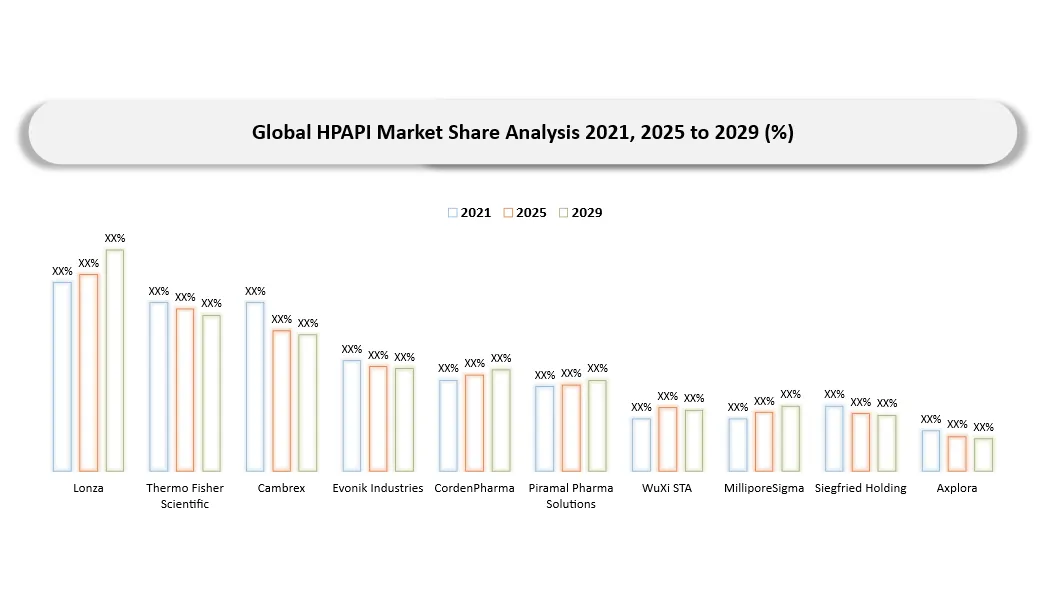
Key Companies of HPAPI Market
- Lonza
- Thermo Fisher Scientific
- Cambrex
- Evonik Industries
- CordenPharma
- Piramal Pharma Solutions
- WuXi STA
- MilliporeSigma
- Siegfried Holding
- Axplora
- Hovione
- Asymchem
- Novasep
- Fareva
- Carbogen Amcis
- Olon Group
- Pfizer CentreOne
- AbbVie Contract Manufacturing
- Sterling Pharma Solutions
- Heraeus Precious Metals
HPAPI Market Major Pain Points
- Limited availability of qualified commercial-scale capacity for compounds with very low occupational exposure limits.
- Long technology-transfer, validation and regulatory lead times that make late supplier changes difficult.
- High capital intensity and fixed operating costs, which increase utilization risk for manufacturers.
- Shortage of experienced toxicologists, industrial hygienists, process engineers and operators.
- Complex cleaning validation and cross-contamination control in multipurpose facilities.
- Pipeline attrition that creates volatility in clinical demand and capacity planning.
- Difficult integration between payload chemistry, conjugation, drug product and analytical operations.
- Geopolitical and supply-chain exposure for specialized starting materials and advanced intermediates.
HPAPI Market Recent Developments
- June 2026: Lonza announced an expansion of payload-linker manufacturing capacity at Visp, Switzerland, with additional commercial-scale HPAPI and analytical capabilities expected to become operational in 2028.
- July 2026: Evonik announced a US$100 million upgrade of its Tippecanoe drug substance site in the U.S., which includes a large dedicated HPAPI operation and advanced containment systems.
- 2025: Lonza reported that full commercial operations began at its new HPAPI plant in Visp following ramp-up activity during the year.
- 2025: Leading CDMOs continued to integrate small-molecule HPAPI, payload-linker and bioconjugation offerings to address growing ADC demand.
- 2025-2026: Pharmaceutical sponsors increased use of capacity reservations and strategic supply agreements for complex and high-potency programs.
Analyst View/Opinion on HPAPI Market
- HPAPI demand will remain structurally attractive because the clinical pipeline is becoming more potent, targeted and complex.
- ADC payload-linker capacity will be the strongest premium-growth niche through 2035.
- Contract manufacturing will gain share, although large pharmaceutical companies will retain captive capability for selected strategic products.
- Integrated drug substance, particle engineering, conjugation and drug product offerings will outperform fragmented service models.
- Containment performance, regulatory credibility and project execution will matter more than headline reactor volume.
- Suppliers that secure anchor customers, digitalize operations and establish dual-region supply options will be best positioned for sustained growth.
The market should be evaluated as a capability market rather than a commodity API market. Revenue growth will be supported by volume, but the strongest margins come from technical difficulty, regulatory scarcity and the cost of failure. A provider that prevents a launch delay can create far more value than the difference between competing batch quotations. Procurement models are gradually adapting to this reality through strategic supplier relationships.
Capacity announcements should be interpreted carefully. Published reactor volume does not reveal potency band, equipment configuration, cleaning strategy, analytical throughput or whether the asset is customer dedicated. Effective capacity may be much lower than nominal capacity when campaigns require long changeovers or specialized purification. Market assessments therefore need to combine physical assets with operational and regulatory evidence.
The next competitive frontier is integrated control of the full potent-material pathway. Sponsors want confidence from initial toxicology classification through packaging of the final dosage form. Providers that can demonstrate contained transfer between unit operations, consistent analytical methods and coordinated quality oversight will reduce interface risk. This is especially important for ADCs and low-dose oral products.
Market growth will not eliminate cyclicality. Clinical failures, patent expiries and customer insourcing can affect individual suppliers. However, the breadth of targeted drug development and the limited rate at which qualified capacity can be created provide structural support. Companies with diversified portfolios, flexible assets and disciplined capital allocation should outperform across cycles.
Market leadership will increasingly depend on portfolio quality rather than the number of reactors alone. Providers need a balanced mix of early clinical projects, launch candidates and established commercial products. Early programs create future option value, while commercial products absorb fixed costs and support predictable workforce planning. A disciplined portfolio reduces exposure to single-program attrition and allows equipment campaigns to be scheduled around potency band, chemistry and cleaning complexity.
Environmental performance will receive more attention as the market grows. HPAPI synthesis can involve hazardous reagents, solvent-intensive purification and controlled waste streams. Customers increasingly assess solvent recovery, waste segregation, emissions control and energy intensity during supplier qualification. Investments that reduce solvent use or enable safer continuous processing can strengthen both ESG performance and operating margins.
HPAPI vs Conventional API
The distinction between HPAPI and conventional API is not always fixed at the start of development. Potency classification may change as toxicology data mature, and new chemical entities often require conservative controls. Suppliers with internal toxicology expertise can reassess exposure limits and avoid either under-containment or unnecessary capital intensity. Early alignment between sponsor and CDMO reduces redesign during scale-up.
Regional sourcing decisions will remain portfolio specific. Asia can offer cost and chemistry advantages, while U.S. and European sites provide proximity, regulatory familiarity and perceived supply security. Many sponsors will use a network model, placing early chemistry or intermediates in one region and retaining final HPAPI or commercial release in another. The best strategy depends on molecule complexity, intellectual property sensitivity, launch timing and market access.
ADC manufacturing will push the sector toward tighter integration. Payload synthesis, linker attachment, antibody production, conjugation and sterile filling are technically distinct, yet failure at one interface can delay the entire program. A single-provider model can simplify governance, while a multi-vendor model may offer best-in-class technology. Sponsors will increasingly compare both models using risk-adjusted total cost rather than quoted unit price.
HPAPI Market Target Audience
| Industry | Who Should Buy This Report? | Reason to Buy This Report |
| Pharmaceutical Companies | Sourcing, CMC, manufacturing and strategy teams | Evaluate capacity, outsourcing partners, pricing and supply risk |
| Biotechnology Companies | Executives, technical operations and program leaders | Plan clinical-to-commercial manufacturing and vendor qualification |
| CDMOs and CMOs | Business development, operations and investment teams | Identify high-growth technologies, regions and white spaces |
| Equipment and Containment Providers | Product managers and engineering teams | Assess demand for isolators, closed transfer and monitoring systems |
| Investors and Consultants | Private equity, institutional investors and advisers | Evaluate competitive positioning, capacity economics and M&A opportunities |
| Government and Development Agencies | Industrial policy and investment-promotion teams | Understand localization potential and capability gaps |
Why Choose DATAM?
- Data-driven insights combining market sizing, supplier benchmarking, primary interviews and technology assessment.
- Post-purchase analyst support for tailored questions, supplier screening and strategic interpretation.
- Annual update options that capture capacity additions, regulatory developments and competitive changes.
- Specialized focus on emerging manufacturing hubs and regional supply-chain shifts.
- Actionable analysis that connects market growth with investment, sourcing and go-to-market decisions.
What DATAM Uniquely Provides
- Detailed 2025-2035 forecasts by type, manufacturing model, synthesis technology, dosage form, therapeutic area, scale, end user and region.
- Capacity and capability interpretation across leading HPAPI CDMOs and integrated pharmaceutical manufacturers.
- Assessment of ADC payload-linker demand, containment technology and integrated service models.
- Pricing, procurement, investment, regulatory, AI and disruption analysis.
- Country-level recommendations for sourcing, expansion, partnerships and risk mitigation.
Questions This Report Answers
- How large will the HPAPI market become by 2035 and which segments will grow fastest?
- How will ADC pipelines change demand for payload-linker and integrated manufacturing?
- Which regions offer the strongest combination of capacity, cost and regulatory credibility?
- What criteria should sponsors use to qualify an HPAPI manufacturing partner?
- Where are the most important capacity shortages and investment white spaces?
- Which companies are best positioned to capture clinical and commercial outsourcing demand?


























































