


Heavy-Duty Cleaning Wipes Market Size
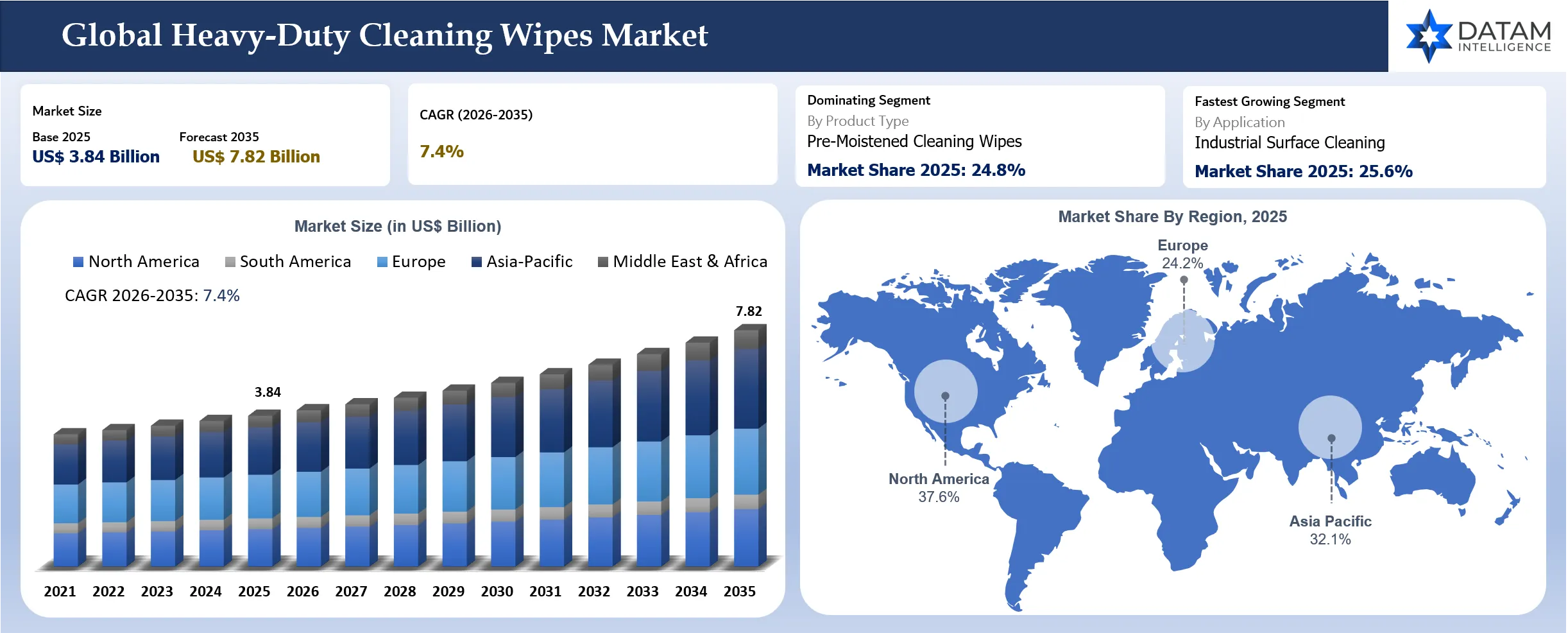
The global heavy-duty cleaning wipes market reached US$ 3.84 billion in 2025 and is expected to reach US$ 7.82 billion by 2035, growing with a CAGR of 7.4% during the forecast period 2026-2035. Manufacturers, auto assembly lines, aircraft maintenance hubs, food processing plants, warehouse managers, and companies engaged in energy infrastructure are using heavy duty wipes to minimize the time equipment remains idle, while adhering to stringent workplace sanitation and environmental policies. In addition to that, the industry is benefiting from increasing investment in modern manufacturing techniques and automation technology, where precision instruments require regular cleaning through the use of low-lint and high absorbency material. The push for sustainability is influencing the design of products, as companies work on biodegradable substrate, recycled fiber, and biological cleaning chemistry.
According to various associations representing industrial laundering operations, reusable wipe programs can help decrease solid waste output by 69%, when contrasted with disposable programs, hastening their implementation among industrial organizations trying to cut down on their waste generation. In North America and Europe, strict chemical legislation like that of the EPA and REACH regulations is fueling demand for low-VOC products, but growing levels of wiping materials consumption are being registered in China, India, Southeast Asia, and Eastern Europe because of ongoing industrial expansion, car manufacturing, electronics manufacturing, and industrial maintenance expenses.
Key Takeaways
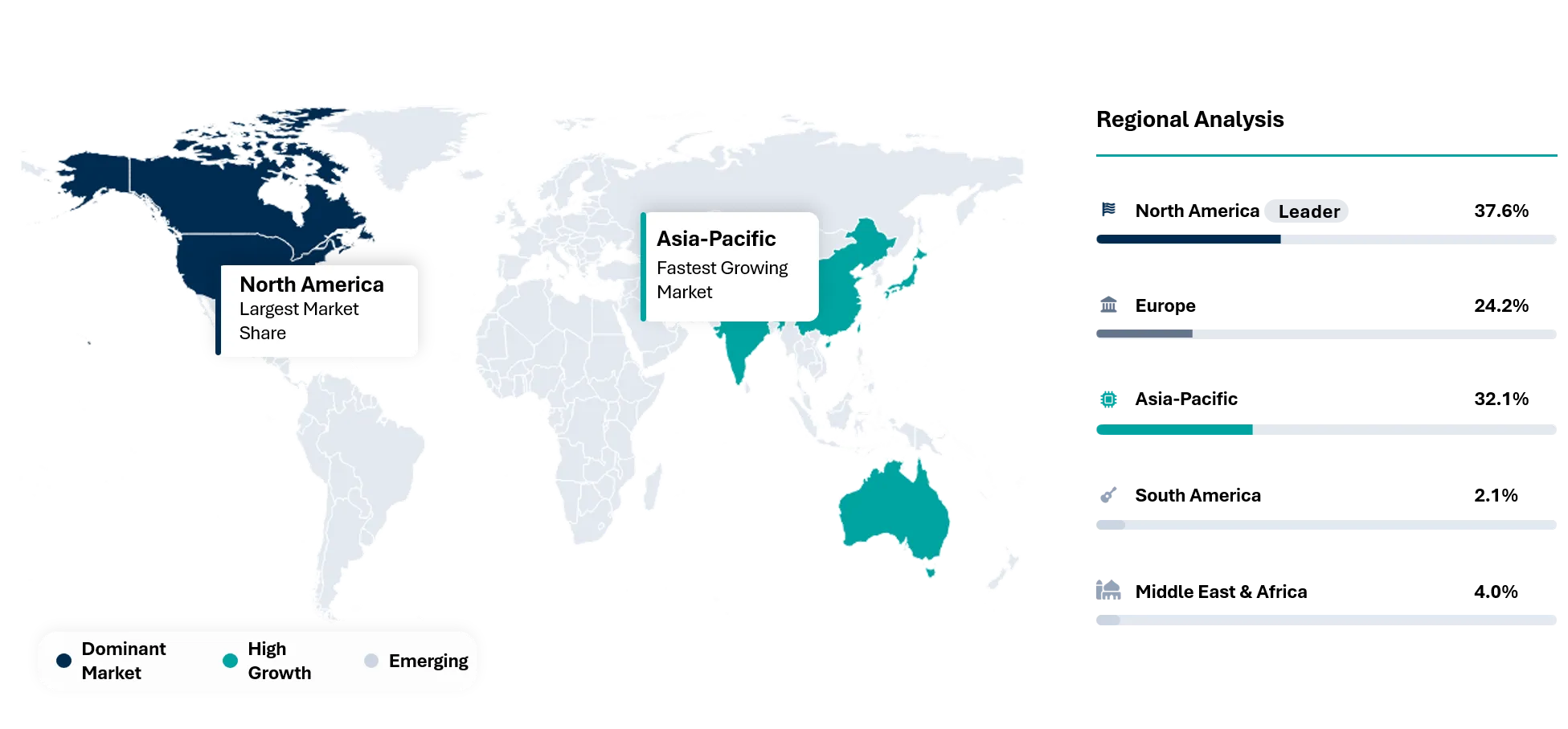
- North America dominates the global heavy-duty cleaning wipes market, accounting for 37.6% share in 2025, driven by stringent workplace hygiene regulations, widespread industrial maintenance activities, and strong adoption across manufacturing, automotive, aerospace, and food processing sectors.
- Asia-Pacific is projected to be the fastest-growing region through 2035, supported by rapid industrialization, expanding manufacturing output, and increasing occupational safety compliance across China, India, Southeast Asia, and South Korea.
- Biodegradable and Low-VOC heavy-duty cleaning wipes are the fastest-growing product category in 2025, driven by tightening environmental regulations, corporate sustainability initiatives, and growing demand for eco-friendly cleaning solutions across industrial and commercial facilities.
- The increasing emphasis on workplace safety, industrial hygiene, and preventive maintenance programs is a major driver accelerating adoption of heavy-duty cleaning wipes. Market players are increasingly replacing reusable rags and traditional cleaning methods with disposable, high-performance wipes to improve contamination control, operational efficiency, and compliance with health, safety, and environmental standards.
- Kimberly-Clark Professional, ITW Pro Brands, and The Clorox Company have established themselves as leading participants in the market through continuous product innovation, expansion of sustainable wipe portfolios, strategic distribution partnerships, and growing penetration across industrial manufacturing, automotive maintenance, transportation, and commercial cleaning applications.
Market Scope
| Metrics | Details | |
| 2025 Market Size | US$ 3.84 Billion | |
| 2035 Projected Market Size | US$ 7.82 Billion | |
| CAGR (2026-2035) | 7.4% | |
| Largest Market | North America | |
| Fastest Growing Market | Asia-Pacific | |
| By Product | Dry Heavy-Duty Wipes, Pre-Moistened Cleaning Wipes, Disinfecting Wipes, Degreasing Wipes, Solvent Wipes, Low-Lint Wipes, Scrubbing Textured Wipes, Others | |
| By Material | Spunlace Nonwoven, Meltblown Nonwoven, Airlaid Paper, Polypropylene Wipes, Cellulose and Synthetic Blends, Microfiber Wipes, Biodegradable Fiber Wipes, Others | |
| By Packaging | Canisters, Buckets, Flow Packs, Flat Packs, Center-Pull Rolls, Jumbo Rolls, Individual Sachets, Others | |
| By Application | Industrial Surface Cleaning, Equipment Degreasing, Healthcare and Critical Cleaning, Foodservice Cleaning, Automotive and Aerospace Maintenance, Electronics and Cleanroom Wiping, Oil and Chemical Spill Cleanup, General Facility Maintenance | |
| By End-User | Manufacturing Plants, Healthcare Facilities, Foodservice Operators, Automotive Workshops, Aerospace and Defense Facilities, Electronics Manufacturers, Janitorial Service Providers, Oil and Gas Facilities | |
| By Region | North America | U.S., Canada, Mexico |
| Europe | Germany, UK, France, Spain, Italy, Poland | |
| Asia-Pacific | China, India, Japan, Australia, South Korea, Indonesia, Malaysia, Thailand, Vietnam, Philippines | |
| South America | Brazil, Argentina | |
| Middle East and Africa | UAE, Saudi Arabia, South Africa, Israel, Turkiye, Nigeria | |
| Report Insights Covered | Competitive Landscape Analysis, Company Profile Analysis, Market Size, Share, Growth | |
Why does this report matter in 2026?
The market for heavy-duty cleaning wipes is poised to experience an important stage of growth and commercialization in 2026 because of growing concerns for occupational safety, contamination control, and operational efficiency among industrial manufacturers, automotive firms, hospitals and clinics, food manufacturing units, and commercial establishments. Growing concern for occupational safety, prevention of infections, and environmental sanitation in key economies has been leading to growing demand for heavy-duty cleaning products. The transition of the market from being a traditional maintenance product category to an important part of industrial sanitation has been fueling the development of the market.
On the other hand, manufacturers of industrial cleaning wipes have increasing demands to provide them with cost-effective and environmentally sound products that will fulfill their ever-changing requirements. The fast progress in the development of non-wovens, bio-degradable substrates, low-VOC cleaning solutions, antimicrobial agents, and industrial wipes has significantly changed competitive landscape in this market. It becomes crucial for buyers, wholesalers, and industrialists to have a greater understanding of the issues related to the durability of the product, compatibility of chemicals, efficiency of absorption, sustainability, compliance, supply chain management, and manufacturing partnerships.
White Space & Investment Opportunities
- Industrial biodegradable heavy-duty wipes remain undersupplied despite tightening global sustainability regulations.
- High-performance PFAS-free formulations attract investments amid evolving environmental compliance requirements.
- Localized manufacturing in India, Southeast Asia, and South America strengthens regional supply resilience.
- Smart dispensing systems and connected hygiene monitoring create recurring aftermarket service opportunities.
Future Market Transformation
By 2035, the heavy-duty cleaning wipes market will evolve into an integrated industrial hygiene and sustainability ecosystem. Manufacturers will increasingly provide environmentally compliant wipe solutions, automated dispensing technologies, digital inventory monitoring, waste management support, and customized cleaning protocols alongside physical products. Business models will shift toward long-term hygiene service contracts, subscription-based replenishment, and facility-wide sanitation management. Wipes will become more biodegradable, solvent-efficient, application-specific, and compatible with automated dispensing systems. Leading companies will combine global manufacturing capabilities, sustainable material innovation, regulatory expertise, and digital supply chain visibility to strengthen competitive differentiation.
Buyer Decision-Making Criteria
Industrial buyers typically evaluate heavy-duty cleaning wipe suppliers based on cleaning effectiveness, regulatory compliance, total operating cost, product durability, and reliable supply capabilities. Superior contaminant removal, low lint generation, and material compatibility remain essential qualification requirements, while sustainability certifications and consistent product quality increasingly influence purchasing decisions. Buyers favor suppliers offering customized wipe formats, technical support, automated dispensing solutions, and dependable regional distribution networks. Companies providing long-term supply agreements, strong sustainability credentials, and responsive customer service achieve greater customer retention across manufacturing, automotive, healthcare, and food processing industries.
Economic & Investment Analysis
Industrial buyers typically evaluate heavy-duty cleaning wipe suppliers based on cleaning effectiveness, regulatory compliance, total operating cost, product durability, and reliable supply capabilities. Superior contaminant removal, low lint generation, and material compatibility remain essential qualification requirements, while sustainability certifications and consistent product quality increasingly influence purchasing decisions. Buyers favor suppliers offering customized wipe formats, technical support, automated dispensing solutions, and dependable regional distribution networks. Companies providing long-term supply agreements, strong sustainability credentials, and responsive customer service achieve greater customer retention across manufacturing, automotive, healthcare, and food processing industries.
Investment Trends in the Market
- Biodegradable and compostable nonwoven substrate manufacturing.
- PFAS-free, low-VOC, and environmentally compliant cleaning formulations.
- Automated converting, packaging, and high-speed production technologies.
- Smart dispensing systems with digital inventory and usage monitoring.
- Regional manufacturing expansion near industrial and healthcare demand centers.
- Recyclable packaging materials and circular economy-focused product development.
Strategic Indicators For Heavy-Duty Cleaning Wipes
High Regulation Impact
Regulatory intensity saw a significant increase from 2025 to 2026 as wipes companies in the industrial wipes sector responded to the rising sustainability and chemical disclosure regulations, as well as the waste management guidelines that were being developed. The European Union is still the most dominant regulator with the implementation of measures geared towards minimizing the production of packaging wastes, extended producer responsibility programs, and tighter scrutiny of nonwoven materials in the manufacture of cleaning wipes. The United States, Germany, France, and the Netherlands are speeding up their preferences for wipes that are recyclable and lower emission. In the UK, there have been increased standards for industrial hygiene in manufacturing facilities.
High Investment Activity
Investment in the industrial wiping and nonwovens segments intensified as capacities have grown along with sustainability and specialized products. The United States is still leading the way in terms of investment opportunities due to the need for industrial hygiene upgrades and advancements in manufacturing operations. The United Kingdom made strategic investments after mergers in the wipes industry especially in wet wipes production. Ireland is continuing to attract investments in premium wipes production and export production plants whereas Spain has become an important destination for sustainable nonwovens innovations.
Supply Chain Disruption
Issues persist in relation to supply chain disruption caused by nonwoven substrate supply, special chemicals, and transport issues. China is one of the major suppliers of spunlace and synthetic nonwovens, which poses a risk for global companies due to production and export problems. Procurement problems related to sustainable and recycled materials are being encountered in Europe. US and Germany are working on localizing parts of industrial wipes supply chain in order to ensure better stability. Aerospace, pharmaceutical, and semiconductor customers are keeping bigger inventories and diversified supplier base in order to avoid disruptions and sourcing problems.
Pricing Volatility
Prices are still volatile because of the variation in the cost of non-woven substrates, petrochemicals, specialty cleaning chemicals, energy, and logistic costs. Europe-based manufacturers are still facing cost challenges relating to sustainable sourcing and environmental regulations. The pricing dynamics of China raw materials are having an impact on the economics of industrial wipe manufacturing, whereas North American suppliers are seeing margin challenges due to rising labor and logistics costs. Premium industrial wipes that find use in aerospace, semiconductor, and pharmaceutical industries are relatively more stable in terms of pricing because of the technical specifications involved.
Procurement Pressure
The procurement groups within the automotive industry, aerospace, semiconductors, health care, and food processing sectors have become more rigorous about testing wipe quality, sustainability, and the reliability of suppliers. Big industrial customers based in the US, Germany, Japan, and South Korea are increasingly insisting on proof of contamination control, fiber traceability, and compliance with environmental laws. At the same time, procurement groups have begun to consolidate supplier sources for improving supply chain security and simplification. The increasing trend of adopting ESG procurement programs is benefiting companies that can provide recycled content non-wovens and low carbon footprint.
New Technology Adoption
Technological advancements are now emphasizing hydroentangled nonwovens, sustainable fiber technology, contamination control, and digital quality systems. Spain and Germany have established themselves as innovation hotbeds for industrial wipes with recycled content, whereas the United States is ahead when it comes to developing specialty wipes for electronic, aerospace, and medical purposes. Automated converting technology, AI production analytics, and digital quality control technology are being employed by manufacturers in order to optimize their processes and minimize wastage. Innovation in sustainable substrates from recycled PET, wood pulp, and engineered cellulose fibers is proving to be an important competitive factor, especially for European suppliers catering to industrial applications.
Regional Expansion Opportunity
North America is the most promising region for expansion because of the development of sophisticated manufacturing, strict workplace hygiene standards, and increasing requirements of aerospace, semiconductor, automotive, and medical industries. In addition, the USA continues being the leader in the application of industrial premium wipes with special properties. Europe has good prospects for expansion because of the existing regulations about sustainability, programs of the circular economy, and industrial decarbonization. Germany, France, Spain, and the Netherlands have created the demand for recyclable, low-emitting, and recycled-content industrial wipes, providing opportunities for premium market positioning for companies having developed nonwovens technology.
Government Policy Support
Government funding tends to be sourced through industrial hygiene guidelines, sustainable manufacturing programs, circular economy policies, and environmental compliance frameworks rather than subsidies of specific industries. The EU is promoting the use of low emission nonwovens and environmentally-friendly packaging options. Germany and France have continued to provide government funding to sustainable manufacturing projects through larger industrial transition programs. In the US, there are government programs aimed at promoting workplace safety and industrial hygiene compliance among industries, which indirectly supports the demand for commercial cleaning solutions. The environmental modernization program in China has promoted clean technology in the manufacture of nonwovens.
Import Export and Pricing Intelligence
Trade flows for global business have been changing direction towards high-performance industrial wipes that are produced in North America and Europe. Asia has continued to dominate in the supply of nonwoven substrates and intermediate materials. Buyers have increasingly become more concerned about product supply and certification rather than mere product cost when buying their products.
The pricing of industrial wipes is increasingly becoming differentiated based on the importance of the use of the wipe in the process, the type of the substrate technology used, and sustainability. Pricing pressures exist in commodity wipes, but contamination-control and specialty wipes remain strong. Buyers are increasingly becoming willing to pay premiums for recyclability, low-lint capability, and compliance ability.
| HS Code | Reporter | Trade Flow | 2025 Trade Value (US$) | Interpretation |
| 560392 | U.S. | Import | 316.6 Million | Strong import demand reflects expanding industrial cleaning wipes consumption across diverse sectors. |
| 560392 | Germany | Export | 272.1 Million | Leading exports demonstrate Germany's robust nonwoven manufacturing and global supply competitiveness. |
| 560392 | Japan | Import | 229.6 Million | High imports indicate sustained demand for premium industrial nonwoven cleaning wipe materials. |
| 560392 | Poland | Import | 108.1 Million | Growing imports support expanding manufacturing, automotive, and industrial cleaning applications nationwide. |
AI Impact Analysis
Artificial intelligence is now gaining more prominence in areas such as optimization, quality control, demand forecast, and logistics in the heavy-duty cleaning wipes industry. Top players are utilizing vision systems enabled by artificial intelligence in identifying defects, monitoring processes, and checking substrate quality check. Through predictive analytics, suppliers are able to manage their inventory and procurement in a dynamic raw material market environment. In addition, manufacturing intelligence powered by AI helps companies achieve energy optimization, waste reduction, and enhanced performance on the production line. Commercially, artificial intelligence is aiding suppliers in providing custom made industrial wipes in aerospace, pharmaceutical, automotive, and semiconductors applications. Going forward, the utilization of AI is likely to be the critical competitive advantage.
Disruption Analysis
A major disruptive force is the tightening regulatory focus on workplace safety, volatile organic compound (VOC) emissions, and industrial waste management across North America and Europe. It is accelerating the development of low-toxicity, solvent-free, and biodegradable wipe formulations. Manufacturers are investing heavily in sustainable nonwoven substrates, recyclable packaging, and plant-based cleaning chemistries to meet evolving environmental requirements and corporate ESG commitments.
Digitalization of industrial maintenance practices is also reshaping demand patterns. Smart manufacturing facilities are adopting predictive maintenance and contamination-control programs that require consistent and traceable cleaning protocols, increasing demand for specialized wipes designed for machinery, electronics, precision equipment, and sensitive surfaces. Growth in electric vehicle manufacturing, semiconductor production, battery plants, and renewable energy infrastructure is creating new cleaning requirements that conventional industrial cleaning products often cannot address effectively.
BCG Matrix: Company Evaluation

STAR
The star quadrant consists of the well-established hygiene and industrial cleaning firms having diverse line of products, wide distribution networks, and institutional customers. The leading companies operating in the sector include The Clorox Company, Reckitt Benckiser Group plc, Kimberly-Clark Corporation, 3M Company, and S. C. Johnson & Son, Inc. The companies have an advantage of their well-known brand names, technologically advanced substrates used to make wipes, compliance with all regulations regarding formulations, and investments in sustainable materials. The leadership position in the market will continue to increase with the rising demands from various sectors.
POTENTIAL
Potential players include those market players that use the industrial cleaner’s strategy by way of unique formulations and specialized industrial cleaning. Magnera Corporation, Nice-Pak Products, Inc., Rockline Industries, GOJO Industries, Ecolab Inc., and Diversey Holdings, Ltd. are among those that are developing their position in the market via innovative partnerships in the industrial sector. The increasing use of biodegradable wipes, solvent resistant formulations and industry specific formulations in sectors such as aerospace, electronics and heavy industry provides an opportunity for these firms to increase their market share in future years.
Market Dynamics
Driver Impact Analysis
| Driver | Market Growth Impact (%) | Demand Concentration | Impacted Use Case | Strategic Impact |
Growing Stringency of Workplace Hygiene and Safety Regulations | 5.20% | North America, Europe, Japan, and industrial manufacturing hubs in Asia-Pacific | Industrial equipment cleaning, worker safety compliance, contamination control | Drives adoption of heavy-duty cleaning wipes across regulated industries, improving operational hygiene and compliance standards |
Increasing Demand from Manufacturing, Automotive, and MRO Activities | 5.00% | Automotive production centers, heavy machinery plants, aerospace facilities, and industrial clusters worldwide | Grease removal, machinery maintenance, surface preparation, equipment cleaning | Expands recurring consumption of durable wipes, reducing equipment downtime and supporting preventive maintenance programs |
Rising Focus on Efficient Cleaning Solutions and Labor Productivity | 4.70% | Large industrial facilities, warehouses, logistics centers, and commercial operations | Rapid spill cleanup, workstation sanitation, maintenance operations | Enhances workforce productivity by minimizing cleaning time and reducing reliance on traditional cleaning materials and solvents |
Expanding Adoption in Food Processing, Healthcare, and Pharmaceutical Industries | 4.40% | North America, Europe, China, and emerging healthcare infrastructure markets | Surface disinfection, contamination prevention, cleanroom maintenance, food-contact area cleaning | Supports higher demand for specialized heavy-duty wipes that meet strict hygiene, quality assurance, and regulatory requirements |
Rising Focus on Infection Prevention and Environmental Hygiene
The market for heavy duty cleaning wipes has gained from investments made in infection prevention and control programs across the world. The Global Report on Infection Prevention and Control of 2024 by WHO emphasizes that infections associated with healthcare impact millions of people each year and constitute a huge problem for healthcare systems around the world. CDC also shows that environmental cleaning is an integral part of health safety programs, implying constant cleaning and disinfection of places where patients receive medical services and equipment used during medical procedures. The requirements have prompted hospitals, laboratories, pharmaceutical firms, clinics, and long term care facilities to use ready-made disinfecting wipes. Apart from the healthcare industry, airports, transport systems, education establishments, and commercial buildings keep reinforcing their hygiene practices put in place due to the pandemic.
Restraint Impact Analysis
| Restraint | Drag on Market Growth (%) | Primary Impact Area | Impacted Use Case | Strategic Impact |
Volatility in Raw Material Prices and Supply Chain Disruptions | 4.50% | Manufacturing costs and procurement stability | Industrial cleaning, automotive maintenance, food processing sanitation | Increases production costs, compresses profit margins, and creates pricing uncertainties across the value chain |
Environmental Concerns Related to Disposable Wipe Waste | 4.10% | Sustainability compliance and waste management | Single-use cleaning applications in industrial and commercial facilities | Encourages regulatory scrutiny and accelerates the shift toward reusable and biodegradable alternatives |
Stringent Regulations on Chemical Ingredients and VOC Content | 3.90% | Product formulation and regulatory compliance | Healthcare disinfection, food-contact surface cleaning, industrial degreasing | Raises R&D and certification costs while extending product development and commercialization timelines |
Availability of Low-Cost Alternative Cleaning Methods | 3.70% | Market penetration and product substitution | General facility maintenance, janitorial services, industrial housekeeping | Limits premium wipe adoption and intensifies competition from traditional cleaning cloths, sprays, and bulk cleaning solutions |
Regulatory and Chemical Compliance Challenges
One of the biggest problems the heavy duty cleaning wipe market faces today is that of increased regulatory pressure with regards to the chemistry of the disinfectants, labeling, environmental concerns, and occupational exposures. Disinfecting wipes containing biocides in Europe are authorized under the EU Biocidal Products Regulation, necessitating the need for detailed efficacy and safety testing prior to being placed in the marketplace. Regulatory agencies have also begun to increase their pressure on manufacturers with regards to transparency, sustainability, and environmental toxicity. Europe also evaluates active substances of the disinfectants, which increases costs and challenges for product development.
Segmentation Analysis
The global heavy-duty cleaning wipes market is segmented based on the product, material, packaging, application, end-user and region.
By Application
Industrial and Manufacturing Surface Cleaning Leads Adoption
Industrial manufacturing continues to be one of the leading end-user applications for heavy-duty wipes as a result of rising needs for machine maintenance, contamination, and employee safety. Heavy-duty wipes have become common among automotive assembly plants, aerospace companies, metal working facilities, electronics manufacturers, and chemical processing plants for the removal of oils, lubricants, adhesives, sealants, and other production by-products. The adoption of lean manufacturing processes as well as predictive maintenance practices is motivating manufacturers to use convenient cleaning products that avoid disruption of production activities. Moreover, rising occupational safety needs are motivating employers to use special cleaning products that protect employees from hazardous contaminants and improve their efficiency.
By End-User
Healthcare Sector Expands Strategic Demand
Healthcare establishments have become an important market sector for heavy duty disinfectant wipes owing to the need for enhanced infection control measures. According to WHO, infections associated with health care establishments take place on a daily basis around the globe within hospitals and health care centers. The guidelines issued by CDC stress the significance of cleaning and disinfecting non-critical surfaces and reusable medical devices. Environmental services staff members are increasingly using pre-moistened wipes since they ensure proper disinfection and avoid mistakes related to preparing solutions.
Market Segmentation
- By Product
- Dry Heavy-Duty Wipes
- Pre-Moistened Cleaning Wipes
- Disinfecting Wipes
- Degreasing Wipes
- Solvent Wipes
- Low-Lint Wipes
- Scrubbing Textured Wipes
- Others
- By Material
- Spunlace Nonwoven
- Meltblown Nonwoven
- Airlaid Paper
- Polypropylene Wipes
- Cellulose and Synthetic Blends
- Microfiber Wipes
- Biodegradable Fiber Wipes
- Others
- By Packaging
- Canisters
- Buckets
- Flow Packs
- Flat Packs
- Center-Pull Rolls
- Jumbo Rolls
- Individual Sachets
- Others
- By Application
- Industrial Surface Cleaning
- Equipment Degreasing
- Healthcare and Critical Cleaning
- Foodservice Cleaning
- Automotive and Aerospace Maintenance
- Electronics and Cleanroom Wiping
- Oil and Chemical Spill Cleanup
- General Facility Maintenance
- By End-User
- Manufacturing Plants
- Healthcare Facilities
- Foodservice Operators
- Automotive Workshops
- Aerospace and Defense Facilities
- Electronics Manufacturers
- Janitorial Service Providers
- Oil and Gas Facilities
Geographical Penetration
U.S. Heavy-Duty Cleaning Wipes Market Landscape
U.S. continues to be one of the most developed and innovative markets for heavy duty cleaning wipes because of strict workplace hygiene laws, highly developed industrial production processes, and growing demand for efficient maintenance solutions in the automotive, aerospace, food processing, healthcare, and construction industries. The American industrial environment keeps on valuing solvent resistant, lint free, biodegradable, and chemically resistant wipes which can save cleaning time and ensure safety for the workers. As stated in the U.S. Bureau of Labor Statistics, in 2025 there were about 12.9 million workers in the manufacturing industry, and over 8.3 million people worked in the construction industry thus creating an ongoing demand for industrial cleaning products needed for equipment maintenance and surface preparation.
Growing investment in the development of plants assembling electric cars, manufacturing facilities, automation, and robotics keeps on increasing the consumption of heavy duty cleaning wipes which can be used for grease removal, cleaning lubricants, and equipment maintenance. Added to these factors is the sustainability strategy of companies aiming at using recyclable packing materials and reducing the consumption of chemicals.
Japan Heavy-Duty Cleaning Wipes Market Outlook
Japan represents a technologically advanced market where heavy-duty cleaning wipes are increasingly integrated into precision manufacturing, electronics production, automotive assembly, pharmaceuticals, and food processing industries. The country's emphasis on operational efficiency, contamination control, and predictive maintenance continues driving adoption of specialized industrial wipes capable of meeting extremely high cleanliness standards. According to Japan's Ministry of Economy, Trade and Industry (METI), manufacturing contributes nearly 20% of the country's GDP, while advanced manufacturing sectors remain central to national industrial competitiveness.
The Japan External Trade Organization (JETRO) continues promoting advanced manufacturing investments involving battery technologies, hydrogen systems, and next-generation mobility solutions, all of which require high-performance industrial cleaning materials. Growing adoption of environmentally preferable manufacturing practices, combined with increasing demand for recyclable nonwoven substrates and low-residue cleaning technologies, positions Japan as a leading market for premium heavy-duty cleaning wipes designed for high-precision industrial applications.
China Heavy-Duty Cleaning Wipes Market Trends
China continues to dominate industrial manufacturing in the global market, hence one of the most significant sources of heavy-duty industrial wipes in manufacturing, electronic, automobile, metalworking, chemical, logistics, and construction industries. China's extensive industrialization and automation initiatives continue to boost the demand for industrial cleaners that can be used in high volume production facilities. According to the National Bureau of Statistics of China, manufacturing is still one of the largest economic sectors in China, with the manufacturing sector's value added continuing to top in the world.
The growth of China's renewable energy sector, including battery manufacturing, photovoltaic manufacturing, and wind energy manufacturing also boosts the need for heavy-duty wipes that can clean oils, adhesives, and other processing residues without causing damage to fragile components. With the rising export volumes, increased automation in the industry, and stringent environmental standards, China is still one of the most dynamic markets for technologically advanced and sustainable heavy-duty wipes.
Competitive Landscape
- The global heavy-duty cleaning wipes market is characterized by competition among diversified hygiene, industrial cleaning, infection-control, and specialty chemical manufacturers.
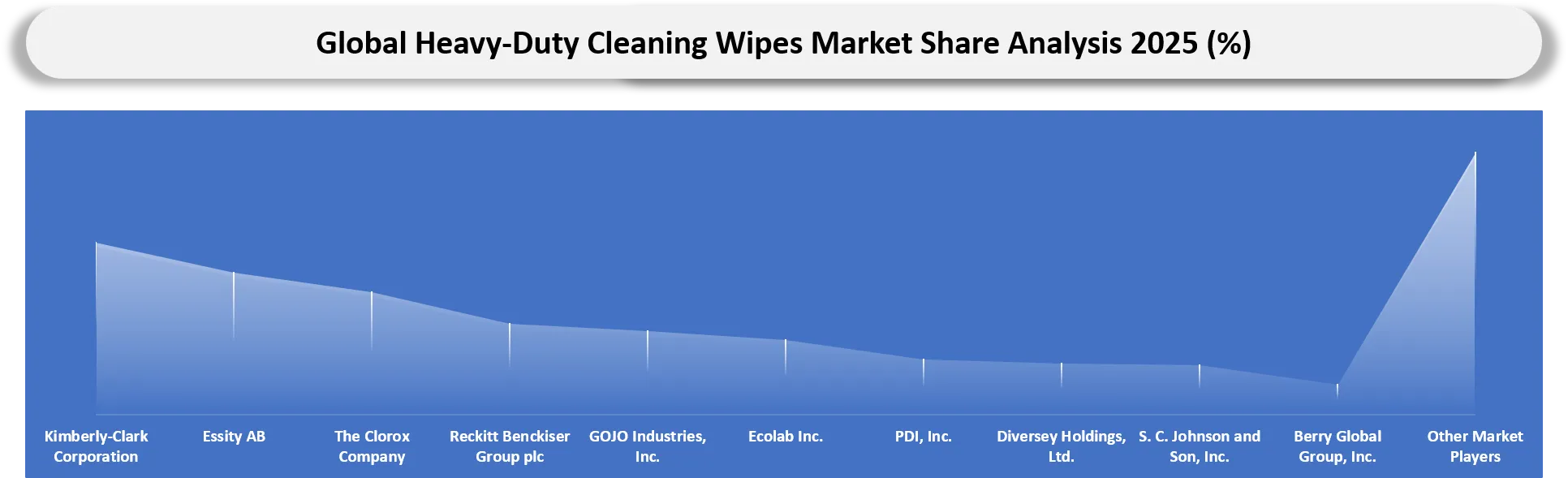
- Key participants include The Clorox Company, Reckitt, Ecolab, Kimberly-Clark, 3M, SC Johnson Professional, GOJO Industries, STERIS, Virox Technologies, and Diversey Holdings.
- Companies are increasingly differentiating through biodegradable wipe materials, EPA- and biocide-compliant formulations, antimicrobial efficacy validation, sustainability initiatives, and advanced industrial cleaning performance.
- Strategic investments in environmentally responsible chemistries, plastic-free substrates, and high-efficacy disinfectant technologies are expected to remain key competitive priorities throughout the forecast period.
Company Coverage Preview
Magnera has emerged as one of the most strategically positioned companies within the global heavy-duty cleaning wipes ecosystem following the integration and alignment of the Chicopee and Sontara professional wipes businesses. The company possesses strong expertise in hydroentangled nonwoven technologies, contamination-control applications, industrial cleaning solutions, and sustainability-focused material innovation. Its diversified presence across foodservice, manufacturing, healthcare, aerospace, and industrial sectors provides resilience against cyclical demand fluctuations. Recent strategic integration initiatives indicate a focus on operational efficiency, product innovation, and global customer support capabilities. The company is increasingly positioned as a premium supplier within high-performance industrial wiping applications.
Key Companies
- Kimberly-Clark Corporation
- Essity AB
- The Clorox Company
- Reckitt Benckiser Group plc
- GOJO Industries, Inc.
- Ecolab Inc.
- PDI, Inc.
- Diversey Holdings, Ltd.
- S. C. Johnson and Son, Inc.
- Berry Global Group, Inc.
- Magnera Corporation
- Sontara
- Chicopee, Inc.
- Nice-Pak Products, Inc.
- Dreumex B.V.
- Illinois Tool Works Inc.
- Sellars Absorbent Materials, Inc.
- Contec, Inc.
- Hospeco Brands Group
- Medline Industries, LP
MAJOR PAIN POINTS
- Volatility in Raw Material Prices
- Stringent Environmental Regulations
- Growing Demand for Sustainable Alternatives
- Supply Chain Disruptions
- Intense Market Competition and Price Pressure
- Performance Expectations Across Diverse Applications
- Waste Management and Disposal Challenges
- Counterfeit and Low-Quality Product Penetration
- Rising Operational and Manufacturing Costs
RECENT DEVELOPMENTS
- December 2025: Magnera Corporation expanded nonwoven material innovations supporting industrial and heavy-duty wipes applications through advanced sustainable substrate development.
- November 2025: Kimberly-Clark Corporation increased production of biodegradable wipe materials, strengthening sustainability initiatives across professional and industrial wipes portfolios.
- October 2025: Essity AB expanded biodegradable wipes production and sustainable nonwoven innovations supporting professional hygiene and industrial cleaning applications.
- September 2025: Berry Global Group, Inc. advanced recyclable and sustainable flexible packaging solutions supporting disinfecting and industrial cleaning wipes manufacturers.
- August 2025: Sontara expanded premium engineered nonwoven wipe media portfolio for industrial and critical-environment cleaning applications through product innovation.
ANALYST VIEW / OPINION
- Rising hygiene compliance requirements across manufacturing, automotive, food processing, and industrial facilities are accelerating the replacement of reusable cleaning materials with heavy-duty disposable wipes.
- Industrial operators are increasingly prioritizing wipes with superior absorbency, solvent resistance, and abrasion durability to reduce cleaning time and improve operational efficiency.
- Growth in preventive maintenance programs is strengthening demand for heavy-duty cleaning wipes used in machinery cleaning, equipment servicing, and production line upkeep.
- Environmental regulations and sustainability initiatives are encouraging manufacturers to develop biodegradable, recyclable, and low-lint heavy-duty wipe solutions.
- Expansion of industrial manufacturing activities in Asia-Pacific is creating substantial opportunities for large-volume wipe consumption across factories, workshops, and assembly plants.
TARGET AUDIENCE
| INDUSTRY | WHO SHOULD BUY THIS REPORT? | REASON TO BUY THIS REPORT |
| Healthcare & Hospital Networks | Infection Control Managers, Hospital Procurement Teams, Clinical Operations Heads | Evaluate demand for heavy-duty cleaning wipes in patient care areas, operating rooms, emergency departments, and healthcare hygiene management programs |
| Food & Beverage Processing Companies | Sanitation Managers, Quality Assurance Teams, Plant Hygiene Supervisors | Assess wipe usage for equipment cleaning, contamination control, food safety compliance, and production line sanitation requirements |
| Industrial Manufacturing Companies | Plant Managers, Maintenance Teams, EHS Managers | Analyze adoption of heavy-duty cleaning wipes for machinery maintenance, grease removal, industrial cleaning, and workplace hygiene operations |
| Automotive & Transportation Companies | Production Managers, Facility Maintenance Teams, Operations Heads | Understand demand for heavy-duty wipes in vehicle assembly plants, workshops, service centers, and transportation fleet maintenance activities |
| Pharmaceutical & Biotechnology Companies | GMP Compliance Managers, Cleanroom Supervisors, Quality Control Teams | Evaluate cleaning wipe requirements for contamination control, cleanroom maintenance, and regulatory compliance across pharmaceutical facilities |
| Commercial Cleaning & Facility Management Companies | Facility Directors, Janitorial Procurement Managers, Cleaning Operations Teams | Identify opportunities in corporate offices, commercial buildings, educational institutions, and outsourced cleaning service contracts |
| Oil & Gas and Energy Companies | Maintenance Engineers, HSE Managers, Asset Integrity Teams | Assess demand for durable cleaning wipes used in equipment maintenance, spill management, workforce hygiene, and remote industrial operations |
| Hospitality & Retail Chains | Housekeeping Managers, Operations Directors, Procurement Teams | Analyze cleaning wipe consumption across hotels, restaurants, shopping centers, and customer-facing environments requiring high hygiene standards |
| Government, Defense & Public Infrastructure Organizations | Procurement Authorities, Facility Administrators, Public Health Departments | Understand procurement trends for sanitation products supporting public facilities, transportation hubs, defense sites, and emergency preparedness programs |
| Investors, Private Equity & Consulting Firms | Investment Analysts, Market Intelligence Teams, Strategy Consultants | Evaluate market growth opportunities, competitive landscape, sustainability trends, product innovation, and expansion strategies within the heavy-duty cleaning wipes industry |
WHY CHOOSE DATAM?
- Data-Driven insights: Dive into detailed analyses with granular insights such as pricing, market shares and value chain evaluations, enriched by interviews with industry leaders and disruptors.
- Post-Purchase Support and Expert Analyst Consultations: As a valued client, gain direct access to our expert analysts for personalized advice and strategic guidance, tailored to your specific needs and challenges.
- White Papers and Case Studies: Benefit quarterly from our in-depth studies related to your purchased titles, tailored to refine your operational and marketing strategies for maximum impact.
- Annual Updates on Purchased Reports: As an existing customer, enjoy the privilege of annual updates to your reports, ensuring you stay abreast of the latest market insights and technological advancements. Terms and conditions apply.
- Specialized Focus on Emerging Markets: DataM differentiates itself by delivering in-depth, specialized insights specifically for emerging markets, rather than offering generalized geographic overviews. The approach equips our clients with a nuanced understanding and actionable intelligence that are essential for navigating and succeeding in high-growth regions.
- Value of DataM Reports: Our reports offer specialized insights tailored to the latest trends and specific business inquiries. The personalized approach provides a deeper, strategic perspective, ensuring you receive the precise information necessary to make informed decisions. The insights complement and go beyond what is typically available in generic databases.
WHAT DATAM UNIQUELY PROVIDES
- Granular industrial wipes demand analysis across aerospace, automotive, semiconductor, healthcare, pharmaceutical, and food-processing end-use sectors.
- Detailed nonwoven substrate benchmarking covering spunlace, hydroentangled, recycled fiber, and specialty contamination-control material technologies.
- Comprehensive regulatory impact assessment across EU, U.S., China, UK, and major industrial manufacturing economies.
- Real-time tracking of capacity expansions, acquisitions, investments, and product innovation activities across leading manufacturers.
- Supply-chain intelligence mapping from raw material sourcing through converting, packaging, distribution, and industrial end-use consumption.
- Pricing intelligence covering substrate costs, chemical inputs, logistics exposure, and premium-performance product positioning dynamics.
- AI, automation, and sustainability technology adoption benchmarking across global industrial wipes manufacturing facilities


























































