


Heated Tobacco Products Market Size and Overview
The global Heated Tobacco Products Market reached US$ 54.43 billion in 2025 and is expected to reach US$411.99 billion by 2035, growing with a CAGR of 22.54% during the forecast period 2026-2035. Heated Tobacco Products encompasses the products, systems, services, and enabling value chains that influence commercial demand, technology selection, and buying behavior in this market. The market segments include product formats, devices, heating technology types, flavors, distribution channels, buyer profiles, pricing bands, with revenue generation based on specification intensity, regulatory alignment, supply chain readiness, and performance expectation fulfillment within key target user segments.
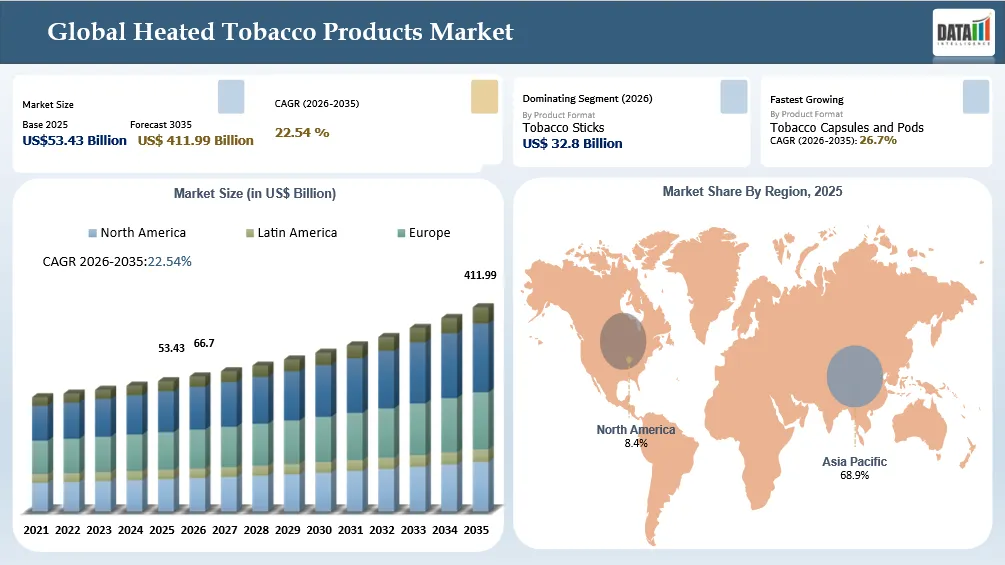
Buyers in this market are progressing into a stage where evaluation goes beyond simple price and availability considerations. Factors such as lifecycle performance, regulatory risk, ease of integration, and pace of commercialization are increasingly important in making decisions. Consequently, there is pressure for suppliers to focus their product ranges and develop application specific solutions. Competition is becoming increasingly focused on delivering differentiated capabilities, support services, and channel control.
AI Impact Analysis
The AI layer is now turning out to be a reality on top of the heated tobacco products segment rather than an individual story. Firms are deploying it in demand forecasting, portfolio allocation, and sales priorities for putting the correct product to the proper customer. For fragmented and unaligned buy cycles, such commercial insight becomes important.
From the product and operations perspective, the use of AI helps in reducing the process of trial-and-error. The supplier can evaluate data around product performance, customer behavior, and failure cases in the field to make decisions about design, servicing, and maintenance activities. It helps in accelerating feedback loops and building application-specific products.
Another effect of AI is that it alters the dynamics of gaining competitive advantages. Those firms which have better insights into the installed base information, service networks, and digital processes will gain more from their ability to learn from customers and deliver relevant offerings. Ultimately, firms having domain expertise and operational data will do well in the AI environment.
Heated Tobacco Products Industry Trends and Strategic Insights
- Asia-Pacific still holds the greatest significance when it comes to creating demand and setting benchmarks in today’s market environment.
- Tobacco Sticks is the key category due to its fit with prevailing customer preferences, existing installed base needs, and potential for quick scale-up.
- The primary driver is the regulation and trend toward reduced risk nicotine products from traditional cigarettes among consumers and governments alike, whereas the execution risk lies in taxes and flavor limitations in key tobacco markets.
- The right vendors to protect your business are those that offer deep product lines, applications, and quicker commercialization routes.
Market Scope
| Metrics | Details | |
| 2025 Market Size | US$ 54.43 Billion | |
| 2035 Projected Market Size | US$ 411.99 Billion | |
| CAGR (2026-2035) | 22.54% | |
| Largest Market | Asia-Pacific | |
| Fastest Growing Market | Europe | |
| By Product Format | Tobacco Sticks, Tobacco Capsules and Pods, Loose Leaf and Refill Tobacco | |
| By Device Type | Integrated Blade Devices, External Heater Devices, Induction Heating Devices, Hybrid Heat Control Devices | |
| By Heating Technology | Blade Heating, Pin Heating, Induction Heating, Carbon and Hybrid Heating | |
| By Flavor | Classic Tobacco, Menthol, Fruit and Capsule Variants, Premium and Limited-Edition Blends | |
| By Distribution Channel | Specialty Tobacco Stores, Convenience Stores, Online and D2C, Duty Free and Travel Retail | |
| By Consumer Type | Dual Users, Adult Smokers Switching from Cigarettes, Adult Nicotine Consumers New to Heated Tobacco | |
| By Price Band | Mass, Mid Premium, Premium | |
| By Region | North America | U.S., Canada, Mexico |
| Europe | Germany, UK, France, Spain, Italy, Poland | |
| Asia-Pacific | China, India, Japan, Australia, South Korea, Indonesia, Malaysia | |
| Latin America | Brazil, Argentina | |
| Middle East and Africa | UAE, Saudi Arabia, South Africa, Israel, Turkiye | |
| Report Insights Covered | Competitive Landscape Analysis, Company Profile Analysis, Market Size, Share, Growth | |
Disruption Analysis
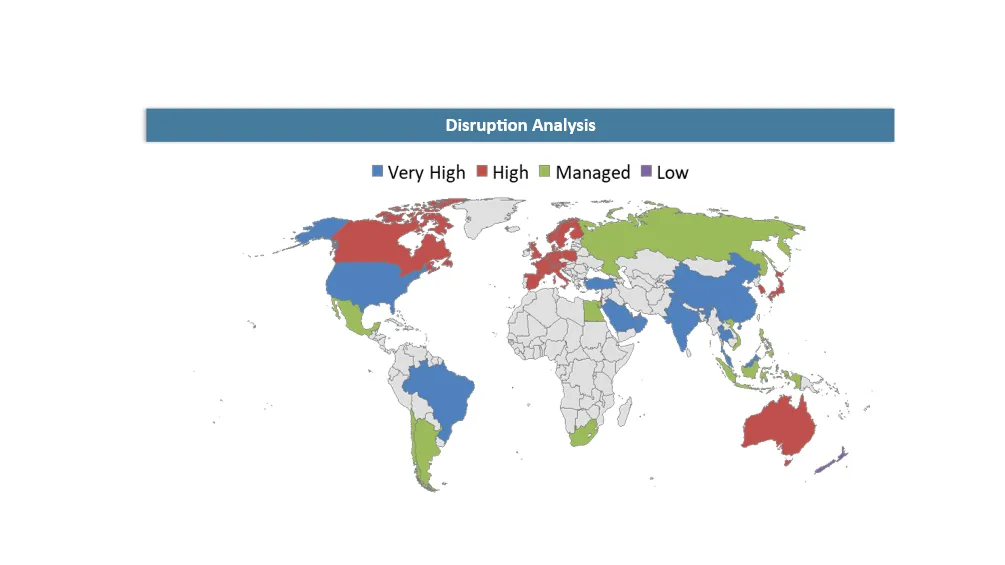
Shift from Feature-Based Selling to Outcome-Driven, Ecosystem-Led Telemedicine Platforms
The first major disruptor in this highly competitive industry is not any individual new product, but rather the redefinition of value. Consumers are looking for solutions that deliver measurable improvements in areas like uptime, compliance, yield, range, shelf life, productivity, or total cost of ownership. This forces suppliers who were used to competing primarily on standardized specifications to step up their game.
The second disruptor is ecosystem convergence. Hardware, material science, software, analytics, services, and regulatory support are all becoming increasingly interconnected, creating an advantage for suppliers able to provide more integrated solutions or forge better partnerships. This also makes it more costly for buyers to switch to another vendor once they have become entrenched in their processes.
The net effect is an industry where even established broad-line portfolios may find themselves outdated unless they evolve with purposeful innovation. Even new entrants can succeed, but they often do so by addressing a narrower pain point, entering through a niche market, or relying on a faster commercialization approach.
BCG Matrix: Company Evaluation
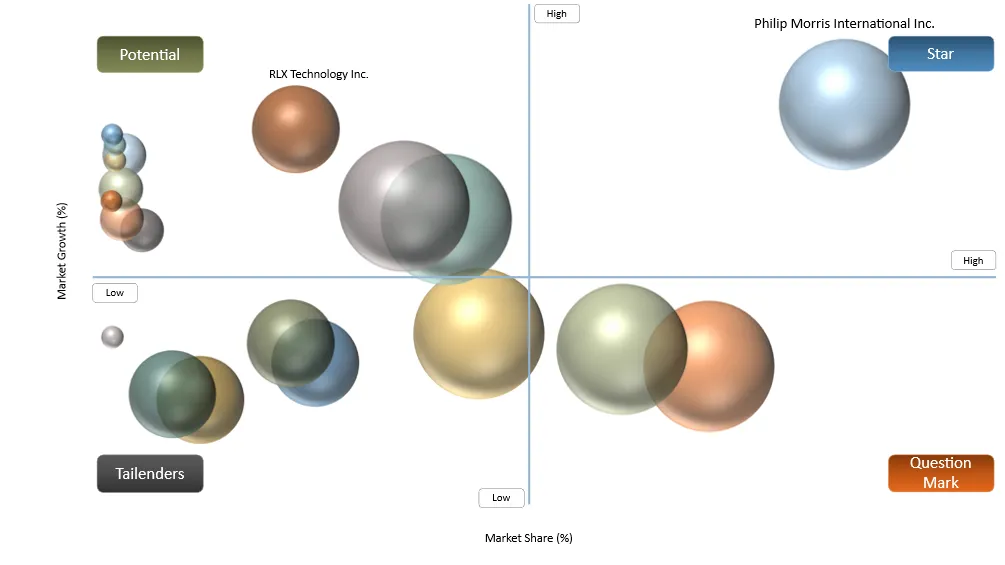
From the perspective of BCG matrix, the leading category within the HTP market comprises companies having both a strong positive revenue trajectory and technological prowess. Examples include Philip Morris International Inc., British American Tobacco p.l.c., Japan Tobacco Inc., Altria Group, Inc., Reynolds American Inc., and China Tobacco International (HK) Company Limited that exert influence on market dynamics due to their capacity for innovative solutions creation and regulatory impact, as well as large distribution networks.
Established category consists of players including KT&G Corporation, Imperial Brands PLC, and JTI Leaf Services (UK) Ltd. They leverage the company's strengths such as deep relations with customers, steady product portfolio, and revenue sources based on the use of existing infrastructure and brand reputation.
Emerging and specialist category includes firms such as PAX Labs, Inc., RLX Technology Inc., Shenzhen Smoore Technology Limited, International Vapor Group, Inc., as well as Shenzhen manufacturers like First Union, Innokin, Kingtons, iMiracle, Eigate, and Yukan.
Market Dynamics
Regulatory and consumer migration from combustible cigarettes toward reduced risk nicotine formats
What stands out as the strongest driver for growth is the regulatory and consumer movement away from combustible cigarettes toward lower-risk nicotine alternatives. More and more, consumers want not just the right technology fit, but an economically justifiable solution, one that will work reliably and quickly. This driver thus matters commercially because it impacts not only initial adoption but also repeat business.
Moreover, it is also good news from the standpoint of making market sizing feasible. It connects directly to demand pools that are measurable, such as numbers of installations, replacements, capacity, tests, crop acres, number of subscribers, or pipeline projects. When we have metrics for actual operations in our segment, the bottom-up approach becomes much more defendable.
On the supply side, it favors those vendors who manage to provide standardization where possible while retaining application-specific tailoring. They preserve their margins, accelerate sales cycles, and develop more scaleable channel strategies.
In the medium term, there seems little reason not to expect this driver to help support both premium and volume segments: premium segments by virtue of performance advantages and volume segments because of adoption and replacement effects.
Tax uncertainty and flavor restrictions across major tobacco markets
This constraint revolves around taxation and flavor regulations in key markets for the product in question. While the demand may be there, this constraint can hold up the process, reduce the volume, or restrict the value that customers will have to pay for the product.
It is particularly critical in determining the size for client-specific segmentation. The rationale is that some market segments may demonstrate potential but lack execution ability due to fragmented standards, regulatory uncertainty, or lack of infrastructure. Therefore, the most appropriate sizing methodology would be to target segments where the intention to spend is evident.
A company able to deal with this constraint via application engineering, local partnership, compliance management, or cost reduction will do better than competitors.
Segment Analysis
The global Heated Tobacco Products market is segmented based on the product format, device type, heating technology, flavor, distribution channel, consumer type, price band, and region/countries in terms of value.
Product Format Is Where Heated Tobacco Competition Is Actually Being Won
The competition is now being fought on the product format front for heated tobacco products. The tobacco stick and tobacco capsule/pod represent the main segment types defining consumer demand and the economic model due to their dependency on consumable goods more than devices in terms of repeat purchase behavior, margins, and switching.
The tobacco stick is the prevailing segment type, particularly in established markets, due to its simulation of the act of smoking and compatibility with legacy distribution channels and regulations. Its profitability hinges on stable device ecosystems, good shelf presence, and regular replenishment cycles. Companies invest in the improvement of tobacco blends, flavor profiles, and premiums.
On the other hand, the tobacco capsule/pod represents an innovative segment type offering improved flavor customization, better positioning, and greater locking into the device ecosystem due to compatibility. Such a segment format is well-suited to consumer segmentation based on innovation and convenience as well as defending brand market shares from nicotine competitors..
Geographical Penetration
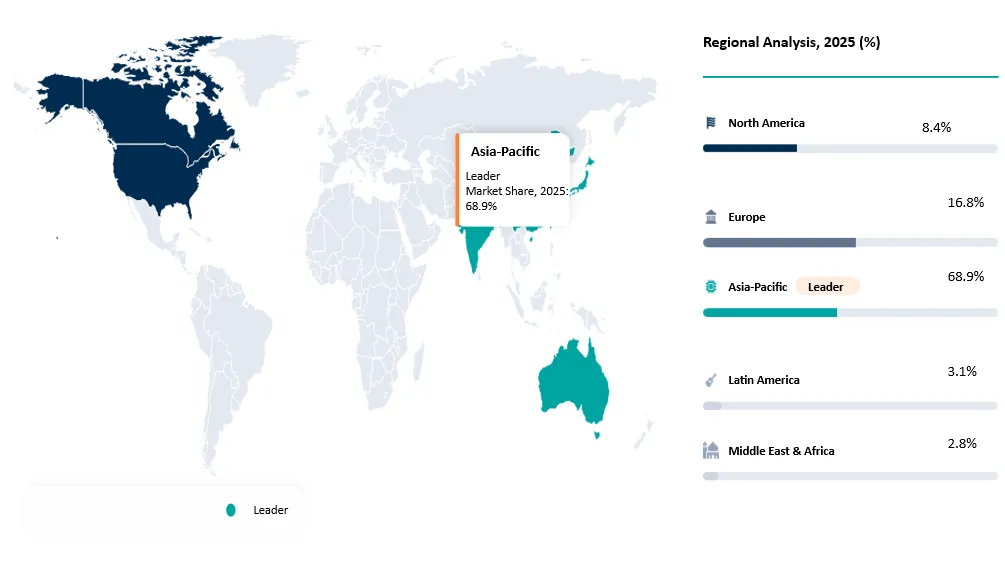
Asia-Pacific Leads Heated Tobacco Market with Japan as Anchor and South Korea as Innovation Testbed
The Asia-Pacific region is the most strategic region within the heated tobacco products market landscape, where Japan and South Korea emerge as two markets that show commercial trends and dynamics as well as imminent market changes. The significance of the region is explained by the adoption maturity, robustness in retailing, and developed purchase behavior among others. Manufacturers usually leverage this region for piloting their product portfolio with respect to device innovations, flavors, and even pricing policies.
It should be mentioned that the Japanese market has become an anchor market for the entire industry, where the integration of heated tobacco becomes a part of common purchasing routine and behavior. Such success has been achieved due to the quality of the product, strong visibility on retailer shelves, and regular replenishing instead of focusing on marketing messaging.
In turn, South Korea appears to be another vital market within the landscape. The country has high consumer awareness combined with regulatory development and can be considered a testing ground for innovations and technology competition.
China Heated Tobacco Products Market Trends
China can be viewed as a market with high potential, but it is highly regulated when compared with other markets of heated tobacco products. In contrast to such countries as Japan and South Korea, where the commercial model of market operation is associated with competition, China's market is characterized by the dominant role of the state-run tobacco industry, specifically **China National Tobacco Corporation (CNTC)** and **China Tobacco International (HK) Company Limited**, its international wing.
At the moment, the market operates at the stage of commercialization with careful introduction of products and implementation of pilot projects instead of massive introduction. Nevertheless, this approach ensures that the market will develop along the lines of the country's policy.
The importance of this market can be assessed based on the scale of the country and the presence of manufacturers producing devices for heated tobacco products. China is the leading market among all countries in terms of the production volume and the number of consumers.
India Heated Tobacco Products Market Outlook
India is a closed and regulated environment when it comes to heated tobacco products. As opposed to Japan and South Korea, India is not an open growth market for heated tobacco, given that the Indian government is still adhering to the ban of electronic cigarettes, which includes the heat-not-burn segment since 2019.
What makes India relevant to the market, then, is the fact that it is essential from the perspective of regulatory risk management and optionality for the future. India has an incredibly large smoking community within its borders and is considered a high-potential region in the long term, despite its restrictive nature and low openness to innovation.
India is a factor that cannot be ignored in terms of the regional market strategy as well. In the case of any change in policy in India, there will be significant consequences for global tobacco producers, logistics, and production, although now the region needs to be treated as high-potential and high-barrier.
Competitive Landscape
- The competitive environment within the heated tobacco products industry depends on a mix of the world's largest tobacco companies, related nicotine businesses, and unique device producers. The key competitors include Philip Morris International Inc., British American Tobacco p.l.c., Japan Tobacco Inc., KT&G Corporation, Imperial Brands PLC, Altria Group, Inc., China Tobacco International (HK) Company Limited, Reynolds American Inc., and JTI Leaf Services (UK) Ltd. The main competitors in the heated tobacco product market include PAX Labs, Inc., RLX Technology Inc., International Vapor Group, Inc., Shenzhen Smoore Technology Limited, Shenzhen Yukan Technology Co., Ltd., Shenzhen Eigate Technology Co., Ltd., Shenzhen First Union Technology Co., Ltd., Shenzhen Innokin Technology Co., Ltd., Shenzhen Kingtons Technology Co., Ltd., Shenzhen iMiracle Technology Co., Ltd., and Tobotton. The future of competition in this industry is likely to depend on companies' ability to develop commercialization capacity, build ecosystems, and retain customers.
Key Developments
March 2026: Philip Morris International Inc. reinforced category leadership as its smoke-free products were sold in more than 100 markets, showing continued momentum behind heated tobacco and broader smoke-free portfolio expansion.
February 2026: India reaffirmed its ban on e-cigarettes, including heated tobacco products, highlighting how regulatory barriers continue to shape market access and regional expansion strategies for leading vendors.
December 2025: PMI expanded its long-running Scuderia Ferrari partnership, reflecting the continued use of high-visibility brand alliances to support smoke-free portfolio positioning.
July 2025: PMI reported steady growth in inhalable smoke-free products, including IQOS, indicating continued consumer uptake and stronger category resilience.
June 2025: British American Tobacco p.l.c. raised its annual sales target, supported by improving demand and expected acceleration in New Categories, including tobacco heating products.
May 2025: Japan Tobacco Inc. indicated it may consider U.S. manufacturing of Ploom devices if scale supports it, underscoring the rising importance of localization and supply flexibility.
March 2024: PMI prepared the U.S. test launch of IQOS in Austin, signaling a major commercialization step in a strategically important market.
March 2024: European regulators moved toward tighter rules on new heated-stick formats, showing growing policy scrutiny around product design and compliance.
White Space Opportunities
As per DataM, the most obvious area for whitespace in the hotly contested market of HTPs goes beyond flagship product launches and mature markets where adult consumers dominate. Many players continue to focus on headline markets, but there may still be under-penetrated demand spaces where customers and channel players prioritize repeat-ability and regulation over size.
Another whitespace can be found in commercial packaging instead of product design itself. Customers are increasingly seeking suppliers who offer reduced adoption friction in terms of retailer education and onboarding, compliance assistance, merchandising, and follow-up services. Where consumption format and device compatibility become more relevant than ever before, adoption can beat technical prowess.
There is also whitespace when it comes to regional and tier-level coverage, particularly for mid-tier and emerging markets which have not been fully tapped yet. Adjacent white spaces can be found at the level of loyalty programs, retail analytics, and lifecycle management. The future winners in the segment will be those that develop repeatable and channel ready offerings within these whitespace areas.
DMI Opinion
As per insights from Datam, there are quite a number of participants who overvalue general product story and undervalue the mechanics of commercialization. On the contrary, consumable format, compliance fit, channel approach, and repeat purchase capability have become increasingly relevant as the category has progressed. As such, it is safe to say that those companies which focus on retail performance, customer education, ecosystem management, and lifecycle economics would perform far better than the ones depending on visibility and scale alone.
The analysis further suggests that the focal point of competition in the heated tobacco products space is likely to keep shifting to smaller but more refined opportunity pockets. The growing interest of buyers and their partners in margin-based logic, brand retention, regulatory robustness, and reliable replenishment systems makes the winners of the future different from what people might expect – portfolio size is unlikely to be the primary determinant of success. More precisely, the winners of the future will be those that align product platform, consumable approach, channel approach, and regional execution approach with the decisions of customers.
According to the DataM study, the opportunity should thus be understood as one of precise execution rather than general expansion. The companies that can provide proof of concept, minimize barriers to adoption, and turn technological capability into economic performance are well positioned to win. They who are too general, too salesy, and/or too focused on one channel will be more vulnerable to the buyer’s increasing selectivity.
Why Choose DataM?
Technological Developments: Describes the recent developments in the heated tobacco products sector, such as developments in heating technologies, temperature control, aerosol quality, battery performance, design of the consumable, flavor delivery, and connectivity capabilities.
Positioning in the Market of the Leading Companies: Examines the positioning in the market of the leading suppliers based on several critical aspects, such as breadth of portfolio, brand power, distribution channels, regulatory compliance, innovation capability, pricing strategy, and facilitation of repeat purchase behavior.
Applications of the Heated Tobacco Products: Shows how heated tobacco products are applied in practice as reduced-combustion nicotine products for adults.
Industry Trends and Dynamics: Provides an overview of key trends in the industry including competition on the basis of consumables, innovation in flavors and formats, premiumization, growth in Asia-Pacific, changing regulations, and competition from e-vapor and oral nicotine delivery products.
Strategies of Competitors: Discusses the different strategies employed by market participants for achieving growth by means of product improvement, building ecosystems, expanding distribution channels, and effective retail marketing.
Price & Market Access: Discusses pricing mechanisms associated with devices, tobacco sticks, capsules, and pods, as well as market access considerations such as taxation policies and regulations governing each country’s market.
Market Penetration & Growth: Pinpoints opportunities that can be leveraged for market penetration and growth.
Target Audience 2026
- OEMs and product developers active across the heated tobacco products value chain
- Distributors, channel partners, and regional aggregators
- Strategy teams, product managers, and corporate development leaders
- Procurement heads and technical buyers at key end users
- Investors, consultants, and market intelligence teams tracking emerging growth pockets.



























































