


HALEU Market Size and Overview
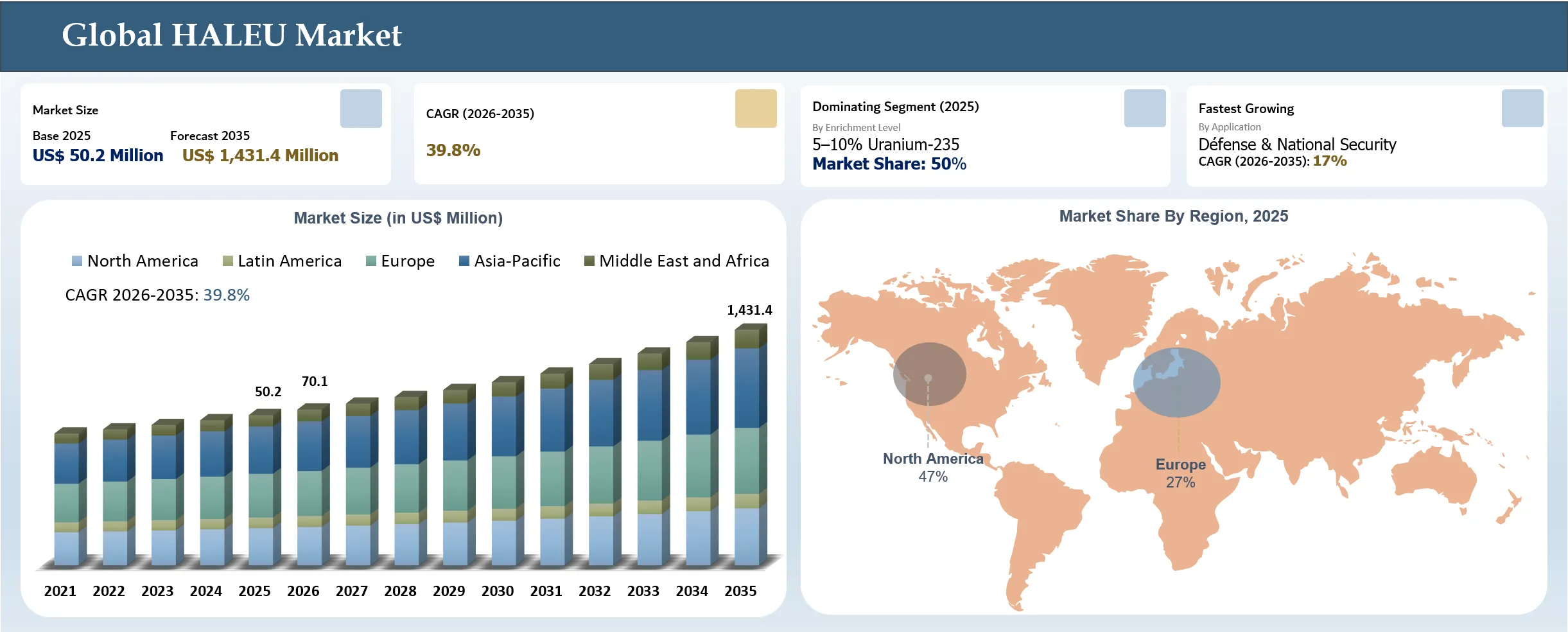
The global HALEU market reached USD 50.2 million in 2025 and is expected to reach USD 1,431.4 million by 2035, growing with a CAGR of 39.8% during the forecast period 2026-2035. The market is witnessing steady expansion as commercialization of nuclear reactors progresses, with an increase in the demand for uranium enriched from 5% to 19.75% for small modular reactors (SMRs), microreactors, and fourth-generation reactors. Between 2025 and 2026, the market received a significant push due to the investments being made by the government towards enhancing the production of HALEU in the domestic markets as well as reducing reliance on other sources for enrichment. In January 2026, the U.S. Department of Energy announced the awarding of USD 2.7 billion worth of contracts for increasing the domestic capability for the production of LEU and HALEU as well as investments for the development of new technologies in enrichment and transport of HALEU. The American Centrifuge Operating, LLC, has been producing and delivering 900 kilograms of HALEU to the U.S. Department of Energy... and to date has produced and delivered 920 kg of HALEU so far under the contract. DOE estimates the domestic demand for HALEU could reach 50 metric tons per year by 2035, with additional amounts required each year thereafter to deploy a new fleet of advanced reactors. Additional fidelity will be gathered through the surveys required by the Energy Act of 2020 and interactions with the members of the HALEU Consortium.
The agreement significantly strengthens the domestic supply chain for HALEU in the U.S., which is beneficial in terms of availability of fuel to be used in the upcoming nuclear reactors and SMRs. In July 2026, according to the Investing News Network (INN), Centrus Energy Corporation signed a US$900 million deal with the U.S. Department of Energy (DOE) for the upgrade of its HALEU (High-Assay Low-Enriched Uranium) production cascade from demonstration to commercial operations. This helps in deploying the HALEU production facility on a large scale at Piketon, Ohio. In total, the contract will be worth US$1.07 billion in case the options are exercised. Additionally, Centrus has completed the production of an extra 900 kilograms of HALEU UF₆ before time, thereby making the cumulative production above 1,900 kilograms.
White-Space Opportunities for HALEU Production Capacity Expansion
In July 2026, Urenco announced that it is moving forward with commercial High-Assay Low-Enriched Uranium (HALEU) enrichment by establishing a dedicated enrichment capability at its Capenhurst facility in the United Kingdom, creating one of the largest investment opportunities in the advanced nuclear fuel value chain. The project is designed to supply HALEU fuel for small modular reactors (SMRs) and advanced Generation IV reactors, where fuel availability has emerged as one of the primary bottlenecks to commercialization. Alongside this initiative, the U.S. Department of Energy (DOE) awarded US$900 million to Centrus Energy to transition its HALEU production cascade to commercial operations, with the total contract value reaching US$1.07 billion if all options are exercised. In addition, the DOE previously selected BWX Technologies (BWXT) and Framatome for HALEU deconversion and fuel manufacturing support, while the United Kingdom has also committed £300 million (approximately US$380 million) to establish a domestic HALEU production program led by Urenco. These investments are accelerating capacity expansion across uranium enrichment, fuel conversion, fuel fabrication, and nuclear fuel logistics, creating substantial opportunities throughout the HALEU supply chain.
The increasing public and private investment in HALEU production is expected to benefit companies across multiple segments of the advanced nuclear fuel ecosystem. Urenco and Centrus Energy are positioned to benefit directly through commercial uranium enrichment and long-term fuel supply agreements, while BWX Technologies, Framatome, and Westinghouse Electric Company are expected to gain from expanding HALEU fuel fabrication, reactor fuel assembly manufacturing, and advanced reactor deployment. Uranium conversion and enrichment service providers such as Orano are likely to secure additional opportunities in conversion, logistics, and integrated nuclear fuel services as Western countries diversify supply away from Russian enrichment capacity. Reactor developers including TerraPower, X-energy, Kairos Power, GE Hitachi Nuclear Energy, and NuScale Power are also expected to benefit from improved access to commercial HALEU supplies, enabling faster deployment of advanced reactors and SMRs. Collectively, these investments are strengthening the North American and European nuclear fuel supply chain while creating long-term procurement opportunities across enrichment technology, fuel manufacturing, engineering services, nuclear infrastructure, and advanced reactor commercialization.
HALEU Market Key Takeaways
- North America led the global market with a 47% share in 2025 due to extensive federal backing and robust reactor development. Conversely, Europe is projected to be the fastest-growing regional market over the 2026–2035 forecast period.
- The 5–10% Uranium-235 enrichment level segment dominated the global market by capturing approximately 50% of the total market share in 2025. This segment provides an optimal balance between enhanced nuclear fuel efficiency and regulatory feasibility for near-term SMR deployments.
- In January 2026, the U.S. Department of Energy awarded USD 2.7 billion worth of contracts to scale domestic LEU and HALEU production capabilities. Under this program, American Centrifuge Operating, LLC, successfully produced and delivered 920 kg of HALEU to the DOE.
- The United Kingdom committed £300 million (approximately USD 380 million) to establish a domestic HALEU production program led by Urenco. This initiative establishes dedicated commercial enrichment capacity at its Capenhurst facility to supply Small Modular Reactors (SMRs) and Generation IV reactors.
- Centrus Energy Corporation signed a USD 900 million contract with the U.S. DOE in July 2026 to transition its Piketon, Ohio demonstration cascade to commercial operations. The contract's potential value reaches USD 1.07 billion if options are exercised, with cumulative output exceeding 1,900 kg of HALEU UF₆.
HALEU Market Industry Trends and Strategic Insight
- Commercial-scale HALEU enrichment capacity is transitioning from pilot production to industrial deployment, supported by long-term government contracts to establish secure domestic fuel supplies for advanced reactor programs.
- Advanced reactor developers are accelerating long-term fuel procurement strategies, resulting in multi-year partnerships between enrichment providers, fuel fabricators, and SMR developers to secure HALEU availability before commercial reactor deployment.
- TRISO fuel manufacturing capacity is expanding alongside HALEU production, as high-temperature gas-cooled reactors and microreactors increasingly adopt TRISO-based fuel systems requiring HALEU feedstock for commercial deployment.
- Government-backed procurement contracts are reducing investment risk, providing predictable revenue visibility for enrichment companies while accelerating private capital investment in commercial HALEU production facilities.
- The principal competitive advantage within the HALEU market is enrichment capability rather than uranium mining, positioning licensed enrichment operators and fuel fabricators as the highest-value participants within the advanced nuclear fuel value chain.
HALEU Market Scope
| Metrics | Details | |
| 2025 Market Size | USD 50.2 Million | |
| 2035 Projected Market Size | USD 1,431.4 Million | |
| CAGR (2026-2035) | 39.8% | |
| Largest Market | North America | |
| Fastest Growing Market | Europe | |
| By Fuel Form | Uranium Hexafluoride (HALEU UF₆), Uranium Oxide Fuel, Metallic HALEU Fuel, TRISO Fuel, Other Advanced HALEU Fuels | |
| By Enrichment Level | 5–10% Uranium-235, 10%–15% Uranium-235, Above 15%–19.75% Uranium-235 | |
| By Reactor Type | Small Modular Reactors (SMRs), Microreactors, High-Temperature Gas-Cooled Reactors (HTGRs), Molten Salt Reactors (MSRs), Sodium-Cooled Fast Reactors (SFRs), Other Generation IV Reactors | |
| By Application | Advanced Reactor Demonstration Projects, Research & Test Reactors, Medical Isotope Production, Space Nuclear Systems, Défense & National Security, Others | |
| By Region | North America | U.S., Canada, Mexico |
| Europe | Germany, UK, France, Spain, Italy, Poland | |
| Asia-Pacific | China, India, Japan, Australia, South Korea, Indonesia, Malaysia | |
| Latin America | Brazil, Argentina | |
| Middle East and Africa | UAE, Saudi Arabia, South Africa, Israel, Türkiye | |
| Report Insights Covered | Competitive Landscape Analysis, Company Profile Analysis, Market Size, Share, Growth | |
HALEU Market Disruption Analysis
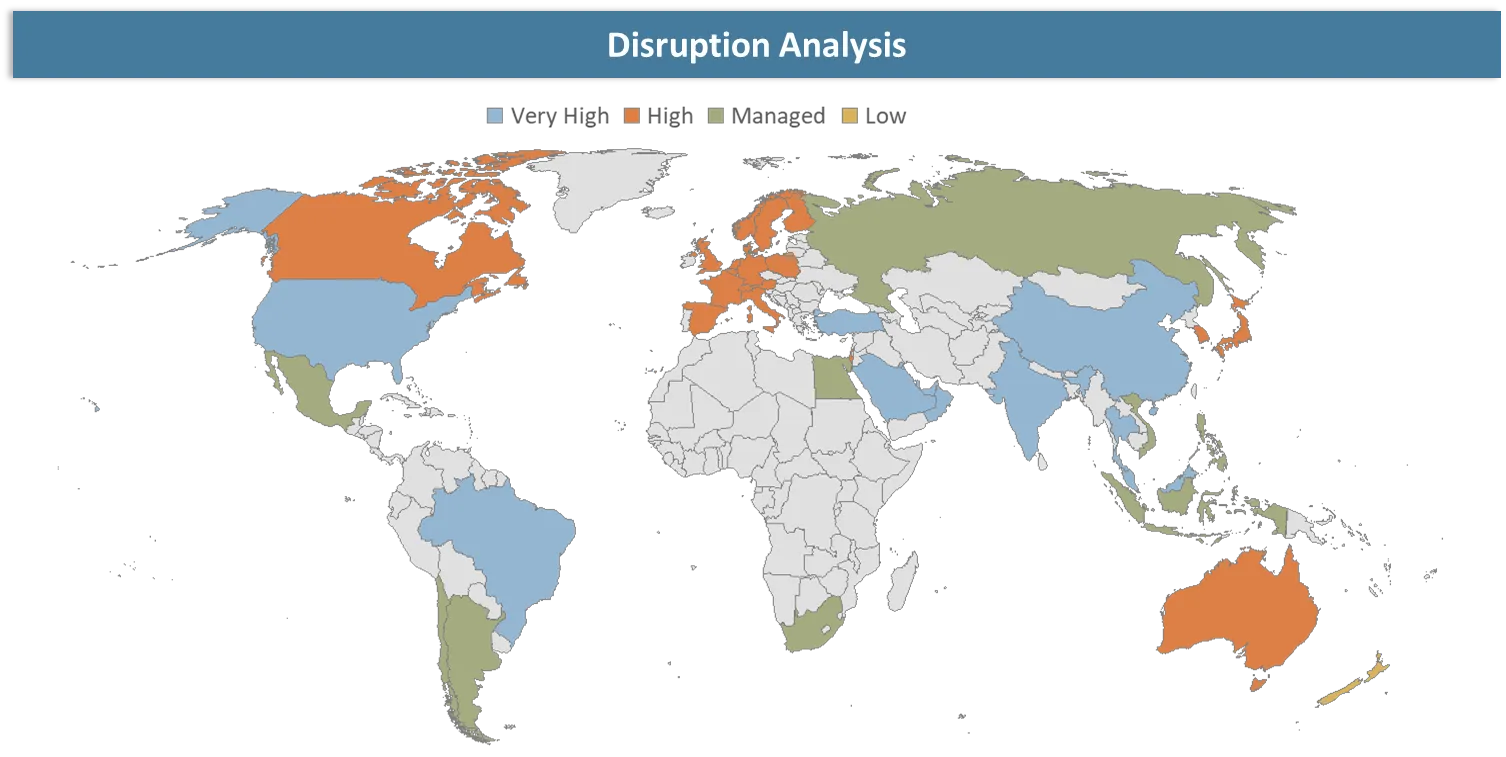
Commercialization of Advanced Reactors Reshaping the HALEU Fuel Supply Chain
Disruption within the HALEU (High-Assay Low-Enriched Uranium) market arises mainly from the deployment of SMR’s (Small Modular Reactors), microreactors, and Generation IV reactors, all of which need to be fueled using uranium enriched between 5 and 19.75 percent uranium-235, while traditional low-enriched uranium (LEU) production facilities are incapable of meeting this requirement. With the advancement of such reactors, both governmental bodies and fuel producers are reconfiguring the value chain of the nuclear fuel industry to cater to HALEU production.
During 2025-2026, advanced reactor developers came close to deploying their reactors commercially, which increased the need to have the capabilities to qualify, fabricate, and supply the HALEU. In April 2025, the U.S, Department of Energy chose advanced reactor developers such as TerraPower, Kairos Power, TRISO-X, Radiant Industries, and Westinghouse for HALEU allocation support, which was one way of emphasizing that there is an increasing need to make the fuel ready for use by various reactor developers. Also, in February 2026, the U.S. Nuclear Regulatory Commission issued a TRISO-X license to produce HALEU-based TRISO fuel.
HALEU Market BCG Matrix: Company Evaluation
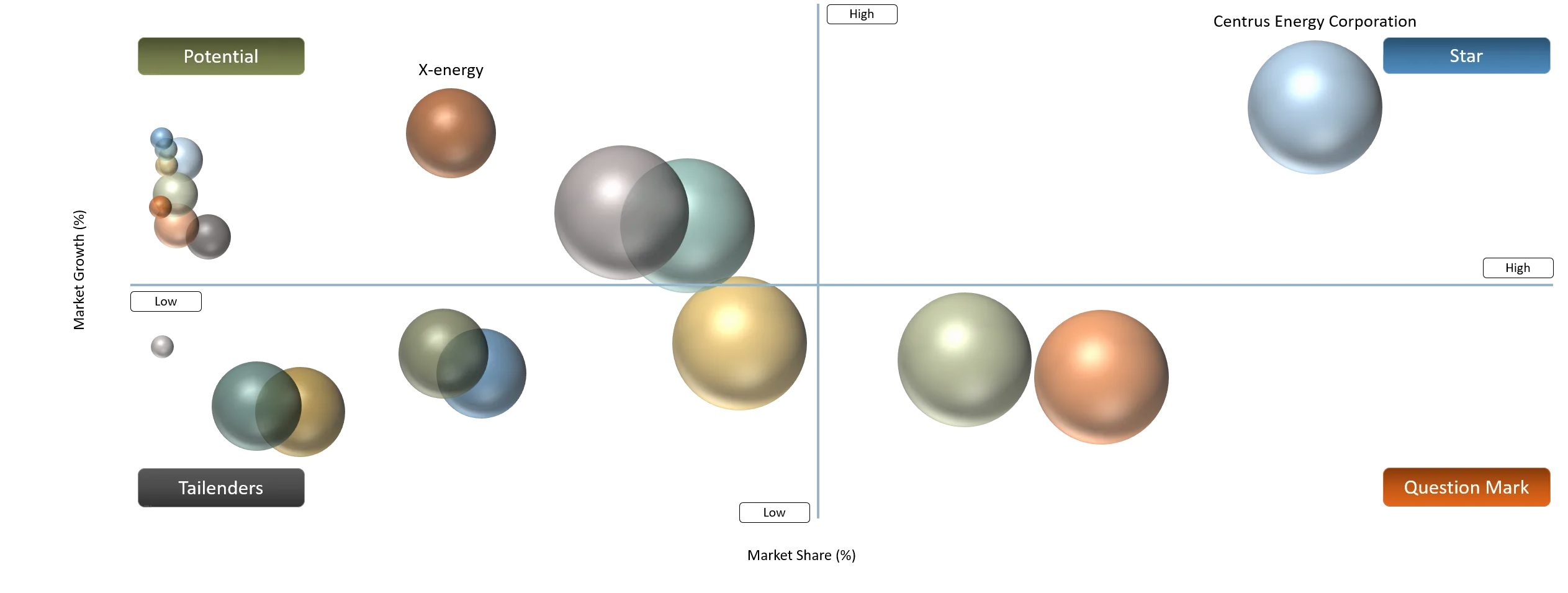
Stars include Centrus Energy Corporation and Urenco because they hold leading positions in HALEU enrichment development and are strategically positioned to capture future demand from advanced nuclear reactors. Centrus Energy has demonstrated operational HALEU enrichment capability in the U.S., while Urenco possesses established global uranium enrichment infrastructure and is expanding its role in commercial HALEU supply. Question Marks include General Matter, BWX Technologies, and Framatome because these companies are expanding their capabilities across HALEU enrichment, advanced fuel fabrication, and nuclear fuel manufacturing but are still developing commercial-scale market positions.
Potential includes X-energy and Kairos Power, which are positioned to benefit from long-term HALEU demand growth due to their advanced reactor technologies and fuel requirements. X-energy’s TRISO fuel platform and Kairos Power’s molten salt reactor technology are expected to create significant future HALEU consumption opportunities. Tailenders include Westinghouse Electric Company because its current HALEU market participation is primarily focused on advanced reactor fuel development and nuclear technology solutions rather than direct HALEU enrichment or large-scale production.
HALEU Market Dynamics
Driver Impact Analysis
| Driver | Market Growth Impact (%) | Demand Concentration | Impacted Use Case | Strategic Impact |
Rising deployment of advanced nuclear reactors, including SMRs, microreactors, and Generation IV reactors, is increasing demand for HALEU fuel. | 35% | North America, Europe, and Asia-Pacific advanced reactor programs | SMRs, microreactors, Generation IV reactors, advanced power generation | Accelerates development of commercial HALEU enrichment and fuel fabrication capacity to support next-generation reactor deployment. |
Growing government initiatives to establish domestic HALEU production capacity are accelerating investments in uranium enrichment, fuel fabrication, and nuclear fuel supply chain infrastructure. | 25% | United States and European nuclear fuel markets | HALEU enrichment, fuel processing, strategic fuel reserves | Reduces dependence on limited global enrichment suppliers and strengthens regional nuclear fuel security. |
Increasing commercialization of advanced reactor technologies is driving long-term demand for HALEU-based fuels such as TRISO fuel, metallic fuel, and advanced fuel assemblies. | 25% | North America-led advanced reactor ecosystem with expanding European participation | TRISO fuel, metallic fuel, advanced fuel assemblies | Creates demand for integrated HALEU supply chains linking enrichment providers, fuel fabricators, and reactor developers. |
Expansion of clean energy policies and nuclear decarbonization targets is supporting the adoption of advanced nuclear reactors that require HALEU for improved efficiency and longer operating cycles. | 15% | Europe, North America, and countries pursuing nuclear energy expansion | Low-carbon electricity generation, industrial decarbonization, clean energy projects | Positions HALEU as a strategic nuclear fuel for achieving long-term emissions reduction and energy transition goals. |
Growing demand for reliable baseload power generation is accelerating investment in HALEU-fueled reactors for electricity generation, industrial heat, and hydrogen production applications. | 15% | Regions facing grid reliability challenges and increasing electricity demand | Utility-scale power, industrial heat, hydrogen production, remote power systems | Expands HALEU applications beyond electricity generation and supports diversification of advanced nuclear energy markets. |
Rising deployment of advanced nuclear reactors, including SMRs, microreactors, and Generation IV reactors, is increasing demand for HALEU fuel
The accelerated development of Small Modular Reactors (SMRs), microreactors, and fourth-generation reactors will emerge as one of the primary factors driving the market for HALEU as such reactor designs will use uranium enriched between 5% and 19.75% uranium-235 to improve fuel utilization efficiency, extend operating cycles, and reduce the size of the reactors. In the year 2025-2026, advanced reactor commercialization efforts have surged considerably as several companies are moving towards demonstrating their reactors as well as the early deployment stage. As per the International Atomic Energy Agency (IAEA), over 80 SMR designs are currently being developed around the globe.
In January 2025, according to the Abha Foundation Energy Report, the nuclear power industry is witnessing a strong adoption of advanced reactor deployment, which includes small modular reactors (SMRs), microreactors, and Generation IV reactors, which will create future demand for HALEU fuel. The report highlights that HALEU contains uranium enrichment levels of up to 19.75% U-235 as opposed to the regular reactor fuel, which uses enrichment levels of below 5% U-235, hence leading to greater fuel efficiencies and longer operating periods for advanced reactors. It should be noted that there are currently more than 80 advanced reactor designs being developed across the globe, which require HALEU fuel.
Restraint Impact Analysis
| Restraint | Drag on Market Growth (%) | Primary Impact Area | Impacted Use Case | Strategic Impact |
Limited commercial-scale HALEU enrichment capacity is restricting supply availability and delaying fuel readiness for advanced nuclear reactor deployment. | 30% | HALEU enrichment capacity and fuel availability | SMRs, microreactors, Generation IV reactors | Delays advanced reactor commercialization and increases dependence on long-term supply agreements with limited enrichment providers. |
Complex regulatory approval processes and lengthy fuel qualification timelines are slowing commercialization of HALEU-based reactor fuel systems. | 20% | Nuclear fuel certification and regulatory licensing | TRISO fuel, metallic fuel, advanced fuel assemblies | Extends development cycles and increases costs associated with qualifying HALEU-compatible reactor fuel technologies. |
Insufficient HALEU production infrastructure across conversion, deconversion, transportation, and fuel fabrication stages is constraining market scalability. | 25% | Nuclear fuel supply chain infrastructure | Advanced reactor fuel manufacturing and commercial reactor deployment | Limits the transition from pilot-scale production to integrated commercial HALEU supply networks. |
Uncertainty in advanced reactor deployment timelines is delaying long-term HALEU demand commitments from reactor developers and utilities. | 20% | Reactor commercialization and demand forecasting | Electricity generation, industrial heat, hydrogen production | Creates investment uncertainty for HALEU suppliers and slows expansion of production capacity. |
Limited commercial-scale HALEU enrichment capacity is restricting supply availability and delaying fuel readiness for advanced nuclear reactor deployment
One of the major challenges limiting the growth of the HALEU Market is the shortage of commercial-scale enrichment capacity required to support the fuel demand of advanced nuclear reactors. Unlike traditional LEU, HALEU requires specific enrichment equipment that can produce uranium with a 5–19.75% concentration of U-235, but there is a limited number of plants around the world capable of doing this. The deficiency in production capacity creates the problem of supply uncertainty and leads to delays in the process of fuel provision for SMRs, microreactors, and fourth-generation reactor projects that need HALEU.
This milestone demonstrates progress in efforts to rebuild the domestic HALEU supply chain in the US, which will provide fuel for advanced reactors, SMRs, and next-generation nuclear systems. In June 2025, as per the U.S. Department of Energy (DOE) Office of Nuclear Energy, Centrus Energy Corporation has achieved a major milestone by producing 900 kilograms of HALEU at its Piketon, Ohio plant. This production has been made possible using a 16-centrifuge HALEU demonstration cascade that has been made as per the DOE contract, and this is the first production of 1 metric ton of HALEU in the United States.
HALEU Market Segmentation Analysis
The global HALEU market is segmented based on fuel form, enrichment level, reactor type, application, and region.
5–10% Uranium-235 Enrichment Level Dominating HALEU Demand for Advanced Reactor Deployment
The 5–10% uranium-235 enrichment level segment dominates the HALEU market, accounting for approximately 50% of the market share in 2025, due to its suitability for a broad range of near-term advanced reactor applications, including small modular reactors (SMRs), microreactors, and demonstration-scale Generation IV reactors. This enrichment range provides a balance between improved fuel performance and regulatory feasibility, enabling advanced reactor developers to achieve higher energy density, longer operating cycles, and reduced fuel requirements compared with conventional low-enriched uranium (LEU) while remaining below the 20% enrichment threshold.
During 2025–2026, demand for 5–10% enriched HALEU increased as reactor developers progressed toward commercialization and fuel qualification activities. Multiple advanced reactor programs, including TerraPower’s Natrium reactor, X-energy’s Xe-100 high-temperature gas reactor, and Kairos Power’s fluoride salt-cooled reactor, continued advancing fuel strategies that rely on HALEU-based fuel solutions. The U.S. Department of Energy (DOE) also prioritized HALEU availability programs supporting advanced reactor demonstration projects, strengthening demand for lower-range HALEU enrichment suitable for early reactor deployments.
HALEU Market Geographical Penetration
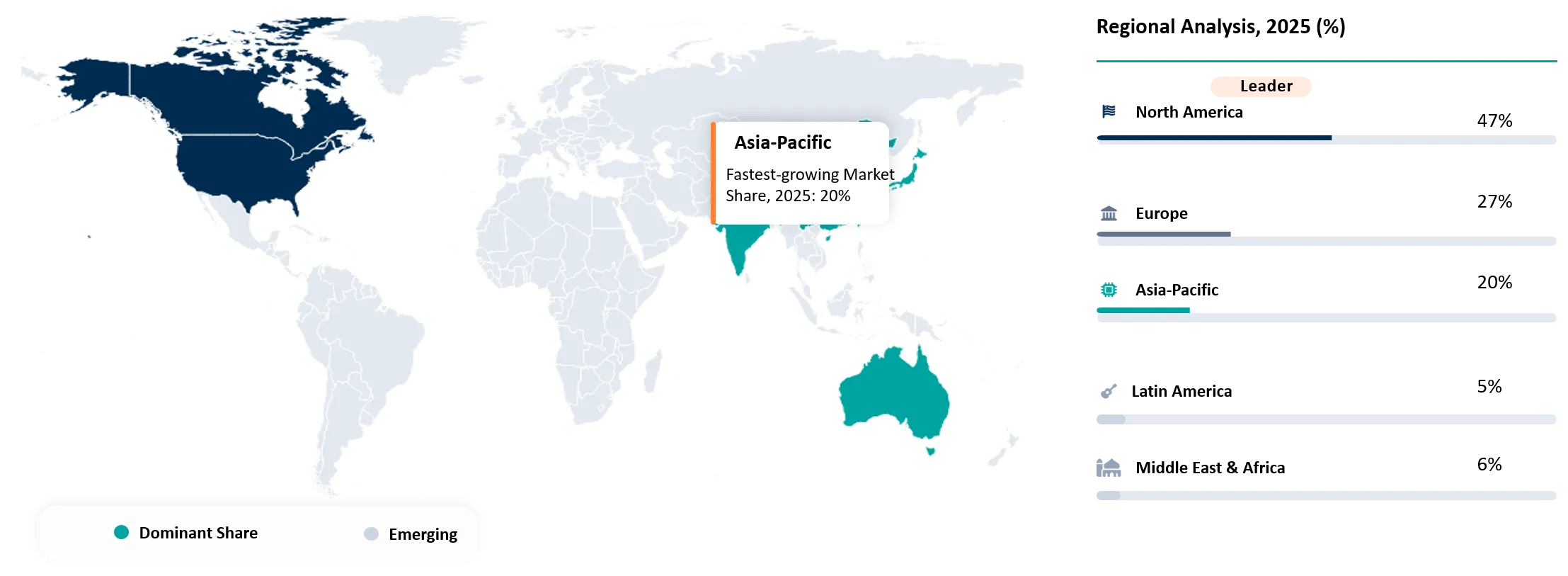
Domestic Fuel Supply Expansion and Advanced Reactor Deployment Driving North America HALEU Market Leadership
North America region dominates the HALEU (high-assay low-enriched uranium) market, representing about 47% of the global market share in 2025 because of government backing, availability of advanced reactor developers, and rapid advancements in nuclear fuel manufacturing capacity. North America’s position in the market is driven by the United States' efforts toward ensuring a stable HALEU supply chain for small modular reactors (SMRs), microreactors, and Generation IV nuclear technologies, while Canada is developing SMR projects and nuclear innovation projects. A network of reactor developers, uranium enrichment firms, fuel manufacturers, and national labs is being developed in North America.
In March 2026, Oklo Inc., a U.S.-based developer of advanced nuclear technology, and Centrus Energy Corp., a U.S.-based services provider of uranium enrichment and nuclear fuel, announced plans to work in partnership in a venture focused on HALEU deconversion services and advanced nuclear fuel cycle technologies. This joint venture will be established at Centrus's Piketon, Ohio enrichment plant and will contribute positively towards the development of the domestic US HALEU supply chain. This project will help Oklo's plans of developing a 1.2 GW power campus, whereas Aurora's advanced reactors would produce 75 MW per reactor. On the other hand, Centrus is engaged in a billion-dollar expansion of its Piketon plant to enhance the production capacity of both LEU and HALEU.
U.S. HALEU Market Trends
The U.S. holds a dominant position in the North America HALEU (High-Assay Low-Enriched Uranium) market, due to its advanced ecosystem of reactor development, a secure nuclear fuel program provided by the government, and earlier investment in HALEU enrichment and fabrication facilities. The presence of some of the most prominent advanced reactor developers, such as TerraPower, X-energy, Kairos Power, Oklo, and Westinghouse, as well as companies specializing in fuel technology, namely Centrus Energy and BWX Technologies, makes the American ecosystem one of the most developed and integrated ecosystems in terms of HALEU production and usage.
The development is an enabler towards commercializing new nuclear technologies that would need the HALEU fuel, thus increasing future requirements for HALEU production facilities in the country. In July 2026, Natura Resources LLC, a U.S.-based developer of advanced nuclear reactors, received U.S. Department of Energy (DOE) approval for the Nuclear Safety Design Agreement (NSDA) for its 1 MWt liquid-fuel molten salt reactor (LF-MSR) demonstration project at Abilene Christian University, Texas. The reactor is one of the 11 advanced reactor projects selected under the DOE Nuclear Reactor Pilot Program to accelerate next-generation nuclear technology deployment.
Canada HALEU Market Outlook
Canada has emerged as one of the key players in the North American HALEU market owing to the presence of a mature nuclear industry ecosystem, rich uranium resources, and a growing interest in the development of small modular reactors (SMRs). The mature nuclear industry present in Canada, aided by institutions like Canadian Nuclear Laboratories (CNL), Ontario Power Generation (OPG), and Atomic Energy of Canada Limited (AECL), forms a good base for the growth of HALEU requirements and supply chain management in the future.
This collaboration will help advance the commercialization of HALEU-based advanced nuclear fuels by way of carrying out fuel testing, qualifying it, and making it possible to deploy in heavy water reactors. In April 2026, Clean Core Thorium Energy (CCTE), a U.S.-based advanced nuclear fuel technology developer, and Canadian Nuclear Laboratories, a Canada-based government-owned nuclear science and technology organization, signed an agreement to manufacture demonstration irradiation bundles of ANEEL™ (Advanced Nuclear Energy for Enriched Life) fuel.
HALEU Market Competitive Landscape
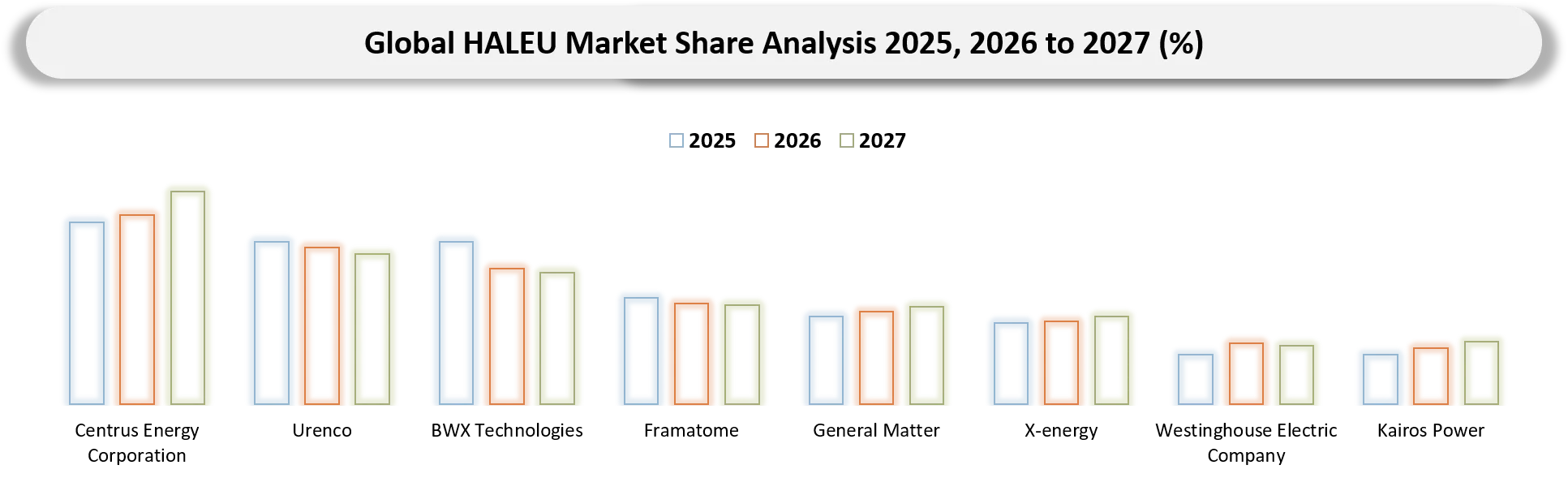
- The HALEU (High-Assay Low-Enriched Uranium) market is characterized by three key participant groups: uranium enrichment providers, advanced nuclear fuel manufacturers, and advanced reactor developers. Centrus Energy Corporation and Urenco lead the enrichment segment through HALEU production and uranium enrichment capabilities; BWX Technologies and Framatome focus on advanced nuclear fuel fabrication and fuel-cycle integration; while General Matter is emerging as a dedicated HALEU enrichment developer. X-energy, Westinghouse Electric Company, and Kairos Power represent the reactor technology segment, driving future HALEU demand through TRISO fuel, advanced fuel systems, and next-generation reactor deployments. The competitive landscape remains highly supply-chain driven, where enrichment capacity, fuel qualification capability, regulatory approvals, and long-term reactor partnerships define market competitiveness. The HALEU market remains concentrated among a limited number of companies due to the early stage of commercial production and the complexity of uranium enrichment infrastructure. Centrus Energy Corporation holds a leading position in the U.S. HALEU enrichment landscape, while Urenco leverages its global uranium enrichment infrastructure to support future HALEU production. BWX Technologies and Framatome strengthen the downstream fuel manufacturing ecosystem through advanced fuel fabrication capabilities, whereas General Matter is expanding domestic enrichment capacity. X-energy, Westinghouse Electric Company, and Kairos Power are positioned as strategic demand creators by developing advanced reactors requiring HALEU-based fuels. Currently, the top four direct HALEU supply-chain participants—Centrus Energy, Urenco, General Matter, and Framatome/BWX Technologies—are estimated to account for approximately 65–75% of the emerging HALEU ecosystem influence in 2025, reflecting the limited number of qualified suppliers and the high entry barriers associated with nuclear fuel production.
- Key players include Centrus Energy Corporation, Urenco, BWX Technologies, Framatome, General Matter, X-energy, Westinghouse Electric Company, and Kairos Power.
Key Developments
- July 2026: Clean Core Thorium Energy (CCTE), a U.S.-based advanced nuclear fuel technology developer, and Quadrant Nuclear Industries (QNI), a U.S.-based nuclear fuel cycle technology company, signed a Memorandum of Understanding (MoU) to collaborate on advancing High-Assay Low-Enriched Uranium (HALEU) fuel supply.
- May 2026: Antares, a U.S.-based advanced nuclear energy company developing compact microreactors, has signed a long-term HALEU (High-Assay Low-Enriched Uranium) enrichment services agreement with Urenco, a UK-based international uranium enrichment and nuclear fuel services provider, to secure fuel supply for its factory-produced microreactors.
- May 2026: Quantum Leap Energy LLC (QLE), a U.S.-based advanced nuclear fuel technology company and subsidiary of ASP Isotopes Inc., has entered into a Memorandum of Understanding (MoU) with a European nuclear technology company, a Europe advanced nuclear reactor developer, to collaborate on the future supply of High-Assay Low-Enriched Uranium (HALEU) for next-generation nuclear energy systems.
Key Procurement Priorities and Buyer Evaluation Criteria
- Companies that are making investments in terms of the HALEU supply chain have increasingly started favoring those companies that can offer reliable capacity for enrichment services, consistent enrichment of uranium-235, as well as assured quality of the nuclear fuel.
- The process of making purchasing decisions is being affected by the quick commercialization of SMRs, microreactors, and Gen IVs, which forces buyers to look at suppliers in terms of their ability to provide fuel in the long run, regulatory readiness, and advanced fuel qualification capability.
- Buyers consider variables like production capabilities for HALEU, efficiency of enrichment technology, knowledge about fuel fabrication, regulation compliance, nuclear material security procedures, and track record in the supply chain when choosing their HALEU vendors and fuel partners.
- Customers are beginning to judge suppliers for their capability of integration within the HALEU nuclear fuel cycle that encompasses uranium enrichment, fuel manufacturing, license procurement, and reactor development partnerships.
- Other factors that affect procurement strategies include geopolitical risks in the supply chain, mandatory domestic sourcing, government fuel security programs, and supplier diversification to avoid dependence on limited international providers of enrichment services.
Why Choose DataM?
- Advanced Nuclear Fuel Technology Analysis: Evaluates developments across the HALEU value chain, including uranium enrichment, conversion, deconversion, fuel fabrication, TRISO fuel production, and advanced reactor fuel technologies, highlighting their role in supporting SMRs, microreactors, and Generation IV reactor deployment.
- Supply Chain Performance & Market Positioning: Analyzes how key players such as Centrus Energy, Urenco, BWX Technologies, Framatome, and emerging HALEU suppliers differentiate through enrichment capacity, fuel manufacturing capabilities, regulatory readiness, and long-term supply agreements.
- Real-World Industry Evidence: Highlights HALEU adoption across advanced reactor demonstration programs, including SMRs, microreactors, high-temperature gas-cooled reactors, and advanced fuel systems, demonstrating its importance in improving reactor efficiency, extending operating cycles, and enabling next-generation nuclear technologies.
- Market Updates & Nuclear Industry Developments: Tracks critical developments such as domestic HALEU enrichment expansions, advanced fuel qualification programs, reactor commercialization milestones, government procurement initiatives, and regional nuclear fuel supply chain investments across North America, Europe, and Asia-Pacific.
- Competitive Strategies: Examines how leading companies strengthen their HALEU market position through enrichment technology development, fuel fabrication investments, strategic partnerships with reactor developers, government-supported programs, and vertical integration across the nuclear fuel ecosystem.
- Pricing & Market Access Analysis: Assesses HALEU supply dynamics based on enrichment complexity, uranium feedstock availability, production capacity, fuel fabrication requirements, regulatory compliance costs, and access through government-backed procurement programs and long-term supplier agreements.
- Market Entry & Expansion Opportunities: Identifies growth opportunities driven by SMR commercialization, clean energy transition policies, nuclear fuel security initiatives, and increasing demand for reliable low-carbon power, while outlining strategies such as domestic production expansion, advanced fuel manufacturing, and strategic partnerships to establish competitive HALEU supply chains.
Target Audience
- Advanced Nuclear Reactor Developers
- Nuclear Fuel Cycle Companies
- Uranium Mining & Nuclear Material Suppliers
- Nuclear Utilities & Power Generation Companies
- Government Agencies & Energy Departments
- Nuclear Research Institutions & National Laboratories
- Fuel Fabrication & Advanced Materials Companies


























































