


Grid Orchestration Market Size and Overview
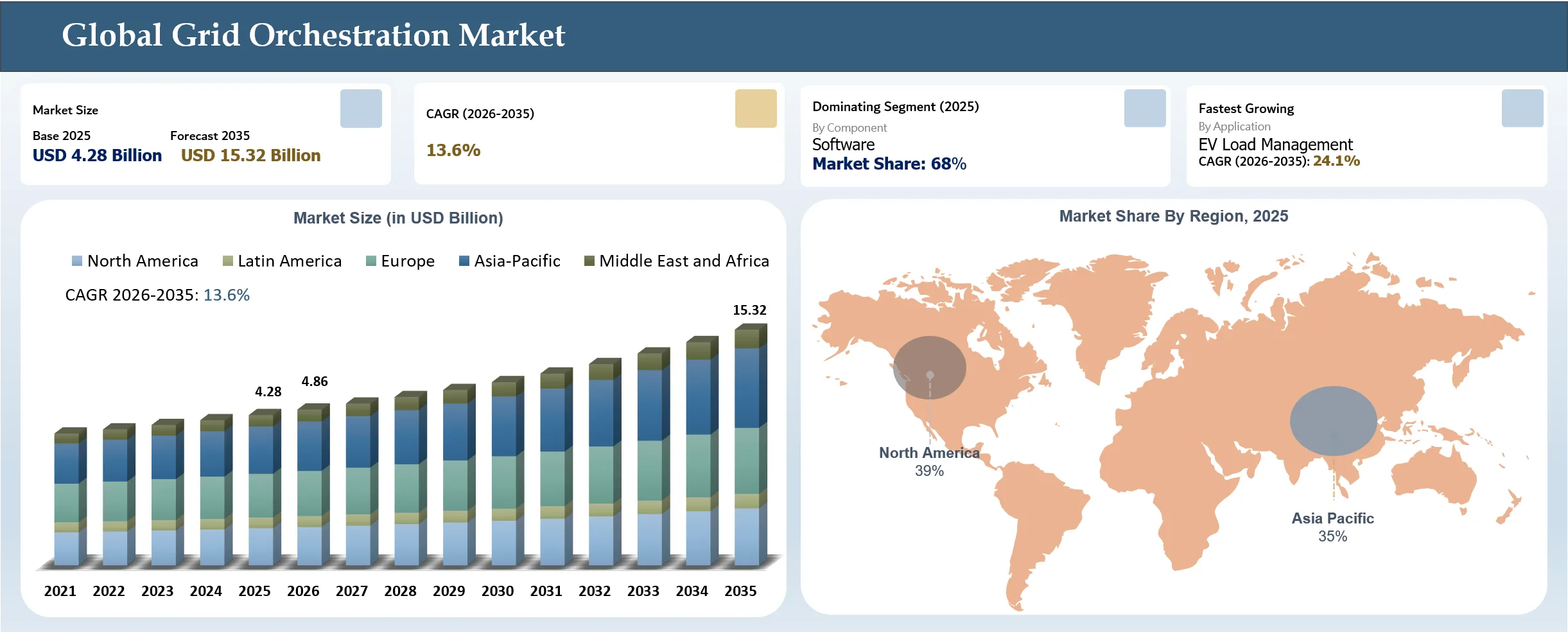
The global grid orchestration market reached USD 4.28 billion in 2025 and is expected to reach USD 15.32 billion by 2035, growing with a CAGR of 13.6% during the forecast period 2026-2035. The market expansion is being supported by the increasing deployment of digital grid technologies capable of monitoring, forecasting, optimizing, and coordinating distributed energy resources. In September 2025, Idaho National Laboratory (INL) indicated that Itron’s Grid Edge Intelligence platform operates in excess of 13 million distributed intelligence endpoints with the use of AI at the edge for localized load forecasting, voltage optimization, real-time fault detection, and better coordination with distributed energy resources. In June 2025, according to Camus Energy, flexible interconnection can speed up the process of connecting solar projects by 2–4 years, and, in the case of Rochester Gas & Electric demonstration project, there was an actual curtailment of only 0.00049% from annual energy, whereas the expected curtailment before implementing the project was 0.27%, and in the case of a model 3 MW solar project, flexible interconnection may allow tripling capacity with 1.1% total curtailment. All these trends increase the interest in orchestration platforms which coordinate renewable generation, storage, flexible loads, and grid constraints in real time, yet there are some deployment challenges, such as cybersecurity, data needs, interoperability, and integration with utility legacy systems.
The increasing use of advanced software solutions for grid control and optimization has enhanced the ability to manage grids through monitoring, asset management, and optimization in real time. In March 2025, according to Siemens, Siemens Smart Infrastructure joined hands with DB Energie for modernizing its transmission-grid operation by providing Spectrum Power 7 grid-control software that will replace the present Spectrum Power 4 software. The solution will include grid-control applications, optimization algorithms, a data warehouse, and PSS SINCAL planning software, which will help in the effective management of the privately owned DB Energie’s transmission grid that comprises around 16,000 km of traction power lines, 200 high-voltage switchgear, and 50 generator units. The system is scheduled to go live in 2028, whereas Siemens’ grid controller, which was installed in January 2025, ensures optimization of the generator units to keep voltage and frequency constant and ensure cost-effective energy delivery.
White-Space Opportunities for Real-Time Transmission Grid Orchestration and Advanced Grid Asset Optimization
In March 2026, the U.S. Department of Energy (DOE) announced approximately USD 1.9 billion under the Speed to Power through Accelerated Reconductoring and other Key Advanced Transmission Technology Upgrades (SPARK) funding opportunity to accelerate transmission-grid modernization and address rising electricity demand and resource-adequacy requirements. The highest investment focus is on advanced transmission infrastructure and grid resilience, particularly reconductoring existing transmission lines with advanced conductors and deploying Advanced Transmission Technologies (ATTs) that can increase the usable capacity of existing assets in real time; the program also supports large-scale cross-regional transmission upgrades and coordinated planning. A major opportunity exists in Smart Grid and Grid Orchestration, as Topic Area 2 specifically supports advanced technologies and software for real-time monitoring, control, and optimization of grid assets, while Topic Area 1 targets grid resilience, flexibility, and power-transfer capability and Topic Area 3 supports large-scale, multi-jurisdictional grid innovation for new large loads. The SPARK opportunity builds on the broader USD 10.5 billion GRIP program, which has been authorized over five years for grid resilience and innovation. DOE had set the full-application deadline for May 20, 2026, with selections anticipated in August 2026 and awards expected from October 2026 to January 2027; therefore, specific SPARK award recipients had not yet been announced as of August 20, 2026, and it would be inaccurate to describe individual companies as confirmed beneficiaries.
The investment creates opportunities across several areas of the grid-orchestration and advanced-transmission value chain, with companies such as GE Vernova, Siemens, Schneider Electric, Hitachi Energy, LineVision, and advanced-conductor suppliers positioned to benefit if their technologies are selected or procured by funded utilities and project developers. GE Vernova can benefit through grid equipment, electrification, transmission and digital-grid technologies; Siemens through grid-control, automation, digital-grid and optimization software; Schneider Electric through smart-grid management, automation and digital-energy solutions; Hitachi Energy through transmission equipment, grid automation, HVDC and digital-grid technologies; and LineVision through sensor-based transmission-line monitoring and asset analytics. Advanced-conductor manufacturers and reconductoring technology providers can benefit from the program's emphasis on replacing existing conductors with higher-capacity alternatives while retaining existing rights-of-way. The strongest opportunity is therefore software-enabled real-time transmission orchestration, where monitoring, control, analytics, dynamic line-rating/capacity optimization, and coordinated operation can be integrated with physical reconductoring to maximize the capacity and utilization of existing grid infrastructure.
Grid Orchestration Market Key Takeaways
- North America held the largest market share at 39.0% in 2025, supported by grid modernization, DER deployment, EV adoption, and VPP expansion.
- The software segment dominated with a 68% market share in 2025, driven by real-time monitoring, DER coordination, forecasting, automated dispatch, and grid optimization.
- Virtual power plants could provide 30–60 GW of peak load in the United States, potentially increasing to 80–160 GW by 2030, equivalent to 10–20% of peak load.
- The DOE’s USD 1.9 billion SPARK program creates significant opportunities for software-enabled grid orchestration, real-time monitoring, advanced transmission technologies, and reconductoring, positioning companies such as GE Vernova, Siemens, Schneider Electric, Hitachi Energy, and LineVision to benefit from utility-led grid modernization and capacity optimization.
Grid Orchestration Market Industry Trends and Strategic Insight
- AI-enabled orchestration is shifting grid management from rule-based control toward predictive and adaptive coordination, allowing utilities to forecast DER behavior, identify network constraints, and optimize dispatch decisions across multiple operating conditions.
- DERMS is evolving into a central coordination layer between utility control systems and grid-edge assets, connecting solar PV, BESS, EVs, flexible loads, and microgrids with distribution-grid operations.
- Virtual power plant integration is becoming increasingly important, as aggregators combine heterogeneous DERs and use software-based coordination to convert fragmented resources into controllable grid flexibility.
- Vendors should position orchestration platforms as an integrated DER coordination layer rather than standalone DERMS software, linking distribution operations, grid-edge controls, VPPs, flexibility markets, and existing utility systems.
- Interoperability should be treated as a competitive differentiator, with open interfaces, standardized communications, and vendor-neutral architectures becoming increasingly important for utilities managing mixed DER fleets.
Grid Orchestration Market Scope
| Metrics | Details | |
| 2025 Market Size | USD 4.28 Billion | |
| 2035 Projected Market Size | USD 15.32 Billion | |
| CAGR (2026-2035) | 13.6% | |
| Largest Market | North America | |
| Fastest Growing Market | Asia-Pacific | |
| By Component | Software, Hardware, Services | |
| By Grid Resource Orchestrated | Solar PV, Battery Energy Storage Systems (BESS), Electric Vehicles & EV Charging, Demand Response / Flexible Loads, Wind Energy, Microgrids, Other | |
| By Deployment | Cloud-Based, On-Premises, Hybrid | |
| By Application | Renewable Energy Integration, Grid Flexibility Management, Peak Load Management, Grid Congestion Management, Demand Response, DER Optimization, Grid Resilience & Reliability, EV Load Management, Others | |
| By End User | Electric Utilities, Distribution System Operators (DSOs), Transmission System Operators (TSOs), Commercial & Industrial Energy Consumers, Microgrid Operators, Others | |
| By Region | North America | U.S., Canada, Mexico |
| Europe | Germany, UK, France, Spain, Italy, Poland | |
| Asia-Pacific | China, India, Japan, Australia, South Korea, Indonesia, Malaysia | |
| Latin America | Brazil, Argentina | |
| Middle East and Africa | UAE, Saudi Arabia, South Africa, Israel, Türkiye | |
| Report Insights Covered | Competitive Landscape Analysis, Company Profile Analysis, Market Size, Share, Growth | |
Grid Orchestration Market Disruption Analysis
DERMS-to-Grid Orchestration Convergence Reshaping Distribution Grid Management
The disruption in the grid orchestration market is primarily associated with the convergence of DERMS solutions with the overall grid management systems. The main change in this case is the evolution from basic monitoring and dispatching of DER to optimization based on knowledge about current feeder loading, transformer capabilities, voltages, and distributed generation. In November 2025, according to the Digital Energy Security Center, the U.S. Department of Energy (DOE), DERMS installations are being deployed together with ADMS to facilitate bidirectional power flow control and automated dispatch for market optimization. One of the projects mentioned by the DOE involves integration of 42 distribution cooperatives, which serve more than 1 million people with 200 MW of controllable load and 1,000 MW of variable-energy resource installations.
Moreover, the deployment of DERMS with ADMS is causing a disruption in traditional grid structures as it helps create an integrated operational platform for transforming distributed resources into controllable grid resources. According to the Department of Energy (DOE), such systems are capable of supporting voltage and load management, faster service restoration, capital deferral, and the achievement of 5% reduction in the System Average Interruption Duration Index (SAIDI). Such a trend is compelling utility companies to transition from using separate DERM systems towards an orchestration system that would coordinate distributed resources.
Grid Orchestration Market BCG Matrix: Company Evaluation
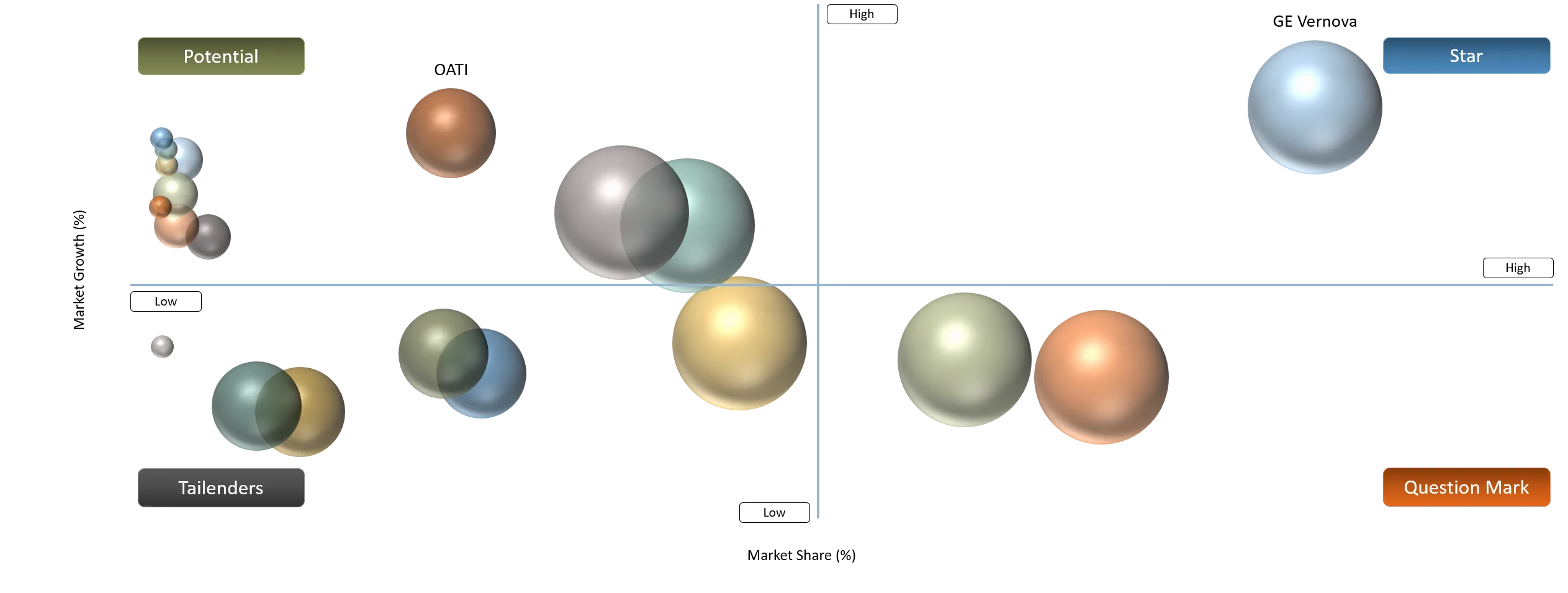
Stars include GE Vernova, Schneider Electric, Siemens, and Oracle because these companies have strong positions in grid-management software and are expanding capabilities across DERMS, grid optimization, VPP integration, and distributed-resource orchestration. Their ability to integrate DER orchestration with distribution management, forecasting, optimization, and automated grid control places them in the Star category as grid digitization and DER penetration accelerate. Question Marks include Hitachi Energy, Aspen Technology, Itron, and Generac Grid Services, which possess strong technology capabilities and are expanding their presence in DERMS, grid-edge intelligence, and VPP orchestration but face competition from larger integrated grid-software providers.
The Potential category includes OATI, Uplight, and EnergyHub, which benefit from increasing demand for DER aggregation, flexibility management, VPPs, and grid-edge coordination but have comparatively narrower market footprints than the largest integrated grid-software vendors. Their specialized positioning provides opportunities to gain market share as utilities expand VPP and flexible-resource programs. mPrest is placed in the Tailenders category because its grid-orchestration exposure is more specialized and its market presence is smaller compared with the large utility-software and grid-technology ecosystems represented by GE Vernova, Schneider Electric, Siemens, Oracle, and Hitachi Energy.
Grid Orchestration Market Dynamics
Driver Impact Analysis
| Driver | Market Growth Impact (%) | Demand Concentration | Impacted Use Case | Strategic Impact |
Growing integration of distributed energy resources (DERs) is increasing the need for coordinated control of solar, batteries, EVs, and flexible loads across the grid. | 28% | High – Distribution grids, utilities, DER aggregators | DER coordination, real-time dispatch, VPP operation, grid-edge control | Accelerates adoption of DERMS and orchestration platforms capable of coordinating heterogeneous DER portfolios against real-time grid conditions. |
Rising renewable energy penetration is driving demand for grid orchestration solutions to balance variable generation and maintain grid stability. | 22% | High – Renewable-rich grids and utility networks | Renewable integration, balancing, curtailment management, voltage control | Increases demand for forecasting, automated dispatch, storage coordination, and renewable-output optimization to manage variable generation. |
Increasing electricity demand and electrification are creating complex load patterns that require real-time coordination of generation. | 20% | High – EVs, data centers, industry, commercial buildings | Load management, peak-load management, EV charging, demand response | Expands the addressable market for orchestration platforms that coordinate flexible demand with generation, storage, and network capacity. |
Growing need for grid flexibility is accelerating adoption of orchestration platforms | 17% | High – Utilities, aggregators, system operators | Demand response, flexibility markets, ancillary services, congestion management | Shifts grid management from passive monitoring toward active coordination of flexible resources and creates new value streams for aggregated DER portfolios. |
Increasing deployment of battery energy storage systems is creating demand for orchestration technologies. | 13% | Medium-High – Utility-scale and distributed storage markets | Battery dispatch, renewable shifting, peak shaving, ancillary services | Strengthens demand for software that optimizes charging/discharging schedules and coordinates BESS with renewable generation, loads, and grid constraints. |
Growing integration of distributed energy resources (DERs) is increasing the need for coordinated control of solar, batteries, EVs, and flexible loads across the grid
The rapid integration of DERs is resulting in the growing requirement of an orchestration platform which can effectively manage the solar PV, battery storage, EV charging, and flexible electricity demand in increasingly dispersed power networks. In April 2026, according to International Energy Agency (IEA) reports that the global demand for electricity rose by 3% in 2025, while solar PV output grew by 600 TWh, the largest ever increase seen in a year for any electricity generating technology. According to IEA, sales of electric cars reached 20 million in 2025, accounting for about one in four cars manufactured in the world, thus raising the amount of flexible electricity demand.
The increasing use of distributed energy resources has resulted in greater complexity in grid management and has brought about the increased necessity of coordination and control through software means. In July 2025, according to National Renewable Energy Laboratory (NREL), virtual power plants (VPPs) use distributed energy resources like photovoltaic systems, battery energy storage, residential EVs, flexible loads in commercial and industrial sites, smart buildings, heating ventilation air conditioning controls, and electric water heaters to deliver utility-scale grid services. It is projected that VPPs will be able to supply around 30–60 GW of peak load in the United States at present, which can rise to 80–160 GW by 2030 or 10–20% of peak load. DERMS’ functions have been stated to include monitoring, aggregation, control, forecasting, scheduling, and dispatching, while Dominion Energy Virginia has launched a pilot project to coordinate solar, batteries, EVs, and smart appliances for 150 MW of clean power.
Restraint Impact Analysis
| Restraint | Drag on Market Growth (%) | Primary Impact Area | Impacted Use Case | Strategic Impact |
Lack of interoperability among diverse grid assets and orchestration platforms increases integration complexity and limits seamless coordination. | 5% | System integration and platform deployment | DER aggregation and coordinated dispatch | Increases integration time and engineering costs, encourages vendor-specific solutions, and slows large-scale deployment of grid orchestration platforms. Standardized interfaces and open communication architectures become critical for scalability. |
Dependence on accurate, real-time grid and DER data creates operational challenges where sensing, communication, or data quality infrastructure is inadequate. | 4.2% | Data acquisition, visibility and operational decision-making | Real-time DER monitoring, forecasting and dispatch | Poor-quality or delayed data reduces orchestration accuracy and limits utilities' ability to optimize distributed resources. Investment shifts toward advanced sensors, telemetry, data validation and edge intelligence before full orchestration deployment. |
High cybersecurity risks associated with interconnected DERs and grid-edge devices can discourage utilities from deploying large-scale orchestration systems. | 4.6% | Cybersecurity, operational resilience and utility risk management | Remote DER control and automated grid balancing | Utilities may delay deployments or impose additional security requirements because centralized orchestration expands the attack surface. |
Fragmented communication protocols and proprietary technologies make it difficult and costly to connect DERs, utility systems, and orchestration platforms. | 4.8% | Communications infrastructure and interoperability | Utility-to-DER communication, telemetry and automated control | Protocol translation, middleware and customized interfaces increase deployment costs and create vendor lock-in. This can constrain cross-vendor orchestration and reduce scalability. |
Lack of interoperability among diverse grid assets and orchestration platforms increases integration complexity and limits seamless coordination
The lack of interoperability among diverse grid assets and orchestration platforms is a major restraint on the expansion of the grid orchestration market since utilities now require the coordination of such components as solar PV, batteries, electric vehicle charging stations, load flexibility, microgrids, and legacy grid control systems that work under varied communication protocols and software ecosystems. The U.S. Department of Energy (DOE) noted in 2025 that orchestration of the distribution grid involves coordination among several DERs and control layers, while interoperability at device, platform, and utility system levels will be a major technical challenge.
Data standard fragmentation and incompatible digital interfaces among grid assets may affect efficient communication and coordination among different grid assets. In July 2026, the European Commission’s Directorate-General for Energy highlighted interoperability and data exchange challenges as key obstacles to digitalisation and smart energy services. In addition, the Commission pointed out the fact that different data models, formats, ontologies and interfaces within member states and their system operators pose significant difficulties in data exchange and influence coordination, optimisation of the system and innovations. Also, it is expensive to develop middleware necessary to overcome the challenge of non-compatible standards, which poses another obstacle to scalable data exchange. The document also refers to research findings stating that AI-based predictive maintenance can increase asset efficiency up to 20% and cut maintenance expenses up to 10%.
Grid Orchestration Market Segment Analysis
The global grid orchestration market is segmented based on component, grid resource orchestrated, deployment, application, end user, and region.
Software Segment Dominates the Grid Orchestration Market Due to Its Critical Role in Real-Time Grid Management and Distributed Energy Resource Coordination
The software segment is dominating the grid orchestration market by component, with a 68% market share in 2025. This can be attributed to the rising demand for smart software that can monitor, coordinate, optimize, and control the growing decentralization of the electricity grid. The fast adoption of distributed energy resources (DERs) such as photovoltaic solar panels, battery energy storage systems, electric vehicles, flexible loads, and virtual power plants has led to the growth in complexity of grid operations and, therefore, grid orchestration software. These platforms allow utilities to monitor assets in real-time, predict loads, dispatch resources, coordinate DERs, and optimize grid operations.
Leading players in grid technology are extending their software capability in order to cope with the increased level of complexity and facilitate the integrated management of distributed energy sources. In April 2026, according to the Pew Charitable Trusts, the North America VPP market will amount to 37.5 GW, and VPPs can produce peak capacity at 40%-60% lower cost than traditional resources, which further highlights the importance of the software-based aggregation and orchestration of DERs. In July 2026, Reuters noted the growing relevance of VPPs in solving the problem of growing electricity demands due to the development of data centers. In other words, the growth of the capacity of DERs and VPPs, along with significant investment in grid modernization, as well as growing needs in real-time orchestration, have supported the market share of the software sector, which amounted to 68% in 2025 and made it the key component and core intelligence layer of the Grid Orchestration Market.
Grid Orchestration Market Geographical Penetration
North America Dominates the Grid Orchestration Market Due to Accelerating Grid Modernization and Large-Scale Distributed Energy Resource Deployment
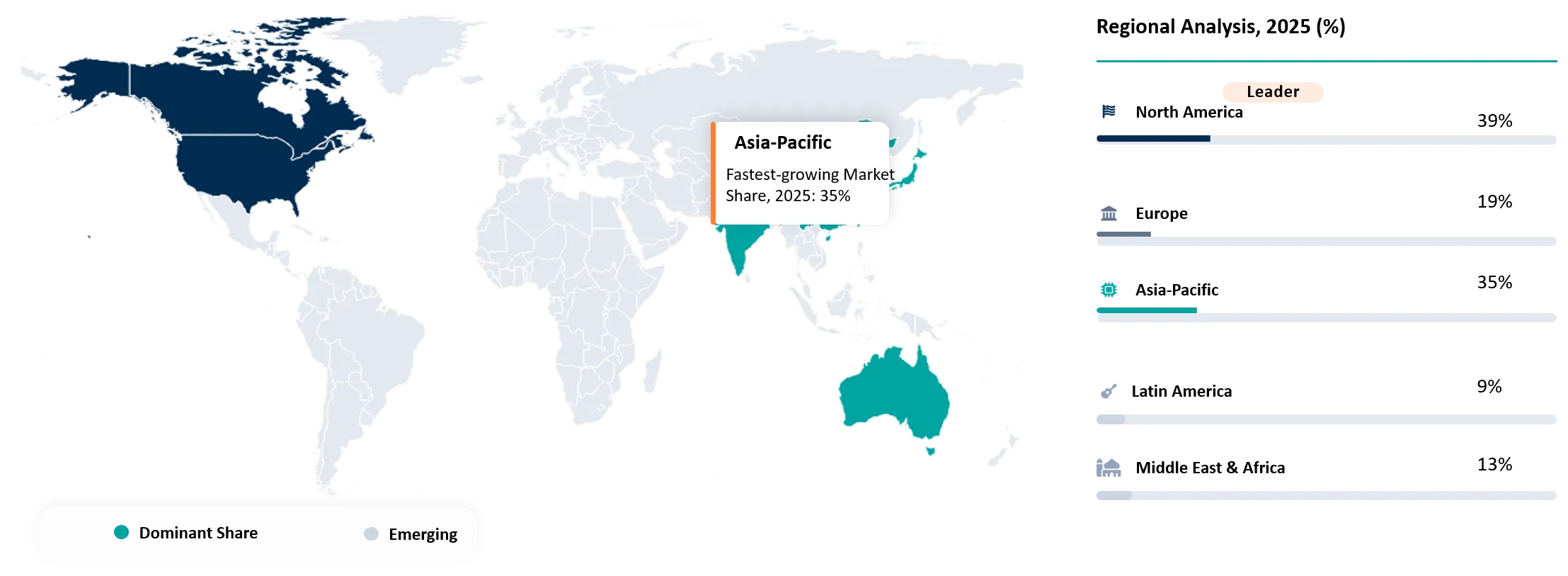
The North America region dominated the grid orchestration market, accounting for 39.0% of market share in 2025, supported by rapid grid modernization, increasing deployment of distributed energy resources (DERs), growing electricity demand, and the need to coordinate increasingly decentralized power systems. The region has become a major market for grid orchestration solutions as utilities integrate solar generation, battery storage, electric vehicles, demand response resources, and virtual power plants (VPPs) into existing transmission and distribution networks.
The increasing deployment of commercial EVs and distributed energy resources is creating greater demand for coordinated, software-driven control of flexible grid assets. In March 2026, WeaveGrid, Inc., a U.S.-based grid-orchestration software company, partnered with Synop, a U.S.-based commercial EV charging and energy-management software company, to connect Synop’s AI-enabled energy-management platform with WeaveGrid’s DISCO (Distribution-Integrated System Capacity Orchestration) software. The partnership provides utilities with greater visibility into commercial EV charging and enables flexible-load control at the grid edge, while SynopLink coordinates EV chargers, behind-the-meter battery energy storage systems (BESS), generators, and other DERs. Synop reported 800 depots and 10,000 assets under management, while WeaveGrid stated that it operates VPPs providing hundreds of megawatts of flexibility for dozens of utilities across the U.S.
U.S. Grid Orchestration Market Trends
The U.S. maintains a dominant position in the North America grid orchestration market owing to its advanced electricity infrastructure, strong utility technology ecosystem, rapid deployment of distributed energy resources (DERs), and growing requirement for real-time coordination of decentralized power assets. The increasing adoption of rooftop solar, battery storage, electric vehicles, demand-response resources, and virtual power plants (VPPs) is creating greater demand for sophisticated orchestration platforms capable of integrating and controlling these resources. The U.S. therefore continues to provide a strong environment for grid orchestration technologies as utilities seek to manage increasing grid complexity while improving reliability, flexibility, and utilization of existing infrastructure.
The growing deployment of residential battery storage is increasing the need for utilities to coordinate distributed, behind-the-meter flexibility at scale. In February 2026, WeaveGrid, Inc., a U.S.-based grid-edge orchestration software provider, partnered with SolarEdge Technologies, Inc., a U.S.-based smart-energy technology company, to expand WeaveGrid’s DISCO (Distribution-Integrated System Capacity Orchestration) platform beyond EV charging to residential battery systems. The partnership enables utilities to coordinate residential batteries as flexible behind-the-meter assets and allows SolarEdge battery customers to participate in utility programs, including virtual power plants and other grid services. SolarEdge stated that more than 500 MWh of its storage was already participating in grid services in the U.S., while WeaveGrid’s platform provides asset-level visibility and device-level control for EVs, batteries, and other flexible loads from distribution transformers through the bulk system.
Canada Grid Orchestration Market Outlook
Canada is emerging as a key player in the North America grid orchestration market, due to its ongoing grid modernization, increasing electricity demand, and growing integration of distributed energy resources (DERs), renewable generation, battery storage, electric vehicles, and flexible loads. The country's extensive clean-power generation base and geographically dispersed electricity infrastructure are increasing the need for intelligent grid-management systems capable of coordinating decentralized energy assets and balancing supply and demand in real time. Utilities are increasingly adopting digital grid technologies to improve network visibility, optimize asset utilization, integrate intermittent renewable resources, and strengthen grid reliability. The growing electrification of transportation, buildings, industry, and data centers is further increasing the importance of flexible and software-driven grid operations across Canada.
The increasing adoption of distributed energy resources is driving demand for platforms capable of aggregating, coordinating, and optimizing decentralized assets for grid and energy-market participation. In March 2025, Canadian Nexus Team Ventures Corp., a Canada-based investment issuer, announced the acquisition of the GRID Platform from Ali Saheli, a Canada-based technology entrepreneur, for CAD 725,000, structured as an all-share transaction involving 2.9 million Canadian Nexus shares. The acquired GRID Platform included blockchain-based peer-to-peer architecture, a virtual power plant (VPP) aggregation model, and AI-driven optimization algorithms, together with software, data, user relationships, revenue streams, and proprietary methodologies designed to coordinate distributed energy resources (DERs) for grid participation and energy-market operations. Canadian Nexus was based in Vancouver, British Columbia, and subsequently changed its name to Data Watts Partners Inc.
Rapid Grid Modernization and Distributed Energy Resource Integration Strengthen Asia-Pacific's Position in the Grid Orchestration Market
The Asia-Pacific is a major player in the grid orchestration market, accounting for 35% of the market in 2025, supported by rapid electricity demand growth, expanding renewable-energy deployment, grid modernization initiatives, and increasing adoption of distributed energy resources across countries such as China, India, Japan, South Korea, and Australia. The region's large-scale investments in solar and wind generation, battery energy storage, electric vehicles, and digital electricity infrastructure are increasing the complexity of power-system operations and creating greater demand for grid orchestration technologies. The combination of expanding electricity networks, growing renewable penetration, and increasing digitalization of utilities is encouraging the adoption of software platforms that can coordinate distributed assets, optimize power flows, improve grid visibility, and balance supply and demand in real time.
The rapid deployment of renewable energy is increasing demand for grid-forming storage solutions capable of coordinating flexible assets and maintaining system stability. In October 2025, NR Electric Co., Ltd., a China-based power automation and energy-storage technology company, entered into a global strategic partnership with Pacific Green Technologies Group, a UK-based energy-storage developer, to jointly expand the grid-forming energy-storage market in Australia and globally. Under the partnership, NR Electric will provide its NR-ISGrid Ideal Synchronous Grid-forming Solution, while the companies’ first project in Victoria, Australia, is planned at 250 MW/1,000 MWh. The grid-forming system is designed to strengthen grid stability and address low system strength associated with high renewable-energy penetration, while the solution can operate independently or coordinate with renewable generation, hydropower, thermal power, and synchronous condensers.
Japan Grid Orchestration Market Trends
Japan is in a strong position in the Asia-Pacific grid orchestration market owing to its advanced electricity infrastructure, established utility ecosystem, increasing deployment of distributed energy resources (DERs), and focus on integrating renewable energy with flexible grid operations. The country's transition toward a more decentralized electricity system is encouraging utilities and energy companies to adopt technologies that can aggregate and coordinate distributed generation, battery storage, controllable loads, and demand-response resources. Japan's Ministry of Economy, Trade and Industry (METI) has identified the flexible utilization of DERs and the transition toward a new electricity system that can coordinate distributed resources as an important direction for the country's power sector.
The growing deployment of grid-scale battery storage in Japan is creating demand for sophisticated aggregation and market-participation solutions. In March 2026, NUVVE JAPAN K.K., a Japan-based energy aggregation and energy-management company, signed a 20-year Merchant Aggregation Agreement with a Taiwanese corporation operating in Japan for a 2 MW/8 MWh grid-scale BESS under development in Kani City, Gifu Prefecture. As the designated aggregator, NUVVE JAPAN will provide end-to-end market integration and AI-driven dispatch optimization, with the project scheduled for grid connection in January 2027. The BESS will participate across Japan’s JEPX, Ancillary Services Market, and Capacity Market, with the company estimating annual margin potential of approximately USD 255,000–382,000 for the 2 MW asset; NUVVE JAPAN had also received a USD 70,000 subscription fee at the time of the announcement.
Grid Orchestration Market Competitive Landscape
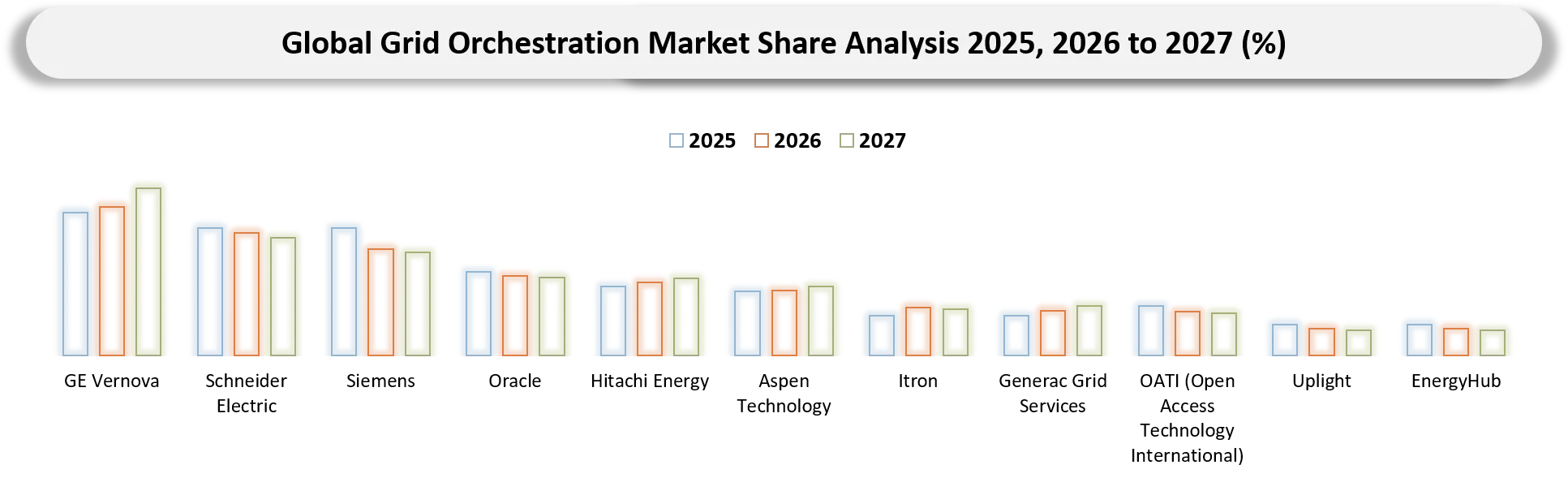
- The market is characterized by three key participant groups: integrated grid technology and automation providers, utility software and grid-management specialists, and distributed energy resource (DER) orchestration and flexibility providers. GE Vernova, Schneider Electric, Siemens, Oracle, and Hitachi Energy lead in integrated grid-management platforms covering ADMS, DERMS, grid monitoring, forecasting, optimization, and automated control; Aspen Technology and Itron focus on grid analytics, asset intelligence, optimization, and utility digitalization; while Generac Grid Services, OATI, Uplight, EnergyHub, and mPrest specialize in DER aggregation, virtual power plants, demand response, energy flexibility, and real-time orchestration. This creates a highly ecosystem-driven landscape where software capabilities, DER integration, interoperability, real-time grid visibility, automation, and utility compatibility define competitiveness.
- Key players include GE Vernova (U.S.), Schneider Electric (France), Siemens (Germany), Oracle (U.S.), Hitachi Energy (Switzerland), Aspen Technology (U.S.), Itron (U.S.), Generac Grid Services (U.S.), OATI (Open Access Technology International) (U.S.), Uplight (U.S.), EnergyHub (U.S.), and mPrest (Israel).
Key Developments
- September 2025: WeaveGrid, Inc., a U.S.-based EV managed-charging software company, partnered with Oracle Corporation, a U.S.-based enterprise cloud and utility-software company, to help electric utilities launch and scale EV programs faster and more cost-effectively.
- November 2025: Univers, a Singapore-based AI and IoT energy-technology company, partnered with SP Group, a Singapore-based energy utilities and infrastructure company, under Singapore’s Energy Market Authority (EMA) Regulatory Sandbox to pilot a Virtual Power Plant (VPP) designed for real-time management and orchestration of distributed energy resources.
- August 2026: Mitsubishi Electric Corporation, a Japan-based electrical and electronic equipment and energy-solutions company, agreed to acquire PCI Energy Solutions, legally Power Costs, Inc., a U.S.-based energy-management and optimization software company, for USD 1.4 billion, making it Mitsubishi Electric’s largest acquisition to date.
- December 2025: EnergyHub, a U.S.-based grid-edge flexibility and DER management software company, acquired Resideo Grid Services, a U.S.-based demand-response aggregation and program-management company, to strengthen its Edge Distributed Energy Resource Management System (DERMS) and accelerate virtual power plant (VPP) deployment.
- March 2026: PowerFlex, a U.S.-based clean-energy and EV-charging technology company, partnered with WeaveGrid, a U.S.-based grid-orchestration software company, to advance commercial managed charging and distributed energy resource (DER) orchestration.
- March 2025: Total Grid Orchestration (TGO) Alliance, a North America-based industry collaboration of utilities and technology companies, launched its first whitepaper alongside its second annual summit, bringing together 40 industry professionals.
Key Procurement Priorities and Buyer Evaluation Criteria
- Organizations investing in the Grid Orchestration Market increasingly prioritize suppliers that can provide scalable software platforms capable of coordinating distributed energy resources, including solar PV, battery storage, electric vehicles, flexible loads, and virtual power plants, while supporting real-time grid monitoring and control.
- The procurement decision-making process is increasingly influenced by the need for grid flexibility, DER integration, renewable-energy penetration, automation, and real-time operational visibility, as utilities and grid operators transition toward more decentralized and digitally managed electricity networks.
- Buyers consider factors such as interoperability with existing ADMS, EMS, SCADA, and DERMS platforms, real-time data processing, cybersecurity, forecasting accuracy, automated dispatch, scalability, and system reliability when evaluating grid orchestration technology providers.
Why Choose DataM?
- Technological Innovations: Explores advancements in grid orchestration technologies, including distributed energy resource management systems (DERMS), advanced distribution management systems (ADMS), virtual power plant platforms, AI-driven optimization, real-time grid analytics, and automated dispatch, enabling utilities to improve grid flexibility, visibility, reliability, and coordination.
- Product Performance & Market Positioning: Evaluates how different players deliver grid orchestration solutions based on real-time response capabilities, DER integration, forecasting accuracy, interoperability, scalability, cybersecurity, and operational efficiency, highlighting how leading companies differentiate through integrated software platforms and intelligent grid-management capabilities.
- Real-World Evidence: Highlights the deployment of grid orchestration solutions across utilities and energy networks for coordinating solar PV, battery storage, electric vehicles, demand response, virtual power plants, microgrids, and flexible loads, demonstrating their contribution to improved grid reliability, asset utilization, renewable integration, and real-time operational control.
- Market Updates & Industry Changes: Tracks key developments such as new grid orchestration platforms, DERMS deployments, utility modernization programs, VPP expansion, AI-enabled grid management, regulatory changes, and investments in digital grid infrastructure across North America, Europe, and Asia-Pacific, supporting the transition toward decentralized and intelligent electricity networks.
- Competitive Strategies: Analyzes how leading companies expand through software innovation, strategic partnerships, utility deployments, acquisitions, integrated ADMS and DERMS offerings, AI capabilities, and expansion into transmission and distribution applications to address the growing complexity of modern power systems.
- Pricing & Market Access: Explains pricing considerations based on software functionality, number of connected assets, deployment scale, integration requirements, cloud or on-premise architecture, and service models, along with market access through utilities, grid operators, energy aggregators, technology integrators, and DER platform providers.
- Market Entry & Expansion: Identifies growth opportunities driven by renewable-energy integration, distributed energy resources, virtual power plants, battery storage, electric vehicle charging, grid modernization, and increasing electricity demand, while outlining strategies such as regional utility partnerships, platform interoperability, AI-enabled optimization, and scalable software deployment to expand across global electricity markets.
Target Audience 2026
- Electric Utilities and Distribution System Operators (DSOs/DNOs)
- Transmission System Operators and Grid Operators
- Energy Retailers and Aggregators
- Renewable Energy and Distributed Energy Resource Owners
- Technology Providers and Grid Software Companies
- Government Agencies and Energy Regulators
- Industrial, Commercial, and Data Center Energy Consumers


























































