


Green Building Materials Market Size
The global green building materials market size was estimated at USD 310 billion in 2025 and is projected to reach USD 597 billion by 2033, growing at a CAGR of 8.5% from 2026 to 2033
Green materials are harmless and capable of nurturing or at least could prevent the environment from getting destroyed. Renewable rather than nonrenewable resources are used to make green building materials. An evaluation of green materials may include one or more criteria. Reclaimed materials are environmentally friendly since they may be reused and repurposed. Recyclable materials are those that can be reprocessed or repurposed from waste to be reused. Non-toxic materials promote occupant health, lower expenses, and save energy, water, and waste products. Non-toxic materials have no negative impact on the environment, the people who use them, or the people who make them.
Green Building Materials Market Scope and Summary
| Metrics | Details |
| Market CAGR | 8.5% |
| Segments Covered | By Product, By Application, By End-User, and By Region |
| Report Insights Covered | Competitive Landscape Analysis, Company Profile Analysis, Market Size, Share, Growth, Demand, Recent Developments, Mergers and acquisitions, New Product Launches, Growth Strategies, Revenue Analysis, and Other vital insights. |
| Fastest Growing Region | Asia Pacific |
| Largest Market Share | North America |
To Get a Free Sample Click here
Market Disruption
The green building materials market is being reshaped by the global push toward decarbonization and sustainable construction practices. Traditional construction materials with high carbon footprints are increasingly being replaced by low-emission alternatives such as green cement, recycled aggregates, and energy-efficient insulation. A major disruption is the integration of lifecycle assessment and carbon accounting into material selection, forcing manufacturers to innovate and reduce embodied carbon. Governments and regulatory bodies are introducing stricter building codes and incentives for green construction, accelerating market adoption. Additionally, the rise of smart buildings and energy-efficient infrastructure is driving demand for advanced materials that improve thermal performance and reduce energy consumption. Circular economy principles are also gaining traction, encouraging reuse and recycling of construction materials. The market is transitioning from cost-driven decision-making to sustainability-focused procurement, where environmental impact, energy efficiency, and compliance with green certifications define competitive advantage.
Green Building Materials Market Dynamics and Trends
The growing desire to ensure energy and process efficiency to industrial processes and increasing energy price act as major drivers for the global green building materials market. However, the negative impact of petroleum-based green building materials on the environment tends to restrict the market growth of the respective market.
Growing Environmental Awareness
The demand for environmentally sustainable and energy-efficient structures is driving the green building materials market because green building materials are less harmful to the environment, making them highly profitable. Further, these materials offer no risk to human health. As a result, there has been a progressive movement among construction companies that favor the usage of such materials. These are some of the major drivers driving the global market for green building materials.
Several governments' favorable attempts to encourage the use of green construction materials have also sparked a market shift and aided in the market growth of the respective industry. Additionally, there is also a growing awareness among construction companies and other organizations about the advantages of utilizing environmentally friendly building materials.
For instance, Elastopor and Elastopir, BASF's PU rigid foam systems for sandwich panels made from renewable raw materials and are of the same high quality as traditionally manufactured products. Furthermore, using the BASF Biomass Balance method, which replaces fossil resources with up to 100 percent renewable raw materials, a significant reduction in CO2 emissions can be accomplished.
Nonetheless, since the growing environmental awareness could provide high market growth to the green building materials market, the respective factor could be considered a major market driver.
Exorbitant production processes
High production costs connected with the manufacture of green packaging materials may dissuade small-scale enterprises from entering the market, limiting the market's growth. The green building material market has also been hampered by a lack of information regarding the use and benefits of eco-friendly materials used for construction in rural and impoverished areas. As a result, such places have low consumer demand, which has hurt the production rates of green construction materials.
Nonetheless, some governmental and private groups are working hard to encourage the sale and usage of environmentally friendly packaging among business owners and customers. Some organizations are also developing newer and more cost-effective green construction materials to significantly lessen the consequences.
Green Building Materials Market Segmentation Analysis
The global green building materials market is classified based on product, application, end-user, and region.
The commercial & industrial segment dominates the end-user segment
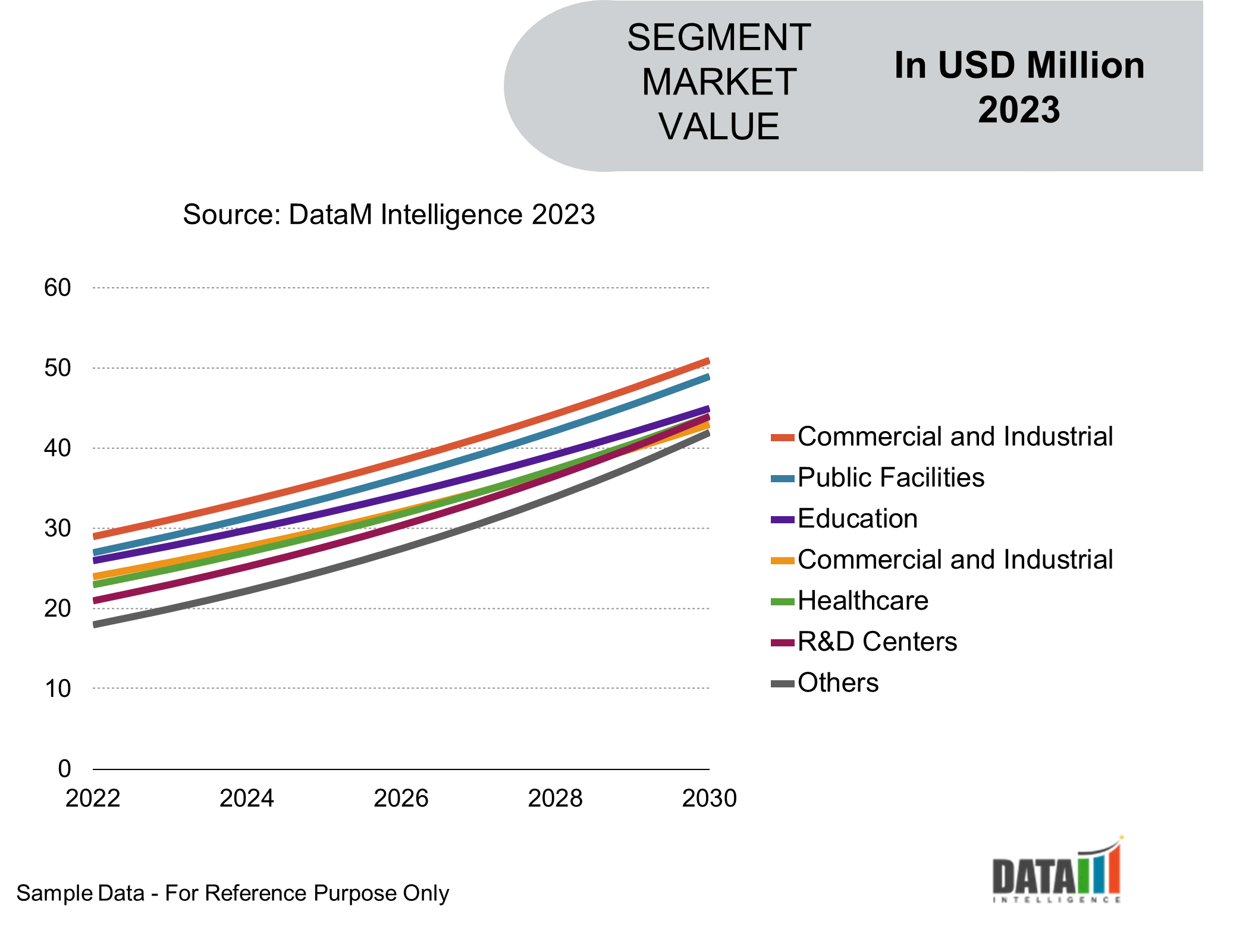
Based on end-users, the global green building materials market is segmented into public facilities, education, commercial and industrial, healthcare, R&D centers, etc.
Because of the growing awareness of environmental protection and innovative marketing strategies, the commercial and industrial segment is expected to dominate the end-user segment of the market. The increasing urbanization of the population is also a major factor that boosts the commercial and industrial segments to dominate the market. For instance, BASF SE bridged the flood risk/disaster gap by providing resilient construction solutions.
Buildings can be more durable with the company's chemistry while requiring fewer resources for maintenance. BASF Construction developed disaster Durable Solutions to demonstrate the company's long-term commitment to tackling the high costs of environmental disasters. Stronger building envelopes improve the resiliency of commercial and industrial businesses.
Green Building Materials Market Geographical Analysis
Asia-Pacific dominates the green building materials market due to the extensive growth of the construction sector in the region
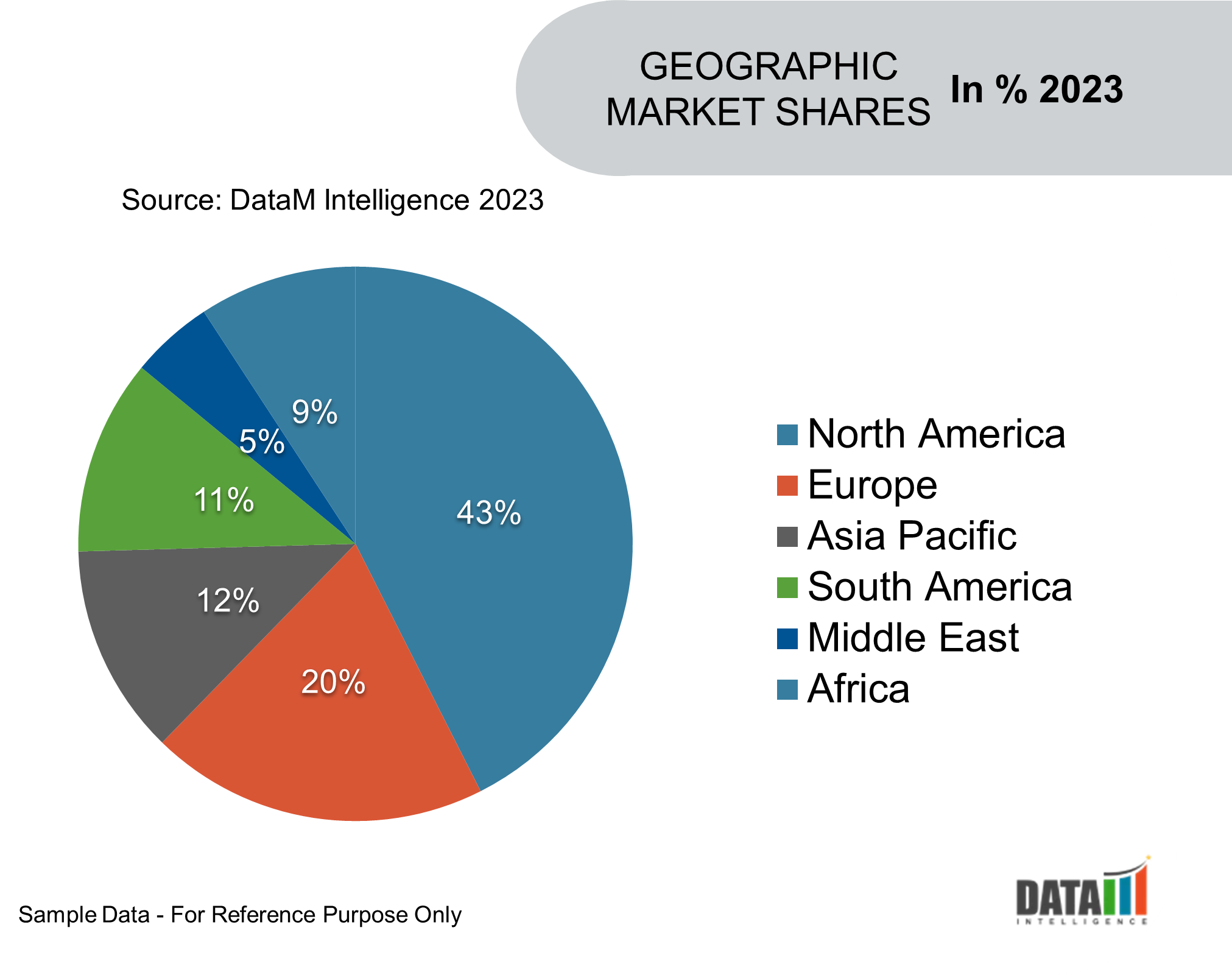
The market share of the global market is dominated by the North American area due to increased demand for residences, an increase in rehabilitation projects, and the extensive growth of the construction industry in the region.
Various government initiatives and regulatory obligations, such as Leadership in Energy and Environmental Design (LEED), Green Building Certification, green housing project subsidies, and so on, have fueled the construction of green buildings in the region.
According to the USGBC, 1,171 projects with LEED certification for green buildings in the United States with 281.05 million GSF land have been recognized by 2020.
Similarly, Toronto and Vancouver in Canada have become construction hotspots, fueled by a booming real estate market. Developers have been anticipating high returns on their investments in high-density projects.
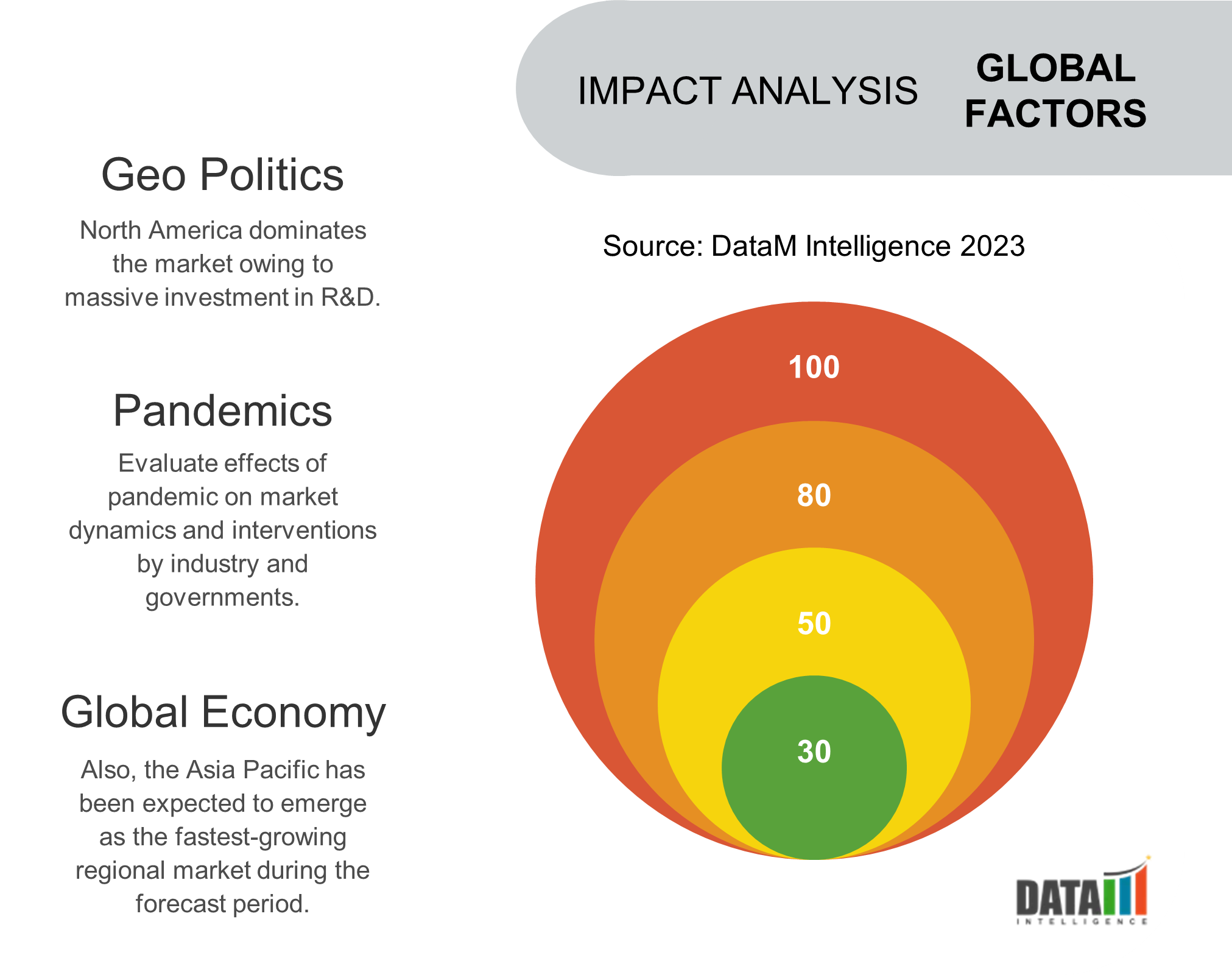
Nonetheless, as the global economy and industries return to their former self and are even showing signs of betterment than previous case scenarios, the market prospects for green building materials are expected to replace or even exceed their former glory. Growing urbanization, industrialization, and automation are also considered crucial factors expected to boost the global green building materials market.
Green Building Materials Companies and Competitive Landscape
The global green building materials market is active and dynamic in terms of the number and strength of global and local manufacturers. Due to the vast number of rivals, the market is classified as fragmented. Some of the industry's key competitors are BASF SE, Bauder Limited, Binderholz GmbH, DuPont, Kingspan Group plc, Ownes Corning, Forbo Global SA, Amvik Systems, Cemex S.A.B. de C.V., and Techno Green PVC Pvt. Ltd. To achieve competitive advantages and recognition in their respective markets, significant market stakeholders use market techniques such as mergers, acquisitions, product launches, contributions, and collaborations.
Company Profiles
Holcim Group
Holcim Group is a global leader in sustainable building materials, offering a wide range of products including low-carbon cement, aggregates, and ready-mix concrete. The company has been at the forefront of green construction through its ECOPlanet and ECOPact product lines, which significantly reduce carbon emissions compared to traditional materials. Holcim’s strategy focuses on achieving net-zero emissions, expanding circular construction practices, and increasing the use of recycled materials. Its strong commitment to sustainability and continuous innovation positions it as a key player in the green building materials market.
Saint-Gobain S.A.
Saint-Gobain is a major player in the green building materials market, specializing in insulation, glazing, and construction solutions that enhance energy efficiency. The company focuses on developing high-performance materials that reduce energy consumption in buildings while improving occupant comfort. Saint-Gobain continues to invest in R&D to create sustainable solutions aligned with global climate goals. Its strategy includes expanding its portfolio of low-carbon products and strengthening its presence in energy-efficient construction markets worldwide.
Kingspan Group
Kingspan Group is a leading provider of high-performance insulation and building envelope solutions. The company focuses on reducing energy consumption in buildings through advanced insulated panels and thermal solutions. Kingspan has been actively developing low-carbon products and improving the sustainability of its manufacturing processes. Its strategy emphasizes innovation, energy efficiency, and alignment with global sustainability standards. The company’s strong focus on environmental performance makes it a key contributor to the green building materials market.
CEMEX
CEMEX is a global building materials company that has been actively advancing sustainable construction through its Future in Action program. The company offers low-carbon cement and concrete solutions designed to reduce environmental impact. CEMEX focuses on innovation in material science, carbon capture technologies, and circular economy practices. Its strategy includes expanding its portfolio of sustainable products and achieving carbon neutrality across its operations. With a strong global presence, CEMEX plays a significant role in driving the adoption of green building materials.
BASF SE
Overview: BASF SE is a global chemical business that manufactures chemicals for various sectors. It is one of the largest publicly traded firms globally, having over 700,000 stockholders. The company's product line is divided into 13 categories: transportation, chemicals, construction, electronics & electric, energy & resources, furniture & wood, home care and cleaning, agriculture, and other industries. BASF SE has 6 global locations and 241 additional industrial sites spread across more than 90 countries and Ludwigshafen is home to more than 30 BASF SE Group businesses. The BASF SE Group generated around US$ 68,625.85 million in the year 2020.
Product Portfolio:
- Polyurethanes & engineering plastics: Regardless of whether the projects involve building residential homes or commercial properties, creating infrastructure for rapidly growing urban areas, or protecting oil and gas pipelines, the products are high-performance material solutions that are essential for the construction of stable and safe structures. BASF's extensive line of green construction materials includes everything from spray foam insulation to adhesives, binders, and sealants.
Key Development:
- In March 2026, Holcim Group expanded its portfolio of low-carbon cement and ECOPlanet solutions, targeting net-zero construction and sustainable infrastructure projects globally.
- In February 2026, Saint-Gobain S.A. launched new high-performance insulation and glazing solutions, improving energy efficiency in residential and commercial buildings.
- In January 2026, Kingspan Group introduced advanced insulated panel systems with lower embodied carbon, supporting sustainable building certifications.
- In 2025, CEMEX accelerated its Future in Action program, focusing on carbon-neutral concrete and sustainable construction solutions.
- In 2025, global construction players increased adoption of recycled materials, green cement, and energy-efficient insulation, driven by stricter environmental regulations and green building standards such as LEED and BREEAM.
Why Purchase the Report?
- To visualize the global green building materials market segmentation based on product, application, end-user, and region, as well as understand key commercial assets and players.
- Identify commercial opportunities in the global green building materials market by analyzing trends and co-development.
- Excel data sheet with numerous data points of green building materials market-level with four segments.
- PDF report consisting of cogently put together market analysis after exhaustive qualitative interviews and in-depth market study.
- Product mapping available as excel consisting of critical products of all the major market players
The global green building materials market report would provide approximately 62 tables, 63 figures, and almost 180 pages.
Target Audience
- Manufacturers/ Buyers
- Industry Investors/Investment Bankers
- Research Professionals
- Emerging Companies





























































