


Glucagon-like Peptide 1 (GLP-1) Analogues Market Overview
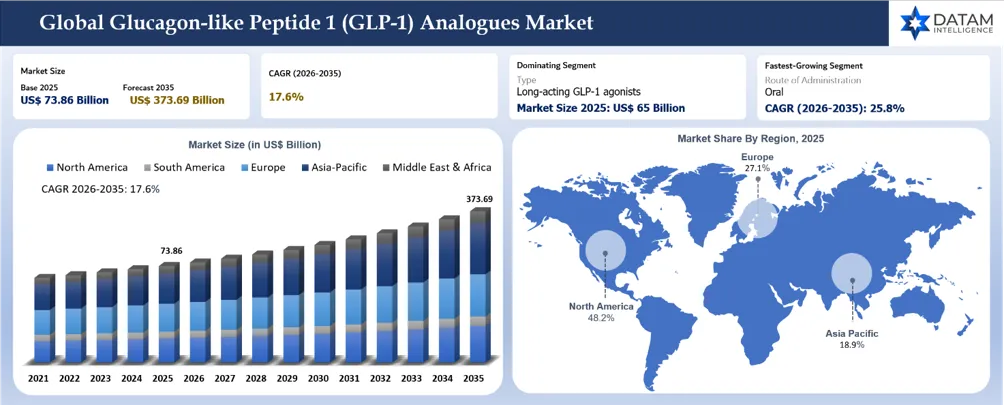
The global glucagon-like peptide 1 (GLP-1) analogues market reached US$73.86 billion in 2025 and is expected to reach US$373.69 billion by 2035, growing with a CAGR of 17.6% during the forecast period 2026-2035.
Market expansion is being driven by the transition of GLP-1 therapies from glucose-lowering medicines into integrated platforms for obesity and cardiometabolic management. Rising type 2 diabetes and obesity prevalence, broader prescribing in primary care, improving supply and evidence of cardiovascular benefits are expanding the eligible patient population. Long-acting injectable therapies currently form the market’s revenue foundation, supported by the commercial adoption of Ozempic, Wegovy, Mounjaro and Zepbound.
Obesity management represents the principal demand-growth engine as treatment moves toward chronic, outcomes-based care. Competitive differentiation increasingly depends on weight-loss efficacy, glycaemic control, cardiovascular outcomes, tolerability, dosing convenience and treatment persistence. However, restrictive reimbursement, high long-term treatment costs, gastrointestinal adverse effects and weight regain following discontinuation continue to limit sustained adoption, particularly in self-pay and cost-sensitive markets.
The next value-creation cycle will center on oral GLP-1 therapies, multi-receptor agonists, higher-dose formulations and expansion into cardiovascular, renal, liver and sleep-related indications. Sustainable leadership will require scalable manufacturing, reliable supply, broader payer coverage and evidence demonstrating reduced downstream healthcare costs. Companies combining differentiated clinical performance with convenient administration and disciplined market-access strategies will be best positioned to capture premium value.
Glucagon-like Peptide 1 (GLP-1) Analogues Market Key Takeaways
- Sustained Market Expansion Through 2035: The global GLP-1 analogues market was valued at approximately US$73.86 billion in 2025 and is projected to reach US$373.69 billion by 2035, registering a CAGR of 17.6% during 2026-2035.
- Long-Acting GLP-1 Agonists Maintain Market Leadership: Long-acting therapies represent the dominant segment, supported by once-weekly dosing, strong clinical adoption and the commercial success of semaglutide- and tirzepatide-based products. The segment was valued at an estimated US$65 billion in 2025.
- Oral GLP-1 Therapies Become the Primary Growth Engine: The oral route is projected to record the fastest growth through 2035, driven by reduced injection resistance, improved treatment convenience, scalable manufacturing and emerging oral small-molecule GLP-1 candidates.
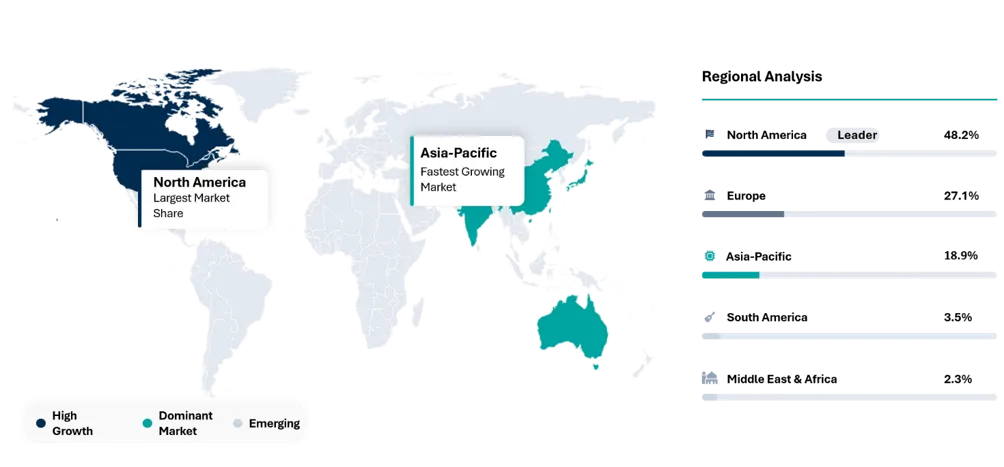
- North America Maintains Regional Dominance: North America accounts for the largest market contribution, supported by high obesity and type 2 diabetes prevalence, broad specialist prescribing, comparatively strong reimbursement and rapid uptake of premium GLP-1 therapies.
- Obesity Treatment Reshapes Competitive Strategy: Future leadership will depend on obesity-label expansion, cardiovascular and metabolic outcome evidence, payer access, manufacturing capacity and treatment persistence. Companies offering differentiated efficacy, convenient administration and sustainable pricing will be best positioned to capture market share.
Glucagon-like Peptide 1 (GLP-1) Analogues Market Scope
| Metrics | Details | |
| 2025 Market Size | US$73.86 Billion | |
| 2035 Projected Market Size | US$373.69 Billion | |
| CAGR (2026-2035) | 17.6% | |
| Largest Market | North America | |
| Fastest Growing Market | Asia-Pacific | |
| By Product | Ozempic, Trulicity, Mounjaro, Wegovy, Rybelsus, Saxenda, Victoza, Zepbound, Others | |
| By Type | Long-acting GLP-1 Agonist, Short-acting GLP-1 Agonist | |
| By Route of Administration | Subcutaneous, Oral | |
| By Application | Type 2 Diabetes Mellitus, Obesity, Others | |
| By Distribution Channel | Hospital Pharmacies, Retail Pharmacies, Online Pharmacies | |
| By Region | North America | U.S., Canada, Mexico |
| Europe | Germany, UK, France, Spain, Italy, Poland | |
| Asia-Pacific | China, India, Japan, Australia, South Korea, Indonesia, Malaysia, Singapore, Vietnam, Thailand, Philippines, Taiwan | |
| South America | Brazil, Argentina | |
| Middle East and Africa | Israel, Saudi Arabia, UAE, Turkiye, South Africa, Nigeria | |
| Report Insights Covered | Competitive Landscape Analysis, Company Profile Analysis, Market Size, Share, Growth | |
Glucagon-like Peptide 1 (GLP-1) Analogues Market White Space & Investment Opportunities
- Oral and Less-Frequent GLP-1 Therapies: Invest in oral small-molecule GLP-1 receptor agonists, long-acting injectables and monthly formulations that reduce injection burden and improve treatment persistence. Differentiation will depend on efficacy comparable with weekly injectables, convenient administration and limited food or fasting restrictions.
- Improved Gastrointestinal Tolerability: Develop molecules and dose-escalation strategies that reduce nausea, vomiting, diarrhoea and treatment discontinuation. Tissue-selective activity, optimized receptor signalling and personalized titration could improve adherence without compromising glycaemic control or weight reduction.
- Combination and Multi-Receptor Therapies: Advance dual and triple agonists targeting GLP-1, GIP, glucagon and amylin pathways. Investment opportunities exist in therapies capable of delivering greater fat-mass reduction, lean-mass preservation and broader cardiometabolic benefits than conventional GLP-1 monotherapy.
- Lean-Mass Preservation and Weight-Loss Maintenance: Develop GLP-1 combination regimens incorporating muscle-preserving agents, nutritional support and structured exercise interventions. Significant unmet need remains for preventing sarcopenia, maintaining weight loss after treatment withdrawal and limiting metabolic rebound.
- Expansion Beyond Diabetes and Obesity: Generate clinical evidence supporting GLP-1 analogues across cardiovascular disease, chronic kidney disease, MASH, obstructive sleep apnoea, osteoarthritis and other obesity-related conditions. Successful indication expansion can strengthen reimbursement and extend treatment duration.
- Affordable Access and Scalable Manufacturing: Invest in peptide synthesis capacity, alternative delivery platforms, biosimilars and cost-efficient manufacturing. Geographic expansion will require reliable supply, localized production, competitive pricing and outcome-based reimbursement models demonstrating reduced long-term cardiometabolic complications and healthcare expenditure.
Glucagon-like Peptide 1 (GLP-1) Analogues Market Buyer Decision-Making Criteria
Major Buyer Decision-Making Criteria:
- Glycaemic Control and HbA1c Reduction
- Total and Percentage Body-Weight Reduction
- Durability of Weight Loss and Glycaemic Response
- Cardiovascular and Renal Outcome Benefits
- Safety and Gastrointestinal Tolerability
- Route of Administration and Dosing Convenience
- Treatment Adherence and Persistence
- Pricing, Reimbursement and Overall Treatment Cost
- Regulatory Approval and Guideline Positioning
- Manufacturing Reliability and Geographic Availability
Glucagon-like Peptide 1 (GLP-1) Analogues Market BCG Matrix: Company Evaluation
STAR
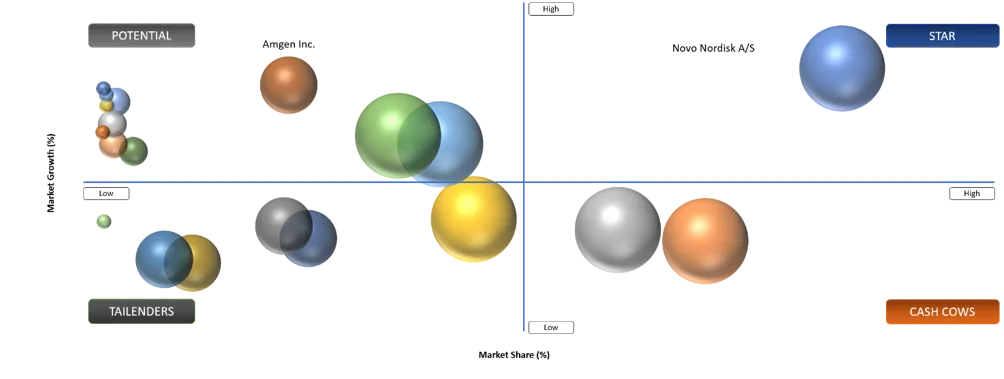
Novo Nordisk A/S and Eli Lilly and Company are positioned in the Star category based on their substantial commercial scale, approved GLP-1-based portfolios, expanding obesity indications, extensive clinical evidence and vertically integrated manufacturing capabilities. Novo Nordisk maintains its position through semaglutide brands Ozempic, Wegovy and Rybelsus, supported by the established liraglutide franchise and next-generation programs such as CagriSema and Amycretin. Eli Lilly competes through Trulicity, Mounjaro and Zepbound, while advancing orforglipron and retatrutide to strengthen its oral and multi-receptor portfolio.
Their leadership is reinforced by established prescriber relationships, extensive reimbursement engagement, global distribution and continued investment in peptide manufacturing capacity. Future positioning will depend on supply reliability, manufacturing expansion, pricing resilience, oral formulation adoption and label expansion across cardiovascular, renal, metabolic and obesity-related conditions. Companies demonstrating superior weight reduction, tolerability, treatment persistence and cardiometabolic outcomes will retain the strongest competitive position.
POTENTIAL
Amgen Inc., F. Hoffmann-La Roche Ltd, Boehringer Ingelheim International GmbH, Zealand Pharma A/S, Pfizer Inc., Viking Therapeutics, Inc., Altimmune, Inc., Structure Therapeutics Inc., Terns Pharmaceuticals, Inc., Innovent Biologics, Inc., Jiangsu Hengrui Pharmaceuticals Co., Ltd. and Sciwind Biosciences Co., Ltd. are positioned in the Potential category based on their emerging injectable, oral and multi-receptor GLP-1 portfolios.
Amgen is advancing MariTide, while Roche is developing CT-388 and oral incretin candidates. Boehringer Ingelheim and Zealand Pharma are progressing survodutide, and Viking Therapeutics is developing injectable and oral formulations of VK2735. Altimmune is advancing pemvidutide, whereas Structure Therapeutics and Terns Pharmaceuticals are developing oral small-molecule GLP-1 receptor agonists. Innovent, Hengrui and Sciwind are strengthening competition through China-led development and commercialization. Progression toward the Star category will depend on Phase III success, regulatory approvals, differentiation in efficacy and tolerability, scalable manufacturing, competitive pricing, payer acceptance and the ability to secure sustainable commercial partnerships.
Global Glucagon-like Peptide 1 (GLP-1) Analogues Market Dynamics
Driver Impact Analysis
| Driver | Market Growth Impact (%) | Demand Concentration | Impacted Use Case | Strategic Impact |
Expansion of GLP-1 Prescribing from Glycaemic Control into Chronic Obesity Management | 28.5% | Highest across the U.S. and Europe; accelerating in China and developed Asia Pacific | Long-term weight management among adults with obesity or overweight and associated comorbidities | Expands the addressable population beyond Type 2 diabetes and transforms GLP-1 analogues into long-duration cardiometabolic therapies |
Demonstrated Cardiovascular, Renal and Multimorbidity Benefits Supporting Broader Reimbursement | 23.8% | Concentrated in insured populations, specialist clinics and countries using health-technology assessments | Patients with Type 2 diabetes, cardiovascular risk, chronic kidney disease and obesity-related complications | Strengthens guideline positioning and enables manufacturers to negotiate coverage based on avoided hospitalizations and long-term complication reduction |
Clinical Migration Toward Higher-Efficacy Dual and Multi-Receptor Agonists | 19.6% | Strongest in the U.S., Europe and China, where next-generation pipelines are concentrated | Patients inadequately controlled with conventional GLP-1 monotherapy or requiring greater weight reduction | Intensifies product switching and shifts competitive differentiation toward weight-loss magnitude, durability, tolerability and lean-mass preservation |
Expansion of Peptide Manufacturing Capacity and Resolution of Supply Constraints | 16.4% | Led by North America and Europe, with localized capacity emerging across China and India | New-patient initiation, higher-dose obesity treatment and continuous prescription fulfilment | Converts previously unmet prescriptions into realized sales, reduces shortages and supports geographic expansion without compromising treatment continuity |
Driver: Expansion of GLP-1 Prescribing from Glycaemic Control into Chronic Obesity Management
GLP-1 analogues are transitioning from glucose-lowering medicines primarily prescribed for Type 2 diabetes into long-term therapies for obesity and associated cardiometabolic conditions. This shift substantially expands the treatment-eligible population by including adults without diabetes who have obesity or are overweight with cardiovascular, metabolic or mechanical complications. Strong weight-reduction outcomes, appetite control and improvements in cardiometabolic risk factors are increasing physician acceptance across endocrinology, primary care, cardiology and dedicated weight-management clinics. Broader clinical guidelines and obesity’s recognition as a chronic disease further support sustained prescribing.
Commercial growth will increasingly depend on manufacturers’ ability to convert initial demand into persistent, reimbursed treatment. Unlike short-duration weight-loss interventions, GLP-1 therapy may require extended administration to maintain outcomes, creating recurring revenue but also increasing payer scrutiny over affordability and discontinuation-related weight regain. Companies must therefore demonstrate durable weight control, reduced obesity-related complications and measurable healthcare-cost offsets. Manufacturers combining clinical differentiation with scalable supply, patient-support services and broader insurance coverage will capture the greatest benefit from this prescribing expansion.
Restraint Impact Analysis
| Restraint | Drag on Market Growth (%) | Primary Impact Area | Impacted Use Case | Strategic Impact |
Restrictive Reimbursement and High Long-Term Treatment Cost for Obesity | 24.7% | Patient access, treatment initiation and affordability | Adults seeking chronic obesity treatment without diabetes or established cardiovascular complications | Prior-authorization requirements and limited obesity-drug coverage restrict the conversion of clinical demand into reimbursed prescriptions |
Gastrointestinal Adverse Events and Dose-Escalation-Related Discontinuation | 19.8% | Treatment persistence, dose optimization and real-world effectiveness | Patients experiencing nausea, vomiting, diarrhoea or intolerance during dose escalation | Early discontinuation reduces lifetime patient value and creates demand for better-tolerated formulations and personalized titration pathways |
Weight Regain Following Treatment Withdrawal and Uncertain Long-Term Persistence | 17.6% | Durability of outcomes and payer confidence | Patients discontinuing treatment because of cost, adverse events, supply interruptions or preference | Reinforces dependence on prolonged therapy while increasing payer scrutiny regarding adherence, treatment duration and cost-effectiveness |
Peptide Manufacturing Constraints and Uneven Product Availability | 15.9% | Production scalability, prescription fulfilment and geographic expansion | New-patient initiation, higher-dose obesity treatment and continuous repeat prescriptions | Supply limitations delay treatment starts, disrupt continuity and favour companies with integrated peptide manufacturing and device-assembly capacity |
Restraint: Restrictive Reimbursement and High Long-Term Treatment Cost for Obesity
Restrictive reimbursement remains a major barrier to converting strong clinical demand for GLP-1 analogues into sustained prescription volumes. Many public and private payers provide broader coverage for Type 2 diabetes than for obesity, despite obesity’s association with cardiovascular disease, chronic kidney disease and other costly complications. Prior authorization, BMI thresholds, mandatory lifestyle interventions and requirements to document treatment failure can delay initiation. Patients without coverage face substantial out-of-pocket expenditure, limiting access primarily to higher-income populations and increasing socioeconomic disparities in obesity care.
Long-term affordability is particularly important because discontinuation frequently leads to weight regain, positioning GLP-1 therapy as ongoing chronic treatment rather than a short-term intervention. This increases cumulative expenditure for patients and budget exposure for insurers, employers and government healthcare systems. Manufacturers must demonstrate cost offsets through fewer cardiovascular events, reduced diabetes progression and lower hospitalization rates. Competitive pricing, outcomes-based agreements, patient-assistance programs and broader evidence across obesity-related comorbidities will be essential for improving reimbursement and sustaining treatment persistence.
Glucagon-like Peptide 1 (GLP-1) Analogues Market Geographical Penetration
U.S. Glucagon-like Peptide 1 (GLP-1) Analogues Market Landscape
The U.S. GLP-1 analogues market is transitioning from a diabetes-focused category into a broader chronic cardiometabolic treatment platform. Demand is concentrated around Novo Nordisk’s semaglutide franchise and Eli Lilly’s tirzepatide portfolio, supported by obesity indications, cardiovascular-risk reduction and growing use across endocrinology, cardiology and primary care. Supply conditions improved materially in February 2025, when the FDA declared the semaglutide shortage resolved after more than two years, indicating that branded production could meet current national demand. However, pharmacy-level disruptions may persist as inventory moves through the distribution system.
Competition during 2026 is increasingly shaped by reimbursement, treatment persistence, tolerability and delivery convenience rather than weight-loss efficacy alone. The end of shortage-based compounding narrowed the transition windows for many compounders to approximately 60–90 days, strengthening the position of FDA-approved brands while increasing affordability pressure for self-paying patients. Market expansion will depend on employer and insurer coverage, scalable manufacturing and evidence that sustained GLP-1 treatment reduces cardiovascular, renal and obesity-related costs. Oral therapies, extended-interval formulations and multi-receptor agonists represent the principal competitive threats to established weekly injectables.
Japan Glucagon-like Peptide 1 (GLP-1) Analogues Market Outlook
Japan’s GLP-1 analogues market is moving beyond Type 2 diabetes toward medically supervised obesity management, although adoption remains more controlled than in the U.S. Demand is supported by an ageing population, increasing metabolic-risk burden and physician preference for therapies delivering glycaemic and weight-management benefits. Competition strengthened when tirzepatide-based Zepbound launched on April 11, 2025, following its December 2024 approval, adding a GIP and GLP-1 option alongside semaglutide-based Wegovy. Tanabe Pharma
Commercial expansion will depend heavily on Japan’s strict appropriate-use requirements, specialist prescribing pathways and reimbursement controls. Obesity pharmacotherapy is generally directed toward clinically defined high-risk patients, including individuals with a BMI of at least 27 kg/m² and multiple obesity-related complications or a BMI of at least 35 kg/m². This limits discretionary use but supports evidence-based treatment among patients with substantial unmet need. Competitive differentiation will centre on weight reduction, gastrointestinal tolerability, cardiovascular evidence, dosing convenience and treatment persistence. Novo Nordisk and Eli Lilly remain central competitors, while oral GLP-1 therapies and domestic development capabilities could reshape access. Long-term growth will require broader physician education, reliable supply and real-world evidence demonstrating reduced cardiometabolic complications and healthcare utilization.
Glucagon-like Peptide 1 (GLP-1) Analogues Market Competitive Landscape
- The GLP-1 analogues market is highly consolidated at the commercial level, with Novo Nordisk and Eli Lilly maintaining leadership through extensive diabetes and obesity franchises, large-scale peptide manufacturing capabilities, clinical evidence and established prescriber access. Competition is increasingly determined by weight-loss efficacy, cardiometabolic benefits, dosing convenience, tolerability, reimbursement coverage and supply reliability. Novo Nordisk continues to leverage semaglutide-based products, while Eli Lilly is expanding through tirzepatide and next-generation assets including orforglipron and retatrutide. Sanofi and AstraZeneca retain positions through established GLP-1 therapies and metabolic portfolios, although competitive momentum is shifting toward newer-generation molecules.
- The development landscape is considerably more fragmented, with Roche, Amgen, Boehringer Ingelheim, Zealand Pharma, Pfizer, Viking Therapeutics, Innovent Biologics and Structure Therapeutics advancing differentiated candidates. Pipeline strategies increasingly emphasize oral small-molecule formulations, extended dosing intervals, combination therapies and dual or triple receptor activity involving GLP-1, GIP and glucagon pathways. Chinese developers, including Hengrui, Sciwind and Innovent, are strengthening competition through clinical innovation and regional commercialization. Future positioning will depend on successful late-stage development, manufacturing scalability, safety differentiation, broader cardiometabolic indications and the ability to secure payer access at sustainable treatment costs.
Key Companies of Glucagon-like Peptide 1 (GLP-1) Analogues Market
- Novo Nordisk A/S (Denmark)
- Eli Lilly and Company (United States)
- AstraZeneca plc (United Kingdom)
- Sanofi S.A. (France)
- Boehringer Ingelheim International GmbH (Germany)
- Zealand Pharma A/S (Denmark)
- F. Hoffmann-La Roche Ltd (Switzerland)
- Amgen Inc. (United States)
- Pfizer Inc. (United States)
- Innovent Biologics, Inc. (China)
- Jiangsu Hengrui Pharmaceuticals Co., Ltd. (China)
- Sciwind Biosciences Co., Ltd. (China)
- Viking Therapeutics, Inc. (United States)
- Altimmune, Inc. (United States)
- Structure Therapeutics Inc. (United States)
- Terns Pharmaceuticals, Inc. (United States)
- Hanmi Pharmaceutical Co., Ltd. (South Korea)
- Kailera Therapeutics, Inc. (United States)
- Sun Pharmaceutical Industries Limited (India)
- Biocon Limited (India)
Glucagon-like Peptide 1 (GLP-1) Analogues Market Recent Developments
- September 2026: China approved Novo Nordisk’s Wegovy for metabolic dysfunction-associated steatohepatitis, making it the country’s first GLP-1 receptor agonist approved for MASH and expanding semaglutide beyond obesity and cardiovascular-risk management.
- September 2026: Novo Nordisk reported positive Phase III STEP Young results for once-weekly semaglutide in children aged 6 to below 12 years. After 68 weeks, 40.4% of treatment-adherent participants were no longer classified as having obesity.
- September 2026: Aspen Pharmacare disclosed plans to expand Mounjaro into Nigeria and Kenya, subject to registration, after tirzepatide gained strong commercial traction in South Africa. This supports broader GLP-1 access across underserved African markets.
- August 2026: China’s drug regulator accepted Novo Nordisk’s application for oral Wegovy for weight management, advancing competition in non-injectable GLP-1 therapy within one of the largest addressable obesity populations.
- July 2026: Viking Therapeutics reported that its Phase III VANQUISH-1 and VANQUISH-2 obesity trials evaluating subcutaneous VK2735 were fully enrolled and advancing. The company also continued preparations for Phase III development of oral VK2735.
- July 2026: The European Commission approved Novo Nordisk’s once-daily oral Wegovy for adult weight management, establishing the first oral GLP-1 obesity therapy authorized across the European Union.
What DATAM Uniquely Provides
- In-depth segmentation of the GLP-1 analogues market by product, molecule type, receptor architecture, duration of action, route of administration, dosing frequency, application, patient group, care setting, distribution channel and region.
- Competitive analysis of leading GLP-1 analogue companies covering HbA1c reduction, weight-loss efficacy, response durability, cardiometabolic benefits, safety, gastrointestinal tolerability, mechanism of action, dosing convenience, pipeline maturity, manufacturing capacity and commercialization strategy.
- Comprehensive assessment of diagnosed and treatment-eligible populations, including patients with Type 2 diabetes, obesity, overweight with comorbidities, cardiovascular risk, chronic kidney disease, MASH and treatment-refractory metabolic disease, alongside previous treatment status, BMI classification, age, comorbidities, unmet clinical needs and regional access dynamics.
- Actionable intelligence on pharmaceutical pricing, reimbursement, regulatory pathways, prescribing requirements, treatment persistence, dose escalation, adverse-event management, patient-support programs, supply constraints, market-access barriers, licensing activity, strategic partnerships and investment opportunities.
- Analyst forecasts highlighting high-growth molecules, commercially attractive patient populations, regional expansion opportunities and emerging competitive threats across oral GLP-1 agonists, dual and triple receptor agonists, extended-interval injectables, biosimilars, combination therapies and lean-mass-preserving treatment approaches.



























































