


GLP-1 Functional Beverages Market Size and Overview
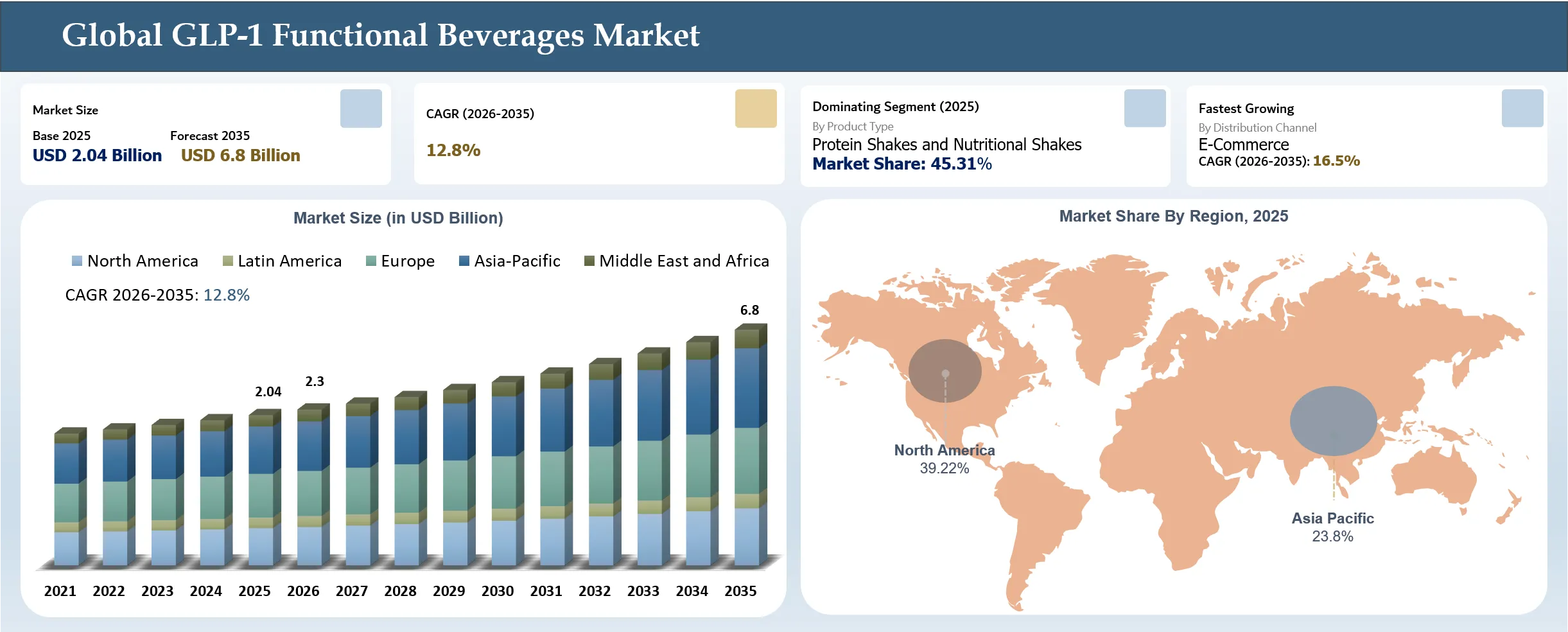
The global GLP-1 functional beverages market Size reached USD 2.04 billion in 2025 and is expected to reach USD 6.8 billion by 2035, growing with a CAGR of 12.8% during the forecast period 2026-2035. The market is witnessing rapid development due to the rapid expansion of GLP-1 medication use and the resulting shift toward nutrient-dense beverages that can address reduced calorie intake, protein requirements, hydration, and micronutrient consumption. In November 2025, according to Just Drinks, GLP-1 users consume up to 30% fewer calories, and at least 5% of American adults use GLP-1 medication, and at least 12% have tried it at least once. Furthermore, GlobalData predicted that by 2035 GLP-1 medications would be used by ten times more consumers, creating an enormous potential consumer base for functional beverages.
Also, sales of food and beverages targeted at GLP-1 in the U.S. market are expected to exceed at least USD 2.7 billion by 2027. High-protein nutritional beverages, electrolyte beverages, fiber-fortified drinks, and smaller nutrient-dense beverages became popular, as there are products launched by Nestlé and Danone that were formulated specifically for GLP-1 users. However, there is no clinically significant difference between GLP-1 beverages and regular functional beverages, regulatory issues related to GLP-1 claims on the products, and the difficulty in formulating highly nutrient-dense beverages in a smaller, palatable format.
The growing demand for protein-enriched and fiber-enriched drinks is motivating firms to manufacture functional drinks that meet the nutritional requirements of GLP-1 patients. In January 2026, according to Food Ingredients First, Beyond Meat expanded into the functional beverage category with the launch of Beyond Immerse, a plant-based functional ready-to-drink beverage in two formulas-one with 10 grams of protein and 60 calories and another with 20 g of protein and 100 calories.
The beverage offers 7 g of fiber along with antioxidants and electrolytes and is positioned with the trends of protein, gut health, and GLP-1-friendly nutrition. The article notes that around 60% of consumers globally are consciously adding more protein to their diets, whereas functional beverage introductions with gut or digestive health benefits rose by 42% from 2023-2024 to 2024-2025.
White-Space Opportunities for Nutrient-Dense and Muscle-Supporting GLP-1 Functional Beverages
In February 2026, the UK research funding initiative “Diet and Health: Collaborative Research and Development Grants” identified a significant opportunity for the GLP-1 Functional Beverages Market by prioritizing the development of nutritionally enhanced food and drink products for populations at higher risk of malnutrition and muscle loss, including people using GLP-1 drugs. The highest investment opportunity is directed toward nutritional improvement and biofortification, as projects can receive up to £800,000 (USD1.08 million) in Full Economic Cost (FEC) funding for up to 36 months, with eligible industry partners required to contribute 30% of the project FEC through cash or in-kind support.
Key investment areas include the development of beverages enriched with proteins, fibres, folates, iron, vitamins, and omega-3, creating substantial opportunities for high-protein and micronutrient-fortified GLP-1 beverages designed to address reduced food intake and muscle maintenance concerns. Other investment areas include food and beverage reformulation and processing technologies to improve nutritional value, research into the health effects of food processing, additives and emulsifiers, improving the affordability and accessibility of nutritious products, consumer dietary behaviour research, and sustainable innovations that reduce food waste and strengthen supply chain resilience.
The funding initiative is expected to create opportunities primarily for UK-based food and beverage manufacturers, functional ingredient suppliers, nutrition companies, and research institutions. In the protein ingredients and formulation area, companies such as Arla Foods Ingredients, Kerry Group, Glanbia Nutritionals, DSM-Firmenich, and Myprotein could potentially benefit through the development of high-protein beverages designed to support muscle maintenance among GLP-1 users. In the dietary fibre and gut health area, BENEO, Ingredion, Tate & Lyle, Nexira, and Cargill could find opportunities in developing fibre-enriched beverage formulations that support digestive health and nutritional intake.
Companies specializing in vitamins, minerals, and micronutrient fortification, including DSM-Firmenich, Balchem, Prinova, SternVitamin, and Lonza, could benefit from the growing need for beverages formulated to address potential nutrient deficiencies associated with reduced food intake. In the omega-3 and bioactive nutrition area, companies such as GC Rieber VivoMega, BASF, Aker BioMarine, KD Pharma, and Epax could potentially support the development of beverages containing targeted nutritional ingredients. Importantly, these companies are potential beneficiaries, with the strongest opportunity centered on developing high-protein, fibre-enriched, vitamin-, mineral-, and bioactive-fortified functional beverages specifically designed to address malnutrition and muscle-loss risks among GLP-1 medication users.
GLP-1 Functional Beverages Market Key Takeaways
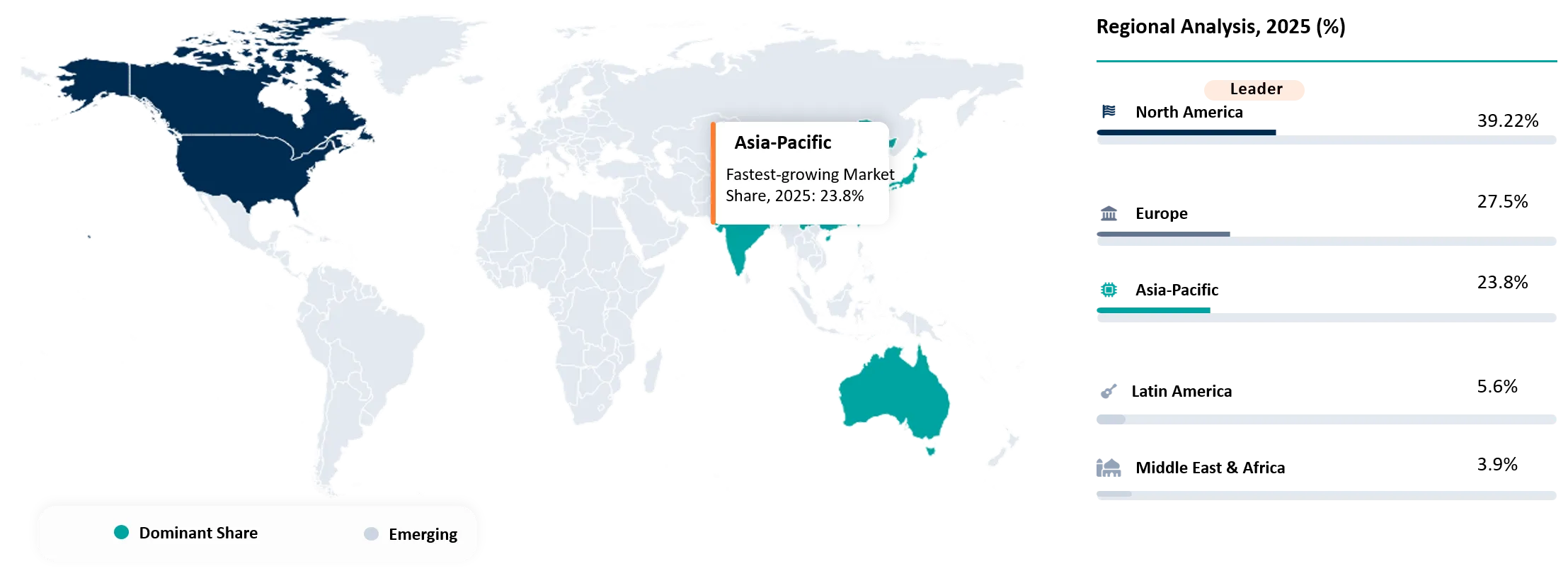
- North America led the global market in 2025, accounting for a 39.22% revenue share. The Asia-Pacific region formed another major market block, capturing an estimated 23.8% market share in 2025.
- Protein shakes and nutritional shakes held the largest market share in 2025 at 45.31% of the overall functional beverage market. The segment's growth is driven by joint medical advisories recommending high-protein drinks for weight management.
- As of July 2026, 11% of U.S. adults (approx. 40 million people) took GLP-1 drugs for weight loss, and 15% had used them previously. Clinical trials show these medications yield average weight loss ranging from 5% to 18%.
- A UK funding initiative offers up to £800,000 (USD 1.08 million) in Full Economic Cost grants for biofortified food and drink projects. Eligible industry partners must cover 30% of the project's FEC through cash or in-kind support over 36 months.
GLP-1 Functional Beverages Market Industry Trends and Strategic Insight
- The market is shifting from general “GLP-1-friendly” branding toward purpose-built companion beverages designed around specific treatment-related needs such as protein adequacy, hydration, digestive comfort, and micronutrient support.
- High-protein formulations are increasingly being designed for muscle preservation rather than conventional weight-loss positioning, creating a distinct opportunity for lighter and easier-to-consume protein beverages.
- Functional hydration is becoming a strategic entry point, with electrolyte beverages evolving beyond sports recovery toward daily hydration solutions tailored to reduced food and fluid intake among GLP-1 users.
- Ingredient innovation is expanding beyond conventional whey protein toward functional fibers, postbiotics, botanical bioactive, and metabolic-support ingredients that can address multiple nutritional consequences of reduced food consumption.
- Ready-to-drink shakes, hydration beverages, and small-format functional drinks are gaining strategic importance because they fit reduced meal frequency and allow consumers to integrate nutrition support into daily routines without consuming a full meal.
GLP-1 Functional Beverages Market Scope
| Metrics | Details | |
| 2025 Market Size | USD 2.04 Billion | |
| 2035 Projected Market Size | USD 6.8 Billion | |
| CAGR (2026-2035) | 12.8% | |
| Largest Market | North America | |
| Fastest Growing Market | Asia-Pacific | |
| By Product Type | Protein Shakes and Nutritional Shakes, Electrolyte and Hydration Drinks, Functional Water and Enhanced Water, Meal Replacement Beverages, Fibre-Enriched Beverages, Functional Wellness Beverages, Others | |
| By Functional Benefit | Muscle Preservation Support, Hydration & Electrolyte Replenishment, Digestive Health Support, Nutrient Deficiency Support, Satiety & Metabolic Support, Weight Maintenance Support, Metabolic Health, Others | |
| By Beverage Format | Ready-to-Drink (RTD), Powdered Drink Mixes, Liquid Concentrates, Shots | |
| By Calorie Profile | Very Low-Calorie, Low-Calorie, Moderate-Calorie, Meal-Level Calorie | |
| By Key Ingredient | Protein, Dietary Fiber, Prebiotics, Probiotics, Postbiotics, Electrolytes, Amino Acids, Vitamins & Minerals, Botanical Ingredients | |
| By Distribution Channel | Pharmacies & Drug Stores, Supermarkets & Hypermarkets, E-Commerce, Convenience Stores, Healthcare Facilities, Fitness Centers, Others | |
| By Region | North America | U.S., Canada, Mexico |
| Europe | Germany, UK, France, Spain, Italy, Poland, Netherlands, Switzerland and Rest of Europe | |
| Asia-Pacific | China, India, Japan, Australia, South Korea, Indonesia, Malaysia and Rest of Asia-Pacific | |
| Latin America | Brazil, Argentina and Rest of Latin America | |
| Middle East and Africa | UAE, Saudi Arabia, South Africa, Israel, Türkiye and Rest of Middle East and Africa | |
| Report Insights Covered | Competitive Landscape Analysis, Company Profile Analysis, Market Size, Share, Growth | |
GLP-1 Functional Beverages Market Disruption Analysis
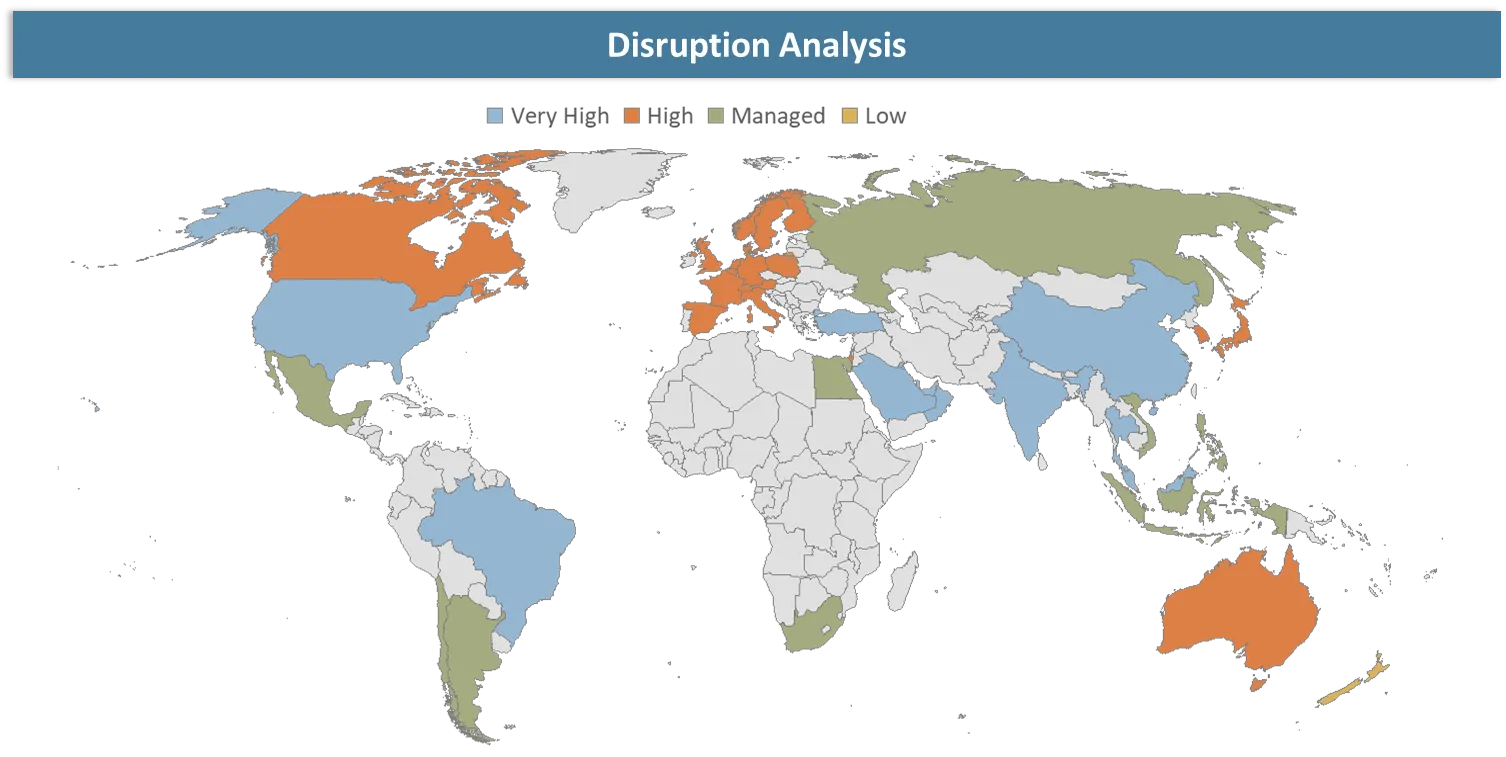
Shift from Conventional Calorie-Driven Beverage Consumption Toward Nutrient-Dense Functional Alternatives Reshaping the Beverage Landscape
The disruption in the GLP-1 functional beverages market is primarily associated with the rapid adoption of GLP-1 medications, which are causing disruption in consumption behavior through their appetite-suppressing properties and calorie restriction. With consumers consuming lower volumes of food and beverages, the traditional categories of beverages that are high in calories and sugar are experiencing changing consumption patterns, and there is a growing preference for functional beverages that can deliver nutrition in reduced serving sizes. The structural shift is compelling beverage producers to re-evaluate their portfolio design based on consumption volume, in order to develop more nutrient-packed functional formulas.
Also, the disruption is contributing to product reformulation and specific beverage innovation amid the increasing number of consumers taking GLP-1. In March 2026, according to GlobalData, 27% of consumers around the world expressed willingness to consume new weight-loss medications, while one out of eight U.S. adults consumes a GLP-1 drug. Furthermore, global sales of GLP-1 drugs are expected to rise from USD 76.0 billion in 2025 to USD 161.9 billion in 2031. Hence, there is an emergence of a growing consumer ecosystem that beverage companies need to cater to. In light of that, beverage companies are moving towards developing small-sized beverages that include protein for muscle preservation, fiber for digestive health, electrolytes & hydration, micronutrients, and reduced sugar & fat beverages.
GLP-1 Functional Beverages Market BCG Matrix: Company Evaluation
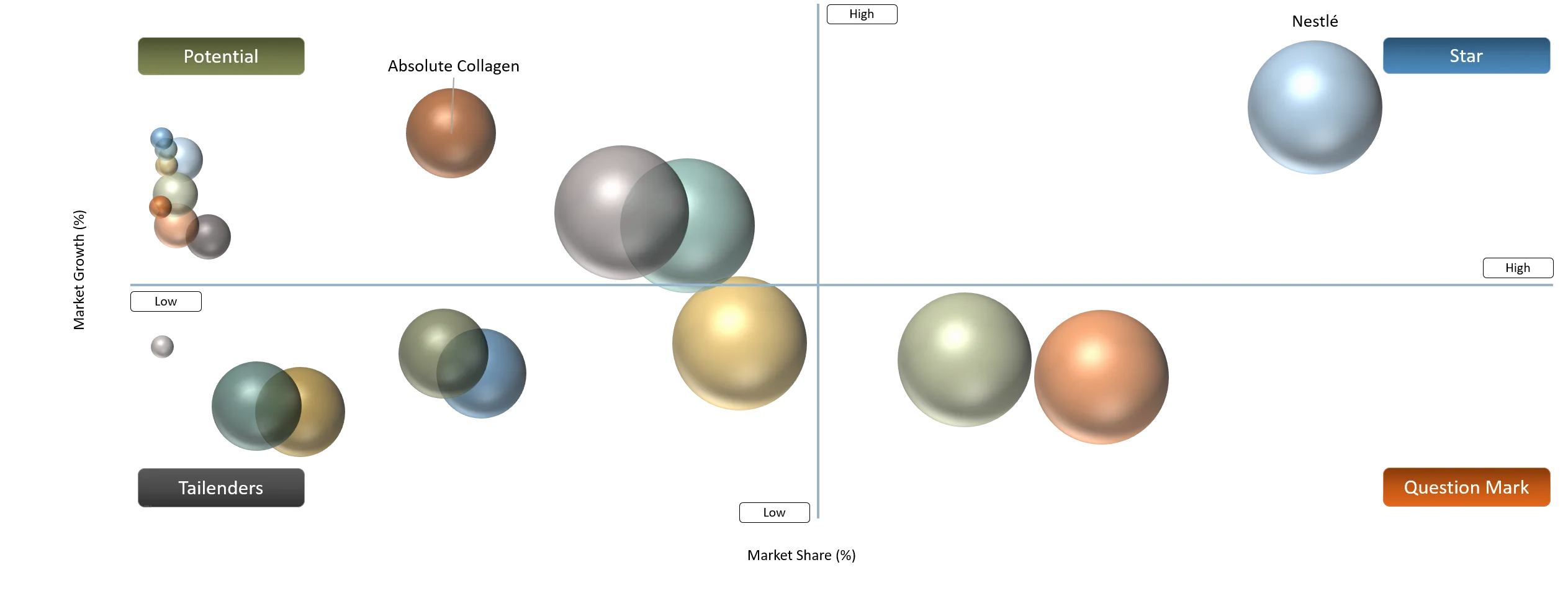
Stars include Nestlé and Kate Farms because both companies have strong capabilities in clinical and specialized nutrition and are actively positioned to address the emerging nutritional requirements of GLP-1 users, particularly protein intake, nutrient density, and muscle preservation. Companies such as Cambridge Nutritional Foods, Langer Juice Company, Shaklee, and Robard Corporation are placed in the Question Mark category because they are actively developing or positioning nutritional and functional beverage products for the emerging GLP-1 consumer segment but operate in a market that is still developing and lacks established product standardization.
The category of Potential includes todo, Absolute Collagen, and Smoothie King, which can benefit from the expanding demand for convenient, nutrient-dense, and protein-oriented beverages among GLP-1 users but have comparatively limited dedicated GLP-1 beverage portfolios or primarily operate in adjacent nutrition and foodservice categories. Archer Daniels Midland (ADM) belongs to the Tailenders category because the company primarily operates as a B2B ingredient and formulation solutions provider rather than a direct manufacturer of consumer-facing GLP-1 functional beverages.
GLP-1 Functional Beverages Market Dynamics
Driver Impact Analysis
| Driver | Market Growth Impact (%) | Demand Concentration | Impacted Use Case | Strategic Impact |
The rapid expansion of the GLP-1 medication user base is creating demand for beverages specifically formulated. | 35% | High – Active GLP-1 medication users and weight-management consumers | Protein shakes, nutrient-dense RTDs, electrolyte beverages, and fortified drinks | Encourages beverage companies to establish dedicated GLP-1 companion portfolios and develop products specifically around reduced appetite and nutritional adequacy. |
Concerns over muscle loss and inadequate protein intake among GLP-1 users are accelerating demand for high-protein ready-to-drink beverages. | 30% | High – Consumers undergoing rapid weight loss and long-term GLP-1 treatment | High-protein RTD shakes, whey- and milk-protein drinks, and amino-acid-fortified beverages | Shifts protein beverages from conventional sports nutrition toward muscle-preservation and medically adjacent nutrition positioning. |
GLP-1-related gastrointestinal side effects, including nausea and reduced food intake, are driving innovation in easy-to-consume beverages. | 25% | Medium-High – New users and consumers experiencing treatment-related tolerability issues | Small-format nutritional drinks, electrolyte beverages, low-volume RTDs, and digestive-support beverages | Increases the importance of portion size, texture, flavor tolerance, digestive comfort, and nutrient density in beverage formulation. |
The emergence of dedicated “GLP-1 companion nutrition” products is encouraging beverage companies to develop formulations. | 30% | High – Health-conscious GLP-1 users seeking specialized nutrition support | Multifunctional protein, hydration, fiber, and micronutrient beverages | Accelerates category specialization and encourages companies to differentiate through clinically relevant formulations rather than simply marketing existing functional drinks as GLP-1-friendly. |
The rapid expansion of the GLP-1 medication user base is creating demand for beverages specifically formulated
The rapid expansion of the GLP-1 drug users is one of the main factors that drive the demand for beverages created specifically to meet the nutritional needs of people taking medications for weight loss. GLP-1 drugs may change one’s eating habits and appetites, making it necessary for people to have drinks that contain proteins, fibers, vitamins, minerals, and even liquid in smaller portions. It stimulates beverage makers to create new types of drinks that enable people to remain well-nourished while reducing their food intake.
In parallel, the expanding use of GLP-1 medications is broadening the commercial opportunity for specialized nutrition products and increasing the addressable consumer base for functional beverages. In July 2026, according to HealthDay, 11% of U.S. adults, equivalent to approximately 40 million people, were taking GLP-1 medications for weight loss, while 15% had used these medications at some point. The report further highlighted that a Medicare program launched in July 2026 could expand access to eligible users. Expanding the consumer base is compelling beverage manufacturers to develop high-protein shakes, electrolyte drinks, fiber-enriched beverages, and fortified nutritional products designed around the specific dietary requirements associated with reduced appetite and lower food intake.
Restraint Impact Analysis
| Restraint | Drag on Market Growth (%) | Primary Impact Area | Impacted Use Case | Strategic Impact |
Limited clinical evidence validating that GLP-1-targeted beverage formulations provide benefits beyond conventional nutritional products. | 25% | Clinical differentiation and consumer trust | GLP-1-specific protein shakes, fortified nutritional drinks, and companion beverages | Companies must invest in clinical substantiation and outcome-based evidence to differentiate GLP-1 formulations from conventional functional beverages. |
The highly individualized nutritional needs of GLP-1 medication users make it difficult for a single standardized beverage formulation. | 23% | Product standardization and formulation design | Personalized protein, hydration, digestive-health, and micronutrient beverages | Encourages portfolio-based and modular formulations rather than a single universal GLP-1 beverage, increasing product development complexity. |
Taste and sensory challenges associated with combining high protein, fiber, electrolytes, and low sugar in compact beverage formats can limit repeat purchases and consumer adoption. | 20% | Sensory performance and repeat consumption | High-protein RTDs, fiber-enriched beverages, electrolyte drinks, and meal-support beverages | Manufacturers need stronger flavor-masking, texture optimization, and ingredient-balancing technologies to achieve both nutrient density and consumer acceptability. |
Consumer skepticism toward heavily marketed “GLP-1-friendly” products and uncertainty over whether specialized beverages are necessary compared with conventional nutrient-rich foods may constrain category growth. | 20% | Consumer adoption and category credibility | Premium GLP-1-branded functional beverages and companion nutrition products | Brands must avoid superficial GLP-1 positioning and strengthen transparency, practitioner credibility, ingredient rationale, and evidence-based communication. |
Limited clinical evidence validating that GLP-1-targeted beverage formulations provide benefits beyond conventional nutritional products
One of the major restraints affecting the GLP-1 functional beverages market is the lack of clinical data that proves the efficacy and the improved health or nutritional profile of the functional beverages that have been designed specifically for GLP-1 users over regular shakes, electrolyte drinks, fiber-based drinks or normal nutritional products. Although the current functional GLP-1 beverages are more often made from existing combinations of protein, fiber, electrolytes, and micronutrients, the industry still does not have enough product-specific data that would prove the added benefit of these combinations just because the beverages have been made specifically for GLP-1 users. The lack of such evidence has made it tough for companies to have a scientific point of differentiation, thus raising the possibility of GLP-1 being seen more as a marketing tool than as a medically recognized classification of products.
In addition, recent clinical guidance highlights that nutritional management during GLP-1 therapy remains dependent on individualized and comprehensive dietary support rather than a standardized beverage intervention. In July 2025, according to the Patient Care, GLP-1 medications demonstrated weight loss ranging from 5% to 18% in clinical trials, but the advisory emphasized that pharmacotherapy alone is insufficient for long-term outcomes and called for structured nutrition, behavioral, and lifestyle support. The advisory also identified key nutritional priorities, including adequate protein intake, prevention of nutrient deficiencies, and preservation of muscle and bone mass, while noting that further research is required on the long-term impact of nutritional interventions among GLP-1 users.
GLP-1 Functional Beverages Market Segment Analysis
The global GLP-1 functional beverages market is segmented based on product type, functional benefit, beverage format, calorie profile, key ingredient, distribution channel, and region.
Protein Shakes and Nutritional Shakes Driving the GLP-1 Functional Beverage Market Through Targeted Nutrient Delivery
The protein shakes and nutritional shakes segment dominated the GLP-1 functional beverages market, with 45.31% market share in 2025, because of the rise in nutritional concerns about the issue of suppressed appetite and food consumption among GLP-1 patients. It becomes hard to get enough protein when people face issues with appetite and taste aversion, thus making functional drinks an appropriate and easy way to provide one's body with the necessary amount of nutrients. High-protein shakes and fortified beverages have been recommended in the joint advisory released by the American College of Lifestyle Medicine, American Society for Nutrition, Obesity Medicine Association, and The Obesity Society in 2025 as suitable products that can be used to cover up for protein deficiency in some cases. The emphasis on clinical nutrition has helped solidify the place of proteins and nutritional shakes relative to traditional functional drinks, which provide mainly refreshment or individual nutrient value.
In parallel, recent product innovation demonstrates the growing focus on compact, multifunctional nutritional beverages specifically relevant to GLP-1 users. In August 2025, according to PR Newswire, OIKOS launched OIKOS FUSION, a 7 fl oz, 130-calorie cultured dairy drink containing 23 grams of complete protein and 5 grams of prebiotic fiber, with 0 grams of added sugar. The company developed the product using a patented combination of whey protein, leucine, and vitamin D to support muscle maintenance during weight loss and specifically address nutritional challenges faced by GLP-1 users. The type of targeted innovation reinforces the segment's leading position by shifting protein shakes toward compact formulations that combine muscle support and digestive health within a single beverage.
GLP-1 Functional Beverages Market Geographical Penetration
Expanding GLP-1 Adoption and Specialized Nutrition Product Commercialization Driving North American Market Leadership
The North America region is dominating the GLP-1 functional beverages market, accounting for 39.22% market share in 2025, supported by the region's high GLP-1 medication penetration and its well-established clinical nutrition and functional beverage ecosystem. The United States has become the primary commercialization hub for GLP-1 companion nutrition, with major food and beverage companies increasingly developing products to address protein intake, muscle preservation, hydration, digestive health, and micronutrient requirements associated with GLP-1 therapy. The strong presence of specialized nutrition manufacturers, established pharmacy and retail distribution networks, and high consumer awareness of weight-management products has accelerated the transition from general functional beverages toward purpose-formulated GLP-1 companion drinks.
Growing consumer demand for high-protein, low-sugar beverages is driving strategic investments and acquisitions in the functional beverage sector. In June 2026, AMASS Brands Group, a U.S.-based publicly traded multi-category beverage platform, announced plans to acquire a majority stake in HpO, a U.S.-based sparkling protein water and functional beverage brand. The transaction will increase AMASS's ownership in HpO from approximately 15% to 50.0001% on a fully diluted basis, while AMASS also secured a three-year option to acquire the remaining interest at two times revenue. HpO's product contains 5 g of plant-based protein per can, with zero sugar, no artificial sweeteners, and approximately 22-30 calories per serving.
U.S. GLP-1 Functional Beverages Market Trends
The U.S. holds a dominant position in the North American GLP-1 functional beverages market, supported by the country's advanced functional beverage industry, widespread adoption of GLP-1 therapies, and rapid commercialization of specialized companion nutrition products. The presence of major nutrition and beverage manufacturers, established clinical nutrition infrastructure, extensive pharmacy and retail distribution networks, and direct-to-consumer health platforms enables companies to rapidly develop and commercialize protein-rich, nutrient-dense, hydration-focused, and fortified beverages for GLP-1 users. This well-developed ecosystem continues to strengthen the United States' leadership in the emerging GLP-1 functional beverage category.
Growing interest in GLP-1-supportive nutrition is encouraging companies to form strategic partnerships that combine agricultural innovation with functional beverage formulation capabilities. In August 2026, Edible Garden AG Incorporated, a U.S.-based controlled-environment agriculture (CEA) and clean-label nutrition company, entered into a strategic partnership with Square Roots Urban Growers, Inc., a U.S.-based agricultural innovation and precision agriculture company, to develop clean-label functional ready-to-drink (RTD) beverages targeting GLP-1 support, metabolic wellness, cognitive health, healthy aging, and performance nutrition. Under the collaboration, Square Roots will lead crop selection and bioactive optimization, while Edible Garden will manage beverage formulation and manufacturing. Commercial production is expected to leverage Edible Garden's Prairie Hills facility in Iowa, which spans more than 200,000 square feet and is being developed into an RTD and clean nutrition manufacturing hub.
Canada GLP-1 Functional Beverages Market Outlook
Canada is an emerging market in the North American GLP-1 functional beverages market, supported by rising adoption of GLP-1 therapies, increasing consumer focus on protein and nutrient-dense beverages, and the presence of an established functional food and nutrition industry. The growing use of GLP-1 medications is reshaping food and beverage consumption patterns, encouraging consumers to prioritize products that support protein intake, muscle maintenance, hydration, and overall nutritional adequacy.
Growing awareness of muscle loss and nutritional challenges associated with GLP-1 medication use is driving demand for functional beverages formulated to support protein synthesis and muscle health. In February 2026, Promino Nutritional Sciences Inc., a Canada-based nutrition innovation and publicly traded functional nutrition company, announced that its flagship Rejuvenate Muscle Health functional beverage brand would expand into an additional 2,105 stores through a major U.S. retail partner, with the rollout scheduled for May 2026.
The expansion was expected to bring the brand's North American distribution footprint to nearly 10,000 points of distribution. Rejuvenate Muscle Health is positioned in the adult functional beverage category and features a clinically informed essential amino acid formulation designed to support muscle protein synthesis, recovery, and active longevity, while also addressing growing demand for GLP-1-supportive nutrition.
Expanding GLP-1 Therapy Adoption and Functional Nutrition Innovation Driving Growth in the Asia-Pacific Region
The Asia-Pacific is one of the major regions in the GLP-1 functional beverages market, accounting for an estimated 23.8% market share in 2025, supported by the expanding adoption of weight-management therapies, rising consumer interest in preventive health, and the region's rapidly developing functional food and beverage industry. Markets such as Japan, China, Australia, South Korea, and India are increasingly contributing to demand for protein-enriched, hydration-focused, and metabolic wellness beverages as consumers seek convenient nutritional solutions alongside changing dietary and weight-management practices.
The growing adoption of GLP-1 weight-loss medications is accelerating demand for high-protein and nutrient-dense products that support muscle maintenance and nutritional intake. In June 2026, Danone S.A., a France-based multinational food and beverage company, announced the acquisition of Made Group, an Australia-based health-focused food and beverage company, to expand its high-protein and functional nutrition portfolio across the Asia-Pacific region. Made Group's portfolio includes the Rokeby protein smoothie brand, along with Cocobella coconut water and yogurt products, strengthening Danone's position in protein-rich nutrition targeting the growing demand associated with GLP-1 weight-loss medication use. Made Group generated revenues of more than €300 million (approximately USD 350 million) in the financial year ending June 2026 and was experiencing strong double-digit growth.
Japan GLP-1 Functional Beverages Market Trends
Japan is one of the key players in the Asia-Pacific GLP-1 functional beverages market, supported by its well-established functional food and beverage industry, advanced health-oriented product innovation, and strong consumer acceptance of protein and nutritional beverages. The country's extensive ecosystem of functional foods, fortified drinks, and Foods with Function Claims (FFC) products provides a favorable environment for developing beverages addressing nutritional requirements associated with appetite management and reduced food intake.
Growing consumer demand for convenient, high-protein beverages is driving innovation in Japan's functional nutrition sector. In June 2025, ITOCHU Corporation, a Japan-based multinational trading and investment company, launched its future-generation protein drink brand, Tanpaku Charge, through its internal cross-organizational Virtual Office platform. The 500 ml functional protein beverage, distributed by Wonder Chilldea Inc., a Japan-based beverage distributor, contains 15 g of protein, along with vitamin B6 and collagen, and was launched across approximately 16,300 FamilyMart stores throughout Japan.
GLP-1 Functional Beverages Market Competitive Landscape
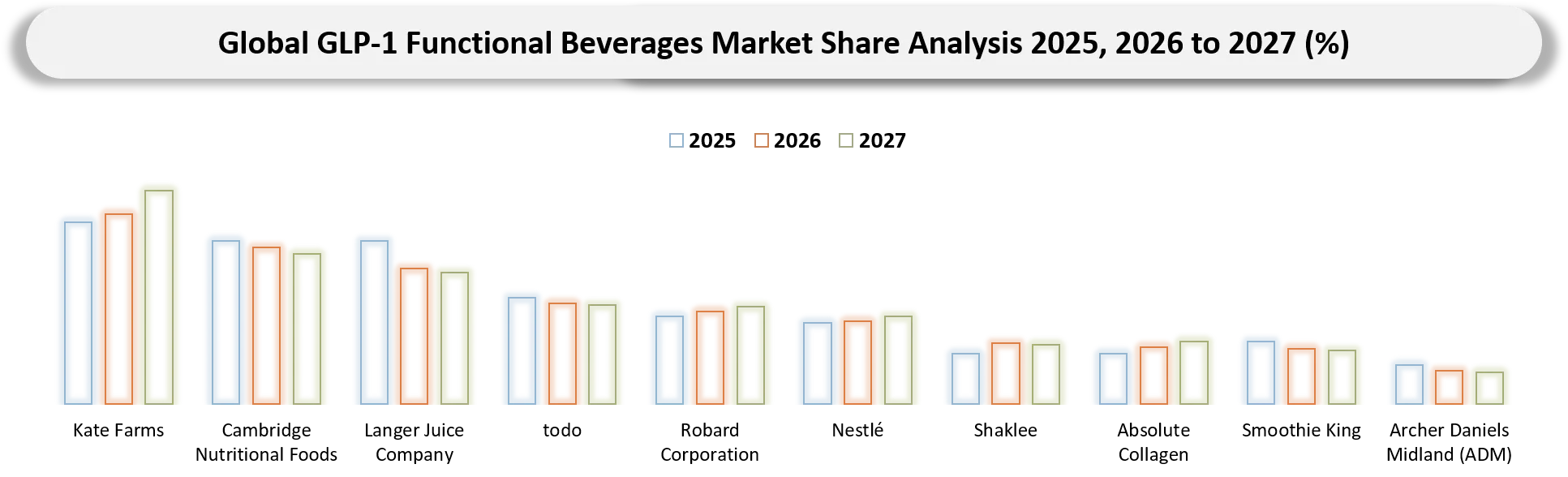
- The GLP-1 functional beverages market is characterized by three key participant groups: specialized clinical and nutritional beverage companies, consumer wellness and weight-management brands, and ingredient and formulation solution providers. Kate Farms and Nestlé are positioned in specialized nutritional beverages, leveraging clinical nutrition expertise to develop protein- and nutrient-focused products relevant to GLP-1 users. Cambridge Nutritional Foods, Robard Corporation, Shaklee, Smoothie King, Absolute Collagen, Langer Juice Company, and todo operate across weight management, wellness, functional nutrition, protein, and convenient beverage categories, with opportunities to adapt their portfolios toward GLP-1-specific nutritional needs. Archer Daniels Midland (ADM) operates primarily as a B2B ingredient and formulation partner, supporting beverage manufacturers through proteins, fibers, prebiotics, flavor systems, and other solutions relevant to GLP-1-oriented product development. The competitive landscape remains highly ecosystem-driven, where clinical credibility, nutrient density, formulation tolerability, established distribution networks, and the ability to develop purpose-formulated products define competitiveness.
- Key players include Kate Farms (United States), Cambridge Nutritional Foods (United Kingdom), Langer Juice Company (United States), todo (United States), Robard Corporation (United States), Nestlé (Switzerland), Shaklee (United States), Absolute Collagen (United Kingdom), Smoothie King (United States), and Archer Daniels Midland (ADM) (United States).
Key Developments
- August 2025: Danone S.A., a France-based multinational food and beverage company, through its U.S. subsidiary Danone North America, launched Oikos Fusion, a nutrient-dense cultured dairy drink specifically designed for GLP-1 medication users and consumers on weight-loss journeys.
- April 2025: Nestlé S.A., a Switzerland-based multinational food and beverage company, launched a GLP-1-compatible functional beverage under its Boost brand in the United States.
- October 2025: Supreme plc, a UK-based manufacturer, supplier, and brand owner of fast-moving consumer goods, acquired the trade and selected UK and European assets of SlimFast, a U.S.-origin weight-management and meal-replacement nutrition brand, from Glanbia plc, an Ireland-based global nutrition and food company.
- March 2026: Aqua Theon, a U.S.-based seaweed technology and functional nutrition company headquartered in California, secured USD 13 million in seed funding to expand its marine-based nutrition portfolio.
- July 2026: Axiom Foods, a U.S.-based plant protein and dairy-alternative ingredient company, entered into a strategic partnership with NNB Nutrition, a U.S.-based nutraceutical ingredient and functional nutrition company, to develop “Protein+” food and beverage products for markets across Asia and North America.
Key Procurement Priorities and Buyer Evaluation Criteria
- Organizations investing in the GLP-1 Functional Beverages Market are increasingly selecting suppliers and manufacturing partners based on their ability to develop nutrient-dense formulations that address protein intake, hydration, fiber supplementation, digestive tolerance, and micronutrient requirements associated with GLP-1 medication use.
- The procurement decision-making process is increasingly influenced by the growing demand for purpose-formulated companion nutrition, reduced appetite management, muscle preservation support, convenient nutrient delivery, and low-sugar beverage formats suitable for consumers undergoing GLP-1-based weight management.
- Buyers consider factors such as protein quality, nutrient density, sugar and calorie profile, ingredient transparency, digestive tolerability, flavor and texture performance, and formulation stability when evaluating GLP-1 functional beverage suppliers and products.
Why Choose DataM?
- GLP-1 Nutrition and Product Innovation: Explores emerging developments in protein-rich, fiber-enriched, hydration-focused, and nutrient-dense beverages designed to address changing nutritional requirements associated with GLP-1 medication use, including reduced appetite, muscle maintenance, and nutritional adequacy.
- Product Positioning & Market Differentiation: Evaluates how companies differentiate GLP-1 functional beverages through protein content, fiber composition, micronutrient fortification, calorie profiles, portion formats, digestive tolerance, and evidence-based nutritional positioning.
- Real-World Market Evidence: Highlights the commercialization of GLP-1 companion nutrition products and functional beverages, demonstrating how manufacturers are adapting protein shakes, nutritional drinks, electrolyte beverages, and fortified formulations to evolving consumer requirements.
- Market Updates & Industry Changes: Tracks key developments, including new product launches, formulation innovations, partnerships, acquisitions, and the expanding integration of GLP-1-focused nutrition strategies across North America, Europe, and Asia-Pacific.
- Competitive Strategies: Analyzes how leading companies compete through clinical nutrition expertise, specialized product development, ingredient innovation, healthcare positioning, retail expansion, and strategic partnerships to establish an early presence in the GLP-1 companion nutrition ecosystem.
- Market Entry & Expansion: Identifies growth opportunities arising from the expanding GLP-1 user base and increasing demand for convenient nutritional support, while outlining strategies such as purpose-formulated product development, clinical validation, healthcare partnerships, and regional distribution expansion.
Target Audience
- Functional Beverage Manufacturers and Brand Owners
- Food and Beverage Companies
- Clinical and Medical Nutrition Companies
- Ingredient Suppliers and Formulation Companies
- GLP-1 Medication and Healthcare Companies
- Retailers and E-Commerce Platforms
- Investors and Private Equity Firms


























































