


GLP-1 Companion Nutrition Market Size and Forecast 2035
The global GLP-1 Companion Nutrition market size was US$ 5.26 billion in 2025 and is forecasted to reach US$ 18.92 billion by 2035, growing at a CAGR of 13.7% during 2026-2035. The market is being created by rapid adoption of incretin-based therapies for obesity and type 2 diabetes, combined with reduced appetite, lower food intake, and concern about lean-mass loss, gastrointestinal discomfort, and micronutrient adequacy. Protein and lean-mass support is the largest need state, while integrated programs combining nutrition products with digital coaching and clinical support are expected to grow fastest.
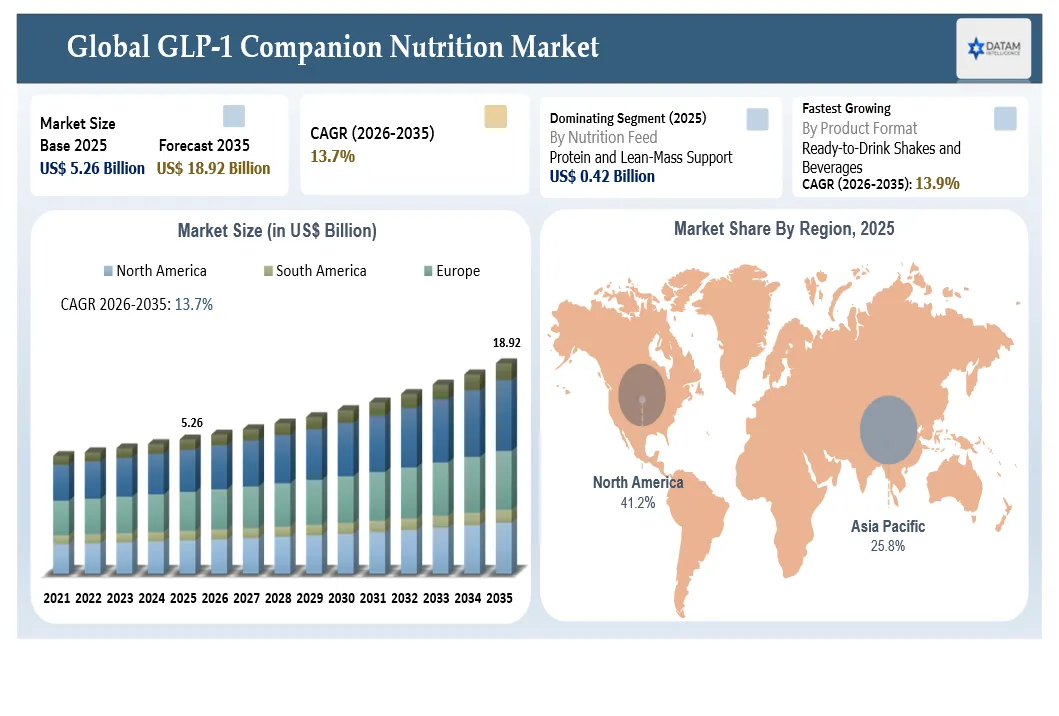
Commercial development is moving from generic high-protein positioning toward condition-specific companion systems. Nestlé Health Science has established a dedicated GLP-1 nutrition platform spanning muscle preservation, gut health, micronutrients, hydration, skin and hair support and weight-rebound control. Abbott has emphasized protein and lean-mass preservation during weight loss, while telehealth providers and direct-to-consumer brands are adding dietitian services, protein products and supplement bundles.
North America leads because of high GLP-1 utilization, strong direct-to-consumer channels and rapid product innovation. Europe is expanding through pharmacy and clinical nutrition channels. Asia-Pacific is expected to grow fastest as incretin access broadens and local companies introduce smaller-format, high-protein and diabetes-friendly products.
GLP-1 Companion Nutrition Market Overview
| Metric | 2025 / Forecast Indicator |
| 2025 Market Size | US$ 5.26 Billion |
| 2035 Projected Market Size | US$ 18.92 Billion |
| CAGR, 2026-2035 | 13.7% |
| Largest Region | North America, 41.2% |
| Fastest-Growing Region | Asia-Pacific |
| Largest Nutrition Need | Protein and Lean-Mass Support |
| Fastest-Growing Product Consumer Typeat | Ready-to-Drink Shakes and Beverages |
| Leading Consumer Type | Adults Using GLP-1 Therapy for Obesity |
GLP-1 Companion Nutrition Market Key Takeaways
Protein and lean-mass support represent the largest need state because reduced calorie intake can make it difficult to meet protein targets during rapid weight loss.
Ready-to-drink shakes, compact powders and small-volume products are gaining adoption among users with reduced appetite.
Digestive health, fiber and hydration products address nausea, constipation and lower food and fluid intake.
Micronutrient products are becoming more important as prolonged appetite suppression can reduce dietary variety.
Telehealth and obesity clinics are emerging as high-value distribution channels because nutrition can be integrated into prescribing and follow-up.
Weight-maintenance and rebound-prevention solutions create recurring demand after dose reduction or discontinuation.
Brands with credible clinical guidance and transparent dosing are better positioned than products using broad weight-loss claims.
The market will increasingly combine products, coaching, monitoring and behavioral support.
Dairy and Whey-Based products dominate through scale, availability and the marketing value of high-quality, pasture-raised and New Zealand or Australian sourcing claims.
The market is shifting from generic protein supplementation toward outcome-oriented products for strength, mobility and lean-mass retention.
GLP-1 nutrition is becoming a dedicated innovation platform, with smaller-volume, high-protein and micronutrient-dense products designed for reduced appetite.
Medical nutrition companies are extending hospital-proven ingredients into consumer healthy-weight management portfolios.
Creatine is broadening from sports performance into older-adult and women’s healthy-weight management applications.
HMB delivery is expanding beyond powders and capsules into beverages, chews and compact foods that support adherence.
Digital body-composition tools, connected scales and coaching platforms are being integrated into product ecosystems.
Retailers are creating high-protein and healthy-weight management merchandising zones that improve category visibility and cross-selling.
GLP-1 Companion Nutrition Industry Trends and Strategic Insights
Dedicated GLP-1 product collections are replacing generic weight-management shelves.
High-protein, low-volume formats are expanding because users often struggle with large meals.
Brands are bundling protein, fiber, electrolytes and multivitamins into simplified daily routines.
Pharmacy, telehealth and clinic partnerships are becoming central to customer acquisition.
Consumer education is shifting toward quality of weight loss, muscle retention and nutrient density.
Personalized recommendations based on symptoms, diet pattern, dose stage and body-composition goals are gaining importance.
Direct-to-consumer subscriptions are strengthening repeat purchase and giving brands first-party data on serving frequency, retention and product combinations.
The year 2026 marks a major inflection point because rapid adoption of GLP-1 therapies has shifted attention from total weight loss to preservation of lean mass, strength and nutritional adequacy. Medical nutrition is becoming part of obesity-care pathways, creating new demand for protein-dense products, essential amino acids, HMB, creatine and micronutrient support.
GLP-1 Companion Nutrition Market Scope
| Metrics | Details |
| 2025 Market Size | US$ 5.26 Billion |
| 2035 Projected Market Size | US$ 18.92 Billion |
| CAGR, 2026-2035 | 13.7% |
| Largest Market | North America |
| Fastest-Growing Market | Asia-Pacific |
| By Nutrition Need | Protein and Lean-Mass Support, HMB-Based Consumer Typeulations, Digestive Health and Tolerability, Hydration and Electrolyte Support, Fiber and Satiety Support, Hair, Skin and Bone Support, Bone Marrow, Other Organs and Comprehensive GLP-1 Nutrition Systems |
| By Product Consumer Typeat | Single-GLP-1 Companion Nutrition, Ready-to-Drink Shakes and Beverages, Adults Using GLP-1 Therapy for Obesity and Post-Bariatric and Medically Managed Weight-Loss Users, Organ and Vitamin/Mineral Blends |
| By Ingredient Platform | Dairy and Whey-Based, Plant-Based, Blended Ingredient Platforms, Precision-Fermented and Novel Ingredients |
| By Consumer Type | Adults Using GLP-1 Therapy for Obesity, Adults Using GLP-1 Therapy for Type 2 Diabetes, Post-Bariatric and Medically Managed Weight-Loss Users, Softgels/Liquids and Food-Based Consumer Typeats |
| By Health Objective | General Wellness, Energy, Iron/Blood Support, Sports Recovery, Healthy Ageing, Digestive/Metabolic and Other Positioning |
| By Distribution Channel | Online/DTC, Specialty Stores, Pharmacies, Mass Retail and Practitioner Channels |
| Report Insights Covered | Market Size, Share, Growth, Regulation, Consumer Trends, Competitive Landscape and Country-Level Opportunity |
Why does this report matter in 2026?
The year 2026 marks a major inflection point because rapid adoption of GLP-1 therapies has shifted attention from total weight loss to preservation of lean mass, strength and nutritional adequacy. Medical nutrition is becoming part of obesity-care pathways, creating new demand for protein-dense products, essential amino acids, HMB, creatine and micronutrient support.
The report matters because GLP-1 companion nutrition products are not a uniform category. Demand differs by organ, source species, processing method, dosage form, health positioning and consumer group. Protein and Lean-Mass Support has broad recognition, while heart, kidney, spleen and GLP-1 companion products depend on more specialized education. Multi-organ products can simplify purchase decisions but also create challenges in nutrient standardization and labeling.
Strategic decisions made in 2026 will shape brand positioning for the remainder of the decade. Companies are deciding whether to remain premium direct-to-consumer specialists or pursue practitioner, pharmacy and mass-retail channels. Ingredient suppliers are evaluating dedicated freeze-drying and traceability systems, while retailers are tightening quality requirements. This report supports portfolio prioritization, sourcing partnerships, manufacturing planning, market entry, claims governance and investment assessment across the value chain.
GLP-1 Companion Nutrition Market White Space & Investment Opportunities
Clinically validated protein systems designed for reduced appetite and smaller meal volumes.
Digestive-health products addressing constipation, nausea and food intolerance without undermining treatment goals.
Companion nutrition for older adults, diabetes patients and people at elevated risk of muscle loss.
Post-therapy products focused on weight maintenance, appetite normalization and rebound prevention.
Telehealth-integrated subscriptions that combine products with dietitian support and body-composition monitoring.
Localized products for Asia-Pacific, Latin America and the Middle East using familiar flavors and affordable serving sizes.
GLP-1 Companion Nutrition Future Market Transformation
The market will evolve from standalone powders and shakes into integrated muscle-health systems. Products will increasingly be segmented by life stage and clinical context, including active weight management, menopause, GLP-1 treatment, oncology recovery, post-surgical rehabilitation and frailty. Formulations will become more nutrient-dense as users seek fewer calories, smaller serving sizes and better digestive tolerance. Digital tools will support adherence and outcomes.
The market benefits from recurring consumption, broad demographic demand and multiple price tiers. Premium products can command higher margins when supported by clinically relevant doses, professional endorsement and differentiated formats. However, protein ingredients, dairy inputs, flavors and packaging can create cost volatility. Companies must balance high active doses with acceptable taste, serving size and retail price.
GLP-1 Companion Nutrition Market Buyer Decision-Making Criteria
Consumers and clinicians assess protein dose, amino acid quality, leucine content, HMB or creatine inclusion, calorie load, sugar content, micronutrient balance and digestive tolerance. Older adults prioritize taste, ease of swallowing, small serving volume and affordability. GLP-1 users require high nutrient density without aggravating nausea or fullness. Hospitals assess clinical evidence, compliance, wastage, procurement cost and compatibility with care pathways.
Retailers and practitioners apply additional criteria. They assess current good manufacturing practice, allergen controls, microbiological testing, heavy metals, species identity, certificates of analysis, claim compliance and adverse-event procedures. Procurement decisions also consider supply continuity, shelf stability, packaging integrity and margin. Brands that provide clear specifications, batch documentation and conservative claims are better positioned for professional channels and international expansion.
GLP-1 Companion Nutrition Market Economic & Investment Analysis
The economic opportunity is linked to the scale and persistence of GLP-1 therapy. A treated user can generate recurring annual demand across protein products, vitamins, hydration, fiber and digital support. Revenue models range from single-product retail to monthly subscriptions and clinic-integrated bundles. Investors should separate the total treated population from consumers who experience meaningful nutritional gaps, remain on therapy long enough to adopt companion products and have sufficient purchasing power.
The most attractive businesses can serve several stages of the user journey. Early treatment emphasizes symptom management and nutrient adequacy. Active weight loss increases demand for protein, lean-mass support and hydration. Maintenance creates demand for appetite normalization, behavior support and weight-rebound prevention. This lifecycle structure supports higher customer lifetime value than one-off supplement purchases.
Investment risk includes uncertainty in drug access, changing reimbursement, new oral therapies, variable treatment persistence and regulatory scrutiny of claims. Companies that rely on a single branded drug or exaggerated muscle-preservation claims face higher risk. Stronger platforms will use evidence-based formulations, diversified channels and partnerships with clinicians, pharmacies and telehealth providers.
Geographic expansion creates both opportunity and cost. Imported products may face tariffs, veterinary documentation, food-safety rules, language-specific labeling and different treatment of animal-derived ingredients. Companies with regionally diversified sourcing can reduce disruption, but each supplier requires qualification. The strongest investment cases combine recurring direct-to-consumer revenue with quality infrastructure, conservative claims and a credible path into retail or practitioner channels.
GLP-1 Companion Nutrition Investment Trends in the Market
Capital is moving toward high-protein and compact nutrition formats designed for reduced appetite.
Strategic investors are supporting digital programs that combine prescriptions, coaching and companion nutrition.
Ingredient suppliers are developing protein, fiber and micronutrient systems for GLP-1-specific formulations.
Consumer-health companies are building dedicated product collections rather than relying on general wellness brands.
Retailers and pharmacies are creating GLP-1 nutrition destinations and education programs.
Partnerships between nutrition companies, obesity clinics and telehealth platforms are increasing.
Private-label and contract-manufacturing capacity is expanding as established supplement companies test the category without building dedicated plants.
Investment is increasing in targeted formulations for women, athletes, healthy weight management and carnivore or paleo consumers rather than undifferentiated multi-organ blends.
Strategic partnerships are linking livestock suppliers, freeze-drying specialists, testing laboratories, e-commerce operators and nutrition practitioners.
Strategic Indicators for GLP-1 Companion Nutrition Market
High Regulation Impact
Dietary supplements are regulated as foods in the U.S. and manufacturers are responsible for safety, identity, labeling and compliant claims before sale. FDA can act against adulterated or misbranded products after marketing. Disease-treatment claims can cause a product to be regulated as a drug. Animal-derived ingredients also require food-safety, import and species documentation. Regulatory discipline is therefore central to channel access and brand durability.
High Investment Activity
Investment is concentrated in consumer brands, contract manufacturing, traceable sourcing and quality testing. The category attracts founders because products can be launched through e-commerce, but scalable growth requires working capital for inventory, customer acquisition and batch testing. Investors increasingly favor brands with repeat revenue and defensible supply relationships.
Supply Chain Disruption
Organ materials are linked to livestock slaughter volumes, regional food-safety rules, cold-chain timing and processing capacity. Drought, animal disease, trade restrictions or plant closures can reduce supply. Freeze-drying slots may also be limited. Companies are diversifying suppliers and holding safety stock of stable powders.
Pricing Volatility
Premium sourcing, low-temperature processing, capsule count and testing can create wide price differences. Promotional intensity in online marketplaces increases pressure on smaller brands. Consumers may compare products by price per serving without understanding organ quantity or quality. Transparent specifications help defend premium pricing.
Procurement Pressure
Retailers and practitioners increasingly request cGMP documentation, certificates of analysis, contaminant limits, allergen controls and substantiation for claims. Brands seeking wider distribution must support vendor audits and consistent supply. Procurement pressure is likely to increase as the category becomes more visible.
New Technology Adoption
Freeze-drying, DNA-based species authentication, rapid microbiological testing, QR-code traceability and improved encapsulation are changing product quality. E-commerce analytics and subscription platforms help brands forecast demand and personalize communication. Adoption is fastest among premium brands using transparency as differentiation.
Regional Expansion Opportunity
North America remains the largest market, while Europe and Australia provide premium sourcing and wellness demand. Asia-Pacific offers growth through cross-border e-commerce and sports nutrition. Expansion requires country-specific labeling, import documentation, cultural acceptance and channel partners.
Government Policy Support
GLP-1 therapies are disrupting the category by creating a large population that loses weight rapidly while consuming less food. This shifts demand toward nutrient density, protein quality and lean-mass monitoring. Healthy-weight management consumers are also moving from general multivitamins toward products tied to mobility and independence. New delivery formats are disrupting conventional tubs and shakes. Clear beverages, chews, bars and compact shots can improve adherence.
Pricing Intelligence
Single liver capsules compete at lower price points, while multi-organ and specialty GLP-1 companion products command premiums. Brands should track price per daily serving, organ mass, capsule count, testing disclosure and subscription discount. Product architecture and retention matter more than list price alone.
AI Impact Analysis of GLP-1 Companion Nutrition Market
AI can personalize protein and energy recommendations using age, body weight, treatment status, dietary intake, activity and body-composition trends. It can identify consumers at risk of inadequate intake, suggest smaller high-protein meals and link supplement timing to resistance exercise. In clinical settings, AI can support screening for malnutrition, nutrition inadequacy and post-discharge nutrition needs.
AI can also strengthen quality and regulatory operations. Systems can review labels and advertising for risky disease claims, detect inconsistencies between specifications and marketing copy and analyze adverse-event or complaint data for emerging signals. Computer vision may support raw-material inspection, while predictive models can improve inventory planning around livestock supply and drying capacity.
Disruption Analysis of GLP-1 Companion Nutrition Market
GLP-1 therapies are disrupting the category by creating a large population that loses weight rapidly while consuming less food. This shifts demand toward nutrient density, protein quality and lean-mass monitoring. Healthy-weight management consumers are also moving from general multivitamins toward products tied to mobility and independence. New delivery formats are disrupting conventional tubs and shakes. Clear beverages, chews, bars and compact shots can improve adherence.
Traceability technology is another source of disruption. Batch-level origin records, digital certificates of analysis and species verification can reduce information asymmetry and expose weak sourcing claims. Improved dehydration and odor-control methods may make powders and food formats more acceptable. At the same time, personalized nutrition and laboratory-guided supplementation may fragment the market into narrower use cases, rewarding companies that can explain product suitability and limits responsibly.
DataM Intelligence expects double-digit growth through 2035, but category expansion will be uneven. Protein and Lean-Mass Support and multi-organ capsules will capture most revenue, while specialist GLP-1 companions remain smaller practitioner-led niches. The market can become a durable segment of GLP-1 support nutrition productation if companies improve evidence, quality transparency and safety communication. Aggressive claims and opaque marketplace products remain the greatest threats.
GLP-1 Companion Nutrition Market BCG Matrix: Company Evaluation
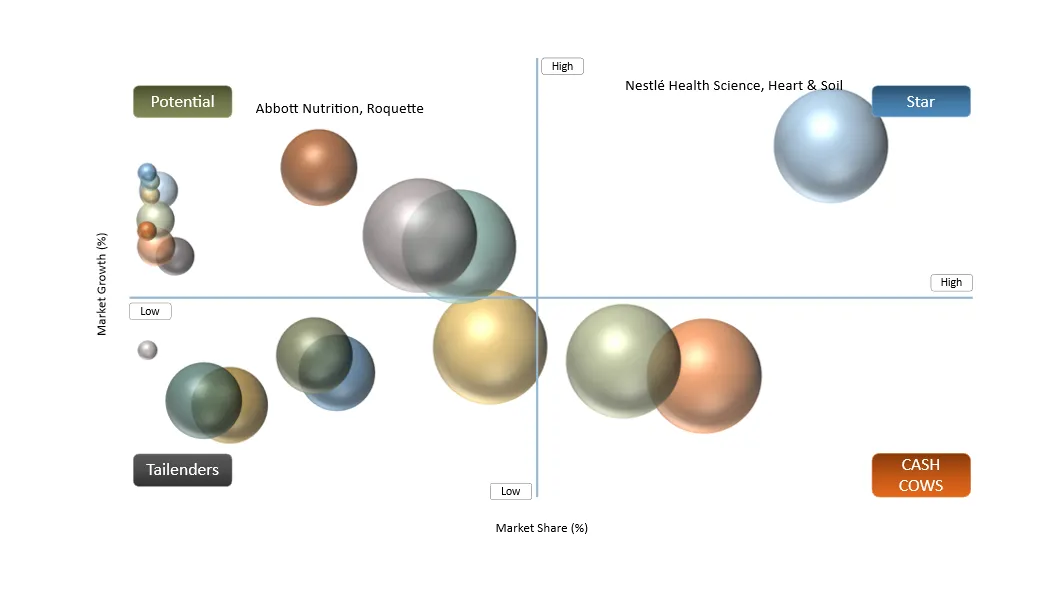
| Quadrant | Representative Companies / Offerings | Strategic Interpretation |
| Stars | Nestlé Health Science, Heart & Soil | High category recognition, broad product portfolios and strong direct-to-consumer communities support growth and repeat purchase. |
| Potential | Abbott Nutrition, Roquette, Ancient Nutrition, Glanbia | Established supplement capabilities and growing organ-product visibility create share-gain potential through retail expansion and formulation innovation. |
| Cash Cows | Large multivitamin and specialty supplement brands with liver or GLP-1 companion lines | Existing distribution, manufacturing and customer bases support steady revenue, although GLP-1 companion nutrition products may remain a small portfolio category. |
| Tailenders | Small marketplace-only brands with limited testing disclosure | Low differentiation and weak trust signals make retention difficult as consumers and retailers demand stronger quality evidence. |
Abbott and Nestlé Health Science are positioned as Stars because they combine strong medical nutrition brands, professional channels and global distribution. Danone and Danone Nutricia represent Cash Cows through established protein and performance-nutrition portfolios. Emerging GLP-1 nutrition brands, HMB innovators and digital-first healthy-weight management companies represent Potential players. Smaller undifferentiated protein brands without evidence or channel advantages remain Tailenders.
GLP-1 Companion Nutrition Market Dynamics
Driver Impact Analysis
| Driver | Market Growth Impact | Demand Concentration | Impacted Health Objective | Strategic Impact |
Demand for nutrient-dense GLP-1 support nutrition products | High | North America and Europe | General wellness and energy | Expands the category beyond carnivore and paleo early adopters. |
Growth of direct-to -consumer wellness brands | High | Online channels | Subscription and repeat purchase | Reduces entry barriers and enables data-driven commercialization. |
Interest in ancestral and high-protein diets | Medium-High | Fitness and lifestyle consumers | Multi-organ and liver products | Improves awareness but can create trend-driven volatility. |
Improved sourcing and testing transparency | Medium | Premium brands | Retail and practitioner adoption | Builds trust and supports higher prices. |
Driver: Nutrient-Dense Whole-Food Supplementation Expands the Addressable Market
The rising usage of GLP-1 agonists for the treatment of obesity and type 2 diabetes is greatly boosting the demand for nutrition products tailored for such patients. Due to the appetite-reducing effect of GLP-1, the users of the drugs have difficulties consuming adequate amounts of proteins, fiber, vitamins, minerals and fluids, which leads to risks of muscle wasting and nutritional deficiency. The market of shakes and nutrition products that contain all the essential nutrients for users of GLP-1s has developed successfully. Nutritional companies now offer their clinically oriented lines of such products for patients using GLP-1 agonists.
Restraint Impact Analysis
| Restraint | Drag on Growth | Primary Impact Area | Impacted Health Objective | Strategic Impact |
Limited product-specific clinical evidence | High | Claims and practitioner confidence | Health-specific positioning | Restricts disease-related messaging and requires conservative education. |
Quality and traceability concerns | High | Consumer trust and retail access | All products | Increases testing cost and disadvantages opaque supply chains. |
High capsule burden and sensory concerns | Medium | Adherence | Daily use | Can reduce repeat purchase and encourage concentrated formats. |
Vitamin A, iron and copper exposure concerns | Medium-High | Safety communication | Protein and Lean-Mass Support-rich products | Requires clear serving guidance and warnings for sensitive users. |
Restraint: Evidence and Safety Communication Limit Mainstream Medical Adoption
Organ foods are nutrient dense, but evidence for specific branded supplement outcomes remains limited. Consumers may assume that an organ product will treat fatigue, anemia, thyroid disease or other conditions, creating regulatory and safety risk. Protein and Lean-Mass Support-rich products can provide substantial vitamin A, iron or copper and suitability differs by diet, pregnancy status, medication use and medical history. Companies must avoid disease claims, provide responsible warnings and encourage professional consultation when appropriate. Transparent testing and conservative communication are essential for long-term category credibility.
GLP-1 Companion Nutrition Market Segment Analysis
The global GLP-1 Companion Nutrition market is segmented by nutrition need, product type, ingredient platform, consumer type, health objective, distribution channel, and region.
By Nutrition Need
Protein and Lean-Mass Support Supplements Will Continue to Lead Commercial Value
Protein and Lean-Mass Support supplements are expected to remain the largest segment through 2035 because liver has the strongest consumer recognition and the broadest nutritional narrative. It is used in standalone products and as the foundation of multi-organ blends. HMB-Based Consumer Typeulations, kidney, spleen and pancreas products serve narrower use cases and require more education.
By Product Consumer Type
Ready-to-Drink Shakes and Beverages Will Record the Fastest Growth
Single-GLP-1 companion nutrition products lead current value, with beef liver as the entry product for many consumers. Multi-organ complexes are expected to grow fastest because they combine liver, heart, kidney, spleen and pancreas in one regimen. This format supports premium pricing and subscription bundles, but brands must disclose ingredient quantities and avoid implying tissue-specific therapeutic effects. Organ and botanical blends will expand in targeted wellness products, while vitamin or mineral combinations can improve consumer familiarity and allow more explicit nutrient-content positioning.
By Ingredient Platform
Dairy-Based Ingredient Platforms Will Remain Dominant
Dairy and Whey-Based ingredients dominate because cattle processing generates scalable organ volumes and because high-quality or pasture-raised beef has strong consumer recognition. New Zealand, Australia, the U.S., Argentina and selected European countries are important sourcing locations. Plant-Based products may appeal to consumers seeking alternative ruminant sources, while porcine GLP-1 companions have a history in practitioner channels but face religious and cultural restrictions. Marine and other sources remain small and require careful allergen and species disclosure.
By Consumer Type
Adults Using GLP-1 Therapy for Obesity Will Retain the Largest Share
Adults Using GLP-1 Therapy for Obesity lead because they mask taste and odor, provide a clear daily serving and support e-commerce fulfillment. The main limitation is pill burden, as many products require four to six capsules per day. Adults Using GLP-1 Therapy for Type 2 Diabetes can offer larger serving sizes and use in smoothies or savory foods, but sensory acceptance is more difficult. Post-Bariatric and Medically Managed Weight-Loss Users and softgels remain limited by formulation constraints. Food-based seasonings and snack formats may attract new buyers by integrating organ ingredients into ordinary meals.
By Health Objective
Lean-Mass Preservation Will Remain the Largest Positioning
General wellness leads because it allows brands to communicate broad nutrient density without relying on narrow medical claims. Energy and vitality, iron and blood health support and sports recovery are commercially important but require careful substantiation and warnings. Healthy-weight management positioning is expected to grow as consumers seek protein, choline, B vitamins and coenzyme Q10. Future success will depend on matching the product to a credible nutrient rationale while avoiding unsupported claims that an GLP-1 companion nutrition product directly improves the corresponding human organ.
By Distribution Channel
Online and Direct-to-Consumer Will Control Market Growth
Online and direct-to-consumer channels lead because category education, subscription purchasing and product comparison occur digitally. Brands can explain sourcing, processing and use through long-form content, while marketplaces provide rapid reach. Specialty stores and practitioner channels add credibility and allow guided selection. Pharmacies and mass retailers represent long-term expansion opportunities but require stronger vendor qualification, stable supply, compliant claims and evidence that the category can generate repeat sales beyond online trend cycles.
GLP-1 Companion Nutrition Market Geographical Penetration
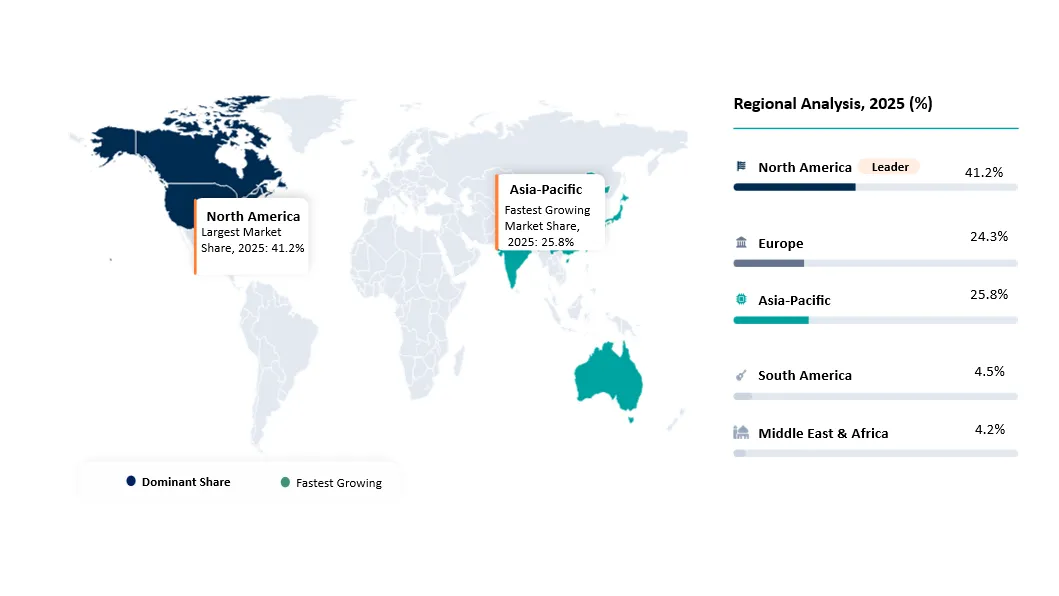
| Region | 2025 Share | Market Position | Key Growth Factors |
| North America | 41.2% | Largest | High supplement use, DTC brands, subscription commerce and ancestral-diet communities |
| Europe | 24.3% | Established | Premium livestock sourcing, specialty wellness and quality-focused consumers |
| Asia-Pacific | 25.8% | Fastest Growing | Cross-border e-commerce, sports nutrition, premium imports and expanding middle class |
| South America | 4.5% | Emerging | Livestock supply, urban wellness demand and export potential |
| Middle East and Africa | 4.2% | Emerging | Premium Gulf demand, practitioner channels and online retail |
U.S. GLP-1 Companion Nutrition Market Landscape
Competition spans global medical nutrition companies, sports nutrition brands, ingredient suppliers and digital-first healthy-weight management businesses. Abbott, Nestlé Health Science and Danone benefit from clinical credibility and hospital access. Danone Nutricia, Glanbia and other sports nutrition companies bring protein expertise and consumer reach. Ingredient suppliers compete through clinical substantiation and formulation support. Emerging brands are targeting GLP-1 users, women’s healthy weight management, HMB chews and personalized nutrition. Differentiation depends on evidence, taste, dose, convenience, professional recommendation and measurable outcomes.
Germany GLP-1 Companion Nutrition Market Outlook
Germany offers a quality-focused supplement market with strict expectations for labeling, composition and consumer protection. Demand is concentrated in specialty wellness, practitioner and online channels. Products must navigate European rules on food supplements, novel foods, animal-derived ingredients and health claims. Opportunity is strongest for traceable products with clear specifications and conservative communication.
UK GLP-1 Companion Nutrition Market Trends
The UK market benefits from online wellness retail, fitness communities and growing interest in GLP-1 support nutrition productation. Premium products using high-quality New Zealand or European sourcing are visible. Retail expansion requires compliance with UK food-supplement labeling and advertising rules. Brands that provide independent testing and manageable serving sizes can differentiate in a crowded online market.
Australia and New Zealand Market Outlook
Australia and New Zealand combine premium livestock origin with domestic wellness demand and export potential. Grass-fed sourcing claims are commercially valuable and local processors can develop high-quality clinically formulated ingredients. Market growth will come from direct-to-consumer brands, practitioner channels and export partnerships. Supply agreements and documentation of origin are strategic assets.
China GLP-1 Companion Nutrition Market Outlook
China is an emerging market for imported premium supplements, although cultural familiarity with organ foods creates a different value proposition. Cross-border e-commerce can support trial among wellness and sports consumers. Regulatory registration, import rules and product education are important. Brands must explain convenience and quality without implying medicinal effects.
Brazil GLP-1 Companion Nutrition Market Outlook
Brazil has a large livestock base and a growing urban supplement market. The country offers potential as both a raw-material supplier and a consumer market. Local processing, regulatory compliance and premium branding will determine value capture. Opportunities include sports nutrition, online retail and export-grade organ powders.
Middle East and Africa GLP-1 Companion Nutrition Market Outlook
Demand is concentrated in the UAE, Saudi Arabia, Israel and South Africa, where premium supplements and e-commerce are expanding. Halal requirements and species transparency are important in Muslim markets. Affordability and limited category awareness constrain broader adoption. Partnerships with specialty retailers and practitioners can improve trust and education.
GLP-1 Companion Nutrition Market Competitive Landscape
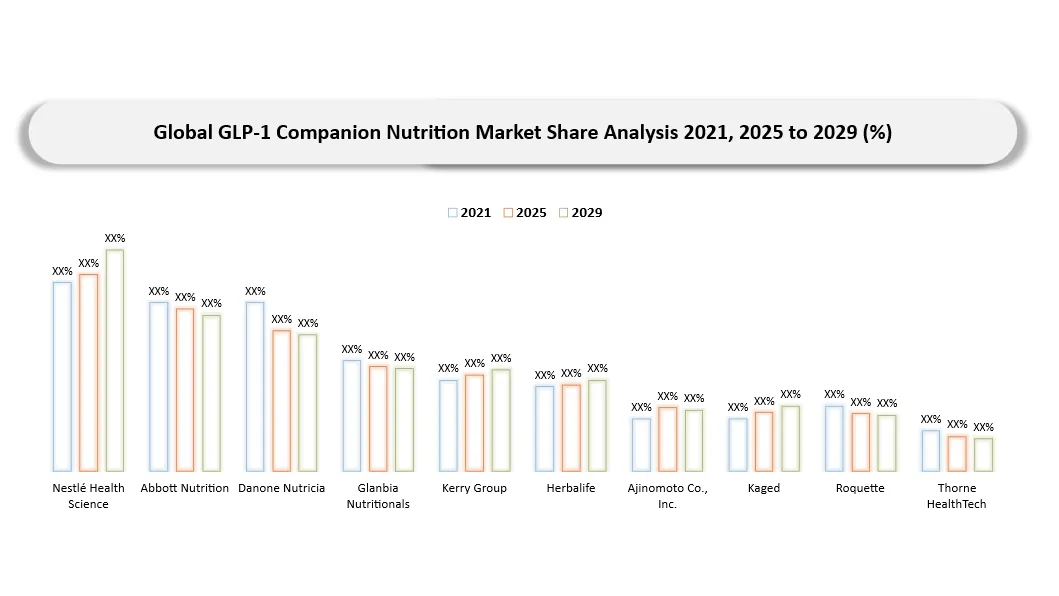
Competition spans global medical nutrition companies, sports nutrition brands, ingredient suppliers and digital-first healthy-weight management businesses. Abbott, Nestlé Health Science and Danone benefit from clinical credibility and hospital access. Danone Nutricia, Glanbia and other sports nutrition companies bring protein expertise and consumer reach. Ingredient suppliers compete through clinical substantiation and formulation support. Emerging brands are targeting GLP-1 users, women’s healthy weight management, HMB chews and personalized nutrition. Differentiation depends on evidence, taste, dose, convenience, professional recommendation and measurable outcomes.
Nestlé Health Science and Heart & Soil have strong category association, while Abbott Nutrition, Roquette and other diversified wellness brands can use existing customer bases and retail relationships.
Differentiation is shifting toward source origin, high-quality claims, testing transparency, capsule burden, ingredient quantities and subscription value.
Large supplement manufacturers can enter through private-label partnerships, but they must build consumer education and secure reliable organ supply.
Online marketplaces increase price comparison and imitation risk, making brand trust, community and quality documentation important defenses.
Partnerships with livestock suppliers, freeze-drying specialists, laboratories, practitioners and retailers are central to scalable growth.
Competitive intensity will increase as the category moves beyond early adopters. Specialist brands benefit from authenticity and community, while diversified supplement companies can offer broader distribution and lower acquisition costs. Market share will depend on repeat purchase, quality consistency and the ability to communicate benefits without regulatory overreach. Retailers may rationalize product ranges around a smaller number of well-documented suppliers, increasing the value of cGMP systems, certificates of analysis and reliable inventory.
Key Companies of GLP-1 Companion Nutrition Market
Nestlé Health Science
Heart & Soil
Abbott Nutrition
Roquette
Glanbia
Ancient Nutrition
ForestLeaf
Wholesome Wellness
Ajinomoto
Carlyle Nutritionals
Allergy Research Group
NXGEN Wholefoods
Hunter & Gather
Pluck
Enviromedica
Mitolife
Herbalife Nutrition
Kerry Group
Nutriest
Kaged
GLP-1 Companion Nutrition Market Major Pain Points
Limited clinical consensus on standardized companion nutrition protocols.
Consumer confusion caused by unsubstantiated claims and rapidly expanding product choice.
Reduced appetite and nausea that lower adherence to powders, pills and large serving sizes.
Premium pricing and limited reimbursement for nutrition products.
Need to balance protein, fiber and micronutrients without worsening gastrointestinal symptoms.
Regulatory constraints on claims related to muscle preservation and treatment side effects.
Dependence on GLP-1 access, affordability and therapy persistence.
Fragmented coordination among prescribers, dietitians, pharmacies and product brands.
Claims compliance challenges across social media, affiliates and international markets.
Difficulty moving from influencer-led trial to durable mainstream repeat purchase.
GLP-1 Companion Nutrition Market Recent Developments
May 2026: Abbott introduced Ensure Strength Pro in India, containing 30 g of superior protein content along with 31 nutrients to help improve muscle strength, bone strength, immune function and aging.
March 2026: Wellgistics Health introduced Forzet, which is a medical food that has been developed to aid in the nutritional management of muscle loss due to GLP-1 and weight loss treatments.
February 2026: Abbott India and Novo Nordisk India entered into a strategic alliance to launch Extensior (Ozempic), semaglutide medication in India, thereby increasing the addressable market size for their nutrition.
November 2025: Abbott launched a new formula of Ensure Diabetes Care in India, containing high protein and fiber to help manage blood sugar levels and maintain muscle mass.
2025: Nestlé Health Science expanded its product range and education programs focusing on protein consumption, hydration, digestion and micronutrients in patients taking GLP-1 medications.
Analyst View / Opinion on GLP-1 Companion Nutrition Market
GLP-1 companion nutrition is developing into a durable consumer-health category because the underlying need extends beyond the current generation of injectable medicines. Any therapy that materially reduces appetite or accelerates weight loss creates demand for nutrient density, protein adequacy, hydration and behavior support. The strongest companies will avoid narrow drug-brand positioning and build solutions around the broader clinical journey.
Protein will remain the commercial anchor, but the market will not be won by protein alone. Consumers need products that are easy to tolerate, convenient in small portions and supported by credible guidance. Integrated platforms combining products, dietitian access, symptom management and body-composition monitoring are likely to achieve better retention and stronger professional adoption.
Third-party testing and traceability will become as important as formulation innovation.
Practitioner and specialty-retail channels can improve credibility, but they require stronger documentation and conservative claims.
Consumer safety communication around vitamin A, iron, copper and pregnancy will influence long-term trust.
Companies that integrate sourcing, manufacturing, testing, education and subscription analytics will outperform product-only marketplace competitors.
GLP-1 Companion Nutrition Market Target Audience
| Industry | Who Should Buy This Report? | Reason to Buy This Report |
| Supplement Brands | Portfolio, product, commercial and business-development teams | Assess segments, product architecture, channel strategy and competitive positioning. |
| Ingredient Suppliers | Livestock processors, organ-powder suppliers and freeze-drying companies | Evaluate demand, quality requirements, sourcing regions and partnership opportunities. |
| Contract Manufacturers | Capsule, powder and private-label manufacturers | Understand capacity needs, specifications and customer requirements. |
| Retail and E-commerce | Category managers, marketplaces and specialty retailers | Assess product selection, vendor qualification, pricing and consumer trends. |
| Testing and Certification | Laboratories, auditors and traceability providers | Identify demand for species, contaminant and quality verification. |
| Investors and Consulting | Private equity, venture capital, lenders and strategy consultants | Evaluate growth, risks, business models and acquisition opportunities. |
| Regulators and Associations | Food authorities, trade groups and consumer organizations | Understand category development, claims risks and safety priorities. |
Why Choose DATAM?
Data-driven insights combining market sizing, product-level pricing, channel availability, consumer adoption and sourcing analysis.
Post-purchase analyst consultations for market entry, portfolio design, partner identification and custom country analysis.
Annual report updates covering regulation, product launches, channel expansion, partnerships and competitive changes.
Specialized focus on emerging wellness categories and regional commercialization rather than generalized supplement summaries.
Actionable analysis connecting consumer demand with ingredient sourcing, quality systems, claims governance and distribution.
What DATAM Uniquely Provides
Ten-year forecasts across organ type, product type, animal source, form, health positioning, distribution channel and region.
Product-specific analysis separating liver, multi-organ, GLP-1 companion and targeted blend opportunities.
Buyer-focused analysis of sourcing, processing, testing, serving size, price and trust signals.
Country-level views linking supplement use, e-commerce, regulation and animal-protein supply.
Strategic recommendations for supplier partnerships, manufacturing, retail expansion and market entry.
Competitive assessment covering specialist brands, diversified supplement companies and private-label participants.
Questions This Report Answers
How will the global GLP-1 Companion Nutrition market evolve from 2025 through 2035?
Which organ types, product formats and consumer positions offer the strongest opportunity?
How will multi-organ complexes reshape competition with standalone liver supplements?
Which quality, testing and claims requirements constrain mainstream adoption?
Where are the strongest sourcing and contract-manufacturing opportunities?
How should companies balance direct-to-consumer growth with retail and practitioner expansion?
Which regions offer the best combination of consumer demand, supply and regulatory feasibility?


























































