


Carbon Removal Technology Market Size
The Carbon Removal Technology Market size was at USD 840.82 Million in 2025 and is projected to grow to USD 2,494.42 Million by 2035, registering strong growth at a CAGR of 14.59% during the forecast period from 2026 to 2035.
Rising environmental concerns drive this growth, supportive regulations on carbon capture, waste-to-energy, and decarbonization initiatives, and industries adopting carbon removal solutions as sustainable alternatives to conventional emissions mitigation methods. For instance, Japan, South Korea, and several EU countries are investing heavily in advanced carbon removal technologies, including Direct Air Capture (DAC), Bioenergy with Carbon Capture and Storage (BECCS), biochar, and enhanced mineralization, to capture and store CO₂ from industrial and atmospheric sources. In 2024, Japan partnered with industry leaders to scale up carbon removal-based circular economy projects, showcasing its early adoption and leadership in the global energy transition.
Carbon Removal Technology Market Size and Future Outlook
2025 Market Size: USD 840.82 Million
2035 Projected Market Size: USD 2,494.42 Million
CAGR (2025-2032): 14.59%
Largest Market: Asia-Pacific
Fastest Market: North America
Carbon Removal Technology Market Scope
| Metric | Details |
| Market Size (2025) | USD 840.82 Million |
| Market Forecast (2035) | USD 2,494.42 Million |
| CAGR (2026 to 2035) | 14.59% |
| Historic Years | 2023 to 2024 |
| Base Year | 2025 |
| Forecast Years | 2026 to 2035 |
| Segments Covered | Technology, Application, Storage, Project Scale, Region |
| Largest Regional Market | Asia-Pacific |
| Fastest Growing Region | North America |
For More details Insights: Request for Sample
Carbon Removal Technology Market Key Takeaways
- The Carbon Removal Technology Market is gaining significant momentum as governments, corporations, and investors prioritize net-zero emission targets and long-term climate mitigation strategies.
- Direct Air Capture (DAC), Bioenergy with Carbon Capture and Storage (BECCS), Enhanced Weathering, Ocean-Based Carbon Removal, and Biochar technologies are emerging as key carbon removal pathways.
- Corporate demand for high-quality carbon removal credits is accelerating as organizations seek credible solutions to achieve voluntary and regulatory climate commitments.
- North America and Europe currently lead market development due to supportive policies, funding programs, and strong private-sector investments.
- Rapid innovation, falling technology costs, and increasing climate-focused investments are expected to drive commercialization and large-scale deployment over the coming decade.
Analyst Viewpoint
The carbon removal technology market is transitioning from an emerging climate solution sector into a strategic component of the global decarbonization ecosystem. While emissions reduction remains the primary pathway to achieving climate goals, carbon removal technologies are increasingly recognized as essential for addressing hard-to-abate emissions and achieving net-negative emissions targets.
Governments, multinational corporations, and financial institutions are actively investing in carbon removal projects to support climate commitments. Technological advancements, growing carbon credit markets, and supportive regulatory frameworks are accelerating the commercialization of innovative carbon removal solutions.
As demand for verified carbon removal credits continues to rise, the market is expected to attract substantial capital investments and become a critical pillar of the future low-carbon economy.
Carbon Removal Technology Market Dynamics
Rising Demand from the Power Generation & Transportation Sector
The Power Generation and transportation sector is a major driver for the Carbon Removal Technology market, as manufacturers focus on reducing emissions to improve efficiency and meet stringent global climate targets. According to ACEA, around 93.9 million motor vehicles are produced globally every year, creating a substantial demand for advanced carbon reduction solutions. The rapid adoption of electric vehicles further accelerates the need for innovative technologies that minimize lifecycle emissions and support clean mobility.
To cater to this growing demand, companies are introducing cutting-edge carbon removal technologies specifically designed for Power Generation applications. For example, in June 2025, NALCO launched a next-generation carbon capture system CCS-90 crafted for critical Power Generation facilities, offering enhanced efficiency, durability, and scalability. This development underlines the strategic focus on high-performance carbon reduction technologies, aligning with the booming Power Generation sector in India and globally. As automakers and energy producers continue to prioritize sustainability, such innovations are expected to accelerate the adoption of carbon removal technologies worldwide.
Carbon Removal Technology Market Segmentation Analysis
Power Generation Sector Dominates Carbon Removal Technology Market Through Rising Demand for Lightweight Vehicles
The Power Generation industry holds a significant share in the Carbon Removal Technology market due to its rising need for lightweight materials that improve fuel efficiency and reduce emissions. Carbon Removal Technology is essential for manufacturing engine blocks, cylinder heads, wheels, and structural components, offering a superior strength-to-weight ratio and corrosion resistance.
According to the Government of India, the global Power Generation components market was valued at US$D 2 trillion, with exports contributing nearly US$700 billion, further driving demand for Carbon Removal Technology. India has emerged as the fourth-largest global producer after China, the USA, and Japan, with an annual production of nearly 6 million vehicles. These factors collectively strengthen the Power Generation sector’s role as a major consumer of Carbon Removal Technology, ensuring sustained growth in this market.
The Industrial Processes Sector Commands a Significant Share in the Carbon Removal Technology Market Due to Growing Urban Development
The Industrial Processes sector is driving significant demand for Carbon Removal Technology, as the material’s lightweight, corrosion-resistant, and durable properties make it ideal for modern buildings, bridges, and urban infrastructure projects. Rapid urbanisation and the expansion of smart cities worldwide are further boosting the adoption of aluminium in structural and architectural applications. In India, the government has announced a massive US$1.4 trillion investment in infrastructure by 2025, signalling a surge in mega projects such as expressways, metro networks, and airports, all of which rely heavily on aluminium components for safety and performance.
The government initiatives, such as the Bureau’s US$54.2 million no-match grant program launched on August 7, 2025, aim to advance infrastructure projects in rural and tribal communities, reflecting a broader commitment to modernise both urban and rural areas. Aluminium’s recyclability and low maintenance requirements also align with sustainable construction practices, further strengthening its demand in the sector globally.
Carbon Removal Technology Market Geographical Penetration
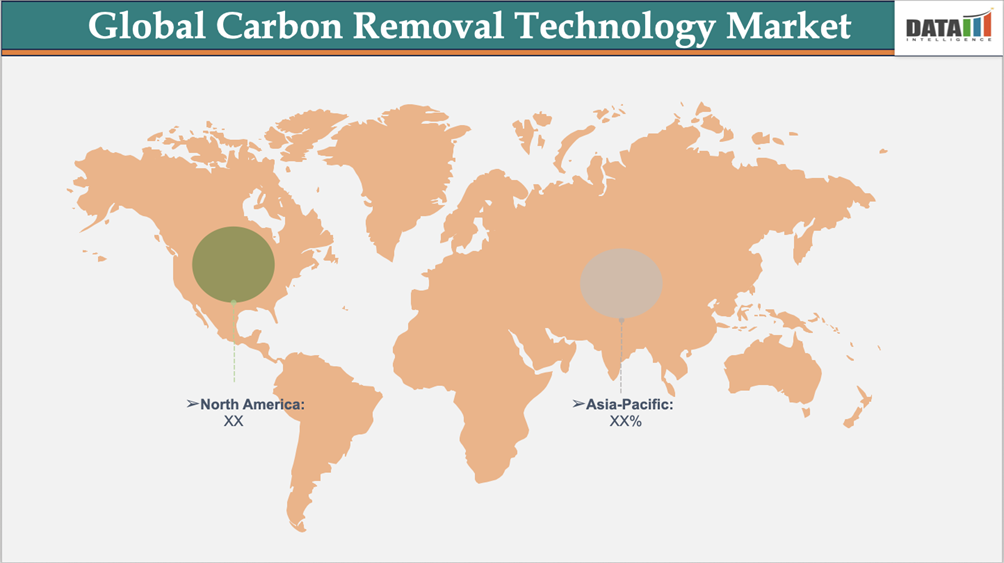
Asia-Pacific Dominates Carbon Removal Technology Market Driven by Industrial Growth and Infrastructure Development
Asia-Pacific holds a dominant position in the global Carbon Removal Technology market, driven by rapid industrialisation and urbanisation across major economies like China, India, and Japan. The region benefits from strong government support, large-scale infrastructure projects, and expanding energy demand, which collectively boost the adoption of carbon capture, utilization, and storage (CCUS) technologies. Growing investments in renewable energy and industrial decarbonisation are further positioning Asia-Pacific as the global hub for carbon removal solutions.
Government-led initiatives promoting clean energy transitions such as renewable integration, carbon neutrality pledges, and sustainable infrastructure projects are accelerating deployment across industries. In addition, local players and international companies are forming strategic partnerships to expand regional capacity and bring advanced technologies to market. With competitive manufacturing costs and abundant resources, Asia-Pacific is set to maintain its leadership role in the Carbon Removal Technology market.
India Carbon Removal Technology Market Outlook
India’s Carbon Removal Technology market is experiencing robust growth, supported by rapid infrastructure development, strong energy demand, and rising industrial emissions. Government backed initiatives such as the Smart Cities Mission and National Hydrogen Mission are creating a favorable policy environment for carbon capture and utilization technologies. As of May 9, 2025, the Smart Cities Mission has completed 7,555 out of 8,067 projects worth US$151.0 billion, with 512 projects worth US$1,479.4 million (₹13,043 crore) in advanced stages.
The industrial sector, particularly power generation and cement, is investing in emission-reduction technologies to align with national net-zero targets. Emerging startups, along with global leaders, are collaborating to deploy scalable carbon removal solutions across energy, construction, and manufacturing industries. With its growing commitment to climate action and industrial decarbonisation, India’s carbon removal technology market outlook remains highly promising.
China Carbon Removal Technology Market Trends
China continues to lead the global Carbon Removal Technology market, supported by its position as the largest emitter of carbon dioxide and its aggressive policy push toward carbon neutrality by 2060. In 2024, the country deployed large-scale CCUS pilot projects across power generation and industrial clusters, making it one of the most active markets for carbon removal globally.
Strong domestic demand from heavy industries such as steel, cement, and power generation is driving rapid adoption. At the same time, government-led mega projects and partnerships with international players are fostering advancements in direct air capture (DAC) and geological storage solutions. With consistent policy support, technological innovation, and expanding infrastructure, China’s market is expected to sustain strong growth in the coming years.
North America Leads Carbon Removal Technology Market Growth Fueled by Power Generation
North America dominates the global carbon removal technology market, driven primarily by its power generation sector’s rapid transition toward decarbonization. With fossil fuels still accounting for a significant portion of the region’s energy mix, utilities are increasingly adopting carbon capture, utilization, and storage (CCUS) technologies to offset emissions from coal and natural gas plants. The U.S. Inflation Reduction Act (IRA) provides tax credits of up to $85 per ton for carbon captured from industrial and power generation sources, making large-scale deployment financially attractive. Similarly, Canada’s Clean Fuel Regulations are accelerating the integration of carbon removal solutions into energy infrastructure projects.
Carbon Removal Technology Market Insights
The US Carbon Removal Technology market is growing steadily, supported by strong demand from the Power Generation, aerospace, and construction sectors. Lightweight and high-strength aluminium alloys are increasingly preferred in manufacturing. Domestic production capacity remains robust, ensuring a consistent supply. Technological improvements in ingot quality are enhancing product efficiency and versatility. Overall, the market outlook remains positive with continued industrial and infrastructure demand.
Canada Carbon Removal Technology Industry Growth
Canada is rapidly advancing in the carbon removal technology industry, supported by strong federal policies, abundant renewable resources, and increasing industrial adoption. The country’s Clean Fuel Regulations and carbon pricing framework are driving investment in technologies such as bioenergy with carbon capture and storage (BECCS), direct air capture (DAC), and biochar. With vast forestry and agricultural resources, Canada is uniquely positioned to scale nature-based carbon removal alongside engineered solutions. The government has committed over CAD 9 billion toward clean energy and carbon capture projects, strengthening momentum for deployment. Key sectors such as oil & gas, cement, and transportation are integrating carbon removal to align with national net-zero targets by 2050. Supported by innovation hubs in Alberta and British Columbia, Canada is emerging as a North American leader in scaling commercially viable carbon removal technologies.
Carbon Removal Technology Market Sustainability Analysis
Firms are investing in carbon-neutral operations, sustainable feedstocks, and eco-friendly capture methods to ensure long-term viability. Regulatory compliance and global net-zero targets are pushing companies to adopt transparent reporting frameworks and robust monitoring, reporting, and verification (MRV) systems. Circular economy models are also emerging, where captured CO₂ is reused in fuels, building materials, and industrial processes, creating value-added pathways.
The market is shifting toward holistic sustainability by aligning environmental responsibility with scalability, ensuring carbon removal solutions contribute meaningfully to global decarbonization while fostering economic and social co-benefits.
Carbon Removal Technology Market Competitive Landscape
The global carbon removal technology market is moderately concentrated, led by innovators in DAC, BECCS, biochar, and mineralization.
Climeworks, CarbonCure, and Carbon Clean command 35-40% market share; Climeworks opened the world’s largest DAC plant in Iceland (2023).
Global Thermostat, Blue Planet, and Charm Industrial form a strong second tier; Charm Industrial removed over 5,000 tons of CO₂ in 2024 via bio-oil injection.
Niche innovators like Solidia Technologies developed low-carbon cement products, while Graphyte launched a novel biomass carbon removal pilot in 2024.
Competition is strengthened by joint ventures and pilots: e.g., CarbonCure partnered with Amazon and Microsoft to supply carbon removal credits (2023-2024).
Government support plays a key role: U.S. DOE funded $1.2 billion DAC hubs in Texas and Louisiana (2023).
High entry barriers capital intensity, compliance, and technology validation sustain leadership among top players.
Future competition will hinge on scalability, cost reduction, and integration within global decarbonization ecosystems.
Carbon Removal Technology Market Key Players:
Climeworks
Carbon Engineering
1PointFive / Occidental
Carbfix
Heirloom Carbon
Holocene
CarbonCure Technologies
Blue Planet Ltd.
Carbon Removal Technology Market - Recent Developments
August 2026: North America continued to represent a major carbon removal technology hub, with growing activity across direct air capture (DAC), bioenergy with carbon capture and storage (BECCS), and durable carbon removal. Recent market data show North America accounted for 41% of project submissions in a major 2026 CDR procurement exercise.
July 2026: Europe continued strengthening its carbon removal ecosystem as the EU advanced implementation of the Carbon Removals and Carbon Farming Regulation (CRCF) and developed certification mechanisms and an EU Buyers’ Club to support credible carbon removal markets.
June 2026: Asia-Pacific continued expanding carbon removal activity, with the region accounting for 28% of project submissions in the 2026 ClimeFi dataset. Biochar, mineralization, biomass-based removal, and other durable CDR approaches are gaining attention across the region.
May 2026: North America and Europe continued attracting significant investment into carbon capture and removal infrastructure. IEA reported that more than 30 CCUS final investment decisions had been reached over the previous two years, with investment exceeding USD 5 billion in 2025.
April 2026: The global carbon removal industry increasingly focused on direct air capture, biochar, BECCS, enhanced rock weathering, and mineralization, while buyers and developers worked toward stronger measurement, reporting, verification, certification, and long-term offtake structures.
Investment Hotspots & White Space Opportunities
High-Growth Investment Areas
- Direct Air Capture infrastructure
- Carbon storage and sequestration projects
- Biochar production facilities
- Carbon removal credit platforms
- Carbon measurement and verification technologies
- Industrial carbon capture systems
- Carbon utilization technologies
- Climate technology venture investments
White Space Opportunities
- AI-powered carbon monitoring platforms
- Low-cost DAC technologies
- Advanced carbon verification solutions
- Ocean alkalinity enhancement systems
- Permanent geological storage innovations
- Carbon-negative construction materials
- Carbon removal marketplaces and exchanges
- Blockchain-enabled carbon credit tracking systems
Companies that develop scalable, verifiable, and cost-efficient carbon removal solutions are expected to capture significant long-term market value.
Why Choose DataM?
Technological Innovations: Explores advancements in carbon removal technologies, including direct air capture (DAC) systems, bioenergy with carbon capture and storage (BECCS), enhanced rock weathering, biochar production, ocean-based carbon removal, mineralization, and advanced carbon capture materials such as solid sorbents and membrane technologies. The report also evaluates AI-enabled monitoring, digital MRV (Measurement, Reporting, and Verification) platforms, and automation technologies that improve carbon removal efficiency, scalability, permanence, and cost optimization.
Product Performance & Market Positioning: Evaluates how different carbon removal technology providers perform based on critical parameters such as CO₂ capture efficiency, carbon removal permanence, energy consumption, scalability, removal cost per metric ton, lifecycle emissions, MRV capabilities, operational reliability, and deployment flexibility. The analysis highlights how leading companies differentiate through durable carbon storage solutions, proprietary capture technologies, integrated carbon management platforms, and verified carbon removal credits.
Real-World Evidence: Highlights the deployment of carbon removal technologies across industrial facilities, power generation, agriculture, forestry, waste management, construction materials, and large-scale climate initiatives. The report demonstrates practical benefits including permanent CO₂ sequestration, emissions reduction, carbon credit generation, corporate net-zero compliance, improved sustainability performance, and support for national decarbonization strategies.
Market Updates & Industry Changes: Tracks major industry developments including commercialization of next-generation direct air capture plants, expansion of carbon mineralization projects, advancements in biochar and BECCS technologies, government funding initiatives, carbon removal credit purchases, strategic partnerships, pilot-scale demonstrations, and regional investments across North America, Europe, Asia-Pacific, Latin America, and the Middle East, supporting the global transition toward long-term carbon removal.
Competitive Strategies: Analyzes how leading companies strengthen their market presence through technology innovation, strategic collaborations, carbon credit agreements, research and development investments, project commercialization, geographic expansion, integration with carbon capture and storage infrastructure, and partnerships with governments, energy companies, and corporate buyers seeking high-quality carbon removal solutions.
Pricing & Market Access: Explains pricing variations based on carbon removal technology type, project scale, capture capacity, storage permanence, energy requirements, MRV verification standards, geographic location, and carbon credit quality. The report also examines market access through direct corporate offtake agreements, voluntary carbon markets, government incentive programs, climate finance initiatives, and strategic partnerships with project developers and industrial customers.
Market Entry & Expansion: Identifies growth opportunities driven by increasing global net-zero commitments, rising demand for durable carbon removal credits, expanding climate regulations, government funding programs, corporate decarbonization strategies, and investments in negative emissions technologies. The report outlines expansion strategies including technology commercialization, regional project deployment, public-private partnerships, innovation in low-cost carbon removal solutions, and development of robust carbon credit verification frameworks.
Target Audience
- Carbon Removal Technology Developers
- Direct Air Capture (DAC) Companies
- Carbon Capture, Utilization & Storage (CCUS) Companies
- Biochar & BECCS Solution Providers
- Carbon Credit Developers & Marketplace Operators
- Industrial Manufacturing & Heavy Industry Companies
Research Professionals
Emerging Companies





























































