


Global Glioblastoma Multiforme Market: Industry Outlook
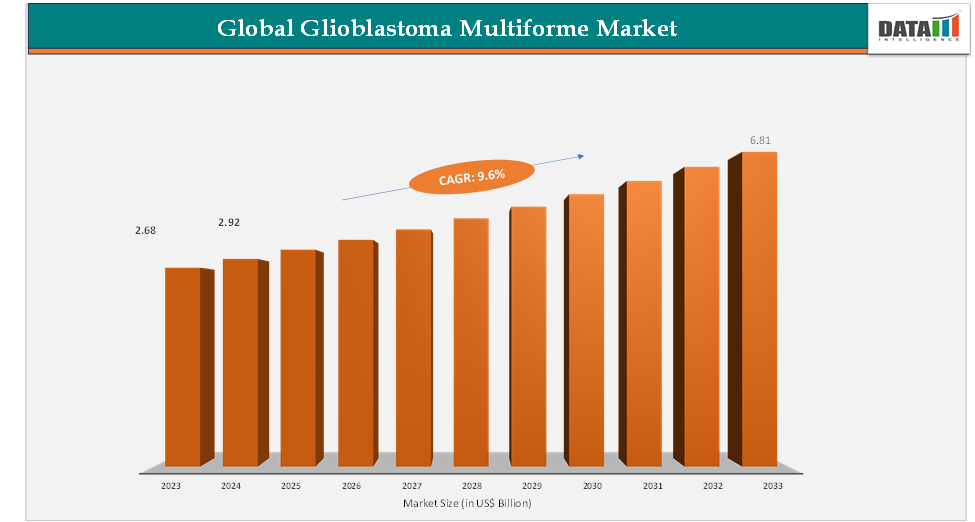
The Glioblastoma Multiforme Market is estimated to reach USD 3.20 Billion in 2025 and is projected to grow to USD 6.81 Billion by 2033, registering strong growth at a CAGR of 9.6% during the forecast period from 2026 to 2033.
The glioblastoma multiforme market is experiencing steady growth, driven by the rising global incidence of brain tumors and increased awareness of neurological health. The market is further supported by advancements in oncology research, particularly in immunotherapy, targeted drug delivery, and tumor-treating technologies. Innovations such as tumor treating fields (TTFields), next-generation chemotherapeutics, and personalized medicine approaches are enhancing treatment efficacy and extending survival outcomes. Additionally, growing investment in clinical trials, faster regulatory pathways like Orphan Drug and Breakthrough Therapy designations, and improved diagnostic imaging have contributed to early detection and more aggressive treatment strategies.
Key Market Trends & Insights
North America accounted for approximately 37.2% of the global glioblastoma multiforme market in 2024 and is expected to maintain its leading position throughout the forecast period. This dominance is driven by advanced healthcare infrastructure, substantial R&D investments, early adoption of innovative therapies such as tumor treating fields (TTFields) and immunotherapies, and strong regulatory support facilitating faster approvals.
Asia-Pacific is projected to be the fastest-growing region, propelled by expanding healthcare access, increasing incidence of brain tumors, growing awareness of neurological diseases, and rising government initiatives to improve cancer care. Rapid economic development, increasing availability of diagnostic tools, and enhanced clinical trial activities further fuel market expansion in this region.
Targeted therapies and personalized medicine approaches are gaining momentum as the dominant treatment segments, favored for their potential to improve survival outcomes and reduce side effects compared to conventional therapies.
Market Size & Forecast
2025 Market Size: USD 3.20 Billion
2033 Projected Market Size: USD 6.81 Billion
CAGR (2025–2033): 9.6%
North America: Largest market in 2025
Asia Pacific: Fastest-growing market
Dynamics: Drivers & Restraints
Driver: Rising Incidence of Glioblastoma Multiforme
The rising incidence of glioblastoma multiforme (GBM) is expected to significantly drive the growth of the GBM market, as increasing case numbers create a greater demand for effective diagnosis and treatment options. Recent epidemiological data indicate a steady rise in GBM diagnoses globally, partly due to improved diagnostic imaging techniques and increased awareness among healthcare professionals. For instance, according to the report by the National Institute of Health in 2025, Glioblastoma is the most common and lethal primary malignant brain tumor in adults, accounting for approximately 45–50% of all primary brain cancers. Its annual incidence is estimated at 3–5 cases per 100,000 individuals globally, with slightly higher rates observed in developed countries.
For instance, the Central Brain Tumor Registry of the United States (CBTRUS) reported an upward trend in GBM incidence over the past decade, especially among older adults. More than 13,000 Americans are diagnosed with GBM every year. This growing patient population is fueling the need for advanced therapies, including targeted drugs, immunotherapies, and novel treatment modalities like tumor treating fields (TTFields). Furthermore, ongoing clinical trials and regulatory approvals for new GBM treatments reflect the urgent demand to address this aggressive cancer. As more patients seek personalized and effective treatment solutions, the expanding prevalence of GBM will continue to be a key driver propelling market growth globally..
Restraint: Limited Treatment Efficacy and High Recurrence
Limited treatment efficacy and high recurrence rates are significant challenges expected to hinder the growth of the glioblastoma multiforme (GBM) market. Despite advances in surgery, chemotherapy, and radiation, GBM remains one of the most aggressive and treatment-resistant brain cancers, with standard therapies often providing only modest survival benefits. The tumor’s highly invasive nature and ability to develop resistance lead to frequent recurrences, making long-term disease management difficult. This results in high unmet medical needs and patient mortality, which can discourage investment and slow market expansion.
For more details on this report, Request for Sample
Segmentation Analysis
The glioblastoma multiforme market is segmented by treatment type, drugs, end-user, and region.
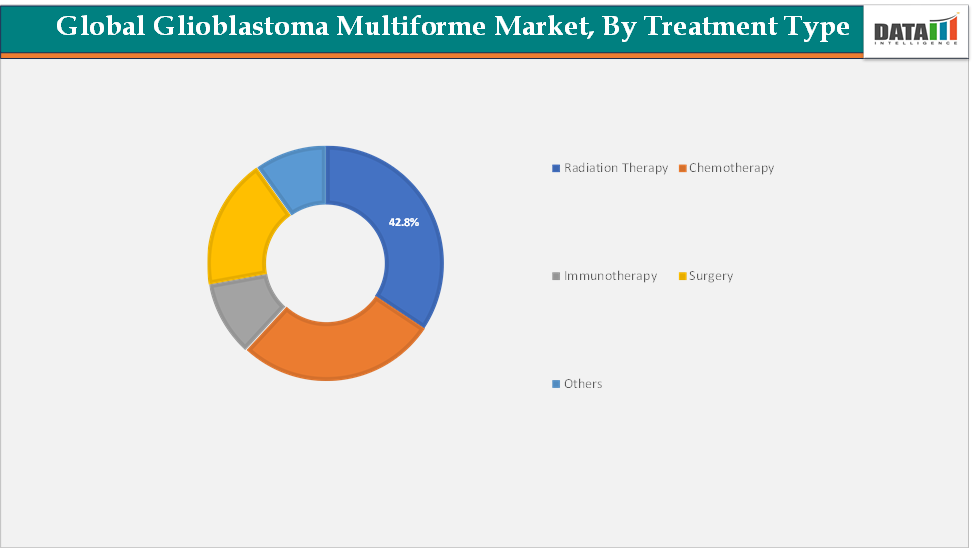
Treatment Type-The radiation therapy segment is estimated to have 39.7% of the glioblastoma multiforme market share.
Radiation therapy remains a cornerstone in the treatment of glioblastoma multiforme, serving as the dominant segment in the market due to its established efficacy in managing this aggressive brain cancer. Standard treatment typically involves surgical resection followed by adjuvant radiation therapy to target residual tumor cells. Recent advancements have enhanced the precision and effectiveness of radiation therapy. For instance, the integration of nanomedicine with proton and X-ray radiotherapy has shown promise in improving dose precision and radiosensitization, potentially overcoming the challenges posed by the blood-brain barrier and tumor microenvironment.
Additionally, the development of predictive digital twins for optimizing patient-specific radiotherapy regimens under uncertainty has been proposed, aiming to personalize treatment plans and improve outcomes. These innovations underscore the continued relevance and advancement of radiation therapy in the GBM treatment landscape.
Geographical Shares
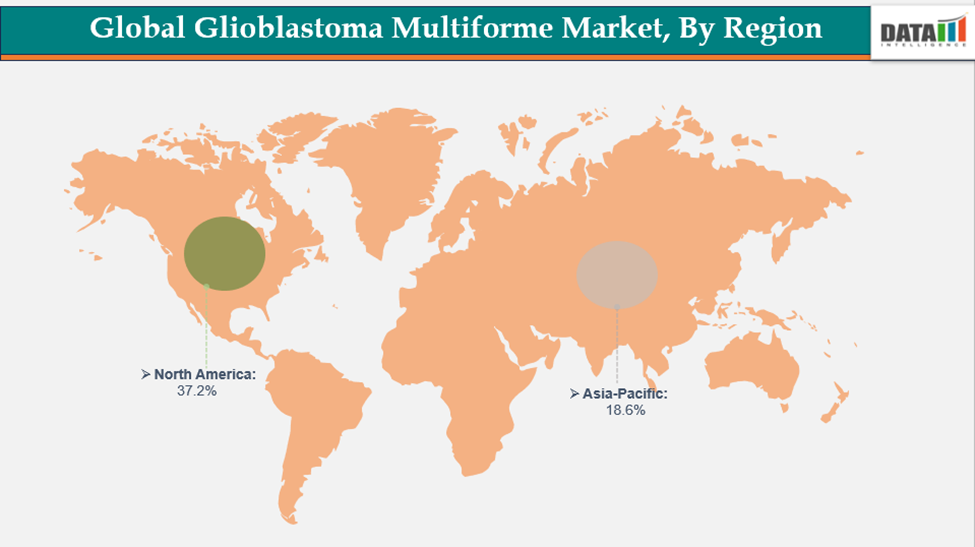
The North America glioblastoma multiforme market was valued at 37.20% market share in 2024
North America holds a commanding position in the global glioblastoma multiforme (GBM) market, accounting for approximately 37.2% of the market share in 2024. This leadership is driven by several critical factors, including a robust and well-established healthcare infrastructure, widespread access to cutting-edge diagnostic and therapeutic technologies, and significant investments in research and development. The high incidence rate of GBM in the region further fuels demand for innovative treatments.
Moreover, government initiatives, such as the U.S. Department of Defense’s Glioblastoma Research Program (GBMRP), which received over $10 million in funding in 2024, have accelerated the development of new therapies. The region also benefits from a high concentration of pharmaceutical and biotech companies conducting advanced clinical trials, such as Gilead Sciences’ promising CAR-T cell therapy trials for recurrent GBM, which have demonstrated encouraging tumor response rates. These combined factors create a conducive environment for the rapid adoption of novel therapies, ensuring North America maintains its dominant market position through the forecast period.
The Asia-Pacific glioblastoma multiforme market was valued at 18.60% market share in 2024
The Asia-Pacific region is emerging as the fastest-growing market for glioblastoma multiforme treatments. This growth is driven by multiple factors, including rising incidence rates of GBM in populous countries such as China and India, expanding healthcare infrastructure, and increasing awareness of brain cancers among healthcare providers and patients.
Asia-Pacific has seen an upsurge in international collaborations for clinical research, accelerating the development and approval of innovative therapies tailored to the region’s diverse population. Enhanced diagnostic capabilities and growing adoption of advanced treatment modalities, including immunotherapies and targeted therapies, further fuel the region’s rapid market expansion. These dynamics collectively position Asia-Pacific as a critical growth driver in the global GBM market landscape.
Competitive Landscape
The major players in the glioblastoma multiforme market include Genentech (Roche), Pfizer Inc., Amgen Inc., Merck & Co., Inc., VBI Vaccines Inc. and Starlight Therapeutics, among others.
Genentech: Genentech is a prominent leader in the glioblastoma multiforme market, renowned for its innovative approach to developing targeted therapies and immuno-oncology treatments. The company’s flagship product, Avastin (bevacizumab), is widely used for managing GBM by inhibiting tumor blood vessel growth, helping to slow disease progression. Genentech continuously invests in advanced research and clinical trials to enhance treatment efficacy and explore combination therapies, reinforcing its position as a key player in the GBM market. Their commitment to cutting-edge science and patient-centric solutions ensures sustained growth and a strong global presence in the fight against glioblastoma.
Key Developments:
- April 2026 – Roche and Genentech advancing targeted oncology programs
Genentech (Roche) strengthened development of targeted therapies and combination treatment strategies aimed at improving outcomes for glioblastoma multiforme patients. - March 2026 – Pfizer and Merck expanding immunotherapy research
Pfizer and Merck & Co. accelerated research into immunotherapy and checkpoint inhibitor approaches for GBM, focusing on overcoming tumor resistance and improving survival rates. - February 2026 – Amgen increasing focus on biologics and precision medicine
Amgen advanced biologic therapies and biomarker-driven treatment programs designed to support personalized approaches in aggressive brain cancer management. - January–April 2026 – Emerging biotech firms progressing novel GBM candidates
Companies such as VBI Vaccines and Starlight Therapeutics expanded clinical development of vaccine-based, gene therapy, and next-generation experimental treatments for glioblastoma.
Market Scope
Metrics | Details | |
CAGR | 9.6% | |
Market Size Available for Years | 2022-2033 | |
Estimation Forecast Period | 2026-2033 | |
Revenue Units | Value (US$ Bn) | |
Segments Covered | Product Type | Radiation Therapy, Chemotherapy, Immunotherapy, Surgery, Others |
By Drugs | Temozolomide, Lomustine, Bevacizumab, Others | |
Distribution Channel | Hospitals, Specialty Clinics, Others | |
Regions Covered | North America, Europe, Asia-Pacific, South America, and the Middle East & Africa | |
The glioblastoma multiforme market report delivers a detailed analysis with 73 key tables, more than 76 visually impactful figures, and 195 pages of expert insights, providing a complete view of the market landscape.
Suggestions for Related Report
For more pharmaceuticals-related reports, please click here



























































