


Overview
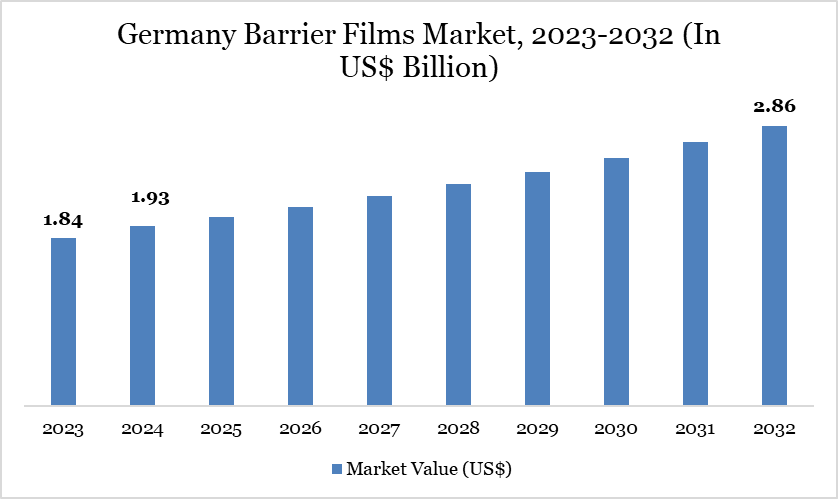
Germany barrier films market reached US$1.93 billion in 2024 and is expected to reach US$2.86 billion by 2032, growing at a CAGR of 5.02% during the forecast period 2025-2032.
The German barrier film business is being changed by the combined pulls of increased packaged food demand and severe sustainability rules. Food producers and retailers are increasingly relying on sophisticated oxygen and moisture-resistant films to decrease spoiling and food waste. This need is fueled by German consumers' high preference for packaged, ready-to-eat meals and frozen goods, where barrier films are essential for protecting product integrity.
The sustainability demands are spurring innovation throughout the German packaging industry. Companies are required by the VerpackG (Packaging Act) to promote recyclability, resulting in a trend away from complex multi-layer films and toward recyclable monomaterial solutions. For instance, in 2023, BASF collaborated with German converters to test PE-based mono-barrier films that can be recycled inside existing systems, while Aldi and Lidl announced new recyclable private-label packaging lines.
Barrier Films Market Trend
One of the most significant trends in Germany is the shift from traditional multi-layer packaging to recyclable mono-material solutions and bio-based barrier films. Leading converters and material suppliers are developing high-barrier polyethylene and polypropylene monofilms that can be recycled using existing technologies. At the same time, German packaging producers are testing bio-based barrier films made from cellulose or PLA for coffee, confectionery and bakery packaging.
Retailers such as Aldi and Lidl have already launched recyclable packaging lines, while other German food firms are developing biodegradable or fiber-based barrier solutions. This rise reflects both regulatory compliance with the EU Single-Use Plastics Directive and market desire for sustainable packaging alternatives.
Market Scope
Metrics | Details |
By Material | Plastic Films, Paper Films, Others |
By Packaging Type | Bags & Pouches, Lids, Stretch & Shrink Wraps, Others |
By End-User | Food & Beverage, Pharmaceuticals, Agriculture, Chemicals, Others |
Report Insights Covered | Competitive Landscape Analysis, Company Profile Analysis, Market Size, Share, Growth |
Market Dynamics
Growth of E-commerce and Packaged Food Distribution
Germany's fast growing e-commerce grocery and meal-kit delivery sector is a major driver of barrier films. Platforms such as Rewe Online, Picnic and HelloFresh are gaining popularity and these companies rely largely on high-barrier flexible packaging to keep products fresh during transportation.
Temperature-sensitive goods, frozen foods and ready-to-eat meals require films with high oxygen and moisture resistance to prevent deterioration during last-mile delivery. The growing preference for contactless shopping and the convenience of home delivery is driving packaging converters in Germany to produce more durable and protective barrier film solutions.
Recycling Complexity of Multi-Layer Films
Recycling multi-layer structures, which are widely utilized for their strong barrier performance but difficult to separate in typical recycling streams, is a significant constraint in the German barrier films industry. Despite Germany's excellent waste management system under the VerpackG, multi-material packaging is frequently burnt instead of recycled.
Regulators, environmental groups and merchants are all putting pressure on package manufacturers to fully recycle their materials. Companies must balance technical performance with circularity standards, which raises R&D expenditures and inhibits the adoption of some high-barrier materials.
Segment Analysis
Germany barrier films market is segmented based on material, packaging type and end-user.
Rising Regulations in Food Safety Drives the Segment Growth
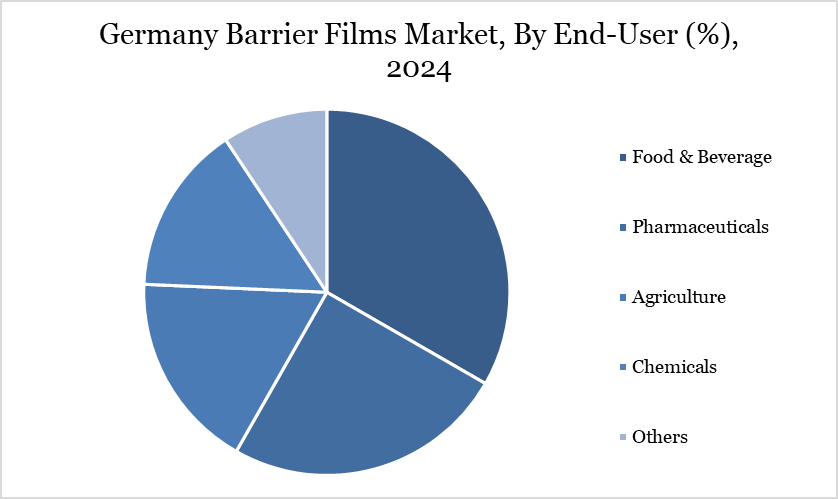
Food and beverages will account for the majority of the market in 2024, owing to the country's strict focus on food safety, shelf life extension and waste reduction, as well as consumer demand for convenience. Germany's Federal Institute for Risk Assessment (BfR) has tight criteria for food-contact materials, requiring improved barrier characteristics to protect against air, moisture, light and pollutants.
This regulatory climate forces food processors and packaging suppliers to use high-barrier films that ensure compliance while retaining product freshness. Barrier films are essential for increasing shelf life and preventing spoiling in perishable categories such as meats, dairy, bakery and ready-to-eat meals, directly meeting Germany's broader objective of reducing food waste by 30% by 2025 under its National Food Waste Strategy.
Sustainability Analysis
Germany's barrier film market is being altered by Europe's new Packaging and Packaging Waste Regulation, which goes into effect on February 11, 2025 and will apply after an 18-month transition period. PPWR hard-codes "design for recyclability" (all packaging recyclable by 2030) and transitions to "recycling at scale" by 2035, directing converters toward mono-material PE/PP high-barrier structures rather than complicated multilayers that are difficult to sort.
German compliance builds on the national Packaging Act, which requires Extended Producer Responsibility, mandatory LUCID registration and escalating recycling quotas, tightening cost and reporting discipline for anybody putting packaged items on the market. In parallel, Germany's deposit-return policy continues to expand, enabling high collection rates that make recycled feedstock more available and dependable for film producers.
Competitive Landscape
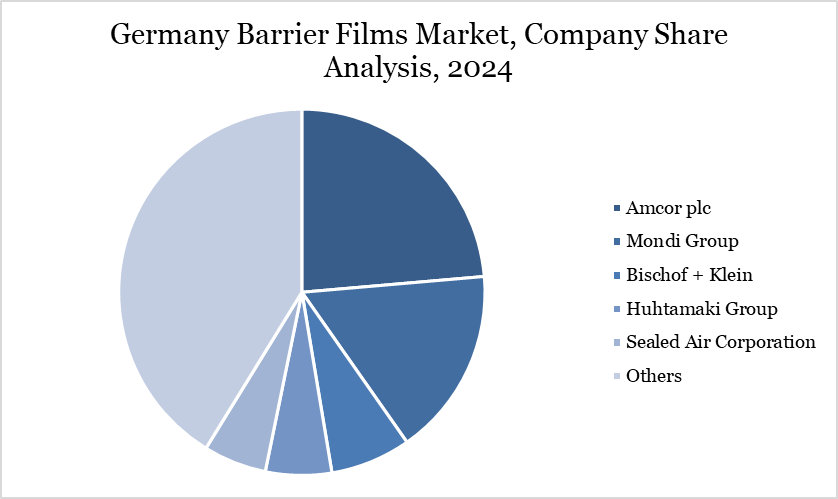
The major players in the market include Amcor plc, Mondi Group, Bischof + Klein, Huhtamaki Group, Sealed Air Corporation, Toppan Holdings Inc., DuPont Teijin Films, Innovia Films, Coveris and RKW Group.
Key Developments
In 2023, Toppan opened a new factory in Most, Czech Republic. Toppan plans to start mass production at its first European transparent barrier film manufacturing facility by the end of 2024. With the commissioning of the new factory, Toppan will create a market-leading and global supply capacity of transparent barrier films, with manufacturing bases in Japan, North America and Europe.
In 2023, Toppan, Mitsui Chemicals Tohcello and Mitsui Chemicals have launched a prototype operation to recycle printed BOPP film horizontally. This effort intends to scale up the necessary technologies and infrastructure while also bolstering network expansion within the flexible packaging materials sector.
Why Choose DataM?
Data-Driven Insights: Dive into detailed analyses with granular insights such as pricing, market shares and value chain evaluations, enriched by interviews with industry leaders and disruptors.
Post-Purchase Support and Expert Analyst Consultations: As a valued client, gain direct access to our expert analysts for personalized advice and strategic guidance, tailored to your specific needs and challenges.
White Papers and Case Studies: Benefit quarterly from our in-depth studies related to your purchased titles, tailored to refine your operational and marketing strategies for maximum impact.
Annual Updates on Purchased Reports: As an existing customer, enjoy the privilege of annual updates to your reports, ensuring you stay abreast of the latest market insights and technological advancements. Terms and conditions apply.
Specialized Focus on Emerging Markets: DataM differentiates itself by delivering in-depth, specialized insights specifically for emerging markets, rather than offering generalized geographic overviews. This approach equips our clients with a nuanced understanding and actionable intelligence that are essential for navigating and succeeding in high-growth regions.
Value of DataM Reports: Our reports offer specialized insights tailored to the latest trends and specific business inquiries. This personalized approach provides a deeper, strategic perspective, ensuring you receive the precise information necessary to make informed decisions. These insights complement and go beyond what is typically available in generic databases.
Target Audience 2024
Manufacturers/ Buyers
Industry Investors/Investment Bankers
Research Professionals
Emerging Companies


























































