


GCC and Africa Medical Gauze Market Size and Overview
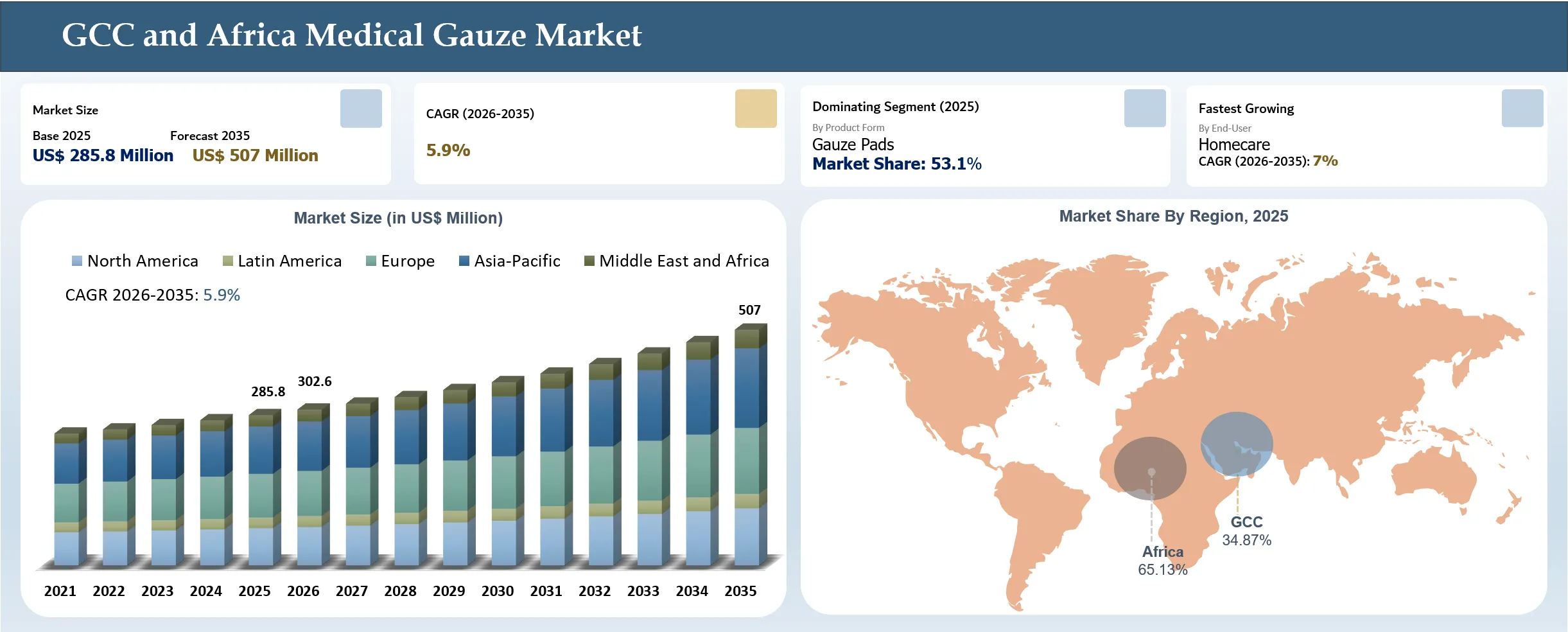
The gcc and africa medical gauze market Value reached USD 285.8 million in 2025 and is expected to reach USD 507 million by 2035, growing with a CAGR of 5.9% during the forecast period 2026-2035. The market is experiencing consistent growth as a result of a high number of surgical interventions, growing demand for sterile wound care consumables, development of healthcare facilities, and increasing investment in public and private healthcare systems in the GCC and Africa. Africa region captured around 65% of the regional market value in 2025, attributed to growing availability of healthcare facilities, increasing number of patients, investments in public health sector, procurement programs of NGOs, and rising usage of basic wound care products, while GCC region contributed about 35% of regional revenues, on account of high demand for sterile gauze products, stringent regulatory environment, and centralized procurement process.
The market is very dependent on imports, with the majority of the products coming from China, India, Europe, and other Asian countries, thus providing scope for local manufacturing and private label manufacturing. Among countries, Saudi Arabia, UAE, Nigeria, South Africa, Egypt, Kenya, and Ethiopia are some of the important growth markets in the region.
White-Space Opportunities for GCC Medical Gauze Manufacturing Capacity Expansion and Localized Wound-Care Production
In November 2025, Pharma Investment Group (IMGSA – Free Zone Company), a joint venture between Omani investors and Algeria-based Spa IMGSA Group, signed a land lease agreement with SOHAR Port and Freezone to establish a USD 20 million pharmaceutical and medical supplies manufacturing facility in Sohar Freezone, Oman. The largest investment focus is directed toward sterile medical consumables manufacturing, particularly sterile gauze production, supported by sterile production lines, advanced quality-control laboratories, R&D units, and specialized manufacturing infrastructure. The facility, spread across 40,000 square meters, is expected to begin operations in 2027 and will manufacture products including sterile gauze, medical gloves, antibiotics, oncology treatments, and other medical consumables.
The investment creates major opportunities in the GCC medical gauze and wound-care supply chain, including sterile gauze manufacturing equipment, medical-grade cotton and nonwoven materials, sterilization systems, cleanroom technologies, packaging solutions, quality testing, and regulatory compliance services. Pharma Investment Group (IMGSA) is the primary beneficiary as the project developer and manufacturer, while SOHAR Port and Freezone benefits through expansion of its pharmaceutical industrial cluster and attraction of healthcare manufacturing investments. In addition, IMGSA Group Algeria contributes GMP-certified pharmaceutical manufacturing expertise and access to North African and European healthcare markets. Companies providing sterile manufacturing technologies, medical consumable machinery, cleanroom systems, and laboratory solutions such as Getinge, Syntegon Technology, IMA Group, Sartorius, Thermo Fisher Scientific, and Mettler Toledo could benefit indirectly through equipment supply, validation, testing, and production-support opportunities.
Beyond sterile gauze manufacturing, the investment supports additional healthcare production areas including pharmaceutical formulations, oncology medicines, antibiotics, medical gloves, and healthcare consumables, creating opportunities across the wider GCC healthcare manufacturing ecosystem. The project aligns with Oman Vision 2040 by strengthening local production capacity and reducing dependence on imported medical supplies. Companies benefiting from related investment opportunities include SOHAR Port and Freezone through industrial infrastructure development, Pharma Investment Group (IMGSA) through healthcare manufacturing expansion, and suppliers involved in pharmaceutical and medical device value chains. Potential beneficiaries include B. Braun Melsungen AG, Mölnlycke Health Care, Hartmann Group, Cardinal Health, and Medline Industries in areas such as wound-care products, surgical consumables, and medical supply distribution; STERIS and Getinge in sterilization and infection-control technologies; and SGS, Bureau Veritas, Eurofins Scientific, and TÜV SÜD in quality assurance, ISO 13485 certification support, laboratory testing, and regulatory compliance services. Additionally, logistics and healthcare distribution companies operating across the GCC, including regional pharmaceutical distributors and medical supply chains, may benefit from increased availability of locally manufactured sterile gauze and medical consumables from Oman.
GCC and Africa Medical Gauze Strategic Takeaways
- Africa generated 65.13% of total regional demand in 2025, valued at US$ 186.2 million. The GCC region accounted for the remaining 34.87%, representing US$ 99.7 million.
- Gauze pads formed the largest product segment in 2025 with a 53.1% share, projected to rise to 55.5% by 2033. Gauze rolls and gauze balls held 31.7% and 15.2% shares in 2025, respectively.
- Asia dominates global medical gauze production, accounting for approximately 71% of global output, making it the primary export hub supplying the GCC and African markets. China leads global production with a 38% share, followed by India at 20% and Pakistan at 8%. In comparison, the US and Germany together account for 13% of global output.
- Overall import dependency remains elevated across the GCC region at 85% to 90% of total supply. African markets similarly rely on imports for 80% to 88% of their total gauze requirements.
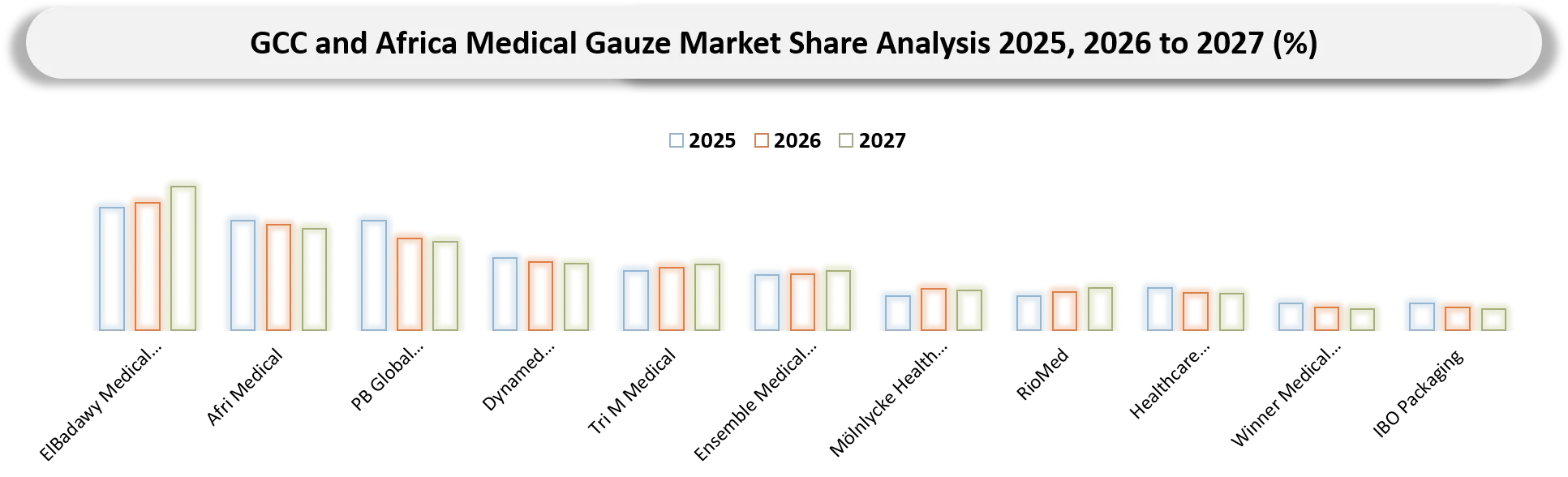
- Mölnlycke Health Care holds the largest market share in the region at 7.5%. Regional manufacturers ElBadawy Medical and Tri M Medical hold 2.7% and 1.5% shares, respectively.
GCC and Africa Medical Gauze Industry Trends and Strategic Insight
- The GCC and africa medical gauze market is shifting from basic wound coverage toward infection-control-focused procurement, with hospitals increasingly prioritizing sterile gauze products featuring validated packaging, consistent absorbency, contamination control, and regulatory documentation.
- Healthcare procurement systems across GCC and African markets are increasingly moving toward standardized gauze specifications, including dimensions, ply structure, sterile status, packaging format, shelf life, labeling requirements, and product coding.
- Regulated hospitals, private clinics, outpatient centers, and dental facilities are showing increased adoption of non-woven gauze formats due to lower linting, controlled absorbency, cleaner handling, and compatibility with sterile procedure packs.
- Suppliers with advanced sterilization capabilities, regulatory compliance, traceable packaging, and institutional-grade product portfolios are positioned to capture higher-value opportunities in GCC markets, where hospitals increasingly prioritize quality assurance over basic cost considerations.
- The high dependence on imported medical gauze across the GCC and Africa creates strategic opportunities for regional manufacturers and investors to establish local production capabilities, including cotton gauze processing, cutting, folding, sterilization, packaging, and distribution networks.
GCC and Africa Medical Gauze Report Scope
| Metrics | Details | |
| 2025 Market Size | USD 285.8 Million | |
| 2035 Projected Market Size | USD 507 Million | |
| CAGR (2026-2035) | 5.9% | |
| Largest Market | Africa | |
| Fastest Growing Market | GCC | |
| By Product Form | Gauze Pads, Gauze Rolls, Gauze Balls | |
| By End-User | Hospitals, Clinics, Homecare, NGOs & Humanitarian Organizations, Pharmacies & Retail Medical Stores | |
| By Region | GCC and Africa | UAE, Saudi Arabia, South Africa, Israel, Türkiye |
| Report Insights Covered | Competitive Landscape Analysis, Company Profile Analysis, Market Size, Share, Growth | |
GCC and Africa Medical Gauze Market Disruption Analysis
Supply Chain Dependency and Import Disruption Risk Reshaping GCC and Africa Medical Gauze Market
The disruption in the GCC and africa medical gauze market is primarily driven by the region's high dependency on imported raw materials that are cotton-based, sterilized dressing products, packing materials, and external sterilization services. Considering the importance of medical gauze as a vital consumer product in operating theaters, emergency departments, delivery suites, outpatient clinics, and home care facilities, any disruption in the supplies of such medical products could lead to a shortage of sterile gauze pads, gauze rolls, and dressings. This problem is particularly prevalent in Africa because its health system is highly import-dependent. According to the Africa CDC Health Security and Sovereignty Agenda (2025), Africa depends on importation of more than 90% of its health commodity needs, and there was a rise in disease outbreaks of 41% from 2022 to 2024.
Furthermore, the supply disruption risk is exacerbated by the instability of global logistics with respect to the healthcare products that are being imported via the major Asia-Europe-Middle East trading routes. According to UNCTAD, in 2024, transits via the Suez Canal were down 42%, and the weekly transits of container ships via the Red Sea declined 67%. As a result, the logistics of these healthcare imports become elongated, the cost of transportation increases, and the delivery time becomes more extended for those supplying the consumables. The changes in the procurement processes in GCC and Africa are forcing healthcare institutions and public-sector buyers to favor suppliers who have the capacity for diverse sources of supply, regulatory compliance, local warehouses, reliable sterilization, and effective last-mile delivery.
GCC and Africa Medical Gauze Market BCG Matrix: Company Evaluation

Stars include Mölnlycke Health Care, Winner Medical Co., Ltd., and Cardinal Health because these companies have strong market positioning, established global healthcare supply networks, and extensive portfolios covering advanced wound care, sterile gauze, surgical dressings, and hospital consumables. These companies benefit from high brand recognition, regulatory compliance capabilities, and strong relationships with healthcare institutions, distributors, and government procurement systems across GCC and African markets. Question Marks include Afri Medical, PB Global Industries Ltd., Dynamed Pharmaceuticals (Pty) Ltd., and Tri M Medical, as these companies are expanding their presence in African and regional healthcare supply chains but operate in a highly competitive environment dominated by multinational medical consumable manufacturers.
Potential Growth Players include ElBadawy Medical Company, Ensemble Medical Manufacturers, RioMed, and Healthcare Systems EST because these companies benefit from increasing healthcare infrastructure development, rising demand for locally available medical consumables, and expanding hospital networks across GCC and Africa. These players have opportunities to capture additional market share through localized manufacturing, improved distribution coverage, and partnerships with healthcare providers. Tailenders include IBO Packaging because its contribution to the medical gauze ecosystem is primarily associated with supporting packaging and related supply-chain requirements rather than being a dominant manufacturer of medical gauze products.
GCC and Africa Medical Gauze Market Dynamics
Driver Impact Analysis
| Driver | Market Growth Impact (%) | Demand Concentration | Impacted Use Case | Strategic Impact |
Expansion of private healthcare facilities | 30% | GCC countries (Saudi Arabia, UAE, Qatar) and major African urban healthcare markets (South Africa, Egypt, Nigeria, Kenya) | Hospitals, private clinics, surgical centers, outpatient care facilities | Expands demand for sterile gauze pads, rolls, and surgical dressings while increasing opportunities for suppliers with reliable distribution networks and regulatory compliance. |
Recurring demand as a consumable product | 25% | Across GCC and Africa healthcare systems due to continuous hospital and clinical consumption | Operating rooms, emergency departments, maternity wards, wound-care management, homecare | Provides stable replacement-driven demand and supports consistent revenue streams for medical gauze manufacturers and distributors. |
Rising demand for sterile and infection-control-ready gauze | 25% | GCC healthcare facilities and advanced hospitals across Africa | Surgical procedures, post-operative wound dressing, infection prevention applications | Encourages adoption of high-quality sterile gauze products and increases preference for certified suppliers meeting healthcare quality standards. |
Expansion of Public Healthcare Procurement Programs Supporting Bulk Medical Gauze Demand | 20% | GCC government healthcare systems and African public hospitals supported by healthcare development programs | Government hospitals, national healthcare supply programs, emergency medical stockpiles | Strengthens bulk procurement opportunities and favors suppliers capable of fulfilling large-scale tenders with consistent supply availability. |
Localization of Medical Consumable Manufacturing Supporting Regional Supply Availability | 15% | GCC manufacturing hubs and emerging African healthcare production centers | Sterile gauze manufacturing, medical supply distribution, regional inventory management | Reduces import dependency, improves supply chain resilience, and creates opportunities for domestic and regional gauze manufacturers. |
Expansion of private healthcare facilities
Private healthcare expansion is directly strengthening the GCC and africa medical gauze market by increasing hospitals, specialty clinics, day-surgery centers, diagnostic units and homecare touchpoints that consume gauze daily for wound dressing, surgical care, emergency treatment and post-procedure management. In Saudi Arabia, private sector healthcare contribution is targeted to rise from 40% to 65% by 2030, alongside privatization of 290 hospitals and 2,300 primary healthcare centers, creating a wider institutional buyer base for sterile gauze pads, gauze rolls and procedure-ready wound-care consumables. In the GCC, this demand impact is visible through private provider capital raising and capacity expansion.
Fakeeh Care Group completed a $772.5 million (SAR 2.9 billion) healthcare IPO in 2024, while Almoosa Health planned to raise $449.7 million (SAR 1.7 billion) through its Riyadh IPO. As private networks add beds, pharmacies and specialty departments, gauze procurement shifts from ad-hoc buying toward repeat institutional purchasing. UAE healthcare consolidation reinforces this driver by creating integrated provider networks that require standardized consumable supply. PureHealth’s 2024 reporting shows 100-plus hospitals, 300-plus clinics, 143-plus diagnostic centers, and around 4,900 beds, increasing demand for supplier-qualified gauze with sterile packaging, pack-size consistency, and reliable distributor fulfilment.
Restraint Impact Analysis
| Restraint | Drag on Market Growth (%) | Primary Impact Area | Impacted Use Case | Strategic Impact |
Strong price competition from India and China | 20% | Product pricing, supplier margins, import competitiveness | Standard surgical gauze, wound dressing, hospital consumables procurement | Low-cost Asian suppliers pressure regional manufacturers, limiting pricing power and reducing incentives for local production investments. India and China remain dominant sources due to large-scale manufacturing capabilities and cost advantages. |
Regulatory requirements in certain GCC markets | 15% | Product registration, compliance documentation, quality certification | Sterile gauze, advanced wound care products, government hospital tenders | Complex regulatory approvals increase market entry timelines, compliance costs, and operational burden for manufacturers and distributors, particularly smaller suppliers. |
Limited Local Manufacturing Capabilities Restricting Regional Supply Independence | 18% | Manufacturing capacity, raw material availability, supply chain resilience
| Large-scale hospital supply contracts, emergency healthcare demand, public healthcare procurement | High dependence on imported medical gauze exposes GCC and African markets to supply disruptions, logistics delays, and currency fluctuations. Expansion of local manufacturing remains constrained by limited medical textile infrastructure and investment requirements. |
Fragmented Healthcare Distribution Networks Creating Supply Accessibility Challenges | 12% | Distribution efficiency, rural healthcare access, inventory management | Primary healthcare centers, remote clinics, humanitarian healthcare programs | Inefficient distribution channels increase lead times, inventory costs, and product availability gaps, especially across African countries with diverse healthcare infrastructure levels. |
Strong price competition from India and China
Strong price competition from India and China is restraining value realization in the GCC and Africa medical gauze market because gauze is a recurring consumable where hospital tenders, distributors and public procurement bodies prioritize landed cost, bulk availability and short-term price savings. In Saudi Arabia, China supplied 3.86 million kg of wound-care and gauze-related imports in 2024, representing nearly 61% of import volume, but only about 29% of import value, showing its clear low-cost volume advantage. This low-cost supply base puts direct pressure on premium sterile gauze suppliers, as buyers compare products across price bands before considering quality, documentation and brand reliability. Saudi Arabia’s 2024 imports from China averaged nearly US$6.7 per kg, while imports from the US averaged above US$135 per kg, based on WITS reported value and quantity. This pricing gap makes it difficult for higher-cost suppliers to protect margins unless they can justify the premium through sterility assurance, packaging quality, compliance readiness and institutional supply reliability.
In February 2026, According to Kingphar Medical’s GCC Medical Gauze Supplier Guide, Chinese manufacturers have strengthened their presence in the GCC medical gauze supply chain by offering cost-competitive sterile gauze, gauze swabs, wound dressings, and surgical consumables supported by CE certification, ISO 13485 compliance, and GCC-specific regulatory documentation. The source highlights that approximately 65% of GCC medical gauze supply originates from China, indicating strong dependence on Chinese imports and increasing pricing pressure on regional suppliers. Chinese suppliers such as Kingphar Medical (Qianjiang Kingphar Medical Materials Co., Ltd.) leverage vertically integrated production, OEM capabilities, and large-scale manufacturing capacity to provide competitive pricing for UAE, Saudi Arabia, Kuwait, Qatar, Bahrain, and Oman markets. The company also indicates production capabilities exceeding 500 × 40-foot container loads of surgical dressing and medical supplies, strengthening China's export advantage and contributing to price competition for GCC and African medical gauze manufacturers.
GCC and Africa Medical Gauze Market Segment Analysis
The GCC and Africa medical gauze market is segmented based on product form, end-user, and region.
High Institutional Adoption of Pre-Sterilized Gauze Pads Driving High-Volume Demand
The Gauze Pads segment dominates the product forms in the GCC and Africa Medical Gauze Market owing to the requirement of standardized, high-absorbency, and dependable wound dressing products in primary care, surgeries, and trauma. In 2025, Gauze Pads achieved a distinct market leadership position as they secured a market share of 53.1% and earned revenues worth US$ 151.8 million in the region. The rising emphasis in the clinical setting on the prevention of surgical site infections (SSIs) and stringent standards of hygiene has significantly driven the demand for sterilized gauze pads since they exhibit enhanced absorbency, sterility control, and less linting than standard bulk products.
Leading healthcare organizations as well as government agencies across both the GCC and Africa have increasingly prioritized pre-packaged sterile gauze pads for outpatient clinics, surgical suites, and emergency response units. According to regional price benchmarks in 2025 and 2026, there is a very clear move towards sterile assurance, whereby sterile gauze pads cost USD 4.33 per package in the GCC region while costing USD 3.61 per package in Africa, compared to non-sterile counterparts whose prices range from USD 2.03 in the GCC to USD 1.15 in Africa. The prevalence of hospitals within the region, which account for more than 60% of total demand in the region, has contributed to the dominance of this product category.
GCC and Africa Medical Gauze Market Geographical Penetration
Rapid Public Healthcare Expansion and High-Volume Institutional Demand in Africa
Africa holds the dominant position in the GCC and Africa Medical Gauze Market, owing to the high volume of gauze sales through the highly populated nations such as Nigeria, Egypt, South Africa, Ethiopia, and Kenya. In 2025, the Africa region clearly established itself as the dominant player by holding a 65.13% market share and earning a revenue of US$ 186.2 Million. High volume distribution of gauze has become very important due to increased development of public primary health care facilities, growing standards of SSI prevention, and humanitarian purchases by NGOs.
This pricing environment reinforces intense competition from low-cost imported medical gauze, particularly from Chinese manufacturers, limiting pricing flexibility for regional suppliers. For instance, over 2025 and 2026, regional purchasing in Africa continues to be volume-oriented and price-sensitive, with non-sterile gauze pads being purchased at an average cost of USD 1.15 per pack and sterile gauze pads being acquired at an average of USD 3.61 per pack. Regional production continues to be largely centered on manufacturing regions such as Egypt and South Africa, with foreign sourcing mainly characterized by products manufactured in China. Constant advancements in the public healthcare system and initiatives aimed at making essential wound care available continue to make Africa the dominant region in terms of volumes and revenues generated.
South Africa, GCC, and Africa Medical Gauze Market Trends
South Africa’s medical gauze import market shows a clear expansion between 2021 and 2025, rising from 42,241 to 59,190 in 2025, reflecting sustained demand growth in wound care and surgical consumables. This represents a strong overall market expansion driven by hospital procurement, rising surgical volumes, and broader healthcare system consumption. The market structure is moderately concentrated but increasingly dependent on China. China dominates imports with 23,081 in 2025, accounting for roughly 39% of total imports, and has strengthened its position over the period through consistent growth despite minor fluctuations in 2024. The United States, Germany, and the United Kingdom form the second tier of suppliers, collectively contributing around 26 to 27% of total imports, but none show sustained dominance or strong upward momentum comparable to China.
Demand is further strengthened by South Africa’s growing diabetes burden, which increases the incidence of chronic wounds, diabetic foot ulcers, and infection-related complications requiring frequent dressing changes and long-term wound management. According to the International Diabetes Federation (IDF), 4.7 million adults aged 20 to 79 years were living with diabetes in South Africa in 2025, representing approximately 11.3% of the adult population. Diabetes-related complications often require continuous wound care, ulcer treatment, debridement procedures, and infection management, resulting in recurring consumption of medical gauze across hospitals, clinics, and outpatient care settings. The large diabetic patient pool, combined with rising healthcare utilization, continues to support sustained demand for wound care consumables throughout the country. South Africa presents strong opportunities for medical gauze suppliers due to increasing surgical volumes, a large and growing diabetic population, and rising reliance on imported wound care products, supporting long-term demand growth across both acute and chronic care settings.
Regulatory Modernization and High-Value Healthcare Expansion in the GCC Region
The GCC market represents a critical high-value regional segment in the GCC and Africa medical gauze industry, driven by government-backed healthcare modernization projects, rapid expansion of private medical facilities, and strict regulatory compliance standards. In 2025, the GCC region accounted for a 34.87% market share generating US$ 99.7 million in market value—supported by high unit prices and strong institutional demand for standardized, sterile wound care products. The region relies heavily on foreign imports for 85%–90% of its medical gauze supply, with Asian suppliers dominating volume (such as China representing 61% of Saudi Arabia's imported volume). However, growing healthcare infrastructure targets under regional programs like Saudi Vision 2030 are driving high-volume procurement through centralized digital purchasing platforms.
Regional procurement in the GCC is defined by strict quality controls, with sterile gauze pads averaging USD 4.33 per pack and non-sterile variants priced at USD 2.03 per pack. Regulatory authorities, such as the Saudi Food and Drug Authority (SFDA), are enforcing mandatory Unique Device Identification (UDI) compliance, serialization, and local authorized representation for medical device distributors. Centralized national purchasing agencies, such as NUPCO in Saudi Arabia, aggregate public sector demand to streamline supply chains while maintaining strict infection control standards. These regulatory frameworks and high-value tender requirements ensure the GCC maintains its prominent position as a key premium revenue segment in the regional medical gauze market.
Saudi Arabia, GCC, and Africa Medical Gauze Market Trends
Saudi Arabia, which is actively promoting domestic medical manufacturing, the wound care and dressing segment remains heavily dependent on imported products. Although Saudi Arabia is actively promoting domestic medical manufacturing under Vision 2030, the wound care and dressing segment remains largely dependent on imported products. The presence of a diverse supplier base, including manufacturers from Asia, Europe, and North America, indicates that healthcare providers continue to rely on imported products for a significant portion of their wound care requirements. China remains the largest supplier, accounting for approximately 25% of total imports in 2025. However, the supplier structure reveals an important shift. Finland contributes nearly 17%, while the United States accounts for approximately 15% of imports. Combined, premium suppliers such as Finland, the United States, Germany, the United Kingdom, and Japan represent a substantial share of total imports.
Demand is further supported by the Kingdom's ongoing expansion of specialized healthcare services under the Health Sector Transformation Program. Saudi Arabia continues to strengthen integrated healthcare clusters, tertiary care hospitals, specialized surgery centers, and chronic disease management programs. In 2025, the Ministry of Health reported more than 200,000 healthcare services delivered during the Hajj season alone, including surgical procedures, cardiac interventions, emergency care, and critical care services, highlighting the scale of healthcare utilization across the Kingdom. These treatment pathways directly consume medical gauze in surgical preparation, wound dressing, infection prevention, and post-operative care applications. Demand is further supported by the growing scale of religious tourism and pilgrimage-related healthcare services in Saudi Arabia. According to the Saudi General Authority for Statistics (GASTAT), the number of Hajj pilgrims increased from approximately 1.67 million in 2025 to 1.71 million in 2026, demonstrating the Kingdom's continued ability to attract and manage large pilgrim volumes.
GCC and Africa Medical Gauze Market Competitive Landscape
- The market is characterized by three key participant groups: regional medical gauze manufacturers, international wound care and medical consumables companies, and healthcare distribution specialists. Regional manufacturers including ElBadawy Medical Company, Afri Medical, PB Global Industries Ltd., Dynamed Pharmaceuticals (Pty) Ltd., Tri M Medical, Ensemble Medical Manufacturers (Megrotex Brand), Healthcare Systems EST, RioMed, and IBO Packaging compete primarily through localized production, government procurement contracts, and cost-competitive product portfolios across GCC and African healthcare systems. Global wound care leaders such as Mölnlycke Health Care, Winner Medical Co., Ltd., and Cardinal Health strengthen the competitive environment through advanced sterile gauze technologies, vertically integrated manufacturing, extensive regulatory certifications, and established hospital distribution networks. The market remains moderately fragmented, with multinational suppliers leading the premium institutional segment while numerous regional manufacturers account for a significant share of public healthcare tenders and private-label production. Globally, the top 8–10 medical gauze manufacturers collectively accounted for approximately 52–58% of the medical gauze market revenue in 2025, while the remaining share was distributed among regional and domestic manufacturers supplying country-specific healthcare systems across the GCC and Africa.
- Key players include ElBadawy Medical Company, Afri Medical, PB Global Industries Ltd., Dynamed Pharmaceuticals (Pty) Ltd., Tri M Medical, Ensemble Medical Manufacturers (Megrotex Brand), Mölnlycke Health Care, RioMed, Healthcare Systems EST, Winner Medical Co., Ltd., IBO Packaging, and Cardinal Health.
Key Developments in the GCC and Africa Medical Gauze Market
- February 2025: Mölnlycke Health Care established a local manufacturing and supply chain hub in Jeddah, Saudi Arabia through the Tamer Mölnlycke Care joint venture, enabling in-country production of selected surgical solutions including procedure trays and related healthcare products. The initiative strengthens regional manufacturing capabilities, supports Saudi Arabia’s healthcare localization strategy under Vision 2030, and enhances supply reliability across the GCC. It also improves lead times, reduces import dependency, and expands Mölnlycke’s ability to serve hospitals and healthcare providers across the Middle East with faster and more efficient product availability.
Key Procurement Priorities and Buyer Evaluation Criteria
- Suppliers in healthcare facilities and centralized purchasing agencies making investments in medical gauze are considered based on their capacity to provide products that have high absorbency, low linting capability, and are sterile based on international standards.
- The procurement decision process is becoming more and more affected by the following elements: institutional infection control policy, the change from bulk woven cotton to standard non-woven gauze, and finally the use of tendering systems like NUPCO within the GCC region.
- Important criteria that buyers take into account include competitiveness in unit pricing, sterile security, packaging, logistics, and meeting all the strict regional regulations such as the Saudi Food and Drug Authority (SFDA) UDI.
- Vendor capabilities relating to localized distribution network, ability to service large orders, pre-packed single-use sterile kits, and stable pricing in the face of global raw material and freight changes are evaluated by institutional buyers.
Why Choose DataM?
- Market Dynamics & Product Innovation: Analyzes key product forms—including sterile gauze pads, rolls, and balls—while evaluating shifts from traditional woven cotton to high-absorbency, low-linting non-woven materials across surgical and primary wound care settings.
- Product Performance & Market Positioning: Evaluates how market players differentiate through sterile assurance levels, specialized unit packaging, and price-to-quality positioning to serve institutional healthcare buyers across both high-value and price-sensitive channels.
- Real-World Evidence & Clinical Demand: Examines recurring consumption patterns across major end-users—such as public and private hospitals, outpatient clinics, homecare, and NGO humanitarian programs—highlighting clinical trends in surgical site infection (SSI) prevention.
- Market Updates & Industry Changes: Tracks regulatory shifts including SFDA UDI tracking mandates in the GCC, centralized digital procurement platforms like NUPCO, and government localization initiatives aimed at reducing regional import reliance.
- Competitive Strategies & Supply Structure: Analyzes supply dynamics across major regional and international players, detailing import dependency from China and India alongside local manufacturing capabilities in Egypt and South Africa.
- Pricing Benchmarks & Market Access: Provides detailed price benchmarks for sterile versus non-sterile formats across the GCC and Africa, outlining distribution channels, import routes, and public tender procurement frameworks.
- Market Entry & Regional Expansion: Identifies long-term growth opportunities driven by healthcare infrastructure expansion under programs like Saudi Vision 2030, offering actionable strategies for market entry, regulatory compliance, and distribution network expansion.
Target Audience
- Medical Device & Wound Care Manufacturers
- Centralized Procurement Bodies & Hospital Procurement Managers
- Medical Consumables Distributors & Importers
- NGOs & Humanitarian Procurement Agencies
- Healthcare Investors & Venture Capital / Private Equity Firms
- Regulatory Affairs & Health Policy Consultants


























































