


Gas Insulated Switchgear Market Definition and Overview
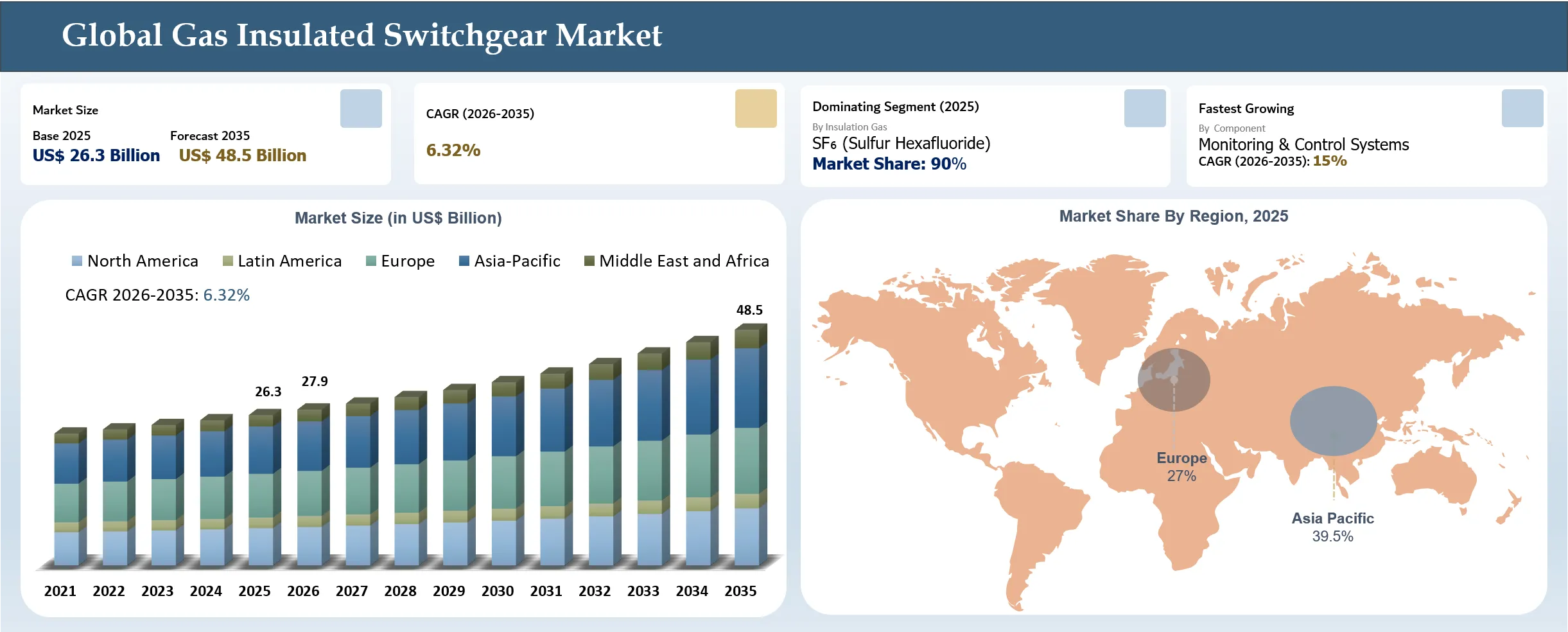
The global Gas Insulated Switchgear market Size reached USD 26.3 billion in 2025 and is expected to reach USD 48.5 billion by 2035, growing with a CAGR of 6.32% during the forecast period 2026-2035. The market is expanding due to higher investments in grid infrastructure, energy generation from renewable sources, and deployment of digital substations. As per the International Energy Agency (IEA), the world’s electricity demand grew by 3.0% in 2025, with annual investment in the grid being about US$400 billion, which should grow by almost 50% by 2030 due to growing electricity consumption and expansion of grid infrastructure. Furthermore, the International Renewable Energy Agency (IRENA) has highlighted that the total renewable power capacity in 2025 stood at 5,149 GW after adding 692 GW in a year, which represents 15.5% growth annually, thereby raising the need for more compact and highly reliable gas-insulated substations. Notably, major players like Hitachi Energy, Siemens Energy, GE Vernova, Schneider Electric, Mitsubishi Electric, and Toshiba Energy Systems & Solutions have been introducing SF₆-free GIS systems, digital monitoring capabilities, and eco-friendly insulation systems to improve grid reliability and facilitate decarbonization efforts. Nevertheless, high capital investments, engineering complexity, and changing of insulating gases pose challenges to market growth.
The shift towards SF₆-free HVGIS is increasing rapidly because of the importance that electrical companies place on decarbonizing the grid and meeting tough environmental laws. In July 2026, Hitachi Energy and the State Grid Corporation of China (SGCC) achieved a major milestone by commissioning the world’s first operational SF₆-free 550 kV Gas-Insulated Switchgear (GIS) at Yuxian Substation in Wuhan, China, on May 29, 2026. The new EconiQ® 550 kV GIS is built using an eco-efficient gas mixture that replaces the use of SF₆ and reduces the lifecycle greenhouse gas emissions due to insulating gases by about 99.2% over 40-years compared to a typical SF₆-insulated GIS.
White-space Opportunities for High-Voltage GIS Substation and Transmission Infrastructure
In April 2026, the Indian government approved an approximately USD 190 million investment for the development of a 2×500 MVA, 400/220/33 kV Gas Insulated Switchgear (GIS) substation at Basudevpur in Keonjhar district, creating significant opportunities across India's high-voltage transmission infrastructure market. The largest share of the investment is directed toward the construction of the GIS substation, which will serve the rapidly growing industrial and mining corridor of the Joda–Barbil–Palaspanga belt, where existing grid stations have reached maximum loading capacity. Beyond the GIS installation, the project also includes 400 kV and 220 kV transmission lines, grid interconnections, protection and control systems, digital substation automation, civil infrastructure, land development, and transmission network strengthening. The funding structure consists of USD 51.95 million (30%) as equity support from the Government of Odisha, while the remaining USD 121.23 million (70%) will be mobilized by Odisha Power Transmission Corporation Limited (OPTCL) through banks and financial institutions. The project is scheduled for implementation between FY2026–27 and FY2028–29, supporting power demand from new industrial developments in Keonjhar and the adjoining Koida region of Sundargarh. Similarly, in March 2026, the U.S. Department of Energy (DOE) announced approximately USD 1.9 billion in investment through the Strengthening Power and Accelerating Renewables and Clean Energy (SPARK) initiative to modernize critical grid infrastructure, reduce electricity costs, and improve transmission system reliability. Although the program does not directly allocate funding for Gas Insulated Switchgear (GIS), the expansion and modernization of transmission networks are expected to create opportunities for high-voltage substation equipment suppliers, as new transmission corridors and upgraded substations require advanced switchgear systems, including GIS, for reliable power distribution, compact installations, and enhanced grid protection.
The investment is expected to generate substantial procurement opportunities for companies operating across the Gas Insulated Switchgear value chain. Hitachi Energy, Siemens Energy, GE Vernova, ABB, and Schneider Electric are well positioned to benefit through the supply of high-voltage GIS equipment, digital substation technologies, protection relays, and grid automation systems. Engineering, procurement, and construction (EPC) contractors such as Larsen & Toubro (L&T), KEC International, Kalpataru Projects International, Sterlite Power, and Tata Projects are expected to secure opportunities related to substation construction, transmission line installation, electrical balance-of-plant works, and grid integration. In addition, manufacturers of power transformers, high-voltage cables, switchgear components, SCADA systems, and condition-monitoring solutions are likely to benefit from increased procurement as Odisha expands its transmission infrastructure to support long-term industrialization and improve grid reliability in one of India's largest mining regions.
Gas Insulated Switchgear Market Strategic Takeaways
- The Asia-Pacific region dominated the global GIS market in 2025, capturing a leading revenue share of approximately 39.5%. Market expansion in APAC is propelled by extensive ultra-high-voltage (UHV) grid construction and rapid industrial power demand in China and India.
- SF₆-insulated switchgear held approximately 90% of the overall market share in 2025 due to established logistics and high dielectric strength. However, the revised EU F-Gas regulation mandates a ban on SF₆ in new 24 kV medium-voltage switchgear starting January 2026.
- Total global renewable power capacity reached 5,149 GW in 2025 following the addition of 692 GW within a single year. This 15.5% annual capacity growth is significantly accelerating demand for compact, high-reliability gas-insulated substations.
- The Odisha Cabinet approved a ₹1,647 crore (approx. USD 190 million) project to construct a 2x500 MVA GIS substation in India. Financing includes 30% equity support (₹494.10 crore) and 70% bank debt mobilization (₹1,152.90 crore) scheduled for FY2026–FY2029.
Gas Insulated Switchgear Market Industry Trends and Strategic Insight
- Transition toward SF₆-free GIS technologies is reshaping product development strategies. Utilities and transmission operators are accelerating the adoption of eco-efficient insulating gases, driven by stringent fluorinated greenhouse gas regulations and corporate decarbonization targets.
- Digital substations are becoming the preferred architecture for new GIS installations. Utilities are integrating Intelligent Electronic Devices (IEDs), IEC 61850 communication protocols, online condition monitoring, digital twins, and predictive asset management platforms.
- Renewable energy integration is increasing demand for compact GIS in high-density transmission networks. Large-scale renewable capacity additions, offshore wind connections, HVDC transmission corridors, and grid interconnection projects require high-reliability switchgear capable of operating in space-constrained and environmentally challenging locations, strengthening GIS deployment across modern power systems.
- Cybersecurity is becoming a strategic investment area for digital GIS infrastructure. As substations transition to IEC 61850-based digital communication, utilities are strengthening cybersecurity through IEC 62351-compliant authentication, intrusion detection systems, secure firmware management, and software-defined protection architectures to safeguard critical grid infrastructure from evolving cyber threats.
- Lifecycle asset intelligence is emerging as a competitive differentiator among GIS manufacturers. Equipment suppliers are embedding IoT-enabled sensors, gas-density monitoring, thermal diagnostics, and AI-assisted predictive maintenance capabilities to extend equipment life, reduce unplanned outages, and optimize utility asset management throughout the substation lifecycle.
Gas Insulated Switchgear Market Scope
| Metrics | Details | |
| 2025 Market Size | USD 26.3 Billion | |
| 2035 Projected Market Size | USD 48.5 Billion | |
| CAGR (2026-2035) | 6.32% | |
| Largest Market | Asia-Pacific | |
| Fastest Growing Market | Europe | |
| By Voltage | Medium Voltage (Up to 72.5 kV), High Voltage (72.5 kV–245 kV), Extra High Voltage (Above 245 kV) | |
| By Installation | Indoor, Outdoor | |
| By Insulation Gas | SF₆ (Sulfur Hexafluoride), SF₆-Free / Eco-efficient Gas | |
| By Configuration | Hybrid, Isolated Phase, Integrated Three Phase, Compact GIS, Modular GIS, Others | |
| By Component | Circuit Breakers, Disconnectors & Earthing Switches, Busbars, Current Transformers, Voltage Transformers, Surge Arresters, Monitoring & Control Systems, Others | |
| By Application | Transmission Substations, Distribution Substations, Renewable Energy Integration, Industrial Power Distribution, Urban & Underground Substations, Transportation Infrastructure (Metro, Railways, Airports), Offshore & Marine Installations, Data Centers, Others | |
| By Region | North America | U.S., Canada, Mexico |
| Europe | Germany, UK, France, Spain, Italy, Poland | |
| Asia-Pacific | China, India, Japan, Australia, South Korea, Indonesia, Malaysia | |
| Latin America | Brazil, Argentina | |
| Middle East and Africa | UAE, Saudi Arabia, South Africa, Israel, Türkiye | |
| Report Insights Covered | Competitive Landscape Analysis, Company Profile Analysis, Market Size, Share, Growth | |
Gas Insulated Switchgear Market Disruption Analysis
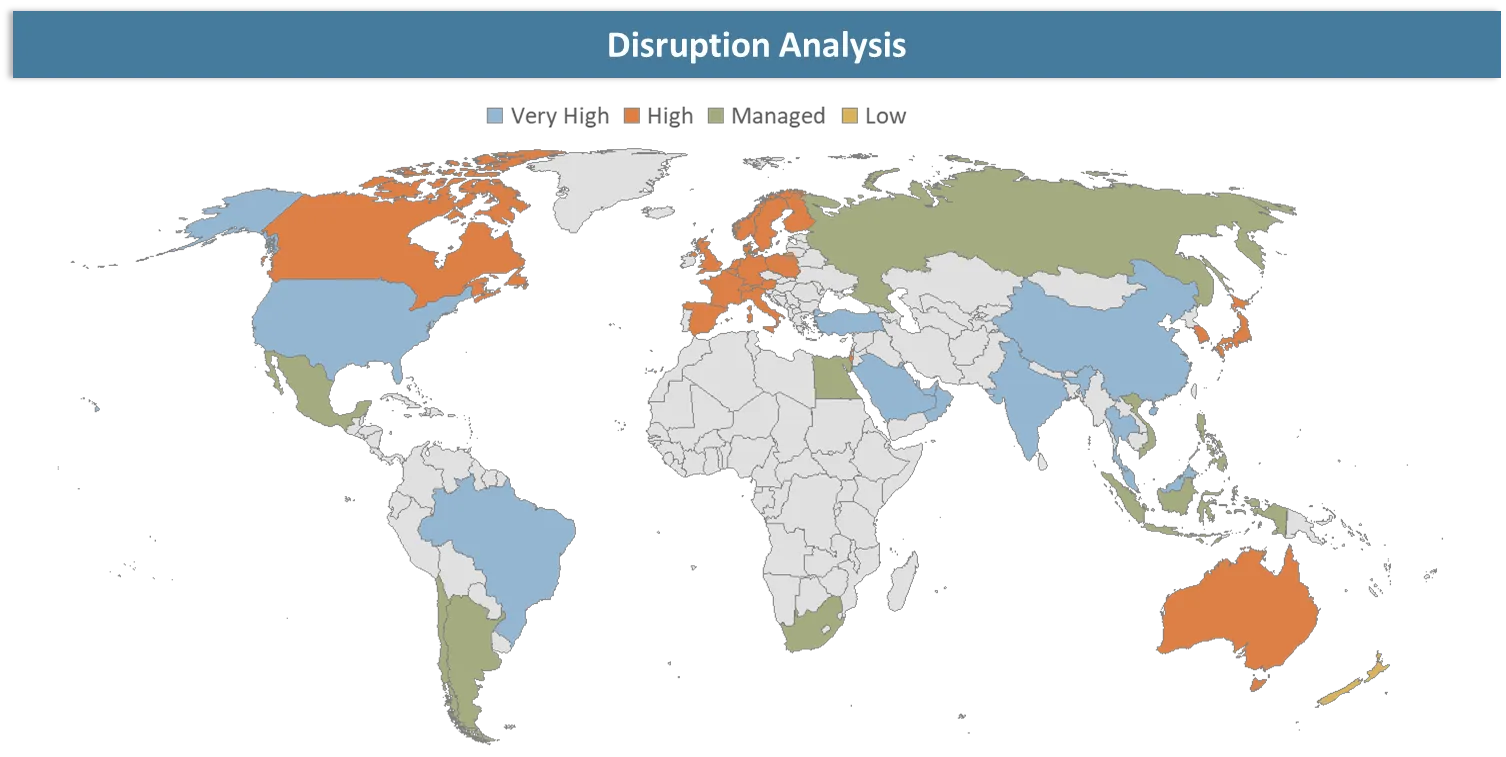
Transition Toward SF₆-Free and Eco-Efficient Insulation Technologies Reshaping the Gas Insulated Switchgear Industry
Disruption in the Gas Insulated Switchgear (GIS) market is being caused by the rapid shift away from traditionally used SF₆-insulated switchgear towards SF₆-free insulation systems that help achieve both better insulation efficiency and lower environmental impact. Due to increased environmental legislation and utilities' commitments to decrease their carbon footprint, manufacturers are now developing low global warming potential insulation technologies that allow reducing greenhouse gas emissions to minimal levels while maintaining the same performance level. According to GE Vernova, the company's g³ insulation reduces the Global Warming Potential by more than 99% compared to traditional SF₆ equipment. The company claims that 30 current g³ projects around the world will lower the impact of installed gas volumes by more than 1 million tons of CO₂-equivalent through deployment of over 100 units of 145 kV GIS bays, 9 units of 420 kV GIS bays, more than 5,000 meters of Gas Insulated Lines (GIL), and 14 units of 145 kV Live Tank Circuit Breakers.
Simultaneously, utilities are increasingly focusing on digital substations without SF₆ gases in order to adhere to new environmental legislation and net-zero corporate policies. This is motivating companies to divert their research and development efforts to technologies that ensure clean air, fluoronitrile and fluoroketone insulations. This trend is disrupting the traditional GIS products range, changing procurement requirements and fostering equipment supplier competition.
Gas Insulated Switchgear Market BCG Matrix: Company Evaluation

Stars include Hitachi Energy, Siemens Energy, GE Vernova, and ABB because they command a strong position in the global gas insulated switchgear market through comprehensive medium-, high-, and extra-high-voltage GIS portfolios, extensive utility relationships, and continuous investments in SF₆-free and digital substation technologies. These companies have established global manufacturing footprints and are leading the commercialization of environmentally sustainable GIS solutions, enabling them to secure major transmission and grid modernization projects across developed and emerging markets. Question Marks include Schneider Electric, Mitsubishi Electric, Toshiba Energy Systems & Solutions, and Hyosung Heavy Industries because they continue to expand their GIS portfolios through eco-efficient technologies, grid digitalization, and high-voltage transmission solutions but face intense competition from established global leaders in extra-high-voltage projects and large-scale utility deployments.
The Potential category includes Hyundai Electric, LS ELECTRIC, and Fuji Electric, which are strengthening their presence through regional transmission infrastructure projects, renewable energy integration, and industrial electrification. Tailenders include Eaton, whose GIS portfolio is primarily concentrated in medium-voltage distribution and commercial or industrial applications rather than the broader high-voltage and extra-high-voltage transmission segment.
Gas Insulated Switchgear Market Dynamics
Driver Impact Analysis
| Driver | Market Growth Impact (%) | Demand Concentration | Impacted Use Case | Strategic Impact |
Expansion of Transmission and Distribution Infrastructure Accelerating Demand for Compact High-Voltage Switchgear | 32% | Utilities, Transmission System Operators (TSOs), Grid Developers | High-voltage transmission substations, Grid expansion projects | Very High |
Rapid Renewable Energy Grid Integration Driving Deployment of Gas Insulated Substations | 26% | Renewable energy developers, Utilities | Solar parks, Wind farms, Grid interconnection substations | High |
Growing Urbanization Increasing Adoption of Space-Efficient Electrical Infrastructure | 20% | Urban utilities, Municipal authorities, Commercial infrastructure | Underground substations, Smart cities, Metro rail, Airports | High |
Replacement of Aging Air-Insulated Substations Supporting GIS Modernization Projects | 18% | Utilities, Industrial power operators | Brownfield substation upgrades, Grid modernization | Medium-High |
Increasing Construction of Data Centers Driving High-Reliability Power Distribution Equipment Demand | 14% | Hyperscale cloud providers, Colocation operators | Data centers, AI computing campuses, Critical power facilities | Medium |
Expansion of Transmission and Distribution Infrastructure Accelerating Demand for Compact High-Voltage Switchgear
The expansion of transmission and distribution (T&D) infrastructure will remain a key factor that will contribute to the increased demand for Gas Insulated Switchgear (GIS). This is because the need to expand electrical power networks to facilitate electrification, renewables integration, and increased electricity consumption will increase the demand for GIS. The increasing requirement for small and highly reliable substations due to limited space availability in cities will drive the use of GIS in T&D. The International Energy Agency (IEA) has estimated that there have been about 1.5 million kilometers of new transmission lines developed around the world in the last ten years. Nonetheless, the development of the transmission network infrastructure continues to lag behind the growth in the demand for electricity and clean energy. In addition, the IEA identified 1,650 GW of solar and wind projects in advanced stages of development awaiting grid connections.
The continuous growth in the development of high-voltage transmission systems is prompting the implementation of GIS in order to ensure reliability, efficiency, and higher capacity of power transmission. In October 2025, according to Global Times, the Dhabeji Grid Station project in Sindh was on track to become fully operational by December 2025, as the 220/132 kV Gas-Insulated Switchgear (GIS) substation had progressed to 79.77% physically and 87% financially by September 2025. The project worth Rs 6.17 billion includes a GIS grid station along with the construction of a 220 kV transmission line. Design and engineering of the project is 95% completed, while procurement and transportation of equipment is 85% completed. Civil works of the project have been completed to 83.5%, while installation and erection have been completed to 70%. Testing and commissioning of the project has been completed to 18%.
Restraint Impact Analysis
| Restraint | Drag on Market Growth (%) | Primary Impact Area | Impacted Use Case | Strategic Impact |
Stringent Environmental Regulations on SF₆ Gas Increasing Compliance and Replacement Costs | 25% | Regulatory compliance, SF₆ management, transition toward low-GWP alternatives
| High-voltage transmission substations, existing SF₆-based GIS installations | High |
Complex Installation, Maintenance, and Specialized Technical Service Requirements | 20% | Skilled workforce availability, installation complexity, lifecycle maintenance | Utility substations, industrial power networks, offshore installations | Medium-High |
High Dependence on SF₆ Gas Supply and Alternative Insulation Technology Availability | 22% | Technology transition, supplier availability, alternative gas qualification | Extra-high-voltage GIS, renewable energy substations, grid modernization projects | High |
Lengthy Utility Procurement Cycles and Grid Infrastructure Approval Processes | 16% | Project timelines, regulatory approvals, utility decision-making | Transmission projects, large-scale substations, public infrastructure projects | Medium |
High Dependence on SF₆ Gas Supply and Alternative Insulation Technology Availability
One of the key factors limiting the expansion of the Gas Insulated Switchgear (GIS) market is the ongoing use of sulfur hexafluoride (SF₆), which is still the primary insulating and arc-extinguishing gas in high voltage GIS due to its outstanding dielectric properties. While there has been an effort from manufacturers to push for alternative SF₆-free solutions, commercialization has not taken place yet for extra high voltage applications, thus posing both supply and technology transition difficulties for power companies. The European Commission notes that with the introduction of the F-Gas Regulation (EU) 2024/573 in 2025, there will be more limitations for fluorinated greenhouse gases, thus necessitating the need for manufacturers to move towards low global warming potential insulation solutions while maintaining compliance across all existing and future GIS systems.
Stringent environmental policies aimed at high global warming potential gases are catalyzing the move towards alternatives to SF₆-insulated switchgear technologies. In July 2025, according to The Agility Effect, the European Union's ban on SF₆ is pushing the electricity switchgear industry towards a transition to alternative insulation methods. In accordance with the revised EU F-gas Regulation (2024), SF₆ will be prohibited for use in new medium-voltage switchgear from January 2026 for equipment with 24 kV, and additional phases will expand their application to high-voltage switchgear in the following years. The SF₆, which has a GWP around 24,300 times higher than that of CO₂ over 100 years, is a commonly used insulating medium in GIS because of its excellent arc extinguishing characteristics. The transition towards alternate insulators is proving to be problematic due to the cost involved in finding SF₆-free alternatives, qualification and redesign of equipment, and rising demand for eco-efficient insulators such as vacuum technology and other gases.
Gas Insulated Switchgear Market Segment Analysis
The global Gas Insulated Switchgear market is segmented based on voltage, installation, insulation gas, configuration, component, application, and region.
SF₆ (Sulfur Hexafluoride) Dominating the Insulation Gas Segment Due to Established Grid Infrastructure and High Reliability Requirements
The SF₆ (Sulfur Hexafluoride) segment dominates the insulation gas sector within the Gas Insulated Switchgear (GIS) market, with a market share of about 90% in 2025. The extensive usage of the SF₆ type of GIS is mainly due to the superior properties such as the high dielectric strength, effective arc-extinguishing properties, small size of equipment, and extended lifespan. Due to these factors, SF₆ becomes the choice of insulation gas in various GIS applications such as medium voltage, high voltage, and extra high voltage.
However, the regulatory push gained momentum from 2025–2026, as the focus was on cutting SF₆ emissions on account of its potent contribution to global warming. Under the amended EU Regulation (EU) 2024/573, the use of SF₆ gas was banned in new electrical switchgear applications, and the manufacturers were motivated to switch over to SF₆ alternatives, such as fluoronitrile gases, g³ solution, and vacuum technologies. However, despite all the above developments, SF₆ continues to be the dominant insulation gas segment due to its established logistics and reliability factors.
Gas Insulated Switchgear Market Geographical Penetration
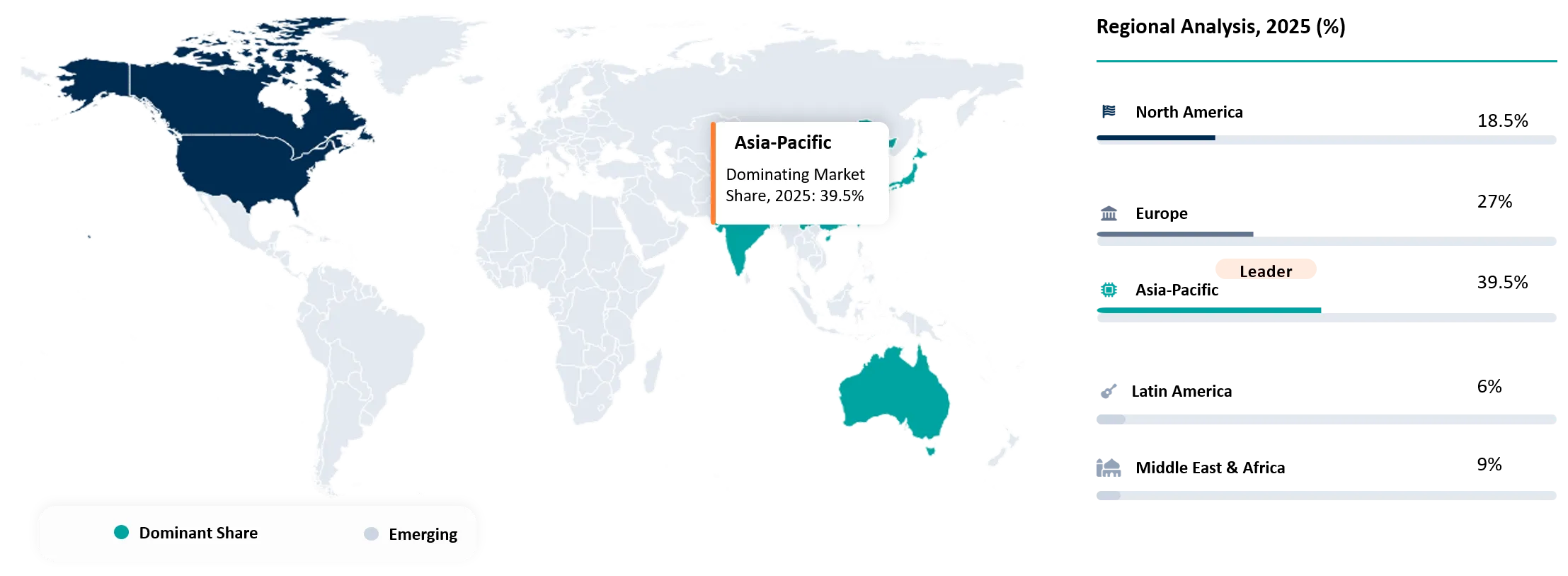
Rapid Grid Modernization and Renewable Energy Expansion Driving Asia-Pacific Leadership in the Gas Insulated Switchgear Market
The Asia-Pacific region dominates the Gas Insulated Switchgear (GIS) Market, accounting for approximately 39.5% market share in 2025, driven by large-scale investments in electricity transmission infrastructure, rapid urbanization, renewable energy integration, and increasing demand for reliable power distribution networks. Countries including China, India, Japan, South Korea, and Southeast Asian economies are accelerating the deployment of high-voltage and extra-high-voltage GIS systems to support expanding power grids, industrial development, and electrification initiatives. The strong presence of power utilities, electrical equipment manufacturers, and large renewable energy projects has positioned Asia-Pacific as the largest revenue-generating region in the GIS industry.
Technology cooperation initiatives among local power equipment producers are enhancing the Asia-Pacific region’s expertise in building high-voltage electrical systems. In September 2025, according to DSIJ Insights, CG Power & Industrial Solutions Ltd., an India-based heavy electrical equipment manufacturer, and Hyosung Group, a South Korea-based industrial group and power equipment manufacturer, signed a technology co-development agreement to enhance their capabilities in advanced electrical equipment solutions. CG Power has its headquarters in Mumbai, India, and functions as a power and industrial electrical equipment manufacturer, supplying transformers, switchgear, motors, and power systems, whereas Hyosung Heavy Industries has its headquarters in Seoul, South Korea, and is a heavy electrical equipment and power infrastructure company offering transformers, GIS, switchgear, and grid solutions.
China Gas Insulated Switchgear Market Trends
China holds a dominant position in the Asia-Pacific Gas Insulated Switchgear (GIS) Market, due to its extensive power transmission network, the rapid growth of renewable energy capacity, and consistent investments in ultra-high-voltage (UHV) grid construction in the country. The existing power transmission network of the country, along with increasing demand for electricity and the efforts to modernize the existing grid system, have led to an increasing trend of adoption of high and extra-high voltage GIS.
The increasing investment in the power transmission sector in the Middle East is making the region an ideal market for the manufacture of high voltage equipment. In December 2025, according to Saudi Gulf Projects, Al Sharhan Energy (Saudi Arabia) and Sieyuan Electric Co., Ltd. (China) signed an agreement to establish a Gas Insulated Switchgear (GIS) manufacturing factory in Saudi Arabia, strengthening regional production capabilities for high-voltage electrical equipment. The new GIS factory will support the localization of high-voltage switchgear manufacturing in Saudi Arabia, enhancing supply chain capabilities for utility, renewable energy, and transmission infrastructure projects. The partnership aligns with Saudi Arabia’s grid modernization initiatives and growing demand for advanced GIS solutions across the Middle East.
Japan Gas Insulated Switchgear Market Outlook
Japan is emerging as the fastest-growing country in the Asia-Pacific Gas Insulated Switchgear (GIS) Market, because of its sophisticated power grid infrastructure, importance attached to grid stability, and growing use of compact and efficient electrical equipment. Japan’s aged transmission grid, limited space, and prioritization of energy security have resulted in increased use of GIS solutions, especially in urban substations, underground power networks, industrial infrastructure, and renewable energy projects. Moreover, the sophistication of the electrical equipment market in Japan and knowledge of high voltage technology have further supported the growth of GIS systems.
With the increasing focus on lowering greenhouse gas emissions from electrical installations, there is an increasing trend toward the development of SF₆-free Gas Insulated Switchgear technology. In April 2026, Toshiba Corporation, a Japan-based diversified technology and industrial equipment company, confirmed the fundamental performance of its 300 kV SF₆-free Gas Insulated Switchgear (GIS) and Gas Circuit Breaker (GCB) using natural-origin gases. The company successfully verified the insulation and interruption performance of the 300 kV-class SF₆-free GIS and GCB, demonstrating the feasibility of replacing conventional SF₆ gas with environmentally friendly natural-origin gases in high-voltage applications. The development supports the global transition toward low-carbon switchgear technologies by reducing dependence on SF₆, a high-global-warming-potential insulating gas, and advancing sustainable GIS solutions for future transmission networks.
Grid Modernization and High-Voltage Infrastructure Expansion in North America Region
North America is one of the key regions in the Gas Insulated Switchgear (GIS) market, occupying nearly 18.5% of the market share in 2025, due to rising investments in upgrading grids, harnessing renewable energy, and replacing aging electric infrastructure in both the United States and Canada. North America is experiencing a growing demand for GIS technology with higher voltages, which has been attributed to the construction of new transmission grids, deployment of renewable energy systems, data center electricity needs, and the requirement of compact and dependable substations in metropolitan cities. Initiatives driven by the government aimed at improving grid resiliency and transmission capacity have led to the use of more advanced switchgear, such as GIS.
The growing emphasis on grid modernization, development of high-voltage transmission infrastructure, and dependable distribution systems is driving the need for modern GIS solutions in North America. In September 2025, Power and Data Management LLC (PDM), a U.S.-based power equipment supplier and grid infrastructure solutions company, expanded its product portfolio by adding Gas Insulated Switchgear (GIS) solutions for the North American high-voltage transmission and distribution market. The company introduced the XD|GE GIS portfolio in 145 kV, 252 kV, and 363 kV voltage classes, integrated with Primary Plus™ digital monitoring and diagnostics technology, targeting utilities, data centers, and large-scale infrastructure projects requiring compact and reliable switchgear solutions.
U.S. Gas Insulated Switchgear Market Trends
The U.S. holds a dominant position in the North American Gas Insulated Switchgear (GIS) Market, due to massive grid upgrade projects, growth in demand for electricity by data centers powered by AI, and the development of the renewable energy sector, as well as substantial investments in infrastructure. The U.S. features a well-developed ecosystem of power infrastructure with top-notch manufacturers of electrical equipment and providers of technologies involved in the application of high-voltage GIS solutions.
The increasing trend towards sustainability in power infrastructure, which is becoming more and more compact, has led to increased use of SF₆-free GIS solutions. In July 2025, JST Power Equipment, a U.S.-based electrical equipment manufacturer, expanded its Gas Insulated Switchgear (GIS) portfolio with the launch of the J20N™ Dry-Air GIS rated at 38 kV voltage, 1,200 A current, and 31.5 kA short-circuit capacity. The company specializes in transformers, switchgear, and power distribution solutions, and the new SF₆-free GIS product is designed for space-constrained applications including urban substations, offshore platforms, industrial facilities, and renewable energy installations.
Gas Insulated Switchgear Market Competitive Landscape
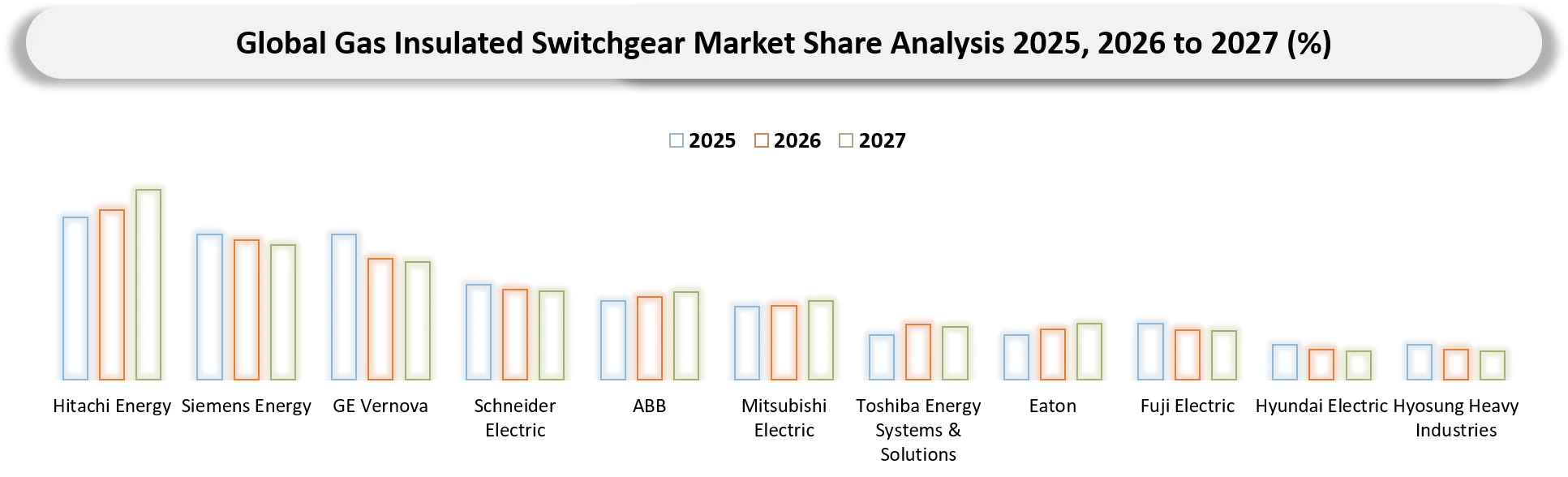
- The Gas Insulated Switchgear (GIS) Market is characterized by three key participant groups: global high-voltage equipment manufacturers, integrated electrification and grid solution providers, and regional power equipment specialists. Hitachi Energy, Siemens Energy, GE Vernova, ABB, Schneider Electric, and Mitsubishi Electric lead in large-scale GIS manufacturing, high-voltage transmission solutions, and advanced grid infrastructure projects; Toshiba Energy Systems & Solutions, Eaton, and Fuji Electric focus on compact GIS solutions, digital substations, and industrial power applications; while Hyundai Electric, Hyosung Heavy Industries, and LS ELECTRIC strengthen regional GIS adoption through utility partnerships and cost-competitive high-voltage equipment offerings. This creates a highly technology-driven landscape where high-voltage expertise, installed utility base, SF₆-free technology development, digital monitoring capabilities, and global service networks define competitiveness. The leading GIS manufacturers collectively accounted for approximately 54.9% of the global Gas Insulated Switchgear Market share in 2025, supported by their strong presence in transmission substations, renewable energy integration projects, and grid modernization initiatives.
- Key players include Hitachi Energy, Siemens Energy, GE Vernova, Schneider Electric, ABB, Mitsubishi Electric, Toshiba Energy Systems & Solutions, Eaton, Fuji Electric, Hyundai Electric, Hyosung Heavy Industries, and LS ELECTRIC.
Key Developments
- November 2025: Schneider Electric, a France-based energy management and industrial automation company the company, launched its SF₆-free primary Gas Insulated Switchgear (GIS) technology, GM AirSeT, to support the decarbonization of electrical grids.
- August 2025: Schneider Electric, a France-based energy management and industrial automation company, signed a long-term framework agreement with E. ON to accelerate the deployment of SF₆-free medium-voltage switchgear across E. ON’s electricity network in Europe.
- December 2025: Toshiba Corporation, a Japan-based diversified technology and industrial equipment company, launched its SF₆-free 420/550 kV Gas-Insulated Busbar (GIB) using natural-origin gases to reduce greenhouse gas emissions in high-voltage transmission infrastructure.
- October 2025: Toshiba, a Japan-based technology and industrial equipment company, and Power Grid Corporation of India Limited (POWERGRID), an India-based government-owned power transmission utility, launched India’s first indigenously manufactured 220 kV Mobile Gas-Insulated Switchgear (m-GIS) System.
- April 2026: Power Automation (PA), a Singapore-based engineering services and power system automation company, a wholly owned subsidiary of SP Group, signed an exclusive distributorship agreement with TBEA Co., Ltd., a China-based energy equipment manufacturer and power transmission solution provider, to expand its power equipment portfolio and strengthen high-voltage grid solutions in Singapore.
Key Procurement Priorities and Buyer Evaluation Criteria
- In terms of the Gas Insulated Switchgear Market, businesses that make investments are now becoming interested in those suppliers that can provide highly reliable and energy-efficient switchgear products for medium-voltage, high-voltage, and extra-high-voltage power systems. In fact, consumers are more interested in those suppliers who have sufficient experience in manufacturing transmission and distribution systems and are able to provide high-quality GIS systems.
- In the procurement decision process, grid modernization, renewable energy connection, smart substations, and compact power infrastructure have become more significant due to their rising demand. The ability to provide effective solution options for the likes of renewable energy evacuation, urban substations, data centers, transportation infrastructure, and large transmission systems is becoming a criterion that utilities, industries, and infrastructure players use when selecting GIS vendors.
- When buyers are choosing the right GIS manufacturers, they will think about elements like the rating capacity for voltage, performance of insulation technology, reliability, lifespan, maintenance, footprint, and conformity with international standards. The capacity to offer solutions, which include SF₆-free or eco-friendly GIS technologies, as well as digital monitoring and condition-based maintenance systems, has become one of the critical assessment factors.
Why Choose DataM?
- Technological Innovations: Explores advancements in Gas Insulated Switchgear (GIS) technologies, including SF₆-free insulation solutions, digital substations, smart monitoring systems, and automated grid management platforms, enabling improved operational reliability, reduced environmental impact, enhanced safety, and efficient power transmission across utility, renewable energy, industrial, and infrastructure applications.
- Product Performance & Market Positioning: Evaluates how different players deliver GIS solutions based on voltage handling capability, insulation performance, compact design, reliability, lifecycle cost, maintenance requirements, and compliance with global electrical standards, highlighting how leading companies differentiate through high-voltage expertise, sustainable switchgear technologies, and scalable solutions for transmission and distribution networks.
- Real-World Evidence: Highlights the adoption of GIS solutions across transmission substations, renewable energy projects, urban underground substations, industrial facilities, transportation infrastructure, offshore installations, and data centers, demonstrating benefits such as reduced installation footprint, enhanced grid reliability, improved operational efficiency, and optimized power distribution performance.
- Market Updates & Industry Changes: Tracks key developments such as SF₆ phase-down regulations, eco-efficient GIS launches, grid modernization programs, renewable energy transmission investments, digital substation deployments, and regional infrastructure expansions across Asia-Pacific, Europe, North America, and emerging markets, supporting the transition toward sustainable and resilient electricity networks.
- Competitive Strategies: Analyzes how leading companies expand through product innovation, manufacturing capacity expansion, strategic partnerships with utilities, digital grid integration, and development of environmentally friendly GIS technologies to address increasing demand from renewable energy integration, electrification, and high-reliability power infrastructure.
- Pricing & Market Access: Explains pricing variations based on voltage class, GIS configuration, insulation technology, component complexity, customization requirements, and project scale, along with procurement channels through utilities, EPC contractors, industrial operators, and infrastructure developers supporting global power equipment supply chains.
- Market Entry & Expansion: Identifies growth opportunities driven by grid modernization, renewable energy deployment, urbanization, electrification of transportation, industrial expansion, and rising data center power demand, while outlining strategies such as regional manufacturing expansion, SF₆-free technology development, utility partnerships, and digital solution integration to strengthen global market presence.
Target Audience 2026
- Power Utilities & Grid Operators
- Electrical Equipment Manufacturers & Switchgear Suppliers
- Renewable Energy Developers & Independent Power Producers (IPPs)
- Engineering, Procurement & Construction (EPC) Contractors
- Industrial Power Consumers
- Data Center & Digital Infrastructure Developers
- Transportation Infrastructure Developers


























































