


Gas Centrifuge Market Size and Overview
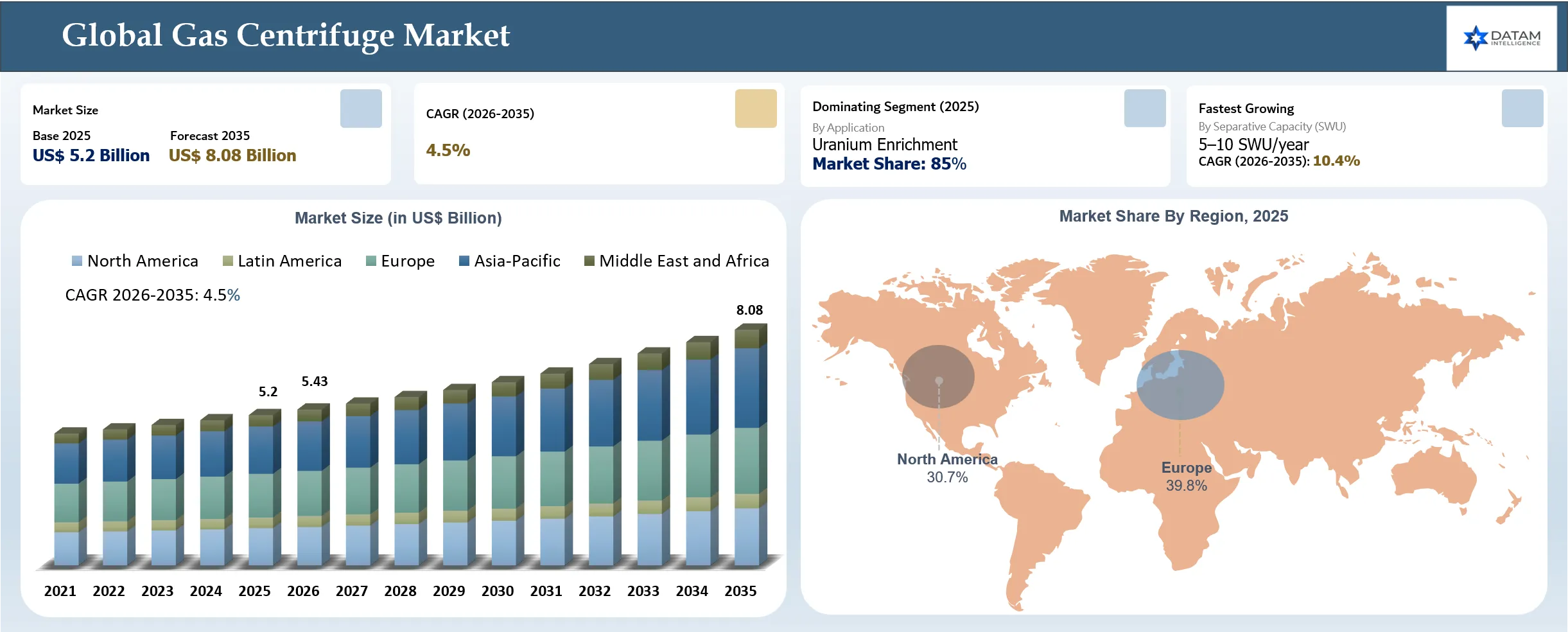
The global Gas Centrifuge market reached USD 5.2 billion in 2025 and is expected to reach USD 8.08 billion by 2035, growing with a CAGR of 4.5% during the forecast period 2026-2035. The market is expanding due to increased investments in uranium enrichment infrastructure to ensure the availability of sufficient amounts of LEU and HALEU to meet the needs of both conventional and next-generation reactors. The rapid adoption of SMRs, the life extension programs of existing nuclear reactors, and the push from governments to develop domestic nuclear fuel supply chains are driving demand for advanced gas centrifuges. In 2026, the U.S. Department of Energy (DOE) allocated USD 2.7 billion for the increase of domestic uranium enrichment capacity, which includes the production of HALEU. Centrus Energy, Orano, Urenco, and American Centrifuge Operating are also working on increasing their enrichment capacity and centrifuges manufacturing to meet the future needs for nuclear fuel. However, tight regulation, capital-intensive nature, and long deployment time for the enrichment plants are restricting market growth.
Introduction of the GC-10 marks a milestone in the existing trend towards greater technological innovations in the area of uranium enrichment through increased efficiency, reliability, and improved performance of the isotope separation process. In July 2025, according to Inspenet, Rosatom's Fuel Division manufactured a pilot batch of GC-10 gas centrifuges from the tenth generation for enrichment of uranium isotopes. GC-10 provides better performance and effectiveness compared to all the other generations of gas centrifuges working at Rosatom sites and is planned for trial production before full-scale manufacturing. This gas centrifuge works at a speed of more than 1,000 revolutions per second with the use of uranium hexafluoride (UF₆) gas to effectively separate uranium-235 from uranium-238, with the use of high-performance composite materials making it more durable. GC-10 is also expected to be used in nuclear fuel supplies to Russian and 15 other countries' reactors.
White-Space Opportunities for Advanced Gas Centrifuge Deployment and Uranium Enrichment Infrastructure
In September 2025, the U.S. Department of Energy's National Nuclear Security Administration (NNSA) awarded up to USD 1.5 billion to BWXT Enrichment Operations LLC to license, construct, and operate the Domestic Uranium Enrichment Centrifuge Experiment (DUECE) pilot plant, representing one of the largest recent federal investments in domestic uranium enrichment infrastructure. The primary focus of the funding is the deployment of advanced gas centrifuge technology for producing low-enriched uranium (LEU), with the pilot facility designed to establish a scalable domestic enrichment capability and support future production of highly enriched uranium (HEU) for U.S. national security requirements. The investment extends beyond centrifuge deployment to include enrichment cascade development, pilot plant construction, nuclear fuel-cycle infrastructure, advanced manufacturing, licensing, engineering design, commissioning, cybersecurity, safety systems, and long-term operational readiness. The initiative is also expected to accelerate modernization of the U.S. uranium enrichment supply chain while reducing dependence on foreign enrichment services and strengthening domestic nuclear fuel resilience.
The investment creates broad opportunities across the uranium enrichment and nuclear fuel value chain. BWXT Enrichment Operations LLC is the principal beneficiary through pilot plant development and gas centrifuge deployment, while BWX Technologies (BWXT) benefits from engineering, nuclear component manufacturing, and facility integration activities. Companies involved in uranium conversion and fuel-cycle services, including Centrus Energy, Honeywell (through uranium conversion capabilities), and Urenco USA, are expected to benefit indirectly from increased demand for domestic enrichment infrastructure, technology collaboration, and supply-chain localization. Engineering, procurement, and construction (EPC) firms, nuclear equipment manufacturers, instrumentation and control system suppliers, advanced materials providers, and specialized nuclear service contractors are also likely to secure contracts for facility construction, centrifuge manufacturing, process automation, radiation safety systems, and long-term plant operations, supporting the expansion of the U.S. gas centrifuge market and advanced nuclear fuel ecosystem.
Gas Centrifuge Market Key Takeaways
- The European region led the global gas centrifuge market, securing 39.8% of the total market share in 2025. Supported by extensive facilities and domestic nuclear fuel programs, Europe remains the largest regional market while North America is projected to be the fastest-growing.
- The Uranium Enrichment application dominated the market, accounting for approximately 85% of the total market share in 2025. This dominant position is driven by high demand for processing low-enriched uranium (LEU) and high-assay low-enriched uranium (HALEU) enriched between 5% and under 20% U-235.
- The U.S. NNSA awarded up to USD 1.5 billion to BWXT Enrichment Operations LLC for the Domestic Uranium Enrichment Centrifuge Experiment (DUECE) pilot plant. In addition, the U.S. Department of Energy (DOE) allocated USD 2.7 billion in 2026 to expand domestic uranium enrichment and HALEU production capacity.
- In October 2025, the EIB signed a EUR 400 million loan agreement with Orano SA to finance a EUR 1.7 billion plant expansion at the Tricastin site. The expansion adds 4 new modules to the existing 14 modules, with full commissioning expected by 2030.
Gas Centrifuge Market Industry Trends and Strategic Insight
- HALEU production capacity is becoming the primary investment priority. Enrichment companies are accelerating deployment of advanced gas centrifuge cascades capable of producing High-Assay Low-Enriched Uranium (HALEU) (5–20% U-235).
- Governments are rebuilding domestic uranium enrichment capabilities. The U.S., European Union, Canada, Japan, and the U.K. are investing in indigenous enrichment infrastructure to reduce dependence on Russian enrichment services, driving procurement of new centrifuge cascades, conversion facilities, and enrichment plant expansions.
- Commercial deployment of Small Modular Reactors (SMRs) is reshaping enrichment demand. Advanced reactors from developers including TerraPower, X-energy, Kairos Power, and Oklo require higher-assay nuclear fuel, creating sustained demand for high-performance gas centrifuge technology capable of commercial-scale HALEU production.
- Digitalization is improving enrichment plant operations. Artificial intelligence-assisted predictive maintenance, digital twins, automated cascade balancing, and real-time process monitoring are being incorporated into enrichment facilities to minimize downtime and optimize isotope separation performance.
- Fuel supply security is influencing long-term enrichment contracts. Nuclear utilities are increasingly entering multi-year uranium enrichment agreements to secure enrichment services amid tightening global enrichment capacity and increasing geopolitical uncertainty.
Gas Centrifuge Market Scope
| Metrics | Details | |
| 2025 Market Size | USD 5.2 Billion | |
| 2035 Projected Market Size | USD 8.08 Billion | |
| CAGR (2026-2035) | 4.5% | |
| Largest Market | Europe | |
| Fastest Growing Market | North America | |
| By Product | Gas Centrifuge Systems, Gas Centrifuge Components | |
| By Separative Capacity (SWU) | Less than 5 SWU/year, 5–10 SWU/year, above 10 SWU/year | |
| By Centrifuge Technology | Conventional Gas Centrifuges, Advanced High-Speed Gas Centrifuges | |
| By Application | Uranium Enrichment, Stable Isotope Separation, Medical Isotope Production, Nuclear Fuel Production, Government & Défense, Others | |
| By Region | North America | U.S., Canada, Mexico |
| Europe | Germany, UK, France, Spain, Italy, Poland | |
| Asia-Pacific | China, India, Japan, Australia, South Korea, Indonesia, Malaysia | |
| Latin America | Brazil, Argentina | |
| Middle East and Africa | UAE, Saudi Arabia, South Africa, Israel, Türkiye | |
| Report Insights Covered | Competitive Landscape Analysis, Company Profile Analysis, Market Size, Share, Growth | |
Gas Centrifuge Market Disruption Analysis
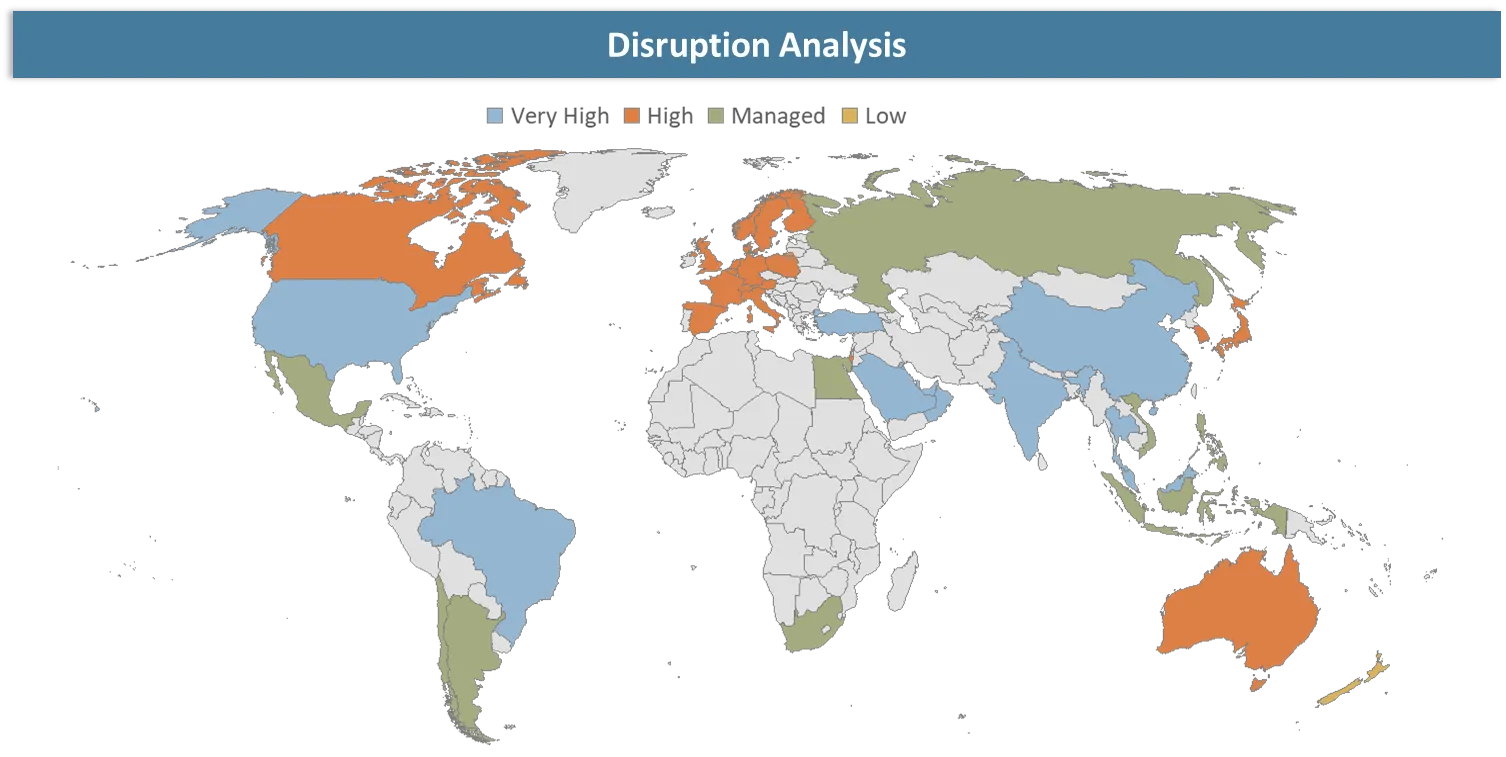
Geopolitical Realignment of Uranium Enrichment Supply Chains Reshaping the Gas Centrifuge Market
The disruption in the Gas Centrifuge Market stems from the quick realignment of the global uranium enrichment supply chain, which is triggered by geopolitical conflicts and policies introduced in the years 2025-2026. The USA, the European Union, the United Kingdom, and other countries using nuclear energy have made a considerable effort in trying to reduce their reliance on Russian uranium enrichment services through building up their own enrichment capacities and setting up new fuel supply chains.
Simultaneously, the adoption of new reactors along with the rising use of High-Assay Low-Enriched Uranium (HALEU) is upsetting the classic schemes of enrichment, which have been geared towards the generation of regular low-enriched uranium. The companies involved in enrichment are upgrading their gas centrifuge facilities with more efficient rotors, digital cascade control, and additional separative work capacity, in order to cope with the demands of the new-generation nuclear fuels. With a focus on countries' own energy security and fuel supply security, investments are being made not in existing foreign enrichment firms, but in regional production facilities.
Gas Centrifuge Market BCG Matrix: Company Evaluation
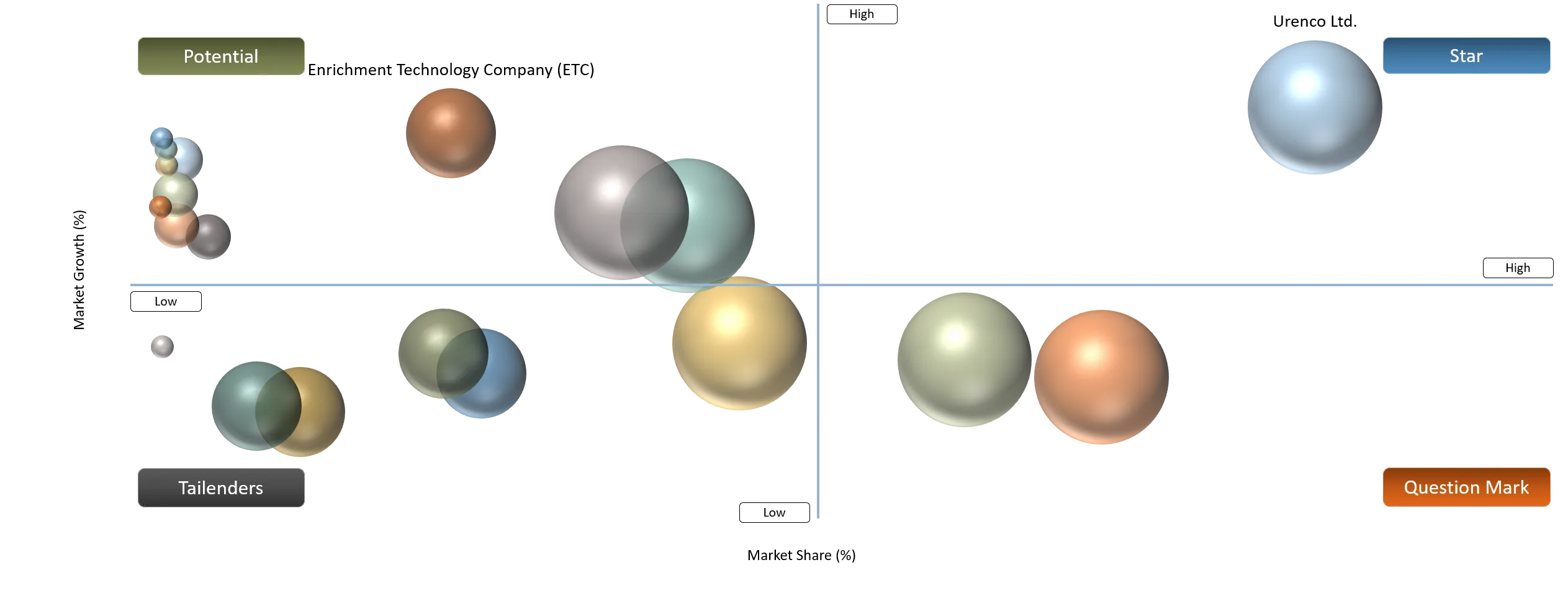
Stars include Urenco Ltd. and Orano because they operate some of the world's largest commercial gas centrifuge enrichment facilities and possess advanced centrifuge technologies with established enrichment infrastructure across multiple countries. Both companies are expanding enrichment capacity to address increasing demand for low-enriched uranium (LEU) and high-assay low-enriched uranium (HALEU), supported by long-term fuel supply agreements and strategic investments in nuclear fuel security. Question Marks include Centrus Energy Corp. and China National Nuclear Corporation (CNNC). Centrus Energy is rapidly advancing commercial HALEU production and expanding American centrifuge technology but is still scaling its enrichment capacity compared with established global leaders.
The Potential category includes Enrichment Technology Company (ETC) and Japan Nuclear Fuel Limited (JNFL). ETC is a leading designer and manufacturer of advanced gas centrifuge machines supplied to major enrichment operators, positioning it to benefit from global capacity expansion despite its limited direct participation in enrichment services. Tailenders include BWX Technologies (BWXT) because its primary business is nuclear components, reactor systems, and defense nuclear technologies rather than commercial uranium enrichment.
Gas Centrifuge Market Dynamics
Driver Impact Analysis
| Driver | Market Growth Impact (%) | Demand Concentration | Impacted Use Case | Strategic Impact |
Expanding investments in domestic uranium enrichment infrastructure are accelerating demand for advanced gas centrifuge systems. | 34% | High | Commercial uranium enrichment, LEU & HALEU production | Accelerates deployment of new centrifuge cascades, expands domestic enrichment capacity, and strengthens nuclear fuel supply security. |
Rising deployment of Small Modular Reactors (SMRs) and advanced nuclear reactors is increasing the requirement for HALEU production using gas centrifuge technology. | 28% | High | HALEU production, advanced reactor fuel supply | Creates long-term demand for high-performance enrichment systems capable of producing HALEU and supports investment in next-generation centrifuge technology. |
Technological advancements in high-speed composite rotors, magnetic bearings, and digital cascade controls are improving centrifuge efficiency and separative work capacity. | 22% | Medium | Enrichment facility modernization and capacity optimization | Improves separative work efficiency (SWU), reduces operating costs and energy consumption, and extends centrifuge service life. |
Government-backed initiatives to localize nuclear fuel supply chains are stimulating new gas centrifuge manufacturing and enrichment capacity expansion projects. | 24% | High | National enrichment programs, strategic nuclear fuel infrastructure | Encourages domestic manufacturing, reduces dependence on foreign enrichment providers, and accelerates investment in new enrichment facilities.
|
Expanding investments in domestic uranium enrichment infrastructure are accelerating demand for advanced gas centrifuge systems
Domestic uranium enrichment capability investments are a primary driver accelerating demand for advanced gas centrifuge technology. Governments are now focusing on developing domestic enrichment capability as a way of improving nuclear fuel security, decreasing dependence on foreign sources, and making it possible to commercialize advanced nuclear reactors. According to the IAEA Nuclear Technology Review 2025, the Agency's high-case scenario forecast predicts that world nuclear power generating capacity will increase to about 950 GW(e) by 2050, which is about 2.5 times higher than today's capacity.
The expansion also highlights the momentum that is building around developing domestic enrichment capability, leading to greater demand for centrifuge technology and enrichment infrastructure. In June 2025, as per Centrus Energy, the company launched commercial low-enriched uranium (LEU) enrichment activities by beginning domestic centrifuge manufacturing operations at its plant in Piketon, Ohio. The project, worth billions of dollars, comes with a commitment of USD 2.3 billion worth of contingent LEU customer contracts, USD 1.2 billion worth of private investments, and possible task orders from the United States Department of Energy worth USD 900 million each for LEU and HALEU enrichment operations. It will result in the creation of 1,000 jobs for the construction phase, 300 jobs for the operation phase in Ohio, retention of 150 existing jobs, and addition of new enrichment capacity by 2029.
Restraint Impact Analysis
| Restraint | Drag on Market Growth (%) | Primary Impact Area | Impacted Use Case | Strategic Impact |
Stringent nuclear non-proliferation regulations and export controls limit the commercialization and international deployment of gas centrifuge technology. | 26% | Regulatory Compliance & International Trade | Cross-border deployment of gas centrifuge systems and enrichment technology transfer | Restricts technology exports, limits new market entrants, and slows global commercialization of advanced gas centrifuge systems. |
Complex licensing, regulatory approvals, and safeguards compliance extend project development timelines for enrichment infrastructure. | 24% | Project Development & Licensing | Construction and expansion of uranium enrichment facilities | Delays commissioning of enrichment plants, increases compliance costs, and prolongs return on investment. |
Limited availability of specialized materials such as carbon fiber composites, maraging steel, and precision magnetic bearings increases manufacturing complexity and costs. | 20% | Raw Materials & Advanced Manufacturing | Production of high-performance gas centrifuge rotors and critical components | Increases production costs, extends manufacturing lead times, and constrains centrifuge manufacturing capacity. |
The highly concentrated uranium enrichment industry, dominated by a few established operators, restricts opportunities for new gas centrifuge manufacturers. | 18% | Market Competition & Industry Structure | Commercial gas centrifuge manufacturing and enrichment services | Creates high entry barriers, reinforces market concentration, and limits competitive expansion by new manufacturers. |
Stringent nuclear non-proliferation regulations and export controls limit the commercialization and international deployment of gas centrifuge technology
One of the key restraints affecting the gas centrifuge market is the stringent international regulatory framework governing uranium enrichment technologies. Centrifuges have been designated as a dual-use technology and fall under the purview of export control and licensing regimes as well as nuclear safeguards regimes, as per the international non-proliferation treaties. This has resulted in restrictions on exports of the centrifuge equipment itself as well as rotor materials, magnetic bearings, and other associated technologies.
Such stringent requirements for exporting these devices will result in greater compliance costs and time involved in the process. In February 2025, according to the U.S. Nuclear Regulatory Commission (NRC), the Commission reaffirmed that exports of uranium enrichment facilities and gas centrifuge equipment are to be licensed as per 10 CFR Part 110 export licensing regulation in relation to nuclear non-proliferation control by the United States. The regulations include the components of the gas centrifuge enrichment plant to be licensed by the NRC for export purposes. The controls cover centrifuge assemblies, rotors, bearings, baffles, and enrichment equipment, among others.
Gas Centrifuge Market Segment Analysis
The global gas centrifuge market is segmented based on product, separative capacity (SWU), centrifuge technology, application, and region.
Uranium Enrichment Applications Driving Dominant Demand for Gas Centrifuge Systems
The Uranium Enrichment Application segment is dominating the Gas Centrifuge market, holding around 85% of the market share in 2025, because of the important function of the gas centrifuge technology for producing enriched uranium to generate nuclear power. The rise in the need for developing new sources of nuclear power to improve energy security and reduce carbon emissions is boosting the demand for the efficient uranium enrichment system, with gas centrifuges becoming the dominant technology because of their efficiency and energy savings.
Leading companies that manufacture nuclear technologies and fuel cycles such as Orano, Urenco, and Centrus Energy Corp. are increasingly investing in enrichment capabilities and the development of new centrifuge-based solutions for the enrichment of uranium. According to the U.S. Department of Energy (DOE), HALEU enrichment requirements have gained importance as most advanced reactor developers require uranium enriched between 5% and less than 20% U-235 to achieve smaller reactor designs, longer operating cycles, increased efficiency, and improved fuel utilization compared with conventional reactor fuels. The combination of rising nuclear power deployment, government-backed fuel security programs, and the requirement for reactor fuels will keep the enrichment of uranium as the largest application segment in the gas centrifuge market.
Gas Centrifuge Market Geographical Penetration
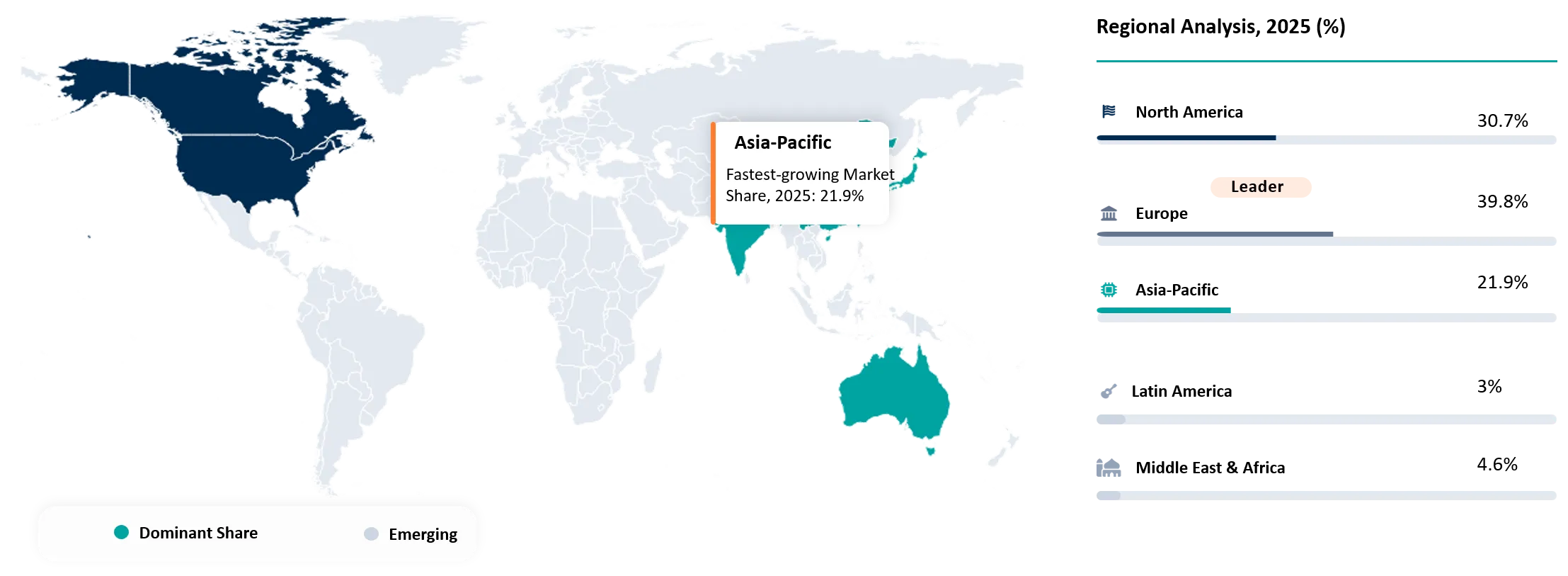
Strategic Nuclear Fuel Security Initiatives and Uranium Enrichment Capacity Expansion Driving European Market Leadership
The Europe region dominated the gas centrifuge market, with around 39.8% of the total market share in 2025. The reason behind such performance has been the fact that the region has been known to have uranium enrichment infrastructure, a vibrant nuclear energy sector, and efforts towards the development of domestic sources of nuclear fuel. Europe is among the regions that house advanced facilities based on uranium enrichment technology, with long-term agreements on nuclear fuel and investment programs to become less dependent on other enrichment facilities.
The expansion of Orano’s Georges Besse II plant highlights increasing investment in advanced gas centrifuge-based uranium enrichment capacity across Europe. This capacity enhancement is expected to strengthen nuclear fuel security in the region and generate more demand for enrichment technologies. In June 2026, Orano, a France-based nuclear fuel cycle company, intends to increase the capacity of its Georges Besse II uranium enrichment facility by over 30% through installation of an additional 2.5 million SWU and raising the capacity from 7,500 tSWU/year to 10,000 tSWU/year, with production expected from 2028.
France Gas Centrifuge Market Trends
France holds a dominant position in the European gas centrifuge market, as evidenced by its developed system of nuclear energy production, enrichment capability of uranium, and emphasis on improving national nuclear fuel cycle infrastructure. The reason for this dominance is the presence of the Georges Besse II uranium enrichment plant, the largest enrichment facility in Europe and one of the major suppliers of enrichment services for both French and foreign nuclear power stations. This, together with an array of nuclear reactors and constant upgrading of enrichment facilities, allows France to hold an advantageous position in the local gas centrifuge market.
This investment reflects Europe’s increasing interest in building up uranium enrichment capacity through gas centrifuge technology. In October 2025, the European Investment Bank (EIB) signed a EUR 400 million loan agreement with Orano SA, a France-based nuclear fuel cycle company, to support the extension of the Georges Besse II uranium enrichment plant at the Tricastin site in France. The project represents a total investment of nearly EUR 1.7 billion and aims to increase uranium enrichment capacity by approximately 30% through the expansion of the gas centrifuge-based enrichment facility. The project includes the addition of four new uranium enrichment modules to complement the existing 14 modules, with new capacity expected to become operational progressively from 2028 and fully commissioned by 2030.
UK Gas Centrifuge Market Outlook
The UK plays a significant role in the European gas centrifuge market because of the already developed uranium enrichment facilities and nuclear fuel cycle capabilities, as well as the increased attention to the creation of the domestic nuclear fuel security system. It is important to note the fact that the country possesses the facility of Urenco in Cheshire, which is called Capenhurst, and it is one of the largest commercial uranium enrichment facilities in the world, operating on the basis of gas centrifuge technology.
Urenco’s expansion initiatives demonstrate the growing focus on increasing gas centrifuge-based enrichment capacity to meet rising demand for nuclear fuel and advanced reactor fuels. These investments are expected to strengthen Europe’s uranium supply chain while driving demand for next-generation centrifuge technology and enrichment infrastructure. In June 2026, Urenco, a UK-based uranium enrichment company, is upgrading its enrichment facilities by expanding the Almelo plant's capacity to about 6,600 tSWU/year in 2030 from 5,100 tSWU/year in 2025, upgrading the Gronau plant to 3,700 tSWU/year from 3,400 tSWU/year and HALEU production at Capenhurst (UK) targeting up to 27 tonnes annually from 2031.
Gas Centrifuge Market Competitive Landscape
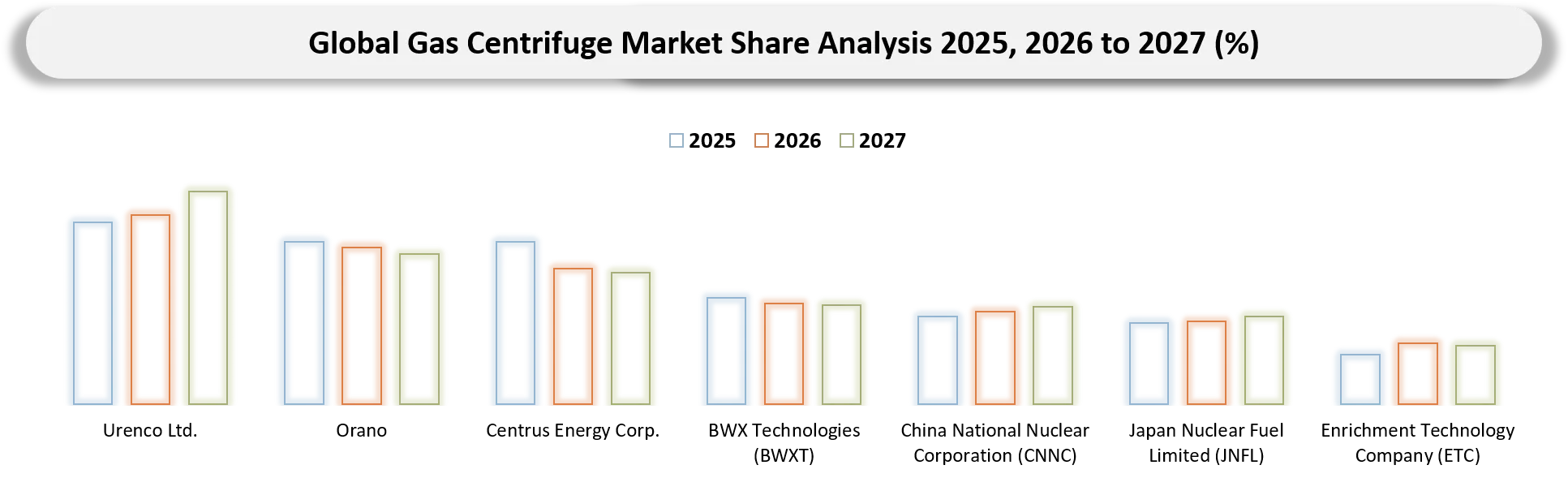
- The gas centrifuge market is characterized by three major participant groups: commercial uranium enrichment companies, government-backed nuclear fuel organizations, and centrifuge technology developers. Leading enrichment providers such as Urenco Ltd., Orano, and Centrus Energy Corp. dominate the commercial uranium enrichment landscape through large-scale centrifuge-based enrichment facilities, while China National Nuclear Corporation (CNNC) and Japan Nuclear Fuel Limited (JNFL) support domestic nuclear fuel supply strategies. Technology-focused companies such as Enrichment Technology Company (ETC) and BWX Technologies (BWXT) contribute through centrifuge technology development, manufacturing capabilities, and nuclear fuel infrastructure support. The market remains highly concentrated due to the capital-intensive nature of uranium enrichment, strict regulatory requirements, and the limited number of companies possessing advanced centrifuge technology.
- Key Players include Urenco Ltd., Orano, Centrus Energy Corp., BWX Technologies (BWXT), China National Nuclear Corporation (CNNC), Japan Nuclear Fuel Limited (JNFL), and Enrichment Technology Company (ETC).
Key Developments
- January 2026: Centrus, a U.S.-based nuclear fuel cycle company, announced an investment of more than USD 560 million to transform its Oak Ridge, Tennessee centrifuge manufacturing facility into a high-rate manufacturing plant for producing thousands of advanced gas centrifuges.
- January 2026: the U.S. Department of Energy (DOE) selected Orano Federal Services LLC, a U.S.-based subsidiary of Orano Group (France), for a USD 900 million energy security funding award to support the development of a new low-enriched uranium (LEU) production facility in Oak Ridge, Tennessee, USA.
- June 2026: Oklo Inc., a U.S.-based advanced nuclear technology company, and Centrus Energy Corp., a U.S.-based nuclear fuel cycle company, signed a strategic agreement for the supply of high-assay low-enriched uranium (HALEU) to support Oklo’s Aurora advanced nuclear reactors.
- July 2026: Centrus Energy Corp., a U.S.-based nuclear fuel supplier and uranium enrichment technology company, signed a USD 900 million contract with the U.S. Department of Energy (DOE) to transition its High-Assay Low-Enriched Uranium (HALEU) production cascade from demonstration operations to commercial-scale production at the American Centrifuge Plant in Piketon, Ohio.
Key Procurement Priorities and Buyer Evaluation Criteria
- In recent years, organizations entering the Gas Centrifuge Market have become more inclined to choose those suppliers who can offer them high-performance and efficiency enrichment of uranium using advanced centrifuges. They are interested in technologies offering a better SWU capacity, energy efficiency, longevity, and stable performance in enriching uranium for commercial fuel production.
- The decision-making process of procurement is more and more shaped by the growing need for secure uranium fuel supply chain, nuclear energy growth, SMR construction, and HALEU. Nuclear utilities, governments, and enrichment firms assess suppliers’ potential to help with meeting the future fuel needs, comply with the nuclear regulations, and to develop enrichment capacity.
- In selecting gas centrifuge technology suppliers, buyers assess important parameters including centrifuge performance, enrichment capacity (SWU per year), rotor durability, ability to design cascades, maintenance needs, safety performance, and regulatory compliance. Efficient production of uranium enrichment in the absence of down time is an important aspect that influences the choice of suppliers.
- The buyer assesses advanced centrifuge engineering, advanced manufacturing capabilities, secure supply chains, cybersecurity capabilities, and expertise in nuclear fuel cycle processes when deciding on technology partners. Businesses that offer support for future generations of technology, such as HALEU, advanced reactors, SMR, and nuclear energy programs are preferred owing to the scalable and secure solutions they can offer.
- In addition, procurement choices will also be guided by geopolitical risk management, requirements for domestic enrichment capacity, technology ownership and localization needs. Increasingly, countries and nuclear institutions are emphasizing suppliers who can supply reliable centrifuge technology and decrease reliance on foreign sources for enrichment while supporting national efforts toward nuclear fuel self-reliance in 2025-2026.
Why Choose DataM?
- Technological Innovations: Explores advancements in gas centrifuge technologies, including high-efficiency centrifuge designs, advanced rotor materials, improved cascade systems, and automation technologies that enhance enrichment performance, reduce energy consumption, and increase Separative Work Unit (SWU) capacity for uranium enrichment applications.
- Product Performance & Market Positioning: Evaluates how leading companies deliver uranium enrichment solutions based on centrifuge efficiency, enrichment capacity, operational reliability, lifecycle performance, safety standards, and scalability, highlighting how key players differentiate through advanced centrifuge engineering, HALEU production capabilities, and large-scale enrichment infrastructure.
- Real-World Evidence: Highlights the adoption of gas centrifuge systems in commercial uranium enrichment facilities, nuclear power fuel production, and advanced reactor fuel programs, demonstrating benefits such as improved enrichment efficiency, reduced operational costs, enhanced fuel supply security, and support for next-generation nuclear technologies including Small Modular Reactors (SMRs).
- Market Updates & Industry Changes: Tracks key developments such as uranium enrichment capacity expansions, HALEU production initiatives, government-backed nuclear fuel programs, centrifuge technology upgrades, and strategic investments across Europe, North America, and Asia-Pacific, supporting the evolution of secure and diversified nuclear fuel supply chains.
- Competitive Strategies: Analyzes how leading companies such as Urenco Ltd., Orano, Centrus Energy Corp., China National Nuclear Corporation (CNNC), Japan Nuclear Fuel Limited (JNFL), BWX Technologies (BWXT), and Enrichment Technology Company (ETC) expand through enrichment capacity growth, technology development, strategic partnerships, and advanced centrifuge deployment to address increasing demand for nuclear fuel security.
- Pricing & Market Access: Explains cost variations based on factors such as centrifuge technology complexity, enrichment capacity (SWU/year), facility scale, uranium processing requirements, maintenance services, and regulatory compliance, along with market access through commercial enrichment providers, nuclear fuel suppliers, and government-supported nuclear programs.
- Market Entry & Expansion: Identifies growth opportunities driven by nuclear energy expansion, advanced reactor deployment, HALEU demand, SMR commercialization, and national energy security strategies, while outlining expansion approaches such as enrichment capacity investments, regional supply chain development, technology licensing, and partnerships with nuclear utilities and government agencies.
Target Audience
- Uranium Enrichment Companies & Nuclear Fuel Cycle Operators
- Nuclear Power Utilities & Reactor Operators
- Advanced Reactor & Small Modular Reactor (SMR) Developers
- Centrifuge Technology Manufacturers & Engineering Companies
- Government Agencies & Nuclear Energy Regulators
- Nuclear Fuel Suppliers & Trading Companies
- Research Institutions & Nuclear Technology Organizations


























































