


GABA Market Size
The global GABA market reached an estimated US$ 97.4 million in 2025 and is expected to reach US$ 180.6 million by 2035, growing at a CAGR of 6.4% during 2026-2035. The market includes fermentation-derived and synthesized GABA sold into dietary supplements, functional foods, beverages, pharmaceuticals, animal feed, cosmetics, agriculture and research. Growth is supported by consumer interest in sleep quality, relaxation, stress management and cognitive wellness, together with broader use of fermentation-derived functional ingredients.
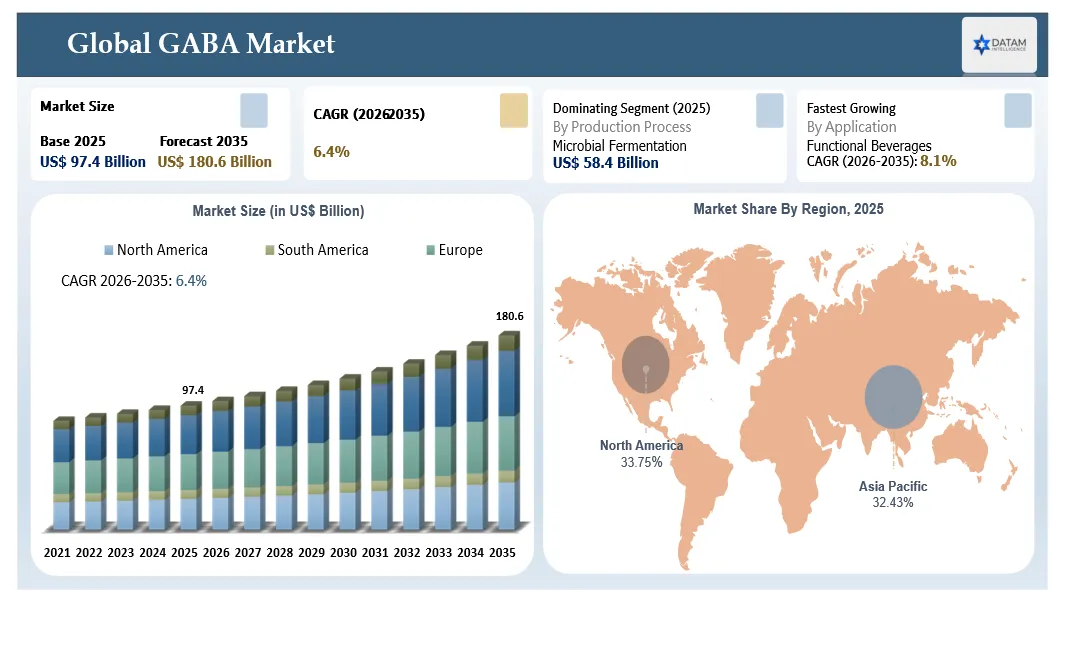
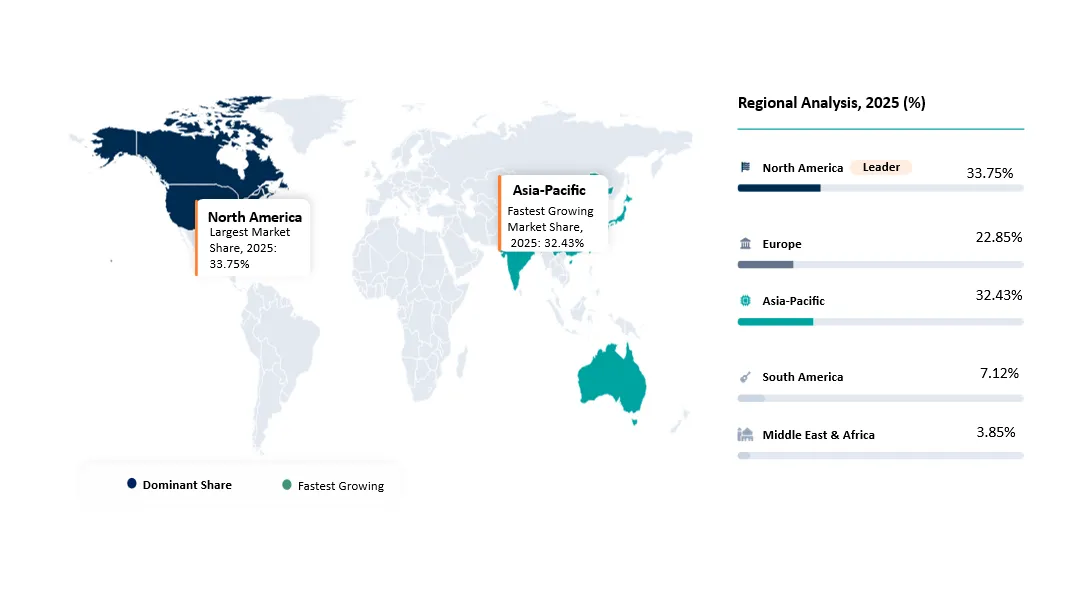
Microbial fermentation is the dominant production route because it supports food-grade positioning, clean-label claims and scalable output. China is the largest manufacturing center, while Japan remains influential in branded ingredients, clinical substantiation and functional foods. North America and Europe represent important premium-demand markets for supplements and beverages, although claim language and regulatory treatment differ by jurisdiction.
The market is moving from generic commodity GABA toward differentiated branded ingredients supported by strain identity, purity, safety dossiers, human studies, formulation assistance and co-branding. Growth will depend on improved clinical evidence, broader beverage compatibility, taste masking, stability and the ability to translate scientific findings into compliant consumer claims.
| Metric | Details |
| 2025 Market Size | US$ 97.4 Million |
| 2035 Projected Market Size | US$ 180.6 Million |
| CAGR (2026-2035) | 6.4% |
| Largest Production Market | China |
| Leading Premium Ingredient Market | Japan |
| Fastest-Growing Demand Region | Asia-Pacific |
| Dominant Process | Microbial Fermentation |
| Largest Application | Dietary Supplements and Functional Food |
| Fastest-Growing Application | Functional Beverages |
| Report Coverage | Market size, share, growth, regulation, trade, ecosystem, public-company comparison and company profiles |
GABA Market Key Takeaways
- Microbial fermentation accounts for the majority of commercial GABA supply because it aligns with food-grade positioning and supports high-volume production.
- China is the principal production hub, while Japanese companies lead in branded ingredients, scientific substantiation and functional-food commercialization.
- Dietary supplements remain the largest application, but functional beverages are expected to grow faster as consumers seek non-alcoholic relaxation and sleep-support formats.
- Clinical evidence remains mixed, creating a premium for ingredients with transparent dosage, safety and human-study support.
- GABA-specific revenue is rarely disclosed, so competitive assessment requires combining ingredient-level evidence with group or segment performance.
- Growth will be driven by co-branding, condition-specific formulations, combination products and expansion into animal nutrition and agriculture.
- Regulatory variation in permitted use, claims and dosage remains one of the most important market-entry constraints.
- Long-term winners will combine production economics with branded science, regulatory documentation, formulation support and regional distribution.
GABA Industry Trends and Strategic Insights
- Branded ingredient strategies are gaining share over unbranded bulk supply because finished-product companies seek claim support and quality differentiation.
- Fermentation optimization, strain selection and downstream purification are improving yield, purity and sustainability.
- Sleep and stress products increasingly combine GABA with magnesium, L-theanine, glycine, melatonin alternatives, botanicals or probiotics.
- Functional beverage developers are exploring relaxation drinks, non-alcoholic social beverages and evening hydration formats.
- Japan remains an innovation reference market for GABA-enriched chocolate, beverages, tomatoes and Foods with Function Claims.
- Encapsulation and delivery technologies are being used to manage taste, improve stability and differentiate premium formulations.
- Animal feed and plant-growth applications provide volume opportunities, while food and nutraceutical grades generate higher margins.
- Supply-chain resilience is improving through dual sourcing, regional warehousing and qualification of multiple fermentation suppliers.
Why does this report matter in 2026?
The year 2026 is important because consumer demand for sleep, mood, stress and alcohol-alternative products is creating new formulation opportunities, while regulators and retailers are placing greater emphasis on substantiated claims and ingredient traceability. Public companies active in branded ingredients, health science and fermentation are prioritizing margin improvement, portfolio focus and evidence-backed innovation. GABA suppliers therefore need to demonstrate more than purity and price; they must support formulation, compliance, clinical positioning and reliable supply.
The report matters because the market is not homogeneous. Feed-grade material competes on volume and cost, while branded food-grade GABA competes on evidence, regulatory dossiers and co-marketing. Pharmaceutical and research grades require tighter specifications, and beverage use requires taste, solubility and stability solutions. The study separates these value pools and maps the companies that influence each stage of the ecosystem.
GABA Market White Space & Investment Opportunities
- Clinically substantiated GABA ingredients for sleep quality, stress resilience and blood-pressure support.
- Low-dose beverage-ready GABA systems with taste masking and improved solubility.
- Combination products linking GABA with L-theanine, magnesium, glycine, botanicals, probiotics or adaptogens.
- Regional fermentation capacity outside China to improve supply resilience and shorten lead times.
- Animal nutrition applications focused on stress reduction, feed efficiency and welfare.
- Agricultural biostimulants and GABA-enriched crops supported by agronomic data and local approvals.
GABA Future Market Transformation
- The market will shift from generic powder toward branded systems with defined dose, clinical evidence, traceability and application support.
- Functional beverages and non-alcoholic relaxation products will become a larger share of premium demand.
- AI-assisted strain optimization and process control will improve fermentation yield and consistency.
- Regulatory dossiers and post-market evidence will become strategic assets in global expansion.
- Ingredient companies will increasingly partner with consumer brands, contract manufacturers and clinical-research organizations.
GABA Investment Trends in the Market
- Investment is moving toward fermentation capacity, high-purity grades, branded science and global regulatory coverage.
- Consumer-health companies are investing in sleep and stress platforms that can incorporate GABA as part of multi-ingredient systems.
- Distributors are expanding technical-sales teams and regional inventories for functional ingredients.
- R&D funding is increasing for delivery systems, microbiome interactions and condition-specific human studies.
- Portfolio rationalization among large public companies is favoring differentiated health-science assets over low-margin commodity activities.
GABA Market Buyer Decision-Making Criteria
Buyers prioritize assay, purity, residual-solvent and microbial specifications, fermentation organism, allergen status, country of origin, regulatory status and documentation. Food and beverage customers also evaluate taste, odor, solubility, heat stability and compatibility with acids, sweeteners and flavors. Branded-product companies place additional weight on human studies, claim support, trademark licensing, minimum order quantities, lead time and technical assistance.
Price matters, but the lowest-priced material may not be selected when brand risk, regulatory uncertainty or formulation failure could outweigh savings. Large customers increasingly require supplier audits, change-control procedures, sustainability information and continuity plans. Premium suppliers can defend margins by reducing development time and supporting successful launches.
Strategic Indicators for GABA Market
High Regulation Impact
Permitted use, dosage and claims differ across food, supplement, feed and pharmaceutical frameworks. Evidence and labeling discipline determine market access.
High Investment Activity
Capital is directed toward fermentation capacity, branded clinical programs, application laboratories and regional distribution.
Supply Chain Disruption
Concentrated Asian production, fermentation inputs, energy and shipping can affect lead times and delivered cost.
Pricing Volatility
Bulk prices respond to feedstock, energy, utilization and purity, while branded ingredients retain premiums through evidence and services.
Procurement Pressure
Customers demand lower cost together with tighter specifications, documentation, traceability and dual-source resilience.
New Technology Adoption
Strain engineering, continuous fermentation, membrane purification, microencapsulation and AI process control are improving economics.
Regional Expansion Opportunity
North America, Europe, India, Southeast Asia and the Middle East offer growth for premium supplements and beverages.
Government Policy Support
Functional-food frameworks, biotechnology incentives and domestic fermentation policies can accelerate investment.
Pricing Intelligence
Food-grade fermentation material carries a premium to feed grade; branded clinically supported GABA can command a significantly higher premium.
Evidence Differentiation
Human studies, safety data and transparent dosage increasingly determine retailer acceptance and brand positioning.
Disruption Analysis of GABA Market
GABA manufacturing faces disruption from the move from traditional chemical synthesis to microbial fermentation and enzyme synthesis, which offer better control over manufacture as well as applications in food, nutraceutical, and pharmaceutical products. GABA is not only moving into new markets like functional beverages, functional foods, confectionery, and personalized nutrition, but also opening up new opportunities as demand rises for convenient forms. New encapsulation and delivery systems are providing stability and incorporation options for GABA to reach a larger variety of products. Sustainable demands for raw materials are leading to use of bio-based feedstock and fermentation processes. In parallel, higher regulations as well as demand for science behind the product are resulting in greater need for purity, traceability, standardization, and substantiation of health benefits. Rising production capacities at Asian producers are contributing to increased competition, along with branding, quality certifications, and formulation capabilities offered by established ingredient companies.
GABA Market BCG Matrix: Company Evaluation
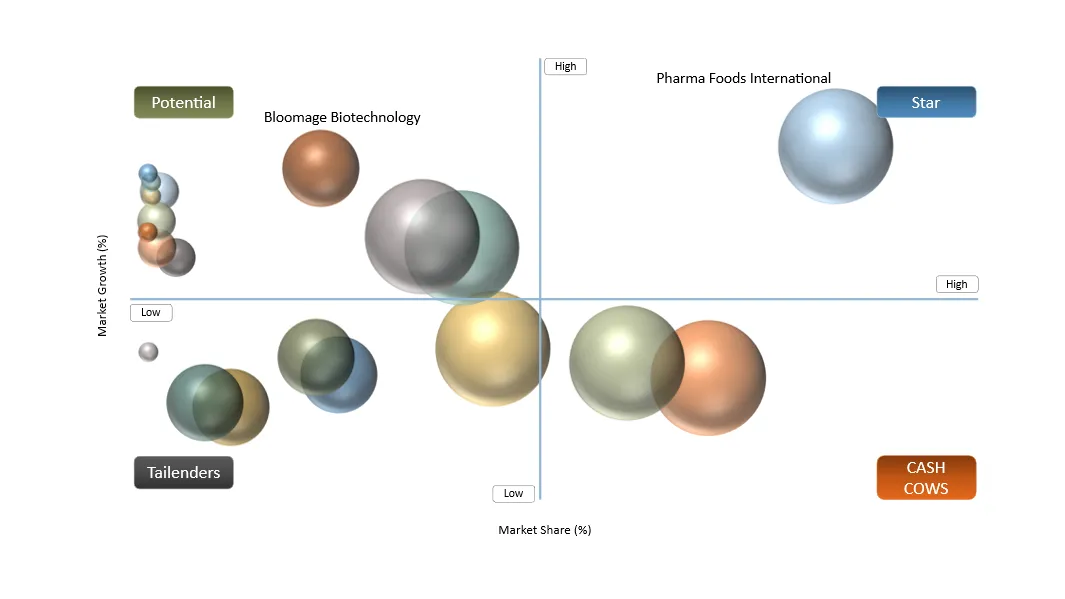
STAR
Pharma Foods International, Kyowa Hakko Bio, and Ajinomoto have been categorized as stars within the GABA category owing to their dominance in the functional ingredients segment, experience in producing GABA through fermentation, their technological abilities, and customer base in food, nutraceuticals, and pharmaceuticals. These companies can leverage their ingredient brands and experience in developing new GABA formulations to position themselves competitively in this market that is enjoying increased demand for functional and wellness products.
POTENTIAL
Companies such as Bloomage Biotechnology, Zhejiang YiWan Biolabs, Shanghai Richen, Guangdong Luckerkong, Henan Julong, and Sino Biotek are examples of Potential players that have the chance of improving their market position through increased production, fermentation techniques, pricing strategies, and rising demands for GABA in dietary supplements, functional food and beverages, etc. The growth opportunities for these companies are due to increasing usage of GABA products and Asian ingredient manufacturing abilities.
GABA Market Dynamics
Driver Impact Analysis
| Driver | Market Growth Impact | Demand Concentration | Impacted Use Case | Strategic Impact |
| Rising demand for sleep and stress products | High | North America, Europe, Japan | Supplements and evening beverages | Expands premium branded-ingredient demand |
| Functional food and beverage innovation | High | Asia-Pacific and developed consumer markets | Chocolate, beverages, dairy and snacks | Creates new formulation and co-branding opportunities |
| Growth of fermentation-derived ingredients | Medium-High | Global | Clean-label food-grade GABA | Supports microbial fermentation capacity |
| Animal nutrition and agriculture adoption | Medium | China and emerging markets | Feed and plant-growth applications | Adds volume and diversifies end use |
Driver: Rising Demand for Sleep, Relaxation and Stress Support
Sleep dissatisfaction, workplace stress and demand for non-habit-forming wellness products are increasing consumer interest in GABA. The strongest commercial impact is in combination supplements and functional beverages where GABA is positioned as part of a broader relaxation system. Suppliers that provide substantiated dosage, sensory solutions and compliant claim language can capture a higher share of value.
Restraint Impact Analysis
| Restraint | Drag on Growth | Primary Impact Area | Impacted Use Case | Strategic Impact |
| Inconsistent oral-efficacy evidence | High | Consumer trust and claims | Sleep and stress supplements | Raises need for branded clinical evidence |
| Regulatory variation | High | Market access | Food and beverage launch | Requires country-specific dossiers |
| Price competition in bulk grades | Medium-High | Producer margins | Feed and generic supplements | Favors scale and process efficiency |
| Taste and formulation limitations | Medium | Product development | Beverages and confectionery | Drives encapsulation and flavor-masking innovation |
Restraint: Evidence and Regulatory Fragmentation
GABA has strong biological relevance, but oral supplementation evidence is not uniform across outcomes, doses and populations. This creates uncertainty for claims and can lead to retailer scrutiny. Suppliers need to distinguish mechanistic rationale from clinically demonstrated benefit and align marketing with local regulations. Companies that invest in reproducible human studies and transparent evidence reviews can reduce this restraint.
GABA Market Segmentation Analysis
The global GABA market is segmented by production process, grade, form, source, application, end use industry, distribution channel and region.
By Production Process
Microbial Fermentation Will Remain Dominant
Fermentation leads because it supports food-grade positioning, scalable production and clean-label narratives. Chemical synthesis remains relevant for selected technical, pharmaceutical and research uses, while enzymatic and bioconversion routes provide innovation potential.
By Grade
Food Grade Will Lead Value
Food grade captures the largest value pool through dietary supplements, foods and beverages. Feed grade provides volume, while pharmaceutical and research grades command higher prices due to tighter specifications.
By Form
Powder Will Remain the Largest Form
Powder offers storage stability, transport efficiency and formulation flexibility. Liquid premixes and encapsulated forms will grow faster in beverages, gummies and premium delivery systems.
By Application
Dietary Supplements Will Lead, Functional Beverages Will Grow Fastest
Supplements remain the largest application because they support defined dosing and direct consumer positioning. Functional beverages will grow faster as brands develop relaxation, evening and alcohol-alternative formats.
By End Use Industry
Nutraceuticals and Consumer Health Will Control Premium Demand
Nutraceutical companies purchase branded and documented grades, while food and beverage companies expand the addressable market through mainstream formats.
By Distribution Channel
Direct Sales Will Lead Large Accounts
Direct sales dominate strategic accounts that require technical support and supply agreements. Specialty distributors remain essential for regional coverage and smaller customers.
GABA Market Geographical Penetration
U.S. GABA Market Landscape
The U.S. is a major premium-demand market for dietary supplements, sports nutrition, sleep products and functional beverages. Growth is supported by e-commerce, practitioner channels and consumer interest in non-melatonin sleep solutions. Regulatory discipline, substantiation and retailer quality standards are central.
Japan GABA Market Outlook
Japan is the leading innovation and branded-ingredient market. GABA is widely recognized in functional foods, chocolate, beverages and Foods with Function Claims. Japanese companies benefit from long-term scientific programs and co-branding models.
China GABA Market Trends
China is the largest production base and a major consumption market. It benefits from fermentation scale, integrated supply chains and strong demand in feed, food and agriculture. Competition is intense in bulk grades, encouraging producers to move into higher-purity products.
Germany GABA Market Outlook
Germany represents a quality-focused European market for supplements and functional foods. Novel-food assessment, claims compliance and pharmacy or specialist retail channels shape adoption.
India GABA Market Outlook
India offers growth through expanding nutraceutical manufacturing, sports nutrition, digital retail and fermentation capability. Market development depends on regulatory clarity and consumer education.
Brazil GABA Market Outlook
Brazil has a growing supplement and functional-beverage market, but imported ingredient cost and regulatory registration influence adoption.
Middle East and Africa GABA Market Outlook
Premium wellness demand is rising in Gulf markets, while local manufacturing remains limited. Distribution partnerships and halal documentation can support expansion.
GABA Market Competitive Landscape
- Competition is divided between Japanese branded-ingredient leaders, Chinese high-volume manufacturers and diversified public companies with health-science or fermentation capabilities.
- Pharma Foods International differentiates through PharmaGABA, clinical research, trademark licensing and co-branding.
- Kyowa Hakko Bio and other diversified fermentation companies benefit from amino-acid expertise, global quality systems and established ingredient channels.
- Chinese manufacturers compete strongly on capacity and price and are moving toward food-grade, high-purity and export-compliant products.
- Competitive advantage increasingly depends on evidence, regulatory documentation, sensory performance, technical support and reliable regional supply.
- Partnerships with finished-product brands, distributors and contract manufacturers are central to scaling adoption.
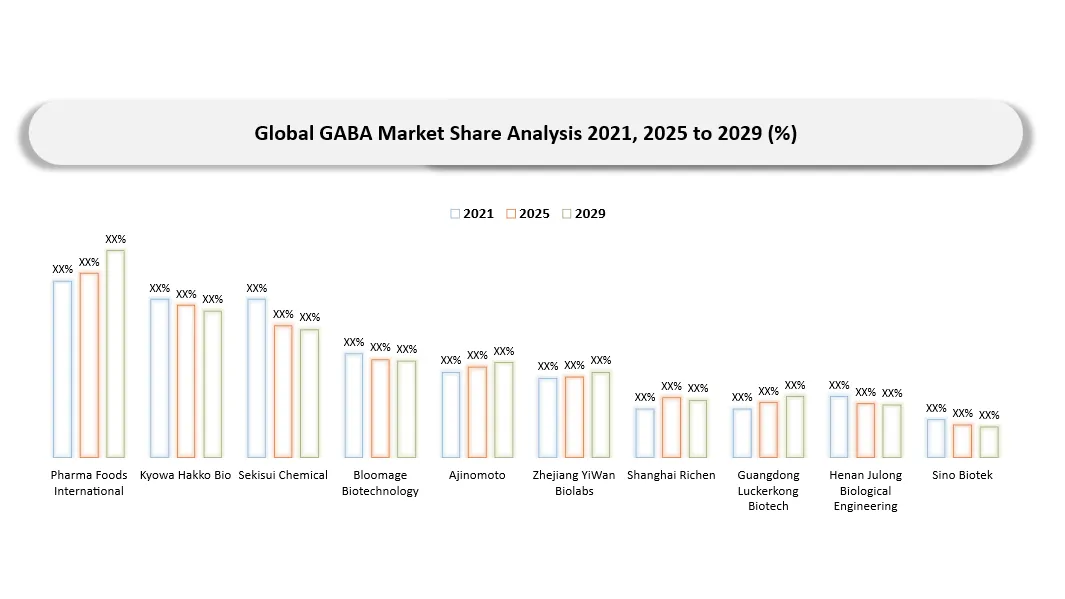
Public Company Q1-Q2 2026 Performance Comparison
| Public Company | Q1-Q2 2026 Performance Signal | GABA Exposure | Growth Drivers Relevant to GABA | Strategic Interpretation |
| Pharma Foods International Co., Ltd. | Reported FY2026 half-year and nine-month results; revised full-year forecast during March 2026. Continued ingredient R&D and international PharmaGABA activity. | Direct, branded PharmaGABA ingredient | Peer-reviewed safety evidence, co-branding, food and beverage expansion, international licensing | Most direct public-market exposure to branded GABA; growth depends on ingredient sales and consumer-health execution. |
| Kirin Holdings Co., Ltd. / Kyowa Hakko Bio | Health Science remained a strategic growth platform; Kirin reported strong supplement momentum and continued portfolio focus in 2026. | Indirect to direct through Kyowa Hakko Bio fermentation and amino-acid capabilities | Global ingredient channels, fermentation expertise, health-science cross-selling, portfolio rationalization | Scale and distribution are advantages, although GABA is a small part of a diversified group. |
| Sekisui Chemical Co., Ltd. | Diversified group performance supported continued investment discipline and high-performance businesses. | Direct historical presence in GABA production and specialty chemicals | Process engineering, quality systems, industrial scale and Asian supply network | Can compete through manufacturing consistency and customer qualification rather than consumer branding. |
| Bloomage Biotechnology Corporation Limited | Continued emphasis on bioactive materials, functional ingredients and consumer-health innovation. | Direct/adjacent through fermentation-derived bioactives and GABA supply in China | Fermentation platform, application development, China distribution and beauty-health crossover | Well positioned to move from commodity supply into premium bioactive formulations. |
| Ajinomoto Co., Inc. | Health, nutrition and amino-science businesses remained strategic priorities in FY2026 reporting. | Adjacent through amino-acid science, fermentation and global nutrition channels | Amino-acid expertise, global sales, formulation science and consumer trust | Strong ecosystem participant and potential partner, though GABA is not a separately disclosed core revenue line. |
Market Ecosystem
| Value-Chain Sector | Role | Representative Companies and Organizations |
| Feedstocks and fermentation inputs | Glucose, glutamate, nutrients, enzymes, cultures and processing aids | Ajinomoto, Cargill, ADM, CJ CheilJedang, regional starch and fermentation-input suppliers |
| Fermentation technology and equipment | Bioreactors, sensors, process control, separation and purification | Sartorius, Danaher/Cytiva, Thermo Fisher Scientific, GEA, Alfa Laval, Eppendorf |
| Core GABA ingredient producers | Manufacture food, feed, pharmaceutical and specialty grades | Pharma Foods International, Kyowa Hakko Bio, Sekisui Chemical, Zhejiang YiWan Biolabs, Shanghai Richen, Luckerkong, Sino Biotek, Bloomage/Freda |
| Branded ingredient and evidence platforms | Clinical research, trademarks, dossiers and co-marketing | PharmaGABA, branded health-science ingredient platforms, CRO and university partners |
| Premix and formulation companies | Create blends, beverage systems, gummies, capsules and delivery technologies | DSM-Firmenich, Glanbia Nutritionals, Prinova, SternLife, Aenova, Catalent and regional contract formulators |
| Specialty distributors | Regional inventory, technical sales, regulatory support and customer access | Brenntag, IMCD, Azelis, DKSH, Barentz, Univar Solutions and local nutraceutical distributors |
| Finished supplement brands | Sleep, stress, mood, sports and cognitive products | NOW Foods, Life Extension, Jarrow Formulas, Swanson, Doctor’s Best and regional brands |
| Food and beverage brands | Chocolate, functional drinks, dairy, snacks and non-alcoholic relaxation products | Glico, Suntory, functional beverage startups, dairy and confectionery groups |
| Animal nutrition and agriculture | Feed additives, stress management and plant-growth products | Feed premix companies, livestock integrators, crop-input suppliers and biologicals companies |
| Testing and certification | Assay, microbiology, contaminants, identity and quality certification | Eurofins, SGS, Intertek, NSF, USP-linked laboratories and local accredited labs |
| Regulatory and claims support | Novel food, supplement, FFC, GRAS, feed and labeling support | FDA, EFSA, Japan CAA, national food authorities, regulatory consultancies and legal firms |
| Retail and e-commerce | Consumer access and category development | Amazon, iHerb, pharmacies, health stores, supermarkets and direct-to-consumer platforms |
Key Companies of GABA Market
- Pharma Foods International Co., Ltd.
- Kyowa Hakko Bio Co., Ltd.
- Sekisui Chemical Co., Ltd.
- Bloomage Biotechnology Corporation Limited
- Ajinomoto Co., Inc.
- Zhejiang YiWan Biolabs Co., Ltd.
- Shanghai Richen Nutritional Technology Co., Ltd.
- Guangdong Luckerkong Biotech Co., Ltd.
- Henan Julong Biological Engineering Co., Ltd.
- Sino Biotek Co., Ltd.
- Tianjin Shijitianlong Biotech Co., Ltd.
- Ningxiang Jiayuan Biology Technology Co., Ltd.
- Zhejiang Tianrui Chemical Co., Ltd.
- Taizhou Xinyou Pharmaceutical & Chemical Co., Ltd.
- Shandong Freda Biotechnology Co., Ltd.
Company Profiles
Pharma Foods International Co., Ltd.
Pharma Foods International is the most visible branded GABA specialist through PharmaGABA, a fermentation-derived ingredient supported by research, trademark licensing and global co-branding. Its competitive position is based on evidence, application support and direct relationships with finished-product companies. In 2026 the company continued publishing safety research and promoting food and beverage adoption.
Kyowa Hakko Bio Co., Ltd.
Kyowa Hakko Bio, a Kirin Holdings company, has deep fermentation, amino-acid and health-science capabilities. Its strengths include global quality systems, technical sales and access to consumer-health channels. Portfolio focus within Kirin can support investment in differentiated bioactive ingredients.
Sekisui Chemical Co., Ltd.
Sekisui Chemical is a diversified public company with historical participation in GABA and strong process-engineering capabilities. It competes through manufacturing consistency, quality systems and long-term industrial relationships.
Bloomage Biotechnology Corporation Limited
Bloomage is a Chinese public bioactive-materials company with fermentation expertise and application development across health and beauty. Its scale, R&D platform and domestic market access support expansion into premium GABA and combination products.
Ajinomoto Co., Inc.
Ajinomoto is a global amino-science leader with extensive fermentation, nutrition and formulation capabilities. Although GABA is not a separately disclosed core line, the company is strategically relevant as an ecosystem participant, technology reference and potential partner.
Zhejiang YiWan Biolabs Co., Ltd.
Zhejiang YiWan Biolabs is a recognized Chinese GABA producer serving food, feed and specialty applications. It competes on manufacturing scale, export availability and product breadth.
Shanghai Richen Nutritional Technology Co., Ltd.
Shanghai Richen supplies nutritional ingredients and solutions to food, beverage and supplement customers. Its advantage is integration of ingredient supply with formulation and customer support.
Guangdong Luckerkong Biotech Co., Ltd.
Luckerkong is active in fermentation-derived GABA and related bioactive ingredients. Growth depends on export compliance, quality consistency and movement into food-grade and branded applications.
Henan Julong Biological Engineering Co., Ltd.
Henan Julong is an industrial biotechnology producer with fermentation capacity. It is positioned to serve high-volume GABA applications and improve competitiveness through process efficiency.
Sino Biotek Co., Ltd.
Sino Biotek participates in microbial fermentation and functional ingredients. Its competitive priorities include purity, documentation, application coverage and international distribution.
Tianjin Shijitianlong Biotech Co., Ltd.
The company supplies GABA and fermentation products to food, feed and industrial customers. Cost control and stable quality are central to its market position.
Ningxiang Jiayuan Biology Technology Co., Ltd.
Ningxiang Jiayuan serves the Chinese and export GABA markets with fermentation-derived products. Growth opportunities include higher-purity grades and stronger regulatory documentation.
Zhejiang Tianrui Chemical Co., Ltd.
Zhejiang Tianrui supplies chemical and specialty GABA grades. It competes through process capability, pricing and flexible specifications.
Taizhou Xinyou Pharmaceutical & Chemical Co., Ltd.
Taizhou Xinyou participates in pharmaceutical and chemical intermediates, including GABA-related products. Its position depends on GMP alignment, purity and export-market qualification.
Shandong Freda Biotechnology Co., Ltd.
Shandong Freda combines fermentation and bioactive-material expertise with pharmaceutical and cosmetic quality systems. It is positioned for food-grade, cosmetic and premium functional-ingredient applications.
GABA Market Major Pain Points
- Inconsistent clinical evidence and uncertainty over oral bioavailability for some outcomes.
- Regulatory differences in permitted use, maximum levels and claims.
- Strong price competition in bulk Chinese supply.
- Taste, odor and stability challenges in beverages and confectionery.
- Limited disclosure of GABA-specific revenue and capacity.
- Risk of overstated marketing claims damaging consumer trust.
- Dependence on concentrated fermentation capacity and international logistics.
- Need for traceability, change control and quality consistency across batches.
GABA Market Recent Developments
- April 2026: Pharma Foods International announced publication of a peer-reviewed safety study for PharmaGABA and linked the evidence to global food and beverage expansion.
- June 2026: Pharma Foods International released FY2026 third-quarter results and continued investor communication around functional-ingredient and consumer-health operations.
- May 2026: Kirin reported approximately 10% year-on-year growth for its supplement series during January-March, supporting momentum in the broader health-science channel relevant to functional ingredients.
- 2025-2026: Functional beverage and non-alcoholic relaxation concepts continued to expand, increasing interest in GABA and GABA-supporting formulations.
- 2025-2026: Chinese suppliers continued improving food-grade and export documentation as competition shifted toward higher-purity and application-ready ingredients.
Analyst View / Opinion on GABA Market
- The GABA market will continue to grow steadily, but premium value will be concentrated in evidence-backed branded ingredients rather than undifferentiated powder.
- Japan will remain the innovation benchmark, China will remain the production center and North America will remain a major premium supplement and beverage market.
- Functional beverages are the most attractive expansion area, provided suppliers solve taste, stability and compliant-claim challenges.
- Clinical substantiation is the strongest long-term defense against price competition and retailer scrutiny.
- Public-company exposure is indirect in most cases, so investors should evaluate GABA as part of wider health-science and fermentation portfolios.
- Companies that connect production, regulatory support, formulation and co-branding will outperform suppliers competing mainly on price.
GABA Market Target Audience
| Industry | Who Should Buy This Report? | Reason to Buy This Report |
| Ingredient Manufacturing | Fermentation companies, amino-acid producers and specialty chemical firms | Assess process economics, pricing, capacity and differentiation. |
| Nutraceuticals | Supplement brands, formulators and contract manufacturers | Identify high-growth claims, formats and supplier strategies. |
| Food and Beverage | Functional beverage, confectionery, dairy and snack companies | Evaluate formulation opportunities, sensory issues and regulation. |
| Pharmaceutical and Research | Drug, laboratory and research organizations | Assess high-purity grades, supply and technical requirements. |
| Animal Nutrition | Feed producers, premix companies and livestock integrators | Evaluate volume opportunities and evidence needs. |
| Agriculture | Biostimulant and crop-input companies | Assess plant-growth applications and regional potential. |
| Distribution | Specialty distributors and B2B platforms | Map suppliers, customers and regional white space. |
| Investment and Consulting | Investors, private equity, strategy and advisory teams | Evaluate market size, company exposure, ecosystem and growth risks. |
Why Choose DATAM?
- Data-driven analysis integrating supplier mapping, process economics, application demand, regulation and competitive intelligence.
- Post-purchase analyst consultation for market entry, sourcing, partnership and portfolio decisions.
- Annual updates covering product launches, evidence, regulation and company developments.
- Specialized coverage of Asian production and emerging-market demand.
- Actionable analysis linking ingredient science to commercial formulation and distribution.
What DATAM Uniquely Provides
- Ten-year forecasts across process, grade, form, source, application, end use, channel and region.
- A public-company Q1-Q2 2026 comparison focused on disclosed performance and GABA-relevant growth drivers.
- A market ecosystem table spanning equipment, producers, premix companies, distributors, brands, testing and regulators.
- Competitive differentiation between bulk, food-grade, branded and high-purity GABA.
- Buyer-focused analysis of evidence, claims, taste, stability, documentation and supply reliability.


























































