


Fumaric Acid Market Size
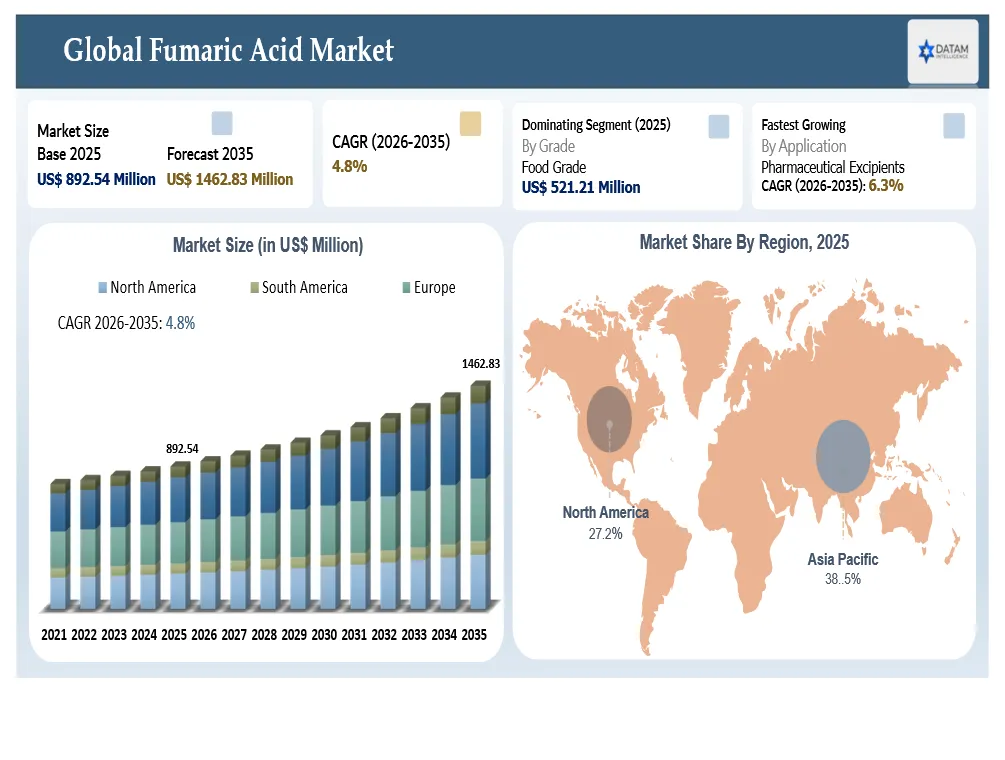
The global Fumaric Acid market reached US$ 892.54 million in 2025 and is expected to reach US$ 1462.83 million by 2035, growing with a CAGR of 4.8% during the forecast period 2026-2035.
The growth of the market is primarily influenced by increased demand from processed food, pharmaceutical and specialty chemicals sectors. It is projected that worldwide processed food sector surpassed US$ 3.4 trillion in 2025 according to Food and Agriculture Organization (FAO) trade estimates and the pharmaceutical manufacturing sector has gone over US$ 1.7 trillion according to World Bank global economic data, causing a surge in demand for food-grade and pharmaceutical-grade fumaric acid in regulated applications. Furthermore, the global trade in organic acid derivatives, under HS code 2917, was worth several billions of dollars per year, highlighting the increasing significance of specialty organic acids in the global chemical industry. Due to its greater efficiency in acidification, non-hygroscopic nature and ability to increase shelf life, fumaric acid is being increasingly used in bakery foods, powdered drinks, nutritional supplements and specialty pharmaceuticals.
In addition, increasing use in unsaturated polyester resins (UPR), which is a worldwide industry with an estimated value of over $13 billion in 2025 according to data compiled by the American Chemistry Council (ACC) and new uses in PBS/bioplastics are opening up commercial avenues for fumaric acid outside its conventional application as a food additive. Asia Pacific still continues to be the largest producer due to its cost-efficient production infrastructure, while investments in regional production capacities, bio-based production and high-end products have been influencing the supply landscape of the global industry.
Fumaric Acid Market Key Takeaways
- The global Fumaric Acid Market volume reached 304.5 kilotons in 2025 and is projected to increase to 422.85 kilotons by 2035, reflecting steady demand growth across food additives, pharmaceutical excipients and specialty industrial applications.
- Food Grade accounted for 58.4% of the global Fumaric Acid Market in 2025, driven by its widespread use as an acidulant, preservative and leavening agent across processed food and beverage applications.
- Pharmaceutical Excipients have been expected to have a CAGR of 6.3% in 2026–2035 due to the rising demand for high-purity fumaric acid across regulated pharmaceutical formulations and specialty healthcare applications.
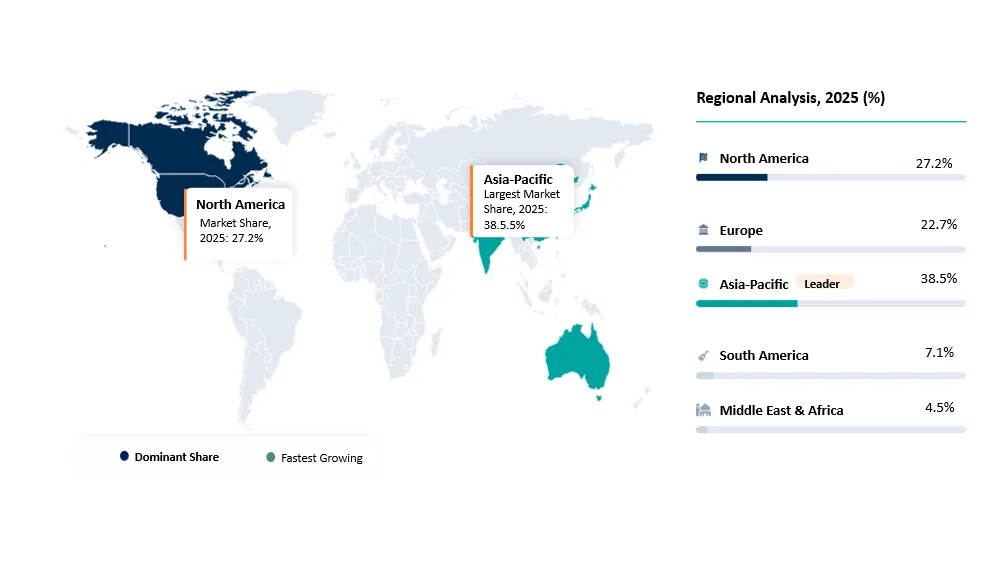
- Asia-Pacific region was leading in terms of the market share reached 38.5% in 2025 as a result of the established manufacturing base, low-cost production and wide consumption due to the growing demand from food processing, pharmaceutical and specialty chemical industries.
- Growing investments in premium fumaric acid production capacities in the North America and Asia-Pacific regions are enhancing the supply chain and ensuring supply security.
- Growing adoption of premium-grade and bio-based fumaric acid products is creating more possibilities in the pharmaceutical excipient sector and specialty resins and PBS/bioplastics sector.
Fumaric Acid Industry Trends and Strategic Insights
- Growing demand for food grade as well as pharmaceutical grade fumaric acids is becoming more prevalent due to the fact that end users of the products are giving more importance to quality.
- There is an increased diversification of applications for fumaric acid, which is becoming more common in use in applications such as pharmaceutical excipient, unsaturated polyester resins (UPR), animal feed and PBS/bioplastics.
- Strategic investments in regional manufacturing capacities are reshaping global supply dynamics, particularly across North America and Asia-Pacific, to improve supply reliability and address evolving procurement requirements.
- The utilization of bio-based production techniques are gaining greater industry attention by manufacturers in search of value-added and sustainable processes as opposed to traditional petrochemical pathways to produce fumaric acid.
- Premium and specialized product lines are emerging as key distinguishing factors in the industry, considering that the industry is shifting from the commodity-based approach to high value-added products.
Fumaric Acid Market Scope
| Metrics | Details | |
| 2025 Market Size | US$ 892.54 Million | |
| 2035 Projected Market Size | US$ 1462.83 Million | |
| CAGR (2026-2035) | 4.8% | |
| Largest Market | Asia-Pacific | |
| Fastest Growing Market | Asia-Pacific | |
| By Grade | Food Grade (99.5% to 99.8% Purity), Technical Grade (98.0%–99.5% Purity) and Pharmaceutical Grade (≥99.8% Purity) | |
| By Source | Petroleum-Based and Bio-Based | |
| By Production Process | Maleic Anhydride Isomerization Process and Fermentation-Based (Bio-Based) Production Process | |
| By Form | Powder, Granules and Crystals | |
| By Application | Food Additives, Unsaturated Polyester Resins (UPR), Alkyd Resins, Pharmaceutical Excipients, Animal Feed Additives, Paper Sizing Agents, Personal Care Ingredients, Paints & Coatings, Polybutylene Succinate (PBS)/Bioplastics and Others | |
| By End-Use Industry | Food & Beverage Industry, Chemical Industry, Pharmaceutical Industry, Animal Nutrition Industry, Construction Industry, Cosmetics & Personal Care Industry, Pulp & Paper Industry, Marine Industry and Others | |
| By Price Tier | Below US$1,000 per Metric Ton, US$1,000-US$1,400 per Metric Ton and Above US$1,400 per Metric Ton | |
| By Distribution Channel | Direct Sales (B2B), Distributors & Wholesalers, Specialty Chemical Suppliers, Online Sales and Others | |
| By Region | North America | U.S., Canada, Mexico |
| Europe | Germany, UK, France, Spain, Italy, Poland, Russia | |
| Asia-Pacific | China, India, Japan, Australia, South Korea, Indonesia, Malaysia, Singapore, Vietnam, Thailand, Philippines, Taiwan | |
| South America | Brazil, Argentina | |
| Middle East and Africa | UAE, Saudi Arabia, South Africa, Israel, Turkiye, Nigeria | |
| Report Insights Covered | Competitive Landscape Analysis, Company Profile Analysis, Market Size, Share, Growth | |
Why does this report matter in 2026?
Fumaric Acid Market is becoming increasing importance in 2026 owing to the growing use of this chemical in multiple functions in the food industry, pharmaceutical and industrial applications including unsaturated polyester resins (UPR), alkyd resins, paper sizing chemicals, paints & coatings, animal feed additives and emerging PBS/bioplastics. Food-grade fumaric acid is experiencing high demand on account of the increasing need for very efficient acidulants which provide superior pH control and increased shelf life along with enhanced flavor in baked goods, beverages, confectionery and processed foods. On the other hand, technical-grade fumaric acid is essential in the making of Unsaturated Polyester Resins (UPR) which are widely employed in building material, automotive parts, pipelines, tanks and fiberglass-based reinforced composite materials.
There are also changes being witnessed in the strategy behind global manufacturing and supply chains. The Asian Pacific region continues to lead in terms of production capabilities with China, India and Japan taking the top spots, but the focus of manufacturers is now more on production efficiency, regulatory requirements for food and pharmaceuticals and sustainable production processes. Increasing demand for pharmaceutical excipients and animal feed additives is opening up a whole new range of possibilities for the high-purity fumaric acid and driving capacity additions and product development among leading companies. This report provides critical insights into these evolving demand patterns, competitive developments and regional growth opportunities, enabling stakeholders to make informed investment, sourcing and market entry decisions in 2026.
Fumaric Acid Market White Space & Investment Opportunities
- Investing in the production of bio-fumaric acid is an excellent opportunity since more food, drug and specialty chemicals companies prefer eco-friendly ingredients. Commercial-scale fermentations have yet to penetrate the market, opening up plenty of room for innovation.
- There is rapid growth in the food-grade fumaric acid market, which can create chances for manufacturers to create formulations that adhere to the food safety standards set by international bodies.
- Opportunities are opening up for manufacturers of fumaric acid to enter into supply contracts with unsaturated polyester resin manufacturers due to their growing usage in lightweight automotive components, construction materials and materials with corrosion resistance.
- The pharmaceutical grade fumaric acid market continues to be a niche but high-margin category due to its applications in excipients and fumarate drugs. Investments in GMP compliant plants and pharmaceutical grade portfolio will allow manufacturers to benefit from increased global pharmaceutical demand.
- Supply chain diversification beyond China presents attractive investment prospects as end users increasingly seek geographically diversified sourcing strategies. Expansion of capacity in India, South East Asia and North America can help manufacturers to solve their supply security and procurement issues.
Fumaric Acid Future Market Transformation
Future development of the Fumaric Acid Market will be defined by the combination of high-value applications, advanced technology solutions and shifting user demands. While food-grade fumaric acid will maintain significant demand owing to its highly efficient properties in terms of acidification and shelf-life improvement, the market will experience rapid development of special grade products used in the pharmaceutical and performance material applications Increasing consumption of unsaturated polyester resins in lightweight composites for construction, transportation and industrial equipment will further strengthen demand for technical-grade fumaric acid. At the same time, producers will be forced to increase the focus on process optimization, energy-saving production techniques and bio-based production in order to comply with new regulations and meet sustainability standards. Future competitive environment will become more focused on purity of the products, compliance with regulations, supply reliability and regional manufacturing capabilities, rather than production volumes. Future trends of diversification and customization of the downstream industries' demands will define the transition of the fumaric acid market from the commoditized chemicals market into the specialized one.
Fumaric Acid Market Buyer Decision-Making Criteria
Fumaric Acid Market purchaser considerations increasingly revolve around the demand for high-purity products, in compliance with rigorous standards in food, pharmaceutical and industrial sectors. The needs of large-scale consumers focus on the ability of suppliers to provide reliable quality, competitive pricing and consistent availability in all markets around the world. Factors like acidification effectiveness, homogeneity in particle sizes and performance in further applications, like unsaturated polyester resins and food processing, are of significant importance when choosing a supplier. On top of that, increasing regulatory pressures and sustainability demands raise the significance of internationally certified quality and green manufacturing processes.
Major Buyer Decision-Making Criteria
- Product Grade, Purity and Regulatory Compliance
- Supply Reliability and Manufacturing Capacity
- Cost Competitiveness and Price Stability
- Application Performance and Product Consistency
- Quality Certifications and Sustainable Manufacturing Practices
Fumaric Acid Market Economic & Investment Analysis
The Fumaric Acid Market offers promising possibilities for investment as it has a wide variety of application segments such as food additives, unsaturated polyester resins (UPR), pharmaceuticals and animal nutrition. The production of technical grade fumaric acid will remain a large part of the global market as its application in the production of UPR in construction, anti-corrosion composites and vehicles remains extensive. At the same time, the high price of food and pharmaceutical grade fumaric acid brings profit opportunities to manufacturers able to comply with high standards. Expansion of production capacities especially in Asia-Pacific will bring good returns on investments.
On the other hand, from the economic viewpoint, the market is still vulnerable to any changes in the price of the raw material, especially the maleic anhydride, which determines the economics of production and prices of the product. The diversification of supply chain operations conducted by multinational companies engaged in food and chemical manufacturing opens up investment opportunities beyond the conventional manufacturing regions, especially India and Southeast Asia. In addition, a growing interest in the technologies of production of bio-based fumaric acid will create new investment opportunities for high-profit investments. Companies investing in process optimization, high purity products and long-term supply contracts with manufacturers of food, resin and pharmaceuticals will gain the competitive advantage.
Fumaric Acid Investment Trends in the Market
- Manufacturers are making more investments in specialty grades of fumaric acid used in the pharmaceutical excipients, functional foods and premium food additives industry since high-purity applications provide better profit margins than industrial applications.
- Investments are being made strategically into building long-term agreements with unsaturated polyester resin (UPR) manufacturers due to the increasing use of fumaric acid in fiberglass reinforced composites for construction, transportation and corrosion resistant products.
- The manufacture of fumaric acid in Asia Pacific is becoming an export-oriented activity due to low cost benefits and growing supply center of food and technical grade fumaric acids in the region.
- Investments in bio-based fumaric acid production technology are picking up steam with end users demanding lower carbon alternatives to chemicals, as well as a focus by regulators on sustainable chemical production practices.
- Industry players are investing money in product development in relation to their respective applications, such as particle size and other properties specific to bakery products, beverages and industrial resins.
Strategic Indicators for Fumaric Acid Market
High Regulation Impact
The Fumaric Acid Market is heavily regulated because of its many uses as a food additive and drug. International guidelines regarding purity standards, maximum allowable usage and good manufacturing practice (GMP) must be followed in order to qualify for the market. Regulations such as FDA 21 CFR §172.350 in the U.S., EU guidelines on food additives for E297 and international specifications for JECFA INS 297 play a very important role in product approval, export and supplier selection in the global market. Firms that adhere to these standards have an edge in the market.
High Investment Activity
There are several key factors driving investment in the Fumaric Acid Market due to rising demand from various applications such as food additives, unsaturated polyester resin (UPR) and pharmaceuticals. Firms are investing in the manufacture of high-quality and specialty grades of fumaric acid to meet strict quality demands and serve premium applications. There are increased investments being made in the export-oriented manufacturing capacity, specific products for each application and long-term supply relationships with downstream industries that characterize the current state of the competitive dynamics in the market.
Supply Chain Disruption
Supply chain risks still exist for the Fumaric Acid Market due to the use of maleic anhydride as one of the major inputs and the concentration of production facilities in Asia-Pacific. Disruptions in feedstock supply, logistics bottlenecks and problems associated with exports have the potential to affect the cost of production and delivery schedules. Increasing export restrictions, evolving trade policies, tariff measures, customs clearance delays and shipping disruptions across major exporting countries can further constrain international trade flows, creating procurement challenges for import-dependent markets. Also, industries utilizing fumaric acid as an input, including the food industry, unsaturated polyester resins (UPR) industry and the pharmaceutical industry, need a stable and reliable supply chain of fumaric acid with high purity.
Pricing Volatility
The Fumaric Acid Industry sees major fluctuations in the price of the product due to the dependence on the major commodity used for its production, namely maleic anhydride. Prices for maleic anhydride in the major producing and trading areas, which include China, Northeast Asia, Europe and U.S. Gulf Coast, ranged from about USD 1,050 to USD 1,400 per metric ton between 2024 to 2025, affecting greatly the cost and price strategy of fumaric acid manufacturing. Different regions experience differences in the availability of the ingredients required for the production, transportation costs and the demand of such industries as food production and pharmaceuticals supplying the movement of prices.
Procurement Pressure
The Fumaric Acid Market faces growing procurement challenges because buyers look for reliable suppliers of fumaric acid, which is used for food, pharmaceutical and technical purposes and must comply with strict quality and regulatory requirements. The scarcity of big producers and the presence of their production facilities in Asia-Pacific have increased competition for high-quality products in the industries using fumaric acid. Procurement practices are additionally determined by the variability of prices for the raw materials, changes in regulatory requirements, and the growing preference for long-term supply contracts in order to ensure price stability. Demand in the food additive and UPR applications is steadily growing, which requires reliable supplies of fumaric acid.
New Technology Adoption
The Fumaric Acid Market is experiencing rising usage of modern manufacturing technologies that emphasize the need for higher purity products as well as specialty-grade product manufacture. The manufacturers are adopting better catalytic conversion processes for the maleic anhydride route of manufacturing and bio-based fermentation process for addressing their sustainability needs and alternate routes of manufacture. Better technological innovations related to the purification process and particle size control have made possible the production of application-specific grades of fumaric acid, which can be used for the purpose of food additives, pharmaceuticals and unsaturated polyester resin (UPR).
Regional Expansion Opportunity
There are huge potentialities in regional expansion for the Fumaric Acid Market owing to increasing demand for food grade fumaric acid in Asia-Pacific and emerging countries on account of growing consumption of processed food. Simultaneously, growing expenditure on construction projects and infrastructure and industrial composites is aiding demand for technical grade fumaric acid in Unsaturated Polyester Resin (UPR) applications. Middle East, South East Asia and Latin America have emerged as emerging regions for growth on account of rising activities in food processing industry, pharma industry and specialty chemicals industry. Moreover, increasing efforts by international buyers to diversify their supply base provide immense potentialities for manufactures to expand exports from regional high growth regions.
Government Policy Support
Government initiatives to improve the domestic capacity for food processing, pharmaceuticals manufacturing and specialty materials manufacturing industries, which are some of the primary users of fumaric acid, have been positively affecting the Fumaric Acid Market. The policies favoring processed food manufacturing, industrialization and competitiveness in manufacturing in the manufacturing countries are indirectly boosting the consumption of fumaric acid for food and technical purposes. Additionally, the programs to improve chemical manufacturing capacity and reduce dependence on imports are motivating investments in regional manufacturing facilities.
Pricing Intelligence
Pricing of the Fumaric Acid Market shows considerable variation across the grades of the product, regions and applications, thereby making pricing intelligence a critical strategic factor for players in the industry. Grades of fumaric acid used in food and pharmaceutical industries are sold at relatively high prices compared to technical grades due to their high purity levels. Also, there have been variations in the pricing of maleic anhydride, which is used in the production of fumaric acid, across manufacturing centers in the period of 2024–2025. These ranged between about USD 1,050 and USD 1,400 per metric ton. Buying companies have resorted to using pricing intelligence to take advantage of the pricing of the different grades of fumaric acid and regional price variations.
| HS Code | Reporter | Trade Flow | 2025 Trade Value | Interpretation |
| 291719 | China | Exports | US$ 1.6 Billion | Highlights China's dominant role as a manufacturing and export hub for fumaric acid and related polycarboxylic acids used in food and industrial applications. |
| 291719 | United States | Imports | US$ 620 Million | Reflects strong domestic demand from food additives, pharmaceuticals and specialty chemical manufacturing industries. |
| 291719 | Germany | Imports | US$ 415 Million | Indicates Europe's substantial consumption of high-purity organic acids across food processing and industrial applications. |
| 291719 | Japan | Imports | US$ 285 Million | Demonstrates steady demand driven by pharmaceutical manufacturing, food ingredients and specialty chemical applications. |
Disruption Analysis of Fumaric Acid Market
Disruption is being seen in the Fumaric Acid Market through diversification in the use landscape and the rising demand for premium grades of the product. Although food additives are still expected to dominate the consumption of fumaric acid, there has been an increase in the use of the product as pharmaceutical excipients, PBS bioplastics and unsaturated polyester resins (UPRs), which have resulted in changes in demand trends worldwide. This has encouraged suppliers to venture out of manufacturing generic grades of fumaric acid and into formulations that have stringent purity and performance requirements.
Yet another important factor that is disrupting the markets is the developing global supply chain of fumaric acid. The domination of manufacturing capacity in Asia-Pacific, along with the volatility in terms of availability and price of maleic anhydride, is driving end-users to consider varied sources of raw materials and enter into long-term purchase contracts. At the same time, the growing interest in biorefinery and sustainable chemistry is offering scope for innovations in technology as well as in high-end products. Such factors are revolutionizing the global market towards resilient supply chains and value added applications.
Fumaric Acid Market BCG Matrix: Company Evaluation
STAR
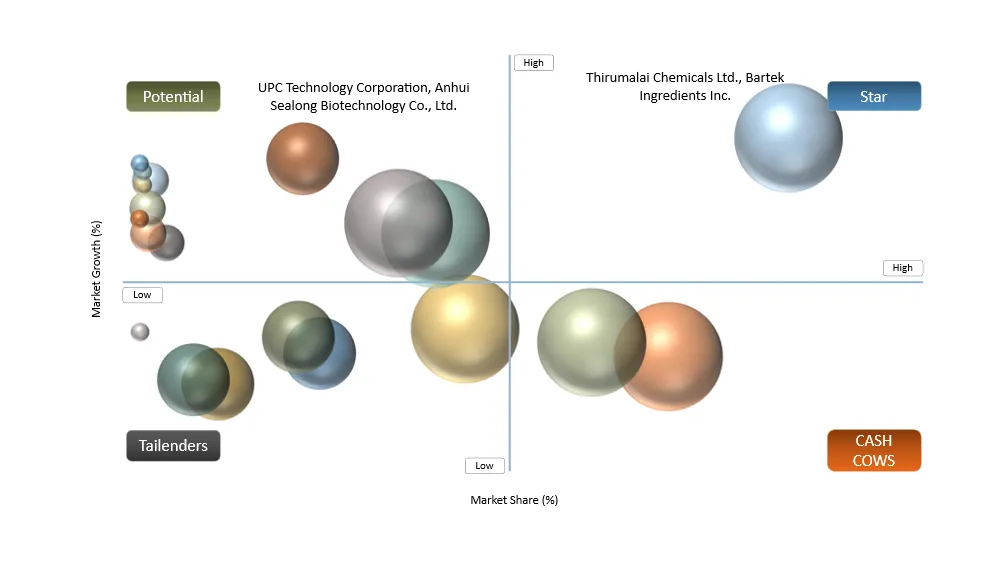
Thirumalai Chemicals Ltd., Bartek Ingredients Inc., FUSO CHEMICAL CO., LTD. and Changmao Biochemical Engineering Co., Ltd. are placed under the category of Star Companies in the Fumaric Acid Market due to their existing manufacturing capabilities, diversified product portfolio and presence in both food grade and technical grade fumaric acid products. These companies are at an advantage due to their capability to cater to the high growth end use industries such as food additives, UPR and pharmaceutical excipients. At the same time, they have high export potential due to their compliance with regulations around the world.
POTENTIAL
UPC Technology Corporation, Anhui Sealong Biotechnology Co., Ltd., Jiangsu Jiecheng Bioengineering Co., Ltd., Zhejiang Yongan Chemical Co., Ltd. and Chongqing Kulung Fine Chemicals Co., Ltd. are gaining prominence as future growth frontrunners owing to their expanding manufacturing footprint and active involvement in both regional and export markets. The rise in demand for fumaric acid of high purity along with the changing application areas in PBS/bioplastics and a general trend toward diversifying the sourcing strategy in the global scenario is likely to provide numerous opportunities for these firms.
Fumaric Acid Market Dynamics
Driver Impact Analysis
| Driver | Market Growth Impact (%) | Demand Concentration | Impacted Use Case | Strategic Impact |
Rising Demand for Food-Grade Fumaric Acid in Processed Foods and Beverages | 32% | High | Acidulants, Preservatives and Leavening Agents | Drives demand for high-purity products and strengthens premium-grade market opportunities. |
Growing Consumption of Unsaturated Polyester Resins (UPR) | 28% | High | Construction Materials, Fiberglass-Reinforced Composites and Marine Applications | Supports technical-grade fumaric acid demand and long-term supply agreements with resin manufacturers. |
Increasing Adoption in Pharmaceutical Excipients and Specialty Formulations | 21% | Medium | Tablets, Capsules and Pharmaceutical Formulations | Accelerates investments in pharmaceutical-grade production and regulatory-compliant manufacturing capabilities. |
Emerging Demand from PBS/Bioplastics and Sustainable Materials | 19% | Medium | Bioplastics and Specialty Chemical Applications | Creates opportunities for value-added products and sustainable application development. |
Driver: Rising Demand for Food-Grade Fumaric Acid in Processed Foods
One of the key market growth drivers is the increasing consumption of food-grade fumaric acid in food and beverage products. This acid is popular because of its effectiveness as an acidifier, low hygroscopic properties and ability to improve the flavor of food and food storage life. Given the rising consumer inclination toward the consumption of convenience-based food items and clean-label ingredients which also have extended product life, the demand for food-grade fumaric acid will witness a significant upswing in near future.
Restraint Impact Analysis
| Restraint | Drag on Market Growth (%) | Primary Impact Area | Impacted Use Case | Strategic Impact |
| Volatility in Maleic Anhydride Feedstock Prices | 34% | Raw Material Procurement | Food-Grade and Technical-Grade Fumaric Acid Production | Increases manufacturing costs, affects pricing strategies and compresses profit margins across the value chain. |
| Stringent Regulatory Compliance Requirements | 27% | Product Quality and Regulatory Approvals | Food Additives and Pharmaceutical Excipients | Raises compliance costs and prolongs product qualification processes in regulated markets. |
| Supply Concentration and Procurement Challenges | 22% | Global Supply Chain Management | Food, Pharmaceutical and Industrial Applications | Increases dependence on a limited number of manufacturing hubs and necessitates diversified sourcing strategies. |
| Competition from Alternative Acidulants and Specialty Chemicals | 17% | Application Substitution | Food Additives and Industrial Applications | Limits market penetration in certain applications and encourages manufacturers to focus on value-added and specialty-grade products. |
Restraint: Volatility in Maleic Anhydride Feedstock Prices
Challenges arising from the fluctuations in maleic anhydride prices continue to trouble the Fumaric Acid Market, as it remains the key raw materials in the production procedures. The maleic anhydride prices in the primary manufacturing centres averaged between US$1,050 and US$1,400 per metric ton during 2024–2025 and had a significant bearing on the production costs and pricing procedures across the value chain. Such price fluctuations adversely affect the profit margins of the manufacturers and intensify the procurement pressures in the downstream industries like food additives, medicines and unsaturated polyester resins (UPR). Hence, the players operating in the markets are becoming increasingly utilising long-term supply contracts and diversifying their procurement strategies to cope with the feedstock-related challenges and stabilise prices.
Fumaric Acid Market Segmentation Analysis
The global Fumaric Acid market is segmented based on the Grade, Source, Production Process, Form, Application, End-Use Industry, Price Tier, Distribution Channel and region.
By Grade
Growing Demand for Premium and Regulated Food Ingredient Applications
The Food Grades sector had the upper hand in the global market of fumaric acid about 2025, controlling around 58.4% market share and producing about US$ 521.21 million revenue. The major factor bringing about this dominance of the sector is the immense consumption of fumaric acid as the acidulant, preservatives and raising agent in processed food such as baked products, confectionary goods, powdered drinks and ready-to-eat food products. The reason for this superiority of fumaric acid compared to other organic acid is due to the ability of fumaric acid to perform better acidifying function along with stability of the fumaric acid. The growing demand from the consumers of convenient foods with longer shelf life as well as safe food products has increased the use of food-grade fumaric acid in food- processing industry. The segment's position in the market gonna be sustained also due to the observed strict rules concerning food quality and the growth in the investment within food production sector.
By Application
Increasing Utilization of High-Purity Fumaric Acid in Pharmaceutical Formulations
It is estimated that the Pharmaceutical Excipients will achieve the highest growth in the industry for Fumaric Acid, by growing at the annual growth rate of 6.3% during the years 2026-2035. The reason for the growth of this segment can be attributed to the rising demand for pure fumaric acid by the pharmaceutical companies in formulation of medicines in various forms like tablets, capsules, controlled-release medicines and special healthcare materials. Because of its stability and compatibility with the active pharmaceutical ingredients, Fumaric acid is also used as a pH modulator and excipient in formulation. The increasing pharmaceutical manufacturing activities, rise in investment to produce specialty and generic drugs and rigorous quality standards for the pharmaceutical-grade excipients are expected to support the growth of this segment. Besides, increase in healthcare spending and the growing need for regulatory compliance on the production of pure pharmaceutical ingredients are expected to create opportunities for the world leading manufacturers of fumaric acid.
Fumaric Acid Market Geographical Penetration
U.S. Fumaric Acid Market Landscape
The United States offers high consumption potential for fumaric acid due to the increasing demands from the processed food, pharmaceutical and specialty chemicals industries. Fumaric acid used for food applications is largely employed in baked foods, beverages, dietary supplements and pre-packaged food products because of its excellent acidification properties and the ability to improve shelf-life. Furthermore, increasing usage in the construction and industrial composite industry from UPR applications is also contributing toward market growth. Import dependence of specialty grades of fumaric acid and strict regulations for food and pharmaceutical applications make the United States a key market for global manufacturers.
Japan Fumaric Acid Market Outlook
Japan remains an important market for fumaric acid due to the high demand for both pharmaceutical grade and food grade products in its highly developed pharmaceutical industry and food processing industry. The need for high purity and stringent quality standards has hastened the use of fumaric acid as pharmaceutical excipients, nutritional supplements and premium grade food products. The presence of reputable domestic producers makes the country an important supplier of high purity fumaric acid. On the other hand, growing demand for high-value chemicals and specialty resins in various industries presents new growth prospects for the fumaric acid market.
China Fumaric Acid Market Trends
China holds a dominant position in terms of fumaric acid production globally and is an important supplier to the global market due to its vast capacity for production as well as its chemical production chain. China's position remains strong in both food grade as well as technical grade fumaric acid markets, as it fulfills the demand of food processing industry, pharmaceutical industry and UPR industry around the world. Increased demand from domestic sources as well as increased investment in specialty grades of production will continue to drive the growth of the market going forward.
India Fumaric Acid Market Scenario
The market for fumaric acid is expanding rapidly in India, particularly due to the growth of the food processing industry, as well as its pharmaceutical and specialty chemical sectors. The increasing use of processed and convenience foods is also contributing to the search for food-grade fumaric acid as an acidity regulator, preservation agent and leavening agent for cereals and liquids. Moreover, the move towards more pharmaceutical production and an increase in demand for unsaturated polyester resins (UPR) in construction applications has also led to new demand for both high-quality and commercial fumaric acid. The presence of local manufacturers and the growth of investment in the chemical market are making India an important consuming and manufacturing market in the global fumaric acid business.
Fumaric Acid Market Competitive Landscape
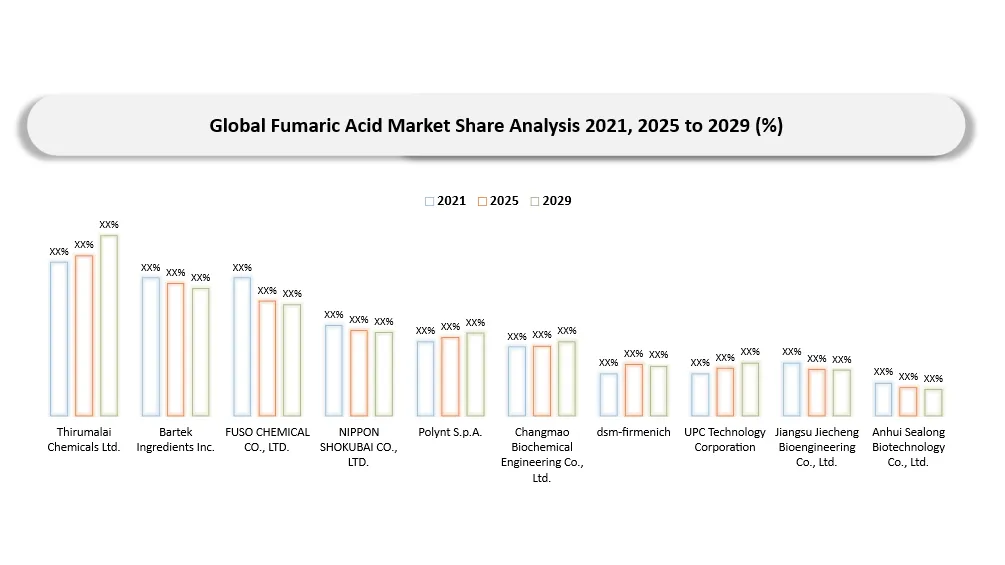
- Prominent companies involved in the production of fumaric acid are Thirumalai Chemicals Ltd., Bartek Ingredients Inc. and Polynt S.p.A., who have managed to establish themselves on account of diversified product range of food grade and technical grade fumaric acid.
- FUSO CHEMICAL CO., LTD. and NIPPON SHOKUBAI CO., LTD. are well suited for their involvement in high purity and highly regulated applications due to their capability in producing chemicals that belong to the category of high quality and pharmaceutical grade chemical products.
- Chinese firms like Changmao Biochemical Engineering Co., Ltd., Anhui Sealong Biotechnology Co., Ltd., Zhejiang Yongan Chemical Co., Ltd. and Shandong Kaison Biochemical Co., Ltd. have been constantly contributing towards China’s dominance in international production and export of fumaric acid.
- The competitive advantage has now shifted to the capability of the manufacturers to provide different grades of fumaric acid used for various purposes, including food additives, pharmaceutical excipients, UPR and PBS bioplastics.
- Various players in the market are focusing on enhancing their presence in fast-growing consumption markets via signing comprehensive supply agreements, developing specialist grades of products and investing in production of high purity fumaric acid.
Key Companies of Fumaric Acid Market
- Thirumalai Chemicals Ltd. (India)
- Bartek Ingredients Inc. (Canada)
- FUSO CHEMICAL CO., LTD. (Japan)
- NIPPON SHOKUBAI CO., LTD. (Japan)
- Polynt S.p.A. (Italy)
- Changmao Biochemical Engineering Co., Ltd. (China)
- ISEGEN South Africa (Pty) Ltd. (South Africa)
- UPC Technology Corporation (Taiwan)
- Jiangsu Jiecheng Bioengineering Co., Ltd. (China)
- Anhui Sealong Biotechnology Co., Ltd. (China)
- XST Biological Co., Ltd. (China)
- Zhejiang Yongan Chemical Co., Ltd. (China)
- Shandong Kaison Biochemical Co., Ltd. (China)
- Changzhou Yabang Chemical Co., Ltd. (China)
- Chongqing Kulung Fine Chemicals Co., Ltd. (China)
- dsm-firmenich (Netherlands)
Fumaric Acid Market Major Pain Points
- Consistency of quality requirements is still quite difficult to achieve in terms of food-grade, pharmaceutical grade and technical grade fumaric acid, especially for those manufacturers producing their products in the regulated international market.
- Pressure on manufacturers to ensure that their production process is cost-effective given the volatility in the prices of maleic anhydride while remaining competitively priced continues to rise.
- The low geographical diversification of manufacturing plants complicates procurement processes for end-users and makes companies dependent on a few major manufacturing plants.
- Increasing demand for customized applications of fumaric acid forces companies in the market to increase their investment in technology that ensures production of high-purity fumaric acid products.
- It is increasingly difficult to strike a balance between the needs of customers looking for fumaric acid used in food additives, pharmaceutical excipients, UPRs and new PBS/bioplastics applications.There is increasing pressure on manufacturers to keep the production cost low despite the changing cost of maleic anhydride.
Fumaric Acid Market Recent Developments
- December 2025-Thirumalai Chemicals Ltd.: Initiated the commissioning and start-up of its $255 million chemicals complex at West Virginia, USA, via TCL Specialties LLC. The start-up phase involved the commissioning of a part of its 40,000 tonnes per annum maleic anhydride plant, thereby enhancing the feedstock availability for downstream food grade fumaric acid manufacturing.
- December 2025 – Bartek Ingredients Inc.: Signed a definitive deal with ICL Group to expand its global product range of food grade organic acids and market reach within the functional food ingredients market.
- January 2026-Bartek Ingredients Inc.: First phase closure of the deal with ICL Group whereby ICL would invest about $90 million to gain an initial 49.9% ownership of the company. The move would help in expanding its food grade malic and fumaric acid manufacturing capacity within the functional food ingredients market.
- January-June 2026-Thirumalai Chemicals Ltd.: Made advancements in progressive start-up, optimization and stabilization of its remaining production units at its West Virginia plant via TCL Specialties LLC. Its commercial launch centered around the 30,000 tonnes per year food ingredients plant which was built to produce food grade malic and fumaric acids for the North American market.
- 2026-Anhui Sealong Biotechnology Co., Ltd.: Continued developing its specialty chemicals manufacturing capacity based on its bio technologies to meet demands for premium quality organic acids in international markets.
Analyst View / Opinion on Fumaric Acid Market
- Fumaric Acid Market is projected to see continued growth during the forecasted period, driven by rising usage as a food additive, as well as pharmaceutical excipient and specialty applications. Rising preference for high-quality products will create lucrative prospects for companies with capability of manufacturing products at higher purity levels.
- Availability of raw materials will be an important factor that will determine market competition. Companies that have in-house facilities to produce maleic anhydride and those having multiple sources of supply will be well equipped to address fluctuating prices of raw materials and secure their supplies.
- Food additive segment is likely to continue dominating the market in terms of consumption, while new areas of application in pharmaceutical formulations, UPRs and PBS/Bioplastics segments will add value to the market and generate new revenue streams for specialty-grade product makers.
- Compliance with regulatory standards and purity will play a key competitive factor in the future, especially in North America, Europe and Japan. The firms that are able to satisfy demanding standards for food and drug applications will gain competitive advantage in premium market sectors.
- Competitive dynamics may be transformed through strategic investments into regional manufacturing, high-purity manufacturing technology and value-added products development as buyers increasingly value reliable supplies, diversification of sources and long-term purchasing relationships.
Fumaric Acid Market Target Audience
| INDUSTRY | WHO SHOULD BUY THIS REPORT? | REASON TO BUY THIS REPORT |
| Food & Beverage | Food ingredient manufacturers and processed food companies | To evaluate demand trends for food-grade fumaric acid, regulatory developments and sourcing strategies for acidulants, preservatives and leavening applications. |
| Chemical Manufacturing | Specialty chemical manufacturers and formulators | To assess market opportunities across technical-grade fumaric acid applications, pricing trends and competitive developments. |
| Unsaturated Polyester Resin (UPR) | UPR manufacturers and composite material producers | To understand demand dynamics, long-term supply opportunities and application growth across construction, marine and industrial composites. |
| Pharmaceuticals | Pharmaceutical manufacturers and excipient suppliers | To identify opportunities in pharmaceutical-grade fumaric acid, regulatory requirements and high-purity product developments. |
| Animal Nutrition | Feed manufacturers and animal nutrition companies | To evaluate the growing use of fumaric acid as a feed additive and its impact on procurement and product formulation strategies. |
| Bioplastics | PBS/bioplastic manufacturers and sustainable material developers | To assess emerging opportunities in sustainable polymer applications and bio-based fumaric acid production technologies. |
| Paper & Packaging | Paper chemical manufacturers and packaging companies | To analyze fumaric acid demand in paper sizing applications and regional market developments affecting industrial consumption. |
| Cosmetics & Personal Care | Personal care ingredient manufacturers and formulators | To understand specialty-grade fumaric acid applications, quality specifications and market trends influencing ingredient sourcing decisions. |
| Chemical Distribution | Chemical distributors, wholesalers and procurement firms | To evaluate regional pricing intelligence, supply chain developments and strategic sourcing opportunities across global markets. |
| Investment & Consulting | Investors, private equity firms and market consulting organizations | To identify high-growth application segments, competitive positioning of manufacturers and long-term investment opportunities within the global fumaric acid market. |
Why Choose DATAM?
- Data-Driven insights: Dive into detailed analyses with granular insights such as pricing, market shares and value chain evaluations, enriched by interviews with industry leaders and disruptors.
- Post-Purchase Support and Expert Analyst Consultations: As a valued client, gain direct access to our expert analysts for personalized advice and strategic guidance, tailored to your specific needs and challenges.
- White Papers and Case Studies: Benefit quarterly from our in-depth studies related to your purchased titles, tailored to refine your operational and marketing strategies for maximum impact.
- Annual Updates on Purchased Reports: As an existing customer, enjoy the privilege of annual updates to your reports, ensuring you stay abreast of the latest market insights and technological advancements. Terms and conditions apply.
- Specialized Focus on Emerging Markets: DataM differentiates itself by delivering in-depth, specialized insights specifically for emerging markets, rather than offering generalized geographic overviews. The approach equips our clients with a nuanced understanding and actionable intelligence that are essential for navigating and succeeding in high-growth regions.
- Value of DataM Reports: Our reports offer specialized insights tailored to the latest trends and specific business inquiries. The personalized approach provides a deeper, strategic perspective, ensuring you receive the precise information necessary to make informed decisions. The insights complement and go beyond what is typically available in generic databases.
What DATAM Uniquely Provides
- In-depth analysis of the fumaric acid global value chain, including details of feedstock supply, maleic anhydride incorporation techniques and implications on production costs in important regions of production.
- Complete review of the demand patterns in fast-growing applications like food ingredients, pharmaceutical ingredients, unsaturated polyester resins (UPR) and other upcoming PBS/bioplastics markets which will help stakeholders discover valuable revenue prospects.
- Intelligent competitive benchmarking analysis of top manufacturers using a combination of grade portfolios, manufacturing capacity, regional presence, strategic activities and investments that form the global market environment.
- Granular pricing and procurement intelligence including region supply-demand situations, import-export trends, price tiers evaluations and challenges influencing purchasing decisions in global industries.
- Perspective projections including changing regulations, market disruption factors, investment possibilities and opportunities for regional extension aiding in acquisition strategy development.
Questions This Report Answers
- What are the key demand drivers, restraints and emerging opportunities shaping the global Fumaric Acid Market during the 2026–2035 forecast period?
- Which grades, applications and end-use industries are expected to generate the highest growth opportunities for food-grade, pharmaceutical-grade and technical-grade fumaric acid products?
- How are feedstock dynamics, maleic anhydride price volatility and regional supply-demand trends influencing global pricing, procurement and sourcing strategies?
- Which manufacturers are leading the competitive landscape and what strategic initiatives, capacity expansions and investments are reshaping the global fumaric acid value chain?
- Which regions and countries are expected to emerge as the most attractive markets for investment, production expansion and long-term business growth in the global Fumaric Acid Market?


























































