


Frozen Fruits Market Size
According to DMI analysis, the global frozen fruits market was valued US$ 4.89 Billion in 2025 and is growing at a CAGR of 6.8% during the forecast period (2026-2033).
The global frozen fruits market is experiencing steady, resilient growth, underpinned by shifting consumer preferences toward convenience, year-round availability, and nutrition retention.
Frozen fruits have evolved from being a seasonal substitute to a strategic staple across retail, foodservice, and industrial food processing, supported by advancements in freezing technologies and cold-chain logistics.
The growing adoption of plant-based diets, clean-label formulations, and sugar-reduction initiatives has further accelerated the use of frozen fruits as natural flavoring and coloring agents. Freezing is increasingly perceived as a nutrient-preserving solution, addressing consumer concerns around food waste and freshness without compromising quality.
Investments in individual quick freezing (IQF), automated sorting, and traceability systems are enhancing yield efficiency, product consistency, and compliance with evolving food safety regulations.
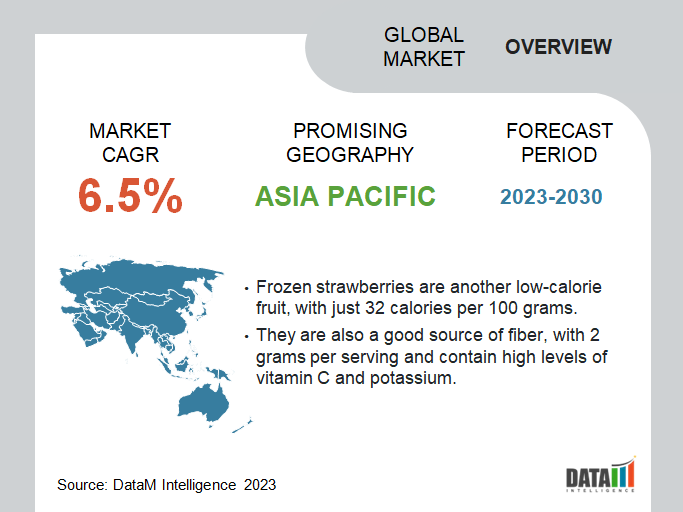
In line with this, manufacturers are launching unique product variants, incorporating herbs and spices from local produce, to widen their portfolio and attract a large consumer base. Frozen blueberries are a low-calorie option, with just 57 calories per 100 grams. They are also a good source of fiber, providing 2.4 grams per serving, as well as vitamin C and potassium.
Frozen strawberries are another low-calorie fruit, with just 32 calories per 100 grams. They are also a good source of fiber, with 2 grams per serving and contain high levels of vitamin C and potassium which drives the frozen fruits market value.
Market Scope
| Metrics | Details |
| CAGR | 6.8% |
| Size Available for Years | 2022-2031 |
| Forecast Period | 2026-2033 |
| Data Availability | Value (USD ) |
| Segments Covered | Fruit Type, Category, Form, End-User, Distribution Channel and Region |
| Regions Covered | North America, Europe, Asia-Pacific, South America and Middle East & Africa |
| Fastest Growing Region | Asia-Pacific |
| Largest Region | Asia-Pacific |
| Report Insights Covered | Competitive Landscape Analysis, Company Profile Analysis, Market Size, Share, Growth, Demand, Recent Developments, Mergers and Acquisitions, New Product Launches, Growth Strategies, Revenue Analysis, Porter’s Analysis, Pricing Analysis, Regulatory Analysis, Supply-Chain Analysis and Other key Insights. |
To Know more Insights Download Sample
Market Dynamics
The Growing Consumer Demand for Natural Food
Consumer demand for natural, organic and plant-based food products, has witnessed exponential growth in recent years. Due to increased consumer preferences for healthy and nutritious food products, along with this consumer prefer plant-based healthy and tasty food alternatives, research studies show that the global frozen fruits market is anticipated to witness significant growth in those coming years.
For instance, on May 11, 2022, The UK online retailer, The Vegan Kind launched new frozen section stocking the biggest names in plant-based food. The company aims to further establish its position as "the home of all things plant-based grocery" by expanding its selection to now include ice cream, frozen pizzas, meat substitutes, as well as frozen organic fruit and vegetables. Furthermore, changing consumer dietary preferences and inclination toward nutritious food products are increasing the demand for frozen fruits.
Market Segment Analysis
The global frozen fruits market is segmented based on fruit type, category, form, end-user, distribution channel and region.
Organic Segment Accounts for the Highest Share in the Global Frozen Fruits Market
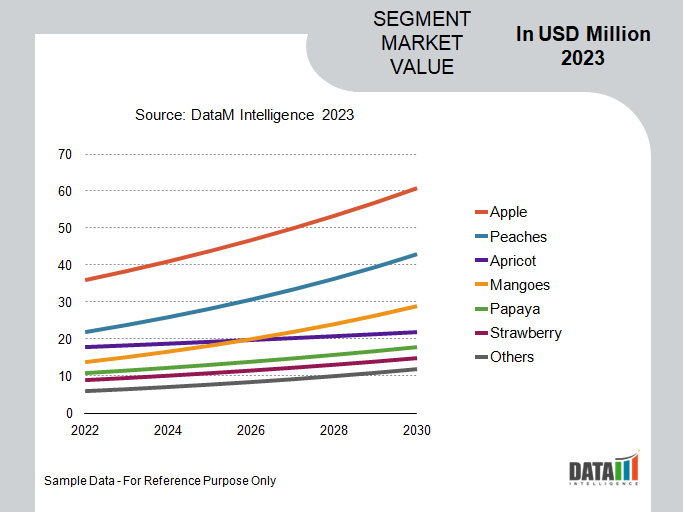
In 2022, the organic frozen fruits segment had the highest revenue share of 46.2 %. Organic frozen fruits have been the most preferred choice of consumers due to the growing demand for organic and chemical-free food products globally, coupled with a rise in demand for healthy & nutritious products along with good taste.
For instance, on April 16, 2021, Whole Foods launched its 365 Everyday Value Organic Frozen Fruit line, which includes options like organic blueberries, organic mixed berries and organic mango chunks. The fruits are certified organic and non-GMO and are sold in resealable bags for convenience which drives the segment revenue.
On the other hand, In 2020, Nature's Earthly Choice launched a line of organic frozen fruits, including options like organic strawberries, organic blueberries and organic mixed berries. The fruits are sustainably sourced and certified organic and are sold in resealable bags.
Market Geographical Share
North America
- The North America frozen fruits market represents a mature yet steadily expanding segment of the broader processed foods industry, underpinned by shifting consumer lifestyles, evolving dietary preferences, and resilient cold-chain infrastructure.
- Demand is particularly strong for berries (strawberries, blueberries, raspberries) and tropical fruits, which are widely used in smoothies, bakery applications, dairy inclusions, and ready-to-eat meals. The expansion of plant-based diets, clean-label formulations, and functional foods has further accelerated incorporation of frozen fruits as core ingredients.
- Modern retail and e-commerce are reshaping purchasing behavior, supported by improved last-mile cold logistics and private-label penetration by large grocery chains.
- The market faces margin pressure from energy-intensive freezing processes, cold storage costs, and supply-side volatility linked to climate variability and labor availability in key fruit-growing regions.
Asia-Pacific is Expected to be the Dominating Region During Forecast Period.
By region, the global frozen fruits market is segmented into North America, South America, Europe, Asia-Pacific, Middle-east and Africa.
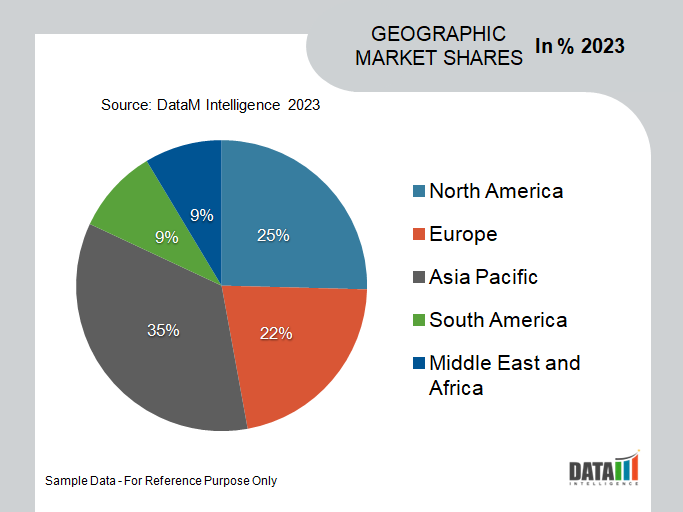
In 2022, Asia Pacific accounted for about 42.9% of worldwide sales. China, Japan, South Korea, Australia, New Zealand, Taiwan, Indonesia, Thailand, Philippines, Japan, and China are all major markets for the product. For instance, according to the Japanese National Health and Nutrition Survey, 100 grams of frozen blueberries contain about 55 calories.
Frozen blueberries, raspberries, strawberries, peaches, papayas, pineapples, mangos and grapes are just a few of the fruits that The Meat Guy, a Japanese company, sells to restaurants, lodging establishments, vacation spots, exclusive clubs and private individuals across Japan.
Frozen Fruits Companies
The major global players include SunOpta Inc, Diafrost Frozen Fruit Industry N.V., Fruitex Australia, Arla Foods, Capricorn Food Products India Ltd., Ravifruit (Kerry Group), Uren Food Group Limited., Rosemary & Thyme Limited, Brecon Foods and Milne Fruit Pty Ltd.
Covid Impact
The COVID-19 pandemic has adversely affected the economies of various countries due to lockdowns, business close, and travel bans. Food and beverages are among the major industries that suffered from intense disruptions such as restrictions on the supply chain and the shutdown of warehouse plants.
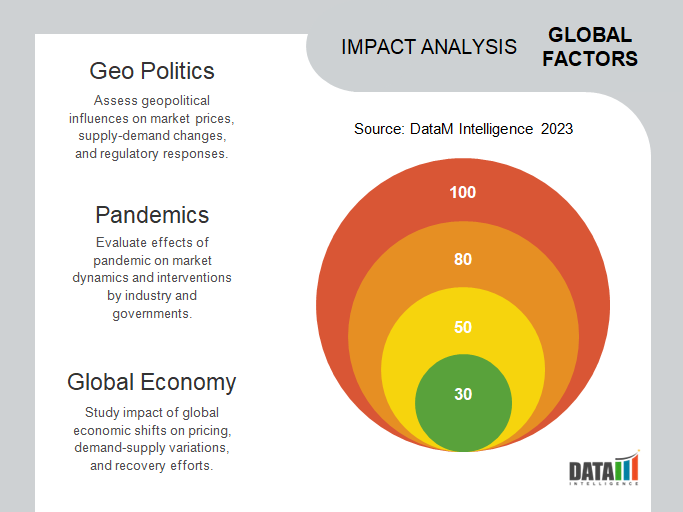
In addition, the closures/shutdowns of companies, factory production facilities in various countries have disrupted the whole supply chain. It has negatively impacted manufacturing activities, delivery schedules and various goods sales. Multiple companies have already announced possible delays in product deliveries and a decline in future sales of their products.
Furthermore, the import-export restrictions imposed by governments in North America, Asia and Europe are hindering geographical expansion, business collaboration and partnership opportunities. Thus, these factors are hindering the growth of the frozen fruits market in the food and beverages industry.
Key Developments
- In September 2025, Dole Packaged Foods strengthened its strategic partnerships by collaborating with major foodservice chains to expand the distribution of frozen fruits into commercial breakfast and smoothie channels, enhancing its presence in the foodservice segment.
- In August 2025, Ardo advanced its sustainability leadership by integrating AI-driven cold-chain monitoring systems across its European facilities, achieving a 15% reduction in energy consumption and food waste.
- In December 2024, Crop’s NV focused on product diversification by launching a specialized “Quick-Smoothie” line featuring pre-portioned fruit and superfood discs, targeting the European retail market.
Why Purchase the Report?
- To visualize the global frozen fruits market segmentation based on fruit type, category, form, end-user, distribution channel, and region, as well as understand key commercial assets and players.
- Identify commercial opportunities by analyzing trends and co-development.
- Excel data sheet with numerous data points of frozen fruits market-level with all segments.
- PDF report consists of a comprehensive analysis after exhaustive qualitative interviews and an in-depth study.
- Product mapping available as Excel consisting of key products of all the major players.
The Global Frozen Fruits Market Report Would Provide Approximately 77 Tables, 82 Figures and 195 Pages.
Target Audience 2026
- Manufacturers / Buyers
- Industry Investors/Investment Bankers
- Research Professionals
- Emerging Companies



























































