


France Postbiotic Food Supplement Market Size
The France postbiotic food supplement market recorded a value of US$ 424.57 thousand in 2024 and is expected to reach a value of US$ 738.00 thousand in 2028, growing at a CAGR of 16.1% during the forecast period (2025-2028).
The market is experiencing steady growth, driven by increasing consumer awareness of gut microbiome health and the benefits of postbiotics over probiotics. The demand for stable, non-refrigerated gut health solutions has risen, particularly among urban consumers seeking convenience. Additionally, ongoing research on the health benefits of postbiotics has led to greater adoption in the food supplement industry. The trend of clean-label, scientifically backed supplements also influences the market, as French consumers prioritize transparency and efficacy in their health products.
Several factors are propelling the growth of postbiotic food supplements in France. The rising prevalence of digestive disorders and gut-related health concerns, such as irritable bowel syndrome (IBS) and bloating, is increasing the demand for microbiome-supporting products. Additionally, the growing preference for functional foods and supplements with scientifically proven benefits is pushing manufacturers to invest in postbiotic formulations.
Major companies such as SAS DYNVEO, Lacteol (DSM-Firmenich Houdan SAS), PiLeJe SAS, Besins Healthcare, THERASCIENCE SAS, Archer Daniels Midland Company, Kerry Group Plc and BASF SE are leveraging advanced research and innovation to develop high-quality postbiotic solutions for various health applications. Their strong market presence and strategic initiatives are fueling increased consumer awareness and demand. As a result, Germany is emerging as a key market for postbiotic products in Europe.
France Postbiotic Food Supplement Market Scope
| Metrics | Details |
| CAGR | 16.1% |
| Size Available for Years | 2018-2028 |
| Forecast Period | 2025-2028 |
| Data Availability | Value (US$) |
| Segments Covered | Product, Application, Distribution Channel, Type |
| Report Insights Covered | Competitive Landscape Analysis, Company Profile Analysis, Market Size, Share, Growth, Demand, Recent Developments, Mergers and Acquisitions, New Product Launches, Growth Strategies, Revenue Analysis, Porter’s Analysis, Pricing Analysis, Regulatory Analysis, Supply-Chain Analysis and Other key Insights. |
For more details on this report – Request for Sample
Market Drivers
Growing Aging Population and Emphasis on Preventive Healthcare
Germany’s aging population is a key driver of the postbiotic supplement market, as older adults seek solutions for better digestion, immune support and overall well-being. As of January 1, 2024, 21.5% of France’s population 14.7 million people were over 65, according to INSEE’s latest demographic report. This proportion has been steadily increasing for over 30 years, up from 13% in 1970 and is projected to reach nearly one-third by 2070. The trend is driven by a rapidly declining birth rate, further accelerating France’s aging population.
This trend of the aging population underscores the rising demand for gut health products that aid nutrient absorption and prevent digestive discomfort. Postbiotics, known for their anti-inflammatory and immune-boosting properties, are gaining traction among seniors looking for natural, science-backed health solutions. The rise in chronic diseases like diabetes and cardiovascular issues further fuels interest in gut health supplements.
Preventive healthcare trends drive consumers to adopt functional food and supplements that support long-term health. In August 2024 France’s Health Innovation Agency (AIS) announced a €170 million investment to advance preventive healthcare across key areas like children’s health, mental health and chronic diseases. As preventive healthcare gains momentum, demand for functional food supplements, including postbiotics, is expected to rise.
Strategies Adopted by the Companies
Strategic partnerships, acquisitions and product launches play a crucial role in driving the growth of the French postbiotics food supplements market, enabling companies to expand their product portfolios, enhance research capabilities and strengthen market penetration. Acquisitions have also played a crucial role in expanding market presence, as seen with larger companies acquiring smaller, specialized postbiotic brands to enhance their portfolio and distribution network.
For instance, in 2023, DSM agreed to terms to acquire postbiotics pioneer Adare Biome. The company is based in Houdan, France and is a division of Adare Pharma Solutions. DSM-Firmenich planned to expand the availability of Adare Biome’s OTC postbiotic supplement, Lactéol, through its B2C unit, i-Health. The company will further develop B2B postbiotic ingredients for dietary supplements, early life and medical nutrition. This acquisition strengthens DSM-Firmenich’s leadership in microbiome management for both human and animal health, enhancing its pet nutrition and feed solutions.
This type of initiative shows that the France postbiotics food supplements market is experiencing strong growth, largely driven by strategic initiatives such as partnerships, acquisitions and product launches. Partnerships between supplement companies and research institutions have accelerated innovation, leading to scientifically-backed formulations that enhance gut health and immunity. Acquisitions have allowed companies to expand their market presence, leveraging established distribution channels and strengthening their product portfolios.
Market Restraints
Strong Preference for Probiotics and Traditional Supplements
French consumers have long relied on probiotics and traditional supplements for digestive and immune health, making it difficult for postbiotics to carve out a distinct market position. Probiotics, commonly found in fermented dairy products like yogurt and kefir, are deeply ingrained in French dietary habits, leading to skepticism about the necessity of postbiotic supplements. Additionally, probiotic brands have established strong consumer trust through decades of research and marketing, making it challenging for postbiotics to demonstrate unique benefits that justify their adoption.
Traditional supplements, including multivitamins, minerals, herbal extracts and dietary fibers, also contribute to the restraint in postbiotic market growth. Many consumers prefer these well-known options for overall health and wellness, as they have long been recommended by doctors and pharmacists.
The French population, particularly the older demographic, tends to prioritize essential vitamins (such as Vitamin D, C and B-complex), prebiotics (like inulin and oligofructose) and herbal-based digestive aids (such as peppermint and chamomile) over newer, less familiar products like postbiotics. The strong foothold of these alternatives in pharmacies, supermarkets and online channels makes it harder for postbiotics to gain visibility and consumer interest.
The strong preference for probiotics and traditional supplements presents a considerable restraint on the France postbiotics food supplements market. The well-established presence of probiotics in everyday diets, combined with long-standing consumer trust and familiarity with traditional supplements, makes it difficult for postbiotics to gain traction.
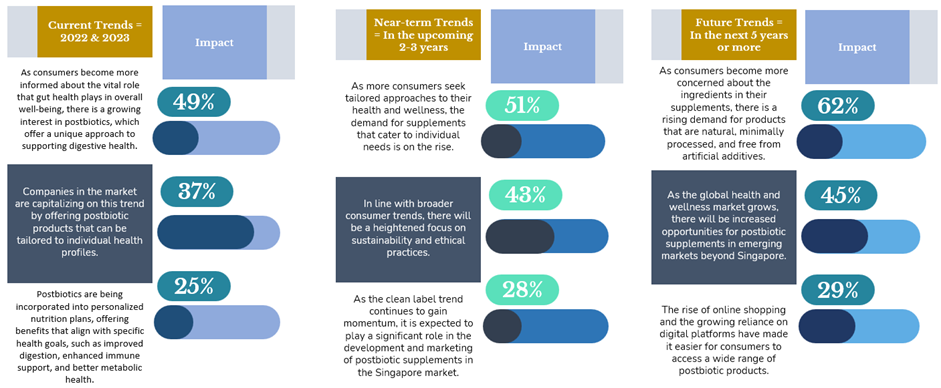
Trends
France Postbiotic Food Supplement Market Segment Analysis
The France postbiotic food supplement market is segmented based on product, application, distribution channel and type.
Rising Focus on Digestive Health
Digestive health holds a significant share in the German postbiotic food supplement market due to the increasing consumer focus on gut health's impact on overall well-being. Postbiotics, derived from fermented foods or microbial fermentation, provide immune support, improve digestion and enhance nutrient absorption. German consumers are highly health-conscious, prioritizing scientifically backed supplements that support digestive health and overall wellness.
In 2022, as part of the effort to understand the many health-related aspects affected by gut microbiota, a new collaborative project called Le French Gut, which is part of the international “Million Microbiome of Humans Project”, launched in France. Le French Gut aims to study gut microbiota in healthy adults and its role in chronic diseases. As microbiome research advances, German consumers increasingly recognize the role of gut health in overall well-being, driving demand for postbiotic supplements.
Sustainability Analysis
Germany's strong regulatory framework ensures product quality, safety and sustainability compliance. Many brands focus on sustainable sourcing of raw materials, such as plant-based and fermented ingredients, to reduce environmental impact. Packaging innovations, including biodegradable and recyclable materials, are becoming standard to meet eco-conscious consumer expectations. Local production and short supply chains help lower carbon footprints while ensuring product freshness and transparency.
Companies are investing in energy-efficient manufacturing processes to reduce greenhouse gas emissions. The market benefits from Germany’s high consumer awareness of probiotics and postbiotics, supported by scientific research on gut health. Ethical considerations, such as fair-trade sourcing and cruelty-free testing, play a role in brand differentiation. Digitalization and e-commerce growth enhance sustainable distribution by minimizing waste and optimizing logistics. Overall, the German postbiotic supplement market is steadily advancing towards a more sustainable and responsible future.
Unmet Needs
Despite growing interest in gut health, many consumers in France remain unaware of postbiotics and their benefits compared to probiotics and prebiotics. Brands and healthcare professionals need to invest in awareness campaigns to educate the public about postbiotics' unique advantages. For example, many French consumers are familiar with probiotic-rich yogurts like Activia but may not understand the role of postbiotics in gut health.
Postbiotic supplements are not yet widely available in supermarkets and pharmacies compared to probiotics. Most postbiotic products are sold online or in specialized health stores, limiting accessibility for mainstream consumers. For instance, while probiotic supplements from major brands are commonly found in pharmacies like Pharmacie Lafayette, postbiotic options remain niche.
Consumers and healthcare professionals require stronger scientific backing to trust postbiotic supplements. While research on postbiotics is growing, more clinical studies are needed to validate their long-term benefits and optimal dosages. Regulatory bodies in France and the EU also need clearer guidelines to differentiate postbiotics from probiotics and prebiotics. This uncertainty affects how brands position and market their products.
French consumers are increasingly demanding natural organic and sustainably sourced supplements. Many postbiotic supplements still contain artificial additives, preservatives or fillers, which do not align with clean-label trends. Brands that emphasize organic fermentation processes, minimal processing and eco-friendly packaging could differentiate themselves in the market.
France Postbiotic Food Supplement Market Major Players
The major players in the market include SAS DYNVEO, Lacteol (DSM-Firmenich Houdan SAS), PiLeJe SAS, Besins Healthcare (Laboratoires Besins International SAS), THERASCIENCE SAS, Archer Daniels Midland Company, Kerry Group Plc and BASF SE.
By Product
- Powder Postbiotics
- Capsule/Tablet Postbiotics
- Liquid Postbiotics
- Others
By Application
- Digestive Health
- Immune Support
- Others
By Distribution Channel
- Supermarkets/Hypermarkets
- Pharmacies and Drug Stores
- Convenience Stores
- Online Retailers
- Others
By Type
- Short-Chain Fatty Acids
- Tributyrin
- Others
Key Developments
- In April 2023, DSM agreed to terms to acquire postbiotics pioneer Adare Biome, the company is based in Houdan, France and is a division of Adare Pharma Solutions. DSM-Firmenich planned to expand the availability of Adare Biome’s OTC postbiotic supplement, Lactéol, through its B2C unit, i-Health. The company will further develop B2B postbiotic ingredients for dietary supplements, early life and medical nutrition.
Why Purchase the Report?
- To visualize the France postbiotic food supplement market segmentation based on product, application, distribution channel and type as well as understand key commercial assets and players.
- Identify commercial opportunities by analyzing trends and co-development.
- Excel data sheet with numerous data points of France postbiotic food supplement market-level with all segments.
- PDF report consists of a comprehensive analysis after exhaustive qualitative interviews and an in-depth study.
- Product mapping available as excel consisting of key products of all the major players.
The France postbiotic food supplement report would provide approximately 36 tables, 32 figures and 192 pages.
Target Audience 2025
- Manufacturers/ Buyers
- Industry Investors/Investment Bankers
- Research Professionals
- Emerging Companies



























































