


Food Allergy Treatment Market Size and Overview
The global food allergy treatment market reached US$ 8.72 billion in 2025 and is expected to reach US$ 22.42 billion by 2035, expanding at a CAGR of 9.9% during 2026-2035. The market is moving from an emergency-only model toward recurring protection and disease modification. Epinephrine remains essential for acute reactions, while anti-IgE biologics, regulated oral immunotherapy and emerging patch, sublingual and engineered-allergen platforms are expanding the treated population and the duration of therapy.
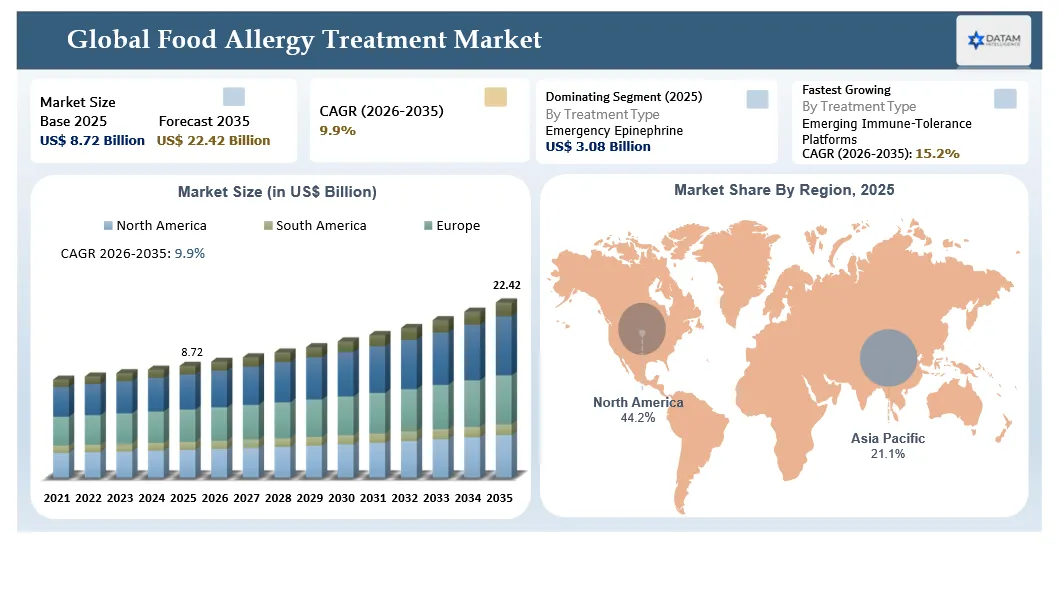
The U.S. approval of Xolair for IgE-mediated food allergy established the first broadly applicable pharmaceutical option for reducing reactions after accidental exposure to one or more foods. In the pivotal evidence cited by the FDA, 68% of treated participants tolerated at least 600 mg of peanut protein without moderate or severe dose-limiting symptoms, compared with 6% receiving placebo. This changed the commercial model by creating a recurring biologic pathway for eligible patients while preserving the requirement for allergen avoidance and emergency preparedness.
Emergency treatment is also changing. The approval of neffy introduced the first non-injectable epinephrine product for anaphylaxis, addressing a practical barrier among patients and caregivers who delay treatment because of needle fear or device complexity. Palforzia expanded into children aged one through three years, extending regulated oral immunotherapy into an earlier treatment window. Together, these developments increase spending across rescue, protection, monitoring and specialist-led immunotherapy.
The pipeline is becoming more differentiated by dosing interval, age coverage, number of foods treated and clinic burden. Late-stage patch programs focus on pediatric peanut allergy, long-acting anti-IgE candidates seek less frequent dosing, multi-allergen products aim to consolidate therapy and engineered allergens seek improved tolerability. Commercial success will depend on meaningful threshold improvement, safety, adherence, specialist capacity, payer evidence and the ability to fit treatment into everyday family routines.
| Metric | Details |
| 2025 Market Size | US$ 8.72 Billion |
| 2035 Projected Market Size | US$ 22.42 Billion |
| CAGR (2026-2035) | 9.9% |
| Largest Market | North America |
| Fastest Growing Market | Asia-Pacific |
| Largest Treatment Category | Emergency epinephrine and preventive biologics |
| Fastest Growing Category | Disease-modifying immunotherapy |
| Forecast Period | 2026-2035 |
Food Allergy Treatment Drug Pipeline Analysis
The pipeline table is positioned near the beginning of the report because future market value depends on how effectively new products move patients from avoidance and emergency preparedness into repeat preventive treatment, desensitization or durable immune modification.
| Drug / Program | Company | Modality | Target | Stage / 2026 Status | Strategic Relevance |
| Viaskin Peanut (DBV712) | DBV Technologies | Epicutaneous immunotherapy patch | Peanut allergy in children | Phase 3 program, with COMFORT Toddlers recruiting in 2026 | Needle-free daily patch may reduce systemic exposure and support younger patients. |
| Ozureprubart (RPT904) | RAPT Therapeutics / GSK transaction context | Long-acting anti-IgE monoclonal antibody | One or more IgE-mediated food allergies | Phase 2b prestIgE study enrolling | Longer dosing interval could reduce administration burden and broaden preventive biologic use. |
| ADP101 | Alladapt Immunotherapeutics | Multi-allergen oral immunotherapy | Single and multiple food allergies | Clinical-stage program under portfolio optimization | A broad formulation could consolidate treatment for patients allergic to several foods. |
| PT-01 Peanut SLIT Tablet | ALK and academic collaborators | Sublingual allergen immunotherapy tablet | Peanut allergy | Early clinical development | Standardized tablet delivery may lower clinic intensity relative to conventional oral escalation. |
| UKK-0018 | Ukko | Engineered peanut protein immunotherapy | Peanut allergy | Early clinical development | Protein engineering seeks lower allergenicity while preserving immune-training potential. |
| ENP-501 | N-Fold | Novel peanut immunotherapy | Peanut allergy | Phase 1/2 development | Designed to establish safety and biological activity for a differentiated peanut platform. |
| Tezepelumab plus peanut OIT | NIAID and collaborators | Anti-TSLP biologic plus oral immunotherapy | Peanut allergy | Proof-of-concept clinical research | Tests whether upstream immune blockade can improve safety, speed or durability of OIT. |
| Omalizumab plus multi-food OIT | Clinical consortium | Anti-IgE biologic-assisted oral immunotherapy | Multiple food allergies | Phase 2 combination research | Could accelerate desensitization and support broader food coverage. |
| Next-generation nasal epinephrine | Multiple developers | Needle-free emergency rescue | Anaphylaxis including food-triggered reactions | Late clinical and registration-stage portfolios | Competition will center on dose reliability, pediatric eligibility, portability and repeat dosing. |
Food Allergy Treatment Market Key Takeaways
- The market is projected to expand from US$ 8.72 billion in 2025 to US$ 22.42 billion by 2035.
- Broad accidental-exposure protection through anti-IgE therapy is creating recurring pharmaceutical spending beyond rescue devices.
- Needle-free epinephrine is reducing dependence on injectable-only emergency formats and could improve willingness to carry and use treatment.
- Earlier-age oral immunotherapy expands the treatment pool while increasing the need for specialist supervision, caregiver education and adherence support.
- Pipeline differentiation is moving toward multi-food coverage, longer dosing intervals, improved tolerability and lower clinic burden.
- North America leads because of approvals, reimbursement and specialist infrastructure, while Asia-Pacific is expected to grow fastest as diagnosis and branded access improve.
Food Allergy Treatment Industry Trends and Strategic Insights
- Food allergy care is becoming a portfolio market that combines emergency rescue, accidental-exposure protection, allergen-specific desensitization and combination treatment rather than relying on one intervention.
- Developers are prioritizing products that reduce the number of clinic visits, avoid injections, simplify dose escalation or cover multiple allergens because treatment burden is a central determinant of persistence.
- Payer evidence is shifting toward avoided emergency utilization, quality-of-life improvement, school and workplace participation and reduced caregiver anxiety in addition to oral-food-challenge thresholds.
- Specialty pharmacies and patient-support programs are becoming more important as biologics and regulated immunotherapies require benefit verification, education, refill coordination and adherence monitoring.
- Pediatric labels create early commercial opportunity, while adults remain an underdeveloped segment with substantial unmet need and weaker referral pathways.
- Combination strategies using biologics to improve the safety or speed of immunotherapy may create new partnership models between large pharmaceutical companies and allergen-platform developers.
Food Allergy Treatment Market Scope
| Metrics | Details |
| 2025 Market Size | US$ 8.72 Billion |
| 2035 Projected Market Size | US$ 22.42 Billion |
| CAGR | 9.9% |
| By Treatment Type | Emergency epinephrine, monoclonal antibodies, oral immunotherapy, epicutaneous immunotherapy, sublingual immunotherapy, adjunctive therapy and emerging tolerance platforms |
| By Allergen Type | Peanut, tree nuts, milk, egg, wheat, soy, sesame, fish and shellfish, multiple foods and others |
| By Route | Injectable, oral, intranasal, epicutaneous and sublingual |
| By Patient Age | Infants and toddlers, children, adolescents and adults |
| By Care Setting | Hospitals, allergy clinics, ambulatory offices, home care, schools and community settings |
| By Distribution Channel | Hospital pharmacies, retail pharmacies, specialty pharmacies, online pharmacies and institutional supply |
| By Treatment Objective | Emergency rescue, accidental-exposure protection, desensitization, sustained unresponsiveness and combination treatment |
| By Region | North America, Europe, Asia-Pacific, South America and Middle East and Africa |
| Report Insights Covered | Market size, share, pipeline, pricing, access, investment, competitive landscape and company analysis |
Why does this report matter in 2026?
In 2026, the food allergy treatment market is at an inflection point. The clinical pathway now includes approved rescue, preventive biologic and regulated oral immunotherapy options, while a broader pipeline seeks to reduce treatment burden and expand coverage across allergens. Companies can no longer evaluate the opportunity only through diagnosed prevalence. They must understand which patients are eligible, how many can access an allergist, how treatment fits into daily life and whether payers will recognize value beyond changes in laboratory markers or challenge thresholds.
The report connects market size with the operational realities of allergy care. It assesses age-specific treatment windows, specialist capacity, emergency preparedness, food-challenge infrastructure, adherence, safety management and pharmacy distribution. It also evaluates how new biologics, patches, sublingual products, engineered allergens and combination regimens could change the balance between clinic-administered and home-administered care. This supports portfolio prioritization, licensing, launch sequencing, provider planning and investment decisions.
Food Allergy Treatment Market White Space & Investment Opportunities
- Long-interval biologics for patients who need broad protection across multiple foods.
- Lower-burden immunotherapy that reduces dose escalation, clinic observation and treatment-related reactions.
- Adult food allergy programs addressing an underserved population with limited referral and treatment pathways.
- Digital adherence, reaction tracking and remote-support tools integrated with specialty pharmacy and clinic workflows.
- Needle-free emergency products with pediatric formulations, reliable repeat dosing and improved portability.
- Regional allergy-center networks in markets where diagnosis is improving faster than specialist treatment capacity.
Food Allergy Treatment Future Market Transformation
The market is expected to evolve from avoidance and emergency response toward continuous risk reduction and, for selected patients, immune modification. Preventive biologics will expand the population receiving recurring pharmaceutical treatment, while allergen-specific platforms will compete on tolerability, convenience, age eligibility and durability. Products that can address several allergens or reduce dosing frequency are likely to have stronger commercial scalability because many patients have multiple food allergies and families face significant treatment burden.
Care delivery will also become more distributed. Initial escalation and food challenges will remain specialist-led, but maintenance, refill management, education and monitoring will increasingly extend into home care and specialty-pharmacy channels. Digital tools can support adherence and reaction documentation, but adoption will depend on evidence, interoperability and provider workflow. The most valuable companies will combine differentiated treatment with practical access and support infrastructure.
Food Allergy Treatment Market Buyer Decision-Making Criteria
Buyers evaluate food allergy treatments according to clinical protection, safety, age eligibility, route, dosing frequency, need for supervised escalation and compatibility with allergen avoidance. Allergists and families place high value on meaningful increases in reaction threshold, predictable adverse-event management and a treatment routine that can be sustained over months or years. Emergency products are assessed on speed, portability, ease of administration, weight-based eligibility and the ability to deliver a second dose when required.
Payers require evidence that treatment reduces severe reactions, emergency utilization and caregiver burden. They also examine acquisition cost, administration cost, persistence, patient selection and the number of patients who remain protected after interruption. Pharmaceutical buyers and partners assess label breadth, patent position, manufacturing complexity, specialist dependence, pharmacy channel and the potential to combine with other modalities. Products with strong efficacy but excessive operational burden may face slower adoption.
Food Allergy Treatment Market Economic & Investment Analysis
Investment interest is increasing because the market now supports recurring revenue from biologics, regulated immunotherapy and specialty-pharmacy services in addition to emergency rescue. Commercial models differ substantially. Epinephrine products depend on broad prescribing, replacement cycles and access across home, school and work. Biologics generate higher recurring revenue but require benefit verification and careful patient selection. Immunotherapy can create durable treatment relationships but demands specialist time and adherence support.
The strongest investment cases combine a large addressable population with scalable delivery. Long-interval anti-IgE products, pediatric immunotherapy, multi-food platforms and needle-free rescue attract attention because they address visible limitations in current care. Investors should discount programs that rely on intensive clinic capacity without a credible rollout model or that show threshold improvement without clear quality-of-life and payer value. Partnership potential is highest where large commercial organizations can add market access and distribution to specialized clinical platforms.
Food Allergy Treatment Investment Trends in the Market
- Increasing capital allocation to long-acting anti-IgE and other biologics that may protect against several allergens.
- Continued funding for pediatric patch, oral and sublingual immunotherapy programs with lower administration burden.
- Strategic interest in nasal and other needle-free epinephrine formats following validation of non-injectable rescue.
- Partnerships between large pharmaceutical companies and specialist allergy developers to combine clinical innovation with commercial scale.
- Investment in specialty-pharmacy, patient-support and digital adherence capabilities that improve persistence and reimbursement execution.
Strategic Indicators For Food Allergy Treatment Market
High Regulation Impact
Food allergy therapies operate under high regulatory scrutiny because products may trigger the reactions they are intended to prevent or reduce. Approval requires carefully designed oral-food-challenge endpoints, age-specific safety evidence, manufacturing consistency and clear risk-management procedures. Emergency products must demonstrate reliable delivery under real-world conditions, while biologics and immunotherapies must define appropriate use, continued avoidance and management of breakthrough reactions. Companies with strong regulatory strategy and post-approval evidence generation are better positioned to expand labels and payer coverage.
High Investment Activity
Investment is concentrated in biologics, pediatric immunotherapy, multi-food platforms and needle-free rescue. The acquisition context around RAPT illustrates strategic interest in long-acting anti-IgE approaches. Funding also supports manufacturing scale, clinical-site networks, food-challenge capacity and patient recruitment because operational execution is as important as molecule quality. Programs that offer longer dosing intervals or lower specialist burden can command greater strategic value.
Supply Chain Disruption
The market depends on biologic manufacturing, allergen standardization, device components, cold-chain logistics and specialty distribution. Supply disruption can delay treatment initiation or create risk for patients who need uninterrupted protection. Companies mitigate risk through dual sourcing, inventory planning, qualified manufacturing partners and pharmacy coordination. Emergency epinephrine supply is particularly sensitive because patients often require multiple devices across locations.
Pricing Volatility
Pricing differs sharply by modality. Rescue devices compete through access, formulary position and replacement cycles, while biologics carry high recurring acquisition cost and administration expense. Immunotherapy pricing reflects supervised escalation, monitoring and long-duration maintenance. Net price is affected by rebates, assistance programs, specialty-pharmacy contracts and payer criteria. Competitive pressure will increase as more preventive and rescue options enter the market.
Procurement Pressure
Hospitals, clinics, schools and pharmacies require dependable supply, clear training and rapid replacement. Biologic procurement depends on benefit verification and buy-and-bill or specialty-pharmacy arrangements. Buyers increasingly prefer suppliers that combine product availability with education, reimbursement support and adverse-event guidance. Developers without channel capabilities may need commercial partners.
New Technology Adoption
Technology adoption includes digital adherence tools, connected rescue devices, electronic food-challenge documentation, predictive patient selection and remote monitoring. AI can support trial recruitment and response analysis, but it cannot replace specialist judgment. The strongest digital models will integrate with clinic and pharmacy workflows and demonstrate measurable impact on persistence or emergency outcomes.
Regional Expansion Opportunity
North America remains the largest market because of approvals and specialist access. Europe offers strong potential where biologics and immunotherapy can secure reimbursement within structured health systems. Asia-Pacific growth depends on diagnosis, urban allergy centers and premium branded access. Regional expansion requires adaptation to local prevalence patterns, emergency-care infrastructure and payer evidence requirements.
Government Policy Support
School epinephrine policies, anaphylaxis education, reimbursement decisions and public-health guidance shape treatment access. Recognition of major allergens and better labeling can improve diagnosis and awareness, while treatment policies determine whether patients receive only rescue medication or preventive care. Government support is strongest where food allergy is treated as a chronic safety and participation issue rather than an episodic emergency.
Pricing Intelligence
Premium pricing is most sustainable when a product reduces risk across several foods, lowers administration burden or addresses a clear usability barrier. Payers will compare biologics with avoidance plus rescue, and immunotherapy with continued specialist management. Developers should build economic evidence around emergency visits, caregiver productivity, school participation and quality of life, not solely challenge thresholds.
AI Impact Analysis of Food Allergy Treatment Market
AI can improve food allergy treatment development by identifying trial participants, integrating clinical history with sensitization data, supporting endpoint analysis and detecting patterns associated with response or adverse events. It may also help developers model dose escalation, optimize site selection and stratify patients for biologic or allergen-specific therapy. In commercial care, AI-enabled tools can support adherence reminders, reaction documentation and remote triage, although clinical decisions must remain under qualified supervision.
The largest near-term value lies in reducing friction rather than automating diagnosis. Specialty pharmacies can use analytics to predict abandonment, clinics can identify patients overdue for follow-up and manufacturers can monitor persistence and real-world outcomes. Adoption will depend on privacy, validation and integration with electronic health records. Tools that generate alerts without clear workflow ownership may add burden instead of improving care.
Disruption Analysis of Food Allergy Treatment Market
The first major disruption is the shift from single-allergen, clinic-intensive treatment toward broad protection and lower-burden administration. Anti-IgE therapy has created a preventive category that can cover more than one food, while patch, sublingual and engineered-allergen programs seek to improve tolerability. A second disruption is the modernization of rescue through nasal epinephrine and other delivery formats. These changes alter prescribing, pharmacy distribution and the competitive position of established auto-injectors.
The market may also consolidate around companies that combine product innovation with access infrastructure. Smaller developers can create differentiated clinical platforms, but commercialization requires payer evidence, specialist education, manufacturing and patient support. Partnerships and acquisitions are therefore likely to shape the pipeline. The key competitive divide will be between products that improve clinical thresholds and products that also simplify daily management.
Food Allergy Treatment Market BCG Matrix: Company Evaluation
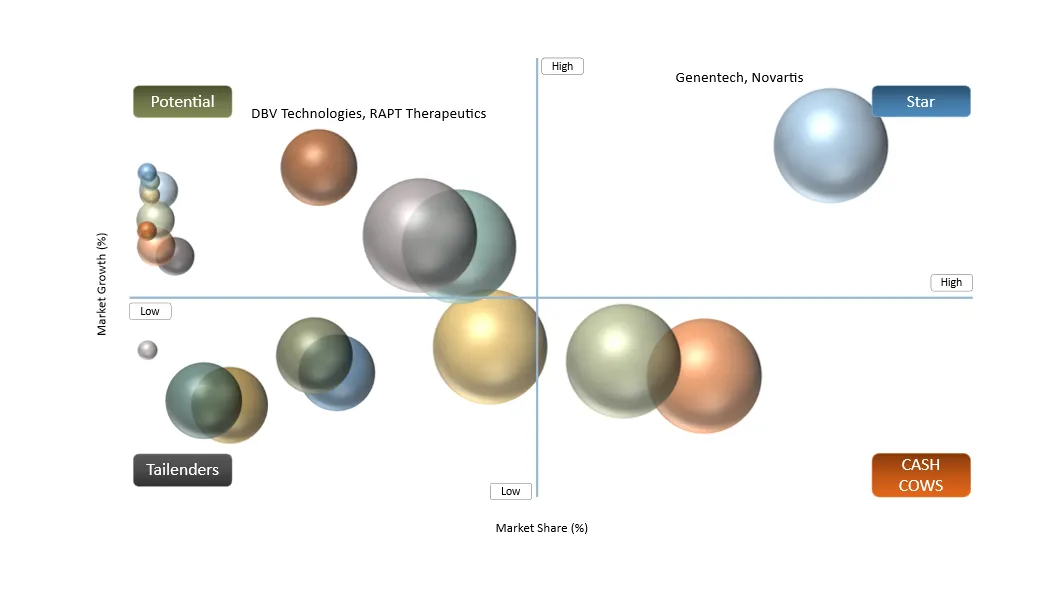
STAR
Genentech and Novartis occupy a leading position through Xolair’s broad food-allergy indication and established biologic infrastructure. Aimmune has a strong regulated immunotherapy position through Palforzia, while ARS Pharmaceuticals has created a new rescue category with neffy. These companies combine validated products with commercial channels and are positioned to expand age coverage, access and real-world evidence.
POTENTIAL
DBV Technologies, RAPT Therapeutics, Ukko, N-Fold, Alladapt and other clinical-stage developers represent high-potential companies because they target clear limitations in current care. Their future position depends on pivotal efficacy, safety, dosing burden, financing and partnership execution. Companies with multi-food coverage, long dosing intervals or lower clinic intensity may move into stronger competitive positions.
Food Allergy Treatment Market Dynamics
Driver Impact Analysis
| Driver | Market Growth Impact (%) | Demand Concentration | Impacted Use Case | Strategic Impact |
| Expansion of preventive biologics | 27% | North America and Europe | Accidental-exposure protection | Creates recurring treatment for one or more food allergies. |
| Earlier pediatric treatment | 22% | North America, Europe and selected Asia-Pacific markets | Oral and patch immunotherapy | Expands the eligible population and supports longer patient lifetime value. |
| Needle-free emergency innovation | 18% | Global | Anaphylaxis rescue | May improve willingness to carry and administer epinephrine promptly. |
| Improved diagnosis and awareness | 15% | Global | Referral and treatment initiation | Increases the treated pool and demand for specialist services. |
Driver: Expansion of Preventive Biologics and Earlier Disease-Modifying Treatment
Preventive biologics are expanding the market beyond emergency preparedness. Xolair established a repeat-treatment pathway for eligible adults and children with IgE-mediated food allergy and demonstrated clinically meaningful increases in tolerated food protein for several allergens. At the same time, earlier-age oral immunotherapy increases the number of patients who can enter structured treatment. These developments raise spending on medicines, specialist visits, monitoring, pharmacy support and education. They also encourage pipeline investment in longer-acting biologics, multi-food platforms and lower-burden administration.
Restraint Impact Analysis
| Restraint | Drag on Growth (%) | Primary Impact Area | Impacted Use Case | Strategic Impact |
| High recurring treatment cost | 21% | Reimbursement | Biologics and specialty therapy | Restricts access and increases evidence requirements. |
| Specialist and food-challenge capacity | 18% | Care delivery | Immunotherapy initiation and monitoring | Limits geographic scalability and creates waiting lists. |
| Safety and adherence burden | 16% | Patient persistence | Oral and patch treatment | Reduces completion and requires intensive support. |
| Uncertain durability after stopping | 12% | Clinical value | Disease modification | Makes payer and patient value assessment more difficult. |
Restraint: High Cost, Specialist Capacity and Long-Term Treatment Burden
The main restraint is the combined cost and operational burden of long-duration therapy. Biologics can require repeated administration and specialty-pharmacy coordination, while oral immunotherapy requires dose escalation, monitoring and strict adherence. Many markets have too few allergists and limited food-challenge capacity. Families may discontinue because of reactions, anxiety or the difficulty of maintaining daily treatment. These constraints slow adoption even when efficacy is compelling. Developers need simpler dosing, clear patient selection, robust support programs and evidence that protection improves daily life and reduces emergency utilization.
Food Allergy Treatment Market Segment Analysis
The global Food Allergy Treatment market is segmented by treatment type, allergen type, route of administration, patient age, care setting, distribution channel, treatment objective and region. Consistent with the Cannabis Testing reference format, one strategically important subsegment is discussed under each segmentation heading rather than providing repetitive narratives for several subsegments.
By Treatment Type
Monoclonal Antibodies Will Lead Recurring Value Growth
Monoclonal antibodies are expected to generate the strongest recurring value growth because anti-IgE therapy can reduce reactions after accidental exposure to one or more foods. The segment benefits from broad clinical applicability, established specialty infrastructure and repeat dosing. Growth will depend on payer criteria, patient selection, self-administration, and competition from long-acting candidates that seek to reduce dosing frequency.
By Allergen Type
Multiple Food Allergies Will Create the Strongest Strategic Opportunity
Patients with more than one food allergy face a larger daily burden and have historically lacked a single treatment approach. Broad preventive biologics and multi-allergen immunotherapy can address this unmet need. Commercial opportunity is significant because one intervention can create value across several allergens, although clinical-trial design and payer evidence are more complex.
By Route of Administration
Intranasal Delivery Will Be the Fastest-Growing Rescue Route
Intranasal epinephrine addresses needle fear and device-use hesitation while preserving rapid access to emergency treatment. The route can improve portability and willingness to carry treatment. Future competition will focus on weight eligibility, dose consistency under nasal conditions, repeat dosing, shelf life and reimbursement relative to established auto-injectors.
By Patient Age
Infants and Toddlers Will Record the Fastest Treatment Expansion
Earlier intervention is becoming more important as Palforzia includes children aged one through three years and patch programs target young pediatric populations. Families may be highly motivated during early childhood, but treatment requires caregiver education, safety monitoring and specialist capacity. Companies that simplify administration can build long patient relationships.
By Care Setting
Allergy Clinics Will Remain the Commercial Coordination Hub
Allergy clinics coordinate diagnosis, food challenges, treatment selection, supervised escalation and adverse-event management. Even as maintenance moves toward the home, clinics remain central to initiation and evidence collection. Capacity constraints create an opportunity for standardized protocols, regional networks and digital support that extend specialist reach.
By Distribution Channel
Specialty Pharmacies Will Gain Share as Biologics Expand
Specialty pharmacies manage benefit verification, prior authorization, cold-chain delivery, refill coordination and patient education. Their role becomes more important as preventive biologics and complex immunotherapies grow. Manufacturers with strong specialty-pharmacy relationships can reduce abandonment and improve persistence.
By Treatment Objective
Accidental-Exposure Protection Will Become the Largest Growth Engine
Accidental-exposure protection sits between emergency rescue and full disease modification. It offers immediate, understandable value to patients who cannot guarantee avoidance and to payers seeking fewer severe reactions. Anti-IgE therapy has validated the category, and future products will compete on duration, breadth of food coverage and convenience.
Food Allergy Treatment Market Geographical Penetration
U.S. Food Allergy Treatment Market Landscape
The U.S. is the largest market because it combines high diagnosis, specialist networks, specialty-pharmacy infrastructure and recent approvals across biologic, oral immunotherapy and nasal rescue. Xolair broadened preventive treatment beyond a single allergen, Palforzia extended pediatric eligibility and neffy created a non-injectable emergency option. Commercial growth is supported by large treated populations, but access varies by insurance, geography and allergist availability. School policies and the need for multiple rescue products across locations also support demand.
The next phase will be shaped by payer management and provider capacity. Manufacturers must demonstrate reduced severe reactions, improved daily participation and manageable total cost. Long-acting biologics and lower-burden immunotherapy may gain traction if they reduce clinic visits. Adult treatment remains a white-space opportunity because referral and immunotherapy pathways are less developed than pediatric care.
Germany Food Allergy Treatment Market Outlook
Germany is one of Europe’s most attractive markets because of structured specialist care and the potential for reimbursed biologics. Adoption depends on guideline integration, health-technology assessment and the ability to demonstrate value within statutory insurance. Hospital and outpatient allergists are important for food challenges and treatment initiation. The market favors products with strong evidence, defined patient selection and practical administration. Pediatric allergy networks and specialty pharmacies can support growth, while reimbursement negotiations may slow launch speed.
Developers entering Germany should prepare comparative evidence against avoidance plus rescue and should quantify emergency-care reduction, quality of life and caregiver burden. Products that reduce dosing frequency or clinic observation will have an operational advantage. Partnerships with established immunology companies can accelerate education and market access.
Japan Food Allergy Treatment Market Trends
Japan has a substantial pediatric food allergy population and strong clinical interest in oral immunotherapy, although routine treatment pathways remain cautious because of safety and standardization concerns. The market opportunity is strongest for products that offer predictable dosing, clear risk management and lower clinic burden. Emergency preparedness and school management are important demand areas, while premium biologics may initially concentrate in severe or multi-food cases at specialized centers.
Commercial expansion requires local evidence, physician education and alignment with reimbursement. Japanese partners can add regulatory expertise, hospital relationships and distribution. Lower-burden patch, sublingual or long-interval biologic approaches may be particularly attractive if they demonstrate safety and fit established care pathways.
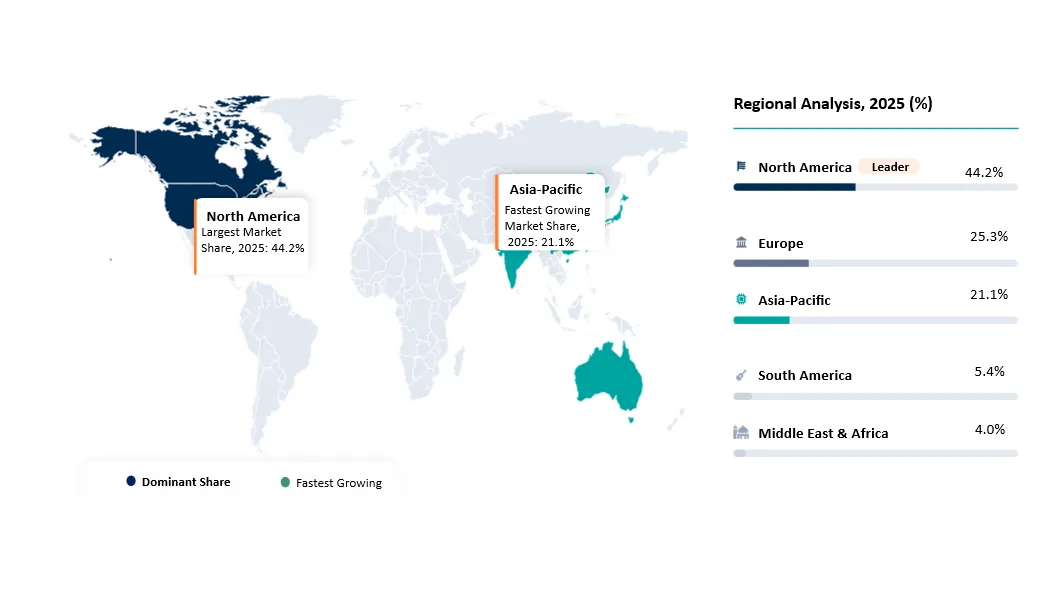
| Region | 2025 Share | Strategic Position |
|---|---|---|
| North America | 44.2% | Largest market, broadest product access and strongest specialty infrastructure |
| Europe | 25.3% | Structured reimbursement and high evidence requirements |
| Asia-Pacific | 21.1% | Fastest growth through diagnosis, urban clinics and branded treatment access |
| South America | 5.4% | Growth led by private care and improving emergency access |
| Middle East and Africa | 4.0% | Concentrated opportunity in advanced urban health systems |
Food Allergy Treatment Market Competitive Landscape
Competitive intensity is increasing because the principal product classes are converging around the same patient journey. Emergency-treatment companies seek broader prescribing and school access, biologic manufacturers seek long-term preventive use and immunotherapy developers seek earlier intervention and durable desensitization. The same patient may therefore generate demand across several categories. This creates opportunities for portfolio bundling, referral partnerships and patient-support integration, but it also raises the standard for evidence. Companies must show where their products fit, which patients should receive them and how treatment changes the total burden of avoidance, emergency preparedness and specialist care.
Commercial advantage will depend on execution after approval. Large companies can use established payer contracts, medical-affairs teams and specialty-pharmacy relationships, while smaller developers may offer superior modality innovation. Licensing and acquisition remain logical routes to combine these capabilities. Competitive benchmarking should therefore consider clinical differentiation, manufacturing readiness, age coverage, route, dosing interval, food breadth, provider burden, reimbursement support and real-world evidence. A product with moderate efficacy and excellent usability may achieve broader adoption than a highly effective program that requires frequent supervised visits or complex escalation.
- Competition is shifting from a rescue-device market toward a multi-modality ecosystem that includes biologics, regulated immunotherapy, patches, sublingual products and engineered allergens.
- Large pharmaceutical companies hold advantages in biologic manufacturing, payer contracting and specialty distribution, while smaller developers lead many differentiated allergen platforms.
- Companies are competing on label breadth, pediatric eligibility, dosing interval, route, clinic burden and the number of foods addressed.
- Partnerships and acquisitions are likely because specialist developers often require commercial scale, reimbursement capabilities and global regulatory infrastructure.
- Real-world evidence, patient support and provider education will become important competitive assets as products move from approval to sustained use.
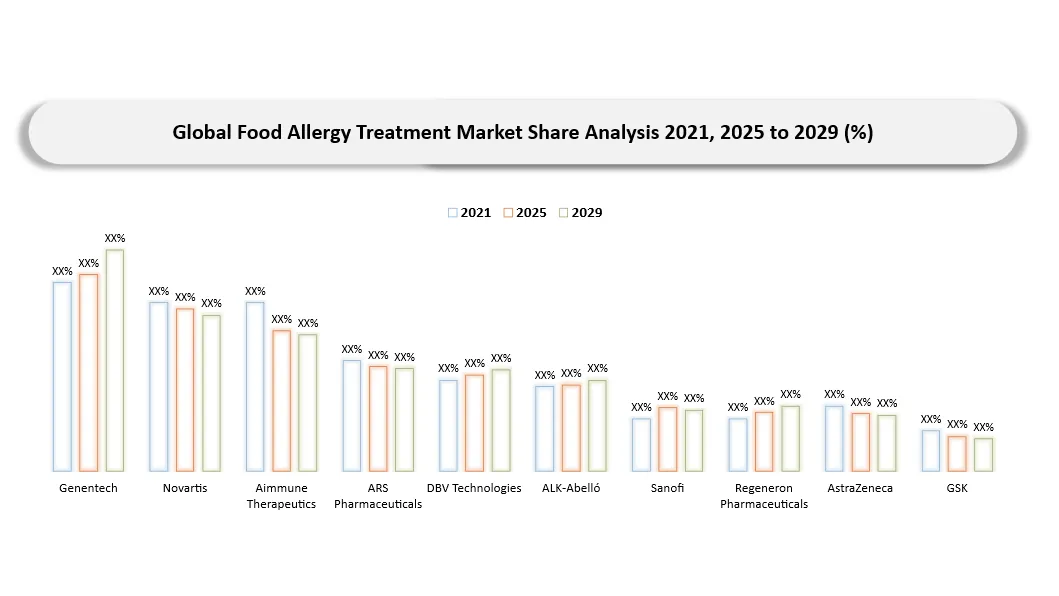
Key Companies of Food Allergy Treatment Market
- Genentech
- Novartis
- Aimmune Therapeutics
- ARS Pharmaceuticals
- DBV Technologies
- RAPT Therapeutics
- ALK-Abelló
- Stallergenes Greer
- Sanofi
- Regeneron Pharmaceuticals
- AstraZeneca
- Amgen
- GSK
- Alladapt Immunotherapeutics
- N-Fold
- Ukko
- Aquestive Therapeutics
- Viatris
- Teva Pharmaceutical Industries
- Bausch Health Companies
Food Allergy Treatment Market Major Pain Points
- Limited allergist and supervised food-challenge capacity.
- Treatment-related reactions and anxiety during dose escalation.
- High recurring cost of biologics and variable insurance coverage.
- Daily adherence requirements for oral and patch therapy.
- Uncertain durability after treatment interruption.
- Need for multiple rescue products across home, school and work.
- Geographic inequality in epinephrine and specialist access.
- Complex evidence requirements for multi-food and combination therapies.
Food Allergy Treatment Market Recent Developments
- February 2024: The U.S. FDA approved Xolair for certain adults and children aged one year or older with IgE-mediated food allergy to reduce reactions after accidental exposure to one or more foods.
- July 2024: The U.S. FDA expanded Palforzia initiation, up-dosing and maintenance to children aged one through three years with confirmed peanut allergy.
- August 2024: The U.S. FDA approved neffy as the first nasal epinephrine product for emergency treatment of anaphylaxis in eligible adults and pediatric patients.
- September and October 2025: RAPT Therapeutics announced FDA clearance and initiation of the prestIgE Phase 2b trial of ozureprubart in food allergy.
- June 2026: ClinicalTrials.gov listed the COMFORT Toddlers study of Viaskin Peanut in peanut-allergic children aged one through three years as recruiting.
- January 2026: GSK announced an agreement to acquire RAPT Therapeutics, highlighting strategic interest in long-acting anti-IgE development.
Analyst View / Opinion on Food Allergy Treatment Market
From a strategic perspective, the market should be evaluated as a layered care system. Rescue products will remain universal because no preventive or disease-modifying therapy eliminates the need for emergency preparedness. Preventive biologics will capture patients seeking broad accidental-exposure protection, while allergen-specific immunotherapy will appeal to families willing to accept treatment burden in exchange for higher thresholds or possible sustained benefit. The commercial winners will be those that define a clear place in this layered model and make movement between diagnosis, initiation, maintenance and emergency support as simple as possible.
Forecast risk is concentrated in three areas. First, specialist capacity may limit uptake faster than demand. Second, payers may restrict recurring biologic use unless real-world outcomes demonstrate fewer severe reactions and better quality of life. Third, pipeline programs may improve oral-food-challenge thresholds without producing enough convenience or durability to change behavior. Companies should therefore invest early in provider networks, patient-support infrastructure and outcomes evidence. Partnerships that combine differentiated science with established immunology commercialization are likely to shape the market through 2035.
- The market is becoming a multi-modality treatment ecosystem rather than a single-product category. Broad preventive biologics, regulated oral immunotherapy and modern rescue formats now coexist.
- The strongest future assets will combine meaningful threshold improvement with practical delivery, manageable safety and a credible plan to scale specialist care.
- Multi-food protection and longer dosing intervals offer the clearest route to broad commercial differentiation.
- Payers will increasingly demand evidence on emergency utilization, quality of life and caregiver burden in addition to clinical challenge endpoints.
- North America will remain the commercialization leader, while Asia-Pacific offers faster growth where diagnosis and premium treatment access expand.
- Long-term leadership will depend on linking product innovation with specialty pharmacy, patient support and provider education.
Food Allergy Treatment Market Target Audience
| INDUSTRY | WHO SHOULD BUY THIS REPORT? | REASON TO BUY THIS REPORT |
|---|---|---|
| Pharmaceutical and Biotechnology | Strategy, business development, clinical and commercial teams | Prioritize pipeline assets, licensing and launch strategy. |
| Allergy Clinics and Hospitals | Allergists, pediatricians and service-line leaders | Plan capacity, protocols and treatment adoption. |
| Payers | Medical directors and pharmacy benefit teams | Assess budget impact and evidence requirements. |
| Specialty Pharmacies | Market access and patient-support teams | Prepare for biologic and immunotherapy growth. |
| Emergency Medicine and Schools | Clinical leaders, school health teams and procurement groups | Evaluate rescue formats, training and access needs. |
| Investors and Consulting | Venture capital, private equity and advisory teams | Evaluate clinical risk, scalability and partnership potential. |
| Patient Organizations | Advocacy and education leaders | Understand access, pipeline and treatment evolution. |
Why Choose DATAM?
- Data-Driven Insights: Granular analysis of market size, treatment pathways, pricing, access and the competitive landscape, supported by primary and secondary research.
- Post-Purchase Support and Expert Analyst Consultations: Direct access to analysts for strategic questions, custom cuts and clarification of market assumptions.
- White Papers and Case Studies: Periodic insight on treatment launches, payer changes, clinical developments and investment themes related to the purchased title.
- Annual Updates on Purchased Reports: Updates help clients track approvals, pipeline changes, market size and competitive developments. Terms and conditions apply.
- Specialized Focus on Emerging Markets: Country-level analysis identifies where diagnosis, specialist capacity and branded treatment access are expanding.
- Value of DataM Reports: The report combines market forecasting with clinical, operational and commercial analysis rather than relying on generic prevalence-based sizing.
What DATAM Uniquely Provides
- Detailed 10-year forecasts by treatment type, allergen, route, age, setting, channel, objective and region.
- A pipeline table that links clinical stage and modality with commercial relevance and delivery burden.
- Competitive analysis covering large pharmaceutical companies, specialist biotechnology developers and emergency-treatment innovators.
- Strategic assessment of payer evidence, clinic capacity, specialty-pharmacy execution and patient adherence.
- Country-level insights for product launch, partnership, investment and provider planning.
Questions This Report Answers
- How will the Food Allergy Treatment market expand through 2035?
- Which treatment types and patient groups offer the strongest revenue potential?
- How will preventive biologics change the balance between avoidance, rescue and immunotherapy?
- Which pipeline programs offer the best combination of clinical differentiation and commercial scalability?
- Where are specialist capacity and reimbursement constraints most significant?
- How should companies prioritize partnerships, launch sequencing and evidence generation?


























































