


Flavored Spirits Market Size and Overview
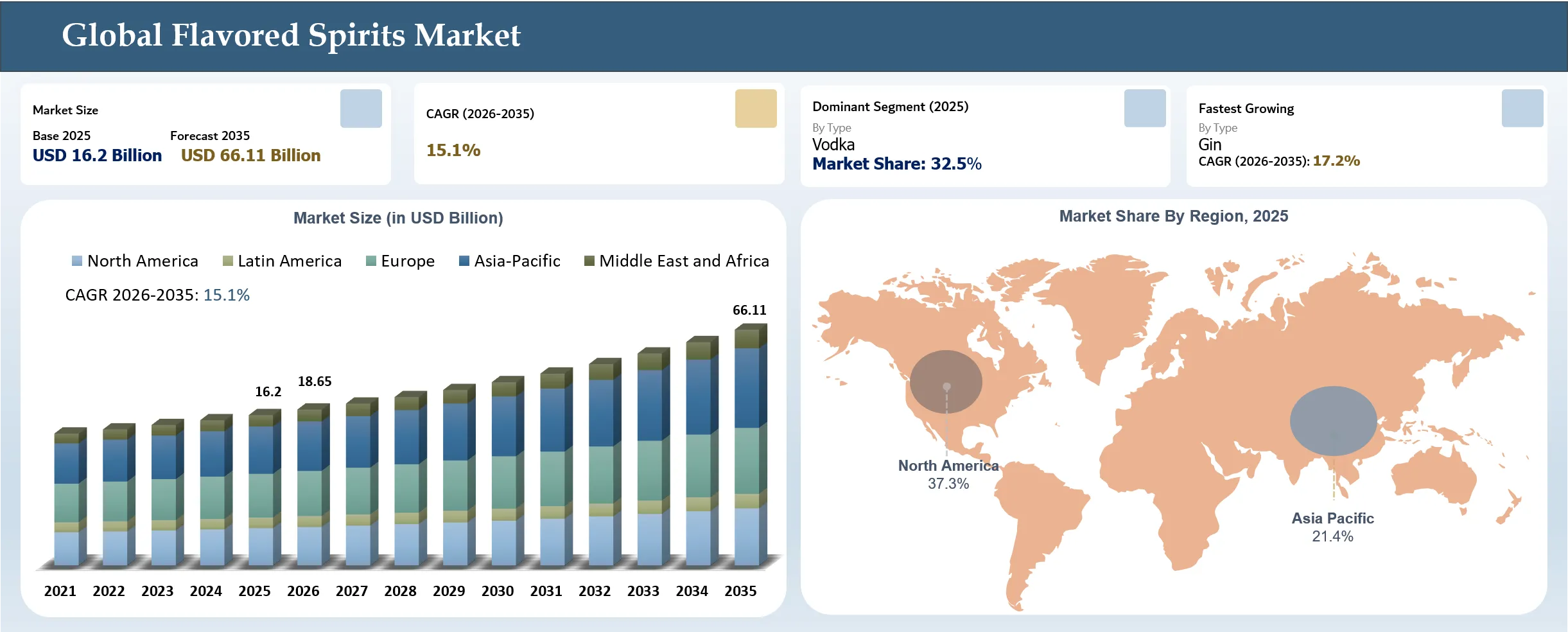
The global flavored spirits market reached USD 16.2 billion in 2025 and is expected to reach USD 66.11 billion by 2035, growing with a CAGR of 15.1% during the forecast period 2026-2035. The flavored spirits market is being shaped by flavor innovation, premiumization, product differentiation, and changing consumer preferences. Manufacturers are expanding beyond conventional profiles to offer distinctive fruit, botanical, spice, and regional flavors. Product development is also focusing on unique flavor combinations and differentiated drinking experiences. These factors are broadening the range of flavored spirits available across markets.
In September 2026, Bacardi launched BREEZER Bold in India with three 8% ABV variants: Guava Chilli, Lime & Lager, and Grapefruit Yuzu, reflecting experimentation with unconventional and locally relevant flavor combinations. This launch demonstrates manufacturers' focus on distinctive flavor combinations and localized product innovation. It also reinforces the shift toward differentiated flavored beverage offerings.
Flavored Spirits Market Key Takeaways
- North America captured the largest regional market share at 37.30% in 2025, while Asia-Pacific is projected to be the fastest-growing regional market, driven by flavor innovation, premiumization, and expanding spirits consumption.
- Vodka dominated the market by type, accounting for approximately 32.50% share in 2025, while Gin is projected to be the fastest-growing type with a 17.20% CAGR, driven by expanding flavored and botanical variants.
- Fruits dominated the market by flavor, accounting for approximately 46.00% share in 2025, while Herbs & Spices is projected to be the fastest-growing flavor segment with a 17.80% CAGR, supported by product innovation and distinctive flavor combinations.
- Glass Bottles dominated the market by packaging, accounting for approximately 78.00% share in 2025, while Cans are projected to be the fastest-growing format with an 18.50% CAGR, driven by convenience and portable consumption.
Flavored Spirits Market Industry Trends and Strategic Insight
- Flavor experimentation is becoming a key differentiation strategy, with manufacturers introducing unconventional combinations spanning fruit, spice, botanical, and regional profiles.
- Premiumization is strengthening demand for distinctive flavored spirits, as consumers seek differentiated products with elevated ingredients, packaging, and drinking experiences.
- Regional flavor localization is gaining importance, with manufacturers incorporating familiar local fruits, spices, and traditional flavors into new spirit variants.
- Cocktail culture is expanding the role of flavored spirits, as bartenders and consumers seek versatile products for customized cocktails and mixed drinks.
- Limited-edition and seasonal launches are supporting product differentiation, enabling manufacturers to test emerging flavor preferences and generate consumer engagement.
Flavored Spirits Market Scope
| Metrics | Details | |
| 2025 Market Size | USD 16.2 Billion | |
| 2035 Projected Market Size | USD 66.11 Billion | |
| CAGR (2026-2035) | 15.1% | |
| Largest Market | North America | |
| Fastest Growing Market | Asia-Pacific | |
| By Type | Whiskey, Rum, Vodka, Gin, Others | |
| By Flavor | Fruits, Nuts & Seeds, Herbs & Spices, Others | |
| By Packaging | Glass Bottles, Cans, Pouches, Others | |
| By Price Range | Economy, Mid-Range, Premium, Super-Premium | |
| By Distribution Channel | Supermarkets & Hypermarkets, Specialty Stores, Convenience Stores, Online Retail, Bars, Restaurants & Hotels, Others | |
| By Region | North America | U.S., Canada, Mexico |
| Europe | Germany, United Kingdom, France, Italy, Spain, Netherlands, Switzerland, Sweden, Norway, Denmark, Belgium, Poland, Austria, Ireland, Portugal, Greece, Finland, Rest of Europe | |
| Asia-Pacific | China, Japan, India, South Korea, Australia, New Zealand, Singapore, Malaysia, Thailand, Indonesia, Vietnam, Philippines, Taiwan, Rest of Asia Pacific | |
| Latin America | Brazil, Argentina, Chile, Colombia, Peru, Rest of Latin America | |
| Middle East and Africa | Saudi Arabia, United Arab Emirates, Qatar, Kuwait, Oman, Bahrain, South Africa, Egypt, Nigeria, Morocco, Rest of Middle East & Africa | |
| Report Insights Covered | Competitive Landscape Analysis, Company Profile Analysis, Market Size, Share, Growth | |
Flavored Spirits Market Disruption Analysis
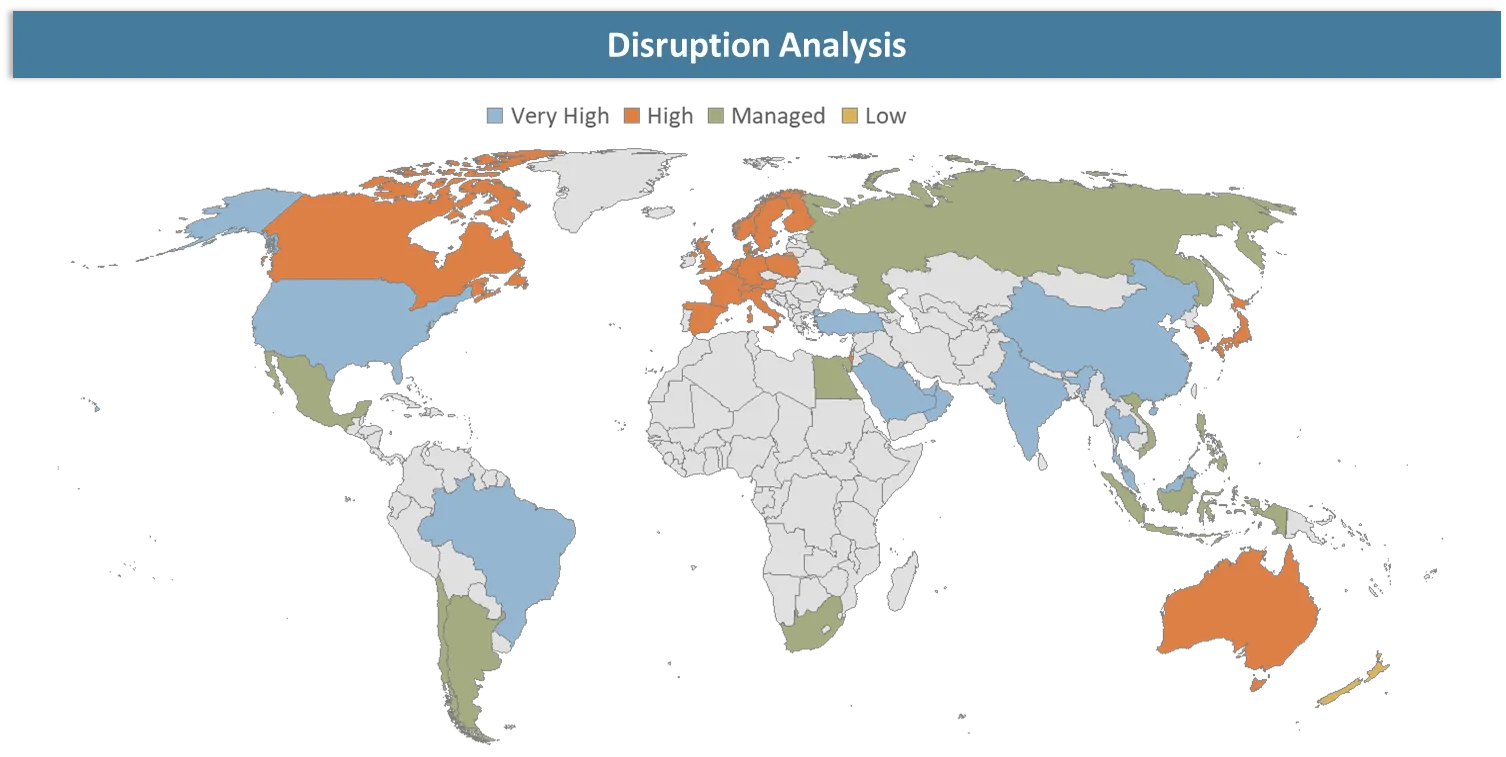
Shift Toward Spicy and Botanical Flavor Profiles
The Flavored Spirits Market is shifting toward more distinctive spicy and botanical flavor profiles. Absolut and TABASCO launched a spicy vodka in July 2026 across more than 50 markets. The product uses red pepper mash to deliver a pronounced spicy profile. This reflects broader experimentation beyond conventional fruit-based flavors.
Manufacturers are expanding flavor portfolios through herbs, spices, botanicals, and unconventional combinations. These profiles provide differentiation across vodka, gin, and other spirit categories. The trend is also creating new cocktail applications for flavored spirits. This shift is influencing product development toward more distinctive taste experiences.
Flavored Spirits Market BCG Matrix: Company Evaluation
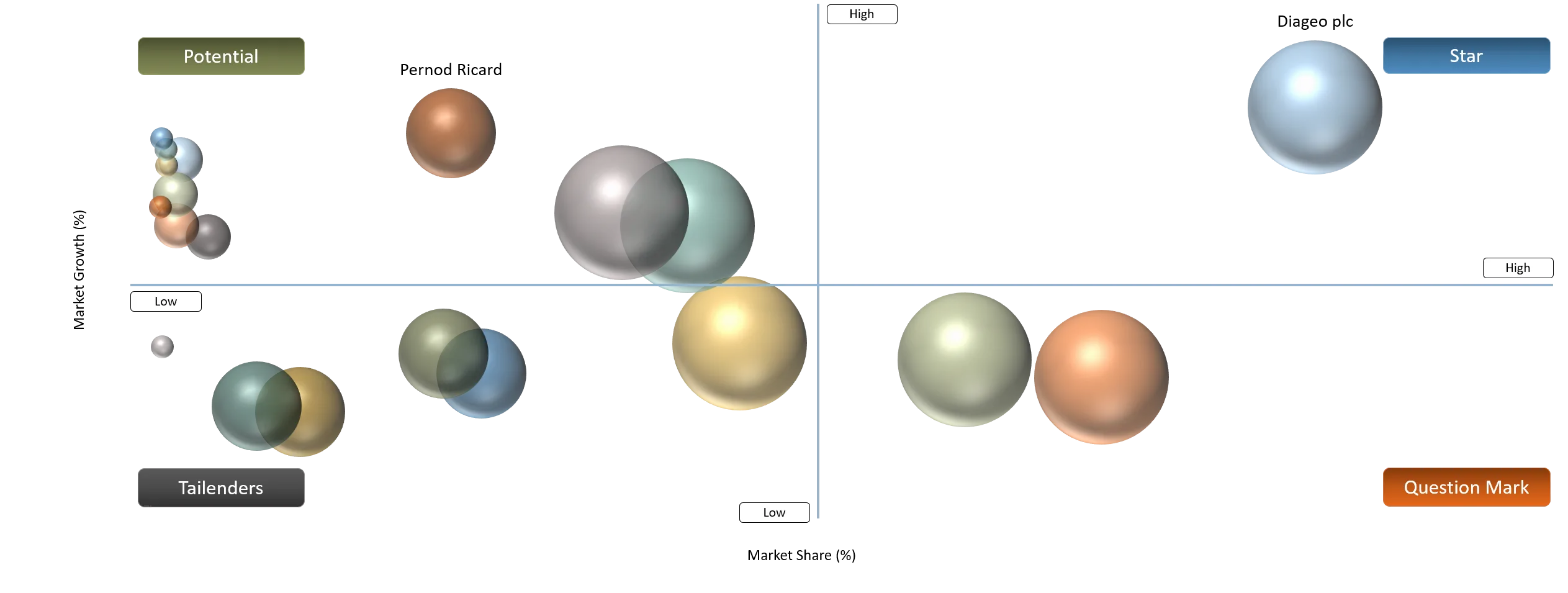
The Stars position is led by Diageo plc, Bacardi Limited, Suntory Global Spirits, and Campari Group, supported by broad spirits portfolios, established flavored product offerings, and strong global brand presence. The Potential Companies category includes Pernod Ricard, Brown-Forman Corporation, William Grant & Sons, and Rémy Cointreau, which possess established premium spirits portfolios with scope for broader flavored-spirit expansion. Their positioning is supported by strong brand portfolios and established international distribution networks.
The Question Marks category comprises Constellation Brands, Inc. and Asahi Group Holdings Limited, where spirits portfolios provide some flavored-spirit exposure but remain less concentrated than leading companies. Tailenders include companies with comparatively limited direct flavored-spirit portfolio depth and lower segment concentration. Their positioning reflects narrower participation in dedicated flavored-spirit products compared with the leading manufacturers.
Flavored Spirits Market Dynamics
Driver Impact Analysis
| Driver | Market Growth Impact (%) | Demand Concentration | Impacted Use Case | Strategic Impact |
Premiumization driving demand for distinctive flavored spirits | 25% | High demand across premium spirits consumers seeking differentiated taste, ingredients, and drinking experiences. | Premium spirits, gifting, cocktail occasions, experiential consumption. | Strengthens demand for premium flavored variants, differentiated packaging, and higher-value product launches. |
Cocktail culture expanding flavored spirit consumption | 22% | Concentrated across urban consumers, bars, restaurants, and cocktail-focused markets. | Cocktails, mixology, social occasions, hospitality consumption. | Expands demand for versatile flavored spirits suitable for diverse cocktail applications. |
Millennials and Gen Z favoring innovative flavor experiences | 20% | Strong demand among younger legal-drinking-age consumers seeking novel and experiential beverages. | Social drinking, experimentation, flavored cocktails, casual occasions. | Encourages unconventional flavors, limited editions, and experience-led product innovation. |
Product innovation broadening flavored spirit portfolios | 18% | Broad demand across vodka, rum, gin, whiskey, and emerging flavored categories. | New product launches, seasonal offerings, flavor experimentation. | Drives portfolio diversification through fruit, botanical, spice, and regional flavor variants. |
E-commerce improving flavored spirit accessibility | 15% | Strong concentration in markets with established online alcohol retail infrastructure. | Online discovery, direct purchasing, product trials, repeat purchases. | Expands consumer reach and enables brands to showcase wider flavored spirit portfolios. |
Cocktail Culture Expanding Demand for Versatile Flavored Spirits
Cocktail culture is expanding demand for spirits that offer flexibility across modern cocktail occasions. In 2025, Diageo identified cocktail culture as a key consumer trend, with the on-trade highlighted as an important channel for trial and consumer recruitment. Diageo also reported that cocktail drinkers are more likely to trade up and experiment with different products.
Product innovation is also becoming more closely linked with cocktail customization and flavor experimentation. In April 2025, Tanqueray No. TEN used flavor-preference data to create customized cocktails combining ingredients such as mint, spices, herbs, fig, and bergamot. This development demonstrates the expanding role of versatile spirits in personalized cocktail creation and menu innovation.
Restraint Impact Analysis
| Restraint | Drag on Market Growth (%) | Primary Impact Area | Impacted Use Case | Strategic Impact |
Stringent alcohol regulations constraining product launches and distribution | 22% | Product approvals, labeling, marketing, and distribution | New product launches, retail distribution, cross-border sales | Extends compliance requirements and limits product availability across regulated markets. |
High premium pricing limiting consumer adoption | 20% | Retail affordability and consumer purchasing | Premium flavored spirits, gifting, discretionary consumption | Restricts adoption among price-sensitive consumers and pressures premium product volumes. |
Health-conscious consumers moderating alcohol consumption | 18% | Consumption frequency and consumer preferences | Social drinking, home consumption, wellness-oriented occasions | Limits alcohol consumption frequency and encourages demand toward moderation-focused alternatives. |
Complex taxation structures elevating retail prices | 17% | Excise duties, pricing, and distribution economics | Retail sales, premium spirits, cross-border markets | Raises final prices and reduces consumer affordability across heavily taxed markets. |
Stringent Alcohol Regulations Constraining Product Launches and Distribution
Alcohol regulations are tightening requirements for flavored spirit labeling and market access. In 2026, India’s FSSAI revised requirements affecting flavored spirit product labeling. The changes require manufacturers to follow prescribed terminology for certain flavored spirits. This increases compliance requirements during product commercialization.
Regulatory requirements also differ across countries and product categories. Manufacturers must adapt labels, claims, packaging, and marketing practices by jurisdiction. These differences increase compliance complexity for multinational flavored-spirit portfolios. Product launches therefore require greater regulatory planning across markets.
Flavored Spirits Market Segment Analysis
The global flavored spirits market is segmented based on type, flavor, packaging, price range, distribution channel and region.
Vodka Segment Is Strengthening Through Flavored Portfolio Expansion
Vodka remains the leading type segment, supported by strong product innovation across flavored variants. In March 2026, Radico Khaitan reported that Magic Moments crossed 8 million cases, up from 7.1 million cases in the previous year. The brand also held around 60% of India’s vodka market, highlighting its strong category position. In August 2026, Radico Khaitan launched Magic Moments Aam Panna Vodka, adding a traditional Indian flavor to its portfolio.
The Aam Panna launch follows existing Thandaai, Alphonso Mango, and Jamun SpicyMint variants under the Flavours of India portfolio. Flavored vodka accounted for over 75% of Magic Moments vodka volumes in Q1 FY2027, indicating substantial consumer uptake of flavored variants. Magic Moments recorded 3.25 million cases in Q1 FY2027, representing 43% year-on-year growth. The development demonstrates how localized flavors are being used to expand vodka portfolios and strengthen product differentiation.
Flavored Spirits Market Geographical Penetration
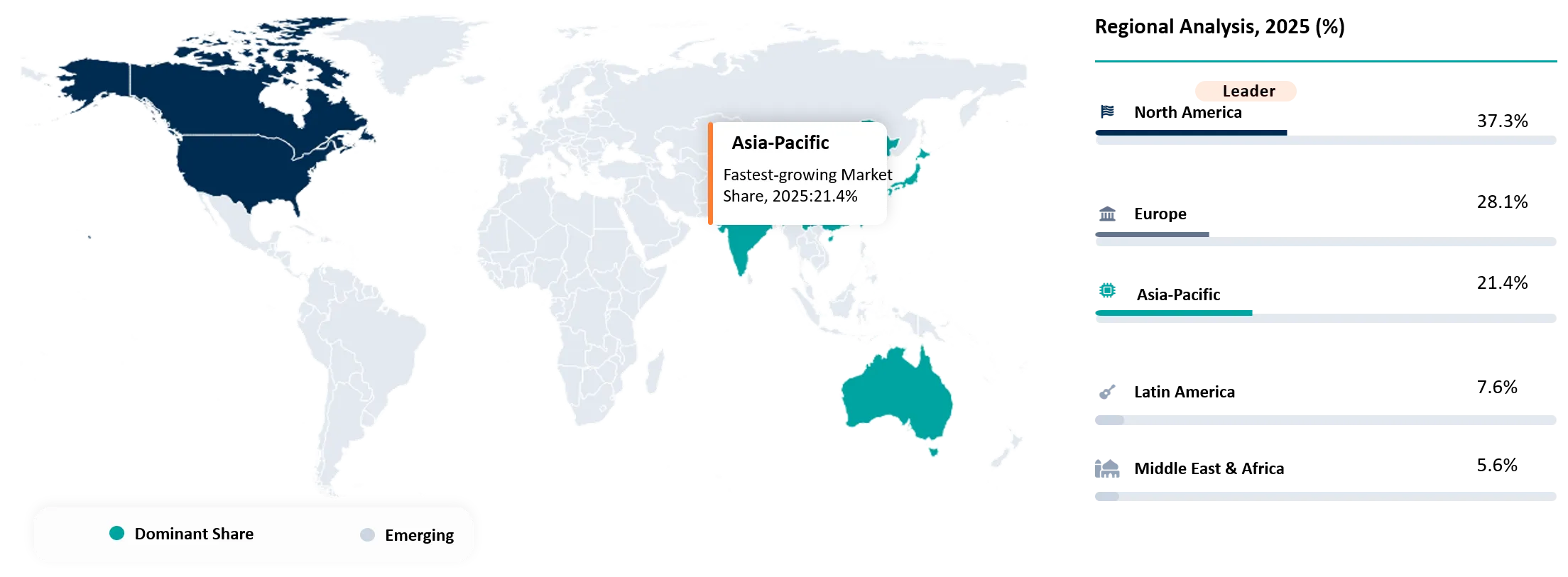
North America Strengthening Through Strategic Expansion of Flavored Vodka Portfolios
North America remains a major flavored spirits market, supported by established vodka brands and continued portfolio expansion. In September 2026, Sazerac completed its acquisition of AU Vodka for more than £300 million, adding the UK-based vodka and RTD brand to its expanding spirits portfolio. AU Vodka is known for its fruit-led and flavored vodka range.
The acquisition strengthens Sazerac’s position in flavored vodka and expands its access to an established premium-oriented brand. Sazerac has also continued pursuing additional spirits acquisitions during 2026, indicating active portfolio consolidation. The development increases competitive focus on differentiated vodka brands and flavor-led products in North America. It also creates opportunities for broader flavored vodka distribution through established U.S. channels.
U.S. Flavored Spirits Market Trends
The U.S. flavored spirits landscape is also expanding through new spirit categories and locally produced flavor combinations. In February 2026, Boatman Spirits launched its first locally produced vodka and gin range in Raleigh, North Carolina. The new distillery began with vodka and gin, providing a platform for further flavor experimentation and locally positioned spirits.
The development reflects continued diversification among U.S. craft distillers toward vodka and gin, categories that allow faster product development than aged spirits. At the same time, American producers are incorporating fruit and botanical profiles into newer spirit offerings. This is broadening the competitive base beyond large multinational brands and creating additional product-level innovation across the U.S. flavored spirits landscape.
Asia-Pacific Strengthening Through Botanical and Citrus-Led Spirit Innovation
Asia-Pacific is expanding flavored and botanical spirit offerings through new product development across Japan and other regional markets. In March 2025, Kirin launched KIRIN Premium Gin & Tonic Mori-no-Ka nationwide in Japan, using gin made with 100% juniper berries and incorporating lime and orange flavors. The product followed the earlier launch of its premium gin soda variant.
Kirin further expanded the portfolio in July 2025 with KIRIN Premium Gin Mojito Mori-no-Ka, combining juniper gin with mint and lime flavors. The company positioned the product around premium taste and food-pairing occasions. These launches demonstrate continued diversification of gin-based flavor profiles and strengthen Asia-Pacific's role in botanical and citrus-led spirit innovation.
Japan Flavored Spirits Market
Japan is strengthening its gin production capabilities through new investment in domestic distilling capacity. In February 2025, Suntory announced a ¥6.5 billion investment in its Osaka Plant to expand gin production and enhance manufacturing capabilities. The investment is aimed at meeting stronger demand for Japanese gin and improving production capacity.
The investment provides additional capacity for Suntory’s Japanese gin portfolio, including products positioned around botanical and citrus-led flavor profiles. It also reinforces Japan’s position as a production and innovation base for premium gin products. The development is relevant to flavored spirits through expanded capacity for differentiated gin formulations.
Flavored Spirits Market Competitive Landscape
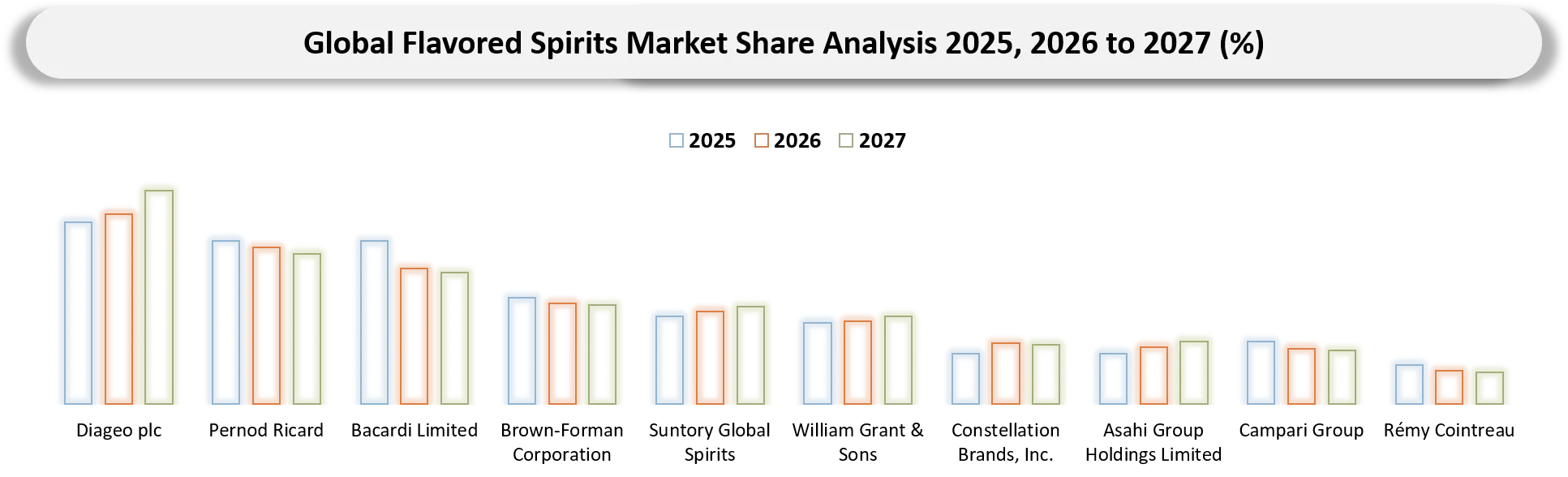
- Key players include Diageo plc, Pernod Ricard, Bacardi Limited, Brown-Forman Corporation, Suntory Global Spirits, William Grant & Sons, Constellation Brands, Inc., Asahi Group Holdings Limited, Campari Group, Rémy Cointreau.
Key Developments
- September 2026: Sazerac completed its acquisition of AU Vodka, a UK-based vodka and RTD brand known for bold flavors and an international retail, hospitality, and e-commerce presence. The acquisition expands Sazerac’s vodka portfolio and adds a flavor-focused brand with established international distribution.
- March 2026: Suntory Global Spirits expanded Jim Beam Pineapple into Germany, adding the tropical-flavored bourbon to its existing Black Cherry, Apple, and Honey variants. Jim Beam was identified as the German flavored-whiskey segment leader, with the launch extending its flavor portfolio.
- May 2025: Pernod Ricard-owned Plymouth Gin launched Plymouth Honey, a flavored gin combining natural honey flavor with vanilla, juniper, and citrus notes. The product was introduced in the U.S. as the sixth expression in the Plymouth Gin portfolio.
- March 2025: Pernod Ricard’s Beefeater launched Beefeater Grapefruit in Nordic and Eastern European markets, combining distilled gin with a natural grapefruit flavor. The launch expanded Beefeater’s flavored portfolio across markets including the Czech Republic and Slovakia.
- March 2025: Suntory Global Spirits launched Jim Beam Pineapple in the U.S., combining Kentucky straight bourbon with pineapple flavor. The company described it as its first flavored spirit launch in four years, expanding the Jim Beam Flavors portfolio.
- September 2025: Suntory Global Spirits introduced Haku Yuzu, the first flavored vodka extension under its Haku brand. The 40% ABV expression incorporates Japanese yuzu and expands Haku beyond its original unflavored vodka offering.
- May 2025: Absolut partnered with Tomorrowland to launch its first limited-edition bottle collection for the 2025 festival. The collaboration extended Absolut’s long-term partnership with the global electronic music festival across multiple international markets.
- April 2025: Absolut continued its Coachella partnership through the Absolut House of Cosmo, developed with Paris Hilton and 11:11 Media. The activation centered on Absolut cocktails and expanded the brand’s experiential marketing around cocktail-led consumption.
- October 2025: Michigan-based St. Julian Winery & Distillery launched Banana Bread Whiskey, expanding its flavored-whiskey portfolio with banana, cinnamon, vanilla, and caramel flavor notes. The product was positioned for neat, on-the-rocks, and cocktail consumption.
- February 2025: Big Easy Spirits Company launched Big Easy Whiskey in New Orleans, a five-year straight whiskey infused with 24 botanical and fruit ingredients. The launch positioned flavored whiskey around both direct consumption and cocktail applications.
- December 2025: World Whiskey Society introduced the Doc Holliday Huckleberry Edition, its first flavored whiskey, using huckleberry flavor as a new extension of its Doc Holliday series. The launch added a fruit-led expression to the company’s premium whiskey portfolio.
Key Procurement Priorities and Buyer Evaluation Criteria
- Organizations procuring flavored spirits prioritize distinctive flavor profiles, product quality, brand recognition, packaging appeal, and consistent taste across production batches.
- Procurement decisions are influenced by consumer flavor preferences, premiumization, product innovation, regional taste profiles, regulatory compliance, and portfolio differentiation, particularly when selecting new flavored spirit products.
- Buyers evaluate suppliers based on ingredient quality, flavor authenticity, alcohol content, product consistency, packaging formats, pricing, production capacity, regulatory compliance, supply reliability, and brand positioning when selecting flavored spirit products.
Why Choose DataM?
- Technological Innovations
- Product Performance & Market Positioning
- Real-World Evidence
- Market Updates & Industry Changes
- Competitive Strategies
- Pricing & Market Access
- Market Entry & Expansion



























































