


Fire Protection Materials Market Size and Overview
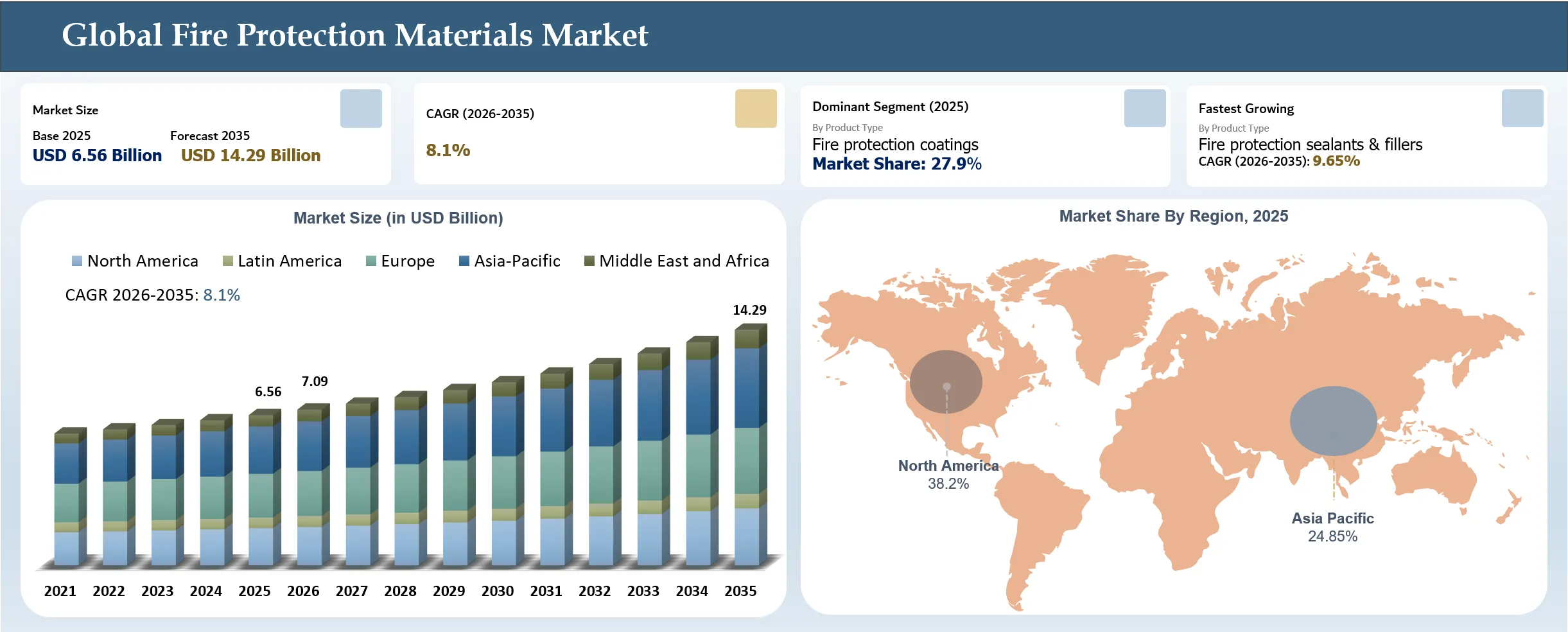
The global fire protection materials market reached USD 6.56 billion in 2025 and is expected to reach USD 14.29 billion by 2035, growing with a CAGR of 8.1% during the forecast period 2026-2035. The fire protection materials market serves commercial buildings, industrial facilities, energy infrastructure, and other applications requiring passive fire protection. Demand is shaped by the need to protect structural steel, seal service penetrations, and maintain fire compartmentation through coatings, boards, mortars, and sealants. Product selection depends on the required fire-resistance performance and suitability for the intended application.
In July 2026, Hempel launched Hempafire Optima 515, a waterborne intumescent coating offering up to 150 minutes of stated fire protection for structural steel. The launch illustrates ongoing product development in specialist fire protection coatings for commercial and industrial construction. It also highlights the role of application-specific coating performance in product development.
White-Space Opportunities for Fire Protection Materials
Opportunities exist in locally developed fire protection materials that address specific construction and industrial applications. Steel structures and galvanized-iron ducts require suitable protective coatings where fire-resistance requirements apply. Domestic technology development can create opportunities for manufacturers to commercialize specialized products for these applications.
In February 2026, CSIR–Central Building Research Institute transferred its intumescent fire-retardant coating technology for steel and galvanized-iron ducts to Ramdev Resins Private Limited. The transfer enables commercialization of a domestically developed coating technology. It highlights a potential opportunity for local suppliers to expand specialist fire-protection coating offerings.
Fire Protection Materials Market Key Takeaways
- North America dominated the Fire Protection Materials Market in 2025, accounting for approximately 38.2% of the market share, driven by stringent building fire-safety requirements, established construction standards, and demand for certified passive fire protection systems across commercial and industrial facilities.
- Fire Protection Coatings dominated the market by product type, accounting for approximately 27.9% of the 2025 market share, supported by their use in protecting structural steel and other building components. Fire Protection Sealants & Fillers are projected to be the fastest-growing product segment, with a CAGR of 9.65%, driven by requirements for fire-rated service penetrations, joints, and compartmentation systems.
- Intumescent Materials accounted for approximately 29.4% of the 2025 market share by material/technology, reflecting their use in expanding protective layers when exposed to heat and delaying structural steel temperature rise. Demand is supported by applications in commercial buildings, industrial facilities, and infrastructure requiring passive fire protection.
- Commercial Buildings dominated the market by application, accounting for approximately 28.65% of the 2025 market share, driven by fire-safety requirements across offices, retail spaces, hotels, and high-rise developments. Fire-rated coatings, sealants, boards, and compartmentation materials remain important for protecting structural elements and limiting fire spread.
Fire Protection Materials Market Industry Trends and Strategic Insight
- Increasing enforcement of building fire-safety codes is driving demand for certified passive fire protection materials, including intumescent coatings, firestop sealants, fire-resistant boards, and protective mortars for commercial and industrial buildings.
- The expansion of high-rise buildings and complex commercial developments is increasing the use of fire-rated compartmentation systems, perimeter barriers, and penetration seals to restrict fire and smoke spread between floors and building sections.
- Industrial operators in oil and gas, petrochemical, and power facilities are prioritizing specialized fireproofing materials that protect structural steel, equipment, and critical infrastructure during cellulosic and hydrocarbon fire exposure.
- Growing investment in data centers and digital infrastructure is increasing requirements for fire-resistant cable penetrations, service openings, structural protection, and compartmentation around equipment-intensive facilities.
- Advances in waterborne intumescent coatings, firestop technologies, and application-specific fire protection systems are creating opportunities for materials that combine tested fire resistance with easier installation, reduced environmental impact, and compatibility with modern construction requirements.
Fire Protection Materials Market Scope
| Metrics | Details | |
| 2025 Market Size | USD 6.56 Billion | |
| 2035 Projected Market Size | USD 14.29 Billion | |
| CAGR (2026-2035) | 8.1% | |
| Largest Market | North America | |
| Fastest Growing Market | Asia-Pacific | |
| By Product Type | Fire Protection Coatings, Fire Protection Sealants & Fillers, Fire Protection Mortars, Fire Protection Boards & Panels, Fire Protection Sprays, Fire Protection Putty & Mastics, Preformed Fire Protection Devices, Other Specialty Materials | |
| By Material/Technology | Intumescent Materials, Cementitious Materials, Mineral Wool & Inorganic Insulation, Fire-Resistant Polymers & Sealant Systems, Gypsum-Based Materials, Ceramic/Refractory Materials, Advanced Composite & Specialty Materials, Others | |
| By Application | Commercial Buildings, Industrial Facilities, Residential Buildings, Oil & Gas/Petrochemical, Data Centers & Digital Infrastructure, Transportation, Power & Energy Infrastructure, Other Applications | |
| By Region | North America | U.S., Canada, Mexico |
| Europe | Germany, United Kingdom, France, Italy, Spain, Netherlands, Switzerland, Sweden, Norway, Denmark, Belgium, Poland, Austria, Ireland, Portugal, Greece, Finland, Rest of Europe | |
| Asia-Pacific | China, Japan, India, South Korea, Australia, New Zealand, Singapore, Malaysia, Thailand, Indonesia, Vietnam, Philippines, Taiwan, Rest of Asia Pacific | |
| Latin America | Brazil, Argentina, Chile, Colombia, Peru, Rest of Latin America | |
| Middle East and Africa | Saudi Arabia, United Arab Emirates, Qatar, Kuwait, Oman, Bahrain, South Africa, Egypt, Nigeria, Morocco, Rest of Middle East & Africa | |
| Report Insights Covered | Competitive Landscape Analysis, Company Profile Analysis, Market Size, Share, Growth | |
Fire Protection Materials Market Disruption Analysis
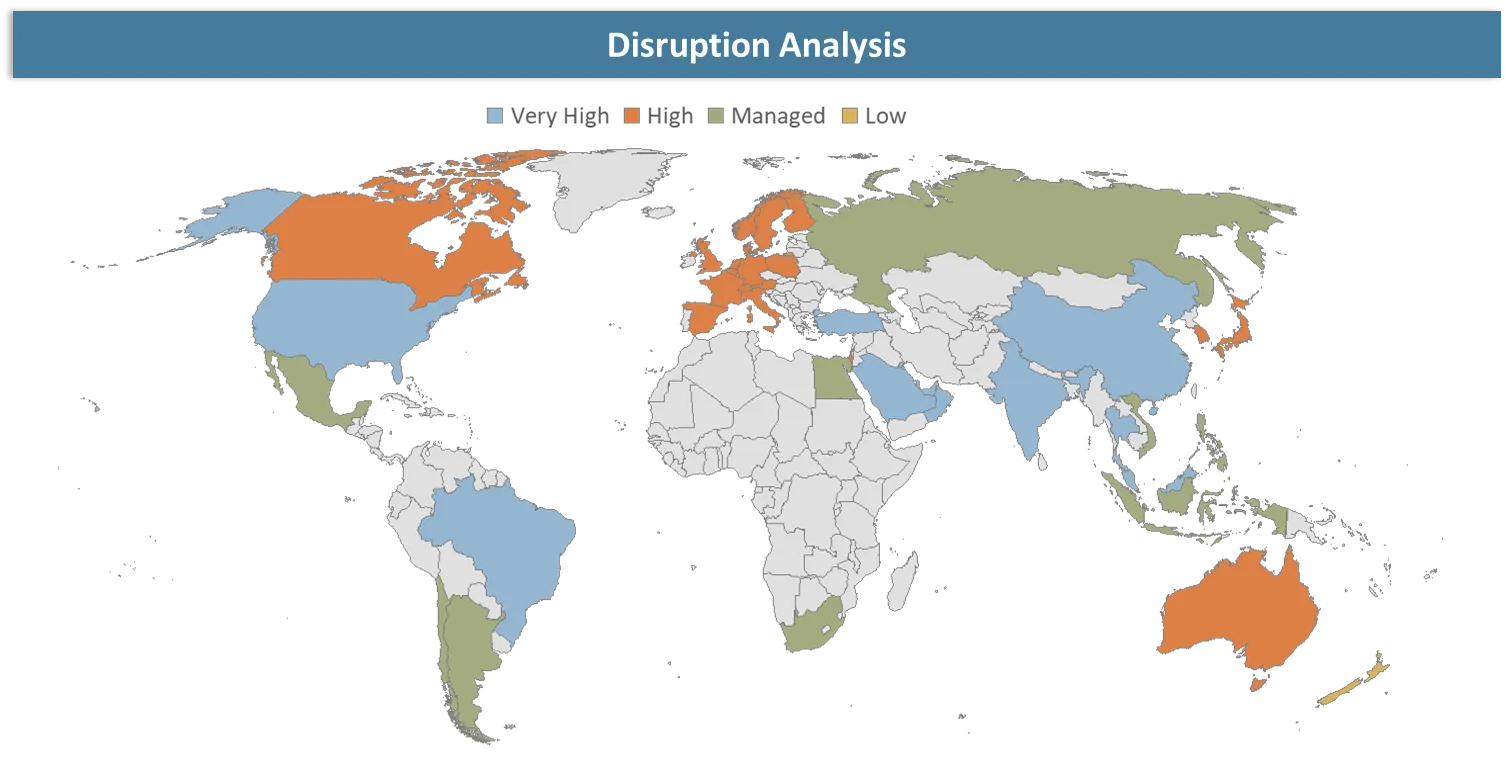
Increasing Specialization in Hydrocarbon Fire Protection Coatings
Fire protection materials are increasingly being developed for particular fire-exposure conditions rather than relying on a single solution across every application. Oil and gas facilities require materials selected for the fire risks associated with their operating environments. This creates scope for specialist coatings designed for hydrocarbon fire protection.
In November 2025, Jotun launched Jotachar 1709 XT, an intumescent coating developed for hydrocarbon fire protection in oil and gas facilities. The launch demonstrates continued specialization in industrial fireproofing products. It reinforces the importance of matching coating performance to the fire exposure and protection requirements of each application.
Fire Protection Materials Market BCG Matrix: Company Evaluation
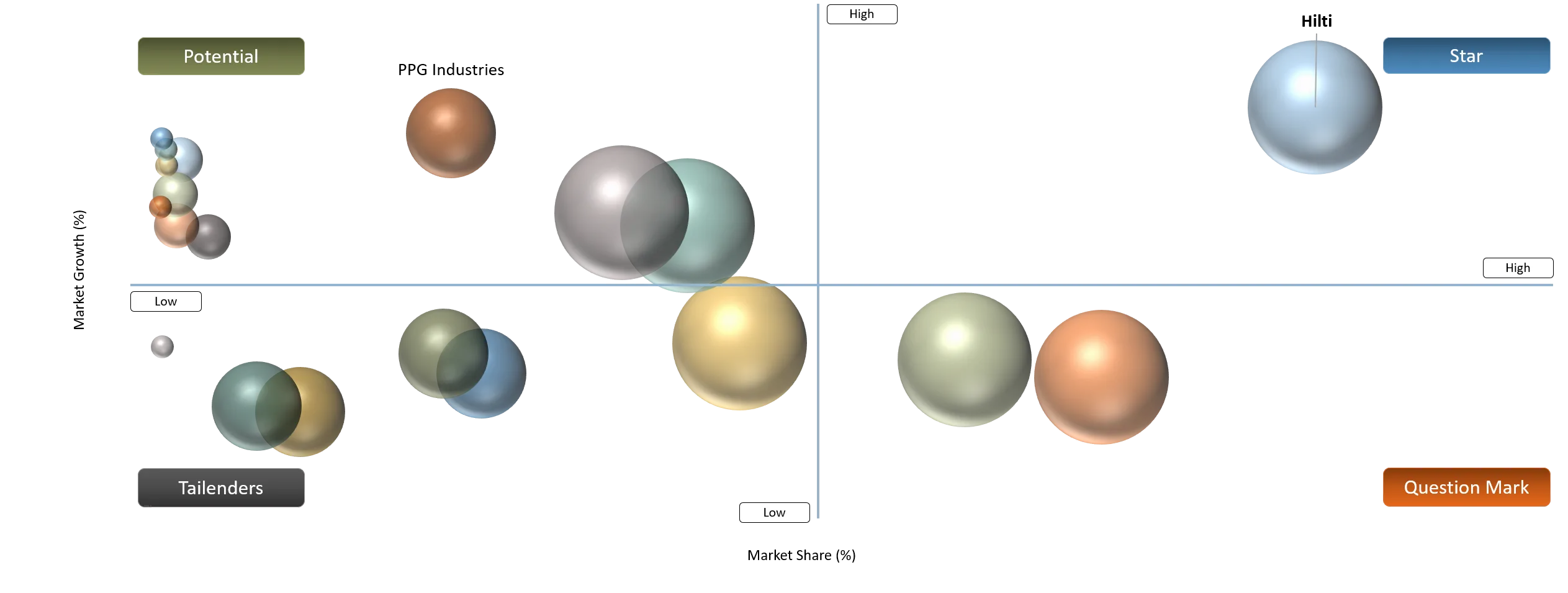
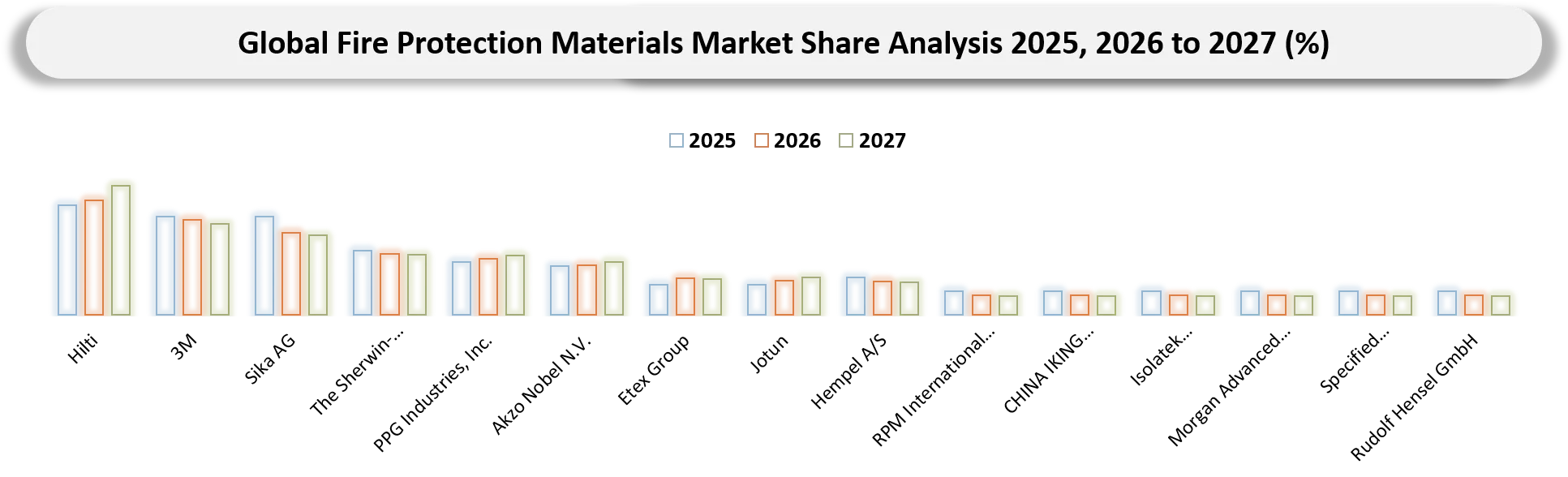
The Stars category comprises Hilti, 3M, Etex Group, and Sika AG, supported by broad passive fire protection portfolios spanning firestop sealants, mortars, boards, coatings, and penetration protection systems. The Potential Companies category includes The Sherwin-Williams Company, PPG Industries, Inc., Akzo Nobel N.V., Jotun, and Hempel A/S, with established protective and intumescent coating capabilities and opportunities across commercial construction and industrial fireproofing.
The Question Marks category comprises China Iking Industrial Co., Ltd., Rudolf Hensel GmbH, and Specified Technologies Inc., representing more specialized positions in fire protection materials, including fire-resistant coatings and firestop systems. The Tailenders category includes RPM International Inc., Isolatek International, and Morgan Advanced Materials plc, whose specialist portfolios focus on areas such as spray-applied fireproofing, intumescent coatings, and advanced thermal or refractory materials. Their positioning reflects more concentrated product or application portfolios rather than a verified ranking of company size or growth.
Fire Protection Materials Market Dynamics
Driver Impact Analysis
| Driver | Market Growth Impact (%) | Demand Concentration | Impacted Use Case | Driver |
Stringent building fire-safety codes increase demand for certified protection materials. | 24% | Commercial buildings, high-rise developments, public infrastructure, and regulated construction projects. | Fire-rated walls, service penetrations, structural steel coatings, and façade perimeter barriers. | Stringent building fire-safety codes increase demand for certified protection materials. |
Urbanization and high-rise construction accelerate adoption of passive fire protection systems. | 22% | High-rise residential, commercial, and mixed-use developments. | Intumescent coatings, firestop sealants, fire-rated boards, and cavity barriers. | Urbanization and high-rise construction accelerate adoption of passive fire protection systems. |
Industrial expansion drives demand for fireproofing in hazardous operating environments. | 21% | Oil and gas, petrochemicals, power generation, and heavy industrial facilities. | Hydrocarbon-resistant coatings, cementitious fireproofing, and protective barriers. | Industrial expansion drives demand for fireproofing in hazardous operating environments. |
Data center construction increases requirements for fire-resistant infrastructure and cable protection. | 18% | Data centers, cloud infrastructure, and digital facilities. | Cable penetration seals, firestop systems, structural coatings, and fire-resistant compartmentation. | Data center construction increases requirements for fire-resistant infrastructure and cable protection. |
Infrastructure modernization boosts demand for fire-rated barriers, coatings, and insulation. | 15% | Transportation, energy infrastructure, public facilities, and industrial upgrades. | Fire-rated panels, protective coatings, insulation, and penetration-sealing systems. | Infrastructure modernization boosts demand for fire-rated barriers, coatings, and insulation. |
Stringent Building Fire-Safety Codes Increase Demand for Certified Protection Materials
Building fire-safety codes influence the materials selected to protect structural elements, seal service penetrations, and maintain fire compartmentation. Requirements for demonstrated fire performance make product testing and certification important when materials are specified for construction projects. Suppliers need products suited to the intended application and the applicable performance requirements.
In August 2026, Siderise reported that its CW-FS curtain-wall perimeter firestop system achieved a two-hour F-rating under testing to India's IS 18190:2023 standard. This product-specific result illustrates the importance of tested performance in façade perimeter protection. It highlights how compliance evidence can help address project specification requirements for passive fire protection system
Restraint Impact Analysis
| Restraint | Drag on Market Growth (%) | Primary Impact Area | Impacted Use Case | Restraint |
High material and installation costs constrain adoption across price-sensitive construction projects. | 24% | Project budgets, material procurement, and installation expenditure | Fire protection coatings, fire-rated boards, sealants, and specialist firestop systems | High material and installation costs constrain adoption across price-sensitive construction projects. |
Complex certification requirements extend product approval timelines across multiple jurisdictions. | 22% | Product testing, certification, and regulatory approval | Intumescent coatings, firestop sealants, fire-rated glazing, and structural fireproofing | Complex certification requirements extend product approval timelines across multiple jurisdictions. |
Skilled labor shortages delay installation of specialized passive fire protection systems. | 21% | Installation capacity, labor costs, and project schedules | Intumescent coatings, penetration seals, fire-rated joints, and perimeter fire barriers | Skilled labor shortages delay installation of specialized passive fire protection systems. |
Substrate compatibility issues increase specification complexity across diverse construction applications. | 18% | Product selection, surface preparation, and system compatibility | Coatings for steel and galvanized steel, concrete interfaces, service penetrations, and façade systems | Substrate compatibility issues increase specification complexity across diverse construction applications. |
High Material and Installation Costs Constrain Adoption Across Price-Sensitive Projects
Passive fire protection systems can involve material procurement, substrate preparation, specialist installation, and inspection. Intumescent coatings, firestop sealants, boards, and other materials must be selected according to the required fire performance and intended installation conditions. These requirements can raise total installed costs, especially in projects that need several different protection systems.
Higher costs can constrain adoption in price-sensitive projects where budgets are limited. Buyers must balance material prices with required fire performance, installation requirements, and compliance specifications. This can place pressure on suppliers to provide application-suitable products and efficient installation systems without compromising the required level of fire protection.
Fire Protection Materials Market Segment Analysis
The global fire protection materials market is segmented by product type, material, application, and region.
Fire Protection Coatings Lead Product Innovation in Structural and Industrial Fireproofing
Fire protection coatings are used to protect structural steel and other specified substrates by delaying temperature rise during fire exposure. Their application across commercial construction and industrial facilities makes them an important product category. Selection depends on required fire-resistance performance, substrate conditions, and project specifications.
In January 2025, Isolatek International launched FireSolve SB, a solvent-based intumescent fireproofing product designed for challenging application environments, including high humidity. Data centers and semiconductor facilities were among its intended applications. The launch demonstrates product development targeting demanding installation environments and specialized facility requirements.
Fire Protection Materials Market Geographical Penetration
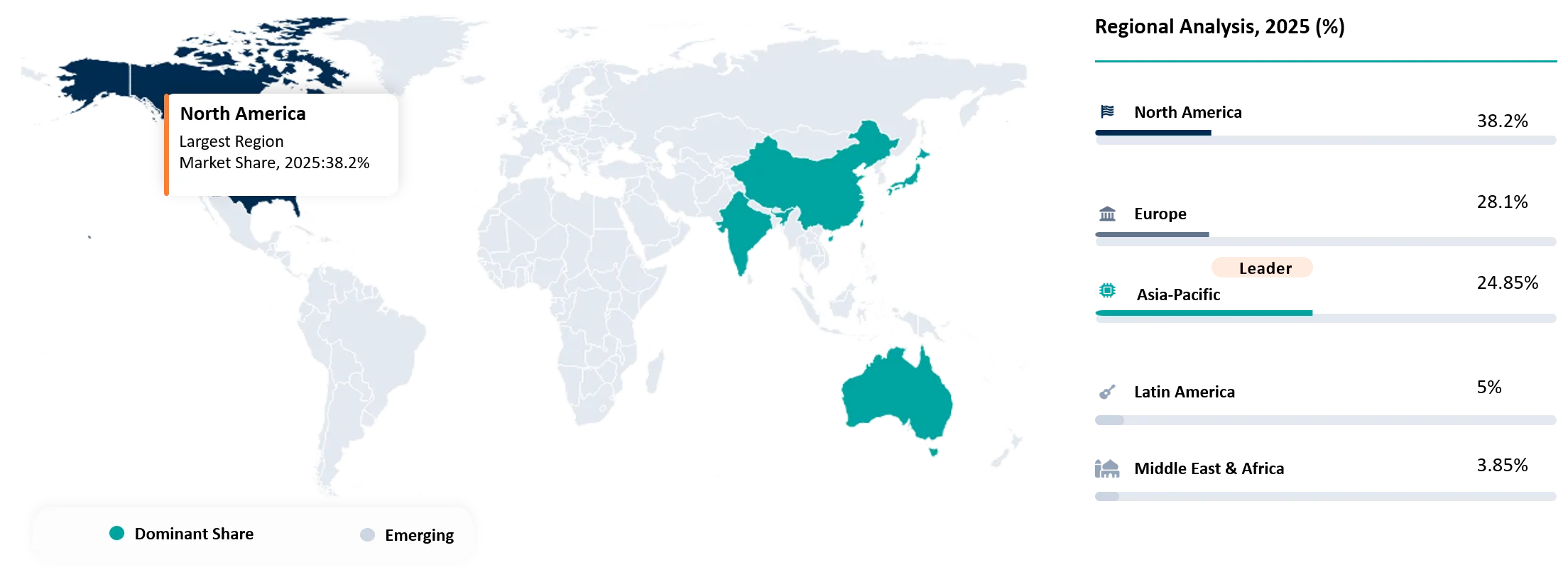
North America Maintains Strong Demand for Code-Compliant Passive Fire Protection Systems
North America is a key region for fire protection materials, supported by the need for tested firestopping systems, fire-resistant building-envelope components, and protective coatings across commercial and industrial construction. Product selection is closely linked to applicable building codes, testing standards, and project-specific requirements. The region also has established manufacturers and technical service providers supporting product specification and installation.
In February 2026, Siderise appointed a Head of Technical for North America to support its U.S. operations, with responsibilities covering firestopping and exterior-wall cavity fireblocking systems. The role includes technical support for architects, façade consultants, contractors, and developers, as well as guidance on fire testing and regulatory compliance. This development highlights the importance of technical specification and installation support in the regional passive fire protection market.
U.S. Fire Protection Materials Market Trends
The United States market serves commercial buildings, industrial facilities, data centers, and other infrastructure requiring passive fire protection. Demand spans fire-resistant coatings, firestop sealants, cavity barriers, and fire-rated glazing, with product selection influenced by application requirements and relevant testing and certification.
In July 2026, U.S.-based SAFTI FIRST announced an independently verified Environmental Product Declaration for its SuperLite II-XL fire-resistive glass product family. The declaration adds environmental performance documentation to a fire-rated glazing product range used in building applications. This development highlights the role of product-level performance and environmental documentation in specification decisions.
Canada Fire Protection Materials Market Trends
Canada's market includes firestop compounds, sealants, coatings, insulation, and other materials used to maintain fire-resistance performance in buildings. Product testing and acceptance under relevant Canadian requirements are important considerations for manufacturers supplying construction projects. Local suppliers and manufacturers serving both Canada and the United States also contribute to the regional supply base.
International Fireproof Technology provides product documentation for the Canadian market, including Canadian Construction Materials Centre (CCMC) evaluation reports and ULC listings for its DC315 intumescent coating. These documents illustrate how product evaluation and certification support the specification of fire-protection materials in Canada.
Fire Protection Materials Market Competitive Landscape
- Key players in the Fire Protection Materials Market include Hilti, 3M, Sika AG, The Sherwin-Williams Company, PPG Industries, Inc., Akzo Nobel N.V., Etex Group, Jotun, Hempel A/S, RPM International Inc., China Iking Industrial Co., Ltd., Isolatek International, Morgan Advanced Materials plc, Specified Technologies Inc., and Rudolf Hensel GmbH.
Key Developments
March 2026: The European Commission adopted Delegated Regulation (EU) 2026/557, establishing fire-resistance performance classes under the revised Construction Products Regulation framework and affecting the classification and declaration of performance for covered construction products.
August 2026: Hindalco Industries commissioned a 30,000-tonne-per-year superfine precipitated aluminium trihydrate (PPT ATH) plant in Belagavi, India, expanding domestic production of a halogen-free flame-retardant material used in wire and cable compounds and other fire-safety applications.
July 2026: Hempel launched Hempafire Optima 515, a waterborne intumescent coating offering up to 150 minutes of stated fire protection, expanding its portfolio of coatings for protecting structural steel in commercial and industrial facilities.
June 2026: Catchment Capital acquired Isolatek International from SK Capital Partners, changing ownership of a specialist manufacturer of spray-applied fireproofing and intumescent coatings used to protect structural steel and industrial facilities.
March 2026: Pyroguard partnered with South Glass to establish fire-rated glass manufacturing in Hyderabad, India, expanding local production and supply capabilities for fire-resistant glazing used in building fire compartmentation.
February 2026: CSIR-Central Building Research Institute transferred its intumescent fire-retardant coating technology for steel and galvanized-iron ducts to Ramdev Resins Private Limited, enabling commercialization of domestically developed fire-protection coatings.
August 2026: Siderise reported that its CW-FS curtain-wall perimeter firestop system achieved a two-hour F-rating under testing to India's IS 18190:2023 standard, providing product-specific fire-resistance evidence for façade perimeter protection.
November 2025: Jotun launched Jotachar 1709 XT, an intumescent coating developed for hydrocarbon fire protection in oil and gas facilities, expanding its specialist coating portfolio for demanding industrial environments.
January 2025: Isolatek International launched FireSolve SB, a solvent-based intumescent fireproofing product designed for challenging application environments, including high humidity, with data centers and semiconductor facilities among its intended applications
Key Procurement Priorities and Buyer Evaluation Criteria
- Buyers prioritize fire protection materials that deliver certified fire resistance, structural protection, smoke and fire containment, and reliable performance under specified exposure conditions.
- Procurement decisions are influenced by building type, fire-safety regulations, substrate material, required fire-resistance rating, installation environment, exposure to moisture or chemicals, project specifications, and compatibility with the overall fire protection system.
- Buyers evaluate suppliers based on product certification, tested fire performance, material composition, substrate compatibility, installation requirements, durability, environmental performance, technical support, availability, project lead times, maintenance requirements, and total installed cost.
Why Choose DataM?
- Technological Innovations: Explores advancements in fire protection materials, including intumescent coatings, cementitious fireproofing, firestop sealants, fire-resistant boards, mineral wool insulation, fire protection mortars, and specialized materials designed for structural steel, service penetrations, façades, and industrial facilities.
- Product Performance & Market Positioning: Evaluates fire protection materials based on fire-resistance ratings, thermal insulation, structural protection, smoke and fire containment, substrate compatibility, durability, moisture resistance, installation requirements, and compliance with applicable standards, highlighting differentiation across commercial buildings, industrial facilities, oil and gas, data centers, and infrastructure.
- Real-World Evidence: Highlights the application of fire protection coatings, sealants, mortars, boards, insulation, and perimeter fire barriers across structural steel, service penetrations, curtain-wall façades, ducts, industrial equipment, and critical infrastructure, demonstrating material requirements across commercial and industrial environments.
- Market Updates & Industry Changes: Tracks product launches, technology transfers, acquisitions, manufacturing expansions, regulatory changes, fire-resistance testing, certification developments, and material innovations shaping fire protection materials demand across North America, Europe, Asia-Pacific, the Middle East and Africa, and Latin America.
- Competitive Strategies: Analyzes how leading manufacturers strengthen market positions through specialized coating formulations, certified firestop systems, application-specific product development, technical support, manufacturing investments, distribution partnerships, acquisitions, and expansion into commercial construction, industrial fireproofing, and critical infrastructure applications.
- Pricing & Market Access: Explains pricing variations based on material composition, fire-resistance rating, application method, substrate requirements, product certification, installation complexity, project volume, and technical support, alongside procurement through contractors, distributors, building-material suppliers, engineering firms, and specialist fire protection installers.
- Market Entry & Expansion: Identifies opportunities arising from high-rise construction, data center development, industrial facility expansion, fire-rated façade systems, infrastructure modernization, locally manufactured fire protection coatings, specialist hydrocarbon fireproofing, and demand for tested passive fire protection systems across regulated construction and industrial applications.
Target Audience 2026
- Fire Protection Materials Manufacturers
- Construction Companies and Building Contractors
- Fire Protection System Installers and Specialist Contractors
- Commercial and High-Rise Building Developers
- Oil and Gas, Petrochemical, and Industrial Facility Operators
- Data Center and Critical Infrastructure Developers
- Architects, Fire Safety Consultants, and Engineering Firms
- Building Materials Distributors and Fire Protection Suppliers


























































