


FGFR Inhibitor Market Size and Overview
The global FGFR inhibitor market reached US$1.62 billion in 2025 and is expected to reach US$7.04 billion by 2035, growing with a CAGR of 17.34%during the forecast period 2026-2035.
The global FGFR inhibitor market is evolving rapidly as precision oncology expands across tumors driven by fibroblast growth factor receptor alterations. Growth is being supported by wider genomic profiling, increasing identification of FGFR2 fusions and rearrangements and FGFR3 mutations, expanding use of targeted therapies and continued development of next-generation receptor-selective inhibitors.
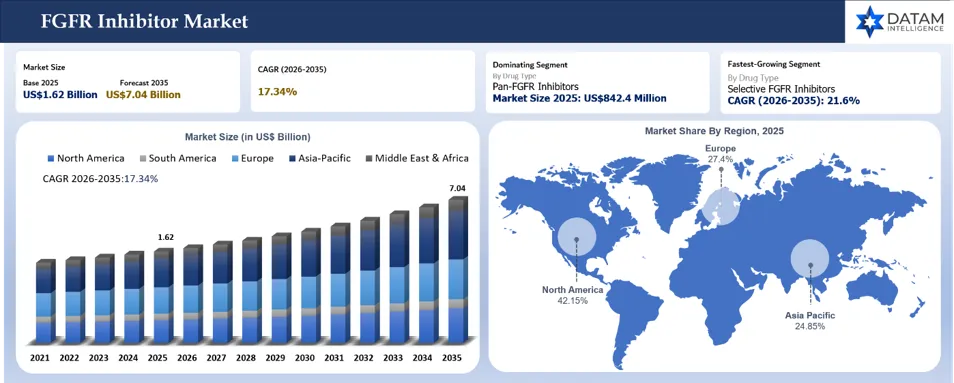
Commercial activity remains concentrated in biomarker-defined cancers such as cholangiocarcinoma and urothelial carcinoma, where FGFR-directed therapies have established clear clinical relevance. Pan-FGFR inhibitors currently account for the largest share of the market, while selective FGFR inhibitors are expected to expand faster as developers focus on improved receptor specificity, resistance-mutation coverage and lower class-associated toxicity.
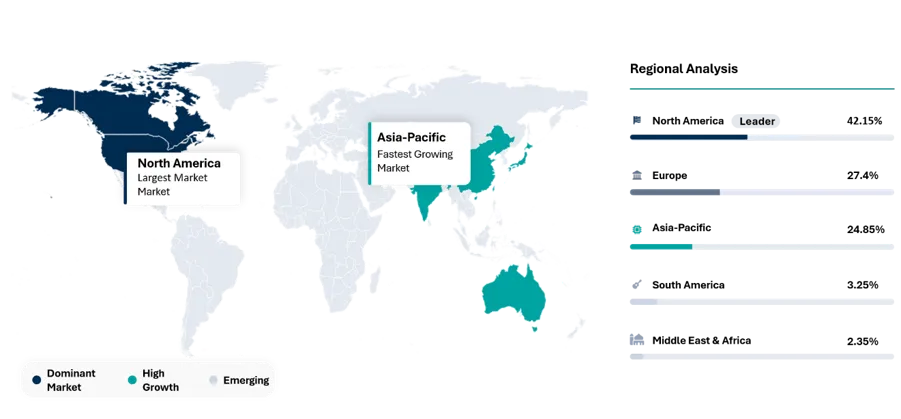
North America remains the leading regional market due to strong precision-oncology infrastructure, reimbursement access and broad molecular-testing adoption, while Asia-Pacific is expected to record the fastest growth. Future market expansion will increasingly depend on earlier-line treatment use, additional FGFR-altered tumor indications, companion diagnostic integration and successful development of therapies capable of overcoming acquired resistance.
What This Report Answers for You
- How will the FDA approval of lirafugratinib reshape the competitive landscape for FGFR2-positive cholangiocarcinoma?
- How will the approval of fanregratinib in China affect the commercial opportunity and competitive positioning of FGFR inhibitors in China and Asia?
- Could emerging selective FGFR3 inhibitors expand the market beyond advanced bladder cancer into earlier-stage disease?
- Which FGFR1, FGFR2, FGFR3 and FGFR4 inhibitors are most likely to achieve regulatory approval or major indication expansion over the next 3–5 years?
- Which cancer indications offer the largest untapped commercial opportunity for FGFR inhibitors beyond cholangiocarcinoma and urothelial cancer?
- How will next-generation selective FGFR inhibitors compete against established pan-FGFR therapies on efficacy, resistance, toxicity and treatment duration?
- Which FGFR inhibitor assets, companies and clinical programs represent the strongest licensing, partnership or acquisition opportunities?
- How large is the commercially addressable FGFR-positive patient population by indication, biomarker, geography and line of therapy, and where should companies prioritize market entry?
FGFR Inhibitor Market Key Takeaways
- Sustained Market Expansion Through 2035: The global FGFR inhibitor market was valued at US$1.62 billion in 2025 and is projected to reach US$7.04 billion by 2035, registering a CAGR of 17.34% during 2026-2035, supported by expanding genomic profiling, rising identification of actionable FGFR alterations and increasing adoption of precision oncology.
- Selective FGFR Inhibitors Gain Strategic Importance: Receptor-selective FGFR2, FGFR3 and FGFR4 inhibitors are becoming increasingly important as developers seek improved target specificity, stronger activity in biomarker-defined tumors and lower off-target toxicity compared with broader FGFR inhibition.
- Resistance-Focused Therapy Emerges as a Major Growth Engine: Development of next-generation inhibitors capable of addressing secondary FGFR resistance mutations is expected to become a major source of future market expansion, particularly among patients progressing after first-generation FGFR-targeted therapy.
- North America Maintains Regional Dominance: North America is expected to retain the largest share of the global FGFR inhibitor market, supported by strong precision-oncology infrastructure, broad molecular-testing access, high healthcare expenditure, early adoption of targeted therapies and favorable commercialization conditions.
- Response Durability, Resistance Coverage and Safety Reshape Competitive Strategy: Future market leadership will increasingly depend on durable clinical response, progression-free survival, activity after prior FGFR therapy, lower hyperphosphatemia and ocular toxicity, convenient oral dosing and expansion into earlier treatment lines and additional FGFR-altered tumor types.
FGFR Inhibitor Market Industry Trends and Strategic Insights
- The FGFR inhibitor market is transitioning from broad pan-FGFR and multi-kinase inhibition toward more selective, biomarker-driven therapies targeting specific FGFR alterations, particularly FGFR2 fusions and rearrangements and FGFR3 mutations. This shift is improving therapeutic precision while increasing emphasis on reducing class-associated toxicities and overcoming acquired resistance
- LYRFIGTU (lirafugratinib) strengthened the commercial FGFR inhibitor landscape following its September 2026 U.S. approval for adults with previously treated unresectable, locally advanced or metastatic cholangiocarcinoma harboring an FGFR2 fusion or other rearrangement. The approval expands competition within FGFR2-positive cholangiocarcinoma alongside established FGFR-directed therapies and reinforces the commercial importance of highly selective FGFR inhibition
- Treatment development is increasingly shifting toward receptor-selective and alteration-defined patient populations. FGFR3-directed development is gaining momentum in urothelial cancers, with TYRA Biosciences advancing dabogratinib across non-muscle invasive bladder cancer and low-grade upper tract urothelial carcinoma while also developing FGFR2- and FGFR4-directed programs
- Commercial differentiation is expected to move beyond tumor response toward durability of response, activity against resistance mutations, receptor selectivity, lower rates of hyperphosphatemia and ocular toxicity, oral dosing convenience and effectiveness across earlier lines of therapy. Next-generation inhibitors capable of retaining activity against treatment-emergent FGFR mutations could materially reshape sequencing following first-generation FGFR therapies
- Sustainable competitive advantage will increasingly depend on addressing FGFR inhibitor-resistant disease, expanding into earlier treatment settings and high-prevalence FGFR3-driven tumors, and delivering improved tolerability suitable for chronic administration. Companies generating evidence of deeper molecular response, durable disease control and effective targeting of secondary resistance mutations are likely to strengthen their competitive positioning in the FGFR inhibitor market.
FGFR Inhibitor Market Scope
| Metrics | Details | |
| 2025 Market Size | US$1.62 Billion | |
| 2035 Projected Market Size | US$7.04 Billion | |
| CAGR (2026-2035) | 17.34% | |
| Largest Market | North America | |
| Fastest Growing Market | Asia-Pacific | |
| By Drug Type | Selective FGFR Inhibitors, Pan-FGFR Inhibitors and Multi-Kinase FGFR Inhibitors | |
| By Molecular Alteration | FGFR Fusions And Rearrangements, FGFR Mutations, FGFR Amplifications and Other FGFR Alterations | |
| By Cancer Type | Cholangiocarcinoma, Urothelial Carcinoma, Hematologic Malignancies, Gastric Cancer, Breast Cancer, Lung Cancer, Endometrial Cancer, Hepatocellular Carcinoma and Other Cancer Types | |
| By Line Of Therapy | First-Line Therapy, Second-Line Therapy and Third-Line And Later Therapy | |
| By Treatment Approach | Monotherapy and Combination Therapy | |
| By Route Of Administration | Oral and Intravenous | |
| By Distribution Channel | Hospital Pharmacies, Specialty Pharmacies, Retail Pharmacies, Online Pharmacies and Others | |
| By Region | North America | U.S., Canada, Mexico |
| Europe | Germany, UK, France, Spain, Italy, Poland | |
| Asia-Pacific | China, India, Japan, Australia, South Korea, Indonesia, Malaysia, Singapore, Vietnam, Thailand, Philippines, Taiwan | |
| South America | Brazil, Argentina | |
| Middle East and Africa | Israel, Saudi Arabia, UAE, Turkiye, South Africa, Nigeria | |
| Report Insights Covered | Competitive Landscape Analysis, Company Profile Analysis, Market Size, Share, Growth | |
Why does this report matter in 2026?
The global FGFR inhibitor market reached a major strategic inflection point in 2026 as treatment continued shifting from broader pan-FGFR inhibition toward more selective, biomarker-defined and resistance-focused therapies. In September 2026, the U.S. FDA approved lirafugratinib for adults with previously treated unresectable, locally advanced or metastatic cholangiocarcinoma harboring an FGFR2 fusion or other rearrangement, reinforcing the commercial importance of highly selective FGFR2 inhibition and increasing competition within the FGFR2-positive cholangiocarcinoma treatment landscape.
Competitive intensity is also increasing as development expands beyond established FGFR2-driven cholangiocarcinoma and FGFR3-altered urothelial carcinoma into earlier treatment settings, additional tumor types and resistance-mutated disease. Companies including TYRA Biosciences, Eli Lilly and Cogent Biosciences are advancing next-generation FGFR inhibitors designed to improve receptor selectivity, maintain activity against resistance mutations and reduce class-related toxicities, strengthening the pipeline for FGFR2- and FGFR3-driven cancers.
The market is therefore evolving toward a more differentiated precision-oncology landscape in which commercial success will increasingly depend on molecular selectivity, durability of response, activity against secondary resistance mutations, tolerability, oral dosing convenience and expansion into earlier lines of therapy. The arrival of new selective inhibitors alongside continued pipeline advancement makes 2026 a particularly important year for evaluating competitive positioning, treatment sequencing, biomarker-defined patient opportunities and the future direction of the FGFR inhibitor market.
FGFR Inhibitor Market White Space & Investment Opportunities
- Earlier-Line FGFR-Targeted Therapy: Expand FGFR inhibitors beyond heavily pretreated populations into earlier lines of therapy, particularly in biomarker-defined cholangiocarcinoma and urothelial carcinoma where earlier intervention could improve response durability and enlarge the addressable patient pool.
- Next-Generation Receptor-Selective Inhibitors: Invest in highly selective FGFR2, FGFR3 and FGFR4 inhibitors designed to preserve antitumor activity while reducing off-target toxicity associated with broader pan-FGFR inhibition.
- Resistance-Mutation Coverage: Develop inhibitors capable of retaining activity against secondary FGFR kinase-domain mutations that emerge after first-generation therapy. Resistance-breaking molecules represent one of the clearest opportunities for differentiated clinical positioning and treatment sequencing.
- FGFR3-Driven Urothelial Cancer Expansion: Target broader FGFR3-altered bladder and upper urinary tract cancer populations, including earlier-stage disease, where selective FGFR3 inhibitors could materially expand beyond the current advanced-disease opportunity.
- FGFR2 Fusion-Positive Solid Tumors Beyond Cholangiocarcinoma: Extend FGFR2-directed therapies into additional tumor types carrying FGFR2 fusions, rearrangements or activating alterations, creating opportunities for tumor-agnostic or basket-trial development strategies.
- Combination Therapy Development: Evaluate FGFR inhibitors with immune checkpoint inhibitors, chemotherapy and complementary targeted therapies to improve depth and durability of response and potentially delay resistance.
- Improved Safety And Chronic Dosing: Differentiate through lower rates of hyperphosphatemia, ocular toxicity and treatment interruptions while supporting convenient oral administration suitable for prolonged treatment.
- Biomarker And Companion Diagnostic Integration: Invest in improved genomic testing, liquid biopsy and companion diagnostics that identify actionable FGFR alterations and resistance mutations faster, increasing treatment eligibility and reducing patient leakage.
- Geographic Commercial Expansion: Capture underpenetrated FGFR-positive patient populations across Asia-Pacific, Latin America and selected European markets where molecular testing adoption and access to targeted therapies continue to expand.
- Precision Oncology Licensing And Acquisition: Pursue licensing, co-development and acquisition opportunities around clinical-stage FGFR assets with differentiated selectivity, resistance profiles or tumor-specific development strategies.
FGFR Inhibitor Market Future Transformation
Over the next decade, the global FGFR inhibitor market is expected to shift from broad FGFR blockade toward increasingly selective, biomarker-defined and resistance-informed treatment strategies. Clinical positioning will increasingly consider the specific FGFR alteration, receptor subtype, tumor type, line of therapy, prior FGFR inhibitor exposure, resistance-mutation profile, toxicity history and co-occurring genomic abnormalities. Wider use of molecular profiling and companion diagnostics will increase demand for therapies offering deeper responses, longer response durability, improved tolerability and more precise patient selection.
Market transformation will accelerate as next-generation inhibitors compete on their ability to selectively target FGFR2, FGFR3 and FGFR4 while retaining activity against secondary resistance mutations. Highly selective inhibitors, irreversible inhibitors and resistance-breaking molecules could create distinct treatment pathways for molecularly defined patient groups, while established pan-FGFR inhibitors remain important across broader alteration-positive populations.
Commercial differentiation will increasingly depend on objective response rate, duration of response, progression-free survival, activity after prior FGFR therapy, resistance coverage, reduced hyperphosphatemia and ocular toxicity, oral dosing convenience and compatibility with combination regimens. Therapies demonstrating durable activity against treatment-emergent kinase-domain mutations and improved safety could materially reshape treatment sequencing and value perception.
The market is therefore likely to evolve toward a more segmented competitive structure, with pan-FGFR inhibitors, receptor-selective inhibitors, resistance-focused therapies and combination strategies occupying differentiated positions across tumor types and treatment lines. Expansion into earlier-stage disease, additional FGFR-altered solid tumors and broader genomic-testing pathways is expected to create new commercial opportunities while increasing competitive pressure on first-generation therapies.
FGFR Inhibitor Market Buyer Decision-Making Criteria
Major Buyer Decision-Making Criteria:
- Objective Response Rate
- Duration of Response
- Progression-Free Survival
- FGFR Alteration Specificity
- Activity Against Resistance Mutations
- Efficacy After Prior FGFR Inhibitor Therapy
- Tumor-Type Specific Clinical Evidence
- Safety and Tolerability
- Risk of Hyperphosphatemia and Ocular Toxicity
- Dose Modification and Treatment Discontinuation Rates
- Oral Dosing Convenience
- Companion Diagnostic Availability
- Biomarker Testing Requirements
- Combination Therapy Compatibility
- Regulatory Approval Status
- Guideline Inclusion
- Reimbursement and Market Access
- Treatment Cost and Overall Value
- Physician Familiarity and Prescribing Confidence
- Availability Across Treatment Settings
FGFR Inhibitor Market Economic & Investment Analysis
The global FGFR inhibitor market is becoming a more attractive precision-oncology investment segment as value creation shifts from broad pan-FGFR inhibition toward receptor-selective, resistance-focused and biomarker-defined therapies. Commercial opportunity strengthened materially in 2026 following the U.S. approval of LYRFIGTU (lirafugratinib) for previously treated FGFR2 fusion or rearrangement-positive cholangiocarcinoma. The approval expands the commercial FGFR2 treatment landscape and reinforces investor interest in highly selective inhibitors capable of delivering durable responses within genetically defined patient populations.
Investment activity is increasingly concentrating on FGFR3-driven disease, earlier treatment settings and next-generation molecules with improved tolerability. TYRA Biosciences raised approximately US$400 million through an underwritten offering in September 2026 as it advanced dabogratinib across FGFR3-altered non-muscle invasive bladder cancer, low-grade upper tract urothelial carcinoma and achondroplasia. The company had previously positioned these indications as core risk-adjusted opportunities for capital deployment, highlighting the increasing economic attractiveness of selective FGFR3 inhibition beyond advanced metastatic disease.
Future investment is expected to prioritize receptor-selective inhibitors, resistance-mutation coverage, companion diagnostics, expansion into earlier lines of therapy and additional FGFR-altered tumor types. Companies that can combine strong biomarker selection with durable efficacy, lower rates of hyperphosphatemia and ocular toxicity, convenient oral administration and scalable commercialization strategies are likely to attract greater development capital, licensing interest and strategic partnership activity.
FGFR Inhibitor Market Investment Trends
- Capital allocation is increasing toward next-generation selective FGFR inhibitors, resistance-breaking molecules, earlier-line treatment positioning and biomarker-led development as companies seek to move beyond first-generation pan-FGFR approaches.
- Investment is accelerating in FGFR2- and FGFR3-selective therapies designed to improve receptor specificity, extend duration of response, retain activity against secondary resistance mutations and reduce class-associated toxicities.
- Commercial investment is expanding around FGFR inhibitor-resistant and previously treated patient populations, where unmet need remains high and differentiated therapies can secure stronger clinical positioning and premium value.
- Funding is increasingly directed toward FGFR3-altered urothelial cancer and FGFR2 fusion-positive cholangiocarcinoma, while companies are also evaluating expansion into additional FGFR-driven solid tumors.
- Strategic investment is growing in companion diagnostics, genomic profiling and liquid-biopsy platforms that can improve identification of actionable FGFR alterations and support more efficient patient selection.
- Licensing, co-development and acquisition activity is expected to favor assets with differentiated selectivity, resistance coverage, earlier-stage development potential and credible opportunities for expansion across multiple FGFR-altered indications.
Strategic Indicators for Global FGFR Inhibitor Market
High Regulation Impact
The FGFR inhibitor market faces high regulatory scrutiny because treatments are used in biomarker-defined oncology populations and must demonstrate that molecular targeting translates into clinically meaningful benefit. Regulators place strong emphasis on objective response rate, duration of response, progression-free survival, overall safety, hyperphosphatemia, ocular toxicity, treatment discontinuation and evidence supporting the specific FGFR alteration used for patient selection. For newer selective and resistance-focused inhibitors, regulatory review is increasingly centered on whether improved receptor specificity can deliver durable efficacy while reducing class-related toxicities.
The regulatory bar is also rising as development expands into earlier-line disease, additional tumor types and patients previously exposed to FGFR inhibitors. Companies must demonstrate validated companion diagnostics, reproducible genomic testing, appropriate biomarker cut-offs and clear activity against relevant resistance mutations. The 2026 U.S. approval of lirafugratinib for previously treated FGFR2 fusion or rearrangement-positive cholangiocarcinoma further increases the importance of molecular selectivity, robust biomarker evidence and differentiated clinical outcomes as new entrants compete against established FGFR-directed therapies.
High Investment Activity
Investment activity is increasing as the FGFR inhibitor market shifts from first-generation pan-FGFR therapies toward highly selective FGFR2, FGFR3 and FGFR4 inhibitors, resistance-breaking molecules and broader biomarker-led development. Capital is being directed toward programs that can improve tolerability, extend duration of response and address treatment-emergent resistance while expanding into earlier treatment settings and additional FGFR-altered cancers.
Pipeline investment is particularly strong around FGFR3-altered urothelial cancer and FGFR2-driven cholangiocarcinoma. TYRA Biosciences raised approximately US$400 million in 2026 while advancing dabogratinib and other selective FGFR programs, reflecting investor interest in receptor-specific platforms with potential across multiple indications. Development activity is also expanding among companies pursuing next-generation FGFR2/3 inhibitors, selective FGFR4 therapies and resistance-focused compounds.
Future capital allocation is expected to concentrate on receptor-selective inhibitors, secondary resistance-mutation coverage, companion diagnostics, liquid-biopsy integration, earlier-line expansion and combination strategies. Assets capable of demonstrating durable activity, improved safety and scalable applicability across multiple FGFR-altered tumors are likely to attract the strongest licensing, partnership and acquisition interest.
High New Drug-Class Adoption
The FGFR inhibitor market is entering a new adoption phase as treatment expands from first-generation pan-FGFR inhibitors toward more selective FGFR2-, FGFR3- and FGFR4-directed therapies, resistance-focused molecules and biomarker-defined treatment strategies. Adoption is being supported by the 2026 U.S. approval of lirafugratinib for previously treated FGFR2 fusion or rearrangement-positive cholangiocarcinoma, while next-generation programs are broadening the competitive landscape across FGFR3-altered urothelial cancer and other FGFR-driven tumors.
Future uptake will increasingly depend on objective response rate, duration of response, progression-free survival, activity against secondary resistance mutations, tolerability, oral dosing convenience and the ability to demonstrate meaningful benefit after prior FGFR inhibitor exposure. New entrants will need to show clear clinical differentiation versus established FGFR-directed therapies rather than relying solely on improved receptor selectivity or novel mechanism.
Regional Expansion Opportunity
Regional expansion potential remains substantial because molecular testing rates, oncology specialist access, reimbursement, regulatory approvals and availability of FGFR-targeted therapies vary significantly across countries. The U.S., Japan and China already represent important commercial and clinical-development markets for approved or advanced FGFR inhibitors, providing a foundation for broader adoption of receptor-selective therapies.
Europe remains strategically important because of established precision-oncology infrastructure and access to genomic testing, while selected Asia-Pacific and Latin American markets represent longer-term opportunities as next-generation sequencing, companion diagnostics and targeted-therapy reimbursement improve. Future regional growth will depend on local regulatory approvals, biomarker-testing infrastructure, treatment guidelines, reimbursement, pricing, physician familiarity and the ability of manufacturers to establish reliable commercial, diagnostic and supply networks.
Government Policy Support
Government influence in the FGFR inhibitor market is shaped through orphan-drug incentives, expedited regulatory pathways, companion-diagnostic requirements, pharmacovigilance frameworks, public reimbursement systems and national precision-oncology strategies. Policy support is becoming increasingly important as treatment moves from broad kinase inhibition toward receptor-selective and biomarker-defined therapies targeting FGFR2, FGFR3 and other actionable alterations. Regulators place particular emphasis on validated molecular patient selection, durability of response, progression-free survival, ocular toxicity, hyperphosphatemia, treatment discontinuation and evidence that newer inhibitors provide clinically meaningful benefit over existing targeted therapies.
Public healthcare systems also influence adoption through genomic-testing infrastructure, molecular tumor boards, formulary inclusion, prior-authorization criteria and reimbursement of companion diagnostics. Policy support remains uneven across countries because access to next-generation sequencing, specialist oncology care and reimbursed precision medicines varies substantially. Companies should therefore strengthen health-economic evidence, real-world outcomes datasets and biomarker-testing partnerships demonstrating improved patient identification, durable disease control and efficient treatment sequencing.
Value-Based Pricing Intelligence
Value-based pricing in the FGFR inhibitor market will increasingly depend on objective response rate, duration of response, progression-free survival, activity against resistance mutations, treatment tolerability and the ability to deliver meaningful benefit within precisely defined FGFR-altered populations. Pricing potential will vary according to tumor type, FGFR alteration, treatment line, prior FGFR inhibitor exposure, resistance profile and the extent to which a therapy offers improved selectivity or safety versus established competitors.
Payers are also likely to assess treatment duration, genomic-testing costs, adverse-event management, dose modifications, hospitalization requirements and comparative value against alternative targeted therapies, chemotherapy and immunotherapy. Therapies capable of extending durable disease control while reducing hyperphosphatemia, ocular toxicity and treatment discontinuation may support stronger value propositions. Manufacturers combining differentiated efficacy, validated companion diagnostics, manageable toxicity, convenient oral dosing and credible real-world outcomes will be better positioned to support premium pricing and favorable reimbursement.
AI Impact Analysis of FGFR Inhibitor Market
Artificial intelligence is increasingly supporting FGFR inhibitor development through improved molecular profiling, patient identification, resistance prediction, clinical-trial design and treatment-response forecasting. Machine-learning models can integrate FGFR1, FGFR2, FGFR3 and FGFR4 alterations, fusion partners, co-occurring genomic abnormalities, tumor type, prior treatment exposure and longitudinal clinical data to identify patient subgroups more likely to respond to specific FGFR-directed therapies. AI-enabled trial analytics can also improve biomarker-based patient stratification, site selection, recruitment efficiency and early detection of response or resistance patterns.
AI is also expected to strengthen next-generation drug discovery and safety optimization. Computational models can support structure-based drug design, predict kinase selectivity, identify secondary resistance mutations and optimize compounds for improved potency against FGFR2- or FGFR3-driven disease. In clinical use, predictive analytics may help identify patients at higher risk of hyperphosphatemia, ocular toxicity, dose modification or early treatment failure, supporting more individualized monitoring and dose-management strategies.
Commercially, AI could enable more precise treatment sequencing by combining tumor genomics, FGFR alteration type, prior therapy, resistance profile and response trajectory to support selection among pan-FGFR, receptor-selective and resistance-focused inhibitors. Wider adoption will depend on high-quality genomic datasets, clinically validated algorithms, integration with molecular tumor boards, regulatory acceptance and evidence that AI-supported decisions improve treatment outcomes and development efficiency.
Disruption Analysis of FGFR Inhibitor Market
The FGFR inhibitor market is being disrupted by a shift from first-generation pan-FGFR inhibition toward highly selective, biomarker-defined and resistance-focused treatment strategies. Established therapies have validated FGFR2-driven cholangiocarcinoma and FGFR3-altered urothelial carcinoma as commercially important precision-oncology segments, but newer entrants are increasingly competing on receptor selectivity, durability of response, safety and activity after prior FGFR inhibitor exposure rather than FGFR inhibition alone.
The next disruption wave is expected to come from next-generation FGFR2- and FGFR3-selective inhibitors capable of addressing secondary kinase-domain resistance mutations while reducing class-associated toxicities. Expansion into earlier treatment lines, non-muscle invasive bladder cancer, additional FGFR-altered solid tumors and combination regimens could materially enlarge the addressable market and alter current treatment sequencing.
Companion diagnostics and broader genomic profiling are creating an additional source of disruption by improving identification of uncommon FGFR alterations and enabling more granular patient segmentation. As molecular testing becomes more integrated into routine oncology care, competitive advantage is likely to shift toward companies that combine differentiated clinical efficacy, resistance coverage, improved tolerability and strong diagnostic integration rather than relying solely on first-mover status in established indications.
FGFR Inhibitor Market BCG Matrix: Company Evaluation
STAR
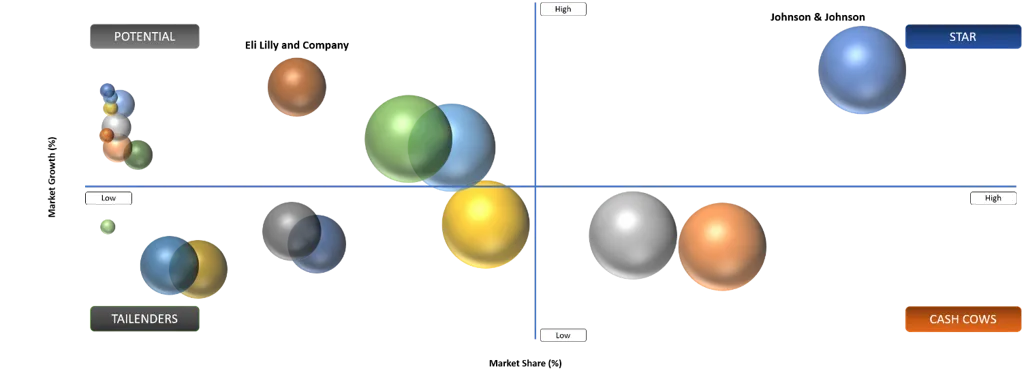
Johnson & Johnson, Incyte Corporation, Taiho Pharmaceutical Co., Ltd., HUTCHMED (China) Limited and Eisai Co., Ltd. are positioned in the Star category based on established commercial FGFR portfolios, regulatory approvals and strong relevance across major biomarker-defined oncology indications. Johnson & Johnson maintains a leading position through BALVERSA (erdafitinib) in FGFR3-altered urothelial carcinoma, while Incyte and Taiho hold established positions in FGFR2-positive cholangiocarcinoma through PEMAZYRE (pemigatinib) and LYTGOBI (futibatinib). HUTCHMED strengthened its competitive position following the August 2026 Chinese approval of ATLED (fanregratinib) for FGFR2 fusion or rearrangement-positive intrahepatic cholangiocarcinoma. Competitive differentiation among Star players is increasingly centered on response durability, biomarker-defined positioning, safety, geographic commercialization and expansion into additional FGFR-driven tumor types.
POTENTIAL
TYRA Biosciences, Inc., Eli Lilly and Company, Cogent Biosciences, Inc., Abbisko Therapeutics Co., Ltd., InnoCare Pharma Limited, BridgeBio Pharma, Inc. and Kyowa Kirin Co., Ltd. are positioned in the Potential category because they are advancing differentiated next-generation FGFR programs with opportunities to disrupt established treatment pathways. TYRA Biosciences is emerging strongly through dabogratinib, a selective FGFR3 inhibitor that reported encouraging Phase II activity in FGFR3-altered non-muscle invasive bladder cancer in September 2026 and is being developed across multiple FGFR3-driven indications. Other potential players are focusing on selective FGFR2/3 inhibition, resistance mutations, improved safety and expansion into earlier treatment settings. Their future positioning will depend on late-stage clinical validation, regulatory progression, differentiation from marketed FGFR inhibitors and successful commercialization in larger FGFR-altered patient populations.
FGFR Inhibitor Market Dynamics
Driver Impact Analysis
| Driver | Market Growth Impact (%) | Demand Concentration | Impacted Use Case | Strategic Impact |
Rising Identification Of Actionable FGFR Alterations | 24% | High | FGFR2-positive cholangiocarcinoma, FGFR3-altered urothelial carcinoma | Expands the treatment-eligible population and strengthens demand for biomarker-guided FGFR inhibitors |
Increasing Adoption Of Precision Oncology | 19% | High | Biomarker-selected solid tumors | Accelerates movement from broad chemotherapy toward alteration-specific targeted treatment |
Expansion Of Next-Generation FGFR2 And FGFR3 Inhibitors | 16% | High | Resistant and previously treated FGFR-altered cancers | Improves competitive differentiation through higher selectivity, resistance coverage and tolerability |
Growing Use Of Comprehensive Genomic Profiling | 14% | Medium-High | Rare FGFR fusions, mutations and rearrangements across solid tumors | Reduces patient leakage and enables identification of commercially addressable niche populations |
Driver: Rising Identification Of Actionable FGFR Alterations
Rising identification of actionable FGFR alterations is the strongest growth driver for the FGFR inhibitor market, particularly across FGFR2-positive cholangiocarcinoma and FGFR3-altered urothelial carcinoma. Broader adoption of comprehensive genomic profiling is improving detection of FGFR fusions, rearrangements and activating mutations, increasing the number of treatment-eligible patients. At the same time, precision-oncology adoption and development of next-generation FGFR2- and FGFR3-selective inhibitors are expanding therapeutic choice and improving treatment differentiation. Earlier-line development, resistance-mutation coverage and wider availability of companion diagnostics are expected to further strengthen market growth by increasing patient identification, improving treatment sequencing and extending FGFR-directed therapy into additional disease settings.
Restraint Impact Analysis
| Restraint | Drag on Market Growth (%) | Primary Impact Area | Impacted Use Case | Strategic Impact |
Limited Prevalence Of Actionable FGFR Alterations | 26% | High | FGFR2-positive cholangiocarcinoma, FGFR3-altered urothelial carcinoma | Restricts the addressable patient pool and limits revenue concentration to molecularly selected populations |
Acquired Resistance To FGFR Inhibitors | 21% | High | Previously treated and progressive FGFR-altered cancers | Shortens treatment durability and increases the need for next-generation resistance-breaking therapies |
Class-Associated Toxicities And Dose Modifications | 17% | High | Long-term oral FGFR inhibitor treatment | Hyperphosphatemia, ocular toxicity and treatment interruptions can reduce adherence and limit sustained use |
Uneven Access To Comprehensive Genomic Testing | 14% | Medium-High | Biomarker-guided treatment selection | Delays patient identification and creates substantial treatment leakage in under-tested markets |
Restraint: Limited Prevalence Of Actionable FGFR Alterations
The FGFR inhibitor market remains constrained by the relatively limited prevalence of actionable FGFR alterations, acquired resistance and class-associated toxicities. Although biomarker-defined treatment has expanded in cholangiocarcinoma and urothelial carcinoma, the addressable population remains narrower than for broadly used oncology therapies. Secondary FGFR mutations can reduce treatment durability, while hyperphosphatemia, ocular toxicity and dose modifications may affect adherence and long-term use. Uneven access to genomic testing further limits patient identification, particularly outside mature precision-oncology markets. High therapy costs, reimbursement restrictions and narrow regulatory labels also create commercial barriers, increasing the importance of differentiated safety, resistance coverage and stronger real-world evidence.
FGFR Inhibitor Market Segment Analysis
The FGFR inhibitor market is segmented based on drug type, molecular alteration, cancer type, line of therapy, treatment approach, route of administration, distribution channel and region.
Pan-FGFR Inhibitors Maintaining Market Leadership Through Established Commercial Adoption, Broad Receptor Coverage and Strong Positioning Across FGFR-Driven Cancers
Pan-FGFR inhibitors represent the dominant segment of the FGFR inhibitor market due to their established clinical use, broader receptor coverage and commercial presence across multiple FGFR-driven malignancies. These therapies inhibit several FGFR family members, enabling treatment across tumors harboring diverse FGFR alterations. Market leadership is supported by approved agents used in cholangiocarcinoma and urothelial carcinoma, where molecular testing has become increasingly integrated into treatment selection. Their broad applicability, physician familiarity and established reimbursement pathways support continued adoption. However, future growth may moderate as highly selective FGFR2- and FGFR3-directed therapies gain traction through improved tolerability and resistance-focused differentiation.
FGFR Inhibitor Market Geographical Penetration
U.S. FGFR Inhibitor Market Landscape
The U.S. FGFR inhibitor market represents the most commercially advanced regional market, supported by broad genomic-testing adoption, established precision-oncology infrastructure and multiple FDA-approved FGFR-targeted therapies. Market momentum strengthened further in September 2026 when the FDA approved lirafugratinib for previously treated unresectable, locally advanced or metastatic cholangiocarcinoma harboring an FGFR2 fusion or other rearrangement. The U.S. already has established FGFR-directed treatment options including erdafitinib for FGFR3-altered urothelial carcinoma, pemigatinib and futibatinib for FGFR2-positive cholangiocarcinoma, creating a competitive but clinically validated treatment landscape.
Future U.S. growth will increasingly depend on expansion into earlier treatment lines, improved detection of actionable FGFR alterations and adoption of next-generation selective inhibitors capable of addressing acquired resistance. Strong oncology reimbursement, companion-diagnostic availability and active clinical development should continue supporting premium targeted-therapy uptake, although toxicity management, narrow biomarker-defined populations and payer scrutiny will remain important commercial constraints.
Japan FGFR Inhibitor Market Outlook
Japan represents an important FGFR inhibitor market, particularly in biliary tract cancers, supported by established molecular-testing infrastructure, specialist oncology care and domestic development of FGFR-targeted therapies. Taiho Pharmaceutical received Japanese approval for LYTGOBI® (futibatinib) in June 2023 for unresectable biliary tract cancer harboring FGFR2 gene fusions that progressed after chemotherapy. Eisai subsequently strengthened the domestic competitive landscape with TASFYGO® (tasurgratinib), which received Japanese approval in September 2024 and was launched in November 2024 for unresectable FGFR2 fusion or rearrangement-positive biliary tract cancer following chemotherapy.
Growth through 2026 and beyond will depend on wider genomic screening, earlier identification of FGFR2-positive patients and broader use of precision-oncology pathways. Japan also benefits from strong domestic pharmaceutical capabilities and national reimbursement mechanisms. Competition is expected to increasingly center on response durability, safety, resistance coverage and treatment convenience, while expansion into additional FGFR-driven tumor types could broaden the addressable market.
FGFR Inhibitor Market Competitive Landscape
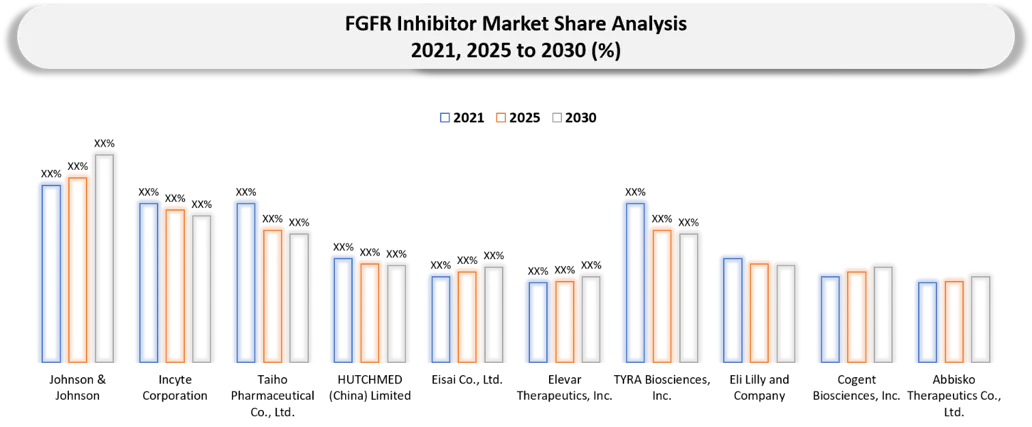
- The global FGFR inhibitor market is moderately concentrated, with competition led by companies that have established commercial positions in FGFR2-positive cholangiocarcinoma and FGFR3-altered urothelial carcinoma, alongside a growing group of developers advancing next-generation receptor-selective inhibitors. Johnson & Johnson, Incyte Corporation, Taiho Pharmaceutical Co., Ltd., Eisai Co., Ltd. and Elevar Therapeutics, Inc. hold important positions through marketed or recently approved FGFR-directed therapies, while HUTCHMED (China) Limited is strengthening competition in Asia through fanregratinib.
- Competitive intensity is increasing as development shifts from broad pan-FGFR inhibition toward selective FGFR2-, FGFR3- and FGFR4-directed molecules, resistance-breaking therapies and earlier-line treatment strategies. TYRA Biosciences, Inc., Eli Lilly and Company, Cogent Biosciences, Inc., Abbisko Therapeutics Co., Ltd., InnoCare Pharma Limited, BridgeBio Pharma, Inc. and Kyowa Kirin Co., Ltd. are advancing differentiated programs focused on receptor selectivity, resistance coverage and improved tolerability. Future competitive advantage will increasingly depend on durable response, activity after prior FGFR therapy, lower class-associated toxicity, biomarker integration and expansion into additional FGFR-altered tumor types.
Key Companies of FGFR Inhibitor Market
- Johnson & Johnson (United States)
- Incyte Corporation (United States)
- Taiho Pharmaceutical Co., Ltd. (Japan)
- HUTCHMED (China) Limited (Hong Kong)
- Eisai Co., Ltd. (Japan)
- Elevar Therapeutics, Inc. (United States)
- TYRA Biosciences, Inc. (United States)
- Eli Lilly and Company (United States)
- Cogent Biosciences, Inc. (United States)
- Abbisko Therapeutics Co., Ltd. (China)
- InnoCare Pharma Limited (China)
- BridgeBio Pharma, Inc. (United States)
- Kyowa Kirin Co., Ltd. (Japan)
- TransThera Sciences (Nanjing), Inc. (China)
- Innovent Biologics, Inc. (China)
- CStone Pharmaceuticals (China)
- Everest Medicines Limited (China)
- Bayer AG (Germany)
- AstraZeneca PLC (United Kingdom)
FGFR Inhibitor Market Major Pain Points
- Acquired Treatment Resistance: Secondary FGFR kinase-domain mutations can reduce inhibitor sensitivity and shorten response durability, creating a major need for next-generation resistance-breaking therapies.
- Narrow Biomarker-Defined Patient Pool: Actionable FGFR alterations occur in relatively small patient subgroups, limiting the addressable population and making efficient molecular screening essential for commercial uptake.
- Class-Associated Toxicities: Hyperphosphatemia, ocular toxicity, gastrointestinal effects, nail disorders and dose interruptions can affect treatment adherence and constrain long-term use.
- Uneven Genomic Testing Access: Limited availability of comprehensive molecular profiling in several countries can delay identification of FGFR-positive patients and lead to significant treatment leakage.
- Limited Post-FGFR Treatment Options: Patients progressing after first-generation FGFR inhibitors often have few validated targeted alternatives, highlighting a major sequencing gap.
- High Treatment And Diagnostic Cost: Premium targeted-therapy pricing combined with companion-diagnostic expenses can create reimbursement barriers, especially in cost-sensitive healthcare systems.
- Restricted Regulatory Labels: Many approved FGFR inhibitors remain limited to specific tumor types, molecular alterations and later-line settings, constraining near-term market expansion.
- Limited Long-Term Comparative Evidence: Direct evidence comparing newer selective FGFR inhibitors with established treatments remains limited, complicating payer decisions and physician treatment selection.
FGFR Inhibitor Market Recent Developments
- September 2026: TYRA Biosciences reported initial Phase II SURF302 results for dabogratinib, an FGFR3-selective inhibitor, showing a 79% overall response rate and 64% complete response rate at 60 mg once daily in FGFR3-altered low-grade intermediate-risk non-muscle invasive bladder cancer.
- September 2026: Abbisko Therapeutics reported positive preliminary Phase II results for lavengratinib (ABSK061), its selective FGFR2/3 inhibitor, strengthening the clinical positioning of its next-generation FGFR platform.
- May 2026: TYRA Biosciences dosed the first patient in SURF303, a Phase II study evaluating dabogratinib in low-grade upper tract urothelial carcinoma, expanding its FGFR3-focused development beyond bladder cancer.
- April 2026: Abbisko Therapeutics received European Medicines Agency Orphan Drug Designation for irpagratinib (ABSK011), its selective FGFR4 inhibitor, for hepatocellular carcinoma.
- December 2025: HUTCHMED announced that China’s National Medical Products Administration accepted and granted Priority Review to the new drug application for fanregratinib, a selective FGFR1/2/3 inhibitor, for previously treated FGFR2 fusion or rearrangement-positive intrahepatic cholangiocarcinoma.
Analyst View / Opinion on FGFR Inhibitor Market
- The FGFR inhibitor market is shifting from broad pan-FGFR inhibition toward receptor-selective, biomarker-defined and resistance-focused treatment strategies, particularly across FGFR2-driven cholangiocarcinoma and FGFR3-altered urothelial carcinoma.
- The 2026 U.S. approval of lirafugratinib strengthened competition within FGFR2-positive cholangiocarcinoma, while emerging assets such as dabogratinib, CGT4859, lavengratinib and irpagratinib are increasing competitive pressure around receptor selectivity, resistance coverage, tolerability and response durability.
- Treatment selection will increasingly depend on tumor type, FGFR alteration, prior FGFR inhibitor exposure, resistance profile, line of therapy, toxicity history, companion-diagnostic availability and expected duration of response rather than FGFR positivity alone.
- Next-generation therapies are expected to differentiate through selective FGFR2, FGFR3 or FGFR4 activity, efficacy against secondary resistance mutations, lower hyperphosphatemia and ocular toxicity, improved dosing convenience and expansion into earlier treatment settings.
- Competitive advantage will increasingly favor companies able to demonstrate durable clinical benefit, activity after prior FGFR therapy, manageable class-associated toxicity, strong biomarker integration and credible expansion into additional FGFR-altered tumors.
- Over the next decade, the FGFR inhibitor market is likely to become more segmented, with established pan-FGFR inhibitors, receptor-selective therapies, resistance-breaking molecules and combination strategies occupying distinct positions across tumor types, molecular alterations and treatment lines.
FGFR Inhibitor Market Target Audience
| INDUSTRY | WHO SHOULD BUY THIS REPORT? | REASON TO BUY THIS REPORT |
| Pharmaceutical And Biotechnology Companies | Oncology Drug Developers, FGFR Inhibitor Manufacturers, Pipeline Strategy Teams | Assess competitive positioning, indication expansion, pipeline differentiation and commercialization opportunities |
| Precision Oncology And Targeted Therapy Developers | Research And Development Heads, Clinical Development Teams, Translational Medicine Teams | Identify high-value FGFR2, FGFR3 and FGFR4 opportunities, resistance gaps and next-generation therapy potential |
| Diagnostic And Genomic Testing Companies | Companion Diagnostic Developers, Molecular Diagnostics Companies, Genomic Profiling Providers | Evaluate biomarker-testing demand, actionable FGFR alteration opportunities and diagnostic partnership potential |
| Contract Research And Development Organizations | Clinical Research Organizations, Preclinical Service Providers, Trial Recruitment Specialists | Understand active development programs, trial demand, biomarker-driven enrollment requirements and outsourcing opportunities |
| Investors And Financial Institutions | Venture Capital Firms, Private Equity Firms, Institutional Investors, Investment Banks | Assess market attractiveness, pipeline maturity, investment targets, licensing opportunities and commercial risk |
| Healthcare Providers And Cancer Centers | Oncologists, Molecular Tumor Boards, Hospital Procurement Teams | Understand evolving treatment options, therapy sequencing, biomarker requirements and emerging FGFR-directed therapies |
| Licensing And Business Development Teams | Corporate Development Executives, Alliance Management Teams, Licensing Professionals | Identify partnering, co-development, acquisition and regional commercialization opportunities |
| Regulatory And Market Access Organizations | Regulatory Affairs Teams, Health Economics Teams, Reimbursement Specialists | Assess approval pathways, reimbursement dynamics, value-based pricing and market-access barriers |
| Academic And Research Institutions | Oncology Researchers, Translational Scientists, Precision Medicine Centers | Track emerging FGFR biology, resistance mechanisms, clinical pipelines and unmet research opportunities |
| Government And Healthcare Agencies | Public Health Agencies, Oncology Policy Bodies, Reimbursement Authorities | Evaluate treatment access, molecular-testing infrastructure, precision-oncology adoption and healthcare resource implications |
Why Choose DATAM?
- Data-Driven Insights: Access granular intelligence covering market size, FGFR inhibitor class shares, cancer-type adoption, treatment-line dynamics, biomarker-defined patient populations, FGFR2/FGFR3/FGFR4 opportunities, clinical pipelines, competitive positioning and country-level access.
- Primary Research Validation: Benefit from insights supported by discussions with oncologists, molecular pathologists, industry executives, market-access professionals, clinical researchers, diagnostic stakeholders and other participants involved in FGFR-targeted therapy development and commercialization.
- Expert Analyst Consultations: Engage directly with healthcare analysts for customized guidance on treatment sequencing, competitor benchmarking, portfolio positioning, indication expansion, market entry, reimbursement strategy and commercialization planning.
- Customized Market Intelligence: Receive tailored analysis covering country-level opportunities, pricing and reimbursement, FGFR alteration prevalence, resistance-driven treatment needs, next-generation selective inhibitors, licensing potential, pipeline benchmarking and emerging white-space opportunities.
- White Papers and Case Studies: Gain access to focused strategic studies covering precision oncology, companion diagnostics, resistance mechanisms, FGFR-targeted drug development, commercialization models and evolving treatment pathways across biomarker-defined cancers.
What DATAM Uniquely Provides
- In-depth segmentation of the FGFR inhibitor market by inhibitor type, molecular alteration, cancer type, line of therapy, treatment approach, route of administration, distribution channel and geography.
- Competitive analysis of leading FGFR inhibitor companies covering objective response, duration of response, resistance coverage, receptor selectivity, safety profile, dosing convenience, pipeline maturity and commercialization strategy.
- Comprehensive assessment of treatment sequencing across established pan-FGFR inhibitors, receptor-selective therapies, resistance-focused molecules and emerging combination strategies, including positioning in previously treated and earlier-line patients.
- Detailed evaluation of clinical pipelines, selective FGFR2, FGFR3 and FGFR4 inhibitors, irreversible inhibitors, resistance-breaking compounds, combination regimens and other emerging precision-oncology approaches.
- Patient opportunity mapping by FGFR fusion, rearrangement, mutation, amplification and other actionable alterations, supporting biomarker-driven market analysis and identification of receptor-specific commercial opportunities.
- Country-level assessment of genomic-testing access, treatment availability, reimbursement, companion-diagnostic infrastructure, physician adoption and commercialization potential across major FGFR inhibitor markets.
- White-space analysis covering resistance mutation management, earlier-line expansion, additional FGFR-altered solid tumors, improved tolerability, companion-diagnostic integration and unmet needs after prior FGFR inhibitor exposure.
- Strategic benchmarking of clinical development, regulatory progress, licensing activity, partnership opportunities, market-entry pathways, commercialization readiness and future competitive positioning.


























































