


Fermentation-Derived Natural Food Colors Market Size and Overview
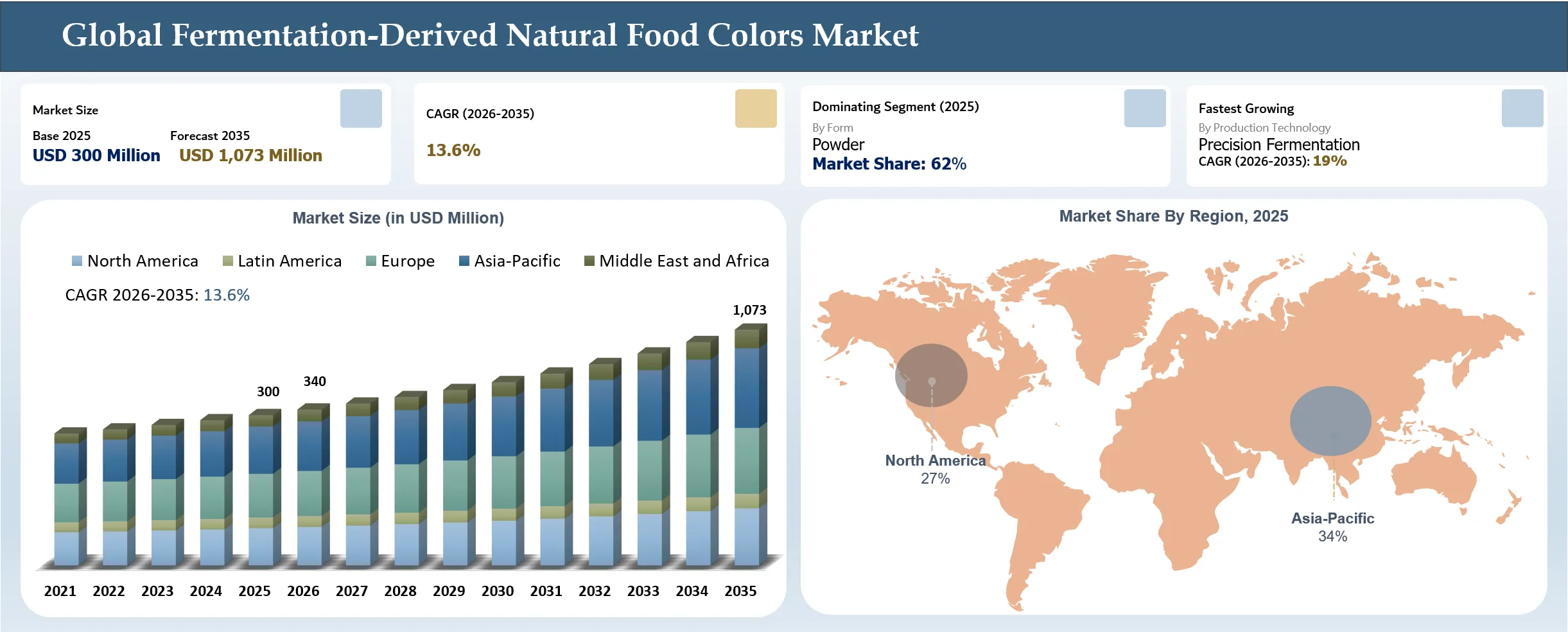
The global fermentation-derived natural food colors market reached USD 300 million in 2025 and is expected to reach USD 1,073 million by 2035, growing at a CAGR of 13.6% during the forecast period 2026-2035. The market is gaining commercial momentum due to the growing regulatory steps taken against synthetic dyes based on petroleum chemicals. In April 2025, the U.S. Department of Health and Human Services (HHS) and the U.S. Food and Drug Administration (FDA) issued regulations to phase out the use of petrochemical-based dyes by the food industry and switch to natural dyes, including the removal of six synthetic dyes from the U.S. food supply and the approval of four natural color additives. The shift towards natural colorants through these regulations has made the commercial path more feasible for fermentation-derived pigments with consistent color performance.
Another driving factor for growth in the market includes increased investments in precision-fermentation technology. In November 2025, Chromologics ApS secured €7 million (USD 8.12 million), bringing their total investment to €20 million (USD 23.22 million) for submission for regulatory approval, launch of products, and commercial production of their natural food color from fermentation, which is called Natu.Red. The company has also undertaken trials with more than 90 food manufacturers in Europe and the USA to showcase increasing interest in heat- and pH-stable fermentation-based options in the food industry. Chromologics estimates the market opportunity of its biotech natural color platform at €4.6 billion (USD 5.34 billion). This indicates the overall business opportunities available for next-gen food colors. Some of the major hurdles faced by these advanced technologies include regulatory approval time, fermentation scale-up, downstream process cost, and price competition.
The FDA approval and plans to increase the production of Everzure Galdieria reflect the increasing commercial exploitation of fermentation-derived natural food colors, especially in lieu of traditional artificial blue colorants. In May 2025, according to Galdieria, extending its existing range of blue colors, Givaudan announced the FDA approval of Everzure Galdieria. This natural blue color, derived from fermentation, was invented over five years of cooperation with Fermentalg and manufactured by means of a controlled fermentation process of microalgae. This product has received its initial approval in the U.S. for food and beverage usage, while the scale-up of manufacturing will start in the second half of 2025. The source further mentioned that Givaudan had employed over 16,900 people around the world and earned CHF 7.4 billion in revenue in 2024.
White-Space Opportunities for Fermentation-Derived Natural Food Colors, Precision Fermentation Scale-Up and Synthetic Dye Reformulation
In February 2026, the U.S. Food and Drug Administration (FDA) created a significant opportunity for the fermentation-derived natural food colors market by providing greater flexibility for manufacturers to use “No Artificial Colors” claims when products do not contain petroleum-based colors. The largest commercial opportunity is expected in the reformulation of high-volume food and beverage categories, where manufacturers are replacing synthetic dyes while seeking pigments that can provide improved color stability, scalability, and clean-label positioning.
The FDA simultaneously approved beetroot red as a new color option and expanded the permitted use of spirulina extract, bringing the total number of new food color options approved under the current administration to six. Although the FDA announcement does not disclose a specific investment amount or direct funding allocation, its regulatory action creates an investment opportunity across microbial fermentation platforms, precision fermentation capacity, strain development, pigment extraction, purification, and food formulation technologies. The opportunity is particularly significant for fermentation-derived blue, red, and yellow pigments, where conventional natural colors can face limitations related to pH, heat, and processing stability.
The regulatory shift is expected to benefit companies developing and commercializing naturally derived and fermentation-based color solutions, including Givaudan, Fermentalg, Chromologics, Phytolon, Döhler, and Oterra. The highest commercial opportunity lies in precision fermentation infrastructure and microbial pigment production, benefiting biotechnology-focused companies such as Chromologics, Phytolon, Fermentalg, and Michroma that are developing microbial or precision-fermentation-derived colorants.
Natural color formulation and application development represent another important area, where Givaudan, Döhler, Oterra, Sensient Technologies, and ADM can support food and beverage manufacturers in replacing synthetic dyes. Opportunities in strain optimization, pigment extraction, purification, and production technology are expected to support biotechnology developers such as Chromologics, Phytolon, Michroma, and Kalsec. Meanwhile, food and beverage reformulation, application testing, and large-scale commercialization can create downstream opportunities for ingredient suppliers and color specialists including Givaudan, Sensient Technologies, Döhler, Oterra, and DDW, The Colour House, as manufacturers increasingly seek stable, scalable, and clean-label alternatives to petroleum-based artificial colors.
Fermentation-Derived Natural Food Colors Market Key Takeaways
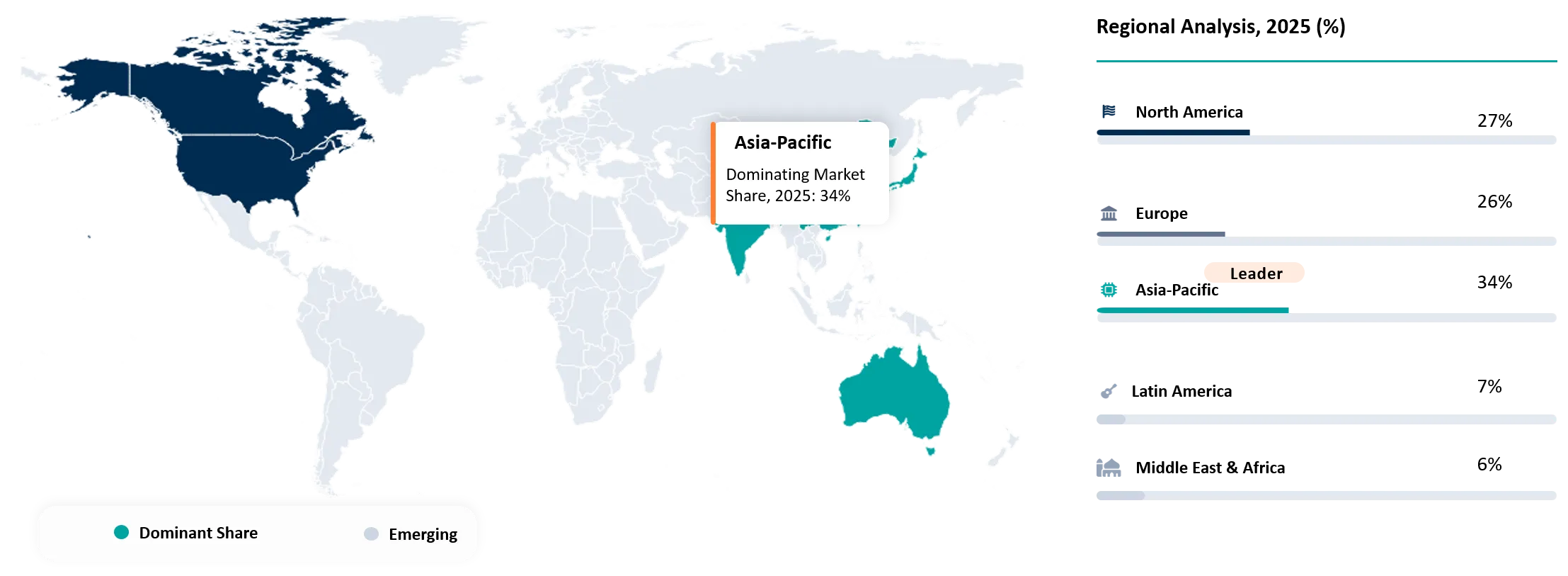
- The Asia-Pacific region led the global market with a 34% market share in 2025, driven by established fermentation capacity in China, Japan, and India. North America followed closely, capturing a 27% market share in 2025 behind strong biotech infrastructure and dye reformulation mandates.
- The powder form segment held a dominant 62% share of the global fermentation-derived natural food colors market in 2025. Spray-dried carotenoids from Sporidiobolus salmonicolor demonstrated a 75% encapsulation efficiency, an 83% yield, 5.5% moisture content, and thermal stability up to 215°C.
- The high capital investment required to build industrial bioreactor capacity creates an 18% drag on market growth. This primary impact area restricts rapid capacity expansion for multinational ingredient suppliers.
- In April 2025, the U.S. HHS and FDA introduced regulations phasing out petrochemical dyes, removing six synthetic dyes while approving four natural alternatives. This regulatory shift directly addresses high-volume reformulations where precision fermentation platforms present a USD 5.34 billion (€4.6 billion) market opportunity.
Fermentation-Derived Natural Food Colors Market Industry Trends and Strategic Insight
- Precision fermentation is shifting from technology development toward commercial pigment platforms, with companies prioritizing reproducible production, high-purity pigments, and batch-to-batch consistency rather than relying on agricultural extraction cycles.
- Pigment performance is increasingly being designed around specific food matrices, with developers optimizing colors for heat exposure, pH variation, light stability, and interactions with proteins, lipids, and other formulation ingredients rather than marketing pigments as universal substitutes.
- Strain engineering is becoming a core competitive differentiator, enabling producers to improve pigment yield, molecular purity, production efficiency, and the range of colors obtainable from individual microbial production platforms.
- The competitive landscape is transitioning from standalone pigment discovery toward integrated biomanufacturing models, combining microbial strain development, fermentation optimization, downstream purification, regulatory strategy, and food-application expertise.
- Sustainability claims are becoming more operationally focused, with companies emphasizing reduced dependence on agricultural land and more controlled production systems, while the industry increasingly faces pressure to substantiate environmental advantages through production and supply-chain assessment.
Fermentation-Derived Natural Food Colors Market Scope
| Metrics | Details | |
| 2025 Market Size | USD 300 Million | |
| 2035 Projected Market Size | USD 1,073 Million | |
| CAGR (2026-2035) | 13.6% | |
| Largest Market | Asia-Pacific | |
| Fastest Growing Market | North America | |
| By Pigment Type | Carotenoids, Betalains, Anthocyanins and Flavonoids, Phycocyanins, Monascus Pigments, Violacein and Prodigiosin | |
| By Microorganism Source | Yeast-Derived Colors, Fungi-Derived Colors, Bacteria-Derived Colors, Microalgae-Derived Colors, Others | |
| By Production Technology | Precision Fermentation, Conventional Microbial Fermentation, Strain-Engineered Fermentation, Others | |
| By Color Type | Red, Yellow, Orange, Blue, Green, Purple | |
| By Form | Liquid, Powder | |
| By Application | Beverages, Bakery and Confectionery, Dairy and Dairy Alternatives, Processed Foods and Snacks, Plant-Based Foods, Dietary Supplements and Functional Foods, Others | |
| By Region | North America | U.S., Canada, Mexico |
| Europe | Germany, UK, France, Spain, Italy, Poland, Netherlands, Switzerland and Rest of Europe | |
| Asia-Pacific | China, India, Japan, Australia, South Korea, Indonesia, Malaysia and Rest of Asia-Pacific | |
| Latin America | Brazil, Argentina and Rest of Latin America | |
| Middle East and Africa | UAE, Saudi Arabia, South Africa, Israel, Türkiye and Rest of Middle East and Africa | |
| Report Insights Covered | Competitive Landscape Analysis, Company Profile Analysis, Market Size, Share, Growth | |
Fermentation-Derived Natural Food Colors Market Disruption Analysis
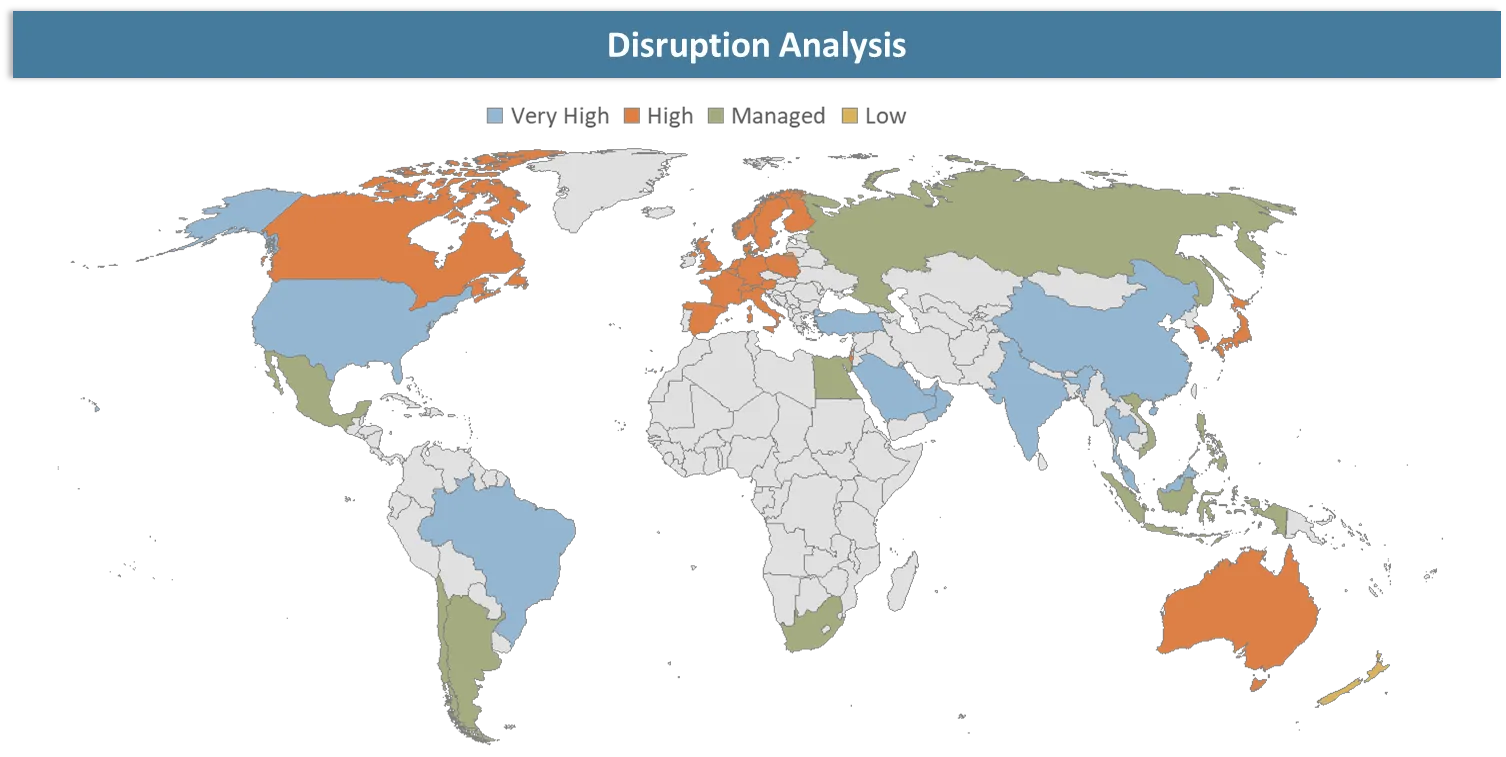
Shift from Agricultural Pigment Extraction to Controlled Fermentation Production Reshaping the Natural Food Colors Supply Chain
The disruption of the fermentation-derived natural food colors market is primarily associated with the transition from agriculture-dependent pigment extraction toward controlled microbial fermentation. Traditional natural food colors depend on the use of crops, fruits, and vegetables, and, hence, food-color manufacturers are faced with seasonal production schedules, climate considerations, geographical constraints, and unreliable availability of the pigments. Fermentation technology has been revolutionizing the whole process of production, whereby the microorganisms are able to produce pigments in the bioreactor and, thus, allowing food-color companies to set up more reliable production schedules irrespective of the agricultural production seasons. It is very disruptive to the suppliers of traditional botanical pigments because the production process becomes non-land-based.
Furthermore, recent developments that have taken place in 2025-2026 show that fermentation platforms are now proving their worth in terms of resource efficiency when compared to the production of agricultural pigments. According to Phytolon's comparative life-cycle assessment reported 90% fewer greenhouse gases, 95% less water usage, and 88% less land use than agriculture-based benchmark natural pigments. Meanwhile, a Food Chemistry review from 2026 pointed out high-yield microbial cell factories and precision fermentation as solutions that can be used to solve the supply limitation problem regarding food coloring. The food color manufacturers are starting to look at fermentation not just as another way of producing pigments, but also as a way to reformulate their whole supply strategy.
Fermentation-Derived Natural Food Colors Market BCG Matrix: Company Evaluation

Stars include Phytolon Ltd., Chromologics ApS, and Michroma Inc., as these companies have direct strategic exposure to fermentation-derived natural food colors and are developing proprietary microbial or precision-fermentation platforms specifically for food pigment production. The companies' focus on scalable alternatives to conventional synthetic and crop-derived colors positions them strongly within the emerging market, where technological differentiation, regulatory progress, and commercial validation are becoming decisive competitive factors. The Question Marks category includes Fermentalg SA, dsm-firmenich AG, Lycored Ltd., and Oterra A/S, as these companies possess strong biotechnology, pigment, or natural-color capabilities but have varying levels of direct commercial exposure to fermentation-derived food colors.
The Potential category includes Sensient Technologies Corporation, Givaudan SA, and Döhler GmbH, which benefit from established food-color portfolios, extensive customer relationships, and natural ingredient formulation capabilities but currently have comparatively less visible specialization in proprietary fermentation-derived pigment production. Tailenders include Archer-Daniels-Midland Company and Kalsec, Inc., as both companies have significant food ingredient and natural-color capabilities but currently demonstrate more limited direct involvement in dedicated fermentation-derived natural food color production compared with specialist microbial pigment developers.
Fermentation-Derived Natural Food Colors Market Dynamics
Driver Impact Analysis
| Driver | Market Growth Impact (%) | Demand Concentration | Impacted Use Case | Strategic Impact |
Regulatory restrictions and food manufacturers' reformulation initiatives are accelerating demand for fermentation-derived pigments. | 30% | North America and Europe, particularly regulatory-driven food reformulation programs | Beverages, confectionery, snacks, bakery, and processed foods replacing petroleum-based synthetic dyes | Accelerates regulatory-led product reformulation and increases the strategic value of fermentation platforms capable of producing approved, scalable pigment alternatives. |
Improvements in synthetic biology and metabolic engineering are enabling microbial cell factories to produce natural pigments. | 25% | Biotechnology hubs in North America, Europe, and Asia-Pacific | Precision-fermented battalions, carotenoids, red pigments, and emerging microbial colorants | Shifts competition toward proprietary microbial strains, fermentation yield optimization, and intellectual-property-controlled pigment production platforms. |
Fermentation-based production reduces dependence on seasonal crop availability and agricultural land. | 20% | Regions exposed to agricultural supply volatility and geographically concentrated pigment sourcing | Large-volume food and beverage manufacturing requiring continuous pigment supply | Encourages manufacturers to diversify away from crop-dependent sourcing toward controlled bioreactor production and geographically flexible supply chains. |
Food manufacturers are increasingly seeking fermentation-derived pigments engineered for improved color intensity, stability, and performance across different food. | 25% | High-value processed food categories with demanding processing conditions | Acidic beverages, dairy alternatives, confectionery, bakery, and thermally processed foods | Drives suppliers toward application-specific pigment development, making formulation support, matrix compatibility, and stability performance critical competitive differentiators. |
Regulatory restrictions and food manufacturers' reformulation initiatives are accelerating demand for fermentation-derived pigments
The regulatory restrictions imposed on synthetic petroleum-based dyes are becoming a major factor driving the growth of the fermentation-derived natural food colors market, with the need for scalable solutions capable of mimicking the color properties of artificial additives rising among food companies. In April 2025, the U.S. Department of Health and Human Services (HHS) and the U.S. Food and Drug Administration (FDA) embarked on a nationwide initiative to introduce natural alternatives and remove the remaining six synthetic petroleum-based dyes in the U.S. food industry. The regulatory shift has increased formulation efforts in beverages, confectionery, dairy, snacks, and processed foods, generating the need for pigments that can be produced with control and offer performance according to application requirements.
In parallel, regulatory approvals are beginning to establish a clearer commercialization pathway for biosynthetic food colors. In March 2026, according to CIRS Group, the FDA issued its final rule on February 6, 2026, approving Phytolon's fermentation-derived beetroot red, produced using genetically engineered Saccharomyces cerevisiae, with the regulation becoming effective on March 23, 2026. The regulatory review included a 90-day subchronic oral toxicity study, which established a no-observed-adverse-effect level of 3,581 mg/kg body weight/day for male rats and 4,055 mg/kg body weight/day for female rats at the highest tested dose. This approval demonstrates that fermentation-derived pigments are progressing from technology development toward regulated food applications, strengthening incentives for manufacturers to invest in biosynthetic color alternatives during large-scale synthetic dye reformulation programs.
Restraint Impact Analysis
| Restraint | Drag on Market Growth (%) | Primary Impact Area | Impacted Use Case | Strategic Impact |
Microbial pigments face extensive strain-specific safety, toxicity, purity, and regulatory assessments before approval. | 25% | Regulatory approval and commercialization timelines | Novel microbial pigments intended for beverages, confectionery, dairy, and processed foods | Increases regulatory-development costs and favors companies with established toxicology, regulatory affairs, and multi-jurisdiction approval capabilities. |
Maintaining pigment yield, oxygen transfer, process consistency, and contamination control during the transition from laboratory to commercial-scale fermentation remains challenging. | 23% | Fermentation scale-up and manufacturing efficiency | High-volume pigment production requiring aerobic fermentation and consistent batch output | Creates a technology barrier that prioritizes robust bioprocess design, scale-up expertise, and access to industrial fermentation infrastructure. |
Fermentation-derived pigments can experience color degradation under exposure to heat, light, oxygen, and varying pH conditions, restricting their use. | 20% | Pigment stability and food-matrix compatibility | Acidic beverages, bakery products, thermal processing, dairy, and long-shelf-life foods | Drives investment toward encapsulation, stabilization technologies, and application-specific pigment formulations rather than universal color solutions. |
Establishing large-scale fermentation capacity requires significant investment in bioreactors and production infrastructure. | 18% | Capital expenditure and production capacity | Commercial-scale production of microbial pigments for multinational food manufacturers | Encourages asset-light scale-up through contract fermentation partnerships and favors companies capable of securing dedicated biomanufacturing capacity. |
Microbial pigments face extensive strain-specific safety, toxicity, purity, and regulatory assessments before approval
One of the major restraints affecting the fermentation-derived natural food colors market is the extensive evaluation of safety, toxicity, purity, and regulatory issues for each microbial manufacturing system before launching the pigment into the market. In contrast to the plant-based pigments that have a history of use in foods, fermentation-based pigments may be produced using genetically modified microorganisms, which makes it necessary to evaluate such aspects as the production organism itself, the new genetic material added, the manufacturing process, any residual materials from the process, dietary exposure, and allergenicity. It will add time to development and raise regulatory costs, especially for new businesses that have to compile safety data before obtaining market approval.
Furthermore, the regulatory burden is compounded by substantial variability in microbial pigment production and the requirement to demonstrate consistent purity and safety across manufacturing batches. In December 2025, according to the Frontiers, in Microbiology reported that cinnabarinic acid produced through submerged fermentation achieves only approximately 50–150 mg/L and is estimated to cost more than 10 times the cost of Red 40, while laetiporic acid A achieves approximately 200–500 mg/L, highlighting the production and economic challenges that must be addressed before large-scale commercialization. The review also noted that fungal astaxanthin can achieve approximately 200–450 mg/L under optimized fermentation, demonstrating that pigment productivity varies substantially depending on the microbial strain and production process.
Fermentation-Derived Natural Food Colors Market Segment Analysis
The global fermentation-derived natural food colors market is segmented based on pigment type, microorganism source, production technology, color type, form, application, and region.
Powder Form Dominating the Fermentation-Derived Natural Food Colors Market Through Superior Stability and Handling Efficiency
The powder segment dominates the fermentation-derived natural food colors market, holding a 62% market share in 2025, due to its benefits in terms of stability, transportability, precise dosing, and ease of use in large-scale food manufacturing processes. Fermentation-derived pigments are usually made into powder forms through spray drying and encapsulation to minimize their susceptibility to moisture, oxygen, and light and improve their processing as ingredients. The powder form is more appropriate for use in bakery products, confectionery, powdered beverages, dietary supplements, snacks, and other powdered food products where there is a need for precise color content and increased storage life. Since fermentation-derived pigments are set to be manufactured at an industrial scale, the powder form will likely continue being favored due to easier distribution and integration into the ingredient supply chain.
Furthermore, a study demonstrated the commercial potential of spray-dried powder formulations for microbial pigments produced through fermentation. In April 2026, according to IFT, the study used carotenoids produced by the yeast Sporidiobolus salmonicolor and achieved 75% encapsulation efficiency and 83% encapsulation yield, while the resulting powder had only 5.5% moisture content and remained thermally stable up to 215°C. The performance characteristics demonstrate how powder processing can improve pigment stability and handling across food applications, including beverages, dairy products, and powdered foods, reinforcing the strategic preference for dry formulations in the commercialization of fermentation-derived natural colors.
Fermentation-Derived Natural Food Colors Market Geographical Penetration
Expanding Biomanufacturing Infrastructure and Established Fermentation Capabilities Strengthening Asia-Pacific Leadership
The Asia-Pacific region dominates the fermentation-derived natural food colors market, accounting for an estimated 34% market share in 2025, supported by its established fermentation industries, large food-processing base, and concentration of microbial pigment production capabilities across China, Japan, India, and Southeast Asia. The region benefits from long-standing expertise in fermentation-based food ingredients, particularly microbial pigments such as Monascus-derived colors, while its expanding biotechnology ecosystem is creating additional opportunities for precision-fermented betalains, carotenoids, and other next-generation natural pigments.
Strategic partnerships between biotechnology innovators and large-scale fermentation companies are accelerating the commercialization of fermentation-derived natural food colors. In September 2025, Michroma, a U.S.-based biotechnology startup specializing in precision-fermentation-derived natural colorants, partnered with CJ CheilJedang, a South Korean-based food and biotechnology company, to scale the commercial production of its fermentation-derived red dye. Michroma uses engineered filamentous fungi in controlled bioreactors to produce natural pigments and has raised USD 6.4 million in funding. The partnership will leverage CJ CheilJedang's fermentation and manufacturing footprint across Asia, the U.S., and Brazil to support large-scale production, raw material sourcing, downstream processing, and regulatory commercialization.
China Fermentation-Derived Natural Food Colors Market Trends
China holds a dominant position in the Asia-Pacific fermentation-derived natural food colors market due to its established microbial fermentation industry, large-scale food-processing sector, and rapidly expanding synthetic biology and biomanufacturing ecosystem. The country has a long-standing commercial base for fermentation-derived pigments, particularly Monascus red and yellow colors, while domestic biotechnology companies are increasingly developing microbial cell factories and industrial fermentation systems for next-generation food ingredients. China's combination of large-scale fermentation capacity, established natural food additive manufacturing, and proximity to a substantial food and beverage manufacturing base enables faster scale-up and commercialization of fermentation-derived pigments compared with several other Asia-Pacific markets.
Advancements in synthetic biology and microbial engineering are strengthening the scalability and production efficiency of fermentation-derived natural pigments. In August 2025, Zeno Technology, a China-based synthetic biology and biotechnology company, completed a pre-A financing round worth tens of millions of RMB, led by Qingchuang Investment with participation from Zhuopu Investment. The company specializes in natural microbial pigments and other bio-based functional ingredients, utilizing CRISPR-based microbial engineering and fermentation technologies. Zeno Technology reported that its engineered microbial strains can achieve production yields more than 1,000 times higher than wild-type strains, while production efficiency can be 10 times higher than traditional methods.
Japan Fermentation-Derived Natural Food Colors Market Outlook
Japan is one of the major countries in the Asia-Pacific fermentation-derived natural food colors market due to its established fermentation industry, advanced biotechnology capabilities, and strong expertise in food ingredients and natural pigments. The country's long-standing use of fermentation technologies and its sophisticated food-processing sector provide a favorable foundation for the development and commercialization of microbial pigments. Japanese companies and research institutions are increasingly applying synthetic biology and engineered microbial production systems to develop ingredients with greater production consistency and reduced dependence on conventional agricultural extraction, strengthening Japan's strategic role in next-generation natural food color innovation.
Growing demand for clean-label ingredients is encouraging established color technology companies to expand their portfolios of natural food color solutions. In June 2026, Sun Chemical, a U.S.-based specialty chemicals, color technologies, and materials company and a wholly owned subsidiary of Japan-based DIC Corporation, announced that it would showcase its natural food color innovations at IFT FIRST 2026 in Chicago, U.S., scheduled for July 2026. The company highlighted LINABLUE G1 Spirulina Extract, along with California-grown spirulina, beet-based anthocyanin, and brown natural color solutions for food and beverage applications. The event was held at booth 2581, while Sun Chemical emphasized its over 50 years of expertise in spirulina cultivation, harvesting, and drying.
Regulatory Reformulation and Precision-Fermentation Commercialization Accelerating North American Market Growth
The North American fermentation-derived natural food colors market accounted for an estimated 27% market share in 2025, supported by regulatory-driven reformulation initiatives, a strong food and beverage manufacturing base, and the concentration of biotechnology companies developing precision-fermented ingredients. The region is experiencing increased demand for alternatives to petroleum-based synthetic dyes as food manufacturers reformulate products to meet evolving regulatory and consumer requirements. North America's established synthetic biology ecosystem also provides an advantage for emerging pigment developers by connecting strain engineering, fermentation scale-up, regulatory expertise, and food-application development, thereby accelerating the commercialization of microbial colors across beverages, confectionery, dairy, and processed food applications.
The launch reflects the expanding use of fermentation technology to develop natural food colorants with improved versatility and standardized pigment concentrations. In July 2026, GRA Nutra, a Portugal-based biotechnology and natural ingredients company, launched AuraBC, a natural beta-carotene food color produced through non-GMO fermentation technology. The company develops algae-derived and fermentation-based ingredients and natural colors for the food, beverage, and supplement industries through vertically integrated facilities in Portugal. AuraBC provides yellow-to-orange shades and can be standardized at beta-carotene concentrations ranging from 1% to 30% across formats including spray-dried powders, beadlets, granulations, oil suspensions, and emulsions.
U.S. Fermentation-Derived Natural Food Colors Market Trends
The U.S. holds a dominant position in the North American fermentation-derived natural food colors market owing to its advanced biotechnology ecosystem, extensive food and beverage manufacturing base, and accelerating regulatory transition away from petroleum-based synthetic dyes. The presence of precision-fermentation innovators, food ingredient companies, and established regulatory infrastructure supports the development and commercialization of microbial pigments for large-scale food applications.
Strategic collaborations between biotechnology innovators and established natural color suppliers are accelerating the development of scalable alternatives to synthetic food dyes. In May 2026, Debut, a U.S.-based biotechnology company, partnered with Oterra, a Denmark-based natural food color supplier, to develop and scale a precision-fermentation-derived alternative to Red 40 for food and beverage applications. The collaboration is described as a multi-million-dollar partnership and combines Debut's precision fermentation platform with Oterra's formulation expertise to develop natural colors spanning orange, red, and violet shades. The companies aim to pursue an FDA approval filing and bring a commercially scaled product to market within approximately three years, while Oterra brings its 150-year heritage in natural color development to support commercialization.
Fermentation-Derived Natural Food Colors Market Competitive Landscape
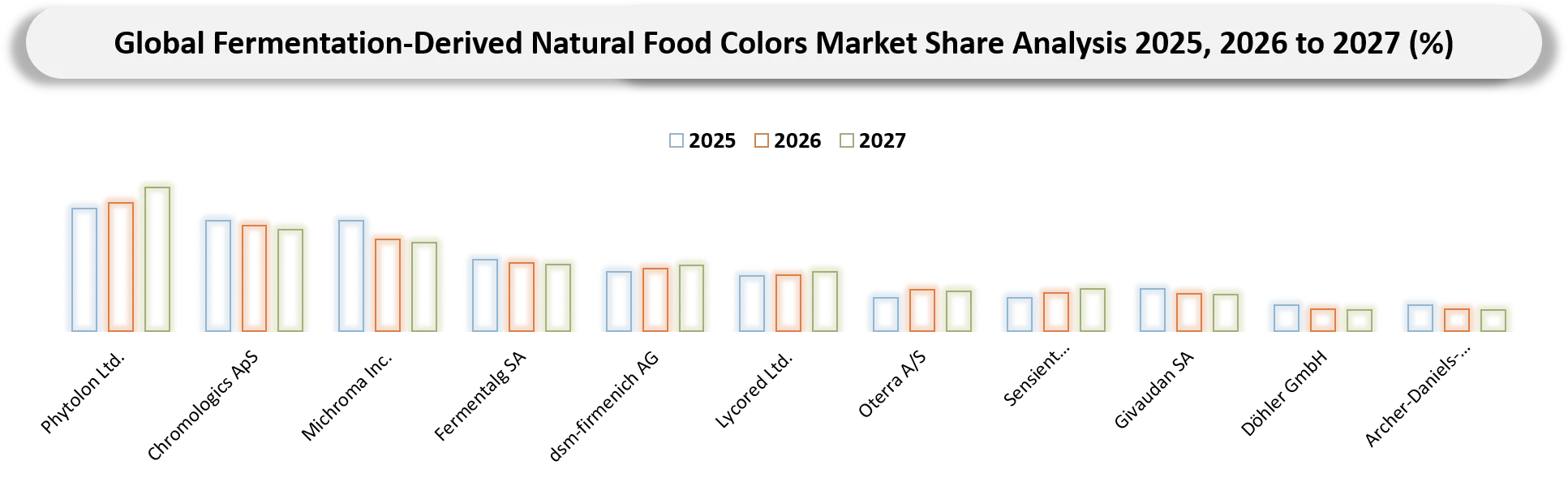
- The fermentation-derived natural food colors market is characterized by three key participant groups: specialized fermentation-based pigment developers, established natural food color suppliers, and diversified food ingredient companies with biotechnology and formulation capabilities. Phytolon Ltd., Chromologics ApS, Michroma Inc., and Fermentalg SA represent the innovation-led group developing microbial, algal, or precision-fermentation platforms for next-generation pigments. Oterra A/S, Sensient Technologies Corporation, Givaudan SA, Lycored Ltd., and Kalsec, Inc. leverage established natural-color portfolios, formulation expertise, and global food manufacturer relationships, while dsm-firmenich AG, Döhler GmbH, and Archer-Daniels-Midland Company provide broader ingredient capabilities that can support integration of emerging fermentation-derived colors into large-scale food formulations. This creates a technology-driven competitive environment in which microbial strain development, regulatory approval capability, fermentation scale-up, pigment stability, and customer application support increasingly define competitiveness.
- Key players include Phytolon Ltd. (Israel), Chromologics ApS (Denmark), Michroma Inc. (United States), Fermentalg SA (France), dsm-firmenich AG (Switzerland), Lycored Ltd. (Israel), Oterra A/S (Denmark), Sensient Technologies Corporation (United States), Givaudan SA (Switzerland), Döhler GmbH (Germany), Archer-Daniels-Midland Company (United States), and Kalsec, Inc. (United States).
Key Developments
- May 2026: Phytolon, an Israel-based food technology and precision fermentation company, secured USD 23.6 million in Series B financing to commercialize its fermentation-derived natural food colors.
- November 2025: Chromologics, a Denmark-based biotechnology company specializing in precision-fermentation-derived natural food colors, raised €7 million (approximately USD 7.6 million) from Novo Holdings, EIFO (Export and Investment Fund of Denmark), Döhler Ventures, Collateral Good Ventures, and Synergetic, bringing its total capital raised to nearly €20 million (USD 23.25 million).
- March 2026: Givaudan, a Switzerland-based global flavors, fragrances, and food ingredients company, announced that its Givaudan Sense Colour division received a positive scientific opinion from the European Food Safety Authority (EFSA) for Everzure Galdieria.
- December 2025: Bon Natural Life Limited (BON), a Cayman Islands-incorporated bio-ingredient solutions company with operations in China, entered a strategic collaboration with Shaanxi Qingshengyuan Health Industry Co., Ltd., a China-based distributor of functional health products.
Key Procurement Priorities and Buyer Evaluation Criteria
- Organizations investing in fermentation-derived natural food colors are increasingly selecting suppliers based on their ability to deliver consistent pigment quality, scalable fermentation capacity, reliable batch-to-batch performance, and commercially viable production costs.
- Procurement decisions are increasingly influenced by the transition away from petroleum-based synthetic dyes, creating greater demand for suppliers that can provide regulatory-compliant natural pigments capable of meeting large-scale food reformulation requirements.
- Buyers evaluate critical factors including color intensity, heat and light stability, pH resistance, purity specifications, shelf stability, sensory neutrality, and compatibility with specific food matrices when selecting fermentation-derived pigment suppliers.
Why Choose DataM?
- Technological Innovations: Explores advancements in precision fermentation, microbial strain engineering, metabolic engineering, and downstream processing technologies that improve pigment yield, purity, color consistency, and commercial scalability for next-generation natural food colors.
- Product Performance & Market Positioning: Evaluates how fermentation-derived pigment developers differentiate their offerings based on color intensity, heat and pH stability, light resistance, purity, sensory neutrality, and compatibility across different food and beverage formulations.
- Real-World Evidence: Highlights the commercialization and application of microbial pigments across beverages, bakery and confectionery, dairy and dairy alternatives, processed foods, plant-based products, and functional foods, demonstrating their potential to replace conventional synthetic and agriculture-derived colors.
- Market Updates & Industry Changes: Tracks key developments including regulatory approvals, synthetic dye phase-out initiatives, precision-fermentation investments, microbial strain development, production scale-up, and biomanufacturing expansion across North America, Europe, and Asia-Pacific.
- Competitive Strategies: Analyzes how leading companies expand through proprietary strain development, fermentation capacity partnerships, regulatory advancement, product innovation, and collaborations with food manufacturers to accelerate commercialization.
- Pricing & Market Access: Examines cost competitiveness based on fermentation yield, downstream purification requirements, production scale, pigment concentration, and formulation complexity, along with market access through direct ingredient supply, strategic partnerships, and established food ingredient distribution networks.
- Market Entry & Expansion: Identifies growth opportunities arising from synthetic dye replacement, clean-label reformulation, precision-fermentation commercialization, and demand for climate-independent pigment supply, while outlining strategies including regulatory prioritization, contract manufacturing partnerships, application-specific product development, and regional production expansion.
Target Audience
- Food and Beverage Manufacturers
- Food Ingredient and Natural Color Suppliers
- Biotechnology and Precision Fermentation Companies
- Food Product Development and R&D Teams
- Regulatory Affairs and Food Safety Professionals
- Synthetic Biology and Industrial Biomanufacturing Companies
- Consumer Packaged Goods (CPG) Companies


























































