


Europe and UK Pulse Electromagnetic Field Therapy Devices Market Overview
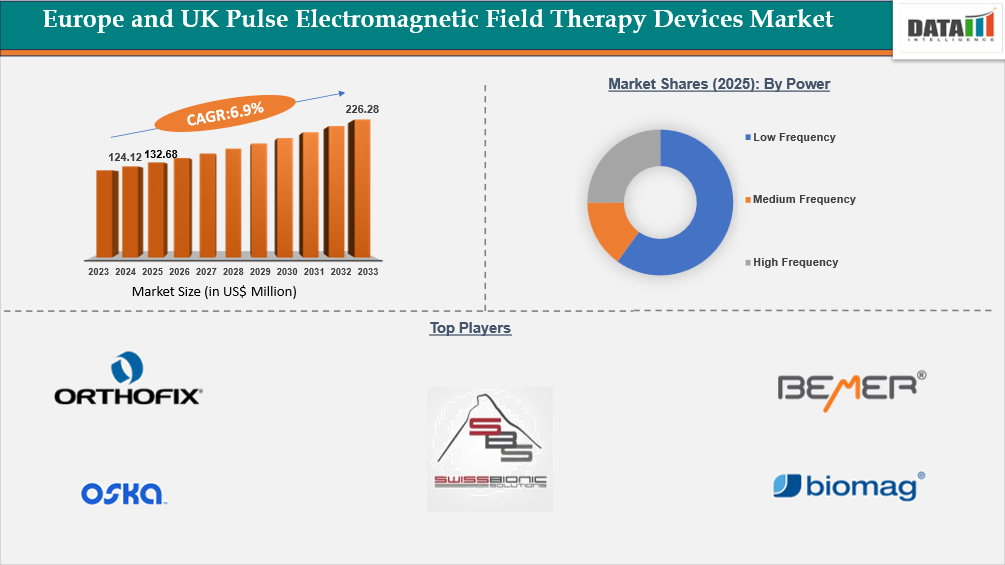
Europe and UK Pulse Electromagnetic Field Therapy Devices Market reached US$ 132.68 million in 2025 and is expected to reach US$ 226.28 million by 2033, growing with a CAGR of 6.9% during the forecast period 2026-2033. The Pulse Electromagnetic Field (PEMF) therapy devices market is poised for significant growth across Europe and the UK, driven by a confluence of demographic pressures, rising prevalence of musculoskeletal (MSK) disorders, chronic pain, demand for non-invasive treatment options, and increasing consumer and clinical interest in drug-free therapeutic modalities. PEMF devices, low-frequency, non-ionizing electromagnetic systems that stimulate cellular activity and reduce inflammation, are increasingly viewed as complementary tools to conventional pain management and rehabilitation approaches. The market is characterized by innovation in device miniaturization, an expanding portfolio of clinical evidence validating PEMF benefits, and growing adoption across home-use and institutional care settings.
The UK health landscape underscores a massive underlying clinical need that frames the opportunity for PEMF devices. According to NHS England, more than 20 million adults in the UK, nearly one-third of the population, live with an MSK condition such as arthritis, back pain, or joint disorders, making these conditions one of the most common causes of chronic pain and disability. MSK complaints are responsible for roughly 30% of all GP consultations in England, and the persistence of these conditions contributes to high societal costs through lost productivity and adaptation needs.
Europe and UK Pulse Electromagnetic Field Therapy Devices Industry Trends and Strategic Insights
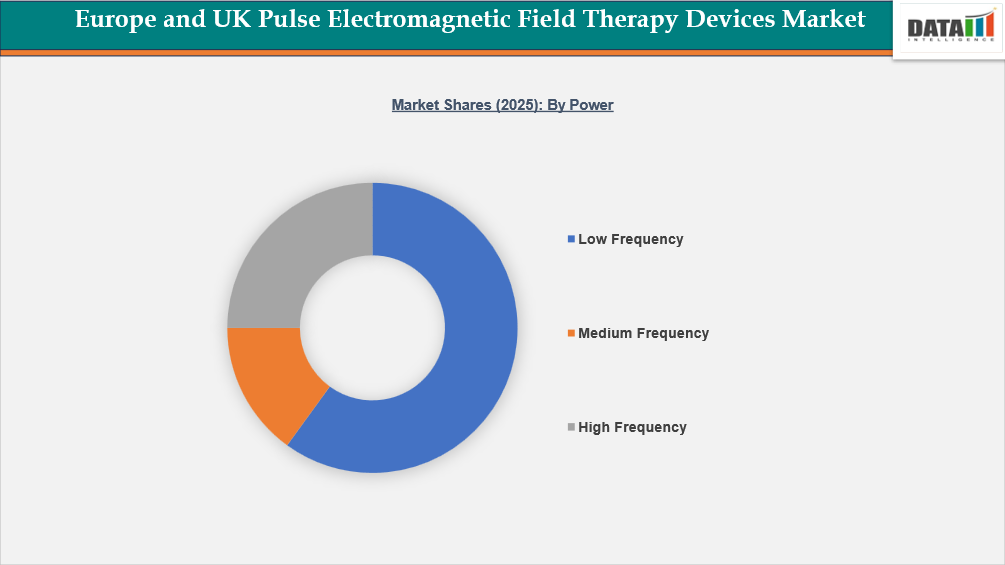
- By power, the low frequency is projected to be the largest market, holding a significant share of about 60% in 2025.
Europe and UK Pulse Electromagnetic Field Therapy Devices Market Size and Future Outlook
- 2025 Market Size: US$ 132.68 Million
- 2033 Projected Market Size: US$ 226.28 Million
- CAGR (2026-2033): 6.9%
Market Scope
| Metrics | Details |
| By Power | Low Frequency, Medium Frequency, High Frequency |
| By Application | Pain Management, Bone Healing, Depression and Anxiety, Sleep Disorders and Insomnia, Inflammation Reduction, Circulation Improvement, Sports Medicine and Performance, Others |
| By End-User | Hospitals, Specialty Clinics and Rehabilitation Centers, Home Care Settings, Sports and Fitness Centers, Others |
| Report Insights Covered | Competitive Landscape Analysis, Company Profile Analysis, Market Size, Share, Growth |
For More Detailed Information, Request for Sample
Market Dynamics
Chronic Pain Load Exceeding Conventional Care Capacity
The growing burden of chronic pain and musculoskeletal (MSK) conditions across Europe and the UK is exceeding conventional healthcare capacity, creating strong demand for non-pharmacological solutions such as PEMF therapy devices. In the UK, 17.9% of adults report long-term MSK conditions, while 34% of people in England experience persistent pain, and 12% suffer high-impact pain limiting daily activities. Across the EU, nearly 150 million individuals live with MSK disorders, making these conditions a leading cause of disability and primary care visits. Rising outpatient backlogs, long specialist wait times and increasing economic burden are pushing health systems toward preventive, patient-managed treatment models.
In response, NHS and European healthcare systems are accelerating the shift toward accessible, non-invasive therapies that can reduce dependency on conventional care pathways. Musculoskeletal disorders account for nearly 20% of total non-fatal disease burden in Europe and remain one of the largest contributors to community and outpatient waiting lists in the UK. This structural strain is increasing the attractiveness of home-based and clinic-based PEMF devices among patients, clinicians, and payers. As capacity pressures intensify, adoption of PEMF therapy devices continues to strengthen as a scalable alternative within Europe and the UK healthcare landscape
Inconsistent Clinical Acceptance Across Healthcare Providers
Despite rising interest in electromagnetic therapies, inconsistent clinical acceptance among healthcare providers continues to restrain the European and UK PEMF therapy devices market. Many randomized controlled trials conducted across European institutions involve small sample sizes and variable treatment protocols, limiting the development of definitive clinical recommendations. In the UK, the National Institute for Health and Care Excellence (NICE) has not endorsed PEMF therapy for routine musculoskeletal or chronic pain management, citing insufficient high-quality evidence and limited long-term outcome data. Without formal guideline inclusion, adoption within NHS pathways remains constrained, reducing large-scale public healthcare integration.
Regulatory and reimbursement complexities further intensify market challenges across Europe and the UK. EU MDR and UKCA frameworks require extensive clinical evaluation and post-market surveillance, increasing approval timelines and compliance costs, particularly for smaller manufacturers. Across Europe, fewer than one-quarter of non-pharmacological electro-physical therapies achieve consistent reimbursement due to variable clinical evidence. In the UK, most home-use PEMF devices are purchased out-of-pocket, limiting affordability and slowing broader clinical and consumer adoption despite growing patient demand.
Segmentation Analysis
The Europe and UK pulse electromagnetic field therapy devices market is segmented based on power, application, and end-user.
Growing Clinical Preference for Proven Bone Healing Solutions Driving Low-Frequency Leadership
The low-frequency segment is leading with over 60% market share in the Europe and UK pulsed electromagnetic field (PEMF) therapy devices market in 2025, driven by strong clinical validation in bone growth stimulation, fracture healing, and chronic musculoskeletal pain management. Demand exists due to its reliable therapeutic penetration, regulatory familiarity, and suitability for long-duration rehabilitation protocols, making it highly relevant for orthopedic clinics, physiotherapy centers, and post-surgical recovery programs. Its consistent performance outcomes and integration into standard treatment pathways across hospitals and specialty rehab centers reinforce its dominant revenue contribution.
Vendors are strengthening digital ecosystems and therapy monitoring capabilities to enhance patient adherence and treatment efficiency. For instance, in October 2025, Orthofix Medical Inc., a US-based medical device company, introduced a new Wellness Tab within its STIM onTrack mobile application to support bone growth therapy tracking and patient engagement. This innovation integrates wearable health metrics with PEMF therapy monitoring, directly addressing clinical needs for improved compliance and data-driven recovery management across European and UK healthcare facilities.
Rising Demand for Advanced Sports Recovery and Deep Tissue Stimulation Accelerating High-Frequency Segment Growth
The high-frequency segment is the fastest-growing category in the Europe and UK PEMF therapy devices market in 2025, supported by increasing adoption in sports medicine, neuromuscular rehabilitation, and premium wellness applications. Demand is expanding as high-frequency systems deliver stronger magnetic pulse intensity, shorter treatment durations, and enhanced tissue activation, which are critical for performance recovery clinics, athletic training centers, and specialized outpatient facilities seeking differentiated therapy outcomes. Though smaller in share compared to low-frequency devices, its performance-driven applications are driving rapid CAGR expansion.
Manufacturers are responding with next-generation high-intensity platforms tailored to evolving therapeutic expectations. For instance, in September 2024, STORZ Medical AG, a Switzerland-based medical technology company, launched the MAGNETOLITH ultra+, an advanced magneto transduction therapy system designed to enhance deep tissue stimulation and non-invasive pain treatment. This launch demonstrates how vendors are investing in high-performance electromagnetic technologies to meet growing demand from European and UK sports rehabilitation and specialty therapy markets.
Regulatory Analysis
Regulatory requirements for PEMF therapy devices in Europe and the UK have become significantly more stringent under the EU Medical Device Regulation (EU) 2017/745 (MDR) and the UKCA framework. In the European Union, active electromagnetic therapeutic devices typically fall under Class IIa (medium risk), requiring Notified Body conformity assessment, detailed technical documentation, clinical evaluation, risk management, and post-market surveillance before CE marking approval. MDR places stronger emphasis on clinical evidence, lifecycle traceability, and safety monitoring, increasing both compliance timelines and documentation rigor for manufacturers.
In the UK, devices placed on the Great Britain market must comply with UKCA marking requirements and register with the Medicines and Healthcare products Regulatory Agency (MHRA), with conformity assessment conducted by a UK-approved body where required. Manufacturers selling across both the EU and UK must manage dual compliance strategies, including CE and/or UKCA marking, authorized representative obligations, and ISO 13485 quality management alignment. While these frameworks raise entry barriers and regulatory costs, they strengthen patient safety, clinical validation standards, and long-term trust among healthcare providers and consumers.
Competitive Landscape
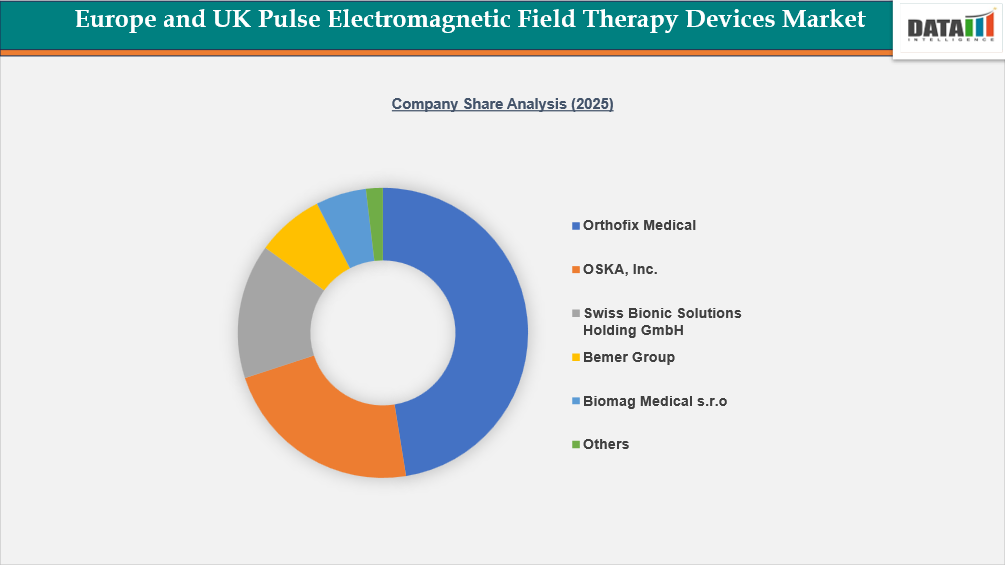
- The Europe and UK pulse electromagnetic field therapy devices market is characterized by a competitive landscape that includes both established and regional players.
- Key players include Orthofix Medical Inc., OSKA, Inc., Swiss Bionic Solutions Holding GmbH, Bemer Group, Biomag Medical s.r.o., BioElectronics Corporation, SOTA Instruments Inc., Curatronic Ltd., Oxford Medical Instruments Ltd. (OMI), Bedfont Scientific Ltd., Mechatronic Medical Engineers GmbH
Key Developments
- In 2024, Curatronic Ltd., a UK-based medical device company, introduced the Ultra-Flash PLUS super high-power PEMF device, enhancing its high-intensity therapy portfolio for advanced pain management, deep tissue stimulation, and musculoskeletal recovery applications.
- In 2025, Curatronic Ltd. introduced the Travel-Flash, a very high-intensity digital PEMF therapy device, expanding its product range with portable high-performance solutions designed for specialized therapeutic and recovery applications.
Why Choose DataM?
- Data-Driven Insights: Dive into detailed analyses with granular insights such as pricing, market shares, and value chain evaluations, enriched by interviews with industry leaders and disruptors.
- Post-Purchase Support and Expert Analyst Consultations: As a valued client, gain direct access to our expert analysts for personalized advice and strategic guidance, tailored to your specific needs and challenges.
- White Papers and Case Studies: Benefit quarterly from our in-depth studies related to your purchased titles, tailored to refine your operational and marketing strategies for maximum impact.
- Annual Updates on Purchased Reports: As an existing customer, enjoy the privilege of annual updates to your reports, ensuring you stay abreast of the latest market insights and technological advancements. Terms and conditions apply.
- Specialized Focus on Emerging Markets: DataM differentiates itself by delivering in-depth, specialized insights specifically for emerging markets, rather than offering generalized geographic overviews. This approach equips our clients with a nuanced understanding and actionable intelligence that are essential for navigating and succeeding in high-growth regions.
- Value of DataM Reports: Our reports offer specialized insights tailored to the latest trends and specific business inquiries. This personalized approach provides a deeper, strategic perspective, ensuring you receive the precise information necessary to make informed decisions. These insights complement and go beyond what is typically available in generic databases.
Target Audience 2026
- Manufacturers/ Buyers
- Industry Investors/Investment Bankers
- Research Professionals
- Emerging Companies


























































