

Ethylene Dichloride Market Size and Overview
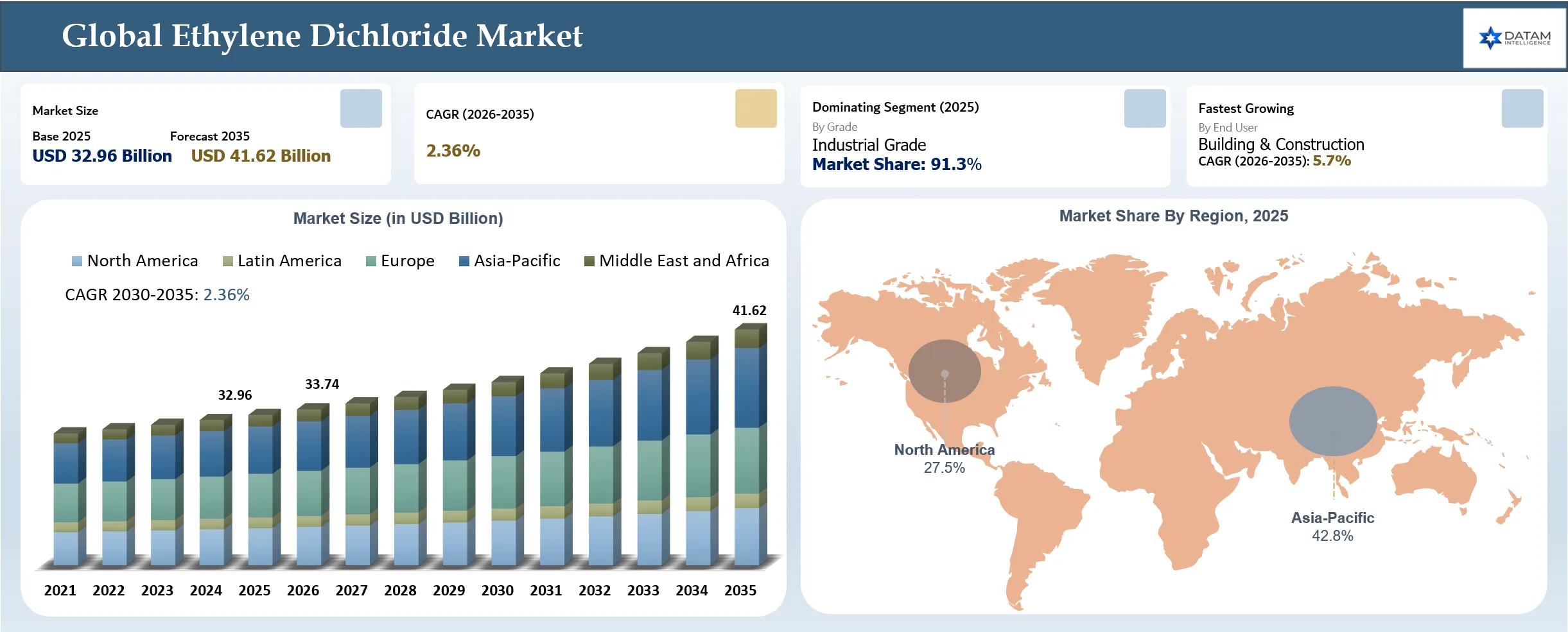
The global ethylene dichloride market reached USD 32.96 billion in 2025 and is expected to reach USD 41.62 billion by 2035, growing with a CAGR of 2.36% during the forecast period 2026-2035. The market expansion is primarily driven by EDC consumption in vinyl chloride monomer (VCM) production, which supplies the polyvinyl chloride (PVC) industry for pipes, fittings, building materials, and electrical cable insulators. Growth in the market is associated with the utilisation rates at the integrated EDC-VCM-PVC plants, ethylene and chlorine costs, and investments in the downstream vinyl industry.
Recent developments in 2025-2026 highlight capacity increases, long-term supply agreements, and supply-chain diversification in the region as key drivers of the ethylene dichloride industry. In May 2026, TA’ZIZ and Vinmar International signed a series of supply agreements worth about USD 1.79 billion over seven years, providing for the annual supply of over 300,000 tonnes of EDC and PVC, which would facilitate international supply routes in the future. Additionally, in February 2026, Chandra Asri Group of Indonesia informed that its chlor-alkali and EDC plant construction project was 50% complete. The plant is projected to have an EDC capacity of 500,000 tonnes per year; the start-up is scheduled for Q1 2027.
White-Space Opportunities for Domestic EDC Production Capacity Expansion and Integrated Chlor-Alkali Manufacturing
In June 2025, Chandra Asri Group, Danantara Indonesia, and Indonesia Investment Authority (INA) made plans concerning the development of a USD 800 million Chlor-Alkali-Ethylene Dichloride (CA-EDC) facility in Cilegon, Indonesia, to enhance the local manufacture of chemicals while minimising the reliance on chemicals that must be sourced from overseas. The biggest investment opportunity would be in the integration of EDC and chlor-alkali production with 500,000 tonnes of EDC capacity and 400,000 tonnes of solid caustic soda capacity per year.
In March 2026, Danantara and INA agreed to make an investment of USD 200 million, constituting 25% of the total investment. The project also provides investment opportunities in chemical processing machinery, engineering of the plant, industrial utilities, storage facilities, port facilities, and chemical transport facilities.
The investment would lead to the creation of business opportunities along the EDC and chlor-alkali value chains. The group Chandra Asri, via its affiliate company, PT Chandra Asri Alkali, would stand to gain as a result of the development and operations of the plant, which would help in enhancing its capacity for EDC and caustic soda production.
PT Asahimas Chemical, an integrated producer of chlor-alkali, EDC, VCM and PVC, may gain from the growth of the downstream vinyl chemicals industry in Indonesia. PT Sulfindo Adiusaha, which produces caustic soda, EDC, VCM and PVC, may also benefit from rising demand for these chemicals.
Ethylene Dichloride Market Key Takeaways
- Asia-Pacific was the largest regional market in 2025, accounting for a 42.8% share of global EDC demand. The region benefits from extensive integrated chlor-vinyl production infrastructure and strong downstream construction demand.
- The industrial-grade EDC segment dominated the global market in 2025 with a 91.3% market share. This high share is driven by massive consumption needs in large-scale vinyl chloride monomer (VCM) and PVC manufacturing.
- In May 2026, TA’ZIZ and Vinmar International executed supply agreements worth approximately USD 1.79 billion over seven years. The agreement covers the annual supply of over 300,000 tonnes of EDC and PVC to support international trade routes.
- Danantara Indonesia and the Indonesia Investment Authority (INA) agreed in March 2026 to invest USD 200 million into the USD 800 million Cilegon CA-EDC facility. The investment constitutes a 25% equity stake in the project to reduce overseas chemical reliance.
Ethylene Dichloride Market Industry Trends and Strategic Insight
- Capacity Localization and Regional Supply-Chain Diversification. New production investments are creating opportunities to reduce dependence on imported EDC and strengthen local supply, with Indonesia’s CA-EDC project illustrating efforts to establish domestic industrial feedstock capacity.
- Asset Consolidation to Protect Strategic Production Capacity. Acquisitions and restructuring of EDC assets are becoming important strategies for maintaining operational continuity and integrating upstream chlor-alkali production with downstream chemical supply. INEOS Inovyn’s proposed acquisition of the Runcorn EDC assets illustrates this trend.
- Stronger Alignment Between EDC Output and Downstream PVC Demand. Since EDC consumption is heavily concentrated in VCM production, manufacturers are increasingly aligning output, maintenance schedules, and customer contracts with downstream PVC operating conditions and order volumes.
- Shift Toward Integrated and Feedstock-Optimized Production. Manufacturers are prioritizing integration between ethylene, chlorine, EDC, VCM, and PVC operations to manage feedstock costs, improve process efficiency, and align production with downstream demand.
Ethylene Dichloride Market Scope
| Metrics | Details | |
| 2025 Market Size | USD 32.96 Billion | |
| 2035 Projected Market Size | USD 41.62 Billion | |
| CAGR (2026-2035) | 2.36% | |
| Largest Market | Asia-Pacific | |
| Fastest Growing Market | Asia-Pacific | |
| By Grade | Industrial Grade (Below 99.5% Purity), Technical Grade (99.5% to Below 99.9% Purity), High-Purity Grade (99.9% Purity and Above) | |
| By Production Process | Direct Chlorination, Oxychlorination | |
| By Application | Vinyl Chloride Monomer (VCM), Ethyleneamines, Chlorinated Solvents, Others | |
| By End-Use | Building & Construction, Automotive & Transportation, Electrical & Electronics, Packaging, Healthcare & Medical, Consumer Goods & Household Products, Agriculture, Others | |
| By Region | North America | U.S., Canada, Mexico |
| Europe | Germany, UK, France, Spain, Italy, Poland, Netherlands, Switzerland | |
| Asia-Pacific | China, India, Japan, Australia, South Korea, Indonesia, Malaysia | |
| Latin America | Brazil, Argentina | |
| Middle East and Africa | UAE, Saudi Arabia, South Africa, Israel, Türkiye | |
| Report Insights Covered | Competitive Landscape Analysis, Company Profile Analysis, Market Size, Share, Growth | |
Ethylene Dichloride Market Disruption Analysis
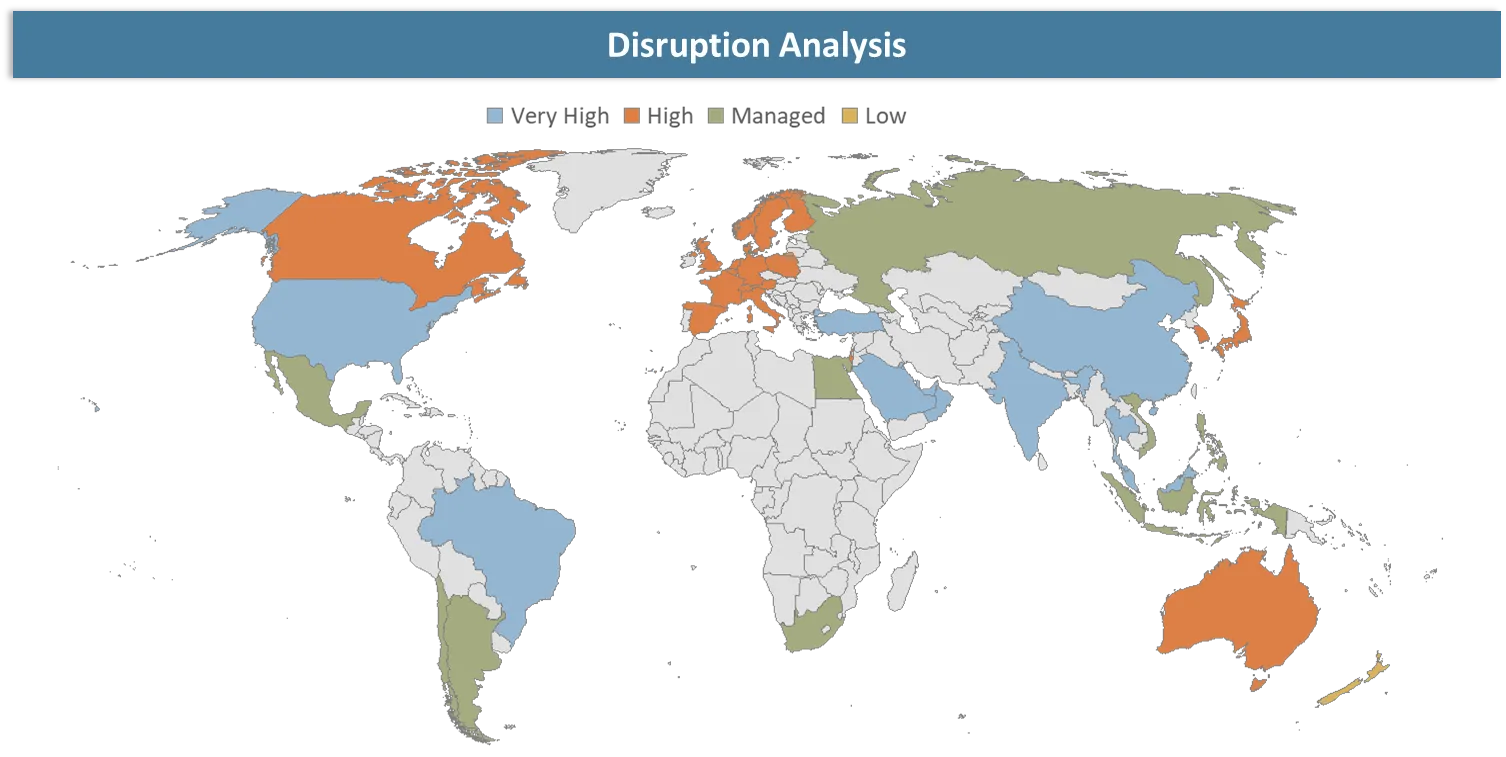
Regional Capacity Expansion and Supply-Chain Realignment Reshaping the Ethylene Dichloride Market
The disruption in the ethylene dichloride (EDC) market is primarily driven by regional capacity additions and a move to lessen dependence on foreign chemicals used in industries. The Southeast Asian countries have been building up their own chemical production capacities by constructing chlor-alkali and EDC production plants, which will affect the current supply chain and procurement methods in the region. The development will lead to stiff competition among existing exporters while at the same time motivating producers to create value addition by securing supplies to VCM and PVC producers.
Moreover, as per ICIS, in February 2026, construction of the Chlor-Alkali - EDC plant by the Chandra Asri Group in Cilegon, Indonesia was complete up to 50%, with commercial production to commence in the first quarter of 2027. The project entails an annual capacity of 500,000 tonnes of EDC, and the company estimated that EDC exports would earn foreign exchange revenue of around IDR 5 trillion (USD 277.24 million). Such developments show how new capacities in the region can affect Southeast Asian trade flows and how they might make Indonesia a new EDC exporter.
Ethylene Dichloride Market BCG Matrix: Company Evaluation
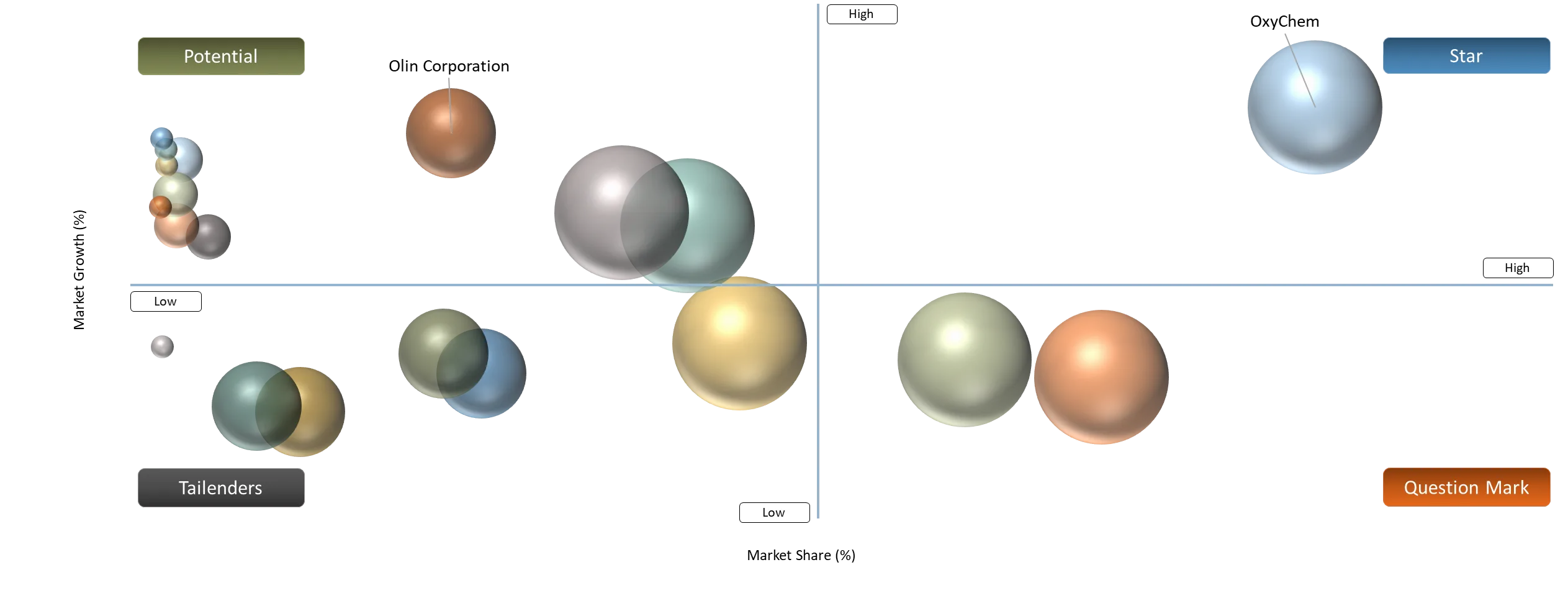
Stars include OxyChem, Dow Inc., and Westlake Corporation, supported by their established chlor-vinyl operations, integrated production capabilities, and strong positions in the North American ethylene dichloride (EDC) supply chain. Question Marks include Formosa Plastics Corporation, INEOS Group, and Sinopec, which have significant petrochemical and chlor-vinyl capabilities across major manufacturing regions but face different regional cost structures, capacity pressures, and competitive conditions.
Potential includes Olin Corporation, Shin-Etsu Chemical Co., Ltd., and Hanwha Solutions Corporation. Tailenders include Tosoh Corporation, Asahimas Chemical, and BASF SE, whose relative positioning in the global EDC market is more limited or less directly comparable with the largest integrated EDC producers.
Ethylene Dichloride Market Dynamics
Driver Impact Analysis
| Driver | Market Growth Impact (%) | Demand Concentration | Impacted Use Case | Strategic Impact |
Increasing Adoption of Long-Term EDC Supply Agreements to Strengthen Global Feedstock Security | 12% | North America, Asia-Pacific, Middle East | Long-term EDC procurement for VCM and PVC manufacturing | Strengthens demand visibility, secures feedstock availability, and improves production planning through multi-year offtake agreements. |
Rising PVC Manufacturing Requirements to Drive EDC Feedstock Consumption | 20% | Asia-Pacific, North America, Europe | EDC conversion into VCM for PVC production used in construction, pipes, fittings, and infrastructure | Supports sustained EDC consumption, increases integrated plant utilisation, and links market growth to downstream PVC demand. |
Strategic Acquisitions to Strengthen EDC Production Continuity and Supply Reliability | 8% | Europe, North America, Asia-Pacific | EDC production asset consolidation and integrated chlor-vinyl operations | Improves asset utilization, strengthens operational continuity, and enables producers to optimize production costs and regional supply networks. |
Increasing International Partnerships to Expand Global EDC Distribution and Market Access | 10% | Middle East, Asia-Pacific, Europe | Cross-border EDC supply, export agreements, and downstream PVC manufacturing | Expands export channels, secures long-term customers, diversifies supply sources, and improves access to emerging regional markets. |
Increasing Adoption of Long-Term EDC Supply Agreements to Strengthen Global Feedstock Security
The increasing adoption of long-term supply contracts is turning out to be one of the major factors that will influence the ethylene dichloride (EDC) market because companies want a reliable supply of raw materials for their operations. Since EDC plays a very crucial role in the manufacturing of VCM and PVC, it becomes easier for downstream manufacturers to plan with the help of such long-term supply contracts. By this, even upcoming chemical companies can secure customers before beginning operations.
Long-term offtake agreements are enhancing international trade in EDCs by creating a steady demand base for the new production capacities and increasing reliability of supply for the downstream PVC producers. In November 2025, TA’ZIZ and The Sanmar Group signed two product-sale agreement term sheets related to the supply of over 350,000 tonnes per year of ethylene dichloride (EDC) and vinyl chloride monomer (VCM), under terms of agreement with ten-year terms, according to ADNOC. These chemicals will be used by Sanmar’s PVC production plants located in Port Said, Egypt, and Cuddalore, India. It should be noted that this deal represents the first exports of EDC and VCM from the UAE.
Restraint Impact Analysis
| Restraint | Drag on Market Growth (%) | Primary Impact Area | Impacted Use Case | Strategic Impact |
Stringent Environmental and Occupational Safety Requirements Increasing Compliance Costs | 8% | North America and Europe | EDC production, chemical handling, emissions control, and downstream VCM manufacturing | Increases compliance expenditure, requires investment in worker-protection systems, and may reduce margins at older production facilities. |
Geopolitical Conflicts and Shipping Disruptions Restricting International EDC Trade | 7% | Europe, Asia-Pacific, and the Middle East | Cross-border EDC transportation, import procurement, and VCM/PVC feedstock supply | Raises freight and insurance costs, extends delivery timelines, and encourages regional sourcing and supply diversification. |
High Capital Requirements and Long Construction Timelines Restricting EDC Capacity Expansion | 10% | Asia-Pacific, North America, and Europe | Construction of integrated chlor-alkali–EDC facilities and expansion of VCM production capacity | Delays new capacity additions, increases project-financing exposure, and favors established producers with integrated assets and stronger capital resources. |
Volatility in Ethylene and Chlorine Feedstock Prices Increasing EDC Production Costs | 9% | Asia-Pacific, North America, and Europe | EDC production through direct chlorination and oxychlorination processes | Creates margin uncertainty, complicates procurement planning, and strengthens the competitive advantage of producers with integrated feedstock operations and long-term supply contracts. |
Stringent Environmental and Occupational Safety Requirements Increasing Compliance Costs
The presence of high standards in terms of environmental protection and workplace safety is another key barrier to the way of development of the EDC market, since the production of EDC entails the use of dangerous materials like chlorine, which requires tight controls in terms of emissions, process safety, personnel safety, and industrial wastewater. The need for additional costs related to the provision of containment and detection devices, monitoring, protective clothing, etc., and the costs associated with it are rather high for older and less integrated facilities.
In January 2025, the U.S. Environmental Protection Agency (EPA) released the draft scope of the risk evaluation on vinyl chloride under the TSCA, which includes manufacturing, processing, distribution, industrial and commercial uses, and disposal of the chemical. Vinyl chloride was selected as a high-priority chemical by the EPA in December 2024, based on the production volume between 10 billion and less than 20 billion pounds per year reported in the 2016 Chemical Data Reporting data by the agency. The EPA has also determined that vinyl chloride is a known human carcinogen linked with the development of liver cancer in people who have been exposed to the compound.
Ethylene Dichloride Market Segmentation Analysis
The global ethylene dichloride market is segmented based on grade, production process, application, end-use, and region.
Industrial Grade EDC Dominance Driven by Large-Scale VCM and PVC Manufacturing
The industrial-grade segment is dominating the ethylene dichloride (EDC) market, with a market share of 91.3% in 2025, since the use of EDC is mainly as an intermediate in the VCM manufacturing process that produces polyvinyl chloride (PVC). The demand from building materials, pipes, fittings, window profiles, cables, and packaging require large quantities of EDC with specifications suitable for industrial chemical processing. The heavy reliance in the market on industrial scale application rather than specialty high purity applications.
In March 2026, Shintech announced an investment of USD 3.4 billion to expand its integrated chemical manufacturing operations in the Plaquemine, Louisiana, United States. The project will boost the annual capacity of the production of ethylene by 625,000 tons, VCM by 500,000 tons, and caustic soda by 310,000 tons with the estimated project completion date at the end of 2030. Moreover, according to the company, the demand for PVC globally is projected to rise by more than 750,000 tons per year over the next five years. The significance of large-scale supply chains of EDC and VCM is stressed, as EDC is the intermediate product in VCM production.
Ethylene Dichloride Market Geographical Penetration
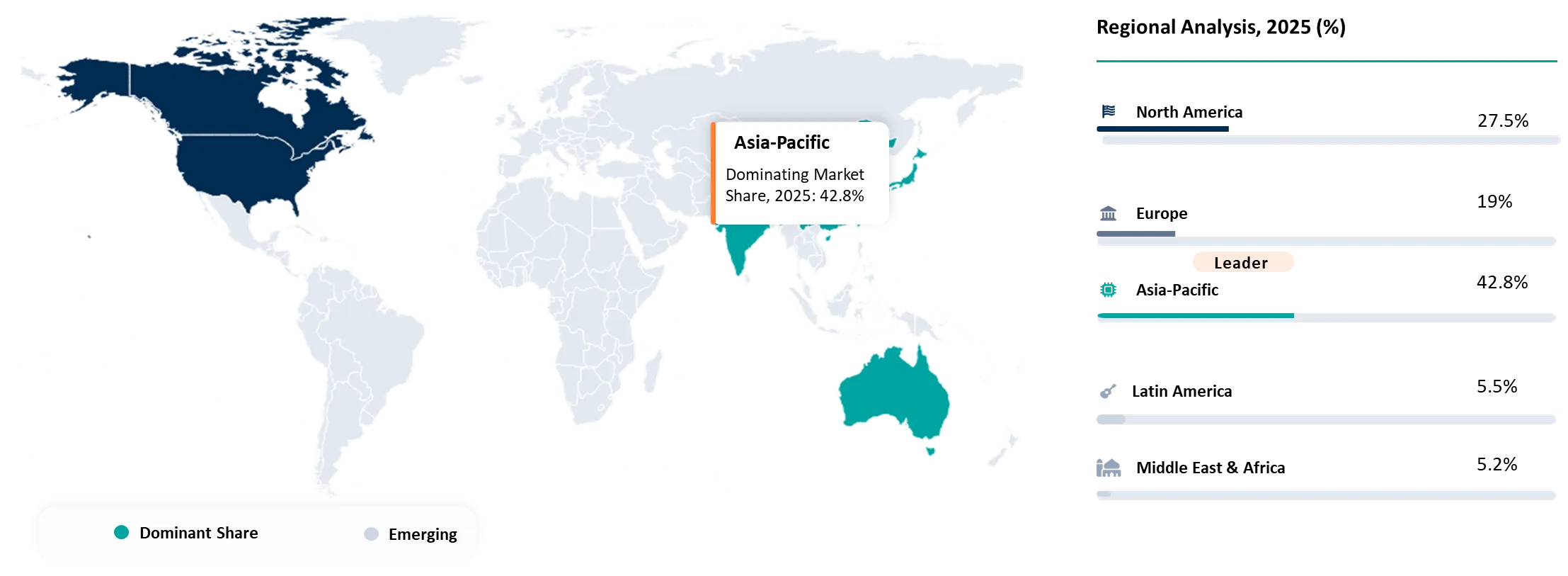
Asia-Pacific EDC Market Dominance Driven by Integrated Vinyl Production and Regional Capacity Expansion
Asia-Pacific is the dominant region in the ethylene dichloride (EDC) market, with a market share of 42.8% in 2025, owing to its strong PVC industry base, huge industrial chemicals industry, and high demand for building materials, piping, packaging, and electricals. The synergy between the chlor-alkali, EDC, VCM, and PVC sectors has facilitated large-scale manufacturing and improved supply chains. However, country-specific dynamics exist in the market concerning capacity expansion, import dependency, and demand for PVC.
Indonesia’s EDC production capacity is expanding through the development of large-scale integrated chlor-alkali and petrochemical infrastructure. In September 2025, Chandra Asri Group, an Indonesian integrated petrochemical, chemical, and infrastructure company, announced that construction of its Chlor-Alkali–Ethylene Dichloride (CA-EDC) plant in Cilegon, Indonesia, had reached 33% completion. The facility is managed by subsidiary PT Chandra Asri Alkali (CAA), an Indonesian chemical manufacturing company, and is designed to produce 500,000 tonnes of EDC and 400,000 tonnes of solid caustic soda annually.
China Ethylene Dichloride Market Trends
China holds a dominating position in the Asia-Pacific ethylene dichloride (EDC) market is attributed to its huge capacity in PVC manufacturing, large-scale chemical industry infrastructure, and increased integration of ethylene-based VCM and PVC plants. China’s industrialised sector allows for a huge demand for EDC as one of the important intermediates in the production of VCM, but it should be noted that a considerable amount of China’s PVC is produced through the calcium carbide process, where there is no need for EDC.
In September 2026, thyssenkrupp nucera AG & Co. KGaA, a Germany-based electrolysis technology and engineering company, secured a chlor-alkali technology order in the low double-digit million-euro range from Hongniu Lanzhou Environmental Protection Technology, a China-based environmental technology and chemical manufacturing company and wholly owned subsidiary of Jiangsu Hongniu. The project in Northwest China includes licensing, engineering, procurement services, key equipment supply, and commissioning supervision using thyssenkrupp nucera’s e-BiTAC v7 electrolysis technology, which achieves power consumption below 1,960 kWh per tonne of sodium hydroxide at 6 kA/m².
Japan Ethylene Dichloride Market Outlook
Japan is one of the major countries in the Asia-Pacific ethylene dichloride market and benefits from the presence of the mature petrochemical industry in the country, along with integrated chemical production plants. The demand in vinyl chloride monomer (VCM) and polyvinyl chloride (PVC). The usage of EDC as an intermediate in the vinyl production chain provides materials that can be used in construction, pipes, electrical wiring, and other industrial applications.
Japan’s major chemical manufacturers are restructuring ethylene production to improve operational efficiency and accelerate industrial decarbonization. In September 2025, Asahi Kasei Corporation, Mitsui Chemicals, Inc., and Mitsubishi Chemical Corporation, all Japan-based chemical manufacturers, established Setouchi Ethylene LLP to optimise ethylene production and advance decarbonization at two ethylene manufacturing facilities in western Japan. The partnership has a paid-in capital of JPY 1.5 million (USD 9,485), contributed equally by the three companies, and targets production optimization and carbon-neutral operations by 2030.
U.S. Ethylene Dichloride Market Trends
The U.S. hold a dominant position in the North American ethylene dichloride market and remains an influential nation within the Ethylene Dichloride (EDC) Market due to its petrochemical infrastructure, competitive cost of ethylene feedstocks, and existing EDC-VCM-PVC chains of production. The chemical manufacturing belt in the Gulf Coast region, especially Louisiana and Texas, is home to companies that manufacture products meant for the local PVC market as well as export markets.
Strategic consolidation among U.S. chemical manufacturers is reshaping the North American chlor-alkali and vinyls value chain. In June 2026, Olin Corporation and Huntsman Corporation, U.S.-based companies, announced a proposed all-stock merger of equals to create OlinHuntsman Corporation, an integrated North American chemicals company with approximately USD 12.5 billion in combined 2025 revenue. Olin manufactures chlorine, caustic soda, vinyls, and chlorinated organic chemicals, while Huntsman produces diversified speciality chemicals, polyurethane systems, and advanced materials.
Ethylene Dichloride Market Competitive Landscape
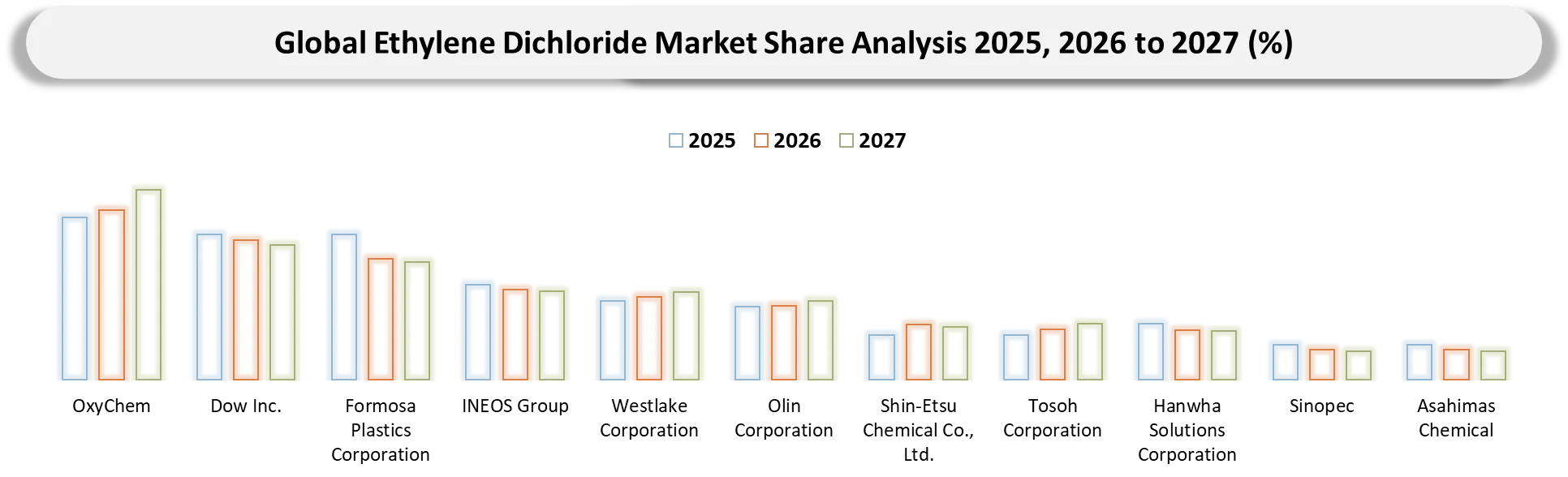
- In the ethylene dichloride (EDC) market, there are three main participants: integrated chlor-vinyl producers, petrochemical companies producing on a large scale, and regional chemical manufacturers for downstream businesses. OxyChem, Dow Inc., Westlake Corporation, Olin Corporation, and Shin-Etsu Chemical Co., Ltd. have an integrated chain of chemical businesses comprising EDC, Vinyl Chloride Monomer (VCM), and Polyvinyl Chloride (PVC). Companies like Formosa Plastics Corporation, INEOS Group, Sinopec, Tosoh Corporation, Hanwha Solutions Corporation, Asahimas Chemical, and BASF SE are engaged in this business via a mix of petrochemicals, chlor-alkali production, vinyl, and other downstream chemical businesses.
- Key players include OxyChem (United States); Dow Inc. (United States); Formosa Plastics Corporation (Taiwan); INEOS Group (United Kingdom); Westlake Corporation (United States); Olin Corporation (United States); Shin-Etsu Chemical Co., Ltd. (Japan); Tosoh Corporation (Japan); Hanwha Solutions Corporation (South Korea); Sinopec (China); Asahimas Chemical (Indonesia); and BASF SE (Germany).
Key Developments
- August 2026: INEOS Inovyn, a UK-based chlor-alkali and vinyl chemicals manufacturer, agreed to acquire the UK’s only ethylene dichloride (EDC) production asset at Runcorn from Vynova Runcorn Limited, a UK-based subsidiary of the Belgium-based Vynova Group, which entered administration in 2025.
- May 2026: TA’ZIZ, a UAE-based chemicals and industrial manufacturing joint venture between ADNOC and ADQ, announced long-term offtake, feedstock, and sales agreements valued at USD 28.5 billion (AED 104.6 billion), covering chemicals including ethylene dichloride (EDC), vinyl chloride monomer (VCM), polyvinyl chloride (PVC), and caustic soda.
- November 2025: Olin Corporation, a U.S.-based chlor-alkali and vinyl chemicals manufacturer, announced a strategic partnership with Braskem S.A., a Brazil-based petrochemical and plastics manufacturer, through a long-term agreement for Olin to supply ethylene dichloride (EDC) to support Braskem’s chlor-alkali and vinyl operations in Brazil.
- September 2026: PT Chandra Asri Alkali (CAA), an Indonesia-based chemical manufacturing company and subsidiary of PT Chandra Asri Pacific Tbk (Chandra Asri Group), reported that its Chlor-Alkali and Ethylene Dichloride (CA-EDC) plant in Cilegon, Indonesia, had reached approximately 80% construction completion, with main equipment installation underway.
Key Procurement Priorities and Buyer Evaluation Criteria
- Organisations that purchase ethylene dichloride (EDC) intend to partner with suppliers that can provide them with high quality of the product, sufficient amounts, affordable pricing, and delivery services to help them manufacture VCM and PVC.
- The cost fluctuations in relation to ethylene and chlorine feedstocks, availability of EDC in the region, production capacity, and logistics will greatly influence the procurement process, particularly for those manufacturers that have a big chemical production facility.
- The purchasing organisation will evaluate its suppliers based on the following criteria. purity of the EDC, specification compliance, product consistency, impurity content, quality control, regulatory compliance, chemical handling, storage, and technical data.
Why Choose DataM?
- Technological Innovations: Examines advancements in EDC production processes, including direct chlorination, oxychlorination, process optimization, energy efficiency, and emissions-control technologies, helping assess improvements in production reliability and operating performance.
- Product Performance & Market Positioning: Evaluates EDC producers based on product purity, specification consistency, production capacity, feedstock integration, cost efficiency, and supply reliability, highlighting competitive advantages across industrial-grade and high-purity applications.
- Real-World Evidence: Assesses EDC demand across VCM manufacturing, PVC production, chlorinated solvents, and other industrial applications, connecting downstream demand from construction, automotive, electrical and electronics, packaging, and consumer products with market performance.
- Market Updates & Industry Changes: Tracks 2025–2026 developments, including new capacity investments, integrated petrochemical expansions, long-term supply agreements, and regional production projects that influence EDC availability, trade flows, and procurement strategies.
- Competitive Strategies: Analyzes how leading companies, including OxyChem, Dow Inc., Formosa Plastics Corporation, INEOS Group, Westlake Corporation, Olin Corporation, and Shin-Etsu Chemical Co., Ltd., strengthen their positions through vertical integration, capacity expansion, operational efficiency, and downstream VCM/PVC investments.
- Pricing & Market Access: Examines the influence of ethylene and chlorine costs, energy prices, transportation, storage, contractual terms, and regional supply-demand conditions on EDC pricing, while assessing procurement through direct producer contracts, integrated chemical facilities, and international supply channels.
- Market Entry & Expansion: Identifies opportunities associated with emerging regional capacity, growing PVC demand, import substitution, and integrated chemical manufacturing, while evaluating market-entry strategies based on feedstock availability, capital investment, environmental compliance, logistics infrastructure, and access to downstream customers.
Target Audience 2026
- Ethylene Dichloride (EDC) Manufacturers and Producers
- Vinyl Chloride Monomer (VCM) and Polyvinyl Chloride (PVC) Manufacturers
- Petrochemical and Chlor-Alkali Companies
- Ethylene and Chlorine Feedstock Suppliers
- Industrial Chemical Distributors and Traders
- Chemical Processing Equipment and Technology Providers
- Building and Construction Materials Manufacturers