


Essential Thrombocythemia Therapeutics Market Size and Overview
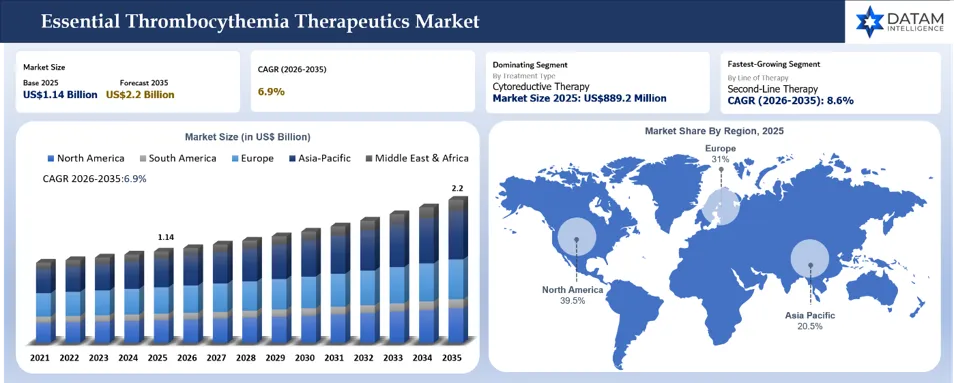
The global essential thrombocythemia therapeutics market reached US$1.14 billion in 2025 and is expected to reach US$2.2 billion by 2035, growing with a CAGR of 6.9%during the forecast period 2026-2035.
The global essential thrombocythemia therapeutics market is evolving from a treatment landscape dominated by conventional cytoreductive agents toward a more differentiated mix of long-acting interferons, mutation-directed therapies and potential disease-modifying approaches. Growth is supported by rising diagnosis, increasing treatment of high-risk patients, long-term therapy requirements and greater use of molecular testing for JAK2, CALR and MPL mutations.
Hydroxyurea and anagrelide remain important treatment options because of established physician familiarity, broad availability and long-standing use in platelet-count control and thrombosis-risk management. However, the competitive landscape is changing as interferon-based therapies gain greater clinical relevance and companies advance novel agents for hydroxyurea-resistant or intolerant patients. The 2026 U.S. approval of BESREMi strengthened the role of long-acting interferon therapy in essential thrombocythemia, while emerging programs such as INCA033989, dencatistat, iadademstat and JBI-802 are increasing focus on molecular response, disease modification and biomarker-defined treatment.
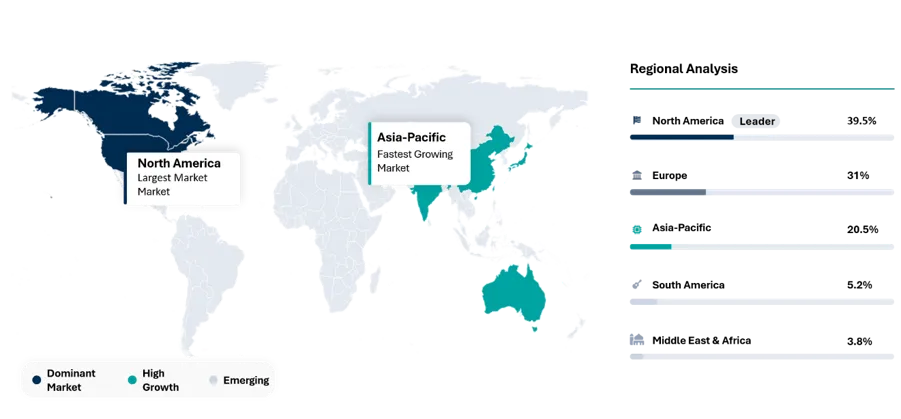
Future market competition is expected to center on durable hematologic response, thrombosis prevention, molecular response, long-term tolerability, dosing convenience and evidence of delayed disease progression. North America remains the leading regional market, while Europe and Asia-Pacific offer significant expansion potential as specialist hematology access, molecular diagnostics and availability of advanced therapies improve.
Essential Thrombocythemia Therapeutics Market Key Takeaways
- Sustained Market Expansion Through 2035: The global Essential Thrombocythemia Therapeutics Market was valued at US$1.14 billion in 2025 and is projected to reach US$2.2 billion by 2035, registering a CAGR of 6.9% during 2026-2035, supported by rising diagnosis, long-term treatment demand, wider use of interferon-based therapies and development of mutation-directed treatments.
Interferon-Based Therapy Gains Strategic Importance: Long-acting interferons are becoming increasingly important within essential thrombocythemia management, particularly as BESREMi expands the role of differentiated disease-controlling therapy beyond conventional hydroxyurea and anagrelide.
Mutation-Directed Therapy Emerges as a Major Growth Engine: Development of therapies targeting mutant CALR, JAK2-driven disease and other molecular mechanisms is expected to become a major source of future market expansion as treatment moves toward biomarker-defined patient populations and potential disease modification
- North America Maintains Regional Dominance: North America is expected to retain the largest share of the global Essential Thrombocythemia Therapeutics Market, supported by strong hematology infrastructure, broad molecular-testing access, high healthcare expenditure, early adoption of novel therapies and favorable commercialization conditions
- Durability, Thrombosis Prevention and Disease Modification Reshape Competitive Strategy: Future market leadership will increasingly depend on durable hematologic response, reduction in thrombotic risk, molecular response, long-term tolerability, convenient dosing and evidence of delayed disease progression. Emerging targeted therapies and long-acting formulations could materially reshape treatment sequencing relative to established cytoreductive therapies.
Essential Thrombocythemia Therapeutics Market Industry Trends and Strategic Insights
- The essential thrombocythaemia therapeutics market is transitioning from long-standing dependence on hydroxyurea, anagrelide and conventional interferon approaches toward more durable interferon-based treatment and molecularly targeted therapies that address underlying disease biology rather than platelet reduction alone.
- BESREMi (ropeginterferon alfa-2b-njft) strengthened the commercial treatment landscape following its August 2026 U.S. approval for adults with essential thrombocythaemia, expanding the role of long-acting interferon therapy and increasing competition with established cytoreductive agents such as hydroxyurea and anagrelide.
- Treatment development is increasingly shifting toward mutation-defined patient populations, particularly CALR-mutated and JAK2-driven disease. Incyte’s INCA033989 has advanced into a registrational Phase III study in previously treated mutant-CALR-positive essential thrombocythaemia, highlighting the emerging potential for mutation-specific disease-modifying therapy
- Commercial differentiation is expected to move beyond platelet normalization toward durable hematologic response, reduction in thrombotic risk, molecular response, treatment tolerability, dosing convenience and ability to delay disease progression. Therapies capable of demonstrating meaningful reductions in mutant allele burden could materially reshape treatment sequencing.
- Sustainable competitive advantage will increasingly depend on addressing hydroxyurea-resistant or intolerant patients, high-risk disease and molecularly defined subgroups while offering long treatment durability, manageable toxicity and convenient chronic administration. Companies generating evidence of disease modification and improved long-term thrombosis prevention are likely to strengthen physician adoption and payer positioning.
Essential Thrombocythemia Therapeutics Market Scope
| Metrics | Details | |
| 2025 Market Size | US$1.14 Billion | |
| 2035 Projected Market Size | US$2.2Billion | |
| CAGR (2026-2035) | 6.9% | |
| Largest Market | North America | |
| Fastest Growing Market | Asia-Pacific | |
| By Treatment Type | Cytoreductive Therapy and Antiplatelet Therapy | |
| By Line of Therapy | First-line Therapy, Second-line Therapy and Third-line and Later Therapy | |
| By Risk Stratification | Very Low Risk, Low Risk, Intermediate Risk and High Risk | |
| By Molecular Target | JAK2, Mutant CALR, MPL, Telomerase and Other Molecular Targets | |
| By Mutation Status | JAK2-mutated, CALR-mutated, MPL-mutated, Triple-negative and Other Mutation Profiles | |
| By Prescription Type | Branded Drugs and Generic Drugs | |
| By Route of Administration | Oral and Injectable | |
| By Age Group | 18-39 Years, 40-59 Years, 60-74 Years and 75 Years and Above | |
| By Treatment Setting | Hospitals, Specialty Clinics, Outpatient Centers and Other Treatment Settings | |
| By Distribution Channel | Hospital Pharmacies, Retail Pharmacies, Specialty Pharmacies, Online Pharmacies and Other Distribution Channels | |
| By Treatment Type | Cytoreductive Therapy and Antiplatelet Therapy | |
| By Region | North America | U.S., Canada, Mexico |
| Europe | Germany, UK, France, Spain, Italy, Poland | |
| Asia-Pacific | China, India, Japan, Australia, South Korea, Indonesia, Malaysia, Singapore, Vietnam, Thailand, Philippines, Taiwan | |
| South America | Brazil, Argentina | |
| Middle East and Africa | Israel, Saudi Arabia, UAE, Turkiye, South Africa, Nigeria | |
| Report Insights Covered | Competitive Landscape Analysis, Company Profile Analysis, Market Size, Share, Growth | |
Why does this report matter in 2026?
The global essential thrombocythaemia therapeutics market reached a major strategic inflection point in 2026 as treatment began shifting from long-established cytoreductive approaches toward longer-acting interferon therapy and mutation-directed disease modification. On August 28, 2026, the U.S. FDA approved BESREMi (ropeginterferon alfa-2b-njft) for the treatment of adults with essential thrombocythaemia, based on the SURPASS-ET study comparing BESREMi with anagrelide. The approval expands the commercial role of interferon-based therapy in ET and introduces a differentiated option alongside hydroxyurea and anagrelide.
Competitive intensity is also increasing as development moves beyond platelet-count control toward therapies capable of targeting the underlying molecular drivers of disease. Incyte’s INCA033989, a first-in-class mutant CALR-targeted monoclonal antibody, demonstrated an 87% hematologic response rate in ET patients in 2026, including 70% complete responses, and is advancing into the Phase III EXCALIBUR-ET2 study in previously treated mutant-CALR-positive ET.
The market is therefore evolving toward a more differentiated treatment landscape in which commercial success will increasingly depend on durable hematologic control, thrombosis-risk reduction, molecular response, disease-modifying potential, tolerability and convenient long-term administration. The emergence of mutation-specific therapies alongside newly approved long-acting interferons makes 2026 a particularly important year for evaluating competitive positioning, treatment sequencing and future market opportunities in essential thrombocythaemia therapeutics.
Essential Thrombocythemia Therapeutics Market White Space & Investment Opportunities
- Earlier-Line Disease-Modifying Therapy: Expand beyond hydroxyurea and anagrelide toward therapies capable of producing durable hematologic and molecular responses in earlier treatment settings, particularly among high-risk and treatment-intolerant patients.
- Mutation-Specific Therapeutics: Invest in therapies targeting mutant CALR and other disease-driving mutations. INCA033989 has demonstrated rapid hematologic and molecular responses in mutant-CALR-positive essential thrombocythaemia and entered Phase III development in 2026, validating mutation-directed treatment as a major emerging opportunity.
- Hydroxyurea-Resistant and Intolerant Population: Develop differentiated therapies for patients inadequately controlled by, resistant to or intolerant of hydroxyurea, where unmet need remains significant and several emerging therapies are specifically targeting this population.
- Long-Acting and Lower-Burden Administration: Develop therapies with longer dosing intervals, subcutaneous administration and reduced monitoring requirements to improve adherence and long-term treatment convenience. Incyte has already initiated development of subcutaneous INCA033989 formulations for mutant-CALR-positive patients.
- Molecular Response and Disease Modification: Shift clinical development beyond platelet-count normalization toward reducing driver-mutation burden, delaying progression and altering underlying disease biology. Emerging mutant-CALR therapies are beginning to demonstrate measurable reductions in variant allele frequency.
- Thrombosis-Risk Reduction: Develop therapies capable of demonstrating clinically meaningful reductions in arterial and venous thrombotic events, particularly in high-risk patients, rather than competing solely on hematologic response.
- Next-Generation Targeted Biologics: Invest in new modalities such as mutant-CALR antibodies and CALR × CD3 bispecific antibodies that could create differentiated treatment classes beyond traditional cytoreductive therapy. Incyte’s INCA035784 is being developed as a mutant-CALR × CD3 bispecific for CALR-mutated ET and myelofibrosis.
- Personalized Treatment Sequencing: Build biomarker-driven treatment pathways integrating mutation status, thrombosis history, age, cardiovascular risk and prior cytoreductive treatment to enable more precise selection between interferons, cytoreductive agents and emerging targeted therapies.
Essential Thrombocythemia Therapeutics Market Future Transformation
Over the next decade, the global essential thrombocythaemia therapeutics market is expected to shift from conventional platelet-lowering approaches toward earlier, more individualized and disease-modifying treatment strategies. Clinical positioning will increasingly consider driver mutation status, thrombotic history, age, cardiovascular risk, symptom burden, prior hydroxyurea exposure, treatment intolerance and molecular response. Broader use of long-acting interferons and emerging targeted therapies will increase demand for durable hematologic control, reduction in thrombosis risk, improved tolerability and convenient long-term administration.
Market transformation will accelerate as next-generation therapies compete on their ability to address the underlying biology of essential thrombocythaemia rather than simply normalize platelet counts. Mutant-CALR-directed antibodies, selective pathway inhibitors and other molecularly targeted approaches could create distinct treatment pathways for genetically defined patient groups, while established cytoreductive therapies remain important for broad disease management.
Commercial differentiation will increasingly depend on durable complete hematologic response, molecular response, reduction in driver-mutation burden, prevention of arterial and venous thrombosis, treatment convenience and long-term safety. Therapies demonstrating credible disease-modifying potential and the ability to delay progression to myelofibrosis or acute myeloid leukemia could materially reshape treatment sequencing and value perception.
The market is therefore likely to evolve toward a more segmented competitive structure, with conventional cytoreductive agents, long-acting interferons and mutation-specific therapies occupying differentiated positions across first-line, second-line and resistant or intolerant patient populations. Companies that combine strong clinical efficacy with biomarker-driven patient selection, manageable chronic toxicity and scalable outpatient administration will be better positioned to capture future growth.
Essential Thrombocythemia Therapeutics Market Buyer Decision-Making Criteria
Major Buyer Decision-Making Criteria:
- Durable Hematologic Response
- Reduction in Thrombotic Risk
- Platelet Count Control
- Molecular Response and Driver Mutation Reduction
- Activity in High-Risk Patients
- Efficacy in Hydroxyurea-Resistant or Intolerant Patients
- Long-Term Safety and Tolerability
- Risk of Cytopenias and Other Treatment-Related Toxicities
- Treatment Convenience and Dosing Frequency
- Route of Administration
- Need for Monitoring and Dose Adjustment
- Ability to Improve Disease-Related Symptoms
- Potential to Delay Progression to Myelofibrosis
- Compatibility with Existing Treatment Pathways
- Physician Familiarity and Guideline Positioning
- Reimbursement and Payer Coverage
- Total Treatment Cost
- Availability Across Hospital and Outpatient Settings
- Patient Adherence and Persistence
- Real-World Evidence and Long-Term Outcomes
Essential Thrombocythemia Therapeutics Market Economic & Investment Analysis
The global essential thrombocythemia therapeutics market is becoming a more attractive hematologic-oncology investment segment as value creation shifts from mature cytoreductive drugs toward long-acting interferons, mutation-specific biologics and disease-modifying therapies. Commercial opportunity strengthened materially in 2026 following the U.S. approval of BESREMi for adults with essential thrombocythemia, including newly diagnosed patients and patients irrespective of genotype or disease status. Competitive investment is increasingly focused on durable hematologic response, thrombosis-risk reduction, molecular response, treatment convenience and the ability to address hydroxyurea-resistant or intolerant populations.
Investment activity accelerated across manufacturing, commercialization and next-generation drug development during 2026. PharmaEssentia approved an approximately US$46 million investment to establish a new manufacturing operation in Puerto Rico to strengthen future U.S. supply and support long-term BESREMi growth. The company also expanded commercial infrastructure ahead of its ET launch. In parallel, Incyte advanced INCA033989 into Phase III development for mutant-CALR-positive essential thrombocythemia after reporting an 87% hematologic response rate and evidence of molecular activity. In July 2026, Incyte also entered a global collaboration with Halozyme to develop a subcutaneous formulation of INCA033989, indicating investment in lower-burden administration and broader future commercial scalability.
Capital allocation is therefore moving toward assets capable of creating differentiated value beyond platelet control. Mutation-directed therapies, long-acting interferons, subcutaneous formulations and treatments with credible disease-modifying potential represent the strongest investment themes, while future valuation will increasingly depend on clinical differentiation, addressable mutation-defined populations, duration of therapy, manufacturing scalability, reimbursement potential and evidence of reduced progression and thrombotic complications.
Essential Thrombocythemia Therapeutics Market Investment Trends
- Capital allocation is increasing toward long-acting interferon therapies, mutation-directed biologics, earlier-line treatment positioning and geographic commercialization as companies seek to move beyond conventional hydroxyurea and anagrelide-based management.
- Investment is accelerating in mutant CALR-targeted therapies and other molecularly defined approaches designed to deliver durable hematologic response, reduce driver-mutation burden and potentially modify the underlying disease course.
- Commercial investment is expanding around hydroxyurea-resistant or intolerant patients, where unmet need remains significant and differentiated second-line therapies can command stronger clinical and commercial positioning.
- Investors increasingly prioritize assets capable of demonstrating thrombosis-risk reduction, durable platelet control, molecular response and delayed progression to myelofibrosis or acute myeloid leukemia, rather than relying solely on short-term hematologic normalization.
- Capital is moving toward lower-burden dosing and chronic treatment convenience, including long-acting formulations, subcutaneous administration and treatment models requiring less frequent monitoring.
- Investment in biomarker-driven patient selection is increasing as JAK2, CALR and MPL mutation status becomes more relevant to treatment development, trial design and future personalized therapeutic strategies.
- Strategic interest is growing in next-generation disease-modifying mechanisms, including mutant CALR antibodies, selective epigenetic targets and other novel pathways that could create differentiated treatment classes beyond traditional cytoreductive agents.
- Manufacturing and supply-chain investment is increasing around biologic production, interferon manufacturing capacity and commercial-scale drug supply, particularly as newer therapies expand into larger ET patient populations.
- Investors are placing greater emphasis on real-world evidence, long-term safety, treatment persistence and quality-of-life outcomes, reflecting the chronic nature of essential thrombocythemia and the importance of sustained treatment adherence.
- Partnership and licensing activity is expected to concentrate on highly differentiated molecular assets, companion biomarker strategies and scalable formulations capable of supporting broader commercial adoption across specialist hematology settings.
Strategic Indicators for Global Essential Thrombocythemia Therapeutics Market
High Regulation Impact
The essential thrombocythemia therapeutics market faces high regulatory scrutiny because treatments are frequently administered over prolonged periods in patients who may otherwise have relatively indolent disease. Regulators therefore place strong emphasis on durable hematologic control, thrombotic and hemorrhagic event reduction, long-term tolerability, treatment-emergent cytopenias, hepatic and cardiovascular safety, pregnancy-related considerations and the potential for disease progression. For newer interferons and mutation-directed therapies, regulatory review is increasingly focused on whether clinical benefit extends beyond platelet-count reduction to sustained hematologic response, molecular response and meaningful disease modification.
The regulatory bar is also rising as development expands into earlier-line and biomarker-defined populations. Companies advancing therapies for CALR-mutated, JAK2-mutated or hydroxyurea-resistant and intolerant patients must demonstrate clear patient-selection strategies, reproducible biomarker testing and clinically meaningful benefit against established cytoreductive standards. The 2026 U.S. approval of BESREMi for adults with essential thrombocythemia further increases the importance of comparative evidence, long-term safety and treatment sequencing as new entrants seek differentiated positioning.
High Investment Activity
Investment activity is increasing as essential thrombocythemia shifts from a market dominated by mature cytoreductive drugs toward long-acting interferons and mutation-directed therapies. PharmaEssentia expanded investment behind BESREMi following its 2026 U.S. ET approval, including plans for a new Puerto Rico manufacturing facility to strengthen U.S. supply and support future commercial growth.
Pipeline investment is also accelerating around therapies that target the molecular drivers of ET. Incyte advanced INCA033989, a mutant-CALR-directed monoclonal antibody, into late-stage development after reporting strong hematologic and molecular responses in mutant-CALR-positive essential thrombocythemia. The company also entered a collaboration with Halozyme to evaluate a subcutaneous formulation, highlighting growing investment in both disease modification and lower-burden administration.
Future capital allocation is expected to concentrate on mutation-specific biologics, long-acting interferons, hydroxyurea-resistant or intolerant populations, subcutaneous formulations, thrombosis-risk reduction, molecular-response endpoints and scalable commercial manufacturing. Assets capable of demonstrating durable disease control and evidence of disease modification are likely to attract the strongest strategic interest.
High New Drug-Class Adoption
The essential thrombocythemia therapeutics market is entering a new adoption phase as treatment expands beyond long-established hydroxyurea and anagrelide toward long-acting interferons and mutation-directed therapies. Adoption is being supported by the 2026 U.S. approval of BESREMi for adults with essential thrombocythemia, while emerging agents such as mutant-CALR-targeted therapies are creating a more differentiated treatment landscape. Established anagrelide products remain important for at-risk patients who are intolerant of, or inadequately controlled by prior therapy.
Future uptake will increasingly depend on durable hematologic response, thrombosis-risk reduction, molecular response, tolerability, dosing convenience and the ability to address hydroxyurea-resistant or intolerant patients. New entrants will need to demonstrate clinically meaningful advantages over established cytoreductive therapies rather than relying only on novel mechanisms or mutation selectivity.
Regional Expansion Opportunity
Regional expansion potential remains substantial because diagnosis rates, hematology specialist access, reimbursement, availability of interferon therapies and use of advanced molecular testing vary significantly across countries. Europe already has an established commercial base for ET-specific anagrelide products such as Xagrid and Anagrelide Viatris, providing a foundation for broader adoption of newer therapies.
North America is becoming increasingly important following the introduction of newer disease-modifying treatment options, while selected Asia-Pacific markets represent longer-term opportunities as access to molecular diagnostics, specialist care and reimbursed hematology therapies improves. Future regional growth will depend on regulatory approvals, local treatment guidelines, reimbursement, pricing, physician familiarity, diagnostic infrastructure and the ability of manufacturers to establish reliable commercial and supply networks.
Government Policy Support
Government influence in the essential thrombocythemia therapeutics market is shaped through orphan-drug incentives, regulatory review pathways, pharmacovigilance requirements, public reimbursement systems and national hematology treatment frameworks. Policy support is increasingly relevant as newer therapies move beyond conventional hydroxyurea and anagrelide toward long-acting interferons and mutation-directed treatments. Regulators place particular emphasis on thrombotic and hemorrhagic outcomes, long-term tolerability, cytopenias, hepatic and cardiovascular safety, pregnancy considerations and evidence that newer therapies provide durable clinical benefit rather than short-term platelet reduction alone.
Public healthcare systems also influence adoption through hematology referral pathways, molecular-testing access, formulary inclusion, prior-authorization criteria and reimbursement decisions. Policy support remains uneven across regions because access to specialist hematology care, mutation testing, long-term biologic treatment and reimbursed interferon therapy varies substantially. Companies should therefore strengthen health-economic evidence, real-world registries and outcomes data demonstrating thrombosis prevention, durable disease control, reduced complication burden and efficient long-term treatment delivery.
Value-Based Pricing Intelligence
Value-based pricing in the essential thrombocythemia therapeutics market will increasingly depend on durable hematologic response, reduction in thrombotic and hemorrhagic events, molecular response, treatment tolerability and evidence of disease modification rather than platelet-count control alone. Pricing potential will vary according to treatment line, risk status, prior hydroxyurea exposure, mutation profile, dosing frequency and the ability of a therapy to reduce long-term monitoring, switching and complication-related healthcare utilization.
Payers are also likely to assess treatment duration, administration burden, laboratory-monitoring requirements, comparative value versus established cytoreductive therapies and the extent to which newer agents can delay progression to myelofibrosis or acute myeloid leukemia. Manufacturers combining durable clinical benefit, manageable chronic toxicity, convenient dosing and credible long-term outcomes will be better positioned to support premium pricing and favorable reimbursement.
AI Impact Analysis of Essential Thrombocythemia Therapeutics Market
Artificial intelligence is increasingly supporting essential thrombocythemia therapeutics development through improved patient identification, molecular profiling, clinical-trial design and treatment-response prediction. Machine-learning models can integrate JAK2, CALR and MPL mutation status, platelet counts, thrombotic history, cardiovascular risk, prior cytoreductive therapy, laboratory parameters and longitudinal clinical data to identify patient subgroups more likely to benefit from specific therapeutic approaches. AI-enabled trial analytics can also improve patient stratification, site selection, recruitment efficiency and early identification of hematologic or molecular response patterns.
AI is also expected to strengthen safety monitoring and long-term treatment optimization. Predictive models using laboratory values, electronic health records and real-world data may help identify patients at increased risk of thrombosis, bleeding, cytopenias, treatment intolerance or disease progression. In drug discovery, AI can support target identification, antibody engineering, mutation-specific drug design, biomarker discovery and optimization of emerging CALR- and JAK2-directed therapies.
Commercially, AI could enable more personalized treatment sequencing by combining mutation status, disease-risk profile, treatment history and response trajectories to support selection between hydroxyurea, anagrelide, interferon-based therapies and emerging targeted agents. Wider adoption will depend on high-quality longitudinal datasets, clinically validated algorithms, interoperability with hematology workflows, regulatory acceptance and clear evidence that AI-supported decisions improve patient outcomes and healthcare efficiency.
Disruption Analysis of Essential Thrombocythemia Therapeutics Market
The essential thrombocythemia therapeutics market is being disrupted by a shift from long-established platelet-lowering therapy toward more durable, biologically targeted and potentially disease-modifying treatment strategies. Hydroxyurea and anagrelide remain important cytoreductive options, but the 2026 U.S. approval of BESREMi expanded the role of long-acting interferon therapy and increased competitive pressure on conventional treatment pathways. The market is therefore moving beyond platelet-count control toward differentiation based on durable hematologic response, thrombosis prevention, tolerability, molecular response and long-term disease control.
The next disruption wave is expected to come from mutation-directed therapies, particularly agents targeting mutant CALR and other disease-driving mechanisms. Incyte’s INCA033989 has demonstrated strong hematologic and molecular activity in mutant-CALR-positive essential thrombocythemia and is advancing through late-stage development, highlighting the potential for genotype-defined treatment pathways. Emerging therapies targeting JAK2-driven disease, epigenetic regulation and other molecular mechanisms could further fragment the market into biomarker-defined subgroups and reduce reliance on broad cytoreductive approaches.
Treatment sequencing is also likely to change as newer therapies compete for earlier-line use and for hydroxyurea-resistant or intolerant patients. Long-acting formulations, subcutaneous administration and lower monitoring burden could support broader outpatient adoption and improve treatment persistence. Over time, therapies capable of reducing driver-mutation burden, preventing thrombosis and delaying progression to myelofibrosis or acute myeloid leukemia could redefine clinical value and create a clearer distinction between symptomatic control and true disease modification.
Competitive disruption will therefore increasingly depend on the ability to combine molecular precision, durable clinical benefit, chronic safety, convenient administration and credible evidence of disease modification. Companies that establish strong biomarker strategies and demonstrate advantages over established cytoreductive standards are likely to reshape treatment algorithms and capture the highest-value opportunities in the market.
Essential Thrombocythemia Therapeutics Market BCG Matrix: Company Evaluation

STAR
PharmaEssentia Corporation, Incyte Corporation, Merck & Co., Inc. and Takeda Pharmaceutical Company Limited are positioned in the Star category based on established or late-stage Essential Thrombocythemia portfolios, regulatory progress and strategic relevance to future treatment sequencing. PharmaEssentia strengthened its position through the 2026 U.S. approval of BESREMi for adults with Essential Thrombocythemia, including newly diagnosed patients irrespective of genotype. Incyte is emerging as a major mutation-directed competitor through INCA033989, which demonstrated an 87% hematologic response rate in mutant-CALR-positive Essential Thrombocythemia and is moving into pivotal development. Merck is advancing bomedemstat in a Phase III study specifically for Essential Thrombocythemia patients with inadequate response or intolerance to hydroxyurea. Takeda maintains an established commercial position through anagrelide-based therapy. Competitive differentiation is increasingly centered on durable hematologic response, thrombosis-risk reduction, molecular response, tolerability and evidence of disease modification.
POTENTIAL
Johnson & Johnson, Step Pharma SAS, Oryzon Genomics, S.A., Jubilant Therapeutics Inc., AOP Orphan Pharmaceuticals GmbH, pharma& Schweiz GmbH, medac Gesellschaft für klinische Spezialpräparate mbH, Viatris Inc., Sandoz Group AG, Glenmark Pharmaceuticals Limited, Aurobindo Pharma Limited and Zentiva Group, a.s. are positioned in the Potential category based on clinical-stage innovation, established ET therapies or opportunities to strengthen their position as the treatment landscape evolves. Johnson & Johnson is evaluating JNJ-88549968 in CALR-mutated Essential Thrombocythemia and related MPNs. Step Pharma advanced dencatistat into Phase II development for high-risk essential thrombocythaemia in 2026, including patients across JAK2, CALR, MPL and triple-negative disease. Oryzon Genomics and Jubilant Therapeutics are developing novel epigenetic approaches, while AOP Orphan Pharmaceuticals, pharma& Schweiz, medac, Viatris, Sandoz and other established manufacturers remain relevant through interferon, hydroxyurea and anagrelide-based treatment. Future upside will depend on clinical differentiation, mutation-specific positioning, long-term safety, reimbursement access and successful movement into higher-value disease-modifying treatment segments.
Essential Thrombocythemia Therapeutics Market Dynamics
Driver Impact Analysis
| Driver | Market Growth Impact (%) | Demand Concentration | Impacted Use Case | Strategic Impact |
Rising adoption of long-acting interferon therapies | 24% | High | First-line and long-term cytoreductive treatment | Expands use of differentiated biologic therapy beyond conventional hydroxyurea |
Growing need for therapies in hydroxyurea-resistant or intolerant patients | 21% | High | Second-line and treatment-switching populations | Creates a high-value opportunity for alternative cytoreductive and targeted therapies |
Increasing focus on mutation-directed treatment | 18% | Medium-High | CALR-mutated and JAK2-driven patient populations | Supports development of biomarker-defined therapies and personalized treatment pathways |
Rising emphasis on thrombosis prevention and durable disease control | 16% | High | High-risk essential thrombocythemia management | Shifts differentiation from platelet control toward long-term clinical outcomes |
Driver: Rising adoption of long-acting interferon therapies
The global essential thrombocythemia therapeutics market is being driven by increasing adoption of long-acting interferons, rising demand for alternatives in hydroxyurea-resistant or intolerant patients and growing development of mutation-directed therapies. Demand is increasingly concentrated among high-risk patients requiring durable cytoreduction, thrombosis prevention and improved long-term disease control. Wider availability of molecular diagnostics is also strengthening patient stratification and supporting personalized treatment pathways based on JAK2, CALR and MPL mutation status. Strategic competition is shifting beyond platelet-count reduction toward durable hematologic response, molecular improvement, safety, treatment convenience and potential disease modification, creating stronger opportunities for differentiated therapies and targeted pipeline assets.
Restraint Impact Analysis
| Restraint | Drag on Market Growth (%) | Primary Impact Area | Impacted Use Case | Strategic Impact |
High dependence on established low-cost cytoreductive therapies | 25% | High | First-line treatment | Limits rapid switching toward premium novel therapies |
Limited disease-modifying evidence for many available treatments | 21% | High | Long-term disease management | Restricts differentiation beyond platelet-count control |
Treatment-related toxicity and tolerability concerns | 18% | Medium-High | Chronic therapy | Increases discontinuation, dose adjustment and monitoring burden |
Uneven access to molecular testing and specialist hematology care | 15% | Medium | Biomarker-guided treatment | Slows adoption of mutation-directed therapies |
Restraint: High dependence on established low-cost cytoreductive therapies
The global essential thrombocythemia therapeutics market faces constraints from strong dependence on established low-cost cytoreductive therapies, limited evidence of disease modification and long-term tolerability concerns associated with chronic treatment. Adoption of newer therapies can also be restricted by reimbursement pressure, higher treatment costs and uneven access to specialist hematology care and molecular testing. The relatively small patient population further complicates clinical-trial recruitment and can extend development timelines for emerging targeted agents. Treatment-related cytopenias, cardiovascular concerns and other adverse effects may also require dose adjustment or therapy switching, limiting persistence. These factors collectively slow uptake of premium therapies and increase the need for clear clinical differentiation.
Essential Thrombocythemia Therapeutics Market Segment Analysis
The global essential thrombocythemia therapeutics market is segmented based on treatment type, line of therapy, risk stratification, molecular target, mutation status, prescription type, route of administration, age group, treatment setting, distribution channel and region.
Cytoreductive Therapy Maintains Market Leadership as Long-Term Platelet Control and Thrombosis Prevention Remain Central to Essential Thrombocythemia Management
Cytoreductive therapy is estimated to dominate the global Essential Thrombocythemia Therapeutics Market in 2025, accounting for approximately US$0.89 billion of market revenue. Its leadership is supported by the long-standing use of hydroxyurea and anagrelide in patients requiring sustained platelet reduction and thrombosis-risk management, particularly within high-risk populations. Clinical practice continues to favor cytoreductive treatment because essential thrombocythemia is a chronic disorder requiring prolonged disease control rather than short treatment cycles. Hydroxyurea remains widely used because of physician familiarity, broad availability and comparatively low treatment cost, while anagrelide provides an important alternative in selected patients who are intolerant of or inadequately controlled by other therapies. The segment is also evolving as interferon-based options gain greater clinical relevance. Over the forecast period, competition within cytoreductive therapy will increasingly center on durability of hematologic response, long-term tolerability, thrombosis reduction and potential disease-modifying activity.
Essential Thrombocythemia Therapeutics Market Geographical Penetration
U.S. Essential Thrombocythemia Therapeutics Market Landscape
The United States represents the largest country-level opportunity in the essential thrombocythemia therapeutics market, supported by strong hematology infrastructure, broad access to molecular diagnostics and relatively high uptake of branded therapies. A major market inflection occurred on August 28, 2026, when the FDA approved BESREMi (ropeginterferon alfa-2b-njft) for adults with essential thrombocythemia. The approval was supported by the SURPASS-ET study in patients with inadequate response or intolerance to hydroxyurea, where BESREMi achieved a substantially higher durable modified ELN response than anagrelide.
Commercial competition is expected to intensify as treatment moves beyond hydroxyurea and anagrelide toward long-acting interferons and mutation-directed therapies. Growth opportunities are strongest in high-risk patients, hydroxyurea-resistant or intolerant populations and biomarker-defined subgroups. Wider adoption of JAK2 and CALR testing, increasing emphasis on thrombosis prevention and development of disease-modifying therapies should reinforce the United States as a key launch and premium-pricing market for next-generation ET therapeutics.
Japan Essential Thrombocythemia Therapeutics Market Outlook
Japan represents an important essential thrombocythemia therapeutics market supported by established hematology care, structured treatment guidelines and availability of cytoreductive therapies. Japanese Society of Hematology guidance recommends hydroxyurea and anagrelide for high-risk ET, primarily to reduce thrombotic and severe bleeding complications. Anagrelide therefore remains an important component of established treatment, while interferon-based therapy is gaining greater strategic relevance.
The treatment landscape strengthened further in August 2026 when BESREMi, ropeginterferon alfa-2b, received an indication expansion in Japan for essential thrombocythemia. Japan had also participated in clinical development comparing ropeginterferon alfa-2b with anagrelide in hydroxyurea-resistant or intolerant ET patients, supporting local evidence generation. Future market growth should increasingly come from long-acting interferons, improved molecular stratification and therapies targeting disease-driving mutations. Japan is therefore positioned as an important Asia-Pacific market for adoption of newer disease-modifying and biomarker-directed ET treatments.
Essential Thrombocythemia Therapeutics Market Competitive Landscape
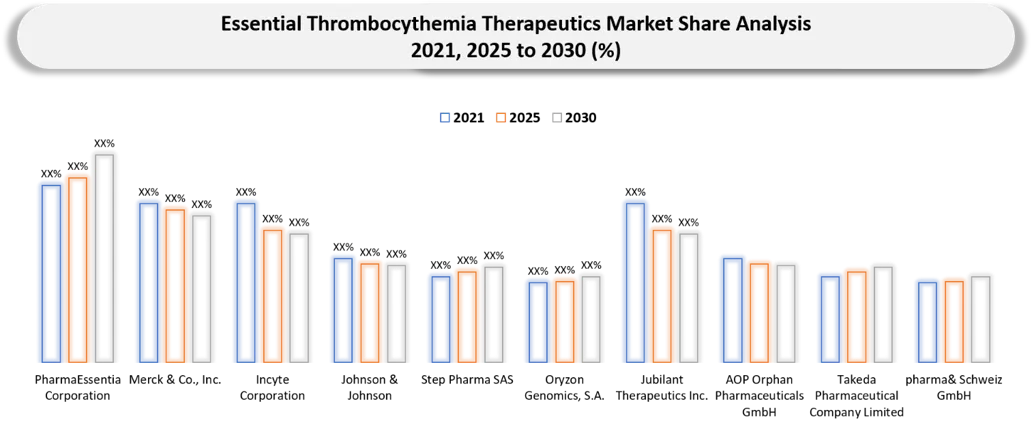
- The global essential thrombocythemia therapeutics market is moderately concentrated, with competition spanning established cytoreductive therapies, interferon-based treatments, generic manufacturers and emerging mutation-directed drug developers. PharmaEssentia Corporation has strengthened its position through BESREMi, while Takeda Pharmaceutical Company Limited, AOP Orphan Pharmaceuticals GmbH, Viatris Inc., Sandoz Group AG, Glenmark Pharmaceuticals Limited and other manufacturers maintain established positions through anagrelide, hydroxyurea and related therapies.
- Competitive intensity is increasing as companies shift beyond platelet-count control toward disease-modifying and biomarker-driven strategies. Incyte Corporation, Merck & Co., Inc., Johnson & Johnson, Step Pharma SAS, Oryzon Genomics, S.A. and Jubilant Therapeutics Inc. are advancing next-generation programs targeting mutant CALR, epigenetic pathways and other disease mechanisms. Future differentiation will increasingly depend on durable hematologic response, thrombosis-risk reduction, molecular response, tolerability, dosing convenience and the ability to address hydroxyurea-resistant or intolerant patients. Companies with strong clinical evidence, mutation-specific positioning, scalable manufacturing and favorable reimbursement access are expected to strengthen competitive advantage through 2035.
Key Companies of Essential Thrombocythemia Therapeutics Market
- PharmaEssentia Corporation (Taiwan)
- Merck & Co., Inc. (United States)
- Incyte Corporation (United States)
- Johnson & Johnson (United States)
- Step Pharma SAS (France)
- Oryzon Genomics, S.A. (Spain)
- Jubilant Therapeutics Inc. (United States)
- AOP Orphan Pharmaceuticals GmbH (Austria)
- Takeda Pharmaceutical Company Limited (Japan)
- pharma& Schweiz GmbH (Switzerland)
- medac Gesellschaft für klinische Spezialpräparate mbH (Germany)
- Viatris Inc. (United States)
- Sandoz Group AG (Switzerland)
- Glenmark Pharmaceuticals Limited (India)
- Aurobindo Pharma Limited (India)
- Zentiva Group, a.s. (Czech Republic)
- Brown & Burk UK Ltd (United Kingdom)
- Teva Pharmaceutical Industries Ltd. (Israel)
- Torrent Pharmaceuticals Limited (India)
- ANI Pharmaceuticals, Inc. (United States)
Essential Thrombocythemia Therapeutics Market Major Pain Points
- Limited Disease Modification: Most established therapies primarily control elevated platelet counts and thrombotic risk rather than eliminating the underlying malignant clone. Demonstrating meaningful molecular response and delayed progression therefore remains a major unmet need.
- Hydroxyurea Resistance and Intolerance: A meaningful subset of patients eventually develops inadequate response or intolerance to hydroxyurea, creating treatment-switching challenges and increasing demand for alternative cytoreductive and interferon-based therapies.
- Long-Term Treatment Toxicity: Essential thrombocythemia often requires chronic therapy, making cumulative tolerability critical. Cytopenias, gastrointestinal effects, cardiovascular concerns, hepatic abnormalities and interferon-related adverse events can reduce adherence and persistence.
- Persistent Thrombotic Risk: Even with platelet control, patients may continue to face arterial and venous thrombotic risk. Preventing clinically meaningful vascular events remains more important than platelet normalization alone.
- Treatment Sequencing Complexity: Physicians must determine the appropriate sequence of hydroxyurea, anagrelide, interferon-based therapies and emerging targeted agents based on age, thrombosis history, mutation status, treatment response and tolerability.
- Mutation-Specific Treatment Gaps: JAK2, CALR and MPL define biologically distinct patient populations, but approved therapies remain largely mutation-agnostic. Limited availability of genotype-specific treatments restricts truly personalized therapeutic selection.
- Uneven Molecular Testing Access: Access to JAK2, CALR and MPL testing varies across healthcare systems, limiting patient stratification and potentially slowing adoption of mutation-directed therapies.
- High Cost of Newer Therapies: Long-acting interferons and future biologics may carry substantially higher treatment costs than generic hydroxyurea or anagrelide, creating reimbursement and formulary barriers.
- Small Clinical-Trial Populations: The relatively low prevalence of essential thrombocythemia and long disease course can complicate patient recruitment, endpoint selection and demonstration of progression-related benefits.
- Uncertain Long-Term Progression Benefit: Demonstrating that newer therapies delay transformation to myelofibrosis or acute myeloid leukemia requires prolonged follow-up, increasing development time, cost and regulatory uncertainty.
Essential Thrombocythemia Therapeutics Market Recent Developments
- September 2026: Jubilant Therapeutics reported preliminary Phase I and Phase II data for JBI-802, showing rapid and sustained platelet reductions in patients with essential thrombocythemia.
- August 2026: The U.S. FDA approved BESREMi (ropeginterferon alfa-2b-njft) for adults with essential thrombocythemia, significantly expanding the commercial treatment landscape.
- June 2026: Incyte reported updated clinical data for INCA033989 in mutant-CALR-positive essential thrombocythemia, including strong hematologic and molecular responses.
- June 2026: Step Pharma advanced dencatistat into the Phase II VECTRA study for high-risk essential thrombocythemia.
- June 2026: Oryzon Genomics initiated patient enrollment in the Phase II IDEAL study of iadademstat for hydroxyurea-resistant or intolerant essential thrombocythemia.
Analyst View / Opinion on Essential Thrombocythemia Therapeutics Market
- The market is shifting from long-standing dependence on hydroxyurea and anagrelide toward long-acting interferons, mutation-directed therapies and potentially disease-modifying treatment strategies.
- The 2026 U.S. approval of BESREMi strengthened the role of interferon-based therapy in essential thrombocythemia, while emerging assets such as INCA033989, dencatistat, iadademstat and JBI-802 are increasing competitive pressure around hematologic response, molecular response, tolerability and long-term disease control.
- Treatment selection will increasingly depend on risk status, thrombosis history, mutation profile, prior hydroxyurea exposure, treatment intolerance, platelet control, long-term safety and dosing convenience rather than platelet count alone.
- Next-generation therapies are expected to differentiate through mutation-specific activity, durable hematologic response, reduction in driver-mutation burden, lower treatment burden and stronger evidence of disease modification.
- Competitive advantage will increasingly favor companies able to demonstrate reduced thrombotic risk, manageable chronic toxicity, convenient outpatient administration, clear positioning in hydroxyurea-resistant or intolerant patients and credible long-term outcomes.
- Over the next decade, essential thrombocythemia treatment is likely to become more biomarker-driven and segmented, with conventional cytoreductive agents, interferon-based therapies and targeted biologics occupying distinct positions across different patient populations.
Essential Thrombocythemia Therapeutics Market Target Audience
| INDUSTRY | WHO SHOULD BUY THIS REPORT? | REASON TO BUY THIS REPORT |
| Pharmaceutical Companies | Business Development Heads, Commercial Strategy Leaders, Portfolio Managers | Assess market size, treatment shifts, competitor positioning and commercialization opportunities |
| Biotechnology Companies | Founders, Chief Scientific Officers, Pipeline Strategy Teams | Identify mutation-directed, disease-modifying and next-generation therapeutic opportunities |
| Drug Developers | Clinical Development Heads, Medical Affairs Teams, Regulatory Strategy Leaders | Benchmark clinical pipelines, treatment gaps, endpoints and regulatory positioning |
| Hematology and Oncology Companies | Franchise Heads, Brand Managers, Market Access Teams | Understand treatment sequencing, physician adoption drivers and patient segmentation |
| Contract Research Organizations | Clinical Operations Heads, Trial Strategy Teams | Evaluate trial demand, patient recruitment potential and emerging clinical programs |
| Contract Development and Manufacturing Organizations | Business Development Teams, Manufacturing Strategy Leaders | Assess biologics, interferon and novel therapy manufacturing opportunities |
| Hospitals and Hematology Centers | Hematologists, Pharmacy Directors, Procurement Teams | Compare treatment options, emerging therapies, dosing burden and long-term management needs |
| Investors and Private Equity Firms | Investment Directors, Healthcare Analysts, Venture Capital Teams | Evaluate pipeline attractiveness, competitive intensity, white-space opportunities and investment risk |
| Payers and Health Insurers | Reimbursement Heads, Health Economics Teams, Formulary Managers | Assess treatment value, pricing, reimbursement exposure and long-term healthcare cost implications |
| Diagnostic Companies | Molecular Diagnostics Heads, Product Strategy Teams | Identify opportunities linked to JAK2, CALR and MPL testing and biomarker-driven treatment selection |
Why Choose DATAM?
- Data-Driven Insights: Access granular intelligence covering market size, treatment shares, line-of-therapy adoption, eligible patient populations, mutation-defined segments, clinical pipelines, competitive positioning and country-level access dynamics.
- Primary Research Validation: Benefit from insights supported by interviews with hematologists, oncologists, industry executives, market-access professionals, clinical researchers and other key stakeholders involved in essential thrombocythemia treatment and commercialization.
- Expert Analyst Consultations: Engage directly with healthcare analysts for customized guidance on treatment sequencing, competitor assessment, portfolio positioning, market entry, reimbursement strategy and commercialization planning.
- Customized Market Intelligence: Receive tailored analysis covering country-level opportunities, pricing and reimbursement, hydroxyurea-resistant or intolerant populations, mutation-directed therapies, partnership potential, pipeline benchmarking and emerging white-space opportunities.
- White Papers and Case Studies: Leverage focused case studies on long-acting interferon adoption, mutant CALR-targeted therapies, hydroxyurea treatment switching, disease-modifying approaches, thrombosis-risk reduction, molecular response and competitive differentiation.
What DATAM Uniquely Provides
- In-depth segmentation of the essential thrombocythemia therapeutics market by treatment type, line of therapy, risk stratification, mutation status, prescription type, route of administration, age group, treatment setting, distribution channel and geography.
- Competitive analysis of leading essential thrombocythemia therapeutics companies covering hematologic response, thrombosis-risk reduction, molecular response, treatment durability, tolerability, dosing convenience, pipeline maturity and commercialization strategy.
- Comprehensive assessment of treatment sequencing across hydroxyurea, anagrelide, interferon-based therapies and emerging mutation-directed treatments, including positioning in newly diagnosed, high-risk and hydroxyurea-resistant or intolerant patients.
- Detailed evaluation of clinical pipelines, long-acting interferons, mutant CALR-targeted therapies, JAK2-directed approaches, novel oral agents and other emerging disease-modifying strategies.
- Patient opportunity mapping by JAK2, CALR, MPL and triple-negative status, supporting biomarker-driven treatment analysis and identification of mutation-specific commercial opportunities.
- Country-level assessment of diagnosis, treatment access, reimbursement, molecular-testing availability, physician adoption and commercialization potential across major essential thrombocythemia markets.
- White-space analysis covering disease modification, thrombosis prevention, lower-burden administration, treatment switching, molecular response and unmet needs in hydroxyurea-resistant or intolerant populations.
- Strategic benchmarking of clinical development, regulatory progress, partnership activity, manufacturing readiness, market-entry pathways and future competitive positioning.


























































