


DNA Polymerase Theta Therapy Market Size and Overview
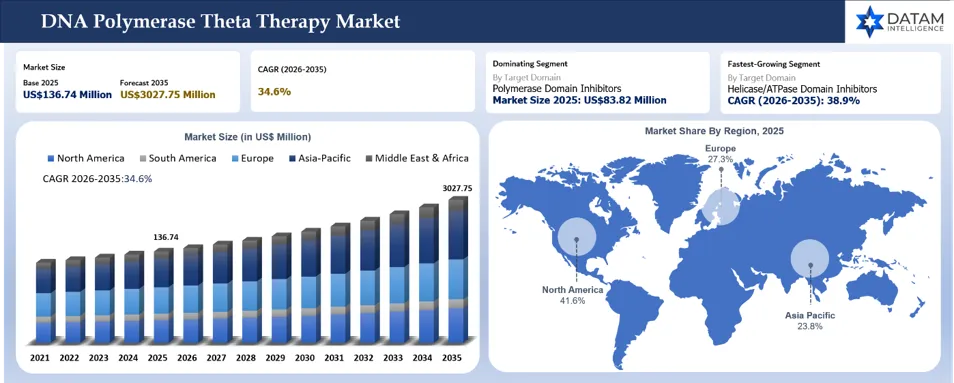
The global DNA polymerase theta therapy market reached US$136.74 million in 2025 and is expected to reach US$3027.75 million by 2035, growing with a CAGR of 34.6% during the forecast period 2026-2035.
The DNA polymerase theta therapy market is emerging as a high-growth precision-oncology segment centered on therapies that inhibit Polθ, a key DNA repair enzyme involved in tumor-cell survival. Polθ-targeted therapies are being developed primarily for BRCA1/2-altered, homologous recombination-deficient and other DNA repair-deficient cancers, where synthetic-lethality mechanisms can potentially create selective antitumor activity.
Market development is being driven by rising interest in DNA damage response therapies, increasing resistance to PARP inhibitors, broader use of genomic profiling and greater adoption of biomarker-driven treatment strategies. Clinical development is progressing across breast, ovarian, prostate, pancreatic and other solid tumors, with companies evaluating Polθ inhibitors both as monotherapy and in combination with PARP inhibitors and other anticancer agents.
Polymerase domain inhibitors currently represent the most established target-domain segment, while helicase/ATPase domain inhibitors are gaining momentum through differentiated mechanisms and emerging pipelines. Competitive positioning increasingly depends on target selectivity, safety, clinical efficacy, biomarker strategy, durability of response and activity in treatment-resistant populations.
The market also offers significant opportunities through indication expansion, companion diagnostics, strategic partnerships, licensing and combination-treatment development. As clinical evidence matures, commercialization potential will increasingly depend on successful regulatory progression, patient identification, reimbursement access and demonstrated clinical differentiation within the broader DNA damage response therapy landscape.
DNA Polymerase Theta Therapy Market Key Takeaways
- The DNA polymerase theta therapy market was valued at US$136.74 million in 2025 and is projected to reach US$3,027.75 million by 2035, expanding at a 34.6% CAGR during 2026-2035.
- Polymerase domain inhibitors dominate the market, with an estimated 61.3% share in 2025, supported by stronger clinical validation and growing development in BRCA1/2-altered and HRD-positive tumors.
- Helicase/ATPase domain inhibitors are expected to be the fastest-growing segment, with an estimated 38.9% CAGR, driven by differentiated mechanisms and emerging clinical pipelines.
- Combination strategies involving Polθ inhibitors and PARP inhibitors are becoming an important development focus for improving synthetic lethality and addressing PARP inhibitor resistance.
- Biomarker-driven patient selection using BRCA1/2, HRR and HRD profiling is becoming central to clinical development, trial recruitment and future treatment adoption.
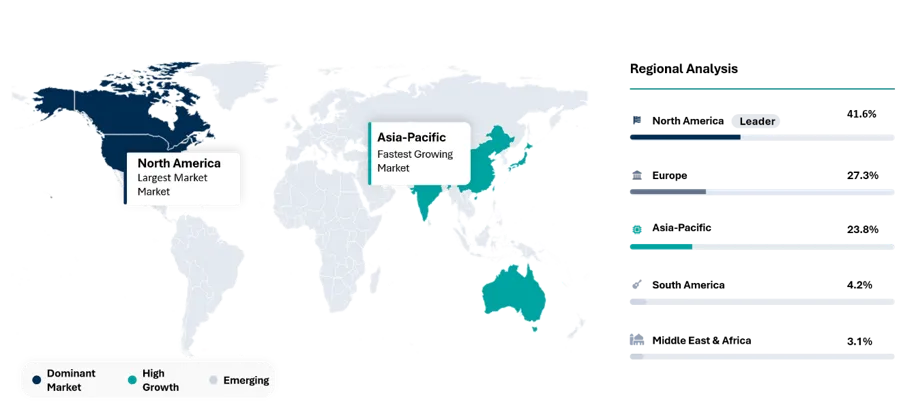
- North America represents the largest regional opportunity, while Asia-Pacific is expected to show strong growth as genomic testing and precision-oncology infrastructure expand.
- Competitive differentiation will increasingly depend on clinical efficacy, safety, target selectivity, biomarker strategy, resistance management and indication expansion across multiple solid tumors
DNA Polymerase Theta Therapy Industry Trends and Strategic Insights
- Synthetic-Lethality Strategies Are Gaining Momentum: Polθ inhibition is emerging as a promising approach for targeting BRCA1/2-altered, HRD-positive and other DNA repair-deficient tumors, particularly where existing DNA damage response therapies show resistance.
- Combination Therapy Development Is Accelerating: Clinical programs are increasingly evaluating Polθ inhibitors with PARP inhibitors and other anticancer therapies to enhance treatment response, delay resistance and broaden therapeutic applicability.
- Biomarker-Driven Patient Selection Is Becoming Central: BRCA1/2, HRR and HRD profiling is increasingly important for identifying patients most likely to benefit from Polθ-targeted treatment and improving clinical-trial efficiency.
- Competition Is Shifting Toward Differentiated Target Mechanisms: Developers are focusing on polymerase-domain and helicase/ATPase-domain inhibition, with emphasis on selectivity, safety, pharmacokinetics and durable target engagement.
- Strategic Value Is Increasing Around Clinical Validation and Partnerships: Licensing, co-development, biomarker collaborations and oncology-focused partnerships are becoming increasingly important as companies seek to accelerate development, expand indications and strengthen future commercialization potential.
DNA Polymerase Theta Therapy Market Scope
| Metrics | Details | |
| 2025 Market Size | US$136.74 Million | |
| 2035 Projected Market Size | US$3027.75 Million | |
| CAGR (2026-2035) | 34.6% | |
| Largest Market | North America | |
| Fastest Growing Market | Asia-Pacific | |
| Segment | Subsegments | |
| Therapeutic Modality | Small-Molecule Polθ Inhibitors, Targeted Polθ Protein Degraders and Other Polθ-Targeting Therapies | |
| Target Domain | Polymerase Domain Inhibitors, Helicase/ATPase Domain Inhibitors and Other Polθ-Targeting Inhibitors | |
| Treatment Approach | Monotherapy, Combination Therapy and Others | |
| Cancer Type | Breast Cancer, Ovarian Cancer, Prostate Cancer, Pancreatic Cancer, Colorectal Cancer, Endometrial Cancer, Lung Cancer and Other Cancers | |
| Biomarker Profile | BRCA1/2-Altered Tumors, Non-BRCA HRR Gene-Altered Tumors, HRD-Positive, HRR-Wild-Type Tumors, HRD-Negative Tumors and Biomarker-Unknown Tumors | |
| Disease Stage | Localized or Resectable, Locally Advanced or Unresectable and Metastatic | |
| Line of Therapy | First-Line Therapy, Second-Line Therapy and Third-Line and Later Therapy | |
| Prior PARP Inhibitor Exposure | PARP Inhibitor-Naïve and PARP Inhibitor-Pretreated | |
| End User | Hospitals, Specialty Oncology Clinics, Cancer Treatment Centers and Others | |
| By Region | North America | U.S., Canada, Mexico |
| Europe | Germany, UK, France, Spain, Italy, Poland | |
| Asia-Pacific | China, India, Japan, Australia, South Korea, Indonesia, Malaysia, Singapore, Vietnam, Thailand, Philippines, Taiwan | |
| South America | Brazil, Argentina | |
| Middle East and Africa | Israel, Saudi Arabia, UAE, Turkiye, South Africa, Nigeria | |
| Report Insights Covered | Competitive Landscape Analysis, Company Profile Analysis, Market Size, Share, Growth | |
Why does this report matter in 2026?
The DNA polymerase theta therapy market is gaining strategic importance in 2026 as Polθ inhibition emerges as a promising synthetic-lethality approach for treating tumors with deficiencies in homologous recombination repair. Clinical development is advancing across BRCA1/2-altered, HRD-positive and other DNA repair-deficient solid tumors, with developers evaluating Polθ inhibitors both as monotherapy and in combination with PARP inhibitors and other anticancer therapies. Competition is increasingly focused on target-domain selectivity, clinical efficacy, safety, resistance management, biomarker-based patient selection and combination-treatment potential. Growing understanding of PARP inhibitor resistance is also strengthening interest in Polθ as a next-generation therapeutic target. Significant opportunities exist across breast, ovarian, prostate, pancreatic and other biomarker-defined cancers. In 2026, understanding clinical pipelines, biomarker strategies, addressable patient populations, trial outcomes, competitive positioning, regulatory pathways and future pricing potential is essential for evaluating commercialization prospects and identifying companies positioned to shape this emerging precision-oncology market.
DNA Polymerase Theta Therapy Market White Space & Investment Opportunities
- Emerging precision-oncology opportunity: Polθ inhibition is gaining strategic importance as a synthetic-lethality approach for BRCA1/2-altered, HRD-positive and other DNA repair-deficient solid tumors, including breast, ovarian, prostate and pancreatic cancers.
- Expanding clinical and competitive landscape: Developers are advancing Polθ inhibitors as monotherapy and in combination with PARP inhibitors and other anticancer therapies, with competition centered on target selectivity, efficacy, safety, resistance management and biomarker-driven patient selection.
- Critical commercialization insights: Understanding clinical pipelines, addressable patient populations, biomarker strategies, trial outcomes, regulatory pathways, competitive positioning and future pricing is essential for assessing commercialization potential and identifying companies positioned to shape the emerging DNA polymerase theta therapy market.
DNA Polymerase Theta Therapy Market Future Market Transformation
The DNA polymerase theta therapy market is expected to undergo significant transformation Polθ inhibition progresses from early clinical development toward a more established precision-oncology treatment strategy. Future development will increasingly focus on exploiting synthetic lethality in BRCA1/2-altered, homologous recombination-deficient and other DNA repair-deficient tumors. Competition is expected to intensify around target selectivity, clinical efficacy, safety, durability of response, resistance management and biomarker-driven patient selection. Combination strategies involving Polθ inhibitors with PARP inhibitors, chemotherapy and other targeted therapies are likely to become an important area of clinical differentiation. Advances in genomic profiling and companion diagnostics are also expected to improve identification of patients most likely to benefit from Polθ-targeted treatment. As clinical evidence matures, developers will increasingly focus on expanding indications across breast, ovarian, prostate, pancreatic and other solid tumors. Successful commercialization will depend on demonstrating meaningful clinical benefit, overcoming treatment resistance, securing regulatory approvals and establishing differentiated positioning within the evolving DNA damage response therapy landscape.
DNA Polymerase Theta Therapy Market Buyer Decision-Making Criteria
- Clinical Efficacy and Strength of Supporting Evidence
- Biomarker-Defined Patient Response
- Safety and Tolerability Profile
- Durability of Treatment Response
- Ability to Overcome PARP Inhibitor Resistance
- Monotherapy and Combination Therapy Potential
- Target Selectivity and Off-Target Toxicity
- Suitability for BRCA1/2 and HRD-Positive Tumors
- Ease of Patient Identification and Companion Diagnostic Availability
- Treatment Administration and Patient Convenience
- Regulatory Approval and Guideline Inclusion
- Pricing, Reimbursement and Overall Treatment Value
DNA Polymerase Theta Therapy Market Economic & Investment Analysis
The DNA polymerase theta therapy market presents an emerging investment opportunity as Polθ inhibition advances as a novel synthetic-lethality strategy for biomarker-defined cancers. Investment interest is being supported by the potential application of Polθ inhibitors across BRCA1/2-altered, homologous recombination-deficient and other DNA repair-deficient solid tumors. The commercial attractiveness of individual programs will increasingly depend on clinical efficacy, safety, target selectivity, durability of response, biomarker-defined patient populations and the ability to demonstrate benefit in patients with resistance to existing DNA damage response therapies.
From an investment perspective, opportunities are concentrated across clinical-stage Polθ inhibitor developers, combination strategies with PARP inhibitors and other anticancer agents, companion diagnostics and biomarker-driven patient-selection technologies. Program valuations will increasingly reflect clinical-development progress, probability of regulatory success, addressable patient populations, intellectual-property strength, partnership potential and indication-expansion opportunities. Companies demonstrating differentiated clinical outcomes, clear biomarker strategies and scalable development across multiple solid tumors are positioned to attract greater licensing, partnership and strategic investment interest.
DNA Polymerase Theta Therapy Market Trends
- Growing Focus on Polθ and PARP Inhibitor Combination Strategies as developers increasingly evaluate Polθ inhibition alongside PARP inhibitors to enhance synthetic lethality and improve activity in homologous recombination-deficient tumors.
- Rising Emphasis on Biomarker-Driven Patient Selection as clinical programs increasingly use BRCA1/2, HRR and broader HRD characteristics to identify patients most likely to respond to Polθ-targeted therapies.
- Increasing Development of Highly Selective Polθ Inhibitors as companies focus on improving target specificity, pharmacokinetics, tolerability and therapeutic windows across polymerase and ATPase/helicase-directed programs.
- Growing Use of Pharmacodynamic and Target-Engagement Biomarkers as developers incorporate novel measures, including micronuclei-based assays, to confirm biological activity and optimize dose selection during clinical development.
- Expansion Beyond BRCA-Mutated Tumors Toward Broader DNA Repair-Deficient Cancers as improved characterization of DNA-repair phenotypes supports evaluation of Polθ inhibitors across wider HRD and repair-defective solid-tumor populations.
Strategic Indicators for DNA Polymerase Theta Therapy Market
High Regulation Impact
The DNA polymerase theta therapy market is highly influenced by regulatory requirements governing oncology drug development, clinical trials, biomarker validation, safety monitoring and marketing authorization. Companies developing Polθ inhibitors must generate robust evidence on clinical efficacy, dose optimization, toxicity, pharmacokinetics and treatment durability before regulatory approval. Regulatory scrutiny is particularly significant because these therapies target DNA damage response pathways and are frequently evaluated in heavily pretreated or biomarker-selected cancer populations.
Regulatory complexity is further increased by the use of companion diagnostics, combination regimens with PARP inhibitors and expansion across multiple tumor types. Developers may need to demonstrate the clinical relevance of BRCA1/2, homologous recombination repair and HRD biomarkers while establishing consistent patient-selection criteria across trials. Differences in regulatory expectations between major markets can also affect trial design, approval timelines and commercialization strategies. Companies with strong clinical evidence, validated biomarker strategies, comprehensive safety data and well-defined benefit-risk profiles will be better positioned to navigate regulatory review and accelerate market access.
High Investment Activity
Investment activity in the DNA polymerase theta therapy market is increasing as biotechnology and pharmaceutical companies expand their focus on DNA damage response targets, synthetic lethality and biomarker-driven oncology. Capital is increasingly directed toward clinical-stage Polθ inhibitor programs, novel small-molecule platBiomarker Profiles, combination strategies with PARP inhibitors and technologies supporting biomarker-based patient selection.
Strategic licensing agreements, research collaborations, asset acquisitions and co-development partnerships are becoming increasingly important as companies seek differentiated intellectual property, stronger clinical pipelines and faster development pathways. Investment priorities are shifting toward programs with compelling preclinical data, clear target engagement, favorable safety profiles, well-defined BRCA1/2 and HRD patient populations and potential applicability across multiple solid tumors. Companies capable of demonstrating differentiated efficacy, overcoming treatment resistance and expanding Polθ inhibitors across several oncology indications are likely to attract greater strategic investment, licensing interest and partnership activity as the therapeutic class advances toward commercialization.
Supply Chain Disruption
The DNA polymerase theta therapy market faces moderate supply chain vulnerability because developers depend on specialized active pharmaceutical ingredients, advanced chemical intermediates, GMP-compliant manufacturing capacity, clinical-trial supply networks and qualified contract development and manufacturing organizations. Key dependencies include complex small-molecule synthesis, analytical testing, Biomarker Profileulation development, packaging, cold-chain or controlled logistics where required, and timely distribution to clinical sites.
Supply risk is particularly relevant for early-stage Polθ programs with limited manufacturing scale, specialized synthesis requirements and dependence on a small number of qualified suppliers. Delays in raw-material procurement, batch release, quality testing or technology transfer can affect clinical-trial timelines and development costs. Future commercialization could further increase pressure on manufacturing scale-up and regulatory compliance. Companies with diversified suppliers, validated manufacturing partners, robust quality systems, inventory planning and scalable production processes will be better positioned to reduce disruption risk and maintain continuity across clinical development and future commercial supply.
Pricing Volatility
The DNA polymerase theta therapy market is expected to experience moderate pricing variability as commercial pricing will depend on clinical efficacy, biomarker specificity, treatment duration, combination use, competitive intensity and reimbursement conditions. Since Polθ inhibitors remain largely in clinical development, definitive commercial pricing has not yet been established, making future pricing sensitive to trial outcomes, regulatory positioning and demonstrated benefit over existing DNA damage response therapies.
Pricing differences are likely to emerge across monotherapy and combination regimens, tumor indications and biomarker-defined patient populations. Use alongside PARP inhibitors or other anticancer therapies could increase total treatment costs and strengthen payer scrutiny around incremental clinical benefit. Manufacturing complexity, companion diagnostic requirements and treatment monitoring may also influence overall therapy costs. Developers demonstrating durable responses, activity in treatment-resistant populations and clear differentiation from established targeted therapies will be better positioned to support premium pricing, while reimbursement negotiations and value-based assessments will remain important determinants of commercial uptake.
Procurement Pressure
The DNA polymerase theta therapy market faces moderate procurement pressure because developers depend on reliable access to specialized active pharmaceutical ingredients, high-purity chemical intermediates, analytical reagents, GMP-compliant manufacturing services and clinical-trial supply capabilities. Procurement decisions are increasingly influenced by supplier qualification, material purity, batch consistency, regulatory documentation, lead times, manufacturing capacity and cost stability.
Pressure is particularly relevant for early-stage Polθ inhibitor programs that rely on complex small-molecule synthesis and a limited pool of qualified contract development and manufacturing organizations. Specialized intermediates, Biomarker Profileulation components and analytical testing services can increase procurement complexity and reduce supplier flexibility. Clinical expansion across multiple indications may further increase demand for larger and more consistent material volumes. Companies with dual-sourcing strategies, long-term supplier agreements, qualified manufacturing partners, strong quality systems and early scale-up planning will be better positioned to reduce procurement risk, maintain development timelines and control future manufacturing costs.
Regional Expansion Opportunity
The DNA polymerase theta therapy market offers meaningful regional expansion opportunities as biomarker-driven oncology, genomic testing and precision-medicine infrastructure continue to expand across major cancer-treatment markets. North America is expected to remain an important development and commercialization region due to its strong clinical-trial ecosystem, broad adoption of molecular diagnostics, established oncology infrastructure and concentration of biotechnology and pharmaceutical developers.
Europe represents another significant opportunity, supported by advanced cancer-care systems, expanding genomic testing and increasing use of targeted therapies, although country-level reimbursement and health-technology assessment requirements may influence commercial uptake. Asia-Pacific is likely to gain strategic importance as oncology trial activity expands and countries such as China, Japan and South Korea strengthen precision-oncology capabilities. Future regional expansion will depend on regulatory approvals, biomarker-testing availability, reimbursement pathways, clinical adoption and access to specialized cancer centers. Companies building region-specific trial networks, diagnostic partnerships and market-access strategies will be better positioned to capture long-term growth opportunities.
Government Policy Support
The DNA polymerase theta therapy market receives moderate policy support through broader government initiatives promoting cancer research, precision oncology, genomic medicine and development of innovative targeted therapies. Public funding for oncology research, biomarker discovery, clinical trials and translational medicine can indirectly support advancement of Polθ-targeted programs and accelerate validation of synthetic-lethality strategies across DNA repair-deficient cancers.
Government support is also strengthened by regulatory frameworks that encourage development of therapies for serious and life-threatening diseases through expedited review pathways, oncology-focused research grants and public-private collaborations. At the same time, developers must meet stringent requirements for clinical efficacy, safety, biomarker validation, manufacturing quality and post-approval monitoring. Future market development will therefore depend on continued support for precision-medicine infrastructure, genomic testing, companion diagnostics and clinical-trial networks. Companies that align development strategies with regulatory expectations, evidence-generation standards and national cancer-control priorities will be better positioned to benefit from supportive policy environments.
AI Impact Analysis of DNA Polymerase Theta Therapy Market
Artificial intelligence is expected to increasingly influence the DNA polymerase theta therapy market across target validation, molecular discovery, biomarker identification, clinical-trial design and patient selection. AI-enabled drug-discovery platBiomarker Profiles can analyze genomic, proteomic and structural datasets to identify Polθ-binding opportunities, optimize small-molecule candidates and predict pharmacokinetic, toxicity and off-target characteristics. These capabilities can reduce early discovery timelines and improve prioritization of differentiated Polθ inhibitors.
AI is also becoming increasingly important in precision oncology, where machine-learning models can integrate BRCA1/2 status, homologous recombination repair alterations, HRD signatures, treatment history and tumor characteristics to identify patients most likely to benefit from Polθ-targeted therapy. In clinical development, AI can support trial-site selection, patient recruitment, response prediction, dose optimization and combination-strategy evaluation. Longer term, integration of AI with genomic diagnostics and real-world oncology data could improve treatment stratification, accelerate indication expansion and strengthen evidence generation for Polθ inhibitors across multiple solid tumors.
Disruption Analysis of DNA Polymerase Theta Therapy Market
The DNA polymerase theta therapy market is undergoing significant disruption as precision-oncology strategies shift from established DNA damage response therapies toward next-generation synthetic-lethality approaches targeting Polθ. Competitive differentiation is increasingly centered on target selectivity, biomarker-defined patient selection, clinical efficacy, safety, durability of response and the ability to address resistance to PARP inhibitors.
The therapeutic landscape is being reshaped by polymerase-domain and helicase/ATPase-domain inhibitors, combination regimens with PARP inhibitors and broader development across BRCA1/2-altered, HRD-positive and other DNA repair-deficient solid tumors. Advances in genomic profiling, companion diagnostics and molecular characterization are enabling more precise identification of patients likely to benefit from Polθ inhibition.
AI-enabled drug discovery, predictive biomarker modeling and data-driven clinical-trial design may further accelerate disruption by shortening development timelines and improving patient stratification. Competitive advantage will increasingly favor companies capable of generating differentiated clinical evidence, overcoming treatment resistance, expanding across multiple tumor indications and securing strong intellectual-property and partnership positions within the evolving DNA damage response therapy landscape.
DNA Polymerase Theta Therapy Market BCG Matrix: Company Evaluation
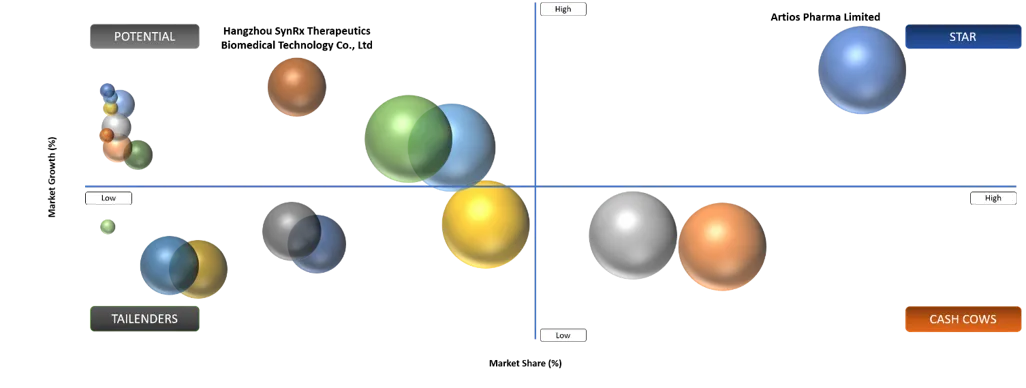
STAR
Artios Pharma Limited, AstraZeneca PLC, MOMA Therapeutics, Inc., Simcere Pharmaceutical Group Limited and Gilead Sciences, Inc. are positioned as Star companies in the DNA polymerase theta therapy market due to their advanced Polθ-focused pipelines, clinical-stage development and strong strategic positioning in DNA damage response oncology. Artios currently has one of the most advanced programs with ART6043 in Phase II development, while AstraZeneca is evaluating AZD4956 in a Phase I/II study. MOMA Therapeutics and other leading developers are strengthening competition through differentiated helicase/ATPase and polymerase-domain inhibition strategies. Their positioning is supported by clinical progression, biomarker-driven development, combination strategies with PARP inhibitors and potential application across BRCA1/2-altered and HRD-positive solid tumors.
POTENTIAL
Hangzhou SynRx Therapeutics Biomedical Technology Co., Ltd., Danatlas Pharmaceuticals Co., Ltd., Breakpoint Therapeutics GmbH, QuantX Biosciences Limited, Haisco Pharmaceutical Group Co., Ltd. and Daewoong Pharmaceutical Co., Ltd. are positioned as Potential companies due to their emerging Polθ inhibitor programs and opportunities to progress from early clinical or preclinical development into differentiated oncology assets. Their future positioning will depend on successful clinical translation, target selectivity, safety, biomarker strategy, intellectual-property strength and ability to demonstrate meaningful activity in treatment-resistant cancers. Progression into later-stage studies, strategic licensing agreements and combination-development programs could significantly strengthen their competitive position in the evolving Polθ therapy landscape.
DNA Polymerase Theta Therapy Market Dynamics
Driver Impact Analysis
| Driver | Market Growth Impact (%) | Demand Concentration | Impacted Use Case | Strategic Impact |
Increasing Development of Synthetic-Lethality Therapies | 24.5% | High | BRCA1/2-Altered and HRD-Positive Solid Tumors | Expands the addressable patient pool and strengthens investment in Polθ-targeted drug development |
Rising Resistance to PARP Inhibitors | 19.1% | High | PARP Inhibitor-Exposed Ovarian, Breast, Prostate and Pancreatic Cancers | Creates demand for alternative DNA damage response therapies and combination strategies |
Growing Adoption of Biomarker- Driven Precision Oncology | 16% | Medium-High | Patient Selection Using BRCA, HRR and HRD Biomarkers | Improves treatment targeting, trial efficiency and commercialization potential for Polθ inhibitors |
Driver: Increasing Development of Synthetic-Lethality Therapies
The DNA polymerase theta therapy market is being driven by the growing development of synthetic-lethality therapies, increasing resistance to PARP inhibitors and wider adoption of biomarker-driven precision oncology. Polθ inhibition is gaining attention as a potential strategy for targeting BRCA1/2-altered, HRD-positive and other DNA repair-deficient tumors, particularly where existing treatments show limited durability or resistance. Rising use of genomic testing and HRR/HRD biomarker profiling is also improving patient selection and supporting more targeted clinical development. These factors are encouraging pharmaceutical and biotechnology companies to expand Polθ inhibitor pipelines, evaluate combination regimens and pursue broader solid-tumor indications. Collectively, they are strengthening the clinical and commercial potential of Polθ-targeted therapies within the evolving DNA damage response treatment landscape.
Restraint Impact Analysis
| Restraint | Drag on Market Growth (%) | Primary Impact Area | Impacted Use Case | Strategic Impact |
High Clinical Development and Trial Failure Risk | 23.1% | High | Early-Stage Polθ Inhibitor Programs | Increases development uncertainty, extends timelines and raises capital requirements before commercialization |
Limited Clinical Validation and Absence of Approved Polθ Therapies | 19% | High | Regulatory Approval and Physician Adoption | Restricts near-term revenue visibility and increases dependence on successful Phase I/II and pivotal trial outcomes |
Complex Biomarker Identification and Patient Selection | 16% | Medium-High | BRCA1/2, HRR and HRD-Defined Patient Populations | Can reduce eligible patient pools, complicate trial recruitment and increase diagnostic and testing requirements |
Restraint: High Clinical Development and Trial Failure Risk
The DNA polymerase theta therapy market is constrained by high clinical-development risk, limited clinical validation and the complexity of identifying appropriate biomarker-defined patient populations. Most Polθ inhibitors remain in early-stage development, making their long-term efficacy, safety and regulatory success uncertain. The absence of commercially approved Polθ-targeted therapies also limits near-term revenue visibility and increases dependence on positive clinical readouts. In addition, effective development requires accurate identification of BRCA1/2-altered, homologous recombination repair-deficient and HRD-positive patients, which can complicate patient recruitment and increase reliance on genomic testing and companion diagnostics. These factors can extend development timelines, increase R&D expenditure and reduce the probability of successful commercialization, particularly for smaller biotechnology companies with limited capital and clinical-development resources.
DNA Polymerase Theta Therapy Market Segment Analysis
The global DNA polymerase theta therapy market is segmented based on the therapeutic modality, target domain, treatment approach, cancer type, biomarker profile, disease stage, line of therapy, prior PARP inhibitor exposure, end user and distribution channel, development stage, and region.
By Target Domain
Polymerase Domain Inhibitors
Polymerase domain inhibitors represent the dominating segment in the DNA polymerase theta therapy market, with an estimated market size of US$83.82 million in 2025, accounting for approximately 61.3% of the overall market. Their leading position is supported by strong scientific validation of the Polθ polymerase domain as a synthetic-lethality target in BRCA1/2-altered and homologous recombination-deficient tumors. Development activity is increasingly focused on highly selective small molecules capable of disrupting error-prone DNA repair and enhancing tumor-cell sensitivity to existing DNA damage response therapies. Polymerase domain inhibitors are also being evaluated in combination with PARP inhibitors, creating opportunities to address acquired resistance and improve treatment outcomes in biomarker-selected patients. Their relatively advanced clinical development, growing biomarker integration and potential applicability across breast, ovarian, prostate, pancreatic and other solid tumors support continued market leadership. Future growth will depend on clinical efficacy, safety, durability of response and successful regulatory progression.
By Target Domain
Helicase/ATPase Domain Inhibitors
Helicase/ATPase domain inhibitors are expected to be the fastest-growing segment in the DNA polymerase theta therapy market, expanding at an estimated 38.9% CAGR during 2026-2035. Growth is being driven by increasing interest in targeting the ATPase-dependent functions of Polθ, which play an important role in DNA repair, replication stress management and tumor-cell survival. These inhibitors offer a differentiated mechanism compared with polymerase-domain targeting and may provide additional opportunities in homologous recombination-deficient and treatment-resistant cancers. Emerging clinical and preclinical programs are evaluating helicase/ATPase inhibition as monotherapy and in combination with PARP inhibitors and other anticancer agents. The segment is also benefiting from improved structural biology, drug-design capabilities and biomarker-based patient selection. Although the current market base remains smaller than polymerase-domain inhibitors, successful clinical translation could accelerate adoption significantly. Future performance will depend on target selectivity, tolerability, pharmacokinetics, clinical differentiation and evidence of activity in resistant tumor populations.
DNA Polymerase Theta Therapy Market Geographical Penetration
U.S. DNA Polymerase Theta Therapy Market Landscape
The United States represents a major opportunity for DNA polymerase theta therapies, supported by a large oncology population, advanced precision-medicine infrastructure and strong adoption of biomarker-guided cancer treatment. The American Cancer Society estimates approximately 2.11 million new cancer cases in the United States in 2026, creating a substantial addressable population across breast, ovarian, prostate, pancreatic and other solid tumors relevant to Polθ-targeted development.
The market opportunity is further strengthened by widespread genomic profiling and increasing use of biomarkers to guide targeted therapies. The National Cancer Institute notes that genomic biomarker testing is commonly considered for advanced or recurrent cancers and is routinely used in several major cancer types. As Polθ inhibitors progress clinically, U.S. adoption is expected to depend on demonstrated efficacy in BRCA1/2-altered and HRD-positive tumors, activity in PARP inhibitor-resistant disease, companion-diagnostic availability, regulatory approval and payer reimbursement.
Japan DNA Polymerase Theta Therapy Market Outlook
Japan represents an important emerging opportunity for DNA polymerase theta therapies, supported by a substantial cancer burden and rapidly expanding cancer-genomic medicine infrastructure. National Cancer Center Japan projections indicate approximately 645,410 annual male cancer cases and 499,730 female cases during 2025-2029, equivalent to roughly 1.15 million new cases annually across the country.
Japan is also strengthening biomarker-driven oncology through nationwide cancer genomic profiling. By March 2025, more than 100,000 patients had been registered in the national C-CAT cancer genomic inBiomarker Profileation platBiomarker Profile, with over 2,000 new cases being added monthly. This infrastructure can support future identification of BRCA1/2, HRR and HRD-defined patients potentially eligible for Polθ-targeted treatments. Japan's 2025 national genomic-medicine framework further supports broader integration of genomic inBiomarker Profileation into healthcare. Future market penetration will depend on clinical evidence, regulatory approval, biomarker-testing access, reimbursement and adoption across specialized oncology centers.
DNA Polymerase Theta Therapy Market Competitive Landscape
- The DNA polymerase theta therapy market is characterized by an emerging and highly innovation-driven competitive landscape, with most participants still operating at the discovery, preclinical or early clinical-development stage. Competition is concentrated around the development of selective Polθ inhibitors targeting either the polymerase domain or the helicase/ATPase domain, with increasing emphasis on synthetic-lethality strategies in BRCA1/2-altered, HRD-positive and other DNA repair-deficient tumors.
- Leading developers such as Artios Pharma, AstraZeneca, MOMA Therapeutics, Simcere Pharmaceutical Group, SynRx Therapeutics, Danatlas Pharmaceuticals and Gilead Sciences are advancing differentiated Polθ-targeted programs with varying mechanisms, biomarker strategies and combination approaches. Competitive differentiation increasingly depends on clinical efficacy, safety, target selectivity, pharmacokinetics, durability of response, biomarker-defined patient selection and the ability to demonstrate activity in PARP inhibitor-resistant disease.
- The landscape is also being shaped by licensing activity, asset acquisitions, research collaborations and combination development with PARP inhibitors and other anticancer agents. As clinical evidence matures, companies with strong intellectual property, differentiated mechanisms, broad indication potential and credible biomarker strategies are likely to strengthen their strategic positioning.
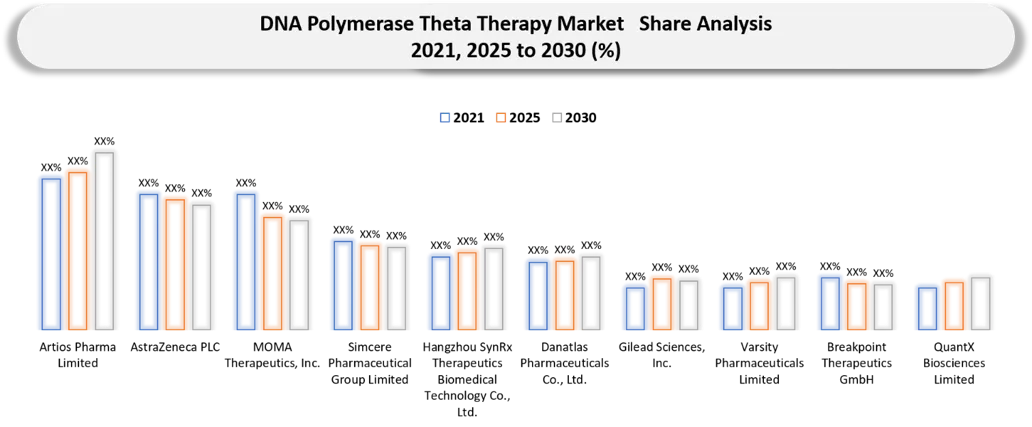
Key Companies of DNA Polymerase Theta Therapy Market
- Artios Pharma Limited (United Kingdom)
- AstraZeneca PLC (United Kingdom)
- MOMA Therapeutics, Inc. (United States)
- Simcere Pharmaceutical Group Limited (China)
- Hangzhou SynRx Therapeutics Biomedical Technology Co., Ltd. (China)
- Danatlas Pharmaceuticals Co., Ltd. (China)
- Gilead Sciences, Inc. (United States)
- Varsity Pharmaceuticals Limited (United Kingdom)
- Breakpoint Therapeutics GmbH (Germany)
- QuantX Biosciences Limited (United States)
- Ningbo NewBay Technology Development Co., Ltd. (China)
- Haisco Pharmaceutical Group Co., Ltd. (China)
- Daewoong Pharmaceutical Co., Ltd. (South Korea)
- Chia Tai Tianqing Pharmaceutical Group Co., Ltd. (China)
- Shanghai Apeiron Therapeutics Company Limited (China)
- Avelos Therapeutics Inc. (South Korea)
- Alicorn Pharmaceutical Co., Ltd. (China)
- Chengdu Chipscreen Pharmaceutical Ltd. (China)
- Shanghai Yishi Pharmaceutical Technology Co., Ltd. (China)
DNA Polymerase Theta Therapy Market Major Pain Points
- Limited Clinical Validation and Early-Stage Development: Most Polθ inhibitor programs remain in early clinical development, creating uncertainty around long-term efficacy, safety, optimal dosing and durability of response.
- Complex Biomarker-Based Patient Selection: Identifying BRCA1/2-altered, HRR-deficient and HRD-positive patients requires advanced genomic testing, which can complicate trial recruitment, treatment eligibility and future commercial adoption.
- Risk of Treatment Resistance and Combination Toxicity: Polθ therapies are frequently being evaluated with PARP inhibitors and other anticancer agents, creating challenges around overlapping toxicity, resistance mechanisms and selection of effective combination regimens.
- High Clinical Development and Commercialization Costs: Specialized trials, biomarker testing, companion diagnostics, regulatory requirements and small biomarker-defined patient populations can increase development costs and delay returns on investment.
- Uncertain Regulatory and Reimbursement Pathways: The absence of approved Polθ-targeted therapies creates uncertainty around regulatory expectations, pricing benchmarks, reimbursement models and payer acceptance.
DNA Polymerase Theta Therapy Market Recent Developments
- September 2026: Researchers reported XL-20, a novel orally bioavailable Polθ ATPase inhibitor with low-nanomolar activity, synergy with olaparib in HR-deficient cancer models and potential immune-activation effects through the cGAS-STING pathway.
- September 2026: SynRx Therapeutics disclosed plans to present the first clinical data for SYN818, its selective Polθ helicase-domain inhibitor, in combination with olaparib in patients with BRCA-mutated solid tumors at the 2026 EORTC-NCI-AACR symposium.
- August 2026: Artios Pharma published detailed pharmacological data for ART6043, demonstrating potent selective Polθ polymerase inhibition and enhanced antitumor activity when combined with PARP inhibitors in HR-deficient models.
- July 2026: MOMA Therapeutics' Phase I study of MOMA-313, evaluating the Polθ helicase inhibitor alone and with olaparib in HR-deficient advanced solid tumors, was updated to active recruiting status with an enrollment target of approximately 220 participants.
- July 2026: The National Cancer Institute's Phase I study of novobiocin as a Polθ inhibitor in BRCA-mutant and other DNA damage repair-deficient solid tumors remained actively recruiting, supporting continued clinical evaluation of an alternative Polθ-targeting approach.
Analyst View / Opinion on DNA Polymerase Theta Therapy Market
- The DNA polymerase theta therapy market is emerging as a differentiated precision-oncology opportunity, driven by increasing interest in synthetic-lethality strategies for BRCA1/2-altered, HRD-positive and other DNA repair-deficient tumors.
- Significant opportunities remain in PARP inhibitor-resistant cancers, broader HRR-deficient patient populations and combination regimens involving Polθ inhibitors with PARP inhibitors and other targeted anticancer therapies.
- Future competition is likely to center on clinical efficacy, safety, target selectivity, durability of response, biomarker-defined patient selection and the ability to demonstrate meaningful benefit over existing DNA damage response therapies.
- Companies capable of generating strong clinical evidence, establishing differentiated biomarker strategies, expanding across multiple solid-tumor indications and securing strategic partnerships are likely to strengthen their long-term positioning as the Polθ therapy landscape progresses toward commercialization.
DNA Polymerase Theta Therapy Market Target Audience
| INDUSTRY | WHO SHOULD BUY THIS REPORT? | REASON TO BUY THIS REPORT |
| Pharmaceutical and Biotechnology Companies | Oncology Strategy Heads, R&D Leaders, Business Development Teams | Assess Polθ pipelines, indication opportunities, competitive positioning and commercialization potential |
| Precision Oncology and Diagnostics Companies | Biomarker Strategy Teams, Companion Diagnostic Developers, Genomic Testing Providers | Identify opportunities across BRCA1/2, HRR and HRD-defined patient populations and companion diagnostic requirements |
| Investors and Private Equity Firms | Healthcare Investors, Venture Capital Firms, Equity Research Analysts | Evaluate clinical-stage assets, investment attractiveness, partnership potential and future value-creation opportunities |
Contract Research and Development Organizations | Clinical Development Heads, Regulatory Teams, Trial Operations Leaders | Understand emerging trial demand, patient-selection requirements, biomarker complexity and development service opportunities |
| Hospitals and Cancer Treatment Centers | Oncologists, Molecular Tumor Boards, Clinical Research Teams | Track emerging Polθ therapies, combination strategies, biomarker-guided treatment approaches and future clinical adoption potential |
Why Choose DATAM?
- Pipeline-Level Competitive Intelligence: Gain detailed intelligence on leading Polθ inhibitor programs, target domains, clinical stages, indications, combination strategies, biomarker positioning and competitive differentiation.
- Patient and Biomarker Opportunity Analysis: Assess opportunities across BRCA1/2-altered, HRR-deficient, HRD-positive and other DNA repair-deficient patient populations across key solid tumors.
- Clinical Development and Trial Tracking: Monitor ongoing Phase I and Phase II studies, trial design, enrollment, safety findings, efficacy signals, dose optimization and emerging clinical readouts.
- Commercialization and Investment Insights: Evaluate addressable patient populations, future pricing potential, regulatory pathways, partnership activity, licensing opportunities and probability-adjusted commercial potential.
- Strategic Market and Innovation Tracking: Track novel Polθ mechanisms, PARP inhibitor combinations, resistance-management strategies, companion diagnostics, AI-enabled drug discovery and evolving precision-oncology trends.
What DATAM Uniquely Provides
- Deep DNA Polymerase Theta Therapy Market Segmentation: Detailed analysis across target domain, treatment approach, cancer type, biomarker profile, disease stage, line of therapy, prior PARP inhibitor exposure and geography.
- Pipeline and Competitive Benchmarking: Comparative assessment of leading Polθ inhibitor programs based on mechanism, clinical stage, target domain, indication coverage, combination strategy, biomarker positioning, safety profile and development progress.
- Patient Opportunity and White-Space Mapping: Identification of high-value opportunities across BRCA1/2-altered, HRR-deficient, HRD-positive, PARP inhibitor-resistant and other DNA repair-deficient solid-tumor populations.
- Clinical, Regulatory and Commercial Intelligence: Assessment of clinical-trial activity, regulatory pathways, companion diagnostics, addressable patient populations, future pricing, reimbursement considerations and commercialization readiness.
- Partnership and Investment Tracking: Analysis of licensing deals, acquisitions, research collaborations, strategic partnerships, intellectual-property activity and investment opportunities shaping the emerging Polθ therapy landscape.


























































