


Global Database Optimization Tool Market Size & Forecast Analysis
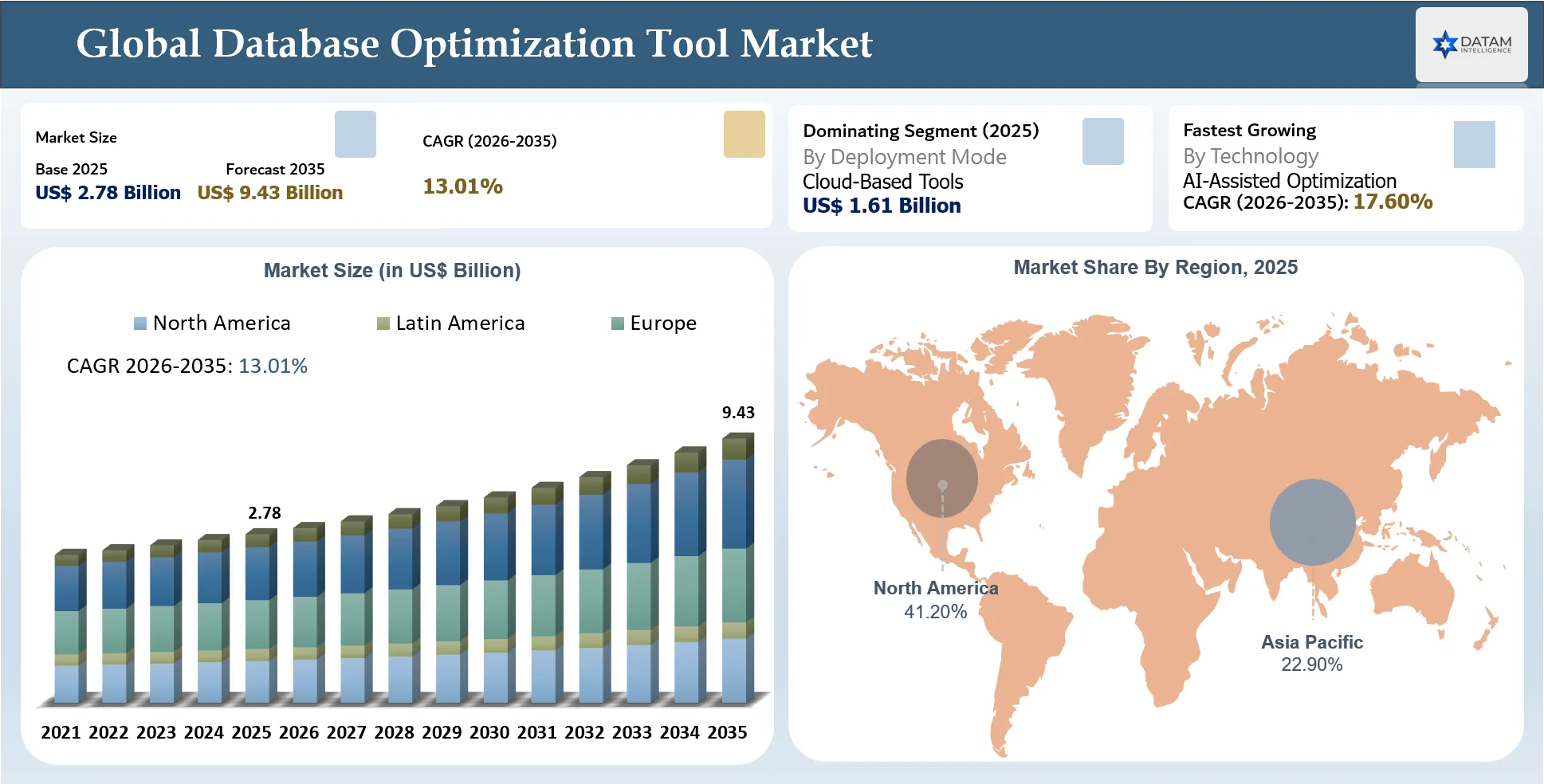
Historical Database Optimization Tool Market Trend Analysis
During 2020 to 2025, the market shifted from database administrator-centric tuning toward application reliability-centric optimization. Cloud migrations increased workload variability, making fixed capacity planning less effective and pushing buyers toward continuous monitoring. Managed Postgres, cloud data warehouses, plus microservice architectures expanded the number of database endpoints per enterprise. This raised demand for fleet-level query visibility, blocking query diagnostics, plus cost attribution. The second trend was the rise of AIOps, where anomaly detection moved from alerting into recommendation engines that suggest index changes, plan corrections, plus capacity actions. The third trend was skill scarcity. Enterprises reduced reliance on specialist database administrators by embedding database insights into DevOps and SRE workflows. By 2025, optimization tools became strategic infrastructure because slow queries, inefficient compute scaling, plus unpredictable cloud consumption directly affected customer experience and technology margins.
Database Optimization Tool Growth Outlook Summary
The short-term outlook is shaped by enterprises seeking quick cost control for cloud databases and faster root cause analysis for production incidents. Buyers prioritize tools that connect slow queries with application traces and infrastructure load. The mid-term outlook will be driven by AI-assisted query optimization, automated indexing, vector workload tuning, plus policy-based remediation. As AI agents generate database-intensive applications, database fleets will face higher variability, making continuous optimization essential. The long-term outlook through 2035 points toward autonomous database operations. Tools will increasingly simulate changes before deployment, optimize across relational plus vector workloads, plus select cheaper execution paths automatically. Growth will be strongest where digital services require high uptime and low latency. The market will also broaden beyond database administrators toward developers, platform engineers, FinOps leaders, plus data product owners, making database optimization a core part of software delivery economics.
Key Takeaways
- Cloud database cost volatility is converting optimization from a technical task into a budget governance priority.
- Query optimization is moving closer to developers because performance issues increasingly originate in application release cycles.
- AI assisted remediation will increase adoption among mid sized enterprises with limited database administrator capacity.
- Largest Segment: Cloud Based Tools will remain the leading deployment segment because database workloads continue to move into managed cloud environments.
- Largest Region: North America leads due to hyperscaler concentration, advanced DevOps adoption, plus high enterprise software spending.
- Fastest Growing Segment: AI Assisted Optimization tools will outpace legacy monitoring because buyers want recommendations and automated fixes.
- Fastest Growing Region: Asia Pacific will expand fastest due to cloud migration, digital banking, plus AI application buildout.
Database Optimization Tool Market Snapshot
| Metric | Database Optimization Tool Market Snapshot |
| Global Market Size (2025) | USD $2.78 Billion |
| Projected Market Size (2035) | USD $9.43 Billion |
| CAGR (2026-2035) | 13.01% |
| Largest Segment Name | Cloud Based Tools |
| Largest Segment Share | 57.80% |
| Fastest Growing Segment Name | AI Assisted Optimization |
| Fastest Growing Segment Share / CAGR | 17.60% |
| Largest Region Name | North America |
| Largest Region Share | 41.20% |
| Fastest Growing Region Name | Asia Pacific |
| Fastest Growing Region Share / CAGR | 15.40% |
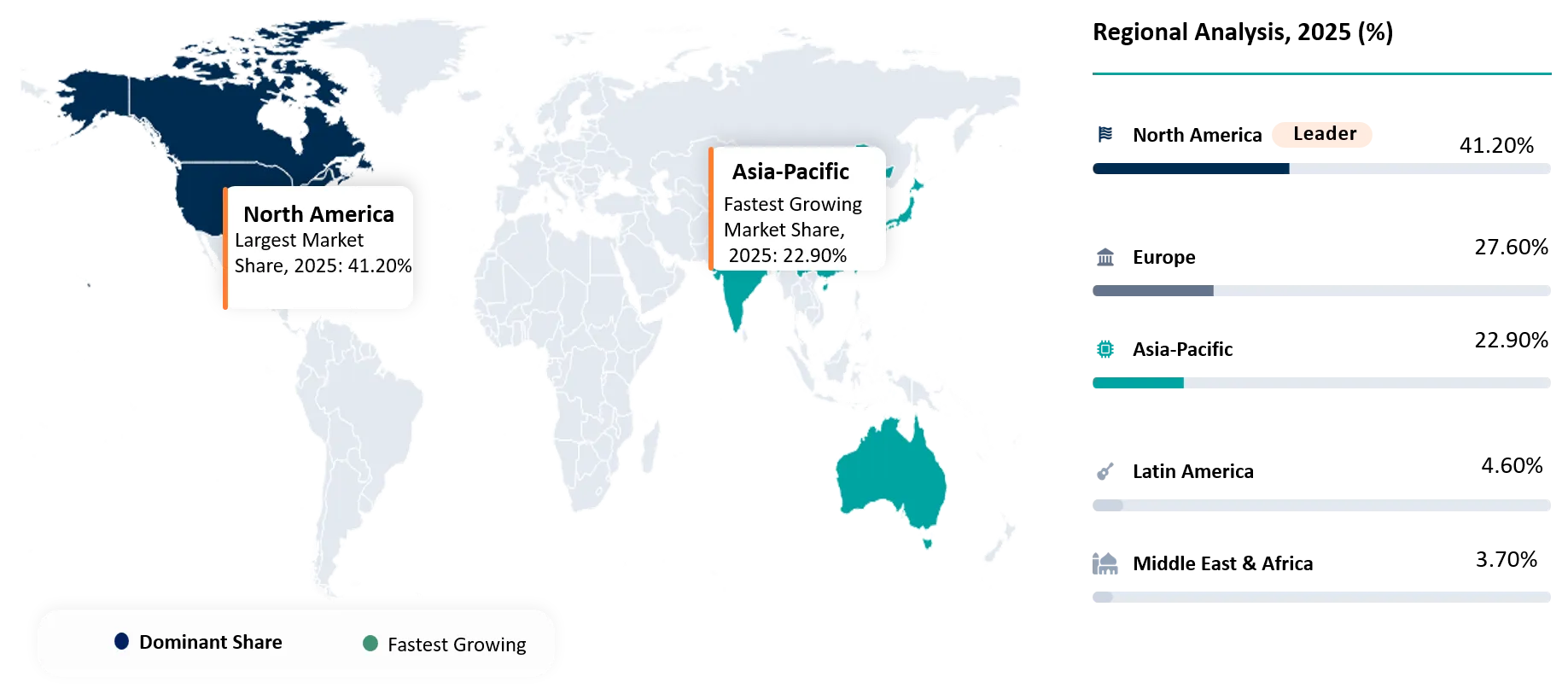
| Geographic Market Share for the 5 Regions | North America: 41.20% Europe: 27.60% Asia Pacific: 22.90% Latin America: 4.60% Middle East & Africa: 3.70% |
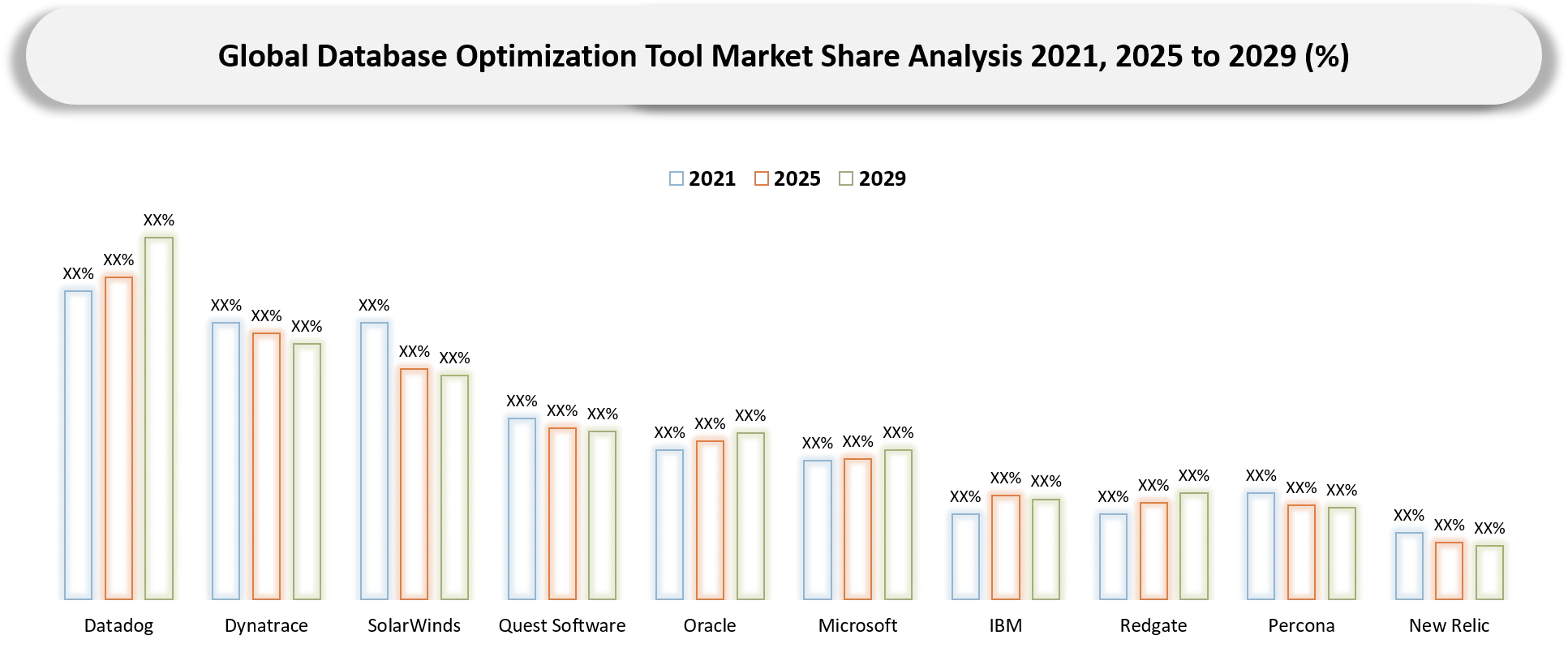
| Top Companies | Datadog Dynatrace SolarWinds Quest Software Oracle Microsoft IBM Redgate Percona New Relic |
Database Optimization Tool Market Definition & Overview
What is the database optimization tool market?
The Database Optimization Tool Market covers software platforms that monitor, diagnose, tune, automate, plus govern database performance across cloud, on-premises, hybrid, relational, NoSQL, vector, plus data warehouse environments. These tools analyze query execution, index efficiency, wait events, resource consumption, storage behavior, workload concurrency, plus cost anomalies. The market includes database monitoring, query optimization, automatic tuning, performance observability, capacity planning, database reliability engineering, plus AI-assisted remediation. Buyers use these tools to reduce latency, prevent outages, improve application reliability, lower cloud database spend, plus help development teams maintain performance without depending fully on scarce database administrators.
Database Optimization Tool Industry Background & Evolution
Parent market background: The parent market is enterprise data management software, which evolved from database administration utilities into cloud data operations, observability, plus autonomous performance management. Early 1990s tools focused on backup, indexing, plus manual SQL tuning. From 2000 to 2010, enterprise suites added monitoring dashboards for Oracle, SQL Server, plus DB2. From 2011 to 2016, cloud adoption shifted attention toward managed databases, elastic capacity, plus uptime analytics. From 2017 to 2021, DevOps teams adopted observability platforms that connected database metrics with application traces. From 2022 to 2025, AI workloads, vector search, serverless Postgres, plus cost volatility created demand for automated query recommendations. From 2026 to 2035, the roadmap moves toward agentic tuning, policy controlled remediation, workload simulation, plus self optimizing database fleets.
Database Optimization Tool Market White Space & Investment Opportunities
White space opportunities highlight unmet areas where vendors, investors, and partners can build differentiated offerings across developer workflows, industry templates, cost simulation, and edge database performance management.
- AI query copilot for developers remains a major white space because most tools still diagnose problems after code is deployed rather than during pull requests.
- Industry specific optimization templates can unlock adoption in banking and healthcare where workloads have repeatable performance patterns, compliance requirements, plus audit demands.
- Multi cloud database cost simulation is under served as buyers need to compare workload performance across AWS, Azure, Google Cloud, Oracle Cloud, plus private cloud before migration.
- Edge database optimization will emerge as industrial IoT and retail systems require local data processing with constrained compute resources.
Database Optimization Tool Market Procurement & Buyer Behavior Analysis
Database Optimization Tool Market Buyer Decision-Making Criteria
Customers procure database optimization tools to reduce latency, prevent incidents, control cloud database spend, plus improve engineering productivity. The strongest buying cases connect performance improvement with measurable business outcomes such as lower compute bills, faster incident resolution, plus higher application availability.
- Broad database engine support across Oracle, SQL Server, PostgreSQL, MySQL, NoSQL, warehouse, plus vector environments.
- Query level visibility including explain plans, wait events, lock analysis, plus historical performance baselines.
- AI assisted recommendations with explainability, confidence scoring, plus approval workflows.
- Security controls including masking, encryption, role based access, plus private telemetry options.
- Integration with observability, incident management, CI/CD, cloud billing, plus ticketing systems.
- Pricing transparency aligned with database endpoints, telemetry volume, or measurable savings.
Database Optimization Tool Market Economic & Investment Analysis
Database Optimization Tool Market Macroeconomic Impact Factors
Macroeconomic conditions affect the Database Optimization Tool Market through cloud spending discipline, labor cost pressure, plus enterprise digital transformation budgets. During periods of cautious IT spending, optimization tools can still gain priority because they help reduce infrastructure waste and improve productivity. Rising cloud database bills make buyers more willing to fund tools with a clear savings case. Wage inflation and database administrator scarcity also support automation because enterprises need to manage larger database estates without proportional headcount increases. Interest rate sensitivity can slow startup experimentation, yet it also favors platforms that improve software margins. AI investment remains a powerful counterweight because AI applications generate new data workloads that require tuning. Overall, the market benefits when enterprises need to do more with existing infrastructure while maintaining reliability and supporting new digital products.
Database Optimization Tool Investment Trends in the Market
Investment is shifting toward AI native observability, serverless database infrastructure, automated remediation, plus lower cost telemetry pipelines. Investors are backing platforms that reduce operational complexity while supporting AI driven data growth.
- AI powered observability and database remediation.
- Serverless Postgres and AI application database infrastructure.
- Cost efficient telemetry storage and processing.
- Security aware data pipelines for observability and AI.
Database Optimization Tool Market Funding & M&A Activity
Funding and M&A activity will focus on AI data infrastructure, database observability, plus cost efficient telemetry. Larger cloud and observability platforms are expected to acquire specialist database technology to strengthen AI application support.
- April 2026: OpenObserve raised USD $10.00 Million Series A led by Nexus Venture Partners and Dell Technologies Capital to expand AI native observability.
- June 2025: DataBahn.ai raised USD $17.00 Million Series A for security native data pipelines serving observability and AI workloads.
- May 2025: Databricks agreed to acquire Neon, with media reports placing the deal near USD $1.00 Billion, to strengthen serverless Postgres for AI systems.
- June 2025: Snowflake announced its intent to acquire Crunchy Data to expand enterprise Postgres capabilities for AI applications.
Database Optimization Tool Market Regulatory & Policy Analysis
Database Optimization Tool Market Regulatory Framework Overview
The regulatory framework affecting database optimization tools is indirect but important. Tools operate near sensitive enterprise data, so privacy, cybersecurity, operational resilience, plus audit rules influence procurement. GDPR in Europe, sector rules in banking and healthcare, data residency laws, plus cybersecurity regulations require controlled telemetry handling, access governance, audit logging, plus secure integration. Optimization tools also support compliance by improving uptime and documenting performance history for critical systems.
- 2025 and 2026: Growing AI governance rules increase scrutiny of automated decisions, impacting AI assisted tuning and remediation explainability.
- 2025 and 2026: Digital operational resilience expectations in financial services increase demand for database incident prevention and audit trails.
- 2025 and 2026: Data residency enforcement encourages regional telemetry storage and private deployment options.
Database Optimization Tool Policy Impact on Market Growth
Government policy supports market growth by pushing enterprises toward digital resilience, secure cloud adoption, plus data governance. These policy shifts indirectly raise demand for tools that improve database reliability and auditability.
- Cloud modernization programs in public sector increase adoption of database observability and optimization for citizen service platforms.
- Financial resilience rules push banks to invest in performance assurance, incident prevention, plus audit ready database operations.
- AI governance policies encourage transparent optimization recommendations, controlled automation, plus documented remediation workflows.
- Data localization rules create demand for regional deployment and privacy aware telemetry processing.
Database Optimization Tool Market Key Trends
Database optimization tools are shifting from passive visibility toward active performance governance. Buyers expect short diagnosis cycles, practical recommendations, plus measurable cost impact before renewal decisions.
- AI assisted tuning is becoming mainstream as tools recommend indexes, detect plan regressions, explain wait events, plus prioritize fixes based on business impact.
- FinOps integration is expanding as cloud database consumption becomes a major software margin lever for SaaS and digital commerce firms.
- Developer first workflows are increasing because database issues are often created during release cycles rather than isolated operations events.
- Cross engine observability is becoming essential as enterprises operate relational, NoSQL, warehouse, plus vector databases together.
Database Optimization Tool Market Technology Advancements
Innovation is concentrated around automation, safer remediation, plus AI ready database operations. 2025 and 2026 updates show vendors embedding optimization into database engines and observability platforms.
- January 2026: Microsoft SQL Server automatic tuning documentation highlights plan correction capabilities that identify problematic execution plans and force the last known good plan. This improves resilience for regression prone workloads.
- 2025: Oracle Autonomous AI Database capabilities include features that automatically monitor, analyze, plus optimize performance, supporting lower manual administration in cloud environments.
- May 2025: Databricks agreed to acquire Neon to strengthen serverless Postgres for developers building AI systems, increasing demand for optimization around elastic database workloads.
- June 2025: Snowflake announced its intent to acquire Crunchy Data to add enterprise grade Postgres to its AI Data Cloud, raising competitive pressure around Postgres performance tooling.
Database Optimization Tool Industry Transformation Trends
The industry is transforming as database optimization moves from specialist maintenance toward continuous software performance management. Applications now depend on distributed data services, managed cloud platforms, plus AI data pipelines, so optimization tools must work across engineering, operations, security, plus finance teams. The buyer base is expanding from DBAs to SREs, developers, platform engineers, plus FinOps owners. Vendors are moving from alerts toward recommended actions, then toward policy governed autonomous remediation. This changes pricing as value shifts from host counts to query volume, telemetry volume, database endpoints, or cost savings. The market is also consolidating into wider observability and AI data platforms, where database performance becomes one layer of the digital reliability stack.
Database Optimization Tool Market Disruption Analysis
AI driven database optimization is disrupting legacy performance monitoring by replacing manual diagnosis with learned recommendations, automated plan correction, plus natural language troubleshooting. The disruption is strongest where teams run many managed databases and cannot staff specialist DBAs for every workload. A second disruption is the convergence of observability, database management, security, plus FinOps. Tools that only show metrics are losing strategic relevance because buyers want actions that reduce latency, prevent incidents, plus lower cloud spend. By 2035, database optimization will be embedded into release pipelines and autonomous operations systems, making standalone dashboards less differentiated.
Database Optimization Tool Market Disruption & Structural Shift Analysis
Database Optimization Tool Market Technology Disruption Impact
Technology disruption is led by AI, automation, plus the rise of AI data platforms that force database optimization tools to become more predictive and action oriented.
- AI assisted query optimization disrupts manual tuning by generating index, plan, plus schema recommendations faster than traditional DBA workflows. This reduces mean time to resolution and expands adoption among developer teams.
- Serverless and vector workloads disrupt legacy monitoring because resource allocation, query patterns, plus latency bottlenecks change dynamically. Tools must support elastic baselines and AI specific database metrics.
- Autonomous remediation disrupts alert based models by allowing approved changes to be executed through policies, reducing incident response delays.
- Telemetry cost optimization disrupts observability pricing because buyers increasingly evaluate tools by data ingestion efficiency and retained insight quality.
Database Optimization Tool Future Market Transformation
By 2035, database optimization tools will function as autonomous performance control layers across enterprise data infrastructure. Business models will shift from dashboard subscriptions toward outcome linked pricing, managed optimization services, plus AI agent remediation workflows. Tools will evaluate code before deployment, simulate database impact, recommend cheaper architecture choices, plus execute safe tuning actions under policy controls. The market will also merge with data security and FinOps as buyers demand one view of performance, access risk, plus consumption cost. Vendors that can operate across relational, NoSQL, warehouse, plus vector databases will become strategic platform partners rather than tactical monitoring providers.
Database Optimization Tool Market Growth Dynamics
Database Optimization Tool Market Drivers
- Cloud database cost pressure is accelerating adoption as enterprises need tools that identify inefficient queries, idle capacity, poor indexing, plus over provisioned storage before monthly bills escalate.
- AI workload expansion is driving demand because vector search, agentic applications, plus real time analytics create unpredictable performance patterns that legacy tuning methods cannot handle at scale.
- Database administrator scarcity is increasing reliance on automation because application teams need self service recommendations, explain plan visibility, plus remediation guidance without waiting for specialist intervention.
- Regulatory uptime requirements are increasing tool adoption in banking, healthcare, telecom, plus public sector workloads where database latency can affect service continuity and customer trust.
Database Optimization Tool Market Driver Impact Assessment
| Driver | Market Growth Impact (%) | Demand Concentration | Impacted Use Case | Strategic Impact |
| Cloud database cost pressure | 4.10% | SaaS firms, digital banks, retail platforms | Query tuning, capacity optimization, workload scheduling | Converts database optimization into FinOps led purchase decisions. |
| AI workload expansion | 3.80% | AI native software, data platforms, media workloads | Vector search optimization, mixed workload tuning | Expands tool scope from SQL tuning into AI data performance. |
| Database administrator scarcity | 3.20% | Mid market enterprises, cloud first teams | Automated recommendations, self service diagnostics | Increases demand for low touch tools that support developers. |
| Regulatory uptime requirements | 2.60% | BFSI, healthcare, telecom | Incident prevention, audit ready performance history | Raises willingness to pay for validated reliability features. |
Database Optimization Tool Market Restraints
- Complex heterogeneous database estates slow adoption because buyers often run Oracle, SQL Server, PostgreSQL, MongoDB, Snowflake, plus cloud native stores with different telemetry formats and governance rules.
- Security concerns limit deep monitoring in regulated workloads because tools require query samples, metadata, access patterns, plus user activity signals that may contain sensitive business context.
- High switching costs restrain replacement purchases because performance teams depend on existing dashboards, custom alerts, historical baselines, plus integration workflows built over several years.
- Limited trust in automated remediation restrains full value capture because teams may accept recommendations while delaying autonomous changes to production databases.
Database Optimization Tool Market Restraint Impact Assessment
| Restraint | Drag on Market Growth (%) | Primary Impact Area | Impacted Use Case | Strategic Impact |
| Heterogeneous database estates | 3.60% | Enterprise integration and data normalization | Multi engine monitoring, fleet level optimization | Vendors must support broad connectors and consistent metrics. |
| Security concerns | 3.10% | Data privacy and access governance | Query sample collection, user activity monitoring | Buyers prefer masking, encryption, plus role based controls. |
| High switching costs | 2.70% | Renewal cycles and tool consolidation | Observability platform replacement | Favors vendors with migration utilities and open APIs. |
| Low trust in autonomous changes | 2.40% | Production change management | Automated tuning, index changes | Requires approval workflows plus rollback evidence. |
Emerging Database Optimization Tool Growth Factors
Emerging growth factors identify adoption pockets where automation, AI assisted tuning, vector database expansion, cloud cost pressure, and reliability engineering reshape how enterprises evaluate database optimization platforms over the next decade.
- Learned query optimizers are advancing from research into practical tooling, improving cardinality estimates, join ordering, plus execution plan selection for complex workloads.
- Serverless Postgres growth is creating demand for tools that tune cold starts, connection pooling, storage separation, plus unpredictable AI generated database usage.
- Telemetry pipelines are becoming cheaper and more flexible, allowing vendors to analyze high volume database signals without forcing customers into expensive storage commitments.
- Database security observability is merging with optimization as enterprises want performance insights alongside access monitoring and policy enforcement.
Database Optimization Tool Market Segmentation Analysis
Database Optimization Tool Market by Deployment Trends
Cloud based tools dominate because enterprises increasingly run managed databases, serverless Postgres, plus cloud data warehouses that require continuous visibility across elastic workloads. The major trend is the combination of performance optimization with cloud cost governance. Buyers want tools that identify inefficient queries and translate them into compute savings. The market is headed toward SaaS native platforms that provide cross cloud connectors, policy based remediation, plus automated baselining. On premises tools will remain relevant for regulated workloads, yet most incremental growth will come from hybrid environments where enterprises need a single view across cloud and private infrastructure.
Database Optimization Tool Market by Database Type Trends
Relational databases remain the largest segment because Oracle, SQL Server, PostgreSQL, plus MySQL continue powering mission critical applications. The major trend is the resurgence of PostgreSQL in AI application infrastructure, reinforced by serverless deployments and major platform acquisitions. The market is headed toward optimization tools that understand mixed relational and vector workloads. NoSQL and warehouse optimization will grow as analytics latency becomes more business critical, yet relational tuning remains the foundation for enterprise demand due to transaction intensity, regulatory systems, plus deep production dependency.
Database Optimization Tool Market by Capability Trends
Query performance monitoring is the largest capability because slow SQL, lock contention, plus poor execution plans remain the most frequent causes of database related application degradation. The major trend is movement from monitoring to prescriptive recommendation. Tools increasingly explain why a query is slow and identify index, schema, or capacity fixes. The market is headed toward closed loop optimization where recommendations are tested, approved, executed, plus rolled back through governed workflows. This will shift value toward vendors that can combine telemetry depth with safe automation.
Database Optimization Tool Market Regional Analysis
North America Database Optimization Tool Market
North America leads the Database Optimization Tool Market because the region has the highest concentration of hyperscalers, SaaS companies, cloud data platforms, plus enterprise observability vendors. The United States drives demand through cloud first application modernization, AI product development, plus high database consumption across banking, retail, media, plus software companies. Production capacity is shifting from traditional on premises database administration teams toward platform engineering teams that manage large fleets of managed PostgreSQL, SQL Server, Oracle, MongoDB, Snowflake, plus Databricks environments. Demand is also changing as CFOs and FinOps teams pressure technology leaders to reduce cloud database waste. Database optimization tools are being purchased to identify inefficient queries, unused indexes, excessive warehouse consumption, plus incident precursors. Canada adds demand from financial services, government digital services, plus healthcare platforms. Through 2035, North America will remain the reference market for AI assisted tuning, autonomous remediation, plus database observability acquisitions.
Europe Database Optimization Tool Market
Europe is a mature Database Optimization Tool Market shaped by regulatory sensitivity, industrial digitization, plus cloud modernization. Demand is strongest in the United Kingdom, Germany, France, the Netherlands, plus the Nordics, where banks, telecom operators, insurers, public sector agencies, plus manufacturers run complex hybrid database estates. Production capacity changes are visible in rising adoption of managed cloud databases and private cloud platforms that satisfy data residency expectations. European buyers evaluate optimization tools through security, auditability, masking, plus operational resilience criteria. The market is headed toward privacy aware database observability, energy efficient cloud optimization, plus managed service partnerships. Growth will be slower than Asia Pacific, yet renewal quality and enterprise contract values remain strong.
Asia Pacific Database Optimization Tool Market
Asia Pacific is the fastest growing regional market because digital banking, ecommerce, telecom super apps, plus AI application development are expanding database workload intensity. China, India, Japan, South Korea, Singapore, plus Australia are leading adoption, although procurement patterns differ by cloud strategy and regulatory requirements. Production capacity is shifting toward managed cloud platforms, regional data centers, plus open source database ecosystems. Demand is changing from basic uptime monitoring toward query optimization, workload forecasting, plus cost management as enterprises scale digital services. India and Southeast Asia create strong mid market demand for affordable SaaS database optimization, while Japan and Australia emphasize reliability, compliance, plus modernization of legacy enterprise systems.
Database Optimization Tool Market Country-Level Market Analysis
United States Database Optimization Tool Market Size/Forecast
The United States is the largest country market because it combines hyperscaler leadership, SaaS density, enterprise AI adoption, plus high database infrastructure spending. The 2025 market size is estimated at USD $0.95 Billion, with forecast growth to USD $3.10 Billion by 2035. Demand is strongest among software companies, banks, healthcare platforms, media firms, plus retailers that need low latency digital services. Production capacity is shifting toward managed Postgres, cloud data warehouses, plus AI data platforms. The major trend is consolidation of database monitoring into full stack observability and FinOps workflows, allowing buyers to connect query performance directly with customer impact and cloud cost.
Japan Database Optimization Tool Market Size/Forecast
Japan is a high value market due to its large financial institutions, manufacturing groups, telecom operators, plus public sector modernization programs. The 2025 market size is estimated at USD $0.18 Billion, reaching USD $0.54 Billion by 2035. Demand is driven by modernization of legacy systems, migration to managed cloud databases, plus the need for high reliability in customer facing digital services. Production capacity is shifting slowly due to risk averse enterprise cultures, yet AI and automation are increasing acceptance of optimization tools. Vendors that provide local language support, strong security controls, plus partner led implementation will benefit from steady enterprise adoption.
China Database Optimization Tool Market Size/Forecast
China is one of the fastest scaling country markets because cloud platforms, ecommerce giants, financial technology firms, plus AI developers generate very high database workload intensity. The 2025 market size is estimated at USD $0.29 Billion, reaching USD $1.05 Billion by 2035. Demand is shaped by domestic cloud ecosystems, open source database adoption, plus performance needs for high concurrency applications. Production capacity is moving toward local cloud database platforms, distributed databases, plus AI data infrastructure. Growth will favor optimization tools that support domestic database engines, provide strong automation, plus help enterprises reduce latency across payment, logistics, gaming, plus consumer internet workloads.
India Database Optimization Tool Market Size/Forecast
India is a fast growing country market as digital public infrastructure, fintech, ecommerce, telecom, plus SaaS exports expand database workload volumes. The 2025 market size is estimated at USD $0.14 Billion, reaching USD $0.59 Billion by 2035. Demand is changing from basic monitoring toward cloud cost optimization and developer friendly tuning because engineering teams operate lean database administration structures. Production capacity is shifting to managed cloud databases, regional data centers, plus open source stacks such as PostgreSQL and MySQL. The strongest adoption will come from digital banking, SaaS companies, healthcare platforms, plus large system integrators that package database optimization with managed services.
Database Optimization Tool Market Other Key Countries
- United Kingdom Database Optimization Tool Market: The UK market is led by banking, insurance, public sector, plus digital commerce. Buyers emphasize resilience, audit trails, plus cloud cost transparency. Growth is supported by managed database migration and platform engineering adoption.
- Germany Database Optimization Tool Market: Germany demand comes from manufacturing, automotive software, industrial IoT, plus regulated enterprise systems. Buyers prefer secure hybrid deployment, data residency controls, plus deep support for Oracle, SQL Server, plus PostgreSQL.
- France Database Optimization Tool Market: France adoption is supported by telecom, banking, public services, plus retail modernization. Optimization demand is tied to uptime, compliance, plus cloud cost management across hybrid database estates.
- Singapore Database Optimization Tool Market: Singapore is a regional hub for fintech, logistics, plus cloud services. Buyers favor SaaS observability, fast deployment, plus multi cloud database visibility for regional operations.
- Australia Database Optimization Tool Market: Australia demand is driven by banking, public sector, healthcare, plus digital commerce. The market favors secure cloud database tools, local partner support, plus performance assurance for customer facing services.
Database Optimization Tool Market Competitive Landscape
Competitive Benchmarking
Competitive benchmarking shows that leaders are differentiating through breadth of telemetry, AI recommendations, database engine coverage, plus ability to link performance to business impact.
- Datadog: Broad cloud observability portfolio with database monitoring, query insights, explain plans, plus AI assisted root cause analysis. Targets DevOps, SRE, platform teams, plus SaaS companies that need cross stack visibility. Use case focus is cloud native database troubleshooting and performance cost control.
- Dynatrace: Strong in AI powered observability with database issue detection and automated problem context. The Metis acquisition strengthens database specific recommendations. Targets large enterprises needing automated remediation across complex application estates. Use case focus is incident reduction and autonomous operations.
- Oracle: Strong in autonomous database optimization inside Oracle environments. Targets Oracle Cloud and enterprise database customers. Use case focus is built in tuning, scaling, plus database self management.
- Microsoft: Strong for SQL Server and Azure SQL estates through Query Store, automatic plan correction, plus Azure integration. Targets enterprises standardized on Microsoft data platforms. Use case focus is plan regression control and hybrid SQL operations.
Database Optimization Tool Market BCG Matrix List
- Stars: Datadog, Dynatrace
- Cash Cows: Oracle, Microsoft
- Question Marks: OpenObserve, Percona
- Niche Players: Redgate, Quest Software
Database Optimization Tool Market BCG Matrix Analysis
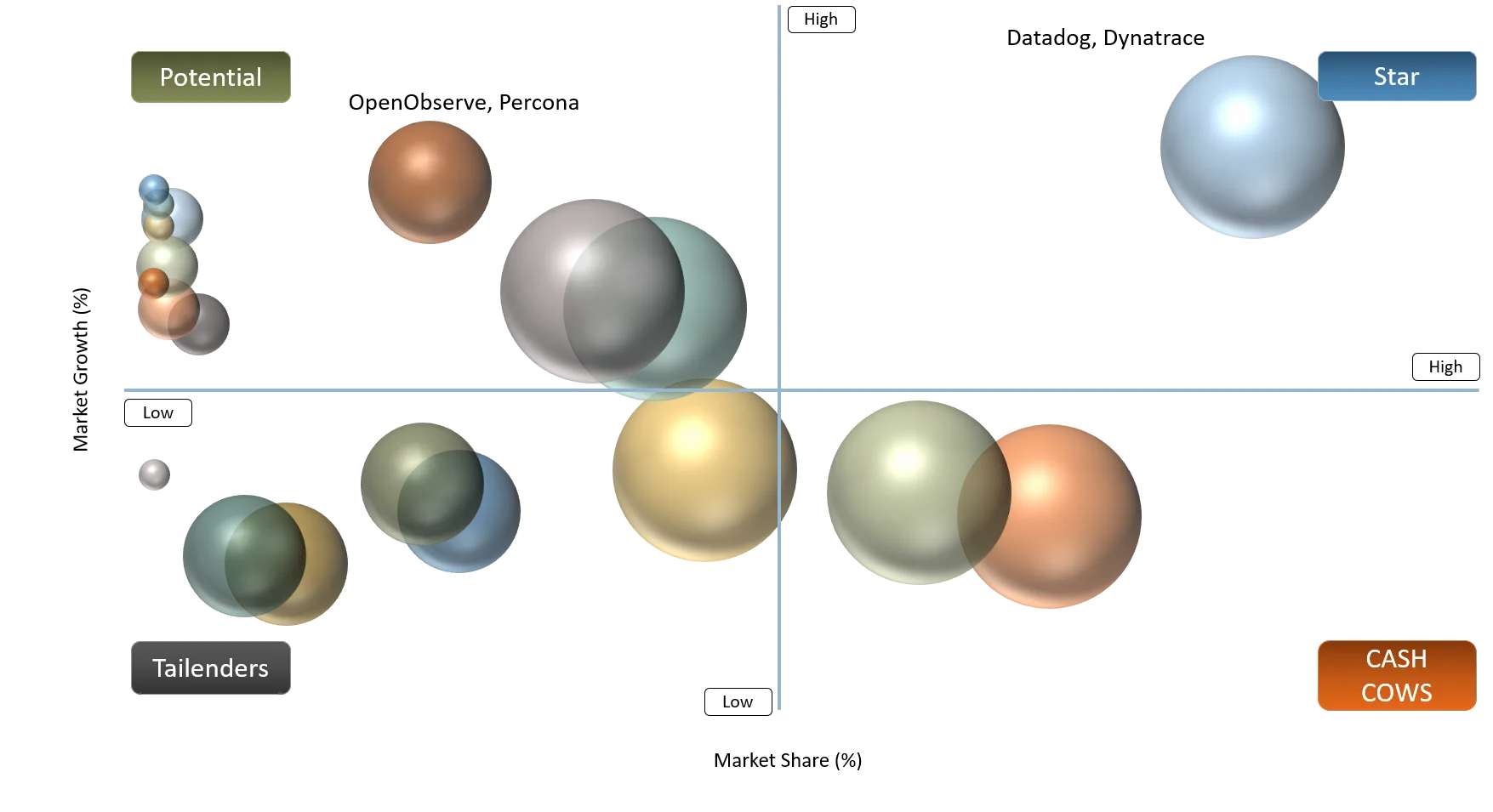
Datadog and Dynatrace sit in the Stars category because they combine high growth observability demand with expanding database optimization capabilities. Their advantage comes from full stack telemetry, AI recommendations, plus strong positioning with SRE and platform teams. Oracle and Microsoft are Cash Cows because they hold embedded positions in major enterprise database estates, with optimization capabilities tied to existing database platforms and cloud contracts. Their growth is steady rather than disruptive, supported by renewal depth and customer lock in. OpenObserve and Percona are Question Marks because they serve growing needs around open source, cost efficient observability, plus database expertise, although they must scale enterprise go to market capacity. Redgate and Quest Software are Niche Players because they retain strong specialist credibility in database administration, yet face pressure from broader observability suites and autonomous database platforms.
Database Optimization Tool Market Expansion & Partnership Strategy
Expansion and partnership activity shows that data platform companies are buying database expertise while observability vendors add AI remediation capabilities.
- May 2025: Databricks agreed to acquire Neon to deliver serverless Postgres for developers and AI agents. The move increases investment around elastic Postgres optimization and strengthens demand for tools that manage AI generated database workloads.
- June 2025: Snowflake announced its intent to acquire Crunchy Data to bring enterprise ready Postgres to the AI Data Cloud. The acquisition raises competitive pressure around PostgreSQL management, governance, plus performance optimization.
- 2025: Dynatrace acquired Metis to enhance AI powered database observability. The deal deepens expert recommendations and automatic remediation use cases for developers and SRE teams.
- April 2026: OpenObserve raised USD $10.00 Million Series A led by Nexus Venture Partners and Dell Technologies Capital, strengthening investment in cost efficient observability infrastructure that can support database telemetry workloads.
Database Optimization Tool Market Key Developments (2025–2026)
Database Optimization Tool Major Industry Developments
Database optimization market developments show increasing convergence between AI data platforms, database infrastructure, plus observability.
- May 2025: Databricks agreed to acquire Neon to deliver serverless Postgres for developers and AI agents, strengthening elastic database infrastructure for AI workloads.
- June 2025: Snowflake announced its intent to acquire Crunchy Data to bring enterprise ready Postgres to the AI Data Cloud.
- April 2026: OpenObserve raised USD $10.00 Million Series A to expand AI native observability with lower storage cost architecture.
- June 2025: DataBahn.ai raised USD $17.00 Million Series A to build security native data pipelines for observability and AI.
- 2025: Oracle Observability and Management services expanded performance monitoring and proactive tuning capabilities for Oracle cloud databases.
Database Optimization Tool Recent Market Announcements
June 2025: Snowflake announced its intent to acquire Crunchy Data, a trusted enterprise PostgreSQL provider, to bring enterprise ready Postgres into the AI Data Cloud. The announcement is important for the Database Optimization Tool Market because it signals that PostgreSQL performance, governance, plus developer experience are becoming strategic capabilities for AI applications. As major data platforms embed transactional databases closer to analytics and AI services, demand will rise for optimization tools that support elastic Postgres workloads, query diagnostics, plus cost efficient operations. The deal also increases competitive pressure on observability vendors to provide deeper database specific intelligence rather than broad infrastructure metrics alone.
Database Optimization Tool Market Technology Launches & Partnerships
Technology launches and partnerships are moving the market toward automated database intelligence and AI ready data infrastructure.
- January 2026: Microsoft SQL Server automatic tuning documentation highlights automatic plan correction for execution plan regressions, reinforcing built in optimization as a mainstream capability.
- 2025: Oracle Autonomous AI Database continued emphasizing automatic performance monitoring, analysis, plus optimization for cloud database users.
- May 2025: Databricks and Neon announced a transaction focused on serverless Postgres for developers and AI agents, expanding optimization needs around elastic workloads.
- June 2025: Snowflake and Crunchy Data announced a transaction that brings enterprise PostgreSQL technology into Snowflake’s AI Data Cloud strategy.
Database Optimization Tool Market Strategic Insights & Analyst Perspective
Analyst Insights of Database Optimization Tool Market
From a DataM Intelligence perspective, the Database Optimization Tool Market is moving from a narrow technical utility category into a strategic control layer for digital business performance. The main reason is that database inefficiency now affects three board level priorities: customer experience, cloud cost, plus AI readiness. In 2025, many enterprises still treat query tuning as a reactive activity conducted after incidents. By 2035, this approach will be commercially insufficient because AI applications, vector search, plus distributed data architectures will create far more dynamic workloads. The market will reward vendors that connect query level insight to business impact, such as delayed transactions, checkout abandonment, degraded model retrieval, or higher compute spend. We expect the strongest growth in AI assisted optimization, developer first remediation, plus FinOps aligned database cost control. Consolidation will continue as observability suites, cloud platforms, plus data infrastructure companies acquire database specialists. Specialist vendors can still win by offering deep engine expertise, transparent pricing, plus strong privacy controls. The winning operating model will combine monitoring, recommendation, simulation, plus governed automation in one workflow.
Strategic Recommendations of Database Optimization Tool Market
- Recommendation 1: Vendors should build outcome based proof points around latency reduction and cloud savings. Customers are less impressed by dashboard volume and more interested in measurable business impact. A company in this market should offer pilot programs that measure before and after query latency, infrastructure savings, incident reduction, plus developer productivity. This helps convert database optimization from an engineering expense into a business case that CFOs and technology leaders can approve.
- Recommendation 2: Vendors should prioritize safe automation rather than full autonomy. Enterprises want faster remediation, yet they need control over production changes. Companies should invest in simulation, approval workflows, rollback, policy rules, plus explainable AI recommendations. This strategy can build trust among regulated buyers while still moving the market toward autonomous optimization. The strongest vendors will let customers choose between advisory, assisted, plus automated operating modes.
Database Optimization Tool Future Market Outlook (2035 Vision)
In 2025, the Database Optimization Tool Market is centered on monitoring, troubleshooting, plus cost visibility. Most enterprises still rely on dashboards, alerts, plus human review before making production changes. By 2035, the market will look materially different. Optimization tools will operate as intelligent control systems that continuously evaluate workload behavior, predict bottlenecks, plus recommend or execute improvements under governance rules. AI generated applications will increase database variability, making static tuning methods ineffective. Vector search, real time analytics, plus serverless databases will require tools that understand both performance and economics. Buyers will expect country specific market support, local telemetry options, plus compliance ready audit trails. Vendors will package optimization with observability, security, FinOps, plus release engineering workflows. The market size will expand as database optimization becomes a standard part of digital operations budgets rather than a specialist DBA purchase.
Database Optimization Tool Market Target Audience
- Database Software Vendors: Use the report to benchmark product gaps, automation roadmaps, plus expansion priorities.
- Observability Platforms: Use the report to assess database performance as a strategic layer within full stack monitoring.
- Cloud Service Providers: Use the report to understand demand for managed database optimization and cost control.
- System Integrators and MSPs: Use the report to build database performance services around cloud migration and modernization.
- Enterprise IT Buyers: Use the report to compare procurement criteria, regional adoption, plus vendor positioning.
- Investors and Private Equity Firms: Use the report to evaluate consolidation opportunities in observability, AI data infrastructure, plus database tooling.
- FinOps and Platform Leaders: Use the report to identify tools that improve database cost efficiency and reliability.
Who Should Buy this Report?
This report is designed for organizations that need a deeper view of database optimization market size, growth, share, forecast, vendor strategy, plus country specific market opportunities. It supports strategic planning, product positioning, acquisition screening, plus go to market prioritization.
- Database optimization vendors seeking product roadmap and competitive benchmarking.
- Observability companies evaluating database performance expansion.
- Cloud providers and managed service firms building database optimization services.
- Investors assessing AI observability, database tooling, plus automation opportunities.
- Enterprise procurement teams comparing tool requirements and buyer risks.
- Strategy teams tracking regional growth, forecast outlook, plus demand drivers.
Why Choose DataM Intelligence?
- Business outcome focus: DataM Intelligence links market analysis to revenue opportunities, procurement triggers, plus investment priorities rather than presenting surface level trend summaries.
- Forecast clarity: The report provides market size, share, plus growth outlook in a format that supports planning, budgeting, plus board level decision making.
- Competitive depth: DataM Intelligence evaluates vendors by positioning, product focus, target strategy, plus use case concentration.
- Buyer behavior insight: The analysis explains how customers evaluate database optimization tools and which procurement risks affect deal conversion.
- Country specific intelligence: The report supports country specific market sizing, regional demand planning, plus localized go to market strategy.
- Strategic recommendations: DataM Intelligence converts research into actionable recommendations for product, investment, plus expansion decisions.


























































