


Cultivated Protein Pet Food Market Size and Overview
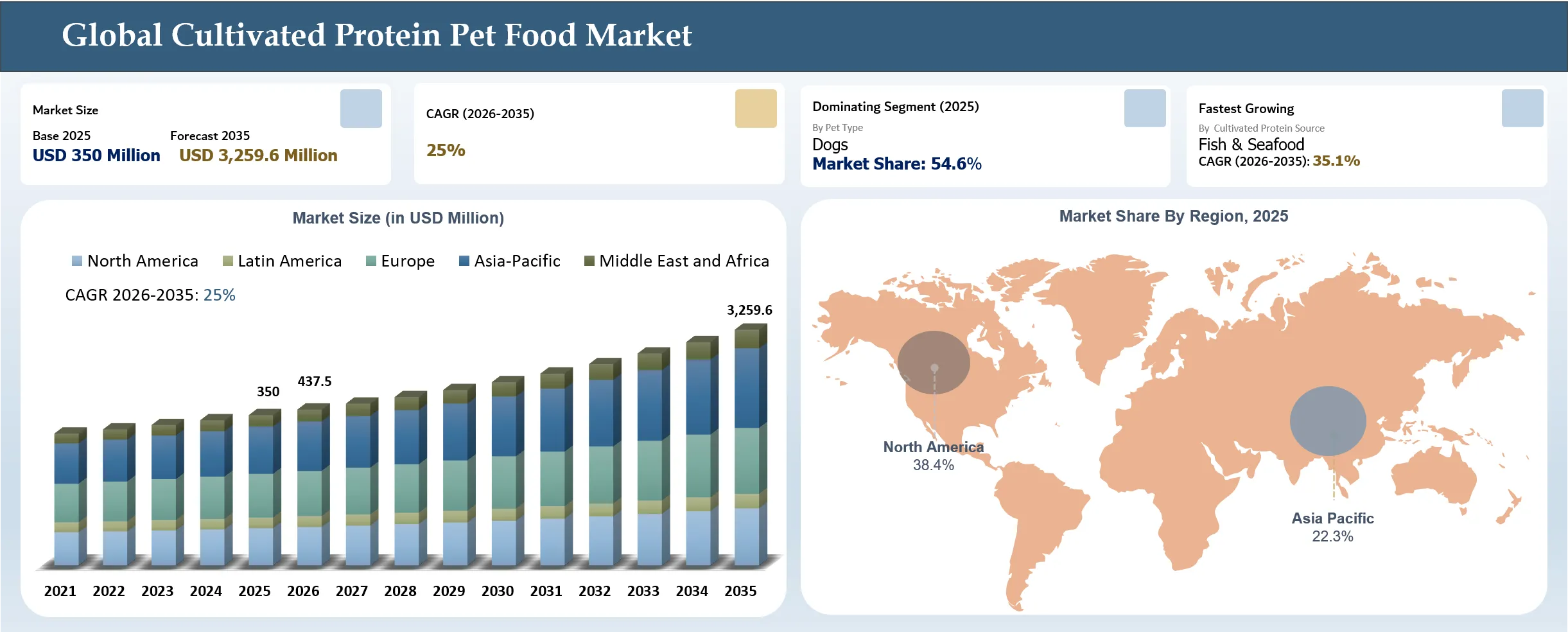
The global cultivated protein pet food market reached USD 350 million in 2025 and is expected to reach USD 3,259.6 million by 2035, growing with a CAGR of 25% during the forecast period 2026-2035. The market is advancing as cellular-agriculture companies move cultivated animal proteins from laboratory development toward commercial pet-food applications, particularly in premium nutrition and sustainable protein formulations. The pipeline of commercial development has been bolstered in 2025 by UMAMI Bioworks through the launch of their new seafood protein platform that aims to supply seafood proteins with omega-3 fatty acids, selenium, and vitamin D.
In February 2025, according to Pet Food Processing, pet food manufacturing utilizes about 2.5 million metric tons of fish every year. In contrast, dogs and cats represent 25% to 30% of the impact on the environment due to animal-protein intake. UMAMI Bioworks was also selected for Nestlé Purina Accelerator Lab's UNLEASHED 2025 accelerator and has announced collaborations with global pet food firms and innovators on next-generation formulas.
Investments and capacities are growing at a fast pace as well. For instance, in May 2026, Meatly, a UK-based cultivated meat producer that specialises in pet food products, raised about £10 million (USD 13.55 million) from Series A financing and is aiming to develop a pilot-scale production facility of 20,000 liters, which will increase the total amount of funding to about £17.4 million (USD 23.57 million). The investment is aimed at facilitating the production of Meatly Chicken for the UK pet food market.
Such companies as Meatly, UMAMI Bioworks, Friends & Family Pet Food and BeneMeat are moving cultivated proteins towards becoming commercial pet treats and pet food products. However, high costs of cultivation, small scales of production, regulatory requirements, and technical problems in making products cheaper than their animal analogues still remain obstacles to commercialisation.
White-Space Opportunities for Cultivated Protein Pet Food R&D and Commercialization
In August 2025, the U.S. Department of Agriculture’s National Institute of Food and Agriculture (USDA NIFA) announced approximately USD 300 million in FY2026 funding through the Agriculture and Food Research Initiative (AFRI) Foundational and Applied Science Program, with individual awards ranging from USD 10,000 to USD 10 million.
The highest-relevance investment area for the Cultivated Protein Pet Food Market is Food Safety, Nutrition, and Health, which includes research related to novel foods and innovative manufacturing technologies, while Animal Health and Production and Animal Products and Agriculture Systems and Technology provide additional opportunities for animal nutrition, production systems, biotechnology, and advanced manufacturing research.
In November 2025, USDA NIFA additionally invested USD 6.8 million across 16 projects through its Novel Foods and Innovative Manufacturing program, supporting novel food production, processing, manufacturing, food safety, nutrition, sustainability, and supply-chain efficiency.
The funding creates a white-space opportunity for cultivated protein pet food because government support is available across novel foods, animal products, nutrition, and advanced manufacturing, while dedicated funding specifically combining cultivated protein with pet nutrition remains limited, leaving scope for targeted R&D programs covering cultivated pet-food safety, nutritional validation, digestibility, palatability, and scalable production.
The investment is expected to create opportunities across the cultivated-protein pet-food value chain, particularly in cellular agriculture, cultivated animal protein production, pet nutrition, food safety, and scalable manufacturing. Meatly can benefit from government-supported research in cellular agriculture and novel food manufacturing, particularly for improving cultivated-chicken production, manufacturing efficiency, and food-safety validation for pet-food applications.
BioCraft Pet Nutrition can benefit from funding opportunities focused on cultivated animal proteins and pet nutrition, including nutritional composition, digestibility, safety, and formulation of cultivated-protein pet food. Bond Pet Foods can potentially benefit from research support related to animal-free protein production, nutritional optimization, and alternative protein manufacturing, while Wild Earth can benefit from research opportunities involving alternative protein, pet nutrition, and sustainable pet-food formulations.
Because these companies operate at the intersection of alternative proteins and pet nutrition, the AFRI funding framework can provide opportunities for university-industry collaborations covering cell-culture optimization, nutritional testing, food-safety assessment, and production scale-up.
Cultivated Protein Pet Food Market Key Takeaways
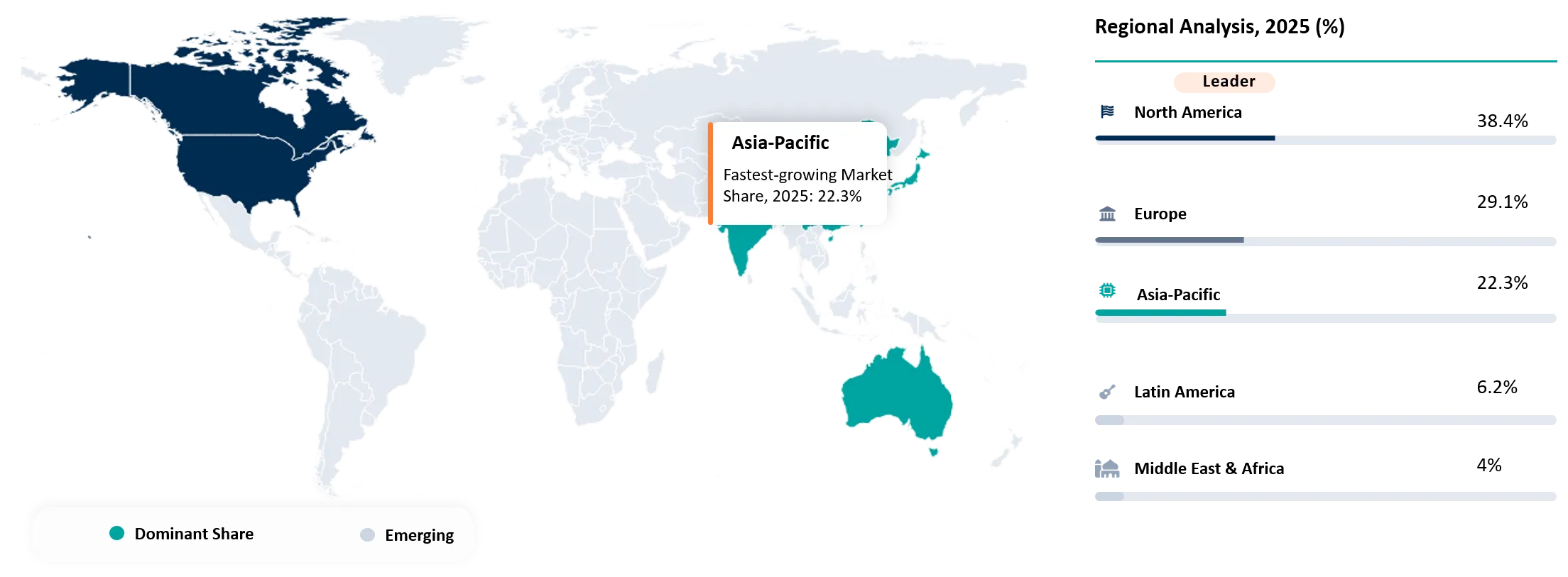
- Driven by a strong cellular-agriculture ecosystem and high pet ownership, North America led global revenue in 2025 with a 38.4% market share.
- The dog segment dominated the global market in 2025 with a 54.6% market share, reinforced by a study showing that 24% of dog owners prefer cultivated meat alternatives.
- Canada features 17.2 million cats and dogs (8.3 million dogs and 8.9 million cats), with retail pet-food sales reaching C$6.7 billion (USD 4.9 billion), where dog food holds 66.4%.
- The USDA NIFA announced approximately USD 300 million in FY2026 AFRI funding with awards from USD 10,000 to USD 10 million, alongside an additional USD 6.8 million invested across 16 novel food projects.
Cultivated Protein Pet Food Market Industry Trends and Strategic Insight
- Shift from proof-of-concept products toward commercially viable pet-food formulations. The industry is moving beyond laboratory demonstrations and limited tasting programs toward retail-ready treats, toppers, wet foods, and complete-and-balanced formulations.
- Pet food is emerging as an initial commercialization pathway for cultivated meat. Companion-animal nutrition provides an attractive entry point because product developers can introduce cultivated proteins in treats, toppers, and specialized formulations before attempting broader mainstream food applications.
- Functional nutrition is becoming a central product-development strategy. Cultivated protein products are increasingly being positioned around specific nutritional outcomes rather than sustainability alone.
- Prioritize ingredient economics before aggressive consumer-market expansion. Companies should focus on reducing media, energy, bioreactor, and downstream-processing costs before attempting broad-market penetration.
- Build commercialization around targeted applications rather than immediate mass-market replacement. Treats, toppers, specialty diets, and functional products provide more practical entry points than attempting to replace conventional meat across mainstream pet-food categories.
Cultivated Protein Pet Food Market Scope
| Metrics | Details | |
| 2025 Market Size | USD 350 Million | |
| 2035 Projected Market Size | USD 3,259.6 Million | |
| CAGR (2026-2035) | 25% | |
| Largest Market | North America | |
| Fastest Growing Market | Asia-Pacific | |
| By Cultivated Protein Source | Chicken, Beef, Pork, Fish & Seafood, Other Animal Proteins | |
| By Production Technology | Adherent Cell Culture, Suspension Cell Culture, Scaffold-Based Cultivation, Bioreactor-Based Cultivation, Others | |
| By Ingredient | Cultivated Cellular Biomass, Cultivated Muscle Protein, Cultivated Animal Fat, Cultivated Tissue, Cultivated Protein Blends, Others | |
| By Pet Type | Dogs, Cats, Other Companion Animals | |
| By Product Format | FRESH, FROZEN, Dehydrated, Semimoist, Others | |
| By Functional Benefit | General Nutrition, Digestive Health, Skin & Coat Health, Allergy & Sensitivity Management, Weight Management, Others | |
| By Distribution Channel | Direct-to-Consumer, Online Marketplaces, Specialty Pet Stores, Veterinary Clinics, Retail Stores | |
| By Region | North America | U.S., Canada, Mexico |
| Europe | Germany, UK, France, Spain, Italy, Poland, Netherlands, Switzerland | |
| Asia-Pacific | China, India, Japan, Australia, South Korea, Indonesia, Malaysia | |
| Latin America | Brazil, Argentina | |
| Middle East and Africa | UAE, Saudi Arabia, South Africa, Israel, Türkiye | |
| Report Insights Covered | Competitive Landscape Analysis, Company Profile Analysis, Market Size, Share, Growth | |
Cultivated Protein Pet Food Market Disruption Analysis
Cellular Production Reshaping the Conventional Meat-to-Pet-Food Supply Chain
The disruption in the cultivated protein pet food market is primarily associated with the rapid transition from conventional livestock-derived proteins to the use of cultivated protein technology in manufacturing pet foods. Cultivated protein technology is transforming the traditional animal meat-to-pet food chain, as it allows animal cells to be cultivated under controlled conditions and later utilized in formulating pet food products without the need for animal rearing, slaughter, and traditional meat processing methods. It is also transforming the position of biotech companies from being mere technology providers to suppliers of the necessary proteins for pet foods.
The disruption is also reshaping the pet food sector in the downstream direction through the incorporation of cultivated ingredients in commercial pet treats and formulations, not just limited to laboratory testing. In July 2025, as per Pet Food Processing, Friends & Family Pet Food obtained regulatory approval from the Singapore Animal & Veterinary Service in June 2025, thus becoming the first cultivated meat pet food approved for sale in Asia. Eight SKUs of freeze-dried pet treats were being launched by this company, where cultivated poultry meat makes up approximately 60%-65% of each treat, and initial tests have indicated over 70% protein content. The company further mentioned that their cultivated meat pet treats can produce greenhouse gas emissions 90% lower than beef-based pet treats, whereas cultivated meat production can use up to 90% less land and 78% – 96% less water compared to traditional livestock farming.
Cultivated Protein Pet Food Market BCG Matrix: Company Evaluation
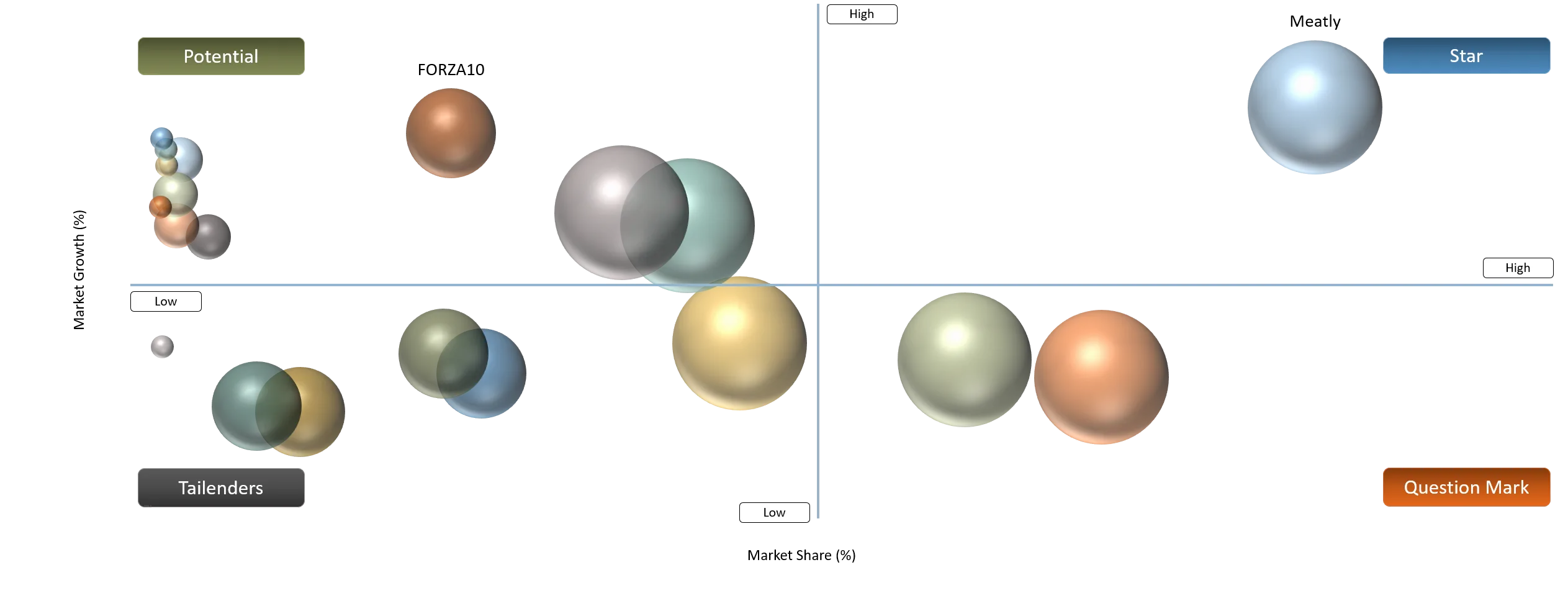
Stars include Meatly, Friends & Family Pet Food, and BeneMeat Technologies a.s. because these companies have established strong positions in the emerging cultivated-protein pet-food ecosystem and have progressed beyond early laboratory development toward regulatory approvals, commercial products, and production scale-up. Question Marks include BioCraft Pet Nutrition Inc., Novel Farms, Inc., and Cell Agritech, as these companies possess relevant cultivated-protein or cellular-agriculture capabilities but remain at comparatively earlier stages of commercial penetration in cultivated pet food.
Potential includes FORZA10, THE PACK, and Prefera Petfood, which benefit from established pet-food expertise, product-development capabilities, and access to existing consumer or distribution channels but have comparatively less direct exposure to cultivated-protein production. Tailenders comprise companies with limited direct involvement or relatively narrow exposure to cultivated-protein pet food compared with the company’s leading commercialization and technology development.
Cultivated Protein Pet Food Market Dynamics
Driver Impact Analysis
| Driver | Market Growth Impact (%) | Demand Concentration | Impacted Use Case | Strategic Impact |
Pet owners increasingly scrutinize animal welfare within conventional meat supply. | 22% | Premium pet owners, sustainability-conscious households, urban consumers, and ethically oriented dog and cat owners | Premium treats, cultivated-meat toppers, sustainable pet-food formulations | Strengthens demand for slaughter-free animal protein and enables brands to differentiate through animal-welfare positioning and transparent protein sourcing. |
Cultivated proteins offer traceable animal nutrition without livestock slaughter requirements. | 27% | Premium nutrition, functional pet food, specialty diets, and consumers seeking traceable animal-derived ingredients. | Complete-and-balanced diets, functional treats, fresh diets, specialized nutrition | Creates a new protein-sourcing model in which cellular production can provide greater control over ingredient composition, production conditions, and nutritional formulation. |
Premium pet owners increasingly seek novel proteins supporting differentiated diets. | 24% | Premium and health-focused pet owners, early adopters, specialty-pet-food consumers, and owners of dogs and cats requiring differentiated nutrition | Functional treats, digestive-health products, skin-and-coat formulations, novel-protein diets | Encourages companies to move beyond conventional meat replacement toward customized formulations. |
Cell cultivation can reduce dependence on volatile livestock-based ingredient supply. | 19% | Pet-food manufacturers, cultivated-protein suppliers, premium brands, and markets exposed to conventional meat-supply volatility | Ingredient supply, cultivated-meat treats, wet/fresh food, complete diets, co-developed formulations | Encourages vertical integration and strategic partnerships between cellular-agriculture companies and pet-food manufacturers. |
Pet owners increasingly scrutinize animal welfare within conventional meat supply
As consumers begin to question animal welfare practices in the context of conventional meat production, the growing interest in animal welfare will become one of the key drivers on the demand side of the market for cultivated protein pet food. In addition to considering the nutritive value of pet foods, consumers have started to look into the issues related to animal welfare arising in the process of raising and slaughtering livestock and using conventionally sourced animal proteins.
In parallel, rising acceptance of alternatives to conventional meat is strengthening the demand side of cultivated protein. In November 2025, according to the Maeil Business Newspaper, an international survey conducted among more than 4,000 pet owners revealed that 43% of dog owners, currently feeding their dogs with meat-based diets, were open to switching to sustainable proteins, including plant-based or cultivated-meat pet foods, whereas 51% of cat owners, currently providing a meat-based diet to their cats, were also willing to try alternatives. Among all alternative sources of protein, cultivated meat appeared to be the most preferable, as 24% of dog owners and 33% of cat owners chose it over vegetarian and vegan protein alternatives. Moreover, it was revealed that more than 80% of pet owners required guarantees of balanced nutrition and the absence of health risks for animals from switching to alternative diets.
Restraint Impact Analysis
| Restraint | Drag on Market Growth (%) | Primary Impact Area | Impacted Use Case | Strategic Impact |
High cultivation costs constrain price competitiveness against established animal proteins. | 27% | Production economics, product pricing, premium-market accessibility | Cultivated meat treats, complete diets, fresh pet food, functional formulations | Keeps cultivated pet food concentrated in premium segments and pressures producers to reduce cell-culture media, bioreactor and processing costs before pursuing mass-market price parity. |
Limited regulatory pathways delay widespread cultivated pet-food commercialization across markets. | 25% | Regulatory approval, geographic expansion, commercialization timelines | Cultivated treats, toppers, complete-and-balanced pet food, cross-border product launches | Creates market-by-market commercialization barriers and increases compliance costs. |
Consumer skepticism surrounding laboratory-produced meat complicates mainstream pet-owner acceptance. | 23% | Consumer trust, purchase adoption, brand positioning | Premium treats, novel-protein diets, cultivated-meat toppers and everyday pet nutrition | Slows conversion from early adopters to mainstream buyers and increases the importance of education, nutritional evidence, transparency and veterinary credibility. |
Bioreactor capacity remains inadequate for large-scale cost-efficient pet-food production. | 25% | Manufacturing scale, production capacity, yield and supply reliability | High-volume treats, wet/fresh diets, complete-and-balanced products and large retail programs | Limits the ability of cultivated-protein suppliers to provide consistent volumes at competitive costs. |
Limited regulatory pathways delay widespread cultivated pet-food commercialization across markets
One of the main issues hindering the widespread commercialization of cultivated protein pet food is the limited and fragmented regulatory pathways across countries. Unlike conventional pet-food ingredients, cultivated proteins may require regulators to assess novel production methods, cell-line identity, microbiological hazards, nutritional composition, allergenicity, labeling, and manufacturing controls, creating additional time and documentation requirements for companies seeking market access.
In addition, the disjointed regulatory landscape presents another challenge for expansion into other markets. In February 2025, according to CNN, Meatly’s “Chick Bites” have been declared the first commercially produced pet food products that contain cultivated meat, with the product containing 4% cultivated chicken and having been made available initially at only one store of the Pets at Home chain in London at the price of £3.49 (USD 4.73) per 50-gram package. CNN also noted that only a few countries, including Singapore, the US, and Israel, had allowed the sale of cultivated meat at the time, whereas the UK was carrying out a two-year-long regulatory program aimed at creating an approval route for cultivated meat for human consumption.
Cultivated Protein Pet Food Market Segment Analysis
The global cultivated protein pet food market is segmented based on cultivated protein source, production technology, ingredient, pet type, product format, functional benefit, distribution channel, and region.
Dogs Segment Dominating Cultivated Protein Pet Food Market Through Larger Demand Base and Stronger Acceptance of Novel Animal Proteins
The dogs segment dominates the cultivated protein pet food market, accounting for 54.6% of the market in 2025, supported by the larger adoption base of meat-based diets and increasing interest among dog owners in sustainable and novel protein alternatives. Dogs represent an important early commercialization segment because cultivated protein can be incorporated into treats, toppers, fresh diets, and functional formulations while retaining an animal-derived protein profile.
The dominance of the dogs’ segment is further supported by strong consumer acceptance of cultivated protein as an eco-friendly replacement for traditional dog food. In October 2025, according to PubMed Central (PMC), a survey of 2639 dog guardians found that 84% (2,188 of 2,596) of the participants were feeding their pets conventional or raw meat-based dog foods, and more than 43% (936 of 2,169) said they were ready to at least consider a sustainable substitute. The most popular choice was cultivated meat-based food; it was selected by 24% (529 respondents), followed by vegetarian (17%), insect-based (16%), and vegan (13%) alternatives. Nutritional adequacy turned out to be the most important factor when it comes to making the purchasing decision (85%), while information about the products and labeling/packaging were used most often by 42% of the consumers. The data proves the significant demand basis for the Dogs segment because of its large consumer base and relative acceptance of cultivated meat.
Cultivated Protein Pet Food Market Geographical Penetration
North America Dominating Cultivated Protein Pet Food Market Through Strong Pet-Food Demand, Innovation Ecosystem, and Early Commercialization Activity
The North America region dominates the cultivated protein pet food market, accounting for 38.4% of global revenue in 2025, supported by high pet ownership, strong demand for premium pet nutrition, an established pet-food industry, and the concentration of cultivated-protein and cellular-agriculture companies. The region also benefits from advanced food-technology capabilities, established specialty pet-food distribution networks, and increasing consumer interest in sustainable and ethically sourced animal protein.
Growing commercialization of cultivated-protein ingredients in pet nutrition is encouraging biotechnology companies to expand into alternative meat-based pet treats. In March 2025, CULT Food Science Corp., a Canada-based biotechnology/alternative-protein company, and its subsidiary, Further Foods Inc., which operates in pet nutrition, developed the Noochies! cultivated-meat pet-treat line. Further Foods secured cultivated meat for Noochies! through an R&D supply agreement, with the products scheduled to debut at Global Pet Expo in Orlando, Florida, from March 26–28, 2025, providing a direct North American commercialization opportunity.
U.S. Cultivated Protein Pet Food Market Trends
The U.S. holds a dominant position in the North American cultivated protein pet food market due to its established pet-food industry, strong cellular-agriculture ecosystem, advanced biotechnology capabilities, and presence of companies developing cultivated ingredients specifically for companion animals. The country has become an important development and regulatory market for cultivated pet food, with companies such as Noochies! Novel Farms, Friends & Family Pet Food, and BioCraft Pet Nutrition operating or targeting the U.S. market.
Growing adoption of cultivated meat in pet nutrition is accelerating the transition from pilot projects toward commercial retail products across international markets. In April 2026, Friends & Family Pet Food Company, a U.S.-based pet-food company, launched cultivated meat-based treats and meal toppers for cats and dogs in Singapore, marking the first cultivated pet-food products sold in Asia and the first ongoing retail sale of cultivated pet food globally, according to the company. The launch includes 12 SKUs across four functional product lines, with cultivated quail meat as the first ingredient by volume and inclusion levels of up to 70%; the products are available through an exclusive partnership with Vanillapup Pet Supplies Store, a Singapore-based holistic pet retailer, as well as Friends & Family’s website.
Canada Cultivated Protein Pet Food Market Outlook
Canada is emerging as a key country in the North American cultivated protein pet food market because of its established pet-food industry, sizeable dog and cat population, and growing cellular-agriculture ecosystem. According to Agriculture and Agri-Food Canada (2025), Canada had approximately 17.2 million cats and dogs, including 8.3 million dogs and 8.9 million cats, while pet-food retail sales reached C$6.7 billion (USD 4.9 billion) in 2024. Dog food represented 66.4% of Canada's total pet-food sector, demonstrating a large addressable market for novel animal-protein products.
Canada’s evolving cellular-agriculture regulatory framework is creating a clearer pathway for the commercialization of cultivated-protein products. In April 2026, Health Canada, the Government of Canada’s federal public-health and food-safety authority, outlined the regulatory framework for cellular agriculture, including cell-cultivated meat and other animal-derived ingredients that could be used in emerging pet-food applications. Health Canada states that the majority of cellular-agriculture products are likely to be considered novel foods in Canada and therefore require a pre-market safety assessment before sale; assessments are conducted case by case, with a target of completing reviews within 410 calendar days after receiving a novel-food pre-market notification.
Asia-Pacific Emerging as a Key Growth Region for Cultivated Protein Pet Food Through Early Regulatory Approval and Commercialization
The Asia-Pacific region is emerging as a significant growth market for cultivated protein pet food, accounting for 22.3% of the global market in 2025, supported by increasing pet ownership, growing demand for premium and functional pet nutrition, and early adoption of cellular-food technologies. The region's development is particularly supported by Singapore's advanced regulatory environment and its position as an early adopter of cultivated-food technologies. Singapore's regulatory approval of cultivated pet food has created an important pathway for commercialization in Asia, while the region's growing premium pet-care market provides opportunities for cultivated proteins to be introduced through treats, toppers, and functional nutrition products.
Cross-border partnerships are accelerating the development and commercialization of cultivated-protein solutions for pet nutrition. In September 2025, UMAMI Bioworks, a Singapore-based privately held cultivated-seafood/food-biotechnology company, renewed its partnership with Friends & Family Pet Food Company, a U.S.-based California pet-food startup, to pilot cell-cultivated meat-based pet food in Singapore, the UK, and the European Union. The companies had originally partnered in 2024 to develop cultivated-fish cat treats, and by 2025 UMAMI Bioworks had registered two cultivated seafood ingredients for pet-food use in the EU.
Japan Cultivated Protein Pet Food Market Trends
Japan is emerging as a major country in the Asia-Pacific cultivated protein pet food market owing to its established food-technology capabilities, advanced biotechnology ecosystem, and increasing investment in cell-based food research. Japanese food companies are developing technologies to improve the efficiency and cost structure of cultivated animal-cell production, creating a technological foundation that can support future applications in pet nutrition.
Strategic collaborations are strengthening Japan’s cellular-agriculture capabilities and accelerating the development of scalable cultivated-food production technologies. In March 2026, IntegriCulture Inc., a Japan-based cellular-agriculture/food-biotechnology company headquartered in Tokyo, formed a strategic partnership with Sumitomo Riko Co., Ltd., a Japan-based advanced-materials and automotive technology company headquartered in Nagoya, to advance cellular-food production and regulatory approval activities in Singapore. The companies began demonstrating a production process using avian-derived cells in Singapore, targeting a regulatory application within 2026, while also initiating development of a domestic contract manufacturing service in Japan.
Cultivated Protein Pet Food Market Competitive Landscape
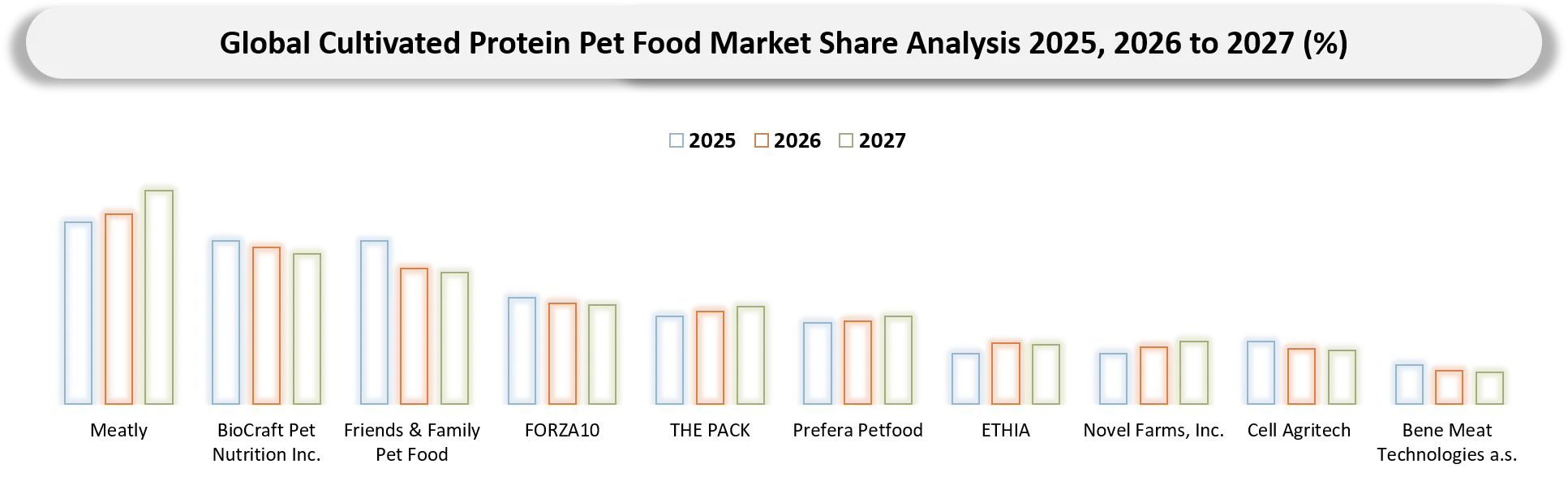
- The cultivated protein pet food market is characterized by a developing ecosystem of cultivated-protein producers, pet-food manufacturers, ingredient innovators, and commercialization-focused brands. BioCraft Pet Nutrition, Meatly, Friends & Family Pet Food, Novel Farms, and Bene Meat Technologies focus on cultivated-protein development and pet-food applications, while FORZA10, THE PACK, and Prefera Petfood contribute through pet-food formulation, commercialization, and partnerships. ETHIA and Cell Agritech add capabilities in cellular agriculture and cultivated-protein development. The competitive landscape is therefore increasingly partnership-driven, with cultivated-protein companies supplying cellular ingredients and pet-food specialists converting these ingredients into treats, toppers, and complete diets. Recent commercialization demonstrates this structure: FORZA10 partnered with BeneMeat for Coolty Meat, while Friends & Family collaborated with cultivated-protein suppliers for its commercial pet-food range.
- Key players include Meatly (United Kingdom), BioCraft Pet Nutrition Inc. (United States), Friends & Family Pet Food (United States), FORZA10 (Italy), THE PACK (United Kingdom), Prefera Petfood (Belgium), ETHIA (United States), Novel Farms, Inc. (United States), Cell Agritech (South Korea), and Bene Meat Technologies a.s. (Czech Republic).
Key Developments
- February 2025: Meatly, a UK-based cultivated-meat biotechnology company, partnered with THE PACK, a UK-based plant-based dog-food company, and Pets at Home, a UK-based pet-care retailer, to launch Chick Bites, the world’s first commercially sold pet food containing cultivated meat.
- April 2025: BioCraft Pet Nutrition, a North America- and Europe-based biotechnology company specializing in animal cell-cultured pet-food ingredients, partnered with Prefera Petfood, a Romania-based premium natural wet pet-food manufacturer headquartered in Cluj, Romania, to commercialize a hypoallergenic, nutritionally complete cat food made almost entirely from cell-cultured mouse.
- February 2025: THE PACK, a UK-based alternative-protein/plant-based pet-food company, partnered with Meatly, a UK-based cultivated-meat biotechnology company, to launch Chick Bites, described as the world’s first commercially sold dog treat containing cultivated chicken.
- August 2026: Ever After Foods, an Israel-based cultivated-protein biotechnology company, acquired Fishway, a Belgium-based cultivated-seafood biotechnology company, to expand its cultivated-protein platform and strengthen its cell-line and animal-component-free media capabilities.
Key Procurement Priorities and Buyer Evaluation Criteria
- Organizations procuring cultivated protein pet food increasingly prioritize suppliers that can provide safe, nutritionally complete, and commercially scalable cultivated-protein ingredients with consistent protein quality, palatability, and formulation performance across dog and cat food applications.
- The procurement decision-making process is increasingly influenced by the ability to demonstrate regulatory compliance, food/feed safety, nutritional adequacy, and traceability, particularly as cultivated pet-food products require market-specific regulatory approvals and documentation before commercialization.
- Buyers evaluate factors such as cultivated-protein quality, nutritional profile, digestibility, palatability, production consistency, ingredient traceability, contamination controls, and compatibility with existing pet-food manufacturing processes when selecting cultivated-protein suppliers and technology partners.
Why Choose DataM?
- Technological Innovations: Explores advancements in cultivated-protein technologies, including cell-line development, serum-free media, bioreactor-based cultivation, cellular biomass production, and cultivated muscle and fat, highlighting their potential to improve production efficiency, nutritional consistency, and scalability for pet-food applications.
- Product Performance & Market Positioning: Evaluates how different players differentiate cultivated protein pet-food products through protein quality, nutritional completeness, palatability, digestibility, functional benefits, ingredient composition, and sustainability, covering applications such as treats, toppers, fresh diets, and complete-and-balanced pet food.
- Real-World Evidence: Highlights commercial and pre-commercial adoption of cultivated protein in dog and cat treats, functional formulations, and complete pet-food products, assessing practical benefits including animal-derived nutrition, traceability, slaughter-free production, and potential reductions in resource use compared with conventional animal-protein production.
- Market Updates & Industry Changes: Tracks key developments such as regulatory approvals, commercial launches, pilot programs, production-scale expansions, cultivated-protein registrations, and strategic collaborations across North America, Europe, and Asia-Pacific, providing insight into the transition from laboratory development toward commercial cultivated pet-food production.
- Competitive Strategies: Analyzes how leading companies strengthen their positions through bioreactor scale-up, cost reduction, proprietary cell-culture technologies, strategic partnerships, regulatory advancement, product diversification, and collaboration with established pet-food manufacturers and retailers.
- Pricing & Market Access: Examines pricing differences based on cultivated-protein production costs, cultivation scale, formulation complexity, protein concentration, processing format, and distribution model, while assessing market access through direct-to-consumer channels, specialty pet stores, veterinary channels, and established pet-food retailers.
- Market Entry & Expansion: Identifies growth opportunities driven by increasing demand for sustainable and novel animal proteins, premium pet nutrition, functional pet food, and slaughter-free protein alternatives, while outlining expansion strategies such as regulatory approvals, localized production, technology partnerships, retail pilots, and integration with established pet-food supply chains.
Target Audience 2026
- Pet Food Manufacturers & Brand Owners
- Cultivated Protein & Cellular-Agriculture Companies
- Pet Nutrition & Veterinary Professionals
- Pet Food Ingredient Procurement Teams
- Pet Food Retailers & Distributors
- Premium & Functional Pet-Food Brands
- Regulatory & Food-Safety Organizations


























































